Saturday, March 4, 2023

#Pakistan - The Biden administration’s two-track Pakistan policy misses the mark

Madiha Afzal

The U.S.-Pakistan relationship has weathered several bumps in the road over the past two years, including, most prominently, the fallout from the Afghanistan withdrawal and the Taliban takeover. The Biden administration has now settled on a bureaucratic division of labor in its policy toward Pakistan: a lack of engagement from the White House; robust, well-defined engagement from the State Department; and a continuation of long-standing military and defense ties. The new equilibrium is different from the past: President Joe Biden is the only U.S. president in recent memory not to have engaged with a Pakistani prime minister (neither Imran Khan nor his successor, Shehbaz Sharif). The bilateral relationship is also notably no longer centered solely around America’s interests in Afghanistan, as it was prior to August 2021: there is an effort by both sides to broaden its base.

Unfortunately, the overall relationship is weak at best. Here are the factors that have shaped the relationship over the last two years:

THE AFGHANISTAN FACTOR

At the beginning of the Biden administration, Pakistan recognized the need to redefine the bilateral relationship, until then focused on Afghanistan, as the U.S. withdrawal from that country drew close. Prime Minister Imran Khan’s government pitched the need for a comprehensive relationship with the United States, one based on “geo-economics” — Pakistan’s catch-all for trade, investment, and connectivity — as opposed to a relationship focused on security concerns. The Biden administration wasn’t responsive, and the relationship got off to a cold start. At the time, the United States was focused on Afghanistan and the need for Pakistan to exercise pressure on the Taliban to push it toward an intra-Afghan peace. Then, as the Taliban undertook a systematic military takeover of Afghanistan while the United States withdrew, the relationship cooled further. In the months afterward, although Pakistan helped in evacuations from Kabul and in taking in Afghan refugees, the ignominy of the withdrawal — that the war ended with a clear Taliban victory and in view of Pakistan’s close relationship with the Taliban — pushed relations to a relative low point.

NO PHONE CALL

Biden has not called a Pakistani prime minister in his more than two years in office. Biden neither mentioned Pakistan during the withdrawal from Afghanistan, nor showed any interest in engaging with the country at that point. The lack of a phone call drew considerable attention in Pakistan during Biden’s first year in office, and was ostensibly one of the reasons Khan declined the administration’s invitation to attend the first Summit for Democracy in December 2021. Even Pakistan’s catastrophic summer flooding in 2022, which elicited a robust U.S. government response, did not prompt a Biden call. Yet in October 2022, seemingly out of the blue, Biden mentioned Pakistan in strongly negative terms at a Democratic Congressional Campaign Committee reception, describing it as “what I think is maybe one of the most dangerous nations in the world: Pakistan. Nuclear weapons without any cohesion.” This statement did not go over well in Pakistan, prompting a bit of a walk back from the administration, though Biden may have really meant what he said.

Initially, the complete lack of White House engagement with Pakistan was somewhat of a puzzle. Now though, it seems it’s White House policy — reflecting the fact that Pakistan is not a priority. For Biden, it might draw from a desire to put Afghanistan behind him — and with it, its neighbor. Throughout Biden’s many years of watching the Afghanistan war from the Senate and then as vice president, Pakistan’s relationship with the Taliban had always been a source of tension.

PAKISTANI POLITICS

In the spring of 2022, America was drawn into Pakistan’s domestic politics in a sudden, unfavorable manner: Khan blamed his ouster via a vote of no confidence on a U.S. “regime change” conspiracy, without evidence — a narrative that stuck among his supporters. In recent months, Khan has stepped back from the U.S. conspiracy narrative and has more directly blamed the Pakistani military for the fall of his government — the actual story. Still, the narrative complicated the U.S. relationship with Pakistan for months in 2022, as Khan’s supporters considered any engagement between the United States and the new government in Islamabad to be confirmation of the conspiracy.

TIES WITH STATE, AND BROADENING THE RELATIONSHIP

Although the White House remained silent, Secretary of State Antony Blinken and Khan’s foreign minister, Shah Mahmood Qureshi, spoke several times and met in New York in September 2021. Spring 2022 began a period of robust engagement from the State Department, a mini reset of sorts that has focused on expanding the relationship. In March 2022, the United States and Pakistan launched a year-long campaign marking 75 years of relations. In April, the new U.S. ambassador to Pakistan, Donald Blome, was sworn in. In May, Pakistan’s new foreign minister, Bilawal Bhutto Zardari, met Blinken in New York. The U.S. special representative for Commercial and Business Affairs, Dilawar Syed, visited Pakistan in July to “strengthen the economic partnership and bilateral trade” between both countries. Also in July, the two governments launched a health dialogue. Soon after Pakistan’s flooding disaster hit in August, U.S. Agency for International Development Administrator Samantha Power visited the country, documenting both the catastrophe as well as U.S. relief assistance; the United States has announced more than $200 million in flood assistance. Bhutto Zardari and Blinken met again in September when the 75th anniversary of U.S.-Pakistan relations was officially celebrated at the State Department. The relationship between the two counterparts appears constructive; it has focused on relief and recovery after Pakistan’s calamitous summer of flooding and increasing cooperation on economic matters.

Engagement and diplomacy continue apace on other fronts: State Department Counselor Derek Chollet and a delegation of senior U.S. government officials visited Pakistan in February 2023 in support of the U.S.-Pakistan relationship. The Pakistani commerce minister visited Washington the same month to hold a meeting under the U.S.-Pakistan Trade and Investment Framework — held after seven years — with United States Trade Representative Katherine Tai. Also in February, a U.S. congressional delegation led by Senate Majority Leader Chuck Schumer visited Pakistan to discuss the “broad-based partnership that includes trade, investment, regional security, and flood recovery efforts.” Pakistan has also been the single largest recipient of COVID vaccines from the United States since 2021.

DEFENSE AND MILITARY TIES

The military leadership in Pakistan had a major transition last fall, with the chief of army staff, General Qamar Javed Bajwa, leaving his post after six years (following an extension). He visited Washington in October before his term ended and met Secretary of Defense Lloyd Austin. And the commander of United States Central Command, General Michael Kurilla, traveled to Pakistan to reaffirm security ties after the new chief of army staff, General Asim Munir, was sworn in.

The long-standing defense and security relationship continues (though it is no longer the entirety of the bilateral relationship). In September, the U.S. government notified Congress of a proposed $450 million foreign military sale to maintain Pakistan’s fleet of F-16 fighter jets. The security relationship also includes a key focus on counterterrorism and intelligence that presumably encompasses an over-the-horizon arrangement on Afghanistan — but that specific aspect remains shrouded in secrecy. CIA Director Bill Burns visited Pakistan twice in 2021: once in an unannounced visit in April and then again after the withdrawal in September.

WHAT LIMITS THE RELATIONSHIP

Pakistan is in a very different place than when its government pitched a geo-economic reset in early 2021. It is now mired in a political and economic crisis, veering perilously close to default. For the time being, its spiraling economic situation and domestic problems limit its attractiveness as a U.S. partner.

Distrust born out of the last four decades of the U.S.-Pakistan-Afghanistan triangle will take time to overcome, despite both sides’ attempts in the last year at broadening the relationship. And while Afghanistan no longer defines the U.S. relationship with Pakistan, the Biden administration’s approach to its other neighbors, China and India, does restrict it. The administration’s intense competition with China, Pakistan’s long-standing ally; its growing partnership with India, Pakistan’s foe; and its focus on the Indo-Pacific (which excludes Pakistan) has led to a priority shift away from Pakistan. Pakistan has long said it doesn’t want its relationships with the United States and China to be seen as zero-sum, and the United States has acknowledged that it doesn’t see its relationships with India and Pakistan as zero-sum. Yet, the American approach to these two Pakistani neighbors does seem to, at this point, impose constraints on the bounds of the U.S.-Pakistan relationship.

This need not be the case: As I have long argued, Pakistan, the fifth-largest country in the world and a nuclear-armed nation, ought to be seen by the United States on its own terms and not through the prism of its neighbors. A cold shoulder risks pushing Pakistan further toward China — which is neither an inevitable nor desirable outcome for the United States. What’s more, Pakistan’s multiple crises — political instability, economic malaise, and rising insecurity — warrant greater American engagement, not less, and certainly more than the current administration’s policy of fractured engagement from the United States.

https://www.brookings.edu/blog/order-from-chaos/2023/03/02/the-biden-administrations-two-track-pakistan-policy-misses-the-mark/


#Pakistan #PPP - Bilawal briefed about political situation in south Punjab

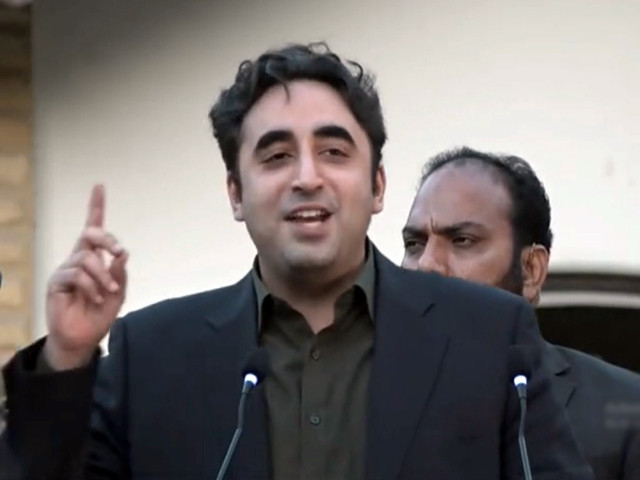
Chairman Bilawal Bhutto Zardari met with Presi­dent PPP South Punjab Makhdoom Syed Ahmed Mahmood, Federal Minister Murtaza Mahmood, Member National Assembly Mustafa Mahmood and Usman Mahmood at Makhdoom House in Model Town Lahore here on Friday. Bilawal Bhutto Zardari was briefed by Makhdoom Syed Ahmed Mehmood regarding the political situation in South Punjab. Bilwal Bhutto and Makhdoom Ahmed Mehmood also discussed the situation related to the elections.
The foreign minister also met PPP leader Irfan Gardezi and Chief Coordinator PPP South Punjab Abdul Qadir Shaheen. Later, chairman PPP and Foreign Minister Bilawal Bhutto Zardari visited Ghazi Mohalla of Garhi Shahu to condole the pass­ing of founding member of PPP Mani Pehlwan. He expressed his condolence with the daughters and sons of late Mani Pehlwan.
Bilawal recited Fatiha for the forgiveness of late Mani Pehlwan and prayed for patience for the family members. “Late Mani Pehlwan suf­fered the hardships of imprisonment and tor­ture for the survival and stability of democracy”, Bilawal Bhutto said. Praising the political strug­gle of late Mani Pehlwan, Bilawal said, Mani was an exemplary political activist, his commitment to Bhuttoism was unforgettable. https://www.nation.com.pk/04-Mar-2023/bilawal-briefed-about-political-situation-in-south-punjab

Saturday, February 18, 2023

Video Report - MSC 2023: Kamala Harris Warns China not to Help Russia | BR24

Video Report - The U.S. Has 750 Overseas Military Bases, and Continues to Build More to Encircle China

Video Report - S.Africa's ANC 'benefited hugely from international order' but not keen on extending it to Ukraine

Video Report - Will Scotland be an independent country? | Inside Story

Video Report - MSC 2023: Chinese top diplomat Wang Yi announces peace initiative for Ukraine | BR24

Video Report - Von der Leyen: 'China has signed unlimited friendship agreement with Russia' | DW Interview

کل بھی بھٹو زندہ تھا،آج بھی بھٹو زندہ ھے

Video Report - FM Bilawal Bhutto Zardari addressing Graduation Ceremony for FSP Officers

Video Report - Pakistan's FM Bilawal Bhutto Zardari at the Munich Security Conference 2023

Video Report - FM Bilawal Bhutto Zardari in an interview with Capital News

Music Video - Billy Joel - We Didn't Start the Fire

Tuesday, February 14, 2023

Video Report - #Israel - Clashing over democracy

Video Report - What are Nikki Haley's chances in the US presidential election?

Video Report - Turkey earthquake: 70% of the buildings destroyed in Antakya

Video Report - Ballooning tensions: What next after US-China spying claims?

Video Report - Explainer: What are ‘spy balloons’ and why are they used?

Pakistan's 'Purification' Campaign Against Its Minorities

By Lawrence A. Franklin
  • When Pakistan was created in 1947, 23% of its citizens were non-Muslim. Today in Pakistan -- "Land of the Pure" in Urdu -- only about 3% of citizens are non-Muslim.

  • The Pakistanis, it is clear, do not want to host minorities: instead, they seem to be increasingly engaged in "purifying the land of the pure."

  • The country's male-only, elementary school-level madrassas turn out millions of students who are taught to hate Hindus, Christian and Jews.

  • The imams of Pakistan, many of whom are trained in Saudi Arabia's austere Wahhabi branch of Sunni Islam, financially support Pakistan's madrassas and help to perpetuate intolerance. The International Center for Religion and Diplomacy reports that Pakistani seventh grade textbooks portray Pakistan's Hindus as a traitorous group that supports the country's arch enemy, India. The same books also portray Pakistan's Christians as agents of the West bent on destroying Islam.

  • Despite the Pakistani government's having established a "National Action Plan" to protect minorities, there is no discernible improvement in their daily lives.

  • The most venomous abuses of all are probably the false accusations of blasphemy, especially common in Islamabad, Lahore, and Karachi. In Pakistan, as in many other Muslim countries, blasphemy is a crime punishable by death, and often also ends up in mob violence against entire minority communities.

  • According to an Indian media report last month: "Pakistan was to review its harsh blasphemy laws. It has made them even harsher."

  • In December, after the beheading of Daya Bheel, a Hindu woman, who skin was reportedly peeled off her head, India's Foreign Ministry demanded that Pakistan fulfill its obligations to protect minorities. The demand will likely have little impact upon crimes such as the abduction of non-Muslim girls and women by Muslim men.

  • When Pakistan was created in 1947, 23% of its population was non-Muslim. Today in Pakistan -- "Land of the Pure" in Urdu -- only about 3% of the population is non-Muslim. At present, about 80-85% of its citizenry are Sunni Muslim. Pakistan's appalling treatment of Hindus, Christians, Shia Muslims and other Islamic sects, such as the Ahmadis, has caused many minorities to leave the country. Most Hindus have migrated to India, others to Singapore and Hong Kong.

    The Pakistanis, it is clear, do not want to host minorities: instead, they seem to be increasingly engaged in "purifying the land of the pure."

    The country's male-only, elementary school-level madrassas turn out millions of students who are taught to hate Hindus, Christian and Jews.

    The imams of Pakistan, many of whom are trained in Saudi Arabia's austere Wahhabi branch of Sunni Islam, financially support Pakistan's madrassas and help to perpetuate intolerance. The International Center for Religion and Diplomacy reports that Pakistani seventh grade textbooks portray Pakistan's Hindus as a traitorous group that supports the country's arch enemy, India. The same books also portray Pakistan's Christians as agents of the West bent on destroying Islam. The United States Commission on International Religious Freedom noted in a 2016 report:

    "[T]he content of Pakistani public school textbooks related to non-Islamic faiths and non-Muslims continue to teach bias, distrust, and inferiority. Moreover, the textbooks portray non-Muslim citizens of Pakistan as sympathetic towards its perceived enemies: Pakistani Christians as Westerners or equal to British colonial oppressors, and Pakistani Hindus as Indians, the arch enemy of Pakistan."

    Even though Pakistan's constitution proclaims that all citizens, regardless of religion or ethnicity, will be treated equally before the law, this is clearly not what is taking place. Reports from numerous NGOs and the US Department of State detail the daily human rights abuses of minorities that violate the letter and spirit of the International Religious Freedom Act of 1998. The US State Department has consistently listed Pakistan as a "Country of Particular Concern."

    Despite the Pakistani government's having established a "National Action Plan" to protect minorities, there is no discernible improvement in their daily lives. The discriminatory treatment of Pakistan's minorities by governmental institutions is reflected in the everyday marginalization and humiliation of Hindus, Christians and other small communities of faith. These abuses include acts of arson at Hindu temples and churches as well as desecration of religious symbols, and vandalism at cemeteries and shrines of minorities. The most venomous abuses of all are probably the false accusations of blasphemy, especially common in Islamabad, Lahore, and Karachi. In Pakistan, as in many other Muslim countries, blasphemy is a crime punishable by death, and often also ends up in mob violence against entire minority communities. Morning Star News reported last month:

    "According to the Lahore-based Center for Social Justice, 1,949 cases of people accused of blasphemy were registered in Pakistan between 1987 and 2021, including 928 Muslims, 643 Ahmadis, 281 Christians, 42 Hindus, and 55 of unknown faith."

    Human rights violations on a mass scale also occur against women in Pakistan. These crimes include the kidnapping of Hindu or Christian girls, often pre-teens, who are then forced to convert to Islam and/or coerced into marriages. One report estimates that at least 1,000 Hindu and Christian females are abducted every year in Pakistan.

    More unequal treatment of minorities arises during disputes between Muslims and their non-Muslim neighbors over land, business or personal disagreements. These usually end in a bad way for the minority family. A Muslim neighbor can pull the "blasphemy law card," falsely accusing the Christian of showing disrespect for the Koran, the Islamic Prophet Muhammad or some tenet of Islamic doctrine. This often results in the innocent non-Muslim either giving up in the dispute or being imprisoned.

    A guilty verdict on a charge of violating the blasphemy law in Pakistan, whether the violation was intentional, accidental or fabricated, can result in severe penalties, including a death sentence. Since 1987 when the anti-blasphemy law was made more stringent, at least 1,500 Christians have been imprisoned. And according to an Indian media report last month: "Pakistan was to review its harsh blasphemy laws. It has made them even harsher."

    This describes a mere fraction of the indignities and sufferings endured by Pakistani non-Muslims. In December 2022, there were two horrific anti-Christian incidents. In one , a mob murdered the brother of a woman, Lalli Kachi, who was abducted from her home in Sindh Province, and forced to convert to Islam. The other incident, also in Sindh, was the murder of a Christian mother Daya Bheel, whose mutilated body was found in a remote field.

    Shia Muslims. who may constitute about 15% of the population, are condemned as heretics by their Sunni co-religionists. The Shia are victims of attacks during Friday prayers, including suicide bombings at their mosques. In 2021, (Sunni) ISIS terrorists slaughtered 11 Shia Muslim coal-miners. Shia Muslims are routinely harassed, particularly during the Islamic month of Muharram, when Shia hold public processions. Notably, even the Sunni-majority American Muslim Bar Association has criticized the failure of the Pakistani government, as a signatory of the International Covenant on Economic, Social and Cultural Rights, to abide by its commitments to safeguard minorities.

    Ahmadis, another religious minority of whom there are estimated to be about half a million in Pakistan, are denounced by most Sunni Muslims as being non-Muslim, because they defer to their prophet, Mirza Gulam Ahmad, while Sunni and Shia Muslims believe that the last prophet was Mohammad. Ahmadis are so viciously persecuted in Pakistan that the sect moved its headquarters to Britain. There is no pretense of protection of Ahmadis in Pakistan: the government's Penal Code declares that Ahmadis are non-Muslims. By law, Ahmadis are not permitted to build mosques or to issue the public call to prayer.

    In December, after the beheading of Daya Bheel, a Hindu woman, who skin was reportedly peeled off her head, India's Foreign Ministry demanded that Pakistan fulfill its obligations to protect minorities. The demand will likely have little impact upon crimes such as the abduction of non-Muslim girls and women by Muslim men.

  • https://www.gatestoneinstitute.org/19344/pakistan-minorities


Pakistan’s Human Rights Commission expresses worry over ongoing marginalisation of religious minorities

By George Henry
Concerns have been expressed by Pakistan's Human Rights Commission (HRCP) regarding the country's ongoing marginalisation of religious minorities.
Concerns have been expressed by Pakistan’s Human Rights Commission (HRCP) regarding the country’s ongoing marginalisation of religious minorities.
In Sindh, the frequency of forced conversions has remained unsettlingly constant. The state has not responded to reports of religious minorities’ places of worship being vandalised when such crimes include locations connected to the Ahmadiyya minority, according to HRCP Chairperson Hina Jilani.
Hindus, Christians, Sikhs, and Ahmadis are among the minority communities in the nation that continue to experience persecution from the country’s majority population.Numerous incidents of minorities being attacked in cities and towns in Punjab, Sindh, and Khyber Pakhtunkhwa in 2022 for supposed blasphemy came to light.
In accordance with the 2014 Supreme Court Jillani decision, HRCP has once again emphasised the necessity for a national statutory commission for minorities that is both autonomous and representative.Jilani said that in order to prevent people from using the laws in question as a weapon to settle personal grudges, the current low standard of proof for blasphemy had to be strengthened.
Jilani warned that Pakistan would continue to support an environment where those who engage in violence and discrimination based on religion enjoy impunity, causing the already constrained space for religious freedom to get even smaller.
https://writeups24.com/pakistans-human-rights-commission-expresses-worry-over-ongoing-marginalisation-of-religious-minorities/

Bilawal reiterates Pakistan's full support to relief effort in Turkiye

 Foreign Minister Bilawal Bhutto Zardari on Friday Visited the Turkish Embassy in Islamabad along with Prime Minister Shehbaz Sharif to express condolences over the loss of life and property in the devastating earthquake in Turkiye.


Taking to his Twitter handle, Bilawal Bhutto said that Pakistan stands by the brotherly people of Turkiye during these difficult times. He also reiterated Pakistan’s full support to the relief efforts in Turkiye.
 

https://dunyanews.tv/en/Pakistan/698977-Bilawal-reiterates-Pakistan%E2%80%99s-full-support-to-relief-effort-in-Turkiye

#Pakistan - Minister for Foreign Affairs Bilawal Bhutto visits Syrian embassy to convey condolence over quake-caused losses

Minister for Foreign Affairs Bilawal Bhutto Zardari on Tuesday visited the Syrian embassy here and conveyed condolences to the Syrian envoy over the loss of life and property caused by the earthquake.
The foreign minister also penned his condolatory remarks in the guests’ book placed at the embassy.
Foreign Minister Bilawal assured the Syrian ambassador that the government and people of Pakistan stood by the Syrian people in that hour of the ordeal.
https://www.app.com.pk/global/bilawal-visits-syrian-embassy-to-convey-condolence-over-quake-caused-losses/

Video Report - FM Bilawal Bhutto Zardari addressing Graduation Ceremony for FSP Officers

Monday, February 13, 2023

Music Video - Doja Cat - Kiss Me More - ft. SZA

Music Video - Taylor Swift - Look What You Made Me Do

Video Report - Taiwan's China-friendly opposition KMT party visits Beijing

Video Report - Israelis hold mass protest outside parliament against judicial reforms

Video Report - White House gives latest details on mysterious objects shot down by US military

Pashto Music Video- Javed Amirkhail - Sharabi Ghazal جاوید امیرخیل - شرابی غزل

Pashto Music Video - Zalmi Azmari by "Jaam Boys" | Peshawar Zalmi's Official Regional Anthem | HBLPSL 8

Pashto News Report - پاکستان به په خپل بل کړي اور کې سوځېږي- داوړ

Video Report - Bilawal Bhutto Zardari addressing the opening ceremony of the 1973 Constitution Golden Jubilee

#Pakistan - Foreign Minister Bilawal Bhutto calls for giving equal rights to women

Pakistan Peoples Party (PPP) Chairman and Foreign Minister Bilawal Bhutto Zardari has said that it is impossible to promote human rights without giving equal rights to women.

According to a statement issued by Bilawal House Media Cell on Sunday, the PPP chairman, in his message on National Women’s Day, extended greetings to the entire nation, including all the mothers, sisters and daughters of Pakistan, saying that this day “is a symbol of Pakistani women’s struggle for democracy and resistance to dictatorship”.

Bilawal said that Pakistani women were a metaphor of unparalleled bravery, great talent and indomitable courage, adding that the Madar-e-Millat Fatima Jinnah, Madar-e-Jamhooriat Begum Nusrat Bhutto and late Benazir Bhutto were role models for the world.

“It is a matter of pride for me that Pakistan Peoples Party is the only party in the country which has been led by two women,” he said.

Bilawal said that the Constitution of 1973 guaranteed equality, representation, protection and equal opportunities for development of women in Pakistan.

The PPP chairman assured the Pakistani women that his party fully supported their every struggle to end all forms of discrimination and exploitation.

https://tribune.com.pk/story/2400888/bilawal-calls-for-giving-equal-rights-to-women

Sunday, February 12, 2023

Music Video - #Rihanna SUPER BOWL LVII Music

Video Report - International community has failed Syrian earthquake victims, UN aid chief says

Video Report - In the devastated city of Adiyaman, rescue teams search for survivors

Video Report - China zeroes in on 'near space' as potential next battlefield in modern warfare

Video Report - Airspace over Lake Michigan shut briefly

د اجمل خټک شعر "افاقي" دی

خیبر پښتونخوا کې د عملیاتو پر مهال د انټرنېټ تړلو د خلکو ژوند ګران کړی


د خیبر پښتونخوا د درو جنوبي ضلعو اوسېدونکي وايي، په سيمو کې يې د موبايل ټېلېفون او انټرنېټ خدماتو تړل کېدو له کبله ورځنۍ چارې اغزمنې شوې دي.

چارواکي د انټرنېټ تړل کېدو له وجې د خلکو مشکلات مني خو وايي، دا کار د سيمې د امنيت د ټينګښت لپاره اړین دی.

هلته شنونکي د انټرنېټ بندول د بنيادي بشري حقونو خلاف مل بولي.

خو دا یوازې شمالي او جنوبي وزیرستانونه او لکي مروت نه دي بلکې په نورو قبایلي ضلعو کې هم وخت په وخت د عملیاتو پر مهال انټرنېټ تړل کېږي.

په وروستیو کې په لکي مروت کې د وسلوالو ضد د عملیاتو پر مهال هم موبایل ټېلېفون انټرنېټ تړل شوی وو.

د لکي مروت يو اوسېدونکي شاکر بېټني د فبرورۍ پر اتمه مشال راډيو ته وويل، په سيمه کې يې موبايل ټېلېفون او انټرنېټ تر شاوخوا دوو اوونیو بند وو چې د فبرورۍ پر اوومه شپې مهال بحال شو.

بېټنی چې په يوه ځايي اېف اېم راډيو کې وياند دی، د فبرورۍ پر اتمه یې له مشال راډیو سره په خبرو کې زياته کړه چې د سيمې خلک د انټرنېټ بحالېدو ته خوشاله دي، خو د پولیسو او امنیتي ځواکونو پر اقداماتو سربېره، د امنیت په اړه ډاډمن نه دي. "خلکو ته ډېر زيات تکليف وو، خو شکر چې انټرنېټ مو دوه هفتې پس بحال شو. پر خلکو سم اختر وو، يو بل ته يې مبارکۍ ورکولې. امنيتي ادارو زموږ په سيمه کې د عملياتو له وجې موبايل ټېلېفون او انټرنېټ تړلی وو. دې کار د خلکو پر ورځني ژوند اغېز کړی وو. د لکي مروت مالداره او تعليم يافته خلکو پېښور او اسلام اباد ته کډې کول پيل کړې دي. تر عملياتو مخکې او اوس هم، خلک تر ماښام وروسته له کورونو بهر نه شي وتلای. غلاوې زياتې شوې دي او خلک زښت په تنګ دي."

د پوځ د عامه اړیکو ادارې د فبرورۍ پر اتمه په یوه خبرپاڼه کې د لکي مروت په عملياتو کې د تحريک طالبان پاکستان د ۱۲ مشکوکو وسلوالو د وژلو ادعا وکړه.

د لکي مروت پولیسو ویاند شاهد حمید د فبرورۍ پر اتمه مشال راډیو ته وویل چې عملیات "پوځ او پولیسو په شریکه" کړي دي.

د سیمې اوسېدونکو مشال راډیو ته وویل چې د موبایل انټرنېټ تړلو یې ورځنۍ چارې اغېزمنې کړې وې.

دوی وايي، په سیمه کې د عملیاتو له کبله انټرنېټ د جنورۍ له وروستۍ اوونۍ راهیسې تړلی وو چې له کبله یې خلکو د موبایل ټېلېفون له لارې تنخاګانې پر وخت ترلاسه نه کړای شوې.

دوی داراز زیاته کړه چې د انټرنېټ نه شتون له کبله د سیمې یوشمېر زده کوونکي له انلاین امتحانونو پاتې شول.

خو د پولیسو ویاند شاهد حمید زیاتوي چې موبایل انټرنېټ د عملیاتو تر بشپړېدو وروسته بحال شوی دی.

بلخوا په جنوبي وزيرستان کې د پښتون ژغورنې غورځنګ يو مخکښ جمال ماليار هم د هغې ضلعې په اکثرو ځايونو کې د انټرنېټ د بندښت ستونزه يادوي او وايي چې پر بيا بيا احتجاجونو سربېره یې دا مسله حل نه شوه. "د ضلعې په اکثره سيمو کې مو انټرنېټ له سره شته نه. بيا چې کله د ناامنۍ کومه پېښه وشي نو دوی د [پاکستان تېلېفوني خدماتو ادارې یا] پي ټي سي اېل د سېګنل ترڅنګ د موبايل ټېلېفون او انټرنېټ شبکې هم وتړي. داسې وبوله چې موږ په توره شپه يا تور ځنګل کې ژوند کوو. موږ وخت په وخت احتجاجونه هم کړي دي. حکومتي چارواکي وعدې وکړي خو پوره کوي يې نه. موږ ته وايي چې تخنيکي مسله ده او ژر به حل شي، خو موږ پوهېږو چې امنيتي او حکومتي ادارې زموږ د ستونزو په حلولو کې مخلصه نه دي."

د شمالي وزيرستان يو خبريال رسول داوړ بيا وايي چې که له يوې خوا د سيمې خلک د ناامنۍ پېښو پرېشانه کړي نو له بلې خوا ورباندې د موبايل ټېلېفون او انټرنېټ خدماتو بندېدو یې ژوند ګران کړی دی. "د انټرنېټ بندښت د سيمې زده کوونکو او کاروباري خلکو ته مشکلات زېږوي. زما په څېر خبريالان هم له دې مسلې کړېږي. ځکه موږ نه شو کولای پر وخت رپورټونه جوړ او خپلو ادارو ته ولېږدوو. ځايي خلکو وخت په وخت احتجاجونه کړي، خو غږ یې څوک نه اوري."

په سيمه کې د موبايل ټېلېفون او انټرنېټ د بندښت موضوع مو د فبرورۍ پر اتمه د ميرلي له انتظامي مشر صادق علي مخې ته کېښوده. هغه وويل چې انتظاميه د انټرنېټ نشتوالي له وجې د ځايي خلکو له ستونزو خبره ده او هڅه کوي چې انټرنېټ ته د عامه لاسرسۍ بديلي لارې چارې برابر کړي. "انټرنېټ په داسې يوه سيمه کې په عارضي توګه تړل کېږي چې د استخباراتي معلوماتو پر اساس پکې پوليس او پوځ ګډ عمليات کوي. موږ قانون عملي کوونکو او نورو اړونده ادارو ته وايو چې د يوې سيمې تر امن کېدو وروسته هلته په فوري توګه انټرنېټ بحال کړي. موږ پوهېږو چې د سيمې سکولونه، کالجونه، هسپتالونه او کاروبارونه له انترنېټ پرته نه شي چلېدای. په ځينو سيمو کې خلکو د دې لپاره چې پر حکومت د انټرنېټ بحالولو لپاره فشار واچوي، خپلو ماشومانو ته له پوليو واکسينو ورکولو انکار کړی دی. په شمالي وزيرستان کې اوس هم فور جي انټرنېټ بند دی. خلک له خپل پي ټي سي ايل ټېلېفون سره د نينو بيمز په نوم يوه اله وصلوي او په هغه توګه انټرنېټ ته لاسرسی پيدا کوي. انتظاميه د خلکو د دې اييني حق ملاتړې ده چې هغوی بايد انټرنېټ ولري."

دا چې د وسلوالو پرضد د پوځي عملياتو په سيمه کې د موبايل ټېلېفون او انټرنېټ تړل ولې ضروري دي او دا هم چې دا اقدام د عملياتو له کاميابۍ سره څومره مرسته کوي؟ د دې پوښتنې په ځواب کې په اسلام اباد کې خبريال او د چارو شنونکی افتخار فردوس وايي، په يوه جنګي سيمه کې د موبايل ټېلېفون او انټرنېټ بندول د امنيتي ځواکونو له لوري د جګړې د يوه عمده تاکتیک په توګه کارول کېږي.

نوموړی په عين وخت کې مني چې په دې توګه عام ولس له دې دواړو خدماتو محرومول د بنيادي بشري حقونو خلاف يو عمل دی.

"نن سبا ترهګرې ډلې اکثره وخت د [انټرنېټ له لارې د چلېدونکو الو] او يا هم ټېلېفون په وسيله بمي چاودنې کوي. امنيتي ځواکونه پر خپلو ګاډو [د انټرنېټي څپو بندولو الې] لګوي خو چې کله په يوه سيمه کې د لوی کچې عمليات کوي نو هلته د فون سېګنل هم بندوي. د فون او انټرنېټ تړل کېدو له وجې خلکو ته ستونزې جوړېږي، ځکه نن سبا ژوند له دې دوو شيانو پرته نيمګړی دی. پر نړيوال کچ هم که وګورو نو پر خلکو د فون او انټرنېټ تړل د هغوی د بشري حقونو ضد يو عمل ګڼل کېږي. خو په ځينو سيمو کې د ترهګرۍ د زور ماتولو لپاره دا رقم اقدامات اړين بلل کېږي."

د ۲۰۲۲ز په اوړي کې په سوات کې د وسلوالو د بېرته فعالېدو رپورټونو تر خپرېدو وروسته د دې ضلعې انتظاميې هم په درو تحصيلونو، مټې، کبل او خوازه خېله کې د شاوخوا يوې مياشت لپاره انټرنېټ تړلی وو.

ه شمالي او جنوبي وزيرستانونو کې خلکو په تېرو وختونو کې د موبايل ټېلېفون او انټرنېټ بندښت پرضد یوشمېر ځلې احتجاجي مظاهرې کړې دي.

ه شمالي او جنوبي وزيرستانونو کې خلکو په تېرو وختونو کې د موبايل ټېلېفون او انټرنېټ بندښت پرضد یوشمېر ځلې احتجاجي مظاهرې کړې دي.
https://www.mashaalradio.com/a/mobileinternet-blockage-in-khyberpakhtunkhwa-during-operations/32263720.html