Monday, November 21, 2022
Sunday, November 20, 2022
OPINION: Did the Midterms Save American Democracy?

ROSS DOUTHATFor everyone furiously debating the condition of American democracy, the 2022 midterms were a beautiful thing — a gift to both sides of the argument, a Rorschach test that yields to either interpretation. Suppose, first, that you were among the democracy-in-peril alarmists, for whom Trumpism and MAGA Republicanism represent not just a chaotic populism but an existential threat. What did you see happen?Well, you saw an embattled president, Joe Biden, decide to make the defense of democracy itself his key election theme. For this, he was scorned from multiple directions — for ignoring kitchen-table issues, for conflating normal conservative positions with authoritarianism, for failing to offer the kind of radical bipartisanship that his diagnosis would imply. Yet in the end it seemed to work: Voters who were otherwise inclined to vote for G.O.P. candidates did tend to reject exactly the kind of “MAGA Republicans” — the Trump-endorsed and Trump-imitating, the most paranoid-seeming “Stop the Stealers” — that Biden’s argument tried to single out. The red wave predicted by fundamentals and history disappointed, in part, because Americans judged a subset of Republican candidates too extreme to entrust with normal democratic powers. The public did the work of de-Trumpification that Trump-era Republicans themselves had failed to do — and they did so, one could argue, precisely because of alarms raised on democracy’s behalf. Thus the happy conclusion for the alarmist camp: Democracy was in danger, and for this cycle, at least, we saved it. But then imagine yourself a non-alarmist, looking at the same results. For the last few years you’ve heard the alarmists argue that the problem isn’t just Trump or his epigones — that the entire Republican Party has been remade as an authoritarian formation, that its preferred election rules are basically Jim Crow 2.0., that the structures of American government are enabling permanent minority rule by a white-identitarian right, that the United States is on the brink of low-grade civil war, that Jan. 6 never ended and the right won’t accept any election result that doesn’t go its way. Yet what did you see happen? Most Republican candidates losing their elections and conceding entirely normally, the MAGA candidates included. Georgia, supposedly ground zero for the new Jim Crow, delivering normal turnout and another strong performance for its African-American Democratic senator. The structures of American government delivering Republicans less power in Washington than their current raw vote totals would imply, with a Democratic Senate and the thinnest House majority for the G.O.P. despite their solid-seeming majority in the House popular vote. A continued migration of minority voters into the Republican Party, suggesting that the country is actually growing less polarized by race. And a conspicuous absence of the kind of violence that the new-civil-war prognosticators keep expecting.Between these two interpretations of 2022 — the alarmists celebrating a hard-fought victory for democracy and the non-alarmists seeing a predictable return to normalcy — is any synthesis or handshake possible? Let me propose two possible concessions, one from each direction. First, the alarmists might concede that the unique shamelessness of Trump himself, joined to the wild, weird circumstances of 2020 — a pandemic, a wave of riots and protests, an on-the-fly remaking of election procedures — were probably more determinative of Republican voter-fraud paranoia and its Jan. 6 consummation than some deliberate ideological turn toward authoritarianism or semi-fascism. In other words, the results of 2022 don’t vitiate the original alarmist idea that Trump is a dangerous figure who shouldn’t be entrusted with the presidency. But they do call into question the systemic alarmism, the belief that the entire Republican Party is seceding from normal democratic politics and that Trump’s ascent was just a trigger for that process. Then likewise, the non-alarmist might concede that such fascism-on-the-march alarmism, overblown as it may seem, may itself be one of the forces that tends to stabilize a democratic system, by mobilizing and balancing against excesses and paranoias on the other side. That the hyperbole before the midterms — think of the TV historian Michael Beschloss envisioning a right-wing dictatorship arresting and executing children — may have been one reason among many why so many “Stop the Steal” candidates got pasted in their races. And that such alarmism has arguably always played a version of this balancing, stabilizing role, all the way back to the early days of the Republic when the various factions reliably traded accusations of monarchism and Jacobinism. This last image, of extremisms and anxieties about extremism balancing one another out, also suggests a hopeful way for the alarmists and non-alarmists of the Trump era to think about our relationship to one another: not just as rival interpreters of our democracy’s discontents, but as partners, in some strange way, in its continuing stability.
https://www.nytimes.com/2022/11/19/opinion/midterms-democracy.html
Chinese CH-4B Drone Spotted Over #Balochistan; Reports Indicate #Pakistan Army Is Using Them To Crush Rebellion
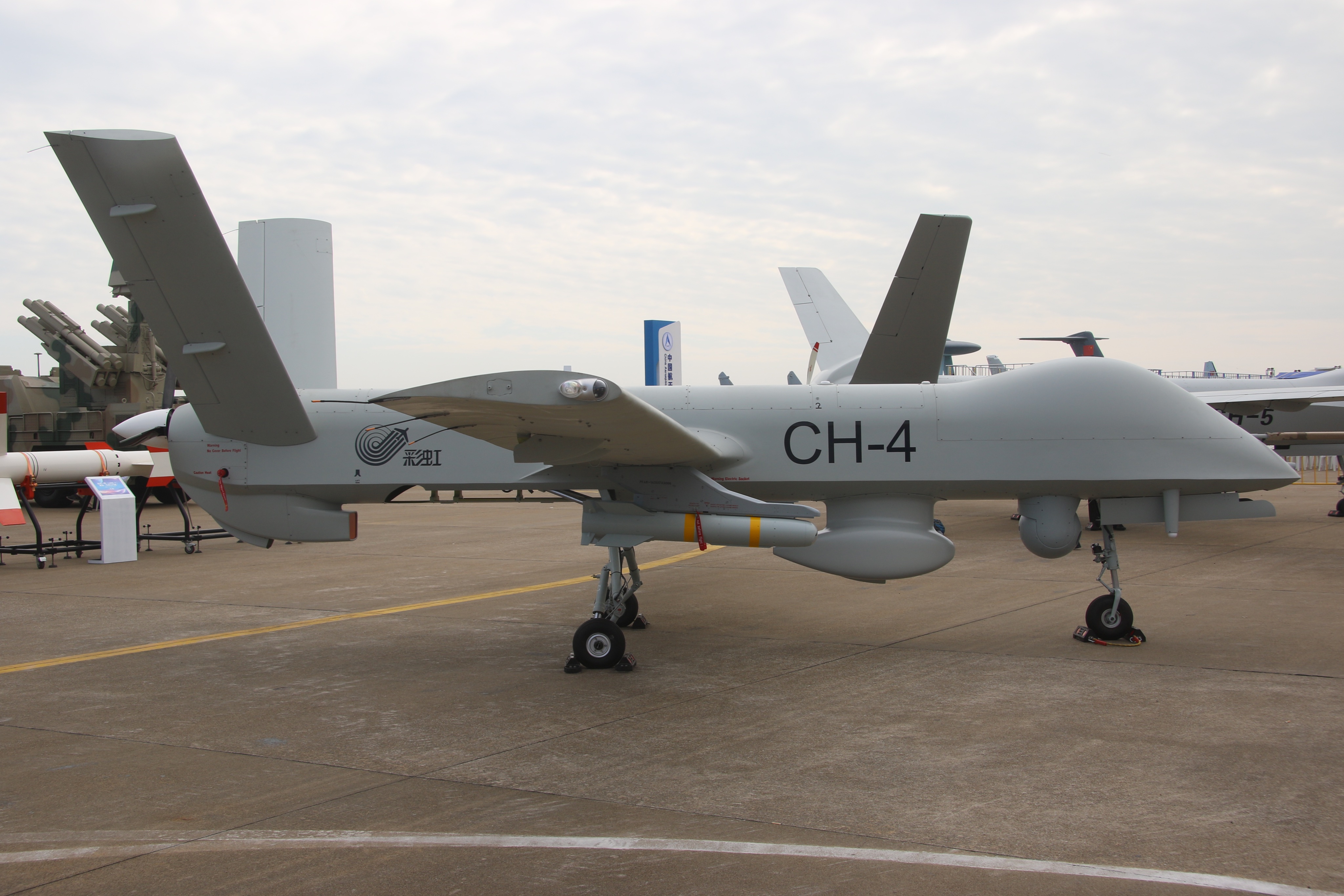
Drawing lessons from the Russia-Ukraine war that saw a surge in drone warfare, Pakistan has become the latest state to press its Chinese-origin combat CH-4B drones to hunt Baloch rebels.
Earlier this month, Pakistan allegedly conducted a massive military offensive against Baloch rebels in the Bolan region by deploying unmanned aerial vehicles (UAVs), fighter jets, and Gunship helicopters, along with SSG Commandos, according to Balochistan Post-English.
According to reports, the Pakistani Army deployed jets against Baloch nationalists in the highlands of Bolan in Balochistan.The Pakistani military operations were resisted by the Baloch militias, which, in turn, killed two SSG Commandos. EurAsian Times could not independently verify the number of Pakistani commandos killed by the rebels.
While the Pakistani Army has used fighter jets and armed helicopters against Baloch rebels for several years, the use of combat UAVs is new and is continuously increasing. The Balochistan Post-English tweeted that China and Turkey have supplied various models of combat UAVs to Pakistan.
According to the information on the microblogging site Twitter and Pakistan-based defense blogs, Chinese CH-4B UAVs were spotted over Bolan, Balochistan, where the rebels killed two SSG Commandos.
The Pakistani military is accused by the people of Balochistan of the excesses committed against them and has intensified its armed assault in recent times.
According to a recent report of The Balochistan Post, the Human Rights Council of Balochistan received 41 cases of enforced disappearance and thirty cases of extrajudicial executions in Balochistan during October 2022.
Pakistan received five Cai Hong 4 (Rainbow 4, or CH-4) multirole medium-altitude long-endurance (MALE) UAVs from China in January 2021. At the time, it was not revealed which variant of the CH-4 drone was acquired by Islamabad.
However, later reports suggested it was the CH-4B variant.
A Chinese PLA detachment based in Pasni, Gwadar, allegedly helps the Pakistani military operate these CH-4 drones. The Pakistan military has a naval air station at Pasni known as PNS Makran. China is developing the Port of Gwadar under the China-Pakistan Economic Agreement (CPEC), a premise for deploying PLA troops in the region.
China pursues a “strategic strongpoint” concept, whereby its military can use strategically located foreign ports with terminals and commercial zones run by Chinese companies.
This makes it plausible that the PLA detachment would assist the Pakistani troops in operating the CH-4B. However, we could not independently corroborate this notion, and Pakistani netizens dismissed it as propaganda.
That being said, Pakistan’s use of combat drones against Baloch insurgents is yet another example of militaries turning to drones for combat after watching the deployment of UAVs in the ongoing Russia-Ukraine conflict.
The conflict has led to a proliferation of drones. Pakistan is slated to receive Bayraktar Akinci and TB2 drones from its ally Turkey.
CH-4B Drones
The ALIT and China Aerospace Science and Technology Corporation (CASC)-developed CH-4 family of multirole MALE UAVs features a wide range of sensor options.
The People’s Liberation Army of China is known to use two variants: the standard CH-4A, which has a flight endurance of 30 hours and is primarily designed for reconnaissance missions, and the strike-capable CH-4B, which can carry a 345-kilogram weapon payload but has a shorter flight endurance of 14 hours. The Pakistani Army reportedly uses the CH-4B Strike variant.
Pakistan’s CH-4 drones were spotted at a Pakistani airbase close to India’s border in August 2021, as reported by EurAsian Times. Satellite imagery shared by an open-source intelligence showed four CH-4 combat drones at the Bahawalpur airbase in Pakistan’s Punjab province.
The drone has attracted many customers worldwide. Just a day before the CH-4B was spotted over Balochistan, Chinese state media Global Times reported a record demand for the CH-4 drone in the international market.
Citing the manufacturer China Aerospace Science and Technology Corporation (CASC), the report said it had sold over 200 units of CH-4 drones to international customers.
It has a weapon that can be fired from a distance of up to 5,000 meters and is made explicitly for high-altitude operations over land and water. The UAV also features a retractable electro-optical sensor turret and a data link to the ground control station.
In addition, the CH-4 has a contemporary, two-person control station that allows for both line-of-sight and satellite communications, according to Popular Science. According to military watchers, this Chinese drone resembles the American MQ-9 Reaper.
https://eurasiantimes.com/chinese-ch-4b-drone-spotted-over-balochistan-reports-indicate/
Bilawal asks protesting PTI to spare army chief’s selection week

https://www.dawn.com/news/1721984
آج کے بچے کل کے لیڈر ہیں، بلاول بھٹو
وزیر خارجہ بلاول بھٹو زرداری نے کہا ہے کہ آج کے بچے کل کے لیڈر ہیں، ان

کے ذہنوں کو رواداری کے ساتھ پروان چڑھانے کی ضرورت ہے۔
بچوں کے عالمی دن کے موقع پر دیے گئے پیغام میں بلاول بھٹو نے کہا کہ بچوں کو تمام مطلوبہ سہولیات فراہم کرنا حکومت اور معاشرے کی ذمہ داری ہے۔
انہوں نے مزید کہا کہ تعلیم، صحت، صاف اور پُرامن ماحول بچوں کی صحت مند نشونما کے لیے ضروری ہیں۔
وزیر خارجہ نے یہ بھی کہا کہ پاکستان کو داخلی اور خارجی محاذ پر متعدد مشکلات کا سامنا ضرور ہے، ہماری اولین ترجیح ہے کہ ہمارے بچوں کا مستقبل ہونا چاہیے۔
ان کا کہنا تھا کہ پولیو کے تقریباً ایک چوتھائی کیسز محض پاکستان سے رپورٹ ہو رہے تھے، شہید بینظیر بھٹو نے بطور وزیراعظم اپنے دوسرے دور حکومت میں انسداد پولیو مہم شروع کی۔
بلاول بھٹو زرداری نے کہا کہ آج ہم پولیو سے پاک ملک بننے کے قریب ہیں، مساوات اور یکساں مواقع ہر بچے کے ناقابل تردید حقوق ہیں۔
انہوں نے کہا کہ سیلاب سے متاثر بچوں پر خصوصی توجہ دینے کی ضرورت ہے، سیلاب اور بارشوں سے متاثر 33 ملین افراد میں سے ایک تہائی بچے ہیں۔
وزیر خارجہ نے کہا کہ موسمیاتی تباہی کے نتیجے میں تقریباً 19 ہزار اسکولوں کو نقصان پہنچا، میں نے عالمی فورمز پر موسمیاتی انصاف کی افادیت پر زور دیا ہے۔
ان کا کہنا تھا کہ ہم مستقبل میں موسمیاتی آفات کا شکار پوری دنیا کا مقدمہ لڑ رہے ہیں۔
Saturday, November 19, 2022
#Afghanistan - Gross Violations - Ignorant Taliban have quickly reinstated some of the harshest policies

3Pakistan - Bilawal rejects rumours claiming Saudi crown prince’s visit postponed due to PTI’s long march
Foreign Minister Bilawal Bhutto Zardari Saturday rejected rumors claiming that Saudi Crown Prince Mohammed bin Salman’s scheduled visit to Pakistan was postponed due to the PTI’s long march and political turmoil in the country.
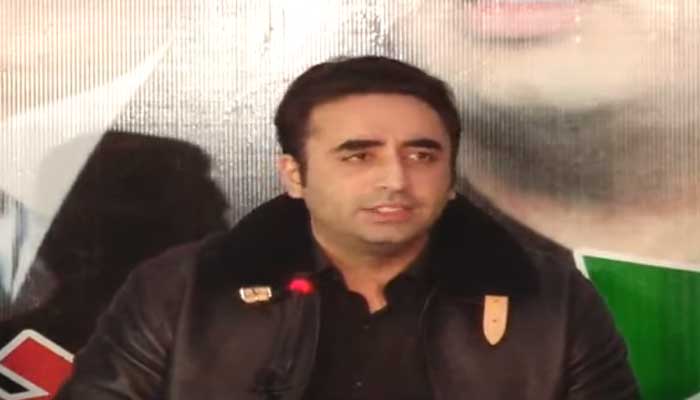
Addressing a press conference, Bilawal said, “I don’t think Mohammed bin Salman’s visit was postponed due to Imran Khan’s long march.”
Berating PTI Chairman Imran Khan, the foreign minister said that the party’s long march on Islamabad was aimed at making the appointment of the next army chief controversial.
“There is no democratic objective of Imran Khan’s long march,” he said, adding that the former prime minister had offered a lifetime extension offer to the incumbent army chief to avoid the no-confidence motion.
“Chief of Army Staff General Qamar Javed Bajwa rejected the offer for the sake of Pakistan,” he added.
The foreign minister maintained that Imran Khan wanted to make the implementation of the constitution controversial.
He held the former prime minister responsible for the economic crisis in the country and said that Khan wanted to sabotage the deal between Pakistan and the International Monetary Fund (IMF).
The PPP chairman said that his party was against sit-ins since the beginning, adding that they adopted a democratic way to oust Imran Khan’s government
Responding to a question, Bilawal said that the army chief’s appointment is the prerogative of the prime minister. He advised the PTI chairman to let the process for appointing the new chief of army staff be completed and postpone his long march for a few days.
He suggested Imran Khan to not make the appointment of the army chief controversial.
It is the last chance for Imran Khan to fulfil his constitutional responsibility otherwise the president will have to face the consequences, he warned.
https://www.geo.tv/latest/453434-bilawal-rejects-rumours-claiming-saudi-crown-princes-visit-postponed-due-to-ptis-long-march
#Pakistan - FM Bilawal stresses need to review counter-terrorism policy to prevent militancy resurgence
"We won’t take a solo flight on the matter of recognition of the Afghan govt,” FM Bilawal says, urging int'l community to get engaged with interim govt.Foreign Minister Bilawal Bhutto-Zardari Friday said Pakistan would not take a solo flight to recognise the interim government of Afghanistan and stressed reviewing the country’s counter-terrorism policy to prevent the resurgence of militancy. Addressing a press conference held on the six months of the government’s foreign policy, Bilawal emphasised the need for an “in-camera review” to reform the approach to counter-terrorism in a bid to prevent the factors that gave rise to militancy in the past.

In response to a question regarding the link between peace in Afghanistan and countering the Tehreek-e-Taliban Pakistan (TTP), the foreign minister said it was important to internally review the policy.
“Never think that TTP’s matter is in black and white as either it would be war or negotiations with them,” he said, highlighting that Pakistan in recent years had undergone a successful journey to eliminate terrorism and extremism from its soil.
‘Won’t take a solo flight on recognition of Afghan govt’
Shedding light on the closure of the Chaman border, he said terrorist attacks on Pakistan’s security forces from the Afghan side led to the closure of the border and urged the Afghan government to take measures accordingly.
“When we came to power, we decided to engage with Afghan authorities regardless of our differences for the greater national interest. We won’t take a solo flight on the matter of recognition of the Afghan government,” he maintained.
He said peace in Afghanistan was crucial for Pakistan and the region, requesting the international community to get engaged with the interim government of Afghanistan to avert a humanitarian crisis.
Bilawal also called upon the authorities in Afghanistan to fulfil the pledges, especially related to human rights and women’s education.
‘Nothing wrong in reexamining our approach’
Bilawal said the coalition government had made efforts to restore the foreign policy objectives by holding “meaningful high-level diplomatic” engagements.
The foreign minister mentioned that the country’s foreign policy was on a positive trajectory to help achieve the goals of development by addressing important issues including counter-terrorism and security and economic cooperation.
He, however, said: “I don’t think there’s anything wrong in admitting we were wrong in some things and right in other things and reexamining our approach and recalibrating the way that we deal with this issue in the context of the developments in our region.”
Bilawal accepts terrorist attacks increased in last one year
The foreign minister mentioned that the nation’s whole-hearted support helped end terrorism from the tribal areas including North Waziristan.
However, he pointed out the involvement of a neighbouring country in carrying out nefarious activities of terrorism in Balochistan.
Commenting on the increasing terror attacks in Pakistan, FM Bilawal said: "Terrorist attacks have increased in the last year. The increase will have to be reviewed again."
The foreign minister, while speaking regarding the ongoing skirmishes at the Pakistan and Afghanistan border in Balochistan, said: "A terror incident has occurred at the Pak-Afghan border. An Indian spy was caught in Balochistan. But despite the difficulties, we want peaceful relations."
The minister added that the people of Pakistan kicked terrorists out of their territories.
‘Pakistan-US relations de-hyphenated’
The foreign minister said the government’s focus was to prioritise the national interest and emphasised maintaining a balanced relationship and a positive outreach with all countries including the United States and China.
He said the relations between Pakistan and the US had been “de-hyphenated”.
He mentioned that due to GSP Plus, the country’s export outlook witnessed an exponential growth of 80% in recent times.
The foreign minister emphasised focusing on “trade instead of aid” with other countries to put the country on the path of economic stability.
‘We welcome Imran Khan’s latest U-turn’
Commenting on PTI chief Imran Khan’s “U-turn” on alleged foreign conspiracy, Bilawal said: “We welcome the latest U-turn of Mr. Khan on leaving the American conspiracy behind”.
He stressed that there had never been a conspiracy by the United States as was earlier stated by Khan. “Pakistan and the US enjoyed a historic relationship in the interest of their people,” he maintained.
"Khan sahib's comment about American conspiracy exists. He himself accepts he took a U-turn. There neither was an American conspiracy nor it still is," the foreign minister said.
Terming the current political climate in the country “a storm in the teacup”, he said the discussion around Khan’s narrative about the United States conspiring against him should stop.
Thursday, November 17, 2022
Tuesday, November 15, 2022
Saturday, November 12, 2022
#Pakistan - The FAO has warned that about 6m people can face acute food insecurity in 28 vulnerable districts of Balochistan, Sindh and KP.

https://www.dawn.com/news/1720440/livestock-loss
Imran Khan Pushes Pakistan to the Edge
https://www.wsj.com/articles/imran-khan-pushes-pakistan-to-the-edge-inter-services-intelligence-army-parliament-assassinations-election-taliban-11668115875?mod=opinion_featst_pos2
Friday, November 11, 2022
Thursday, November 10, 2022
Pakistan, Saudi FMs discuss political and security affairs

The two Foreign Ministers held these discussions as they jointly chaired inaugural session of the Ministerial Committee of Political and Security Pillar of the Saudi-Pakistan Supreme Coordination Committee, held here in the Saudi Ministry of Foreign Affairs.
Underscoring the longstanding fraternal and strategic ties between the two countries, Foreign Minister Bilawal Bhutto Zardari expressed his resolve to further strengthen cooperation across entire spectrum of bilateral relations to realize the aspirations of the leaderships of the two countries, achieve common objectives and push their relationship to reach greater horizons.
The two sides shared assessment of the changing regional and global environments and reaffirmed their commitment to continue coordinating positions on all issues of common concern including, among others, Indian Illegally Occupied Jammu and Kashmir (IIOJ&K), Afghanistan, Yemen and Syria.
Foreign Minister Bilawal Bhutto Zardari reiterated Pakistan’s firm support for safety and security of the Kingdom of Saudi Arabia, a press release issued by the Ministry of Foreign Affairs in Islamabad said.
He stressed the importance of continued coordination between the two countries on combating activities of terrorist groups that aim to undermine the security and stability of the regional countries.
The Foreign Minister also highlighted the need to further strengthen institutionalized linkages between the two countries to counter threats in the security domain; including cyber security, counter terrorism and its financing, organized crimes, drug trafficking and money laundering.
He expressed satisfaction on existing military and defence ties between the two brotherly countries and underscored Pakistan’s commitment to further bolster cooperation in this area.
The meeting was held under the framework of Saudi-Pakistan Supreme Coordination Council which is chaired by the Prime Ministers of both countries.
Senior officials from the Ministries of Foreign, Defence, Interior and the Security and Intelligence Services of both countries also attended the meeting.
https://www.app.com.pk/global/pakistan-saudi-fms-discuss-political-and-security-affairs/
Pakistan wants to further strengthen institutional linkages with GCC, members states: Bilawal

The Foreign Minister, who met with Dr. Nayef Falah M. Al-Hajraf, Secretary General of GCC in Riyadh, said that Pakistan would be ready to host the next round of Strategic Dialogue at an early mutually convenient date in Islamabad, a press release issued by the Ministry of Foreign Affairs said.
Highlighting the importance attached by Pakistan to its relations with the brotherly countries of the Gulf, Bilawal Bhutto Zardari said that Pakistan sees GCC as an important player in the region that can play a vital role in further expanding political and economic ties between Pakistan and Gulf states.
The Foreign Minister and the Secretary General reviewed the status of Pakistan’s ongoing engagements and cooperation with the GCC and its member states.
He expressed satisfaction on the trajectory of the relationship and underscored the need for continuing this momentum going forward.
The Foreign Minister also highlighted the need for early finalization of the ongoing negotiations on Pakistan-GCC Free Trade Agreements and asked technical teams from both sides to synergize their efforts to achieve this common objective.
The Foreign Minister and the Secretary General also shared views on regional and global issues including Indian Illegally Occupied Jammu and Kashmir (IIOJK), Afghanistan and Yemen.
He briefed the Secretary General on Pakistan’s position and assessment on these issues and highlighted that Pakistan and the GCC countries have convergences of interests and positions on all issues of common concern.
https://www.app.com.pk/global/pakistan-wants-to-further-strengthen-institutional-linkages-with-gcc-members-states-bilawal/
#Pakistan #PPP - Bilawal in Riyadh on two-day Saudi visit

Bilawal reached Riyadh from Sharm el-Sheikh, where he was part of the Pakistan delegation, led by Prime Minister Shehbaz Sharif, to attend the COP27 summit. The Foreign Office said that the foreign minister’s visit would deepen Pakistan’s “engagement with Saudi Arabia for enhancing mutually beneficial cooperation”. In the Egyptian Red Sea resort, Bilawal met with his French counterpart, Catherine Colona, on the sidelines of Conference of Parties (COP27) summit. During the meeting, the two foreign ministers agreed to strengthen bilateral ties in diverse fields.According to the Foreign Office, both sides expressed desire to collaborate on addressing the challenges of climate change. Bilawal lauded the efforts of French President Emanuel Macron as part of global campaign to mitigate the effects of climate change. On Tuesday, Foreign Minister Bilawal also met with the Egyptian Foreign Minister Sameh Hassan Shoukry and Iraqi Foreign Minister Dr Fouad Hussein. During the meetings, the foreign ministers discussed bilateral relations and exchanged views on regional and international issues of mutual interest. Bilawal congratulated Shoukry on the excellent arrangements for the COP27. He invited the Egyptian foreign minister to visit Pakistan early next year to commence the bilateral activities for celebrations of 75 years of friendly relations.In the meeting with Dr Hussein, Bilawal reaffirmed Pakistan’s support for Iraq’s territorial integrity and sovereignty. He acknowledged Iraq’s success in the fight against terrorism and appreciated the resilience of Iraqi people in their efforts to overcome challenges and rebuild the country.Matters pertaining to Pakistani pilgrims visiting Iraq and the people-to-people contacts also came under discussion. While appreciating the measures taken by the Iraqi government for the well-being of the pilgrims, Bilawal requested his counterpart for facilitating the Pakistanis during Ashura Muharram and Arbaeen.
https://tribune.com.pk/story/2385639/bilawal-in-riyadh-on-two-day-saudi-visit