Monday, October 17, 2022

Pakistan No Country for Minorities? Kidnapping, Rape, Forced Conversions of Hindus, Sikhs on Rise | Exclusive

From kidnapping to rape and forced conversions, the atrocities against minorities in Pakistan are on the rise, said sources. More than 10 Hindu girls were abducted and raped in 2022,
Recent cases in point: A minor Hindu girl, Chanda Mehraj, has been kidnapped from Hyderabad, Pakistan. According to her parents, she was kidnapped from Fateh Chowk area while returning home. A police complaint has been lodged, but she is yet to be found. The family claimed she was being harassed by Shaman Magsi.A 13-year-old Sikh boy was gang-raped in Jacobabad, Pakistan. The Sindh Police arrested accused Mohsin Jamali and Takri Lashari, but they managed to escape from the civil line police station Jacobabad.
In September, a married Hindu woman and two teenaged girls were allegedly abducted, forcibly converted, and married to Muslims in Sindh province.
Amid the floods in Sindh, a Hindu girl was raped by two locals on the pretext of providing food. In another incident, two Hindu women foiled a rape bid by an unknown person on road side tents in Sindh. In June, a Hindu teenager, Kareena Kumari, told a court in Karachi that she was forcibly converted to Islam and married to a Muslim man. In March, three Hindu girls – Satran Oad, Kaveeta Bheel, Anita Bheel – were abducted, converted to Islam and married to Muslim men within eight days. On March 21, Pooja Kumari was brutally shot dead outside her home in Rohri, Sukkur. Apparently, a man wanted to marry her but she refused, so they killed her.
SINDH: A PROBLEM AREA
The forcible conversion of young Hindu girls has become a major problem in the interior of Sindh province, which has a large Hindu population in Thar, Umerkot, Mirpurkhas, Ghotki and Khairpur areas. Most of the Hindu community members are labourers. On July 16, 2019, the issue of abducting and forcibly converting Hindu girls in various districts of Sindh province was taken up in the Sindh Assembly, where a resolution was debated and unanimously passed after it was modified over objections of certain lawmakers that it should not be restricted to Hindu girls only. But the bill which criminalised forcible religious conversions was later rejected in the assembly. A similar bill was again proposed but rejected last year. SINDH: A PROBLEM AREA The forcible conversion of young Hindu girls has become a major problem in the interior of Sindh province, which has a large Hindu population in Thar, Umerkot, Mirpurkhas, Ghotki and Khairpur areas. Most of the Hindu community members are labourers. On July 16, 2019, the issue of abducting and forcibly converting Hindu girls in various districts of Sindh province was taken up in the Sindh Assembly, where a resolution was debated and unanimously passed after it was modified over objections of certain lawmakers that it should not be restricted to Hindu girls only. But the bill which criminalised forcible religious conversions was later rejected in the assembly. A similar bill was again proposed but rejected last year.

#Pakistan: 14-year-old Hindu girl kidnapped, converted to Islam, forcibly married to her abductor

Family of the minor girl said that their teenage daughter was recently abducted from Islamkot Tharparkar Sindh Village and was converted into Islam by Samaru Pir Jan Sirhandi. She was then forcibly married to her abductor Shaukat s/o Murad Hanhrjo
Hindus in Pakistan have been constantly facing atrocities and over the recent past, there have been spate of incidents where minor girls are abducted and converted to Islam. In the latest, a 14-year-old Hindu girl has been married to a Muslim man after changing her religion.A teenage Hindu girl was recently abducted from Islamkot Tharparkar Sindh Village and was converted into Islam by Samaru Pir Jan Sirhandi. She was then forcibly married to her abductor Shaukat, son of Murad Hanhrjo, her family members said.
Atrocities against women continue in Pakistan
The targeting of religious minorities, especially young girls and women, has been picking up pace recently.The incident took place amid massive protests in Pakistan’s Hyderabad where Sindhi Hindus took to street to raise their voice against religious conversion of Hindu girls and boys.
The protesters have been demanding immediate legislation on the issue of abduction of minority girls.

A 15-year-old Hindu Brahmin girl was allegedly kidnapped by four Muslim men on 12 August when she was returning from a local mill where she worked.

The girl’s mother continuously pled for registering a missing complaint but it all went in deaf ears. Police took over a month to file a case and two months on, there has been no trace of the minor girl.

‘On an average, 3 minor Hindu girls abducted on a daily basis in Pakistan’

In a letter to the Ministry of External Affairs (MEA), Hindu rights activist Mahesh Vasu said has detailed list of “genocide and persecution of Hindus in Pakistan duly reported by the Regional TV News in the month of September 2022.”

According to Mahesh Vasu, on an average three minor Hindu girls are abducted on a daily basis, gang-raped, filmed naked, tortured, forcibly converted to Islam and married to their abductor in Pakistan.

Vasu, who is associated with Nimittekam, a non-profit engaged in easing the entry of Hindus and Sikhs from Pakistan to India and rehabilitating them, said in September 2022 alone, there were two cases of abduction, gang-rape, forced conversion and marriage at gunpoint in Pakistan. Both the victims are mothers.

https://www.firstpost.com/world/pakistan-14-year-old-hindu-girl-kidnapped-converted-to-islam-forcibly-married-to-her-abductor-11463971.html

Sunday, October 16, 2022

#PPP Music Video - #pppofficial #BilawalBhuttoZardari - Aya Aya bilawal Chaya chaya bilawal

#PPP Music Video - Dila Teer Bija

کراچی اور ملتان سے الوداع پی ٹی آئی! بلاول بھٹو زرداری

پاکستان پیپلز پارٹی (پی پی پی) کے چیئرمین بلاول بھٹو زرداری نے کراچی اور ملتان میں اپنی پارٹی کے امیدواروں کی فتح کے بعد پی ٹی آئی کو واضح پیغام دے دیا۔

اپنے ٹوئٹر پیغام میں بلاول بھٹو نے تحریر کیا کہ ’کراچی اور ملتان سے الوداع پی ٹی آئی!‘

 بلاول بھٹو زرداری نے کہا کہ 2018 میں چوری کی گئی نشستوں پر عمران خان کو شکست دینے پر مبارک باد پیش کرتا ہوں۔

پی پی چیئرمین نے کہا کہ عمران خان کو شکست دینے پر بھائی موسیٰ گیلانی اور عبدالحکیم بلوچ کو مبارک باد دیتا ہوں۔


https://jang.com.pk/news/1147956 

#Pakistan - #PPP's Ali Musa Gilani wins NA-157 by-election

 In a major upset for Pakistan Tehreek-e-Insaf (PTI), Pakistan Peoples’ Party (PPP) candidate Ali Musa Gilani on Sunday won by-election for NA-157 Multan.

According to the unofficial reports, PPP candidate and son of former prime minister Yousaf Raza Gilani, Ali Musa Gilani secured victory by obtaining 10,7327 votes.

On the other hand, his opponent, daughter of former foreign minister and Pakistan Tehreek-e-Insaf (PTI) vice chairman Shah Mahmood Qureshi, Meherbano Qureshi could only obtain 82,141 votes.

It should be remembered that Ali Musa Geelani had previously won the by-election in the former federal government of Pakistan People s Party in 2012. Later, for the by-elections held in Punjab, Zain Qureshi left the said seat and contested on the provincial seat, on which he defeated the PML-N candidate.

https://dunyanews.tv/en/Pakistan/671730-PPP-Ali-Musa-Gilani-wins-NA-157-by-election

#Pakistan #PPP - Minister for Foreign Affairs Bilawal Bhutto Zardari extends best wishes to Chinese Communist Party on 20th National Congress


Minister for Foreign Affairs Bilawal Bhutto Zardari Sunday extended his best wishes to the Communist Party of China (CPC) on its 20th National Congress.

In a message, Bilawal Bhutto said throughout its history, the Chinese Communist Party had made enormous contributions to progress and prosperity of the Chinese nation and for global peace.

“Leaders like Chairman Mao hold a legendary status in this journey and the Chinese march towards development. Now under the visionary leadership of the General Secretary Xi Jinping, the People’s Republic of China is moving at a fast pace towards the great rejuvenation of the Chinese nation, he added.

Bilawal said that the 20th National Congress was taking place at a time when the tides had changed and were transforming the international political, economic and social landscape. “I am confident that under the wise leadership of the CPC, China will continue to play its due role in the international politics and for global peace.”
“Pakistan Peoples Party and the Communist Party of China enjoy a rich history of bilateral cooperation and exchanges,” he recalled.

“Steered by my grandfather Shaheed Zulfikar Ali Bhutto and my parents Shaheed Mohtarma Benazir Bhutto and former president Asif Ali Zardari, the two parties have established close bonds and contributed to solidify bilateral friendship between our two countries.”

The Foreign Minister said the people of Pakistan had watched with great fascination and pride the ascent of its closest friend and strategic partner.

As all weather strategic partners and iron brothers, the Foreign Minister said we are inspired by the CPC’s foresight in steering the Chinese nation on a path of high quality governance and socio economic development,

https://www.pakistantoday.com.pk/2022/10/16/bilawal-extends-best-wishes-to-chinese-communist-party-on-20th-national-congress/

We are confident that our close partnership will continue to grow from strength to strength, he said and added that he was certain that the outcome of the 20th National Congress of the Party would serve to further strengthen bilateral friendship and promote deeper cooperation as envisioned by the two peoples of Pakistan and China.
As I congratulate the Chinese people on the occasion of the 20th National Congress of the CPC, I extend my best wishes for the continued peace and prosperity of the people of China under the leadership of the Communist Party of China, he expressed.

Saturday, October 15, 2022

Music Video - #GunsNRoses #GnR #NovemberRain Guns N' Roses - November Rain

Video Report - #china #maozedong #xijinping SUPERPOWER: 100 years of communism in China - an incredible success story | WELT Documentary

Video Report - #putin #biden #russia Putin Says ‘No Need’ For Peace Talks With President Biden

Video Report - Biden wraps up West Coast campaign ahead of midterms

Video Report - President Biden’s speech in Portland

#PPP - کل بھی بھٹو زندہ تھا،آج بھی بھٹو زندہ ھے

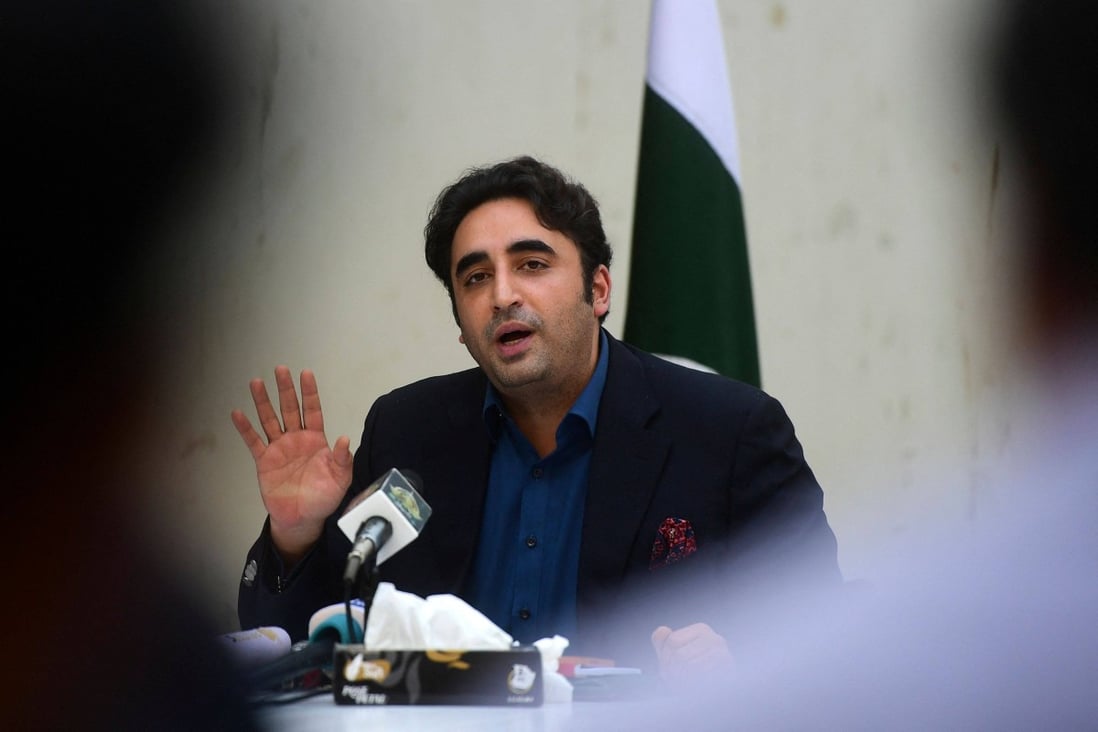
Video Report - Chairman PPP & FM Bilawal Bhutto Zardari addresses a press conference at Bilawal House Karachi

Video Report - Pakistan with 'nuclear weapons without cohesion' is a dangerous nation in the world: US Prez Biden

Video Report - #US #presidentbiden #worldnews Pakistan summons US envoy after Biden's 'dangerous nation' comment

Pakistan to summon US ambassador, issue demarche over Biden's remarks


 Foreign Minister Bilawal says we have just started our journey of engagement with the United States.

Foreign Minister Bilawal Bhutto Zardari said on Saturday that Pakistan has summoned the Ambassador of the United States to Pakistan Donald Blome for an official demarche following US President Joe Biden’s remarks about the country’s nuclear assets.
While addressing a press conference in Karachi, the foreign minister said, “I have discussed it with the prime minister and we have summoned Ambassador of the United States to Pakistan Donald Blome to the Foreign Office of Pakistan for an official demarche.” “As far as the safety and security of Pakistan's nuclear assets are concerned we meet all, each and every international standard in accordance with the International Atomic Energy Agency (IAEA),” he added. Talking about India’s accidental firing of a missile into Pakistan on March 9, the foreign minister furthered, “As far as I’m concerned in our neighborhood, if there is any question as to nuclear safety and security then those questions should be directed to our neighbor India who very recently, accidentally, fired a missile into Pakistani territory. That is not only irresponsible, that is not only unsafe but raises genuine concerns about the safety of nuclear-capable countries.”“I am surprised by the remarks of President Biden I believe this is exactly the sort of misunderstanding that is created when there is a lack of engagement. Luckily, we have embarked on a journey of engagement. We have just marked the 75th anniversary of our bilateral relations in a very engaging manner at the State Department, and the at the level of secretary of state and the foreign minister of Pakistan. If this was such a concern, I imagine that it would have been raised in that meeting with me,” he added.
The minister also stated that we will have many more opportunities to engage with the United States and address any concerns and misconceptions they might have in regard to the specific question.
The statement by the foreign minister comes after United States President Joe Biden said earlier that Pakistan may be “one of the most dangerous nations in the world” as the country has “nuclear weapons without any cohesion”, it was reported on Saturday.
The US president made the comments while addressing a Democratic congressional campaign committee reception on Thursday. “And what I think is maybe one of the most dangerous nations in the world: Pakistan. Nuclear weapons without any cohesion,” Biden was quoted as saying in a transcript of the address, published on the White House’s website.
The minister further said that an opportunity should be allowed to the US to explain the position. "I don't believe that this should negatively impact Pakistan and the United States. We will continue on the positive trajectory of the engagements that we are having so far," added the PPP chairman.
Floods in Pakistan
The foreign minister said one out of seven Paksitani is affected by floods in the country. He added that Gilgit-Baltistan, Khyber-Pakhtunkhwa, southern Punjab, Balochistan and Sindh are badly affected by the floods, adding that a lot of areas are still inundated. "We are still distributing aid to the affectees and as the foreign minister, trying to get aid from all over the world," he added.
By-elections in the country
Bilawal furthered that by-elections have been announced in the country, adding that this is a misconception that he does not give importance to these elections as he was unable to campaign."These by-elections are very important. By-elections are to be conducted on October 16 across the country.... these by-elections are of importance to the people of those areas."The minister further said these elections wll give people an opportunity to select a representative from their area who can solve their problems and address their issues.
Bilawal further said that the struggle against the PTI chief started from Karachi and that the people of the country and Sindh 'said goodbye' to Imran.
https://tribune.com.pk/story/2381722/pakistan-to-summon-us-ambassador-issue-demarche-over-bidens-remarks

Wednesday, October 12, 2022

Video Report - #SaudiArabia #Biden #oil Should Saudi Arabia worry? Biden warns of consequences over OPEC+ oil cuts

Video Report - Biden vows "consequences" for Saudi Arabia after OPEC decision to cut oil production

Video Report - Saudi Arabia official responds to Biden's threats over oil cuts

Video Report - #abortion 🇺🇸 How are new abortion laws affecting women in the United States? | The Stream

OPINION: We Are Suddenly Taking On China and Russia at the Same Time

THOMAS L. FRIEDMAN

In case you haven’t noticed, let me alert you to a bracing turn of events: The U.S. is now in conflict with Russia and China at the same time. Grandma always said, “Never fight Russia and China at the same time.” So did Henry Kissinger. Doing so may be necessary to secure our national interests. But have no doubt: We are in uncharted waters. I just hope that these are not our new “forever wars.”
The struggle with Russia is indirect, but obvious, escalating and violent. We are arming the Ukrainians with smart missiles and intelligence to force the Russians to withdraw from Ukraine. While taking nothing away from the bravery of the Ukrainians, the U.S. and NATO’s support has played a huge role in Ukraine’s battlefield successes. Just ask the Russians. But how does this war end? No one can tell you.
Today, though, I want to focus on the struggle with China, which is less visible and involves no shooting, because it is being fought mostly with transistors that toggle between digital 1s and 0s. But it will have as big, if not bigger, an impact on the global balance of power as the outcome of the combat between Russia and Ukraine. And it has little to do with Taiwan. It is a struggle over semiconductors — the foundational technology of the information age. The alliance that designs and makes the smartest chips in the world will also have the smartest precision weapons, the smartest factories and the smartest quantum computing tools to break virtually any form of encryption. Today, the U.S. and its partners lead, but China is determined to catch up — and we are now determined to prevent that. Game on.
Last week, the Biden administration issued a new set of export regulations that in effect said to China: “We think you are three technology generations behind us in logic and memory chips and equipment, and we are going to ensure that you never catch up.” Or, as the national security adviser Jake Sullivan put it more diplomatically: “Given the foundational nature of certain technologies, such as advanced logic and memory chips, we must maintain as large of a lead as possible” — forever.
“The U.S. has essentially declared war on China’s ability to advance the country’s use of high-performance computing for economic and security gains,” Paul Triolo, a China and tech expert at Albright Stonebridge, a consulting firm, told The Financial Times. Or as the Chinese Embassy in Washington framed it, the U.S. is going for “sci-tech hegemony.”
But where does this war end? No one can tell you. I don’t want to be ripped off by a China that is increasingly using technology for absolute control at home and creepy power-projection abroad. But if we are now locked on a path of denying China advanced technologies forever — eliminating any hope of win-win collaborations with Beijing on issues like climate and cybercrime, where we face mutual threats and are the only two powers that can make a difference — what kind of world will that produce? China should be asking the same questions. All I know for sure is that regulations issued Friday by President Biden’s Commerce Department are a huge new barrier when it comes to export controls that will block China from being able to buy the most advanced semiconductors from the West or the equipment to manufacture them on its own.
The new regulations also bar any U.S. engineer or scientist from aiding China in chip manufacturing without specific approval, even if that American is working on equipment in China not subject to export controls. The regs also tighten the tracking to ensure that U.S.-designed chips sold to civilian companies in China don’t get into the hands of China’s military. And, maybe most controversially, the Biden team added a “foreign direct product rule” that, as The Financial Times noted, “was first used by the administration of Donald Trump against Chinese technology group Huawei” and “in effect bars any U.S. or non-U.S. company from supplying targeted Chinese entities with hardware or software whose supply chain contains American technology.”
This last rule is huge, because the most advanced semiconductors are made by what I call “a complex adaptive coalition” of companies from America to Europe to Asia. Think of it this way: AMD, Qualcomm, Intel, Apple and Nvidia excel at the design of chips that have billions of transistors packed together ever more tightly to produce the processing power they are seeking. Synopsys and Cadence create sophisticated computer-aided design tools and software on which chip makers actually draw up their newest ideas. Applied Materials creates and modifies the materials to forge the billions of transistors and connecting wires in the chip. ASML, a Dutch company, provides the lithography tools in partnership with, among others, Zeiss SMT, a German company specializing in optical lenses, which draws the stencils on the silicon wafers from those designs, using both deep and extreme ultraviolet light — a very short wavelength that can print tiny, tiny designs on a microchip. Intel, Lam Research, KLA and firms from Korea to Japan to Taiwan also play key roles in this coalition. The point is this: The more we push the boundaries of physics and materials science to cram more transistors onto a chip to get more processing power to continue to advance artificial intelligence, the less likely it is that any one company, or country, can excel at all the parts of the design and manufacturing process. You need the whole coalition. The reason Taiwan Semiconductor Manufacturing Company, known as TSMC, is considered the premier chip manufacturer in the world is that every member of this coalition trusts TSMC with its most intimate trade secrets, which it then melds and leverages for the benefit of the whole. Because China is not trusted by the coalition partners not to steal their intellectual property, Beijing is left trying to replicate the world’s all-star manufacturing chip stack on its own with old technologies. It managed to pilfer a certain amount of chip technology, including 28 nanometer technology from TSMC back in 2017.
Until recently, China’s premier chip maker, Semiconductor Manufacturing International Company, had been thought to be stuck at mostly this chip level, although it claims to have produced some chips at the 14 nm and even 7 nm scale by jury-rigging some older-generation Deep UV lithography from ASML. U.S. experts told me, though, that China can’t mass produce these chips with precision without ASML’s latest technology — which is now banned from the country.
This week I interviewed U.S. Secretary of Commerce Gina Raimondo, who oversees both the new export controls on chips and the $52.7 billion that the Biden administration has just secured to support more U.S. research on next-generation semiconductors and to bring advanced chip manufacturing back to the U.S. Raimondo rejects the idea that the new regulations are tantamount to an act of war. “The U.S. was in an untenable position,” she told me in her office. “Today we are purchasing 100 percent of our advanced logic chips from abroad — 90 percent from TSMC in Taiwan and 10 percent from Samsung in Korea.” (That IS pretty crazy, but it IS true.) “We do not make in the U.S. any of the chips we need for artificial intelligence, for our military, for our satellites, for our space programs” — not to mention myriad nonmilitary applications that power our economy. The recent CHIPS Act, she said, was our “offensive initiative” to strengthen our whole innovation ecosystem so more of the most advanced chips will be made in the U.S.
Imposing on China the new export controls on advanced chip-making technologies, she said, “was our defensive strategy. China has a strategy of military-civil fusion,” and Beijing has made clear “that it intends to become totally self-sufficient in the most advanced technologies” to dominate both the civilian commercial markets and the 21st century battlefield. “We cannot ignore China’s intentions.”
So, to protect ourselves and our allies — and all the technologies we have invented individually and collectively — she added, “what we did was the next logical step, to prevent China from getting to the next step.” The U.S. and its allies design and manufacture “the most advanced supercomputing chips, and we don’t want them in China’s hands and be used for military purposes.” Our main focus, concluded Raimondo, “is playing offense — to innovate faster than the Chinese. But at the same time, we are going to meet the increasing threat they are presenting by protecting what we need to. It is important that we de-escalate where we can and do business where we can. We don’t want a conflict. But we have to protect ourselves with eyes wide open.”
China’s state-directed newspaper Global Times editorialized that the ban would only “strengthen China’s will and ability to stand on its own in science and technology.” Bloomberg quoted an unidentified Chinese analyst as saying “there is no possibility of reconciliation.”
https://www.nytimes.com/2022/10/12/opinion/china-semiconductors-exports.html

Sunday, October 9, 2022

Music Video - #360RA #dojacat #kissmemore Doja Cat - Kiss Me More

Music Video - Taylor Swift - Look What You Made Me Do

Video Report - #china #USA #covid19 Living with the pandemic – but how? | COVID-19 Special

Video Report - North Korea’s Kim oversaw recent ‘tactical nuclear’ drills, state media says

Video Report - #NuclearArmageddon #PresidentJoeBiden #Russia Biden warns of nuclear 'Armageddon' threat from Putin

Video Report - #IranRevolution2022 #IranianLivesMatter #IranianWomen - Iran unrest: Solidarity protests spread internationally | ABC News

Video Report - More than 180 dead as protests grip Iran - مرگ بر آیت الله خمینی، مرگ بر قوانین اسلامی، مرگ بر ملاها، مرگ بر دیکتاتور، مرگ بر انقلاب اسلامی

Video Report - Iran: Demonstrations enter their fourth week; schoolgirls at the forefront of protests

Video Report - #iran #protests #women Violent protests continue across Iran

Video Report - ‘Join us and stand up!’: Iran protests following death of Mahsa Amini enter fourth week

Music Video - Lokan Do Do Yar Banaye - Afshan Zaibi

Ghazal - Main Sharabi Hun | Attaullah Khan Essakhelvi - میں شرابی ہوں۔

Video Report - #pmap #mashaalradio #pashtunculture پښتونخوا ملي‌ عوامي‌ ګوند د خپلو وژل شوو غړو تلین لمانځلی

Video Report - #CyberCrime #GeoDigital #GeoNews Explained: Cyber Crime | How to Protect Yourself from this? | Geo Digital

Pakistan: Bilawal Bhutto calls for climate justice, rejects Western pressure over Ukraine


In a DW interview, Pakistan's foreign minister says people in his country are paying the price for the industrialization of richer nations. He stressed Islamabad is determined to stay neutral in the Russia-Ukraine war.

Pakistan has witnessed catastrophic flooding over the past few weeks that have affected more than 33 million people — some 15% of the nation's population — and submerged a third of the country.

The natural disaster has killed over 1,500 people and caused damage worth billions of dollars, compounding the woes of an economy already beset by a raft of problems, ranging from a heavy debt burden and ballooning current account deficit to a tumbling currency and skyrocketing inflation, particularly food prices.

Eight million people still remain displaced, and the World Bank said that the loss of jobs, livestock, harvests and houses as well as the spread of disease, among other problems, threaten to throw millions of people into poverty.

Scientists have said the recent devastating flooding in Pakistan was made worse by climate change caused by greenhouse-gas emissions, which is leading to some kinds of extreme weather becoming more frequent and intense.

Pakistan's Foreign Minister Bilawal Bhutto Zardari is currently visiting Berlin, where he held talks with German authorities to gather support for his country's efforts to help flood victims and overcome a worsening economic crisis.

On Friday, Bhutto Zardari met with his German counterpart Annalena Baerbock. In a joint press conference after the meeting, he described the floods in his country as a crisis of "biblical proportions." The German foreign minister told him that Pakistan can count on German solidarity, offering financial support worth €60 million ($58.4 million).

"I'm grateful to Foreign Minister Baerbock for her hospitality," Bhutto Zardari told DW's Richard Walker. "Going forward, we want to work with our partners, including our friends in Germany, on figuring out ways to finance the reconstruction and rehabilitation as a result of the devastation caused by the floods," he added.

'Not a charity'

Some Pakistani government officials, however, have slammed the international response to the climate catastrophe in Pakistan as "inadequate."

But Western countries are currently busy dealing with rising tensions with Russia, which invaded Ukraine in February.

As a result of the war in Ukraine, European countries are facing an energy crisis and record inflation. The German government recently announced that it wanted to spend €200 billion on trying to keep energy prices low in the country.

The Pakistani foreign minister said that he understands the difficulties Europe is facing right now. "We've just faced a pandemic that has affected the economies of countries everywhere. We've also seen the devastation in Ukraine and the sanctions that come along with it. That has resulted in difficulties for the people of Germany, just as it's resulted in difficulties for the people of Pakistan," he said.

Bhutto Zardari, however, pointed out that helping Pakistan deal with the climate crisis is not a "charity" from Western nations.

"It's a question of justice that a country that produces 0.8% of the global carbon footprint is the eighth most climate stressed country on the planet. Some 33 million people are paying with their lives and their livelihoods for the industrialization of richer countries," he said, underlining that "this is a global problem demanding global actions."

"We hope that it also has global solutions despite the incredible difficulties that everybody is facing at this time," the minister added.

Ukraine-Russia conflict: Islamabad refuses to take sides

Former Pakistani Prime Minister Imran Khan was slammed by the West for visiting Moscow at the time when Russian forces began their invasion of Ukraine. Later, Khan accused the US of being involved in a "conspiracy" to oust him from power.

However, the stance of the new government, headed by Prime Minister Shehbaz Sharif, to the Ukraine crisis isn't much different, with Pakistan trying its best to remain neutral.

Pakistan abstained on a UN General Assembly resolution in March condemning Russia's Ukraine war and is likely to do the same when the body votes on a new draft resolution next week.

"We have a principled position to abstain and not be drawn into a new conflict," Bhutto Zardari said. "We had the fall of Kabul just a year ago, and that was for us one conflict after another, decades after decades, as we've confronted war and devastation in our neighborhood," he added.

Bhutto Zardari said that Pakistan is still facing the consequences of the Taliban's seizure of power in Afghanistan, adding that NATO ended the war "without consulting us or without significant engagement with the previous civilian government in Afghanistan."

"We have longstanding ties with Ukraine. We used to import wheat from Ukraine. We still believe that dialogue and diplomacy is absolutely necessary for us to resolve this conflict," he said.

https://www.dw.com/en/pakistan-bilawal-bhutto-calls-for-climate-justice-rejects-western-pressure-over-ukraine/a-63375633

Saturday, October 8, 2022

Video Report - Pakistan: The Great Deluge | The Full Report

Video Report - Joint Press Stakeout by FM of Pakistan Bilawal Bhutto Zardari and German FM Annalena Baerbock

With India Opting For ‘Strategic Autonomy’ The US Is Back To Wooing rival Pakistan – Analysis

By P. K. Balachandran
But commentators suggest that the US should shed its geostrategic approach and adopt a human-centric perspective if it is to succeed in Pakistan.
Since the United States is finding India to be a recalcitrant partner, given New Delhi’s penchant for “strategic autonomy”, Washington has reverted to its old policy of cultivating Pakistan, India’s rival in South Asia.

In the past, Pakistan had its uses for the US, and it could be useful now, but the South Asian nation will pose new challenges to the US that stem from its domestic situation as well as its international links. 

Pakistan is politically unstable and volatile, and is a hotbed of toxic religious schisms and extremism. Its close links with China, manifested in the US$ 62 billion China Pakistan Economic Corridor (CPEC), will make it difficult for the US to ride roughshod over it. China has now supplanted the US as Pakistan’s chief external partner, though in bilateral trade, at US$ 5 billion, the US is number one.     

It is for these reasons that commentators on US-Pakistan relations have been advising Washington to reassess old ways and search for new approaches taking into account the changed ground realities.                

The US may be having short and long-term plans. At the moment, Washington’s aim is to convey to New Delhi that it can hit where it hurts the most. Although India has been having a long-standing dispute with China over the border, and a geopolitical rivalry has emerged, it is Pakistan that remains the bee in the Indian bonnet. It is Pakistan, and not China, which has primacy in India’s international and domestic politics. India is hell-bent on isolating Pakistan in the international arena on the issue of cross-border terrorism. In the domestic arena, an anti-Pakistan stand and not an anti-China stand that earns electoral dividends. Therefore, what the US does to Pakistan will have a greater impact on Indian thinking than its moves vis-à-vis China.  

Bilawal’s Visit  

Washington’s lurch towards Pakistan was evident during the recent visit of Pakistan’s Foreign Minister Bilawal Bhutto Zardari to the US. At a function organized by the Pakistani community, on September 27, US Secretary of State Antony Blinken was effusive. Referring to the unprecedented devastation caused by the floods in Pakistan he said: ” We are here for Pakistan just as we’ve been during past natural disasters, both to meet the immediate needs and, as I said, looking ahead to rebuild.” Blinken pointed out that the US has marshaled over US$ 66 million in immediate humanitarian assistance. He also pointed that Pakistani expats and the US business community had together sent US$ 27 million in essential goods and services. 

“We will continue to stand by Pakistan, to stand by its people, today and in the days to come, because that’s what we’ve done for each other in both directions through much of our shared history. And we have worked together to confront global threats. We continue to work closely on counterterrorism issues,” Blinken said. 

However, he appealed to Bilawal to see the “importance of managing a responsible relationship with India.” Recognizing Islamabad’s close links with Beijing, he asked Bilawal to “engage China on some of the important issues of debt relief and restructure so that Pakistan can more quickly recover from the floods.”  

In his reply, Bilawal was equally effusive. “I absolutely agree that the Pakistan-U.S. relationship is not only resilient, we have stood the test of time.  And we’ve proved throughout history that when we work together, we achieve great things.  And I believe that when we don’t work together, then we fumble, then we falter, then things go wrong,” Bilawal said.

Army Chief’s Weeklong Visit

Bilawal’s visit was followed by a week-long visit to the US of the powerful Pakistani army chief, Gen.Javed Bajwa. This is a critical visit as in Pakistan the army is “The Establishment”, and the ultimate arbiter on domestic and international issues. On October 4, Gen.Bajwa met Secretary of Defense Lloyd Austin in the Pentagon where he was given an “enhanced honor cordon” with the national anthems being played.  

Bajwa was slated to meet the National Intelligence Director Avril D Haines, and CIA Director William J Burns and address think tanks. A meeting with Secretary of State Blinken was also on the cards.  

Pakistan and the US have been having close military relations since the Cold War when Pakistan was part of the anti-Soviet, US-led pacts like CENTO and SEATO. The US roped Pakistan into its post-9/11 ‘War or Terror’. But the two sides did not see eye to eye on the way the war was conducted. Pakistan’s plea that the war had made Pakistan a victim was ignored by the US which accused Pakistan of clandestinely supporting the Taliban and Al Qaida chief Osama bin Laden while taking millions of dollars from the US for the war against them. 

However, even when public opinion in Pakistan turned against the US, the Pakistan army kept its links with the Pentagon. When Prime Minister Imran Khan launched a tirade against the US, accusing it of plotting to overthrow him, army chief Gen. Bajwa did not endorse it.              

Washington had recently given Pakistan US$ 460 million to maintain the F-16 fighters it had given earlier. When India protested, State Department spokesman Ned Price said: “These (India and Pakistan) are both partners of ours with different points of emphasis in each,” thus delinking Pakistan and India.

Taking a softer stand on Pakistan’s anti-terrorism cooperation, the US State Department said in August 2022, that Pakistan “has taken some action against militant groups and UN-designated terrorist organizations in accordance with its National Action Plan against terrorism. However, the implementation of UN sanctions against these entities is uneven. The United States continues to urge Pakistan to take decisive action against these groups while seeking opportunities to work together with Pakistan in areas of mutual interest, such as counterterrorism and border security.”

Words of Caution 

Writing in New York Times Madiha Afzal of the Brookings Institution said that the US should “disentangle” itself from the Pakistan military. “While Pakistan’s military is perceived as more efficient than its civilian institutions, it has repeatedly shown that its incentives are not aligned with America’s. Pakistan’s dominant military has kept active the specter of potential conflict with India, and its intelligence services have cultivated relationships with an array of dangerous non-state armed actors,” she pointed out. 

Afzal argued that a “civilian-focused U.S. policy will help Pakistan begin to shift the balance away from its military and will, in the longer term, bolster Pakistan’s democracy. While that certainly won’t guarantee liberalism in Pakistan, it can in time curb approaches favored by the military — including relationships with jihadists — that have proved harmful for the region and Pakistan itself.”

However, Afzal warns that: “There are risks to this approach. The military and intelligence services in Pakistan won’t be thrilled about this downgrade in their status, and they may choose to retaliate by reducing cooperation in areas like intelligence sharing or by limiting access to Pakistani airspace for counterterrorism operations. Disengagement (with the military) also risks pushing Pakistan further into China’s arms, which is not inevitable.” 

In the mater of counter-terrorism cooperation, she pointed out that international watchdogs like the Financial Action Task Force (FATF) would be more useful than unilateral US sanctions. FATF’s gray-listing of Pakistan in 2018 had prompted it to crack down on Lashkar-e-Taiba and other jihadist groups, Afzal pointed out.

Writing in Newslines Dr. Syed Mohammed Ali of Johns Hopkins University said that the US can create a more sustainable relationship with Pakistan if it transcends its “security-dominated bilateral engagements” and focuses on a “more sustainable, human-centric relationship.” The goal should be about “human security” rather more than “geopolitical security”, Dr.Ali said.

China Factor

In an article in Time on May 29, 2022, Oxford scholar Hasan Ali warned that the US would be up against a powerful pro-China factor in Pakistan. He pointed out to Bilawal’s comment: “I am particularly proud that all three generations of my family have been firmly committed to the Pakistan-China friendship.” 

According to Hasan Ali, the consensus across the political spectrum is that the future belongs to China, and with it, Pakistan’s own future. 

https://www.eurasiareview.com/08102022-with-india-opting-for-strategic-autonomy-the-us-is-back-to-wooing-rival-pakistan-analysis/

Renewed Sectarian Tensions Risk Radicalizing Crisis-hit #Pakistan

By Liam Gibson

Radicalization of the historically moderate Barelvi sub-sect and rapid growth of the local Islamic State chapter could trigger a new wave of inter-communal violence.
This year has seen Pakistan racked by political upheaval, a fiscal crisis, and the worst flooding in its history. There is a real risk of state failure and collapse of law and order analogous to the scenes of chaos that gripped Sri Lanka. Amid the current systemic shocks of the moment, a troubling longer-term trend is emerging that must not be ignored: renewed sectarian extremism.
A new report from the Brussels-based think tank International Crisis Group warns that new extremist undercurrents in the country are paving the way for soaring sectarian violence ahead. A fast-growing local chapter of the Islamic State and a new hardline group from the historically moderate Barelvi sub-sect have the potential to destabilize crisis-hit Pakistan further.
Research has linked mass internal displacement to radicalization, with refugee camps too often becoming hubs for recruiting displaced people into extremist groups. Islamabad will need to counter these trends lest recent turmoil sows the seeds of major insurrections in the years ahead, further destabilizing an already volatile region.Although extremist violence in Pakistan had subsided from the carnage of the late 2000s and early 2010s, data shows attacks are on the rise again in the post-pandemic era. Total terrorism-related incidents have already reached 449 so far this year, the highest count since 2017.The country’s internal dynamics are in flux as the Islamic State Khorasan Province (ISKP) and Tehreek-e-Labbaik Pakistan (TLP) reconfigure the nature of sectarian militancy in the country.ISKP is a local Salafist chapter of the Islamic State. Like al-Qaida before it, ISKP operates in the rugged mountainous frontier with Afghanistan, eroding state control over the already porous borders. The group does not recognize national borders, “Khorasan,” denoting a symbolic area affiliated with the Messianic figure Mahdi that covers parts of Afghanistan, Pakistan, Iran, and surrounding regions.
The ISKP has stepped up its battle with the Taliban for control of parts of Afghanistan this year and has instigated attacks in the southernmost areas of Uzbekistan and Tajikistan. In March, ISKP bombed a Shia mosque in Peshawar, the capital of Pakistan’s Khyber Pakhtunkhwa province, killing at least 60 people.
It has spun up a media outlet, al-Azaim Foundation for Media Production, which has rapidly expanded from Arabic and Pashto to generate content in Urdu, Uzbek, Tajik, Hindi, Malayalam, and launched an English-language magazine, Voice of Khorasan (VoK). The propaganda aims to rally global jihadi recruits as ISIS did so effectively in Iraq and Syria.
While ISKP brings the threat of transnational Salafi jihad back to Pakistan, the domestic influence of the radical TLP is potentially more pernicious.
Pakistan’s extremist Sunni groups have historically been based among the orthodox Deobandi sect. Many, such as Sipah-e-Sahaba Pakistan and Lashkar-e-Jhangvi, gained ground during the anti-Soviet jihad in Afghanistan in the 1980s, thriving under former President Zia-ul-Haq’s ultra-orthodox religious reforms. This led to a wave of Sunni-Shia violence in the 1990s and beyond. Over 4,800 Shias were killed in sectarian violence between 2001 and 2018, according to data from South Asia Terrorism Portal. The Barelvis, who differ in certain observances and constitute a thin majority in Pakistan, had served as a peaceful buffer group between Shia and Deobandi.Yet since 2015, the TLP has been carving out political space for a newly-radicalized Barelvi agenda. The group has also taken a strong anti-Shia line but targeted another sect, the Ahmadi, whose controversial claim to Muslim status has been effectively criminalized in Pakistan.The TLP has leveraged the highly-emotive and often subjective issue of blasphemy to justify organized vigilante violence. Blasphemy remains a capital offense in Pakistan, yet extra-judicial deaths often occur regardless of court proceedings. In December last year, a vigilante mob lynched a Sri Lankan factory manager who had been accused of blasphemy. Video footage showed the attackers chanting slogans propagated by the TLP throughout the violence.
The TLP’s rise to prominence in recent years has coincided with a rapid surge in the number of blasphemy cases in the country, with 2020 seeing at least 200 new cases alone. Former Pakistani counterterrorism officials have blamed TLP’s politicization of blasphemy for further spreading extremism among the public.
Pakistan has been battered by a raft of ethnic, regional, and religious divisions since its founding. Islamabad must now reexamine its policy options as renewed sectarianism risks eroding the country’s social fabric further.The Pakistani military strikes may temporarily quash terrorist cells, but such operations fail to counter the extremist ideologies that drive sectarian militancy. In some instances, these counterterrorist ops can result in unintended or unlawful killings which inadvertently generate sympathy for extremist groups, especially among marginalized communities.Islamabad needs more bottom-up initiatives that engage and empower Pakistani civil society to counter the spread of extremism, including those that prioritize education, women’s rights, social mobility, and economic empowerment of underdeveloped regions. This is especially urgent considering the recent tragic floods that have wrought devastation across much of the country.
Last month, Members of the European Parliament visited Pakistan, urging reforms on human rights issues, including the “misuse of blasphemy laws.” This comes as the EU is in the final stages of monitoring Pakistan’s preferential trade access to the EU market under the “GSP+” scheme, which eliminates duties on certain Pakistani products sold in the EU — Pakistan’s largest export market. Pakistan’s current GSP+ status is set to expire at the end of next year after which it will reapply.
What’s more, in June, the international terror financing and money laundering watchdog Financial Action Task Force (FATF) decided to keep Pakistan on its “gray list” of countries that need to improve measures to counter money laundering and terrorism financing, and plans to conduct an onsite inspection in Pakistan in October. Islamabad is keen to remove itself from the list and claims it has mostly complied with measures set by the organization. The re-emergence of radicalized groups in the country would be a further setback for Islamabad and attract more scrutiny and oversight from the international community going forward.
This raises the stakes substantially. The country is already edging dangerously close to default and can ill afford to be cut off from international lenders. Effective policy here will not only head off the threat posed by sectarian extremism but safeguard Pakistan’s access to the global markets it needs to pull itself out of its current economic malaise.
https://thediplomat.com/2022/10/renewed-sectarian-tensions-risk-radicalizing-crisis-hit-pakistan/

#Pakistan - Higher food prices fuel weekly inflation

The inflation, measured by the Sensitive Price Index (SPI), slightly rose 0.29 per cent week-on-week for the period ended on Oct 6 due to an increase in food prices, showed data released by the Pakistan Bureau of Statistics (PBS) on Friday.
On a year-on-year basis, the SPI posted an increase of 29.44pc largely driven by food and the highest-ever energy prices.
Before this, the highest ever year-on-year increase in the SPI was 45.50pc recorded for the week ending on Sept 1 and 44.58pc for the week ending on Aug 25, 42.70pc in the week ending on Sept 8 and 42.31pc in the week ending on Aug 18.The latest data shows that the SPI slightly went up on a week-on-week basis, mainly because of the increase in prices of tomatoes and onions and other vegetables.The average Consumer Price Index (CPI) based inflation will rise to an average of 23pc in FY23 from 12.2pc in FY22 due to higher domestic energy prices, flood disruptions, and the weaker rupee, predicted by World Bank in its October 2022 Pakistan Development Upd­ate: Inflation and the Poor.The SBP has been tightening its monetary policy to contain surging inflation and the rupee’s rapid depreciation. Since September 2021, the central bank has increased the policy rate by a cumulative 800 bps to reach 15pc, the highest rate since the 2008 global financial crisis.
Soaring vegetable prices due to damage to standing crops and a massive hike in electricity rates have also contributed to higher prices. The damage to standing crops will push up the prices of vegetables in the coming weeks.The International Monetary Fund said in its country’s staff report that the average CPI inflation was expected to surge to 20pc in the current financial year, while core inflation would also remain elevated due to higher energy prices and the rupee’s decline.During the week under review, the prices of 17 out of 51 items increased, 14 decreased, and 20 remained stable.In the food items WoW basis, the prices of tomatoes rose 27.40pc, onions 10.22pc, bananas 2.24pc and powdered milk 1.18pc.In the non-food items, electricity declined for Q 1 (64.23pc) and LPG (3.82pc).
On a year-on-year basis, the items whose prices jumped the most included tomatoes (305.60pc), onions (167.80pc), diesel (92.08pc), petrol (76.07pc), pulse gram (70.02pc), pulse masoor (64.65pc), cooking oil 5 litre (61.43pc), mustard oil (61.21pc), washing soap (60.68pc), vegetable ghee 2.5 kg (57.66pc), pulse mash (55.50pc), vegetable ghee 1 kg (55.37pc) and pulse moong (48.34pc).
https://www.dawn.com/news/1714027/higher-food-prices-fuel-weekly-inflation

Thursday, October 6, 2022

Video Report - Vice President Harris Ceremonially Swears In Dr. Arati Prabhakar as Director of OSTP

Video Report - President Biden Delivers Remarks on Creating Jobs

Video Report - #news #iran #mahsaamini - Iranian government cracks down on protests following Mahsa Amini's death

Video Report - Chairman PPP & FM Bilawal Bhutto Zardari addressing a press conference at CM House Karachi.

Waters receded in Pakistan’s worst-flooded province by 50 percent, Bilawal Bhutto Zardari

Pakistan’s foreign minister on Thursday said that about 50 percent of the water has receded in the country’s worst-hit southern Sindh province, raising hopes that farmers will be able to sow wheat in a first step toward returning to a normal life.
“We are utilizing all of our resources for draining the remaining water in flood-affected areas in Sindh,” Bilawal Bhutto Zardari told a news conference. It was the first time that any official confirmed that the water had dropped 50 percent in Sindh, where 400,000 people are living in relief camps or in tents.
Bhutto-Zardari’s remarks were a sign of hope for hundreds of thousands of farmers who had been uncertain about the sowing of the upcoming wheat crop, which usually starts in October.
Nearly 15 percent of Pakistan’s rice crop and 40 percent of its cotton crop were lost in this year’s flooding, according to officials. The waters wiped out the personal grain stores that many farming families rely on for food year-round.
On Thursday, international aid agency Mercy Corps warned that the approaching cold weather of the winter would pose further threats to disaster-ravaged areas of the country, even as the floodwaters recede. In a statement, Farah Naureen, the agency’s country director for Pakistan, said there was an urgent need for winterized tents and other items for survivors.
The record-breaking flooding, blamed in part on climate change, affected 33 million people, killed nearly 1,700, damaged more than 2 million homes and overall wreaked damage estimated at $30 billion.
Bhutto-Zardari said Pakistan alone cannot handle the devastation caused by climate change.
“We are thankful to the world community for helping us but we need more assistance,” he told reporters in Karachi, the capital of his Sindh province, where 760 people died in floods and 350 survivors later lost life due to the outbreak of diseases.The latest remarks of Bhutto-Zardari also came two days after the United Nations — amid a surge in diseases in flood-hit areas of Pakistan — raised its aid appeal for Pakistan to $816 million from $160 million, saying recent assessments pointed to the urgent need for long-term help lasting into next year.Bhutto-Zardari said Pakistan has witnessed its worst-ever flooding because of climate change since June, although his country contributes less than 1 percent of global greenhouse gas emissions. August rainfall in the Sindh and southwestern Baluchistan provinces was eight and nearly seven times normal amounts, while Pakistan as a whole this summer had three-and-a-half times its normal rainfall.
Bhutto-Zardari criticized former Prime Minister Imran Khan for continuing anti-government rallies even during floods. “I cannot hold such rallies when my people are dying in the floods,” he said.
Khan was ousted from power in April through no-confidence in the parliament.
Bhutto-Zardari said Khan during his tenure strained Pakistan’s ties with many countries, including Washington. His remarks came after Khan vowed to march on Islamabad soon to force Prime Minister Shahbaz Sharif to hold snap elections which are due next year.
Bhutto-Zardari said Pakistan cannot afford to go to the elections when many areas are still submerged. He said Pakistan will first accomplish the task of helping people rebuild homes in flood-hit areas and return to their normal life.
“Elections will be held next year,” he said, amid threats from Khan for a march on Islamabad.
https://www.pbs.org/newshour/world/floodwaters-have-receded-in-pakistans-worst-hit-province-by-50-foreign-minister-says