Monday, September 5, 2022

Flood-hit Pakistan breaches lake in bid to save densely populated cities


 By Hannah Ritchie, Kathleen Magramo and Jan Camenzind Broomby

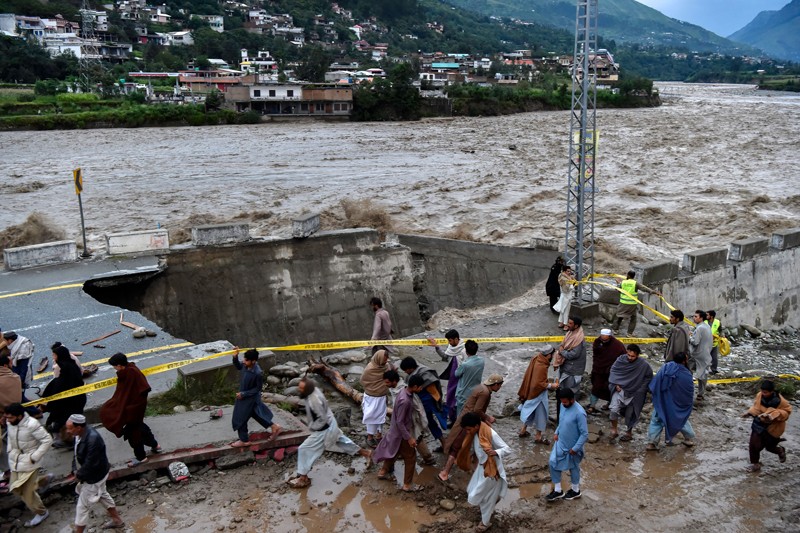
Pakistan authorities intentionally breached the country's largest freshwater lake on Sunday, displacing 100,000 people from their homes but preventing more densely populated area close by from being hit by flood water.
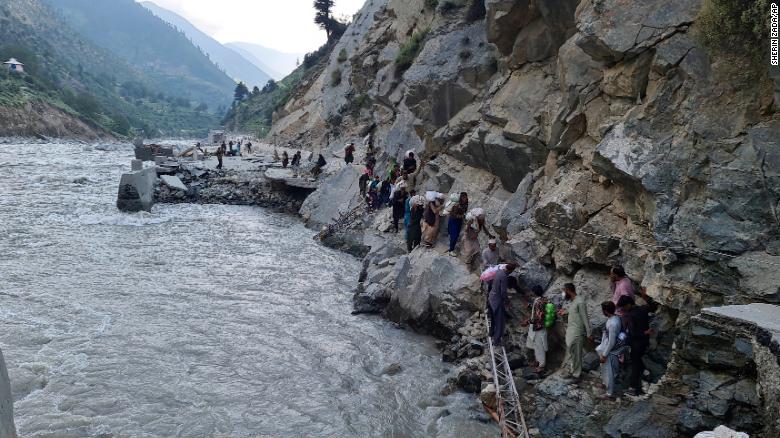
Water levels in Manchar Lake -- located in the country's southeastern Sindh province -- reached dangerously high levels on Sunday, prompting authorities to deliberately breach the lake, according to Jamal Mangan, Pakistan's Irrigation Special Secretary.Water released from the lake flowed into the nearby districts of Jaffarabad and Bubak, with the aim of sparing more populated cities and towns across Sindh, including Sehwan, Dadu and Bhan Syedabad, from the worst of the flooding, according to Mangan.Record monsoon rains that have lashed Pakistan and melting glaciers in the country's northern mountains have affected 33 million people -- or 15% of its population -- according to government officials and aid organizations.A third of Pakistan was left underwater after experiencing the heaviest rains on record, according to satellite images from the European Space Agency (ESA). Some areas -- particularly the southern provinces of Sindh and Balochistan -- have seen five times their normal levels of monsoonal rain.The number of deaths since mid-June rose to 1,305 as of Sunday -- with almost a third of the victims children -- according to the country's National Disaster Management Authority (NDMA).Three million children are now in need of urgent humanitarian assistance across Pakistan due to the increased risk of waterborne diseases, drowning and malnutrition, UNICEF warned in a statement Wednesday.
Several international aid agencies were beginning to arrive in flood-ravaged Pakistan on Monday, delivering much needed food, clean water and medicines to victims of what the United Nations has called a "monsoon on steroids." 'This will not be over in two months' Dr. Deedar Hussain from Pakistan's health department said he feared of an outbreak of waterborne diseases if the flood waters do not recede fast enough."Many patients have come to us. According to our register, we have received 16,000 patients (from over the district). Mostly patients are suffering from allergy because of (flood) water, and there are patients suffering from diarrhea and fever. Also there are patients suffering from malaria as we are conducting malaria parasite tests on them," Hussain told Reuters on Saturday.
Aurélie Godet, a press officer with Médecins du Monde, told CNN on Thursday the flood waters had washed away everything. "Survivors must start from scratch. They need urgently dignified shelters, affordable food, access to health and to basic commodities. But this will not be over in two months, they need a long-term aid," Godet said. Godet said that children have been coming to their clinics with severe injuries on their feet because they have no shoes. And she said some people can't afford their regular medicine because of price increases that are also making food too expensive, even outside the flood zone.
"In the dryer areas, survivors are telling us that one difference now for them is the prices of the food, because the roads are inaccessible. It is four times the prices of the market. They cannot afford to eat," she said. Pakistan's Prime Minister Shehbaz Sharif said on August 30 the floods were "the worst in the country's history" and estimated the calamity had caused more than $10 billion in damages to infrastructure, homes and farms.
According to charity Action Against Hunger, 27 million people in the country did not have access to enough food prior the floods, and now the risk of widespread hunger is even more imminent.
https://www.cnn.com/2022/09/05/asia/pakistan-floods-lake-manchar-intl-hnk/index.html

Sunday, September 4, 2022

Pashto Music Video - Hidayatullah : Band Ka Taweezuna Laila : بند که تعويزونه ليلي : هدايت الله

Nashenas _ Za Kho Sharabi yom.

Video Report - پاکستان: يوه غير دولتي اداره زرګونه سېلاو ځپلو ته خواړه ورکوي

Rich nations owe reparations to countries facing climate disaster, says Pakistan minister Sherry Rehman


Sherry Rehman, the country’s climate change minister, insists rich polluters must pay their due as the country is hit by devastating floods.


Rich polluting countries which are predominantly to blame for the “dystopian” climate breakdown have broken their promises to reduce emissions and help developing countries adapt to global heating, according to Pakistan’s minister for climate change, who said reparations were long overdue.

Close to 1,300 people are dead and a third of Pakistan is under floodwater after weeks of unprecedented monsoon rains battered the country – which only weeks earlier had been suffering serious drought.

In an interview with the Guardian, the climate minister, Sherry Rehman, said global emission targets and reparations must be reconsidered, given the accelerated and relentless nature of climate catastrophes hitting countries such as Pakistan.

“Global warming is the existential crisis facing the world and Pakistan is ground zero – yet we have contributed less than 1% to [greenhouse gas] emissions. We all know that the pledges made in multilateral forums have not been fulfilled,” said Rehman, 61, a former journalist, senator and diplomat who previously served as Pakistan’s ambassador to the US.
“There is so much loss and damage with so little reparations to countries that contributed so little to the world’s carbon footprint that obviously the bargain made between the global north and global south is not working. We need to be pressing very hard for a reset of the targets because climate change is accelerating much faster than predicted, on the ground, that is very clear.”
An area the size of the state of Colorado is inundated, with more than 200 bridges and 3,000 miles of telecom lines collapsed or damaged, Rehman said. At least 33 million people have been affected – a figure expected to rise after authorities complete damage surveys next week. In the Sindh district, which produces half the country’s food, 90% of crops are ruined. Entire villages and agricultural fields have been swept away.
The main culprit is unprecedented relentless torrential rain, with some towns receiving 500 to 700% more rainfall than normal in August. Large swaths of land are still under eight to 10 ft of water, making it extremely difficult to drop rations or put up tents. The navy is carrying out rescue missions in normally arid areas where boats have never been seen, according to Rehman. “The whole area looks like an ocean with no horizon – nothing like this has been seen before,” said Rehman. “I wince when I hear people say these are natural disasters. This is very much the age of the anthropocene: these are man-made disasters.” Many have fled inundated rural areas looking for food and shelter in nearby cities which are ill-equipped to cope, and it is unclear when – or if – they will ever be able to go back. The total number of people remain stranded in remote areas, waiting to be rescued, remains unknown.
The water will take months to drain, and – despite a brief pause in the downfall – more heavy rain is forecast for mid-September.


You can’t walk away from the reality that big corporations that have net profits bigger than the GDP of many countries need to take responsibility.Sherry Rehman
Rehman, who was named minister for climate change in April amid a political and economic crisis that saw the ousting of the prime minister, Imran Khan, has said the government was doing everything possible but rescue and aid missions had been hampered by ongoing rain and the sheer scale of need.While sympathetic to the global economic challenges caused by the Covid pandemic and war in Ukraine, she was adamant that “richer countries must do more”.“Historic injustices have to be heard and there must be some level of climate equation so that the brunt of the irresponsible carbon consumption is not being laid on nations near the equator which are obviously unable to create resilient infrastructure on their own,” she said.
There are also growing calls for fossil fuel companies – making record profits as a result of Russia’s war in Ukraine – to pay for the damage caused by global heating to developing countries.Rehman said: “Big polluters often try to greenwash their emissions but you can’t walk away from the reality that big corporations that have net profits bigger than the GDP of many countries need to take responsibility.” The annual UN climate talks take place in Egypt in November, where the group of 77 developing countries plus China, which Pakistan currently chairs, will be pushing hard for the polluters to pay up after a year of devastating drought, floods, heatwaves and forest fires. Pakistan is one of the most vulnerable countries in the world to global heating, and the current catastrophic floods come after four consecutive heatwaves with temperatures topping 53C earlier this year. It has more than 7,200 glaciers – more than anywhere outside the poles – which are melting much faster and earlier due to rising temperatures, adding water to rivers already swollen by rainfall.
“We’re going to be very clear and unequivocal about what we see as our needs and due, as well as where we see the series of larger global targets going. But loss and danger to the south which is already in the throes of an accelerated climate dystopia will have to be part of the bargain driven at Cop27,” she said.Richer polluting countries have so far been slow to cough up pledged money to help developing countries adapt to climate shocks, and even more reluctant to engage in meaningful negotiations about financing loss and damage suffered by poorer nations like Pakistan which have contributed negligibly to greenhouse gas emissions.
Discussion about reparations has been mostly blocked, leaving vulnerable countries like Pakistan “facing the brunt of other people’s reckless carbon consumption”.
“As you can see, global warming hasn’t gone down – quite the opposite. And there is only so much adaptation we can do. The melting of glaciers, the floods, drought, forest fires, none will stop without very serious pledges being honoured,” said Rahman.
“We are on the frontline and intend to keep loss and damage and adapting to climate catastrophes at the core of our arguments and negotiations. There will be no moving away from that.”
https://www.theguardian.com/world/2022/sep/04/pakistan-floods-reparations-climate-disaster

#FloodsInPakistan2022 #FloodsInPakistan - What Is Owed to Pakistan, Now One-Third Underwater

By Fatima Bhutto

@fbhutto

We heard the story all the time, told as a warning: When man first set foot on Earth, all the winged animals flew high into the sky, and the fish dived deeper into the sea, scattering in fear because they knew the destroyer of the world had arrived.

What is folklore but prophecy?
Today, one-third of my country, Pakistan, is underwater. After unusually intense monsoon rains fell over several weeks, the waters from flash floods made their way into the Indus, overwhelming the riverbanks. According to climate experts, rapidly melting glaciers caused by rising temperatures added to the downward rushing superflood of epic proportions.
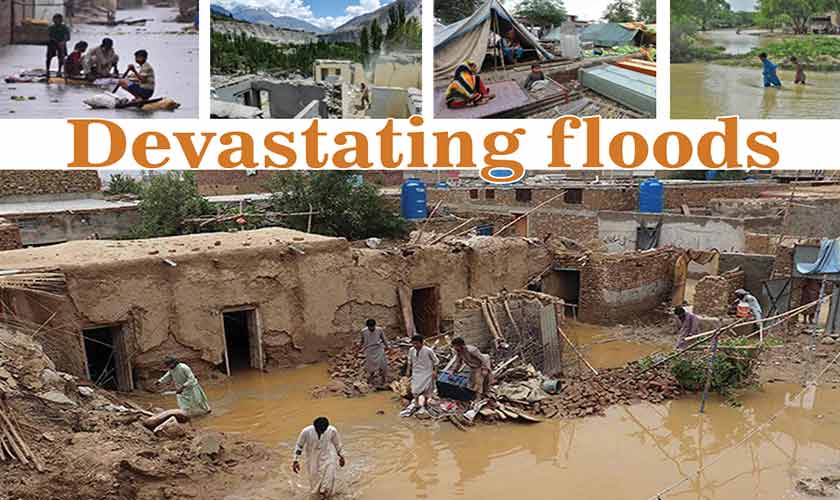
One in seven Pakistanis has been affected, with many sleeping under open skies, without shelter. About 900,000 livestock animals have been lost, and more than two million acres of farmland and 90 percent of crops have been damaged. In some provinces, cotton and rice crops, date trees and sugar cane have been nearly obliterated, and half of the onion, chili and tomato crops, all staple foods, are gone. Over 1,350 people are dead, and some 33 million people (50 million, according to unofficial tallies) have been displaced.
Climate change is very likely to have played a role in the extremely heavy rains, and it definitely played a role in the glacial melt. So you can call these people climate refugees. Remember that phrase. Your country will have them, too.
The worst-hit province, Sindh, in the south, suffers in extremis. It does not appear to have any disaster preparedness or any plans in place to reinforce water infrastructure or the barely functioning sewage system.Climate Forward There’s an ongoing crisis — and tons of news. Our newsletter keeps you up to date. Get it in your inbox.The survivors, the majority of whom are poor, must now avoid hunger and disease lurking in the rising, fetid floodwater. More rain is predicted. Much of Sindh is close to sea level, which means that the floodwaters from the north will continue rushing downstream.
Ahsan Iqbal, the minister of planning and development, has called Pakistan a victim of climate change caused by the “irresponsible development of the developed world.” Pakistan has about 2.6 percent of the world’s population and contributes less than 1 percent of global carbon emissions, and yet it has paid a monumental price. As a point of context, the United States accounts for only about 4 percent of the world’s population and yet is responsible for about 13 percent of global carbon emissions.
In 2019, Philip Alston, the United Nations’ special rapporteur on extreme poverty and human rights at the time, warned that global heating would undermine basic rights to water, food and housing. We faced a future, he said, in which the wealthy will pay to avoid these deprivations while the rest of the world suffers.
The Global North can help the poor of the Global South by taking responsibility for the losses and damage of extreme weather fueled in part by the burning of fossil fuels. The impact of decades of fossil fuel burning is already too severe — and applies too unevenly to the poor — for the Global North to deny culpability.
In 2010, a year that we were also deluged, Pakistan’s Meteorological Department recorded nationwide rains 70 to 102 percent above normal levels. Locally, the numbers were more terrifying. In Khanpur, a city in Punjab, it was 1,483 percent above normal. The rivers swelled, and the Indus and its tributaries soon burst their banks. A dam failure created floodwater lakes. USAID estimated that 1.7 million homes were damaged and more than 20 million people were affected. The economic losses were around $11 billion, and a fifth of the country was affected.Today’s superflood may well prove to be worse; at one point in Sindh Province, rainfall was 508 percent above average. The International Monetary Fund has released $1.17 billion in funds to Pakistan that was allocated for a government bailout in 2019. The secretary general of the U.N. has asked member states to give $160 million. But I.M.F. money comes with painful strings attached for countries like Pakistan, and it will not be enough to rebuild or to prevent other disasters. This is climate change. It is relentless and furious, and this is not the worst we have seen of it.
The lack of attention to Pakistan is heartbreaking: Too few major international cultural figures are speaking up for us in this moment of crisis. It is either a snide form of racism — that terrible things happen to places like Pakistan — or an utter failure of compassion. But Pakistan has long been a cipher, a warning for the world, just like those old stories. And so the wealthy world would do well to pay attention. The horrors that Pakistan is struggling with today could soon come for everyone.
https://www.nytimes.com/2022/09/03/opinion/environment/floods-in-pakistan-climate-change.html

Saturday, September 3, 2022

Music Video - #PhilCollins #AnotherDayInParadise #ReDiscover Phil Collins - Another Day In Paradise

Video Report - #Ukraine #Russia #nordstream Russia cuts off gas exports to Europe; blames westerns sanctions for delay | World

Video Report - #ukraine #russia Ukraine War: Russia shuts main gas pipeline to Europe

Video Report - NASA prepares for second attempt to launch Artemis moon rocket

Video Report - Why is Poland demanding compensation from Germany? | Inside Story

Video Report - Interview with Former US Peace Envoy Zalmay Khalilzad

Pashto News - Heavy Flood | Big News About Khanpur Dam

Video Report - Thousands Of Pakistan Flooding Survivors Are Suffering From Waterborne Illness

#FloodsInPakistan2022 - Why are Pakistan’s floods so extreme this year?

Smriti Mallapaty
One-third of the country is underwater, following an intense heatwave and a long monsoon that has dumped a record amount of rain. With rivers breaking their banks, flash flooding and glacial lakes bursting, Pakistan is experiencing its worst floods this century. At least one-third of the country is underwater. Scientists say several factors have contributed to the extreme event, which has displaced some 33 million people and killed more than 1,200.
Researchers say the catastrophe probably started with phenomenal heatwaves. In April and May, temperatures reached above 40 °C for prolonged periods in many places. On one sweltering day in May, the city of Jacobabad topped 51 °C. “These were not normal heatwaves — they were the worst in the world. We had the hottest place on Earth in Pakistan,” says Malik Amin Aslam, the country’s former minister for climate change, who is based in Islamabad. Warmer air can hold more moisture. So meteorologists warned earlier this year that the extreme temperatures would probably result in “above normal” levels of rain during the country’s monsoon season, from July to September, says Zia Hashmi, a water-resources engineer at the Global Change Impact Studies Centre in Islamabad, speaking in his personal capacity.
Glacial melt
The intense heat also melted glaciers in the northern mountainous regions, increasing the amount of water flowing into tributaries that eventually make their way into the Indus river, says Athar Hussain, a climate scientist at COMSATS University Islamabad. The Indus is Pakistan’s largest river, and runs the length of the country from north to south, feeding towns, cities and large swathes of agricultural land along the way. It isn’t clear exactly how much excess glacial melt has flowed into rivers this year, but Hashmi visited some high-altitude glaciated regions in July and noticed high flows and muddy water in the Hunza River, which feeds into the Indus. He says the mud suggests that there has been rapid melting, because fast water picks up sediment as it moves downstream. Several glacial lakes have burst through the dams of ice that normally restrain them, releasing a dangerous rush of water.The heatwaves also coincided with another extraordinary event — a depression, or a system of intense low air pressure, in the Arabian Sea, which brought heavy rain to Pakistan’s coastal provinces as early as June. “We rarely have large-scale depression systems arriving there,” says Hussain.These unusual features were then exacerbated by the early arrival of the monsoon on 30 June, which “was wetter generally over a larger region for a very prolonged period of time”, says Andrew King, a climate scientist at the University of Melbourne, Australia.
The effect is that Pakistan has received almost twice its average annual rainfall. The southern provinces of Sindh and Baluchistan have received more than five times that average. “The flooding is all over,” says Hashmi.
Once on land, much of that water has nowhere to go. More than 1.2 million houses, 5,000 kilometres of road and 240 bridges have been destroyed. In Sindh, an elongated lake has formed, tens of kilometres wide, and more water will continue to pour into it, says Aslam. “The worst is not over.”
Other factors
Some weather agencies have also predicted that the ongoing La Niña climate event — a phenomenon that is typically associated with stronger monsoon conditions in India and Pakistan — will continue until the end of the year, says King. “It’s not a super strong link, but it probably is playing a role in enhancing the rainfall.” Human-induced global warming could also be intensifying downpours. Climate models suggest that a warmer world will contribute to more frequent and more intense rainfall, says Hussain. Between 1952 and 2009, temperatures in Pakistan rose by 0.3 °C per decade — higher than the global average.
Researchers and public officials also say that other factors have probably added to the devastation, including an ineffective early-warning system for floods, poor disaster management, political instability and unregulated urban development. A lack of drainage and storage infrastructure, as well as the large number of people living in flood zones, are also implicated. “These are governance issues, but they are minuscule in relation to the level of the tragedy that we are seeing occur,” says Aslam.
https://www.nature.com/articles/d41586-022-02813-6

Bilawal mocks Imran for holding ‘concerts’ amid flood devastation


Foreign minister advises former PM to become a good human being first and politician later.
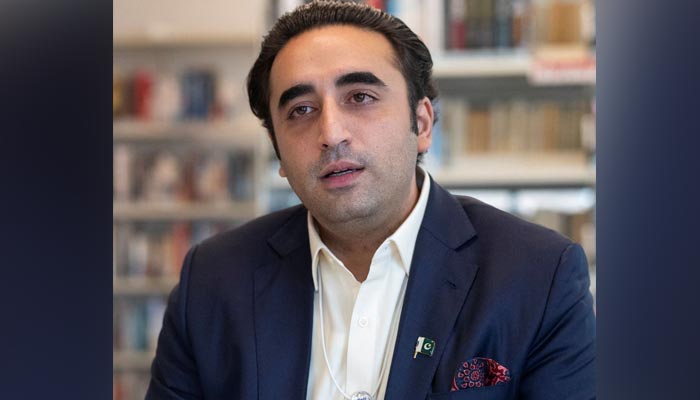
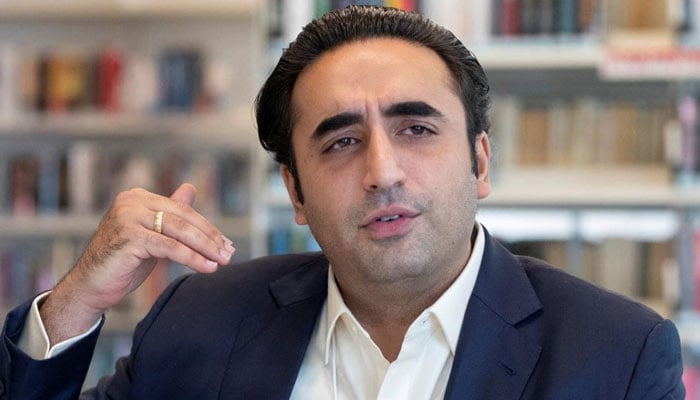
Lashing out at Pakistan Tehreek-e-Insaf (PTI) Chairman Imran Khan, Minister for Foreign Affairs Bilawal Bhutto Zardari on Friday said that Pakistan was facing the biggest disaster in its history but the former prime minister was busy holding "concerts" in Khyber-Pakhtunkhwa and Punjab.
“Pakistan is facing the biggest disaster in our history. 1/3 of our country [is] underwater! 1/7 citizens [are] affected, 35 million ppl! [While] Ex-PM is holding concerts in KP & Punjab," he wrote on his official Twitter handle.
He said that the chief ministers of both provinces – Punjab and K-P – were busy organising PTI’s ‘musical event’ instead of helping flood victims. "Shameful, pehaly insan bano, phir siyasatdan bano! (become a good human first and then a politician)," he advised the former prime minister.

Friday, September 2, 2022

Video Report - #Macron #energy #crisis Energy crisis: Macron calls defence meeting to devise 'roadmap'

Video Report - #Deauville #film #festival American cinema comes to France as 48th Deauville festival kicks off •

Video Report - Is nuclear energy making a comeback? | Inside Story

Video Report - John Bolton discusses newly unsealed Mar-a-Lago inventory and Pat Cipollone's grand jury testimony

Video Report - #inflation #energy #Europe War and supply chain problems boost inflation in Europe | DW Business Special

Video Report - Foreign Minister of Pakistan Bilawal Bhutto Zardari’s interview with CBC News

#FloodsInPakistan2022 #FloodsInPakistan - Fleeing responsibility

 Adnan Aamir

@iAdnanAamir

The scale of devastation in Balochistan is such that the rehabilitation is said to be beyond the governments’ capacity.
Murad Ali, a 36-year-old father of five, lives in Lakhra tehsil of Lasbela district. The homes of Ali and many of his relatives have been destroyed by flood water. “Fifty houses in my neighbourhood have been damaged,” he says. To top it off, he has fallen ill on account of shortages of safe drinking water and food. He says there are no functional medical health facilities or doctors in the area. Tens of thousands of people in Balochistan have been hit by the natural calamity. Elderly people tell this scribe that they have never seen rainfall like this in Balochistan. The rain has resulted in flash floods in many areas. Lack of disaster preparedness, poor governance and corruption have aggravated the devastation. According to the Provincial Disaster Management Authority (PDMA), the floods have resulted in 230 deaths; another 98 people being wounded in accidents caused by the rains and floods. Almost 27,000 houses have been damaged, 710 kilometres of roads have been rendered useless; 18 bridges have collapsed. Moreover, half a million livestock have perished and crops on more than 200,000 acres have been destroyed. Almost all districts of Balochistan have been affected. The last time Balochistan experienced massive floods was in 2010. But the damage suffered then pales in comparison with the damage caused by the floods this year.
Lasbela, Balochistan’s coastal district located near Karachi, has been badly hit by the floods. Roads passing through Lasbela, most prominently the Quetta-Karachi Highway, has been blocked for many. Former chief minister Jam Kamal, one of the MPAs from Lasbela, has decried the government inaction. He has been using social media to highlight the lack of relief work in Lasbela, allegedly to settle political scores.
The provincial government has been severely criticised for its failure to act timely to help the populace. Chief Minister Abdul Quddus Bizenjo has been criticised for his long stay in Islamabad considering the province is in a state of crisis. The PDMA has also been castigated for its failure to help those in need. By way of a response, the PDMA has banned the entry of a local journalist in its office. The journalist had criticised the performance of the PDMA in a TV interview.Rains during the early monsoon spells last month had caused flash floods in several areas and destroyed dozens of water storage dams. It soon came out that the damage was caused by poor construction quality. This was seen as an indicator of corruption in the award of construction contracts and regenerated the debate on the need to take strict measures to curb corruption in the public sector.The parliamentary opposition in Balochistan is also nowhere to be seen in this time of crisis. The BAP government has been ruling the province without a stiff opposition. It is alleged that the BNP-Mengal and the JUI are informally supporting it.
The floods had started wreaking havoc in Balochistan at the beginning of August. However, most of the disaster escaped the media’s attention. Eventually, the scale of devastation was revealed on social media. This then compelled the administration to take this calamity seriously. Government institutions, federal as well as provincial, were quite slow in starting rescue and relief activities.
One instance of social media working for the people in distress was the Kana Yaari singer of Coke Studio fame, Wahab Bugti. Bugti’s home was washed away by floods in his native Dera Bugti town. He was seen on social media holding his children next to the collapsed walls and flood water. The report on social media generated sympathy and calls to help him and others like him. The family was then moved to Dera Murad Jamali. He is now being taken care of, thanks to his fame and social media support. Thousands of people similarly affected by the rains and floods have not been that lucky and still await help.Voluntary groups and civil society organisations have tried to help the people in need. Almost 13,000 affected people have received some form of aid from such bodies. Social workers in many parts of Balochistan are using social media to collect donations, which they are using to help people in their areas. The informal support mechanism has been way more effective in helping people than some well-established government bodies.
Qaisar Roonjha heads the Welfare Association for New Generation (WANG), a civil society organisation that has been helping the flood affected in rural areas of Lasbela. He tells The News on Sunday that his team of volunteers has been providing relief on the ground. “Along with providing relief, we have been paving the way for other relief organisations to continue their work in the area,” Roonjha says.
Calls for international humanitarian bodies to help out have increased following complaints of the government failure. Under pressure, the government has agreed to host a donor conference. Given the scale of devastation, many people believe that the rehabilitation of the affected people is beyond the capacity of the provincial and federal governments.
https://www.thenews.com.pk/tns/detail/985707-fleeing-responsibility

In Pakistan, Waterborne Diseases Surge as Floods Recede

By Munir Ahmed
In addition to those traumatized by the flooding, doctors are now treating people suffering from diarrhea, skin infections, and other waterborne ailments.
Officials in Pakistan raised concern Wednesday over the spread of waterborne diseases among thousands of flood victims as waters from powerful monsoon rains began to recede in many parts of the country.
Massive flooding from the rains since mid-June has killed at least 1,162 people, a phenomenon experts blame on climate change.Some doctors said initially they were seeing mostly patients traumatized by the flooding, but are now treating people suffering from diarrhea, skin infections, and other waterborne ailments in the country’s flood-hit areas.
The development has forced the government to deploy additional medical teams and dispatch medicine besides providing clean drinking water to survivors, many of whom are living in tents and makeshift homes.
The warning came a day after record-breaking floods prompted the United Nations to formally issue an appeal for $160 million in emergency funding to the impoverished Islamic nation, where about a million homes have been damaged or destroyed.Dr. Azra Fazal Pechuho, health minister in the country’s worst-affected province of Sindh, said officials have set up 4,210 medical camps in the province’s flood-hit areas to treat victims now suffering from skin and waterborne diseases, which are common during floods.The World Health Organization began aiding Pakistani authorities in their efforts to treat people injured in the rains and flooding. The agency said in a statement that it was working to increase surveillance for acute diarrhea, cholera and other communicable diseases to avoid spreading further, and is also providing medicine and medical supplies to health facilities.
“WHO is working with health authorities to respond quickly and effectively on the ground,” said Dr. Palitha Mahipala, the WHO representative in Pakistan. “Our key priorities now are to ensure rapid access to essential health services to the flood-affected population, (to) strengthen and expand disease surveillance, outbreak prevention and control, and ensure robust health cluster coordination.”
Authorities said waterborne diseases among flood victims are now common across the country.
“Initially we received injured people, but now diarrhea is common,” said Farhad Khan, a physician in charge of a medical camp set up in the northwestern town of Charsadda. It is one of the worst flood-hit districts in Khyber Pakhtunkhwa province bordering Afghanistan, where floods killed 257 people since mid-June.
Pakistani authorities backed by the military, rescuers, and volunteers, have struggled to evacuate marooned people to safer places. On Wednesday, military helicopters continued evacuating flood victims and delivering food to remote regions, according to a statement released by the military. It said it has deployed at least 6,500 troops to assist in rescue and relief operations.
Rescuers were also using boats to evacuate stranded people in southern Sindh province and in remote villages in eastern Punjab province, according to government officials. Prime Minister Shehbaz Sharif in a visit to the flood-hit Swat Valley promised the rehabilitation of every person displaced by the flood. In his televised comments, Sharif thanked U.N. Secretary General Antonio Guterres for responding to Pakistan’s request and issuing an appeal for $160 million in emergency funding to help flood victims. Guterres on Tuesday urged the world: “Let’s stop sleepwalking toward the destruction of our planet by climate change.”
Sharif’s visit comes days after a raging Swat River destroyed the iconic New Honeymoon Hotel in the northwestern tourist resort of Kalam. There were no casualties as tourists and staff left the hotel following government evacuation instructions, and residents in Kalam said many streets there were still flooded.Pakistan says it has received aid from some countries and others were dispatching aid, too. According to initial government estimates, the devastation caused $10 billion in damage to the economy.
Kamran Bangash, a government spokesman in Khyber Pakhtunkhwa province, said with evacuations wrapping up, officials are now focused on providing food and clean drinking water to flood victims.
“We fear the outbreak of the waterborne disease in flood-hit areas,” he told The Associated Press. He said hundreds of people have contracted such illnesses in various parts of the province.“In recent weeks floodwater badly affected hundreds of thousands of people. We don’t want them to again suffer; this time due to non-availability of clean water and it can be avoided,” Bangash said.
Although the rains stopped three days ago, large swaths of the country remain under water, and the main rivers, the Indus and the Swat are still swollen. The National Disaster Management Authority has warned emergency services to be on maximum alert, saying flood waters over the next 24 hours could cause further damage.
https://thediplomat.com/2022/08/in-pakistan-waterborne-diseases-surge-as-floods-recede/

‘Climate disaster of biblical proportions’: Pakistan Foreign minister warns flood damage will exceed $10 billion

Emma Graham
Pakistan’s foreign minister made an urgent call for international aid, with the death toll from historic flooding across the country expected to rise in the coming days.Already reeling from an economic crisis, flood waters have submerged over one third of the country in water, killing over 1,000 and impacting 33 million people.Bilawal Bhutto Zardari, the country’s foreign minister, told CNBC’s Dan Murphy Thursday that he fears the damages from the natural disaster will exceed current estimates of $10 billion, adding that the crisis in the country is still ongoing and in the “rescue and relief phase.”
The flooding, which Bhutto Zardari told CNBC is “a climate disaster of biblical proportions,” covers over 95,000 square miles of land. Bhutto Zardari said the crisis is far from over, as “southern areas of Pakistan are still bracing themselves for the flooding to come through the rivers from the north.”
“Pakistan at this point in time, are paying in their lives and in their livelihoods for a climate disaster that is not of their making,” he said. Pakistan’s contribution to global carbon emissions is less than 1%, but it’s among the 10 most affected countries in the world by climate change.
The South Asian nation of over 220 million people reported a 27% inflation rate for August, according to government data, and was hit hard by the Covid-19 pandemic. Its currency has tanked while net foreign reserves have dwindled to just $8 billion in August, according to the State Bank of Pakistan.
Political infighting has gripped the country since April, after the ousting of former Prime Minister Imran Khan, who has been charged under anti-terror laws by Pakistan’s police. Food Inflation Impact Rural areas in Pakistan have been hit the hardest by flooding, which will have a compounded impact on Pakistan’s farming industry, and ultimately the cost of food. Bhutto Zardari told CNBC “about 80 to 90%” of Pakistan’s crops have been damaged by the floods. The International Rescue Committee report that 4 million acres of crops have been destroyed with 800,000 livestock perishing. Prior to the disaster, food inflation in rural provinces was much higher compared to urban areas. For instance, the cost of onions in Pakistan’s urban areas increased by 89% from July 2021 to July 2022. In rural areas, that cost increase topped 100%. The International Monetary Fund on Monday approved the release of $1.1 billion to Pakistan in special drawing rights, a part of its bailout program which began in 2019.
The money was already part of a relief program to help Pakistan stabilize its economy. Pakistan has now launched a joint appeal with the United Nations for about $160 million, which Bhutto Zardari told CNBC “is obviously a very conservative estimate about the bare minimum requirements at this moment.”
Over a million homes have been destroyed, and Bhutto Zardari added that key infrastructure like bridges, road networks, and dams have been damaged. Pakistan going forward, he says, will need “large scale reconstruction, which will require a lot of work.”
https://www.cnbc.com/2022/09/02/pakistan-warns-flood-damage-will-exceed-10-billion.html

#Pakistan - Foreign Minister Bilawal Bhutto Zardari thanks Saudi Arabia for continued assistance for Pakistan flood victims


Foreign Minister Bilawal Bhutto Zardari had a telephone call with his Saudi counterpart Prince Faisal bin Farhan Al Saud and briefed him on the magnitude of devastation caused by floods and torrential monsoon rains in Pakistan.

Bilawal Bhutto Zardari also thanked Saudi Arabia for its strong expression of solidarity and continued assistance to flood-affected people.

https://www.radio.gov.pk/02-09-2022/fm-bilawal-phones-saudi-counterpart-to-discuss-flood-situation

Thursday, September 1, 2022

Video Report - FDA approves new omicron targeted booster

Video Report - CDC advisors endorse new boosters to fight omicron variant of COVID-19

Video Report - #Covid19 #Vaccines #Omicron New Covid-19 omicron vaccines: Safety, efficacy, and how they can help

Video Report - #covid19 #booster #sideeffects Time for a booster? | COVID-19 Special

Video Report - President Biden speaks to the American people about the 'soul of the nation' — 9/1/22

Video Report - #FloodsInPakistan2022 - Foreign Minister Bilawal Bhutto Zardari's interview with CNBC

Video Report - #manzoorpashteen #ptm Mashaal Exclusive With Manzoor Pashteen - له منظور پشتین سره ځانګړې مرکه

سېنېټر مشتاق د علي وزیر د خلاصون غوښتنه وکړه

د جماعت اسلامي سېنېټر مشتاق احمد خان وايي، له جنوبي وزیرستانه د قامي اسمبلۍ غړی او د پښتون ژغورنې غورځنګ یو مخکښ علي وزیر ته دې انصاف ورکړل شي او ژر دې له جېله خلاص کړل شي
. دا خبره نوموړي د سېپټمبر پر لومړۍ نېټه وروسته له هغې مشال راډیو ته وکړه چې د اګست پر ۳۱مه یې د کراچۍ په سېنټرل جیل کې د علي وزیر سره ولیدل. پر علي وزیر د کراچۍ په بیلا بیلو سیمو کې جوړو غونډو ته د ریاست ضد ویناګانو تور دی چې نوموړی یې ردوي. هغه له تېرو ۱۸ میاشتو راهیسې بندي دی. سېنېټر مشتاق مشال راډیو ته وویل، علي وزیر بیګناه دی او مجرم نه دی، خو ورسره چلند د مجرمانو په شان کېږي او یوازې د خپلو خیالاتو او سیاسي رایې په بنیاد تر اوسه په جیل کې ساتل شوی دی.
هغه وايي:
"له بده مرغه دېره موده ووته خو علي وزیر ته پارلیمان، عدالتونو او سیاسي جماعتونو انصاف ور نه کړل شو. زه په پارلیمان کې وخت په وخت د علي وزیر لپاره د انصاف اواز اوچتوم چې دا ظلم دې بند کړل شي، هغه ته دې انصاف ورکړل شي او هغه دې ازاد کړل شي. زما اراده وه چې زه کله کراچۍ ته ولاړ شم نو د اظهار همدردۍ لپاره، یکجهتۍ لپاره به له هغه سره خامخا ګورمه." سېنېټر مشتاق زیاته کړه چې علی وزير د کراچۍ په سېنټرل جیل کې د عامو قیدیانو په شان ساتل شوی دی. د هغه په خبره علي وزیر پر خپلې خاورې د امن، د پاکستان د بشري حقونو، ولسي واکمنۍ او د ایین او قانون د بالادستۍ لپاره په خپله مبارزه ټینګ ولاړ دی.
علی وزیر هغه وخت د پېښور پولیسو ګرفتار کړ چې د ۲۰۲۰م کال د ډېسمبر پر ۱۶مه یې د ارمي پبلک سکول د پېښې په یاد کې په یوه دستوره کې یې وینا کوله. هغه مهال د پېښور پولیسو وویل چې د کراچۍ د پولیسو په وینا یې نوموړی نیولی چې وروسته یې سند صوبې ته واستولو او له هغې راهیسې هم په کراچۍ کې په جیل کی دی. په ټولو څلورو مقدمو کې پر علي وزیر د ریاست ضد ویناګانو او د خلکو پارولو تورونه دي چې پښتون ژغورنې غورځنګ او نوموړی یې ردوي. پي ټي اېم وايي، پر وزیر جوړې مقدمې سیاسي دي او دا چې ټولې هلې
ځلې یې د قانون او ایین په چوکاټ کې دي.
https://www.mashaalradio.com/a/32014272.html
د سیند های کورټ د ۲۰۱۸ز کال د شاه لطیف ټاون په مقدمه کې وزیر ته ضمانت ورکړی . د کراچۍ د ترهګرۍ ضد عدالت د اګست پر ۱۹مه د د ۲۰۱۹ز کال د سهراب ګوټ په قضیه کې د وزیر د ضمانت په اړه درخواست اورېدنه کې فیصله محفوظه کړه . د عدالت جج ویلي وو چې کاري موده یې سر ته رسېږي نو نوی جج به د کېس فیصله وکړي. سېنېټر مشتاق احمد خان وړاندې وویل، دا د تشویش خبره ده چې څلور میاشتې کېږي د علي وزیر د ضمانت درخواست اورېدنه تر اوسه نه ده پیل شوې. نوموړي تور پورې کړ چې دا ټولې تاخیري حربې دي او زیاته یې کړه د هغه کېس د سیاسي ګوندونو، پارلیمان، عدالتي نظام او په پاکستان کې د بشري حقونو د تنظیمونو لپاره یو چیلنج دی.
بل پلو، له شمالي وزيرستانه د قامي اسمبلۍ غړي او په اسمبلۍ کې د بشري حقونو د قایمه کمیټۍ غړي محسن داوړ د سېپټمبر پر لومړۍ نيټه مشال راډيو ته وويل چې د علي وزير قضيي د رياست د ټولو ادارو دوه مخيزه معيار په ډاګه کړ چې په هېواد کې قانون د ټولو لپاره يو شان نه دی. هغه وايي: "د علي وزير مقدمې دا نظام ښکاره کړ او د سياسي ګوندونو مصلحتونه يې هم راڅرګند کړل چې تر څومره حده پورې تاسو سره اختيار دی او تر څومره حده پورې تاسو ودرېدلی شئ، خپل واک اختيار څومره کارولې شئ. نو زما په فکر دا هر اړخيزه ناکامي ده. علي وزير دې سياسي حکومت ته ووټ ورکړی دی او اوس هم د حکومت برخه دی، وزيراعظم (شهباز شريف) ته یې رايه ورکړې وه خو د دی باوجود هغه (علي وزير) بندي دی. موږ په وار وار حکومت ته يادګيرنه کړې ده خو له هغې (حکومت) خوا تسلي بخش ځواب نه دې راغلې. موږ به په دې اړه پريکړه کوو او علي سره به هم مشوره کوو او د هغې په رڼا کې به ګام پورته کوو. " محسن داوړ زیاته کړه په دې وروستيو کې پخواني وزيراعظم عمران خان په ولسي جلسه کې ججانو ته ګواښونه کړي وو خو د دې باوجود ورته ضمانت ورکړل شو. پښتون ژغورنې غورځنګ د ۲۰۱۸م راهیسې په سیمه کې د بدامنۍ، هدفي وژنو، ماورا عدالت وژنو خلاف او د لادرکو کسانو موندلو تر څنګ سیمه له ماینونو نه د پاکولو غوښتنې لري چې لپاره یې وخت په وخت مظاهرې او جلسونه کړي دي. په پاکستان کې د بشري حقونو کارکوونکو، مدني فعالانو هم د علي وزیر د خوشې کولو لپاره په هڅو کې برخه اخیستې ده.

#FloodsInPakistan #floods - Bilawal says Sindh urgently needs Rs860bn for rehabilitation after heavy rain, flood


Foreign Minister Bilawal Bhutto-Zardari has informed diplomats of over 20 countries and representatives of donor agencies that Sindh urgently needs Rs860 billion to reconstruct collapsed houses, repair roads and revive agriculture destroyed by unrelenting heavy rains that pounded the province for several weeks.
“We have to rehabilitate people, give them jobs, reconstruct road network and strengthen economy,” said Bhutto-Zardari, adding that they would also need machinery to restore fertility of inundated farmland after the floodwaters receded. Bhutto-Zardari, who was received by Sindh Chief Minister Syed Murad Ali Shah and Federal Minister for Water Resources Syed Khursheed Ahmed Shah at Sukkur airport on Wednesday, was speaking to the guests at a meeting he chaired at the airport to inform them about the scale of devastation caused by the torrential rains and flood in Sindh and other provinces. He said that the torrential rain and flood had affected almost entire country but it had rained more than usual in Sindh. At present, drainage system was not working due to high flood at Guddu and Sukkur barrages, he said.
He said: “This is the first flood which has inundated both riverian areas and the urban centres at the same time, rendering large populations homeless. The rain and flood had destroyed crops and caused loss of Rs33.5,441 million to growers in the province, he said. The National Disaster Manager Authority (NDMA) officers also briefed the delegation about the damage from the catastrophe.
The delegation comprised ambassadors and diplomats of Turkmenistan, Bahrain, Saudi Arabia, Azerbaijan, Germany, Canada, Spain, South Korea, China, European Union, France, Iran, Turkiye, Qatar and Japan, and representatives of United Nations Population Fund, USAID, United Nations Children’s Fund, International Organisation of Migration and others. After the meeting, all the guests took an aerial view of the inundated cities, towns, crops and canals.
This flood bigger than 2010, 2011 deluge, says Murad
At a separate meeting with the guests, Sindh Chief Minister Syed Murad Ali and Sindh chief secretary Sohail Rajput briefed the visiting diplomats and donor agencies’ representatives in detail about the unprecedented monsoon rains. Shah said that the recent flood was graver catastrophe than the floods of 2010 and 2011 as this crisis had deepened with high flood in Indus at Guddu and Sukkur barrages which had inundated entire riverian area. The chief secretary told the meeting that 24 districts with 102 talukas and 5,727 dehs had been declared as calamity-hit areas. The chief minister said that funds for compensation for deaths, injuries, damage to houses and loss of livestock, damage to crops, waiver of interest on agricultural loan and rescheduling of loan repayment by deferring it for at least one year, grant of subsidy on agricultural machinery, fertilisers, pesticides and seeds to farmers of the flood-hit areas were required urgently.
He said that one million tents, three million mosquito nets, two million ration bags for two months, one million jerry cans and one million kitchen sets, 500,000 plastic mats and 500,000 woolen mattresses and tarpaulin were required for relief the rain-hit people in the camps.
In Karachi, roads, bridges, sewerage system would require Rs50 billion to repair or reconstruct, he said.

#Pakistan Foreign Minister Bilawal Bhutto-Zardari receives call from Iranian counterpart amid #floods fury


Iranian FM Hossein Abdollahian assures to assist in the provision of relief, says Foreign Office.


Foreign Minister Bilawal Bhutto-Zardari on Thursday received a telephone call from Foreign Minister of Iran Dr Hossein Amir Abdollahian, a statement from the Foreign Office (FO) said.
During the call, the foreign minister shared that Pakistan had been battling one of the most severe cycles of torrential monsoon weather, which had resulted in the loss of lives, livelihood and extensive damage to infrastructure.
As a result, the delivery of assistance and relocation of affectees was severely limited, he added.
Highlighting the government’s efforts, FM Bilawal informed that in addition to financial support, food packs, shelter items including tents, and Water, Sanitation and Hygiene (WASH) supplies were also being provided.
Acknowledging the international community’s support, Bilawal highlighted that Pakistan launched the “UN Flash Appeal” for a flood response plan on August 30, which prioritised focused interventions in specific areas. FM Abdollahian conveyed condolences on the loss of lives and material damage due to the floods and assured to assist in the provision of relief. In the bilateral context, the foreign minister said that the recently concluded session of the Joint Economic Commission had helped further strengthen cooperation in multiple sectors.
Recalling his visit to Tehran in June, the foreign minister reiterated the invitation to Dr Hossein Amir Abdollahian to visit Pakistan.
https://tribune.com.pk/story/2374242/fm-bilawal-receives-call-from-iranian-counterpart-amid-floods-fury

Wednesday, August 31, 2022

Video Report - #Pakistan - #FloodsInPakistan2022 #FloodSituation #FloodReliefFund2022 - د مينګورې سیلاب خپلي مرستې غواړي

Video Report - #Pakistan - #FloodsInPakistan2022 #FloodSituation #FloodReliefFund2022 - Death toll rises in cataclysmic Pakistan floods

Video Report - #Pakistan - #FloodsInPakistan2022 #FloodSituation #FloodReliefFund2022 - Foreign Minister Bilawal Bhutto Zardari talks to media along with foreign diplomats

Video Report - #Pakistan - #FloodsInPakistan2022 #FloodSituation #FloodReliefFund2022 - Foreign Minister of Pakistan Bilawal Bhutto Zardari’s interview with Sky News

#Pakistan - #FloodsInPakistan2022 #FloodSituation #FloodReliefFund2022 - Bilawal’s appeal generates ‘Rs1.03trn aid in one hour’

Foreign Minister Bilawal Bhutto Zardari’s appeal managed to generate huge assistance of Rs1.03 trillion from the member countries of the United Nations within one hour. The United States of America on the appeal of Bilawal Bhutto-Zardari gave Pakistan Rs6.5 billion aid.
On his appeal, World Bank, Asian Development Bank, World Health Organization, UNICEF, Red Crescent, and member countries of the UN showed a positive response. After his appeal China, Turkiye, USA, UK, Azerbaijan, Saudi Arabia, Qatar, Kuwait, UAE and other countries announced immediate assistance.
Flash floods: Bilawal hopes financial institutions to take economic fallout into account
On the appeal of Bilawal, the UN member countries besides cash assistance also announced to send tents, medicines, edibles and other relief goods. However, the announcements from different UN member countries on the appeal of Bilawal were continuing for the flood affectees of Pakistan till filing this story.
https://www.brecorder.com/news/40194826

Tuesday, August 30, 2022

Music Video - Aqua - Barbie Girl

Video Report - Change in Chile - A new generation takes power

Video Report - Why is Muqtada Al Sadr quitting Iraqi politics? | Inside Story

#Iraq #protests #Moqtada Moqtada Al-Sadr's moment? Iraqi cleric in show of force against Shia rivals

Video Report - #biden #guncontrol Biden says he’s “determined to ban assault weapons” in gun crime speech | full video

Video Report - Foreign Minister of Pakistan Bilawal Bhutto Zardari’s interview with CNN

Video Report - #SwatFlood #2022 سوات مٹہ کے وہ گاوں جو مکمل طور پر تباہ ہو چکے ہیں.Swat Flood 2022

Video Report - Joint Press stakeout for “2022 Pakistan Floods Response Plan” by Foreign Minister Pakistan Bilawal Bhutto Zardari and United Nations Resident Coordinator, Julian Harneis

It was beyond my expectations Imran would sink so low, says Bilawal on leaked audio

Foreign Minister Bilawal Bhutto Zardari Monday took a jibe at PTI chairperson Imran Khan for passing instructions to Khyber Pakhtunkhwa and Punjab's finance ministers to withdraw from the International Monetary Fund's (IMF) deal. The revelations came to the fore in an audio leak Monday where the ex-finance minister Shaukat Tarin could be heard directing Punjab Finance Minister Mohsin Leghari and Khyber Pakhtunkhwa Finance Minister Taimur Khan Jhagra to cite recent floods as a core reason for withdrawing from the deal.


Taking to Twitter, Bilawal said that it was "beyond his expectations" that Imran Khan would sink so low.

The foreign minister said that Khan chose this moment — when Pakistan is facing a catastrophic flood situation — to exploit the KP and Punjab governments to sabotage the national interest. 

"First he [Khan] entered into a deal with the IMF, then he almost pushed the country to default to save his premiership. Now he tries to sabotage IMF economic bailout of the mess he created!" he wrote. 

Referring to the leaked conversation between former finance minister Shaukat Tarin with Punjab and KP's ministers, Bilawal said that KP's finance minister called it "blackmailing" while the other said that this would "damage the state". 

"Imran’s been caught corruptly abusing charity donations for his personal and political purposes. exposed in a foreign funding case. To avoid getting caught, he’s been on a relentless campaign against every institution. That he would sink so low now, was beyond even my expectations," wrote the minister. 

Earlier today, Finance Minister Miftah Ismail also castigated the PTI leadership during a press conference. 

"Shaukat Tarin is the architect behind PTI's move. Is Imran Khan so power-hungry that he will do anything to get back? Is Imran Khan bigger than Pakistan?" he questioned. 

"You have crossed all lines this time," he told the PTI.

https://www.geo.tv/latest/436830-it-was-beyond-my-expectations-imran-would-sink-so-low-says-bilawal-on-leaked-audio

پاکستان کو عالمی برادری کی مدد کی فوری ضرورت ہے، بلاول بھٹو

 وزیر خارجہ بلاول بھٹو زرداری کا کہنا ہے کہ پاکستان گلوبل وارمنگ کی وجہ


سے براہ راست متاثر ہو رہا ہے، پاکستان کو عالمی برادری کی مدد کی فوری ضرورت ہے۔

بلاول بھٹو نے کہا کہ کلاؤڈ برسٹ اور طوفانی بارشوں سے سیلاب آیا، سیلاب زدہ علاقوں میں بحالی اور تعمیر نو کی ضرورت ہے، موسمیاتی تبدیلیوں کے باعث پاکستان میں ہیٹ ویو نے ریکارڈ توڑ دیے۔

انہوں نے کہا کہ موسمیاتی تبدیلیوں کی وجہ سے پاکستان کو شدید بارشوں اور سیلاب کا سامنا ہے، 72 اضلاع میں 3 کروڑ افراد کو سیلاب کی صورتحال کا سامنا ہے۔

ان کا یہ بھی کہنا ہے کہ سیلاب متاثرین کی کھانے پینے کی اشیاء تک رسائی مشکل ہورہی ہے، امداد پر دوست ملکوں اور عالمی برادری کے شکر گزار ہیں۔

انہوں نے کہا کہ  پاکستان کو ٹینٹس اور مچھر دانیوں کی فوری ضرورت ہے۔

https://jang.com.pk/news/1129929 

Monday, August 29, 2022

Video Report - Death toll tops 1,000 in Pakistan floods as officials declare a "climate catastrophe"

Video Report - Can Pakistan handle the worst flooding in decades? | Inside Story

Video Report - Geo News Headlines 3 AM - Conspiracy against the State!

Pakistan foreign minister says help needed after 'overwhelming' floods

"I haven't seen the destruction of this scale, I find it very difficult to put into words," said Pakistan's Foreign Minister Bilawal Bhutto-Zardari in an interview with Reuters, adding many crops that provided much of the population's livelihoods had been wiped out.
Pakistan would this week launch an appeal asking United Nations member states to contribute to relief efforts, Bhutto-Zardari said, and the country needed to look at how it would handle the longer term impacts of climate change.
The foreign minister said that although Pakistan contributes “negligible amounts to the overall carbon footprint ... we are devastated by climate disasters such as these time and time again, and we have to adapt within our limited resources, in whatever way we can, to live in this new environment."
Yahoo.com

سیلاب سے 1500 سے زائد افراد جاں بحق ہوئے، وزیر خارجہ

 وزیر خارجہ بلاول بھٹو زرداری نے کہا ہے کہ پاکستان میں سیلاب سے 1500


سے زائد افراد جاں بحق اور 3 کروڑ 30 لاکھ افراد متاثر ہوئے۔

سوشل میڈیا پر بلاول بھٹو نے پیغام میں لکھا کہ سیلاب سے خیبرپختونخوا، جنوبی پنجاب، بلوچستان اور سندھ متاثر ہوئے ہیں، سیلاب لوگوں کا سب کچھ بہا کر لے گیا۔

انہوں نے اپنے پیغام میں زور دیا کہ ہر پاکستانی کو سیلاب متاثرین کی مدد کے لیے اقدامات کرنے چاہئیں۔

https://jang.com.pk/news/1129605