Sunday, August 21, 2022
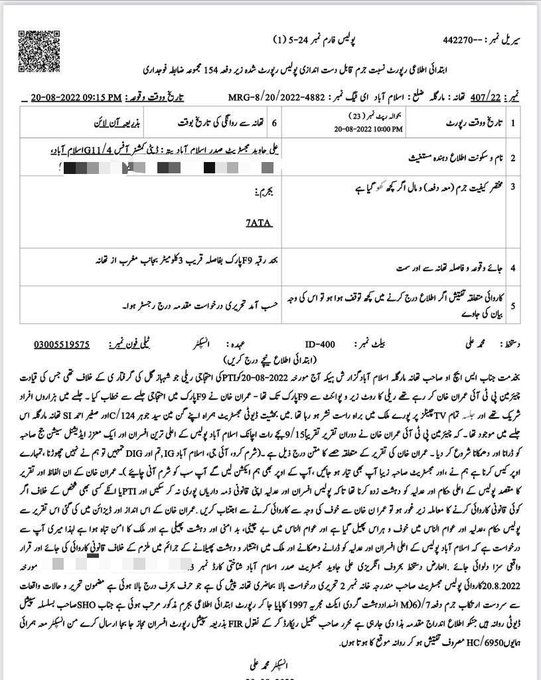
Ousted Pakistan PM Imran Niazi booked under terror act, arrest likely
Pakistan: Sit-in continues in Bajaur tribal district amid rising killing incidents


https://theprint.in/world/pakistan-sit-in-continues-in-bajaur-tribal-district-amid-rising-killing-incidents-2/1093247/
Pakistan - RIP #NayyaraNoor - Legendary Singer Nayyara Noor Passes Away


https://tribune.com.pk/story/2372349/legendary-singer-nayyara-noor-passes-away
Saturday, August 20, 2022
OP-ED: #Pakistan – The Future Image

Huzaima Bukhari
“With faith, discipline and selfless devotion to duty, there is nothing worthwhile that you cannot achieve”-Muhammad Ali Jinnah
Agreed that Pakistan today is not the country its people would have liked it to be. Agreed that there are many systemic drawbacks, agreed that its economy is definitely not enviable, agreed that there is a law and order situation, agreed that corruption is rampant in all spheres of life, agreed that the general population is unhappy and restless, agreed that health and education are nothing more than businesses, agreed that agriculture is no longer our pride, agreed that the once thriving industries are now facing serious set-backs, agreed that if given an opportunity most Pakistanis would choose migrating to foreign lands, agreed that our polity is dominated by those who would never be able to find even a petty employment post on their own, agreed that we have missed many buses as we enter into our 76th year of existence, agreed that countries who saw independence after us have progressed while we have played havoc with our own rich resources…..agreed that we have together brought our beautiful country to the edge of disaster but how do we steer this ship out of these choppy waters is the question every Pakistani is seeking a workable answer to. Is it possible for us to find the messiah who can resurrect and restore this country to a glory worth its dignity or do we need something else?
A building, no matter how magnificent, can get reduced to rubbles if it is not inhabited by human beings. On the same note, if those people or the caretakers are insensitive, callous and irritatingly incompetent, there is a great probability that the building would not be able to retain its grandeur which points to the fact that the quality of humans is essential to maintain a certain standard. This is also indicative of another important factor that if a country has to make a positive turn-around, the first thing to focus on is its people for without their help and support there is no way anyone can single-handedly bring about a revolution and the most effective way is to instil discipline. Only a nation that knows how to remain disciplined and steadfast can expect to gain progress and retain its independence. Good leaders like a sensible shepherd will therefore first harness their people’s behaviour even if it entails invoking discipline with an iron hand. Learning to obey and respecting rule of law are traits that enable human beings to accept the writ of the state and appreciate freedom in its true sense that also means justice too is indispensable.
A building, no matter how magnificent, can get reduced to rubbles if it is not inhabited by human beings.
Simultaneously, the physical health of the people should be at the forefront of priorities which means increasing agricultural production with intensity covering all aspects including grains, fruits, dairy products and livestock. Self-sufficiency in food is significant for promoting health because only a healthy body is capable of housing a healthy mind essential for growth and advancement. Related industries can help in accelerating economic activity that is vital for employment resulting in higher revenues for the government. This requires a substantial shake-up in revenue laws making them equitable across the country as well as across all spheres of activity.
Mental faculties get honed with a good education that is not limited to just reading and writing but goes beyond these areas towards developing the character of inquiry to encourage investigation important for innovations and inventions. Our downfall is partly due to converting our younger generation into automatons dependent upon foreign technologies and knowledge. Unfortunately, there are a few worthwhile inventions that can be credited to Pakistanis although they are adept at making the most of gadgets introduced by others. Check out the usage of top-loading washing machines for the extraction of butter in the early 1980s. Using services of the existing selfless and the practical in both education and health, these sectors can be improved tremendously without incurring too much hassle.
The above can be made possible only when merit and competence reign supreme in civil-judicial-military bureaucracy. When the concept ‘right man for the right job’ is fully in play then only can one aspire to promote these ideas, improve infrastructure and go for development keeping in mind at least the next 100 years if not more. The existing regulatory structure has lost its effectiveness becoming just a giant white elephant that is sucking the country dry. A more responsible governance scheme is needed at the grass-root level to ensure progress for every segment of society.
One does not start painting the neighbourers’ walls if one’s own house is in disorder. Despite the necessity of having good international relations with the entire world and maintaining a neutral position with respect to all, the best thing to do is first organize and clear up the inner mess. We claim ourselves to be an Islamic country but pay no heed to have cordial relations with bordering countries. We even forgot the words of our founding father, Muhammad Ali Jinnah when he said: “I sincerely hope that they (relations between India and Pakistan) will be friendly and cordial. We have a great deal to do…and think that we can be of use to each other and to the world.”
There is no point in claiming independence if one is unable to take up a stand for or against others and if one is to align with a particular block in defiance of another then it only shows interdependence. Foreign relations are highly sensitive and must be handled extremely wisely and prudently.
It is important to remember that when cancer attacks bodies, three important treatments are meted out. Surgery, chemotherapy and radiation-all these methods are invasive and meant to cut and flush out the toxins from the body. Similarly when cancerous people or situations attack and paralyze the country then some stringent measures are required to be taken on a war footing to avert further damage. Of course, no existing political personalities would be willing to incur the wrath of their electorate if they seriously and honestly go about bringing a much-needed transformation for in doing so they are bound to step up on the toes of their patrons and may even lose their support. Only one with nothing at stake can be prompted to take action without any hesitation provided one does so with absolute sincerity and loyalty to this country.
“You will have to make up for the smallness of your size by your courage and selfless devotion to duty, for it is not life that matters, but the courage, fortitude and determination you bring to it.”-Muhammad Ali Jinnah
https://dailytimes.com.pk/984373/pakistan-the-future-image/
PRECISE AND POPULAR: WHY PEOPLE IN NORTHWEST PAKISTAN SUPPORT DRONES

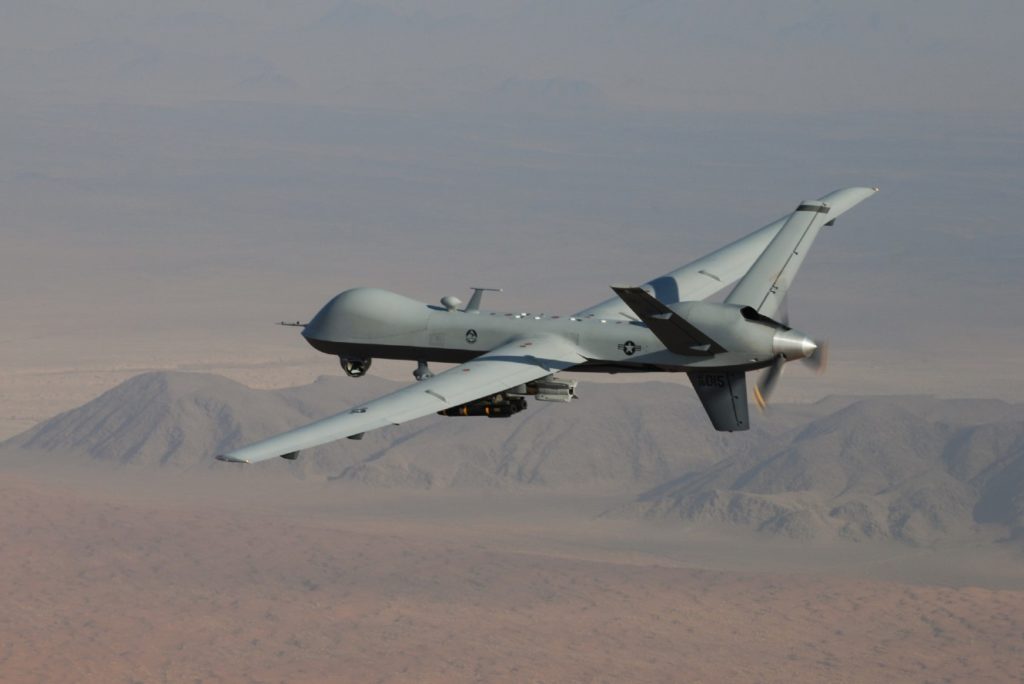
Indeed, the drone strike in Kabul’s affluent downtown neighborhood eliminated a very high-value target in comparison to the North Waziristan bazaar strikes, which targeted makeshift improvised explosive device factories. Nevertheless, the quality of the intelligence locating and identifying the targets, the decision to conduct the attack at an opportune time, and the ability to avoid civilian casualties and widespread property damage in a closely-built area are very similar. This shows that drone strikes can be precise and discriminating and achieve counter-terrorism goals.
The attack on al-Zawahiri after America’s troop withdrawal from Afghanistan is exactly what President Biden’s “over-the-horizon” counterterrorism strategy sought to deliver. It was a model strike. But as critics have pointed out, it is just one data point.
However, we have more data showing how effective this strategy can be. The drone program in Pakistan, particularly under Obama’s second presidential administration, targeted and killed top al-Qaeda commanders as well as chiefs and militants of both the Afghan and Pakistan Taliban with minimal civilian harm. From 2009 onwards, even though drone strikes increased in number, civilian casualties decreased with every subsequent year. From 2013 onwards, no local civilian was reported killed by American drone strikes in Pakistan.
My own quantitative with the qualitative research confirms that over-the-horizon strikes can be carried out consistently and effectively with minimum casualties or popular blowback. I collected data by interviewing 116 residents of Pakistan’s tribal belt — where the United States has conducted over 420 drone strikes. Two-thirds of my sample said that they were in favor of the American drone program, calling it “successful” and “effective” in killing militants. All those in favor of unmanned strikes admitted that there were instances of civilian casualties, such as the attack on a Taliban commander’s funeral in 2009 and another strike at a jirga in 2011. However, the respondents quickly added that a majority of the strikes killed only militants.
“Justice-Delivering Technology”
Before beginning my research, I believed that drone strikes killed more civilians than militants. Media coverage of American drone strikes is dominated by images of houses reduced to rubble, news articles about scores of estimated deaths of women and children, and videos of charged Pakistani protestors setting American flags on fire.But as I spoke to more and more local residents from Pakistan’s tribal areas — tribal leaders (known as malik) and elders (known as masharaan), university students, journalists, academics, activists, lawyers, and internally displaced persons returning to their homes — a clear majority of them rejected that narrative. For them, drones had done what local militias and even Pakistani military operations could not do: kill the bad guys, with limited-to-no collateral damage. “The drone is a justice-delivering technology,” one respondent from South Waziristan said. “Taliban Inc. — which is very powerful as it’s challenging Pakistan’s state sovereignty — commits atrocities against the local population and the people don’t have the power or the resources to retaliate or defend themselves. The drone compensates for this asymmetry.”
In the course of my research, I spoke to residents from all seven tribal agencies and frontier regions, seeking out the most representative sample of people possible from different socio-economic and political backgrounds. Among lower-income families or supporters of more overtly religious political parties, there was some sympathy for al-Qaeda and related groups. But the Pakistani Taliban’s violence and brutal imposition of its own version of sharia had created a widespread animosity that transcended many tribal, economic, and political divides. And this translated into support for drone strikes.
A resident of North Waziristan said he had seen drones hovering in the sky every day for weeks on end but had never witnessed a strike. “We never had a drone strike in our village because we didn’t have any militants in our area,” he said, demonstrating his confidence in the targeting of the drone program.To be sure, this was not always the case. According to my respondents, the initial years of the drone program under President George W. Bush invoked fear among the population — missed targets caused trauma, and there were tens of civilian casualties, including women and children. Residents in my sample who support drone strikes had opposed the program during its initial years, but between 2009 and 2011, their opinion became more favorable and accepting of the operations.The residents of Pakistan’s tribal areas began to support the drone operations because the unmanned program evolved and improved its targeting practices. During Obama’s first term, improvements in technology and intelligence collection and analysis made the targeting more precise and discriminating. The United States expanded and improved its intelligence-surveillance-reconnaissance capabilities by procuring more efficient drones, employing more analysts and linguists, and developing its sprawling intelligence-collection and data-fusion infrastructure. During this time, the Pentagon maximized the production and deployment of the Reaper — the Predator drone’s more lethal and efficient cousin — while at the same time ramping up training for operators for these new drones. This improved intelligence apparatus allowed the United States to locate militant networks and infrastructure and identify them correctly, helping to achieve precision: The intended target was accurately attacked.
Near-Certainty Standard
Precision was not enough though — strikes had to ensure no civilians were killed. In 2011, a drone launched two missiles in quick succession at a jirga in Datta Khel, North Waziristan, killing over 40 local tribesman and Khasadar (members of a lightly armed local police force). The attack on a peaceful jirga led to disagreements on targeting practices and procedures within the Obama administration, resulting in an internal review. The review created more checks and balances in the selection and execution of a target: The State Department now had more of a say in the strike decisions, Pakistani leaders would get advance notice about some drone strikes, and the CIA would halt unmanned operations when Pakistani officials visited the United States. These changes had an impact, as demonstrated by the steady decline in civilian casualties.
By 2013, the Obama administration was feeling rising global pressure to ensure greater transparency and accountability regarding his classified unmanned program. As drone warfare was here to stay, particularly in areas of active hostilities that were not declared warzones, Obama introduced policy guidance on drone strikes and established an inter-agency review process to systemize and bureaucratize the process of target selection and authorization.
He promulgated the Presidential Policy Guide, which established the “near-certainty standard” of no civilian casualties, emphasizing that U.S. government agencies must identify targets for direct lethal action and also present a legal and threat-based justification for their inclusion. From 2013 onwards, not a single local civilian death was reported in American drone attacks in Pakistan’s tribal areas.
Weakening Terrorist Groups
Scholars have provided evidence of how the U.S. drone program in Pakistan and Afghanistan affected al-Qaeda’s organizational capabilities. Data on the Pakistani Taliban shows that its top commanders, including all its former chiefs, have been killed by drone strikes: Baitullah Mehsud, Hakimullah Mehsud, and Maulana Fazlullah were targeted and killed in 2009, 2013, and 2018, respectively.
American drone operations forced the leadership of the Pakistani Taliban (also known as the Tehreek-e-Taliban Pakistan) into hiding. There was no specific time when the drones would surveil or strike — they would hover or attack during the day and well into the night. “The only certainty was that it was safe for the Taliban when it was cloudy; no drones could be in the sky when it was covered with clouds,” explained a North Waziristan resident. Under these circumstances, all the Pakistani Taliban leaders could not be in the same place and at the same time, which the leaders found deeply frustrating. This restricted mobility and limited communication, which further weakened their command and control.
Moreover, the accurate targeting of top leaders and commanders created multiple leadership crises within the Pakistani Taliban, which in turn led to fragmentation and infighting. The infighting took place usually over disagreements about succession, with different tribes and factions wanting their commander to take the helm of affairs. This resulted in violent clashes which deepened cleavages, leading to fragmentation and desertions, further eroding their capacity to organize and operate.
All this caused the Pakistani Taliban to eventually lose their grip over the country’s tribal areas: They could not earn revenue through their extensive extortion networks, which required a powerful presence, and therefore their ability to intimidate and commit violence against the local population of the Federally Administered Tribal Areas diminished. All these direct and second-order effects of improved targeting yielded successful counter-terrorism results and also increased the acceptability and favorability of drone strikes among the local population of Pakistan’s tribal areas.
Can “Over-the-Horizon” Deliver?
After withdrawing from Afghanistan, the United States left behind non-state militant groups pitted against each other, fighting over turf and the resources of a war-torn state. Although a U.S. intelligence assessment, leaked to the New York Times, concluded that al-Qaeda does not have the ability to launch attacks from Afghanistan against America’s homeland, the Taliban cannot be trusted to ensure their territory is not used to plan and conduct terrorist attacks. In such a volatile environment and with no ground presence, the United States seeks to pursue an intelligence-forward, technology-driven strategy, dominated by unmanned systems, to ensure those groups cannot plan new attacks.
This “over-the-horizon” strategy is predicated on good, accurate human and signals intelligence. Over the last 20 years, the United States has established a strong, reliable intelligence gathering and analysis infrastructure across Central and South Asia. The U.S. withdrawal from Afghanistan will certainly result in diminished intelligence capabilities. However, according to the coordinator of the United Nations Analytical Support and Sanctions Monitoring Team that tracks non-state militant groups, “very rich sources” still remain in Afghanistan and the region. The United Kingdom, the United Nations through member nations, and a range of neighboring countries retain strong intelligence capabilities in Afghanistan. Although the U.S. departure resulted in a material reduction of direct intelligence collection, Washington maintains access to credible sources which can be triangulated, particularly with signals intelligence. Al-Zawahiri’s assassination validates this network. The al-Qaeda chief was communicating more freely after the Taliban takeover of Kabul, making him more vulnerable to electronic interception. This, possibly augmented by non-U.S. human intelligence networks and behavioral pattern-of-life analysis, allowed for an accurate identification.
Can “over-the-horizon” deliver? Yes. But is it sustainable? That is a more complicated question.
There are a lot of necessary factors: credible intelligence networks, cooperating governments, multilateral institutions with access, reliable unmanned combat and intelligence drones, surveillance and reconnaissance infrastructure, and targeting practices that adhere to the near-certainty standard. The United States managed to have all these in place during its drone operations in Pakistan from 2013 onwards. But it is a challenging task. Any variation could have adverse consequences and result in loss of life, like the tragically botched drone attack around the same time last year that killed 10 civilians, including seven children.
Unmanned warfare is no panacea. A counterterrorism strategy relying on unmanned assets is a short- to medium-term policy solution at best, and should be complemented with more long-term, non-military strategies. Yet as both the al-Zawihiri strike and my research in Pakistan show, drones have an important — and still sometimes underappreciated — role to play.
https://warontherocks.com/2022/08/precise-and-popular-why-people-in-northwest-pakistan-support-drones/
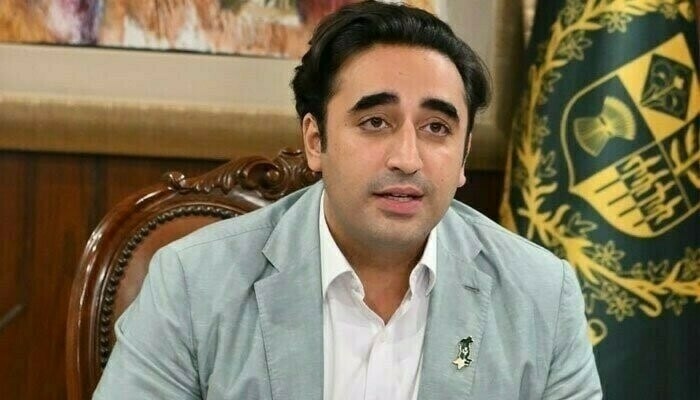
OP-ED: Leading From The Front - Foreign Minister of Pakistan Bilawal Bhutto Zardari

By Senator Sehar Kamran
@SeharKamran
August 2,2022
https://dailytimes.com.pk/975672/leading-from-the-front-5/
Friday, August 19, 2022
Foreign Minister Bilawal Bhutto: Access to sea for CAS via Karachi, Gwadar a key component of ‘Vision Central Asia'


Thursday, August 18, 2022
75 Years Of Pakistan’s Independence: A Bone Or Bane? – OpEd
By Gulnaz Nawaz
The day of Pakistan’s independence always brings out the best in individuals and their deepest feelings for their nation. Flags and lights are strung from every rooftop and draped over every passing vehicle. On this day, people start writing new patriotic songs and have parties to honor their freedom. Being a proud Pakistani, I also spent the morning getting up in my best Pakistani attire and am ready to celebrate the day. Let me assure you: I am not different from you. But my point is this: have we taken a single moment to consider the future of our country? Why do we agree on something once a year but then continue to disagree the other 364 days? Even though it’s been 75 years, I still wonder whether we’re independent.How come we choose opposite sides, fire on Shia processions, and recklessly turn the nation into a battlefield when it comes to sectarian violence? So, what path does the nation plan to take? Is it leaning forward ever so slightly because we want our young people to save us? Then again, maybe it’s a descent into the depths of infinity. The most important anniversaries of our independence have all been marked by major crises or the closeness to them. The 25th one found us recovering from the trauma of 1971, while the 50th saw us set to enter the nuclear age. Our economy and other important institutions are under severe strain on this, the 75th day. In reality, we became a state prone to crises not long after 1947, with a new political and/or economic crisis surfacing every three to four years. Pakistan is a challenging nation. Constantly, we are put to the test of our patriotism. Our Oscar victory was marred by controversy, and our team’s performance in the Olympics was a letdown for the nation. Even more upsetting is the widespread belief that this was to be anticipated. We have made some progress in the ways we think about issues like honor killing, terrorism, politics, women’s rights, and the future of children, but our society is still on the brink of disaster when you take into account everything from the food we eat to the education we receive to the state of our minds and the affairs of our own country.Half of the politically and administratively savvy population wastes their time criticizing one another and does nothing to improve the situation in our nation. I’m not referring to the kind of life-altering choice that involves building a dam or becoming president. Yes, I am referring to the little things, the ones under our control. Creating much-needed facilities, such as hospitals and educational institutions, in underdeveloped regions The other half of the population, however, doesn’t give a hoot about the political party in power since all they care about is maintaining the status quo of mediocrity in our society. In reality, our leaders or the governments of other nations have nothing to do with this. Our flawed ideas and actions are to blame for all of society’s ills. Our aggressive and self-centered nature means that we don’t care if anybody is wounded as we pursue our own goals. It seems we never stop to consider how we may improve our society. There’s no way one of us is going to consider the other’s proposal. We call ourselves “independent,” yet we actively work against the freedom of others to pursue their own goals in life in this nation. We band together when we perceive the nation is on the upswing, then turn on each other when our expectations are dashed. The comforts this nation provides are worth the hassles we have to go through to get here. Those who wrongly feel they are free are much more oppressed than the others, as Goethe put it. We are diving headfirst into this bottomless pit of dangerous madness because we want to. Nothing or no one else can be blamed for the current state of affairs in our nation. But the renewed patriotism we’ve felt today isn’t enough to solve the problems of corruption, economic collapse, social inequality, and political intimidation that our country faces. It won’t help people who require necessities such as food or shelter. This won’t help people get out of their plight or educate the masses. Were you able to answer the question? To what use is freedom if it does not include freedom from want, inequity, injustice, and exploitation? To be free is to have the power of choice. Irresolvable dilemmas raise the question: what do they imply? Politicians in our nation are always at each other’s throats, so how can we expect them to see the larger picture? This leaves us, the idealistic patriots, to pick up the slack. It is imperative that we not allow our spirits to wither away today. If you want to make a difference in the world when tomorrow comes, you have to carry the same feeling of pride and responsibility you feel now. One of the most valuable qualities we have is the capacity to maintain optimism and self-assurance in the face of difficulty. If we can continue our ancestors’ tradition of hard work and optimism, we just might change our national identity and become a respected country once again. Our nation, and all of its citizens, can only improve and become truly independent if we first improve and become independent. If we all do what we can to make our immediate surroundings better, like respecting the rights of others, being kind to strangers, and giving money to people who need it, we may be able to start making positive changes in our society. But we shouldn’t take advantage of each other. Instead, we should show respect by listening to each other and working together to make ideas happen instead of just criticizing them. If we are successful in making the world a better place for future generations, there is hope that the larger issues will be resolved and that this nation and its people will be able to declare its independence with confidence.
https://www.eurasiareview.com/17082022-75-years-of-pakistans-independence-a-bone-or-bane-oped/
Pakistan at 75: A Country in Search of Itself
By
Its Independence Day should be a day to reflect and ponder on the mistakes of the past rather than celebrating fiction as history.Since Jinnah’s death in 1948, Pakistan’s leaders have marked Independence Day with fanfare, making sure that the founding father’s vision remains at the center of all celebrations. However, with every passing year, the country has only moved further away from Jinnah’s vision.After more than seven decades, the country has not been able to escape the “India syndrome,” meaning some vested interests in Pakistan have made unambiguous efforts to find a permanent enemy in India. As has been the tradition since the country’s inception in 1947, anti-India oratory will mark Pakistan day. For many in Pakistan, independence is more about showing the world that India remains an exclusive threat to Pakistan’s existence and that the partition of the Indian subcontinent has not been accepted by New Delhi yet.
In the words of French Orientalist Ernest Renan, “Getting its history wrong is part of being a nation.” This accurately describes Pakistan’s case. For more than seven decades, the history taught at Pakistan’s schools tried to make a case for a country that was part of some sort of prophecy. For instance, school children are taught that Pakistan has its origins in Muhammad bin Qasim’s eighth-century invasion and takeover of Sindh, one of Pakistan’s current provinces, and that Islam was the sole uniting force behind the Pakistan movement.To this day, debate remains open on whether Jinnah wanted a state whose laws were to come into conformity with Islam. On the other hand, many historians have argued that the creation of Pakistan was perhaps the unintended result of Jinnah’s strategy to force the Indian National Congress to accept a federated arrangement in which Muslim majority provinces would have considerable autonomy. If anything, Pakistan’s Islamic identity has not been able to keep the country united. As Pakistan celebrates its 75th independence day, the country is internally divided along religious lines. Islamic parties and right-wing conservative groups openly and regularly dispute the state’s writ.Pakistan’s 1973 constitution lays out the rules of governance. However, political parties and state institutions have done everything to trample the laws of the land. For instance, the real power in Pakistan does not rest with the Prime Minister’s Office and Parliament – the two institutions that are supposed to make key policy decisions under the constitution. There are other institutions that have become so powerful that they have literally become a parallel state with little accountability.The irony is that opportunistic politicians and religious fundamentalists look toward these state institutions for support to sustain their own grip over power, and in the process strengthen their hold over the state’s affairs further. Pakistan is currently in the midst of one of its worst political, constitutional, and economic crises in its history. Parliament has become practically irrelevant as the political elite is at loggerheads. The country’s judicial system faces a collapse, as thousands of cases remain pending in courts. The bureaucracy is deeply politicized and resists reforms that could see the administrative system becoming more effective. The country’s security institutions are more involved in managing politics than doing their mandated work under the constitution. Moreover, militant groups and their ideologies have taken deep root in Pakistani society. As I write this, there is a mounting power struggle among political groups and institutions which could see Pakistan getting destabilized substantially. The country is far more intolerant, regressive, and radical than ever before. Indeed, the biggest security crisis confronting Pakistan today emanates from within rather than from outside. In this setting, Independence Day should be a day to reflect and ponder on the mistakes of the past rather than celebrating fiction as history. It is about time that Pakistan’s leadership do some course correction and think about making Pakistan a country that is respected, valued, and sought after by the world. More than ever, Pakistan needs a clear direction, otherwise, the gradual decay of the state’s institutions and ethos would eventually lead to the implosion of the state. https://thediplomat.com/2022/08/pakistan-at-75-a-country-in-search-of-itself/
Opinion: Pakistan at 75: Attacks against democratic institutions have to stop
.png)
By Hamid Mir
Pakistan has just turned 75. The anniversary should be a cause for celebration, but also for serious self-criticism. Many Pakistanis are fond of citing our achievement of becoming the world’s first Muslim nuclear power. But how are nuclear weapons supposed to save Pakistan if our institutions are falling apart? The army, of course, remains strong. But our parliament, judiciary and media are becoming weaker by the day. It is a matter of shame that four military dictators ruled Pakistan for more than 32 years. Civilian prime ministers — 29 of them — have ruled the country for 43 years. No elected prime minister has completed a full five-year term. Three different constitutions of Pakistan were abrogated or suspended five times in the 75 years since the country achieved statehood. True, Pakistan – once routinely referred to as a garrison state – has not seen a military intervention since 2007. Yet democracy is still very weak. The Economist Intelligence Unit recently described Pakistan as a hybrid regime — a country that doesn’t qualify as a proper democracy even if it has some democratic aspects. It’s not a secret that the generals effectively installed Imran Khan as prime minister with a rigged election in 2018. When Pakistan became ungovernable under Khan, the army decided to stay neutral. Earlier this year, Khan created a crisis by dissolving the national assembly to save his government — but he was ultimately ousted by a parliamentary no-confidence vote. He then proceeded to blame the United States for his downfall. He started attacking the neutrality of the military leadership and declared them to be traitors. He tried to return to power by blackmailing the same generals who once made him prime minister. His trick didn’t work.His anti-Americanism and economic crises did help him to regain a degree of popularity. Now, his political opponents are trying to disqualify him from another term with allegations of corruption and receiving prohibited funds. Back in 2017, the Supreme Court made Khan’s victory possible by disqualifying previous prime minister Nawaz Sharif. The current government now wants to do the same. Even if it is justified, the disqualification of another popular leader will create yet more instability. The Pakistani judiciary does not enjoy a good reputation. The World Justice Project, a group that tracks legal systems around the world, ranks Pakistan 130 of 139 countries on the rule of law. A historical pattern of collaboration between dictators and judges has weakened democracy. Pakistani judges need to stop getting involved in politics. On one side, Khan is challenging the “neutrality” of the army, and on the other the government of Prime Minister Shehbaz Sharif is pushing the courts to disqualify Khan. Both the government and opposition are fighting with state institutions. Media freedom is another casualty of the political war among power players. Pakistan is ranked 157 of 180 in the World Press Freedom Index of 2022. Pakistan fell 18 points in the ranking since 2018, when Khan took power. TV channels were blocked. Journalists were attacked, arrested and banned.Media freedom is under threat even now that Khan has left power. When my colleagues Asad Toor and Absar Alam were attacked last year, then-opposition leader Sharif visited them and expressed his commitment for media freedom. Now, he is prime minister, and his government has banned ARY, a pro-Khan TV channel. The owner and anchors of that channel are facing sedition charges for allegedly airing criticisms of the army.When I was facing sedition allegations last year, ARY commentators wanted to see me behind bars. One of its anchors declared me an enemy of Pakistan just because I made a harsh speech against those who had attacked one of my journalist colleagues. Yet, I never left the country. I chose to stay. My former critics are now facing similar allegations. I don’t support silencing them. Freedom of the press is an essential pillar of democracy. It is hard to imagine any form of democracy that does not allow for wide-ranging discussion of social and political problems. Last year, I was banned from the air for nine months without an order from any court. A few days ago, yet another anchor, Imran Riaz, was taken off the air by his channel without any charges being filed. These kinds of tactics will not only weaken the media as an institution but ultimately turn Pakistani democracy into a joke. I know I might face a lot of criticism from people in positions of power for taking the side of those who were not nice to me. But I don’t think that revenge is a solution to our problems. I think that Khan should say that supporting a disqualification of Sharif was his mistake. Sharif should also oppose the disqualification of Khan. President Arif Alvi belongs to the biggest opposition party, which is led by Khan. Shehbaz Sharif is the younger brother of Nawaz Sharif, who made Pakistan a nuclear power in 1998. Can these two power players start a dialogue with all political stakeholders to strengthen democratic institutions? The best way forward is the rule of law and supremacy of the constitution. Only they can save the institutions from crumbling.https://www.washingtonpost.com/opinions/2022/08/18/pakistan-75-democratic-institutions-crumbling-weak/
Wednesday, August 17, 2022
Liz Cheney’s courage is a wake-up call to us all
David Aaronovitch
In defying Donald Trump’s lies the Republican congresswoman underlines the cowardice of all too many politicians.On Tuesday a candidate addressed her supporters after being massacred at the polls. “Two years ago I won this primary with 73 per cent of the vote,” Wyoming congresswoman Liz Cheney told the crowd. “I could easily have done the same again. But it would’ve required that I go along with President Trump’s lie about the 2020 election [and] enable his ongoing efforts to unravel our democratic system and attack the foundations of our republic. That was a path I could not and would not take.”No one seriously disputes that Cheney’s ousting by registered Republicans owed everything to her defiance of Trump. Though she voted against impeaching him over his endeavour to use the president of Ukraine to help him in his battle with Joe Biden, his refusal to accept the result of the 2020 presidential election and his subsequent attempt to reverse it was too much for her. Which was why she agreed to be part of the congressional inquiry into the January 6 assault on the Capitol. Agreed whence almost all other Republicans had fled. Democracies aren’t just regulated by laws but by behaviour. There is no statute in any democracy as far as I am aware requiring losing politicians to concede defeat to their rivals. But as Cheney observed while congratulating her opponent, the Trump-backed Harriet Hageman, “Our republic relies upon the goodwill of all candidates for office to accept honourably the outcome of elections.” In 2000 Al Gore, though winning a narrow plurality of votes in the presidential election, lost by 271 electoral votes to 266, the result turning on an incredibly narrow result in Florida. There followed a series of legal battles over a recount in that state. But five weeks later Gore conceded the presidency “for the sake of our unity as a people and the strength of our democracy”.That is how democrats do it. In 2020, however, Trump received over seven million fewer votes than Biden and lost the election by 306 electoral college votes to 232. And he has never conceded. Instead he and his supporters constructed the fiction of a stolen election — a fiction that has led to violence and insurrection. And, terrifyingly, he now seems to have taken most of the Republican Party with him. As Cheney pointed out, because Trump-backed candidates in Republican primaries have won most of their contests, future elections in some states will be supervised and presided over by people who have never accepted the 2020 result. The extreme plasticity of many office-seeking Republicans in the face of the Trump supremacy is well illustrated by Cheney’s victorious opponent. In 2016 Hageman was not a Trump fan. She described him as “racist and xenophobic”, which even allowing for the vagaries of Wild West politics is unlikely to have been a compliment. But by 2022 she had remoulded herself to fit the needs of the moment. She had been wrong about Trump, she explained, having been led astray by lies told by “the Democrats and Liz Cheney’s friends in the media”. The reader, even if unimpressed by Hageman, may object that such behaviour is not uncommon in the political world. Closer to home in the past few days, several senior Conservatives have belatedly discovered that Rishi Sunak is not after all the person to unite the party and lead the nation, and that instead Liz Truss better embodies these aspirations. The first cabinet member to make this journey was the Welsh secretary Sir Robert Buckland. “I backed Rishi Sunak as I felt that he was at that stage embodying what was needed . . . As the campaign moved on . . .” Let’s stop there. We all know what happened as the campaign moved on. Liz Truss’s big polling lead happened. You have to wonder what Sir Robert and the other Late-Trussers see when they look in the mirror. What profiteth a man and all that — but for Wales, Sir Robert. There is a quotidian cowardice about this, but in Buckland’s defence, as Falstaff says on the battlefield of Shrewsbury: “What is that ‘honour’? Air. A trim reckoning! Who hath it? He that died o’ Wednesday.” Honourable politicians died in their droves following the Brexit vote. Those prepared to stand up to their parties, or even to take the risk and leave them, were eventually slaughtered at the polls or forced from the field. Some of the best, most honest and competent of our moderate politicians: Rory Stewart departed; others — Dominic Grieve, David Gauke, Chris Leslie, Anna Soubry, Luciana Berger among them — went massively unrewarded by a polarised electorate. Meanwhile, for their surviving peers Johnson was just marvellous until he wasn’t and Corbyn could be tolerated until he couldn’t. It was bad and we suffer the loss still. Even so the cowardice displayed by many Trump-supporting Republicans leads to a different category of damage. For all that a liberal like me abhors many of the political stances of someone like Liz Cheney, in the matter of maintaining democracy she is on my side and I on hers.Bizarrely this is not a message that the Democratic Party seems to understand. Earlier this month in Michigan another Trump-backed conspiracist John Gibbs won his primary against a sitting anti-Trump Republican, Peter Meijer. Democrat leaders, reckoning that an extremist would be easier to defeat in November’s midterm election, spent over $400,000 on ads designed to boost Gibbs. It was a move lacking in all principle and helping to weaken the very thing that true democrats should want urgently: a return of the Republican Party from the Mar-a-Lago Hades.From January, Wyoming will have a coward for a congresswoman. But that’s not the worst of it. Grandmother-sellers rarely vend just their own relatives. So while Hageman almost certainly doesn’t herself believe the “stolen election” conspiracy, many of the new Republican representatives do, and she and others have helped them indulge their dark fantasy. It’s a fantasy that could well lead to civil disaster.All is not lost though. Trump’s support has taken a hit among the electorate due to the January 6 hearings. And although in his charmless way he predicted this week that Cheney would “finally disappear into the depths of political oblivion”, she is entirely free to put herself forward as a potential candidate for her party’s nomination for president in 2024, and to appear in all those debates he so enjoys. That woman has the guts to do it. The rest of us need to wise up.
https://www.thetimes.co.uk/article/liz-cheneys-courage-is-a-wake-up-call-to-us-all-jksc0jgnx
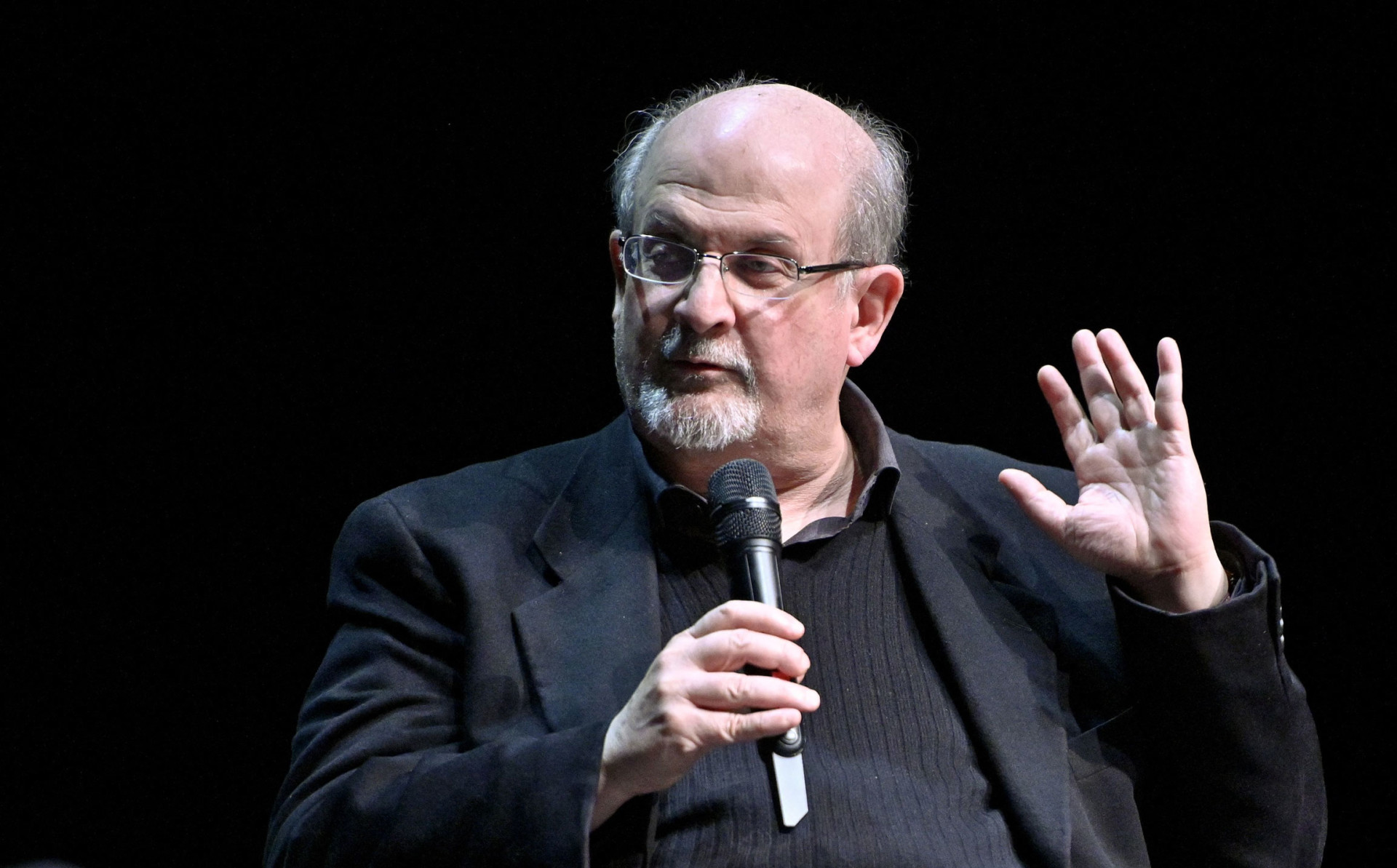
Salman Rushdie: Public reading in New York to show solidarity with writer
James CalleryHundreds of writers will gather to read Salman Rushdie’s works in New York this week in an act of defiance against the fatwa declared over his book The Satanic Verses. The event is a recreation of a similar public reading of Rushdie’s books that was held a few days after the order to kill him was issued in 1989 by the cleric Ayatollah Khomeini, Iran’s supreme leader at the time.
Among the authors taking part will be Paul Auster, Tina Brown, Kiran Desai, Amanda Foreman, AM Homes, Siri Hustvedt, Hari Kunzru and Gay Talese. The “Stand with Salman” event will be held on the steps of the New York Public Library on Friday morning. The 1989 event was attended by more than 3,000 people.Rushdie, 75, was stabbed at an event last Friday at the Chautauqua Institution in upstate New York, where he had been due to speak about freedom of speech and how the US is a haven for persecuted writers. The moderator of the event, who suffered a head injury during the attack, hopes to return to the venue one day to interview Rushdie again. Henry Reese, who still has severe bruising to his face, said the incident highlighted more than ever the values the novelist stands for. Reese told the BBC: “I’m doing well, everything is proceeding — I’m doing quite well. I think our concern is for Salman, and I mean that for himself, but also what he means in the world.” Asked what the incident meant for the importance of Rushdie’s values, Reese added: “There couldn’t be anything more vivid in its materialisation of our values. Our mission is to protect writers who are in sanctuary and to see Salman Rushdie assaulted for his life is unimaginably... it’s hard to describe what it is to see that happen in front of you.” Rushdie suffered severe, life-changing injuries after being stabbed several times. His family said that his “usual feisty and defiant sense of humour remains intact” as they revealed the extent of his injuries.Downing Street has dismissed as “ludicrous” a suggestion from Iran that Rushdie might be in any way responsible for the attack. An Iranian government official denied on Monday that Tehran was involved in the attack on the author, adding: “We do not consider anyone other than Salman Rushdie and his supporters worthy of blame.” https://www.thetimes.co.uk/article/salman-rushdie-interviewer-reveals-injuries-from-attack-jp8xbbb6d
#Pakistan - #PPP - Forever resilient - Z A BHUTTO
Even after a traumatic defeat, Pakistani cultural activities quickly bounced back during the Bhutto era.

F |
ew countries have bounced back from dismemberment as Pakistan did. Call it apathy or resilience, the trauma of a military defeat, as long as it lasted, facilitated the promulgation of the first ever constitution.
The dismemberment led to probably a more homogeneous country, but the diversity was still seen as debilitating. At a different level, the Pakistan Peoples Party government recognised culture as a legitimate activity. That made way for the setting up of several institutions in the public sector for the promotion of the arts. It overcame the taboo of lehv o la’ab and some space was granted for it to nurture in its autonomous growth, though always accosted by the need to make it purposeful and hence infused with socialistic fervour.
The Pakistan National Council of the Arts was conceived and from its womb was born the Institute of Folk Heritage (Lok Virsa). Similar art councils were formed in the provinces and some budgetary allocations made. Film, too, was given a cover under the National Film Development Corporation and the Academy of Letters was established, as were the language authorities. These included Punjabi, Pushto, Sindhi, Balochi and later Seraiki.
Since everything awami was the slogan of the new government, the folk arts were considered to be the area to concentrate upon and the classical arts were left to wither on the vine as being too elitist. But the upswing was arrested in its trajectory by the imposition of yet another martial law.
What Pakistan lost in East Pakistan, a bailiwick to unload expansion ambitions was rerouted towards Afghanistan. It became the playground for the mini-imperial ambitions, the long shadow started to fall on the Pakistan. A more subsuming role was ascribed to religion yet again but with a very conservative hue. The radicalisation, if any, of the Bhutto era started to be rolled back with ferocity to be replaced with religious radicalism by force.
Though it was under one umbrella, it was difficult to draw strict lines to be followed. Even then centralisation was refracted differently because in the Punjab much cultural activity took place as indeed in Sindh where the Sindhis were pampered to be weaned away from the PPP through doses of Sindhi culture. In the Punjab it provided a vent and a release of pent up political frustration. Television became the mouthpiece of conservatism. A counter current at the local level started to present a more balanced view of the cultural dynamics. Theatre blossomed, purposeful and risqué, and challenged the mores.
The constant chant of Western influence and Indian machinations permeated the public discourse as more and more Indian films were viewed through sources that were not upfront. VCRs became the major mode of entertainment as the films could be viewed in the privacy of the individual spaces away from official censorship.
Similar art councils were formed in the provinces and some budgetary allocations made. Film, too, was given a cover under the National Film Development Corporation and an Academy of Letters was established as were the language authorities. These included languages like Punjabi, Pushto, Sindhi, Balochi and later Seraiki.
The means of communication, both physical and digital, changed the society in no uncertain terms. Cultural figures started travelling abroad more frequently as the diaspora became more prosperous and the digital media opened a totally new world that had been hidden away by the strict censorship in the country. A sneak-peak was possible as never before and the new television channels opened a new world shunning prescribed inhibition.
Music was to be seen as heard and the technological breakthrough started to redefine the formal structures of the arts. The painters, too, found a foothold and their works became products to be purchased and the result was more exposure and prosperity. The writings in English, too, became legit and the poets and novelists earlier sidelined won more attention abroad than the very famous ones writing in local languages.
All regimes after Ziaul Haq’s mushroomed under his shade. Terrorism, once championed, was supplanted by a mantra of the soft image, not an organic home-grown product but a deliberate top down policy.It was alleged that the society was being misunderstood as only the fringe advocated extremism. There has been a succession of culture policies since then, all faltering in implementation.
However, the digital revolution upturned the society. The surface may have remained the same and seemingly unruffled but the cauldron of discontent seethed, cooking from a recipe book a new dish that tasted different. The platform was there for all to use and the gatekeeper, the editor and the authorised bodies all rendered obsolete by the technological shift. The people had finally the advantage of being equally heard. The space was public space for all - clogged with all those empowered to speak and be heard.
The younger people suddenly found freedom handed over to then on a platter by technology in the form of an android phone. And it was from here that they started as their takeoff point, with little care for history and the past. It was freedom to be brandished and with an individual take. The post-truth era was upon us and the post-modern behavioural patterns were flashed with utter disregard.
In this molten centre, the top has tried desperately to retain the solidity of the crust. The exposure far exceeds the experience and the eclectic piling up has replaced the much considered masticated response. It is seen as unnecessary, the mulling over, ruing, and any resistance to knee jerk reaction. It is more instant and on the up –the bedrock being provided by slogans and homilies, the simplistic lines drawn to demarcate right from wrong, light from dark. The social media threw its weight about and created an impression or an image of unquestioned truth and reality.
The local grated against the global and the individuality of culture either valued as treasure or disregarded as passé has fuelled the debate, the vocabulary being swept by the word “narrative” as everyone started making one. Authenticity was what the narrative was.
https://www.thenews.com.pk/tns/detail/981712-forever-resilient
#Pakistan - Amid worsening political crisis, it seems we are moving towards new phase of hybrid rule - A dangerous dead end

https://www.dawn.com/news/1705351/a-dangerous-dead-end
Russian Foreign Minister Sergei Lavrov invited his Pakistani counterpart Bilawal Bhutto-Zardari to visit Moscow
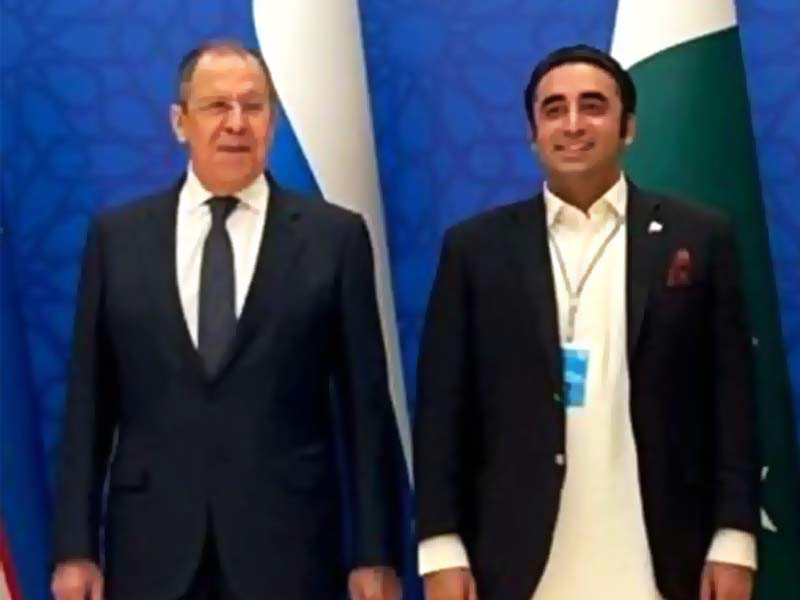
The sources also said that Pakistan was exploring options for a possible bilateral meeting between Russian President Vladimir Putin and Shehbaz.However, nothing is final yet, the sources added.Pakistan PM Shehbaz Sharif is likely to have a bilateral meeting with Chinese President Xi Jinping next month on the sidelines of the Shanghai Cooperation Organisation summit in Uzbekistan.
https://www.business-standard.com/article/international/pak-pm-sharif-likely-to-meet-chinese-pres-xi-during-sco-summit-report-122081700463_1.html
Subscribe to:
Posts (Atom)