Sunday, July 17, 2022

Pashto Music Video - Rook Dey Rana Zara Janana | Moreeda Dey Yam Peera Peera

Video Report - د پوهنتون د پخوانۍ استادې نرګس مومند حسنزۍ مرکه

Video Report - افغانستان کې د چنګاښ د ۲۶مې کودتا؛ شاهي نظام څه ډول وپرځېد

Video Report - World Economic Forum report on gender gap exposes how poor Pakistan's women have been treated by the state and society.

Video Report - Any difference btw politics of #imrankhan & journalism of #hamidmir -عمران خان اورحامد میر ایک جیسے؟

International Relations – What’s in it for the Common Man?

By Sadaf Rasheed
Bilawal Bhutto Zardari has made headlines in the international press after becoming Pakistan’s youngest Foreign Minister. His frequent visits to multiple countries during this short period of time have won him applause from the experts but the opposition and its mouthpieces in media has criticized him for what they call “too many foreign trips”. Can there be too many foreign trips by a country’s Foreign Minister whose job is to build, rebuild and enhance relations with other countries?
If someone analyzes the history of PPP governments, it becomes evident that Mr Zardari is not doing something new. PPP governments in the past initiated a robust and enhanced process of global engagement based on the principles of equality, respect and mutuality of interest and benefit.
Shaheed Mohtarma BB, during her visit to Cairo in 1994 said,“I dream of a Pakistan, of an Asia, of a world, where we can commit our social resources to the development of human life, and not to its destruction.”
PPP’s 2018 Manifesto states,“Pakistan must step forward and rationally create the framework for a proactive foreign policy that is designed to maximise our benefits while maintaining the best possible relations with all other countries.”
“We envision a Pakistan that is regionally, geographically and globally connected.”
Mr Bilawal Bhutto Zardari is continuing the PPP’s policy of maintaining good relations with other countries around the globe.
Now a question arises here why a political party that takes pride in being pro-poor takes so much interest in international relations. Chairman PPP Mr Bilawal Bhutto Zardari answered this question while speaking at an event to announce the party’s manifesto for the 2018 general elections. He said,“Foreign policy should be rooted in economic diplomacy” Like people, countries cannot prosper while working in silos. International co-operation is essential for the prosperity of a country, region and entire world. The economic and social development of a nation is directly proportional to the degree of its foreign relations. International trade, export & import strengthen the economy which in turn helps in poverty alleviation. Apart from economic implications, the effect of having good international relations can be seen in the social sector. When any country falls into natural calamities like floods, earthquakes, and diseases, other countries play their role to help lessen the effect of devastation. The control of polio and COVID-19 virus shows that through global cooperation countries can overcome any problem. Training of human resources, introduction of the latest technologies in agriculture, industries, and medical science, all require having strong relations with other nations.
So what has PPP achieved for a common man through its foreign policy? Be it the period of Shaheed Zulfikar Ali Bhutto, Shaheed Benazir Bhutto or Mr Asif Ali Zardari, PPP governments have actively pursued foreign relations with other countries which resulted in strengthening of the economy, creation of jobs, development of infrastructure, educational and health institutions, thereby uplifting Pakistan’s common man.
Zulfikar Ali Bhutto initiated foreign relations with the then Soviet Union when he was the Foreign Minister of Pakistan. It was the fruits of his efforts that in 1961, the Soviet Union gave a loan of 27 million Rubles to Pakistan for oil and gas exploration, which later enabled the establishment of an oil and gas development organization in Pakistan. So, the contribution of OGDCL to the development of Pakistan can be attributed to ZAB’s foreign policy.

Zulfikar Ali Bhutto took reins of a country in anarchic conditions, this undeveloped and war-shattered Pakistan was facing an international economic crisis. As soon as ZAB took the oath, he started visiting different countries to strengthen Pakistan’s ties with the international world. His foreign policy paid dividends and the world came to rescue Pakistan from difficult conditions by investing in different sectors. The economic cooperation from China, the Soviet Union, Iran, Saudi Arabia, U.A.E. and Libya are worth mentioning which resulted in the establishment of fertilizer plants, an oil refinery, Port Qasim, the Heavy Mechanical Complex, the Heavy Foundry and Forge near Taxila, self-sufficiency in wheat production, roads infrastructure, hospitals, educational institutes, nuclear reprocessing plant and the steel mill. All these projects led to the creation of hundreds of thousands of job opportunities and the reduction of poverty in Pakistan.
Moreover, the government of Zulfikar Ali Bhutto persuaded the Gulf countries to encourage both skilled and unskilled men from Pakistan to work there. In 1979, it was estimated that the Pakistani workforce in the Middle East lay somewhere around one million. Remittances sent by the migrants not only helped in building the country’s foreign exchange reserves and in providing a balance of payment support, which thus contributed to greater economic development but also provided necessary income support to their families. Similarly, when Shaheed BB came to power, she visited Iran, Turkey, China, US, UK, Switzerland, Korea, France, and Germany, among other countries, to convince business leaders of the viability of investing in Pakistan and to stress the potential for lucrative returns that such investment offers. SMBB succeeded in bringing Pakistan into the modern era. She brought fiber optic technology, cellular phones, and Internet technology to Pakistan. By early 1994, Telecom Australia started working on a $40 million contract to lay fiber optic cable from Karachi to Islamabad. During the same time, other foreign telecommunications companies, including Alcatel, Siemens, Ericsson, and Cable and Wireless had also begun installing digital communications networks in the Sindh, Punjab, and KP provinces. By mid-1994, 5430 telex lines had been installed, and a cellular mobile telephone system had been introduced.
Today, Pakistan has an IT industry with more than 12000 IT Companies and exports crossing the $2 billion figure. It contributes around 7 per cent of Pakistan’s GDP and employs hundreds of thousands of professionals. The growth of the IT industry is only possible because the PPP government was able to sell the idea of investing in Pakistan to foreign investors.
In addition to technology, the PPP government led by SMBB succeeded in attracting investment worth billions of dollars into Pakistan’s energy and power generation sector. In 1996, Benazir Bhutto laid the foundation stone of the Thar Coal power project. It has now become a success story of public-private partnership. Considering the load shedding, people are facing nowadays, there is no need of explaining the importance of power generation to common people, leave alone industries. Apart from power generation from this project, coal mining is playing a significant role in economic growth and poverty alleviation by providing thousands of jobs to the locals. In the infrastructure sector, Benazir Bhutto’s government signed a memorandum of understanding with the South Korean conglomerate Daewoo in which the latter pledged to implement $2 billion worth of projects, including the construction of a $730 million, 315km motorway between Lahore and Islamabad, Pakistan’s first motorway. After taking oath as President of Pakistan, Mr Asif Ali Zardari conducted his first-ever diplomatic visit as president of the country to China to follow up on the strong relations developed with the friendly country by Zulfikar Ali Bhutto and Benazir Bhutto. He followed it up with many more visits to present his idea of multi-billion dollars China Pakistan Economic Corridor. This project is termed a “Game changer” for Pakistan. It is estimated that this project will create 800,000 direct jobs in the next 10 to 15 years. This project is expected to add more than $60 million to Pakistan’s economy and thousands of megawatts of energy to the national grid. The impact of CPEC is expected to be so huge that research papers have been written on the topic.
President Zardari also visited European countries and introduced his idea of “Trade, not aid”. He lobbied at the highest level with countries of the EU. His continuous efforts in this regards resulted in GSP Plus status given to Pakistan in 2014. Not only did the Pakistan economy gain in terms of export revenue, but the efficiency gained was also immense as the relevant industries gained economies of scale and started becoming globally competitive. The labour employed in the relevant sectors was also employed gainfully as exports rise. Also worth mentioning is that the total EU development assistance for Pakistan for 2009-2013 amounts to over € 2.4 billion, funding activities focused on rural development/natural resources management and on education/human resources management.
Pakistan faced one of the most devastating floods in 2010. Flooding across Pakistan resulted in almost 2000 fatalities and an estimated $40 plus billion dollars worth of damage. International friends came to help the people of Pakistan in those difficult times. In the aftermath of the floods, the Russian Federation decreased the custom duty up to 35% on Pakistani goods as a goodwill gesture. The European Commission helped with €150 million in humanitarian assistance. The U.S. donated $55 million. All of this assistance was provided for the relief of the common man of Pakistan.
Following the footsteps of his leaders, Chairman PPP, Bilawal Bhutto Zardari has already visited US, Switzerland, China, Saudi Arabia, Turkey and Iran in a short span of time after taking oath as the Foreign Minister of Pakistan to rebuild ties with the international community. While in his early days, he has already resolved the issues of Pakistani students enrolled in Chinese Medical universities whose future was at stake. It is hoped that like his predecessor, Chairman PPP Bilawal Bhutto Zardari will be able to strengthen and broaden Pakistan’s relations with the world and translate these relations into the socio-economic development of common people of Pakistan.
https://en.humsub.com.pk/4261/international-relations-whats-in-it-for-the-common-man-2/

Tribal council in Pakistan bars women from visiting tourist spots

SAJJAD HUSSAIN
A tribal council in Pakistan has barred women from visiting public places for tourism and entertainment, terming it “unethical” and against the Islamic principles.The all-male jirga (tribal council) of local elders of ultra-conservative Salarzai tehsil in Bajaur tribal district on Saturday announced that if the government did not implement the decision by Sunday, the jirga members would take it upon themselves to impose it, the Dawn News reported.
The jirga was organised by the local chapter of the Jamiat Ulema-i-Islam-Fazl, which is also one of the main members of the ruling coalition.
The move comes just days after the World Economic Forum, in its Global Gender Gap Report, ranked Pakistan as the second worst country in terms of gender parity in the world as well as the region.Besides scores of elders from various tribes and areas of the Salarzai tehsil, a number of JUI-F leaders and religious figures of the region also attended the gathering, held after the JUI-F district leadership raised concerns during their presser on Thursday over what they called “unethical” activities in the name of entertainment. Addressing the gathering on Saturday, JUI-F district chief Maulana Abdur Rasheed, who also belonged to the Salarzai region, and other speakers pointed out that the jirga was meant to discuss several issues of the region that emerged during Eid, and resolve them peacefully and amicably.
The participants were told that it was noted that besides men, scores of local women either with their husbands and other relatives or separately had visited different tourist and picnic spots during the Eid holidays in the region to attend musical concerts and boat rides, which they claimed were against the local customs and traditions “based on Islamic principles”.
The speakers further said women visiting the said places for tourism and entertainment was “totally unethical and unacceptable” as, they claimed, there was no room for such activities both in Islam and local traditions. The participants in the meeting expressed concerns over women’s movement, and sought strict restrictions in this regard. The ban on women from visiting picnic sites was later announced by JUI-F’s Maulana Rasheed, calling it a “joint declaration” of the jirga.
He said all the participants approved a complete ban on women’s visits to tourist spots — with or without husbands.
“We want to promote tourism in our areas as it is vital for socioeconomic development of the region. We are only against women visiting such areas as it was in contrast to our customs and traditions. Hence, the jirga banned it,” he announced, adding such activities could not be allowed in the name of tourism.
He further stressed that if the government/district administration failed to take any action in this regard until Sunday, the jirga would enforce the ban itself.
There was no word from the district administration, nor was there any indication if the JUI-F-backed jirga decision had been endorsed by other political parties, or if it was indeed “representative” of the tribal council.
The party has influence in the tribal district, but social activists said the announcement lacked any legal and constitutional backing. PTI SH PMS PMS
https://theprint.in/world/tribal-council-in-pakistan-bars-women-from-visiting-tourist-spots/1043003/

The big default? Pakistan among a dozen countries in ‘danger zone’


Traditional debt crisis signs of crashing currencies, 1,000 basis points bond spreads and burned foreign exchange reserves point to a record number of developing nations now in trouble.
Lebanon, Sri Lanka, Russia, Suriname and Zambia are already in default, Belarus is on the brink and at least another dozen are in the danger zone as rising borrowing costs, inflation and debt all stoke fears of economic collapse. Totting up the cost is eye-watering. Using 1,000 basis points bond spreads as a pain threshold, analysts calculate $400 billion of debt is in play. Argentina has by far the most at over $150bn, while the next in line are Ecuador and Egypt with $40bn-$45bn.
Crisis veterans hope many can still dodge default, especially if global markets calm and the IMF rows in with support, but these are the countries at risk.

ARGENTINA: The sovereign default world record holder looks likely to add to its tally. The peso now trades at a near 50 per cent discount in the black market, reserves are critically low and bonds trade at just 20 cents in the dollar — less than half of what they were after the country’s 2020 debt restructuring.

The government doesn’t have any substantial debt to service until 2024, but it ramps up after that and concerns have crept in that powerful vice president Cristina Fernandez de Kirchner may push to renege on the International Monetary Fund.

UKRAINE: Russia’s invasion means Ukraine will almost certainly have to restructure its $20bn plus of debt, heavyweight investors such as Morgan Stanley and Amundi warn.

The crunch comes in September when $1.2bn of bond payments are due. Aid money and reserves mean Kyiv could potentially pay. But with state-run Naftogaz this week asking for a two-year debt freeze, investors suspect the government will follow suit.

TUNISIA: Africa has a cluster of countries going to the IMF but Tunisia looks one of the most at risk. A near 10pc budget deficit, one of the highest public sector wage bills in the world and there are concerns that securing, or at least sticking to, an IMF programme may be tough due to President Kais Saied’s push to strengthen his grip on power and the country’s powerful, incalcitrant labour union.

Tunisian bond spreads — the premium investors demand to buy the debt rather than US bonds — have risen to over 2,800 basis points and along with Ukraine and El Salvador, Tunisia is on Morgan Stanley’s top three list of likely defaulters.

GHANA: Furious borrowing has seen Ghana’s debt-to-GDP ratio soar to almost 85pc. Its currency, the cedi, has lost nearly a quarter of its value this year and it was already spending over half of tax revenues on debt interest payments. Inflation is also getting close to 30pc.

EGYPT: The country has a near 95pc debt-to-GDP ratio and has seen one of the biggest exoduses of international cash this year — some $11bn according to JPMorgan. Fund firm FIM Partners estimates Egypt has $100bn of hard currency debt to pay over the next five years, including a meaty $3.3 billion bond in 2024.

Cairo devalued the pound 15pc and asked the IMF for help in March but bond spreads are now over 1,200 basis points and credit default swaps (CDS) — an investor tool to hedge risk — price in a 55pc chance it fails on a payment.

Francesc Balcells, CIO of EM debt at FIM Partners, estimates though that roughly half the $100bn Egypt needs to pay by 2027 is to the IMF or bilateral, mainly in the Gulf.

KENYA: Kenya spends roughly 30pc of revenues on interest payments. Its bonds have lost almost half their value and it currently has no access to capital markets — a problem with a $2bn dollar bond coming due in 2024.

On Kenya, Egypt, Tunisia and Ghana, Moody’s David Rogovic said: “These countries are the most vulnerable just because of the amount of debt coming due relative to reserves, and the fiscal challenges in terms of stabilising debt burdens.”

ETHIOPIA: Addis Ababa plans to be one of the first countries to get debt relief under the G20 Common Framework programme. Progress has been held up by the country’s ongoing civil war though in the meantime it continues to service its sole $1bn international bond.

EL SALVADOR: Making bitcoin legal tender all but closed the door to IMF hopes. Trust has fallen to the point where an $800 million bond maturing in six months trades at a 30pc discount and longer-term ones at a 70pc discount.

PAKISTAN: Pakistan struck a crucial IMF deal this week. The breakthrough could not be more timely, with high energy import prices pushing the country to the brink of a balance of payments crisis.

Foreign currency reserves have fallen to as low as $9.8bn, hardly enough for five weeks of imports. The Pakistani rupee has weakened to record lows. The new government needs to cut spending rapidly now as it spends 40pc of its revenues on interest payments.

BELARUS: Western sanctions wrestled Russia into default last month and Belarus now facing the same tough treatment having stood with Moscow in the Ukraine campaign.

ECUADOR: The Latin American country only defaulted two years ago but it has been rocked back into crisis by violent protests and an attempt to oust President Guillermo Lasso.

It has lots of debt and with the government subsidising fuel and food JPMorgan has ratcheted up its public sector fiscal deficit forecast to 2.4pc of GDP this year and 2.1pc next year. Bond spreads have topped 1,500 bps.

NIGERIA: Bond spreads are just over 1,000 bps, but Nigeria’s next $500m bond payment in a year’s time should easily be covered by reserves which have been steadily improving since June. It does though spend almost 30pc of government revenues paying interest on its debt.

https://www.dawn.com/news/1699817/the-big-default-pakistan-among-a-dozen-countries-in-danger-zone

#Pakistan - The poison in our politics

Politics has never been a particularly pleasant business in these parts, especially in Punjab since it is the most important province in the federation, but the atmosphere ahead of today’s by-polls easily beats all previous levels of toxicity; which is a crying shame. It’s not just that campaign speeches are full of venom and vitriol for opponents, instead of what they would like to do for the people, it’s also that party leaders prefer and reward the kind of lieutenants that stand out for the crassness of their attitudes. So the whole thing has descended to one big fight in which the one that throws more mud at the other wins the battle of wits.
The latest twist has been the release of the Supreme Court’s detailed judgement on the actions of former deputy speaker of the national assembly, Qasim Suri, when the no-confidence motion against Imran Khan was tabled. Though parliamentary business in Islamabad is far removed from the battle for Punjab, it’s added yet more poison on the road to the July 17 by-poll. Now PML-N heavyweights are smiling ear-to-ear and dangling Article-6 in front of the PTI leadership, while the latter has rolled up its sleeves even more as it ratchets up its rhetoric against state institutions; clearly taking the position that anybody that does not agree with the party, even if it is the superior judiciary, is no friend of the country.
In this rush the people of the province have perhaps failed to notice that there’s nothing that either party has said about how it would run the cash-starved province to their benefit, whose policies would benefit households and businesses more, and all that. They have, in fact, only been witness to a very ugly feud between the political elite of this place. And even when they throng to political rallies, most of them expect nothing more than the circus they are treated to.
Today’s by-poll shows perfectly just how and why this country’s politics has become devoid of material and full of poison.
https://dailytimes.com.pk/967451/the-poison-in-our-politics/

Message of sympathy to Foreign Minister Bilawal Bhutto Zardari on the ongoing floods in Pakistan
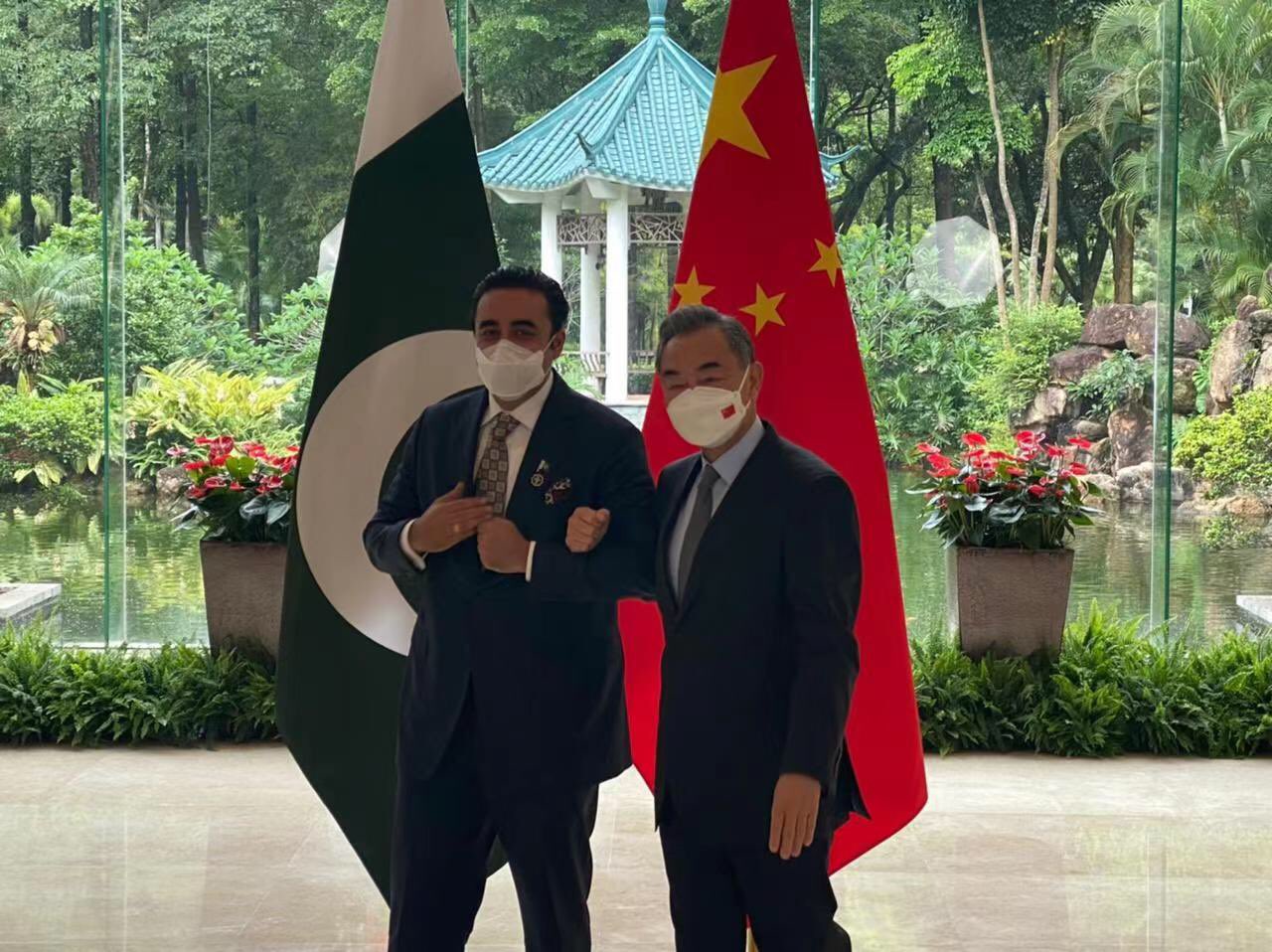
China’s State Councilor and Foreign Minister Wang Yi sent a message of sympathy to Foreign Minister Bilawal Bhutto Zardari on the ongoing floods in Pakistan.
In his message, Wang Yi expressed deep grief and sorrow over the loss of life and property in several areas of Pakistan due to floods, CRI reported. He expressed deep sympathy with the families of those who died in the flood, the injured and the affected people in the disaster areas. Wang Yi said that the Chinese government and people are always with the Pakistani government and the fraternal Pakistani people.
We are sure that under the leadership of the Pakistani government, the people of Pakistan will definitely overcome the calamities and restore normal life soon, he added.
https://dailytimes.com.pk/967513/chinese-fm-expresses-grief-over-flood-damages-in-pakistan/

Friday, July 15, 2022

Video - Israeli song - 'Someone'

Video Report - ‘Saudis not concerned about Israel-Palestinian conflict’ - Dr. Mordechai Kedar

Video Report - President Biden Delivers Remarks in Jeddah, Saudi Arabia

Video Report - President Biden defends Saudi Arabia trip after meeting with Crown Prince Mohammed bin Salman

Video Report - US president arrives in Middle East on first trip as US president

Music Video - Noor Jehan - Sanu Nair Wale Pul te bula ke

Video Report - Article 6 Against Imran, Alvi, Fawad | IMF Deal, PM Shehbaz Address | Punjab By-Election

Video Report - #MJtv : ڈی جی نیب شھزاد سلیم کی پبلک اکاؤنٹ کمیٹی کیخلاف درخواست پر آباد ہائی کورٹ کا ئحکم ی

The Mysteriously Low Death Toll of the Heat Waves in India and Pakistan

By  DAVID WALLACE-WELLS

It’s the monsoon now in India, which means it is possible to look back on the extraordinary succession of heat waves that swept across South Asia starting this spring — and begin, at least, to take stock of their impact.
From late March through the end of June, a period of almost 100 days, high temperatures in Delhi were above 100 degrees Fahrenheit on all but 15 of them, with many days breaking 110 degrees. For large parts of those months, the punishing heat stretched over much of the subcontinent, often blanketing more than a billion people and in certain places crossing 122 degrees. In May, the World Weather Attribution initiative, a research alliance connecting extreme events to global warming in real time, declared that the initial wave had been made 30 times more likely by climate change. And the heat kept coming.
For more than a decade, scientists have talked about an “upper limit” of human survivability, reached when the combination of heat and humidity produces what’s called a “wet-bulb temperature” of 35 degrees Celsius (95 degrees Fahrenheit) for six hours — above that level, it is believed that exposure would kill even young, healthy people. But at lower wet-bulb readings, and even in low-humidity extreme heat, health suffers too, especially among those with other vulnerabilities, exacerbating all kinds of conditions (not to mention damaging infrastructure, driving power outages, and limiting labor productivity). A more recent set of studies even suggested the maximum wet-bulb threshold might be lower for humans — as low as 31 degrees Celsius (88 degrees Fahrenheit) at 100 percent humidity or 38 degrees Celsius (100 degrees Fahrenheit) at 60 percent humidity. For the vulnerable, of course, the effects hit much sooner.
The monthslong heat in South Asia breached these levels at several points. In Jacobabad, Pakistan, a small city of less than 200,000, wet-bulb temperatures briefly hit 91.4 in May. Late last month, with the monsoon bringing humidity with them, the wet-bulb in Delhi, where almost 20 million people live, reportedly reached as high as 92.7. The readings produced a wave of climate panic: Berkeley Earth’s Robert Rohde warned “this heat wave is likely to kill thousands,” and The Washington Post reported “India’s heat waves are testing the limits of human survival.” (I had the same worry, as did others at The Times, The Economist, the World Economic Forum and elsewhere.)
And yet while there have been casualties and brutal effects, these events do not yet appear to have caused mass death. An early estimate of the death toll was just 90 across India and Pakistan, a fraction of the more than 1,000 killed by the heat dome that struck the Pacific Northwest (including western Canada) last summer, where lower temperatures hit millions for a much shorter period of time. (In Seattle, it was above 100 for only three days, with a peak of 108; in Portland, it reached 116.) It’s an even smaller fraction of the number who died in the 2003 and 2010 heat waves in Europe and Russia, which killed 70,000 and 55,000. In those heat waves, only a handful of places crossed 104 degrees Fahrenheit. According to Dr. Chandni Singh, a senior researcher at the Indian Institute for Human Settlements and a lead author of the recent Intergovernmental Panel on Climate Change chapter on adaptation, it’s likely that this year’s heat event in India will not even be as lethal as one there in 2015 when high temperatures across the country killed several thousand. When I spoke to the Indian climate activist Disha Ravi, she described recent floods — which have killed more than 100 across India and Bangladesh, and displaced many millions — as a more pressing climate matter locally and the one that had been preoccupying her much more, recently, than the heat. What explains the relatively low death toll in India and Pakistan from the recent heat? It is still too early to say definitively. That goes double given the limited data about all the impacts of the heat wave — not just on human health, but also on agriculture, labor and economic activity, and more. But the question is a hugely consequential one: About a fifth of the human population was just subjected to almost unimaginably long-lasting extreme heat, and the ultimate toll, if we can accurately assess it, will tell us quite a lot about how some of us might suffer through the future climate. If the current pattern continues to hold, with fuller calculations showing a still relatively limited impact, five hypotheses provide at least partial explanations: problems with data; the dryness of the heat wave; local adaptation and response; that the hottest parts of the world may already be relatively acclimated to extreme heat; and that our casual use of “wet-bulb” readings may be misleading about actual mortality risk. (The brutal, long-duration experience also suggests some important caveats.)
First, the official death count is an undercount.
This was the interpretation offered to me by Dr. Friederike Otto, of World Weather Attribution, in May; by Kathy Baughman-McLeod, director of the Atlantic Council’s Arsht-Rockefeller Resilience Center, in June; and by Avikal Somvanshi, of India’s Center for Science and the Environment, in July. In fact, it was the first thing mentioned by everyone I spoke to, in India and Pakistan and elsewhere, when discussing the toll of the heat wave.
Heat is something of an epistemological and epidemiological challenge to doctors and coroners, even in places most conscientious about data collection. That’s because few deaths even under the most extreme temperature conditions present obviously as heat stress; mostly, fatalities accrue when underlying conditions are exacerbated or made worse by the additional strain.
Aditya Valiathan Pillai, an associate fellow at India’s Center for Policy Research, went to emergency rooms “just to see if the fact that nothing was popping up in the media about people dying was true or whether it was sort of a mortality whitewash, the way we saw with Covid,” he said. “And universally, I went to government hospitals and they said, we did see a steady uptake in the number of people showing up, but very few deaths. Then again, all of them raised their hands and said, we don’t really actually know how to count a heat death. And so we’re not entirely sure.” A full accounting of the toll of any heat wave requires “excess mortality data” — overall accounting of how many people died in a given period above a baseline average — but compiling that can take months, wherever the extreme event hits. Without it, Baughman-McLeod said, “we don’t know how many, because we don’t count properly. The data collection isn’t there — whether in India or in the U.S.” For his part, Somvanshi estimates that the ultimate toll of these heat waves will be “at least twice than what is officially reported. But based on the available information, it will most probably be much more than twice.” A simple doubling of data still yields a relatively low estimate; getting even to the 2015 toll in India would require something like a 20-fold adjustment. To get to the mortality levels of the European heat waves, a much larger adjustment still.
Second, for mortality, humidity matters enormously.
“Humid heat is more dangerous to human health and well-being than dry heat,” Somvanshi said. Through much of the heat wave, the temperatures were alarmingly high but humidity relatively low — making those truly concerning wet-bulb readings relatively rare and brief, even through the oppressively hot spring.And when temperatures are high but humidity is low, the burden is more manageable — in part because it is, in certain ways, familiar. In India and Pakistan, the temperatures of the past few months were record-breaking when they happened, for the late spring, but not unheard-of in a typical Indian summer.That made them, for Somvanshi, “unusual from the climate perspective, but from people’s perspective, in Delhi and even most of northern India, we are used to having 40-plus during the summer. It’s just that for us, it happened a little earlier. So, as people, we were kind of surprised, but not very much concerned or disturbed by it.” But he noted that the traditionally drier parts of the country are increasingly getting more humid, and the traditionally humid parts of the country are getting hotter — and this year’s monsoon has not brought all that much relief.In Delhi, he said, “If you take the combined impact of humidity and heat of temperature, then it’s much worse conditions right now than it was in March and April or even May. And that’s something which doesn’t capture the media attention.”
Third, cultural practices and adaptation are playing a role — though there is still a long way to go.
When projecting heat impacts, both immediate and longer term, it is easy enough to assume an essentially passive population: You take what you know the future holds and calculate the impact that would have on the world as it is today. The result is an intuitive picture of climate horror that has informed both some scientific projections of the next decades and popular dramatizations like the one that opens Kim Stanley Robinson’s novel “The Ministry for the Future.” But while visions of quasi-apocalypse often center on India, where climate impacts are projected to be especially intense, that conceptual modeling is both patronizing and “fatalistic,” said Tim Sahay, a Mumbai-born climate policy expert. He pointed me to research showing a shrinking number of deaths due to heat on the subcontinent and a number of interventions that could further reduce vulnerability. “We’re not going to die for your narrative,” he said. And if your conception of adaptation is just air-conditioning, with all the energy complications that brings, the South Asia heat wave suggests a broader spectrum of response, beginning with simple awareness. “The most obvious thing apart from the heat itself has been the reaction to the heat, which is quite unprecedented,” Pillai said. “It was a media maelstrom, in the sense that every newspaper had at least a couple of op-eds. The TV news picked it up.”
“I think in terms of providing some kind of warning of heat and just public awareness and messaging around that from the government — that’s improved,” Dr. Singh agreed, referring to “people going to specifically low-income settlements and telling them that you need to stay out of the heat and all of that.” “The public conversation around heat — typically, in India, at least earlier years and even earlier decades — used to be that we are Indians, we know heat, we know how to deal with heat,” she said. “But that kind of bravado — false bravado, I think — has changed this year. The problem is, that only gets you so far. You can cope with it. You can maybe protect yourself, if you have the means to. But if you are living in a house that has no cooling and you have to go outdoors to work, there’s not much that warning can do.”
The available tools are familiar across the subcontinent: schedule shifting for those who can do so; different diet and drinks and, of course, regular hydration; lighter clothing; simple ways of cooling the home with wet sheets. But at the scale of policy intervention, the response is still lacking, said Dr. Singh, who mentioned both short-term interventions, like widespread behavioral and labor changes during episodes of extreme heat, and longer-term ones, like revisions to building codes and urban planning. After the 2015 heat waves, India embraced the goal of what are called heat action plans, at both the national and local levels. But many of those remain unenforced or undeveloped, depending on the region and municipality. “The country currently has no adaptation or resilience plan for heat right now. There is nothing on paper,” Somvanshi said. “We have a document which talks about emergency response, which is very different than trying to adapt and become resilient.”
Fourth, the world’s hottest countries may be less vulnerable to heat, relatively speaking, than simple heuristics suggest.
In recent decades, the deadliest heat waves have been not in the hottest countries but those less familiar with heat — those 2003 and 2010 heat waves in Europe, for instance, where extreme temperatures met populations unaccustomed to dealing with them. This is probably not a coincidence. Matthew Huber at Purdue is among the world’s leading authorities on heat stress and heat mortality — it was his 2010 paper, co-authored with Steven Sherwood, that introduced the idea of that upper limit of human survivability. But in thinking about heat vulnerability, he said, it is a mistake to assume that all places are equally at risk in the face of equal temperatures. That’s because much of the equatorial band of the planet is already “acclimatized” — both culturally and, to some degree, physically — to temperatures that would in the northern latitudes produce widespread heat mortality.
Unfortunately, he said, much of the scientific literature on these questions doesn’t deal with acclimatization sufficiently, drawing on research conducted in places without much experience of extreme heat. “The problem is, when you go and look at the database, it’s Northern Europe, Canada,” he said. “In Africa, it’s just South Africa. Nothing in China. Nothing in India, I don’t think. Most of the places that actually experience heat stress aren’t in the heat database. There’s a lot of studies that are using this database and the correlations that come out of it to generalize. And those are almost certainly very wrong, because none of these are people who are acclimated to heat stress.” That means we can’t make easy generalizations about how people in different places with different levels of experience with heat will handle an extreme event — and we probably underestimate resilience in the hottest parts of the world.
And fifth, heat beyond the limit of human survivability may be farther off than headlines have suggested. The wet-bulb temperatures in South Asia this spring have been called “unsurvivable.” But in a lot of coverage, the complexities and nuances of wet-bulb measures are lost, Huber said. To begin with, there are two ways of calculating those figures, yielding slightly different figures and implying somewhat different warning points.
More significantly, those calculating wet-bulb temperatures using simplified calculators often input daily averages for both heat and humidity, though averages misrepresent the way each changes over the course of the day, in part in response to each other, since variations in heat and humidity typically counteract each other over the course of the day. The result is wet-bulb figures that seem scarier than conditions on the ground really warrant. Sometimes, the daily maximums are used to make a calculation, which yields an especially extreme and misleading picture: Since heat and humidity counteract each other, it is almost never the case that peaks will be reached simultaneously, and simply accurate to use a calculation based on maximum readings to suggest a continuous wet-bulb level for any period of time. And while media reports may take a brief wet-bulb peak and compare it with a six-hour threshold, the length of time truly matters. “If it’s just an hour or two or three, the effects on people are not going to be particularly big,” Huber said. “I mean, you can hang out in an oven for 15 minutes without dying.” Which brings us to the caveats: Death is not the only measure of suffering when it comes to heat, and mortality data, while important, tells only a partial story. This spring, wheat yields were reduced in India between 10 percent and 15 percent, according to official estimates; in Pakistan, the effect was similar. In certain regions, the impact was as big as 30 percent. Livestock died. Infrastructure suffered, including a bridge in Pakistan that collapsed when heat caused glacial melt that caused a flood. There were widespread blackouts and electricity shortages across the subcontinent, triggered in part by the additional demand from those privileged enough to afford some kind of cooling. School days were shortened and in some places, schools closed. “We are witnessing something that people cannot cope with, even at the present level of global warming,” said Fahad Saeed of Climate Analytics, who is based in Islamabad, Pakistan.
He mentioned the scrambled weather patterns: One year heat and drought, and the next, flooding. In some years there were even biblical locust swarms, as in the summer of 2020, with 10 billion locusts descending on South Asia and eating up its cropland, 8,000 times more locusts than normal. He mentioned people he’d seen abandon their fast during Ramadan because the practice was too difficult to sustain in periods of such intense heat. And he mentioned a farmer he’d visited recently, who’d decided to not even bother to plant three-quarters of his land, given the weather conditions.
What would happen if the world crossed the 1.5 degree Celsius (2.7 degrees Fahrenheit) global warming threshold, Saeed asked, shaking his head. “Anything beyond that? It would even be more devastating.”
https://www.nytimes.com/2022/07/14/opinion/environment/heat-waves-india-pakistan-climate-change.html

سپریم کورٹ کے فیصلے کے بعد عمران خان کو معافی مانگنی چاہیے، شیری رحمان

پیپلز پارٹی کی نائب صدر سینیٹر شیری رحمان نے کہا ہے کہ سپریم کورٹ کے فیصلے کے بعد سابق وزیر اعظم عمران خان کو معافی مانگنی چاہیے۔

اسلام آبا د سے جاری بیان میں شیری رحمان نے کہا کہ عمران خان اور پی ٹی آئی رہنما سپریم کورٹ کے فیصلے پر سوالات اٹھا رہے ہیں۔

انہوں نے کہا کہ عمران خان اور پی ٹی آئی رہنماؤں کا یہ عمل الٹا چور کوتوال کو ڈانٹے والا ہے، سابق وزیر اعظم ہر اُس ادارے سے سوال کرتے ہیں، جو اُن کی طرف نہیں جھکتا۔

پی پی سینیٹر نے مزید کہا کہ عمران خان کسی بھی انتخابی نتیجے کو قبول کرنے کو تیار نہیں، وہ تو کسی آئینی ادارے کے دائرہ کار کو بھی نہیں مانتے ہیں۔

اُن کا کہنا تھا کہ عمران خان صرف ایسے فیصلے چاہتے ہیں، جو اُن کے اقتدار میں آنے میں مدد کریں۔

شیری رحمان نے یہ بھی کہا کہ پی ٹی آئی نے عدالت کو سائفر تک فراہم نہیں کیا، عمران خان اب عدالت سے سوال کر رہے ہیں کہ سائفر پر تفتیش کیوں نہیں کرائی؟

انہوں نے استفسار کیا کہ عمران خان نے خط اتنے دن کیوں چھپایا؟ سوالات کے جواب عمران خان نے دینے ہیں سپریم کورٹ نے نہیں۔

https://jang.com.pk/news/1111579


Thursday, July 14, 2022

Video - #DailyShow #TrevorNoah #IfYouDontKnowNowYouKnow The Subminimum Wage Loophole - If You Don’t Know, Now You Know | The Daily

Video Report - What's the way out of Sri Lanka's political crisis?

Video Report - Tapper calls out GOP officials who called rape of 10-year-old a lie

Video Report - #biden #israel #medalofhonor Biden Awarded Israeli Presidential Medal of Honor

Video Report - President Biden Holds News Conference With Israeli Prime Minister | NBC News

Music Video- EK TARAF USKA GHAR EK TARAF MAIKADA PANKAJ UDHAS

Music Video - Superhit Ghazal - Sabko Maloom Hai Main Sharabi Nahin - By Pankaj Udhas

Video Report - عدم اعتماد تحریک کے ہیچھے غیر ملکی سازش کا کوئی ثبوت نہیں، سپریم کورٹ کا فیصلہ بھی آ گیا

Video Report - مارگلہ ھلز فوج کی ملکیت نہیں،سرکاری زمین کی خریدو فروخت نہیں ہو سکتی، ہائی کورٹ کا تفصیلی فیصلہ

Pakistan’s rising debts, decreasing exchange reserves raise concern

Pakistan is in economic turmoil as its foreign debts are rising while foreign exchange reserves are decreasing.The situation raises concern over Pakistan’s economic challenges getting deeper, reported local media.
Pakistan’s external debt servicing rose to USD 10.886 billion in the first three quarters of 2021-22 compared to USD 13.38 billion in the entire FY21.
The situation will create a serious problem for Pakistan as its foreign exchange reserves are fast depleting amid rising external debt servicing, reported Dawn.
The external debt servicing was just USD 1.653 billion in 1QFY22 against USD 3.51 billion in the first quarter of 2020-21.
However, the debt servicing jumped to USD 4.357 billion in 2QFY22 and further to USD 4.875 billion in 3QFY22, reported Dawn.
Pakistan has been facing a serious threat on the external front as the State Bank of Pakistan’s foreign exchange reserves fell to single digits despite a USD 2.3 billion inflow from China late last month.The increasing size of the external debt servicing in each quarter indicates the government has been borrowing dollars at higher commercial rates to meet its foreign debt repayment obligations, reported Dawn.
The economic slowdown is taking a toll on Pakistan’s job market as some sectors reported layoffs.
“Textile and technology sectors have reported job cuts amid the economic slowdown,” Fahad Rauf, Head of Research at Ismail Iqbal Securities, said last week, reported The Express Tribune.
“Some Pakistani exporters have reported cancellation of export orders (by international buyers) in the backdrop of global recession fears.”
The layoffs will result in newcomers finding jobs becoming a tough task in the short to medium term, reported The Express Tribune.The employment rates stand below the required levels due to slower economic growth compared to the 6-7 per cent economic expansion required to accommodate all new job-seekers in the country.The UN had suggested 17 targets for perpetual development which means equal opportunities for every human to make one’s life better, reported local media.Unfortunately, at the international level, no serious measures were taken in this regard. As far as Pakistan is concerned, where poverty is increasing every day such steps are extremely important, reported local media.
It was suggested that Pakistan should save wastage of natural resources so that future generations could also benefit from it.
Similarly moving toward renewable energy is also important to reduce the adverse environmental effects due to pollution.
The government should take immediate actions in this regard to stop increasing crises in the country, reported local media.
https://theprint.in/world/pakistans-rising-debts-decreasing-exchange-reserves-raise-concern/1039551/

Monday, July 11, 2022

Video Report - Macron’s government survives no-confidence vote in parliament • FRANCE 24 English

Video Report - President Biden and Vice President Harris Receive a Briefing on James Webb Space Telescope Images

Video Report - Top Dems rule out 2024 challenge for Biden

Video Report - #Russia #Germany #NordStream Russia cuts off gas to Germany: Will they switch it back on? | DW Business

Is Society Finally Ready for Male Birth Control?

By Stephanie Page and John Amory
Over 40 percent of the six million annual pregnancies in the United States are unplanned, according to the latest data available, and about one in five pregnancies ends in abortion. With the Supreme Court decision overturning Roe v. Wade, and the resulting loss of access to safe abortion care for millions of Americans, it is more critical than ever to prevent unplanned pregnancies. The use of an effective method of contraception is the best way to do so.
As researchers developing male hormonal contraception, we believe that to reduce unplanned pregnancy and the need for abortion, men need to become more engaged in contraception. Men are involved in 100 percent of unintended pregnancies, and most men remain fertile for much of their lives.
Male contraceptives have been in use for hundreds of years. Condoms made from animal intestines were used in Renaissance Europe. Condoms are a useful tool for preventing pregnancy and sexually transmitted infections, despite having significant failure and discontinuation rates over time. Many men and women simply don’t like them. Vasectomies have long been performed in the United States, but they are not always reversible and are therefore appealing only to men with no interest in future fatherhood. Despite these drawbacks, condoms and vasectomy currently account for roughly 21 percent of monthly contraception use in the United States.
While numerous contraceptives for women exist, including implants, pills, intrauterine devices and vaginal rings, a substantial proportion of women do not have a method they can use safely or without significant side effects. For example, the pill may not be recommended for women with a history of blood clots or women over 35 who smoke. Many women experience side effects from contraceptives, such as abnormal bleeding, weight gain, acne and low libido. In addition, even for these imperfect options, access to contraception remains a challenge in many settings. Now that the opportunity to terminate an unplanned pregnancy will be unavailable to many, the United States needs innovative solutions to make a major impact on unplanned pregnancy rates, which have remained relatively stagnant over the past two decades, despite the introduction of more female methods. Novel male contraceptives hold that promise.
Would men use contraceptives if more choices were available? Multinational survey data suggests that 29 to 71 percent of men would use a male hormonal contraceptive. Recent market research from the Male Contraceptive Initiative indicates 82 percent of U.S. men ages 18 to 44 whose partners experienced an unplanned pregnancy in the past are interested in new methods of male contraception, with the majority saying they feel they share contraceptive responsibility with their partner. Importantly, one study found that only 2 percent of women surveyed said they would not trust their partners to use a hormonal male contraceptive. More work is needed to substantiate these survey data with real world experiences from men and to educate men about contraceptive options.Reversible male hormonal contraception has been tested for around 50 years. We know from our and others’ research that these methods work well for most men. Various injections and implants have been tested in over 2,000 couples worldwide, together demonstrating reversibility and around 95 percent effectiveness in preventing pregnancy — rates comparable with the female pill’s and better than condoms’.
The Eunice Kennedy Shriver National Institute of Child Health and Development and the Population Council, together with 15 centers across the globe — including sites in North and South America, Europe and Africa — are conducting a study in over 400 couples of a hormonal contraceptive gel that men apply to their shoulders once a day for 18 to 24 months. As investigators helping to conduct this trial, we know that men are interested and engaged in using these methods. Our male participants often express a desire to continue using the method for contraception after their time in the study ends, and their female partners are often disappointed to return to their previous methods.
Nonhormonal male contraceptives are less well developed but show promise in laboratory testing. A prototype “reversible vasectomy” is being tested in countries like India and the United States. It entails an injected gel that forms a plug to prevent the passage of sperm; the plug can be broken down or degrades to allow for reversal. More long term, scientists are working to develop molecules that prevent sperm swimming or maturation; however, these second-generation male contraceptives are likely more than a decade away.
As clinicians and developers, we are always asked about side effects. A minority of men testing male hormonal contraceptives experience side effects that will be familiar to some women who have used hormonal contraceptives (for example, weight gain, acne and increase or decrease in libido). Nevertheless, men say they are willing to share the burden of side effects with women, and the concept of shared risk has been proposed to reframe the risk analysis in this situation. In this paradigm, men take on the risk of side effects from contraceptive use to protect their partners from the risk of undesirable effects of their contraceptive or unintended pregnancy. With a number of states now further limiting access to safe abortion, the risks for many women of an unplanned pregnancy have risen sharply, furthering the imperative to look at shared risk by a couple when assessing potential contraceptive side effects.
As developers of male contraceptives, the most frequent question we are asked is: What is taking so long? Investment in male contraceptive development has dropped compared with prior decades when large pharmaceutical entities and nongovernmental agencies were investors. Today, the National Institute of Child Health and Development and academia provide the vast majority funding for male contraceptive development; lack of funding slows progress at the innovation and clinical testing stages.Why the loss of engagement? It’s possible that the novelty of male birth control is seen as too risky for profits and that the market is underappreciated for pharmaceutical involvement. Moreover, developers suffer from a lack of regulatory guidance from the Food and Drug Administration on how effective these products must be for market introduction. Consensus recommendations from the research community have been published suggesting metrics for evaluating novel male hormonal contraceptives and establishing effectiveness and safety levels, but whether these will be adopted by regulators is unknown. Greater advocacy is needed to push the field forward and convince funders and the pharmaceutical industry that there is a demand for this technology.
We are not developing male contraceptives to replace female contraceptives. Access to contraception and safe abortion is a fundamental human right for all people and a necessary component of public health. Many men wish to share the burden of contraception with their partners; others want reproductive autonomy. Men are ready, but their contraceptive options are sparse. Education will be important as products come to the market.
Now that the U.S. Supreme Court has issued a decision that will severely limit people’s options when an unplanned pregnancy occurs — a decision that will have a disproportionate impact on poor women — we need, more than ever, to accelerate development of male contraceptive options. Lives are at stake.
https://www.nytimes.com/2022/07/11/opinion/male-contraception.html

Sunday, July 10, 2022

Video Report - Sri Lankans roam presidential palace after Rajapaksa is chased out

Video Report - Elon Musk may be on the hook for $1B to get out of Twitter purchase

Video Report - Chile inflation: Rising food, fuel prices spark public anger

Video Report - President Biden Visits Japan Ambassador After Killing of Former Japanese PM Shinzo Abe

Video Report - No Saudi-Israel Normalization While Biden Visits, but It’s Getting Closer

Pashto Music - اختر دے مبارک شا - Humayun Khan Aw Sumaira Iqbal

Video - سابق چئیرمین نیب جسٹس ر جاوید اقبال کے کرتوت اور آئینی اداروں کی شرمناک خاموشی

Pakistan - China: CPEC resumption


IT appears that a recent counterterrorism breakthrough has greatly helped restore Chinese confidence in Pakistan’s security apparatus and paved the way for the restoration of bilateral ties as well as CPEC-related activities, which had been on ice since late April.
Work has reportedly resumed on the Main Line 1 (ML-1) upgradation project, the largest component of China’s Belt and Road Initiative in Pakistan and the centrepiece of the second phase of CPEC.The importance of what this breakthrough represents cannot be overstated. Beijing — an all-weather friend and one of our strongest allies — had all but pulled the plug on its development activities in Pakistan after a brazen terrorist attack on the grounds of Karachi University left three Chinese teachers dead. It was well known that Beijing had been quite upset for some time at the impunity with which its people were being attacked on Pakistani soil. After the KU attack, it simply suspended all work on the CPEC front till the time those responsible were nabbed and security for its personnel in Pakistan assured.
The gravity of the situation can be judged from the fact that recently army chief Gen Qamar Bajwa himself had to travel to Beijing with guarantees in a bid to win the Chinese over.
It is unclear what the army chief offered to the Chinese authorities, and what terms were set for the future.
The recent busting of a terrorist cell linked to Baloch extremists BLA and BLF, however, has thawed the ice considerably. The operation reportedly came in coordination with a group of Chinese investigators who had arrived here and were working with the Pakistani team tasked with the case.
This unusual arrangement reflects a lack of faith on the Chinese side. It would have been much better had there been more clarity about the role of this team and whether we should expect similar arrangements in the future, as has been rumoured in some quarters. Be that as it may, it appears that Chinese authorities are for now satisfied with the progress made and wish to resume their work. It is now up to our government and security forces to make sure there is no further incident which may imperil goodwill between the two countries again. However, there also needs to be greater transparency in our dealings with Beijing so that there is greater visibility of the progress being made under CPEC and how the project may affect the security of both foreigners working in Pakistan and the Pakistanis living here.
It is irregular for so much to continue to be negotiated behind closed doors while such a major, transformational project is being executed on our soil. Bilateral relations between Pakistan and China are not the exclusive domain of just one branch of the state that terms continue to be negotiated by it at the exclusion of all others.
https://www.dawn.com/news/1699156/cpec-resumption

Pakistan’s $1 Billion Gas Tender Flop to Worsen Energy Crisis

ByStephen Stapczynski
Request for LNG received not a single offer from suppliers.Nation already grappling with blackouts due to fuel shortage.
Pakistan’s energy crisis looks set to drag on for months after another failed attempt by the nation to import gas.
In an unusual development, state-owned Pakistan LNG didn’t receive a single offer in a $1 billion liquefied natural gas purchase tender, according to traders with knowledge of the matter. That illustrates both the extent of the global fuel shortage, and also the reluctance of suppliers to sell to a country in the depths of an economic crisis.It’s the fourth time in roughly a month that Pakistan -- which is already suffering frequent blackouts -- has failed to complete an LNG purchase tender. The relatively poor country is reliant on energy imports, meaning it’s been hit especially hard by soaring prices. Inflation has topped 20%, and the government is negotiating with the International Monetary Fund on a financial rescue package.
Europe’s Plan to Quit Russian Fuel Pushes Pakistan Into Darkness
Already elevated Asian gas prices started rising further over the last few weeks on increasing supply disruptions from Russia to the US. Global LNG flows are being redirected to energy-starved Europe, where utilities are willing to pay more than emerging markets. Thailand and India have also been curbing purchases due to the high prices, but they’re not in as perilous a situation as Pakistan. The world’s fifth-most populous country was looking to buy 10 LNG cargoes from the spot market for delivery from July to September via the tender that closed on Thursday. Pakistan bought almost half of its LNG on the spot market last year, with the rest coming under long-term deals, according to data compiled by BloombergNEF.
Even if Pakistan’s tender had garnered offers from suppliers, the traders said it wasn’t clear that the government would have been able to make any purchases due to the soaring prices.
https://www.bloomberg.com/news/articles/2022-07-07/pakistan-s-1-billion-gas-tender-flop-to-worsen-energy-crisis

ہم نے ملک کو بچانے کیلئے سخت فیصلے کیے، یوسف رضا گیلانی

سابق وزیر اعظم یوسف رضا گیلانی نے کہا ہے کہ  ہم نے ملک کو بچانے کے لیے سخت فیصلے کیے۔
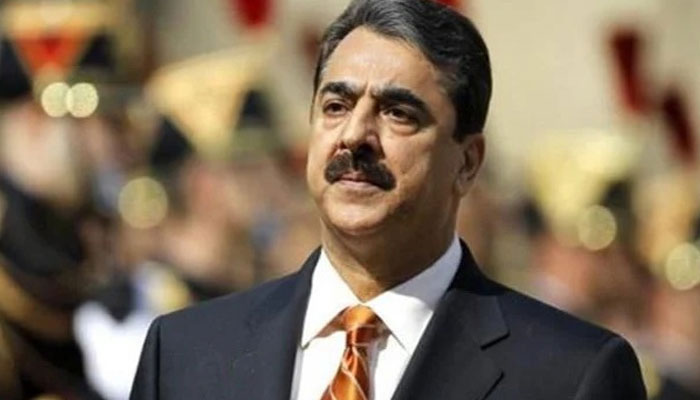


یوسف رضا گیلانی نے درگاہ موسی پاک شہید پر نمازِ عید ادا کی جس کے بعد اُنہوں نے میڈیا سے گفتگو بھی کی۔

 میڈیا سے گفتگو کرتے ہوئے پیپلز پارٹی رہنما یوسف رضا گیلانی نے کہا کہ سابقہ حکومت نے آئی ایم ایف سے معاہدے کیے۔

یوسف رضا گیلانی نے کہا کہ ساری حکومتوں کو مدت سے پہلے ہٹایا گیا۔

اُنہوں نے مزید کہا کہ کسی نے عدلیہ اور فوج کے خلاف بات نہیں کی، اگلے الیکشن کا انتظار کیا۔

https://jang.com.pk/news/1109824