
Brain power makes teeny-tiny Israel a technological giant before which every Arab country must bow.
https://www.dawn.com/news/1697781/israels-secret-weapon
Brain power makes teeny-tiny Israel a technological giant before which every Arab country must bow.
https://www.dawn.com/news/1697781/israels-secret-weapon
.png)

By Somaiyah HafeezThe rise in Baloch women’s activism – and terrorism – has accompanied a new willingness by authorities to target women with state-sanctioned violence.
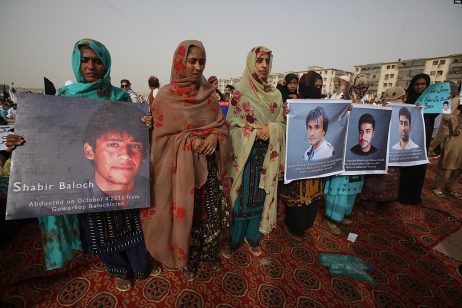
What Happened on June 13?To demand information about the disappeared students, protesters set up a camp outside Karachi Press Club. On the third day of the camp, the protesters decided to march toward the provincial legislature. They were demanding that the families of Doda and Ghamshad be granted a meeting with the CTD and, more broadly, that the authorities end the profiling of Baloch students in Karachi and elsewhere in the country. Balochistan, Pakistan’s geographically largest but poorest province, has been the center of recurring insurgency movements since 1948, with the ongoing movement being the fifth. Enforced disappearances in the province are rampant and are thought to be a counterinsurgency tactic used by security agencies, which deny being involved. As per Voice for the Baloch Missing Persons (VBMP), an organization campaigning for the release of missing persons, more than 5,000 people have become victims of enforced disappearances in the province in the last two decades. These figures are disputed by the Commission of Inquiry on Enforced Disappearances (COIED), formed in 2011. As of May 2022, COIED reported that 2,238 unresolved cases of enforced disappearances had been registered from all over the country, with only 355 from Balochistan. The Human Rights Council of Balochistan, a human rights organization that collects reports from the province, reported that in the month of May alone 45 people, including women and children, were abducted while 20 were killed. The saga of enforced disappearances in the province continues without a respite but the increase in abductions of women and subsequent crackdown has concerned many. Activists are disturbed and concerned over peaceful protests being sabotaged. Sammi Deen Baloch, a missing persons activist who has been relentlessly protesting for the release of her father, Dr. Deen Muhammad Baloch, for more than a decade, thinks the state is trying to traumatize victims’ family members further by inflicting physical violence. “We were already undergoing collective punishment and had exhausted all options, having knocked on every door for justice, but now they want to snatch from us the only option we are left with – peaceful protests and resistance,” she said. When the protesters started marching toward the Sindh Assembly, the police tried to block their way, creating hurdles. Still, the protesters managed to reach the gate. “To bring our protest to an end, the police told us they will arrange a meeting with CTD the next day. We went back to our camp,” recounted Amna Baloch, organizer of Baloch Yakjehti Committee Karachi, “The next day, June 13, we waited for the meeting for hours, but the police kept delaying and making excuses.” The protesters decided to once again march toward the Sindh Assembly. As the throng of protesters reached the provincial legislature, the police arrived and started mass arrests, launching baton charges. According to the police, Section 144 had been imposed in the province, banning political gatherings, which the protesters contravened. While the police denied manhandling protesters, videos soon started circulating on social media that told a different tale. “The police used vile and filthy language, hurled abuses at us – said things that I do not think any civilized person or organization would say. We were called disgraced and disrespectful women, were accused of protesting for ‘fame’ and to appear on media,” said Sammi. She added that three men were knocked unconscious and had to be hospitalized and one pregnant woman was kicked. “My younger sister, Mehlab Baloch, was slapped thrice – the sight of her being slapped is imprinted on my mind. For the last 13 years, Mehlab and I have been asking a simple question: where is our father and for what crime are we being punished? The state couldn’t answer this question for Mehlab but wants her to stay silent,” said Sammi. “Our mother is worried for us. When we leave home, she says she will accompany us. She is even forced to request us not to protest in the fear that something happens to us,” Sammi added, explaining the mental toll of the police brutality on her and her family. The detainees were released later in the night and around 3 a.m., Doda and Ghamshad – the students whose alleged abduction sparked the protests – also returned home. As per Amna Baloch, the police threatened and forced the protesters to promise in writing that they won’t protest anywhere other than outside the Karachi Press Club in the future. “To dissuade and deter us from demanding our constitutional rights, the police did everything, but we will continue resisting,” said Amna. A committee was formed by the Inspector General of Sindh Police to inquire into the incident. Amna feels that the committee is just a face-saving gimmick in response to the public outcry. “If they are to form a committee, one which is free and fair and from which concrete actions can be expected, then they must form a committee on missing persons and on the profiling of Baloch students throughout the country,” she told The Diplomat. Shari Baloch, the First Female Baloch Suicide Bomber On April 26, Shari Baloch attacked a van carrying Chinese nationals outside Karachi University in a cataclysmic suicide bombing incident, which was to have widespread ramifications. Shari was the first Baloch women to carry out a suicide bombing; in addition to herself, she killed the bus driver and three Chinese educational workers. Baloch female political and social activists are all facing challenges after the incident. Nida Kirmani, a sociologist and activist, feels that the incident has given the state a “free pass” to go after Baloch women. “While Baloch women have suffered violence even before this, they were rarely the direct targets. Rather, they suffered because their male kin disappeared. However, since the attack at Karachi University, the state is acting as if it has a license to go after anyone regardless of gender,” she explained. Sammi feels these challenges have increased tenfold for missing persons’ families, who have been protesting peacefully for years. She believes that the suicide bombing is being used by the state as a justification for abducting, threatening, and abusing Baloch women under the pretext of circumscribing terrorism.“They have started to define Baloch women as terrorists and launched a crackdown, but in the guise of ensuring law and order, they are targeting those Baloch women who have been protesting and resisting for eons,” Sammi said. Mir Mohammad Ali Talpur, a well-known activist and nationalist, believes that the violence against Baloch women and men mirrors the state’s “systematic policy of coercion and oppression” intended to intimidate and cow them so much so that they stop demanding their rights. “The end result of this violence against Baloch will only result in hardening of attitude to the extent that ordinary Baloch too will consider all those who cooperate with the state as traitors and will support those who oppose the injustices against Baloch. There will be an irreversible polarization much to the detriment of the hopes for peace, at some stage, through dialogue,” explained Talpur. “State institutions have made it impossible for Baloch to live in Karachi. It seems like the land splits open to disappear Baloch within it. Those students who come from far flung areas of Balochistan to get an education in Karachi are being abducted and their whereabouts kept unknown,” Amna Baloch added, describing the scrutiny and profiling of Baloch students, which has augmented since the incident. Doubly Marginalized On May 24, the Sindh police detained 18 people, including Sammi and Nida as well as other family members of Baloch missing persons, for protests over abductions. As they would do on June 13, the police told the media that the detainees had flouted Section 144; however, the protesters had a different recollection of the events. Nida thinks that the police seem to be “acting as a cover for the [security] agencies” and that their sympathetic act when confronted about enforced disappearances is a charade. “The question is, if the state itself is not respecting its own laws by forcibly abducting citizens, why should protesters respect colonial laws such as Section 144?” she said. In a Twitter thread, Nida shared her experience and delineated the contrasting treatment she received from the police compared to the way the police behaved with other detainees (who were Baloch). “Because I am an upper class, non-Baloch woman, the police are hesitant to treat me poorly. Perhaps they are afraid of the consequences and think I may be connected to powerful people. Clearly there is both class and ethnic-based discrimination involved,” Nida told The Diplomat. The feminist movement in Pakistan has been criticized for its lack of inclusivity. “I do not understand the difference in uproar when an incident occurs against a non-Baloch woman and when Baloch women are publicly thrashed, abused, beaten, and harassed merely for protesting for their rights. In the latter case, there is barely any condemnation, let alone uproar,” said Sammi indignantly. Amna said that the police used force on the protesters because they do not want the missing persons issue, a very “sensitive” issue, to be highlighted. But she refuses to be intimidated. “I had told the police officers during the detainment that we will protest again and that they cannot break our resolve through force,” she said. “These are living, breathing people with dreams and hopes who are missing – not lifeless things or possessions like a mobile phone that we can back off from demanding for them to be released. The family members of missing persons live in torment – nothing can be worse than waiting without any certainty,” she said. Even as the state’s assault has reached Baloch women, their acts of resistance continue.
https://thediplomat.com/2022/06/as-baloch-women-raise-their-voices-the-state-cracks-down/

THE threat of deadly violence never seems to diminish for health workers and police officials involved in door-to-door polio vaccination campaigns in the country. On Tuesday, two policemen and a health worker were killed when unidentified gunmen opened fire on them in North Waziristan’s Datakhel tehsil. The attack took place in the Tang Kali locality near the Pak-Afghan border. This is the second such attack since January this year when a policeman escorting a vaccination team was shot dead in Kohat.
The attack in North Waziristan has come on the heels of an aggressive resurgence of the wild poliovirus in the area. Since only April this year, at least 11 cases of the wild poliovirus have been reported from a cluster of high-risk union councils. These cases had surfaced after a hiatus of 15 months that had given hope that Pakistan might be on the brink of eliminating the crippling disease from its territory. However, as the attack demonstrates, Pakistan still has a long way to go before achieving polio-free status. Moreover, refusals still remain high in North Waziristan. According to reports, silent refusals by parents and fake markings on children’s fingers were one of the key reasons for the abnormally high number of cases.
Though the investigation is still ongoing, the latest attack on the polio team reflects the high mistrust of official authorities in this area. The issue of refusals is a long-standing one, and WHO and Unicef on many occasions have asked the Pakistani authorities to address the problem of missing and invisible children who remain outside the umbrella of immunisation campaigns. On the other hand, as the wild poliovirus remains endemic only in the Pak-Afghan region, cross-border coordination for its elimination is the need of the hour. Recent events have made it clear that aggressive campaigning for the administration of the polio vaccine is no longer enough, and that a wide-ranging, sensitive and strategic effort is required to address the public’s suspicions regarding the government’s anti-polio efforts.

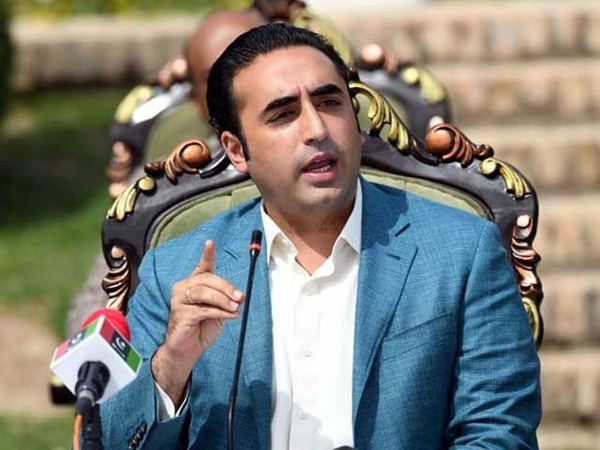
However, he added that it would have been more “appropriate” to discuss the issue in the Sindh Assembly. The minister said the PPP had been struggling for democracy, fair and free elections, and economic issues for three generations. He said the party “bravely faced every tyrant”, citing examples of “violence” under leaders such as Ziaul Haq and Pervez Musharraf. “The PPP has had the opportunity to govern despite rigging. In this country, rigging has always taken place against the PPP to stop the party of Shaheed Zulfikar Ali Bhutto and Shaheed Mohtarma Benazir Bhutto,” he added. He claimed that like Imran Khan, there were parties, politicians and “puppets” in Sindh who helped dictatorial rule come forth in the hope that institutions would not be neutral.
“W hen our institutions started becoming neutral, be it the Election Commission, the courts or other institutions, these people started panicking. This is because they knew that their bails would be revoked if transparent elections were held and the institutions remained neutral,” he said. Bilawal further said the opposition parties were aware that they came into power through a “rigged” election in 2018. Calling out a member of the opposition, Bilawal said he could only contest in the elections because PPP leader Abid Bhayo’s brother was imprisoned in Shikarpur. “When we have a level playing field, they will have no place to run,” he said. The foreign minister further said that the opposition had gathered in the Sindh High Court a day before provincial polls in order to escape the elections, but the people could see that only one party – the PPP – was present for the province while others tried to escape. “Would the people of Sindh vote for those who were trying to run?” he questioned, adding that such parties would create more fuss as the second phase of the elections was in a month. “Free and fair elections will take place only after electoral reforms… there will be a level playing field. The PPP always performs well when there is a level playing field,” the foreign minister added.
According to Bilawal, the opposition feared institutions remaining apolitical and not interfering. “If there is no interference, the PPP will emerge victorious. What kind of a joke is it to complain of rigging if we win in Larkana?”

https://www.app.com.pk/national/asif-zardari-bilawal-bhutto-meet-prime-minister/
Gunmen on motorcycles open fire on a team of workers during a door-to-door inoculation campaign in North Waziristan.Gunmen have attacked a polio vaccination team in northwest Pakistan, killing a health worker and two policemen – the latest deaths in a dangerous campaign to eradicate the disease.The attackers riding motorcycles opened fire on Tuesday during a door-to-door inoculation campaign in North Waziristan, a district in the Khyber Pakhtunkhwa province. The victims were taking part in a United Nations-funded campaign that started on Monday in regions at high risk for outbreaks, local administrator Shahid Ali Khan said. The campaign aims to inoculate more than 12.6 million children. A passer-by was also wounded in the attack, said Aziz Ullah, a local police official. The attackers fled the scene. Violence in the mountainous border regions of Pakistan has been on the rise since the Taliban took back power last year in Afghanistan, with Pakistani security officials often being the target. Pakistan is one of two countries, alongside Afghanistan, where polio remains endemic, but where vaccination teams have been targeted by armed attackers. Many polio workers and security officials guarding them have been killed in such attacks since 2012. The opposition to all forms of inoculation grew in Pakistan after the CIA organised a fake vaccination drive to help track down al-Qaeda’s former leader Osama Bin Laden in the city of Abbottabad. Bin Laden was killed during a US military operation in that city in 2011. Efforts to eradicate polio have also been hampered by conspiracy theories spread by religious groups, which claim the vaccination programmes are part of a Western conspiracy to sterilise children or that vaccines contain pig fat and are therefore banned for Muslims. In 2021, Pakistan reported only one case, raising hopes it was close to eradicating polio. In April this year, however, it reported the first case of the debilitating neurodegenerative disease in 15 months. Since April, Pakistan has registered 11 new polio cases – all in North Waziristan, where parents often refuse to inoculate children. The outbreak has been a a blow to the country’s efforts to eradicate the disease, which can cause severe paralysis in children.
Before this week, Pakistan’s health authorities had carried out three nationwide anti-polio drives this year – in January, March and in May.During the March campaign, gunmen in northwestern Pakistan shot and killed a female polio worker as she was returning home after a day of vaccinations.
And in January, gunmen shot and killed a police officer providing security for polio vaccination workers, also in the country’s northwest.https://www.aljazeera.com/news/2022/6/28/gunmen-in-northwest-pakistan-kill-polio-worker-two-policemen
Sources say Islamabad resisting pressure from Beijing after terrorist attacks.China wants its own security company to guard its citizens and assets in Pakistan, following recent attacks against its interests, Nikkei Asia has learned. Islamabad has denied the request, sources say, but experts believe Beijing is likely to continue pushing for such an arrangement. Pakistan is a key strategic outpost for China and a major recipient of funding under Beijing's Belt and Road Initiative, a large international infrastructure program. But deadly unrest and anti-Chinese sentiment has worried the Chinese government. Earlier this month, the Chinese Ministry of State Security asked Pakistan to allow a Chinese security company to operate inside the South Asian country, according to two people in the Pakistani government who were privy to the matter. They spoke on condition of anonymity, since they are not authorized to comment publicly.Pakistan's Interior Ministry, however, objected and offered assurances that Pakistan's security forces are able to protect Chinese nationals and assets in Pakistan, the sources said.A third source, an official from a local private security consulting company who works with the Chinese, told Nikkei that Beijing has sought to bring in its own security since 10 Chinese people were killed last year in an attack on a bus in the northern city of Dasu. This year's attack on Chinese instructors at the Confucius Institute in Karachi "further pushed the Chinese to ask Pakistan to allow operations of Chinese security companies," said another official, who also asked not to be named. The Chinese Embassy in Islamabad did not respond to a request for comment. Pakistani government officials have not publicly commented on the matter, either. When Pakistan's new Foreign Minister Bilawal Bhutto Zardari visited China in May, the two sides put out a statement saying that "China appreciated Pakistan's commitment to the safety and security of Chinese nationals" and that they would "further enhance counter-terrorism and security cooperation," according to Beijing's Foreign Ministry. The suggestion that Chinese security personnel be allowed to operate on Pakistani soil has come up before. Ahsan Iqbal, Pakistan's planning minister and the man in charge of the China-Pakistan Economic Corridor infrastructure project, or CPEC, told local media in 2016: "There can be tension between Chinese security companies and the local population. It is preferable that Pakistani security personnel and agencies deal with local security problems, as it will not create conflicts between China and the local population." China has more than 5,000 private security companies, 20 of which operate internationally, according to a report titled "Guardians of the Belt and Road" published by the Mercator Institute for China Studies, a German think tank.Experts say Islamabad has given Beijing a lot of leeway to operate in Pakistan. But the presence of Chinese security forces, even if they were ostensibly private contractors, appears to be a red line. James Dorsey, a senior fellow at the S. Rajaratnam School of International Studies in Singapore, said resentment against China would increase if Chinese security companies started guarding Chinese interests. This is especially true in Balochistan, where anti-Chinese sentiment is already very strong, he said. Baloch insurgents see China as colonizing Balochistan and exploiting its resources for the China-Pakistan Economic Corridor, as the Pakistani section of the Belt and Road is called, fearing their people will eventually become a minority in their own region. At the same time, Dorsey said he thinks China's concerns about its people in Pakistan are genuine. "Chinese interests have been under attack by Baloch insurgents in [the] south and Pakistani Taliban in the north, and this has naturally led to no confidence in Pakistani security," he said. Dorsey added that Beijing "wants to avoid backlash at home if its nationals are killed abroad." Noting that private Chinese security companies are already active in Central Asia and Africa, he suggested that China wants to replicate that model in Pakistan. Michael Kugelman, deputy director of the Asia Program at the Washington-based Wilson Center think tank, observed that although Beijing has brought in various types of support for its investments in Pakistan, it has always deferred to Pakistan on security. "If Beijing is now prepared to bring in its own security, this suggests it has completely lost trust in Pakistan's capacity to protect" it interests, he said. Krzysztof Iwanek, head of the Asia Research Center at Warsaw's War Studies University, believes it is understandable that Islamabad does not want to cede control over the security of projects within Pakistan. "It is a matter of sovereignty for Islamabad," he told Nikkei. One concern raised by the security consulting company official is that Beijing might at some point insist on having Chinese security companies present before offering more funding. Pakistan is in an economic crisis and desperately needs Chinese investment and other assistance. It can ill afford to jeopardize ties with Beijing. Last Friday, Pakistan said it had received $2.3 billion from a consortium of Chinese lenders to help it top up its dwindling foreign reserves. Others were not so sure Beijing would go as far as making control over security a precondition of further aid. "As serious as the threat is to China in Pakistan, it doesn't appear to be so serious that Beijing would risk a spat with Pakistan that could imperil its investments in a key country for its interests," Kugelman told Nikkei. On the other hand, he said Beijing might conclude that if it applies enough pressure, Islamabad will eventually relent. Iwanek said security concerns would not greatly disrupt Chinese economic interests in Pakistan anytime soon. "The security issues may hamper certain projects," he said. "[But] I believe that, in general, Chinese economic projects in Pakistan will continue."
https://asia.nikkei.com/Politics/International-relations/China-wants-own-security-company-to-protect-assets-in-Pakistan

An emerging media narrative in Pakistan is raising questions about its longstanding policy of recognition of Israel conditional on Palestinian statehood.
Opinion pieces in major newspapers, alongside guests on television talk shows and social media influencers, have opened a discussion about the prospect of unconditional recognition of Israel - something hitherto unimaginable in Pakistan, where rallies in support of Palestine can draw tens of thousands onto the streets.
The main trigger for the current round of commentary on the issue was a visit to Israel last month by a group of mostly US-Pakistani dual nationals who met Israeli President Isaac Herzog.
'Embracing a fascism-inclined nation would neither be a surprise nor a travesty. Many would say just do it'
- Mahir Ali, Dawn newspaper
The visit was organised by an Israeli NGO called Sharaka, founded in the wake of the Abraham Accords that normalised relations between Israel and the Gulf states of the United Arab Emirates and Bahrain. Sharaka describes itself as aiming to further improve relations between Israel and Muslim countries.
But the visit caused outrage in Pakistan when it emerged the delegation included a Pakistani television journalist, Ahmed Quraishi, who was not a dual national and for whom it was therefore prohibited under Pakistani law to travel to Israel.
Quraishi was fired from his job with the state broadcaster PTV. He says he and his family have been subjected to violent threats.
He has denied he was on a narrative-building mission but said he is happy the trip has opened a discussion about the prospects for a normalisation of relations between Israel and Pakistan.
“Pakistan's fledgling economic situation, and the geopolitical shift in the Middle East and other Muslim countries recognising Israel, will soon push Pakistan to decide where it stands,” he said. Quraishi also took aim at Imran Khan, accusing the former prime minister of “targeted harassment” after Khan criticised Quraishi at rallies in which he also said the current government led by Prime Minister Shehbaz Sharif had been “tasked with recognising Israel”. Khan, who was ousted from office in April, has accused the US of plotting against him with Israel and India. Senior Pakistani officials accuse him of promoting a conspiracy theory.
'Just do it' Meanwhile, other Pakistani journalists have used the furore surrounding Quraishi to share their own views about the prospects for normalisation. Writing in Israel’s Haartez newspaper, Kunwar Khuldune Shahid said Pakistan’s recognition of Israel was now “inevitable” because of Islamabad’s economic dependence on Saudi Arabia and the kingdom’s own direction of travel towards normalisation under Crown Prince Mohammed bin Salman. Writing in response to Shahid’s piece in Pakistan’s Dawn newspaper, Mahir Ali noted historic similarities between Israel and Pakistan as “states carved out by colonial powers on a confessional basis”, which had decided to “attach themselves to Uncle Sam”. Ali continued: “It’s perhaps worth noting that the fondness for Israel among the Arab Gulf despots has come to the surface in the wake of the Zionist state’s drift to the far right, with no illusions about a path back to the days when the illusion of an ideological divide was kept alive. “It could be argued that Pakistan is at a similar stage of discarding the illusion of a military-civilian divide. Embracing a fascism-inclined nation would neither be a surprise nor a travesty. Many would say just do it.” Such a radical shift in policy would not be readily accepted by most Pakistanis, nor would it be consistent with Pakistan’s longstanding support for Palestinian statehood, according to Kamal Alam, a senior fellow at the Atlantic Council think tank.Alam told Middle East Eye: “It would be difficult for Pakistan to unilaterally take this decision. The ultra-conservative element in the country is very powerful, and there is a risk of them taking to the streets, while the country is already suffering from serious economic and financial problems.”
Another complication, Alam said, is that public sentiment and government policy in Pakistan equates Palestine's quest for statehood with that of Kashmir, which has been partly under Indian control and a flashpoint for Indian-Pakistani tensions since partition in 1947.
“An unconditional nod of approval towards Israel would send a message that Pakistan as a state has given up on the Kashmiri cause too,” said Alam.
But while Pakistani public opinion remains largely opposed to normalisation, Alam said Pakistan’s military leadership was in favour of establishing diplomatic ties.
“The military and security services are more keen on the relationship but political parties are hesitant,” he said.
The military sees the India-Israel relationship as a threat. During the Arab-Israeli wars Pakistan was on the Arab side, but now that the Arabs are normalising the relationship, Pakistan's military and security services are thinking: why shouldn't we?”
He adds that the Pakistani intelligence agencies have on a few occasions passed on intelligence to Israel to prevent an attack on its interests in India.
In October 2009, according to a US diplomatic cable published by Wikileaks, Pakistan's spy chief contacted Israeli officials to warn them of an attack on Israeli targets in India.
But Pakistan's political leadership would have serious reservations about pursuing formal relations, said Umar Karim, a fellow at the University of Lancaster studying issues around sectarianism in the Muslim world.
Karim told MEE: “It would be political suicide for any political party to unilaterally suggest acceptance of Israel. In the recent past, Pakistani politicians have normalised antisemitic language in describing the actions of, not only Israel, but also other political opponents within Pakistan.”
During Israel's bombardment of Gaza in May last year, Pakistan loudly opposed Israeli human rights violations, and Pakistan's then-foreign minister Shah Mahmood Qureshi garnered support for the Palestinian cause by travelling with the Palestinian and Turkish foreign ministers to New York for a special UN session on the crisis.
During the same trip Qureshi was accused of repeating an antisemitic slur during a CNN interview in which he said Israel controlled the media through its connections and "deep pockets". Qureshi denied that the remark was antisemitic.
'The day the Saudis recognise Israel, Pakistan will follow soon after'
- Kamal Alam, Atlantic Council
For decades, Karim said, Pakistan's politicians have diverted the blame for their economic, political and security failures on external elements, including Israel as well as India.
“Before the age of social media, it would have been much easier [to recognise Israel],” he said.
“But now words and images travel much faster, Pakistanis are well aware of every atrocity committed by the Israelis against the Palestinians, [and] public opinion of Israel borders on hatred in Pakistan.”
In August 2020, tens of thousands of people took to the streets of cities across Pakistan to protest against the normalisation of relations between Israel and the UAE.
Should Pakistan’s own leaders choose to follow the Emiratis, Karim said they faced a real risk of provoking dangerous unrest.
“There could be violent protests, for days and months, a definite spike in incidences of terrorism," he said. "It would definitely attract the anger of banned extremist groups, which would likely target government officials, politicians, international NGOs, religious minorities, perhaps even western diplomats in Pakistan.”
But all analysts spoken to by MEE pointed to other factors beyond domestic opposition, which they said could have a greater impact on the future direction of Pakistan's relationship with Israel.
In November 2020, Imran Khan revealed that Pakistan had come under pressure from the US and other countries to recognise Israel. Asked whether he meant Muslim countries, Khan said: "There are things we cannot say. We have good relations with them.”
“[People] rejected politics based on religion or ethnicity. They chose Jinnah’s,” he wrote on the social networking website.
The candidates of the PPP trailed ahead of their opponents in the violence-plagued first phase of local bodies elections in Sindh, unconfirmed and unofficial election results indicated on Sunday.
The people in the province went to the by-polls in 14 districts of four divisions with more than 11 million voters choosing their representatives for the municipal system of their towns and villages after more than six years.
As many as 21,298 candidates landed in the electoral fray for 6,277 seats of 101 town committees, 23 municipal committees, 14 district councils, four municipal corporations, 11 town municipal corporations and 887 union councils and union committees.
The complaints of missing ballot papers, change of the election symbols and belated start of the polling were reported from many districts.
Andrew BuncombeOnce a beacon for a region where abortion was banned, US now out of step with nations such as Argentina and Columbia, writes Andrew Buncombe The United States — long a beacon to reproductive rights activists in Latin America — will now start to resemble those countries without Roe’s guarantee of a right to legally access abortion, say campaigners.

“Those who face the worst consequences are young women,” she adds.
“They are women who live in poverty. They are rural women….What is going to happen in the United States is going to affect the bodies of women who are already vulnerable.”
El Salvador is among a handful of countries where abortion is entirely illegal, with no exceptions for even rape, intent or even the health of the mother.
Yet, it is perhaps singular in the aggressive way the state seeks to enforce the law. It is estimated that between 1998 and 2013, more than 600 women were jailed after being accused of having had an abortion.
One of them was Maria Teresa Rivera, who was jailed for 40 years in 2011 after she says she suffered a miscarriage, and found herself handcuffed to a hospital bed. She was eventually released after seeing four-and-a-half years in jail and now lives in Sweden.
In an interview with The Independent in 2016 she said she was delighted to be reunited with her son, Oscar.
“But I am fearful because not all of society agrees with what happened.”
Many of the states in the US — among them Arkansas and South Dakota, which will only now permit abortions to save a woman’s life — have made clear they intend to prosecute women, doctors and even providers of medication abortion drugs.
“The impact of criminalisation is very hard,” Garcia says of the experience in El Salvador. “It is very painful because women face stigmatisation. Women face violence. The presumption of innocence is denied. They are denied access to justice. And this stigatisation is also transferred to their communities, to their families.”
Prior to 1998, El Salvador permitted exceptions in which abortions were allowed in cases of rape, incest, or in which the health of the woman was threatened. Laws were changed under pressure from conservatives in the government and with the support of the powerful Catholic church.
Garcia says that abortions have not stopped, but rather been driven underground, where they are needlessly dangerous. Women with means, or education, can still obtain such procedures, or else get drugs to end abortions in their homes,
“Abortions are going to happen because it is part of women’s lives. It is an obstetric event that women face throughout history, and not just this generation,” she adds.
“What is going to happen is that it is going to happen in more insecure contexts, probably in contexts where women have to resort to methods where they do not have enough information. Women will probably have to travel to other states. There are probably women who have to continue their pregnancies, though the United Nations Committee Against Torture has already said that a forced pregnancy constitutes a form of torture.”
Giselle Carino, is an Argentinian political scientist who took part in the campaign for legal abortion in her country, now serves as the New York-based CEO of Fos Feminista, a feminist alliance of more than 170 organizations around the world.
She was part of the Marea Verde, or “green wave”, that helped secure the right to legal abortion in a similarly heavily Catholic nation in December 2020. She said it took several decades, and required a broad coalition.
She also says some women in the US will now likely be forced to risk their lives to obtain abortion. She says she is disappointed that the ruling by the Supreme Court puts the United States out of step with other parts of the Americas on reproductive rights — not only Argentina, but Mexico and Colombia have also made it legal for women to get abortions.
“We tend to see regression of rights, particularly of sexual and reproductive rights, as an indication of weakening of democratic institutions and processes,” the tells The Independent.
“So one cannot think of this regression in the US outside of that context. And one needs to wonder the impact the Trump administration had, not just on the years that he was ruling, but in this case for the many years to come for the next 20 years, for women and girls and others who have babies in the United States”.
Luisa Kislinger, an activist originally from Venezuela where abortion is in practice entirely illegal but where women resort to clandestine means, says women in those parts of the US are likely to still be able to access some help.
“In Venezuela, there is no discussion about this topic. No politician will come out and speak in support of it,” says, the former diplomat.
And she says the actions by the US Supreme Court will embolden those in Latin America seeking to further suppress women’s rights.
Garcia says she believes women in El Salvador will somehow want to offer their support to their sisters in the United States, however limited or symbolic it may be.
“We are alert, we are vigilant,” she says.” And we are also in solidarity with human rights organisations in the United States.”
https://ca.movies.yahoo.com/movies/without-roe-parts-us-look-154130093.html
Jake Epstein
https://news.yahoo.com/hillary-clinton-says-supreme-court-151208243.html