Thursday, June 9, 2022
Wednesday, June 8, 2022
Opinion: Thanks to Saudi Arabia, Pakistan's Recognition of Israel Is Now Inevitable
The visit to Israel of a group of Pakistani-Americans and Pakistanis last month has mainstreamed the debate surrounding the formalization of ties between the two countries. From newspaper columns, to blogs, to YouTube videos, to Twitter threads in the local Urdu language – all are dedicated to the discussion. While the most visible narrative still betrays Islamist hyperbole and antisemitic hysteria, even the hyper-nationalist internet fora in Pakistan have found space for arguments in favor of recognizing Israel. That change is in the air is clear from the surprisingly robust defense of former state television journalist Ahmed Quraishi, who was part of the Pakistani delegation that visited Israel last month, who himself isn’t the only prominent voice championing the formalizing of ties between the two countries today. Despite being sacked by the government affiliated Pakistan Television Cooperation, and being targeted by the recently ousted Imran Khan, many mainstream journalists have come to Quraishi’s defense. An expert I recently interviewed for a piece on the country’s environmental policies reiterated that he has been saying for years that Pakistan should “learn from Israel” and use Israeli tech knowhow to bring about a green revolution. A similar argument was made here in Haaretz by Pakistani agriculture experts a couple of years ago, and back then, the backlash was severe.Pakistan can't afford to remain the last Sunni Islamist bastion resisting Saudi normalization with Israel. But the country's rulers, both political and military, want safeguards against a frenzied domestic backlash.
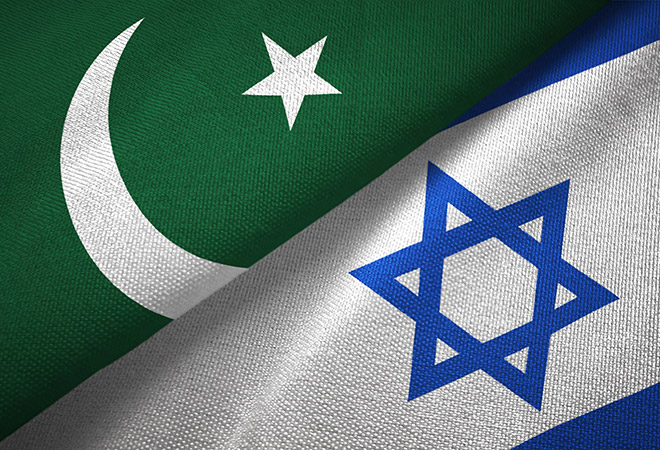
A decade ago, when some of us found space in local English-language newspapers then willing to push the proverbial envelope, questioning the state’s duplicity over Israel, highlighting the similarities between the two countries, and arguing for ties between them, it was an eccentric opinion that barely anyone would take seriously. Today, it is one of the top-level foreign policy deliberations in Pakistan’s corridors of power.
This, of course, is not to suggest that these handful of Pakistani writers penning the occasional piece in local, and more recently Israeli, newspapers have rejigged the national ethos. It is the new geopolitical realities that have transformed what was until recently unthinkable to now being increasingly inevitable.Even so, decades of anti-Israel frenzy was never going to evaporate without a whimper, even if the push for formalization is coming from the omnipotent military establishment. On cue, Imran Khan, who had already been fanning conspiracy theories about an “Israeli plot” against him before his removal as the prime minister in April, is now amplifying them in front of crowds of many thousands. At one recent mass rally he declared that his government was "ousted because of a conspiracy to install America’s puppets," and alleged that the Israel visit was not only masterminded by the Sharif government that replaced his, but that it was "an attempt to impose the Indian-Israeli-American agenda on Pakistan and enslave Pakistan.” Further than that, Khan is increasingly spilling the beans on the military leadership which once secured his position but with which he’s now at loggerheads. Khan has been reiterating how his successors have been “tasked with” recognizing Israel and a settlement over Kashmir with India, because of course that is precisely what he had been “tasked with” when he was in power. Last week, the day after Khan first made the allegation that Pakistan’s current leaders were effectively Israel’s pawns, his rival, Prime Minister Shehbaz Sharif, attended the National Assembly session with a performative riposte, wearing a Palestinian scarf with “Jerusalem is ours” inscribed on it. Antisemitic slurs are being hurled by both the government and the opposition. Maryam Nawaz, vice president of the ruling Pakistan Muslim League-Nawaz (PML-N) saying that Khan is the “only person in Pakistan with family ties to Israel,” alluding to his erstwhile marriage with Jemima Goldsmith. Fazlur Rehman, the Islamic cleric who is presiding over the ruling coalition Pakistan Democratic Movement (PDM), and who has spent the past couple of decades directing antisemitic hatred towards Khan, last week said that it was the ousted prime minister whose “agenda” was to recognize Israel and “taint Islam.”
Meanwhile, as the current government, like its predecessors, gaslights its way towards ties with Israel, the leaders of Khan’s Pakistan Tehrik-e-Insaf (PTI) are digging out developments from the PML-N’s previous tenure to suggest that the “plot” had been hatched even before Khan came to power. For Shireen Mazari, the former Khan administration’s human rights minister no less, the current government allowing a Jewish man, Fishel Benkhald, to correct his religion on official documents in 2017 came at the initiation of the “Israel agenda.” Benkhald, Pakistan’s “last Jew,” was part of the delegation that visited Israel last month.Clearly, neither the government nor the Khan-led opposition wants the formalization of Israeli ties under their watch unless the military can guarantee protection from the inevitable electoral dent that the move would trigger. Prime Minister Shehbaz Sharif has been keen on subservience to the military. However, his government still isn’t certain of the depth and breadth of support it enjoys from the powers that be. For instance, it took the government two months to make the commonsensical move on removing the unsustainable subsidy on fuel which had pulverized the Pakistani rupee, exacerbated the current account deficit and crashed the markets. Where aligning fuel prices with global crude hike is politically touted as a “tough decision,” recognizing Israel obviously goes off the difficulty charts. However, given that even in a crippling economic crisis, the government has managed to find a way to hike the defense budget by six percent shows that Sharif is willing to put it all on the line over the military bailing his regime out in the election now likely to be in 2023. The military, of course, has much to gain from the godfathers of normalization with Israel, namely Saudi Arabia and the United States, and was increasingly alarmed by the strident anti-American tone adopted by Khan, particularly in his final months in office. When Khan was visiting Putin and openly slamming the U.S. in the weeks leading up to his ouster, Army Chief Gen Qamar Javed Bajwa was orchestrating damage control with Washington in his public statements and diplomatic engagements, both official and backchannel. However, with Khan’s popularity escalating following his unceremonious exit in April, both Gen Bajwa and the institution that he leads, are facing vitriol across social media. #BajwaHasToGo was the top Twitter trend in Pakistan on Monday. Indeed, a behind-the-scene turf war has been brewing within the military leadership, with a faction backing Khan, whose exit was prompted by the fallout his attempt to exercise the prime minister’s constitutional right to prolong the term of his spymaster instead of nominating Gen Bajwa’s choice. With Bajwa’s term ending in November, he wants a government willing to obediently follow his call and pick his choice as the next army chief. But this has made Gen Bajwa enemies with Khan’s party, the political grouping that dominates social media like no other. As result, pushing ties with Israel, a treasonous, “anti-Pakistan” argument until last year, is now a popular accusation directed at the military leadership. Meanwhile, Saudi Arabia, the principal force behind Pakistan’s Israel move, cannot afford to wait too long for Pakistan’s civil-military leaders to sort out their wariness over the consequences. With Israeli businesspeople, frequenting Saudi Arabia, the kingdom wants to formalize the ties swiftly especially with Joe Biden’s visit to the two countries – now postponed till July – likely to fortify defense alliances in the region. Formalizing ties with Israel, coupled with peace in Jerusalem – which, in turn, would require a settlement acceptable to the Palestinian leadership – is the final piece in the Islamic jigsaw of the al-Saud family, with Crown Prince Mohammed bin Salman pivoting, in recent years, towards selling a tourism-friendly version of Islam. The hub of Salafi jihadism for the past four decades, Saudi Arabia, is now coping with new economic realities after losing out oil dominance to U.S. shale in recent years, and with Islam evolving from being the source of al-Saud family’s control over Islamic sites in the Arabian Peninsula to now growing as the bedrock of the Saudi economy. With Islamic pilgrimage already contributing over $12 billion to the Saudi economy, a reformed, moderate Islam will bolster Saudi geoeconomic power, especially if it can be coupled with hegemony over the Islamic heritage in the region. Easy access to Jerusalem would complete the Mecca-Medina-Jerusalem Islamic trail connecting the three holiest sites in Islam, with the theological rationale for brotherhood with Jews – fellow ‘people of the book’ in Islam – already being peddled by leading Saudi clerics in official sermons. With the seven-decade old Turkey-Israel ties recently growing warmer after years of frigidity, encouraged by Saudi Arabia which has petrodollars that Recep Tayyip Erdogan desperately needs, and ever-closer ties between Israel and its Abraham Accords partners, it is Pakistan that remains the last Sunni Islamist bastion resisting Saudi normalization with Israel. Pakistan, too, will inevitably be offered sweeteners to soften its stance: massive financial gains to heal an ailing economy, which is once again at the doorstep of the International Monetary Fund for a bailout. That bailout could allow the government, for instance, to pass a more populist budget next June in the lead up to national elections. A Saudi-backed influence campaign championing both subsidies for essential goods and access to Al-Aqsa could offer an enticing electoral slogan. Despite that, Saudi protection is largely for the military rulers invested in the country not imploding, financially or otherwise. The government wants safeguards from the army that in turn wants safeguards from Riyadh and DC, a veritable food chain of guarantees. But with a significant chunk of Pakistanis, most notably Imran Khan’s followers, no longer being under the army’s control, it is already more difficult for both the U.S. and Saudi Arabia to leverage their influence. Biden and MBS will find little reassurance in solely incentivizing the military leadership, which has hitherto sufficed in guaranteeing Pakistan’s position in regard to Israel. In the meantime, Saudi Arabia is likely to soon make its move on Israel, with or without a Pakistan high on self-righteousness but running out of economic lifelines.https://www.haaretz.com/israel-news/2022-06-08/ty-article-opinion/.premium/thanks-to-saudi-arabia-pakistans-recognition-of-israel-is-now-inevitable/00000181-441d-dada-a9a7-fe9d68970000
Pakistan should not be dragged into any conflict: Bilawal Bhutto
Bilawal said Pakistan is a small and developing country, but it always advocated that international laws should be adhered to.Foreign Minister Bilawal Bhutto Zardari Tuesday said that Pakistan always advocated dialogue and use of diplomacy as tools for pursuit of peace in the world.Addressing a joint presser along with his German counterpart Annalena Baerbock, the foreign minister referred to the Russia-Ukraine conflict and said Pakistan had a firm position that it should not be dragged into any conflict. Pakistan is a small and developing country, but it always advocated that international laws should be adhered to, he said, adding that all world conflicts should be resolved through peaceful means.Replying to a question, Bilawal maintained that humanitarian crises in Ukraine could not be ignored and stressed that Pakistan would continue to advocate for dialogue and diplomacy as means in the pursuit of peace. The foreign minister said Pakistan always emphasised upon the adherence of UN principles and its charters and respect for sovereignty and territorial integrity of countries. Bilawal observed that ramifications of conflict in the EU in the shape of Russia-Ukraine conflict were also felt in Pakistan in the shape of increasing prices of fuel and food. He reiterated that Pakistan called upon immediate cessation of hostilities and immediate initiation of peaceful dialogue. He said considering the plight of people in Ukraine, Pakistan had dispatched four planeloads of humanitarian aid. The foreign minister said Pakistan remained concerned about the well-being of the Ukrainian people, civilian casualties and massive exodus of refugees. The foreign minister said Pakistan wanted to engage with all its neighbours. Pakistan played an important role in establishing diplomatic ties between China and the US and it would continue to play the role of bridge, he added. About the Indian Illegally Occupied Jammu and Kashmir (IIOJK) issue, he said that he had been vociferously raising the Indian atrocities issue during his engagements at the global fora and in his meetings with his counterparts of various countries, including the US secretary of state. The foreign minister warned that the situation in IIOJK had been fast deteriorating due to provocative steps of India that was trying to undermine the Muslim majority by marginalising and turning it into minority through illegal steps. The foreign minister said the international community must immediately take noticeof the increasing incidents of persecution of minorities and rising tide of Islamophobia in India. Bilawal, citing the recent provocative and sacrilegious statements by the BJP leaders, said that such outrageous and highly-condemnable statements had hurt the sentiments of Muslims all over the world. He said it was a proof that India had turned into a fascist country and it was no longer a secular India, but dominated by Hindutva ideology.The foreign minister said Pakistan wanted peace with India, but it required a rational approach from the other side, adding with such irrational steps by India, the space for peace was being squeezed. The foreign minister reiterated The peace in South Asia is contingent upon peaceful resolution of the Kashmir issue." He said that Pakistan and Germany enjoyed a close and long standing cordial cooperation based upon mutual respect and driven by bilateral ties and shared interests. He said both the countries were also close partners in the European Union context. Bilawal said Germany had been Pakistan s largest trading partner in the EU context and its fifth world export destination. Last year, he said Pakistan's exports to Germany stood at around $2.5 billion while German imports remained at $1.3 billion. Germany was also the seventh largest direct investor in Pakistan. The foreign minister said Pakistan always emphasized upon and supported a peaceful and stable Afghanistan contributing to the regional progress and development and connectivity. He stressed upon the international community to focus on the humanitarian assistance to the Afghan people who had been facing financial crises. A UN report had indicated that about 97 per cent of Afghan population had been pushed below the poverty line and faced immediate danger of hunger and starvation. At the same time, the foreign minister stressed that the Afghan government must come up to the expectations of the international community with regard to upholding of human and women’s rights and take effective steps against terrorism. He urged the international community to actively engage with the Afghan government to avoid humanitarian crises in Afghanistan, adding release of its foreign assets would help its sagging economy. The foreign minister also enumerated Pakistan’s efforts for the safe evacuation of foreigners in the earlier phases after the Taliban took control of the country. Foreign Minister Bilawal said Pakistan had faced the brunt of terrorism and extremism in Afghanistan and it was in the world’s interest to ensure peace in Afghanistan, so that no terrorist activities could take place in that country. He said it was important for the international community to engage with the new rulers of Afghanistan. The foreign minister said Pakistan had been a victim of terrorism from the groups operating in Afghanistan, adding they were concerned about the consequences of the humanitarian crises unfolding on their borders. He called upon the international community to help avoid a total economic collapse in Afghanistan. The foreign minister said Pakistan faced economic constraints in helping the Afghan refugees, still it was playing a very responsible role on the world stage. About Pakistan’s diplomatic priorities, he said they had focused on strengthening of economic relations by resetting of ties with different countries, adding Pakistan was keen that its GSP plus status should be extended so that its businesses and economy could take benefits. Foreign minister Annalena Baerbock said during her meeting with FM Bilawal, they had discussed at length the issue of Afghanistan where the situation had forced millions to leave the country. Lauding Pakistan’s role for peace and stability in Afghanistan, she said Pakistan had shown a big heart to provide shelter and support to Afghan refugees. The German foreign minister said it was an enormous task and reiterated her government s solidarity and support to Pakistan. Germany remained committed to continuing its support to the Afghan refugees in Pakistan, she said, urging the international partners to play their part in supporting efforts for education and health sectors. She also expressed Germany’s concerns over Taliban treatment of women and people and said that Afghan s economy had come to a grinding halt. Annalena Baerbock said that Taliban government had been heading in the wrong direction still she reiterated that they would not abandon the people of Afghanistan and would continue to provide support. About ties with Pakistan, she said that both countries had been the closest and reliable partner, adding both countries achieved when they worked together by further strengthening the bilateral relations. The German foreign minister said Germany and Pakistan had prioritize their efforts to combat climate crises as the time for the world community was running out, requiring immediate global action. She said both the countries excellent ties and there existed immense opportunities for trade and investment and energy sectors. To a question regarding Kashmir, she said they supported resolution of the Kashmir issue in accordance with the UN resolutions. She said they believed that a constructive approach and confidence building measures between Pakistan and India were key to improvement of the ties and solution of the issue. About Russian-Ukraine conflict, the foreign minister observed the world was pushed into danger when the law of strongest was applied. The German foreign minister said that issues like Islamophobia had been linked with the regional and international peace and security. She maintained that German always insisted upon implementation of UNSC principles and charters. About Russian-Ukraine conflict, she said the crises had consequences beyond borders. The Russian-Ukraine conflict had sent the food prices skyrocketed, especially of the wheat. She termed it as the biggest threat and challenge to the humanity in the 21st century and stressed upon the international community to work together and support each other.
.png)
https://www.thenews.com.pk/print/964347-pakistan-should-not-be-dragged-into-any-conflict-bilawal
Tuesday, June 7, 2022
Sunday, June 5, 2022
Is Pakistan paying attention to existential environment crises?
Water crisis
Researchers predict that Pakistan is on its way to becoming the most water-stressed country in the region by the year 2040.
According to a 2018 report by the International Monetary Fund (IMF), Pakistan ranked third in the world among countries facing acute water shortage. Reports by the United Nations Development Program (UNDP) and the Pakistan Council of Research in Water Resources (PCRWR) also warn the authorities that the South Asian country will reach absolute water scarcity by 2025.
In 2016, PCRWR reported that Pakistan touched the "water stress line" in 1990 and crossed the "water scarcity line" in 2005. If this situation persists, Pakistan is likely to face an acute water shortage or a drought-like situation in the near future, according to PCRWR, which is affiliated with the nation's Ministry of Science and Technology.
Pakistan has the world's fourth-highest rate of water use. Its water intensity rate — the amount of water, in cubic meters, used per unit of GDP — is the world's highest.
Environmental degradation
Environment specialist Rahat Jabeen writes in a World Bank blog that every year Pakistan loses almost 27,000 hectares of natural forest area, explaining that almost three-quarters of the country's population use forest resources for a lack of alternative energy resources.
Pakistan is among the top ten countries in the world that are vulnerable to the impacts of climate change, according to Mome Saleem, an environmental activist.
"The agriculture land is being used for housing projects, which has resulted in the loss of trees and extreme heat waves. No attention is being paid to depleting water, which is already scarce," she added.
https://www.dw.com/en/is-pakistan-paying-attention-to-existential-environment-crises/a-61987940
Balochistan Local Government Elections Will Strengthen Democracy – OpEd
By Qudrat Ullah
In 2022, Balochistan has remained in limelight of national and international media and the reason was its security situation, where banned organizations including Baloch Liberation Army (BLA) carried out attacks, targeting armed forces. The major attacks were carried out in February in districts of Panjgur and Noshki. The recent incident which involved a Baloch woman, Shari Baloch affiliated with Majeed Brigade, carried out a suicide attack on Chinese teachers in Karachi University. The attack left the common man wondering about Baloch youth, especially women.
In Baloch culture a woman has been given a great respect. It is trait of Baloch culture, “If a woman interferes during tribal feuds between two warring tribes – both parties will stop fighting”. But Shari Baloch’s worrisome and extreme step has left many Baloch wondering in what direction she tried to take the youth of the province. Meanwhile Balochistan remain far from being in news else of security situation. In the areas where there is an impression that Baloch people are wary of state and its policies; the reality is otherwise.
Election Commission of Pakistan held Local Government Elections on 29th of May in 32 districts of Balochistan. In elections as many as 132 female candidates contested directly on general seats where they were facing male candidates. Most of these women belong to Kohlu district, from where 22 females were in the field, followed by 21 from Kech district.
Despite the threats and boycott by Baloch militants, the elections remained largely peaceful with reports of minor irregularities. Militants as per their threats carried out a grenade attack outside a female polling station in Noshki district, causing no injuries.
The participation of people in local elections expressed confidence in democracy by rejecting the resistive / armed narrative of Baloch insurgents. The peaceful atmosphere in which the elections were held shows that the security situation has improved largely and the insurgents have failed to materialize their illicit designs to disturb the peace and harmony of the province.
It also highlights that the people of the province need grass root level leaders which they can access easily and can ask them for their basic needs/rights. The other thing which is encouraging is the participation of women in elections, which in a tribal society has less affirmation. The continuation of the participation of ordinary people in the local government will strengthen the democratic structure of the society.
Balochistan province comprises of tribal ethnicities both Baloch and Pashtun. The province has been run by the governments with the amalgamation of tribal leadership of both ethnicities. It still lags in governance as compared to other provinces of the country. The inability of Baloch and Pashtun leaders to streamline the affairs of province will give more space to moderate population to come forward and play their role for the development of Balochistan.
The process which will open the sphere for such strategy is local government which is more likely than centralized structures to provide citizens with the opportunity to participate actively and directly in decisions that affect them closely.
In Pakistan there are two schools of thoughts regarding the grass root level leadership. One of them is the local government system and other is the student unions in educational institutions. If we look in past three decades, the educational institutions have produced few leaders of grass root level, whereas many of the provincial level leaders now in politics have come through local government process. The student leaders are less interested as compared to local leaders to come forward and get involved in political process.
It both depends on the opportunities and the process which enables the ordinary people to come forward and play their role for their society, province and country. But with the history and existence of local governments around the world, it shows that it is the most effective way to strengthen democracy and enhance the life standard of common people. In Pakistan, if local government elections are held consecutively, it will take the country to the list of strong democracies by producing effective leadership.
https://www.eurasiareview.com/05062022-balochistan-local-government-elections-will-strengthen-democracy-oped/
From Colombo to Islamabad - A steep rise in inflation will create a potent mix that could easily lead to social unrest in the country.

A steep rise in inflation will create a potent mix that could easily lead to social unrest in the country.
Oil prices are not going to come down anytime soon. As the European Union moves to ban Russian oil imports, some analysts believe that Russia may try to punish Europe by curtailing production, thus raising international oil prices in order to inflict maximum damage on European economies. Some market analysts are warning investors to brace themselves for an economic ‘hurricane’ that may push oil prices to as high as $175 per barrel.
With no end to the oil price escalation in sight, and with rapidly depleting reserves, the government was forced to go to the IMF. However, the IMF had already indicated that in order for talks to be fruitful, this government would have to reduce the fiscal deficit by passing on the rise in oil prices to the people. This put the government between a rock and a hard place.
It is believed by many that political stability and economic growth are deeply interconnected as political uncertainty and social unrest lead to lower levels of investment and growth. Recent economic crises in countries such as Lebanon and Sri Lanka can be traced to internal political instability. Specifically, as economic crises start taking shape, governments at times exacerbate crises by trying to avoid or control political instability or by simply making poor economic decisions under political pressure.
Many economists recently criticised the government for not passing on the rise in international oil prices to consumers, with many commentators blaming it on the government’s indecisiveness. But there is evidence to suggest that the government had a fair idea about the worsening economic situation since the contours of the crisis were visible as early as February this year. The government, for instance, was very quick in tapping Miftah Ismail for the finance portfolio, even when the rest of the cabinet had not been announced. Still, the government dithered on passing on the prices until the political storm had blown over in Islamabad.
Perhaps, the government was correct in waiting for the political situation to settle down as passing on the price increase would surely lead to back-breaking inflation. It is very likely that inflation will touch 18pc to 20pc this calendar year, given how international oil prices are going up. In a politically volatile environment, passing on a massive price increase to the people would be akin to fanning the flames of social unrest.
To be sure, the government was evaluating an increase in fuel prices after the political volatility reached its climax with the in-house change in the National Assembly. Political volatility has not since abated, especially as the Punjab chief minister remained unsuccessful in announcing his cabinet until very recently.
Though there are indications of near-successful negotiations between the IMF and the government, Pakistan’s economy is not out of the woods. On the external front, the economy is facing extremely strong headwinds in the shape of continued pressure on foreign exchange reserves coming from elevated oil prices, as well as from rising policy rates in developed economies.
Additionally, Pakistan’s export destinations are experiencing stagflation, ending all hope of exports bailing us out. On the domestic front, a steep rise in inflation will create a potent mix that could easily lead to social unrest, thereby making it difficult for the government to take optimal economic decisions. In a sense, a severe economic crisis coupled with political instability could very well turn into a vicious cycle, whereby Pakistan starts hurtling towards a hard default like Sri Lanka.
Nevertheless, a hard default can be avoided. But in order to do that, unpopular economic decisions will need to be taken such as passing on oil price increases, having more import controls and possibly even fuel rationing. Given this very challenging economic scenario, political stability is the need of the hour. Forcing the government to call elections in the midst of a devastating economic crisis will only serve to increase political instability as different parties may decide to face off in the streets of Islamabad.
Moreover, the IMF and other international lenders may be reluctant to talk and provide assistance to a caretaker government, given there is no guarantee that the caretakers’ promises would be honoured by the next government. The fate of Islamabad and that of Pakistan’s economy is going be determined by political continuity and stability.
https://www.dawn.com/news/1692899/from-colombo-to-islamabad
Audio Report - Climate change and overuse is threatening Pakistan's main waterway
In a rare journey down the length of the Indus River, a filmmaker and environmental activists survey damage done to Pakistan's main water artery and meet the people who live on its ancient banks.
Saturday, June 4, 2022
UK to link Pakistan aid with human rights
https://theprint.in/world/uk-to-link-pakistan-aid-with-human-rights/983684/
PPP's Rabbani says tasking ISI with screening govt officials amounts to 'ceding civilian space'
PPP leader and former senate chairman Mian Raza Rabbani on Saturday termed the federal government's decision to task the country's premier spy agency, Inter-Services Intelligence (ISI), with screening civil servants as "surprising" and said the move amounted to "ceding civilian space".
An Establishment Division notification issued early last month, and which was reported widely yesterday, stated:
"In exercise of powers conferred by sub-section 1 of section 25 of the Civil Servants Act 1973 […] read with notification No. SRO 120 (1)/1998 […] the prime minister is pleased to notify Directorate General Inter-Services Intelligence (ISI) as [the] Special Vetting Agency (SVA) for verification and screening of all Public Office Holders (Officers Category)."
The quoted laws — i.e. sub-section 1 of section 25 of the Civil Servants Act as well as SRO 120 — empower the prime minister to amend or make rules for the civil bureaucracy. The direction to notify the ISI as SVA had been issued from the office of the prime minister on May 6.
Interfaith group urges Pakistan to hire back reporter who was fired for Israel visit
Journalist Ahmed Quraishi says trip was ‘by private individuals, with no direct links to Pakistan and its policies’ amid opposition claims he was sent by government.A US-based non-government organization devoted to promoting Muslim-Jewish relations on Friday urged Pakistan’s state-run television to hire back one of its anchors who was fired for visiting Israel with an interfaith group last month. The plea from the Mukhayriq Initiative, which has both Muslim and Jewish members living in the United States and around the world, comes days after journalist Ahmed Quraishi was taken off the air and fired by Pakistan Television following his visit to Jerusalem, where he met with President Isaac Herzog.Quraishi was part of a 15-member delegation of mostly Pakistani expatriates living in America that traveled to Israel. The visit came under severe criticism in Pakistan, an overwhelmingly Muslim nation with no diplomatic relations with Israel because of the Israeli-Palestinian conflict. On Monday, Pakistan’s state-run TV tweeted that it laid off Quraishi who visited Israel in a “personal capacity.” Pakistan’s Information Minister Marriyum Aurangzeb also announced Quraishi’s removal for the visit to Israel. Among those who criticized the visit was Pakistan’s ousted former prime minister Imran Khan, a former cricket star turned Islamist politician who was voted out of office in April. Khan claimed the visit to Jerusalem was meant to pave the way for Pakistan’s eventual recognition of Israel — something the delegation denied. Quraishi was fired the day after Khan gave a speech that assailed the visit to Israel. The Mukhayriq Initiative said a tweet from Pakistani politician Shireen Mazari set off the controversy that got Quraishi fired.The government has also said there are no plans to establish ties with Israel.The head of the delegation, Anila Ali, a Pakistani-born US citizen living in Washington, defended the visit, telling The Associated Press earlier this week that they only sought to reconcile Muslims and Jews.The Mukhayriq Initiative’s managing director, Ellie Cohanim, said Friday that Quraishi became “the target of a political agenda for doing nothing more than his job as a journalist.”She told the AP that after criticism from Khan, “Quraishi began to receive threats to his life” — even though he was only doing the “job of any good journalist, [which is] to seek information on the ground, and to understand issues first-hand.” Later Friday, Quraishi reiterated in a message sent to the AP that his visit was one “by private individuals, with no direct links to Pakistan and its policies, and covered by me as an independent journalist that works in Pakistan and the region.” “For any political party to politicize this for temporary political benefit is unfortunate,” he added. Cohanim said the Mukhayriq Initiative is a new NGO that “seeks to build on the shared history and shared values that bring Muslims and Jews together, knowing that united our peoples can write a new chapter of an ancient relationship.” Quraishi is a member of the initiative’s board.His visit to Israel provided him “with a significant opportunity to continue building bonds of understanding and peaceful coexistence,” the initiative said in a statement. The group said Quraishi’s firing was a “serious mistake which must be reversed. “At a time when more and more peoples of every religion and ethnicity are working towards building societies which promote tolerance and peace, PTV is signaling the exact opposite message to the people of Pakistan and to the world community,” the Mukhayriq Initiative said. The group called on international journalist groups to investigate the case, calling it a “dangerous precedent.” Israel and Pakistan have made overtures to each other in the past, most notably when the country’s foreign ministers met in Istanbul in 2005 following Israel’s withdrawal from the Gaza Strip. But there hasn’t been any major public push to bring the countries closer, even as Israel has tightened ties in recent years with Pakistan’s rival, India. According to Pakistan’s national database, there are 745 registered Jewish citizens in Pakistan, which has a population of at least 220 million. https://www.timesofisrael.com/interfaith-group-urges-pakistan-to-hire-back-reporter-who-was-fired-for-israel-visit/
#Pakistan - Bilawal Bhutto already addressing Pakistan’s foreign policy challenges
By RAHIM NASAR
History repeats itself. The memories of legends remain alive among those nations that strive for dignity and integrity. In 1963, Zulfikar Ali Bhutto became Pakistan’s foreign minister at a time when the country was facing several problems. Its security, economy, political scenarios, and relations with the international community were at all-time lows. For a young and determined foreign minister like Bhutto, dealing with regional and extra-regional powers, and resolving diplomatic issues was a daunting challenge. However, Bhutto was able to play a crucial role in presenting Pakistan’s positive image and normalizing ties with the international community.The new foreign minister showed promise during his first diplomatic trip to the US and EU.
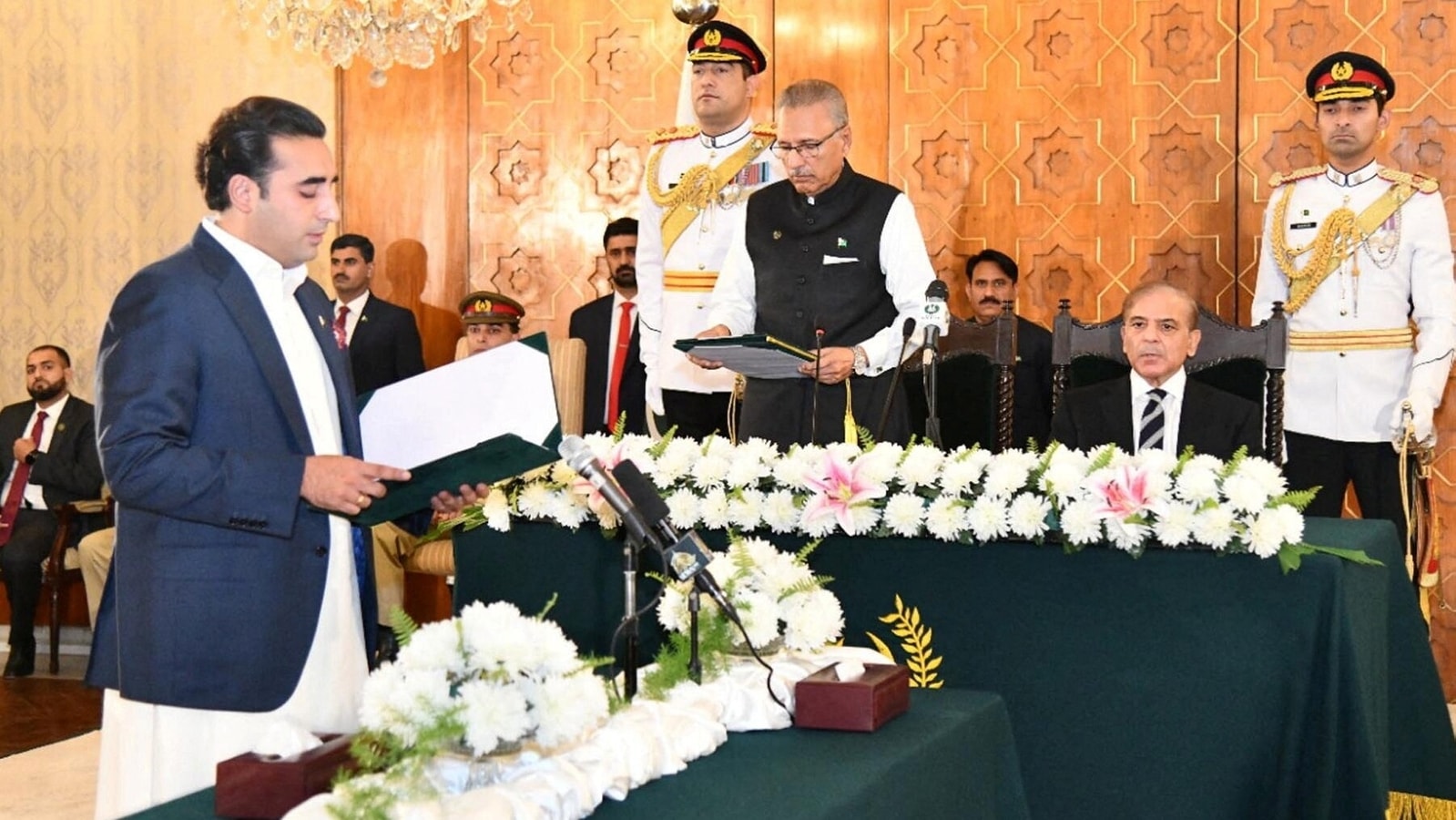

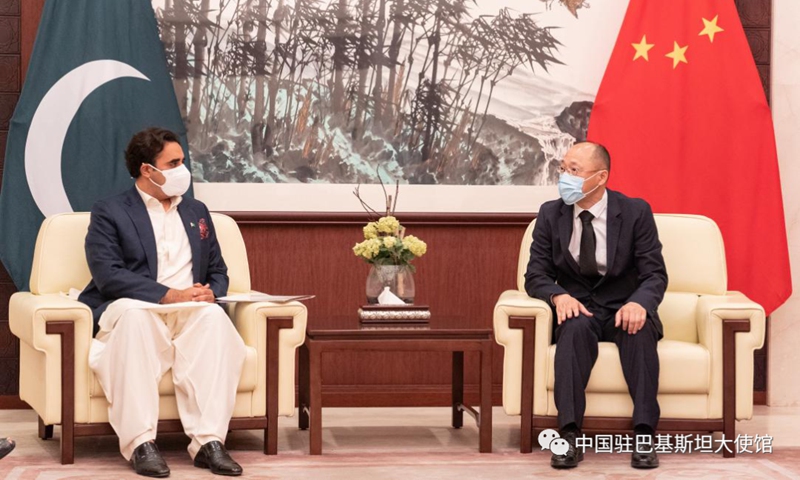
The US State Department has also rejected Khan’s allegations, and called his ouster Pakistan’s internal issue. The US says it had no role in the political tension in Pakistan that resulted in the ouster of the government led by Pakistan Tehreek-e-Insaf (PTI). In the lead-up to Bilawal’s trip overseas, it seemed that he would not get much response from the US and the European Union, but his statesmanship qualities helped him present Pakistan’s case at the international level in a very responsible and professional manner. During his visit to the US, at a press conference at the UN Headquarters in New York, when Bilawal was asked by a journalist whether Imran Khan’s visit to Russia had led to a trust deficit and damaged Pakistan’s ties with the US and its allies, he categorically defended the ex-prime minister’s visit as part of Pakistan’s foreign policy. Referring to the invasion of Ukraine, Bilawal said Khan could not have been expected to know what Russia was planning. In this way, Bilawal demonstrated a sense of fairness and diplomacy even toward a political rival. In contrast, there is no doubt the irresponsible statements and undiplomatic attitude of Imran Khan and his team damaged Pakistan’s foreign relations. Islamabad’s ties with its neighbors reached a low point, even with traditionally friendly countries like China. Economically, Pakistan is a dependent state. Ruining relations with the United States means ruining relations with the entire Western world. Weakening Pakistan’s relationship with a superpower is tantamount to isolating itself from the world and marching toward economic and security challenges. Bilawal and his team will have to struggle for at least a year to normalize diplomatic ties and avoid trust deficits due to the role played by Imran Khan’s government.
