Saturday, May 14, 2022

We will not forgive those behind attack on Chinese teachers: FM Bilawal Bhutto


  • Perpetrators to be given exemplary punishment, FM Bilawal says.
  • "We will not forgive the enemies of Pak-China friendship," he says.
  • Bilawal says Pakistan will defeat terrorism.

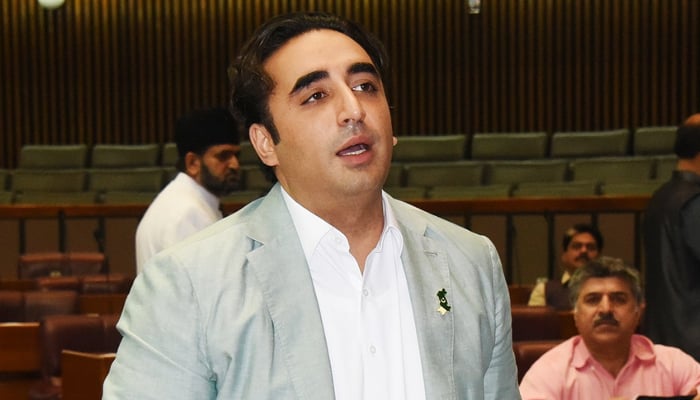
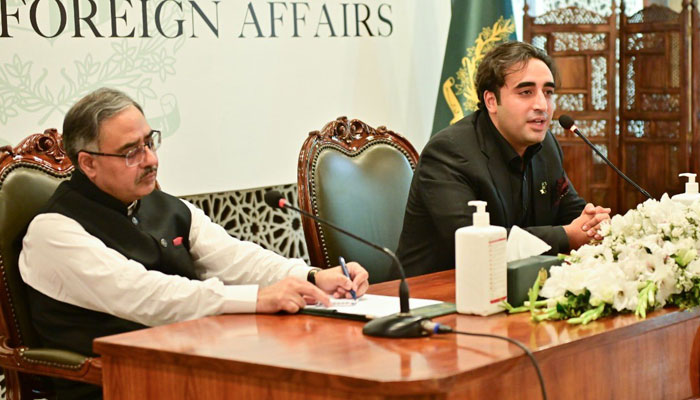
Foreign Minister Bilawal Bhutto-Zardari Saturday said that the whole Pakistani nation stands in solidarity with the affected Chinese families and vowed that those behind the Karachi University attack will not be forgiven.The foreign minister was speaking at a condolence reference held at the Foreign Office for the Chinese nationals who were killed in a suicide attack last month at the KU's Confucius Institute.Four people, including three Chinese nationals, were killed while four others sustained injuries in a car explosion on the premises of the University of Karachi.Today's FO event was held a couple of days after Bilawal Bhutto's first meeting with the Chinese Foreign Minister Wang Yi in which the focus was on the security of Chinese nationals in Pakistan.
"We will not forgive the enemies of Pak-China friendship," the foreign minister said while speaking at the memorial service for victims of the Karachi terrorist attack.
"The attack was carried out in the name of Baloch people's rights. The Chinese are our guests and we will provide them all assistance."
The foreign minister said that no one can accept in Pakistan that the guests are targeted in a terrorist attack as we ourselves passed through this. The foreign minister stressed that the people of Pakistan were killed in the name of religion, and noted that all provinces had witnessed terrorism first-hand.Bilawal said the attack was not only on the Chinese teachers, but it was an assault on Pakistan-China's all-weather friendship, which has always overcome challenges.
"Everyone is aware that our relationship with China is not limited to state-to-state, but it expands to people-to-people," the foreign minister said.
The PPP chairman added that in the past, people were targeted in the name of religion, but Pakistan has to face such terrorists again, and it will emerge victorious from this test.The foreign minister expressed that Pakistanis will never tolerate terrorist attacks on their guests and vowed to give exemplary punishment to the perpetrators.
"The sacrifice of Chinese and Pakistani people will not go into vain," he added.
https://www.geo.tv/latest/416844-we-will-not-forgive-those-behind-ku-attack-fm-bilawal-bhutto

Minister for Foreign Affairs Bilawal Bhutto to leave for US on 16th

Minister for Foreign Affairs Bilawal Bhutto Zardari will leave for the United States on May 16 to attend the Global Food Security meeting to be held in New York on May 18, official sources told The News. He will be accompanied by high-level officials from the Foreign Office.
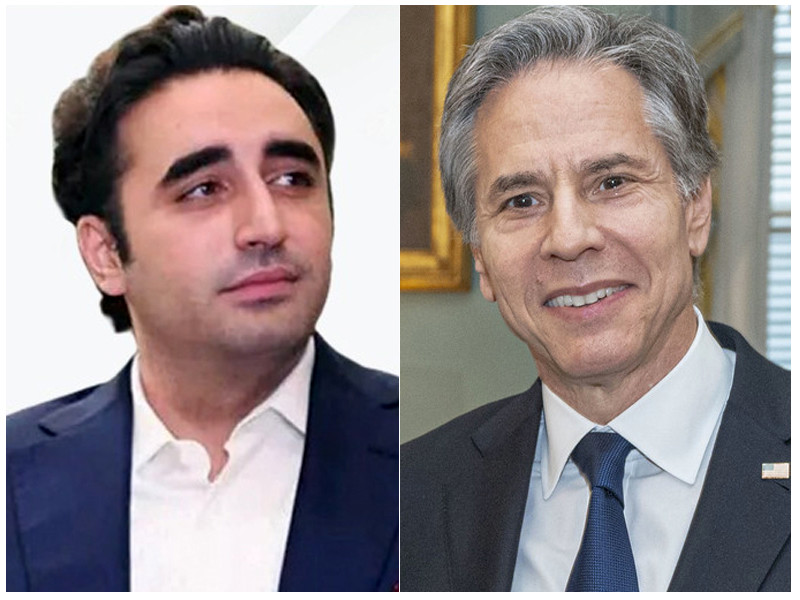
Bilawal was extended an invitation by US Secretary of State Antony Blinken when he telephoned to congratulate Bilawal Bhutto Zardari on taking office last Friday. The foreign minister also participated Thursday night, virtually, in the Second Global Covid Summit after he accepted an invitation from Secretary Blinken.Bilawal, after the telephone call, had himself disclosed the news on Twitter in which he said, “Received call from Secretary Blinken and am grateful for warm felicitations on my assumption of office. We exchanged views on strengthening mutually beneficial broad-based relationship, promotion of peace, development and security while agreeing engagement with mutual respect which is the way forward."
“The foreign minister received the invitation to visit the US last Friday. The Foreign Office is still in the process of finalising the details. Senior officials will be accompanying the minister”, sources told The News.
Though efforts are also being made to arrange for a bilateral meeting with Secretary Blinken, officials say they cannot confirm a meeting at this point. The Foreign Office says that efforts are being made for bilateral meetings on the sidelines of the summit but did not say which countries’ representatives would be meeting the foreign minister.
The Foreign Office, meanwhile, is also finalising a ‘high-level’ visit to Davos-Klosters, in Switzerland to attend the World Economic Forum from May 22 to May 26. “Details are still being finalised but it is confirmed that it will be a high-level delegation to Davos. Whether it is Prime Minister Shehbaz Sharif or Foreign Minister Bilawal, we cannot confirm as yet," say officials. Other sources indicated that most probably the prime minister would attend. The Foreign Office when approached said that they will only put out an official statement after all details are finalised and were reluctant to give more information.
“You would be aware that an invitation has been extended and Pakistan’s participation has been confirmed for this ministerial meeting on food security that is going to be held in New York on May 18, 2022. We will share further details as soon as these are firmed up. We can also look forward to other bilateral engagements on the sidelines during this visit,” FO spokesperson told the media.
On Thursday US Charge d’ Affaires, Angela Aggeler called on Foreign Minister Bilawal Bhutto Zardari and, according to the Foreign Office, the minister in his remarks to the US diplomats said that Pakistan wants to enhance its relations with the United States. “The foreign minister invited US companies to come and invest in Pakistan. He also thanked the US for the 64 million Covid vaccines sent to Pakistan. Angela Aggeler thanked the foreign minister and hoped for stronger bilateral relations between the two sides," said a statement from the Foreign Office.
However, there was no mention in the statement about the visit to the US by Foreign Minister Bilawal Bhutto Zardari or whether a bilateral meeting with the Secretary of State has been finalised.Earlier, the Inter Services Intelligence Director General (ISI), Lt General Nadeem Anjum, visited Washington this week and held meetings with US National Security Adviser Jake Sullivan and CIA Director William J Burns but there was no statement either from Rawalpindi or Washington.Reports indicated that the DG ISI could have tried to ensure that there was a bilateral meeting between the foreign minister and his US counterpart.
Earlier, during the weekly media briefing, the spokesperson was asked about the allegation by Imran Khan in which he blamed the United States for the regime change in Pakistan. “On the question regarding allegations, regime change and other things, I think if you would have followed our previous press briefing, I had comprehensively commented on these issues, and from the Foreign Office perspective, there is not much for me to add at this point of time. With the US, there is shared desire for further strengthening and enhancing of mutually beneficial bilateral relations as manifested by recent and ongoing contacts," responded the spokesperson. The spokesperson confirmed that a Pakistani delegation would be visiting India for the Group of Legal Experts of SCO-RATS scheduled to be held in New Delhi from 15-20 May 2022. “It is a regular expert level meeting which will be joined by all SCO member countries and there is nothing unusual about it. These meetings are periodically held in Tashkent but since India is current chair of SCO-RATS, the meeting is being hosted by India in New Delhi. A working-level Pakistan delegation, led by MOFA, would participate in the meeting with participation from other officials”, he said.
To a question on relations and talks with India, the spokesperson said, “In diplomacy you never shut the doors. Let me say very clearly and I think it is very obvious from the statements of the leadership of the previous government and the current government, and I think you will see a lot of consistency in these statements, and that is because this is an issue on which there is national consensus. So yes, we have been saying we want friendly relations with all neighbours including India but the situation that arose in the wake of India’s illegal and unilateral actions in IIOJ&K on 5th August 2019 and subsequent steps they took, the environment for a fruitful, constructive dialogue is not there”. He added that Pakistan has been saying very consistently that the onus is on India to create an environment that is conducive for a result-oriented dialogue, and yes Jammu and Kashmir as the core dispute has to be at the forefront of any such dialogue.
To a query on the recent restrictions on Afghan girls and women inside Afghanistan, the spokesperson responded, “Thank you for the question. What I can say is that our own experience shows that women have an important role in national development and I think as a progressive Islamic country, it has always been our endeavour to harness and maximize the full potential of women and girls in all walks of lives.
This is also as you would know in keeping with the Islamic teachings and traditions, which provide a central role to women in the society. We hope the general expectations of the international community in this regard will be duly considered by the Afghan authorities in their own interest”.
Earlier, Foreign Minister Bilawal Bhutto Zardari held a telephonic conversation with OIC Secretary General Hissein Brahim Taha to apprise him of the latest situation in the Indian Illegally Occupied Jammu and Kashmir (IIOJ&K) in the wake of so-called “Delimitation Commission” in the occupied territory. According to a press release, Foreign Minister Bilawal Bhutto Zardari, while dismissing the report as another outrageous attempt by India at political gerrymandering, said that by redrawing electoral boundaries blatantly favouring the Hindu-dominated constituencies, the so-called “Delimitation Commission” has validated the worst fears of the Kashmiri people that the BJP government sought to disempower and disenfranchise them by altering the demographic structure of the IIOJ&K with a view to converting the Muslim majority into a minority.
https://www.thenews.com.pk/print/957323-bilawal-to-leave-for-us-on-16th

Friday, May 13, 2022

Pashto Music Video - Zahra Elham & Laila Khan - Jenakai Dali Dali | زهرا الهام و لیلا خان - جینکۍ ډلې ډلې

سابق سپیکر قومی اسمبلی اسد قیصر سپریم کورٹ میں، صحافی کی زبان پر برہم پھر اپنی زبان کی غلطی مان لی

Video Report - 'Neutrals' Not Neutral: PTI | Govt Must Announce Election: Imran | Nawaz, Shehbaz Still Undecided

#Pakistan #PPP - Expectations from Bilawal Bhutto-Zardari

 Hassan Khan

After much trepidation, it appears, that Bilawal Bhutto Zardari has taken up the challenging role as the new Foreign Minister of Pakistan. That is almost six decades after his illustrious grandfather became the foreign minister to begin a transformative political career in earnest. Credited with lending a new direction to Pakistan’s foreign policy, Zulfikar Ali Bhutto made his mark for eternity during his years at Scheherazade. Does Bilawal have similar capacity and aspirations?

While it may be too early to form a definitive opinion, so far this is not evident by any changes that may have been brought about. A Foreign Office bruised and battered by the “cablegate scandal” on the one hand and a mediocre, non-imaginative leadership on the other stands demoralised, dishevelled and despondent with not much capacity for robust diplomacy in any direction.

Former Foreign Minister Shah Mahmood Qureshi had kept an iron grip on the institution to use it to pursue his own political ambitions, in the process stifling it to the point that it lost all relevance in the national scheme of things other than being his handmaiden.

https://dailytimes.com.pk/934002/expectations-from-bilawal-bhutto-zardari/

China calls for ‘resolute’ action from Pakistan against terror attacks on Chinese nationals


  • Chinese foreign minister urges Pakistani counterpart to ensure thorough probe into deadly Karachi attack claimed by Baloch insurgents.
  • Analyst tells of frustration on the Chinese side that Pakistan seems unable to bring such attacks under control.
  • China has called on Pakistan to help take “resolute and effective measures” immediately against attacks targeting Chinese nationals on its soil. The call from Chinese Foreign Minister Wang Yi came during a virtual meeting with Pakistani counterpart Bilawal Bhutto Zardari, just weeks after a deadly suicide bombing outside a Confucius Institute in Karachi.Security for Chinese nationals, projects and institutions in Pakistan needed to be tightened and security loopholes plugged to avoid similar attacks in the future, Wang told Bhutto Zardari, according to a Chinese read-out of the meeting.

Wednesday’s meeting was the first between the foreign ministers after three Confucius Institute staff members and their Pakistani driver were killed in a suicide attack on their van at the University of Karachi on April 26.
Persistent terror attacks have troubled Pakistani projects carried out under China’s Belt and Road Initiative, including Gwadar port in the poor but resource-rich Balochistan province.The Baloch Liberation Army (BLA), a separatist insurgent group from the province, claims the projects exploit the province’s minerals and extend China’s influence in the region.The BLA also took responsibility for last month’s Karachi bombing. The group said it attacked the van to make clear that a “direct or indirect Chinese presence in Balochistan is not tolerated”.
At the meeting with Bhutto Zardari, Wang reiterated China’s call for a thorough probe into the attack. “It is imperative to speed up the investigation, find the culprits and punish them severely, as soon as possible,” he said. The Pakistani minister vowed to work with China to combat terrorism in his country. “Condemning the terrorist attack in Karachi University in which three Chinese teachers lost their lives, the foreign minister underlined Pakistan’s firm resolve to apprehend the perpetrators and bring them to justice,” a Pakistani foreign ministry statement said.
China has invested heavily in Pakistan through the China-Pakistan Economic Corridor (CPEC) – a series of road, rail and energy projects worth US$60 billion that form the main plank of its belt and road plans in the country.
“There is frustration on the Chinese side that Pakistan seems unable to bring [the attacks] under control,” said Raffaello Pantucci, a senior fellow at the S. Rajaratnam School of International Studies in Singapore.“You can see that in the escalating rhetoric around each incident that we see emanate from the Chinese government.”
In 2018, the BLA’s armed attackers stormed the Chinese consulate in Karachi and killed four people, none of them Chinese. Afterwards the foreign ministry asked Pakistan to ensure the safety of Chinese nationals there.In August last year, the BLA claimed it had carried out a suicide bombing that targeted Chinese people in Gwadar, killing two children and injuring a Chinese national, prompting a request from China’s embassy for Pakistan to “speed up the upgrading of security policies” to prevent another attack.Pantucci said the attack against the Confucius Institute staff members showed the BLA was no longer just targeting Chinese nationals involved with CPEC projects, which are protected by around 15,000 Pakistani troops.
China could share intelligence and provide equipment to help protect Chinese nationals in Pakistan, he said, adding that China’s attempt to stabilise Balochistan by investing in the province had not been effective.Wang Dehua, a Shanghai-based analyst on South Asia, said China could also send security advisers to improve vigilance, but would not need to send troops, because Islamabad was still determined to tackle the issue. He said he had experienced Pakistan’s resolve during a group visit to Gwadar port. “The Pakistani side used armoured cars to protect us when we visited the port. So, to Chinese experts, the protection was very adequate.”Pakistan’s newly anointed prime minister, Shehbaz Sharif, has taken a personal interest in the case, according to interior minister Rana Sanaullah who updated Pang Chunxue, China’s representative in Islamabad, about the progress of the investigation on Tuesday.
https://www.scmp.com/news/china/diplomacy/article/3177532/china-calls-resolute-action-pakistan-against-terror-attacks

Thursday, May 12, 2022

Video Report - #MJtv LIVE: پی ٹی آئی کے منحرف اراکین قومی اسمبلی متعلق الیکشن کمیشن کا بڑا فیصلہ آ گیا

#Pakistan - Imran Khan’s dangerous narrative

By Samina Yasmeen
It could further weaken a Pakistan increasingly divided along ethnic, religious, and sectarian lines, between supporters and opponents of jihad, and between the exceptionally rich and poor masses.
In the hands of a master narrator, carefully crafted narratives, that employ easily understandable and culturally relevant symbols and stories, can mobilise individuals and groups for particular causes. The recently-deposed Prime Minister of Pakistan, Imran Khan, is trying to establish himself as a master narrator who can mobilise the masses despite his failure to improve the economy and living standards of 220 million Pakistanis. Economic mismanagement, rising inflation, and the concentration of power in the hands of a select few had dissipated support from his erstwhile backers in the military. In response, Khan is crafting a narrative that his party, the Pakistan Tehreek-e-Insaf (PTI), can deploy to mobilise the masses.
The narrative focuses on the dichotomy between Pakistan’s ideal and current state. The ideal state is presented as one designed along the lines of the first Islamic state established by Prophet Mohammad in Medina in 622 AD. Pakistan’s failure to secure a respected status in the international community since the 1960s is contrasted with the progress made by India which became independent at the same time — New Delhi has earned respect for its refusal to compromise on national interest. The heavy criticism levelled against Khan for his visit to Moscow at a time Russia was preparing to invade Ukraine is presented as evidence. US and European envoys criticised and demanded that Pakistan, notably Imran Khan, not side with Russia. On the other hand, the Indian success story meant that the Narendra Modi government withstood external pressure and asserted its right to purchase oil from Russia at the height of the Ukraine conflict.Khan portrays corrupt and self-serving Pakistani politicians as obstacles on the path toward true independence. He blames them for pushing Pakistan into a subservient relationship with Western powers. They have pursued conflicting policies, siding with the West to push the Soviets out of Afghanistan in the 1980s and then joining hands with the US to invade and occupy the same country in the War on Terror. The Pakistani media is also incriminated for joining hands with the country’s rulers to prevent Pakistan from realising its true potential.
The portrayal of the ruling elite as willing accomplices of the West in exploiting and subjugating the Pakistani people resembles a neo-Marxist analysis of the world system. “Core” states exploit those at the “periphery” in an exploitative yet collaborative relationship with the ruling elite of the peripheral states.
Rival political parties that collaborated to oust Khan’s regime through a no-confidence vote are accused of working at the behest of the Western powers, especially the United States. The former PM has alleged that the US Assistant Secretary of State, Donald Lu, had warned of severe consequences for US-Pakistan relations if he stayed in power. Echoing the Gramscian idea of a counter-hegemonic struggle to create a new historical bloc, Khan has called upon ordinary Pakistanis to become activists in thwarting the collaboration between the corrupt politicians and the US. The newly-appointed prime minister and his coalition partners are labelled an “imported government” lacking legitimacy and requiring a response from those who stand for independence, integrity, and fairness. The Pakistani youth, which comprises 60 per cent of the country’s population, is allocated pride of place in this schema: They are urged to think about the future they expect and deserve despite all the machinations of the corrupt politicians and the imported government.
Khan has delivered this narrative in simple language easily understood by the masses in a country with a literacy rate of just 60 per cent. He has portrayed himself as a selfless individual who did not need to be in politics but struggled for more than two decades to secure true independence for Pakistan and international respect for it. Repeated by other members of his cabinet and the PTI, this narrative has proved successful. Overnight, those complaining of economic mismanagement and rising inflation have come out on the streets declaring their support for Khan as the true leader and rejecting the “imported government”.
However, this narrative is fraught with danger for Pakistan. It runs the risk of further weakening the cohesion of a society increasingly divided along ethnic, religious, and sectarian lines, between supporters and opponents of jihad, and between the exceptionally rich and poor masses. The defiance narrative is dividing the country between supporters and opponents of Imran Khan — and by extension the PTI. Equally concerning is the fast-emerging public anger against the military and the judiciary as “collaborators” in ousting Khan as the PM. This anger was apparent in responses to a tweet from DG ISPR about the successful launch of the Shaheen III missile on April 9. Congratulatory messages were interspersed with extremely critical assessments of the military’s role and capability to thwart Pakistan’s real threats. According to some reports, dissenting voices are also emerging within the military, insisting on Khan’s narrative as the guiding principle for Pakistan. If the fate of narratives employed by jihadi groups is any indication, once a message has been delivered to an audience, some among the audience attach their own meanings to the message and the ensuing activism does not necessarily correlate to the intended aims of the master narrator(s). Khan’s narrative could also motivate some groups to resort to actions with far-reaching implications for civil-military relations and Pakistan’s stability.
https://indianexpress.com/article/opinion/columns/imran-khan-power-pakistan-politics-economy-7914389/

Bilawal Bhutto says PTI minister threatened him on eve of no-trust vote


Foreign Minister Bilawal Bhutto-Zardari Thursday revealed a PTI minister had threatened him with the imposition of martial law a night before the no-confidence motion against ex-prime minister Imran Khan was passed.

In his address to the National Assembly, Bilawal told the house that the PTI minister asked him to either accept early elections or martial law would be imposed in the country.

The foreign minister said that despite PTI's repeated attempts to defeat the no-confidence motion against the former premier, their bids were foiled and the no-trust vote was successful.

Bilawal then demanded an investigation into the events leading up to and post the no-confidence motion that led to former prime minister Imran Khan's ouster.

Ex-deputy speaker Qasim Suri had termed the no-trust motion against Khan "unconstitutional" and dismissed it on April 3, and following this, the then-prime minister advised President Arif Alvi to dissolve the assemblies and he followed suit.

But the then-Opposition filed a plea in the Supreme Court seeking the nullification of the government's move. The top court then on April 7, declared the government's decision to dissolve the assembly and Suri's ruling against the constitution.

The SC had asked to hold the voting on the no-confidence motion on April 9, but Khan had the speaker prolong the session. But near midnight, the speaker resigned from office.

Being the senior member of the panel of chairs, PML-N MNA Ayaz Sadiq chaired a session on early April 10 and held the voting no-confidence motion which ultimately led to Khan's ouster.

High-level committee should probe matter: Bilawal

"This house must form a high-level parliamentary commission or committee to investigate the events leading up to April 3, post-April 3, of the night of April 9 and 10, and the events that have taken place to date after [the no-confidence motion was successful]," Bilawal said on the floor of the National Assembly.

The PPP chairman said the "attacks on the constitution and the house" should be taken seriously, and an investigation should be held to determine who was at fault.

"Even the Supreme Court termed the previous government's acts of April 3 as unconstitutional. In the way that the former government tried to escape from the challenge of the no-confidence motion, it was unconstitutional and the people of Pakistan demand accountability," he added.

Bilawal said the acts of undermining the constitution had taken place in the past as well and the parliament remained mum on it, therefore, these events should be investigated.

Bilawal emphasised that PPP was never in the favour of political engineering and noted that his party's demand still stands that first electoral reforms should take place, and general elections should be held after them.

"We are a democratic force and demand transparent elections. We had earlier demanded that electoral reforms should take place first. This is PPP's clear stance," Bilawal said.

'Situation in Pakistan is at crisis point'

Berating Khan, he said the former prime minister should be asked about his performance during his tenure, he should be questioned about the economy, and how his "ego" damaged Pakistan internationally, in a reference to the PTI chairman's alleged US threat.

"The former prime minister thinks he is a 'sacred cow' as he is currently speaking against the constitution, national security, and economic stability," the foreign minister said.

The PPP chairman said the government left a mess in terms of the economy as it has left sugar, wheat, and energy crises for the incumbent government.

"Wherever we see, there is a crisis [...] the conditions are even worst than we had thought when we were in the Opposition. The situation in Pakistan is at a crisis point — there should be no difference of opinion in this regard," Bilawal said.

Resolution passed condemning Indian actions in IOJK

In other matters of business, the National Assembly unanimously passed a resolution denouncing the latest Indian attempt for demographic engineering in occupied Jammu and Kashmir through a so-called "delimitation commission".

The foreign minister had moved the resolution, which stated that India aims to artificially alter the electoral strength of the Muslim majority in occupied Kashmir.

Noting that the commission’s recommendations have been rejected by a cross-section of political parties in the occupied region, the resolution categorically rejected the report of the so-called delimitation commission that seeks to convert the Muslim majority territory into minority and further marginalise, disenfranchise, and disempower the Kashmiri population and advance the political and electoral objectives of the BJP.

The resolution noted that through the delimitation exercise, India is making attempts to further its illegal actions of 5th August 2019 and subsequent measures.

The resolution recalled that Jammu and Kashmir is an internationally recognised dispute and a long-standing item on the agenda of the UN Security Council.

It declared that no façade of elections based on a sham delimitation exercise can substitute the legitimacy and indispensability of a free and impartial plebiscite under the auspices of the UN.

The resolution demanded that India should honour and fulfil its obligations under international law, UNSC resolutions, and the fourth Geneva Convention, whilst refraining from bringing about any illegal demographic changes in the occupied territory.

It urged the Indian government to forthwith end its oppression and widespread violations of human rights and international humanitarian law in IIOJK and enable the Kashmiri people to exercise their inalienable right to self-determination as enshrined in the Security Council resolutions.

The resolution called upon the international community to ensure accountability for India’s grave and persistent violations of human rights and war crimes in IOJK.

The resolution reiterated Pakistan’s unflinching commitment and solidarity with Kashmiri, reaffirming that Pakistan will continue to extend all possible support in their just struggle for freedom and self-determination.

It also asked the government to continue to expose and counter the Indian moves before the international community and to highlight and forcefully project the Kashmir cause at all bilateral and multilateral forums including the UN and the OIC.

https://www.geo.tv/latest/416461-people-demand-accountability-fm-bilawal-bhutto-demands-investigation-into-events-surrounding-no-trust-motion

وزیر خارجہ چیئرمین بلاول بھٹو زرداری نے قومی اسمبلی میں مقبوضہ جموں و کشمیر کے حوالے سے قرارداد پیش کردی

  وزیر خارجہ چیئرمین بلاول بھٹو زرداری نے قومی اسمبلی میں مقبوضہ جموں و کشمیر کے حوالے سے ایک قرارداد پیش کی جس میں بین الاقوامی برادری سے کہا گیا ہے کہ وہ بھارت کی جانب سے مقبوضہ جموں و کشمیر میں انسانی حقوق کی سنگین خلاف ورزیوں اور جنگی جرائم کا نوٹس لیں اور مقبوضہ کشمیر میں بھارت کے مظالم اور یکطرفہ اور غیرقانونی اقدامات کو روکنے کا کہیں اور بھارت سے یہ بھی کہیں کہ وہ اقوام متحدہ کی سکیورٹی کونسل کی متعلقہ قراردادوں پر عملدرآمد کرے۔ قرارداد میں بھارت کی جانب سے غیرقانونی اور ظالمانہ اقدامات اور کشمیر کی متنازعہ حیثیت کو تبدیل کرنے کے خلاف قرارداد منظور کی گئی۔ قرارداد میں اس بات پر سخت تشویش کا اظہار کیا گیا کہ بھارت کی قابض فوج کی جانب سے غیرقانونی اقدامات لئے گئے ہیں جن سے مقبوضہ کشمیر کی آزادی تناسب بگڑ گیا ہے جو کہ بین الاقوامی قوانین کی خلاف ورزی ہے۔ بھارت کے نام نہاد ڈی لیمیٹیشن کمیشن کو مارچ 2020ءمیں قائم کیا گیا جس سے مقبوضہ جموں و کشمیر کے مسلمانوں کی اکثریت کو مصنوعی طور پر تبدیل کر دیا گیا ہے۔ قرارداد میں کہا گیا ہے کہ پاکستان کشمیری عوام سے مکمل یکجہتی اور حمایت کا اعادہ کرتا ہے۔ پاکستان اور کشمیری عوام کی جانب سے بھارت کے 5اگست 2019ءکے غیرقانونی اقدامات پر تشویش کا اظہار کیا گیا۔ قرارداد میں یہ بھی کہا گیا کہ جموں و کشمیر بین الاقوامی طور پر ایک متنازعہ مسئلہ ہے جو کہ اقوام متحدہ کی سکیورٹی کونسل میںایک طویل عرصہ سے قابل توجہ ہے۔ اب اس جعلی ڈی لیمٹیشن کے بعد جو بھی انتخابات ہوں گے وہ اقوام متحدہ کے تحت غیرجانبدرانہ حق خود ارادیت کا نعمل البدل نہیں ہو سکتے۔ قرارداد میں مطالبہ بھی کیا گیا کہ بھارت بین الاقوامی قوانین، اقوام متحدہ کی سکیورٹی کونسل کی قراردادوں اور جینوا کنونشن پر عمل کرے اور مقبوضہ علاقے میں کسی قسم کی غیرقانونی طور پر آبادی میں تبدیلی کی کوشش سے باز رہے۔ قرارداد میں بھارت سے بھی کہا گیا کہ وہ مقبوضہ جموں و کشمیر میں انسانی حقوق کی خلاف ورزیوں سے باز رہے اور کشمیری عوام کو ان کا حق خود ارادیت کی راہ میں رکاوٹ نہ بنیں۔ قرارداد میں پاکستان اور پاکستانی عوام کی جانب سے کشمیری بھائی بہنوں سے یکجہتی کا اظہار کیا گیا اور کہا گیا کہ پاکستان کشمیریوں کی آزادی کی جدوجہد اور حق خودارادیت کی حمایت کرتا رہے گا۔

https://www.ppp.org.pk/pr/27003/

Video - Chairman PPP and Foreign Minister Bilawal Bhutto Zardari addresses National Assembly session | 12May

Wednesday, May 11, 2022

Video Report- President Biden Addresses 40th International Brotherhood Of Electrical Workers | NBC News

Video Report - Inflation slows for the first time in 9 months as Biden touts plan to address lowering food costs

Video Report - The decades-long fight to overturn Roe v. Wade

Video Report - Senate Republicans block bill to make Roe v. Wade into federal law

Video Report - US State Department spokesperson grilled over Al Jazeera journalist's death

اینکر پرسن سمیع ابراھیم کی فوج مخالف ویڈیو پر FIA نوٹس کیخلاف درخواست پر اسلام آباد ہائی کورٹ سماعت

Enforced disappearances in Pakistan: Baloch Voice Association urges UN body to appoint rapporteur

Representatives of the Baloch Voice Association (BVA) met with the United Nations Working Group over the issue of enforced disappearances in Pakistan and urged the UN body to appoint a special rapporteur.
“I urge this body to appoint a special rapporteur on the issue of enforced disappearances in Balochistan” Senior Baloch Human Rights defender Waja Ali Arjemandi in a statement asked the UN body on Monday.The representatives of BVA also expressed their thanks to the UN for inviting them to United Nations in Geneva.
“I am also thankful to this body and her office holders to be conterminously with us in the search of Ehsan Arjemandi and other victims of enforced disappearances,” Waja Ali Arjemandi said.
In his statement, the Baloch representative said that his brother Ehsan Arjemandi was kidnapped by Pakistani security forces on August 9, 2009 and was released on August 29, 2021.“The situation in Balochistan is alarming. Every day we are getting news about cases of enforced disappearances. The process of registering a case with the UN body for them is very difficult due to many factors,” the representative further said.The representatives of BVA said that there are reports that Pakistani forces have threatened and disappeared family members of the victims for raising voices over enforced disappearances.
UN Working body Vice President said: “We are looking towards Ehsan Arjemandi to help us to trace the other victims of enforced disappearances. The Secretary-General of the body thanked Ehsan Arjemandi for his commitment to fight against enforced disappearances.”
Munir Munir, the President of Baloch Voice Association, said that even in a verdict the Pakistani supreme court has said that the “commission has failed to solve the issue of enforced disappearances”.
Enforced disappearances are used as a tool by Pakistani authorities to terrorize people who question the all-powerful army establishment of the country, or seek individual or social rights. Cases of enforced disappearances have been majorly recorded in the Balochistan and the Khyber-Pakhtunkhwa provinces of the country which host active separatist movements.
A recent report unveiled by the US revealed that over 8000 people were missing in the country during 2021 including 1,200 missing in Sindh province in the last six months.
https://theprint.in/world/enforced-disappearances-in-pakistan-baloch-voice-association-urges-un-body-to-appoint-rapporteur/951289/

یہ پتہ لگ گیا کہ فوج نیوٹرل رہ سکتی ہے: آصف زرداری

پاکستان پیپلز پارٹی کے شریک چیئرمین اور سابق صدر آصف علی زرداری کا کہنا ہے کہ وہ الیکشن سے ڈرتے نہیں بلکہ الیکشن سے قبل انتخابی اصلاحات کرنا چاہتے ہیں۔

آصف علی زرداری نے بدھ کو کراچی میں ایک پریس کانفرنس سے خطاب میں کہا کہ ’ہم نے کب کہا کہ ہم الیکشن سے ڈرتے ہیں۔‘

انہوں نے کہا کہ ’ہمارے گیم پلان میں الیکٹورل اور نیب ریفارمز ہیں۔ آئندہ انتخابات کا انعقاد ضروری مسائل کے حل اور انتخابی اصلاحات کے فوری بعد کیا جائے گا۔‘

ان کا کہنا تھا کہ ’عمران خان کہتے ہیں الیکشن کروائیں، وہ کیا کر لیں گے الیکشن کروا کے، انہوں نے پہلے چار سال میں کیا کر لیا۔‘

’یہ بات تو ہم کہتے آئے ہیں کہ دھاندلی ہوئی، الیکشن کروائیں، لیکن کبھی کسی نے ہماری بات نہیں سنی۔‘

انہوں نے صحافیوں سے کہا کہ ’میں میاں صاحب سے مشاورت کے بعد ہی آپ سے بات کر رہا ہوں۔‘

آصف علی زرداری نے کہا کہ ’جو یہ لوگ گانا گا رہے ہیں کہ فریش الیکشن کراؤ۔ جو بھی آئے گا اسے ایسے ہی مسائل حل کرنا پڑیں گے، اس لیے ہم کو ہی کرنے دو۔‘

واضح رہے کہ مسلم لیگ ن کا ایک وفد بھی گذشتہ روز سابق وزیر اعظم نواز شریف سے مشاورت کے لیے لندن کے لیے روانہ ہوا۔

مسلم لیگ ن کا یہ وفد جس میں وزیراعظم شہباز شریف بھی شامل ہیں نوازشریف کے بلانے پر لندن گیا ہے۔

اس حوالے سے بعض تجزیہ کاروں کا کہنا ہے کہ مسلم لیگ ن کے وفد کے اس وقت لندن جانے کے بعد ’قبل از وقت انتخابات کے قوی امکانات پیدا ہو گئے ہیں۔‘

دوسری جانب سابق وزیراعظم عمران خان پہلے ہی عوامی رابطے کی مہم کا آغاز کر چکے ہیں اور وہ وزارتِ عظمیٰ کے عہدے سے ہٹائے جانے کے بعد سے مسلسل انتخابات کرائے جانے کا مطالبہ ہی کر رہے ہیں۔

تاہم عمران خان کی ایبٹ آباد جلسے میں تقریر کے بعد انہیں تنقید کا نشانہ بنایا جا رہا ہے اور کہا جا رہا ہے کہ انہوں نے اس تقریر میں پاکستان فوج کو ’نشانہ‘ بنایا ہے۔

اب سابق صدر آصف زراداری کا کہنا ہے کہ ’فوج اگر اے پولیٹیکل ہوتی ہے تو مجھے باجوہ کو سیلوٹ کرنا چاہیے یا اس سے لڑنا چاہیے، کہ تم کیوں اے پولیٹیکل ہوئے ہو۔‘

انہوں نے کہا کہ ’جنرل باجوہ نے کسی سے یہ نہیں کہا کہ جا کر زرداری صاحب کو ووٹ دو یا شہباز صاحب کو ووٹ دو۔ وہ صرف اے پولیٹکل ہوئے کہ ہم مداخلت نہیں کریں گے۔‘

آصف زرداری کا مزید کہنا تھا کہ ’انہوں نے آئین کے مطابق حلف اٹھایا ہے اور وہ حلف پر رہے ہیں۔ حلف پر رہیں تو غلط ہیں اور نہ رہیں تو غلط ہیں۔‘

انہوں نے کہا کہ ’یہ شکر ہے میرے مولا کا کہ اس ساری ایکسرسائز میں ہمیں یہ پتہ لگ گیا کہ وہ (فوج) نیوٹرل رہ سکتے ہیں، وہ اے پولیٹیکل ہو سکتے ہیں اور ہم کوشش کرتے رہیں گے کہ وہ اے پولیٹیکل رہ سکتے ہیں۔

عمران خان کی جانب سے سراج الدولہ کا حوالہ دیے جانے آصف زرداری نے کہا کہ ’وہ کون سا بنگال کے نواب ہیں۔‘

انہوں نے کہا کہ ’اس کا (عمران خان) کیا واسطہ ہے ملک کے سیاسی حالات سے۔ ہماری کوشش ہے کہ دوبارہ کوئی سلیکٹڈ نہ آئے۔‘

https://www.independenturdu.com/node/102091 

اصلاحات سے پہلے الیکشن نہیں ہوں گے، آصف زرداری

پاکستان پیپلز پارٹی (پی پی پی) شریک چیئرمین آصف علی زرداری نے کہا ہے کہ تین ماہ لگیں یا چار ماہ، انتخابی اصلاحات سے پہلے عام انتخابات نہیں کرائیں گے۔

 آصف زرداری نے خواجہ آصف کا وقت سے پہلے انتخابات کے امکان کو مسترد کرتے ہوئے کہا کہ ن لیگ سے طے ہے کہ پہلے قوانین بہتر بنانے ہیں پھر الیکشن میں جانا ہے، جو بات کر رہا ہوں میاں صاحب کی مشاورت سے کر رہا ہوں۔

کراچی میں پریس کانفرنس کرتے ہوئے سابق حکومت سے متعلق آصف زرداری کا کہنا تھا کہ میری نظر میں پاکستان اگر کوئی چلاسکتا ہے تو ہم چلاسکتے ہیں، یہ نہیں چلا سکتا۔ 

انہوں نے کہا کہ میں نے پہلے دن کہا تھا کہ یہ نہیں چلاسکیں گے، یہ اپنے زور سے ہیں گریں گے، ان کے اپنے ہی دوستوں نے ان کو چھوڑ دیا۔ 

سابق صدر کا کہنا تھا کہ ان کے اپنے لوگوں نے انہوں نے چھوڑا کیونکہ انہوں نے اپنے لوگوں کے سیاسی وعدے پورے نہیں کیے۔ 

آج تک میں کہتا آیا ہوں کہ الیکشن کروائیں، ہم نے حکومت بنالی ہے وہ چاہ رہے ہیں کہ الیکشن کروائیں۔

ان کا کہنا تھا کہ جب کہتا تھا یہ دھاندلی کی حکومت ہے الیکشن کروائیں تو کوئی نہیں سنتا تھا۔ 

اسٹاک مارکیٹ کے بارے میں بات کرتے ہوئے ان کا کہنا تھا کہ آپ کا اسٹاک ایکسچینج اب کھڑا ہو گیا ہے، پرویز مشرف کے دور کے بعد بھی ہم نے اسٹاک ایکسچینج کو اٹھایا تھا۔

انہوں نے کہا کہ جب تک آئی ایم ایف کا پروگرام نہیں آجاتا ہمیں مشکلات ہوں گی۔

سابق صدر کا کہنا تھا کہ ہم نے کب کہا کہ ہم الیکشن نہیں کروائیں گے، انتخابی اصلاحات کے بعد الیکشن کی طرف جائیں گے۔

انہوں نے کہا کہ سلیکٹڈ کو ہم نے مل کر ہٹایا ہے، مجھے لوگوں کے بند چولہے جلانے ہیں۔

عمران خان کی جانب سے نئے انتخابات کے مطالبے پر آصف علی زرداری نے کہا کہ الیکشن میں جاکر یہ کیا کرے گا؟ اپنے چار سال میں کیا کام کیا؟ الیکشن جلدی کروا کر یہ کیا کر لے گا؟ 

انہوں نے یہ بھی کہا کہ ابھی نئی حکومت آئی ہے حالات کنٹرول کرنے میں تھوڑا وقت لگتا ہے۔

سابق صدر نے کہا کہ فوج غیر سیاسی ہوتی ہے تو جنرل باجوہ کو سیلوٹ کرنا چاہیے یا لڑنا چاہیے؟ پتہ چل گیا ہے کہ وہ نیوٹرل اور غیر سیاسی رہ سکتے ہیں، ہم کوشش کریں گے کہ وہ غیر سیاسی رہیں۔

انہوں نے کہا کہ میں پاکستان کی آبادی 20 کروڑ نہیں مانتا، میرے نزدیک ملک کی آبادی 30 کروڑ ہے اور انہی کے ساتھ ہمیں پاکستان کو بنانا ہے۔ 

https://jang.com.pk/news/1084935 

Video - #Pakistan #PPP - Former President Asif Ali Zardari addressing a press conference at CM House

Sunday, May 8, 2022

Music Video - #abortionrights #AbortionIsEssential - Bob Marley - Get Up, Stand Up - Don't give up the fight

Video - #Colbert #Comedy #Monologue - GOP Cowards Afraid To Celebrate Roe v. Wade Ruling | Matt Gaetz's Toxic Tweet

Video - #DailyShow Supreme Court to Strike Down Roe v. Wade, Leaked Opinion Shows | The Daily Show

Video Report - Hillary Clinton discusses war in Ukraine, democracy in the U.S. and future of Roe v. Wade

Video Report - Germany's new Russia approach marks historic policy shift

Music Video - Lokan Do Do Yar Banaye - Afshan Zaibi

Video Report - Gen Muzammil Resigns | Maryam, Shehbaz Rallies | Rana Sana's Warning | Bilawal US Visit

Video Reports - پارٹ 1&2 : عمران خان کا بیرون ملک پاکستانیوں سے گمراہ کن خطاب،

#Pakistan-#US: Bringing Back Diplomacy - Antony Blinken - Foreign Minister Bilawal Bhutto

 After several years of escalating US hostility towards Pakistan, a diplomatic exchange between Pakistani and US representatives has indicated signs of a warming relationship. US Secretary of State Antony Blinken called Foreign Minister Bilawal Bhutto-Zardari and invited him to a food security meeting at the UN headquarters in New York in mid-May—a first personal invitation to a UN event by the US. Both sides also discussed various aspects of the bilateral cooperation and expressed keen interest in re-engaging.

This is a different tune from what we have witnessed in the past few years, which included constant passive-aggressive statements, withdrawal of aid, and instigation of financial cases against Pakistani institutions abroad. In fact, this is the first contact between the foreign ministers of the two countries since September 2021; it speaks volumes of the nature of the relationship that there had been radio silence between the representatives for the last seven months.

This positive start will no doubt fuel the Pakistan Tehreek-i-Insaf (PTI)’s allegations of a foreign conspiracy to oust the previous government. Regardless, non-hostile relations with major powers and Pakistan’s material involvement in international affairs that gravely impact us are a necessary cornerstone of good diplomacy. It is important to know how to navigate foreign relations tactfully and deal with disagreements between countries respectfully, and not take any ill-timed inappropriate actions that could unnecessarily make a political statement on the world stage.

In that respect, the new Foreign Minister is on the right path by engaging encouragingly and stressing the importance of partnership. Issues like food security affect developing countries like Pakistan gravely; a global discussion at the UN Security Council level can have material consequences on the world, and any isolation and lack of contact are detrimental to us. The engagement must continue, and we must take this forward positively.

https://nation.com.pk/2022/05/08/bringing-back-diplomacy/

Pakistan-US: 'Engagement with mutual respect', Bilawal tells Blinken

 Foreign Minister Bilawal Bhutto-Zardari sought to strengthen a “mutually beneficial and broad-based” relationship with the United States in a maiden telephone call with his American counterpart Anthony Blinken on Friday.


Using his Twitter handle, Bilawal said he had received the telephone from Secretary Blinken, who felicitated him on his assumption of the Foreign Office.

Saying he was grateful for “warm felicitations”, the foreign minister said he had exchanged views with the US secretary on “strengthening mutually beneficial and broad-based relationship” with the United States.

 The two foreign ministers also discussed the promotion of peace, development and security. “Agreed engagement with mutual respect is the way forward,” Bilawal added.

This was the first telephonic conversation between the Pakistani foreign minister and the US Secretary of State in nine months. The last time Blinken spoke to Shah Mehmood Qureshi was in August 2021 when the US-led foreign forces were withdrawing from Afghanistan.

Secretary Blinken’s telephone call to the new foreign minister came amid no let-up in former Prime Minister Imran Khan’s allegations that he was ousted from power through a US-backed conspiracy.

The coalition government led by Prime Minister Shehbaz Sharif has decided to form an “independent commission” to look into the allegations but Imran has rejected the proposal and sought a judicial commission on the matter.

 The controversy revolves around a diplomatic cable the then Pakistani ambassador in Washington sent to the Foreign Office on March 7. The cable was based on Ambassador Asad Majid’s conversation with US Assistant Secretary of State for South and Central Asia Donald Lu.

In that cable, according to Imran, the US official "threatened" Pakistan of dire consequences if the vote of no confidence against the PTI leader did not succeed. The former premier claimed that he was ousted from power because he had pursued an independent foreign policy and undertook a visit to Russia despite the US opposition.

The National Security Committee (NSC), the country’s highest forum on such matters, met twice – first on March 31 when Imran was still the premier and second on April 22 when Shehbaz Sharif was the country’s chief executive. In both meetings, the NSC agreed that the language used by the American official was undiplomatic and tantamount to ‘blatant interference’ but found no evidence to suggest that there was a conspiracy against Imran Khan.

The PTI chairman, nevertheless, has kept building this narrative that the NSC has endorsed his claims. The controversy has complicated the already fraught relationship between Pakistan and the US.

The new government, however, has been trying to bring some semblance of certainty with statements underlining the importance of a relationship with the West particularly with the United States.

The US officials have also issued statements in favour of engagement with Pakistan. The latest telephone call, observers believe, suggests the eagerness from both sides to reset their troubled ties.

Despite the US pullout of Afghanistan, Washington still has stakes in the neighbouring country given that any instability would allow terrorist groups to regroup that may not just pose threat to the region but the US interests too.

Pakistan is worried over the recent spike in cross-border terrorist attacks from Afghanistan and considers counter-terrorism cooperation vital to deny the banned Tehreek-e-Taliban Pakistan (TTP) and other groups space in Afghanistan.

https://tribune.com.pk/story/2355437/engagement-with-mutual-respect-bilawal-tells-blinken

Saturday, May 7, 2022

Video - #BetweenTheScenes #DailyShow South African Racism vs. American Racism - Between the Scenes | The Daily Show

Video Report - France’s Macron sworn in for second term as president

Video Report - Sinn Fein leader hails ‘new era’ as early results point to historic N. Ireland parliament win

Video Report - #KarineJeanPierre #PressSecretary Psaki Congratulates Karine Jean-Pierre On Being Named White House Press Secretary

Video Report - Karine Jean-Pierre makes US history as new White House press secretary - BBC News

Pashto News Report - کرونا متحده ایالاتو کې یو میلیون کسان وژلي

#Afghanistan - Taliban Impose Head-to-Toe Coverings for Women

By David Zucchino and Safiullah Padshah
A new decree recommends, but doesn’t require that women wear burqas, and says male relatives of those who don’t cover themselves would be punished.
The Taliban government decreed Saturday that Afghan women must cover themselves from head to toe, expanding a series of onerous restrictions on women that dictate nearly every aspect of public life.
The government’s Ministry for the Promotion of Virtue and Prevention of Vice suggested the burqa as the preferred garment for covering a woman’s face, hair and body. But it did not mandate wearing the garment as long as women otherwise cover themselves with a hijab. The full-body burqa, long emblematic of patriarchal control of women’s public attire in Afghanistan, was described by the ministry as “the good and complete hijab” — a garment with various versions that cover a woman’s hair and much or all of her face and body.
Since the Taliban seized control of Afghanistan in August, Afghan women have been subjected to a cascade of announcements restricting their employment, education, travel, deportment and other aspects of public life. Many had assumed that the return of a burqa-style body covering was the inevitable next step.
The burqa, which leaves only a woman’s hands and feet visible and includes a stitched facial netting for vision, was required by the Taliban when it ruled most of Afghanistan from 1996 to 2001.The ministry’s definition of “hijab” Saturday described a garment that “should not be too short or too tight,” the ministry announcement said. The intent was to obscure the outlines of a woman’s body, the ministry said.In public announcements regarding women in recent months, the government has often delivered vaguely worded proclamations left open to interpretation. Wary of Western condemnation as the Taliban government seeks diplomatic recognition and humanitarian aid, many announcements have appeared to rely on inference and intimidation.
But the ministry, which is responsible for enforcing the government’s interpretation of Islamic law, was quite specific Saturday about punishments for the male head of family of women who fail to adhere to the latest decree.
At a three-hour news conference dominated by pronouncements promoting the religious virtues of the burqa, ministry officials and Islamic religious figures dictated a series of escalating punishments — including jail time for male family heads who repeatedly disregarded warnings from government officials regarding women’s attire.
If a woman failed to wear the prescribed hijab in public, ministry officials would visit her home and advise the male head of the family to require her to comply, the ministry announcement said. Failure to comply would result in a summons to the ministry, the officials said. If the man still failed to follow the guidelines, he would be jailed for three days.
If the jail sentence did not compel adherence, the man would be compelled to appear before a religious court for further punishment, ministry officials said. Male government employees whose wives or daughters fail to cover themselves in public would be subject to suspension or dismissal, the announcement said. And the relatively few women still permitted to hold jobs — such as nurses, doctors and teachers — could be fired if they did not comply with the regulations.
“We want our sisters to live with dignity and safety,” said Mohammad Khalid Hanafi, the acting vice and virtue minister.
Shir Mohammad, a vice and virtue official, said in a statement that “all dignified Afghan women” should cover themselves from head to toe. “Those women who are not too old or too young must cover their face, except the eyes,” he added.
Since the Taliban takeover in August, more women in Kabul appear to have begun wearing burqas. But the majority of women on the streets of the capital have continued to wear less encompassing versions of hijabs, with many covering only their hair and leaving most or all of their faces still visible.Even under the previous, Western-backed government, many women — especially in rural areas and small towns — continued to wear burqas. The history of the garment dates back generations in Afghanistan, and is a product of conservative Afghan culture that long preceded the emergence of the Taliban in the 1990s.At Saturday’s news conference, religious speakers delivered dissertations on the Islamic history of the hijab and its benefits according to Islamic law and practice.
The ministry instructed officials across Afghanistan to put up posters in bazaars and other public locations with instructions and images of approved garments for women. In recent months, small posters have appeared in Kabul depicting head-to-toe hijabs, including burqas, as proper public attire for women.
On Saturday, ministry officials said the “ruling, importance and benefits of the hijab” should be discussed in mosques and distributed through the news media.In September, the Taliban converted the previous government’s Ministry of Women’s Affairs to the office for the Vice and Virtue ministry. Under the Taliban government of the 1990s, women who failed to wear a burqa in public were often beaten by vice and virtue religious police, who also delivered warnings to male relatives.
Also Saturday, a spokesman for an Afghan opposition group that has mounted an insurgency against the Taliban government repeated earlier claims that it had “liberated” three districts in the northern province of Panjshir. Asked whether the National Resistance Front, as the movement calls itself, had seized government district centers, the spokesman replied by text message, “They were besieged in the district offices,” referring to Taliban officials.
The Taliban government spokesman, Zabihullah Mujahid, said on Twitter that “no military incident has taken place” in Panjshir or any other nearby areas. National Resistance Front claims “were not true, no one should be worried,” Mr. Mujahid wrote.
He added that thousands of Islamic Emirate fighters were in Panjshir and preventing any military advances by the front.
The National Resistance Front, or N.R.F., was formed by several leaders or supporters of Afghanistan’s Western-backed government before it collapsed last summer. It is part of a resistance that consists of a smattering of armed fighters spread across the mountains of northern Afghanistan, according to interviews with more than a dozen resistance fighters and leaders.
The N.R.F. has an estimated several hundred fighters, many of them low-ranking officers in the former government’s security forces. It is led by Ahmad Massoud, the son of the deceased Northern Alliance leader Ahmad Shah Massoud. Mr. Massoud left Afghanistan after the Taliban seized power and has directed the N.R.F. from abroad.
https://www.nytimes.com/2022/05/07/world/asia/taliban-afghanistan-burqa.html

Anti-Americanism in Pakistan

By Uzair Sattar
Imran Khan’s narrative of conspiracy and regime change is a symptom, not a cause, of anti-American sentiments in Pakistan.
The most challenging problem the United States faces in executing its foreign policy goals in Pakistan is anti-Americanism. The ouster of former Prime Minister Imran Khan following a note of no confidence reinvigorates this perennial challenge.Khan is rallying his supporters over a new slogan, “Imported Government Na Manzoor” (translation: rejected), after alleging that the United States spearheaded a conspiracy to remove him from office. His accusation of regime change has been refuted by Pakistan’s National Security Committee (NSC), the country’s highest bipartisan civil-military forum. The NSC stated that a U.S. official’s “undiplomatic language” at a lunch amounted to “blatant interference” but concluded that “there has been no conspiracy.”
Yet, in an era where alternative facts are as good as true, this does not matter to Imran Khan or his supporters. His narrative is merely a symptom and not a cause of anti-Americanism in Pakistan. There may be a temptation to dismiss conspiracy claims as resurgences of repeated tropes in Pakistani politics. However, this avoids confronting why Khan can effortlessly tap into anti-American sentiments and dynamics that in turn impact Pakistani politics and its foreign policy.
Anti-Americanism sells in Pakistan. A Gallup poll revealed that “only” one-third of Pakistanis (36 percent) believed the foreign conspiracy claim. The same poll, however, showed that more than two-thirds of Pakistanis (72 percent) thought the United States was an enemy rather than a friend of Pakistan. This figure has remained relatively consistent over the past two decades. Two-thirds of Pakistanis today are under 30 and have lived through the strongest waves of anti-Americanism in Pakistan since 1990.
The United States and Pakistan have well-known laundry lists of foreign policy grievances. When Pakistan airs these grievances, Washington’s establishment often dismisses them as “familiar tropes.” Whether or not Washington wants to believe these grievances are legitimate, its passivity increases anti-American sentiment in Pakistan. This, in turn, makes it difficult to achieve U.S. foreign policy objectives. While the relationship has been historically predicated on security asks, moving toward non-traditional security collaboration may be the only structural approach to mitigate anti-Americanism in Pakistan.
Anti-Americanism in Pakistan
Anti-Americanism is not exclusive to Pakistan but takes a unique form in the country. Radical anti-Americanism, anti-capitalism, and poor people-to-people relations are not the major factors.
Radical anti-Americanism has erupted in minuscule pockets in Pakistan but remains an anomaly in the 75-year relationship. There is also no mainstream fiscal ideological debate in Pakistan, which keeps Islamabad tied to the Washington Consensus. While new leftist parties have added invaluable dimensions to socioeconomic debate, they still have a long way to go before uprooting centrist groupthink and historic economic alignments.Instead, liberal and sovereign-nationalist critiques remain salient because of the United States’ securitized engagement with Pakistan and its foreign policy goals. Liberal anti-Americanism critiques relate to Washington upholding values for domestic audiences but dismissing them abroad. Sovereign-nationalist critiques concern the impingement of sovereignty – both directly, such as military intervention, and indirectly, through coercive diplomacy.
Imran Khan is the latest in a long line of politicians to exploit anti-Americanism for political survival. WikiLeaks revealed that Pakistan’s civilian leadership (some of whom are now back in office) privately supported U.S. drone strikes in Pakistan (2008-2018) but lied about their stance publicly. This created an impression that the United States was playing a double game in Pakistan. In addition to fueling the fire, Khan has added another dimension to the phenomenon. During the initial no-confidence vote, the deputy speaker of Parliament, a Khan loyalist, justified dismissing the vote by declaring all opposition members disloyal under Article 6 of the constitution for allegedly working with the United States.
The term “traitor” has provided unending currency in Pakistan. While military officials seem to remain immune, when applied to critical politicians, journalists, and civilians, the “diagnosis” is a cue to begin “self-treatment” through self-censorship. Not doing so can have severe consequences. Today, advocates for maintaining or improving Pakistan-U.S. relations represent a collective group at risk of being sent to “Traitorville,” whose proverbial boundaries expand as Khan’s false narrative gathers steam. This is hampering a meaningful debate in Pakistan about its relationship with all superpowers. Washington’s relative non-engagement with Pakistan’s civilian government and society has not helped either.
A Military-Centric Relationship
Pakistan and the United States have a state-to-state relationship predicated on two primary issues: war and terrorism. In that context, the United States has directly engaged with the military and not civilian governments to achieve its security objectives. This has undermined Pakistan’s post-colonial democratic institutionalization and represents a structural faultline in the relationship.
The United States has taken advantage of indigenous military coups by perpetuating dictatorships that have lasted almost half of Pakistan’s political life. None of the four U.S.-supported dictators would have survived for as long as they did without the United States’ backing. Washington’s modus operandi has not changed following Pakistan’s transition to procedural democracy in 2008.
The Pakistan Army’s top brass has been the primary benefactor in this equation, receiving military hardware, technology, and economic support in return for counterterrorism operations and helping fight two wars in Afghanistan. These were wars which the Pakistani people had nothing to do with. Recognizing this nuance is critical for Washington to achieve its foreign policy goals in Pakistan, even if the will to do so remains elusive.Over 220 million Pakistanis, of whom two-thirds are under 30, have lived through the most vociferous waves of anti-Americanism, sparked by the Pressler sanctions (1990-2001) and the War on Terror (2001-?). Pakistanis have had to reconcile Washington’s military-centric engagement with their changed lives. It is unfortunate that Pakistan’s ongoing sacrifices in the War on Terror – 80,000 killed on the street, at weddings, in their houses, in school, at checkpoints, on their way to work, and in places of worship, not to mention economic losses – fall on deaf ears in Washington. By choosing to fixate on the United States’ engagement with the military’s top brass, Washington overlooks the consequences of its approach to Pakistanis’ lived experience. This active choice increases anti-Americanism in Pakistan.I grew up during the War on Terror. Like many Pakistanis, I heard Washington’s calls for Pakistan to “do more” to fight terrorism. This was puzzling to me as a student since most Pakistanis I know were directly or indirectly impacted by terrorism. In just one of many examples, after the school massacre in Peshawar in 2014 – when the Pakistani Taliban killed 132 students and 17 staff members – the government permanently increased security measures across educational institutions, which inadvertently made kindergartens, schools, and colleges a vessel for policing and fear.
My schoolmates and I were rigorously searched as we entered our newly erected, prison-length school walls topped with layers of barbed wire. Instead of going to class, we rendezvoused at the school ground for daily morning terror prevention drills. Watching four government-mandated snipers slowly patrolling roof corners as we completed the drill, I thought I had a clear idea of who the enemy was – as I imagine the snipers did too. But when told we weren’t doing enough against terrorism, I began questioning who the enemy might be.
Washington’s “do more” ask may have been geared toward Rawalpindi and not even related to the Pakistani Taliban. Still, the public drumming at every seeming opportunity felt like a ploy to humiliate Pakistanis for something they had no control over – and indeed suffered from daily. I felt that empathy was lacking.
Tackling Anti-Americanism in Pakistan
Imran Khan taps into some of these dynamics as he galvanizes his supporters on trumped-up charges of regime change. On the one hand, he functionalizes simmering sentiments stemming from a lack of historical reckoning. On the other hand, his narrative successfully distracts voters from domestic structural fault lines and veils the factor of his questionable decision-making as a cause for his ousting. Pakistani anti-Americanism structurally stems from a military-first, people-second engagement approach. However, this prism remains less relevant for the future. The United States has placed India’s strategic interests above Pakistan’s because of a newfound common adversary. Washington ignored Pakistan’s decade-long cautionary advice on Afghanistan, which is now home to the worst humanitarian crisis in the world. There is a real chance that the United States will see Pakistan through red-tinted glasses as it gears up for great power competition with China.
Instead of fighting these changing dynamics and Pakistan’s changed geostrategic alignments, the Pakistan-U.S. relationship should move away from military-centrism and instead focus on new opportunities to tackle non-traditional security threats, such as climate change and geoeconomics. The COVID-19 pandemic may have also provided a litmus test for this thesis. As of April 28, 2022, the United States had donated the most vaccines to Pakistan through its global distribution program. It is bemusing how few Pakistanis know about this. There is no replacement for on-ground engagement in civil society and public diplomacy. Other countries have demonstrated the benefits of direct engagement after stepping outside embassy walls or hushed military conference rooms.
Moving from traditional security to non-traditional security collaboration will also make it more conducive for the United States to meaningfully work with democratic governments instead of direct engagement with the military. It would reflect at least a surface-level appearance that the United States still considers democracy in Pakistan as something worth enabling rather than undermining. Doing so will create space for civilian leaders—who have mics and pulpits that military officials do not—to debate Pakistan’s relationship with all superpowers.
Upholding the business-as-normal approach will not only perpetuate anti-Americanism but could give rise to different forms of the phenomenon not substantively seen in Pakistan to date, with dangerous downstream consequences. Engaging with Pakistan’s democratic institutions, changing prisms of cooperation, and reckoning with Pakistanis’ fundamentally altered lived experience after the War on Terror represent perhaps the only opportunities to mitigate anti-Americanism in Pakistan.
https://thediplomat.com/2022/05/anti-americanism-in-pakistan/
EDITORIAL - #Pakistan: ''Playing with Fire in Punjab''

One can only hope that the PTI understands that it has now pushed matters so far in Punjab that what first appeared to be a ridiculous circus is now turning into a very dangerous game where it is practically playing with fire. Disregarding judicial rulings is dangerous enough, especially when you drag it to the point of threatening to file a judicial reference against the judge that called you out for making a mockery of the constitution. But when you appeal to the army chief to intervene where you’re clearly disagreeing with a court decision, you’re pushing the military to override the judiciary, which completely changes the complexion of the whole narrative.
In this way, PTI is itself guilty of strengthening chatter that it’s been looking to provoke the military into stepping in since its dying days in power – just so it can play the proper martyr even if it means throwing the entire country into utter chaos. And, for all intents and purposes, Punjab Governor Cheema, and even President Alvi for that matter, are just carrying out their master’s orders in sheer disregard of the constitutionally mandated neutrality of their offices.
This is exactly the kind of thing they used to attack other parties for in years gone by; though nobody trampled on the constitution quite like this in those days.
That the country’s politics need a dose of sanity is obvious. It’s true that a lot of people don’t like what they see when a father-son duo with considerable political and legal baggage gets ready to preside over cabinets of politically opportunistic electables, most of whom are suspected of serious corruption. But the way PTI’s been making its case, especially after throwing a fit and even fiddling with the constitution just because it was de-seated through a perfectly legal process, is also quite shameful.
It’s best if all parties take the time till the election to regroup and revise their strategies, and leave the public space free of any more unwarranted unpleasantness. With the reputation of serious state institutions also being dragged onto the streets and ridiculed, the situation is quite ready to explode as it is.
https://dailytimes.com.pk/930444/playing-with-fire-in-punjab/