Tuesday, February 8, 2022

Opinion: Pakistan’s past support for the Afghan Taliban isn’t paying off

By Hamid Mir

When the Afghan Taliban returned to power in Kabul in August, Pakistanis celebrated. Among many others, Prime Minister Imran Khan clearly saw the Taliban’s victory as a triumph for his country.

For years, observers have accused Islamabad of covertly supporting the Taliban. And for years, Pakistan has rejected such allegations, invariably citing its role as a vital U.S. ally throughout the war on terrorism. Yet Khan himself effectively confirmed what the critics have been saying by openly supporting the Afghan Taliban when it seized power — even though doing so clearly violated the agreement that it had negotiated with the United States in talks in Doha, Qatar.
Khan’s government evidently expected that the Afghan Taliban would do two things in return for Islamabad’s support: surrender Afghan-based insurgents who are fighting inside Pakistan against the Pakistani military and settle a long-running border dispute. So far neither one is happening. And that explains why Pakistan still hasn’t offered diplomatic recognition to the Taliban government in Kabul.
The biggest stumbling block is the status of the Tehrik-e-Taliban Pakistan (TTP), the offshoot of the Afghan Taliban that continues to wage war on Pakistani forces. Pakistan has been trying to get the Afghan Taliban to cut off its support for the group. After the fall of Kabul, top Pakistani officials expressed a willingness to announce an amnesty for the TTP if it laid down its arms and agreed to abide by Pakistan’s constitution. In November, the TTP agreed to secret talks and declared a one-month cease-fire. When Islamabad started its new round of negotiations with the group, I wrote that this was the seventh time the Pakistani state had tried talking with the TTP. Islamabad’s previous six agreements with the group had come to nothing.
The TTP presented a difficult list of conditions. Its leaders demanded the release of a long list of prisoners; it’s not clear whether the Pakistani government ever delivered. The TTP also declared that it wanted to open a political office in a third country (which would amount to a form of recognition for an organization that is banned in Pakistan). Most problematic of all, TTP negotiators demanded the implementation of Islamic sharia law in Pakistan — which meant they were not ready to accept the current constitution, which is based on democratic principles. What the TTP was demanding, in short, was the self-abolition of the state — a surrender agreement, in effect.
Yet government ministers claimed that the TTP had agreed on a cease-fire. Opposition parties in Parliament demanded that the government reveal details about the talks. A panel of judges publicly grilled Khan over his policy.
On Dec. 10, the TTP ended its cease-fire and resumed attacks against Pakistani forces. The Pakistani military tried to target TTP leaders in Afghanistan with drones. The TTP retaliated by attacking police in Islamabad. They were sending a message that they were willing to wage guerrilla war in Pakistani cities. The government, which is hard-pressed on other security issues, decided to restart talks. But so far there are no results. Notably, the Afghan Taliban has shown no willingness to intervene on Pakistan’s behalf.
And what about the border? The new Afghan government has shown zero willingness to acknowledge Islamabad’s concerns. The Afghan Taliban has explicitly refused to accept the current border between the two countries, which was drawn by the British empire during colonial days, effectively dividing the Pashtun ethnic group in two. Taliban soldiers have even tried to stop Pakistani troops from putting up fencing along the border. The Afghan Taliban has announced plans to build 30 extra outposts to prevent the movement of Pakistani troops along the frontier.
In short, the Afghan Taliban is now behaving like great liberators who broke the shackles of foreign occupation without help from anyone else. The Afghan Taliban refuses to acknowledge Pakistan’s many years of tacit and not-so-tacit support for the group’s fight. If Pakistani leaders were expecting some sign of gratitude, they’re still waiting.The bottom line is that the Afghan Taliban doesn’t trust Pakistan. Both have played double games with each other in the past. Now the Taliban is opening channels with India and Iran. It wants official diplomatic recognition for its new state, and it wants other countries to unfreeze Afghan funds that are held in foreign banks — but it also doesn’t want to meet the international community’s conditions. It recently had a golden opportunity to earn some goodwill with the international community when it met with Western officials in Oslo for three days last month. But the Taliban blew it. It denied involvement in the disappearance of some female activists — whose families persuasively blame the Taliban. The Taliban government in Kabul will have little hope of bolstering its relations with the West until it changes course.
But the Taliban isn’t listening to anyone — including Pakistan, which has annoyed many friendly countries by blindly supporting the Taliban over the years. On Sunday, the TTP killed five Pakistani soldiers — and openly accepted responsibility. Pakistanis’ patience is running thin. The question is how long Islamabad can go on ignoring reality.
https://www.washingtonpost.com/opinions/2022/02/08/pakistan-imran-khan-support-for-taliban-brings-no-results/
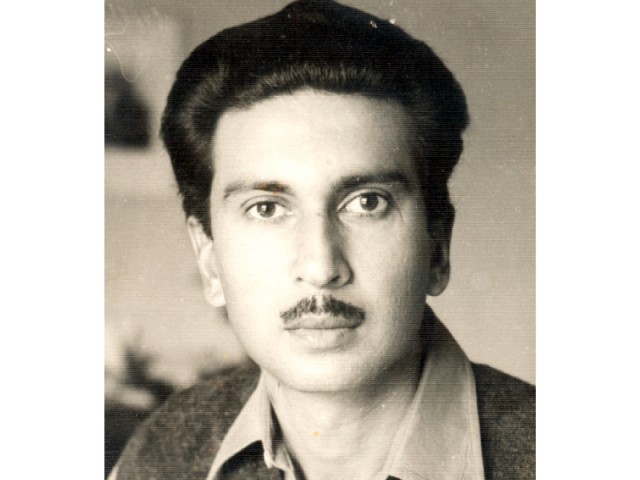
چیئرمین پاکستان پیپلز پارٹی بلاول بھٹو زرداری کا سابق گورنر، وفاقی وزیر اور پارٹی کے سینیئر رہنما شہید حیات محمد خان شیرپاوَ کو ان کے 47 ویں یومِ شہادت پر شاندار الفاظ میں خراج عقیدت


 کراچی (8 فروری 2022) پاکستان پیپلز پارٹی کے چیئرمین بلاول بھٹو زرداری نے سابق گورنر، وفاقی وزیر اور پارٹی کے سینیئر رہنما شہید حیات محمد خان شیرپاوَ کو ان کے 47 ویں یومِ شہادت پر شاندار الفاظ میں خراج عقیدت پیش کیا ہے۔ میڈیا سیل بلاول ہاوَس کراچی کی جانب سے جاری کردہ بیان کے مطابق، پی پی پی چیئرمین نے اپنے پیغام میں مزید کہا کہ شہید حیات محمد خان شیرپاوَ پارٹی کے بنیادی ارکان

میں سے ایک اور قائدِ عوام کے بااعتماد ساتھی تھے۔ 

انہوں نے کہا کہ شہید حیات خان شیرپاوَ کی سابق صوبہ خیبرپختونخوا میں پارٹی کو مضبوط بنانے کے لیئے کاوشیں ناقابلِ فرموش ہیں۔ چیئرمین بلاول بھٹو زرداری نے کہا کہ شہید حیات خان شیرپاوَ کو ایک گہنونی سازش کے تحت شہید کیا گیا،

 جس کا مقصد صوبے میں پی پی پی کی بڑھتی ہوئی مقبولیت کو روکنا تھا۔ انہوں نے کہا کہ شہید حیات محمد خان شیرپاوَ پارٹی قیادت اور کارکنان کی دلوں میں ہمیشہ زندہ رہیں گے۔ پی پی پی چیئرمین نے اپیل کی کہ جیالے آج اپنے ایک عظیم ساتھی شہید حیات محمد خان شیرپاوَ کے ایصال ثواب کیلئے فاتحہ خوانی کریں۔

https://www.ppp.org.pk/pr/26228/

Monday, February 7, 2022

Video Report - Chris Christie joins Pence in rebuking Trump

Video Report - Bad idea: 90% of millennials are willing to buy a home without actually seeing it

Video Report - Macron the mediator: Can France help calm Ukraine crisis?

Video - Putin and Macron hold joint press conference

Video - Biden and Scholz participate in joint press conference

Music Video - Chura Liya Hai Tumne with - Zeenat Aman|Yaadon Ki Baaraat

Video Report - PPP Senator Raza Rabbani expresses his views in the Senate | 07 Feb 2022

Video Report - Islamabad: PPP Senator Sherry Rehman expresses her views in Senate Session

Why the Taliban ignores Pakistan's demands to take action against the TTP

Far from being a strategic win for Pakistan, the Taliban’s comeback has created security, political and economic challenges for Islamabad. Since coming to power last August, the Taliban's acting regime has been ignoring Pakistan’s demands to rein in the Pakistani Taliban, also known as the Tehrik-i-Taliban Pakistan (TTP).
Not just that, the Taliban have also turned a blind eye to TTP’s unabated attacks against Pakistan. For instance, on January 6, TTP militants ambushed and killed five Pakistani soldiers on the Pak-Afghan border along the Khurram tribal district. Following this attack, the statement from Pakistan Army’s media wing, the Inter Services Public Relations (ISPR), underscored Islamabad’s growing frustration with the Taliban’s unwillingness to stop TTP from using the Afghan soil for terrorism against Pakistan despite verbal commitments to the contrary. Likewise, in late December and early January, the Taliban disrupted the fencing of the Pak-Afghan border, also known as the Durand Line, along the eastern Nangarhar and northeastern Nimroz provinces. In one instance, Pakistani troops and the Taliban fighters came face to face as well. Since 2017, Islamabad has fenced 90 percent of its roughly 2,600-kilometre-long porous border with Afghanistan to stop terrorist infiltration and smuggling. Like all previous Afghan governments, the Taliban do not recognise the Pak-Afghan border. From the Taliban standpoint, the Durand Line is a relic of the British colonial era, which divided the ethnic Pashtun community straddling the border region.
Though many considered the revival of the Taliban’s self-styled theocratic rule in Afghanistan a strategic win for Pakistan, it has created serious security, political and economic challenges for the country. The Taliban’s victory in Afghanistan had a rejuvenating effect on TTP and provided the militant group with greater operational freedom and mobility.
The Taliban have been non-committal on the issue of the TTP, beyond giving generic assurances to Islamabad that Afghanistan's soil will not be used against any other country and urging it to settle its disputes with TTP through negotiations.
Following the revival of the Taliban rule, Pakistan handed over a list of wanted TTP leaders to the Taliban. Though the Taliban formed a three-member committee to probe the veracity of the Pakistani security concerns, their response was rather tame. Last August, the Taliban's Information and Cultural Minister Zabiullah Mujahid told a Pakistani News channel that "Pakistan, not the Taliban, need to decide whether or not TTP's war is legitimate and to formulate a strategy in response."
Probably, the Taliban’s unwillingness to crackdown, expel or disarm TTP from its Afghan sanctuaries has compelled Pakistan to retaliate covertly. The recent assassination attempts at different TTP leaders in Afghanistan should be seen in that context. For instance, on December 17, TTP’s deputy chief Faqir Muhammad narrowly escaped a drone attack, as the missiles failed to explode. Similarly, in January two TTP leaders Khalid Balti and Mufti Burjan were eliminated in Kunar in two separate incidents. From November 9 to December 9, the Taliban brokered a ceasefire between Pakistan and the TTP as a confidence building measure to pave the way for a broader peace deal. However, the negotiations collapsed given the inherent lack of trust and divergent positions of both conflicting parties. The TTP wanted imposition of Taliban-style Sharia rule in the ex-FATA (Federally Administered Tribal Areas) region, the release of 100 Taliban prisoners and the permission to open a political office in a third country as pre-conditions.
Islamabad, on the contrary, wanted TTP to renounce violence, offer a public apology for its past violence, respect the Pakistani constitution and live like normal citizens to avail indemnity. Following the collapse of peace talks, TTP attacks against Pakistan increased dramatically. For instance, in December, TTP carried out as many as 45 terrorist attacks, the most for any month in 2020.
On the one hand, the Taliban's reluctance to act against TTP highlights their longstanding and deep-rooted ties to the militant group. On the other hand, the Taliban's open defiance and opposition to the Pak-Afghan border's fencing and ignoring Islamabad's TTP-centric demands underscore the shifting nature of their relations with Pakistan. Arguably, Taliban fighters intentionally provoked Pakistan through border flare-ups to divert attention from Pakistani demands of action against TTP. Since 2018, the Taliban's dependence on Pakistan has continuously diminished given the movement's rapid territorial gains in Afghanistan, diversified diplomatic ties with other countries through their Doha Office, and direct negotiations with the US. However, the Taliban were still reliant on Pakistan for sanctuaries, medical assistance and weapons. This dependence ended last August as the Taliban took over Kabul, giving the group more autonomy and freedom of action. It is essential to point out that the Taliban still rely on Islamabad as a bridge to avail international humanitarian assistance. For instance, Pakistan hosted a special summit of the Organization of Islamic Cooperation (OIC) to draw the Muslim world's attention in a bid to avert the humanitarian crisis in Afghanistan.
Reluctance to take action
The Taliban’s disinclination to crackdown against TTP on Pakistan’s insistence stems from the following three reasons.
First, the Taliban have long standing historical, ethnic, and ideological links with the TTP. Its leaders and fighters consider the Taliban supreme leader Haibatullah Akhundzada as their emir and pledge their oath of allegiance to him. TTP was one of the first groups which congratulated the Taliban on their victory in Afghanistan and renewed their oath of loyalty to the Taliban emir.
The TTP considers the revival of the Taliban’s so-called Islamic Emirate in Afghanistan a goal worthy of emulating in Pakistan. The TTP, like Al Qaeda, was also instrumental in helping the Taliban revive their insurgency and eventually attain a victory in Afghanistan. After the restoration of their power in Afghanistan, the Taliban are returning the favour by sheltering TTP and they are unlikely to betray their ideological brethren.
If the Taliban act against TTP, it would push the latter towards the Islamic State of Khorasan (ISK), the former’s ideological nemesis. Any such action is likely to widen the Taliban’s factional divisions, undermining their internal unity and cohesion which they badly need to retain power.
Importantly, the Taliban’s reluctance to act against TTP is instructive concerning the group's counterterrorism commitments given to the US under the Doha Agreement. If the Taliban are ignoring the demands of Pakistan, its main benefactor for the last two decades, then the Taliban’s guarantees to other states, which have less leverage on them, are unreliable.
Second, so far, no country has granted diplomatic recognition to the Taliban’s acting regime. This compels the Taliban to retain their ideological legitimacy and credibility within the fraternity of ideologically-linked movements. Turning on fellow groups, which sheltered the Taliban during testing times and helped them achieve victory, will amount to an act of great betrayal.
Partly, Islamabad’s reluctance to recognise the Taliban’s acting regime also accounts for growing Pakistan-Taliban tensions. The Taliban seems frustrated at its failure to get diplomatic recognition. The Taliban believe they have fulfilled the international community’s demands and it is their right to gain recognition which will also pave the way for unlocking $9.5 billion in frozen Afghan assets. On January 19, the Taliban urged the Muslim world to take lead in recognising their regime. Third, lacking international diplomatic recognition, the Taliban are desperately trying to win local sympathies, particularly among Afghanistan’s Pashtun community. By not recognising the Pak-Afghan border and physically obstructing its fencing, the Taliban are positioning themselves to be the self-appointed champions of Pashtun rights. In this regard, the Taliban deputy Foreign Minister Mohammad Abbas Stanikzai's January 6 statement is worth noting. He maintained, "the Durand Line is an issue of the whole nation, not the government. It doesn't belong to the government. We will give the responsibility to the nation so that the nation will make the decision." Keeping this in view, the TTP is an important bargaining chip for the Taliban – it provides the Taliban with tremendous strategic leverage against Pakistan.
In 2022, TTP will remain a major threat to Pakistan’s internal security, which will negatively impact already strained Taliban-Pakistan ties. However, beyond token demands for action against TTP, Islamabad cannot afford to alienate the Taliban.
A weakened and factionalised Taliban regime would strengthen the anti-Taliban resistance in Afghanistan such as the National Resistance Force led by exiled Ahmed Massoud, the son of legendary Afghan commander Ahmed Shah Massoud, which is a recipe for a civil war. Such a development would send a massive wave of Afghan refugees to Pakistan. Pakistan will continue to press the Taliban to act against the TTP without taking any dramatic steps or alienating the Taliban’s acting regime. The trade-off between dealing with TTP’s terrorist attacks from their Afghan sanctuaries versus the prospects of a weakened Taliban regime makes it obvious that Pakistan will have live with the existing status quo.
https://www.trtworld.com/opinion/why-the-taliban-ignores-pakistan-s-demands-to-take-action-against-the-ttp-54507

#PPP - Former President Asif Ali Zardari condemns attack on #Pakistani soldiers

Former President of Pakistan and President Pakistan Peoples Party Parliamentarians, Asif Ali Zardari has strongly condemned the attack on Pakistan soldiers in Kurram district in Khyber Pakhtunkhwa. 

He said that the attackers must be given a stern response.
President Asif Ali Zardari expressed sympathy and offered condolences to the families of the martyred soldiers.
The nation is proud of these brave sons who sacrificed their lives and thwarted the enemy’s plan.

https://www.ppp.org.pk/pr/26224/

Sunday, February 6, 2022

Video Report - Ronald Reagan's son on what his dad would think of current GOP

Video Report - Dozens Take to Times Square in NYC to Protest Against US Involvement in Ukraine-Russian Tensions

Video Report - Will Ukraine go East or West – or both? | The Bottom Line

Video Report - Ukraine-Russia: Why is the US sending troops to Europe?

#Ukraine says don’t believe ‘apocalyptic predictions’ over #Russia

By Liz Cookman
Comments from Ukraine's foreign minister come after American intelligence estimates saying the Russian invasion could inflict 75,000 casualties.

Ukraine downplayed a possible incursion by Russia on Sunday saying do not to believe “apocalyptic predictions” after US officials said Moscow had assembled 70 percent of the military force needed for a full-scale invasion.
Unnamed American officials were quoted as saying on Saturday in US media reports they were briefed that an operation to quickly capture the capital Kyiv, toppling the democratically elected President Volodymyr Zelenskyy, was among the most aggressive possibilities for Russian intervention against Ukraine.
In such a scenario, between 25,000 to 50,000 civilian casualties were possible with as many as 25,000 Ukrainian soldiers killed, US officials were cited as saying.
But Ukraine Foreign Minister Dmytro Kuleba questioned the risk to Kyiv on Sunday.
“Do not believe the apocalyptic predictions. Different capitals have different scenarios, but Ukraine is ready for any development,” he tweeted in Ukrainian only, suggesting the message was intended for a domestic audience.
“Today, Ukraine has a strong army, unprecedented international support, and Ukrainians’ faith in their country. The enemy should be afraid of us, not us of them.”The chances of finding a diplomatic solution to the crisis remained “substantially higher than the threat of further escalation”, added Ukraine’s presidency adviser Mykhailo Podolyak.
Zelenskyy’s government has in recent weeks played down the Russian threat in what is thought to be an attempt to stabilise markets and prevent panic among the population, even as the US warned an attack could be imminent and NATO forces were on alert.The US and UK have been accused of exaggerating the risk of a Russian attack, something they have categorically denied.
‘What will Russia gain?’
Russia could also hit Ukraine with acts of sabotage, cyberattacks, and other destabilising moves with the goal of removing the current government in Kyiv, the US news reports said.
Russia challenged the information delivered in the reporting.
“Another masterpiece of US propaganda war,” said Russian diplomat Dmitry Polyanskiy.
“Unnamed officials, undisclosed sources, no evidence. And as we all saw, if you openly question such fakes you won’t get answers and will be labeled Russian apologist,” he said on Twitter on Sunday.Pavel Luzin, a Russia security analyst, said an estimation of the size of the military buildup can vary depending on how it is counted, and it was hard to assess the veracity of claims from unnamed officials. He said he still does not believe a full-scale invasion is possible and an operation in eastern Ukraine that would make Russian presence in the two separatist territories – the self-proclaimed Donetsk People’s Republic and Luhansk People’s Republic – more visible was more likely. “There are hundreds of kilometres to travel, urban environments to face, tens of millions of people, relatively capable institutions of state and well-organised and experienced armed forces to deal with, as well as the absence of allies among Ukrainian citizens on the ground and the international community,” he said.
“What will Russia gain from an invasion, even if such invasion promises to be successful? Nothing. And there is no clear political purpose for this action.”
He said an unveiling of Russian forces in Donbas, however, would help Moscow achieve its aims of demoralising the Ukrainian military and forcing Kyiv to accept its vision of the Minsk agreement, a 2014 deal that sought to end war in Donbas.
‘Consider all possibilities’
Theresa Fallon, director of the Center for Russia Europe Asia Studies, said one “frightening” aspect of the news reports was that US intelligence believes Putin may hold nuclear exercises in the region over the next month.
Russia possesses the largest nuclear arsenal in the world with an estimated 4,500 warheads, and any such manoeuvres would send a serious message to NATO, she said.
Fallon also noted Europe has not seen such large troop movements since the Cold War.
“In order to have peace you must prepare for war so you have to consider all possibilities. And if there should be, God forbid, a war there would be high civilian casualty rates among the civilian population,” she told Al Jazeera.
Polyanskiy, a Russian representative to the UN, called the US media reports released over the weekend “madness and scaremongering”.
“What if we would say the US could seize London in a week and cause 300K civilian deaths? All this based on our intelligence sources that we won’t disclose,” said Polyanskiy.
Both sides have accused the other of planning false flag operations in recent days as a pretext for further military escalation.
US intelligence sources claimed Russia is planning an operation involving fake drone attacks on the Donbas region – the colloquial term for eastern Ukraine – or on Russian territory, while Russian state TV claimed Kyiv is to launch a NATO-backed attack on pro-Russian separatists.
European leaders are expected to visit both Moscow and Kyiv next week in a bid to calm the tensions. French President Emmanuel Macron will visit on Monday and Tuesday, while German Chancellor Olaf Scholz will travel to Kyiv on February 14.
https://www.aljazeera.com/news/2022/2/6/ukraine-says-dont-believe-apocalyptic-predictions-over-russia

#PPP Music Video - Bilawal Bhutto - ساتھ دو سا تھ دو بلاول کا ساتھ دو سا تھ دو بلاول کا ساتھ دو سا تھ دو بلاول کا

نئے چیف جسٹس عمر عطا بندیال کا آئیندہ چیف جسٹس فائز عیسی متعلق اختلافی نوٹ نئی عدالتی کشمکش کاآغاز؟

Killings, Suppression and the Blasphemy Ruse: #Pakistan's Minorities Are Beleaguered

K.M. Seethi
The gruesome killing of a Christian priest makes it clear that the menace of religious persecution and terrorism continues to threaten the very fabric of the Pakistani state.

The gruesome killing of a priest, William Siraj, in Peshawar cast a pall of fear and anger over Pakistan’s minority communities. The shocking incident is again a warning that the menace of both persecution and terrorism continues to threaten the very fabric of the Pakistani state, and the religious and ethnic minorities are ever more targeted for one or other reason. 

Christian clergyman William Siraj and his fellow priests were targeted after Sunday services in a local church in Peshawar, the capital of Khyber Pakhtunkhwa province which borders Afghanistan. While priest Nadeem Patrick was wounded, another priest escaped unhurt.

According to Peshawar police, the priests were not facing any threats from any sources, yet they called it a ‘terrorist act.’ The city has already witnessed many incidents in the past few years, and the most dreadful was the bombing of the All Saints Church in 2013.

The rising violence against the minorities in Pakistan has been further compounded by the resurgence of terrorist activities in the country in the wake of Taliban’s capture of power in Kabul last year.  

Abbas Ahsan, Capital City Police Officer (CCPO) in Peshawar, said that they were “determined to protect minorities”, adding that a team consisting of officials from the Counter Terrorism Department (CTD) and Peshawar police has been set up to probe the case.

Condemning the killing, Hina Jilani, chairperson of the Human Rights Commission of Pakistan, said the Commission would consider the attack “as a blatant assault not only on Pakistan’s Christian community but on all religious minorities whose right to life and security of person remains under constant threat.” She also demanded additional measures for the protection of minorities.

On Monday, January 31, Peshawar’s All Saints church witnessed a memorial service for Father Siraj, attended by more than 3,000 mourners. The service was held at the same church that was attacked by terrorists with bombs and gunfire in 2013 which caused the death of as many as 127 worshippers and hundreds being wounded.

Terrorist attacks have intensified across Pakistan over years, but the turning point came after the Pakistani Taliban (Tehrik-i-Taliban Pakistan-TTP) ended a ceasefire with the government in Islamabad last year. The TTP has obviously become emboldened by the Taliban’s capture of power in Afghanistan in mid-August. The scenario has helped them to unleash fresh violence against the minorities in Pakistan. 

According to various sources, there was a time when minorities constituted nearly 15% of the population in the main cities. Now they make up less than 4%. Christians today constitute a small minority among them, in this predominantly Sunni Muslim country.

Data from Pakistan Bureau of Statistics report of the Sixth Population and Housing Census-2017 showed that Christians make up 1.27% of Pakistan’s population of 207.68 million and the majority of them (1.88 %) live in Punjab. According to Catholic leaders, the data was erroneous and “the true figures were hidden.” Statistics, however, show that nearly half of them belong to the Church of Pakistan, a Protestant church. The remaining are mostly Catholic.  

 BBC analysis says that the majority of Christians in Pakistan had their origin as ‘lower’ caste Hindus during the colonial period. They were apparently descendants of those who were converted to Christianity to escape from caste oppression. Many found menial jobs in garrison towns and remained the poorest sections of the society. Several villages in Punjab have Christian inhabitants who work as labourers and farmhands, as the BBC report says. However, there are also sections among the Christian community who remained educated and well off. Some found positions within the administrative system, army, business and law. A number of Christians also left Pakistan to settle abroad, in countries such as Australia and Canada, under pressures of persecution.  

According to Minority Rights Group International (MRGI 2014: 6-7), though several prominent figures emerged from the Christian community and that they had “made significant contributions to social sector development in Pakistan,” as was “evident in the building of educational institutions, hospitals and health facilities throughout the country,” they were “rarely featured in the mainstream media or public. 

Academic Shaun Gregory says that the Christian community was facing more or less the same pressures and intimidations as all other religious minorities. He further noted: “the commonalities in these experiences flow from the interplay of political, legal, and social factors which create a context of threat, intimidation, powerlessness and violence for many religious minorities” 

Mounting persecution and attacks 

In several instances, charges of blasphemy have often led to court verdicts and violence against minorities, including Christians. For instance, in September 2020, a Lahore court granted death penalty to Asif Pervaiz, a Christian youth, after finding him guilty of sending ‘text messages’ containing ‘blasphemous content.’ Pervaiz was already in custody for nearly seven years, facing blasphemy charges.

Earlier, there were many cases involving minorities, including Ahmadis, Shias and Christians, being accused of blasphemy. The Pakistani Christian woman Asia Bibi’s case is too well known. 

In April 2018, there was a firing incident in Quetta in which four Christians were killed. In December 2017, in another attack on a church in Quetta, seven people were killed. In March 2016, in Lahore, a suicide attack targeting Christians celebrating Easter resulted in the death of 70 people and as many as 340 were wounded. Lahore witnessed another suicide bomb blast in March 2015 which killed 14 and injured more than 70 people. The number of people killed in the Peshawar church blast in 2013 went up from the initial causality of 80 to 127. 

Even those how are at the helm of affairs are not spared. For instance, the Taliban gunmen shot dead Pakistan’s minorities minister, Shahbaz Bhatti, a champion of reform of Pakistan’s blasphemy laws in 2011. The only Christian in Pakistan’s cabinet, Bhatti was reported to have predicted his own death. In a farewell statement recorded four months ago, he had spoken of threats from the Taliban and al-Qaida. 

Nearly 40 houses and a church were set on fire by an angry mob in Gojra town in Punjab in 2009. Eight people were burnt alive in this incident. In 2005, Faizabad saw mobs burning several churches and Christian schools and hundreds of people had to flee their homes. After 1990s, Pakistan witnessed several Christians being convicted under blasphemy regulations and, in many cases, such charges were fuelled by personal feuds or economic reasons. 

Concerns of global agencies 

The US Commission on International Religious Freedom’s (USCIRF), in its Annual Report 2021 stated that the “issue of abduction, forced conversion to Islam, rape, and forced marriage remained an imminent threat for religious minority women and children, particularly from the Hindu and Christian faiths.”

The report further said that “Pakistani courts systematically failed to protect and provide justice to victims.”

Referring to the blasphemy regulations, another USCIRF report found that “implementation of these blasphemy laws made Pakistan the world’s worst offender of blasphemy-related prosecutions and societal violence between 2014 and 2018.” It also noted that “Sections 295 and 298 of Pakistan’s Penal Code criminalize acts and speech insulting religion or defiling the Qur’an, the Prophet Muhammad, places of worship, or religious symbols.”

It said these “vague provisions are frequently abused to levy false accusations against Ahmadis, Shi’a Muslims, Hindus, Christians, Sikhs, and others who do not adhere to the majority Sunni interpretation of Islam.” 

In fact, the structural characteristics of the Pakistani state make room for such abuse of laws and regulations, and the legacy of military rule only added fuel to fire. In fact, long years of military rule only emboldened the religious fanatics and fundamentalists. 

As Siegfried O. Wolf, Director of Research at South Asia Democratic Forum (SADF), observed, “religious minorities, including Christians, are facing severe discriminations in numerous Muslim-majority countries. Yet in no country are Christians so systematically–and institutionally–persecuted and victimised as in Pakistan.”

The Research Report of SADF, State persecution of religious minorities in Pakistan: Christians in distress, underlines three major “patterns of state support to the persecution of Christians.” It says:

(a) “all types of governments, civilian and military, were involved in the persecution and discrimination of Christians;

(b) “there is no difference among any of the major political parties regarding discrimination of Christians – all major political parties in Pakistan are engaged in this persecution”;

(c) “it is argued that the Pakistani state is failing to protect its minorities and their rights not because of a lack in capacity but because of a lack in political will.”

Besides, it was argued that the withdrawal of the US/NATO combat troops from Afghanistan would “further deteriorate the security and living conditions of Christians in Pakistan.” In fact, this has apparently come true with increasing incidents of attacks on minorities. 

Pervez Hoodbhoy in a Dawn article in 2019 wrote: “Pakistan’s minorities live under the boot of the majority and know they cannot speak the truth.” He posed a question, “How can we know which of Pakistan’s minorities – Ahmadi, Christian, Hazara, Hindu, Shia – has had the roughest deal?

Hoodbhoy also noted: “As structures of hate proliferate across the world, one desperately looks around for those who can intelligently use love and sympathy as tools to dismantle them.''

Travesty of Riyasat-i-Madina

Hardly two weeks before the killing of the Christian priest, Pakistan Prime Minister Imran Khan was so eloquent about Riyasat-i-Madina, the ideal Islamic welfare state. Writing about it, Khan was reminding that Prophet Mohammed had “unified people of diverse ethnic and religious backgrounds into a single community. Besides Muslims, there were Christians, Jews, Sabeans and other groups who were all woven into a unitary communal whole under the state of Madina.” 

Does this mean that Pakistan is on the right track and the spirit of the Prophet’s Riyasat-i-Madina is transforming Pakistan? 

Pointing to the “cause and effect relationship between rule of law and socio-political harmony,” Khan said that “the most urgent of all challenges facing our country right now is the struggle to establish the rule of law.” He said that “over the last 75 years of Pakistan’s history, our country has suffered from elite capture, where powerful and crooked politicians, cartels and mafias have become accustomed to being above the law in order to protect their privileges gained through a corrupt system.” However, Imran Khan has conveniently skipped the role of religious elite, may be consciously, to legitimise his ‘Good Muslim’ rule.

When Prime Minister Khan launched a public version of the National Security Policy (NSP) document on January 14, he sought to ensure that it should not be ‘conventional.’ So, he brought in all sorts of securities – most prominently ‘human security.’ While admitting that the “most acute form of efforts to undermine stability and national harmony of a society is terrorism,” the NSP also said that the “exploitation and manipulation of ethnic, religious, and sectarian lines through violent extremist ideologies cannot be allowed. Inculcating interfaith and intersectarian harmony and societal tolerance in all its forms will be prioritised.” 

Admittedly, with NSP in place, two things apparently remain prominent:

(i) “Pakistan pursues a policy of zero tolerance for any groups involved in terrorist activities on its soil.”

(ii) “Action against those producing and disseminating hate speech and material will be swift and uncompromising.” 

In less than two weeks after the launching of NSP, a priest has been brutally murdered, and the Prime Minister is yet to reach out to the beleaguered minority. Though the security forces have widened their manhunt,” the “unidentified assailants” are still to be booked under the ‘zero tolerance’ policy. 

Minority communities recall that Qaid-i-Azam Mohammed Ali Jinnah’s call for the protection of minorities in the new state has become ever more relevant today. In his famous August 11, 1947 speech in the Constituent Assembly of Pakistan, Mohammed Ali Jinnah said: 

“We are starting in the days when there is no discrimination, no distinction between one community and another, no discrimination between one caste or creed and another. We are starting with this fundamental principle that we are all citizens and equal citizens of one State.”

In another speech in Sind on 3 February 1948, Jinnah said: 

“I assure you that Pakistan means to stand by its oft-repeated promises of according equal treatment to all its nationals irrespective of their cast and creed. Pakistan, which symbolises the aspirations of a nation that found itself in a minority in the Indian sub-continent, cannot be unmindful of the minorities within its own borders.”

Having been victims of long years of persecution and killing, many minority communities feel that they “didn’t deserve this mistreatment” because of their contributions to the making of this country.

But, as Hoodbhoy observed, “their appeals to the so-called “Quaid’s Pakistan” and his August 11, 1947, speech” were desperate attempts to sustain themselves in a beleaguered condition. He says: “…let us not blame these desperate people for clutching at straws; Pakistan’s minorities live under the boot of the majority and know they cannot speak the truth.” 

Many would say that the test of a democracy is how the smallest minority of that country is protected. The ‘testing time’ for Pakistan is how its fledgling democracy can be protected under conditions of ‘deep state’ and its praetorian state apparatuses.  

K.M. Seethi is ICSSR Senior Fellow and Director, Inter University Centre for Social Science Research and Extension (IUCSSRE), Mahatma Gandhi University, Kerala. He also served as Dean of Social Sciences and Professor of International Relations and Politics, Mahatma Gandhi University, Kerala.


https://thewire.in/communalism/killings-suppression-and-the-blasphemy-ruse-pakistans-minorities-are-beleaguered

Democracy will have its revenge, we'll remove 'selected' govt: Bilawal

PPP chairman says it is time for Prime Minister Imran Khan to start panicking as PPP has entered the battlefield.
Bilawal said that it was "time for Prime Minister Imran Khan to start panicking."
"The time has come for the PTI government to be accountable before the masses," he said, adding since people have lost their confidence in the premier, the Parliament must also follow suit.He added he had sent a message to "the puppet" to inform him that the PPP had "entered the battlefield" to oust the PTI government."The kaptaan has snatched roti, kapra, aur makaan from the masses," Bilawal said. "Khan sahib has robbed the citizens of their economic rights and their right to vote. We can't stand it any longer, so we have declared war against this government."
The PPP chairman further said: "We know how to snatch our rights, but we will opt for a democratic and constitutional way to take revenge from the government in the National Assembly."
"The solution to this country's problems is a democratic struggle, so we believe in the power of the vote, not weapons," he said.
Bilawal went on to say that the "Constitution of 1973 is an agreement between the state and the people."
"Since the selected government came to power, poverty, unemployment, and inflation have increased in the country," he said as he asked the citizens of Pakistan to give the PPP once more chance to make things right.
"We believe that if all the provinces get their due rights and have their resources, then the federation will be stronger," he said.
https://www.geo.tv/amp/397530-democracy-will-have-its-revenge-well-remove-selected-govt-bilawal

Video - Chairman PPP Bilawal Bhutto Zardari addresses a Jalsa in Nasirabad, Balochistan

Music - #RIPLataMangeshkar - Ghar Yahan Basane Aaye The (From 'Gajre')

Music - #RIPLataMangeshkar - Best Evergreen Romantic Song | Lata Mangeshkar

Music - #RIPLataMangeshkar - Lata Mangeshkar - the "nightingale of India"

لتا منگیشکر کی وفات پر بلاول بھٹو کا اظہارِ افسوس

 پاکستان پیپلز پارٹی (پی پی پی) کے چیئرمین بلاول بھٹو زرداری نے گلوکارہ لتا


منگیشکر کی وفات پر اظہارِ افسوس کیا ہے۔

چیئرمین پی پی پی بلاول بھٹو زرداری نے جاری کیے گئے ایک بیان میں کہا ہے کہ نصف صدی سے زائد عرصہ اپنی آواز کا جادو جگا کر لتا منگیشکر نے کروڑوں انسانوں کو اپنے سنگیت کا گرویدہ بنایا۔ 


ان کا کہنا ہے کہ آنجہانی لتا منگیشکر برصغیر میں موسیقی کی ایک پہچان تھیں، فلمی صنعت کے لیے ان کی خدمات ناقابلِ فراموش ہیں۔

بلاول بھٹو زرداری نے مزید کہا کہ لتا منگیشکر کے گیت، ان کے نغمے اور سُر کبھی فراموش نہیں کیے جا سکیں گے۔

چیئرمین پاکستان پیپلز پارٹی نے یہ بھی کہا ہے کہ لتا منگیشکر کی وفات دنیا بھر میں ان کے پرستاروں کے لے ایک گہرا صدمہ ہے۔

واضح رہے کہ بھارتی لیجنڈری گلوکارہ لتا منگیشکر کورونا وائرس کا شکار ہونے کے بعد 92 برس کی عمر میں ممبئی کے اسپتال میں انتقال کر گئیں۔

لتا گزشتہ ماہ کورونا وائرس اور اس کے بعد نمونیا کا شکار ہوئی تھیں، گزشتہ روز ان کی حالت بگڑنے پر انہیں دوبارہ وینٹی لیٹر پر منتقل کیا گیا تھا جہاں وہ جانبر نہ ہو سکیں اور آج صبح چل بسیں۔

لتا منگیشکر کی آخری رسومات پاکستانی وقت کے مطابق آج شام 6 بجے ممبئی کے شیواجی پارک میں ادا کی جائیں گی۔

https://jang.com.pk/news/1046865

India honors singer Lata Mangeshkar at state funeral, dead at 92

By Swati Gupta

Lata Mangeshkar, the "nightingale of India" who gave her voice to Indian movies for more than 70 years, was honored at a state funeral Sunday, after she passed away at the age of 92.

"Lata Di died at 8:12 a.m. due to multi-organ failure after over 28 days of Covid-19 diagnosis," Dr. Pratit Samdani, Mangeshkar's doctor, told reporters outside Breach Candy Hospital.
Indian prime minister Narendra Modi paid his respects to Mangeshkar at the funeral, according to a post published from his verified Twitter account.
    Bollywood stars including Shah Rukh Khan and Aamir Khan were seen at the wake, alongside cricket legend Sachin Tendulkar, CNN affiliate CNN News-18 reported.
      The Indian government has ordered two days of national mourning for the late singer. The national flag will be flown at half-staff from Sunday through Monday, India's Ministry of Home Affairs said in a statement Sunday. "There will be no official entertainment," the ministry added.
      Mangeshkar was a playback singer -- providing music to be mimed by actors -- for innumerable Indian movies. Her soft voice, which could attain a high pitch with an unsurpassable ease became a part of almost every Indian household.
      Indian Prime Minister Narendra Modi said he was "anguished beyond words."
      "The kind and caring Lata Didi (sister) has left us. She leaves a void in our nation that cannot be filled," he wrote on Twitter Sunday. "The coming generations will remember her as a stalwart of Indian culture, whose melodious voice had an unparalleled ability to mesmerise people."
      Bollywood actors and Indian politicians paid tribute to the late star Sunday.
      "How can one forget such a voice! Deeply saddened by the passing away of Lata Mangeshkar ji, my sincere condolences and prayers," wrote actor Akshay Kunar on Twitter.
      MP for the opposition Congress party Rahul Gandhi also offered his condolences in a tweet. "She remained the most beloved voice of India for many decades," he said. "Her golden voice is immortal and will continue to echo in the hearts of her fans."
      Pakistan's Prime Minister Imran Khan also paid homage to the singer in a tweet. "With the death of Lata Mangeshkar the subcontinent has lost one of the truly great singers the world has known. Listening to her songs has given so much pleasure to so many people all over the world."
      From the age of 5, Mangeshkar began training with her father in classical Indian music. Her father, Deenanath Mangeshkar, was an accomplished classical singer and stage actor. His daughter began her career by singing at his musical plays.
      Mangeshkar performed in public for the first time when she was just 9 years old and recorded her first song at the age of 13. A month after she recorded her first song, her father died. Left to support four younger siblings and her mother, Mangeshkar began to work in the Indian film industry. At first, music directors dismissed her, saying her voice was too thin and sharp. By 1948, she was lending her voice to half a dozen movies.

      Voice of the movies

      Mangeshkar was born on September, 28, 1929 in Madhya Pradesh. Due to her father's reputation in the classical music scene, she was introduced to several composers, like Aman Ali Khan, who mentored and trained her for several years.
      As her career took off, Mangeshkar delivered consecutive hits which made her one of the most sought after playback singers in the country. In Indian movies, it is standard practice for a music director to insert eight to 10 songs that play out in synchronization with the film plot.
      Singers like Mangeshkar were hired to record the songs in advance and to which actors would lip sync or a sequence would play out on screen. Unlike Hollywood, where artists record albums and that music is procured for a particular movie, in India, singers generate music and lyrics for the movie exclusively.
      Her break came in 1949 with the movie, "Mahal," for which she sang the tumultuously famous song, "Aayega Aanewala." She won her first filmfare award for the song, "Aaja Re Pardesi" in the movie, "Madhumati" in 1958 and her first national film award in 1973 for the song, "Beeti Na Bitai" in the movie "Parichay."
      She gave her voice to the music and lyrics penned by great composers and lyricists of the time like Madan Mohan, R.D. Burman, Gulzar and A.R. Rahman. Music directors stalled their projects to accommodate her tight schedule and composers wrote their music with her voice in mind.
      She also sang, "Aye Mere Watan Ke Logon," a song meant to inspire the people of the country after the Indo-China war in 1963. It became an anthem with Mangeshkar beseeched with requests for it at every concert.
      In 2001, she was awarded the Bharat Ratna, the highest civilian honor in India. She was also awarded the Padma Vibushan in 1999, the second-highest civilian award in India. Mangeshkar has performed in over five languages for different movie industries within India.
      In an interview with a news channel in 2009, Mangeshkar expressed one regret. "I was very keen to become a classical singer. But when I began work, I had so many responsibilities that I could not pay attention to classical music. I did not have time to practice," she said.
      Mangeshkar lent her voice to more than 1,300 movies and sang over 25,000 songs. Her music has been used in Hollywood films like "Eternal Sunshine of the Spotless Mind," "Life of Pi," "Lion" and "The Hundred-Foot Journey."
      Over the past two decades, Mangeshkar had slowly reduced her workload to just a couple of movies a year. Preferring to stay out of the limelight, she rarely spoke about her personal life.
        In an interview, Mangeshkar was once asked what contributed to her success as a playback singer.
        "Natural talent contributes about 75% and the rest is hard work, practice and eating-drinking restrictions," she said. "I don't do the restrictions ... I have just been singing all my life."
        https://edition.cnn.com/2022/02/06/india/lata-mangeshkar-india-intl-hnk/index.html