Wednesday, December 22, 2021

The Evolution and Future of Tehrik-e-Taliban Pakistan

By ABDUL SAYED
The Taliban’s return to power in Afghanistan has shifted the balance of power between the Pakistani government and the largest antistate militant group in the country.

Tehrik-e-Taliban Pakistan (TTP) is the largest militant organization fighting against the state in Pakistan. According to the UN, the TTP also boasts several thousand fighters in Afghanistan, with strongholds on both sides of the Afghanistan-Pakistan border.

Although Pakistani military actions, U.S. drone warfare, and factional infighting led to the TTP’s decline from 2014 to 2018, the militant group has been experiencing a strong resurgence since the Afghan Taliban and U.S. government signed a peace deal in February 2020. In fact, since July 2020, ten militant groups opposed to the Pakistani state have merged with the TTP, including, among others, three Pakistani affiliates of al-Qaeda and four major factions that had separated from the TTP in 2014. Following these mergers, TTP violence has become more frequent, and this violent streak continues to accelerate as a result of the Afghan Taliban’s takeover in Kabul in August 2021.

The TTP serves as a crucial case study due to its deep historical roots with the Afghan Taliban, al-Qaeda, and the Islamic State in Khorasan Province (ISKP). The group is a by-product of al-Qaeda’s jihadi politics in Afghanistan and Pakistan after 9/11. The TTP still has covert links with al-Qaeda and has declared that it looks to Afghan Taliban leaders as its own while enjoying safe haven under Taliban rule in Afghanistan. And although the ISKP was born largely from disaffected TTP members, it has always avoided any physical confrontation with the group. Moreover, ISKP public messages continue to reveal a soft spot for TTP fighters. This connection will be particularly important to monitor, as any alliance between the two groups could have severe security implications beyond the region. According to a U.S. intelligence assessment, the ISKP could be capable of mounting an attack in the West, including in the United States, in the near future. Any alliance between the TTP and the ISKP could strengthen the ISKP and worsen the threat it poses beyond the region.

To understand how much of a threat the TTP could pose, it is useful to examine the rise and evolution of the group—its background, the policies and strategies that helped the group achieve legitimacy among jihadists since its establishment in 2007, and its changing efforts to eliminate past liabilities and make its anti-state militant campaign more mainstream in Pakistan. This information provides valuable context for assessing the significance of the TTP’s intensified violence and organizational strength after the Afghan Taliban’s return to power and, more importantly, for gauging its future threat to security and the likelihood of a peace deal with the Pakistani state.

THE TTP’S ORIGINS

The TTP is a by-product of the intra-jihadi politics that followed the 2001 U.S. invasion of Afghanistan. The TTP claims that its armed struggle aims to establish an Islamic political system in Pakistan based on the group’s interpretation of sharia, a task it says was the main goal for establishing Pakistan in 1947. At the time of the U.S. invasion, many Pakistani jihadists who had fought on behalf of the Pakistani government in Afghanistan and in Indian Kashmir turned against the Pakistani state for its support of the United States’ so-called global war on terror, among other grievances. TTP members thus began sheltering the Afghan Taliban, al-Qaeda, and other militant allies who were fleeing the Afghanistan conflict. Yielding to U.S. pressure, the Pakistani government eventually cracked down on the safe havens, but its violent response ultimately prompted these Pakistani jihadists to band together and more formally ally with al-Qaeda and the Afghan Taliban. This eventually led to the establishment of the TTP in 2007.

At its inception, the TTP claimed to be an extension of the Afghan Taliban. It declared that the then leader of the Taliban, Mullah Mohammed Omar, was its spiritual leader and offered to support the Afghan Taliban’s war against the United States and its allies. Though the TTP framed its militant campaign as a defensive war against Pakistan’s military operations, the group hoped to follow in the Afghan Taliban’s footsteps and establish a sharia system in Pakistan, freeing the country from the “American stooges” who supposedly governed it.

However, over time, the TTP’s focus and strategy changed. For instance, in 2020 the TTP claimed that it no longer had any regional or global agenda beyond Pakistan. This pronouncement may have reflected an attempt to reduce international support for Pakistan’s battle against the TTP; at times, Pakistan was able to secure sophisticated U.S. drone technology to fight the TTP due to the group’s open collaboration with al-Qaeda. In 2018, the TTP formally excluded from its manifesto calls for a “greater jihad” in Afghanistan and for supporting the global jihadi agenda of al-Qaeda—calls that were prevalent in its early narratives.

The group also made another tactical change in its 2018 manifesto: it deprioritized indiscriminate attacks on Pakistani targets, including against civilians. For years, these attacks had aimed to pressure the Pakistani government to meet TTP demands. But the TTP’s manifesto redirected its fighters away from attacking civilians and religious minorities, advocating instead targeted violence against Pakistani military personnel and intelligence operatives. Since this redirection, there has been a sharp decline in TTP attacks against civilians. While it is difficult to say what caused the change in tactics, one reason could be that the TTP’s early spate of violence against civilians earned the ire of global and local jihadi allies, including Osama bin Laden. Another reason could be that the TTP wanted to focus its war on the Pakistani state and security forces.

Finally, to help establish its legitimacy, the TTP had to align some of its objectives with the political goals of certain Pakistani religio-political and ethnic parties, particularly a subset of Baluch and Pashtun nationalists. In recent decades, these ethnic minorities have protested allegedly discriminative and exploitative state policies. They are located in the Pakistan tribal belt bordering Afghanistan, which serves as the TTP’s support base.

HOW IT HAS EVOLVED

The TTP has evolved over the years to maintain its influence among jihadi networks in Pakistan.

ESTABLISHING LEGITIMACY

The TTP faced two challenges from the outset. First, it had to lay the foundation of the anti-state jihadi war front in Pakistan. The Pakistani military establishment’s strong ties with indigenous jihadi groups complicated this objective. These groups were actively involved in the jihad in Kashmir and Afghanistan and enjoyed the state’s support. Thus, the TTP had to turn this long-standing jihadi friendship with the state into an open jihadi war against the state. Second, it needed to gain prominence in Pakistan’s highly competitive jihadi and religio-political ecosystem, in which many advocated nonmilitant means to achieve the same goals that the TTP was fighting for. These religio-political parties have been working for decades to accomplish the fundamental goal of creating a Pakistani state that upholds their interpretation of sharia.

To work around these challenges, TTP leaders pursued four political objectives. First, the group’s leadership strengthened its alliances with the Afghan Taliban and al-Qaeda to increase its local and international legitimacy. Pakistani Pashtun tribesmen as well as Deobandi and Salafist seminaries, Islamist parties, and other jihadi groups all supported the Afghan Taliban’s insurgency against the United States and its allies, seeing the campaign as a legitimate jihad to expel foreign infidels. Thus, as the TTP supported the Afghan jihad by offering material provisions, the group’s legitimacy was enhanced. This strategy helped the TTP recruit a large number of young recruits for its war against the Pakistani state. The TTP provided the Afghan Taliban with bases in the Pashtun tribal regions bordering Afghanistan, eventually earning an official endorsement from its Afghan ally. Its closeness to the Afghan Taliban and al-Qaeda—as well as Pakistani jihadists’ frustrations with pro-state militant groups who were seen as compromising their narratives after 9/11—granted the TTP space in the competitive jihadi ecosystem, elevating it above other groups like Lashkar-e-Taiba and Jaish-e-Mohammed.

Similarly, the TTP garnered al-Qaeda’s support by providing it shelter in Pakistan. It also launched attacks either with, or on behalf of, al-Qaeda. For instance, a prominent TTP leader eventually claimed that the group assassinated former Pakistani prime minister Benazir Bhutto within weeks of the group’s formal launch; she had been considered one of al-Qaeda’s top enemies since the early 1990s. In addition, the TTP organized attacks to appeal to the global jihadi agenda of al-Qaeda. For example, the TTP attempted to bomb New York City in 2010, a plot that was ultimately foiled. A year earlier, it had played a lead role in the suicide attack on a U.S. Central Intelligence Agency compound in Afghanistan’s southeastern Khost Province—another attack aimed at pleasing its ally. These acts further increased the TTP’s local and international legitimacy and its competitiveness with more established jihadi groups in the region.

Second, the TTP killed hundreds of tribal elders who opposed its militancy in the tribal belt. The former Pakistani Pashtun tribal belt—comprised of the semiautonomous Federally Administered Tribal Areas (FATA)—was governed by a tribal system. However, the government had partial control of the FATA and needed the tribal elders’ support to govern the territories and their people. Thus, in attacking the elders, the TTP essentially superseded and replaced the traditional tribal chieftains’ system with its militancy, thereby increasing its hold in these areas.

Third, the TTP poached members from highly skilled cadres of anti-Shia sectarian militant groups in Pakistan, such as Lashkar-e-Jhangvi (LeJ). Horrific attacks that the TTP carried out against the Shia sect in Pakistan encouraged LeJ members to defect, given the latter’s exclusive targeting of the Shia sect. As the TTP leveraged the capabilities of anti-Shia groups, this eventually helped to intensify the TTP’s war against the Pakistani state.

Fourth, the TTP established a sharia system in northwestern Pakistan in the same style that the Afghan Taliban imposed in Afghanistan before 9/11. This strategy attracted members of Pakistani Islamist groups from the districts of Malakand, Bajaur, and Orakzai, among others, thereby expanding the TTP’s political base. The TTP was also able to attract educated Islamists from Pakistan’s urban areas; many of these people were frustrated about the failed political approaches to sharia implementation in the country. The TTP’s efforts helped it win over numerous Islamists who had long been aiming to achieve the Islamization of Pakistan through nonmilitant, religious-political means.

TRANSFORMING INTO AN ANTI-STATE MILITANT MOVEMENT

Over time, the TTP evolved into a focused anti-state militant movement in Pakistan. Three factors contributed to this change: al-Qaeda’s decreasing influence, the Afghan Taliban’s rising influence, and the TTP’s expanding efforts to remain relevant in contemporary Pakistani politics.

Initially, al-Qaeda had a profound influence on the TTP’s politics. For example, it compelled TTP leaders to revisit their anti-Shia agenda and largely limit the war to Western interests and the Pakistani state; in 2010, bin Laden asked the TTP to stop attacks against the Shias and the Barelvi subsect of the Hanafi school of Sunni Islam in Pakistan. But after U.S. drone strikes killed TTP leaders Baitullah Mehsud and Hakimullah Mehsud, the group was forced to reconsider its public support for al-Qaeda. Although al-Qaeda played an instrumental role in the TTP’s birth, rise, and expansion, the group determined that a close public relationship with al-Qaeda had become a liability. According to recent reports, however, al-Qaeda still plays an important role in mentoring the TTP behind the scenes.

Meanwhile, the Afghan Taliban’s influence has grown stronger. With some members co-located with the TTP in the tribal area of Waziristan in Pakistan, the Afghan Taliban became a natural political and organizational model for the TTP. As the Afghan Taliban refined its strategy, the TTP followed suit. In 2014, TTP leaders Omar Khalid Khorasani and Qari Shakeel Ahmad wanted to replace the quasi-tribal structure of TTP management with the Afghan Taliban’s centralized bureaucratic system, arguing that such a structure was best suited for expansion. The TTP finally adopted this change in 2020, appointing shadow governors for different regions of Pakistan and announcing the group’s first-ever centralized military training system. That same year, TTP chief Mufti Noor Wali Mehsud announced that the TTP can only be victorious in Pakistan if it follows in the footsteps of the Afghan Taliban.

The TTP has also engaged more with mainstream political issues to remain relevant in Pakistan’s political discourse. For example, the TTP has called on Pakistan’s opposition political parties to reconsider their nonviolent approach if they truly seek to end the powerful military establishment’s political meddling. In this vein, the TTP has endorsed the politics of Pashtun and Baluch nationalists in Pakistan despite harboring deep ideological differences with both groups. (Baluch nationalists, for instance, are largely secular in disposition.) TTP leaders have even issued statements in support of the Pashtun rights movement, known as the Pashtun Tahafuz Movement, despite its anti-Taliban positions. The TTP has also recently endorsed the massive countrywide protests of Tehreek-e-Labbaik Pakistan (TLP), a far-right religio-political party fighting against so-called enemies of Islam. This is particularly significant because the TLP belongs to the Sunni Barelvi sect, while the TTP originates from the rival Deobandi sect. Each of these endorsements demonstrates the TTP’s efforts to remain relevant in contemporary discourse.

THE TTP AFTER THE AFGHAN TALIBAN’S TAKEOVER

Prior to the collapse of former Afghan president Ashraf Ghani’s government, the Pakistani government repeatedly accused it of harboring anti-Pakistan militant groups in Afghanistan. As a result, some in Islamabad believed that if the Afghan Taliban (a so-called Pakistan-friendly organization) were to return to power in Kabul, the latter would limit these groups’ freedom of action. Contrary to these expectations, however, the Afghan Taliban’s return has so far strengthened the TTP.

Following its takeover, the Afghan Taliban released hundreds of TTP prisoners from prisons in Kabul, including TTP senior leaders like founding deputy emir Maulvi Faqir Mohammad. The TTP celebrated its members’ releases with large motor rallies and caravans in eastern Afghanistan. Videos released since the Taliban’s takeover also show the TTP enjoying complete operational freedom in Afghanistan. In addition to congratulating the Afghan Taliban on its return to power, the TTP publicly renewed its pledge of allegiance to its ally. Reinforcing its ongoing narratives, the TTP’s leadership presented the Afghan Taliban as a role model to the group’s fighters, arguing that perseverance in the war against the Pakistani state will guarantee a similar victory to what the Taliban achieved in Afghanistan. In addition, the TTP claimed responsibility for a large number of attacks in the months following the Afghan government’s collapse—generating the highest monthly average attack rate in the last five to six years.

When the Afghan Taliban’s spokesman was asked about the future of the TTP in Afghanistan, he was noncommittal and evasive. He argued that the TTP is a Pakistani issue and that his group has nothing to do with it. The spokesman even suggested that Pakistan should try to resolve its problems with the TTP through negotiations.

CONCLUSION

With the Afghan Taliban back in power in Kabul, Pakistan’s prime ministerpresident, and foreign minister offered negotiations and general amnesty to the TTP. Initially, the TTP rejected these offers, arguing that it considers the Pakistani constitution “un-Islamic.” Yet the group left the door to dialogue open, stating that the TTP is ready for “any serious negotiations which can ensure its sharia implementation goal in Pakistan.” And in early November, spokespeople of the Pakistani government and the TTP announced that they were negotiating under a short-term ceasefire and would be extending it to enable further dialogue.

Hopes for the negotiations are higher this time around because two major factors that led to past failures no longer exist: first, the former Afghan government and U.S. forces no longer control Afghanistan, and second, hardliners within the TTP no longer oppose dialogue. A TTP peace deal with the Pakistani state represented a direct threat to the former Afghan government and U.S. forces, ultimately resulting in TTP contributions to the Taliban attacks in Afghanistan. Thus, they always objected to such a deal in the past. With the removal of this first factor, TTP hardliners now support negotiations. For example, TTP co-founder and senior commander Khorasani completely supports negotiations this time, unlike in 2014 when he sabotaged both sides’ dialogues.

Ultimately, a political settlement remains the only option for the Pakistani government. It will not be able to pressure the Afghan Taliban to combat the TTP beyond a certain point for two reasons. First, the TTP played an instrumental role in the post-9/11 resurgence of the Taliban. The TTP’s leadership has strong bonds with various Afghan Taliban commanders and groups, who deeply admired the TTP’s sacrifices in fighting against U.S. forces and U.S. allies in Afghanistan. This pro-TTP lobby within the Taliban is influential and crosses tribal and regional cleavages. As a result, using force against the TTP would result in serious intra-Taliban rifts. Second, the Afghan Taliban faces a major challenge in countering its rival, the ISKP, which (as noted earlier) includes former influential TTP commanders and hundreds of their fighters.

The TTP also now believes that a settlement is in its best interests, in part because of its ties with the Afghan Taliban once again in power in Kabul. The TTP claims that it agreed to negotiations with the Pakistani state to decrease the political problems of the Taliban. It is aware of the Afghan Taliban’s problems with the international community and that the threat of foreign fighters in Afghanistan would exacerbate them. The Taliban has promised the United States and wider international community that it will not let any individual or group pose a threat to any state outside Afghanistan. The TTP comprises two-third of these fighters. Thus, if these fighters continue to mount attacks in Pakistan, the Afghan Taliban’s promises will be considered nullified, further increasing the international community’s political mistrust.

All this said, the TTP’s main concern remains the implementation of sharia in Pakistan based on its strict interpretation of Islam. The group says that it will not lay down its arms until this goal is achieved. Thus, the likelihood of a quick peace deal between the state and the TTP remains low; Pakistan cannot afford any political settlement that comes at the cost of replacing a democratic system with strict sharia rules. Yet, because a settlement remains the only option for both sides due to geopolitical realities, there is hope that both parties will compromise to some extent to create a pathway forward.

Abdul Sayed is a researcher on jihadism and a specialist on the politics and security of Afghanistan and Pakistan. Sayed has a master’s degree in political science from Lund University in Sweden. He is currently working on projects related to violent extremist organizations and transnational jihadism in Afghanistan and Pakistan. His Twitter handle is @abdsayedd.

https://carnegieendowment.org/2021/12/21/evolution-and-future-of-tehrik-e-taliban-pakistan-pub-86051


Afghan Taliban stop Pakistan army from fencing international border

By Jibran Ahmad
KABUL/PESHAWAR, Pakistan, Dec 22 (Reuters) - Taliban soldiers in Afghanistan disrupted the erecting of a security fence by the Pakistani military along the border between the two countries, Afghan officials said on Wednesday.
Pakistan has fenced most of the 2,600 km (1,615 mile) border despite protestations from Kabul, which has always contested the British-era boundary demarcation that splits families and tribes on either side.Afghan defence ministry spokesman Enayatullah Khwarazmi said Taliban forces stopped the Pakistani military from erecting an "illegal" border fence along the eastern province of Nangarhar on Sunday.
He played down the incident, saying everything was now normal. The Pakistan army did not respond to a request for comment.
A video circulated on social media showed Taliban soldiers had seized spools of barbed wire and one senior official warning Pakistani soldiers stationed in security posts in the distance not to try to fence the border again.
Reuters could not verify the video independently.
Taliban spokesman Bilal Karimi said they were investigating the incident.
Taliban and Pakistani forces came face-to-face over the border incident, two Taliban officials told Reuters on the condition of anonymity, and the situation was tense.They added that following the incident there was cross border mortar fire from Pakistani territory further north along the frontier into Afghanistan's Kunar province on Wednesday.It was unclear if the incidents are linked. The officials said Afghan military helicopters could be seen patrolling the area.The fencing was a main reason behind the souring of relations between previous U.S.-backed Afghan governments and Islamabad. The current standoff indicates the matter remains a contentious matter for the Taliban, despite its close ties to Islamabad.
Foreign governments have long alleged that Pakistan supported for the insurgent movement as it fought the U.S. backed government and Western troops - a charge Islamabad denies.
The lawless mountainous border was historically fluid before Pakistan began erecting a metal fence four years ago, of which it has completed 90 per cent.
The border incident happened the day foreign delegates from around the world gathered in Islamabad for a summit of the Organisation of Islamic Cooperation to discuss the unfolding humanitarian disaster in Afghanistan.
https://www.reuters.com/world/asia-pacific/afghan-taliban-stop-pakistan-army-fencing-international-border-2021-12-22/

Tuesday, December 21, 2021

Video Report - Russia's Putin warns West of counter measures over Ukraine threats

Video Report - State Department: Biden Committed To Diplomacy Amid Growing Russian-Ukraine Tensions

Video Report - #ChinaRussia #PutinXiSummit - Is there a new Cold War for global leadership?

Video Report - Fauci on Fox News host: He 'should be fired on the spot'

Video Report - Biden delivers speech on Omicron variant as COVID cases rise across U.S.

Video Report - #MJtv LIVE: عمران خان نا اہلی کیس، عہدہ پکڑ کر درخواست گذار نے کیس واپس لے کیا

EDITORIAL - #Pakistan - Fight Tehrik-i-Taliban Pakistan now before it’s too late


Nobody had taken responsibility for the suicide attack on a vehicle carrying ANP workers in Bajaur that killed two people till the time of writing, but it bore the fingerprints of TTP, which is clearly trying to make a statement by attacking soft targets as well as security personnel now that the window for peace is closed. Both Islamabad and Rawalpindi would no doubt remember that this is precisely how TTP began its strikes inside Pakistan last time; hitting something every few days till the attacks built a momentum of their own. Therefore, hopefully nobody would need to be reminded just what is at stake and how every moment that the state uses to consider what to do about its enemies makes them stronger and able to plan better.

The few exchanges that did take place in Kandahar and Khost revealed that the TTP high command was somewhat delusional. Not only did it expect the government to release hundreds of its members in custody, but also that it would implement TTP’s obscure reading of our sacred religion, reverse the FATA/KP merger, and promise to behave itself in future just for good measure. But when it was told that the state and constitution of Pakistan were already keeping with the letter and spirit of Islam, only those prisoners who have been through the deradicalisation process would be released, and all this would be possible only when TTP as a whole promised not to cross any more red lines, the whole thing just fell through.

Even if those within the government who thought these peace talks were a smart idea can feel good because they tried to give peace one more chance, the simple truth is that those that opposed these negotiations right from the beginning have been vindicated. And it’s a crying shame that it has taken the loss of innocent lives for that realisation to sink in.

The state must come to the understanding, once and for all, that it will have to end TTP and all it stands for if the people of Pakistan are to live in peace. And the time to do that is now. 

https://dailytimes.com.pk/856981/fight-ttp-now-before-its-too-late/

OP-ED: #Pakistan - Nation in Delusion: A Weakening Writ of Law

M Alam Brohi

Many Pakistanis – rather an overwhelming majority of them – were ashamed of what had happened to Piryantha Kumara. We also hanged our head in shame when Governor Salman Taseer was murdered by his security guard, Mashaal was brutally beaten to death within the premises of his University and a Christian couple set ablaze. We were also ashamed of the brutal killing of two young boys in Sialkot a decade or so ago.

We were also ashamed when a talented daughter of this helpless nation with bright prospects as an artist, painter, and calligrapher – Noor Mukadam – was brutally beheaded. We mourned these deaths, loathed the perpetrators of the crimes, simmered with anger, talked of the hydra-headed monstrosities of class hatred, religiosity, and the inhumanity that has poisoned our society, and toxified the mind of our people.

This helpless mourning continued for some time without spurring us into action to stem this madness and receded into the archives of our bitter reminiscences which no one wants to recall. We moved on to battle the new exacting challenges of life with the torturing awareness that all these brutal murders have taken a heavy toll on our nation tarnishing its image labeling it as an unruly crowd of angry, intolerant, and fanatic people, and depicting the land we live in as the most dangerous place.

We have not come to this pass all of a sudden. This class hatred, this religious fanaticism, this inhumanity existed, somewhat rarely, in the lands that constituted the federal structure of the new country. The rule of law, equality before the law, and stable law and order had secured various segments of the society, maintaining inter-faith harmony and equilibrium between sectarian factions. We inherited these secular laws and followed them for some good years keeping in check the religious bigotry.

We have sunk our country into a cesspool of foreign debts. We borrow and feed the elite and VIP culture.

After the overthrow of the legitimate Bhutto Government, General Zia, in a bid to create a constituency for his unlawful rule, began the haphazard Islamisation of laws of the country; sparking the dormant sectarian hostilities. For the recognition of his dictatorship by the West, he plunged the country into the American jihad against the Soviet Union in Afghanistan. He mobilised certain religious factions and their seminaries for the recruitment of mujahidin and channelised the massive US and Saudi funds to them along with Afghan rebel leaders. The genie of religiosity once out of the proverbial bottle rapidly overwhelmed the society in his 11-year rule.

This religious laissez-faire attracted certain Muslim countries to fund and arm the sectarian factions promoting or securing their distinct faith. The violent sectarian demonstrations and bloody clashes have since been mocking the state writ and shaking hollow its very foundations. No subsequent civilian or military government has dared cull or cage this hydra-headed monster. Our state presents the picture of what the European countries looked like during the thirty years of the religious war from 1618-48.

We have a massive young population without proper education and skills and no hope for the future. The aristocracy– feudal and landed gentry, spiritual leaders and their sajadahnashins, civil and military bureaucracy–succeeded in capturing the state power and resources soon after the demise of the founder of the country and designed governing structures and state laws that helped keep intact their power and privileges and impose self-perpetuating apartheid in every sphere of national life -education, healthcare, neighborhood, travel, policing, court and law chambers and jails, jobs, trade; leaving the poor to bear the miseries of poverty and powerlessness, and the indignities slapped on them by the oppressive state laws and officials every day and every moment with simmering anger and hatred.

This anger is manifested in the hatred of the powerless against the powerful; poor against the rich; the worker against the worked for; the rugged against the well-dressed; the pedestrian against the car owner, the labourer against the manufacturer, and vice versa. One feels as if the whole society is sitting on a powder keg and needs a slight spark to explode. What contribution could we expect from the people faced with such social and economic asphyxia in building a healthy society? Their anger and hatred are exploited by clever religious and political demagogues for their ulterior motives.

The state is fighting its own battle of survival in the face of growing competition among its organs and institutions for more power, privilege, and share in-state resources. They owe their creation, powers, and perks to the aristocratic governing structures and state laws and are inherently against any change in the status quo. The governments find themselves helpless without the support of all the institutions of national power to initiate the long-overdue process of social and economic reforms and equitable distribution of state resources, thereby lifting the poor from the current social and economic asphyxia, reducing the powers and perks of the elite and doing away with the curse of VIP culture.

We have sunk our country into a cesspool of foreign debts. We borrow and feed the elite and VIP culture. We borrow and subsidize sick public sector enterprises. We replenish our foreign exchange reserves with remittances of Pakistani workers or dole-outs by friendly states and let our import bill inflate. We gauge our prosperity by the import of luxury vehicles, costly mobile phones, and the consumption of petrol. We ban the production, sale, and consumption of alcohol, but cannot stop the massive smuggling of luxury liquor by aristocrats. We cannot feed our people, and dare to have any population planning. We talk of Madina state but garland fanatic murders.

We are failing collectively to value our independence. We are failing to live within our means as a nation of honour and dignity. We are failing to rid our society of social, economic, and political contradictions and religious and sectarian extremism. We put up with corruption, hoarding, profiteering as the new normal of life, and tolerate many states within the state. Yet, we have a delusion of survivability.

https://dailytimes.com.pk/857497/nation-in-delusion-a-weakening-writ-of-law/

Taliban recruits flood into Afghanistan from neighboring Pakistan as the group works to consolidate control


By Susannah George and Haq Nawaz Khan
Thousands of Taliban fighters and supporters have poured into Afghanistan from Pakistan over the past four months, answering the calls of influential clerics and commanders eager to consolidate control of the country, according to interviews with half a dozen current and former Taliban members in Pakistan and Afghanistan.
Senior Taliban leadership urged fighters, Afghan refugees and madrassa students in Pakistan to come to Afghanistan to help the group maintain security as it made a string of sudden territorial advances this summer that created an urgent need for reinforcements, the current and former Taliban members said. “Many of our mujahideen were offered permanent residences in Afghanistan if they wish to move here,” said one Pakistani Taliban fighter who aided in the recruitment effort from a madrassa in northwest Pakistan. He, like others in this report, spoke on the condition of anonymity because he was not authorized to speak to the press.The surge in Taliban fighters and supporters from Pakistan is bolstering ranks as the movement grapples with security threats, economic collapse and a deepening humanitarian crisis. But the source of the additional forces is also stirring long-held tensions with Pakistan at a critical time for Taliban leadership as it focuses on maintaining unity in the face of multiple crises that have the potential to undermine the group.
Taliban sends hundreds of fighters to eastern Afghanistan to wage war against Islamic State
The movement of Taliban fighters and supporters between Afghanistan and Pakistan for education, medical treatment, training and fighting is nothing new. But this year it intensified. The Taliban is estimated to have about 75,000 fighters in its ranks. The size of the recent influx from Pakistan is believed to range between 5,000 and 10,000, according to Taliban commanders, as much as 10 times higher than an average fighting season.
The reports compound Pakistan and Afghanistan’s already complicated relationship.
Pakistani Prime Minister Imran Khan praised the Taliban’s military takeover of Afghanistan, saying it broke “the chains of slavery.” Pakistan’s intelligence chief traveled to Kabul in October, and Khan is one of the most vocal world leaders calling for international recognition of the Taliban. But many Pakistanis blame instability in Afghanistan for militant attacks on their own soil, something they fear will increase with the Taliban in power. One powerful group is the Pakistani Taliban, known as Tehrik-e-Taliban Pakistan, or TTP, which is distinct from the Afghan Taliban but has thrown its support behind the neighboring rulers. After jubilation, Pakistan faces dilemma as Taliban’s takeover of Afghanistan inspires religious militants A senior Pakistani Foreign Ministry official said reports of thousands of Taliban fighters and supporters crossing into Afghanistan are “totally unfounded.”
“The Pakistani border has been almost completely fenced. It was a long and porous border earlier, but that’s no more the case,” he said, speaking on the condition of anonymity to discuss the matter candidly. “Yes, we have still millions of Afghan refugees and people come and go to Afghanistan. But to say that thousands of fighters cross the border, that is baseless.”
Calls by the Taliban for more fighters from Pakistan began over the summer as Afghan government-held provincial capitals fell in quick succession. But after the militants took Kabul, Taliban leaders also began calling on educated Taliban members and supporters in Pakistan to join the group’s nascent government. “The recruiters came to mosques, training camps and the madrassas. Many of the students even left for Afghanistan before they completed their studies and had their turban ceremony,” said Quduratullah, an Afghan Taliban fighter, referring to a prestigious graduation ceremony. He spoke on the condition that only his first name be used because he was not authorized to speak to the press.
Under normal circumstances, students studying at madrassas in Pakistan — schools that teach the Koran and are often criticized as incubators of radicalism in that country — would wait to complete their studies or for scheduled breaks to fight in Afghanistan with the Taliban.
This year, clerics handed out waivers allowing students to pause their classes to serve in Afghanistan without having to begin the curriculum again from the beginning, Quduratullah said.
The 29-year-old Taliban fighter has lived between Pakistan and Afghanistan most of his life, regularly joining the Taliban’s ranks for the group’s spring fighting season. This year the atmosphere was unlike any he had experienced. “It was full of excitement and joy,” he said.
There was also a change in kinds of Taliban fighters and supporters who were making the trip to Afghanistan. He said he saw more people from madrassas and people with university educations, especially after the group took control of Kabul.
“Of course this will change the movement,” he said, referring to the influx of thousands, especially those with higher education. “These people are planning” Afghanistan’s future, he said, “but like all revolutions in all countries this will take time.” The lack of experience among the recruits means change could take years, not months, he said.
On the heels of the rush of fighters and supporters, Islamic schools and military training centers that served as key steps along the recruitment pipeline have also begun moving into Afghanistan. The Pakistani Taliban member involved in sending fighters to Afghanistan said more and more Taliban training centers are being set up inside Afghanistan, where conditions are preferable to quickly train recruits.
“It’s easier now to get training in Afghanistan because all kinds of weapons are available there,” said the Pakistani Taliban member. He said many of the Taliban’s top trainers have also relocated to Afghanistan from Pakistan, where it’s now safer for them to operate.
After sweeping to power, the Taliban found its forces stretched thin. While the group controlled more than half of Afghanistan’s territory, its gains over the summer suddenly put its fighters in charge of securing urban centers where most of country’s population lives.Attacks claimed by the Islamic State’s Afghanistan branch are on the rise, and after an initial plunge in crime, reports suggest the worsening economy is causing that to rise as well.“Definitely, security is the top priority for the Emirate [Taliban leadership] right now. There are a number of security challenges including the Daesh and also keeping the crime rates under control,” said a pro-Taliban Pakistani cleric who has supported the group logistically from Pakistan for years. Daesh is the Arabic acronym for the Islamic State.
After the fall of Kabul, the cleric said Pakistani doctors traveled to Afghanistan to support the health-care system there and advise the Taliban’s Ministry of Health.
Afghanistan is in dire need of educated, experienced bureaucrats to provide people with basic services. The massive U.S. airlift, ongoing evacuation efforts and fears among many former government employees of Taliban reprisals have gutted the country’s professional workforce. The cleric said he is unaware of any Pakistani engineers or university-level professors traveling to Afghanistan but knows of some who are advising the Taliban remotely by phone and with messaging services. “It’s not only about war and fighting,” said Afrasiab Khattak, a former Pakistani senator and Pashtun nationalist leader. The recruitment will also funnel people into government positions so employees of the former Afghan government can be demoted or fired, he said. “The Taliban don’t trust the old government people.”
But for many Afghans — supporters of the Taliban and not — people with ties to Pakistan are viewed with suspicion. And the Taliban’s ties to Pakistan are often cited by critics who accuse the movement of not being purely Afghan.
A former senior Taliban member called the Taliban’s massive recruitment effort from Pakistan “a mistake.”
“Priority should be given to the Taliban who are already here in Afghanistan,” he said and predicted that if the practice continued, it will only fuel opposition to the Taliban’s rule.
Quduratullah, the Afghan Taliban fighter, said there is deep suspicion of fighters like himself who have spent much of their lives in Pakistan. Millions of Afghan refugees who fled war have lived in Pakistan for decades. Many lack the rights that would allow them to work and live freely in Pakistan, putting them at an economic disadvantage and making the population ripe for radicalization or recruitment.
Most of the Taliban fighters and supporters flowing from Pakistan into Afghanistan are Afghan, according to the Taliban member in Pakistan involved in recruitment efforts.
“Ordinary people, even my family, yes of course they criticize us [for living in Pakistan],” Quduratullah said. “But it is because they are ignorant. Personally, I am extremely opposed to Pakistan because it is not a true Islamic government.” He said he lives part of the year there because the rest of his unit does the same. He listed dozens of instances of harassment at the hands of Pakistani police because of his Taliban ties including multiple detentions, one resulting in jail time.
The influx from Pakistan could initially deepen distrust between many Afghans and the Taliban movement, he conceded. “It will make it more difficult to convince the ordinary people [who do not already support the Taliban] that we do not just follow Pakistan’s orders, but in time they will see,” he said.
“We defeated the United States,” he said. “That is the only evidence you need to know we are a nationalist movement for Afghanistan.”
https://www.washingtonpost.com/world/2021/12/18/taliban-recruits-pakistan-afghanistan/

Pakistan is opening a dangerous Pandora's box with the Taliban

BY JAVID AHMAD
@ahmadjavid

Discourteous remarks about Afghanistan made by Pakistani Prime Minister Imran Khan at the recent Organization for Islamic Cooperation (OIC) meeting were an insult to the Afghan nation reeling from the Taliban takeover. In his remarks, Khan described the non-monolithic Taliban group as a predominately ethnic Pashtun movement, implicitly casting millions of Pashtuns as the Taliban’s adherents. The prime minister, meanwhile, said girls’ education is antithetical to Afghan values and went on to discuss “Islamophobia” in the West — an epiphenomenon supposedly linked to the recent refugee influx, which Khan wants to champion as a savior. 

For Pakistani leaders, such calculated tirades are no accident. These recurring talking points are indicative of Pakistan’s long-running designs to create a new, false narrative about post-American Afghanistan. With the Taliban’s victory, Pakistan no longer makes secret what it wants in Afghanistan, a country which Islamabad now treats as an extension of Pakistan.

But perceptions matter. For decades, Pakistan has maintained a particular fascination for engagement with violent Islamist movements. The three Ms – mullahs, military and militants – have effectively hijacked the progressive vision of Pakistan’s founder, Mohammad Ali Jinnah, turning Pakistan into a de facto Islamic state with religion and military poisoning the state apparatus.

In the 1980s, General Zia-ul-Haq, then-military dictator-turned-president, enabled the Islamization of Pakistan’s military, which continues to this day. In fact, jihad, which forms a foundational element of the Pakistan army’s credo (Iman, Taqwa, Jihad fi Sabil Allah or Faith, Piety, Jihad in the path of God) has been a crucial part of state ideology.

Under Khan today, there is a new school of military thinking in which Pakistani leaders are openly reclaiming the state’s Islamic credentials and are unapologetically buttressing Pakistan’s Islamization agenda. Yet, with extremism resurging in the country, there is a visible gap between the deep state’s ambitions and the willingness of millions of local Pakistanis to accept such an imposed identity.

Similarly, inside Afghanistan, Pakistan’s deep state is on an organized march to transform the Taliban into "Talibanism” — a toxic blend of hybrid Deobandi ideology and a customized set of beliefs glued superficially together by Islamic Sharia. As such, Pakistan has constantly validated the Taliban as a vanguard for Afghanistan’s leadership and has weaponized its false Afghan nationalism, patriotism and suicidal jihadism. This ideology has rendered the Taliban a powerful and unmatched brand in which it offers a sense of belonging to unemployable rural Afghans with the ability and license for direct action.

Make no mistake, Afghanistan’s own distasteful historical past, rooted in the continuing competition between cultural religiosity and modernism, provides Pakistan the space and ammunition to exploit. This dangerous contest has often put the country at a clash with itself. 

At present, a broad streak of political Islamism permeates Afghan society. Madrassa education is routine in the formative years across rural Afghanistan. Thousands of madrassas remain unregulated, and most operate under accidental mullahs and reactionary Islamic clerics. Worse, there is an unnatural fascination with martyrdom, which requires an enemy. That’s why the Taliban rulers want Islam as the basis of national politics, Afghan identity and legal framework.

As such, they are re-engineering the principles of Afghan nationalism to align with the Taliban’s ideological characteristics, which involves purifying their ranks and developing a national force that can fight and win.  

To be sure, it is difficult to determine whether the Taliban will ever be able to run a non-ideological Afghan state. But by casting it as a Pashtun movement, Pakistan risks sparking Pashtun nationalism in more than 40 million Pashtuns who transcend well beyond Afghan borders into Pakistan.

Without a doubt, the Taliban – admired by Pakistani religious leaders, extremist political parties and militant groups – would increasingly exploit such nationalistic tendencies. As such, Pakistani leaders, who maintain their own India-centric nationalism, would selectively encourage the group to geographically limit such exploitation of nationalism to Afghanistan. In this managed chaos, Pakistan will provide political compensation to Taliban rulers for their concessions.

Nonetheless, the continuing phenomenon of whether there can ever be a constitutionally viable non-ideological Afghan state raises serious questions. The Taliban clerics are “originalists” in nature who seem to function under their own constitution, known as dasturwhich describes the emirate as a desired state endorsed by the clerical council and the supreme court. To these clerics, the ultimate recognition comes from their own followers and fighters, not outsiders.

For Pakistan, and the Taliban’s pragmatists, this would ultimately create a challenge, who for now appears less concerned about cross-border terrorism and more about an unmanageable Taliban in bed with anti-Pakistani groups.

What’s more, there are internal concerns about radicalization within Pakistan’s own military ranks. For example, in Pakistan’s Punjab province, which provides the top-most recruits to Pakistan's army followed by Pashtuns, there are growing overlaps in recruitment drives between the army and militant groups in the province, such as Lashkar-e-Taiba and Lashkar-e-Jhangvi. Even if the new military recruits are not extremist leaning, they hail from conservative families or areas where extremist groups pervade.

Meanwhile, the income discrepancy between the couple hundred Pakistani general officers and thousands of mid-rank officers is another source of internal tensions. As an established practice, Pakistan’s army provides subsidized housing and other benefits to those at or above the brigadier general level. Not only has it left scores of mid-rank officers, including colonels and majors, dissatisfied, but it has also reportedly raised alarms inside Pakistan’s military about the dangers of the so-called “colonels’ coup.” 

With its politically-borne Islamic tendencies, Pakistan appears to be headed in the wrong direction. As the Taliban’s whisperers, Pakistani leaders may have calculated that the Taliban is an expensive enemy, but a cheaper partner. But by invoking Pashtun nationalism, which is rooted in the Taliban’s ideology, Pakistan is opening a dangerous Pandora’s box that would be hard to manage.

https://thehill.com/opinion/international/586567-pakistan-is-opening-a-dangerous-pandoras-box-with-the-taliban

Monday, December 20, 2021

News Report - First speech by Gabriel Boric as elected President of #Chile addressing the nation

Video Report - #Chile - Gabriel Boric to become Chile's youngest president

Video Report - Egypt jails leading revolution activist for five years

Video Report - #Omicron #COVID19 #vaccination - World braces for 'raging' omicrin infection wave

Video Report - CDC: Omicron now dominant variant in U.S.

Video Report - Omicron surges in New York: US State reports highest number of COVID infections

Video Report - 12/20/21: Press Briefing by Press Secretary Jen Psaki

Video Report - President Biden Awards the Medal of Honor to Three Soldiers

Video Report - Retired generals warn an insurrection could succeed next time

Video Report - How close is the US to civil war? Closer than you think, study says

Afghan National Song - DIEHARD PASHTUN - DR.NAJIB - Legends never die

Pashto Ghazal - Nashenas - زه خو شرابي يم، زه خو شرابي يم شیخه څه راسره جنګ کړې برخې ازلي دي، کاشکې ما د ځان په رنګ کړې

Video Report - #NayaDaur #Pakistan Afghan Talibs and Pakistan Talibs are two sides of the same coin

Video Report - #NayaDaur #Politics OIC summit, fund established for Afghanistan, contributions promised

Imran Khan defends Taliban on female education. Pakistanis say ‘educate yourself’

TENZIN ZOMPA
A Pakistani Twitter user said ‘girls were getting education in Afghanistan even before Pakistan was born.’
Pakistan Prime Minister Imran Khan Sunday drew flak from his own citizens after he said “not educating girls is part of Afghan culture”.
During his address at the Organisation of Islamic Cooperation (OIC) summit, where the member States decided to establish a humanitarian ‘Trust Fund’ to direct assistance to Afghanistan, Khan, talking about how “Every society’s idea of human rights and women rights are different”, said: “If we are not sensitive to cultural norms of these people, even with stipends people in Afghanistan won’t send their girls to school. If we are sensitive to their cultural norm, without stipends they will send their girls to school. When we are talking about human rights and women rights, we have to be sensitive about this. But my big worry is useless action is taken immediately, Afghanistan is heading for chaos”.
While some Pakistanis praised the PM for hosting OIC and for putting “Pakistan first” and “Islam first”, many attacked him for shamming Afghanistan and assuming that “not allowing girls to study” is part of Afghan culture.
A Twitter user called the Pakistan PM “uneducated”, sharing an old image of their mother when the latter was a teacher in Afghanistan’s Kandahar district in 1959. Another user said it was “ridiculously ignorant statement” to make on part of the PM. “Weeks ago, he called Haqqani network a Pashtoon tribe. Can someone please educate him a bit”, read another comment on the micro-blogging site.

Afrasiab Khattak, former Pakistan Senator of the Kohat Division, Khyber-Pakhtunkhwa Province, and a senior leader of the National Democratic Movement (NDM), also slammed Khan, saying his remarks “exposes anti Afghan/Pashtun colonial nature of Talibanization”.

The Pashtun rights activist wrote, “Imran Khan’s OIC speech further exposes the anti-Afghan/Pashtun colonial nature of Talibanization imposed on both sides of the DL-murdering educated/enlightened people and prohibiting girl’s education. The worst type of colonialism, unacceptable to the daughters/sons of the soil”.

“Pakistani Prime Minister Imran Khan’s comments at OIC that not letting girls’ education is part of Afghan culture is the utmost disrespect to Afghanistan and his own forefathers who were Afghans”, wrote another user. There were also those who defended Khan: “Pls do not spread lies and have some shame. Here is what he said…” and shared a clip showing the statement from his speech.
Calling the Pakistan PM’s statement ridiculous, a post questioned “…who the hell are you to be talking on behalf of Afghanistan @ImranKhanPTI? Second, girls were getting education in Afghanistan even before Pakistan was born. Educate yourself! #OIC”.
https://theprint.in/go-to-pakistan/imran-khan-defends-taliban-on-female-education-pakistanis-say-educate-yourself/784599/

Sunday, December 19, 2021

Music Video - #OfficialMusicVideo #Madonna #Vogue - Madonna - Vogue

Video Report - Tens of thousands in Sudan rally for democracy despite tear gas

Video Report - #TexasVotingRights #DOJ #TexasVoterDiscrimination US Justice Department sues Texas over Republican-drawn voting maps

Video Report - Global concern grows as Omicron variant surges

Video Report - See Dr. Fauci's prediction about where pandemic is headed

Video Report - Kamala Harris fires back after host asks if Manchin is President

Video Report - Manchin not serving West Virginians, 'he's serving himself': Yvette Simpson | ABC News

Video Report - See Bernie Sanders' reaction to Joe Manchin's bombshell

Video Report - White House issues damning statement against Joe Manchin

Democrats Slam Manchin For Saying He Can't Vote For Biden's Build Back Better Plan

By Nina Golgowski 

  “If he doesn’t have the courage to do the right thing ... let him vote no in front of the whole world,” said Sen. Bernie Sanders (I-Vt.).

Sen. Joe Manchin (D-W.Va.) was branded a coward and supporter of monied interests by Democrats on Sunday after declaring that he will not support President Joe Biden’s Build Back Better plan, a decision that likely dooms the bill’s passage in the Senate, which is split on party lines.

“He has continued to move the goalposts, he has never negotiated in good faith,” Rep. Ayanna Pressley (D-Mass.) said of Manchin in an interview on CNN’s “State of the Union.”

White House press secretary Jen Psaki also appeared to question Manchin’s integrity, saying his decision, which he announced on “Fox News Sunday,” is “at odds with his discussions this week with the President, with White House staff, and with his own public utterances.”

“Senator Manchin promised to continue conversations in the days ahead, and to work with us to reach that common ground. If his comments on FOX and written statement indicate an end to that effort, they represent a sudden and inexplicable reversal in his position, and a breach of his commitments,” she said.

Rep. Pramila Jayapal (D-Wash.), the chair of the Congressional Progressive Caucus, similarly accused Manchin of betraying his promise to work with Biden on the environmental, medical and social issues addressed in the bill.

“He routinely touts that he is a man of his word, but he can no longer say that. West Virginians, and the country, see clearly who he is,” she said in a statement.

Manchin declared Sunday that he has “tried everything humanly possible” and cannot support the plan, citing its $1.75 trillion price tag and concerns about the nation transitioning too quickly to clean energy.

Manchin, whose family has a lucrative coal business in his home state, said he doesn’t believe the plan — which would fight climate change, expand Medicare benefits, and lower the cost of prescription drugs and childcare — would be good for West Virginia and said he “can’t vote for it.”

“Manchin’s excuse is bullshit,” a Rep. Ilhan Omar (D-Minn.) tweeted bluntly. “The people of West Virginia would directly benefit from childcare, pre-Medicare expansion, and long term care, just like Minnesotans.”

Sen. Bernie Sanders (I-Vt.), head of the Senate Budget Committee, similarly fired back at Manchin’s apparent resolve, arguing that the plan would in fact do a world of good for West Virginia, considering the economic hardships its residents are facing.

“West Virginia is one of the poorest states in this country. You’ve got elderly people, you’ve got disabled people, who would like to stay home but are forced into nursing homes. He’s going to have to tell the people of West Virginia why he doesn’t want to expand medicare to cover dental, hearing and eyeglasses,” said Sanders, who expressed disappointment in Democrats’ apparent failure to unite in support of working families and against corporate interests.

“I would have hoped that we could have had at least 50 Democrats on board who had the guts to stand up for working families and take on the lobbyists and the powerful special interests,” he said. “Corporate profits are an all-time high. And what some of us are saying, maybe, maybe we will stand up for working families for a change. But, apparently, we don’t have the 50 votes that we need.”

Sanders said he still plans to bring the bill up for a floor vote, which he said would put Manchin in the spotlight while voting against it.

“If he doesn’t have the courage to do the right thing for the working families of West Virginia and America, let him vote no in front of the whole world,” Sanders said.

https://www.huffpost.com/entry/democrats-slam-manchin-build-back-better_n_61bf5856e4b04b42ab60eee5

#Pakistan - Shattering stereotypes - The women of Parachinar have found empowerment through women-owned businesses


By Muhammad Daud Khan

@daudpasaney
The women of Parachinar have found empowerment through women-owned businesses.
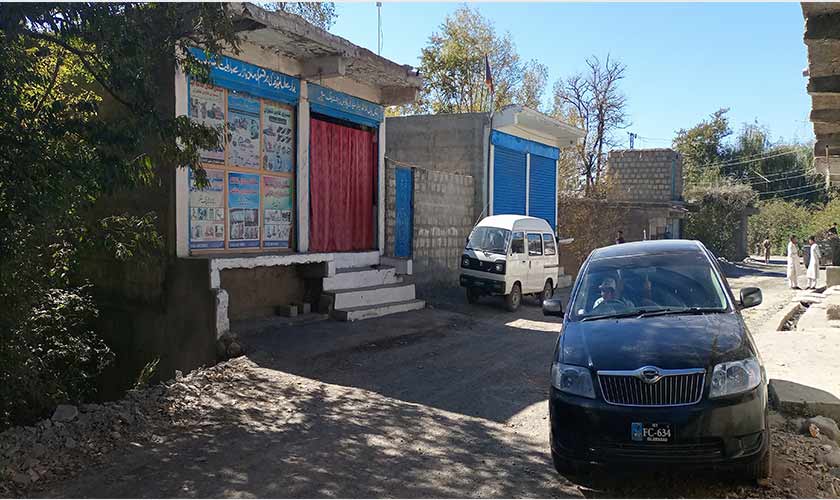
Standing on a roadside, I was waiting for the male interviewee who had established a shop for his sister. Two women opened the door of a black Toyota Fielder and entered a shop, where a red curtain was drawn. The women had come at a shop owned and run by a woman.
Shalozan, one of the most populated villages in Upper Kurram, at a distance of 10 kilometres from Parachinar city, is where the men have empowered women. They have helped women establish shops attached to their homes.
In the last 20 years, the number of shops run by women has been increasing. The village has at least 13 female-run shops now. The men are of the view that with growing population, awareness and girls’ education, the number of female shops, commonly known as “women shopping centres” will further increase in the Kurram tribal district.
Ashiq Hussain, 55, a father of seven daughters in Shalozan, has established a shop for one of his daughters. The shop is attached to their home and has two doors; one opens towards the street, the other into the home. The shop is clean, full of women’s and children’s clothing, bags, shoes, make-up and other items. “We invested three hundred thousand rupees, but in a year-and-a-half the shop has raised well over a million“, he says.
Ashiq Hussain never attended school. In the patriarchal setup of Tribal Areas, fathers take pride in having a male heir, but Ashiq is a proud father of daughters. Many people now know him because of his eldest daughter. Shattering stereotypes
He has also transformed his stable into a shop. One of his daughters, a college student, who has completed a beauty parlour course in Peshawar, is running the shop, teaching the tricks of the trade to local girls. The father helps the daughter coordinate with vendors in Peshawar, “my wife and I look after the shop while our daughter goes to college in the morning. When she returns, she takes charge,” he says. Some thirty years ago, women did not have much agency, Ashiq remembers. They would need a male member from the family to accompany them even to the local market. “Now, the women of our village have many options. They can now get everything in the village at their doorstep,” he adds. Compared to the other six tribal districts in Khyber Pakhtunkhwa, men in Parachinar are cooperative and encourage women start-ups. These shops have empowered the tribal women who once had few opportunities to grow and find financial stability.
“When I was young, we lived in poverty. Men were responsible for feeding entire families. Now, women are supporting men in every field, and the quality of life has improved,” he adds.
Rehmat Hussain, established a women’s shopping centre for his wife and sister in Shalozan twenty years ago. Compared to Peshawar and other cities, Parachinar is expensive. “When my family shopped in Peshawar and compared the rates with the local market, we found that Parachinar shopkeepers were selling items at a higher price. My sister came up with the idea of setting up shops run by women in the village. The idea worked. Now they purchase materials for women from Peshawar to sell in the village,” says Rehmat.
Rehmat had invested fifty thousand rupees at the start. After 20 years, the women shopping centre is worth five million. “My sister purchases women’s clothing, make-up and other items from Peshawar-based vendors. I support them as help with the logistics,” he says.
Running a women’s shop in a tribal district comes with many challenges. “When we buy items in Lahore, where most of the vendors sell locally produced items, we do not face logistical issues. But in Peshawar, a majority of vendors deal in items made in China and Korea, mostly non-custom paid. Due to official restrictions we are then unable to take these to Parachinar,” he adds.
The Khyber Karobar Support Programme and Insaf Rozgaar Scheme are two flagship programmes launched by the Khyber Pakhtunkhwa government. The government is encouraging women entrepreneurs in seven tribal districts to apply for loans. In Kurram, under the Insaf Rozgaar Scheme, a total of 31 women have benefitted so far. A majority of women in the area have set up start-ups and small shops at home. A few have opened salons. The Bank of Khyber (BOK) has established a dedicated micro finance department in KP, which is facilitating socio-economic development through increased access to financial services. According to BOK open-source data, it has disbursed Rs 1.3 billion in loans to more than 27,000 borrowers. A majority of the loans are below Rs 50,000 per client. Akhuwat has also established a centre in Parachinar and provides small interest-free loans to local women.
Nasir Hussain, a father of three, says, “my wife and other women in the family shop in the village. These women shops facilitate them. Now they can buy anything, and they no longer need to visit city markets for latest trends.”
Haji Gulfam Hussain, a former president of the Parachinar Trade Union, says that in Upper Kurram, out of a total of 8,000 shops, 600 are owned and run by women. “We are proud of our women who now work shoulder to shoulder with men. Education has broadened the minds of our men, who now encourage women to work,” he adds.
https://www.thenews.com.pk/tns/detail/917819-shattering-stereotypes

کے پی بلدیاتی الیکشن: پیپلز پارٹی نے الیکشن کمیشن کو تحریری شکایت بھیج دی


خیبر پختونخوا کے بلدیاتی الیکشن میں مبینہ دھاندلی سے متعلق پاکستان پیپلز

پارٹی (پی پی پی) نے الیکشن کمیشن کو تحریری شکایت بھیج دی۔

پیپلز پارٹی نے اپنی شکایت میں لکھا ہے کہ پشاور کے تقریباً 22 پولنگ اسٹیشنز کے فارم 45 سے پی ٹی آئی امیدوار کے نتائج غائب ہیں اور اس فارم کا صرف پہلا صفحہ جاری کیا گیا ہے۔

پیپلز پارٹی کی جانب سے الزام عائد کیا گیا ہے کہ حکمت عملی کے ساتھ پی ٹی آئی کے امیدوار کو مجموعی ووٹوں کی گنتی میں فائدہ پہنچانے کے لیے فارم 45 کے دوسرے صفحے پر لکھا جائے گا۔ 

پی پی نے الیکشن کمیشن سے درخواست کی کہ کے پی بلدیاتی الیکشن میں متعلقہ عملے کو پی ٹی آئی امیدوار کے نام کے ساتھ فارم 45 جاری کرنے کی ہدایت کی جائے۔


Former Afghan president Hamid Karzai slams Pakistani 'propaganda' on Afghanistan

Hamid Karzai lashed out at Pakistan Prime Minister Imaran Khan for his speech at Organisation of Islamic Countries (OIC) Summit indicating Afghanistan has suffered due to Pakistan's policy of harbouring terrorist elements including Islamic State
Former Afghanistan president Hamid Karzai on Sunday lashed out at Pakistan and called out what he said was "obvious propaganda against Afghanistan". Pakistan Prime Minister Imran Khan in his speech at the summit of Organisation of Islamic Countries (OIC), said that Pakistan faced threat from Islamic State in Afghanistan.
Karzai said that IS has threatened Afghanistan from Pakistan.
In response to Imran Khan's address at the summit Karzai said Pakistan "should not intervene in Afghanistan’s internal affairs and should avoid speaking on behalf of Afghanistan at international forums."
Pakistan's support to terrorists and terror organisation has been a well-established thing worldwide.
Afghanistan is currently facing economic crisis as its global assets abroad, mainly in US, have been frozen after Taliban rose to power. Even after 100 days of being in power, Taliban government has not gained worldwide recognition. International Monetary Fund (IMF) has suspended its ties with Afghanistan
https://www.wionews.com/south-asia/former-afghan-president-hamid-karzai-slams-pakistani-propaganda-on-afghanistan-438204