Friday, November 12, 2021

A new national curriculum sparks a backlash in Pakistan

Teachers and parents worry that English-language skills are being replaced by religious content.
Few in pakistan would deny that something needs to be done to improve its education system. The country is well behind Bangladesh, India and Iran, and just barely above Afghanistan, in un education rankings. Less than 60% of people over 15 can read and write, having attended school on average for 5.2 years. In Bangladesh, by contrast, the literacy rate is 74%, with 6.2 years of education.
The headline figures hide as much as they reveal. In the country’s elite schools, the children of the wealthy study in English for international exams and set their sights on the world’s best universities. At the other end of the spectrum, 23m children are not in school at all, with girls much less likely than boys to be enrolled. Government schools, where available, have a reputation for rote learning. Private schools of varying quality fill the gap. Many poor families send their children to madrasas, which tend to skip subjects like science and maths. Some are vehicles for extremist ideologies. Imran Khan, the prime minister, calls this divide “educational apartheid” and has vowed to get rid of it.
Such an aim is admirable, but the tool of choice has come in for criticism from academics, educators and parents. Earlier this year the government began rolling out a single national curriculum (snc) for all schools, including madrasas. This set of minimum standards is meant to improve the quality of teaching and boost the prospects of pupils. But its ambitions are wider still. Among the objectives listed by the education ministry is to increase “social cohesion and national integration”.
The new curriculum has so far been rolled out only in primary schools, but already some of its dictates are causing a backlash. The snc has increased the number of subjects, such as general knowledge, which must use textbooks in Urdu or other local languages rather than English. Mr Khan, himself an old boy of Aitchison College, the country’s most prestigious school, makes his case in punchy post-colonial terms. “When you acquire English-medium education, you adopt the entire culture,” he argues, adding that “you become [a] slave to that particular culture.”
Yet the resistance to the snc’s imposition of local-language learning is not just an elite phenomenon. There have been reports of schools unwilling to implement it. And there is huge demand for English from parents who see it as a way for their children to stand out in the job market, according to teachers. Mariam Chughtai, the director of the national council drawing up the curriculum, says the aim is not to drop English but to elevate local languages. “When we think ‘multilingual’, we think French, German and English. But when you say bilingual in Urdu and English, the elites look down upon it,” she says. Still, “no one is denying the importance of English. It’s here to stay.”
A bigger complaint is that conservatives are using the curriculum to increase religious teaching in schools. Rather than turning madrasas into schools, it will turn schools into madrasas, charge critics. Indeed, the education ministry’s list of “key considerations” in drawing up the curriculum puts the teachings of the Koran at the very top. Non-Muslims need not take classes on Islam, but religious content is seeping into other subjects, such as Urdu-language lessons that include passages on Muslim caliphs. The government argues that there is nothing wrong with teaching religion in a religious country.The third criticism may be the most pertinent. Pakistan’s abysmal learning outcomes are not so much the result of content as of access, says Jasir Shahbaz, an educationalist in Lahore. A new curriculum will do little to fix that. “The issue is not so much what the kids are studying, so much as how many kids are actually studying, or are actually understanding what they are studying,” he says.
The battles are likely to intensify as older pupils start the new curriculum next year. Ms Chughtai says it will take time for results to show. But the furore, she says, is because the changes affect even the elite: “Any time you try to bring a major policy change, for the small minority of people for whom even the broken system was working, they are going to get scared.”■
https://www.economist.com/asia/2021/11/11/a-new-national-curriculum-sparks-a-backlash-in-pakistan

Thursday, November 11, 2021

Video - #DailyShow #TrevorNoah #RoyWoodJr Gosar Virtually Kills AOC, TikTok Saves a Kidnapped Woman & Inflation Sets Records | The Daily Show

Video Report - Russia, Western countries clash at UN over Belarus border crisis

Video Report - President Biden on Supply Chains and the Holidays

Video - President Biden Participates at the National Veterans Day Observance

Video Report - Imran Khan is financially Corrupt

Video Report - Is Imran Politically Isolated?|Alone In Supreme Court| 70 Govt MNAs Disappear| Saad Rizvi DryCleaned

Music Video - speeni spoogmai wa ya Ashna ba charta we na

Video Report - د آشنا تلویزیون د پنجشنبې خپرونه د ۲۰۲۱ نومبر ۱۱ - لړم ۲۰

#Pakistan - Making peace with militants


DAYS after surrendering to the Tehreek-i-Labbaik Pakistan, the government has announced a month-long ceasefire with another banned terrorist outfit. We are told that there has been substantive development in the ongoing negotiations with the Tehreek-i-Taliban Pakistan (TTP), brokered by the Afghan Taliban. But we still don’t know on what terms the so-called peace is being negotiated with a terrorist group that had declared war on the Pakistani state and had killed thousands of people.
According to a media report, the group wants the release of several hundred militants, many of whom were involved in terrorist attacks, before the start of negotiations. That would contradict the government’s claim of having made significant progress in the talks. The information minister says that the negotiations are being held under a constitutional framework. But there is no clear answer to the question of how the state can talk peace with a group, which is banned as a terrorist outfit and which has not surrendered.
There was no cessation in hostilities while Pakistani security officials engaged in talks. Just days before the ceasefire announcement, an ambush in North Waziristan claimed the lives of four soldiers. Scores of soldiers have lost their lives in renewed terrorist attacks over the last few months in former Fata. Such an escalation in violence raises questions about a tentative truce delivering peace.
It appears that it is the state that has virtually surrendered to a group that is also on the list of global terrorist networks. There is no indication yet that the TTP is willing to lay down its arms and accept the Constitution. The demand for the release of prisoners before talks would make it clear that the outfit seeks to negotiate from a position of strength.
The ambiguity around the terms of negotiations has made the talks extremely controversial.
It seems to follow the pattern of past peace negotiations with the militant group. Each peace deal further empowered the terrorist outfit. The latest talks are likely to be used by the TTP to reorganise itself and regain its space in the tribal districts. There are already some reports of the revival of TTP activities in parts of the area. The return of Taliban rule in Afghanistan seems to have further emboldened the proscribed network.
It was in December 2007 that several militant groups operating in different parts of Fata and KP formed the TTP under the leadership of Baitullah Mehsud. The TTP had an agenda to enforce its own retrogressive version of Sharia rule in the country. Its birth came in the aftermath of the Lal Masjid operation in Islamabad that saw a massive rise in terrorist attacks in the country.
There is no doubt that the formation of the TTP had the blessings of Al Qaeda. They jointly carried out high-profile terrorist attacks across the country targeting civilians as well as security installations. The nexus was responsible for the devastating attacks on the GHQ and ISI installations. By 2008, the militants had virtually established their rule over large swathes of territory in northern Pakistan presenting an existentialist threat to the country. It was on Pakistan’s urging that the TTP was declared a global terrorist group. The TTP benefited from the weak response of the security establishment and a series of peace deals, with the state virtually surrendering its writ. It was only after 2009 that the security forces launched massive operations against the militant group. It took more than six years before the tribal belt was cleared of the militants at a huge human and economic cost. Hundreds of thousands of troops were involved in the action. The massacre at Peshawar’s Army Public School that left almost 150 students and staff members dead was the most heinous terrorist attack in the country’s history.
Most critical was the North Waziristan operation that finally broke the back of the TTP. Pushed into Afghanistan, the group disintegrated into several factions, some joining the so-called Islamic State’s Khorasan chapter. Many others were reportedly provided sanctuaries by various Afghan Taliban groups. That has also given the Afghan Taliban huge leverage over the TTP.
Apparently, it was after the Taliban’s return to power in Afghanistan that backchannel contacts between Pakistani security agencies and the TTP were established. The talks were facilitated by the Haqqani Network that has long maintained close ties with the Pakistani militant group.
It is not that the state should not talk to militant groups but the real issue is on what terms. Negotiations make sense only after the militants agree to a complete surrender of arms. But there is no such indication. The TTP has only agreed to a short-term ceasefire, and as has happened in the past, will use the truce to regain its lost space. Most troubling, however, is the absence of a clear strategy on the part of the state on how to deal with terrorist and violent faith-based extremist groups. There has not been any effort to develop a national consensus on such critical national security issues. Curiously, it was in a media interview that the prime minister made the disclosure that his government was in talks with the fiercest of militant groups. Apparently, the issue was not even deliberated in the cabinet let alone parliament. The opposition was only briefed on the development by the military leadership this week. But the prime minister is still not willing to take the nation into confidence on this sensitive issue.
The ambiguity around the terms of negotiations has made the talks extremely controversial. The whole episode has reinforced suspicions that it is pressure from the Afghan Taliban that has compelled Pakistan to engage with the TTP. The change in Afghanistan and our support for the conservative regime there appears to have also caused the authorities to soft-pedal the group.
Any deal with the TTP is likely to reverse the gains the country has made in its battle against terrorism and violent extremism. Unconditional negotiations will legitimise the terrorist group. The shameful deal with the TLP last week and talks with the TTP should be cause for serious concern. It certainly raises questions about our resolve to fight terrorism.
https://www.dawn.com/news/1657059/making-peace-with-militants

Cut ties with terrorist groups and eliminate them, Pakistan, China, Russia & US tell Taliban

NAYANIMA BASU
Pakistan PM meets Taliban delegation, assures support for Afghan people. Meetings took place in Islamabad a day after India hosted a dialogue of security chiefs of 7 nations.
Pakistan, China, Russia and the US Thursday asked the Taliban to cut ties with all international terrorist groups, dismantle and eliminate them in a “decisive manner”, and “deny space to any terrorist organisation operating inside” Afghanistan.
The statement came as Islamabad hosted the Troika Plus conference, which was attended by special representatives of China (Yue Xiaoyong), Russia (Zamir Kabulov) and the US (Thomas West). A Taliban delegation led by interim Afghan Foreign Minister Amir Khan Muttaqi also participated.
Muttaqi also held separate meetings with the senior Pakistani government officials, including Prime Minister Imran Khan.
According to the joint statement issued after the meeting, the four nations said they expect the Taliban to “fulfill their commitment to prevent use of Afghan territory by terrorists against its neighbors, other countries in the region and the rest of the world”. They condemned in “strongest terms” the recent terrorist attacks in Afghanistan. They also called on the Taliban to take a friendly approach towards neighbouring countries, and to uphold Afghanistan’s legal obligations, including universally accepted principles of international law and fundamental human rights, and to protect the safety and legitimate rights of foreign nationals and institutions in the country.
The Troika Plus also expressed concern over the “potential” of an “economic collapse” of Afghanistan and “significantly worsening humanitarian crisis and a new refugee wave”. However, it “welcomed the international community’s urgent provision of humanitarian assistance” to Kabul.
Qureshi pushes world for ‘positive engagement’ with Taliban.Pakistan again called upon the international community to have a “positive engagement” with the interim Taliban government, adding that Islamabad as an immediate neighbour has a “direct stake” in the peace and stability of Afghanistan.
“Located next door, we have borne the brunt of four decades of conflict and instability in the shape of refugees, drugs and terrorism. We see the current situation as an opportunity to end the prolonged conflict,” Pakistan Foreign Minister Shah Mahmood Qureshi said at the meeting.
“We believe Taliban are interested in engagement, as they seek international acceptance and support. It is, therefore, crucial that the international community avoids repeating mistakes of the past and continues with positive engagement,” he added. The Troika Plus grouping, which met after three months, also met the Taliban delegation separately, which happened for the first time since the Taliban took over Afghanistan in August. “Troika Plus also met with the Afghan Acting Foreign Minister to discuss the conclusions of Troika Plus meeting and hear perspective of the Afghan Interim Government,” tweeted Mohammad Sadiq, Pakistan’s Special Representative for Afghanistan.
The countries also discussed the steps Pakistan has already taken to help people in Afghanistan. “These include waiver of customs duties on perishable food items to support farmers in Afghanistan, provision of humanitarian assistance, facilitating pedestrian movement, keeping the border open during Covid-19 and visa on arrival for medical cases,” the statement said.
The Taliban delegation landed in Pakistan Wednesday in a visit that coincided with India’s Delhi Regional Security Dialogue on Afghanistan, chaired by National Security Advisor Ajit Doval.
Imran Khan says Pakistan will stand by Afghan people
The Taliban delegation also met the Pakistani leadership on the sidelines of the Troika Plus meeting.
“Pakistan has always stood with the Afghan people in their hour of need. We have assured Afghan acting FM Amir Khan Muttaqi & his delegation we will provide all possible humanitarian aid to Afghanistan. We are sending essential food items, emergency medical supplies & winter shelters to provide immediate relief to Afghan people,” Pakistan Prime Minister Imran Khan said in a tweet Thursday.
“We will also provide free Covid 19 vaccines to all Afghans travelling across the border into Pak. Again I urge the int community to fulfil its collective responsibility to avert a grave humanitarian crisis confronting people of Afghanistan (sic),” he added.
The next round of Troika Plus meeting will be held in Beijing, where the interim Afghan government has also been invited, confirmed Qureshi.
https://theprint.in/world/cut-ties-with-terrorist-groups-and-eliminate-them-pakistan-china-russia-us-tell-taliban/764845/

Wednesday, November 10, 2021

Video Report - Who can resolve Ethiopia's conflict?

Video Report - Migrants in grip of cold and hunger camp at EU-Belarus border

Video Report - #nuclearenergy #COP26 #emissions Cutting greenhouse gas emissions: is nuclear energy the way to go?

Video Report - Harris, Macron seek to patch up 'critical' France-US ties after submarine row

Video Report - 'A domestic threat we've never faced before': Cheney on Trump

Video Report - Chairman PPP Bilawal Bhutto Zardari addresses opposition parties

Video Report - Chairman PPP Bilawal Bhutto Zardari talks to journalist at the Parliament

حکومت خود ہی پارلیمان کے مشترکا اجلاس سے بھاگ گئی، بلاول بھٹو

پیپلز پارٹی کے چیئرمین بلاول بھٹو زرداری نے کہا ہے کہ حکومت اپنے ہی


بلائے پارلیمنٹ کے مشترکہ اجلاس سے بھاگ چکی ہے۔

بلاول بھٹو زرداری متحدہ اپوزیشن کے اعزاز میں دیے گئے عشائیے کے بعد میڈیا سے گفتگو میں کہا کہ صدر پاکستان کا مشترکہ اجلاس بلانے کا نوٹیفکیشن آیا، آدھے گھنٹے بعد ہی حکومت کا اپنا بیان آیا کہ اجلاس موخر کررہے ہیں۔

انہوں نے کہا کہ حکومت اپنے ہی بلائے پارلیمنٹ کے مشترکہ اجلاس سے بھاگ چکی، اجلاس مؤخر کرنا صدر مملکت کی بھی ہتک ہے۔

پی پی چیئرمین نے مزید کہا کہ اپوزیشن کا فیصلہ تھا اپنے تمام اراکین کی تعداد یقینی بنائی جائے گی۔

اُن کا کہنا تھا کہ اپوزیشن نے ووٹنگ مشین، یکطرفہ الیکشن ریفارمز پر حکومتی اتحادیوں سے رابطے کا فیصلہ کیا تھا۔

بلاول بھٹو زرداری نے یہ بھی کہا کہ ایک پر ایک نکلنے والے نیب آرڈیننس بدنیتی پر مبنی ہیں۔

انہوں نے کہا کہ اب ہم اپوزیشن اتحادیوں سے تحریک عدم اعتماد پر ساتھ دینےکا نہیں کہہ رہے۔

پی پی چیئرمین نے کہا کہ اپوزیشن سے حکومت کے غیرجمہوری طریقوں اور الیکشن کمیشن کو متنازع بنانے کی حد تک بات کررہے ہیں۔

ان کا کہنا تھا کہ تحریک عدم اعتماد کے معاملے پر آج اپنی رائے پر قائم ہوں، اس پر الگ سے محنت کرنا پڑے گی۔

بلاول بھٹو نے کہا کہ حکومت کی الٹی گنتی شروع ہو چکی ہے، اب عمران خان کا گھبرانے کا وقت آ گیا ہے۔

https://jang.com.pk/news/1009878


Chairman PPP Bilawal Bhutto Zardari says opposition is united in the parliament against the government

 Chairman Pakistan Peoples Party, Bilawal Bhutto Zardari hosted a dinner in honour of the opposition parliamentarians at the banquet hall of the Senate of Pakistan on Wednesday evening attended by the members National Assembly and the Senate.

The combined opposition in the parliament decided to form a steering committee of the opposition comprised of the members of all the opposition parties in the Parliament. This steering committee will take all the decisions on behalf of the opposition in the parliament. The opposition also chalked out a unanimous strategy to negotiate with the government.

Chairman Bilawal Bhutto Zardari addressing the event thanked the opposition leader, Shahbaz Sharif for uniting the opposition in the Parliament. Chairman Bilawal said that the government’s economic policies are severely hurting the people of Pakistan and sugar has become expensive than the petrol. This is an expensive Pakistan and a common man is yearning for the old Pakistan. He said that due to joint efforts of the opposition the government had to call off the joint session of the parliament which was scheduled for 11 November. Due to the opposition’s contacts with the government’s allies, the government had to retreat and cancel the joint session. He said that only the parliament is the forum using which we can defeat Imran Khan and his policies.

Later on, talking to journalists Chairman Bilawal said that the joint opposition will collectively contact the government, not separately. Responding to a question, he said that the PPP has taken the country out of economic problems before and has been the solution to economic plight. As far as the opposition alliance in the parliament is concerned, it has always been intact in the parliament. The PPP has always been of the view that we must not leave the space that is the parliament, instead use this space. We can defeat the government in the parliament and within the system. Everyone can see that the government’s reverse counting has started. Responding to a question about economy, he said that the PPP has a solution to the economic problems. The people are troubled due to price-hike, unemployment and poverty. In the 1970s, the PPP showed that when the country was divided into two and the economy was down, we made the economy stand on its feet due to pro-people economic policies. When we came to power in 2008, inflation, unemployment and poverty were at the highest level and wheat, sugar and rice were being imported. When we left, we were exporting these essential commodities and the inflation was reduced to half.

Responding a question, he said that the prime minister has retreated from calling the joint session off. This is insult of president of Pakistan. This shows that our strategy to contact the government’s allies and convince them of our perspective on the EVM, policy of unilateral reforms and the government’s efforts to harm the electoral process worked. We thank all the opposition parties’ members that were present. We are getting good results from the unity of the opposition in the parliament.

 The government was defeated yesterday and today the government had to run away from the joint session. We will be able to stop the wrong policies of the government such as making the ECP controversial and undemocratic ways. The “favourite” being before the Supreme Court was a change. Responding to a question, he said that the terrorists who were involved in the APS incident must be punished, while some have been punished, the terrorist Ehsanullah Ehsan was given NRO by Imran Khan and sent abroad. The way the government has addressed this issue is controversial. When we decided to negotiate during the PPP government, we consulted the parliament and made the people aware of the issue. We decided to fight the terrorist and were able to form consensus in the country. You cannot send your military commanders to war or to negotiate peace without creating political consensus and cover which they require.

https://www.ppp.org.pk/pr/25764/

#Pakistan #PPP - EU ambassador calls on Chairman PPP Bilawal Bhutto Zardari

The Ambassador of European Union, Ms. Androulla Kaminara called on Chairman Bilawal Bhutto Zardari at Zardari House Islamabad on Wednesday. The EU Political Counsellor, Daniel Clauss also accompanied Ambassador Kaminara.
Chairman Bilawal Bhutto Zardari and EU Ambassador Androla Kaminara discussed issues of mutual interest.
They agreed to maintain stability in bilateral relations between Pakistan and the EU. Chairman Bilawal Bhutto Zardari termed Pakistan’s relations with the European Union as valuable. Senator Sherry Rehman was also present on the occasion.
https://www.ppp.org.pk/pr/25762/

Tuesday, November 9, 2021

Music Video - Frank Sinatra - New York, New York

Video - #DailyShow #TrevorNoah #AaronRodgers Aaron Rodgers’s Wild Anti-Vax Rant & Ted Cruz Goes After Big Bird

Video Report - Is Belarus using migrants to put pressure on the EU?

Video Report - Thousands of migrants mass on Belarus border with Poland -

Video - President Biden Honors the Milwaukee Bucks for Winning the 2021 NBA Championship

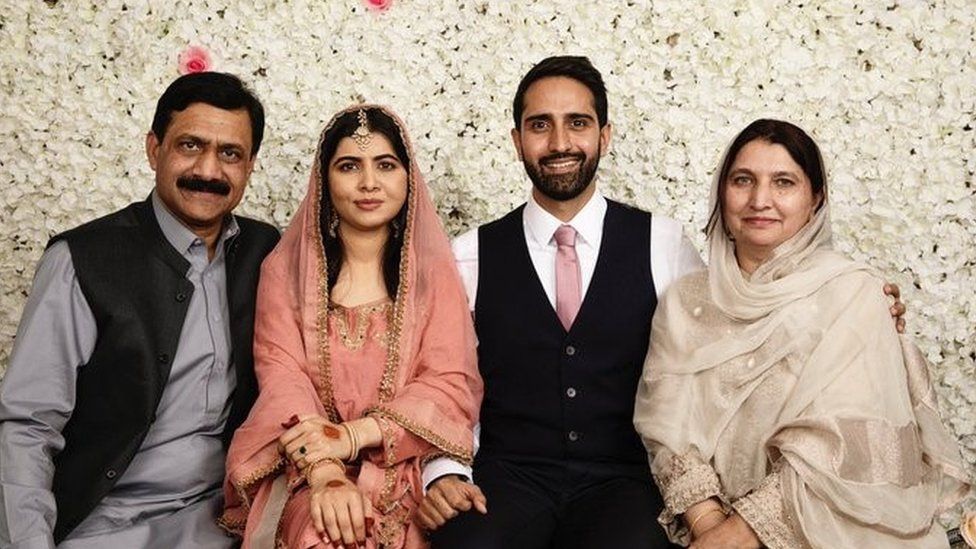
Nobel Peace Prize winner Malala ties the knot in Birmingham ceremony

Nobel Peace Prize winner Malala Yousafzai has "tied the knot" with her partner during an Islamic ceremony in Birmingham.
She and Asser Malik took part in a nikkah ceremony, where bride and groom consent to be married.The 24-year-old activist said it was "a precious day" in her life.The Pakistani women's rights activist found refuge in the West Midlands after being shot in the head by the Taliban in 2012. "Asser and I tied the knot to be partners for life," she tweeted on Tuesday, sharing how they had taken part in a "small nikkah ceremony with family".
"We are excited to walk together for the journey ahead," she added.
Malala, now 24, was 15 when she was targeted by the Taliban in Pakistan for speaking up for the right of girls to be educated.
She survived the assault, in which a militant boarded her school bus in north-western Swat valley and opened fire, wounding two of her school friends as well as Malala.After recovering from her near-fatal injuries, she and her family relocated to Birmingham, which she later called "a second home". Aged 17, she became the youngest person to win the Nobel Peace Prize. She went on to study at Oxford University, and has become a leading human rights campaigner.
Since graduating, Malala has called for better support for Afghan refugees, signed a contract with Apple TV+ to produce documentaries and appeared on the cover of British Vogue, all while continuing her work to improve girls' access to education.
Although not a legally binding contract, a nikkah ceremony is the first step in an Islamic marriage.
A separate ceremony is often carried out privately, and the activist did not indicate whether the couple had a separate civil ceremony.
Malala has previously voiced her misgivings around marriage.
In an interview with Vogue in July, she said: "I still don't understand why people have to get married."
"If you want to have a person in your life, why do you have to sign marriage papers, why can't it just be a partnership?" she continued."My mum is like… 'Don't you dare say anything like that! You have to get married, marriage is beautiful'."
The news of the ceremony was liked tens of thousands of times by fans online, with thousands wishing the couple well.
https://www.bbc.com/news/uk-england-birmingham-59227513

Monday, November 8, 2021

MUSIC VIDEO - Dua Lipa & The Blessed Madonna - Club Future Nostalgia

Video - Al-Burhan: 'I will have no political role' after power handover | Talk to Al Jazeera

Video Report - Biden to sign infrastructure bill as Democrats focus on major social spending package

Video - Obama speaks at COP26 climate summit

Bill Clinton Saved His Presidency. Here’s How Biden Can, Too.

By Mark Penn and Andrew Stein
Swing voters in two blue-leaning states just sent a resounding wake-up call to the Biden administration: If Democrats remain on their current course and keep coddling and catering to progressives, they could lose as many as 50 seats and control of the House in the 2022 midterm elections. There is a way forward now for President Biden and the Democratic Party: Friday’s passage of the bipartisan physical infrastructure bill is the first step, but only a broader course correction to the center will give Democrats a fighting chance in 2022 and a shot at holding on to the presidency in 2024.
The history of the 2020 election is undisputed: Joe Biden was nominated for president because he was the moderate alternative to Bernie Sanders and then elected president as the antidote to the division engendered by Donald J. Trump. He got off to a good start, especially meeting the early challenge of Covid-19 vaccine distribution. But polling on key issues show that voters have been turning against the Biden administration, and rejecting its embrace of parts of the Bernie Sanders/Alexandria Ocasio-Cortez playbook.
According to our October Harvard CAPS/Harris Poll, only 35 percent of registered voters approve of the administration’s immigration policies (which a majority view as an open-borders approach); 64 percent oppose eliminating cash bail (a progressive proposal the administration has backed); and most reject even popular expansions of entitlements if they are bundled in a $1.5 to $2 trillion bill based on higher taxes and deficits (the pending Build Back Better initiative). Nearly nine in 10 voters express concern about inflation. And 61 percent of voters blame the Biden administration for the increase in gasoline prices, with most also preferring to maintain energy independence over reducing carbon emissions right now.
Progressives might be able to win the arguments for an all-out commitment to climate change and popular entitlements — but they haven’t because they’ve allowed themselves to be drawn into a debate about the size of Build Back Better, not its content. Moderate Democrats have always favored expanded entitlements, but only if they meet the tests of fiscal responsibility — and most voters don’t believe Build Back Better does so, even though the president has promised it would be fully paid for. Putting restraints on these entitlements so that they don’t lead to government that is too big, and to ballooning deficits, is at the core of the moderate pushback on the bill that has caused a schism in the party.
Senator Joe Manchin and Senator Kyrsten Sinema are not outliers in the Democratic Party; they are, in fact, the very heart of the Democratic Party, given that 53 percent of Democrats classify themselves as moderates or conservative. While Democrats support the Build Back Better initiative, 60 percent of Democrats (and 65 percent of the country) support the efforts of these moderates to rein it in. It’s Mr. Sanders from Vermont and Ms. Ocasio-Cortez from New York who represent areas ideologically far from the mainstream of America.
The economy and jobs are now the top national issues, and 57 percent see it on the wrong track, up from 42 percent a few months ago, generating new basic kitchen-table worries. After the economy and jobs, the coronavirus, immigration and health care are the next top issues, but Afghanistan, crime, school choice and education are also serious areas of concern for voters. To understand the urgency for future Democratic candidates, it’s important to be cleareyed about those election results. Some progressives and other Democrats argue that the loss in the Virginia governor’s race, where culture war issues were a factor, should not be extrapolated to generalize about the administration. The problem with that argument is that last week’s governor’s race in New Jersey also showed a double-digit percentage point swing toward Republicans — and in that election, taxes mattered far more than cultural issues. The swing is in line with the drop in President Biden’s approval rating and the broader shift in the mood of the country.
Terry McAuliffe, the Democratic nominee in Virginia, ran for governor in 2013 and won by offering himself as a relative moderate. This time, he deliberately nationalized his campaign by bringing in President Biden, Vice President Kamala Harris and former President Barack Obama, and he closed out the race with the head of the teachers’ union, an icon on the left. He may not have brought in the progressive Squad, but he did hug a range of left-of-center Democratic politicians rather than push off the left and try to win swing voters.
It’s hard to imagine Democratic candidates further to the left of Mr. McAuliffe, and of Gov. Phil Murphy of New Jersey, doing any better with swing voters, especially when the math of elections requires two new voters to turn out to equal a single voter who switches from Democrat to Republican. It’s easy to dismiss individual polls that may or may not be accurate — but you can’t dismiss a clear electoral trend: the flight from the Democrats was disproportionately in the suburbs, and the idea that these home-owning, child-rearing, taxpaying voters just want more progressive candidates is not a sustainable one.
After the 1994 congressional elections, Bill Clinton reoriented his administration to the center and saved his presidency. Mr. Biden should follow his lead, listen to centrists, push back on the left and reorient his policies to address the mounting economic issues people are facing. As a senator, he was a master at building coalitions; that is the leadership needed now. This would mean meeting the voters head on with stronger borders, a slower transition from fossil fuels, a focus on bread-and-butter economic issues (such as the price of gas and groceries), fixes to the supply chain fiasco that is impacting the cost of goods and the pursuit of more moderate social spending bills. Nearly three in four voters see the border as a crisis that needs immediate attention. Moving to the center does not mean budging from core social issues like abortion rights and L.G.B.T.Q. rights that are at the heart of what the party believes in and are largely in sync with suburban voters. But it does mean connecting to voters’ immediate needs and anxieties. As Democrats found in the late ’90s, the success of the administration begets enthusiasm from the base, and we actually gained seats in the 1998 midterms under the theme of “progress not partisanship.”
Mr. Biden’s ratings since the Afghanistan withdrawal have fallen from nearly 60 percent approval to just above 40 percent in most polls. By getting the physical infrastructure bill passed with Republican votes, Mr. Biden has taken a crucial step to the center (79 percent of Democrats and 57 percent of Republicans supported it in the Harris Poll). Follow that infrastructure success by digging into the pending Congressional Budget Office analysis of Build Back Better and then look closely at bringing in more of the popular benefits for people (such as expansion of Medicare benefits for dental and vision and family leave) and cutting out some of the interest group giveaways like creating environmental justice warriors.
Of course, this may require some Houdini-like leadership to get votes from the Progressive Caucus for a revised Build Back Better bill. But this is the best strategy to protect Democratic candidates in 2022.
Yelling “Trump, Trump, Trump” when Mr. Trump is not on the ballot or in office is no longer a viable campaign strategy. Soccer moms, who largely despised Mr. Trump, want a better education for their kids and safer streets; they don’t see the ghost of Trump or Jan. 6 behind Republican candidates like now Gov.-elect Glenn Youngkin of Virginia. Remember that only about one quarter of the country classifies itself as liberal, and while that is about half of the Democratic Party, the rest of the electorate nationally is moderate or conservative. While many rural and working-class voters are staying Republican, the message from last Tuesday is that the Democrats have gone too far to the left on key issues for educated suburban voters. Even Bergen County in New Jersey, a socially liberal bedroom community outside New York City, almost swung into the Republican column.
While Mr. Youngkin waded directly into racially divisive issues, he also based his campaign on positive messages of striving for excellence in the schools and for re-establishing the American dream as a worthy goal. Those messages tapped into the aspirations of voters in ways that in the past were at the heart of the Democratic message. These are enduring values, as is reaffirming the First Amendment and the power of free speech.
Demographics is not destiny. We live in a 40-40-20 country in which 40 percent are hard-wired to either party and 20 percent are swing voters, primarily located in the suburbs. After losing a game-changing slice of Midwestern working-class voters, who had voted for Mr. Obama, over trade, immigration and cultural policies, Democrats were steadily gaining in the suburbs, expanding their leads in places like New Jersey and Virginia. Without voters in these places, the party will be left with only too small of a base of urban voters and coastal elites. Unless it recenters itself, the risk is that the Democratic Party, like the Labour Party in Britain, will follow its greatest success with an extended period in the desert.
https://www.nytimes.com/2021/11/08/opinion/biden-democrats-2022-2024.html

Pashto Music Video - Mussarat Shaheen | Nasha Nasha Yam Pa Nasho

Video Report - #Pakistan #TLP #ImranKhan Pakistan: Why has Imran Khan surrendered to hardline islamists? | Tehreek-i-Labbaik | TLP

#Pakistan - Cricket is not a Jihad

Arbaz Ahmed Cheema
Where victory against arch-rival India in T20 cricket match made everyone happy inside and out of the country few remarks by some senior politicians were very unprofessional. These remarks not only highlighted the internalized patterns of thinking of senior politicians but also help one make sense of the rising performative religiosity in the country. It shows how people have now limited religion to antagonism instead of using it as a force of peace. This trend was visible from the leaders to the layperson level. Everyone in a video clip saw Sheikh Rasheed saying, “It’s not mere a match but victory of whole Islamic religion all around the globe”. I don’t know what Sheikh Rasheed meant by his statement but comparing a game with religion is no less than stupidity and short-sightedness. One cannot imagine a Muslim in Algeria or Senegal feeling victorious because Pakistan won a cricket match from India.
Moreover, Prime Minister Imran khan also said in a speech, “After thrashing India during last night’s cricket match it’s not a good time for talking about peaceful relations”. One can imagine the impact of such statements by senior politicians and even the prime minister of the country on the future of Pakistani cricket. Even such statements by Pakistani politicians can put Indian Muslims in trouble who are already suffering much under BJP leadership. Moreover in Srinagar, the BJP government has filed cases against the students who enjoyed Pakistan’s victory extravagantly. Mixing sports with politics and religion doesn’t do anything good but can change the real purpose of any sport as well as can hurt the feelings of many sports lovers. Cricket is recreation, not jihad and it must remain so.
The real purpose of any kind of sports is to unite the people and bring happiness as the recent Pak-India match did. Everyone in the country was very happy and was chanting the slogan, “Pakistan Zindabad”, regardless of their community, culture, language, and province. There is no place for religion-based national identity in the contemporary world; remarks like these from national leaders only harm Pakistan’s diplomatic image across the world. Given the diversity of local communities and their faiths, it is offensive that national leaders use religious identity to talk about the national cricket team at such a sensitive time. In the absence of recreational activities, the T-20 cricket series is a rare opportunity for Pakistanis to enjoy something as a nation. Our politicians and everyone other with such remarks should change their mindset regarding sports and consider the harm that they do to the national image by making such statements.
https://en.humsub.com.pk/3348/cricket-is-not-a-jihad/

Pakistan is mourning another journalist death. One who exposed illegal hunting by Arab VIPs

REVATHI KRISHNAN
Yet another reporter was murdered in Pakistan this week, a country that sits fourth in the International Federation of Journalists’ list of “dangerous” countries with the death of 138 journalists since 1990. This time it was a Karachi-based reporter who made videos about illegal hunting of the threatened Houbara bustard by Arab dignitaries.
Nazim Jokhio was murdered on Wednesday after posting a video saying he had been receiving threats about his videos on illegal hunting trips of Arabs in Pakistan. Though hunting is banned in Pakistan, it is permitted for wealthy foreign dignitaries. Following the journalist’s death, Reporters Without Borders called for an independent investigation into his murder and iterated the same to Sindh chief minister Murad Ali Shah. Police had said they had arrested two men in connection with Jokhio’s death but those who gave the orders had not been identified.
In a video Jokhio had posted online speaking in Urdu, he said, “I am not scared. I am getting threats and I will not apologise.”
Invitation to the ‘Jam House’
Jokhio reportedly went to cover a hunting party at the invitation of Pakistan Peoples Party member Jam Awais Bijar Khan Jokhio, a local power broker who is also a member of the Sindh provincial assembly. According to a report by Dawn, the journalist’s body was found at the politican’s farmhouse, known as ‘Jam House’.
The legislator surrendered to law enforcers late Thursday night, following which a local court sent him on three-day police remand on Friday.
The FIR was registered on the complaint by the victim’s brother, who accused MPA Awais and Member of the National Assembly Jam Abdul Karim of having a hand in Jokhio’s murder.
Relatives and members from the Jokhio’s community staged a sit-in on the national highway at Dhabeji with his body. They buried the reporter in a nearby graveyard and then continued the sit-in, reported Dawn.An eight-member team has also been formed to investigate the case. Sindh CM Mural Ali Shah met Jokhio’s family and assured them justice would be delivered.
Public outrage over Jokhio’s death
Following his death, many of Pakistan’s civil society members took to Twitter to express their outrage. The hashtag #JusticeForNazimJokhio was trending on the social media site.Many reposted his video. One user said, “There is no justice for poor like Nazim Jokhiyo in this country because this country is ruled by landlord’s, sardar, peer and wadera…”. Meanwhile, user Azad Ali claimed that the murder took place by ‘Sindh’s feudal lords.’
Another handle shared a portrait of him and said, “Let’s get United and destroy feudalism once for all for prosperous Sindh.” While user Ghulam Akbar Bhutto said that “a fedulaist [sic] who has been accused of murdering a man is free from handcuffs.”
Journalists on Twitter also highlighted how the Imran Khan government had let Jokhio down, and called for greater accountability by the legislators.
https://theprint.in/go-to-pakistan/pakistan-is-mourning-another-journalist-death-one-who-exposed-illegal-hunting-by-arab-vips/762330/

افغانستان کے متعلق پالیسی، تحریک طالبان پاکستان سے مذاکرات اور تحریک لبیک پاکستان سے معاہدے پر یکطرفہ فیصلے نہیں لئے جا سکتے، چیئرمین پاکستان پیپلز پارٹی بلاول بھٹو زرداری

چیئرمین پاکستان پیپلز پارٹی بلاول بھٹو زرداری نے پیر کے روز پارلیمنٹ ہاﺅس میں


پارلیمنٹ کی قومی سلامتی کمیٹی کے اجلاس میں شرکت کی۔ اس اجلاس میں پارلیمنٹیرینز کو قومی سلامتی کے امور پر بریفنگ دی گئی۔ اجلاس کے بعد پارلیمنٹ ہاﺅس میں صحافیوں سے گفتگو کرتے ہوئے بلاول بھٹو زرداری نے کہا کہ وہ اس بریفنگ کے متعلق کوئی گفتگو نہیں کریں گے کیونکہ یہ آن کیمرہ بریفنگ تھی اور آف دی ریکارڈ تھی۔

 انہوں نے کہا کہ جہاں تک افغانستان کے متعلق پالیسی، تحریک طالبان پاکستان سے مذاکرات اور تحریک لبیک پاکستان سے معاہدے پر یکطرفہ فیصلے نہیں لئے جا سکتے۔ پارلیمنٹ کی منظوری کے بغیر ان امور پر کوئی بھی پالیسی نہیں بنائی جا سکتی۔ کوئی بھی ایسی پالیسی جس کی منظوری پارلیمنٹ سے نہ لی گئی ہواس کی کوئی قانونی حیثیت نہیں ہے۔ 

بلاول بھٹو زرداری نے کہا کہ صدر پاکستان، وزیراعظم اور وزیر خارجہ کے ٹی ٹی پی سے مذاکرات کے متعلق بیانات پر انہوں نے پہلے بھی تنقید کی تھی اور وہ آج بھی تنقید کریں گے کیونکہ کسی کو آن بورڈ نہیں لیا گیا اور نہ کوئی اتفاق رائے پیدا کیا۔ انہوں نے کہا کہ یہ لوگ کون ہوتے ہیں جو ٹی ٹی پی سے مذاکرات کی بھیک مانگیں اور یکطرفہ طور پر ان لوگوں سے مذاکرات کریں جنہوں نے ہمارے سپاہیوں، قومی قیادت اور اے پی ایس کے بچوں کو شہیدکیا ہے۔ انہوں نے کہا کہ ان امور پر پارلیمنٹ سے منظور کردہ پالیسی ہی بہتر اور قانونی ہو سکتی ہے۔ 

بعدازاں بلاول بھٹو زرداری نے پارٹی کے دیگر اراکین پارلیمنٹ کے ساتھ اپوزیشن لیڈر کے چیمبر میں مشترکہ اپوزیشن کے ایک اجلاس میں شرکت کی۔ اس اجلاس میں شرکت کے بعد صحافیوں سے باتیں کرتے ہوئے انہوں نے کہا کہ مہنگائی کے مسئلے پر ساری اپوزیشن متحد ہے۔ انہوں نے کہا کہ ای ایم ایف سے معاہدوں کے بعد عوام مہنگائی کے بوجھ تلے دب چکے ہیں۔ حکومت کی جانب سے الیکٹرانک ووٹنگ مشین کے ذریعے ووٹ چوری کرنے اور نیب آرڈیننس کے ذریعے سیاسی انتقام کی کارروائیاں کرنا سب کے سامنے ہیں۔ ہم عوام کے لئے پارلیمنٹ میں مشترکہ آواز اٹھائیں گے اور ووٹ چوری کرنے اور سیاسی انتقام کی سازشوں کو شکست دے دوچار کریں گے۔

https://www.ppp.org.pk/pr/25747/ 

Sunday, November 7, 2021

Video Report - #AngelaMerkel #MerkelInterview #Germany The DW Interview with German Chancellor Angela Merkel

Video Report - Fareed's Take: Cutting carbon emissions is not enough

Video Report - Stelter: Republicans are using this slogan to attack Democrats

Music Video - استاد ناشناس - محبت اول آسانه

Video Report - په افغانستان کې بیکاري او سختې اقتصادي ستونزې

Video - #KhabarSayAagay #NayaDaur #Politics Taliban Will Never Oust TTP From Afghanistan

Pakistan - Alarm Bells

 There is a whiff of change at the citadel of PML(N). Though Vice President Maryam Nawaz’s camp may rant and roar about playing centre-forward, former CM Shehbaz Sharif is back in the game. As senior Sharif extends an olive branch to PPP Chairman Bilawal Bhutto-Zardari and says hello to PDM chief Maulana Fazlur Rehman, the opposition parties are very likely to set their house in order. The very pubic spat between Islamabad and Rawalpindi landed as much-needed manna from heaven, right in its lap. Amid power shows all over the country and talks to muster support for the anti-government movement, the ruling PTI would be very naive to take a breather.

Nevertheless, any political storm–no matter how confident Mr Sharif may seem–would still be less back-breaking of a crisis. For, the nightmares are bound to get even worse. If the PTI’s voters are deeply concerned by the way their bills continue to soar high, it cannot pass the buck to Ishaq Dar’s rupee melodrama. Not anymore. Neither can the government keep referring to corruption sagas of the yore to defend the freefall of the Pakistani rupee. There are no plans in sight to slam the brakes on double-digits food inflation. The mega relief package heralded as a gamechanger was widely ridiculed after the overnight price hike in petrol. Power and gas tariffs are next in line to weigh excruciatingly on poor masses. To put it in layman’s terms, Islamabad does not need any external force to reshuffle the political cards. Its apparent failure to push the proverbial genies of sugar, wheat and even ghee mafias back inside the bottle can do the job well on its own.

More worrisome is the nauseating deja vu to Ayub Khan’s spinning of the economic hats. The uncanny resemblance is hard to look past. He, too, had proclaimed to steer his debt-ridden country out of its troubles. But just like today, prosperity was low-hanging fruit to a selected few. Going by the press conferences, Pakistan is on a steady track for its economy to grow nearly five per cent. The IMF programme is back on the table. But if life is all sunshine and rainbows, why is an average Pakistani contemplating how to put two meals on his table? Clearly, something sinister has been in the making. The turnover of the ’50s Green Revolution was said to have been circulated between some 80 families. In 2021, the carcass of Pakistan’s economy is being scavenged by sugar barons, concrete captains and Mister Bigs of the textile industry. The government has, indeed, delivered its promise regarding lifelines to large-scale manufacturers. May it be the automobile industry or the construction channel, big wheels are having a night on tiles. But when would these sweeteners trickle all the way to the common man is a quandary no one in the top echelons is ready to give their two cents on! 

https://dailytimes.com.pk/838357/alarm-bells/

#Pakistan - A dark future


By Pervez Hoodbhoy
Students emerging from the Single National Curriculum’s shadow will be hugely

disadvantaged in a competitive global environment.

What awaits children studying under the Single National Curriculum (SNC) in the years ahead? The SNC is an ideological project conceived by Prime Minister Imran Khan that conjoins all regular schools with madrassahs. Doing so, he contends, will level the playing field. But now that implementation is proceeding rapidly in three provinces, parents of school-going children are worried.

The pre-SNC situation was bad enough. Pakistani children stand at the bottom end of global educational achievement, with surveys showing sinking learning levels. Inferior to their counterparts in Iran, India and Bangladesh, they are often absent from competitions like the international science and mathematics Olympiads. When they do compete, they perform poorly. The solitary exception is invariably an O-A level or IB student linked to a foreign examination system. Non-elite school students are generally unable to express themselves coherently and grammatically in any language.

This under-achievement is severely restricting employment possibilities at home and abroad. Although many students do get higher degrees later, yet, bad early education means few do well as practicing engineers and scientists. Last year, Pakistan’s software exports – a measure of brain power – stood at only $2 billion (India’s were $148 billion). Our overseas workforce is mostly unskilled or semi-skilled labour. The GIZ-ILO statistics show that only 3 percent is high-level (engineers, doctors, teachers, top management, etc); the remaining 97 percent includes labourers, house helpers, bus drivers, carpenters and electricians etc.

Poor learning habits start from Pakistani schools where kids learn examination techniques, and are taught just enough to get by. Students with low reasoning ability but high memorisation capacity – or illegal access to smartphones during examinations – emerge as “toppers”. Presently, dozens of students are scoring 1,100 out of 1,100 marks in examinations held across the Punjab. Cheating is socially tolerated. Parents – including those who emphasise religious rituals – encourage their children to cheat as a way to get ahead.

The SNC will drag down standards further. Here’s why: rote learning is a bane for modern education but is central to madrassah education where holy texts must be committed to memory. The SNC has made the rote system stronger. On one hand, everyone will need to memorise much more religious material; on the other, a single official textbook is specified for each subject. A student memorising selected parts of that book can get full marks.

What the SNC’s clueless managers do not understand is that the world has zero use for a hafiz-i-science or hafiz-i-riyazi. He will not be hired. Instead, businesses, industries and research laboratories want people with a broad scope of knowledge, reasoning capacity and ability to navigate new situations.

Of course, everyone agrees that mathematics, science and English should be taught in madrassahs. Without these, one cannot know how the modern world works. But 99 percent of madrassah students will never use mathematics or science in any significant way. So why set equal standards for both? And have the same books? The SNC requires students of both streams – madrassah and regular – to take the same board examinations and be graded similarly. Examination setters know that any “out-of-course” questions may cause hell to break loose on the streets.

Actual equity in education needs major government investment in public school facilities, teacher training and books.

It makes no sense to conjoin madrassah and regular schools because madrassahs have a very specific mission objective – that of preparing one for life after death. This explains their permanence, and is why the dars-i-nizami curriculum, developed in pre-colonial India, was never changed to accommodate new ideas. You cannot have a student asking why this or that is true. Therefore, critical faculties must be deliberately dulled; a student must accept and obey. To do otherwise could be dangerous.

Regular schools cannot function as madrassahs (and vice versa) because worldly subjects – art, business, science, mathematics, poetry and literature – have diametrically opposite requirements. Here, good education means encouraging curiosity, enhancing reasoning powers, exposing the student to a wide variety of writings and helping create new forms or new thoughts.

Experience of the Ottoman Turkey and Mohammed Ali’s 19th Century Egypt shows that yoking madrassahs and regular schools into a single hybrid system is futile. This is why Arab countries today are fast changing their curricula into modern ones. Pakistan is trying to be an exception, but it will pay a heavy price. Masses of the SNC unemployed graduates – even those with PhDs – will be the result of a failed experiment.

Can a uniform national curriculum level the playing field for all Pakistanis, rich and poor? This idea appears hugely attractive, striking a lethal blow to the abominable education apartheid that wracked Pakistan from day one. Beneficiaries of elite private education became widely separated from those crippled by bad public schooling. So, what could be better than having the rich child and the poor child study the same subjects from the same books and being judged by the same standards?

But this is wishful thinking. The old curriculum actually never stood in the way of equity. In fact, any curriculum is just a list of things to be done. Across countries that list is identical when it comes to teaching languages, geography, arithmetic and basic sciences. Actual equity in education needs major government investment in public school facilities, teacher training and books. Pakistan has extreme wealth disparities; education equity also demands these inequities be ameliorated. The Pakistan Tehreek-i-Insaf government has taken no steps in this regard.

The SNC is a fake, cost-free, propagandistic solution to a fake problem. Hypocrisy is written across its face. As affirmed by Education Minister Shafqat Mahmood, the SNC will not touch Cambridge O-A levels and International Baccalaureate. Thus, the children of parents paying a monthly fee between Rs 15,000 to Rs 45,000 per child in O-A level and IB schools have no cause for worry. The SNC is opium for the masses. The sooner we see it this way the better.

Today, some Muslim countries are trying hard to meld modernity with tradition. While their curriculum does include some religious education, they have sharply decreased the amount of time reserved for memorisation. Instead, the emphasis is on building cognitive capacity, comprehension, critical thinking skills and citizenship issues. For Pakistani children to have a future, our education system must move in a similar direction. The curriculum changes introduced by the PTI government are a menace that should be abandoned forthwith.

https://www.thenews.com.pk/tns/detail/906286-a-dark-future


#Pakistan - A dangerous ‘truce’


THE mystery of the government’s talks with the banned TTP persists. While sources have disclosed that “face-to-face” discussions, facilitated by the Afghan Taliban in Khost province, have yielded an agreement on a conditional truce, official confirmation is awaited. But there is enough room for concern.
A little over a month ago, Prime Minister Imran Khan had revealed in an interview to Turkish state television that Pakistan was already in talks with some factions of the militant group also known as the Pakistani Taliban. These talks have apparently led to ‘results’ and the government is set to release up to two dozen “foot soldiers” — whatever that term means in the context of a dangerous terrorist outfit that has killed tens of thousands of people in the country. Indeed, the “just a spate of attacks” the prime minister had referred to in that interview has not ceased, with security personnel being frequently targeted.
The TTP’s bloodletting cannot be whitewashed. Neither can the government afford to turn a blind eye to the group’s predilection for violating peace deals as the past has shown. What assurance do our rulers have that an organisation which left no stone unturned to carry out ferocious attacks against all — the military, government officials, ordinary people — and that has been accused of colluding with RAW is just a misguided force that is now willing to tread the path of reform? What guarantee can they give that the release of those they see as minor operatives won’t be a precursor to amnesty for top-ranking TTP commanders and masterminds? Indeed, what evidence do they have that the truce just agreed to will last?
It is true that political unrest and dire economic circumstances at home, as well as an unstable situation in Afghanistan, have made Pakistani officials doubly anxious to resolve the TTP challenge. Across the border, the Afghan Taliban, a nationalist force that fought against the recent foreign occupation of Afghanistan, face greater tests as they grapple with the task of governing a war-torn country. Besides they may feel beholden to the TTP, with whom they share tribal links, for having sheltered them when they were driven out of their country post 9/11. That may explain their role as mediator. But is this exercise, shrouded in such secrecy, the way to a durable solution?
Thousands of families have been directly or indirectly affected by the TTP’s actions, and it is only fair that any debate on cutting a deal with the group must have the input of all those who represent the electorate in parliament. Several opposition members were in government at the time when terrorist strikes were at their zenith; surely, their opinions would be invaluable. A parliamentary debate on the topic may also reveal why so many of our politicians soft-pedal religiously inspired militancy (TTP) or extremism (TLP) but are averse to engaging with rivals working in the same halls of democracy.
https://www.dawn.com/news/1656259/a-dangerous-truce

Friday, November 5, 2021

Music Video - Timmy T - One More Try

Music Video - Sir Mix-A-Lot - Baby Got Back

Music Video - Cardi B - Up (feat. Nicki Minaj & Iggy Azalea) [MASHUP]

Music Video - Nicki Minaj - Chun-Li

Music Video - Nicki Minaj - Anaconda

Video Report - Cop26, Unvaccinated European citizens, Ethiopia's ongoing war, the Goncourt prize

Video - Biden, Ex-Presidents Obama And Bush Gather For Colin Powell's Funeral

Video Report - President Biden delivers remarks as the U.S. jobs market snapped back in October — 11/5/21

Video Report - Lemon: Democrats need a better argument after this election

Video Report - Retiring Republican has warning about Trump

Music Video - Larsha Pekhawar | Ali Zafar ft. Gul Panra & Fortitude Pukhtoon Core |

Music Video - Seeta Qasemie - Chars o Chelam | سیتا قاسمی ـ چرس و چلم

#Pakistan - The cost of surrender


THE terms of surrender may not have been made public but the capitulation could not have been more humiliating. There was nothing surprising about the government succumbing to a lawless brigade. The writ of the state has yet again crumbled in the face of violent extremism. After two weeks of blowing hot and cold, the PTI government has apparently signed on the dotted line. It is the seventh time in the past five years that the Tehreek-i-Labbaik Pakistan (TLP) has brought the state to its knees. Each time it has returned more empowered.

The group that does not have any representation in the national parliament and has been proscribed as a terrorist outfit seeks to determine the country’s political and ideological course. The little-known Barelvi militant outfit saw its rise after its first siege of the capital in 2017. It was the civil-military divide, and not its popular mass support, that turned it into a force to be reckoned with.

A few thousand zealots led by a foul-mouthed cleric virtually paralysed Islamabad for more than three weeks. A troubled civilian administration was rendered helpless because of the alleged support of the intelligence agencies for the mob. Justice Qazi Isa’s damning ruling in the 2017 sit-in case sheds some light on the role of the intelligence agencies and some political leaders in encouraging the mob in order to weaken the then federal government. An oversight in a bill passed by parliament was used to whip up religious sentiments.

A besieged PML-N government was forced to accept the demands of the protesters that also included the resignation of the then federal law minister. The engineered anti-government protest empo­wered the radical Barelvi clerics. The siege of Islam­abad also saw the rise of the TLP as a major religio-political force. It galvanised Barelvi militancy.

The oft-repeated mantra of ‘establishing the writ of the state’ has become a joke.


Curiously, the sectarian outfit that preached violence in the name of faith was allowed to participate in the 2018 elections. Although it didn’t win any National Assembly seat it emerged as the fourth largest bloc in Punjab in terms of the share of votes. Political machinations legitimised a militant sectarian group that hailed Mumtaz Qadri, the murderer of Salmaan Taseer who was the governor of Punjab.
The TLP’s main support comes from the urban and rural lower-middle classes and traders. It has also made inroads into the support base of other established Islamic parties which have been virtually wiped out in Punjab. The frequent agitations are seen as a way of keeping the TLP politically alive and maintaining its financial lifeline. It would shake the government into submission each time it marched into Islamabad, further emboldening its supporters. The 2020 agreement signed by the PTI government was perhaps the most shameful. But it didn’t stop the group from launching another protest march a few months later. In panic, the PTI government declared the TLP a terrorist outfit early this year and arrested its leaders under the anti-terrorism laws. But days later, it started backing down, stalling the process required under the Constitution to provide a legal cover to the ban. The group continued its activities with impunity. The administration seems to have deliberately kept its proscription decision ambiguous. It has continued with its appeasement approach despite the TLP’s violent activities.
Many in the PTI, including the prime minister, would assure the group that there was no difference between their and the TLP’s allegiance to the faith. The PTI’s increasing emphasis on religiosity, however, doesn’t seem to have appeased the radical clerics. What happened over the last two weeks was predictable. The banned outfit was once again out on the streets choking GT Road and threatening to storm Islamabad.
The TLP has once again made the country hostage, attacking the civilian law-enforcement agencies. The confusion was manifested in the contradictory statements emanating from federal ministers. The widening gap between the civil and military leadership may have also been a reason for the policy disarray. The administration appeared completely helpless against a few thousand zealots blocking the highways. The oft-repeated mantra of ‘establishing the writ of the state’ became a joke with the zealots paralysing the administration. While the federal government was bending over backwards pleading with the banned terrorist group for negotiations the violence continued unabated, leaving several policemen dead. The writ of the state was nowhere to be seen.
One must appreciate the opposition parties for not jumping into the fray and exploiting the situation in order to put the government under more pressure by siding with the TLP. This sane approach was markedly different from the PTI’s opportunistic politics during the 2017 siege of Islamabad. How can one forget Imran Khan’s speeches at that time whipping up religious sentiments?
There was hardly any difference between the TLP’s and PTI’s position on the demand for the law minister’s resignation. Now the PTI government faces the same extremist challenge which it seems incapable of dealing with. Its capitulation was very much predictable. Its latest agreement with the TLP has worsened the internal security situation arising from increasing faith-based extremism. Apparently, the government has agreed not to pursue criminal cases against TLP activists allegedly involved in the killing of policemen and destroying state and public properties. It also appears that the government will not pursue the legal process in its decision to proscribe the group. The deal came through after the prime minister’s meeting with a group of clerics most of whom are considered ideologically close to the TLP.
On their insistence, the prime minister also chan­ged the government’s negotiating team and included those ministers who are believed to have strong conservative views and considered sympathetic to the TLP’s retrogressive sectarian ideology. While the government claims that the crisis is over, the TLP has yet to call off the agitation saying it would wait for the government to implement the agreement.
The deal has legitimised a banned terrorist group. The crisis is far from over. Emboldened by their latest triumph, the radical clerics will soon be back with new demands. The country remains hostage to a terrorist band threatening to tear apart national security.
https://www.dawn.com/news/1655672/the-cost-of-surrender

#Pakistan - Editorial: The govt's duplicitous approach in dealing with the TLP and the PTM is shocking

 WHEN it comes to individuals the state deems a nuisance, the double-dealing is shocking. Take the case of the Tehreek-i-Labbaik Pakistan activists, who paralyze major roads, allegedly kill policemen, destroy public property and use choice words to hit out at the civil, military, and judicial leadership.

Though the TLP has been banned, branded anti-state, and accused of terrorism, even of links with RAW, the reverential tone and sentiment of forgiveness the government has adopted when dealing with them these days is in sharp contrast to the treatment meted out to others the state sees as anti-national.

 The indictment this week in Karachi of MNA Ali Wazir by an anti-terrorism court — on the basis of a questionable case prepared by the police — is an example. Time and again, both the federal and provincial governments have shown they have little patience with Mr Wazir and others representing the Pashtun Tahaffuz Movement. Though restraint, middle paths and solutions have been painstakingly sought for the TLP, when it comes to the PTM, astoundingly it appears there is a no-tolerance policy.

Ali Wazir has been indicted for sedition, the go-to charge for those who question, criticise and challenge certain power quarters. Mr Wazir was detained in Peshawar in 2020 on the orders of the Sindh Police for an allegedly anti-state speech made in Karachi, and has remained in custody without bail. He, along with 10 others, have denied the charges. It is appalling enough that an MNA should have been repeatedly denied bail, but it is even more shameful that the lawmaker is being tried in an anti-terrorism court.

 The Sindh government’s role in this is unacceptable and mirrors the approach taken by the KP government when it arrested PTM chief Manzoor Pashteen, as well as the federal government that has in the past arrested PTM supporters. As far as our rulers are concerned, the movement falls into the category of those anti-state groups our rulers do not negotiate, engage or make deals with but instead, hound, arrest and punish.

https://www.dawn.com/news/1656085/duplicitous-approach