Opinion: by John R. BoltonMany profound ramifications of America’s exodus from Afghanistan are competing for attention. Among the top challenges, Pakistan’s future stands out. For decades, Islamabad has recklessly pursued nuclear weapons and aided Islamist terrorism — threats that U.S. policymakers have consistently underestimated or mishandled. With Kabul’s fall, the time for neglect or equivocation is over. The Taliban’s takeover next door immediately poses the sharply higher risk that Pakistani extremists will increase their already sizable influence in Islamabad, threatening at some point to seize full control. A description once applied to Prussia — where some states possess an army, the Prussian army possesses a state — is equally apt for Pakistan. Islamabad’s “steel skeleton” is the real government on national security issues, the civilian veneer notwithstanding. Inter-Services Intelligence, or ISI, has long been a hotbed of radicalism, which has spread throughout the military, to higher and higher ranks. Prime Minister Imran Khan, like many prior elected leaders, is essentially just another pretty face. During the Soviet war in Afghanistan, ISI extensively supported Afghanistan’s mujahideen against the Soviet military, for religious and national security reasons. Washington made the mistake of funneling much of its assistance to “the muj” through Pakistan, thereby relinquishing control over which politicians and fighters actually received the aid. Pakistan also enabled terrorist groups targeting India, its main regional rival, over Kashmir, a continuing flash point emanating from the 1947 partition and independence from Britain. After Moscow exited Afghanistan in 1989, ISI unsurprisingly pirouetted to support the Taliban and others who subjugated the country in 1996. Pakistani military doctrine holds that a friendly Kabul regime ensures “strategic depth” against India, which Pakistani leaders believed the Taliban provided. When the U.S. coalition overthrew the Taliban in 2001, ISI provided sanctuaries, arms and supplies inside Pakistan, although Islamabad routinely denied it. Now, again in power, the Taliban can return the sanctuary favor to Pakistani Taliban — the Pakistani counterpart of the Afghan Taliban — and other radicals. Obviously, the world doesn’t need another terrorist regime, but the risk in Pakistan is of an entirely different order of magnitude, even compared with the menace of al-Qaeda or the Islamic State gaining secure bases in Afghanistan. While Iran still aspires only to nuclear weapons, Pakistan already has dozens, perhaps more than 150, according to public sources. Such weapons in the hands of an extremist Pakistan would dramatically imperil India, raising tensions in the region to unprecedented levels, especially given China’s central role in Islamabad’s nuclear and ballistic-missile programs. Moreover, the prospect that Pakistan could slip individual warheads to terrorist groups to detonate anywhere in the world would make a new 9/11 incomparably more deadly. These dangers provided compelling reasons to sustain the U.S. and NATO military presence in Afghanistan. We could have continued overwatch not just of potential new terrorist threats in-country but also observed what was happening across the borders in Pakistan and Iran. Sadly, the Trump-Biden withdrawal policy canceled that insurance policy. From Cold War conflict against the Soviets in Afghanistan to our own efforts since 9/11, Pakistani-U.S. cooperation has been essential. It led Washington to temper vigorous criticism of Islamabad’s nuclear and pro-terrorist polices. Now, after Kabul’s surrender, America is less dependent on Pakistan’s good will and logistical support. Acknowledging the enormous uncertainty, given Pakistan’s nuclear capabilities, the United States must now come down hard on Islamabad if it continues supporting the Taliban and other terrorists. It has been said that Pakistan is the only government consisting simultaneously of arsonists and firefighters. The firefighters need to step up their game. They must convince their fellow countrymen that the government’s recent path has made Pakistan less secure, not more. Absent clear evidence that Pakistan has terminated assistance to the Taliban, the United States should eliminate its own aid to Islamabad; strike Pakistan from the list of “major non-NATO allies”; impose anti-terrorist sanctions; and more. Our tilt toward India should accelerate. Most important, we must devote maximum attention to Pakistan’s nuclear stockpiles and weapons-production facilities. If a future terrorist regime in Islamabad (or even today’s government or like-minded successors) appears ready to transfer nuclear capabilities to terrorists, we should take preventive action. This is highly unpalatable, but the alternative of allowing these weapons’ use is far worse. China must be made very aware of our intentions and seriousness, including that Beijing’s long-standing, vital assistance to Islamabad’s nuclear efforts makes China responsible for any misuse. Is President Biden sufficiently resolute to do the necessary? Probably not. In George Packer’s recent biography of diplomat Richard Holbrooke, he quotes from Holbrooke’s notes taken during an Obama administration Situation Room meeting on Afghanistan. “Among his notes were private interjections,” Packer writes. “Vice President Joe Biden said that every one of Pakistan’s interests was also America’s interest: ‘HUH?’” Biden’s assertion was wrong when made and would be dangerously wrong today; Holbrooke was correct, and eloquent in his brevity. Let’s hope Biden has changed his mind. https://www.washingtonpost.com/opinions/2021/08/23/john-bolton-taliban-takeover-pakistan-extremists/
Tuesday, August 24, 2021
Opinion: The time for equivocating about a nuclear-armed, Taliban-friendly Pakistan is over
Monday, August 23, 2021
Taliban takeover could open new chasm in US-Pakistan ties
By SHAUN TANDON
Pakistani ex-envoy says Islamabad wants credit for bringing Afghan insurgents to negotiating table but is remembered in Washington for its ‘role in allowing the Taliban to survive’.After the September 11 attacks, the United States gave Pakistan a harsh ultimatum to break with the Taliban. Pakistan offered help but insisted that it would not be abandoned again, as in the 1990s, after Washington lost interest in Afghanistan. Twenty years later, the Taliban has retaken Afghanistan from a US-backed government — and it looks likely that Pakistan will be abandoned again. “Pakistan is too important to be permanently ignored by the US, but this time Americans will take longer to determine the depth of their relationship with Pakistan,” said Husain Haqqani, Pakistan’s former ambassador to Washington. The two-decade US war in Afghanistan has been accompanied by a turbulent relationship between the United States and Pakistan, whose then-military ruler Pervez Musharraf vowed “unstinting support” after September 11. Hoping to woo a skeptical Pakistani public, then-senator John Kerry in 2009 spearheaded a civilian aid package of $1.5 billion a year. But US suspicions that Pakistan’s powerful military and intelligence were playing a double-game came into stark relief when Osama bin Laden, the world’s most wanted man, was found and killed by US commandos inside Pakistan in 2011. The United States finally cut military aid in 2018, under president Donald Trump. Haqqani, now a senior fellow at the Hudson Institute, said Pakistan sought credit for bringing the Taliban to the table with the Afghan government as part of the US withdrawal. But in Washington, “what everyone remembers is what Americans see as Pakistan’s role in allowing the Taliban to survive the blow the Americans inflicted on the Taliban after 9/11,” Haqqani said. While many Pakistanis feel “scapegoated,” Haqqani said Pakistan’s case was not helped by the “triumphalism” of Pakistanis, including Prime Minister Imran Khan. Khan said that the Taliban have “broken the chains of slavery,” while his climate minister, in a since-deleted tweet, hailed the Taliban’s sweep as a “gift” to historic rival India. India lens Pakistan, a Cold War ally of the United States, worked with Washington in the 1980s to back Islamic guerrillas who fought out Soviet troops. Afghanistan stayed mired in war as US interest waned and Pakistan openly backed the Taliban, who imposed a draconian version of Islam under their 1996-2001 regime. Pakistan has long seen Afghanistan through the lens of India, which remembers how the Taliban welcomed virulently anti-Indian militants and has pumped in $3 billion in aid since 2001. Madiha Afzal, a fellow at the Brookings Institution, said that the Pakistani establishment nonetheless did not likely want a complete Taliban win. “This sort of total military victory of the Taliban puts Pakistan in a position where it’s probably less able to control the Taliban because the Taliban feels it’s victorious,” she said.Islamabad privately also fears “terrible security implications” as Afghanistan could embolden Pakistan’s Taliban in their own violent campaign, she said.US President Joe Biden withdrew troops from Afghanistan, arguing in part that the grinding conflict was a distraction from the greater challenge of a rising China.Amid talk of a Cold War-style rivalry between the world’s two largest economies, Islamabad has emerged as one of the closest allies of Beijing, which is investing heavily in an “economic corridor” in Pakistan at a time that Washington sees India as a leading partner.Afzal said China will also be reliant on Pakistan’s Taliban ties, as it seeks to take advantage of Afghanistan’s mining riches, such as lithium used in electric vehicles. Other ties limited Michael Kugelman, a South Asia expert at the Woodrow Wilson International Center for Scholars, said the United States could still decide Pakistan is the avenue to influence the Taliban or, if Islamabad agrees, to base counterterrorism operations. If Washington “seeks engagement and wants to get Taliban assurances on issues of rights and governance, then the familiar pressure game will return” on Pakistan, Kugelman said. Visiting Washington shortly before the Taliban takeover, Pakistan’s national security adviser, Moeed Yusuf, called for a long-term relationship that looks beyond single issues. But even though Pakistan has the world’s fifth largest population, it was the 56th trading partner of the United States in 2019 at just $6.6 billion. “The non-security relationship is not strong enough to make up for the lack of a security relationship,” Haqqani said. Afzal said that if the United States steps back, it “will just confirm Pakistan’s existing notions that the US is only using Pakistan opportunistically when it needs it.” “If there isn’t an abandonment and disengagement this time around, I think Pakistanis might take a step back and say, okay, something has changed,” she said.
https://www.timesofisrael.com/taliban-takeover-could-open-new-chasm-in-us-pakistan-ties/
Naila Amin, 31, was a child bride in Pakistan - She was forced to wed at 13. Now she’s helped make child marriage illegal in New York
MAYA BROWN
Naila Amin, 31, was a child bride in Pakistan at the age of 13; she now has a law named after her that bans the practice in New York state.
Gov. Andrew Cuomo recently signed a bill into law raising the age of marriage consent to 18 in New York. Called “Naila’s Law,” it went into effect Saturday.
Child marriage is when someone under the age of 18 becomes legally married to an adult. Such minors, more likely girls than boys, are often forced into marriage because of socioeconomic factors by families who want to minimize their economic burden or earn income as a result of the marriage, according to UNICEF. Religious and cultural norms also contribute to its ongoing practice. The practice is technically still legal in 44 U.S. states, as most allow marriage before 18. Cuomo signed legislation in New York in 2017 that raised the age of consent to marry from 14 to 18, but 17-year-olds could be married with parental and judicial consent. Amin, an activist, founded the Naila Amin Foundation to help victims of child marriage and has been pushing U.S. states to end it for years. In 2018, she helped New Jersey raise the minimum marriage age to 18, making it the second state to do so. Shortly after, Amin went to New York state Assemblyman Philip Ramos’ office in Brentwood on Long Island and told him about being a former child bride. “This story just touched my heart and it moved me to come up with legislation to outlaw child marriage,” Ramos said. Because of the pandemic, Amin saw the proposed bill start to “slip through the cracks.” “I emailed every Assembly member and every senator in New York state with my story and said please support this bill,” Amin said. “I think it was about 150 Assembly members and it took me days, but I did it. We can’t let this happen to our children anymore." Once she found out the bill had cleared unanimously, she called Cuomo’s office daily to urge him to sign it, leaving her with a feeling of anxiety. She partnered up with Unchained At Last, an organization dedicated to ending forced and child marriage, which promised to begin protesting outside Cuomo’s office weekly if the bill wasn’t turned into a law. “I am so sick of crying over this because it’s like repeating myself all over again. Why can’t we just end it?" Amin said. When Cuomo finally signed the bill, making New York the sixth state to ban child marriage, Amin said it felt "almost surreal, a very happy feeling." “When I found out about it, I was laying on a couch and I just started crying tears of happiness,” she said. Amin says this is only the beginning, as her goal is to end child marriage in all 50 states. She is currently working on a federal bill to have U.S. Citizenship and Immigration Services raise the spousal sponsorship to 18. Her goals stem from personal experience, as she never got to experience childhood. During a trip to her cousin’s wedding in Pakistan, Amin found out that she was engaged at 8 years old to her first cousin Tariq. Five years later, she found herself at a Nikah ceremony, a traditional Islamic marriage that is done without an official marriage license. She married her 21-year-old cousin against her will. During her marriage, Amin lived in constant fear, finding herself curled up on the floor waiting to be beaten or raped. Her father applied to legalize the marriage and for an American spousal visa so that Tariq could become a U.S. citizen. About a year later, she returned to the U.S. and once her parents found out she had started a relationship there, they beat her. Amin was taken away by Child Protective Services and put into foster care. She later ran away and returned home. She was eventually sent back to Pakistan right before she turned 15 to consummate the marriage. Three months later, she was rescued by the U.S. Embassy and brought back to New York, where she was no longer considered Tariq’s wife. The fact that Amin was still technically a ward of the foster care system in the U.S. saved her life. The Pew Research Center says asking for judicial consent or presenting parents’ permission are ways to bypass the minimum age to marry in many states. Unchained At Last recently released a study that found that Citizenship and Immigration Services approved 8,868 petitions involving minors for spousal or fiancé entry into the U.S. from 2007 to 2017. The younger party was a girl in 95 percent of the petitions. “The age of marriage needs to be higher to eliminate child marriage,” Fraidy Reiss, Unchained's founder and executive director, said. “We’re talking about that rare legislation that harms no one except child rapists — it costs nothing. This simple commonsense legislation ends a human rights abuse and we can do this right here today; legislators just need to step up.” The survivor-led organization provides free legal and social services to help individuals resist or escape. “Our ultimate goal is to help all the survivors we work with to achieve full financial and emotional independence, and we have been able to help more than 700 people in this way,” Reiss said, who is a victim of a strictly Orthodox forced marriage that took her 15 years to get out of. As of 2020, there were an estimated 285 million child brides in South Asia. About 59 percent of girls are married before the age of 18 in Bangladesh, 27 percent in India and 18 percent in Pakistan, according to data from Girls Not Brides. The Women’s Refuge Commission says South Asian families force their daughters into child marriage as it is perceived to be the best means to provide economic and physical security. Even though almost half of all women in South Asia aged 20-24 reported being married before the age of 18, the rates of child marriage are currently decreasing in the region. Amin stressed that child marriage does not happen only to South Asian women, but it also affects women in other countries. In Latin America and the Caribbean, about 1 in 4 women are married before 18. Most of the top 20 countries with the highest prevalence rates of child marriage are in Africa, with Niger having the highest child marriage rate in the world. In west and central Africa, about 41 percent of girls in the region marry before reaching the age of 18. It also greatly affects women in the U.S., as approximately 40 children are married each day in America. Nearly 300,000 minors under the age of 18 were legally married in the U.S. from 2000 to 2018, according to a recent study. States with the highest per-capita rates of child marriage include Arkansas, Idaho, Kentucky, Nevada and Oklahoma. Child marriage in the U.S. is typically driven by poverty or social and cultural norms. “People need to get that out of their head that this is a Muslim issue because it’s not. It’s American,” Amin said. Casey Swegman, the Forced Marriage Initiative project manager at the Tahirih Justice Center, said child marriage can have physical, economic, social and mental impacts, including depression and a loss of education. Amin still endures those effects today as she suffers from an anxiety disorder and has developed psoriasis. “It’s a trauma response and it’s just been really hard,” Amin said. “But I know that my two-and-a-half years of work was really worth it. This is one of the proudest moments of my life.” Amin says her past has taught her resiliency and how to survive. “I’ve been surviving for the past 31 years,” she said. “It made me realize that there is a fire inside of me that can’t be extinguished. It made me realize women can do anything, we can do anything.”
Child marriage is when someone under the age of 18 becomes legally married to an adult. Such minors, more likely girls than boys, are often forced into marriage because of socioeconomic factors by families who want to minimize their economic burden or earn income as a result of the marriage, according to UNICEF. Religious and cultural norms also contribute to its ongoing practice. The practice is technically still legal in 44 U.S. states, as most allow marriage before 18. Cuomo signed legislation in New York in 2017 that raised the age of consent to marry from 14 to 18, but 17-year-olds could be married with parental and judicial consent. Amin, an activist, founded the Naila Amin Foundation to help victims of child marriage and has been pushing U.S. states to end it for years. In 2018, she helped New Jersey raise the minimum marriage age to 18, making it the second state to do so. Shortly after, Amin went to New York state Assemblyman Philip Ramos’ office in Brentwood on Long Island and told him about being a former child bride. “This story just touched my heart and it moved me to come up with legislation to outlaw child marriage,” Ramos said. Because of the pandemic, Amin saw the proposed bill start to “slip through the cracks.” “I emailed every Assembly member and every senator in New York state with my story and said please support this bill,” Amin said. “I think it was about 150 Assembly members and it took me days, but I did it. We can’t let this happen to our children anymore." Once she found out the bill had cleared unanimously, she called Cuomo’s office daily to urge him to sign it, leaving her with a feeling of anxiety. She partnered up with Unchained At Last, an organization dedicated to ending forced and child marriage, which promised to begin protesting outside Cuomo’s office weekly if the bill wasn’t turned into a law. “I am so sick of crying over this because it’s like repeating myself all over again. Why can’t we just end it?" Amin said. When Cuomo finally signed the bill, making New York the sixth state to ban child marriage, Amin said it felt "almost surreal, a very happy feeling." “When I found out about it, I was laying on a couch and I just started crying tears of happiness,” she said. Amin says this is only the beginning, as her goal is to end child marriage in all 50 states. She is currently working on a federal bill to have U.S. Citizenship and Immigration Services raise the spousal sponsorship to 18. Her goals stem from personal experience, as she never got to experience childhood. During a trip to her cousin’s wedding in Pakistan, Amin found out that she was engaged at 8 years old to her first cousin Tariq. Five years later, she found herself at a Nikah ceremony, a traditional Islamic marriage that is done without an official marriage license. She married her 21-year-old cousin against her will. During her marriage, Amin lived in constant fear, finding herself curled up on the floor waiting to be beaten or raped. Her father applied to legalize the marriage and for an American spousal visa so that Tariq could become a U.S. citizen. About a year later, she returned to the U.S. and once her parents found out she had started a relationship there, they beat her. Amin was taken away by Child Protective Services and put into foster care. She later ran away and returned home. She was eventually sent back to Pakistan right before she turned 15 to consummate the marriage. Three months later, she was rescued by the U.S. Embassy and brought back to New York, where she was no longer considered Tariq’s wife. The fact that Amin was still technically a ward of the foster care system in the U.S. saved her life. The Pew Research Center says asking for judicial consent or presenting parents’ permission are ways to bypass the minimum age to marry in many states. Unchained At Last recently released a study that found that Citizenship and Immigration Services approved 8,868 petitions involving minors for spousal or fiancé entry into the U.S. from 2007 to 2017. The younger party was a girl in 95 percent of the petitions. “The age of marriage needs to be higher to eliminate child marriage,” Fraidy Reiss, Unchained's founder and executive director, said. “We’re talking about that rare legislation that harms no one except child rapists — it costs nothing. This simple commonsense legislation ends a human rights abuse and we can do this right here today; legislators just need to step up.” The survivor-led organization provides free legal and social services to help individuals resist or escape. “Our ultimate goal is to help all the survivors we work with to achieve full financial and emotional independence, and we have been able to help more than 700 people in this way,” Reiss said, who is a victim of a strictly Orthodox forced marriage that took her 15 years to get out of. As of 2020, there were an estimated 285 million child brides in South Asia. About 59 percent of girls are married before the age of 18 in Bangladesh, 27 percent in India and 18 percent in Pakistan, according to data from Girls Not Brides. The Women’s Refuge Commission says South Asian families force their daughters into child marriage as it is perceived to be the best means to provide economic and physical security. Even though almost half of all women in South Asia aged 20-24 reported being married before the age of 18, the rates of child marriage are currently decreasing in the region. Amin stressed that child marriage does not happen only to South Asian women, but it also affects women in other countries. In Latin America and the Caribbean, about 1 in 4 women are married before 18. Most of the top 20 countries with the highest prevalence rates of child marriage are in Africa, with Niger having the highest child marriage rate in the world. In west and central Africa, about 41 percent of girls in the region marry before reaching the age of 18. It also greatly affects women in the U.S., as approximately 40 children are married each day in America. Nearly 300,000 minors under the age of 18 were legally married in the U.S. from 2000 to 2018, according to a recent study. States with the highest per-capita rates of child marriage include Arkansas, Idaho, Kentucky, Nevada and Oklahoma. Child marriage in the U.S. is typically driven by poverty or social and cultural norms. “People need to get that out of their head that this is a Muslim issue because it’s not. It’s American,” Amin said. Casey Swegman, the Forced Marriage Initiative project manager at the Tahirih Justice Center, said child marriage can have physical, economic, social and mental impacts, including depression and a loss of education. Amin still endures those effects today as she suffers from an anxiety disorder and has developed psoriasis. “It’s a trauma response and it’s just been really hard,” Amin said. “But I know that my two-and-a-half years of work was really worth it. This is one of the proudest moments of my life.” Amin says her past has taught her resiliency and how to survive. “I’ve been surviving for the past 31 years,” she said. “It made me realize that there is a fire inside of me that can’t be extinguished. It made me realize women can do anything, we can do anything.”
https://www.aol.com/she-forced-wed-13-now-183258041.html
Opinion: The Pakistani media faces a new crackdown

A new law could mark the beginning of the end for Pakistan’s hard-won media freedoms.
In 2009, I set out to broadcast a live show direct from the Swat Valley in northern Pakistan — right after the government had signed a peace deal with the Pakistani Taliban, which controlled the area at the time. But only a few hours before the show, one of my reporter friends, Musa Khan Khel, was gunned down by unknown people in Taliban territory. That evening I led a rally to protest his death. One of the people who came was an 11-year-old blogger by the name of Malala Yousafzai.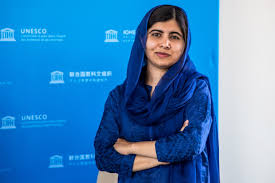
She was supporting the right to an education for girls, which was denied by the Taliban. I suggested that she come on my live show and speak her mind. Malala agreed. Within hours, she became a media star. Back then, thanks to the efforts of many defenders of our democratic institutions, it was possible for the Pakistani media to take a strong, public stand even in places dominated by the Taliban. Consider the contrast with the present. Today, Malala is a global celebrity. Yet recently the local authorities in Punjab province seized seventh-grade textbooks because they contained pictures of her. Today, though, the Pakistani media is no longer in a position to stand behind Malala — even though Punjab province is not ruled by the Taliban. It is ruled by the party of Prime Minister Imran Khan. Unfortunately, his government is showing its contempt for media freedom and working to suppress dissenting voices — just like the Taliban used to do in Swat. Although Pakistan is a democracy, journalists now fear that a crackdown on the media is in the offing. The government of Imran Khan is moving ahead with a law to create a new media regulator, to be called the “Pakistan Media Development Authority,” to oversee mainstream and social media. The body will have draconian powers. All the major media organizations have rejected this proposed “reform” with a single voice; some are calling it “media martial law.” The million-dollar question is this: Why does Imran Khan need a new regulatory body for the media, and why is the journalistic community so united against it? Information Minister Fawad Chaudhry has said the government plans to table the bill in parliament in the next few days, and that it will be imposed within 45 days after passage. The proposed law is just the latest stage of an effort to impose state control over all segments of the media by creating an overcentralized body to be headed by a top bureaucrat of the information ministry. According to the new law, all media outlets including social media platforms will require an annual waiver from the government to remain operational. Failure to comply will result in suspension and other penalties. For the first time in Pakistan’s history, special media regulatory authority will be introduced to punish “offenders” from the media with three years’ imprisonment and fines amounting to 25 million Pakistani rupees ($152,000 in U.S. dollars). When I asked Minister Chaudhry why his ministry wanted to establish media tribunals, he said: “We have only proposed fines for violating journalistic ethics.” He claimed: “The media tribunals will decide disputes between the media workers and the owners.” Yet, journalists can hardly be blamed for suspecting that this law is yet another attempt to legalize censorship. Many analysts think that the new proposed law does not bode well for democracy and that the Pakistani media is entering a new dark age. Many independent journalists as well as social media commentators are already facing false cases registered by the Federal Investigation Agency (FIA) under cyber laws. The most recent incident in this regard was the arrest of two vocal journalists from Lahore, Amir Mir and Imran Shafqat. Journalists have good reason to worry that the new law will only create new problems for the already brutalized and terrified media. The Afghan Taliban has captured Kabul, and their Pakistani allies are also returning to the Swat Valley and other parts of the country. A few days ago Prime Minister Khan praised the Afghan Taliban for, as he put it, “breaking the shackles of slavery.” And that raises an obvious question: So why is he making new shackles for the media in Pakistan? Pakistan needs a strong and free media to fight growing threat of extremism. “Media martial law” will only help those who can’t tolerate the pictures of Malala in our schoolbooks and who don’t want to see democracy in Pakistan flourish. The talk of an impending dark age for the media looks more justified by the day. https://www.washingtonpost.com/opinions/2021/08/23/pakistani-media-faces-new-crackdown/
She was supporting the right to an education for girls, which was denied by the Taliban. I suggested that she come on my live show and speak her mind. Malala agreed. Within hours, she became a media star. Back then, thanks to the efforts of many defenders of our democratic institutions, it was possible for the Pakistani media to take a strong, public stand even in places dominated by the Taliban. Consider the contrast with the present. Today, Malala is a global celebrity. Yet recently the local authorities in Punjab province seized seventh-grade textbooks because they contained pictures of her. Today, though, the Pakistani media is no longer in a position to stand behind Malala — even though Punjab province is not ruled by the Taliban. It is ruled by the party of Prime Minister Imran Khan. Unfortunately, his government is showing its contempt for media freedom and working to suppress dissenting voices — just like the Taliban used to do in Swat. Although Pakistan is a democracy, journalists now fear that a crackdown on the media is in the offing. The government of Imran Khan is moving ahead with a law to create a new media regulator, to be called the “Pakistan Media Development Authority,” to oversee mainstream and social media. The body will have draconian powers. All the major media organizations have rejected this proposed “reform” with a single voice; some are calling it “media martial law.” The million-dollar question is this: Why does Imran Khan need a new regulatory body for the media, and why is the journalistic community so united against it? Information Minister Fawad Chaudhry has said the government plans to table the bill in parliament in the next few days, and that it will be imposed within 45 days after passage. The proposed law is just the latest stage of an effort to impose state control over all segments of the media by creating an overcentralized body to be headed by a top bureaucrat of the information ministry. According to the new law, all media outlets including social media platforms will require an annual waiver from the government to remain operational. Failure to comply will result in suspension and other penalties. For the first time in Pakistan’s history, special media regulatory authority will be introduced to punish “offenders” from the media with three years’ imprisonment and fines amounting to 25 million Pakistani rupees ($152,000 in U.S. dollars). When I asked Minister Chaudhry why his ministry wanted to establish media tribunals, he said: “We have only proposed fines for violating journalistic ethics.” He claimed: “The media tribunals will decide disputes between the media workers and the owners.” Yet, journalists can hardly be blamed for suspecting that this law is yet another attempt to legalize censorship. Many analysts think that the new proposed law does not bode well for democracy and that the Pakistani media is entering a new dark age. Many independent journalists as well as social media commentators are already facing false cases registered by the Federal Investigation Agency (FIA) under cyber laws. The most recent incident in this regard was the arrest of two vocal journalists from Lahore, Amir Mir and Imran Shafqat. Journalists have good reason to worry that the new law will only create new problems for the already brutalized and terrified media. The Afghan Taliban has captured Kabul, and their Pakistani allies are also returning to the Swat Valley and other parts of the country. A few days ago Prime Minister Khan praised the Afghan Taliban for, as he put it, “breaking the shackles of slavery.” And that raises an obvious question: So why is he making new shackles for the media in Pakistan? Pakistan needs a strong and free media to fight growing threat of extremism. “Media martial law” will only help those who can’t tolerate the pictures of Malala in our schoolbooks and who don’t want to see democracy in Pakistan flourish. The talk of an impending dark age for the media looks more justified by the day. https://www.washingtonpost.com/opinions/2021/08/23/pakistani-media-faces-new-crackdown/
Sunday, August 22, 2021
Opinion: Yes, the Kabul withdrawal is a disaster. But Biden made the right decision on Afghanistan.

Opinion by Jonathan Capehart

This makes the Bidens part of a very small club. Beau’s service in the reserves made him among the less than 1 percent of adult Americans to serve in active duty in our nation’s all-volunteer military. And the president is the first commander in chief to have watched a child go to combat since Dwight D. Eisenhower. That means an overwhelming majority of the nation has no idea what members of the military and their families endure to serve their country. And this puts Biden’s bracing remarks on his Afghanistan decision into much-needed context.“So I’m left again to ask of those who argue that we should stay,” Biden said in his Aug. 16 remarks. “How many more generations of America’s daughters and sons would you have me send to fight … Afghanistan’s civil war when Afghan troops will not? How many more lives — American lives — is it worth?” After 20 years, more than $2 trillion and the deaths of 2,448 U.S. service members and thousands of Afghan civilians, the president wisely decided “no more.” https://www.washingtonpost.com/opinions/2021/08/22/yes-kabul-withdrawal-is-disaster-biden-made-right-decision-afghanistan/
Restricted, Intimidated Freedom of Press in Pakistan
Dr Qaisar Rashid
Background
On 28 May 2021, telecast on BBC’s Hard Talk, Stephen Sackur conducted an interview of Pakistan’s Information Minister Fawad Chaudhry, who played down reports regarding an increase in attack on independent journalists in Pakistan.
Comment
In the interview, in addition to projecting Pakistan’s misleading picture based on inaccurate figures and fallacious claims, Fawad Chaudhry made a deliberate attempt to tone down the worsening situation of the freedom of press in Pakistan. For instance, in an answer to a question, he said that the situation in Pakistan was not dangerous for journalists only, but it was also dangerous for every citizen because Pakistan was fighting the war on terrorism. By saying so, he tried to sweep under the carpet of the war on terror the restricted and intimidated freedom of press in Pakistan.
The elections of 2018 left Pakistan’s society fractured on the question of manoeuvering elections to benefit one political party against the others. The Pakistanis were expecting a fair deal in the elections, but in vain. The division got accentuated on various occasions, for instance, on the question of legally and publicly disparaging Justice Qazi Faez Isa, who held Pakistan’s top intelligence agency implicated in arranging a sit-in in Faizabad (Rawalpindi) to topple the then government of Nawaz Sharif. Resultantly, Justice Isa was accused of hiding foreign assets of his family members in his wealth statement. A tug of war ensued between vlog journalists who were supporting Justice Isa and those who were maligning him.
Vlog journalists seized attention because the mainstream electronic media have been under severe restrictions since 2018. Hundreds of reporters and dozens of independent minded talk show anchors have been shown the exit door. The idea was to purge the media of dissidents and recusants, especially those who could challenge interference. On 26 April 2021, the Supreme Court exonerated Justice Isa of any blame of misconduct. This was a moment of triumph for vlog journalists such as Asad Ali Toor supporting the cause of Justice Isa. To give Toor a snub, on 25 May 2021, three armed men in civvies forced their entry into his apartment in Islamabad, tortured him brutally damaging his arms and threatened him of dire consequences, if he continued ventilating his views. Woefully, in his interview, Fawad Chaudhry insinuated to the egregious dastardly incident and said that Toor staged a drama to seek attention of foreign countries in an attempt to seek asylum. This was an indecent statement.
Toor’s purported offence was two-pronged: first, he not only supported the cause of Justice Isa, but he also defused the malicious propaganda on social media against the honourable judge; and second, he raised a hue and cry on an attack on Pakistan’s renowned senior journalist, Absar Alam, a man of impeccable character. On 20 April 2021, when Alam was on a promenade outside his house in Islamabad, an armed miscreant targeted him with firing a bullet which pierced through his abdomen. Alam was rushed to a nearby hospital which saved his life. Alam is also supportive of the cause of Justice Isa, besides being a critic to the interference of intelligence agencies in the media.
In both instances of attack, the police got not only CCTV footages, which showed the faces of attackers, but also traces valuable for geo-fencing. The police, however, are still clueless displaying a deliberate ineptitude and incapacity to apprehend the assailants. Interestingly, those journalists have been targeted who are decriers to the incumbent government and the military regime.In his interview, Fawad Chaudhry also made an astounding claim that he did not consider a distinguished senior journalist Talat Husain a journalist at all. This was another unfortunate devious statement. Husain has been known to Pakistani viewers since 1991 when he used to host current affairs programs at the Government-run Pakistan Television, Islamabad. Husain also made his mark as one of the best column writers contributing to Pakistan’s English dailies, besides working for international media organizations.
In November 2018, Husain opted for abandoning his talk show Naya Pakistan (New Pakistan) on a private Tv channel instead of compromising his independent thinking and analytical exposition. After forsaking the Tv channel, Husain became a vlogger and has been successfully running his vlogs expressing his sovereign views. At the moment, he is the most popular vlogger in Pakistan and to watch his vlogs thousands of watchers wait patiently daily. Cleverly, Fawad Chaudhry tried to vilipend Husain. One reason could be jealousy, another could be an attempt to gratify those who are miffed at the criticism that Husain unbridles valiantly. Incidentally, Husain has also supported the cause of Justice Isa.
Understandably, Pakistan has been experiencing the China model of Procrustean governance marked by reduced opposition, controlled society and structured consent. The atrocious acts to structure consent have been instilling insecurity and uncertainty in people about the future of Pakistan. If journalists are balked at speaking and revealing the truth, society will be a victim of illusions. Recreant and compromised journalists are the bane of society. Further, to make an opinion, people have a right to have access to both sides of a story. Keeping people nescient and deluded would deprive them of having a correct vision of the future. Neither any intelligence agency nor the military junta is allowed by law to subdue one side of a view and highlight the other.
In short, the interview indicated clearly that Stephen Sackur was ill-prepared for the topic. The BBC team was short of research and Sackur did not confront Fawad Chaudhry with sufficient probing questions. Moreover, harrying journalists to achieve certain objectives is not a sign of a civilized society congruent with the modern age of information. In Pakistan, the freedom of press is both restricted and intimidated. No journalist, writer or vloger knows whose turn to get tortured and humiliated is next. Suffocation is ascendant. Pakistan needs immediate attention of the world.
https://en.humsub.com.pk/3014/restricted-intimidated-freedom-of-press-in-pakistan/
Killings and Mounting Cruelty Burst PR Efforts of an Unrepentant Taliban

@mazdaki
No ordinary civilian, police, or military carries whips. Only a sadist, barbaric group like the Taliban could brandish whips at the drop of a hat.
Antony: And let us presently go sit in council
How covert matters may be best disclosed,
And open perils surest answered.
Octavius: Let us do so. For we are at the stake
And bayed about with many enemies.
And some that smile have in their hearts, I fear,
Millions of mischiefs.
– William Shakespeare, in Julius Caesar
After completing a whirlwind military victory over Afghanistan, the Taliban is back in Kabul.Having captured the land, the Taliban wants to get legitimacy at home and recognition internationally. The jihadist group has used every terrorist tactic and brutality along the way but now wishes to be acknowledged and accepted as an ostensibly new and improved outfit that respects life and liberty.While the Taliban’s sweep across the country consisted of both battlefield victories and negotiated surrenders of the government forces and people’s resistance, obtained through monetary and tribal arrangements, it was also strewn with atrocities against the vanquished. But once inside the capital, the Taliban has spoken and acted with a cautious restraint, as if putting its best foot and face forward. And the maiden press conference by the Taliban’s spokesman Zabiullah Mujahid, who had only been heard but never seen in the 20 years prior, made it clear that the group has certainly become much more media-savvy over two decades. Zabiullah Mujahid was speaking at the state media and information centre. He first delivered prepared remarks and then took questions, which he answered in Pashto, Dari, and through an English interpreter. Mujahid chose each word carefully and meticulously laid out the Taliban’s immediate post-conquest agenda, directed clearly at both the domestic and international audiences. He spoke about the end of hostilities and a general amnesty for all pledged national reconciliation and no revenge or retribution, an outreach to former adversaries and a government inclusive of non-Taliban groups, assured of media freedoms and the rights of women within the confines of Shariah laws, and that the Taliban won’t allow the Afghan soil to be used by foreign transnational jihadists. So, if the Taliban is saying nearly all the right things, what is the problem then? Did everyone not want it to change and say that it has changed? Well, the Taliban has a very long history of brutality, treachery, and reneging on its words. It is, therefore, its actions – and not the ones in the remote past, but those leading up to and after seizing Kabul – that one has to look closely at to vet its words. For example, the very chair Zabiullah Mujahid sat in and spoke about reform and respect, which was previously occupied by the media centre’s civilian director, Dawa Khan Menapal. The Taliban assassinated Menapal just days prior to the presser and Mujahid had himself claimed the killing on behalf of the terror group. When asked about the assassination during the press conference, Mujahid deflected by saying that the previous government had started the fighting. He glossed over the fact that Menapal was not a military man but a civilian, whose targeted killing might even constitute a war crime. Mujahid’s reassurance to the journalists also sounded hollow. The Taliban had captured, tortured, and killed the Reuters’ photojournalist Danish Siddiqui, and then mutilated his body during their first major battlefield victory. After taking Kabul, the Taliban has raided the homes of several journalists and activists and killed a relative of a Deutsche Welle journalist. This forced others to go into hiding and erase their digital and cyber presence. The Taliban spokesman’s pledge to let women have the right to education and work was also contradicted by the fact his men had turned away a female broadcaster Khadija Amin when she showed up for work that day at the same building. The next day the Taliban fired Shabnam Dawran, another female presenter at the state-owned television. Outside the swamped Kabul airport, the Taliban whipped women and children trying to get in. That an armed insurgent untrained in policing can use harsh tactics could potentially be rationalised but why were they carrying medieval short snake whips begs the question of whether they planned to become moderate only after entering Kabul. No ordinary civilian, police, or military carries whips. Only a sadist, barbaric group like the Taliban could brandish whips at the drop of a hat. The Taliban’s claim of a general amnesty, including for the government forces, couldn’t be farther from the truth. The terrorist group is hunting for the members of the Afghan military and intelligence service, as well as for their relatives. The Taliban operatives are reportedly sifting through government databases to compile lists of servicemen and others, especially those who worked with the US and coalition forces.Fearing reprisals, scores of Afghan servicemen fled to the neighbouring countries, after the government’s collapse in Kabul, but the Taliban threatens to arrest or kill their relatives if they don’t turn themselves in. But that’s not it. The Taliban shot and killed common citizens who had come out to protest the militant group’s act of removing the tricolour Afghan national flag from the border crossings and the presidential palace and planting its emirate banner, as an anti-Afghan action. In cities across Afghanistan, including Kabul, men and women, who carried and planted the Afghan republic’s standard, had demonstrated against the Taliban and were beaten up or shot at and killed. The Taliban has assured religious freedom to the minorities, including the country’s sizeable Shia population. The group sent a delegation to Kabul’s Hazara Shia community, which attended a Muharram commemoration and subsequently provided security for the subdued Ashura processions. But in the Hazara heartland, the Bamiyan province, the Taliban blew up a statue of Abdul-Ali Mazari, a Hazara Shia leader who had led the resistance against its emirate in the 1990s. Mazari had been captured, killed, and possibly thrown out from a helicopter by the Taliban when he came to negotiate peace with them. But more importantly, Amnesty International has confirmed that the Taliban brutally tortured and massacred nine Hazara Shia men, after capturing the Ghazni province. A Human Rights Watch investigation had found that the Taliban had executed 44 detainees including civilians, after running over Kandahar. But Zabiullah Mujahid had blatantly lied and vehemently denied such a thing when the massacres were reported earlier. Like Zabiullah Mujahid’s every other claim, his assertion that the Taliban would not allow foreign fighters to operate from Afghan soil, is also a pack of lies. The slick, repackaged Taliban managed to assuage the west by executing Abu Omar Khorasani the leader of the Islamic State in Khorasan (ISIK), after taking him out of Kabul prison. While the Taliban, al-Qaeda, and most of the Tehrik-e-Taliban Pakistan (TTP) remain joined at the hip, they view and treat ISIS, especially the ISIK, as ideological and battlefield rivals. It was a no-brainer for an ascendant Taliban to eliminate a fierce competitor. But it’s another story when it comes to its affiliates. Reports had already emerged of foreign fighters pouring into Kabul and manning checkpoints under the aegis of the Taliban’s lethal terrorist wing, the Haqqani Network (HQN). Now, the Taliban has put the HQN in charge of security in Kabul as well as one of its primary negotiators with the former Afghan officials and leaders. As a UN report had also noted recently, the head of the HQN, Sirajuddin Haqqani is not only a deputy emir of the Taliban but also a member of al-Qaeda’s wider leadership. The Taliban has also freed thousands of al-Qaeda fighters from the Afghan government’s prisons it captured. The group has also sprung from prison Maulvi Faqir Muhammad, the deputy leader of its TTP cohort. Jubilant TTP cadres took out a cavalcade in Afghanistan, to celebrate his release, and both Faqir Muhammad and their emir Noor Wali Mehsud renewed their pledge of allegiance to the Taliban emir, Mullah Haibatullah Akhunzada. The Taliban’s actions clearly belie its claims of change, moderation, and tolerance. But why is it engaging in talks with the Afghan political, ethno-national, and religious leadership, when it has prevailed militarily? The answers are complex, but it seems that primarily, the Taliban and its chief patron, Pakistan, do not wish to repeat the experiences of 1992 and 1996 when war preceded any arrangement to govern and consolidate power. When the Mujahideen, backed by Pakistan, the US, and Saudi Arabia, toppled the communist government of Dr. Mohammad Najibullah in April 1992, they lunged at each other with a vengeance – a situation that Pakistan found impossible to manage. While Pakistan and Saudi Arabia managed to induce the Mujahideen into a coalition government then, the turf battles morphed into a fully-fledged civil war in which no side could prevail. Smarting from the mayhem, Pakistan subsequently sired and enabled the Taliban to get rid of the unruly Mujahideen, some of whom by then were being backed by India, Iran, and Central Asian Republics, and frustrating its desire to have a pliant Islamist regime in Kabul that toed its diktat. But the Taliban emirate faced continued armed resistance, from what became known in common parlance as the Northern Alliance, even after a bloody takeover of and planting its dreary banner in Kabul. International recognition, and therefore support, too remained elusive. Simply put, the plan this time around is for the Taliban to avoid a large-scale armed confrontation with the remnants of the republic and other ethno-national forces able or willing to resist, gain international recognition along with monetary and material support, and consolidate its rule. In essence, it is a continuation of the Taliban strategy vis-à-vis the US to continue preparing for war, while talking peace. The Taliban and its backers in the Army General Headquarters in Rawalpindi, Pakistan wish for the emirate to be eased in rather than appear to have been thrust upon Kabul. That the war-weary, defeated and demoralised Afghan people and leaders, have no appetite for another round of armed conflict, makes the Taliban’s job easier. The Taliban’s co-founder and deputy leader, Mullah Abdul Ghani Baradar, and the HQN’s Khalil Haqqani and Anas Haqqani are in talks with the former president Hamid Karzai, Chairman of the now-defunct High Council for National Reconciliation Dr. Abdullah Abdullah, leader of the Hizb-e-Islami, Gulbuddin Hekmatyar, and former parliamentarians. With Joe Biden telling them “drop dead”, the Afghan state and army collapsed, and the Taliban fully in control militarily, there’s not much leverage that any of these interlocutors carry. Another group of Afghans, largely from the northern provinces, held talks with Pakistani officials in Islamabad and conceded that “peace in the region does not seem possible without an alliance with Pakistan.” For Afghans, there are bad options and worse options, it seems. The Taliban, for its part, is likely to keep the Afghan rivals engaged but not compromise on its core tenets, including establishing an emirate. The so-called Shura or consultative democracy is the most it would allow while keeping tight control over who gets to be part of it. Chances are slim to none that it would agree to any form of representative democracy. The scenes at the Kabul airport show that when the Taliban is an “option”, the Afghan people vote with their feet. The Taliban’s talk of inclusive government is essentially a ruse to keep its enemies closer, till it consolidates a ruthless control over the country. It also needs to keep up the façade to get its leadership off the sanctions lists, get international recognition, and have the Afghan state’s assets unfrozen and released along with other aid. In an extremely unlikely event – and in the face of all the evidence to the contrary – that the Taliban leaders actually mean what they say, they will have an internal crisis at their hand. They could not run an armed terrorist insurgency for two decades in the name of an extreme version of Shariah, only to tell the cadres that after prevailing they are supposed to act moderately.Even if seen to be lenient, the Taliban would have an internal rebellion from the hardliners, at its hands and risk defections and disarray. The Taliban cannot and will not risk alienating its own cadres and constituents who do expect the austere emirate that they have been promised, to take effect now.On the other hand, the overwhelming Afghan population, not just the urban centres and Kabul, have become accustomed to civil liberties over the last two decades. Most Afghans have experienced the freedoms of expression, organising, protesting, and voting even if in flawed elections. Girls going to school and women to the workplace have been the norm for post-2001 Afghanistan. A vibrant media with dozens of television outlets, including entertainment channels, have been part of Afghan life. Above all, Afghanistan is a very young and new country compared to the one at the height of the Taliban’s previous emirate. As the founder of the country’s largest media group, Saad Mohseni said, “Sixty-five percent of the population is under the age of 20, the median age is 18 … the younger generation of Afghans have never lived under the Taliban rule and that they’re used to media, they’re used to being able to freely express themselves. They’re used to social media.” The Taliban, its ruse notwithstanding, will have to contend with the new realities of the country it seeks to control and rule. The Taliban is in essence an anti-Afghan enterprise set in motion by its Pakistan army patrons, to deface and obliterate the Afghan national identity. It remains incompatible with the Afghan people and society and is bound to see resistance to its rule, as the Afghans recover from the shock and trauma of betrayal, surrender, and defeat. Whether the small pocket of armed opposition launched by the former Vice President Amrullah Saleh, who has declared himself the president and Ahmad Massoud, a son of the legendary anti-Soviet and anti-Taliban commander, Ahmad Shah Massoud, gains traction or makes peace, remains to be seen. The potential transitional or ostensibly inclusive permanent Taliban government would delay a more formidable challenge to the jihadist rule but not eliminate it permanently. The Taliban has a million mischiefs in its heart, no matter what face it puts on. But the pretence won’t last long and would inevitably entail confrontation and resistance. Afghanistan has a long and perilous road ahead.
https://thewire.in/south-asia/afghanistan-taliban-haqqani-network-cruelty
Pakistan - Women under attack - On Independence Day…

By Ahsan Zia
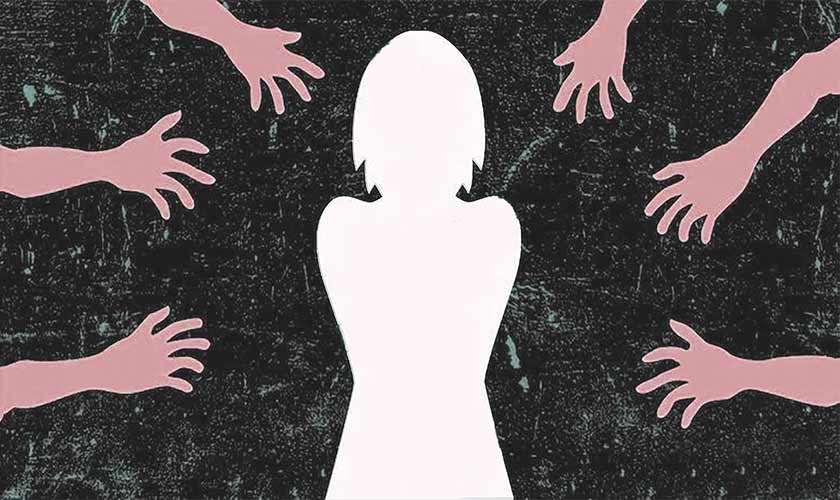
This August 14 proved to be a horrific reminder of the fact that women aren’t safe in our society, especially in public spaces. On the very Independence Day itself, Lahore’s Greater Iqbal Park, formerly Minto Park, the historical venue where the Pakistan Resolution was passed, stood witness to an incident that shook the entire nation and put all official declarations and celebrations of freedom to shame. In broad daylight, a lady was mobbed, harassed and molested by hundreds of men, apparently random visitors out on a holiday. The highly condemnable incident came to light after a video went viral on social media, showing yet again that violence against women is rampant in the society. Reportedly, the victim was in the park with four friends. They were engaged in making fun videos for TikTok when a group of unruly men jumped a security fence and attacked her. She lost consciousness, but the mob kept molesting her for almost three hours. Shockingly, neither the police nor anyone from among the large crowd tried to intervene. In fact, some people were spotted videoing the incident. Later, the victim informed the police that she had come to Minar-i-Pakistan dressed in a shalwar kamees in the colours of the national flag, to celebrate the Jashn-i-Azadi. She said she was groped, her dress was torn off and she was tossed in the air. She was also robbed of Rs 15,000 that she was carrying. Besides, her cell phone was snatched, and her gold ring and studs taken away. She said that her friends had tried to call 15, but got no help. Eventually, the park’s security guard came to her rescue and managed to get her out. The Lorry Adda police have registered a case against the 400 unidentified assailants, under Sections 354-A, 382, 147, and 149 of the Pakistan Penal Code. The ugly episode belies tall claims by the city police regarding the efficiency of their quick-response (emergency) services. Had the police responded in time, the incident could have been averted. Prime Minister Imran Khan and Chief Minister Usman Buzdar have taken notice of the incident and ordered the law enforcement agencies to catch the culprits in the shortest possible time. The PM has personally had a word with the Punjab Police inspector general and urged him to take all measures necessary to apprehend the molesters.CCPO Ghulam Mahmood Dogar says the suspects are being identified using videos of the incident that went viral on social media. A number of photos and videos have already been sent to the NADRA to determine the identities of the people.Where the Operations Wing of the police failed to respond in time, the Investigations Wing is trying to make up for it. Four of the suspects have already been arrested. Talking to TNS, SSP Mansoor Aman, who is heading the probe, said a “breakthrough has been made. We’ve apprehended four of the culprits. They were identified from the footage circulating on social media and recorded by the Safe City Authority cameras installed at the park.” According to Aman, two of the apprehended men are residents of Lahore. The other two belong to other parts of the Punjab. He speaks of a dozen other suspects who have been rounded up by the police. “The accused are being investigated and we hope that others involved [in the incident] will also be nabbed shortly.” Aman says that during the geo-fencing of the crime scene, the police had collected the record of cellular phone connections of more than 28,000 people. “Sifting through this record to identify the 400 culprits is a time-consuming job,” he says. “It requires time, energy and resources. Besides, the validity and efficacy of the National Database and Registration Authority (NADRA)’s data in this regard is not up to the mark. We’re doing our best!” CCPO Ghulam Mahmood Dogar seconds Aman, saying that the suspects are being identified using videos of the incident that went viral on social media. Besides, a number of photos and videos have been sent to the NADRA to determine their identities. Assad Abbas Butt, a lawyer, says the culprits are unlikely to get easy bail. He says that Section 354-A of the PPC provides that whoever assaults or uses criminal force against a woman and strips her of her clothes, and in that condition, exposes her to public, shall be sentenced to death or imprisoned for life, and shall be liable to heavy fine. TNS has learnt that the IGP Inam Ghani has taken serious notice of the irresponsibility and slackness shown by the police in the Greater Iqbal Park incident. On Friday evening, he transferred the Operations SSP, Syed Nadeem Abbas, and the Additional SP in charge of City, Hassan Jahangir, and ordered them to report to the Central Police Office. The Badami Bagh SDPO, Umair Haider, and Lorry Adda SHO, Muhammad Jamil, have been suspended from service. Besides, DIG operations Sajid Kiani has been removed from his post. https://www.thenews.com.pk/tns/detail/881136-on-independence-dayAs the police nab some of the culprits in the highly condemnable Greater Iqbal Park incident, a lot remains to be done for the safety of women in our society.
Saturday, August 21, 2021
Why Do We Shout When We Argue? Lack of Confidence

By Vanessa Bohns

Ironically, the more assertive we are, the less persuasive we become.
Using similar methods, researchers have found that the average person thinks of himself or herself as better in myriad ways (more moral, creative, athletic, even a better driver) than the average person—a statistical impossibility.In contrast to those findings, research has recently converged around a very different conclusion when it comes to our beliefs about our social proficiencies, such as our ability to win friends and influence people. In one study reported in the Journal of Personality and Social Psychology in 2017, participants were asked to indicate their answers to survey items such as who had more friends, was part of more social circles and had a wider social network—themselves or other people. Participants displayed classic overconfidence on several nonsocial items; for instance, they believed they had larger vocabularies than other people. But they were decidedly underconfident on the social items, believing themselves to have fewer friends, smaller social circles and narrower social networks than other people. A number of other studies published in the last five years have revealed people’s tendency toward underconfidence in the social domain. For example, people surveyed when exiting a public space believed other people had been less interested in them than they were in the people around them. People interviewed following a brief conversation with a stranger thought the other person had liked them less than that person had indicated having liked them to the experimenters. Participants who were asked to predict how difficult it would be to get others to comply with their requests found that it was easier than they expected to convince both friends and strangers to agree to do an annoying and tedious task, such as counting beans in a jar. Together, these two seemingly contradictory, but actually complementary, sets of findings create a perfect storm that leads to shouting. Believing ourselves to be more moral and less biased than other people makes us overconfident in the things we believe. At the same time, assuming that others are not paying attention to us and not listening to what we have to say makes us underconfident in our ability to get our opinions out there and convince others of them. In other words, we shout because we feel as if we are shouting into the void. Ironically, overcompensating for lack of confidence in our proficiency as influencers leads us to use overly assertive language, which is actually an ineffective tool for persuasion. In this way, our pessimism can become self-fulfilling, leading to a downward spiral of dwindling influence as we shout louder and louder to be heard. In one series of studies, a group of researchers directly examined the question of whether people overestimate how assertive they need to be in order to be persuasive. Participants were asked to choose between two types of messages to persuade someone to make a health change—one relatively gentle, one more “shouty” and commanding. The experiment also employed different scenarios about how important the stakes were and whether the target of the message was receptive to advice or not. The researchers found that people chose the assertiveness of their messages based solely on how important they thought the issue was and ignored the other person’s receptiveness. When they felt the stakes were high, they chose the “shoutier” message regardless of the other person’s openness to advice. We know from research on persuasion that this is the exact wrong thing to do if you want to persuade someone. In other work, the same group of researchers found that those very sorts of assertive messages tend to backfire in reality, particularly when the other person is less receptive. Indeed, the effectiveness of softer appeals for persuasion has been extensively documented by experts who have studied message assertiveness in the domain of health communication, including campaigns to reduce smoking and increase exercise. People’s intuitions about how to get across their opinions and advice run counter to decades of research on persuasion and social influence, which shows that less is often more. We shout because we don’t think people will listen to us otherwise. As a result, we are overly assertive when trying to get our message out there, despite the fact that our arguments, advice and appeals would actually be more effective if we made them a little gentler. https://www.wsj.com/articles/why-do-we-shout-when-we-argue-lack-of-confidence-11629518461?mod=hp_listb_pos1
Pakistani Religious Minorities Protest Forced Conversion Of Girls
Dozens of Pakistani religious minority activists rallied in Islamabad on August 11 against the forced conversion of girls, often as a precursor to marriage.
The activists marched from the National Press Club toward the parliament and held banners and chanted slogans seeking government action to stop such conversions to Pakistan's official religion, Islam.The protest was organized by the Minorities' Alliance Pakistan, a political party established in 2002.
Some of the demonstrators held images of Shahbaz Bhatti, the party's founder, who served as minority affairs minister from 2008 until his assassination in 2011.
Bhatti was shot dead in Islamabad after campaigning against Pakistan's widely criticized blasphemy laws.
Nearly 97 percent of Pakistan's population of around 238 million people are Sunni or Shi'ite Muslim, but there are small Hindu and Christian communities.Critics cite the routine targeting of young women from Pakistan’s Hindu minority for simultaneous conversion to Islam and marriage to Muslim men -- often under alleged coercion.
Some have dubbed the most notorious hubs for such processes "conversion factories."
The protest against the forcible conversion follows a mob attack on a Hindu temple in the province of Punjab after an 8-year-old Hindu boy was charged under Pakistan's stringent blasphemy laws, which are often abused and frequently used to target minorities like Hindus and Christians.
https://gandhara.rferl.org/a/islamabad-protest-religious-conversions/31405032.html
China condemns suicide bombing in Balochistan, calls security situation in Pakistan ‘severe’

A suicide bombing in Gwadar Port, Balochistan, Friday evening on a vehicle carrying Chinese nationals led to the deaths of two local children and four were injured.New Delhi: China Friday condemned the suicide bomb attack in Pakistan’s restive Balochistan area on a vehicle carrying Chinese nationals that led to the deaths of two Pakistani children while four others were injured. In a statement, the Chinese Embassy in Pakistan highlighted that the security situation in Pakistan has been “severe” recently and that there have been several terrorist attacks one after the other that have resulted in Chinese casualties.It added that the embassy “launched the emergency plan immediately, demanding Pakistan to properly treat the wounded, conduct a thorough investigation on the attack, and severely punish the perpetrators”. The embassy also asked Chinese citizens in the country to remain vigilant. The suicide blast took place at the East Bay Road in the port of Gwadar Friday evening in Pakistan’s southwestern Balochistan province.Pakistan’s interior ministry was quoted as saying that a young boy ran out of a fishermen colony nearby and exploded himself about 15-20 meters from the convoy. “The Chinese Embassy in Pakistan strongly condemns this act of terrorism, extends its sincere sympathies to the injured of both countries, and expresses its deep condolences to the innocent victims in Pakistan,” noted the embassy statement.
#Pakistan - #Lahore - Assistant commissioners with ‘rich family background’ in #Punjab perform poorly, reveals confidential report

Relatives of important personalities, who are serving as senior bureaucrats in the Punjab province, have failed to perform their duties, reveals a confidential report of the Punjab government. Out of the 143 Assistant Commissioners (ACs) in Punjab, those posted in the capital city of Lahore had the most disappointing output and execution of their duties, highlights the report, a copy of which is available.
The bureaucrats were ranked on the basis of public opinion, a secret poll and feedback from their subordinates. Ibrahim Arbab, the son of Shehzad Arbab, the special assistant to the prime minister on establishment in the establishment division, ranked 132 out of 143. The younger Arbab is the assistant commissioner of Model Town in Lahore.
Zeeshan Ranjha, the nephew of the chief election commissioner, got a scorecard of 134 out of 143. Ranjha is the assistant commissioner in Lahore Cantt. While the commissioner in Lahore City ranked 138 and that of Raiwind, 139. However, the top performers, who ranked in Category A, were the assistant commissioners in Chak Jhumra, who ranked first. The civil servant in Sargodha ranked second and the one in Layyah, came in third.
The commissioner in Taunsa, the hometown of the chief minister Punjab, also had a dismal performance and received a rank of 141. In fact, the bottom three performers were Taunsa, Attock and Hazro.
How the Taliban Used Pakistan


We are witnessing the Taliban’s rendition of a “good/bad” strategy. “Good” Pakistan helped Taliban leaders dodge the U.S.-led forces, while diverting some of the resources taken from the West toward the Taliban. “Bad” Pakistan now believes the Taliban have any geopolitical, or ideological, obligation to reciprocate.To ensure Talibanization in Afghanistan, and Islamist inertia at home, Pakistan sacrificed over 80,000 of its citizens, which the military establishment has loudly dubbed “collateral damage.” The investment in the project was to such an extent that immediately after the Trump-Taliban deal, Prime Minister Imran Khan began echoing eulogies for Osama bin Laden. This week, Khan touted the Taliban takeover as “breaking shackles of slavery,” prompting demands in the United States to cut aid to Pakistan. The ubiquitous cheerleading for the Taliban’s triumph delineates the extent to which the pro-Taliban Islamist rhetoric has been etched in Pakistan. While Pakistan’s Islamization was an inevitable corollary of its birth and sustenance as a multiethnic realm, the mullah-military takeover has been the result of both regional and domestic ambitions of the army. This has translated into a political setup in Pakistan where today both the prime minister and the leader of the antigovernment opposition coalition are unflinching Taliban cheerleaders. However, in the decades dedicated to sustaining an Afghanistan that suits the Taliban, the military establishment has also created a Pakistan that suits the Taliban.The Taliban’s vocal allies, this side of the border, are those that excommunicated the Pakistan Army and launched some of the most brutal attacks in the country to “establish true Islam.” The gory Islamic Sharia might be incorporated in the Pakistan Penal Code, but will be more visibly implemented in Afghanistan. The rhetoric of Medina state might be echoing in Islamabad, but will be more accurately mimicked in Kabul. What, then, is stopping the Taliban from channeling these political narratives, and its jihadist allies, to aspire to align Pakistan with Afghanistan’s strategic interests, and not the other way around? Pakistan, and the army that runs it, are completely subservient to China, but have failed to reassure Beijing that Islamabad can safeguard the China-Pakistan Economic Corridor (CPEC) from the country’s multipronged militancy. Such has been the fixation with Talibanization in Afghanistan that Islamabad has seemingly been willing to alienate China just to cling on to its duplicitous security policy of picking and choosing jihadist groups, which the establishment believes are its sure-shot bet to dictate matters along the Af-Pak border. What if the Taliban convince Beijing that they can be better orchestrator of these groups? Already agreeing to facilitate China’s crackdown on Uyghur separatists and the East Turkestan Islamic Movement, the Taliban have $1 trillion worth of Afghanistan’s mineral wealth to offer Beijing as well. If the group can also become a more convincing guarantor of projects currently affiliated with CPEC, the fulcrum of the $1.9 trillion worth Belt and Road Initiative (BRI), not only can the Taliban forge a stronger alliance with China, the group can also help extend its influence across the Af-Pak frontier, which it doesn’t recognize as a border. The Pakistani Taliban have duly been making gains in synchrony with the Afghan Taliban’s return to power. And if South Asian jihadist outfits continue to gravitate toward the consolidated Islamic Emirate, they would be more than willing to create turmoil in Pakistan as the Taliban’s strategic assets.
https://thediplomat.com/2021/08/how-the-taliban-used-pakistan/
Chairman PPP Bilawal Bhutto Zardari strongly condemns the terrorist attack on a Chinese cavalcade in Gwadar

https://www.ppp.org.pk/pr/25366/
Friday, August 20, 2021
Subscribe to:
Posts (Atom)