Saturday, August 14, 2021

I recently worked in Kabul and weep for all my Afghan friends, who we’re abandoning to their deaths. Here’s why our mission failed

Kevin Hurley is a former senior police officer and reservist army officer. He has completed two tours in Iraq and two in Afghanistan working on security sector reform. He now specialises in advising on policing and security development in fractured nations.
Afghanistan’s falling apart again and the Taliban’s on the brink of victory, as I predicted. So, why did the 20-year US-led occupation fail? Because it refused to tackle the rampant corruption that pervades all echelons of power. Knowing that in less than three hours, you will be in Kabul, the most dangerous capital city in the world, makes boarding the pristine Emirates flight from Dubai a surreal experience. This spring I did just that, as I went to join the United Nations Development Programme mission in Afghanistan as its expert advisor on policing and security.

I knew what to expect. I’d spent a year there, before Covid broke out, as a senior adviser for policing, working directly with the Afghan government and senior NATO commanders. I even advised the US’s four-star commanding general, the Afghan minister of the interior and the chief of police.
During that time, I saw at first hand why America and the West’s mission in the country was doomed to fail, despite the spending of two trillion dollars and the best efforts of hundreds of thousands of brave, clever, passionate soldiers and civilians, many now dead or maimed. The attempts of the international community to resist the Taliban and Islamic State Khorasan (IS-K), IS’s even nastier offshoot in the country, fell foul of the landscape of insurgencies, terrorism and ever-shifting political and tribal allegiances. But its main killer was the Big C: corruption.
My flight this May, like so many before, still had some Afghan ‘businessmen’ returning with empty attaché cases that once held US dollars sent to be laundered in the Emirates, as well as many tough-looking bearded Western men in khaki chinos and adventure jackets, their eyes veiled under baseball caps. These were the contractors who come from all over the world to try to make a difference or chase the big money or both, just like me. The US’s and NATO’s wars, occupations and counter-terrorism operations are a lucrative business.
These men work in every field, doing virtually everything needed to keep the Western involvement going. Among them are IT consultants, aerospace engineers maintaining the Afghan air force, firefighters crewing the airport crash tenders and, of course, the countless armed bodyguards working for embassies, commercial organisations and NGOs.
By March, it was already clear that the Taliban was breaking the peace agreement it had made with the Trump administration – a deal done without the US having consulted with the Afghan government or listened to NATO allies.
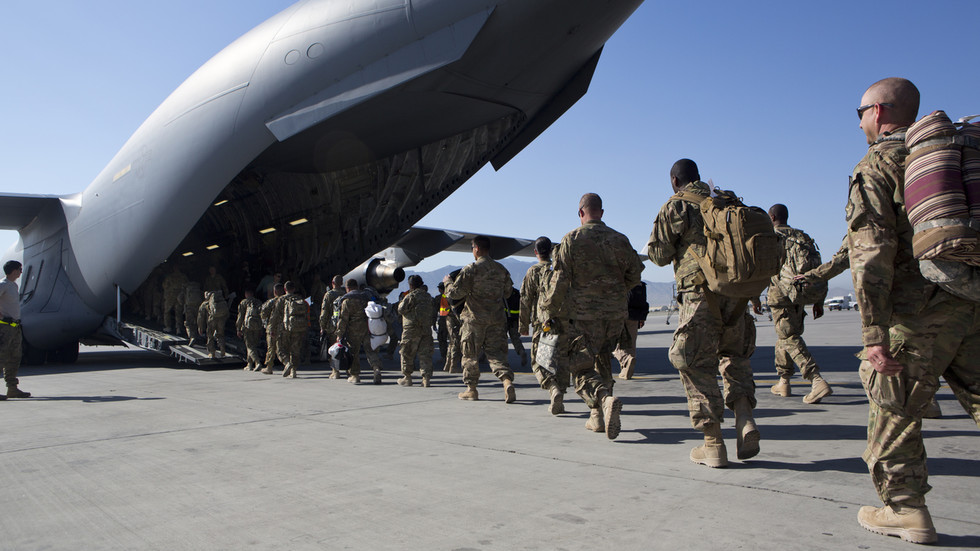
I knew from past experience that, as we came into land at Kabul, I would get a sense of foreboding, like a finger pressing hard into the back of my neck, reminding me that we were about to enter an extremely hazardous place, and that this apprehension would pervade everything and would not lift until I was on the flight out of there. After all, from the moment you land at Hamid Karzai International Airport, you are ‘in play’. As your aircraft taxis past the Afghan air force and NATO fighters on the north side of the runway, rockets or mortars could come screaming down, spraying razor-sharp splinters of jagged steel. Or that uniformed policeman could turn his gun on you in one of the notorious and frequent ‘green-on-blue’ attacks. The size of the military investment in the country is easy to see, with rows of Afghan military helicopters and light ground-attack planes filling my window, only to be replaced by the chattering Chinooks, Blackhawk and Puma helicopters of the NATO forces as they go about their daily bus services ferrying diplomats, soldiers, NATO civilians and letters to protected bases in other parts of the city. It’s far too dangerous to travel by road. Just a few short months later and they are nearly all gone, along with all the US and NATO troops. To avoid being shot at, the choppers were taken away by stealth overnight, packed into huge C-17 military transports or hired Russian-built Antonov freighter aircraft, rotor blades folded, ready to be used in some other conflict.
As for the Afghan helicopters and light-attack fighters parked by the runway, quite a few have simply stopped flying. That’s partly because some of the Afghan pilots have given up and partly because the number of US contractors who maintained them has been greatly reduced. The men with beards and baseball caps know when the party’s over and it’s time to move on.
Passing through passport control, one’s apprehension grows. A suicide bomber could detonate him- or herself as you collect your baggage, rockets could hit the terminal building, you could be kidnapped as you walk into the car park looking for your transport, or a car bomb could blow up as you pass by. Finding my transport that day – two white UN-marked armoured Toyota Land Cruisers driven by two local employees – was unnerving. Would I be able to locate them? When I did, could I trust them not to kidnap me and sell me to terrorists, cashing in an insurance policy as the country was starting to fall apart? I was reassured to find both my new colleagues were like so many of the quietly humble, brave, clever Afghan people who have worked with the international community since we have been there. My driver, Abdul, a family man with four children, could not have been more welcoming. As we drove the five miles to our huge, protected compound, he told me about his family and offered to buy me fresh fruit and – since my suitcase had been mislaid in transit – clothes at the local market.
Although I’d been in war zones in Iraq and Afghanistan before, his chatter eased some but not all my concerns. I scanned anyone I saw on a motorbike to see if they were going to attach a magnetic improvised explosive device to our roof to defeat the armour-plated sides of the car. My research had told me this was the latest weapon of choice in this city, which is one that bristles with every conceivable means of inflicting death.
Derelict and abandoned, once-fortified NATO or Western commercial-company bases were scattered all along our route, and I wondered which might be home to a rocket-launcher looking for a target. Arriving at the UN compound at last, I cast an experienced eye over the fortifications and security guards. I was reassured that they were sound. I even smiled a wry smile when I saw there was a large protection team made up of former Gurkha soldiers – fearsome warriors with a smile for their friends, and a kukri (their standard-issue bladed weapon) for their enemies.
I hoped that, working with the UN, I might be able to help to improve things and, of course, make some money into the bargain. The place and staff certainly seemed well set up, with plenty of dedicated professional people from all over the world supported by many locals such as my drivers – all well-educated and capable Afghans.
Little did I know that, within weeks, the new US president would pull the rug from under the whole international edifice by unilaterally withdrawing his troops, as allied nations rushed to scuttle out with them. In truth, I don’t blame them.
As most of us predicted, the Taliban have since seized on this retreat and are now maximising their opportunity to grab cities and towns – Kabul too, most likely – before the freezing winter makes fighting too difficult. Assassinations of public officials and attacks on power supplies reinforce the impending threat to the capital. Meanwhile, IS-K carries on killing or bombing pretty much anyone it pleases, organised crime in all its forms is flourishing, and kidnappings are rife.
The Afghan government, while putting up a front of resistance rhetoric, is in disarray. The president is reacting like many despots before him: firing and replacing ministers, generals and police chiefs in a desperate bid to blame others for the debacle and retain some semblance of power. His army and police, who are really used as light infantry soldiers, are deserting in droves. You cannot blame them; thousands have not been paid for months.

 The money donated by the international community for their salaries continues to be stolen by their corrupt political, army and police bosses. It’s been going on for years. We all knew about it, but did nothing effective to stop it. The political will was not there. Better to say nothing to avoid embarrassing donor governments. Perhaps that tells you why Afghanistan is going the way it is so fast. 

 Virtually everything the donors have tried to fund – from hospitals to schools to fire engines to police uniforms – gets stolen or misused by the people in power. The very people who now are fleeing the mess to live in apartments or houses bought in Ankara, Istanbul, Dubai, Virginia or Southern California with stolen international donations. I recall an FBI financial crime specialist colleague telling me how dishonest Afghan public officials were laundering the monies meant for the people of Afghanistan through banks in the United Arab Emirates and the British Channel Isles.
Meanwhile, the praetorian guards of this failing government, the Afghan special forces and commandos, continue to fight increasingly bitter battles against the Taliban with failing air support, and try desperately to hold or recover terrain lost by their regular army colleagues or the police as they desert. They do so in the certainty that, if captured, they will be murdered. These very capable troops, trained and now deserted by NATO, have nowhere to go. Just like the South Vietnamese marines and rangers in 1975, their fate is to fight to the death. They have no other choice.
Around the country, various warlords are resurrecting themselves, alongside organised narco-criminals, to protect their own enclaves and wealth. Tribal leaders are making security deals with others. In Afghanistan, it is ever thus. The future for ordinary Afghan people – the women and children who have gained so much in terms of basic human rights, especially in the cities – looks grim. What we are seeing now is almost straight out of the playbook we saw unfold back in Vietnam. Who can forget the pictures of the US Embassy in Saigon as people scrambled to get onto helicopters to escape to the aircraft carriers waiting offshore. This time, in Afghanistan, there are no ships waiting. The sea is too far away in this landlocked ‘graveyard of the empires’.
As for the next Western international military intervention, if there is one, I have one piece of advice. It is the same that doubtless many hundreds, if not thousands, of specialists like me have given as they tried to tell truth to power: read the manuals and theses on countering insurgency before you start on your adventure. There are thousands of them to be found in every military academy and university in the US, UK, Europe and beyond.
They all say one thing: the human terrain is the vital ground to capture and military methods are rarely decisive. They all ought to say, as well: Don’t back a corrupt government or you’ll lose.
May the Lord help the people, especially the women, of Afghanistan now.
https://www.rt.com/op-ed/532036-kabul-afghanistan-taliban-fail/

Taliban Sweep in Afghanistan Follows Years of U.S. Miscalculations

By David E. Sanger and Helene Cooper
An Afghan military that did not believe in itself and a U.S. effort that Mr. Biden, and most Americans, no longer believed in brought an ignoble end to America’s longest war.
President Biden’s top advisers concede they were stunned by the rapid collapse of the Afghan army in the face of an aggressive, well-planned offensive by the Taliban that now threatens Kabul, Afghanistan’s capital.
The past 20 years show they should not have been.
If there is a consistent theme over two decades of war in Afghanistan, it is the overestimation of the results of the $83 billion the United States has spent since 2001 training and equipping the Afghan security forces and an underestimation of the brutal, wily strategy of the Taliban. The Pentagon had issued dire warnings to Mr. Biden even before he took office about the potential for the Taliban to overrun the Afghan army, but intelligence estimates, now shown to have badly missed the mark, assessed it might happen in 18 months, not weeks.
Commanders did know that the afflictions of the Afghan forces had never been cured: the deep corruption, the failure by the government to pay many Afghan soldiers and police officers for months, the defections, the soldiers sent to the front without adequate food and water, let alone arms. In the past several days, the Afghan forces have steadily collapsed as they battled to defend ever shrinking territory, losing Mazar-i-Sharif, the country’s economic engine, to the Taliban on Saturday.
Mr. Biden’s aides say that the persistence of those problems reinforced his belief that the United States could not prop up the Afghan government and military in perpetuity. In Oval Office meetings this spring, he told aides that staying another year, or even five, would not make a substantial difference and was not worth the risks.
In the end, an Afghan force that did not believe in itself and a U.S. effort that Mr. Biden, and most Americans, no longer believed would alter the course of events combined to bring an ignoble close to America’s longest war. The United States kept forces in Afghanistan far longer than the British did in the 19th century, and twice as long as the Soviets — with roughly the same results.
For Mr. Biden, the last of four American presidents to face painful choices in Afghanistan but the first to get out, the debate about a final withdrawal and the miscalculations over how to execute it began the moment he took office.
“Under Trump, we were one tweet away from complete, precipitous withdrawal,” said Douglas E. Lute, a retired general who directed Afghan strategy at the National Security Council for Presidents George W. Bush and Barack Obama. “Under Biden, it was clear to everyone who knew him, who saw him pressing for a vastly reduced force more than a decade ago, that he was determined to end U.S. military involvement,” he added, “but the Pentagon believed its own narrative that we would stay forever.”
“The puzzle for me is the absence of contingency planning: If everyone knew we were headed for the exits, why did we not have a plan over the past two years for making this work?”
A Skeptical President
From the moment that news outlets called Pennsylvania for Mr. Biden on Nov. 7, making him the next commander in chief for 1.4 million active-duty troops, Pentagon officials knew they would face an uphill battle to stop a withdrawal of American forces from Afghanistan. Defense Department leaders had already been fending off Mr. Biden’s predecessor, Donald J. Trump, who wanted a rapid drawdown. In one Twitter post last year, he declared all American troops would be out by that Christmas.
And while they had publicly voiced support for the agreement Mr. Trump reached with the Taliban in February 2020 for a complete withdrawal this May, Pentagon officials said they wanted to talk Mr. Biden out of it. After Mr. Biden took office, top Defense Department officials began a lobbying campaign to keep a small counterterrorism force in Afghanistan for a few more years. They told the president that the Taliban had grown stronger under Mr. Trump than at any point in the past two decades and pointed to intelligence estimates predicting that in two or three years, Al Qaeda could find a new foothold in Afghanistan. Shortly after Lloyd J. Austin III was sworn in as defense secretary on Jan. 22, he and Gen. Mark A. Milley, the chairman of the Joint Chiefs of Staff, recommended to Mr. Biden that 3,000 to 4,500 troops stay in Afghanistan, nearly double the 2,500 troops there. On Feb. 3, a congressionally appointed panel led by a retired four-star Marine general, Joseph F. Dunford Jr., publicly recommended that Mr. Biden abandon the exit deadline of May 1 and further reduce American forces only as security conditions improved.
A report by the panel assessed that withdrawing troops on a strict timeline rather than how well the Taliban adhered to the agreement heightened the risk of a potential civil war once international forces left.
But Mr. Biden, who had become deeply skeptical of American efforts to remake foreign countries in his years on the Senate Foreign Relations Committee and as vice president, asked what a few thousand American troops could do if Kabul was attacked. Aides said he told them that the presence of the American troops would further the Afghan government’s reliance on the United States and delay the day it would take responsibility for its own defense.
The president told his national security team, including Secretary of State Antony J. Blinken and his national security adviser, Jake Sullivan, that he was convinced that no matter what the United States did, Afghanistan was almost certainly headed into another civil war — one Washington could not prevent, but also, in his view, one it could not be drawn into.
By March, Pentagon officials said they realized they were not getting anywhere with Mr. Biden. Although he listened to their arguments and asked extensive questions, they said they had a sense that his mind was made up.
In late March, Mr. Austin and General Milley made a last-ditch effort with the president by forecasting dire outcomes in which the Afghan military folded in an aggressive advance by the Taliban. They drew comparisons to how the Iraqi military was overrun by the Islamic State in 2014 after American combat troops left Iraq, prompting Mr. Obama to send American forces back.
“We’ve seen this movie before,” Mr. Austin told Mr. Biden, according to officials with knowledge of the meetings.
But the president was unmoved. If the Afghan government could not hold off the Taliban now, aides said he asked, when would they be able to? None of the Pentagon officials could answer the question.
On the morning of April 6, Mr. Biden told Mr. Austin and General Milley he wanted all American troops out by Sept. 11.
The intelligence assessments in Mr. Biden’s briefing books gave him some assurance that if a bloody debacle resulted in Afghanistan, it would at least be delayed. As recently as late June, the intelligence agencies estimated that even if the Taliban continued to gain power, it would be at least a year and a half before Kabul would be threatened; the Afghan forces had the advantages of greater numbers and air power, if they could keep their helicopters and planes flying.
Even so, the Pentagon moved swiftly to get its troops out, fearful of the risks of leaving a dwindling number of Americans in Afghanistan and of service members dying in a war the United States had given up for lost. Before the July 4 weekend, the United States had handed over Bagram Air Base, the military hub of the war, to the Afghans, effectively ending all major U.S. military operations in the country.
“Afghans are going to have to be able to do it themselves with the air force they have, which we’re helping them maintain,” Mr. Biden said at the time. A week later, he argued that the Afghans “have the capacity” to defend themselves.
“The question is,” he said, “will they do it?”
The Will Is Gone To critics of the decision, the president underestimated the importance of even a modest presence, and the execution of the withdrawal made the problem far worse.
“We set them up for failure,” said David H. Petraeus, the retired general who commanded the international forces in Afghanistan from 2010 until he was appointed C.I.A. director the next year. Mr. Biden’s team, he argued, “did not recognize the risk incurred by the swift withdrawal” of intelligence and reconnaissance drones and close air support, as well as the withdrawal of thousands of contractors who kept the Afghan air force flying — all in the middle of a particularly intense fighting season. The result was that Afghan forces on the ground would “fight for a few days, and then realize there are no reinforcements” on the way, he said. The “psychological impact was devastating.”
But administration officials, responding to such critiques, counter that the Afghan military dwarfs the Taliban, some 300,000 troops to 75,000.
“They have an air force, a capable air force,” something the Taliban does not have, John F. Kirby, the Pentagon press secretary, said on Friday. “They have modern equipment. They have the benefit of the training that we have provided for the last 20 years. It’s time now to use those advantages.” But by the time Mr. Kirby noted those advantages, none of them seemed to be making a difference. Feeling abandoned by the United States and commanded by rudderless leaders meant that Afghan troops on the ground “looked at what was in front of them, and what was behind them, and decided it’s easier to go off on their own,” said retired Gen. Joseph L. Votel, the former commander of United States Central Command who oversaw the war in Afghanistan from 2016 to 2019.
Mr. Biden, one administration official said, expressed frustration that President Ashraf Ghani of Afghanistan had not managed to effectively plan and execute what was supposed to be the latest strategy: consolidating forces to protect key cities. On Wednesday, Mr. Ghani fired his army chief, Lt. General Wali Mohammad Ahmadzai, who had only been in place for two months, replacing him with Maj. Gen. Haibatullah Alizai, a special operations commander. The commandos under General Alizai are the only troops who have consistently fought the Taliban these past weeks.
Richard Fontaine, the chief executive of the Center for a New American Security, an influential Washington think tank that specializes in national security, wrote that in the end, the 20-year symbiosis between the United States and the Afghan government it stood up, supported and ushered through elections had broken down.
“Those highlighting the Afghan government’s military superiority — in numbers, training, equipment, air power — miss the larger point,” he wrote recently. “Everything depends on the will to fight for the government. And that, it turns out, depended on U.S. presence and support. We’re exhorting the Afghans to show political will when theirs depends on ours. And ours is gone.”
https://www.nytimes.com/2021/08/14/us/afghanistan-biden.html

Video Report - Afghan women, girls fear return to 'dark days' as Taliban poised to take Kabul

Video Report - #Afghanistan Afghan President Ghani vows to fight Taliban offensive

Is There Space in Pakistan for Women on Their Own?

By Nushmiya Sukhera
In 2016 Nighat Dad arrived at her office with her 9-year-old son and her younger sister after leaving their family home. Dad, 40, who is a lawyer and a women’s and digital rights activist, was well aware of the limitations in the kind of housing two women, both divorced, would be able to secure in Lahore. For a year and half, the three of them lived in a room on the top floor of the office, keeping it a secret from outsiders.

Slowly, it became difficult to maintain the status quo with her son getting older, unable to leave their room during office hours, and with no kitchen to be able to cook food. Dad and her sister decided to look for another place — only to find out that because of their gender and relationship status they could not rent a place in any of the city’s good localities. Someone mentioned a housing authority to them that gave places to single women easily at reasonable prices and Dad quickly grabbed at the opportunity.
“Our neighbors could not believe that two women were running the household,” said Dad. “They could not imagine a family unit without a man.”
There seems to be no space in Pakistani culture for women living alone. The common and expected arc of a woman’s life consists of first living in her parents’ home and moving out only when moving into the home of her husband and his family. Women who seek independence are often thought to be bringing shame upon the family by doing so and are severely criticized by relatives — close and distant alike. But in recent years, the country has seen a change in which more women are choosing to live independently, whether it’s by relocating to a different city for work, leaving abusive domestic situations, or even simply wanting to dip their toes in some form of liberation in a country determined to shackle them in one way or another. However, for most of these women, the decision to live independently brings with it its own set of challenges. They often have to put themselves in potentially dangerous situations in order to live a life devoid of control and confinement.
According to Mazhar Lodhi, a real estate agent based in Islamabad, finding places for women is fairly easy. “They can find accommodations in hostels, apartments and even portions or rooms in houses,” he said.
For some women it might be easy to get a place, but living there seems to be a different story.
A few years ago, Momina Mindeel, 27, convinced her family to let her live by herself for a few months before she left for graduate school in New York. After looking at a bunch of places, some too pricey and some too dingy, she finally moved into a portion of a house in Lahore that she rented with another girl. The landlord lived in another city, but he had hired another man to look after the house.
“We already told him that we will be having male and female friends over and to not bother us later,” Mindeel said. But the man became increasingly interfering in their lives, constantly calling and asking about the guests visiting, or complaining about trivial matters. Because of him, Mindeel’s apartment mate left abruptly and Mindeel decided to finish the month before leaving, too.
“Sometimes I would find him using her keys and getting into the portion I was renting — often sitting on the bed smoking.” When Mindeel finally mustered up the courage to ask him to stop doing this, he replied that if her other friends could come over, why couldn’t he?
“While it was a terrible experience and I know all of it was because I was a woman,” said Mindeel. “I would be open to trying it again because of the freedom it afforded — but maybe just be a little careful of who the landlord is.” While for Mindeel it was the person in charge of the house who tried to take advantage of the two single women residing there, for Yusra Jabeen, 31, it was men who lived in the same apartment building as her.
Jabeen has been living independently for the last six years, for work and to avoid a toxic domestic situation.
“Just moving in and out of my apartment became uncomfortable,” said Jabeen. “Men continuously stared like what I was doing was something unusual.”
She eventually began wearing a burqa to cover her face, thinking maybe that would help with the anxiety her living situation was causing.
“I sometimes thought that if I had married someone maybe it would be better,” she laughed. “But then I quickly remind myself that I’m the only one making decisions for my life with all the freedom in the world — both of which would be non-existent in the former situation.”
According to Nayab Gohar Jan, an activist based in Lahore, it’s a cost-benefit analysis in which some women are willing to go through a lot as a price for independence or freedom.
“Normally, the limitations in their mobility and ability to make their own decisions lead them to make this huge and difficult step,” said Jan.
Dr. Nida Kirmani, a sociologist and a professor of gender and urban marginality in South Asia, believes it is extremely difficult for women in Pakistan to move out of traditional family structures and only possible for a subsection of the elite. Jan disagrees.
“If you look at whatever little housing options women have, there are hostels accommodating single women of which a lot are coming from smaller cities as well,” said Jan.
According to her, it is a prevalent belief that in most cases upper and middle class women are getting a better bargain when they choose to live in traditional family structures in terms of comfort and resources — making it worth it to give up some freedom — unlike women belonging to the lower and working class. “The limitations to women’s bodily autonomy and decision making is not limited to one class, it happens across the board.”
Speaking with women across different ages and socioeconomic backgrounds, it is evident that the journey isn’t easy in a place like Pakistan, but because of the basic mobility and freedom it brings, for some women the impediments are less and less daunting.
For women who do decide to live independently, apart from the security concerns, moral policing is also a recurring theme in their journeys.
In January 2020, Sidra Amin, 26, moved from Peshawar to Islamabad for work. “I had heard horror stories of women dealing with landlords and landladies so I found someone who already had an apartment and moved in,” she said. The building she lived in had two complexes — one for bachelors and one for families. Her apartment was on the first floor, which she found to be noisy and also unsafe. “I asked the real estate agent if I could be moved to the family complex, to which I was told that for that my parents need to visit at least once a month and I can never have any male friends over, which they will be monitoring through a security camera,” she said. “I don’t understand the moral policing of women by everyone and the need to prove that there is a family backing me up to feel safe.” She added that it is exhausting having to plan her entire day around trivial tasks for security reasons like ensuring that she’s not alone in the apartment when calling over an electrician or plumber.
The recent surge in violence against women in Pakistan has increased the security concerns faced by women in the country.
Afshan Khan, 44, left an emotionally abusive marriage in 2015 and decided to not live with her parents; instead she rented part of a house in Islamabad. “I keep checking if the doors and windows are all locked and have kept unarmed guards,” she said. “But hearing the recent stories of femicide in the city has made me increasingly cautious.” Khan said she knows she is extremely privileged to be able to rent in a really safe area of the city and to be able to hire security guards. According to her, her financial independence during her marriage was the reason this decision was easier and while the security concerns have her worked up on most days, the independence she enjoys now is critical.
“All my life I have been dependent on someone; first my family and then my husband,” she said. “But now that I know what freedom feels like, I will never give it up again.”
The most common concern raised by those who are against women living on their own is a lack of safety. “There is a misconception that women who live independently are worse off in terms of safety and security than those who live with their families because if you look at statistics, 70 to 90 percent of gender-based violence happens with close partnerships or relations,” said Jan. “The problem isn’t security as much as it is this patriarchal anxiety attached to women deciding they can survive on their own.” Anecdotally speaking, Jan believes there is already a rise in the number of women living alone, which can be seen from the albeit limited resources that are now available, including real estate agents and landlords that do entertain the idea of women living independently — something that did not exist not so long ago. “If more women do live independently, it would be a great challenge to the traditional patriarchal family structure,” said Kirmani. “It would give women the option to leave unhappy and abusive situations and normalize it for others in the process.”
While there are no official statistics available, there does seem to be a change taking place in which many women are doing what it takes to be on their own and are ready to endure the challenges such a move brings.
“Sometimes our insecurities and fears are so overpowering for us that we continue to live in unwanted, toxic, and even abusive situations because it provides a sense of familiarity and security,” said Dad. “But if just once women realize what it means to have the freedom to control their own lives, they’ll do anything and everything to grab onto it.”
https://thediplomat.com/2021/08/is-there-space-in-pakistan-for-women-on-their-own/

#Pakistan - Flawed Mindset - Incidents of attacks on women and little boys are rising

By Sajad Jatoi


Despite our hollow claims and the false perceptions of our being a civilized and pious nation, vices and crimes against women and children in the shape of domestic violence, sexual abuse, harassment, blackmailing, and slaughter of women and rape continue to occur at a greater pace than ever before in history. On the one hand, we boast of our centuries-old civilization and adherence to a great religion, but on the other hand, all print, electronic and social media are filled with such horrifying reports from across the country.
Hardly a day goes by without hearing of them. Each passing day brings a horrific story on the surface which leaves every conscious and thoughtful person shocked. Whether it’s the murder of Qurutulain of Hyderabad or the slaughter of Noor Mukadam or the rape of Zainab of Kasur. If one is to state incidents of that nature, the list will go on endlessly. Moreover, one thing is obviously clear that the victims of such incidents are often women, young girls and minor children. Although boys also fell prey to those abhorring acts, the number of women and girls is far greater.
This reveals that something is seriously wrong in our societal values as well as our attitudes and this merits careful thought and some soul-searching. In spite of constant attempts by conscious people at teaching people morality such cases happen unabated. Besides, what is more disturbing is that people voluntarily tasked with giving lessons of morality, mullahs, are perpetrators in most cases as madrassahs are refuges for them. And this has been confirmed by the videos of mullahs, such as that of Mufti Aziz ur Rehman, which have gone viral. The video generated wide-spread condemnation as the so-called Mufti could be seen sexually assaulting a minor boy.
The space for women is shrinking. Men need to change their behaviour towards them. It is time their male counterparts at home learnt to listen to them. They should be made to feel comfortable sharing with their men if they face any kind of harassment, blackmail or abuse either at work or at the hands of relatives and extended family, for in most cases the perpetrators are their acquaintances. If women cannot express themselves, these cases would grow. When listening to them becomes normal, only then can we expect to see a decrease in such cases. After all, women are also part of our society.Since our efforts have almost failed to act as a deterrent to these crimes, it is high time we had a thorough introspection as well as appraisal of our attitude towards them. We need to understand that unless we change our mindset, nothing can halt the occurrence of the cases of sexual violence, as well as physical violence, on the ‘weaker sex’ and little children.
Our general outlook on rape incidents needs revisiting and soul-searching, for our political and executive top brass are oftentimes seen mouthing irresponsible remarks, such as that women are responsible for immortality and are sexually attacked because of wearing revealing clothes. Even the prime minister of the country once could be heard in an interview saying: “If a woman is wearing very few clothes, it will have an impact on the men, unless they are robots. It’s just common sense”, on which he had to do an explanation as it attracted widespread condemnation and outrage.
Illogical statements on the part of high-ups such as these, do nothing but reveal the way the victims are looked at. Besides, many of us would be aware of the remarks made by the DPO Lahore about the Lahore Motorway incident in which a woman was raped in the dead of night in front of her children when she was seeking help as her car had broken down. Instead of apologising to the victim, he inappropriately and rhetorically questioned why the victim was travelling at night.
What people making such remarks forget is that even animals are being sexually assaulted and gang-raped, let alone women. For instance, there emerged a report from OKara which stated that a gang of five youngsters raped a goat to death. What is it in animals that lures perpetrators into attacking them? And should animals also wear ‘modest clothes’ in order to avoid sexual attacks?
As put in by a Pakistani actress, the issue is not with women’s clothing; it is rather ingrained in our minds, which need to be changed. Because in most cases, the victims are either little, in their infancy, or in a veil. And in some cases, the sufferer are gangraped which is facilitated by their immediate relatives; or in some cases forced into prostitution. The murder of Qurutulain is a case in point. Such victim blaming is not a solution to this deep ingrained problem. It is a proven fact that women’s clothes do not attract perpetrators.
The space for women is shrinking. Men need to change their behaviour towards them. It is time their male counterparts at home learnt to listen to them. They should be made to feel comfortable sharing with their men if they face any kind of harassment, blackmail or abuse either at work or at the hands of relatives and extended family, for in most cases the perpetrators are their acquaintances. If women cannot express themselves, these cases would grow. When listening to them becomes normal, only then can we expect to see a decrease in such cases. After all, women are also part of our society.
https://www.pakistantoday.com.pk/2021/08/12/flawed-mindset/

Pakistan: Why liberal Pashtuns are supporting the Afghan government

The Afghan Taliban enjoy significant support in Pakistan's northwestern region, but progressive Pashtuns are wary of their potential return to power in Afghanistan. They are now rooting for Afghan President Ashraf Ghani.
It is generally believed that most people in Pakistan's northwestern areas support the Taliban because of their own inclination toward Islamism, but the reality is somewhat different. It is true that the Islamist group is liked by many in the region, but the number of people who oppose the Taliban and the Pakistani state's alleged support to the outfit has also increased manifold in the past two decades.
Most of these ethnic Pashtuns are wary of a never-ending war in their region and blame both the Taliban and Islamabad for the devastation in their areas.As the Taliban are gaining strength in Afghanistan, liberal Pashtuns fear it is just a matter of time before Islamists make a comeback in Pakistan's northwestern areas, too.
There are already reports of Pakistani citizens holding Taliban flags and chanting Islamist slogans at rallies in areas close to the Afghan border. Islamic clerics in various parts of the country are also soliciting support for the Afghan Taliban and calling for donations.
This comes amid rapid Taliban advances in Afghanistan ahead of the complete withdrawal of NATO troops by September.
Opposition to the Taliban Progressive Pashtuns recently held a convention in Charsadda, a town in Pakistan's northwestern Khyber Pakhtunkhwa province, to discuss the deteriorating security situation in Afghanistan.
They denounced the Taliban's assaults on Afghan forces.
They also condemned the United States' Doha deal with the Taliban , saying it practically legitimized the militant group.
The convention, which was composed of leading Pashtun nationalist parties, intellectuals, academics and left-leaning political workers, called for an immediate cease-fire across Afghanistan to pave the way for peace talks.
The Pashtun Tahafuz Movement (PTM), an anti-war group, has also held massive rallies in several parts of the province in the past few weeks. The PTM has condemned the Taliban and expressed its support for the Afghan government.
Support for Ashraf Ghani
Said Alam Mehsud, a PTM leader, believes that the Pashtuns in Afghanistan and Pakistan would suffer immensely if the Taliban managed to take over Kabul. "We support President Ashraf Ghani's government because it is legitimate. The Taliban are Pakistani mercenaries who want to topple an internationally recognized government," he told DW.
"The Taliban destroy schools, stop women from working, hand down inhuman punishments and kill innocent civilians. How can we support them?" he said.
On the contrary, Ghani's government, according to Mehsud, carried out several development projects in Afghanistan. The human rights situation has also improved under his administration, he added.
Bushra Gohar, a Pashtun politician and former lawmaker, agrees with Mehsud. "The PTM and other Pashtun groups are supporting Ghani because our people don't want to see the return of the Taliban's barbaric rule," she told DW.
She said that, despite Taliban advances, Afghans are revolting against Islamists. "We see an uprising against the Taliban in Afghanistan. People are taking to the streets to show support to their government and the security forces."
Samina Afridi, a Peshawar-based political analyst, says Pashtuns on both sides of the Afghanistan-Pakistan border want education, human rights and democracy, but the Taliban are against that.
The 'Taliban project'
Pakistani authorities have long accused liberal Pashtun groups, including the PTM, of destabilizing the country at Afghanistan's behest.
The PTM has gained considerable strength in the past four years, drawing tens of thousands of people to its protest rallies. Its supporters are critical of the war on terror, which they say has ravaged Pashtun areas in both Afghanistan and Pakistan.
Sarfraz Khan, the former head of the Area Study Center at the University of Peshawar, believes that if Ghani's government is toppled in Afghanistan, the PTM leadership in Pakistan will be targeted by both Islamists and Pakistani authorities.
Experts say the consequences of targeting progressive Pashtuns could be catastrophic for the northwestern region. Khan says these groups, which have so far been nonviolent, could take up arms.
Former lawmaker and activist Gohar says Islamabad needs to change its policy toward the Afghan conflict by ending its "proxy war" and the "Taliban project."
"The UN must make sure that the Taliban's Doha office and their sanctuaries in Pakistan and elsewhere be immediately closed and that it imposes sanctions on the Taliban leaders. They should also be tried for war crimes. Sanctions should also be imposed on countries that are aiding and abetting the Taliban," she said, adding that the "Afghan genocide" must stop now.
https://www.dw.com/en/pakistan-why-liberal-pashtuns-are-supporting-the-afghan-government/a-58819365

Friday, August 13, 2021

Video Report - #Taliban #Afghanistan #USA Taliban advance: Is Afghanistan lost? | To The Point

#SanctionPakistan - Afghanistan Is in Freefall. America Must Punish Pakistan For Its Role.

By Michael Rubin
The American defeat to the Taliban and, by extension, Pakistan is a humiliation rooted not in a US military failure but the corrosiveness and shortsightedness of America’s own political debate. It is a blow the United States might have avoided, but should not take without a response. Simply put, it is time to sanction Pakistan.

Afghanistan is in freefall. The Taliban conquer city after city with impunity. The State Department pleads with the Taliban to spare its embassy. A repeat of Saigon 1975 looms. It need not have been this way. President Joe Biden decided to withdraw forces to honor a peace agreement his and President Donald Trump’s Special Envoy Zalmay Khalilzad hashed out with the Taliban, never mind that the Taliban never abided by the terms of the agreement. As Afghanistan collapses, Biden now blames the Afghan government for its corruption and the Afghan military for its failure to counter the Taliban advance. Corruption is a major problem, though Afghanistan has tackled some of the worst abuses and so improved in Transparency International’s ratings. If corruption alone was the problem, however, then its similarly-ranked peers—Burundi, Guinea Bissau, and Turkmenistan—would suffer a similar fate. As for the Afghan military’s failure to fight, Afghans are correct to point out that the fight would have been far easier if the United States had not forced the Afghan government to release imprisoned Taliban fighters.

The real problem, however, is not Afghanistan but rather its neighbor Pakistan. Simply put, if Pakistan had not taken the decision to support, co-opt, and control the Taliban, Afghanistan would never be in such a dire situation. The majority of Taliban car bombs and improvised explosive devices (IEDs) use precursor chemicals that come from two fertilizer plants in Pakistan. While conducting research for a history of US diplomacy with rogue regimes and terror groups, I interviewed a number of Pakistani officials about the Taliban. One former head of Pakistan’s Inter-Services Intelligence (ISI) agency acknowledged to me over tea in the Islamabad Club that Pakistan was playing both sides of the issue—supporting the Taliban insurgency while then charging the United States extortionate fees so that the Pentagon could resupply its forces. From the ISI’s standpoint, it was like hitting the jackpot. Since the 9/11 attacks, the United States has given Pakistan almost $23 billion in security assistance and Coalition Support Funds.

Afghanistan is a diverse country; the Taliban do not represent traditional Afghan culture nor, for that matter, do they represent most Pashtuns, despite a quarter-century of Pakistan’s support. This is why the Taliban refuse to submit themselves to elections: The movement knows that they could never achieve their extremist society in a poll of their peers, so they seek instead to impose it through the force of arms.
The American defeat to the Taliban and, by extension, Pakistan is a humiliation rooted not in a US military failure but the corrosiveness and shortsightedness of America’s own political debate. It is a blow the United States might have avoided, but should not take without a response. Simply put, it is time to sanction Pakistan.
The case against Pakistan is strong. Pakistan remains jihad central. It sustained the Taliban and sheltered Usama Bin Laden in Abbottabad, a town that is Pakistan’s equivalent of West Point. Pakistan also sheltered 9/11 mastermind, Khalid Shaikh Muhammad, before his 2003 capture. The United Nations believes Bin Laden’s successor Ayman al-Zawahiri lives under Pakistani protection. US drone strikes have killed several Taliban and Al Qaeda leaders inside Pakistan, including Mullah Akhtar Mansour, who had succeeded Mullah Omar, the movement’s founder. Pakistan also hosts Lashkar-e-Taiba, a group that has killed Americans including during the 2008 Mumbai bombings. The current Taliban assault did not materialize out of thin air, but rather is a sign of deception: Pakistani officials deceived their American counterparts they were facilitating peace talks while in reality they were preparing the Taliban to take over Afghanistan. Pakistan’s current behavior is not the exception, but rather the rule. Pakistani authorities have long distrusted the United States. They believe (rightly) that, upon India’s partition, Pakistan was Washington’s second choice, and they accuse the United States of failing to support them when they subsequently started wars with India. History is full of diplomatic grievances, but Pakistani authorities use their exaggerated sense of grievance repeatedly to backstab America. This was the case in the 1980s when Pakistan authorities violated their commitments not to build a nuclear arsenal. Today, Pakistan’s nuclear arsenal is not only a fait accompli, but incitement has reached such depths that Pakistani politicians threaten to use nuclear weapons. A.Q. Khan, the father of Pakistan’s nuclear bomb program, subsequently proliferated the technology to Iran, Libya, and North Korea.
While the United States often compartmentalizes Pakistan with Afghanistan, Pakistan also threatens American interests elsewhere. First Prime Minister Nawaz Sharif and then-incumbent Imran Khan have transformed Pakistan into a Chinese vassal. This is a tragedy for Pakistani nationalists, but it also affects the entire Indo-Pacific region by giving China an outlet to the Indian Ocean. That Pakistan receives US military training and gains access to US equipment only to embrace Beijing is a paradox that the Biden administration should immediately end. Today, China trains the ISI and the Pakistani Army and the Chinese People’s Liberation Army have increasingly strong links.
The State Department has long been reluctant to impose sanctions on Pakistan. Perhaps senior diplomats believed they might better compel Pakistan with carrots rather than sticks, but the net result of US inaction was a sense of impunity in Islamabad and an emboldened Taliban. American credibility is also at stake. The State Department’s failure to designate Pakistan a state sponsor of terrorism hemorrhages the credibility of the terror list, because it shows it to be subjective rather than objective. The U.S. and its allies must also support adding Pakistan to the Financial Action Task Force (FATF) black list; this Pakistan remains on the grey list signals to Pakistani leaders that they can finance terror and launder money with impunity. Nor should the United States consider Pakistan a major-non NATO ally. Perhaps it was one for a short period after 9/11, but no longer. Simply put, all sales of military and dual-use technology to Pakistan by the United States and its allies should cease immediately. The United States and its allies—many of whom have also suffered because of Pakistani duplicity—should withdraw support for loans for Pakistan from the International Monetary Fund, World Bank, and Asian Development Bank. Lastly, it is time to impose targeted travel and banking sanctions on ISI and Pakistani army officers involved in supporting the Taliban and other terrorist groups.
Mr. President, for the honor of not only Afghanistan but also the United States, make Pakistan pay. A future generation of Pakistanis who aspire to live in a normal country not hijacked by extremism will one day thank you.
https://nationalinterest.org/blog/buzz/afghanistan-freefall-america-must-punish-pakistan-its-role-191725

The Afghan Military Was Built Over 20 Years. How Did It Collapse So Quickly?

By Thomas Gibbons-Neff, Fahim Abed and Sharif Hassan
The Taliban’s rapid advance has made clear that U.S. efforts to turn Afghanistan’s military into a robust, independent fighting force have failed, with its soldiers feeling abandoned by inept leaders.
The surrenders seem to be happening as fast as the Taliban can travel.
In the past several days, the Afghan security forces have collapsed in more than 15 cities under the pressure of a Taliban advance that began in May. On Friday, officials confirmed that those included two of the country’s most important provincial capitals: Kandahar and Herat.
The swift offensive has resulted in mass surrenders, captured helicopters and millions of dollars of American-supplied equipment paraded by the Taliban on grainy cellphone videos. In some cities, heavy fighting had been underway for weeks on their outskirts, but the Taliban ultimately overtook their defensive lines and then walked in with little or no resistance.This implosion comes despite the United States having poured more than $83 billion in weapons, equipment and training into the country’s security forces over two decades.
Building the Afghan security apparatus was one of the key parts of the Obama administration’s strategy as it sought to find a way to hand over security and leave nearly a decade ago. These efforts produced an army modeled in the image of the United States’ military, an Afghan institution that was supposed to outlast the American war. But it will likely be gone before the United States is.
While the future of Afghanistan seems more and more uncertain, one thing is becoming exceedingly clear: The United States’ 20-year endeavor to rebuild Afghanistan’s military into a robust and independent fighting force has failed, and that failure is now playing out in real time as the country slips into Taliban control.
How the Afghan military came to disintegrate first became apparent not last week but months ago in an accumulation of losses that started even before President Biden’s announcement that the United States would withdraw by Sept. 11.
It began with individual outposts in rural areas where starving and ammunition-depleted soldiers and police units were surrounded by Taliban fighters and promised safe passage if they surrendered and left behind their equipment, slowly giving the insurgents more and more control of roads, then entire districts. As positions collapsed, the complaint was almost always the same: There was no air support or they had run out of supplies and food.
But even before that, the systemic weaknesses of the Afghan security forces — which on paper numbered somewhere around 300,000 people, but in recent days have totaled around just one-sixth of that, according to U.S. officials — were apparent. These shortfalls can be traced to numerous issues that sprung from the West’s insistence on building a fully modern military with all the logistical and supply complexities one requires, and which has proved unsustainable without the United States and its NATO allies.
Soldiers and policemen have expressed ever-deeper resentment of the Afghan leadership. Officials often turned a blind eye to what was happening, knowing full well that the Afghan forces’ real manpower count was far lower than what was on the books, skewed by corruption and secrecy that they quietly accepted.And when the Taliban started building momentum after the United States’ announcement of withdrawal, it only increased the belief that fighting in the security forces — fighting for President Ashraf Ghani’s government — wasn’t worth dying for. In interview after interview, soldiers and police officers described moments of despair and feelings of abandonment.On one frontline in the southern Afghan city of Kandahar last week, the Afghan security forces’ seeming inability to fend off the Taliban’s devastating offensive came down to potatoes.
After weeks of fighting, one cardboard box full of slimy potatoes was supposed to pass as a police unit’s daily rations. They hadn’t received anything other than spuds in various forms in several days, and their hunger and fatigue were wearing them down.
“These French fries are not going to hold these front lines!” a police officer yelled, disgusted by the lack of support they were receiving in the country’s second-largest city.
By Thursday, this front line collapsed, and Kandahar was in Taliban control by Friday morning. Afghan troops were then consolidated to defend Afghanistan’s 34 provincial capitals in recent weeks as the Taliban pivoted from attacking rural areas to targeting cities. But that strategy proved futile as the insurgent fighters overran city after city, capturing around half of Afghanistan’s provincial capitals in a week, and encircling Kabul.
“They’re just trying to finish us off,” said Abdulhai, 45, a police chief who was holding Kandahar’s northern front line last week.
The Afghan security forces have suffered well over 60,000 deaths since 2001. But Abdulhai was not talking about the Taliban, but rather his own government, which he believed was so inept that it had to be part of a broader plan to cede territory to the Taliban. The months of defeats all seemed to culminate on Wednesday when the entire headquarters of an Afghan Army corps — the 217th — fell to the Taliban at the northern city of Kunduz’s airport. The insurgents captured a defunct helicopter gunship. Images of an American-supplied drone seized by the Taliban circulated on the internet along with images of rows of armored vehicles.
Brig. Gen. Abbas Tawakoli, commander of the 217th Afghan Army corps who was in a nearby province when his base fell, echoed Abdulhai’s sentiments as reasons for his troops’ defeat on the battlefield. “Unfortunately, knowingly and unknowingly, a number of Parliament members and politicians fanned the flame started by the enemy,” General Tawakoli said, just hours after the Taliban had posted videos of their fighters looting the general’s sprawling base.
“No region fell as a result of the war, but as a result of the psychological war,” he said.
That psychological war has played out at varying levels.
Afghan pilots say that their leadership cares more about the state of the aircraft rather than the people flying them: men and at least one woman who are burned out from countless missions of evacuating outposts — often under fire — all while the Taliban carry out a brutal assassination campaign against them.
What remains of the elite commando forces, who are used to hold what ground is still under government control, are shuttled from one province to the next, with no clear objective and very little sleep.The ethnically aligned militia groups that have risen to prominence as forces capable of reinforcing government lines also have nearly all been overrun.The second city to fall this week was Sheberghan in Afghanistan’s north, a capital that was supposed to be defended by a formidable force under the command of Marshal Abdul Rashid Dostum, an infamous warlord and a former Afghan vice president who has survived the past 40 years of war by cutting deals and switching sides.On Friday, another prominent Afghan warlord and former governor, Mohammad Ismail Khan, who had resisted Taliban attacks in western Afghanistan for weeks and rallied many to his cause to push back the insurgent offensive, surrendered to the insurgents.
“We are drowning in corruption,” said Abdul Haleem, 38, a police officer on the Kandahar frontline earlier this month. His special operations unit was at half strength — 15 out of 30 people — and several of his comrades who remained on the front were there because their villages had been captured.
“How are we supposed to defeat the Taliban with this amount of ammunition?” he said. The heavy machine gun, for which his unit had very few bullets, broke later that night.
As of Thursday, it was unclear if Mr. Haleem was still alive and what remained of his comrades.
As the Taliban carry out an almost uninterrupted sweep of the country, their strength has been in question. Official estimates have long sat at somewhere between 50,000 to 100,000 fighters. Now that number is even murkier as international forces and their intelligence capabilities withdraw.
Some U.S. officials say the Taliban numbers have swelled because of an influx of foreign fighters and an aggressive conscription campaign in captured territory. Other experts say the Taliban have taken a bulk of their strength from Pakistan.
Yet even amid what could be a complete surrender by the Afghan government and its forces, there are troops still fighting.
More often than not, as is the case in any conflict since the beginning of time, the soldiers and police are fighting for each other, and for the lower-ranking leaders who inspire them to fight despite what hell lies ahead.
In May, when the Taliban were breaching the outskirts of the southern city of Lashkar Gah, a hodgepodge group of border force soldiers were holding the line. The police officers who were supposed to be defending the area had long surrendered, retreated or had been paid off by the Taliban, as has occurred in many parts of the country over the past year.
Equipped with rifles and machine guns, some dressed in uniforms, others not, the border soldiers beamed when their stubble-bearded captain, Ezzatullah Tofan, arrived at their shell-racked position, a house abandoned during the fighting. He always comes to the rescue, one soldier said.
Late last month, as the Taliban pushed into Lashkar Gah, the provincial capital of Helmand Province, an outpost called their headquarters elsewhere in the city asking for reinforcements. In an audio recording obtained by The New York Times, the senior commander on the other end asked them to stay and fight.
Captain Tofan was bringing reinforcements, he said, and to hold on a little longer. That was around two weeks ago.
By Friday, despite the Afghan military’s tired resistance, repeated flights of reinforcements and even American B-52 bombers overhead, the city was in the hands of the Taliban.
https://www.nytimes.com/2021/08/13/world/asia/afghanistan-rapid-military-collapse.html

As the Taliban Advance in Afghanistan, Pressure on Pakistan Grows

By Emily Schmall 

 The United States and others want Pakistan to push harder for peace. But many Pakistanis see a Taliban victory as inevitable, and some are cheering for one.
The Taliban are claiming towns and territories across Afghanistan. With each victory, scrutiny is falling on the leaders of neighboring Pakistan.
For decades, Pakistan has served as a sanctuary for the Afghan Taliban, who have often crossed the countries’ rugged, 1,660-mile border with ease. Officials have acknowledged that Taliban fighters maintain homes and families in Pakistan, at a safe distance from the battlefields.
Now that the American military has declared its part in the Afghan war over, and the Taliban increasingly look as if they can capture the country, Washington is applying pressure on Pakistan to push for a negotiated settlement. While voicing support for a peaceful solution globally, however, the government of Prime Minister Imran Khan has been quieter at home. It has not spoken out against pro-Taliban rallies within Pakistan. It also hasn’t condemned reported Taliban atrocities as the group marches toward Kabul.
The reason: A large number of Pakistanis, including military officers, describe a Taliban victory as inevitable. Some, including former military officials, are publicly cheering for one.
But a collapse in Afghanistan would carry risks for Pakistan, too, including a possible wave of refugees, and a boost to jihadist movements that target Pakistan’s government for attack.
“Pakistan is really in a bind,” said Elizabeth Threlkeld, a South Asia expert at the Stimson Center in Washington. “Even though Pakistan is really concerned about spillover violence and an influx of refugees, they want to keep the Taliban on side.”
In an interview with The New York Times in June, Mr. Khan said Pakistan had used the “maximum leverage it could on the Taliban.”
Pakistani officials deny helping the group militarily, insisting that during negotiations in Doha, Qatar, they pushed hard for peace talks with the Taliban. In public, they have echoed the line taken by the United States and other parties to the accord reached in Doha, warning that Afghanistan would become a pariah state if the Taliban took it by force.
But Pakistan has leverage that it is not bringing to bear, government officials in other countries say. It still allows Taliban leaders free movement into and out of the country and continues to serve as a safe haven where fighters and their families can receive medical care, they say. Some critics, particularly in Afghanistan, accuse Pakistan of actively supporting the Taliban’s offensive, saying that the insurgents could not have mounted such a large effort without assistance. On social media, the hashtag campaign #SanctionPakistan has gained popularity in Afghanistan and among the diaspora.
Officials in Islamabad, Pakistan’s capital, have played down the idea that they can influence the Taliban. But the U.S. secretary of state, Antony J. Blinken, said during a trip to India last month that Pakistan must “do whatever it can to make sure that the Taliban does not take the country by force.”
The U.S. special representative for Afghanistan reconciliation, Zalmay Khalizad, said this month that Pakistan bore special responsibility because of how many Taliban leaders resided within its borders, and that it would be “judged internationally” on whether it was seen to have done all it could to promote a political settlement. Pakistan’s tolerance of the Taliban has taken a diplomatic toll. Its archrival, India, which is currently presiding over the United Nations Security Council and also seeks influence in Afghanistan, says that logistical, technical and financial support for the Taliban continue to emanate from Pakistan. Afghanistan’s president, Ashraf Ghani, claimed at a conference last month in Tashkent, Uzbekistan, that 10,000 jihadis had traveled from Pakistan to join the offensive, which Mr. Khan staunchly denied. Privately, though, Pakistan officials say they have little power to stop Afghans who live in Pakistan from crossing the border to fight alongside the Taliban.
Pakistan’s leaders may also be sensitive to the impact that a Taliban victory could have on its own insurgency. The Pakistani Taliban, or T.T.P., a banned terrorist group, has carried out hundreds of attacks on Pakistani security forces and civilians, including an assault on a school in 2014 that killed at least 145 people, mainly children.
Until last year, the T.T.P. appeared to be crumbling. A series of leaders were killed in U.S. drone attacks. It suffered an internal rift. A sustained crackdown by Pakistan pushed the group into Afghanistan. But last month alone, it claimed responsibility for 26 terrorist attacks in Pakistan. On Thursday the government said it was behind a July blast at a hydroelectric plant that killed nine Chinese workers and four others, a claim the group denied. The T.T.P. chief, Mufti Noor Wali, has described the Afghan Taliban’s victory as one shared by all Muslims. “Taliban’s recent advancements in Afghanistan, doubtlessly, have boosted the T.T.P.’s morale and increased the group’s strength,” said Aftab Khan Sherpao, a former Pakistani interior minister who has survived three T.T.P. suicide attacks.
“It is the beginning,” he said. “There will be a rise in terror attacks and it will be linked with Taliban advancement in Afghanistan.”
Some former members of Pakistan’s military establishment make their support for the Afghan Taliban clear.
Ghulam Mustafa, a retired lieutenant general and defense commentator, recently described the Taliban insurgency as “a struggle of epic proportions” that would result in the “destruction of the ‘free world’s’ way of life.”
Another retired lieutenant general, Shafaat Shah, compared the Taliban’s “swift justice” favorably to Pakistan’s slow-moving judicial system.
Their words may not reflect the views of Pakistan’s top leaders, but they suggest the Taliban’s position in the country has strengthened.
“I don’t think the euphoria displayed by some ex-military officers is reflective of the mood in the armed forces as an institution to support the Taliban,” said Asif Durrani, a former Pakistani diplomat. “However, it is also a fact that the Taliban have proved their prowess and have emerged as formidable stakeholders, duly recognized by the immediate neighbors and other important capitals, including Washington.” The Afghan situation has once again complicated the relationship between Pakistan and the United States. Moeed Yusuf, Pakistan’s national security adviser, and Lt. Gen. Faiz Hameed, the director of intelligence, recently visited Washington to discuss Afghanistan. Pakistan has said that it will not allow the United States to use its bases for any military action against the Taliban.
“The Pakistan-U.S. relationship is passing through a rough patch,” Mr. Durrani said.
Still, said Ms. Threlkeld of the Stimson Center, Pakistan may be willing to accept the international community’s opprobrium, as well as spillover violence and refugees, in exchange for greater influence in Kabul.
A friendly stance toward the Taliban could also score Mr. Khan political points at home. Many in Pakistan see the group as Islamic champions who are routing foreign interlopers.When the Taliban captured the strategic border crossing of Spin Boldak last month, Islamists and students held a huge celebratory rally in the Pakistani city of Quetta.In mosques along the border, many frequented by Afghan families who had fled to Pakistan, preachers called on worshipers to pray for Taliban fighters and donate money to their cause. Afghan officials say that the Taliban find rich recruiting grounds in those mosques and in religious schools in Pakistan. Pakistani officials deny that. Some Pakistan lawmakers cast the Taliban as a useful ally against the threat of foreign powers as well as homegrown terrorism. Pakistani officials say that “anti-Pakistan elements” are funding at least two dozen militias operating along the border.
The Taliban “are playing the role of a protective wall for Pakistan,” Mufti Abdul Shakoor, a member of an Islamist party, said in Parliament last month.
The last time the Taliban ruled Afghanistan, from 1996 to 2001, tens of thousands of refugees poured into Pakistan. In anticipation of a Taliban takeover, the Pakistani authorities have erected fencing along nearly 1,500 miles of border.
Still, the border remains somewhat porous — for those aiming to join the Taliban, if not those fleeing from it.
Khan Nazar, an Afghan refugee in Karachi, said that his brother’s family of seven had fled Kunduz after the Taliban seized the city’s main entrance in late July.
“It seems it will be difficult for them to cross the border this time,” Mr. Nazar said.
https://www.nytimes.com/2021/08/13/world/asia/pakistan-afghanistan-taliban.html

Chairman PPP Bilawal Bhutto Zardari’s message to the nation on the occasion of the 74th Independence Day

Pakistan Peoples Party Chairman Bilawal Bhutto Zardari has congratulated the nation on Independence Day and said that Pakistan’s future is bright. He also said that there is no threat to this nation if the 1973 constitution remains our national strategy.
In a message issued on the occasion of Pakistan’s 74th Independence Day, the PPP Chairman said that this day commemorates the impact of the peaceful political struggle of our forebears and their commitment to a democratic vision for Pakistan.
“Unfortunately even after 74 years, our people are still deprived of basic services and equal rights, and are plagued by diseases such as discrimination, injustice and poverty,” said Chairman PPP. “The solution to Pakistan’s problems lies in the establishment of true democracy and the observance of the Constitution.”
Chairman Bilawal Bhutto Zardari further said that PPP is a political party that carries forth the thinking and ideology on which our founding ancestors had established this great country. “The PPP is working to make the country a truly modern, progressive, and vibrant democratic state,” he stated.
PPP Chairman paid rich tribute to Quaid-e-Azam Muhammad Ali Jinnah and his comrades who created Pakistan after great struggle and many sacrifices. He also paid homage to Shaheed Zulfikar Ali Bhutto and Shaheed Mohtarma Benazir Bhutto, who in the light of the democratic and constitutionalist thinking of Quaid-e-Azam Muhammad Ali Jinnah, made this country a democratic and egalitarian state. He added that Shaheed Zulfikar Ali Bhutto and Shaheed Mohtarma Benazir Bhutto sacrificed their lives for the cause.
“Today, we pledge that we will resist any attempt made to control the people’s right to vote for their candidate of choice,” said Chairman PPP. “We will ensure there is no place for prejudice, terrorism and extremism in the country.”
The PPP chairman said that on the occasion of Independence Day, his thoughts are with our Kashmiri brothers and sisters who are being subjugated under the yoke of barbarism every day. He said that in light of the will of Kashmiris and UN resolutions, the PPP would continue to support them till Kashmir gains independence.
https://www.ppp.org.pk/pr/25349/

Wednesday, August 11, 2021

Video Report - Boris Johnson slammed for ‘selfish’ art buys of almost £100,000

Video Report - Vaccine access divides rich and poor nations

Video - US President Biden calls on Afghan leaders to ‘fight for their nation’

Video Report - Biden scores big wins for agenda with bipartisan deals

Video Report - The truth about the Delta variant: Dr. Gupta answers your questions

Video - Pashto song dedicated to DIEHARD PASHTUN - DR.NAJIB

A Highly Misunderstood Imtiaz Ali Film: When Harry met Sejal

Maleeha Durani


4th August marks the anniversary of a highly misunderstood Imtiaz Ali film. Up until well into the second half of When Harry met Sejal I was convinced that the whole escapade of backtracking across Europe to find an engagement ring had been preplanned by Sejal all along. Unlike many critics who wondered what her deal was, I was completely in sync with Sejal’s actions and words. I got her deal because I had lived the backstory I had unconsciously given her. Accent inconsistencies aside ( I am not an Indian so don’t have authority on how bad her Gujrati-Ahmedabadi twang was) Sejal has somehow ended up closer to being a real person-closer than much loved (or understood) heroines of the last decade-notably Rani (Queen), Geet or Tara (Tamasha).
At the end of my first year at university in the UK, I hopped along on a tight-budgeted trip to Italy alongside some friends (or rather fellow Pakistanis who were bound to befriend each other in a foreign land). I wasn’t as excited to see the Colosseum or the Leaning Tower of Pisa (that giddiness had long left) as I was to live a story I had created long before we hit the Venician Tarmac. I had a crush on a friend and wanted this trip to be a final culmination of the year-long pinning leading to hopefully more romantic next two years on campus. Much more than that, I saw this trip as an opportunity to shed an image of a self-serious self-absorbed girl and let others know of my adventurous self. One image to replace another. It was what growing up in Bollywood does to people; a ‘trip abroad’ has to bear a burden of a character arc of a film-only in my case, I was the creator as well as an actor.
This was way before Imtiaz Ali revolutionized the idea and travel became more about finding oneself or breaking free. I was also in a way trying to break free but a week-long trip isn’t a long time to shed one’s perceived self and go wild with a brand new personality. That is why When Harry met Sejal worked for me much more than the first half of Tamasha did. In my limited experience, the more you try to shed your dominant personality in lieu of discovering or acting in a new one (like Ved does) the more you are actually clinging to your old self-it just gives you a semblance of sanity and familiarity as you trot around in foreign places with a garb of a new self. It gives you something to fall back on when you fail to live up to the movie in your head.
I instinctively saw Sejal as that 19-year-old me who had curiously observed a smolderingly charming yet well-mannered tour guide and found him to be a perfect candidate to validate herself with. I could imagine her stealthily packing those uncharacteristically short dresses, away from the prying eyes of her insomniac sister, as she plans her own Simran from DDLJ-like trip before a suffocating but secures married life swallows her again. The ring is just an excuse to get rid of the two families that have surrounded her for life. It looks like Sejal has taken cues from the 90s Simran and was adamant to be chased by SRK while drunk across the cobwebbed streets and squares of Europe. Again, this is what Bollywood does to us. The need to create our movies kills the seeds of what is a more organic arc of self-discovery or confidence building-something that Rani from Queen achieves.
In the first few scenes, as Sejal keeps on changing the venues where she might have dropped her ring, my backstory worked brilliantly; she is buying time until the hot tour guide gets in on her freaky plan too. As we know that doesn’t happen. In her haste to see herself as a sexy girl at the club and be seen like this by the ultimate authority on the subject (we need an audience for our films after all)Sejal finds out that she can kick a guy in the nuts. But the discovery is too sudden and soon things are going out of control; the film has gone off script and there is a possibility that she may end up raped or murdered by the goons of Europe. I was with her as she cried unabashedly as reality punctures into her scenic mental film and threatened to spoil all the fun and build up to what in her mind would be her ultimate adventure. This is why so many critics found Sejal too confusing as a cinematic entity. How can she be consumed if she isn’t well defined? They would much rather extol the simpleton Rani or a clear-headed Taara than root for the messiness of this shell of a personality that swings between an insecure girl on the last-ditch attempt to discover or let herself be to an exceptional level headed lawyer who can give womanly care to a lost man. That’s precisely why Sejal strikes me as the truest manifestation of a crumpled parchment of female mind whose lines will never fade away no matter how hard she tries to smoothen them. As we see, Sejal is naive but gradually reveals her mischievous and ‘legally sane’ self throughout the film-to us as well as to herself and the tour guide, leaving those who wanted an on-the-nose character arc disappointed and annoyed by her. In my backstory, she is too.
My attempts at being up for any Italian adventure were proving successful. As we arrived past our check-in time at the cheap student hostel at Venice, the rowdy Italian man refused to let us in. It was only the determination to see this as part of the movie in my head that saw me argue our group’s way into another motel-free for the night. If it wasn’t for a desperate need to bring my film to reality, my true self would have cried right there in the dark alleys of Venice. So in that sense, Bollywood is not all bad. While it’s true that When Harry met Sejal could have done away with other Bollywood tropes like songs, a comical villain sequence, and a wedding, the film does a decent job at keeping exposition tolerable. Sometimes I believe that the film would not have disappointed the critics if it was made by someone other than Imtiaz. Insert Karan Johar and the movie would have been lauded as his characteristically Bollywoodish glamour parade with little depth but too much eye candy to be labeled as a misfire. Is it fair to berate a director by suffocating him into his legacy? Are critics too busy analyzing the rollercoaster from the ground up that they forget to take a ride? Perhaps. As for Harry, I saw him as Kabir from Yeh Jawani hai Deewani thirty years after he leaves India to chase white girls around the world. In this version, he never came back to Naina. Mid-life crises have rattled him, his career has gone nowhere, and thought of returning home as a failure-home that he had left like a lion-shames him. Yet, home is home, and memories of those cornfields are haunting him. Harry’s vulnerable moments are few and far in between. His arc is shallow and hence the nothingness of Imtiaz’s hero’s woes tastes sourest in this film. But then, I consider it more of Sejal’s film than Harry’s. His half-baked crises would have never made us care for him if it wasn’t for SRK’s charmingly sad smile and that velvety Punjabi twang( ok someone shut me up) that made me envy Anushka Sharma every time she hugs him.
The scene where my backstory for Sejal collapses is when she discovered the ring in her bag. In my head, I knew that she knew it was there all along. It is only now she is realizing that her film is about to end and the ring is emblematic of the reality outside the dark cinema hall of her mind. Many critics have argued that Harry and Sejal were painstakingly self-aware like they knew they were in an Imtiaz Ali film. Well, I think this is true but this is precisely why they are more real than other heroes and heroines Imtiaz has blessed us with over the years. Being inside a movie in your head and living it out in real circumstances will always end up in a hodgepodge of partially curated and partially made believe reality. This pseudo-reality is not for those looking for clear cinematic resolutions. At the end of my Italy trip, I only remember moments where I truly was in a film, acting and discovering. There was no arc at the end of it, no one fell in love with my real or reel self and I was left confused and mildly disappointed for not achieving the full potential of my film-something many people felt at the end of When Harry met Sejal.
https://en.humsub.com.pk/2973/a-highly-misunderstood-imtiaz-ali-film-when-harry-met-sejal/


Pakistan: Drop ludicrous blasphemy charges against eight-year-old boy

Responding to reports that an eight-year-old Hindu boy in Bhong village in Rahim Yar Khan, Punjab has been charged with blasphemy – which can carry a mandatory death penalty – after he was alleged to have urinated in the library of a madrasa (religious school) where religious texts were kept, prompting a mob attack on a local Hindu temple, Rimmel Mohydin, Amnesty International’s South Asia Campaigner, said:

“Pakistan’s blasphemy laws have long been abused to target minority groups, but this case marks a shocking and extreme departure. As well as ensuring that these ludicrous charges are dropped, Pakistan’s authorities must immediately provide adequate protection for the boy, his family, and the wider Hindu community. Those responsible for the ensuing mob violence must also be held accountable.

“In the week that marks National Minorities Day in Pakistan, we urge the authorities to urgently repeal this pernicious legislation. Pakistan’s minorities are under sustained attack – little can demonstrate the persecution they face better than an eight-year-old boy being subject to a charge that can carry a mandatory death sentence.”

This case marks a shocking and extreme departure 
Rimmel Mohydin, Amnesty International’s South Asia Campaigner

According to reports, the boy is currently in protective custody after being released on bail last week, while his family have gone into hiding. Following his release, a local Hindu temple was attacked by a mob, causing members of the Hindu community to flee their homes. Twenty people have so far been arrested in connection with the attacks, and the National Assembly unanimously passed a resolution condemning the attack on the temple. This must lead to meaningful accountability and action.

Background

Section 295C of Pakistan’s Penal Code (see page 18 of linked document) carries a mandatory death sentence for blasphemy, though it is not clear under which specific clause the boy has been charged.

Pakistan’s blasphemy laws are overbroad, vague and coercive, enable abuse and violate Pakistan’s international legal obligations to respect and protect human rights, including freedom of religion or belief and of opinion and expression.  See here for further information.

Hindus constitute Pakistan’s largest non-Muslim minority, estimated at between two and four per cent of the population. In December 2020, another Hindu temple was set alight in Khyber-Pakhtunkhwa, following authorities halting the construction of a Hindu temple and community centre in the federal capital earlier that year.

https://www.amnesty.org/en/latest/news/2021/08/pakistan-drop-ludicrous-blasphemy-charges-against-eight-year-old-boy/ 

Eight-year-old becomes youngest person charged with blasphemy in Pakistan

Haroon Janjua
Hindu boy faces possible death penalty after being accused of intentionally urinating in a madrassa library.
An eight-year-old Hindu boy is being held in protective police custody in east Pakistan after becoming the youngest person ever to be charged with blasphemy in the country.
The boy’s family is in hiding and many of the Hindu community in the conservative district of Rahim Yar Khan, in Punjab, have fled their homes after a Muslim crowd attacked a Hindu temple after the boy’s release on bail last week. Troops were deployed to the area to quell any further unrest.
On Saturday, 20 people were arrested in connection with the temple attack.
The boy is accused of intentionally urinating on a carpet in the library of a madrassa, where religious books were kept, last month. Blasphemy charges can carry the death penalty.
The Guardian knows the name of the boy and family members, but has chosen to protect their identities for their safety.
Speaking from an undisclosed location, a member of the boy’s family told the Guardian: “He [the boy] is not even aware of such blasphemy issues and he has been falsely indulged in these matters. He still doesn’t understand what his crime was and why he was kept in jail for a week.
“We have left our shops and work, the entire community is scared and we fear backlash. We don’t want to return to this area. We don’t see any concrete and meaningful action will be taken against the culprits or to safeguard the minorities living here.”
Blasphemy charges filed against a child have shocked legal experts, who say the move is unprecedented. No one this young has ever been charged with blasphemy before in Pakistan.
Blasphemy laws have been disproportionately used in the past against religious minorities in Pakistan. Although no blasphemy executions have been carried out in the country since the death penalty was introduced for the crime in 1986, suspects are often attacked and sometimes killed by mobs. Ramesh Kumar, a lawmaker and head of the Pakistan Hindu Council, said: “The attack on the temple and blasphemy allegations against the eight-year-old minor boy has really shocked me. More than a hundred homes of the Hindu community have been emptied due to fear of attack.” Kapil Dev, a human rights activist, said: “I demand charges against the boy are immediately dropped, and urge the government to provide security for the family and those forced to flee.” He added: “Attacks on Hindu temples have increased in the last few years showing an escalating level of extremism and fanaticism. The recent attacks seem to be a new wave of persecution of Hindus.”
Footage circulating on social media appears to show an angry mob attacking and vandalising the temple with iron bars and sticks last week. Ahmad Nawaz, a spokesperson for the Rahim Yar Khan district police, said: “Police are hunting the attackers and police teams are conducting raids to arrest the culprits but there has been no arrest made yet.” Pakistan’s prime minister, Imran Khan, condemned the mob attack on Twitter and said he has ordered the provincial police chief to take action against anyone involved, including negligent police officers. He promised the government would restore the temple.
In New Delhi, India’s external affairs ministry summoned a Pakistani diplomat to protest the attack and demand the safety of Hindu families living in Muslim-majority Pakistan.
In December last year, a large violent mob of conservative Muslims demolished a century old Hindu temple in the north-western province of Khyber Pakhtunkhwa.
According to a report by the US Commission on International Religious Freedoms, published last year, Pakistan reported the highest number of incidents of mob activity, mob violence, and/or threats of mob violence as a result of alleged blasphemous acts.
Four countries account for nearly 80% of all reported incidents of mob activity, mob violence, and/or threats of mob violence as a result of alleged blasphemous acts in countries with criminal blasphemy laws between 2014 and 2018.
https://www.theguardian.com/global-development/2021/aug/09/eight-year-old-becomes-youngest-person-charged-with-blasphemy-in-pakistan

“It’s the hallmark of PPP to protect the rights of minorities” – says Chairman PPP Bilawal Bhutto Zardari on the occasion of National Minorities Day


Pakistan People’s Party Chairman Bilawal Bhutto Zardari has said that minorities have become more insecure during this ineligible government of the selected Prime Minister. People have reached the height of despondence during the PTI-led federal government because this ineligible federal government failed to showcase any goodness, welfare, and security of the people from minorities. On the occasion of National Minorities Day, the Chairman PPP said in his message that the Pakistani society could not afford to see daily attacks on places of worship belonging to the minorities. Unfortunately, the sitting PM Imran Ahmed Khan Niazi has a very soft corner in his heart for the banned terrorist outfits and has failed to check the misuse of certain laws that regulate religious beliefs and thoughts. The PM has played a role of sheer spectator.
Bilawal Bhutto Zardari said that PPP pioneered the promotion of the religious harmony and brotherhood in the country. He reminded that the former President Asif Ali Zardari had in light of the speech of founder of Pakistan Muhammad Ali Jinnah in the Legislative Assembly he delivered on August 11, 1947, declared August 11 as the National Day of Minorities. The sole purpose of declaring August 11 was to make sure that our brothers and sisters belonging to Minorities should be regarded for their equal contribution in nation building. He said that Quaid-e Azam Muhammad Ali Jinnah’s August 11, 1947 speech was the spirit of the 1973 constitution, which guaranteed equal rights to minorities. Bilawal Bhutto Zardari said that the unanimously passed 1973 constitution by the country’s first elected Prime Minister Shaheed Zulfikar Ali Bhutto was a precious gift to the nation on which the nation will always remain proud. The Chairman PPP Bilawal Bhutto Zardari said that Shaheed Mohtarma Benazir Bhutto had also pioneered a separate ministry for the solution, welfare and development of minorities.
  He added, “It’s the Hallmark of the PPP to Protect every right of minorities.” 

It is an unchangeable part of the PPP’s manifesto, he assured.
Bilawal Bhutto Zardari assured the minorities that the PPP would continue its struggle at all levels and forums to protect their rights and empower them.He emphasised that the National Minority Day is an opportunity to renew our commitment today that we as a nation shall play our dedicated role for the inter-faith peace, tranquility and harmony.
https://www.ppp.org.pk/pr/25336/