Saturday, July 17, 2021

Pakistani Democracy and Afghan Peace: Op-Ed

By Afrasiab Khattak
Afrasiab Khattak writes that Afghan and Pakistani advocates for peace and democracy should work together.

Starting with General Zia-ul-Haq’s martial law in the late 1970s, the anomaly of military control has become a permanent feature of Pakistan’s hybrid military-civilian system. Over the years it has also become a factor in tilting the balance in favor of the generals when it comes to calling the shots in framing the security and foreign policies of the state.

Pakistan’s Afghan policy has remained so completely in the control of the country’s military--of the Inter-Services-Intelligence (ISI) in particular--for so long, that the political class, both in the government and in the opposition, seem to have been totally cut off from dealing with it. 

The civil governments in the military-dominated hybrid system have so far been mostly content with symbolic involvement in Afghan policy, acting only when tasked by the military. The recent Kabul visit by Imran Khan was a case in point because it wasn’t anything more than a photo opportunity. 

The military’s monopoly over the country’s Afghan policy is a fait accompli, duly recognized by international players also. So it wasn’t surprising to see Ambassador Zalmay Khalilzad, the US special representative, and US military commanders always going straight to the GHQ in Islamabad over the last two years to discuss Afghan peace instead of calling on the civilian leaders. 

But it’s significant to note that the military’s stranglehold has not been confined merely to the country’s Afghan policy. It is all encompassing--including politics, the economy and controlling the commanding heights of the state system. Producing test tube politicians and political parties and bringing them to power by rigging elections is a well-known practice by what is normally called the military establishment. The military’s involvement in victimizing defiant opposition political leaders in the name of accountability (a clearly selective one) is an open secret. Similarly, the military’s construction company (Frontier Works Organization) and transport company (National Logistics Cell) get all the public sector megaprojects without formal bidding or competition. The Defense Housing Authority (DHA) is a huge real estate business run by the army. Recently a retired general, Asim Salim Bajwa, was brought in as head of the CPEC Authority, a body that’s steering the China-Pakistan economic corridor. Serving and retired military officers are appointed to key civilian posts. It’s a long list that can go on and on.

With the passage of time, the militarization of the state and society has increased to the extent that it has strangled the country’s political and business classes. After the creeping coup launched in 2014 to overthrow the Nawaz Sharif-led Muslim League government, the aforementioned process entered a new stage. The hybrid democracy of the previous decades has transformed into hybrid martial law after the military went into overdrive to rig the general election held in July 2018. 

The opposition political parties have been forced to put up resistance to the extreme imbalance in civil-military relationship as they faced annihilation at the hands of deepening military authoritarianism. Credit also goes to the Pashtun Tahafuz Movement ( PTM) for breaking the silence and fear on the question of the military’s involvement in politics two years ago when no one else was ready to utter a word on the subject.

There are three new characteristics in the current political polarization in Pakistan that distinguish it from the previous ones:

One, for the first time Punjabis have joined the political resistance to the military’s domination on a large scale. The bulk of the army and business class of Pakistan comes from Punjab, which is also population-wise the biggest province in the country. Nawaz Sharif, the three-time elected former prime minister (and each time toppled by behind-the-scene political machinations of the generals) is leading the resistance from exile in London. Unlike Balochistan, Pakhtunkhwa or Sindh where the state security apparatus could use brutal methods to crush the opposition political forces, it can’t resort to such tactics in Punjab in view of the possible negative reaction from the rank and file in the military. Nawaz Sharif has not only made clear reference to the military’s past intervention in the country’s politics leading to its disintegration in 1971, but he has also accused General Qamar Javed Bajwa, the sitting chief of army staff (COAS) and General Faiz Hamid, the director general of the ISI, of being responsible for the present crises and chaos in Pakistan. The main political slogan of Nawaz Sharif-- “give respect to vote”--literally means establishing the civil supremacy provided for in the Constitution. All ten political parties in the grand opposition alliance known as the Pakistan Democratic Movement (PDM) are supporting this demand.

Two, the military-installed government of Imran Khan has failed on almost all fronts during the last two-and-a-half years, including in governance, the economy and foreign policy. It’s becoming impossible for the government to manage the growing burden of foreign loans in terms of debt servicing. The implementation of the IMF recipe is leading to the skyrocketing of utility bills, price hikes and unemployment. The opposition is tapping into the deepening unrest and it has no problem in attracting large and charged crowds against the government everywhere in the country. The opposition campaign has entered the Punjab in its final stage, and it aims to topple the government with street agitation that is expected to culminate in a march on Islamabad in January. The opposition is also planning to resign en mass from the assemblies.

Three, the post-Zia hybrid system in Pakistan has reached a dead end. The draconian measures for curbing freedom of expression and the aggressive use of security agencies for crushing the political opposition (including enforced disappearances) indicate that the generals are imposing one party (the King’s party) rule in the country. They are reversing, by executive strong-arm tactics, the implementation of the 18th Constitutional Amendment, which defines the federal democratic character of the country. The opposition alliance PDM is also demanding a new social contract to ensure the supremacy of the Constitution and the Parliament. 

So, Pakistan stands at the crossroads. The ongoing political crises will have to be settled one way or the other in the coming spring because Pakistan can’t indefinitely live with the current dire economic situation and the dangerous political polarization. It’s the national bourgeoisie demanding a federal democracy enshrined in the Constitution, represented by the opposition alliance, versus the bureaucratic bourgeoisie of the generals imposing an extra-Constitutional authoritarian regime. The possible political change, unlike the past, is expected to have important consequences for the country’s Afghan policy as well. The strengthening of democracy and civil supremacy in Pakistan will bring more focus to the geo-economic and divert it from the obsession with the geo-strategic. Improved relations with neighbors and avoiding military adventurism is expected to dominate the policy of a democratic Pakistan as it has been the consistent policy of the major political parties in the country. Cooperation between forces of peace and democracy in the region is crucial in defeating the extremism/militancy that threatens peace and development in the region. 

Afghan political elites need to carefully watch the situation and develop a working relationship with democratic political forces in Pakistan. Major Pakistani political parties will also have to take a more clear stand on respecting an independent, peaceful and democratic Afghanistan as an equal partner in regional economic cooperation. So far there is almost a total disconnect on this front as formal people-to-people relations are quite weak at the moment.

https://tolonews.com/index.php/opinion-168423 

Daughter of Afghan envoy to Pakistan hurt in kidnapping

Umar FarooqAbdul Sediqi
The daughter of Afghanistan's ambassador to Pakistan was briefly kidnapped by unknown assailants who left her with injuries and rope marks, officials and a hospital report said on Saturday.
Silsila Alikhil was going home on Friday in the Pakistani capital Islamabad when she was seized for several hours and "severely tortured", Afghanistan's foreign ministry said.
"After being released from the kidnappers' captivity, Ms Alikhil is under medical care at the hospital," it added, urging an investigation and protection for Afghan diplomats.
A medical examination report, shared on social media and confirmed by the Pakistan Institute of Medical Sciences state hospital where Alikhil was treated, said she was admitted with swelling and rope marks on the wrists and ankles.
The report gave her age as 26, said she was held for more than five hours and also noted she had some swelling in the brain's rear occipital region.
Amid widespread consternation over the case in both nations, Afghan authorities summoned Pakistan's ambassador to Kabul to lodge a formal complaint.
Pakistan's foreign ministry said in a statement that the Afghan embassy had informed it Alikhil was assaulted while riding in a rented vehicle. Police were investigating the "disturbing incident" and security had been tightened for the ambassador and his family, it said.
Pakistani Prime Minister Imran Khan wanted the matter treated as top priority and the culprits caught within 48 hours, Interior Minister Sheikh Rashid Ahmed said.
Neighbours Pakistan and Afghanistan have long had frosty ties. Kabul accuses Pakistan of allowing safe havens for Taliban insurgents, while Islamabad accuses Kabul of allowing militants to use their territory to carry out attacks in Pakistan.
Both deny the charges.
https://www.reuters.com/world/asia-pacific/daughter-afghan-envoy-pakistan-briefly-kidnapped-government-2021-07-17/

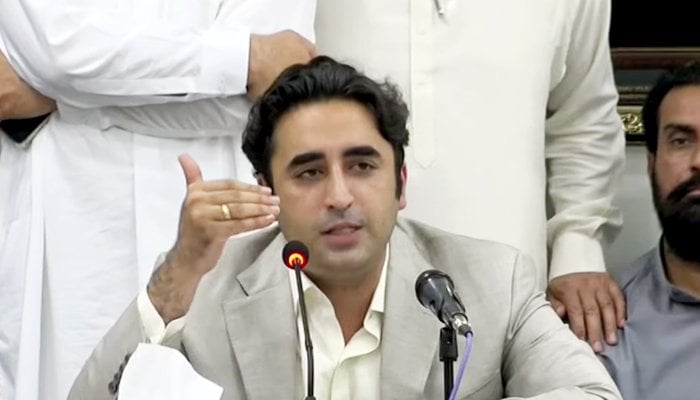
Chairman PPP Bilawal Bhutto Zardari - The abduction and torture of the #Afghan Ambassador’s daughter requires serious action by the Federal government


Chairman Pakistan Peoples Party Bilawal Bhutto Zardari has expressed grave concern over the abduction and torture of the daughter of the Afghan Ambassador in Islamabad and urged the authorities to bring the culprits to book.

In a statement, the PPP Chairman said that such an incident in the “safe city” was highly condemnable and needs very serious action on the part of the Federal government led by the elected Prime Minister Imran Khan.
Bilawal Bhutto Zardari said that the safety of the diplomatic corps and their families was the responsibility of the Federal government and any negligence in this regard won’t be pardoned by the people of Pakistan.

https://www.ppp.org.pk/pr/25260/

#Pakistan - Who’s afraid of a textbook?

 Dr. Ayesha Razzaque

Last year, on May 20 (2020), the Punjab Curriculum and Textbook Board (PCTB) issued a notice to the management of Sunrise Publications for printing and selling a booklet series for pre-primary (3-5 year-olds) titled ‘Infant Mathematics’ without obtaining an NOC. Apparently, it included content the PCTB deemed “detrimental for examination and assessment purposes or repugnant to the injunction of Islam or contrary to the integrity, defence or security of Pakistan, or any part of Pakistan or public order or morality” [sic].
Readers should keep in mind that obtaining an NOC has been a requirement de jure for private textbook publishers for years. However, the PCTB’s lack of capacity to review books and issue NOCs in a timely manner meant that this requirement remained de facto unenforced. But every now and then, when an influential person with access makes a complaint to the highest authorities or a random individual files a public interest case (as happened in December 2020 in Altamash versus the Government of Punjab), the PCTB jumps into action and weaponizes the requirement for an NOC. In last year’s instance, it was to save preschoolers from the ‘repugnant act’ of counting three cartoon piglets and all the “threats to the integrity, defence and security of Pakistan '' that carries with it.
The PCTB is back in the news. This time it has issued a notice (dated July 13, 2021) to the Oxford University Press for printing and selling another pre-primary book for the last two years (since 2019), predating the new textbook review process it put into place this year. The PCTB’s notice does not cite any violation besides the lack of an NOC. But then, older private textbooks/ supplementary materials were never issued NOCs. In that respect, this book is no different from many others from that period. The book in question was reportedly submitted to the PCTB for review in 2019, along with thousands of other books. It was returned without NOC, with a suggestion to resubmit when the review of books for the SNC starts. The PCTB’s lack of readiness to follow its own rules meant that this book, like others, kept being sold without an NOC. Despite assurances, it has been unable to expedite the issuance of NOCs in a timely manner due to its tedious review process, while the start of the already much delayed academic year looms in August.
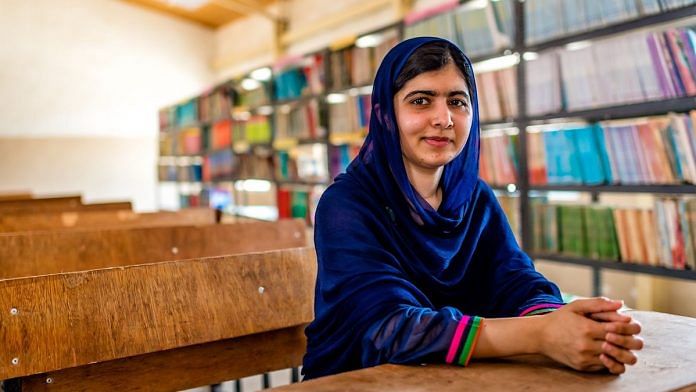
With no other identifiable content that could be deemed objectionable, it appears the PCTB is once again responding to assuage offence caused by Malala’s picture to the sensibilities of someone influential enough to move the wheels of the bureaucracy. Incidentally, these events also coincide with July 12, which happens to be Malala’s birthday and the day the UN has declared as World Malala Day for her education activism work.
The ‘offensive’ lesson contains a portrait of Malala Yousafzai in a lesson titled ‘Important People’. It opens with the line, “Here are some of our heroes”, and lists pictures and names of Quaid-e-Azam Muhammad Ali Jinnah, Allama Muhammad Iqbal, Sir Syed Ahmed Khan and Liaqat Ali Khan underneath. On the opposite page it continues, “Here are some famous people” and lists pictures and names of Abdul Sattar Edhi, Begum Raana Liaqat Ali Khan, Major Aziz Bhatti, and Malala Yousafzai, in that order. That is all. Yet, such a grave offence is the inclusion of Malala in a list of ‘famous people’ that bookshops are being raided, books confiscated, and sternly worded official notices issued to the publisher (but no other).
Predictably, Pakistani Twitter erupted at this news. If you still think that the inclusion of Malala in a lesson listing some famous personalities cannot possibly be the reason, take a gander on Pakistani Twitter today and witness the venom spewed by so many literate, internet connected fellow citizens, seemingly blinded by jealousy.
A country infected by the old-boys mentality is unwilling to bestow the descriptor of ‘famous person’ or hero on someone who does not meet any of our hero standards: a) she is alive; b) she is a woman; c) she is young; d) she lives in the West; e) she was not from the ‘elite class’ (politically, socially or economically) we show servility to; and f) she is not the underdog victim that makes us feel good about defending her. This is petty, small-minded, jealousy that seeks to drag down those who manage to achieve something despite odds. It is as simple as that and there is no need to intellectualize it.
According to its own website, the PCTB’s raison d’ etre is to develop textbooks, “understanding curriculum and pedagogy of the subject”, review textbooks “for assurance of quality and error free” [sic], publish, supply and check piracy. However, the PCTB has abdicated the responsibility of developing textbooks and has instead adopted the ones developed by the National Curriculum Council (NCC) in Islamabad. Its capacity to review textbooks seems to be solely focused on sanitizing textbooks according to an extreme right-wing ideology that requires girls and women to wear hijabs and does not allow recognition of Malala as a famous Pakistani. Pedagogical priorities have firmly taken a back seat. If the PCTB has surrendered its primary roles of developing and pedagogically reviewing textbooks, does it still need to exist? I wonder what, according to the PCTB, the ideal textbook looks like. Will it be a book that all 120 million of Punjab’s citizens agree to and that caters to a common denominator? What does that even look like? For the answer, look at past textbooks. Urdu and Social Studies textbooks rarely venture beyond praising Quaid-e-Azam, Allama Iqbal, Sir Syed Ahmed Khan, Liaqat Ali Khan, and a handful of martyrs of the 1965 war and more recently Arfa Karim and Ruth Pfau, both deceased. Many other personalities are deemed too controversial.
Yet, important questions we should be asking ourselves have fallen by the wayside: can there be no room for a difference of opinion in textbooks that lend themselves for discussions? That seems to be the idea the PCTB has. Where then, does that leave the goals of fostering critical thinking in children? Do we wish our society to be one where the state bans books for the smallest perceived infractions, a la an Orwellian dystopia?
The PCTB ought to look in the mirror and see who is standing by it – the usual clique of unappointed guardians of public morality and mob of non-experts while independent and unaffiliated area experts have largely coalesced on the other side of the argument. It is also worth noting that the end of what some call Pakistan's golden period in public education roughly coincides with the establishment of the Punjab Textbook Board (now the PCTB) in the 1960s, and the decline that followed tracks the increasingly tighter control of government departments on education. With the PCTB making one misstep after another in recent years, is it not time for some introspection?
It is also worth noting that criticism of the PCTB’s operations is bipartisan. A few days ago, Minister for Information and Broadcasting Fawad Chaudhry lent his voice to the issue by putting it plainly: “The trend in Punjab has been problematic. Before this issue they banned a book like ‘The First Muslim’ and they banned Raza Aslan’s book….if we keep following this trend the issue of extremism which is already plaguing us is going to become an even deeper issue, causing serious social issues”. He also referred to the inclusion of the Muttahida Ulema Board in the process of book review, a problematic step – albeit by an act of parliament.
The geopolitical situation on our borders is rapidly changing following the US troop pull-out from Afghanistan. Pro-Taliban right-wingers are coming back out of their closets after the APS attack. According to a report from Radio Free Europe filed from Mazar-e-Sharif on July 14, “Women banned from going outside alone. Girls barred from attending school. Unmarried women forced to marry fighters”; This is contrary to the stories of reformed Taliban we have been hearing from their apologists on evening talk shows.
The question to ask of ourselves as a nation is: do we think of ourselves as pro-Malala, an international symbol and champion of girls’ education, or would we rather align ourselves with regressive extremism because our resentment and hate for Malala’s fame and good fortune outweighs the damage that the extremists have already started inflicting?
https://www.thenews.com.pk/print/865108-who-s-afraid-of-a-textbook

Thursday, July 15, 2021

Music Video - Michael Jackson - Billie Jean

Video Report - #southafrica - Will unrest derail South Africa's Covid-19 fight? | The Stream

Video Report - U.S. Role In Assassination Of Haitian President Coming Into Focus, Colombians Reportedly Involved

Video - President Biden holds joint press conference with German Chancellor Angela Merkel

U.S. - #Democrats Push a Budget to Fulfill #Biden’s Aggressive Economic Ambitions

 By Jim Tankersley

The $3.5 trillion blueprints under consideration in the Senate would deliver, at least temporarily, on the economic promise of a unified Washington run by Democrats.
The $3.5 trillion budget blueprint that Democrats unveiled in the Senate this week promises to reshape the government’s role in the economy, in ways President Biden and his party have called essential to rebuilding the American middle class, lifting people out of poverty and tackling the threat of climate change.
Its passage in Congress remains far from assured, with a series of hurdles in the coming months, including filling in key details on taxes and spending and holding together a fragile Democratic coalition. But if the plan’s central components become law, it would be the capstone achievement Democrats had promised when they won a pair of Senate elections in January to gain narrow control of Congress — and come with a reach that could exceed its cost.
The proposal could pave the way for legislation that fundamentally overhauls Americans’ relationship with work, school and the federal government. It would put in place much of Mr. Biden’s vision to add years of guaranteed public education to fight inequality, lift more women into the work force with subsidized child care and paid leave, and send monthly checks to parents to alleviate poverty — a provision that Mr. Biden championed on Thursday at the White House.
It would expand Medicare in ways that go beyond Mr. Biden’s own health care proposals this year, to include dental and vision coverage, and it would impose large taxes on corporations, high earners and the greenhouse gas emissions that drive climate change.
And all of those changes could fade quickly — or never even make it to Mr. Biden’s desk — if Democrats’ political calculus is off and they cannot muster the 50 votes they need in the Senate or suffer even a handful of defections from fiscal moderates in the House.
The blueprint reflects a deliberate choice by the president and his party to advance as many new spending programs and tax cuts as possible, but also allow some of them to expire in a few years to conform to the limited tax and spending appetites of moderate senators, whose constituents tend to be wary of large budget deficits. The hope — and gamble — is that the programs will prove so popular that a future Congress will keep them alive.
The rewards and risks of that strategy were on display on Thursday at the White House, where Mr. Biden and Vice President Kamala Harris welcomed several families to celebrate the first round of monthly payments to parents under the expanded child tax credit that Mr. Biden signed into law in a separate $1.9 trillion aid bill aimed at helping people and businesses stay afloat through the pandemic.The credit delivers payments of up to $300 per month for children younger than 6 and $250 per month for children ages 6 to 17, for families earning up to $150,000 a year, at which point the benefit begins to phase out gradually. The White House has promised the payments will cut child poverty in half, though the Treasury Department is struggling to reach some of the lowest-income families in the country with the money they are eligible to receive because they often do not earn enough to pay income taxes and do not file a return with the Internal Revenue Service.Mr. Biden cast it as a legacy-defining move, saying that “it’s our effort to make another giant step toward ending child poverty in America” and “one of the things that the vice president and I will be most proud of when our terms are up.”
Yet the expanded credit is set to expire after this year. Democrats have aggressively pitched its benefits to voters this week, not only in hopes of winning points for future elections, but also as a sort of bid to make the credit a permanent fixture in the tax code. The budget blueprint would advance that cause — it includes the renewal of the expanded tax credit for an undetermined period of time.
Given that the benefit costs more than $100 billion per year, Democrats appear unlikely to make it permanent. A fact sheet Senate leaders distributed this week said the duration of the credit, along with many other tax benefits and spending programs, would be determined based on its budgetary effect and what amounts to a game of prioritization among Democrats operating under cost constraints imposed by their most centrist members. That could result in only a few years of extension, if that, leaving future members of Congress to decide whether to maintain the benefit.
“I hope this will be the moment where we would decide that we’re going to make it permanent,” Senator Michael Bennet, Democrat of Colorado and an early sponsor of the expansion, said in an interview. “If it’s not, we have I think a long extension and then, you know, we’ve got the chance to do it later.” But he acknowledged there was a risk it could shrink to as little as a year in a final package. “I am worried about that,” Mr. Bennet said.
The balancing act is a direct product of Mr. Biden’s narrow hold on Congress and his approach to advancing his economic vision.
Mr. Biden is trying to push his $4 trillion economic agenda through Congress in pieces. He has reached an agreement with centrist senators, including several Republicans, to spend nearly $600 billion to upgrade roads, bridges, water pipes, broadband and other physical infrastructure. At the same time, he and Democratic leaders are collaborating on a larger bill jammed with as many of his remaining priorities as possible, which would advance on a party-line vote through a process called reconciliation that bypasses a Senate filibuster.
The budget blueprint is the first step toward that larger legislation. It includes new spending programs and tax incentives, though it is still light on details. Among them: an extension of Medicaid coverage to bring health insurance to some low-income residents of states that have refused to join the program’s expansion and an extension of Medicare benefits to include dental, vision and hearing coverage. It is also filled with efforts to reduce greenhouse gas emissions, including the creation of a “civilian climate corps” employed by the government. The blueprint calls for four additional years of guaranteed public education and a host of supports for workers, including paid leave and subsidized child care.
In nearly all of those cases, Democratic leaders noted in a background document for reporters this week, the “duration of each program’s enactment will be determined based on scoring and committee input.”
In other words, lawmakers are saying that they want it, but they are not sure how long they can fund it.
Any final legislation will be a math game, with a sort of Tetris twist: How many programs and tax cuts can Mr. Biden’s team and Democratic leaders cram into a spending box that will be no larger, and perhaps much smaller, than $3.5 trillion? Republicans have already begun to attack the plan, calling the spending exorbitant and warning that the tax increases Mr. Biden plans to pay for some of the programs will stifle the economic recovery.
Moderate Democrats have expressed relatively little consternation over the scope of the budget’s spending ambitions, at least publicly. Senator Joe Manchin III of West Virginia has raised concerns over some spending related to climate change, and others have said they need more details, but party leaders have not seen large-scale revolts against entire spending proposals. Progressive lawmakers and outside groups have cheered the blueprint, a key to keeping the Democratic coalition intact.
There is far less agreement on how to pay for the programs — and to what degree they should be financed. Mr. Manchin has said the entire $3.5 trillion should be offset through revenue increases or cost savings. The budget blueprint includes calls for unspecified tax increases on corporations, high earners and greenhouse gas emissions (in part by taxing imports from high-emission countries, likely including China) and for savings on government spending on prescription drugs. It also proposes to “pay for” some spending by projections of increased economic growth — like the additional output generated by women who are able to work more hours if their child care is more affordable.
There is not yet party consensus on what those revenue raisers might look like. Mr. Manchin and other centrists have balked at some of Mr. Biden’s proposed increases, like raising the corporate income tax rate to 28 percent from 21 percent. Potential compromises loom: Some centrists have said they would accept a 25 percent corporate rate, for example.
Top Democrats are hoping they can push through tax increases by appealing to voters, who favor increased taxes on corporations and the wealthy in many polls. “I’m always looking at how the president approaches these tax discussions,” Senator Ron Wyden, Democrat of Oregon and the Finance Committee chairman, said in an interview. “He’s very aware that Americans by very large majorities feel like everybody should have to pay their fair share.”
The scope of the Democratic economic bill will depend on Mr. Biden’s ability to win that argument and fend off protests from Republicans and business leaders, while keeping the support of every senator that caucuses with his party. The more persuasive he is, the more expansive a plan he can push through to fund child benefits, paid leave and the rest of his programs, and the longer those programs might last.
https://www.nytimes.com/2021/07/15/business/democrats-budget-biden-economic-agenda.html?action=click&module=Spotlight&pgtype=Homepage

Wednesday, July 14, 2021

PPP Music Video - Kal Bhi Bhutto Zinda Tha Aaj Bhi Bhutto Zinda Hai..

Video - Senator Sherry Rehman expresses her views in Senate | 14 July 2021

Video - Senator Raza Rabbani expresses his views in Senate | 14 July 2021

ملالہ اور بےنظیر کو ہیرو نہ سمجھا تو اللّٰہ حافظ ہے، شیری رحمان


پنجاب ٹیکسٹ بک بورڈ کی ملالہ یوسف زئی سے متعلق مضمون پر پابندی کے بعد پاکستان پیپلز پارٹی کی رہنما شیری رحمان معاملہ سینیٹ میں لے آئیں۔

سینیٹ میں اظہار خیال کرتے ہوئے شیری رحمان نے کہا کہ آپ ملالہ اور بے نظیر جیسی خواتین کو اپنا ہیرو نہیں سمجھیں گے تو اللّٰہ آپ کا حافظ ہے۔

شیری رحمان نے کہا کہ آپ نئی نسل کو کیا پیغام دے رہے ہیں؟۔

سینیٹر اعجاز چودھری نے کہا ملالہ سے متعلق مضمون پنجاب ٹیکسٹ بک بورڈ نے نہیں آکسفورڈ نے چھاپا تھا۔

انہوں نے کہا کہ حکومت پنجاب کی اس حوالے سے کوئی ذمے داری نہیں۔

https://jang.com.pk/news/956690

سینیٹ میں رضا ربانی کے نعرے، بعد میں معذرت

 سینیٹ میں اپوزیشن نے وفاقی وزیر امور کشمیر علی امین گنڈا پور کے بیان کے خلاف احتجاج کیا، سینیٹر رضا ربانی نے ایوان میں نعرے لگوا دیے اور پھر بعد میں معذرت کر لی، رضاربانی نے کہا کہ ایک دوسرے کو برا بھلا کہنے والی سیاست تباہی کی طرف لے جائے گی۔

سینیٹ اجلاس میں سابق چیئرمین سینیٹ رضا ربانی نے شہید ذوالفقار علی بھٹو کے خلاف حکومتی وزیر کے بیان پر نعرے لگائے اور پھر معذرت کرلی اور کہاکہ پاکستان آج اس بات پر اترا رہا ہے کہ اس کے پاس ایٹم بم ہے تویہ بھٹو کی وجہ سے ہے، آج پاکستان بھارت کی آنکھوں میں آنکھ ڈال کردیکھ سکتا ہے تو اس کیلئے بھٹو نے پھندا چوما تھا۔

رضا ربانی نے کہاکہ ایک ایسے علاقے آزاد کشمیر میں جاکر بھٹو کے بارے میں بات کی گئی ہے، جس شخص نے ہندوستان کی آنکھوں میں آنکھ ڈال کر کہاں ہم ہزار سال لڑیں گے، جس نے کہا گھاس کھائیں گے ایٹمی پروگرام پر سمجھوتہ کرنے کو تیار نہیں، تو آج آپ اس شخص کے لیے ایسے الفاظ استعمال کرتے ہیں۔

پی پی رہنما نے کہاکہ ہمیں اسلام آباد یا پنڈی سے حب الوطنی کے سرٹیفیکٹ لینے کی ضرورت نہیں، وہ شخص جو شہد پیتا ہے وہ بھٹو کو یہ لقب دے رہا ہے، بھٹو 90 ہزار قیدیوں کو واپس لایا، پاکستانی کو پاکستانی ہونے کی شناخت دی۔

انہوں نے کہاکہ کچھ ایسی لیڈرز ہوتے ہیں جو اپنی جان دے دیتے ہیں اصول پر سمجھوتہ نہیں کرتے، بھٹو امریکی سامراج سے سمجھوتہ کرسکتا تھا لیکن نہیں کیا، جس شخص نے فلسطین کے لیے فضائیہ کو دیا آپ اس کے لیے یہ الفاظ کہتے ہیں، جس نے لاہور میں سب اسلامی ممالک کو اکھٹا کیا اور کہا ہماری فوج سب اسلامی ممالک کی ہے، آپ اسے غدار کہنا چاہتے ہیں۔

رضا ربانی کاکہنا تھا کہ اس طرح کی سیاسی گفتگو ہونی ہے تو یہاں کوئی محفوظ نہیں رہے گا، شہد کی بات کو حذف کردیں لیکن آج مجھ پر جذبات طاری ہیں، آج سیاست کے اقدار کو پھینک دیا گیا ہے، سابق وزیر اعظم کو چور ڈاکو کے لقب سے بات کریں گے، ہماری زبان کھلے گی تو مناسب نہیں ہوگا، یہ سیاست تباہی کی طرف لے کر جائے گی۔

سابق چیئرمین سینیٹ نے کہا کہ ایسے واقعات پاکستان میں ہوئے ہیں جس کی وجہ سے سننا پڑا ہے میرے عزیز ہم وطنو، یہ تو ملک چھوڑ کر چلے جائیں گے لیکن اٹک قلعہ اور جیل ہمارے لیے ہوں گے، کیا ایک بار پھر ہم اس روش کی طرف تو نہیں نکل رہے۔

https://jang.com.pk/news/956516

Tuesday, July 13, 2021

Music Video - #Madonna #PapaDontPreach Madonna - Papa Don't Preach

Video Report - #ecocide #internationalcriminalcourt - What on Earth is Ecocide?

Video Report - Dozens killed as unrest spreads in South Africa

Video Report - Vice President Harris Delivers Remarks at a Vaccine Mobilization Event

Video Report - President Biden Delivers Remarks on Protecting the Sacred, Constitutional Right to Vote

Video - PPP MNA Abdul Qadir Patel expresses his views in the NA| 13 July 2021

Before Balochi Insurgents, Imran Khan Needs To Talk To Army – OpEd

By Nilesh Kunwar

It’s no secret that the Pakistan army has been brutalizing and terrorizing the people of Balochistan ever since it illegally occupied this region in 1948. Those who think otherwise, just need google search “kill and dump policy” and perusal of the top 20 results have one thing in common- they all pertain to the Pakistan army’s vicious role in Balochistan due to which Rawalpindi owns exclusive copyright of this terrifying phrase. Hence, Prime Minister Imran Khan’s willingness to talk with Baloch insurgents is indeed a welcome step that was long overdue.
Besides achieving political stability and substantial economic advantages that would accrue if dialogue resolves this long-festering issue, the biggest takeaway would be the end of a humongous human tragedy of gargantuan proportions. An amicable settlement would also pave way for the oppressed Balochis to start re-living a dignified life without the ever-looming fear of being ‘snatched’ by Pakistani security forces and ending up as battered corpses dumped by the roadside or secretly buried in mass graves. It will hopefully also end the exploitation of the region’s natural resources and recompense locals by using part of the income from such commercial activity for development of Balochistan.
However, resolving Balochistan won’t be an easy task because for this Khan would muster the courage to accept the reality that over the years, the Pakistan army’s medieval-era strategy of suppressing dissent with brute force has deeply lacerated the Balochi psyche and is the root cause of the problem. His surreal comment that “It is possible that they [Balochis] have grievances,” smacks of casualness and as such it doesn’t inspire much confidence.” Moreover, by adding that “India [can] use them [Baloch insurgents] to spread anarchy,” Khan has given a clear indication that just like his predecessors, he too will take the convenient option of remaining in a blissful state of denial by blaming New Delhi for this more than seven-decade-old crisis.
With the Pakistan army enforcing strict access control into Balochistan and Islamabad imposing stringent censorship on reporting incidents of human rights excesses by security forces and intelligence agencies, the world remains largely ignorant regarding the institutionalized dehumanization of Balochis by the Pakistan army and its proxies. However, credible information of incidents involving gross human rights violations keeps leaking out and is reported by various international rights organizations. However, despite documented evidence of human rights abuses by Pakistan’s security forces in Balochistan, the world, unfortunately, turns Nelson’s eye to these brazen crimes against humanity.
Whereas there’s no dearth of incidents of enforced disappearance in Balochistan, but just one example is enough to illustrate how Rawalpindi has not only mastered the macabre art of forcibly disappearing Balochis and secretly burying them into mass graves, but also its expertise in sabotaging the investigation. Most importantly, it reveals how Rawalpindi ‘fixes’ judicial inquires so that security forces get a ‘clean chit. This illustrative example is regarding an incident that happened in the Khuzdar district seven years ago.
Some geography enthusiasts may recall that Khuzdar district takes its name from a township which is the third-largest city of Balochistan. A few history buffs may also recollect that Khuzdar was the capital of the erstwhile Brahui kingdom of Makran. Since Brahui are the only Dravidian-speaking population not only in Balochistan but entire Pakistan, so, Khuzdar may also evince the interest of ethnologists. However, very few would recollect that in 2014, three mass graves were discovered in the Total area of Khuzdar district.
In its official statement [Document ID- AHRC-STM-023-2014], Asian Human Rights Commission [AHRC] confirmed that a total of 103 human remains had been found buried in these graves. The report goes on to reveal that “Pakistani military forces stopped the local people from unearthing the mass graves and took control of the area. Now, no one is allowed access to the location except military personnel.” While the army’s decision to stop locals from digging up these mass graves may be to preserve forensic evidence and is thus understandable, why were rights organisations and independent media persons were denied access to this site is beyond comprehension- unless the army dis so to conceal something from the public.
Locals said that 169 corpses had been found in the Total mass graves but due to strict access control, there was no way any impartial agency could verify this claim. So much so, that even though the Human Rights Commission of Pakistan [HRCP], is an autonomous body mandated to investigate incidents of human rights violations, HRCP Chairperson Zohra Yusuf revealed that its fact-finding team wasn’t allowed to visit the mass graves site “despite several written and verbal requests.” Perhaps that’s why AHRC had demanded an UN-led inquiry stating that “It must be pointed out that the people of Pakistan do not expect any proper and transparent investigation from their government and the security agencies as they themselves are involved in the killings, enforced disappearances and the concealment of the crimes. The importance of a UN report, therefore, cannot be over-emphasized.” However, this didn’t happen and, in the end, while the number of corpses found varied from 103 to 169, Pakistani authorities surprised everyone by claiming that the mass graves contained the mortal remains of only 17 persons, which the HRCP chairperson bluntly disputed by saying “The residents of Khuzdar have told us that the number of dead bodies uncovered is much higher than 15”! So, could there be a possible correlation between the Pakistan army placing the Total mass graves site off-limits to visitors and the number of corpses there suddenly dropping from three digits to just 17?
What followed was even weirder. A judicial commission headed by Justice Noor Muhammad Maskanzai of Balochistan High Court concluded that “The commission recorded the statements of 38 witnesses. No one recorded a statement against the army, secret agencies, and the government. They did not accuse them of being involved in this heinous crime. On the contrary, there is enough evidence to suggest that the army, spy agencies, and the government were not involved in this incident.”
Under normal circumstances, it would be improper to doubt the competence or integrity of a judicial commission, but in this case, there are two good reasons for doing so. One, it’s apparent that the Pakistan army and intelligence agencies were given a clean-chit only because “No one recorded a statement against the army, secret agencies, and the government.” Two, while the commission mentioned that “there is enough evidence to suggest that the army, spy agencies, and the government were not involved in this incident,” details of the same haven’t been revealed in the inquiry report. No wonder the HRCP chairperson dismissed the findings of the commission, saying that it was “just another” judicial report!
Some feel that the Khuzdar mass graves incident relates to 2014 and since then things have improved. However, such persons need to think again, because just two years ago, the then Director-General [DG] of Pakistan army’s media wing Inter-Services Public Relations [ISPR] Maj Gen Asif Ghafoor actually went as far as accepting and even justifying enforced disappearances. When asked by senior journalist Hamid Mir of Geo TV about enforced disappearances in Balochistan, DGISPR replied, “We don’t want any person to go missing but where there is a war, you have to do a number of [undesirable] things. It is said that everything is fair in love and war. War is ruthless”!
When the Pakistan army considers itself to be at “war” its own countrymen in Balochistan, before speaking to Baloch insurgents it is all the more imperative for Prime Minister Imran Khan to first talk with Rawalpindi. Needless to say, for any meaningful dialogue, Pakistan army has to end its reign of terror in Balochistan – because Islamabad talking peace while Rawalpindi continues disappearing Balochi people just doesn’t make any sense at all.
https://www.eurasiareview.com/13072021-before-balochi-insurgents-imran-khan-needs-to-talk-to-army-oped/

#Pakistan's Another attempt of deception

By Rindani Gutt 

 
Pakistani Prime Minister, Imran Khan announced his carrot initiative yesterday in Gwadar coastal city saying that he is considering talking with the “Baloch insurgents” in Balochistan, “the government would pay attention to Balochistan because when the province progressed and there was peace, Balochistan’s people would “understand that Pakistan is also theirs. And in line with PM’s announcement, Fawad Chaudhary, the Federal Minister for Information said that they’re going to determine the agenda for dialogue with Baloch nationalists added that they have also broken the Indian network in Balochistan with great success”.
Both Imran Khan and his media minister Fawad Chaudary say that “India is involved in Balochistan’s unrest”. In the same breath, they also say that Baloch people are aggrieved because previous governments neglected Balochistan. However, both have failed to tell Baloch and the world as well who should be blamed for Balochistan’s insurgency – India for its involvement or the Pakistani state for neglecting Balochistan?
At the same time, Army Chief of Pakistan Gen Qamar thundered with “stick” on Tuesday during a so-called National Workshop Balochistan held at the General Headquarters of Pakistan army saying that “security forces would remain steadfast to defeat elements against the province’s stability while terming “peace and prosperity in Balochistan as “the bedrock of Pakistan’s progress”.
The bedrock of Pakistan’s progress in Balochistan is the shabby condition of Turbat city of Balochistan where the Pakistan Navy’s second Headquarters are located. This city of Turbat is also divisional headquarters of three big districts including Gwadar, Kech and Punjgor districts inhabited by 2.5 million people. Despite being the second largest city of Balochistan after Quetta, Turbat city, apart from having a borrowed electricity supply from Iran which now cut off, has no sewerage system, no clean water system, no proper hospital, no internet system and municipality service!
So, what made Imran Khan announce such a step to talk with Baloch insurgents? If we see all these hallow announcements of Imran Khan in the context of current geopolitics of the region and the withdrawal of American troops from Afghanistan, we find that Pakistan military establishment is trying to ward off or pre-empt the possible foreign interventions in occupied Balochistan by making it appear that Balochistan’s insurgency is a local issue and it can be resolved by internal efforts. Besides that, they’ll also attempt to draw a wedge between pro-freedom leaders of different organizations. Anwer Sajjidi, the chief editor of Inthekhab Akhbar, has already started that Kare –Khair- the noble task.
There is no buyer of Imran Khan’s offer of dialogue among Baloch insurgents, even those Baloch who’re still sticking with Pakistani politics for democratic rights don’t take seriously Imran Khan’s words for meaningful dialogue, let alone the armed insurgents who have taken on a gigantic task of dislodging Pakistan army from Balochistan and restore the lost sovereignty of the Baloch nation. They believe that the current government of Imran Khan is a selected stooge of a powerful army and used for eye washing and deception The relationship between Pakistan and Baloch pro-independent forces is fraught with distrust. Pakistani rulers – always dominated by Punjabi army generals – have always sought to deceive, intimidate and subjugate Baloch patriots into submission one way or another over the last 73 years; while the pro independent Baloch forces resisting all Pakistani attempts of deception, intimidation and subjugation have never relented in their attempts to restore their lost sovereignty over their homeland Balochistan.
Those Baloch who several times explored the democratic avenue of struggle with public mandates for equal status in the federal system within Pakistani framework after losing Balochistan’s independence to Pakistani aggression, miserably exhausted parliamentary character of politics in the face of intrigues of dominant Punjabi ultra-nationalism and concluded that Pakistani rulers can only understand the language of ‘power of power’, so they picked up arms and take to the rigid mountains of Balochistan for resistance.
The current indigenous Baloch armed Insurgency, for the liberation of Balochistan, initiated by Hyrbyair Marri in 1996, has registered the fact that this insurgency has the general public support, otherwise, given the Pakistan army’s disproportionate aggression against the Baloch public in the form of collective punishment in a blanket media blackout, it would have vanished away a long time ago.
The Baloch insurgents from rigid mountains of Kohlu Kahan to far plunged Mand tehsil have engaged almost 300,000 Pakistan army troops and paramilitary forces in the vast terrace of Balochistan for prolonged guerrilla warfare for almost 23 years. This war has over-stretched Pakistani forces across Balochistan which’s visible signs show that Pakistani forces’ war morale is fairly low in occupied Balochistan. A video clip of a recent attack on the Pakistan army shows how demoralized Pakistan army troops are when the Baloch insurgents run over a mountain top army outpost and capture it without any resistance from the Pakistani army! So it’s fair to say that Baloch patriots are still not in a hurry to rush for a fruitless dialogue with Pakistani rulers as the Baloch insurgents are in a better position for sustaining their struggle for independence of their motherland, Balochistan.
https://balochwarna.com/2021/07/07/another-attempt-of-deception/

Pakistan seizes textbook for printing Malala’s picture in list of important personalities


The Punjab Curriculum & Textbook Board also confiscated a book published by Oxford University Press for printing Malala's picture alongside that of military officer Maj Aziz Bhatti.

Pakistan authorities have confiscated copies of a school textbook in Punjab province for printing the picture of Nobel laureate Malala Yousufszai in the list of important personalities, apparently unhappy with the UK-based activist’s controversial views on Islam.
The youngest Nobel Prize laureate, Malala, who turned 24 on Monday, is known for human rights advocacy, especially the education of women and children in her native Swat Valley in Khyber Pakhtunkhwa province in northwest Pakistan, where the local Tehrik-i-Taliban Pakistan had at times banned girls from attending school.
Pakistan’s private schools’ association on Monday had launched a documentary on Malala for her controversial views on Islam, marriage and her pursuit of the Western agenda.On the same day, the Punjab Curriculum and Textbook Board (PCTB) confiscated the social studies book for grade 7 published by the Oxford University Press (OUP) for printing the picture of Malala alongside that of military officer Maj Aziz Bhatti, who was killed in the 1965 war with India, in the list of important personalities, the Dawn newspaper reported on Tuesday.
Besides Malala and Bhatti, pictures of some other important personalities were published on page 33 of the book that included Pakistan’s founder Muhammad Ali Jinnah, poet Allama Iqbal, educationist Sir Syed Ahmed Khan, first prime minister Liaqat Ali Khan and legendary philanthropist Abdul Sattar Edhi.
Malala at the age of 17 was the co-recipient of the 2014 Nobel Peace Prize for her struggle against the suppression of children and young people and for the right of all children to education. She shared the prize with Kailash Satyarthi, a children’s rights activist from India.
Quoting sources, the report said the books were already circulated in various educational institutes and the PCTB, police and other agencies were conducting raids on shops to confiscate copies of the book.
On Monday, a team of officials conducted a raid on the OUP office in Mini Market, Gulberg area of Lahore and confiscated the entire stock of the book. They also handed over a letter to the press, stating that the book had not been issued a No-Objection Certificate (NOC).Quoting a publisher, the report said the book was submitted to the PCTB for a review and to seek an NOC in 2019. The board, after reviewing its contents, did not approve it for publishing.The Oxford University Press has published the book despite not being issued the NOC, the publisher said.
Addressing a press conference at his office in Gulberg in Lahore on Monday, the All-Pakistan Private Schools Federation president Kashif Mirza had said: Through this documentary film — I am not Malala – we will tell 20 million students in 200,000 private schools across the country about her controversial views on Islam, marriage, pursuing of Western agenda.”
The idea behind this is we want to expose Malala among the youth as it does not get impressed by her so-called story of struggle for women’s rights, he said.
Mirza said in her book I am Malala , the Nobel Peace winner has written highly controversial content which is contrary to the teachings of Islam, Quranic injunctions, ideology of Islam and Pakistan’s founder Mohammad Ali Jinnah and the Pakistan Army.
https://theprint.in/world/pakistan-seizes-textbook-for-printing-malalas-picture-in-list-of-important-personalities/695346/

Bilawal Bhutto will not go to Washington during US visit: top PPP leader

 PPP Chairperson Bilawal Bhutto-Zardari will not visit Washington during his seven-day trip to the US, clarified a top party leader Monday. 

Bhutto arrived in New York today after he departed for the country on Sunday. His visit generated accusations from the PTI that the PPP leader was seeking a "backdoor deal" from Washington. 

The PPP had shot down the allegations, lashing out at the "puppet government" for creating a hue and cry over the PPP leader's personal visit. 

After landing in New York, the PPP chairperson refused to speak to the media, saying he is on a "personal visit" to the US. 

"When I come here next, in September, I will then speak to the press," he said. 

"Bilawal Bhutto will not go to Washington during his visit," clarified PPP-USA President Khalid Awan. 

The PPP responded back to Gill's statements, accusing the "puppet government" of being worried about Bhutto's visit for no reason. 

"Fawad Chaudhry, Shahbaz Gill and Farrukh Habib are also worried that their leader Imran Khan cannot go to the US without diplomatic immunity because of pending cases in the USA's courts,” PPP Parliamentarians’ Secretary Shazia Marri had said in response to Gill's press conference. 

Marri had said Bhutto had hope in the strength in the people of Pakistan and it has been proven how General Elections 2018 were stolen from the PPP by creating obstacles in the party's path.

She had said that it is also on record that those who stole the PPP's mandate have been admitting that opponents of the PPP have been brought to power through rigging in elections.

https://www.geo.tv/latest/359595-bilawal-bhutto-will-not-visit-washington-during-us-visit-ppp

Monday, July 12, 2021

Video - Dubai Desert Safari Belly Dancing

#DailyShow #TrevorNoah #BetweenTheScenes Between The Scenes: The Funniest Moments | The Daily Show

Video Report - Euros 2020: Italy's thrilling victory is a crushing blow for England

Video Report - Feeding the hungry: Who will help? | Inside Story

Video Report - Haiti police arrest alleged mastermind of president's assassination | DW News

Music Video - Aye Ishq humein barbad na kar | Malika Pukhraj | Tahira Syed

What to learn from China?


WHEN Prime Minister Imran Khan categorically endorsed China’s line on Uighur Muslims he succumbed to political expediency: “Because of our extreme proximity and relationship with China”, he said, “we actually accept the Chinese version.” A savvier politician facing the Chinese media might have tried a little hemming and hawing rather than dispense with truth, human rights and Muslim solidarity. Still, one must not be too harsh on the PM; any country which owes its life to a powerful patron has little leeway.

Much loved by some but feared by others, China today is an economic superpower. Geopolitics changed in 2017 when its GNP shot above that of the US. But what accounts for its phenomenal rise and ferocious progress? Equally, one may ask: why has Pakistan been on external life support from 1947 onward and barely limped along? The difference cries out for an explanation.

Max Weber, the 19th-century German sociologist, would have an answer. Since his pioneering work, social scientists know economic growth goes hand-in-hand with a society’s collective worldview and culture. Through data-driven research, Weber explained why Protestants and Calvinists had far outpaced Catholics in generating wealth and industrialising Europe. He concluded that progress-friendly cultures demand belief in rationality, rule of law, planning, punctuality, deferred gratification, and expectations of reward in this life rather than the next.

Certainly not how minorities should be treated! But there’s much else that China can teach Pakistan.

Were he alive today, how would Weber see China in relation to Pakistan? First, China’s worldview is — like that of 19th-century Protestants — entirely future-focused and this-worldly. Notwithstanding the pride Chinese people take in their ancient science and civilisation, there is no deep nostalgia and no calls for Ertugrul-like men on horseback to resurrect some ancient kingdom. Whether for good or bad, and whether under Mao’s revolutionary communism or under Xi Jinping’s capitalistic communism, the Chinese are a plain, hard-headed lot. 

This attitude sets the tone for education, both in school and university. Knowing that universities are the engines of progress, China is super-careful about who gets admitted. At the level of language, reasoning and math skills, Chinese students are expected to know everything that American students learn — but better. Today’s gaokao — the cheating-free university entrance exam — is a carryover from the rigorous exam system (keju) of ancient China’s civil service.

Reputed to be the toughest in the world, gaokao beats even that for various IITs (Indian Institute of Technology). Unfortunately, educated in a memorisation-heavy culture steeped in religious matters, most Pakistani university professors — including those who are HEC certified and with hundreds of research publications — would not clear Chinese university entrance exams.

Second, a reborn Weber would see China clearly defining its national interest with economic advancement being at the very top. As a rationalist-materialist country China aims at becoming the world leader in space exploration, brain science, quantum computers, electric cars, biopharmaceuticals, renewable energy, etc. Five-year plans are followed to the letter; there is no empty chatter or arbitrary wish lists.

At the next level of priority is politics. To reunite with Taiwan, China rattles its sabres from time to time. Nevertheless, China-Taiwan economic links are strong. Taiwanese companies have invested about $60 billion in China, and one million Taiwanese people live in China with many running Taiwanese factories. The Chinese political leadership keeps its military in check. There is no history of Kargil-like dead-end adventures and the military stays clear of trade matters. The warrior ethic is firmly subordinated to the capitalist ethic.

In Pakistan’s case, warriors define the national interest. Googling ‘national interest’, I found occurrences in speeches, university theses and in National Defence University publications. All such references were security and India related. In this single-minded approach, Pakistan-India trade remains hostage to Kashmir being resolved on Pakistan’s terms. Nowhere to be found is a plan for where the country hopes to be 20-30 years from now. No one takes the Planning Commission of Pakistan seriously.

Third, Weber would confirm that strong work ethics leads to high labour productivity, the backbone of economic growth. Although he knew only of Protestant-Calvinist workers and capitalists, the qualities of diligence, discipline, responsibility, punctuality and honesty of the skilled industrial workforce extends into the cultures of China, Japan, Vietnam, Korea etc.

In contrast, Pakistan’s labour productivity is appallingly low — less than half of China’s. Many economists and businessmen have pointed out that producing an item in high-wage China is cheaper than in low-wage Pakistan. Poor productivity owes to poor worker skills and general dissatisfaction. Exploitative employers pay minimum wages, ignore principles of fairness and disallow grievance mechanisms. But the ethics of workers are also low. Few take pride in or enjoy work, are diligent, or take initiatives. Like our parliamentarians and professors, most are shirkers who need to be reminded of their duties.

These poor habits start from Pakistani schools where kids are forced to focus on exam techniques and taught just enough to get by. Cheating is tolerated. Some parents — including those who emphasise religious rituals — encourage their children to cheat as a way to get ahead. But, at a still deeper level, quality education for all is impossible given extreme wealth disparities.

In China such disparities had been evened up by Mao’s communism. Although huge excesses happened in the Cultural Revolution, education was universalised and hard work celebrated. China is reaping dividends from its communist past. Pakistan never saw any such evening-up. Leaders of the Pakistan Movement — Jinnah and Allama Iqbal (the post-1930 Iqbal) included — were staunchly anti-communist. Some were big landlords who saw danger in educating their serfs. Education was a low priority in 1947 and remains low.

Curiously, the country that Pakistan’s founders feared and disliked most (after Russia) is now Pakistan’s closest ally. It does bash its Muslims; the evidence is irrefutable. Yet — other than how religious minorities should be handled — China has much to teach Pakistan. Among the most important lessons is creating a skilled workforce, giving dignity to labor, distributing wealth and public resources reasonably, emphasizing birth control, and encouraging a mindset oriented to the future rather than the past. If Pakistan wants to break the crutches of foreign dependence, that’s the way to go.

https://www.dawn.com/news/1634259/what-to-learn-from-china


Decades of Mental Conditioning Responsible for Anti-Minority Hostility in Pakistan: Speakers


Speakers at a workshop said policies in the past decades were responsible for the progressive radicalization of society. Decades of mental conditioning through education, ideological indoctrination, and other means have led to faith-based polarization and anti-minority hostility in Pakistan. In the contemporary environment, members of minority religious groups find it hard to live in peace with equal rights and dignity. Even constitutional safeguards and other legal protections have done little to ensure equality of citizenship for all, the speakers added.
Social researcher and author of ‘Radicalization in Pakistan’, Safdar Hussain Sial, said the discrimination against religious minorities is widespread and systematic and includes economic exclusion. The minorities often lack equal access to employment opportunities which is a key factor behind the immense economic disparity across different religious groups in Pakistan. In certain cases, members of minority communities are denied the critical identity or citizenship documents which, among other things, cut them off from the job market, Sial said.
The anti-minority sentiments are further aggravated by the weaponization of certain laws such as those criminalizing blasphemy or targeting a particular religious group. The blasphemy law has been misused against the non-Muslim and Muslim communities alike, leading to many incidents of mob violence, Safdar Sial said, adding that in such a scenario the role of youth in creating a more tolerant and peaceful society is crucial.
During the workshop, the minority issue was also put into regional perspective by security analyst and director Pak Institute for Peace Studies (PIPS), Muhammad Amir Rana, who revealed that around 65,000 Rohingya Muslims have been living in desperate conditions in Karachi for decades. Stressing the significance of citizenship, Amir Rana said depriving an individual of citizenship is depriving them of fundamental rights and basic social services such as health and education. The Rohingya community continues to languish as stateless people in Pakistan, he added.
Organized by the Islamabad-based think tank, Pak Institute for Peace Studies, the two-day educational and training workshop was part of the nationwide workshops for the promotion of interfaith harmony among the Pakistani youth. University students from across Balochistan participated in the workshop and exchanged thoughts around the theme of interfaith harmony. The participants were also given quick training in effective use of social media tools by senior journalist and social media activist, Sabookh Syed. The Pakistani youth can use the power of social media to support peace and harmony, and oppose discrimination against minorities, Syed said.
https://www.balochistanvoices.com/2021/06/decades-of-mental-conditioning-responsible-for-anti-minority-hostility-in-pakistan-speakers/

Pakistan’s Burgeoning Population: Challenge or Opportunity

Muhammad Bilal
Pakistan has a population of 220 million and is woefully behind on almost all development indicators. Our population comprises 65% of youth with limited opportunities to achieve their full potential.  Ideally, we should have used the demographic power to our advantage, but lack of investment in education and the inability of the state to produce economic opportunities through the development of the manufacturing sector, the youth bulge has become a liability, which can be a serious threat to the country’s security. Unfortunately, we are not only failing our youth but destroying our youth. How do we expect to change the course of this country when we have ignored the biggest segment of our population i.e. youth.
11th   July is celebrated as International Population Day and is a great reminder for us to do course correction by using our youth to change the course of Pakistan future by investing in our youth to make them high quality human beings — a critical area for the development of a country’s economic base.  Historically, burgeoning population growth has been a cause of destabilization in the least developed countries because young minds, if not engaged in a constructive and purposeful activity are susceptible to extreme behaviors. A study conducted by Population Action International shows that about 80% of the world’s civil conflicts since the 1970s have occurred in countries with young, fast-growing populations.
Balochistan Rural Support Programme (BRSP) recognizes the gravity of this situation, therefore ensures engagement of youth in all its programmes. BRSP has a holistic approach towards youth empowerment through skills enhancement, civic engagement, sports activities, accelerated learning programmes, provision of assets for the establishment of small-scale enterprises, the establishment of Naukri ya karobar centers to link them with employers and digital hubs to give them access to technology. BRSP provided employable skills to overall 6,103 youth in Balochistan. Additionally, 13,265 youth of Madaris were enrolled in Accelerated Learning Program (ALP) to bridge the gap between informal and formal education.
BRSP with the financial support of PATRIP Foundation German Federal Foreign Office (GFFO) repaired and renovated classrooms, established computer labs, libraries, WASH facilities, residential rooms of Madaris in different districts which benefitted 96,338 students. Additionally, 5,686 students from communities, educational institutions schools were taken on exposure visits to different educational institutes in Pakistan to exchange of ideas, learn best practices and interact with students from across the country. BRSP also organized 11,521 different recreational activities engaging 149,775 youth to promote, peace, harmony, and social cohesion.
 A larger workforce is quite imperative for state development as demonstrated by China which raised herself from the rubbles of civil war. The most populous country in the world is surprisingly one of the largest growing economies because China was able to put its population to good use. China has the advantage that others lack, an incredibly skilled human resource that has been the lynchpin of their astronomical economic growth.
Those who believe that population impedes progress are gravely mistaken. If population stops a country’s growth, then Vatican City should have been the richest and China, the poorest. What we need to learn is how to utilize our population to its optimum level, China has already provided the blueprint for other populous countries to follow suit.

 https://www.balochistanvoices.com/2021/07/pakistans-burgeoning-population-challenge-or-opportunity/

#Pakistan #PPP - Bilawal Bhutto arrives in New York to kickstart seven-day US visit


Chairman of Pakistan People’s Party (PPP) Bilawal Bhutto Zardari reached New York on a week-long visit on Sunday, Dunya News reported.
Bilawal Bhutto Zardari was received at the airport by PPP’s United States president Khalid Awan and other leaders.
According to details, Chairman PPP will hold a key meetings in New York and Washington while Chief Minister of Sindh Syed Murad Ali Shah is already in the US.
Aseefa Bhutto will likely lead the campaign for the Azad Kashmir election, which will be held on July 25, in absence of her brother Bilawal.

 https://dunyanews.tv/en/Pakistan/610200-Bilawal-Bhutto-reaches-New-York.