Sunday, May 9, 2021

Dr. Anthony Fauci: ‘There’s No Doubt’ #COVID19 Deaths Have Been Undercounted In U.S.

By Nina Golgowski
A recent study counted 905,000 coronavirus deaths in the U.S., nearly double the amount recorded by federal health officials.
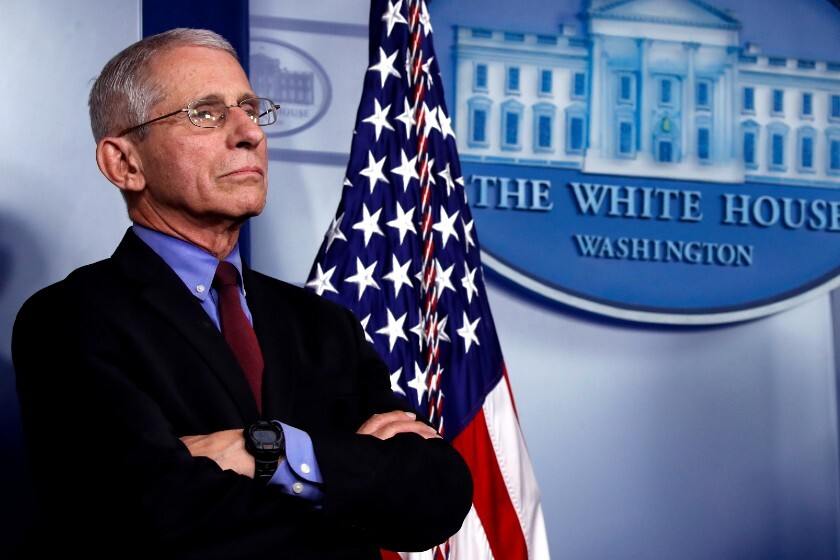
Dr. Anthony Fauci on Sunday said he has “no doubt” that the number of Americans killed by COVID-19 is much higher than what has been officially reported, after a recent study counted nearly double the amount recorded by federal health officials. “We’ve been saying — and the CDC has been saying all along — that it is very likely that we’re undercounting,” Fauci, the nation’s top infectious disease expert, said in an interview with NBC’s “Meet the Press.”
The Centers for Disease Control and Prevention has placed the number of deaths in the U.S. at around 577,800. In comparison, a study from the University of Washington released Thursday tallied around 905,000 deaths.
“That’s a bit more than I would have thought the undercounting was,” Fauci said of that difference. “I think there’s no doubt ... that we are and have been undercounting. What that tells us is something that we’ve known. You know, we’re living through a historic pandemic, the likes of which we haven’t seen in over a hundred years.”
Dr. Anthony Fauci said he has "no doubt" that the number of COVID-19 deaths in the U.S. has been undercounted.
He went on to stress the need for people to get vaccinated, which he said will help prevent another surge in infections this fall and winter.
“The larger proportion of the population that’s vaccinated, the less likelihood that a season like the coming fall or winter you’re going to see a significant surge,” he said.
About one-third of Americans have been fully vaccinated and almost half have been at least partially vaccinated, according to CDC data released Saturday. President Joe Biden has set a goal of getting 70% of Americans vaccinated by July 4, which Fauci said he believes will be reached. In addition to stressing the need for more people to be vaccinated, Fauci highlighted the importance of wearing masks, and credited their use to a drop in other respiratory diseases, such as the flu. With more people becoming comfortable wearing them, he said masks may become a seasonal item to help prevent disease spread.
“We’ve had practically a non-existent flu season this year merely because people were doing the kinds of public health things that were directed predominantly against COVID-19,” he said. “So it is conceivable that as we go on, a year or two or more from now, that during certain seasonal periods when you have respiratory-borne viruses like the flu, people might actually elect to wear masks to diminish the likelihood that you’ll spread these respiratory-borne diseases.”
https://www.huffpost.com/entry/fauci-undercounted-covid-deaths_n_6097f441e4b05bee44cb6c43

د مېکسیکو د یوې شاعرې د نظم پښتو ژباړه او نور مطالب اورېدلی شئ

Video Report - MEHWAR: Reactions to Deadly Attack on Kabul School

#Pakistan - 'Truth has prevailed': Bilawal Bhutto congratulates PPP on NA-249 victory


  • After recount, we have expanded our lead to 900 plus votes, says Bilawal.
  • False accusations have been exposed, says PPP chairperson
  • "People of Karachi have rejected selected and placed their hopes in PPP," says Bilawal.


Bilawal Bhutto-Zardari on Sunday congratulated the PPP's workers and supporters after the party's candidate Qadir Khan Mandokhail emerged victorious in the NA-249 by-election, after votes were recounted. 

The party had much to celebrate for, as its candidate was declared the victor by the Election Commission of Pakistan (ECP) with an even wider margin after votes were counted once again on the Opposition's insistence. 

"Congratulations to workers of Pakistan Peoples Party on winning NA249 Karachi. After recount we’ve expanded our lead to over 900+ votes. False accusations have been exposed, the truth has prevailed," tweeted the PPP chairperson. 

Bilawal took a shot at the government as well, saying that Karachiites "have rejected selected & placed their hopes in PPP". 

Mandokhail emerges victor by wider margin after recount

After a recount of votes polled across all 276 stations, Mandokhail got 15,656 votes, whereas PML-N candidate Miftah Ismail secured 14,747,. This means that the PPP candidate was ahead of the second-placed Mistah Ismail by a margin of 909 votes.

When the unofficial by-poll results were first announced, Mandokhail won with 16,156 votes, whereas Ismail came in second with 15,473, resulting in a difference of 683 votes.

The low margin of votes had prompted Ismail to petition the ECP to hold a recount. The ECP, accepting Ismail's application for a hearing, issued a stay order, withholding the results of the by-poll.

NA-249 by-poll: PML-N, PTI and others reject PPP's victory

On May 4, following a hearing, the ECP had ordered a recount on May 6, which was boycotted by all parties except for the PPP.

The vote recount hit a snag when candidates objected to unsealed bags that were brought for a recount and came out of the District Returning Officer's office in protest.

The PTI had gone so far as to file a petition with the ECP seeking annulment of the by-election in NA-249 due to alleged rigging.

However, ECP officials decreed that "the recount process will be completed as per the order”.

https://www.geo.tv/latest/349462-truth-has-prevailed-bilawal-bhutto-congratulates-ppp-on-na-249-victory

Former President Asif Ali Zardari demands UN to take notice of massacre of Palestinians


Former President of Pakistan and President Pakistan Peoples Party Parliamentarians, Asif Ali Zardari has strongly condemned Israeli barbarism against Palestinians. He said that Israel is oppressing Palestine and India is oppressing Kashmiris. The hearts of the people of Pakistan beat with the Palestinian brothers.

In a statement, President Zardari said that the judicial assassination of Shaheed Zulfikar Ali Bhutto affected the unity of Muslims. Shaheed Mohtarma Benazir Bhutto was the advocate of the Palestinian people. She raised voice against the exploitation of Muslims at the United Nations.

President Zardari said that after the PPP government, the government of Pakistan did not pay attention to the issues regarding foreign affairs. Imran Khan is putting blame of his incompetency on Pakistani diplomats. The UN should take notice of massacre of Palestinians and Kashmiris, Asif Zardari demanded.

https://www.ppp.org.pk/pr/24772/

#Pakistan #MothersDay - Bilawal Bhutto remembers late Benazir Bhutto on Mother's Day

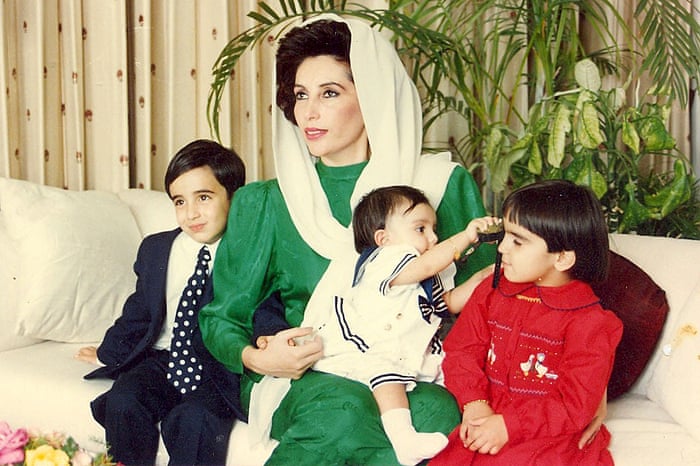
On a special day, people across the globe paid tributes to their mothers for their contribution in helping them achieve success at the highest level, Pakistan People’s Party Chairman Bilawal Bhutto also shared throwback photos with his mother.

The young Bhutto shared a post with four pictures along with late mother and both his sisters to mark the day. ‘Your Heaven lies under the feet of your mother’. Happy Mother’s Day to all mothers everywhere, he captioned the post.

Earlier, the 32-year-old remembered his mother at the nikkah ceremony of sister Bakhtawar Bhutto. Felt like our mother was watching over us in this moment of joy. Wishing them both all the best for their new life together, he wrote in a social media post.

Let it be known that International Mother’s Day was first celebrated in 1870 by human rights activist and poet Julia Ward in memory of her mother. Following the event, many countries, including Pakistan, celebrate Mother’s Day on the second Sunday of May every year.

https://en.dailypakistan.com.pk/09-May-2021/bilawal-bhutto-remembers-late-benazir-bhutto-on-mother-s-day

Saturday, May 8, 2021

Video - #AppetiteForDestruction #GunsNRoses #Remastered Guns N' Roses - Sweet Child O' Mine

Video - #TrevorNoah​​​​​ #IfYouHateImmigrants​ #NoImmigrantsNoSpice "If You Hate Immigrants..." - TREVOR NOAH

Video Report - Lawyer blames 'Foxitis' for client's role in Capitol riot

Video Report - #Afghanistan Who will keep Afghanistan safe as foreign troops leave?

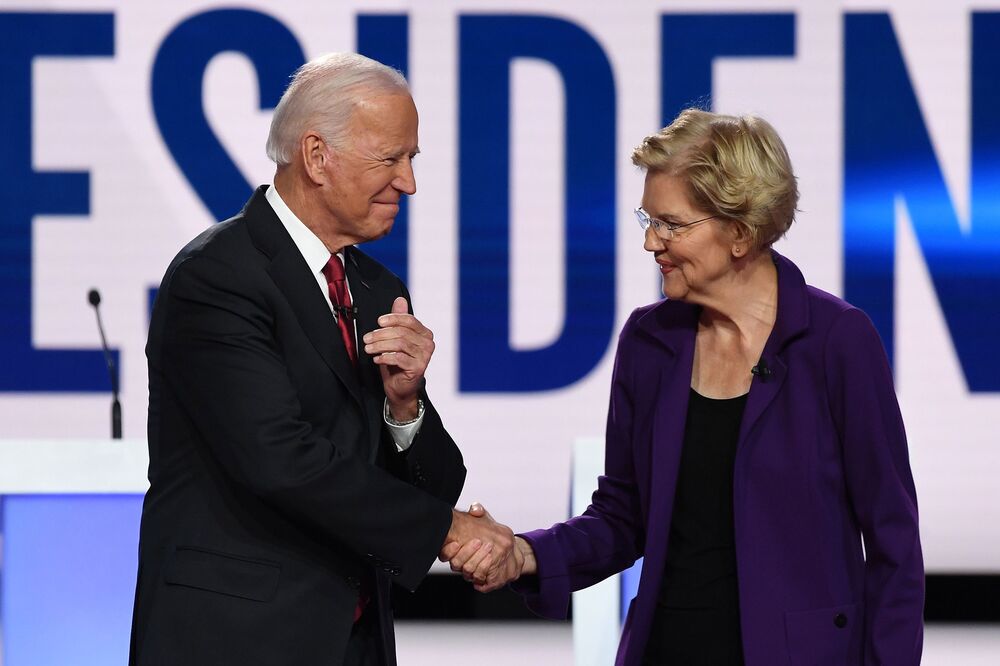
Elizabeth Warren: President Biden Is ‘Meeting The Moment’


By Kevin Robillard

The senator from Massachusetts said she plans to continue pressing the president to do more on child care and other issues.
A few days before Sen. Elizabeth Warren dropped out of the race for the 2020 Democratic presidential nomination, she said that rival Joe Biden was “so eager to cut deals with Mitch McConnell and the Republicans that he’ll trade good ideas for bad ones.”
More than a year later, following a coronavirus pandemic that transformed now-President Biden’s governing agenda, the senator from Massachusetts is pleasantly surprised.
“He’s meeting the moment,” Warren said in an interview with HuffPost to promote her new book, “Persist.” “The door for making change has opened, just like it opened in the Great Depression, just like it opened in 2008, 2009, when we got Dodd-Frank and the [Consumer Financial Protection Bureau]. It’s not open all the way. It’s only open a little bit.
“There’s no guarantee we will make big structural change, but the opportunity to do it is right in front of us,” she added, making a reference to her presidential campaign slogan.
Warren was also pleased with Biden’s approach to dealing with the Republican Party, noting he was willing to pass the $1.9 trillion American Rescue Plan without any Republican support in Congress.
“There are not very many people who ... tore up their $1,400 checks because they said, ‘Oh, it had to come through reconciliation without a single vote in Washington, D.C., from the Republicans,’” Warren said. “I think what Joe Biden is recognizing and making clear through his actions: He’s happy to do things bipartisan with the elected officials in Washington, but he is not going to fail to do what this nation needs just because Mitch McConnell folds his arms and says no.”
Warren also dodged on applying some of her traditional critiques of the American political system to Biden’s administration. Mere minutes after denouncing the influence of “dark money” on the political system, she begged off a question about whether an outside group supporting Biden’s agenda, Building Back Together, should reveal its donors.
“I don’t know the details about this,” she said.
Still, Warren says there is room for Biden to be more aggressive. She noted the funding for his plans for universal child care and pre-kindergarten ― about $425 billion in the American Families Plan ― paled in comparison to what she had pushed during the 2020 primary.
“Look, I’m just telling you I’ve done the numbers. It’s going to take about $700 billion to do high-quality available child care universal all across this country,” she said. “But the point is, we’re rowing in the same direction, and that’s what matters here. Am I going to keep pushing for more? You bet I am. I’m going to be pushing for a solution that is as big as the problem.”
https://www.huffpost.com/entry/elizabeth-warren-president-biden-meeting-the-moment_n_6095647ee4b0f73e530d1888

Afghan Music Video - دا زمونږ زیبا وطن، دا زمونږ لیلا وطن، دا وطن مو ځان دی، دا افغانستان

Treacherous Triangle: Afghanistan, India, and Pakistan After US Withdrawal


 By Umair Jamal

After the last American soldier departs Afghanistan in September, India and Pakistan will be left with some very difficult, unsavory, choices.
U.S. troops in Afghanistan have begun packing gear after President Joe Biden announced last month that all American troops will leave Afghanistan by September 2021, after a nearly two-decade-long military presence in the country. Defending his decision to withdraw all American troops from Afghanistan, Biden said, “With the terror threat now in many places, keeping thousands of troops grounded and concentrated in just one country and across the billions [of dollars spent] each year makes little sense to me and to our leaders.”
“I am now the fourth American president to preside over an American troop presence in Afghanistan. Two Republicans. Two Democrats,” he added. “I will not pass this responsibility to a fifth.”
Biden called on regional countries, particularly Pakistan, to do more to support Afghanistan. The international community, including the U.S., has often accused Pakistan of supporting militant groups in Afghanistan, including the Afghan Taliban, which have to some extent undermined Washington’s war efforts.
In 2018, then U.S. President Donald Trump tweeted that Washington had “foolishly given Pakistan more than $33 billion in aid over the last 15 years,” but Islamabad had, in return, given “safe haven to the terrorists we hunt in Afghanistan, with little help.” In another speech laying out his Afghan policy, Trump singled out Pakistan, saying that the U.S. “cannot be silent about Pakistan’s safe havens for terrorist organizations.”
Fearing the possibility of punitive action from the U.S. and seeing the international community’s attempt to engage the Afghan Taliban as a win for its own Afghanistan policy, Pakistan has been supporting the United States’ peace talks with the Taliban. Trump started negotiations with the Taliban in 2018, aimed at ending the 18-year-long war in Afghanistan. An agreement known as the Doha Accord was signed in early 2020 between the U.S. and Taliban that proposed a roadmap for the withdrawal of international troops from Afghanistan within 14 months and paved a way for the start of intra-Afghan negotiations. Pakistan played an important role in pushing the Taliban to sign the agreement with the U.S. “Their [Pakistan’s] support has been very important in directing the Taliban to come to negotiations and their continued support is going to be very important as we go to this difficult period of deciding [if] the Taliban [is] actually serious about this and [that] they are going to live up to their commitments,” General Kenneth McKenzie, head of U.S. Central Command told a U.S. Senate panel last year. Pakistan shares a treacherous, 2,670-kilometer border with Afghanistan. The mountainous border region has long served as a safe haven for many militant groups including the Afghan Taliban. The group ruled Afghanistan from 1996 to 2001 and offered sanctuaries to al-Qaeda. Since the early 1990s, Pakistan has supported the Taliban in Afghanistan in an attempt to push its regional security interests. Pakistan was one of the few countries that established diplomatic relations when the Taliban’s government came to power in Kabul.
While the U.S. invasion of Afghanistan in 2001 may have forced the Taliban out of power, the group has fought to expel international troops from Afghanistan in a bid to return to power, something that Pakistan has always wanted and supported despite international backlash.
For decades, Pakistan has supported militant groups in Afghanistan rather than elected governments. This policy choice has created an image problem for Pakistan in Afghanistan and elsewhere, making Pakistan part of the problem rather than a solution. Arguably, U.S. forces’ withdrawal from Afghanistan offers Pakistan an opportunity to reorient its international image by playing a key role in encouraging regional cooperation to ensure stability in Afghanistan. The development offers Pakistan an opening to demonstrate to the international community that the country has made a clean break from its previous pattern of supporting militant groups in Afghanistan.
“Pakistan will have to build trust with all Afghan ethnicities and political forces, rather than just being seen as ‘Taliban supporters’ or by many Afghans as ‘Taliban sponsors’,” Hassan Abbas, the author of “The Taliban Revival: Violence and Extremism on the Pakistan-Afghanistan Frontier,” told The Diplomat.
Since the beginning of the peace talks three years ago, Pakistan has earned a good reputation by playing an effective role as a mediator. However, this effort on Islamabad’s part may have also exposed the limits of the country’s influence on the group. Pakistan reportedly told the Taliban recently that the group may lose its support if it doesn’t show flexibility in the ongoing peace process. “Enough is enough” were the words reportedly used by the Pakistani leadership to convey its displeasure to the Taliban. That said, Pakistan’s role in the Afghan peace process may largely become irrelevant if the anticipated volatility in Afghanistan becomes a bigger security headache for the country. Analysts warn that the U.S. troop withdrawal all but ensures heightened instability in Afghanistan – with potentially troubling security implications for Pakistan itself. “Increased instability in Afghanistan will produce spillover effects – increases in refugee flows, a more robust drug trade, the heightened risk of cross-border terrorism – that Pakistan won’t want,” Michael Kugelman, an analyst with the Wilson Center in Washington, D.C, told The Diplomat.
“Another major concern for Pakistan would be that Taliban advances – and especially a Taliban takeover in Afghanistan – could galvanize Islamist terrorists in Pakistan, including an already-resurgent Pakistani Taliban. These would be very problematic scenarios for Islamabad.”
Echoing Kugelman’s views, Abbas said that “any civil war in Afghanistan [following the U.S. withdrawal] will be terrible for Pakistan in terms of instability in Pakistan’s tribal belt and an opportunity for various militant groups to use war-torn areas for their activities and hiding.” Meanwhile, concerns have continued to mount about the ability of Afghan forces to hold the Taliban at bay without U.S. forces present in the country. A classified U.S. intelligence agencies assessment prepared during Trump’s time in the White House warned that Afghanistan could be taken over by the Taliban within two to three years if the U.S. leaves Afghanistan without ensuring a power-sharing deal among the warring factions in Afghanistan. If this happens and the peace process falls, Pakistan will be forced to return to its decades-old policy of supporting the Taliban. For decades, one of Pakistan’s key goals in Afghanistan has been to keep India at bay with the help of militant groups like the Afghan Taliban and the Haqqani Network. It should not come as a surprise that Pakistan has continued its support for the Taliban despite the fact that the country has paid a heavy price economically, combated militancy on its own soil, and earned bad will abroad. Islamabad should be expected to double down on its policy of supporting militant groups if the country sees other players doing the same.
“Islamabad’s role in a post-withdrawal Afghanistan will depend on the status of the peace process. So long as the peace process is still happening, Pakistan will do what it can to support it – because it has a strong interest in the peace process leading to a political settlement, and because unending war could have undesirable spillover effects in Pakistan,” said Kugelman.
“If the peace process collapses, Pakistan – and other regional actors – would fall back on the empowerment of proxies. Islamabad would scale up support to the Taliban to give it an upper hand against rival groups supported by the likes of India and Iran,” he added.
This scenario directly threatens India’s political, security, and economic interests in Afghanistan and elsewhere. It is about time that India reorient its policies in Afghanistan, particularly its relationship with the Taliban in the wake of the U.S. forces’ withdrawal if the country wants to safeguard its interests. India has long supported the government in Kabul while distancing itself from the Taliban. From the 2001 Bonn conference, which paved the way for the formation of an interim government following the collapse of the Taliban regime up to the present day, India has continued a consistent policy of engaging with successive Afghan governments. In the 1990s, New Delhi supported the Northern Alliance against the Pakistan-supported Taliban and has continuously opposed the return of the Taliban to power in any form.
The U.S. withdrawal, however, is guaranteed to make the Taliban stronger – either by giving it the upper hand in negotiations with Kabul, by giving it a major battlefield advantage, or both.
The changing dynamics in Afghanistan indicate that New Delhi may be considering opening talks with the Taliban. Addressing the intra-Afghan talks last year, India’s External Affairs Minister S. Jaishankar reiterated his country’s support for an “Afghan-led, Afghan-owned, and Afghan-controlled” peace process and refrained from offering any view on the Taliban’s participation. Perhaps Washington would also like India to follow this policy approach given that the group is poised to return to power in one form or another, and India’s engagement with the Taliban can ultimately serve the United States’ interests as well. Last year, Zalmay Khalilzad, U.S. special envoy for Afghanistan reconciliation, called on India to engage with the Afghan Taliban and “directly discuss its concerns related to terrorism,” adding that Washington wants New Delhi to “take on a more active role in the Afghan peace process.”
Meanwhile India maintains categorically that it will not support a Taliban government in Kabul, as was clear from a May 4 joint EU-India press statement on Afghanistan.
While the Indian government is likely to be concerned about the rise in violence and the likelihood of pro-Pakistan Taliban’s return to Kabul, the country is yet to decide on the issue of engaging the Taliban. “The Indian government is likely concerned about what the withdrawal of American troops means for the political future of Afghanistan given Pakistan’s close relationship with the Afghan Taliban. A takeover by the Afghan Taliban, and Afghanistan hosting terrorist groups on its soil – especially India-focused jihadists – are India’s top concerns,” said Amira Jadoon, a professor at the United States Military Academy at West Point.
However, she said there is an opportunity for India here as well. “There is evidence that Pakistani influence on the Afghan Taliban has waned over the years, as the Afghan Taliban have sought new patrons, diversified their sources of support, and gained territorial control,” Jadoon said. “If intra-Afghan talks are successful in setting up a power-sharing arrangement, then India’s relationship with the Afghan government can provide it with an opportunity to redefine its political and diplomatic engagement with Afghanistan,” added Jadoon.
It is possible that the Afghan Taliban will welcome rapprochement with India for three reasons. First, India’s engagement with the Taliban offers the group greater political and diplomatic legitimacy; second, it further diversifies its international linkages; and third, it fosters the organization’s independence and makes it less reliant on Pakistan’s support or demands.
“Establishing ties with Afghanistan’s most powerful non-state actor could put New Delhi in a better position to convey and negotiate its goals and interests in Afghanistan,” said Abbas.
That said, New Delhi has a long road ahead of it. Pakistan will likely oppose and undermine any Indian engagement with the Afghan Taliban. Amidst this highly volatile and uncertain situation, the possibility of a proxy war between India and Pakistan in Afghanistan is very much possible.
“All this said, if the peace process collapses after the U.S. withdrawal, India may find itself having to fall back on old policies by backing anti-Taliban units, such as the Northern Alliance,” said Kugelman.
“So there’s a good chance that Afghanistan could once again become an India-Pakistan proxy battleground. And the stepped-up violence entailed by this would mean that the Afghan people, as always, pay the biggest price,” he added.
Echoing Kugelman’s views, Abbas notes that India “is naturally worried given its strong relations with the prevailing political elite in Kabul. India has invested in Afghan reconstruction in a big way and will not be willing to allow it to be discarded.”
“It will put up a fight in support of its friends leading to prospects of an intense India-Pakistan proxy war in Afghanistan,” he added. “That will be a terrible outcome, especially for Afghans.”
https://thediplomat.com/2021/05/treacherous-triangle-afghanistan-india-and-pakistan-after-us-withdrawal/

Afghanistan School Bombing Targets #SHIA Minority Community - Attack on Hazara Students Highlights War’s Toll on Civilians

 Patricia Gossman

As Afghan peace talks crawl along in Doha, a brutal attack on a school in Kabul on Saturday underscored the terrible toll the conflict continues to take on civilians.

A massive suicide bombing on October 24 outside the Kawsar-e Danish educational center in west Kabul was the latest attack cruelly targeting the Hazara Shia minority. The explosion took place in a crowded, narrow street outside the center, killing 30 people and injuring more than 70, mostly children and young adults between 15 and 26 years old who were attending classes.

Since 2017, the Dasht-e Barchi neighborhood, home to a predominantly Hazara community, has seen numerous attacks on civilians. A bombing at the Imam Zaman mosque in October 2017 killed 39; an attack on a school in August 2018 killed more than 34 students; and twin bombings at a wrestling club in September 2018 killed 20, including journalists and first responders who arrived after the first explosion. In May, gunmen murdered 15 women in the maternity wing of the Dasht-e Barchi hospital, many of whom were in labor or had just given birth.

The Islamic State of Khorasan Province (ISKP), the Afghan branch of the Islamic State (ISIS), claimed responsibility for Saturday’s attack. The armed group has claimed responsibility for many such bombings and has long singled out Afghanistan’s Hazara Shia community for attack. Intentional attacks on civilians are grave violations of the laws of war, and those responsible should be prosecuted for war crimes.

Many mosques and educational facilities in Kabul now have armed guards, but this offers little protection from such calculated attacks. Afghan authorities repeatedly promise investigations, including tasking the attorney general’s war crimes unit to carry them out, but none have yielded results, leaving family members of victims with neither answers nor justice.

“They are killing our youth,” said the relative of one of the victims of Saturday’s attack. The students, many from poor families who, as one of their teachers said, had come to Kabul in hope “for a brighter future.” On Sunday they were buried.

 https://www.hrw.org/news/2020/10/26/afghanistan-school-bombing-targets-minority-community#


#Pakistan - #NA-249 recount finds #PPP victor by greater margin


The recounting of votes for the NA-249 by-election has resulted in PPP emerging as the victor once more — however by a greater margin this time around. After a recount of votes polled across all 276 stations, PPP candidate Abdul Qadir Mandokhel got 15,656 votes, whereas PML-N candidate Miftah Ismail secured 14,747, meaning a victory margin of 909 votes.
When the unofficial by-poll results were first announced, Mandokhel won with 16,156 votes, whereas Ismail came in second with 15,473, resulting in a difference of 683 votes.
The low margin of votes had prompted Ismail to petition the Election Commission of Pakistan to hold a recount. The ECP, accepting Ismail's application for a hearing, issued a stay order, withholding results of the by-poll.
On May 4, following a hearing, it ordered a recount on May 6, which was boycotted by all parties except for the PPP.
The vote recount hit a snag when candidates objected to unsealed bags that were brought for a recount and came out of the District Returning Officer's office in protest.
The PTI had gone so far as to file a petition with the ECP seeking annulment of the by-election in NA-249 due to alleged rigging.
However, ECP officials decreed that "the recount process will be completed as per the order”.
Provincial Election Commissioner Aijaz Anwer Chohan had on May 6 promised that the recounting of votes will be completed in the next two days.
https://www.geo.tv/latest/349387-na-249-recount-finds-ppp-victor-by-greater-margin

UK variant accounts for 70% of COVID cases in Pakistan -researcher

Syed Raza Hassan
A coronavirus variant first discovered in the United Kingdom now accounts for up to 70% of COVID-19 infections across Pakistan, a research centre studying the disease in the country said on Saturday.The country has imposed strict nationwide restrictions in the lead up to the Muslim festival of Eid al-Fitr next week in a bid to control a spike in cases, including banning public transport over the holiday period. "There is a 60% to 70% prevalence of the UK variant in Pakistan (today)," Professor Dr Muhammad Iqbal Chaudhry, director at the International Centre for Chemical and Biological Sciences (ICCBS), University of Karachi, told Reuters, adding that this figure was 2% in January.
The ICCBS works on COVID-19 samples and provides research and data to the government.
The "UK variant", known as B.1.1.7 and first identified in Britain late last year, is believed to be more transmissible than other previously dominant coronavirus variants. Chaudhry added, however, that it was yet to be established if the variant was more deadly. He also said a variant found in neighbouring India, which has seen a massive surge of cases in recent weeks, had not been detected in Pakistan yet, but that was because they did not have the kits needed to detect the variant, named B.1.617.
The kits to detect the variant had been ordered and would soon arrive in the country, he said.
Chaudhry said there was a high possibility that the variant had already reached Pakistan since the diasporas of the two countries interact closely in Gulf states.
Pakistan has seen a daily death toll of more than 100 in recent weeks. Officials are worried the strained healthcare system could reach a breaking point if more contagious coronavirus variants begin to spread, as has happened in India.
Overall, Pakistan has registered 854,240 infections and 18,797 deaths from COVID-19. While official daily infection numbers remain low, between 4,000 and 5,000, the country conducts only around 40,000 tests a day - a fraction of its 220 million population.
The country has recently stepped up its vaccination drive, inoculating around 3.3 million people. On Saturday it received its first batch of 1.2 million vaccine doses under its COVAX.
https://news.yahoo.com/uk-variant-accounts-70-covid-141529533.html

Friday, May 7, 2021

Viddeo Report - President Biden Delivers Remarks on the April Jobs Report

Video Report - Biden says U.S. still has a long way to go on the economy

Video Report - One in three people in the U.S. are fully vaccinated

900,000 Americans Estimated To Have Died From COVID-19, Study Says

By Sara Boboltz
Public health experts agree that official COVID-19 death tolls are undercounts, but there is disagreement over how high the actual tolls are.
Around 905,000 Americans may have died from COVID-19, according to a new study that arrived at a substantially higher number than the official government tally of 577,000 U.S. deaths.
In India, where the coronavirus is maxing out hospital beds and leaving would-be patients gasping for air, the real number of deaths may be 654,400, three times the official toll.
Worldwide, COVID-19 deaths are nearing 7 million, the study says, more than double the reported number.
While public health experts agree that the actual number of people who have died of COVID-19 is higher than the numbers reported by the U.S. Centers for Disease Control and Prevention and similar agencies in other countries, it is not clear how much higher the real toll may be.
The new estimates come from the University of Washington’s Institute for Health Metrics and Evaluation, where researchers looked at a variety of existing data sets and studies and used statistical modeling to arrive at their results ― which are being updated daily. IHME Director Dr. Chris Murray said in a video released alongside the report that it marks “a major change” in how his institution is thinking about the pandemic’s impact.
“As terrible as the COVID-19 pandemic appears, this analysis shows that the actual toll is significantly worse,” Murray added in a statement. “Understanding the true number of COVID-19 deaths not only helps us appreciate the magnitude of this global crisis, but also provides valuable information to policymakers developing response and recovery plans.”
IHME projects that nearly 950,000 Americans will have died from COVID-19 by September, and the global death toll will top 9.4 million.
IHME, a research institute that makes policy recommendations on issues in global health, was founded by the Bill and Melinda Gates Foundation in 2007.
The institution’s previous model for projecting COVID-19 deaths in the U.S. received criticism in the epidemiological community last April, as the pandemic was just taking off. Some thought IMHE’s model overestimated potential U.S. deaths: IHME initially projected that 38,000 to 162,000 people might die in the U.S. by the time the pandemic tapered off, which experts had hoped it would do by fall 2020.
In its most recent report, IHME researchers included in their estimates deaths believed to be “caused directly by” the coronavirus, “not deaths caused by the pandemic’s disruption to health care systems and communities.” The researchers cited extremely limited testing and uneven reporting practices in many high-income countries over the first months of the pandemic as part of the reason they sought to analyze death tolls. Other countries, such as Russia and Ecuador, have seen a wide discrepancy between expected death rates and actual death rates, suggesting that reporting has been incomplete throughout the pandemic.
Russia’s official COVID-19 death toll sits just above 100,000 people, but IHME researchers believe it is closer to 600,000. Mexico’s official toll of 217,000 deaths is estimated to be 400,000 under the true number.
The gap is smaller in the United Kingdom, where the official count is about 150,000 people, but IHME estimates it is actually around 210,000.
Underreporting has been particularly problematic in Eastern Europe and Central Asia, Murray said. Some localities only report COVID-19 deaths that occur in hospitals or to people with confirmed diagnoses, and the difficulty of accessing health care contributes to inaccurate tallies.
https://www.huffpost.com/entry/coronavirus-death-toll-900000-americans_n_60954012e4b0ae3c687d78fa

Why Did It Take So Long to Accept the Facts About Covid?

By Zeynep Tufekci
A few sentences have shaken a century of science.
A week ago, more than a year after the World Health Organization declared that we face a pandemic, a page on its website titled “Coronavirus Disease (Covid-19): How Is It Transmitted?” got a seemingly small update. The agency’s response to that question had been that “current evidence suggests that the main way the virus spreads is by respiratory droplets” — which are expelled from the mouth and quickly fall to the ground — “among people who are in close contact with each other.” The revised response still emphasizes transmission in close contact but now says it may be via aerosols — smaller respiratory particles that can float — as well as droplets. It also adds a reason the virus can also be transmitted “in poorly ventilated and/or crowded indoor settings,” saying this is because “aerosols remain suspended in the air or travel farther than 1 meter.”
The change didn’t get a lot of attention. There was no news conference, no big announcement.
Then, on Friday, the Centers for Disease Control and Prevention also updated its guidance on Covid-19, clearly saying that inhalation of these smaller particles is a key way the virus is transmitted, even at close range, and put it on top of its list of how the disease spreads.
There was no news conference by the C.D.C. either.
But these latest shifts challenge key infection control assumptions that go back a century, putting a lot of what went wrong last year in context. They may also signal one of the most important advancements in public health during this pandemic.
If the importance of aerosol transmission had been accepted early, we would have been told from the beginning that it was much safer outdoors, where these small particles disperse more easily, as long as you avoid close, prolonged contact with others. We would have tried to make sure indoor spaces were well ventilated, with air filtered as necessary. Instead of blanket rules on gatherings, we would have targeted conditions that can produce superspreading events: people in poorly ventilated indoor spaces, especially if engaged over time in activities that increase aerosol production, like shouting and singing. We would have started using masks more quickly, and we would have paid more attention to their fit, too. And we would have been less obsessed with cleaning surfaces.
Our mitigations would have been much more effective, sparing us a great deal of suffering and anxiety.
Since the pandemic is far from over, with countries like India facing devastating surges, we need to understand both why this took so long to come about and what it will mean.
Initially, SARS-CoV-2 was seen as a disease spread by respiratory droplets, except in rare cases of aerosol transmission during medical procedures like intubation. Countertops, boxes and other possible fomites — contaminated surfaces — were seen as a threat because if we touched them after droplets fell on them, it was believed the virus could make its way to our hands, then our noses, eyes or mouths.
The implications of this were illustrated when I visited New York City in late April — my first trip there in more than a year.
A giant digital billboard greeted me at Times Square, with the message “Protecting yourself and others from Covid-19. Guidance from the World Health Organization.”
First, “Hygiene” flashed, urging me to wash my hands, “practice respiratory hygiene,” avoid touching my face and wear a mask when necessary. Next, “Social distancing” told me to avoid close contact with people (illustrated by people separated by one meter), avoid shaking hands and stay home if unwell. Then “Medical help” advised me to follow local medical protocols. I was stunned that the final instruction was “Stay informed.” That billboard neglected the clearest epidemiological pattern of this pandemic: The vast majority of transmission has been indoors, sometimes beyond a range of three or even six feet. The superspreading events that play a major role in driving the pandemic occur overwhelmingly, if not exclusively, indoors.
The billboard had not a word about ventilation, nothing about opening windows or moving activities outdoors, where transmission has been rare and usually only during prolonged and close contact. (Ireland recently reported 0.1 percent of Covid-19 cases were traced to outdoor transmission.)
Mary-Louise McLaws, an epidemiologist at the University of New South Wales in Sydney, Australia, and a member of the W.H.O. committees that craft infection prevention and control guidance, wanted all this examined but knew the stakes made it harder to overcome the resistance. She told The Times last year, “If we started revisiting airflow, we would have to be prepared to change a lot of what we do.” She said it was a very good idea, but she added, “It will cause an enormous shudder through the infection control society.”
This assumption that these larger droplets that can travel only a few feet are the main way the disease spreads is one of the key reasons the W.H.O. and the C.D.C. didn’t recommend masks at first. Why bother if one can simply stay out of their range? After the C.D.C. recommended masks in April 2020, the W.H.O. shifted last June, but it first suggested ordinary people generally wear masks if physical distancing could not be maintained, and still said health care workers performing screenings in the community did not need to wear masks if they could stay that single meter away from patients. The W.H.O. last updated its mask guidance in December but continued to insist that mask use indoors was not necessary if people could remain separated by that mere meter — this time conceding that if ventilation might not be adequate, masks should be worn indoors, regardless of distancing.
In contrast, if the aerosols had been considered a major form of transmission, in addition to distancing and masks, advice would have centered on ventilation and airflow, as well as time spent indoors. Small particles can accumulate in enclosed spaces, since they can remain suspended in the air and travel along air currents. This means that indoors, three or even six feet, while helpful, is not completely protective, especially over time. To see this misunderstanding in action, look at what’s still happening throughout the world. In India, where hospitals have run out of supplemental oxygen and people are dying in the streets, money is being spent on fleets of drones to spray anti-coronavirus disinfectant in outdoor spaces. Parks, beaches and outdoor areas keep getting closed around the world. This year and last, organizers canceled outdoor events for the National Cherry Blossom Festival in Washington, D.C. Cambodian customs officials advised spraying disinfectant outside vehicles imported from India. The examples are many. Meanwhile, many countries allowed their indoor workplaces to open but with inadequate aerosol protections. There was no attention to ventilation, installing air filters as necessary or even opening windows when possible, more to having people just distancing three or six feet, sometimes not requiring masks beyond that distance, or spending money on hard plastic barriers, which may be useless at best. (Just this week, President Biden visited a school where students were sitting behind plastic shields.)
This occurred throughout the world in the past year. The United States has been a bit better, but the C.D.C. did not really accept aerosol transmission until October, though still relegating it to a secondary role until its change on Friday, which put the risk infection from inhaling these tiny particles first on its list of means of transmission. The scientific wrangling, resistance and controversy that prevented a change in guidance stem from a century of mistaken assumptions whose roots go back to the origins of germ theory of disease in the 19th century.
Until germ theory became established in the 19th century, many people believed that deadly diseases like cholera were caused by miasma — stinking fumes from organic or rotting material. It wasn’t easy to persuade people that creatures so small that they could not be seen in a seemingly innocent glass of water could be claiming so many lives.
This was a high-stakes fight: Getting the transmission mechanisms of a disease wrong can lead to mitigations that not only are ineffective but also make things worse. During the 19th century, fearing miasma, Londoners worked hard to direct their stinky sewers into the nearby Thames River, essentially spreading cholera even more.
But clear evidence doesn’t easily overturn tradition or overcome entrenched feelings and egos. John Snow, often credited as the first scientific epidemiologist, showed that a contaminated well was responsible for a 1854 London cholera epidemic by removing the suspected pump’s handle and documenting how the cases plummeted afterward. Many other scientists and officials wouldn’t believe him for 12 years, when the link to a water source showed up again and became harder to deny. (He died years earlier.)
Similarly, when the Hungarian physician Ignaz Semmelweis realized the importance of washing hands to protect patients, he lost his job and was widely condemned by disbelieving colleagues. He wasn’t always the most tactful communicator, and his colleagues resented his brash implication that they were harming their patients (even though they were). These doctors continued to kill their patients through cross-contamination for decades, despite clear evidence showing how death rates had plummeted in the few wards where midwives and Dr. Semmelweis had succeeded in introducing routine hand hygiene. He ultimately died of an infected wound.
Disentangling causation is difficult, too, because of confusing correlations and conflations. Terrible smells frequently overlap with unsanitary conditions that can contribute to ill health, and in mid-19th-century London, death rates from cholera were higher in parts of the city with poor living conditions.
Along the way to modern public health shaped largely by the fight over germs, a theory of transmission promoted by the influential public health figure Charles Chapin took hold.
Dr Chapin asserted in the early 1900s that respiratory diseases were most likely spread at close range by people touching bodily fluids or ejecting respiratory droplets, and did not allow for the possibility that such close-range infection could occur by inhaling small floating particles others emitted. He was also concerned that belief in airborne transmission, which he associated with miasma theories, would make people feel helpless and drop their guard against contact transmission. This was a mistake that would haunt infection control for the next century and more. In modern medical parlance, respiratory transmission routes are divided between the larger droplets, associated with diseases that spread at close distance, and the smaller aerosols (sometimes also called droplet nuclei), associated with diseases like measles that we know can spread at long distance and are usually highly contagious. Indeed, studies showing that respiratory diseases spread more easily in proximity to infected people seemingly confirmed the role of droplets. It was in this context in early 2020 that the W.H.O. and the C.D.C. asserted that SARS-CoV-2 was transmitted primarily via these heavier, short-range droplets, and provided guidance accordingly.
But from the beginning, the way the disease was spreading around the world did not fit this theory well. In February 2020, after an infected person was found to have boarded the cruise ship Diamond Princess, hundreds of people trapped on board for weeks were infected, including 567 of the 2,666 passengers, who were largely confined to their rooms and delivered food by masked personnel — hard to explain solely with droplet-driven transmission. (Hitoshi Oshitani, a Japanese virologist who played an important role in his country’s response to the epidemic, said it was this ship outbreak that helped convince him this was airborne — and it’s why Japan planned around airborne transmission assumptions from as early as February 2020.)
Then there were the many superspreader events around the world that defied droplet explanations. In March 2020 in Mount Vernon, Wash., 61 pandemic-aware people showed up to a choir practice and sang with some distance between them in a large space, were provided hand sanitizer and left the doors open, reducing the need for people to touch the handles. But 53 of them were confirmed or strongly suspected to have contracted Covid-19 anyway, and two died. Long-distance transmission was being documented as well: One study from China in April 2020, clearly documenting transmission from beyond one meter, had video evidence showing the initially infected person had not come very close to those he infected, and there were no common surfaces touched. Epidemiological studies and examples kept pouring in, too, all of them showing that Covid-19 was spreading primarily indoors and clusters were concentrated in poorly ventilated spaces. And when outdoor transmission did occur, it was often when people were in prolonged close contact, talking or yelling, as with construction workers on the same site. The disease was also greatly overdispersed, sometimes being not very contagious and other times dramatically so. Large-scale studies showed that more than 70 percent of infected people did not transmit to any other person, while as few as 5 percent may be responsible for 80 percent of transmissions through superspreading events. Despite databases documenting thousands of indoor superspreader incidents, I’m not aware of a single confirmed outdoor-only case of superspreading. None of this could be explained easily if the disease were “primarily transmitted between people through respiratory droplets and contact routes,” as the W.H.O. had said, since those larger, heavier particles would behave the same indoors as outdoors, would be largely indifferent to ventilation and would not be conducive to so much superspreading.
Finally, it was clear from early on that people who weren’t yet sick or coughing or sneezing — which produce a lot more droplets — were transmitting and that things correlated with aerosol emissions like talking, yelling and singing were associated with many of the outbreaks. Amid the growing evidence, in July, hundreds of scientists signed an open letter urging the public health agencies, especially the W.H.O., to address airborne transmission of the coronavirus.
That month, after the open letter, the W.H.O. updated its guidance to say that “short-range aerosol transmission” from infected people in poorly ventilated spaces over time “cannot be ruled out” but went on to say that “the detailed investigations of these clusters suggest that droplet and fomite transmission could also explain human-to-human transmission within these clusters” and that close contact could still be the reason, “especially if hand hygiene was not performed and masks were not used when physical distancing was not maintained.”
Evidence kept accumulating. Transmission was documented in adjacent rooms in a quarantine hotel where people never interacted. Several hospital workers were proved to have been infected despite strict contact and droplet precautions. Viable virus was found in air samples from hospital rooms of Covid-19 patients who hadn’t had aerosol-generating procedures and in an air sample from an infected person’s car. The virus was found in exhaust vents in hospitals, and ferrets in cages connected only via shared air infected each other. And so on.
There were quibbles with each study: Was the sampled virus infective enough? (It is hard to catch the viruses from the air without destroying them.) Could some fomite connection have been missed? Still, it kept getting harder to deny the role of aerosols as a major factor. Last October, the C.D.C. published updated guidance acknowledging airborne transmission, but as a secondary route under some circumstances, until it acknowledged airborne transmission as crucial on Friday. And the W.H.O. kept inching forward in its public statements, most recently a week ago.
Linsey Marr, a professor of engineering at Virginia Tech who made important contributions to our understanding of airborne virus transmission before the pandemic, pointed to two key scientific errors — rooted in a lot of history — that explain the resistance, and also opened a fascinating sociological window into how science can get it wrong and why. First, Dr. Marr said, the upper limit for particles to be able to float is actually 100 microns, not five microns, as generally thought. The incorrect five-micron claim may have come about because earlier scientists conflated the size at which respiratory particles could reach the lower respiratory tract (important for studying tuberculosis) with the size at which they remain suspended in the air. Dr. Marr said that if you inhale a particle from the air, it’s an aerosol. She agreed that droplet transmission by a larger respiratory particle is possible, if it lands on the eye, for example, but biomechanically, she said, nasal transmission faces obstacles, since nostrils point downward and the physics of particles that large makes it difficult for them to move up the nose. And in lab measurements, people emit far more of the easier-to-inhale aerosols than the droplets, she said, and even the smallest particles can be virus laden, sometimes more so than the larger ones, seemingly because of how and where they are produced in the respiratory tract.
Second, she said, proximity is conducive to transmission of aerosols as well because aerosols are more concentrated near the person emitting them. In a twist of history, modern scientists have been acting like those who equated stinky air with disease, by equating close contact, a measure of distance, only with the larger droplets, a mechanism of transmission, without examination.
Since aerosols also infect at close range, measures to prevent droplet transmission — masks and distancing — can help dampen transmission for airborne diseases as well. However, this oversight led medical people to circularly assume that if such measures worked at all, droplets must have played a big role in their transmission. Other incorrect assumptions thrived. For example, in July, right after the letter by the hundreds of scientists challenging the droplet paradigm, Reuters reported that Dr. John Conly, who chairs a key W.H.O. infection prevention working group, said that there would be many more cases if the virus was airborne and asked, “Would we not be seeing, like, literally billions of cases globally?” He made similar claims last month. And he is not the only member of that group to assert this, a common assumption in the world of infection control well into 2021.
However, Dr. Marr pointed out, there are airborne diseases, like measles, that are highly contagious and others, like tuberculosis, that are not. Moreover, while SARS-CoV-2 is certainly not as infectious as measles on average, it can be highly infectious in the superspreading events driving the pandemic.
Many respiratory viruses carried by aerosols survive better in colder environments and lower relative humidity, Dr. Marr said, again fitting the pattern of outbreaks around the world, for example, in many meatpacking plants. Plus, some activities produce more aerosols — talking, yelling, singing, exercising — also fitting the pattern of outbreaks globally.
Why did it take so long to understand all this?
One reason is that our institutions weren’t necessarily set up to deal with what we faced. For example, the W.H.O.’s Infection Prevention and Control (I.P.C.) global unit primarily concentrates on health care facilities. Many of the experts they enlisted to form the Covid-19 I.P.C. Guidance Development Group were hospital-focused, and some of them specialized in antibiotic-resistant bacterial infections that can spread wildly in health care facilities when medical personnel fail to regularly wash their hands. So this focus made sense in a prepandemic world. Hospitals employ trained health care workers and are fairly controlled, well-defined settings, with different considerations from those of a pandemic across many environments in the real world. Further, in some countries like the United States, they tend to have extensive engineering controls to dampen infections, involving aggressive air-exchange standards, almost like being outdoors. This is the opposite of modern office and even residential buildings, which tend to be more sealed for energy efficiency. In such a medical environment, hand hygiene is a more important consideration, since ventilation is taken care of.
Another dynamic we’ve seen is something that is not unheard-of in the history of science: setting a higher standard of proof for theories that challenge conventional wisdom than for those that support it.
As part of its assessment of the virus’s spread, the W.H.O. asked a group of scientists last fall to review the evidence on transmission of the coronavirus. When reviewing airborne transmission, the group focused mostly on studies of air samples, especially if live virus was captured from the air, which, as mentioned above, is extremely hard. By that criterion, airborne transmission of the measles virus, which is undisputed, would not be accepted because no one has cultivated that pathogen from room air. That’s also true of tuberculosis. And while scientists, despite the difficulties, had managed to capture viable SARS-CoV-2 in three studies that I’m aware of, the review noted that the virus was detected only intermittently in general, disputed whether the captured live virus was infective enough and ultimately said it could not reach “firm conclusions over airborne transmission.” The lead author and another senior member of the research group previously said they believed transmission was driven by droplets. The skepticism about airborne transmission is at odds with the acceptance of droplet transmission. Dr. Marr and Joseph Allen, the director of the Healthy Buildings program and an associate professor at Harvard’s T.H. Chan School of Public Health, told me that droplet transmission has never been directly demonstrated. Since Dr. Chapin, close-distance transmission has been seen as proof of droplets unless disproved through much effort, as was finally done for tuberculosis.
Another key problem is that, understandably, we find it harder to walk things back. It is easier to keep adding exceptions and justifications to a belief than to admit that a challenger has a better explanation. The ancients believed that all celestial objects revolved around the earth in circular orbits. When it became clear that the observed behavior of the celestial objects did not fit this assumption, those astronomers produced ever-more-complex charts by adding epicycles — intersecting arcs and circles — to fit the heavens to their beliefs.
In a contemporary example of this attitude, the initial public health report on the Mount Vernon choir case said that it may have been caused by people “sitting close to one another, sharing snacks and stacking chairs at the end of the practice,” even though almost 90 percent of the people there developed symptoms of Covid-19. Shelly Miller, an aerosol expert at the University of Colorado Boulder, was so struck by the incident that she initiated a study with a team of scientists, documenting that the space was less full than usual, allowing for increased distance, that nobody reported touching anyone else, that hand sanitizer was used and that only three people who had arrived early arranged the chairs. There was no spatial pattern to the transmission, implicating airflows, and there was nobody within nine feet in front of the first known case, who had mild symptoms.
Galileo is said to have murmured, “And yet it moves,” after he was forced to recant his theory that the earth moved around the sun. Scientists who studied bioaerosols could only say, “And yet it floats.”
So much of what we have done throughout the pandemic — the excessive hygiene theater and the failure to integrate ventilation and filters into our basic advice — has greatly hampered our response. Some of it, like the way we underused or even shut down outdoor space, isn’t that different from the 19th-century Londoners who flushed the source of their foul air into the Thames and made the cholera epidemic worse.
Righting this ship cannot be a quiet process — updating a web page here, saying the right thing there. The proclamations that we now know are wrong were so persistent and so loud for so long. It’s true that as the evidence piled on, there was genuine progress and improvement, especially as of late. Even before the change in language last week, for example, the W.H.O. published helpful guides on ventilation, first in July and updating it in March. Recently, though the organization’s documents have lagged, more of its officials have started giving advice compatible with aerosol transmission, emphasizing things like close mask fit — which matters little for droplet transmission — and ventilation — which matters even less. All this is good, but nowhere near enough to change the regulations and policy bundles that had already been put in place around the world. And the progress we’ve made might lead to an overhaul in our understanding of many other transmissible respiratory diseases that take a terrible toll around the world each year and could easily cause other pandemics.
So big proclamations require probably even bigger proclamations to correct, or the information void, unnecessary fears and misinformation will persist, damaging the W.H.O. now and in the future. Scientists have responded. In just the past few weeks, there has been a flood of articles published about airborne transmission in leading medical journals. Dr. Marr and other scientists told me the situation was very difficult until recently, as the droplet dogma reigned. I co-wrote one of those papers, published in The Lancet last month, arguing that aerosols may be the predominant mode of transmission for SARS-CoV-2, a step farther.
I’ve seen our paper used in India to try to reason through aerosol transmission and the necessary mitigations. I’ve heard of people in India closing their windows after hearing that the virus is airborne, likely because they were not being told how to respond. Plus, there are important questions for what this means for higher-risk settings, like medical facilities. The W.H.O. needs to address these fears and concerns, treating it as a matter of profound change, so other public health agencies and governments, as well as ordinary people, can better adjust.
The past year has revealed how crucial the agency is, despite being hampered by chronic underfunding, lack of independence and attempts to turn it into a political football by big powers. Like other public health organizations, many of its dedicated staff members work tirelessly under difficult conditions to safeguard health around the world. Maintaining its credibility is essential not just for the rest of this terrible pandemic but in the future. It needs to begin a campaign proportional to the importance of all this, announcing, “We’ve learned more, and here’s what’s changed, and here’s how we can make sure everyone understands how important this is.” That’s what credible leadership looks like. Otherwise, if a web page is updated in the forest without the requisite fanfare, how will it matter?

Music Video - Jhoom Barabar Jhoom Sharabi - by Munni Begum

Video Report - Pakistan’s Water Crisis

Video Report - Shehbaz Sharif Allowed To Travel To London | PMLN NRO | PTI Ministers Angry | Bahria Town Land Grab

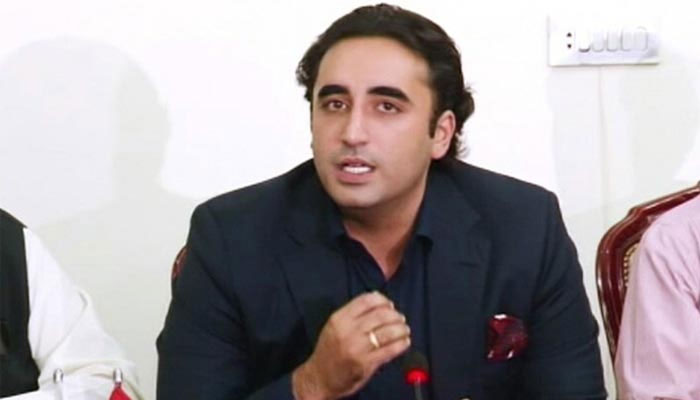
بلاول بھٹو کی مختلف ممالک کے سفارتکاروں سے ملاقات

 پیپلز پارٹی کے چیئرمین بلاول بھٹو زرداری سے کراچی میں مختلف ممالک کے
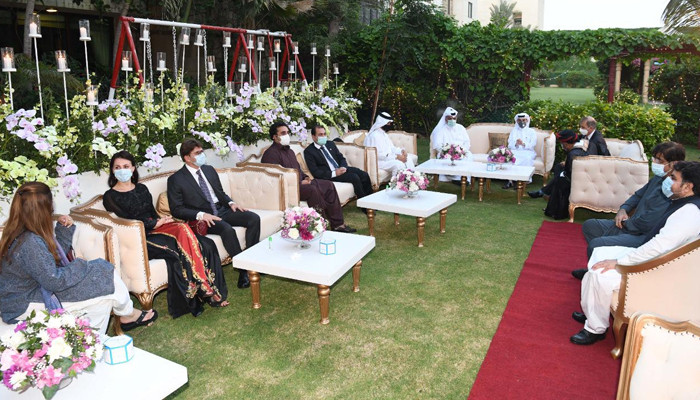

سفارتکاروں نے ملاقات کی ہے۔

ترجمان بلاول ہاؤس کے مطابق بلاول بھٹو سے امریکا، افغانستان، سعودی عرب، بحرین، عمان اور اٹلی کے سفارتکاروں نے ملاقات کی۔

ترجمان کے مطابق ملاقات میں وزیراعلیٰ سندھ سید مراد علی شاہ اور وزیراطلاعات سندھ ناصر حسین شاہ بھی شریک تھے۔

اس موقع پر بلاول بھٹو نے دوست ممالک کے سفارتکاروں کے اعزاز میں افطار ڈنر کا اہتمام کیا۔

افطار ڈنر میں پی پی کی نائب صدر شیری رحمان اور سیکریٹری اطلاعات شازیہ مری شریک تھیں جبکہ وزیراعلیٰ سندھ سید مراد علی شاہ، وزیرتعلیم سعید غنی اور وزیراطلاعات ناصر شاہ بھی موجود تھے۔

بلاول بھٹو کے افطار ڈنر میں امریکی قونصل جنرل رابرٹ سلبرسٹین اور اٹلی کے قونصل جنرل ڈینیلو گیئورڈانیلا، سعودی عرب کے قونصل جنرل بندر فہد الدائل اور متحدہ عرب امارات کی سفارت کار مریم العزیزی موجود تھیں۔

اس افطار ڈنر میں افغانستان کے سفارت کار عبدالرحمان قاضی زادہ اور بحرین کے قونصل جنرل یاسر عیسیٰ ایجان الہدیدی، عمان کے سفارت کار محمد ناصر حماد المبسالی اور قطر کے قونصل جنرل مشال ایم الانصاری بھی شریک ہوئے۔

بلاول بھٹو نے دوست ممالک کے سفارت کاروں کے درمیان دلچسپی کے دو طرفہ امور پر تبادلہ خیال کیا گیا۔

چیئرمین بلاول بھٹو زرداری اور دوست ممالک کے سفارت کاروں کا دوطرفہ تعلقات میں اضافے اور باہمی تجارتی روابط مزید مضبوط کرنے پر اتفاق کیا۔
https://jang.com.pk/news/923323

بلاول بھٹو کی زیر صدارت پنجاب کےصوبائی عہدیداران کا وڈیولنک اجلاس


چیئرمین پیپلزپارٹی بلاول بھٹو زرداری کی زیر صدارت پنجاب کےصوبائی عہدیداران کا وڈیولنک اجلاس ہوا، اجلاس میں پی پی پی وسطی پنجاب کے صدر قمر زمان کائرہ، جنرل سیکریٹری چودھری منظور شریک ہوئے۔

ویڈیو لنک اجلاس میں سیکرٹری اطلاعات حسن مرتضیٰ، سیکرٹری جنرل نیر بخاری بھی موجود تھے، اجلاس میں سیاسی صورت حال بالخصوص پی پی پی پنجاب کے تنظیمی معاملات پر تبادلہ خیال کیا گیا۔

اس موقع پر پی پی پی پنجاب کےصوبائی عہدیداران کا کہنا تھا کہ ہماری تقرری کو 3 سال مکمل ہوچکے ہیں، خواہش ہے کہ وسطی پنجاب میں پارٹی کی تنظیم نو کی جائے۔

اگلے 3سال کیلئے نئے عہدیداروں کے تقرر کے سلسلے میں وسطی پنجاب کے عہدیداران نے استعفے پیش کردیے۔

اعلامیہ کے مطابق بلاول بھٹو نے قمر زمان کائرہ،چودھری منظور اور حسن مرتضیٰ کے استعفے منظور کرلیے۔

https://jang.com.pk/news/923336

#OP-ED - #Covid and the Age of Ignorance

Ignorance is bliss, as the saying goes. Though the global pandemic has taught us that there is a very fine line between ignorance and indifference. Covid-19 represents one of the world’s worst health emergencies in recent history, and most certainly the most devastating any of us will endure in our lifetimes. Yet social media is full of images of the so-called educated classes carrying on as normal. There are dance practices and international trips. And seemingly no regard for quarantine.
What is it, therefore, about having a collective human conscience that we are finding so difficult to cultivate? Can the blame for this rest solely with you or I?
Let us rewind to this time last year when Prime Minister Imran Khan described this virus as “just a bit more than flu” that “kills only old people”. This was followed by Asad Umar, the then federal minister for Planning, Development and Special Initiatives, comparing the number of Covid-related deaths to road accident fatalities. Time and time again, the government pushed ahead with the narrative that it could ill-afford a full lockdown since this would be catastrophic for daily wage earners. Certainly, economic considerations are not to be ignored but it is highly irresponsible to send such mixes messages in a country prone to conspiracy theories.
Last year, Saudi Arabia closed the doors of the Holy Kaaba to worshippers; underscoring how the Muslim world grasped the magnitude of the situation. Not so in Pakistan where clerics and scholars did not see fit to encourage the faithful to pray at home. We can and must ask people to be self-reflective and think about how their own individual actions impact the lives of those around them. But what of those in power? Are we to absolve them from failing to present a clear narrative from the onset?
National governments with their mixed messages may have failed us. But we, too, bear responsibility for how we move ahead; as individuals, as families and societies. This will not be over for anyone unless it is over for everyone
Covid-19 was never just a case of “the flu”. But our political parties used this deadly virus as a means of political scoring, with the opposition hosting jalsa after jalsa, pulling in crowds with hardly a single mask in sight. That this happened in defiance of the government’s ban on public rallies underscores the impotency of the ruling PTI. Nowhere was this clearer than when tens of thousands flocked to the funeral of Khadim Rizvi, the late TLP (Tehreek-e-Labbaik) leader.
If the ‘Age of Ignorance’ has taken root in Pakistan – the situation is tragically even worse in neighbouring India, which is facing the collapse of its entire healthcare system. Families are left to watch their loved ones die on the streets and in front of hospital gates, while their own Modi Sarkar is busy petitioning Twitter to delete negative tweets daring to call out the BJP government over its utter mismanagement of the pandemic, despite pressing ahead with the recent Bengal elections.
Covid has spread like wildfire, exposing devastating gaps in the healthcare infrastructure of so many countries around the world. Additionally, it has also revealed mass apathy. We seem to have evolved into such creatures of habit that our ability to adapt to unprecedented crisis has become almost non-existent. In the past, action was required to defend our country, family and home. Now, it seems that the best remedy is to sit still.
Sri Lanka is currently in the grip of an emergency. The country observed Aluth Avurudu (Sinhalese and Tamil New Year) some two weeks ago. The result from cluster groups formed to celebrate the festivities has been 1,500 new Covid cases a day. Given that the country has a total population of just 20 million, the Army has had to step in to physically make 10,000 new beds to offset the unavoidable burden on the healthcare system; ICUs are already at full capacity. Incredibly, this has not been sufficient to stop people from enjoying Colombo night-life as they gather on the beaches of Unawatuna, pretending that their wealth and privilege will somehow immunise from Covid. The people of Pakistan and India suffer high illiteracy rates and are, therefore, in urgent need of constant and consistent messages from their respective leaderships about required SOPs. The same cannot be said of Sri Lanka.
Will it take a specific level of destruction and tragedy to stop us in our tracks, mid-dance, and make us realise that we do not want to be remembered as those who lived in the Age of Ignorance? For in a day and age when we could have done more by doing very little – we have chosen instead to fulfil our short-term needs for communal celebration and activity over long-term collective health benefits and safety.
Yes, national governments with their mixed messages may have failed us. But we, too, bear responsibility for how we move ahead; as individuals, as families and societies. This will not be over for anyone unless it is over for everyone. We must break this cycle of apathy, and develop the empathy required for history to remember us kindly.