M WAQAR.....
"A man's ethical behavior should be based effectually on sympathy, education, and social ties; no religious basis is necessary.Man would indeed be in a poor way if he had to be restrained by fear of punishment and hope of reward after death."
--Albert Einstein !!!
NEWS,ARTICLES,EDITORIALS,MUSIC... Ze chi pe mayeen yum da agha pukhtunistan de.....(Liberal,Progressive,Secular World.)''Secularism is not against religion; it is the message of humanity.''
تل ده وی پثتونستآن
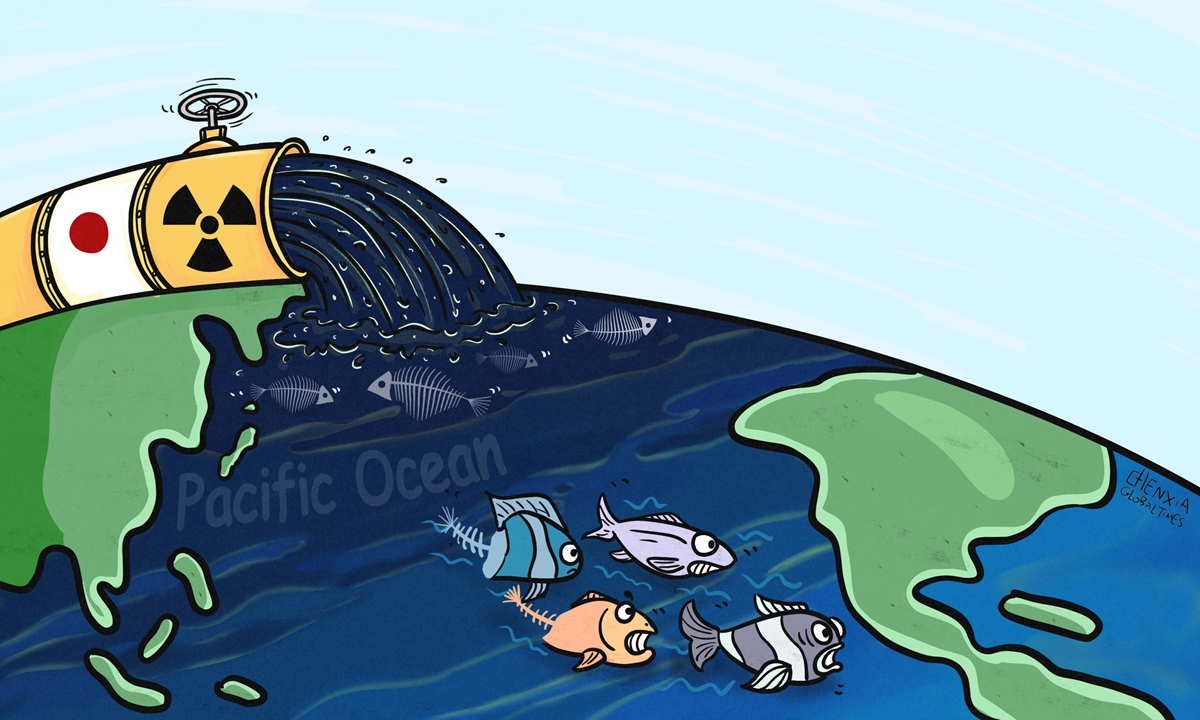
The Japanese government "is poised to" release polluted water from the Fukushima nuclear power plant into the Pacific Ocean, according to Kyodo News. Such an extremely irresponsible act has been strongly criticized by China and other neighboring countries of Japan. However, most major Western media outlets have remained silent on Japan's decision that will influence health of hundreds of millions of people. For many Western elites, it seems that their so-called environmental concern is ideologically biased. Environmental protection is just an ideological tool for them to suppress rival countries.
Dumping nuclear wastewater into the Pacific Ocean will cause infinite harm to the entire human race and the ecological environment on which the world depends. "It is a move that will have serious, long-term consequences for communities and the environment, locally and much further afield," according to report from environmental rights organization Greenpeace.
Japan's neighboring countries, including China and South Korea, will be the first to suffer from the serious pollution and it is also difficult for Western countries to stay aloof from the affair. As the world's oceans are connected, more countries will also be harmed by the nuclear wastewater sooner or later.
Such an apparently wicked act has not been jointly condemned by Western countries, and mainstream Western media which hold great international discourse power have not criticized Tokyo on a large scale.
It's a sharp contrast to the Chernobyl nuclear disaster. The Soviet Union was heavily attacked by the Western media back then and the West also used the disaster to instigate anti-Soviet Union sentiment. Today, Japan's radioactive wastewater may remain dangerous for thousands of years and may even cause human DNA changes, according to Greenpeace. The Western media's collective silence at this time has formed a sharp contrast
"In Western countries' view, Japan is an important ally of the US in Asia. Japan is consistent with Western political and economic systems and values. Therefore, the West often has a good impression of Japan's moves," Zhou Yongsheng, professor of China Foreign Affairs University, told the Global Times on Monday.
Western elites have always claimed to uphold high environmental protection standards, and they often use environmental issues to criticize China. Some of their accusations even sound ridiculous. For example, Time magazine published an article in January entitled "How China could change the world by taking meat off the menu," targeting China's rising meat consumption and trying to label China as a destroyer of the environment. However, Western media has been downplaying the US livestock industry's "contribution" to global warming.
Compared with meat consumption, Japan's releasing of polluted water into the Pacific will endanger the health of mankind. But Western media has lost their voice. "Western countries generally favor Japan and they are not even willing to criticize Japan's wrong moves. This is not an objective stand at all," Zhou said.
The Pacific is about to become the ocean of Japanese sewage. Relevant international organizations and media should have strengthened supervision on Japan, urged Japan to regularly release the status of nuclear sewage treatment and disclose the facts to the world to form a broader global consensus.
Although Japan has claimed that the wastewater will be diluted to meet international standards before any release, environmental protection agencies have questioned this. Greenpeace said in its report that Tokyo Electric Power Company and Japanese government bodies "appear to have conspired to make the crisis worse." And considering Japan's poor performance in the COVID-19 fight, there are reasons to doubt the Japanese government's wastewater handling.
PPP chairperson Bilawal Bhutto Zardari on Monday announced that the party's Central Executive Committee (CEC) has called upon its members to resign from all positions of the Pakistan Democratic Movement (PDM).
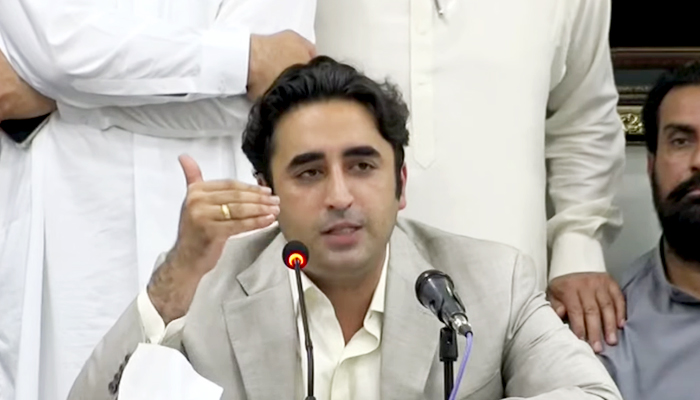
Flanked by party leaders, Bilawal held a news conference to speak about the matters that came under discussion during the recently-held Central Executive Committee meeting of the party.
He said the CEC had come to the conclusion that resignations from the national and provincial assemblies should be "like an atom bomb".
Bilawal said the PPP's stance that the Opposition should not "abandon the Parliament and the Senate battleground" had been vindicated.
He said if the PPP had listened to other political parties in the Opposition and boycotted the Senate elections and by-elections, then it would have harmed democracy.
"We did not give the PTI government an open field to form a two-thirds majority in the Senate," he said, adding that the government lost on its "own pitch" when the PDM candidate won from the Nowshera by-election.
"We will not undermine these gains that the PPP has achieved after giving many sacrifices," he said. "When the PML-N was in power, we protected the Parliament then and we will protect the Parliament today."
He said those who wanted to resign from the Parliament, should do so.
"But, no one should try to impose their will or their dictation on any other political party," he said. "And the Pakistan Peoples Party will continue in its firm, consistent Opposition to the selected government that has been ongoing since day one and has not broken for a single day," stressed the PPP chairperson.
"The Pakistan Peoples Party rejects the so-called show-cause notice," he said. "Politics is done with equality and respect," he added.
"The PPP demands an unconditional apology to the ANP and to the PPP for this obnoxious attitude," he said.
Bilawal said the PPP stands by the ANP and would not abandon them under any circumstances. "There is no concept of show-cause notices in democratic alliances," he said.
He recounted the PPP's participation in the Movement for the Restoration of Democracy and the Alliance for the Restoration of Democracy.
"We condemn the politics of Opposition against members of the Opposition," he said.
The PPP chairperson said his party's doors were open for all other parties, adding that there should be a "working relationship" among them.
'PTI-IMF' deal
He spoke about the $500mn loan received by Pakistan from the IMF. "It [IMF deal] consistently targets the poor people of Pakistan," he said, adding that the government is putting the burden on the shoulders of the poor.
"Neither the details of the PTI's deal with the IMF have been shared with the people or their representatives," he said. "Whatever knowledge we derived about is was due to the IMF's documents," he added.
He blamed the government for conducting "a historic attack" on the country's economic independence, saying that through the draft State Bank of Pakistan ordinance that the Centre wanted to be passed, the government was ensuring that the central bank does not answer to the country.
"The PPP's Central Executive Committee rejects it [the ordinance] and we will, even in Ramadan, start a campaign against this PTI-IMF deal," he said.
'Confusing, contradictory policy on Kashmir'
The PPP chairperson said the government's policy on the contentious Kashmir issue was "contradictory and confusing". He said it was the obligation of the government to represent and be the voice of the oppressed Kashmiris in their time of need.
He said the BJP's manifesto spoke about annexing occupied Kashmir. "Despite that, during India's election campaign, the prime minister of Pakistan said if Modi wins, only then the issue of Kashmir will be solved," Bilawal stressed.
The PPP chairperson said "history will remmeber" this sentence by PM Imran Khan.
"History will remember there was a prime minister who was this inept and a failure on this issue," he lashed out at the premier.
Bilawal lamented PM Imran Khan had reacted to India's illegal August 5 move by saying: "What can I do?"
"And all of a sudden Imran Khan remembered that Modi, for whom he campaigned during the entire elections, was a fascist," he said, mocking the prime minister.
He then pointed out how the government had, at first, said it wanted to trade with India but later rejected its on move. "Khan can't seem to not make mistakes on Kashmir," he said. "And he keeps on making mistakes on Kashmir [again and again]," he said.
"He [Imran Khan] says at times that he is the ambassador of Kashmir but then acts as Kulbhushan Jadhav's lawyer," said the PPP chairperson.
Bilawal said "when a leader leads" the country by taking the Parliament and the people into confidence, then the country can tackle India and other powers in the world as well.
He said the PPP's CEC had decided to take up the issues of occupied Kashmir through its Kashmir Action Committee time and again, adding that it was the party's resolve to ensure the Parliament is taken on-board in matters concerning the masses.
2017 census results
Bilawal said the CEC also discussed the census 2017 results, adding that the PPP had conditionally accepted census 2017 results at first.
He said it was on the basis of the results of the census that the country's resources were distributed to provinces. Bilawal said the census 2017 were "de jure" results and not the "de jure" figures.
"It doesn't count the people actually living there and consuming figures," he said, adding that it was the PPP's demand that the de facto results be included in the census.
He demanded the government discuss the census results during a joint session of the Parliament. "A transparent census is necessary to empower the people of Pakistan," he said.
Chairman Pakistan Peoples Party Bilawal Bhutto Zardari has said that his Party has opposed the anti-people deal of PTIMF from day one as the details of the agreement between PTI government and the IMF have neither been laid before the Parliament nor made public.
Addressing a Press Conference following two-day meeting of the Party’s Central Executive Committee (CEC) at Media Cell Bilawal House today, he said that this deal is detrimental to the people of Pakistan and the economy as a whole. “This move will be a burden on the poor people of Pakistan. We strongly condemn it and our party demands that PTI regime withdraw from this move. This deal is not in the interest of Pakistan which endangers its sovereignty and sky-rocket inflation through hike in prices of electricity and gas,” he added. Talking about the issue of Kashmir discussed in the CEC, Bilawal Bhutto Zardari said that the PPP and Kashmiri people have a three-generation relationship and his Party has never compromised on Kashmir nor will in future. Selected Prime Minister was praying for victory of Modi despite knowing that changing the status of Held Kashmir was part of BJP manifesto. When Modi changed the status of the held valley, the incompetent PM said what can he do, the PPP Chairman stated. He further said that Parliament was not taken into confidence on Kashmir policy nor was it informed whether there will be trade with India or not. Shaheed Zulfikar Ali Bhutto had said that Kashmir was an issue on which he could not err even in his sleep. But there is one Imran Khan, who does nothing but make blunders on this issue, he said adding that the people of Pakistan and Kashmir cannot afford an incompetent Prime Minister and the only way to get right on the Kashmir issue is to oust Imran Khan. Bilawal Bhutto Zardari informed that the CEC urged the Federal government to ensure the supply of vaccines to the citizens for the prevention of Corona virus and also rejected a possible amendment to the Pakistan Penal Code for taking action against critics of the armed forces. The CEC also expressed concern over the issue of hidden cameras in the polling booths during the Senate elections and described this act as tantamount to rigging in the Senate elections. Talking about the census issue, the PPP Chairman said that the PPP has been expressing its objections and concerns on this issue since 2017. In order to avoid delays in the general elections and to hamper the democratic process, it was temporarily accepted on the condition that 5% census results be re-checked. Holding a fair and transparent census is as important as conducting fair and transparent general election, he said adding that PPP demanded a clean and transparent census and the issue would be taken up in a joint parliamentary session. On this occasion, PPP Chairman announced the CEC decision for resignations from all the posts of PDM adding that we pursue politics with dignity and equality. Politics of the opposition against the opposition is unacceptable and CEC pledged that PTI regime won’t be allowed to sit comfortably, he added. He further said that CEC has rejected the PDM’s show cause notice and decided to resign from all the posts in protest against the inappropriate behavior, procedures and attitude of some office-bearers of the alliance. There is no precedent in the country’s political history for such show-cause notices and CEC has demanded an unconditional apology from both PPP and ANP, he added.
The CEC noted that no show cause notice was given to anyone at a time when the action plan of the alliance was not being implemented. In Punjab, five Senate seats were given to PTI, but no notice was given. The CEC was of the view that resignations from the assemblies were an atomic bomb and should be used as a last resort. The PPP had the same stance yesterday and today. Those who want to resign may resign but do not dictate or impose their decision on others, he added. PPP Chairman pointed out that if the by-elections had been boycotted at the behest of other parties, the PTI would have won all the assembly seats by now. We won’t back down from our struggle, will stand by ANP, and would make all decisions in consultation. “Our doors are open to any party that opposes the PTI regime,” he added. Bilawal Bhutto Zardari said that the loss of interlinking the long march with en masse resignations at the last moment harmed the opposition. Opposition’s opposition is unacceptable. PML-N has to decide whether to oppose selected Imran Khan and the Establishment or to oppose the PPP. He pointed out that PML-N had also tried to snatch the right of opposition leader from PPP in Gilgit-Baltistan.
Police in Pakistan’s Punjab province arrested two Christian nurses on blasphemy charges after hospital staff accused them of scratching a sticker with a verse from the Quran written on it off a cupboard. One of the nurses was allegedly attacked with a knife by a colleague.
The nurses, identified as Maryam Lal and third-year student Navish Arooj who work in Civil Hospital in Punjab’s Faisalabad city, were arrested on Friday, according to the United Kingdom-based nonprofit Centre for Legal Aid Assistance and Settlement.
The police complaint alleges that a Muslim nurse, identified as Rukhsana, witnessed Arooj scratching and removing the sticker on a hospital cupboard and handing it to Lal.
According to the Washington, D.C.-based American Center for Law and Justice, a video circulated over social media showed an employee, identified as Mohammad Waqas, calling Lal vulgar names and telling a room full of other employees that she tore down a sticker carrying a Muslim prayer.
“Then he said that when he found out about it, he confronted the Christian nurse Mariam. He said, ‘I am a Muslim; how can a Muslim sit quietly over blasphemy of his Prophet,’” the ACLJ report states. “Then he proudly told the employees gathered in the room that he attacked Mariam with a knife, but failed when the blade broke, only injuring her arm.”
An aggressive mob gathered outside the hospital when police came to make the arrest and threatened to kill the two nurses, according to a video posted by Pak Adam TV Ministries.
According to ACLJ, charges have been filed under Section 295-B of the Pakistan Penal Code outlawing the desecration of the Quran or “extract therefrom,” which is punishable by life in prison.
“This is not the first incident of this kind, but in the past, we have seen how people use this law to settle their personal grudges or punish their rivals,” said CLAAS-UK Director Nasir Saeed in a statement.
“I still remember 2009 when a Lahore Muslim factory owner was accused of committing blasphemy for removing an old calendar inscribed with holy Quranic verses from a wall. A factory worker killed him and two other men, and the enraged mob also assaulted management employees and set the factory on fire.”
Saeed argues that Pakistan’s blasphemy laws continue to imprison and claim the lives of innocent people. Without government action to reform the blasphemy law, Saeed said that people like Waqas are emboldened to take the law into their own hands.
In January, another Christian nurse, 30-year-old Tabitha Nazir Gill, was accused of blasphemy at Sobhraj Maternity Hospital in Karachi city in Sindh province, where she worked for nine years, the U.S.-based persecution advocacy organization International Christian Concern reported at the time.
A Muslim co-worker, who was not identified, allegedly made the accusation after a personal dispute over receiving cash tips from hospital patients.
According to the ICC report, the hospital’s head nurse instructed all medical staff not to receive cash tips from patients. Gill reportedly reminded the co-worker who she saw collect money from a patient about the instruction. The co-worker then accused Gill of committing blasphemy.
Hospital staff reportedly beat Gill after tying her up with ropes and locking her in a room before police arrived.
The blasphemy law, embedded in Sections 295 and 298 of Pakistan's penal code, is frequently misused for personal revenge. While it permits the death penalty for those convicted of insulting Islam or its Prophet Muhammad, it carries no provision to punish a false accuser or a false witness of blasphemy.
Islamic radicals also use the law to target religious minorities — Christians, Shias, Ahmadiyyas and Hindus.
A Lahore-based group, Centre for Social Justice, recently reported that 200 people were accused of blasphemy in 2020 — a record number of cases in one year. In total, the group reports that at least 1,855 people have been charged under Pakistan’s blasphemy laws since 1987.
International advocates have long called on Pakistan to reform its penal code as it is often used to persecute religious minorities.
A Pakistani Christian, Shahbaz Bhatti, who served as minister of minority affairs, was assassinated in March 2011 after calling for the blasphemy laws' repeal. Former Punjab Gov. Salman Taseer was also assassinated for his opposition to the country’s blasphemy law. Both men advocated for Christian woman Asia Bibi, who had been sentenced to death for blasphemy. She was acquitted years later by the Pakistan Supreme Court.
We are at that point in the International Monetary Fund (IMF) program that the government must now take some very difficult decisions in order to retain the Extended Fund Facility (EFF) and keep the fiscal space that it so desperately needs. Surely it realised during the year or so in the wilderness – when the bailout program was suspended – that the country is just not in a position to try and survive on its own at the moment. Therefore, even though Prime Minister Imran Khan resisted all sorts of pressure to raise taxes and power tariffs for many months, he had to cave in eventually to get the tap to run again.
And now, with news headlines shouting about another Rs1.3 trillion hike in taxes committed to the IMF for the next budget, on top of increasing electricity rates by almost Rs5 per unit for the remainder of the current fiscal year, it is clear to see just how much pressure the government is under and, at the same time, how desperate it is for some hard reserves. It doesn’t take too much to realise that all this will not sit very well with the people or the business community, of course, so it is also beginning to make sense just why the new finance minister made controlling inflation his top priority very recently. The government seems to be trying to soften the blow that will now surely start to build and get much worse with the next year.
These are very difficult decisions for the government. There is of course the desperate need to restructure almost everything about the economy, from expanding the revenue base to fine tuning gas tariffs and adjusting the petroleum levy. Yet setting unrealistic targets, which always happens when we’re working with the IMF, should be avoided. To expect the Federal Board of Revenue (FBR) to really collect Rs5.963 trillion in the next fiscal is clearly wishful thinking more than anything else. Such estimates lead to cutting down the development budget even before the document is prepared, making the most needed aspect of budget making the first casualty of pleasing the IMF. It ought to really worry policymakers, therefore, that under the agreement the government is bringing down the current year’s development program from Rs1.324 trillion to Rs1.169 trillion.
But it’s not really as if the government has much of a choice at this time. When it has to subsidise and sell expensive electricity cheaply, it has to bear the deficit itself, which adds to the circular debt. The reserves position simply does not allow this practice, which is also present in the gas sector, to go on any longer. In fact the way previous governments entered into contracts with Independent Power Producers (IPPs) laid the foundation for this problem. So it’s basically a choice between continuing to milk reserves, grant subsidies and allowing the circular debt to skyrocket or taking the bull by the horns now, hiking tariffs and initiating reforms.
The government is truly in a Catch-22 situation. The IMF program might bail it out of a very sticky fiscal situation, but it is unlikely to do the people or the business much good in the near term. They are already struggling with high inflation and input costs. All this will only add to their problems. But there is an important lesson in this. When you live beyond your means for too long as a country, then you have to bend over backwards to please your lenders even at the cost of the people’s interests for a while. Hopefully things will start to improve during the next fiscal year.
If an outsider was to say that there’s rampant corruption in Pakistan army, especially within the top echelons, Pakistan army’s media wing Inter Services Public Relations [ISPR] would label that person a “RAW agent” trying to malign the military and terming such assertions as “motivated”, outrightly dismiss the same. However, what explanation can ISPR offer when patriotic and well-meaning people in Pakistan level similar charges against Rawalpindi?
In her extensively researched book “Military Inc.: Inside Pakistan’s Military Economy” published in 2007, noted Pakistani activist Ayesha Siddiqa reveals the highly opaque manner in which Pakistan army conducts its commercial activities. Infact, after realising that it’s “a completely independent genre of capital,” she felt it necessary to coin an appropriate term- “Milbus” [military business], and defines it as “military capital that is used for the personal benefit of the military fraternity, especially the officer cadre, but is neither recorded nor part of the defense budget.”
Elaborating further on “Milibus,” Ms Siddiqa notes that its “most significant component is entrepreneurial activities that do not fall under the scope of the normal accountability procedures of the state, and are mainly for the gratification of military personnel and their cronies… in most cases the rewards are limited to the officer cadre… The top echelon of the armed forces who are the main beneficiaries of Milbus justify the economic dividends as welfare provided to the military for their services rendered to the state.” The scale and extent of Pakistan armed forces involvement in commercial activities is indeed mind boggling as they seem to have interests in almost every business under the sun!
During July 2016, in his written reply to a question asked by a Senator, Defence Minister Khwaja Asif informed Parliament that the armed forces of Pakistan were running nearly 50 commercial entities. These included banks, bakeries, petrol pumps, schools and universities, shoe, woollen, apparel, food processing production units, milk dairies, stud farms, cement plants, an insurance company and even restaurants and wedding halls! They also have an exposure in insurance, agriculture, fertilizer and aviation sectors. So much so that in 2008, Pakistan army’s Fauji Foundation even floated a company called ‘Pakistan Maroc Phosphore SA’ in faraway Morocco.
Three years later, Pakistan’s Supreme Court Judge Justice Gulzar Ahmed passed strictures on the army to cease commercial activities on military-owned land. In a scathing attack, he observed that “Defence Housing Authority [DHA] of Karachi have encroached so far into the sea. If they had their way, they would build a city on the sea. The owners of DHA would encroach on the entire sea all the way to America and then plant their flags there. The owners of DHA are wondering how they can make inroads into India!” Infact, Pakistan army’s phenomenal lust for land, [at both individual and organisational levels] is understandable as it gives maximum returns. Ms Siddiqa reveals that Pakistan army owns 12 per cent of the country’s land, and out of this, with two-thirds being owned by senior ranking military officials.
In an investigative piece (‘Bajwa family business empire grew in four countries in sync with Asim Bajwa’s rise in military’, Fact Focus, August 27, 2020), noted Pakistani investigative journalist Ahmad Noorani published very specific and verifiable details that retired Lt Gen Asim Bajwa and his family members ” own a business empire which set up 99 companies in four countries, including a pizza franchise with 133 restaurants worth an estimated $39.9 million.” Whereas, there’s nothing wrong in a former General creating wealth, but two things make this case suspicious- one, he didn’t declare his offshore wealth or assets, and two, though he termed these assertions a “malicious propaganda story,” Lt Gen Bajwa surprisingly didn’t consider it necessary to approach the courts to redeem his honour by slapping a defamation suit against Noorani.
In his 2008 book ‘Crossed Swords: Pakistan, Its Army, and the Wars Within,’ Shuja Nawaz mentions about how a self-created “culture of entitlement” is rampant in the military, especially amongst its top brass. Last year, while ruling on a case regarding the Federal Government’s housing project, Justice Qazi Faez Isa of Pakistan’s Supreme Court invoked this book saying that even though gifting land didn’t have constitutional or legal sanction, “nevertheless, senior members of the armed forces get plots and agricultural lands and continue to be given additional plots and agricultural lands as they rise up the ranks.”
There was a time when Pakistan army’s first chief Gen Douglas David Gracey turned down Gen Ayub Khan’s request for a plot of land. However, this happened long-long ago and if Gen Ayub was alive today, he would have had just no problems as his successors have successfully ‘institutionalised’ land allotment to themselves. Justice Isa rightly opined that “If lands are given to only one category like the members of the armed forces and the civilians in the service of Pakistan are disregarded, it constitutes discrimination and offends the fundamental right of equality.”
However, when there some rumblings against allotment of 90 acres of land to former army chief Gen Raheel Sharif, Dawn newspaper quoted a security establishment official as saying that there was “nothing unusual” as it was “in accordance with the existing rules and purely on merit.”The “existing rules” on grant of land to Pakistan army chiefs are indeed very interesting for two reasons. One, they lack any approval from Government of Pakistan, and two, the entire process right from putting forth the proposal to identifying land to be gifted and its final approval rests with General Headquarters [GHQ].
Records of all land along the borders is maintained by Border Area Committee [BAC]. Its chairman is an army officer of Brigadier or Colonel rank with an assistant commissioner as the civil member assisted by a revenue officer [tehsildar] and his staff. The BAC projects the requirement of land to the concerned Provincial Board of Revenue [PBR], which in turn passes on the details to the district collector [DC]. The DC the same to the establishment officer who issues the land allotment order.
So, while it’s surprising that all this is done without any written rules on the subject, what’s even more perplexing is that civil officials still consider that an establishment officer is ‘legally bound’ to implement the orders of the BAC chairman! So, by involving the civil administration but making sure that it has no other option but to honour the GHQ’s ‘request’, Rawalpindi has cunningly given this patently illegal practice a veneer of legitimacy.
More than three decades ago, the then Jamaat Islami Amir Qazi Husain Ahmed had quipped that corps commanders of Pakistan army were actually “crore” [millionaire] commanders, a rather embarrassing sobriquet that Rawalpindi has been unable to playdown. How badly has Pakistan army’s land grab has riled the public became evident during the 2007 protests that broke out when Gen Musharraf removed Chief Justice of Pakistan, when lawyers carried banners proclaiming “Ae watan ke sajeele Genrailon; saaray ruqbey tumhare liye hain [O’ handsome Generals of the country, all the plots are there just for you],” even though this issue wasn’t in anyway connected to the protests!
Infact, with National Assembly’s Standing Committee on Interior approving the bill for amending Pakistan Penal Code and Code of Criminal Procedure 1898 to criminalise any attempt to ridicule Pakistan’s armed forces, it’s clear that public resentment against Pakistan army’s “culture of entitlement” has reached tipping point! But whether the “crore” commanders of Pakistan army will reform themselves or throw the book at those who object to their financial impropriety remains a million dollar question!
Murder and rape are generally surreptitious affairs, and most of us have not actually witnessed either taking place. Yet, some of us can read, and we do, so we know the state of affairs in the world, including in the country we call the Land of the Pure.
We know for example that Pakistan is an extremely dangerous place for women. Human Rights Watch carried out a study on the subject and found that in this country there is a case of a woman being raped every hour, and gang-raped every two. As for what is most deplorably called an ‘honour’ killing, thousands take place every single year. And unlike other murders these killings are often neither surreptitious nor considered wrong by the segment of society they take place in.
So given our PM’s statement saying that the reason for rape is because women dress the way they do, you wonder if our PM can read, and missed discovering those statistics exactly the way he missed knowing about the devaluation of the rupee a couple of years ago, when he said he only found out about it via reports in the media.
Leaders need to mind their own morals, and also what they say, because the public takes note of both. Or perhaps that’s the crux of the matter. Blaming women is as easy said as done and safe to boot since this country can boast of almost no females in its armed forces, therefore such statements will not contravene the respect to the army bill that has just been approved.As for domestic violence, in a survey in 2008 published in the Journal of Political Studies, 70 percent of women who participated had experienced domestic violence. According to another Human Rights Watch Report, ‘70-90% Pakistani women suffered from some kind of domestic violence. About 5,000 women are killed annually from domestic violence in Pakistan, and thousands others maimed or disabled.’ These cases of abuse and death include those who are abused and/or killed because they are viewed as having brought insufficient dowry at marriage, those who are killed or abused for asking for divorce, and those who are victims of acid attacks for any number of reasons…including just because. Domestic violence and death are also often associated with child marriage, and forced conversions, where women are forced to leave their religion of birth and forced to marry a Muslim.
The worst part is that where domestic violence is concerned ‘Law enforcement authorities do not view it as a crime, and usually refuse to register any cases brought to them.’
If not submitting to the general concept of purdah (which is a distortion of the Quranic concept) were the reason for these overwhelming cases of violence, Pakistan would hardly be at the bottom of the rung where safety for women is concerned, yet it is. Therefore, our Prime Minister’s statement regarding the matter where he placed the blame for this violence squarely at the door of every woman in the country was sickening in the extreme.
A leader who cannot recognize the obvious reasons for problems, who blames the wrong half of the country for the distress of the victimised other half is a danger to the entire population. Those given to abusing law and morality recognize this weakness and take advantage of it.
A feeble analogy would be in cricket where a fielder keeps dropping catches every time the ball comes his way. The opposite team recognizes this weakness and makes a point to aim in that less well-defended direction. Perhaps this analogy will be understood but there can be little expectation of it being applied to the current scene, the way religion is rarely applied to anything that occurs after the Prophet (PBUH) and his companions.
Will it really make any difference if women in Pakistan cover themselves even more than they do at present? If they kill themselves covered in fabric in the sweltering sun? Or is the real problem the mindset of this society’s men who consider women to be objects to be leered at, owned and treated any way they wish? God forbid that modesty and kindness should ever be expected of boys and men.
An article published just this month reported a four percent increase in child abuse cases in 2020. Of these 51 percent of the victims were girls and 49 percent boys. Were these little girls abused because they were not in purdah? And how about the little boys? Where does their fault lie in this case?
Words matter. In the long run they pile up and the largest pile carries greater weight. It remains in people’s minds and influences actions and thought. As when Jinnah spoke of everyone being free to visit their temples and mosques, a wish may that has still to be realised but it does occur to us all every time a person is victimized using the blasphemy law, every time a place of worship is destroyed. And who knows, one day it may come into its own.
Leaders need to mind their own morals, and also what they say, because the public takes note of both. Or perhaps that’s the crux of the matter. Blaming women is as easy said as done and safe to boot since this country can boast of few females in its armed forces, therefore such statements will not contravene the respect to the army bill that has just been approved.
https://www.pakistantoday.com.pk/2021/04/10/can-he-read/
With all eyes on PPP's Central Executive Committee meeting in Karachi today, reports have emerged of the party chairman, Bilawal Bhutto Zardari, tearing apart the show-cause notice served to PPP by the Pakistan Democratic Movement (PDM).
Sources told Geo News that during the CEC meeting at Bilawal House, Karachi, Bilawal read out the show-cause notice served to PPP by PDM's secretary-general Shahid Khaqan Abbasi — and after that, he tore it into pieces.
Following Bilawal's move, the party leaders present during the meeting lauded his action and started clapping, sources said.
Addressing the CEC meeting, Bilawal said he had come into politics for respect, and nothing was greater than respect.
The meeting, which has 50 PPP leaders in attendance, is discussing the current political situation and the relations between the Opposition parties and the overall anti-government strategy of the party. Former president Asif Ali Zardari and Bilawal are presiding over the meeting.
The PPP had earlier delayed the April 5 CEC meeting that was called to decide on resignations from assemblies citing a Senate session summoned by the president on the date. While all major parties showed their willingness for the move, the PPP had sought time to deliberate on the matter.
It is pertinent to mention here that the ANP has withdrawn from the PDM after the Opposition alliance served it a similar show-cause notice seeking an explanation for the party supporting PPP's Yousuf Raza Gillani for the Opposition Leader in the Senate's office.
PPP, on the other hand, was asked in the notice to explain why it did not first obtain the consent of the Opposition alliance before getting Gillani elected to the seat.
Gillani's declaration as Opposition leader in the Senate has become a major cause of division within the PDM.
The PML-N says one of its own should have assumed the role as was "pre-decided" at the time of the Senate chairman election, while PPP argues it had the numbers to its favour in the Senate, and so, its party candidate had a right to the position.
Chairman Pakistan Peoples Party Bilawal Bhutto Zardari has demanded immediate withdrawal of the PTI government’s decision to drastically cut the number of scholarships from 265 to just 29 for the students of formerly FATA areas and Balochistan.In a press statement, the PPP Chairman said that students from ex-FATA and Balochistan have the right to quality education because these areas have suffered gravely due to terrorism. “This withdrawal of scholarship quotas by the PTI Government is tantamount to snatching pen from these poor students and giving gun in their hands,” he added.
Bilawal Bhutto Zardari said depriving these students of scholarships proves the ugly face of the Imran Khan regime, which is bent upon to destroy the higher education through cutting the funds. PTI government had announced education and health emergency but its attitude displays a lethal approach to ruin these key sectors of the country, he added.
He said that PPP won’t tolerate injustice and discrimination by the regime against the students from backward and remote areas of ex-FATA and Balochistan.
Bilawal Bhutto Zardari strongly condemned the approach of PTI government and demanded that higher education scholarships to the students from ex-FATA and Balochistan should be restored and further increased.
PPP Chairman expressed solidarity and sympathy with these students holding protests in Islamabad nowadays.
Chairman Pakistan Peoples Party Bilawal Bhutto Zardari has extended felicitations to the newly-elected office-bearers of Karachi Union of Journalists (KUJ).
In a message to Aijaz Ahmed and Aajiz Jamali,President and General Secretary respectively of KUJ, the PPP Chairman said that journalist fraternity and the PPP have fought together for democracy and freedom of press. This bond will continue to be cemented because a free press has a pivotal role for building an egalitarian democratic society, he added.
Bilawal Bhutto Zardari hoped that all the newly-elected office-bearers of KUJ will strive for resisting the growing gagging of press in the country besides the rights of the journalist community ensuring better wages and facilities for them.
UN spokesperson says UAE has not responded to its request for ‘proof of life’ in relation to missing princess.
The UN says the United Arab Emirates has failed to provide compelling proof that Sheikha Latifa bint Mohammed al-Maktoum – the missing daughter of Dubai’s ruler, last seen in late 2018 – is still alive.
The UAE last month said Princess Latifa was being cared for at home by family and medical professionals.
The UN’s human rights office has repeatedly asked Dubai to provide “proof of life” for Latifa, a demand echoed by the UK foreign secretary, Dominic Raab, and other western governments.
On Friday, the UN spokesperson Marta Hurtado told a briefing in Geneva that the UAE had not responded to its request or clarified the conditions in which Latifa was apparently being held.
“We haven’t got any proof of life, and we would like one, one that is clear compelling evidence that she is alive. Our first concern of course is to be sure of that, that she is still alive,” Hurtado said.
Senior UN officials had sought a meeting with the UAE ambassador in Geneva about Latifa, which in principle had been agreed, Hurtado said. She added that the UN also planned to raise the case of Latifa’s older sister Shamsa, who was kidnapped in 2000 from the streets of Cambridge.
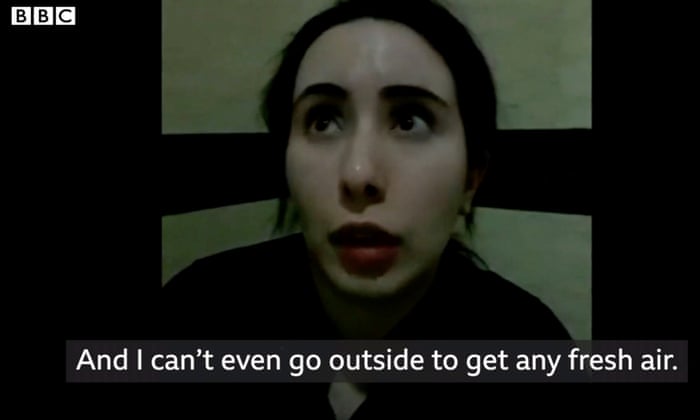
Concerns over the fate of Latifa, 35, have grown after videos emerged in which she claimed her villa home had been “converted into a jail”.
Latifa claimed to have been imprisoned in the villa after an escape attempt in 2018 in which she crossed into neighbouring Oman and took a jetski to a yacht in international waters. With two friends she managed to reach the west coast of India before discovering she was being tracked by another vessel and had been spotted by the Indian coastguard.
After eight days at sea, the ship was raided by Indian commandos who handed her to UAE security forces in an operation authorised by her father, Sheikh Mohammed bin Rashid al-Maktoum, according to a 2020 fact-finding judgment by a UK court.
Latifa had not been seen since apart from in official photographs released by the UAE foreign ministry, in which she was pictured dining with the former Irish president Mary Robinson, who later told the BBC she was “horribly tricked” into publicly vouching for Latifa’s wellbeing.
“All the windows are barred shut,” the princess said in the latest footage. “There’s five policemen outside and two policewomen inside the house. And I can’t even go outside to get any fresh air. I’m doing this video from a bathroom, because this is the only room with a door I can lock. I’m a hostage. I am not free. I’m enslaved in this jail. My life is not in my hands.”
She has not been heard from in six months, according to her friends.
The UAE’s embassy in London said that “media coverage does not reflect the true situation” and she was being cared for at home supported by her family and medical professionals. “She continues to improve and we are hopeful she will return to public life at the appropriate time,” a statement last month said.
Sheikh Mohammed has said his daughter – the second of his children to try to escape – is in the loving care of her family.
His youngest wife, Princess Haya, also left Dubai fearing for her life after claiming she was subjected to a campaign of intimidation and harassment. A UK court judgment in 2020 found her claims were true on the balance of probabilities.
https://www.theguardian.com/world/2021/apr/09/uae-has-failed-to-show-proof-that-princess-latifa-is-alive-says-un
Jacob Silverman
The jailing of a dissident and two lawsuits reveal Twitter’s complicity with MBS’s dictatorship.
Contrary to Saudi Arabia’s self-proclaimed image as a reform-minded state gradually opening to the world, the country’s human rights situation is worsening, according to both activists and the family members of imprisoned dissidents. “Saudi Arabia is carrying out more repression” than ever, said Areej Al Sadhan, whose brother Abdulrahman, a 37-year-old aid worker, was abducted by Saudi security forces in 2018 for running a satirical Twitter account. “They are ruthlessly going after anyone who exercises their freedom of speech.”
This week, a counterterrorism court in Saudi Arabia sentenced Abdulrahman Al Sadhan to 20 years in prison, with a subsequent 20-year travel ban. Accused of running a pseudonymous Twitter account that parodied members of the Saudi government, Al Sadhan had violated the country’s stringent prohibitions on political speech that allow authorities to arrest (and sometimes torture and execute) virtually anyone showing public dissent. While Al Sadhan has 30 days to appeal his sentence, absent pressure from Western governments (which has so far been meager), his prison term is likely a fait accompli.
Al Sadhan’s family has had only two brief phone calls with him since his arrest in 2018, and they fear for his future. Though he is not Saudi Arabia’s most famous political prisoner, Al Sadhan is emblematic of the treatment meted out to anyone who challenges the country’s de facto leader, Crown Prince Mohammad bin Salman. Completely intolerant of dissent—with mockery holding a special place of scorn—MBS has had critics harassed, kidnapped, and killed all over the world. The gruesome murder of former Washington Post columnist Jamal Khashoggi is perhaps the best known instance of MBS’s penchant for brutality, but he was merely one victim of a larger crackdown that has seen thousands of people, including some of MBS’s own family members, rounded up and sent to prisons and black sites, where torture is routine.
“The level of human rights abuses are continuing on a high scale,” said Areej Al Sadhan. “People should not be fooled by the recent release of [women’s rights activist] Loujain Alhathloul.”
This crackdown began, in part, on Twitter, which is used by approximately 10 million people in Saudi Arabia, making it the service’s largest Middle Eastern market. For many citizens of autocracies, social media provided a welcome entree to a public square where issues of societal concern could be discussed—openly—like never before. In Saudi Arabia, where independent media is nonexistent, social media at first appeared to be “a great equalizer,” said Ali Al Ahmed, a Saudi analyst living in Washington, D.C., who is suing Twitter for failing to protect his account from Saudi spies. “That did not last.”
After a brief honeymoon of unfettered speech, pro-regime trolls and surveillance emerged on the site. Now as popular with members of the Saudi ruling family as the public, Twitter is no longer a place where ordinary Saudis feel comfortable speaking freely. Much the same could be said of Saudi dissidents and exiles, who talk of constant harassment, death threats, and attempts to hack their accounts. In their view, Twitter bears some responsibility for how its service has been abused. “There was no real step taken by the company to take care of and protect these activists,” said Al Sadhan.
Saudi Twitter has since become a place for the government to propagandize, track dissident thought, and identify victims for MBS’s personal team of enforcers. Regime officials are even known to chat with their future targets. Ali Al Ahmed told me that after he’d exchanged some direct messages with MBS’s adviser Saud Al Qahtani, someone who claimed to be Al Qahtani sent Ahmed a phishing email, attempting to steal his login information. (Al Ahmed messaged Al Qahtani, who was later banned from Twitter after being linked to Jamal Khashoggi’s murder, but he received no response.)
The story of MBS’s renewed crackdown on dissent is not as simple as combing Twitter for anti-regime statements, but Twitter plays a major role in the savage turn that’s occurred since MBS rose to power. In June 2014, a Saudi official named Bader Al Asaker—the secretary general of MBS’s personal charity, the Misk Foundation, and head of the crown prince’s private office—took a tour of Twitter’s San Francisco headquarters. The tour was jointly arranged by a man named Ahmed Almutairi, who operated a social media marketing company that contracted to members of the Saudi royal family and MBS’s foundation, and a Twitter employee named Ahmad Abouammo. Abouammo, who worked on media partnerships in the Middle East, would soon be groomed to spy directly for Al Asaker. In the months to come, Abouammo would receive more than $100,000 in cash and gifts as he gathered information—including email addresses, phone numbers, and private messages—relating to Saudi dissidents, journalists, and other accounts of note.
In 2015, Abouammo got a new job at Amazon, but the Saudi regime found a worthy replacement in Ali Alzabarah, a Twitter engineer whose position and technical skills gave him access to more user data than Abouammo. Soon enough, Alzabarah became an even more productive spy for Al Asaker and the Saudi regime, allegedly tracking dissidents across borders and providing IP addresses that could reveal people’s locations.
In December 2015, an FBI agent visited Twitter headquarters in San Francisco to tell them they had a Saudi espionage problem. While Abouammo was gone, Alzabarah was still siphoning data from thousands of accounts and passing it to his handlers. The FBI asked that Twitter refrain from taking immediate action but, reportedly suspicious about the intentions of government security agencies, which are known to pressure tech companies for private user information, Twitter decided to confront Alzabarah and suspend him. According to a federal indictment against Alzabarah, the engineer turned spy then frantically called Al Asaker, who, along with the Saudi consul general of Los Angeles, helped spirit Alzabarah to Saudi Arabia. After finding refuge there, Alzabarah was named the CEO of the Misk Foundation. (He was present at the infamous touching of the glowing orb event.) Alzabarah remains on Twitter—where his account is locked for privacy—and on the FBI’s most-wanted list.
Over the years, Saudi investors, chief among them Prince Al Waleed bin Talal, the country’s most famous business mogul, have bought up shares in U.S. tech companies like Twitter. By 2015, the prince owned an estimated 5.2 percent of Twitter—more than Twitter co-founder Jack Dorsey himself. In November 2017, bin Talal was arrested and confined to the Ritz-Carlton Hotel in Riyadh as part of a sweeping “anti-corruption” purge that forced numerous wealthy Saudis and members of the royal family to sign over their assets to MBS. That well may have included bin Talal’s Twitter shares. “Since late 2017 or January of 2018, MBS has exercised control over more Twitter stock than is owned by Twitter’s founder,” according to a civil complaint filed against Twitter and McKinsey by Omar Abdulaziz, a Saudi exile who says that the consultancy helped finger him as a prominent online dissident, leading to his Twitter account being hacked. (Last year, Canadian authorities warned Abdulaziz that he may be a target of a Saudi kill team.)
According to Abdulaziz’s original complaint, “Because of the tremendous wealth of key figures in [the Kingdom of Saudi Arabia], major corporations have enabled, collaborated with, and turned a blind eye to KSA’s efforts to suppress, torture, falsely imprison, terrorize, and murder dissenters both within Saudi Arabia and around the world.” Other exiles have expressed similar thoughts, saying that Twitter gives the Saudi government a long reach well beyond its borders—and that Twitter has a responsibility to do more to protect its users from harassment and hacking.
“Instead of these tools being used to enable freedom of speech, [they are] being used by dictators to oppress freedom of speech and to track their personal information and target them personally,” said Al Sadhan.
Ali Al Ahmed has been the target of numerous hacking and phishing attempts, some of which he’s detected before they were able to succeed. But as he states in his lawsuit against Twitter, he believes the company failed to protect him and—more importantly—failed to protect the dissidents and other sensitive figures he had communicated with via Twitter direct messages. Among those people was Abdulrahman Al Sadhan, whose satire Al Ahmed appreciated. It’s not certain whether Abdulrahman was unmasked through the Twitter spy ring—sources close to the investigation believe his name was on an FBI list of surveilled accounts—but Al Ahmed believes that the spy ring definitely outed other friends, who were then disappeared, tortured, even killed.*
“It made me decide to do something about it, at least for the friends who were lost,” said Al Ahmed, who said he hopes his lawsuit will “force the truth to come out.”
More than five years have passed since the FBI told Twitter it had a Saudi spy problem. The company has since promised tightened procedures and access controls. But for many dissidents, it’s too late. Put another way, a murderous autocratic government abused its close relationship with Twitter to cultivate spies who provided information that then got innocent people thrown in jail. That government remains one of Twitter’s largest outside shareholders and continues to harass and monitor its citizens via the micro-blogging service. MBS has yet to suffer so much as a public warning, while people like Bader Al Asaker—who spoke multiple times with the Khashoggi hit squad on the day the journalist was murdered—use the site to propagandize to a huge audience.
On Twitter, Al Asaker appears like just another member of the global elite, mingling with royals, politicians, and business executives. He has 1.8 million followers—including Jack Dorsey. The U.S. tech CEO and the Saudi royal fixer appear to at least have a passing relationship, and in June 2016, six months after Twitter’s management learned about the spy ring from the FBI, Al Asaker tweeted a photo of Dorsey meeting with MBS in New York.
For Al Ahmed, the relationship, and Twitter’s passivity in the face of Saudi aggression, is difficult to explain.
“If somebody was spying on my company, would I be his friend?” Al Ahmed asked. “This is very serious. People died, people are in jail. Abdulrahman, this beautiful young man, is going to spend 20 years. This is sick, honestly.”
https://newrepublic.com/article/161995/twitter-saudi-arabia-mbs-dissident
The Biden administration faces relentless pressure from the left to push Saudi Arabia to lift its Yemen blockade.
Saudi Arabia is continuing its six-year air and sea blockade of Yemen, starving millions of Yemenis and deepening the world’s worst humanitarian crisis.
Anger from Democrats and progressives in the US isn’t just directed at Riyadh, though. It’s also aimed at the Biden administration for failing to fully pressure Saudi Arabia to lift the restrictions.
When Saudi Arabia and its allies launched a war against the Houthis in 2015 — with US support — Saudi used its military to block planes from landing and ships from docking in Yemen, saying such measures were necessary to stop the Houthis from smuggling in weapons, including from Iran.
The Saudi coalition is fighting to oust the Houthi rebels, who overthrew the internationally recognized government of President Abdrabbuh Mansur al-Hadi in 2015, and return al-Hadi, who currently lives in exile in Saudi Arabia, to power.
But critics warned the blockade would keep much-needed food, fuel, medicine, and humanitarian aid from reaching desperate Yemenis, including millions of children, who are caught in the middle of the fighting.
That concern proved devastatingly prophetic.
The Integrated Food Security Phase Classification, the world’s top authority on food security, said last year that 47,000 Yemenis were suffering from famine-like conditions and that more than 16 million — over half of Yemen’s population — couldn’t reliably and adequately feed themselves. Multiple United Nations agencies have said that at least 400,000 Yemeni children could die this year alone if conditions don’t improve.
In early February, President Joe Biden promised the US would stop supporting the Saudi-led coalition’s offensive operations in the war. But, he added, “We’re going to continue to support and help Saudi Arabia defend its sovereignty and its territorial integrity and its people.”
Two people stand in front of a row of security vehicles in Belfast, Northern Ireland. One is throwing an object at the police vehicles.
Some analysts believe Riyadh took that as implicit support for the blockade, even as the Biden administration has consistently expressed the free flow of fuel and goods into Yemen is “critical.”
That may partly explain why Saudi Arabia has kept the restrictions in place. In March, for instance, CNN found that Saudi warships had kept all oil tankers from docking in the Houthi-controlled port of Hodeidah since the start of the year.
“The Saudi vessels that patrol the waters of Hodeidah have control over which commercial ships can dock and unload their cargo,” CNN reported. “Some goods are getting through — CNN witnessed aid being loaded on to trucks at the port after being delivered by ship — but not any fuel to deliver them.”
Now, Democrats want Biden to push Riyadh to end the blockade once and for all. Nearly 80 Democrats made that clear in a Tuesday letter to the president.
“We ask you to take additional steps to publicly pressure Saudi Arabia to lift this blockade immediately, unilaterally, and comprehensively,” wrote the lawmakers, including Rep. Adam Schiff (D-CA), the House Intelligence Committee chair. Among other things, they want the Saudis to “[guarantee] that humanitarian and commercial imports can freely enter Yemen” and “[ensure] that and crossings for commercial and civilian traffic are permanently opened.”
“Every day that we wait for these issues to be resolved in negotiations is another day that pushes more children to the brink of death,” the letter added.
It’s unclear if the White House will listen to their plea. The Biden administration’s current approach toward the conflict is to try to broker a peace deal between the Saudi-led coalition and the Houthis. Some progressive activists accuse the president and his team of wanting to keep the blockade in place to serve as a bargaining chip in negotiations.
“They support the blockade currently,” said Erik Sperling, executive director of Just Foreign Policy, a progressive foreign policy group. “The administration would only want it lifted as part of a comprehensive agreement.”
Other analysts disagree. “That’s hyperbolic,” said Seth Binder, an advocacy officer at the Project on Middle East Democracy (POMED) in Washington, DC, noting that Biden’s team restarted humanitarian funding for northern Yemen cut by the Trump administration and repeated calls for open trade.
Still, Binder said the president and his aides “could and should be sharpening their rhetoric” toward Saudi Arabia about ending the blockade.
Biden will continue to face pressure over the Saudi blockade
Days after CNN’s March report exposing the disastrous effects of the blockade, Saudi Arabia’s Foreign Minister Prince Faisal bin Farhan Al Saud proposed to reopen the airport in the Yemeni capital of Sana’a and allow food and fuel imports at Hodeidah.
“The initiative will take effect as soon as the Houthis agree to it,” the minister said. It was the first time Riyadh openly acknowledged carrying out a deliberate blockade in Yemen.
Hodeidah is vitally important to Yemen’s economy. It’s the country’s largest and most important port, and it’s crucial to the nation’s trade and taxation efforts, said Shamiran Mako, an assistant professor at Boston University.
But the Houthis almost immediately rejected the Saudi plan, saying it didn’t fully lift the long-imposed restrictions. “Opening the airports and seaports is a humanitarian right and should not be used as a pressure tool,” said Mohammed Abdulsalam, the Houthis’ chief negotiator. The Houthis, however, are also known to divert aid away from the population and to their own officials, supporters, and fighters.
Since then, the Saudi-led coalition has allowed at least four fuel ships in Hodeidah’s port, even as Riyadh has gone back to denying restrictions exist.
“There is no blockade,” the Saudi foreign minister told CNN in an interview this week, saying that 67 ships had docked in Hodeidah over the last three months and that the flow of goods continues at other crossings.
But experts say that’s still not enough to ease the humanitarian crisis. And they say Saudi Arabia won’t change its tune unless the Biden administration exerts significant pressure.
One way it could do that, POMED’s Binder said, is to threaten to further downgrade the US-Saudi relationship if such restrictions persist. “That gives the administration the most leverage” throughout the diplomatic process. For example, the US could further restrict arms sales to the kingdom or curtail economic ties.
Meanwhile, pressure from Democrats and activists has become more visible. Activists from Detroit and Dearborn, Michigan, have been on a hunger strike for more than 10 days, calling for an end to the blockade. Their effort has the support of Rep. Ilhan Omar (D-MN), who joined one of the striking activists, 26-year-old Iman Saleh, outside the White House for a press conference on Friday. It was Saleh’s 12th day without food.
Between the letter from lawmakers and increased activity from anti-blockade activists, it looks like Biden will continue to face criticism on the issue.
“Democrats are starting to get concerned and wanting to push the administration more,” Binder told me. “The honeymoon phase is coming to an end.”
https://www.vox.com/2021/4/9/22375381/saudi-arabia-yemen-blockade-biden-letter
By Iman Saleh
Iman Saleh is the general coordinator of the Yemeni Liberation Movement.
My name is Iman, and I am entering the 11th day of my hunger strike in Washington, D.C. I’m Yemeni American, and for years I have watched helplessly as a Saudi-led coalition — backed by the United States — has blocked food and basic necessities from reaching my family and my people as part of an illegal war, creating one of the worst humanitarian crises in the world.
At least 400,000 Yemeni children under 5 could die of starvation this year without urgent intervention, according to four United Nations agencies. The siege against Yemen not only has had a crippling effect on everyday life, but it is also compounding the ongoing conflict in the country, causing damage that exceeds even the violence itself in both scale and intensity.
During the past few days, I have marched and chanted and drummed my way through the streets of Washington. I have cried and laughed and sung with whatever voice I was able to muster. I have linked arms with other hunger strikers, with my sister, friends and strangers. I have strived to not only imagine a more just world, but also to demand one.
After days without food, I have lost much of my short-term memory. Day in and day out, I feel the physical burden of starvation that my people have endured for so long. But my pain cannot amount to that of Yemenis under siege.
I am starving, but I am not being starved. I am suffering, but I can choose to end that suffering.
To go on a hunger strike is to put my body, my very physical existence, in the line of fire. It is not nonviolent to go on a hunger strike. Starvation is an attack on the body, a last resort. As I write this, my body is breaking itself down to keep me alive.
The blockade on Yemen prevents fuel from entering the country. A key to survival in any war zone, fuel heats stoves, powers engines, lights buildings and allows for the foundation of an economy to be rebuilt, so that a nation may have some hope of feeding itself on a larger scale. Without fuel, hospitals are unable to run their generators. Food remains at ports, unable to be transported to towns and villages where starvation is rampant. Without fuel, Yemen will bleed dry until no blood remains.
In the past few weeks, the blockade has reached a critical stage, with food reserves totally depleted and thousands of children at grave risk of imminent starvation. Time has run out. We are no longer waiting for a human tragedy to unfold — it has unfolded: Yemenis are experiencing famine, displacement, poverty, a deadly outbreak of cholera, lack of medical aid, no access to education.
This urgent situation persuaded my friends and me in the Yemeni Liberation Movement to bring attention to our people’s plight. We are on strike with one demand: that the United States end all support to the Saudi blockade causing mass starvation in Yemen.
In February, President Biden announced that he would end “all American support for offensive operations in the war in Yemen, including relevant arms sales.” But neither Biden nor Congress has taken any concrete steps to end the support.
For the administration, this will require only the stroke of a pen and a series of commands issued to the U.S. military. We do not believe these actions would end the war in Yemen, but they would certainly be effective steps toward alleviating an unimaginable amount of suffering on the ground.
Our people are resilient. They have survived hardships most people will not experience in their time on this Earth. And yet, there is only so much our bodies are able to withstand, no matter our strength or our determination. For me, each passing day on hunger strike is a searing reminder of that reality.
Ending U.S. support for the blockade will single-handedly provide relief and restore hope for millions of Yemenis whose lives hang in the balance. We demand that the Biden administration act immediately.
Coronavirus infections in the South Asia sub-region surpassed the grim milestone of 15 million on Saturday, a Reuters tally shows, led by India’s record daily infections and vaccine shortages.
India, Bangladesh, Pakistan, Bhutan, Nepal, Maldives, and Sri Lanka - accounts for 11% of global cases and almost 6% of deaths. The region accounts for 23% of the world’s population of 7.59 billion people.
India, the country with the third-highest coronavirus total, accounts for over 84% of South Asia’s cases and deaths.
The world’s second-most populous country reported 145,384 new cases on Saturday, the fastest climb in the world and the country’s fifth record this week, as well as 794 deaths. The government blames the current spike on crowding and a reluctance to wear masks.
India is accounting for one in every six reported infections in its current surge.
While ramping up its vaccination drive, inoculating about 4 million people a day, several states said they were rationing doses as the federal government was not refilling stocks in time.
India’s western neighbour Pakistan, the second-hardest hit in the region, is in its third wave, recording more than 700,000 cases and 15,000 related deaths.It has seen a sharp rise in cases in the past 10 days. Officials say there are now more people in intensive care than at any other point during the pandemic.
Bangladesh, India’s eastern neighbour, is reporting about 7,000 cases a day, totalling some 678,937 cases.
Indian Prime Minister Narendra Modi has given Bangladesh 1.2 million doses of the AstraZeneca vaccine.
At least 94.1 million people had received their first COVID-19 vaccine dose in southern Asia by Friday, according to figures from Our World in Data.
https://www.reuters.com/article/us-health-coronavirus-south-asia-cases/south-asia-surpasses-grim-milestone-of-15-million-covid-19-cases-reuters-tally-idUSKBN2BX08B
The spate in incidents of alleged abduction of Hindu girls in Pakistan, their conversion and marriage, has led to the demand for a committee to decide whether the conversion took place by will or was forced.The latest case in the series is the alleged abduction and conversion of Aarti Devi of Larkana.
Meanwhile, the parliamentary committee to protect minorities from forced conversion has failed to form a law to protect minority community girls from involuntary conversion.Talking to the Times of India on Friday, Pakistan Muslim League (N), member National Assembly (MNA) Kheal Das Kohistani said the Hindu community in Pakistan is distraught at the series of kidnapping and forced conversions.
He said Aarti Devi was allegedly abducted by a man named Fawad, who converted her to Islam and renamed her Ayesha.
“The worst part is that in majority of cases, police remain a mute spectator and doesn’t do anything beyond arraigning the hapless girls in court.
In this case, even Aarti Devi’s family members were not allowed to meet her today,” he said.
In 2019, a parliamentary committee to protect minorities from forced conversions, headed by senator Anwarul Haq Kakar was constituted but so far, it has not been able to form any law to protect girls from the minority community.
PML(N) MNA Kheal Das said the committee was conducting meetings with all stakeholders across Pakistan and was in the process of finalising the Bill which would become law to give much-needed relief to minorities in Pakistan.
Condemning the incident, All Pakistan Hindu Panchayat, on its Facebook page, suggested formation of a committee comprising of retired judges, as well as known Hindu leaders to decide whether the conversion of minority girls was by force or by will.
https://timesofindia.indiatimes.com/city/amritsar/another-girl-in-pak-abducted-converted/articleshow/81995063.cms