Saturday, April 10, 2021

Pakistan linking trade and Kashmir issue shows leaders still don’t understand geo-economics

APARNA PANDE

 For Pakistan, ideology has trumped the kind of pragmatism needed to move away from geopolitics to geo-economics in its external relations.

Prime Minister Imran Khan’s latest U-Turn on opening trade with India illustrates why Pakistan cannot fulfil its leaders’ stated goal of an economy-oriented foreign policy without moving away from the Islamist ideology that currently defines Pakistani nationalism.

Imran Khan’s Cabinet linked trade with India to the resolution of the Kashmir dispute on terms favorable to Pakistan, rejecting an earlier decision by the Cabinet’s Economic Coordination Committee to import sugar and cotton from India. Given that India has not given in to Pakistan’s demands on Kashmir after 72 years, multiple wars, and Pakistan-backed terrorism, linking the opening of trade to the Kashmir issue runs against the logic of geo-economics.

Pakistan officials have been saying lately that the country is eager to focus on geo-economics instead of geopolitics. Pakistan’s Chief of Army Staff (COAS) General Qamar Javed Bajwa, while speaking at the inaugural Islamabad Security Dialogue in March 2021, spoke of the country’s “geo-economic potential”, the need for “economic security and cooperation”, and of Pakistan becoming the “connecting conduit” between South and Central Asia.
General Bajwa expressed the desire for Pakistan to be “a nation at peace” and South Asia “a region in harmony”. The speech, coming weeks after the ceasefire along the Line of Control (LoC) in Jammu and Kashmir, led many to hope that India and Pakistan may soon return to the negotiating table and might start trading with one another for mutual benefit.
But last week, a day after Federal Minister for Finance, Hammad Azhar announced the decision to import sugar and cotton from India, the Federal Cabinet reiterated the ‘no trade with India unless the Kashmir dispute is resolved’ mantra. Ideology and entrenched strategic thinking trumped the kind of pragmatism that is needed to move away from geopolitics to geo-economics in external relations.
Pakistan’s fraught economy
If the Pakistani establishment had truly been on the path to regional integration, as the army chief had stated, then the first step would have been to allow the import of products that Pakistan badly needs and are available from India at lower cost than elsewhere.
General Bajwa’s assertions did not conform to Pakistan’s traditional ideological paradigm. As author and diplomat, Husain Haqqani, wrote in his book Reimagining Pakistan, “Economic considerations have always been deemed secondary in Pakistan’s policy priorities, important only to the extent of finding resources for greater goals such as securing Kashmir, facing the ‘Indian threat’ or reviving Islam’s lost glory.”
Pakistan’s leaders have tended to not understand economics. Unlike other American allies during the Cold War, Pakistan squandered billions of dollars in assistance from the United States in pursuit of a strategic advantage against India, instead of building its economic foundations.
Japan, Germany, South Korea, and Taiwan — all these countries benefitted from American largesse, but they used it for building their economies, educating their populace, and investing in their societies. Pakistan used up American funding in building its conventional army. Instead of seeking American investment and technology, Pakistan shunned structural reforms and ended up becoming a rentier State, living off collecting aid to address American strategic concerns for seven decades before trying to do the same with China.
There is a reason why, despite receiving 22 loans from the International Monetary Fund (IMF) since 1958, Pakistan has yet to implement structural reforms that would enable the country’s economy to move forward on its own steam.
According to the IMF, global economic growth for 2021 will stand at 6 per cent, but Pakistan will only grow at 1.5 per cent. A country with a population of over 210 million, Pakistan’s annual bilateral trade with the world’s largest economy – the United States — stands at $6.6 billion, which is equivalent to American trade with Morocco, a country of 36 million people. Pakistan wants to compete with India, which has a population six times larger and an economy that is 20 times larger. India’s bilateral trade with the US, at $146 billion, is more than 20 times the volume of Pakistan’s trade with America. Moreover, Pakistan remains on the grey list of the Financial Action Task Force (FATF), a global body that combats money-laundering and terrorist financing. And international arbitrators have repeatedly found that Pakistan does not fulfil its contractual obligations to foreign corporations.
Bajwa’s motives
General Bajwa may wish for “an economically interconnected South Asia”. But for now, South Asia is the least integrated of all regions around the world. Trade between ASEAN (Association of Southeast Asian Nations) countries is 25 per cent of their global trade, but trade amongst South Asian countries is only around 5 per cent. Attempts at regional economic integration, namely a South Asian Free Trade Area (SAFTA) or South Asian Preferential Trading Agreement (SAPTA), have been held hostage by Pakistan’s insistence that the Kashmir dispute be resolved before any movement on the trade front. Even General Bajwa, while speaking of the need for “sub-continental rapprochement”, reiterated that it would need a resolution of the Kashmir dispute. Is the current army chief truly seeking to change Pakistan’s foreign policy or is he simply seeking breathing space to consolidate his position? If it’s the former, then General Bajwa would need to go against the army’s own institutional interests and whatever his personal beliefs or preferences, as the institution is more likely to prevail.
As long as the Pakistani establishment does not allow an open discussion on why the country cannot get all of Kashmir, it would be unable to enter into a real discussion with India for a deal. That is why the Musharraf-Manmohan Singh era talks, which reportedly brought the two sides on the verge of a comprehensive settlement, failed to produce anything long lasting.
Pervez Musharraf was strong as long as he remained both army chief and president. But he had to step down as army chief in 2007 to accommodate the demand for promotion from junior generals. His likely successor as the army chief at the time, General Ashfaq Pervez Kayani, covertly supported the Lawyers’ Movement against Musharraf to ensure that he could take over as army chief. General Bajwa is much weaker than Pervez Musharraf and is aware of this. He is, therefore, unlikely to prevail in undertaking major policy changes, let alone abandoning Pakistan’s national ideology based on Islam and anti-Indian rhetoric. His endeavours must be seen as a pursuit of breathing space and possibly another extension in the top job.
https://theprint.in/opinion/pakistan-linking-trade-and-kashmir-issue-shows-leaders-still-dont-understand-geo-economics/636843/

China, Pakistan and Iran intensified their effort against Balochistan, We must unite Baloch nation: Hyrbyair Marri

China and Iran have signed a 25-year strategic cooperation agreement on 27 March 2021 that China will invest 400 billion dollars in Iran. Chinese state will get access to all sectors of the Iranian economy. China will get cheap oil which is looted by the Iranian state from Arabistan Al Ahwaz. They will get access to Balochistan’s ports and China will be able to even lease islands and strategic land to assert hegemony over the Strait of Hormuz.
Iranian Mullahs and Chinese are calling the agreement an extension of China’s strategic Belt and Road Initiative (BRI). China has signed similar agreements with Pakistan, and they are trying to control Balochistan’s strategic Gwadar port and building a military base on the Jiwani peninsula.
On the other hand, India has pledged to invest a few billion dollars in Chabahar and few other projects. Chabahar is Baloch land, located in the coastal belt of Iranian occupied Balochistan (IOB). India is focusing on an area in IOB and thinking that it will protect their interests and through this Indian government thinks that they will influence the region. Because of the recent agreements between China and Iran, China will have enormous clout over the whole of Iran. Would India be able to protect its interest by investing merely in a port and a railway track when the Chinese will be economically controlling everything in Iran?
Our enemies regardless of being economically broke have always stood by their allies. The Iranian Mullahs and the Pakistani Punjabi Army are standing with their allies in Yemen, Lebanon, Iraq, Syria, and the Taliban in Afghanistan. The irony is that the countries who are supposed to be our allies, despite being economic giants, their government lack long-term vision, commitment, and strategy to secure their national interest or to understand our mutual long-term interest.
Iranians and Pakistanis are occupiers of Balochistan, they have been committing ethnic cleansing and genocide of the Baloch nation since the early 20th century. A recent example of what the Iranians have been doing is the Saravan Massacre. On 22nd February, Iranian Islamic Revolutionary Guard Corps’ forces opened fire on the Baloch fuel traders in the Shamsar area of Saravan and massacred 40 innocent Baloch. Every year thousands of people are murdered by Iranian forces in those territories colonised by Persians including Balochistan, southern Azerbaijan, Arabistan Al Ahwaz and Kurdistan. From mid-December 2020 to early February 2021, twenty-one Baloch have been lynched by the Iranian state. In 2016, Iran’s Vice President for Women and Family Affairs, Shahindokht Molaverdi admitted in a TV interview that they executed all the adult males and not even a single male adult was spared in a village in Sar Jangal, Zahedan in Iranian occupied Balochistan.
According to Human rights groups, Iranian occupied Balochistan (IOB) holds 3.5 per cent of the population of Iran but accounts for 5.7 per cent of total executions. Baloch people face the highest rate of executions in Iran, and despite being one of the richest nations in mineral wealth they are systematically being kept as one of the poorest people in the world with the lowest literacy and life expectancy rates. Iran has spent around one billion dollars in dividing the Baloch nation and Balochistan along the Goldsmid line, by building the longest wall in modern history. Balochistan Wall is 700 kilometres long which is 5 times longer than the infamous Berlin Wall. Pakistan on the other hand has been fencing the Goldsmid line to further its colonial designs. In addition, Iran and Pakistan have divided Balochistan internally within several administrative boundaries to reduce the size of Baloch territory and now both occupying states are trying to further divide Balochistan because their goal is to somehow get rid of the name ‘Balochistan’. A few months ago, the Pakistani Punjabi establishment planned to cut off Gwadar city from the rest of Balochistan by fencing it, but they backtracked when the Baloch people resisted these plans. To my knowledge, Pakistan has plans to fence the entire coastal belt of Balochistan in three phases. First, they want to fence Gwadar city and then they will extend the plan to the entire district of Gwadar. In the third and the last phase, Pakistan intends to build a fence and cut off the entire coastal belt from the rest of Balochistan. Calling Gwadar, the capital of the newly coined word ‘South Balochistan’ is another ploy to divide Balochistan and implement China’s grand plan in the region.
We as a nation have never accepted the division of Balochistan along Goldsmid and Durand Lines. We will never accept the division of Balochistan by Iran and Pakistan. We will not allow Balochistan to be divided like East and West Germany or North and South Korea. There is no North, South, East or West Balochistan, Balochistan is one land, and it is one country. Pakistan, China and Iran have intensified their efforts against the Baloch nation, it is our duty to unite the Baloch nation for once we are united no power in the world can divide us.

https://balochwarna.com/2021/04/06/china-pakistan-and-iran-intensified-their-effort-against-balochistan-we-must-unite-baloch-nation-hyrbyair-marri/


‘My Good Fight’: Being a Woman in Afghanistan’s Politics

 By Bansari Kamdar


Hosna Jalil on fighting harassment, discrimination, and death threats as one of Afghanistan’s highest-ranking female officials.
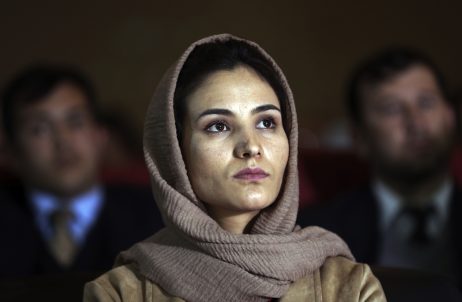
Politics in Afghanistan has always been fraught, especially for women. Afghanistan ranks last at 156th on the 2021 Global Gender Gap report. Earlier this year, Hosna Jalil, one of the highest-ranking women ever to serve in the Interior Ministry, quit her position to join the Ministry of Women’s Affairs as a deputy minister.
“I was kicked out because I was a loud voice,” says the 29-year-old Jalil in a conversation online. “I was not their yes lady anymore; I wasn’t there to make anyone happy… I took my fight, I picked my good fight and fought it till the end.”
It was not easy. The minister she worked under questioned her work ethic since his first week in the office. Jalil says she was undermined based on her gender, youth, and ethnicity. One minister accused her of getting salary from donor agencies and tried replacing her because she was not from a particular ethnicity.
As the deputy minister of policy and strategy at the Interior Ministry, her job included police reform and improving women’s participation in the police force and empowering them. She worked on institutional development and the provision of on-time and quality services to the Afghan National Police.
Jalil’s work and visibility as a woman in a senior security position also made her a target for harassment by her peers. During her time at the Interior Ministry, she received emails from lower-level employees calling her a “prostitute.” Verbal harassment included accusations of her “exchanging sexual favors to get the position.”
“The only thing that makes me happy about this is that it makes me believe that professionally they could not attack me, so they attack me personally,” says Jalil.
A study by the Inter-Parliamentary Union found that psychological violence, including sexist remarks, has affected 81.8 percent of female parliamentarians globally. One in four were subjected to physical violence. While Jalil was fortunate to start in a position of authority that has prevented any physical and sexual violence, she worries that such violence and harassment is not uncommon for Afghan women in public office, based on her experience listening to the women in the police force.
She decries rampant discrimination in the public sector from access to resources to dictating one’s authority as a woman. “When they can’t take away your authority, they take your responsibility, and you end up being a symbolic person,” she says.
“Sometimes it is difficult to keep my motivation up every morning. Working long hours, being ignored, being harassed, and receiving statements which could attack someone’s personality, could attack someone’s ethics, usually by someone who feels entitled to their position.” Now as the deputy minister of policy and plan in the Ministry of Women’s Affairs, she intends to challenge these norms. Jalil believes that the ministry is not as strong as it should have become in the last 19 years. In her new role, she plans to strengthen women’s role in peace and security, ensure women equal access to services and resources, and empower and integrate women across all sectors.
Another major impediment is increased violence on the streets. Despite pledges by the Taliban to reduce violence as part of the peace process, there has been a surge of assassinations across the county. Activists, journalists, doctors, judges, and professionals are increasingly being targeted and killed – even more so if they are women. In late March, three female health workers, part of the Afghan government’s polio vaccine campaign, were shot dead. Earlier that same month, three female journalists were murdered in Jalalabad.
Jalil too has received death threats from the Taliban; they have become a routine for the young minister and her female colleagues. “I deeply believe that the date that I am supposed to die is my fate. I am not careless, but I don’t want to give up based on threats,” she says.
“Our women have become resilient. It is normal now because around the peace talks and as we get closer to the peace process, it makes us more vulnerable. When we are not willing to compromise, pressure rises. One of the pressures is attacks.” While peace negotiations between the Afghan government and the Taliban continue and the United States administration contemplates a hasty exit in May, the question over the fate of Afghan women’s rights remains unresolved.
“The Afghan government has put the women’s rights and children’s rights as a red line for the negotiation, but I still believe that women’s rights, children’s rights, youth rights are in the basket that is very much vulnerable to negotiations,” says Jalil. “It is one of those baskets that can be dropped easily.”
She adds that not only is the peace process fast paced but there have been numerous “U-turns” by various stakeholders that make it difficult to predict anything. Jalil raises concerns about the lack of clarity from the Taliban’s side in the ongoing negotiations. “I am a Muslim and I love to live under the Islamic scriptures, but [at the] end of the day my definition of Islam and the Taliban’s definition of Islam is very different,” she says. “We have the same frame [Islamic values] but the picture inside is missing. The structure they want for women is missing.”
Quoting a scripture from the Quran, Jalil highlights that while education is mandatory for women and men in the holy book, women had little access to education under Taliban rule. The Taliban regime that was in power from 1996 to 2001 was notorious for denying women access to education and employment, restricting their freedom of movement, and subjecting them to public violence like lashing and execution by stoning.
Following the Taliban’s ouster, Afghan women have made many strides toward equality and reversing the damage of nearly 40 years of war. Aided by quotas, the Afghan National Assembly has the same percentage of women legislators as the U.S. Congress; 40 percent of all schoolchildren in Afghanistan are girls; and gender equality is enshrined in the Afghan constitution. Nonetheless, the fear of losing women’s fragile gains remains. The Taliban claims that its views on female education have evolved since the 1990s but there is a “gap between official Taliban statements on rights and the restrictive positions adopted by Taliban officials on the ground,” according to Human Rights Watch.
Representation is another key issue. While women in Afghanistan are often disproportionately impacted by decades of war, they remain largely absent in the peace talks. Only four of the originally appointed 21-member negotiating team from the Afghan government are women. Their numbers are dwindling with each round of talks, from four at the Doha talks to just one Afghan woman negotiator at the latest Moscow talks. The Taliban, who control around 30 percent of Afghanistan’s territory, have no female representative at the peace talks.
Hosna Jalil just turned 29 on March 27. In closing, the young female minister says she is unafraid about what comes next. She thanks the challenges that she has undergone – from daily threats to her life and harassment at work to sickness and a close bout with ITP (idiopathic thrombocytopenic purpura) – for making her stronger. “These fancy-mancy suited Western-educated, U.S.-educated men, I don’t find the difference between them and the warlords. I want them to understand that if they do something wrong, there is someone who is going to speak about it, she is not going to let it be buried,” says Jalil.
“This is my responsibility to the next generation. I have to go through this so my next generation will not have to go through all of these issues. There has to be an end.”
https://thediplomat.com/2021/04/my-good-fight-being-a-woman-in-afghanistans-politics/

Vaccine from India, weapons for Pakistan — what Lavrov discussed in New Delhi, Islamabad

TASS collected main points discussed during the trip of the Russian top diplomat to South Asia. 

Russia is ready to scale up cooperation with India and Pakistan in fighting the pandemic and in the military-technical sphere, as well as welcomes their recent steps on improving a dialogue. These issues were discussed during talks of Russian Foreign Minister Sergey Lavrov with his colleagues during his "Asian tour" which started on Monday.
TASS collected main points discussed during the trip of the Russian top diplomat to South Asia.
Vaccine
Russia has already agreed to produce the Sputnik V vaccine in India and doesn’t exclude production of Indian preparations on its territory. Moscow thinks that the vaccine production is also promising in Pakistan which so far has received only 50,000 doses of the Russian preparation and will soon receive 150,000 more. The Russian Foreign Minister admitted that the country’s needs are "much greater" yet "everything still depends on the ability to produce this vaccine." His Pakistani counterpart Shah Mahmood Qureshi reiterated that Islamabad had already approved the use of Sputnik V (registration in India is expected within the next few days) and local authorities have confidence in its efficacy.
Weapons
The Russian top diplomat has also discussed joint arms production with his Indian counterpart Subrahmanyam Jaishankar, reiterating that Russia is the only country "that actually provides India with cutting-edge defense technologies" yet respects India’s right to diversify its ties in this sphere. At the same time, Moscow does not feel "any hesitation" on the part of New Delhi over Washington’s pressure, since the US expresses serious discontent with the Russian-Indian military and technical cooperation. Russia is not ready yet to manufacture arms in Pakistan but will supply the republic with military equipment in order to "strengthen its anti-terrorist potential" and will participate in regular joint drills, such as "Druzhba" (Friendship) and the "Arabian Monsoon."
Afghanistan
Russia thinks that the best way to discuss settlement in Afghanistan is the so-called Moscow format including "not just immediate neighbors" of the republic. Moscow is ready to put together such a conference to accelerate progress along the intra-Afghan negotiation track which "has run into serious problems and has stalled recently," Lavrov stated. Moscow hopes that accords concluded between the United States and the Taliban group (outlawed in Russia) will be honored yet together with Pakistan is alarmed by increased activity of terrorist groups in northern and eastern Afghanistan.
Conflicts in Asia
Moscow welcomes recent steps by Pakistan and India on normalizing bilateral relations and hopes that New Delhi will manage to find ways of settling its border standoff with Beijing, the Russian chief diplomat said. In general, Moscow is ready to "facilitate in every possible way" a peaceful resolution of conflicts in South Asia.
The Russian Foreign Minister reiterated Moscow’s stance regarding US actions in Asia: Russia is strongly against "dividing geopolitical frameworks" being built under Washington’s auspices and expressly supports "open frameworks" formed with the central role of ASEAN.
https://tass.com/politics/1275211

Thursday, April 8, 2021

Music Video - #HadiqaKiani - Hadiqa Kiani | Kamli | WAJD | Bulleh Shah

#NayaDaur #Politics Who Will Replace Imran Khan | Will Jahangir Tareen Break PTI Or PPP?| Usman Buzdar | Suhail Warraich

State and Non-State Actors Alike Threaten Pakistani Women’s Rights

By Umair Jamal
Between Prime Minister Imran Khan’s insensitive remarks and Pakistani Taliban threats, women in the country face an uphill battle for their rights.
Women’s rights activists who organized this year’s International Women’s Day in Pakistan have been accused of committing blasphemy and received death threats from extremist groups in the country. Following the spread of fake material, the Pakistani Taliban, also known as the Tehree-e-Taliban Pakistan (TTP), told the organizers of the march that “Fix your ways, there are still many young Muslims here who know how to protect Islam and the boundaries set by Allah.”
The spread of fake videos and images on social media suggesting that the organizers of the march had insulted Islam also found attention of the country’s courts. On March 26, a local court in Pakistan ordered the registration of a first information report (FIR) against the planners of the March for allegedly making “derogatory remarks” against Islam.
This happened even after the organizers issued clarifications that the participants did not raise blasphemous slogans and their materials were edited to defame their movement. Women’s rights present a miserable picture in Pakistan. In 2020, the country was ranked at 151 out of 153 countries in the Global Gender Gap Index.
The events around this year’s Women’s Day march highlight a troubling trend of how disinformation is used to discredit marginalized communities in Pakistan. In the past, this has happened in the case of different minority ethnic groups but now we are seeing the same tactics being used against women as a distinct identity group. “I do believe this was very deliberate,” said Farieha Aziz, who is a women rights activist about the vilification campaign against the march organizers. She further notes that “[t]his time it took on a more dangerous dimension,” because of “the assertion that anti-Islam and blasphemous activities have taken place.”
However, this is not how a women’s march should be described or allowed to be propagated in a society where women rights already present a dismal picture. Shenila Khoja-Moolji, a professor of women’s studies told the The Diplomat “the Aurat March is ultimately an effort by women to claim public space and advance their demands related to economic, reproductive, and environmental justice, which influence their wellbeing.”
Khoja-Moolji notes that “in doing so, protestors mobilize meanings of ‘good life’ and gender roles and relations, that produce anxieties in other publics who seek to control and regulate women.”
However, Khoja-Moolji cautions that we should not reduce this to a liberal/Western and Islamic/Eastern binary, the way that those who are levying blasphemy charges against the organizers of the Aurat March are doing. “In fact, demands for gender justice can be completely congruent with Islamic teachings on social justice and equality. So, what we are seeing in the blasphemy accusations is an instrumentalization of Islam to regulate women,” Khoja-Moolji asserts.
Unfortunately, this year’s events do not mark a turning point in the fight for women’s rights in the country. Not to say that there haven’t been huge uphill battles in the past, particularly during the Zia ul Haq regime, but the intersection of violent extremist groups, misinformation and social media, and recent examples of vigilante justice raise the stakes of what is happening today. The struggle in this regard becomes further complicated when a country’s prime minister suggests women’s way of dressing as a reason for rise in rape cases. Last week, Prime Minster Imran Khan in a statement said that an increase in rapes indicated the “consequences in any society where vulgarity is on the rise.”
Khan advised women to cover up to evade temptation. “This entire concept of purdah is to avoid temptation, not everyone has the willpower to avoid it,” Khan said.
If Khan considers women’s dress a reason for rising rape cases, it should not come as a surprise that TTP would want to jump on the same morality bandwagon to win support of the mostly conservative Pakistani population. While the ideological basis of TTP’s disagreement with the march is not surprising, the group’s decision to explicitly and vocally condemn the movement perhaps signals a shift in their perceived spheres of interest.
TTP’s “threats should raise alarm bells for security agencies. These threats are meant to create fear and gain the sympathy of radical segments only to create hurdles for the people who want to raise their voice for women’s rights,” Mahnoor Shaikh, a women rights activist told The Diplomat.
As it appears, Pakistan’s women should be worried about militant groups like TTP, the county’s judiciary, and its prime minister before they start thinking about asking for their fundamental human rights.
https://thediplomat.com/2021/04/state-and-non-state-actors-alike-threaten-pakistani-womens-rights/

Pakistan government accused of sabotaging human rights commission


 Critics say officials are stalling the relaunch of the watchdog to avoid accountability for rights violations. A top court has ordered the ruling party to fill empty positions after the previous ones expired in 2019.


A top court in Pakistan has called on the ruling Tehreek-e-Insaf party to revitalize the country's National Commission for Human Rights (NCHR), an independent rights watchdog that has been inactive since 2019, amid accusations that the government is deliberately stalling its functioning.
Activists and former NCHR workers have accused Prime Minister Imran Khan's government of delaying the appointment of leadership roles in the commission in order to avoid facing accountability for human rights violations— especially those committed at the hands of the country's military.
After finding several faults with the government's previous advertisements for leadership roles in the commission, the Islamabad High Court (IHC) on March 29 directed the federal government to issue an advertisement for a new chairman and NCHR members.
'Unconstitutional' advertisements
Chief Justice Athar Minallah ruled the previous advertisement for the NCHR positions to be unconstitutional. The first advertisement included a maximum age limit, which the court ruled should be removed to make the selection process more inclusive.
Another issue was raised regarding the ambiguity of the language of the advertisement, as the expression "inviting suggestions for suitable persons" did not hold the same meaning as the term "inviting applications."
Minallah thus directed the Human Rights Ministry to present the names of potential candidates to the prime minister and opposition leader after taking suggestions. The court also directed the ministry to present its order and a new summary in the next cabinet meeting.
The former chairman of the commission, Justice Ali Nawaz Chowhan, told DW that these inconsistencies in the advertisements were intentionally placed by the government, as officials have a vested interest in sabotaging the commission's efforts to monitor and report on mounting human rights violations,such as enforced disappearances. "This government neither has the urge nor the passion to truly work for human rights. What is the point of having a Ministry of Human Rights without having an independent human rights commission?" said Chowhan. The four-year tenure of NCHR members expired on May 30, 2019, and since then, the roles have not been filled.
NCHR's role in international conventions
The NCHR Act was introduced in 2012 to mandate the promotion, protection and fulfillment of human rights according to the constitution and international treaties. One of the mandates is to abide by the Paris Principles, adopted by the UN General Assembly. Pakistan is a beneficiary of economic benefits under the Generalized System of Preferences (GSP) and is responsible for implementing the UN's Core International Human Rights Treaties. Though the commission was established in order to meet the criteria set by international conventions, critics say future NCHR findings could put Pakistan's economic benefits, such as the GSP, at stake. "The government has reduced the NCHR to a skeleton. We published 35 reports, bringing attention to and investigating human rights violations, but the government does not want its failures exposed, which is why they are delaying these appointments: so that the international image does not suffer," said Chowhan.
Blame-game between political parties
Human Rights Minister Shireen Mazari denied that the government was deliberately delaying the appointments, and told DW that officials had followed due process by advertising in 2019, at the end of the last term. Mazari said NCHR posts were readvertised in October 2020, and added that Khan had sent a list of preferences to the head of the opposition in December.
"We keep getting excuses from the opposition, who are yet to send us their nominations. They keep saying it is because he [opposition leader Shahbaz Sharif] is in jail, but it's not like he is not functioning. The pressure should be on the opposition, not us, so we can actually move forward from this matter," said Mazari.
She said the delay was also caused by logistical and legal bottlenecks. "We either change the whole law to be more smooth or make do for now, this is how it's operating at the moment,” she said. According to the CIVICUS Monitor's December 2020 report, the state of civic space in Pakistan continues to be classified as "repressed." According to Human Rights Watch, in 2020 the Pakistani government harassed and at times prosecuted human rights defenders, lawyers and journalists for criticizing the government, and used draconian sedition and counterterrorism laws to stifle dissent. Prominent human rights defender Tahira Abdullah told DW that she believes that Pakistan's human rights activists have a duty to stand up for a fully independent NCHR.
"The NCHR can only be effective if a truly independent chairperson and commissioners are appointed, and only if there is an end to all interference in the NCHR's autonomy, committed by state institutions, political offices and bureaucracy," said Abdullah.
https://www.dw.com/en/pakistan-government-accused-of-sabotaging-human-rights-commission/a-57124832

Chairman PPP Bilawal Bhutto Zardari extends supports to all demands of the employees of Balochistan government.

Chairman Pakistan Peoples Party Bilawal Bhutto Zardari has asked Balochistan government to accept all the genuine demands of its employees without any delay and expressed sympathy and solidarity with the provincial government employees who are on the streets under a mass protest nowadays. In a press statement issued here, the PPP Chairman said that people of Pakistan are reeling under unbearable inflation generated by the selected regime of Imran Khan and it has become very difficult to survive for the poor employees like the downtrodden people. 


 Bilawal Bhutto Zardari extended support to all the genuine demands of the employees of Balochistan government and asked Party’s Provincial leadership to personally visit the protesters to express solidarity with them.

https://www.ppp.org.pk/pr/24616/

Wednesday, April 7, 2021

#PPP Video - کتنے مقبول ھيں ھمارۓ بھٹو

Video Report - Tribute to Shaheed Zulfikar Ali Bhutto

Amar Jaleel And Religious Extremism In Sindh | Criticising Pakistan Army Can Land You In Jail

Outrage after Pakistan’s Imran Khan links rape to how women dress

Khan faces backlash for saying the increase in rapes indicated ‘consequences in any society where vulgarity is on the rise’.
Pakistani women activists and rights campaigners have accused Prime Minister Imran Khan of “baffling ignorance” after the cricketer-turned-politician blamed how women dress for a rise in rape cases.
In a weekend interview on live television, Oxford-educated Khan said an increase in rapes indicated the “consequences in any society where vulgarity is on the rise”.
“The incidents of rape of women … [have] actually very rapidly increased in society,” he said.
He advised women to cover up to prevent temptation.
“This entire concept of purdah is to avoid temptation, not everyone has the willpower to avoid it,” he said, using a term that can refer to modest dress or the segregation of the sexes.
Hundreds have signed a statement circulating online on Wednesday, calling Khan’s comments “factually incorrect, insensitive and dangerous”.
“Fault rests solely with the rapist and the system that enables the rapist, including a culture fostered by statements such as those made by [Khan],” the statement said.
The Human Rights Commission of Pakistan, an independent rights watchdog, on Tuesday said it was “appalled” by the comments. “Not only does this betray a baffling ignorance of where, why and how rape occurs, but it also lays the blame on rape survivors, who, as the government must know, can range from young children to victims of honour crimes,” it said.
Pakistan is a deeply conservative country where victims of sexual abuse are often viewed with suspicion and criminal complaints are rarely investigated seriously.
Much of the country lives under an “honour” code where women who bring “shame” on the family can be subjected to violence or murder.
It regularly ranks among the worst places in the world for gender equality.
Nationwide protests erupted last year when a police chief admonished a gang-rape victim for driving at night without a male companion. The Franco-Pakistani mother was assaulted in front of her children on the side of a motorway after her car ran out of fuel.
Last year, Khan was criticised after another television appearance where he failed to challenge a Muslim leader’s insistence that coronavirus had been unleashed because of the wrongdoings of women.The latest controversy comes as the organisers of International Women’s Day marches battle what they have called a coordinated disinformation campaign against them, including doctored images and videos circulated online.
It has led to blasphemy accusations – a hugely sensitive issue in Pakistan where allegations have previously led mobs to attack people.
The organisers of the annual rally have called for the prime minister to intervene.
In his weekend TV appearance, Khan also blamed divorce rates in Britain on the “sex, drugs and rock and roll” culture that began in the 1970s, when the twice-divorced Khan was gaining a reputation in London as a “playboy”. https://www.aljazeera.com/news/2021/4/7/outrage-after-pakistans-imran-khan-links-rape-to-how-women-dress

#Pakistan - #PPP - Rise in extremist attitudes in Sindh will not be tolerated: Bilawal Bhutto

PPP Chairperson Bilawal Bhutto Zardari meets a group of Sindh's prominent writers, human rights representatives, intellectuals and academics. Delegation requests PPP chairperson that the cyber crime cell under the federal government be contacted to contain and curb extremist statements on social media.Bilawal assures group that Ministry of Religious Affairs in Sindh will play an active role in "promoting process of healthy dialogue between the Ulema and other intellectuals".
KARACHI: 
PPP Chairperson Bilawal Bhutto Zardari says a rise in extremist attitudes in the country, and especially in Sindh, will not be tolerated and no individual or group will be allowed to take the law into their own hands. He was speaking to a delegation of Sindh intellectuals, human rights representatives, journalists, writers, social leaders and academics who called on him and briefed him on the growing extremism in Sindh. Expressing concern over the intolerance and incitement being spread against writer and columnist Amar Jalil, the delegation drew attention to the reaction to an old allegorical fiction of the well-known writer and expressed concern over the threats to him and other issues being faced by progressive writers, poets and intellectuals in Sindh.

 The delegation included Noorul Huda Shah, Jami Chandio, Amar Sindhu, Dr Ayub Sheikh, Dr Irfana Mallah, Rafiq Chandio, Nazir Leghari, Fazil Jamili, Dr Jaffar Ahmed, Anees Haroon, Ahmed Shah, Zakia Ijaz and Imdad Chandio. The meeting was also attended by Sindh Chief Minister Syed Murad Ali Shah and Culture Minister Sardar Shah. PPP Vice President Senator Sherry Rehman, Central Secretary Information and MNA Shazia Marri and Political Secretary to PPP Chairperson Jamil Soomro were also present. The delegation requested the PPP chairperson that the cyber crime cell under the federal government be contacted to contain and curb extremist statements on social media. 

They asked the PPP to play its "positive role" in this regard. Bilawal said that the process of dialogue with the administrative bodies of different sects will be promoted and the Ministry of Religious Affairs in Sindh will play an active role in "promoting the process of healthy dialogue between the Ulema and other intellectuals". He said that Sindh is a land of religious tolerance and Sufi traditions as the message of peace from Sindh spreads all over the world. The real identity of Sindh, he said, is the tolerance of society and hence, it should be maintained under all circumstances. 

 https://www.geo.tv/latest/343872-rise-in-extremist-attitudes-in-sindh-will-not-be-tolerated-bilawal-bhutto

Tuesday, April 6, 2021

Video Report - #NayaDaur #Bhutto #Pakistan ZAB's Nephew Tariq Islam Met Bhutto in Jail| Role Of Global Powers In Zulfikar Ali Bhutto's Hanging

Video Report - #vawda​ #ECP​ فیصل واوڈا شہریت چھوڑنے کی تاریخ بتانے سے پھر انکاری، صحافی پر ذاتی حملے

Pakistan’s Shias Face Double Threat: Extremists and Their Own Government

By Jaffer A. Mirza With their safety at stake, Pakistan’s beleaguered Shia community is seeking justice from the country’s founder.
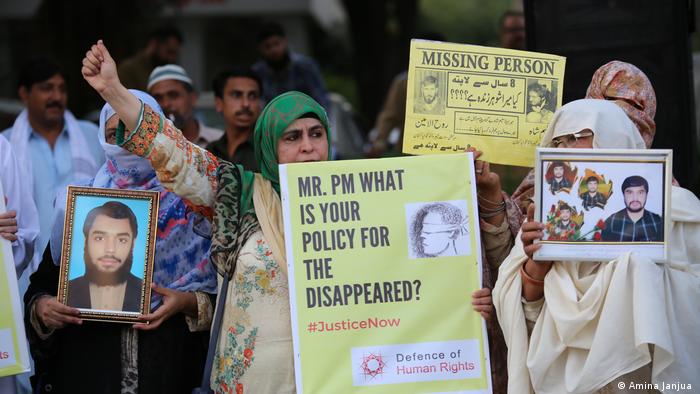
“We are here to tell the founder of this country that we are being persecuted and discriminated in your country.” That is the message from the families of Shia missing persons, who have been holding a sit-in outside M. A. Jinnah’s Mausoleum in Karachi since April 2. A Shia activist informed The Diplomat that the community has tried to seek assistance from every government and civilian institution, and held sit-ins outside the Chief Minister’s House, the Governor’s House, and all the relevant authorities, but to no avail. The Shia community, the activist said, has come to the realization that these institutions are either apathetic or incapable of addressing their plight. Therefore, a group of Shias resorted to a sit-in outside the final resting place of the country’s founder – more of a public confession of their defenseless and unprotected condition than a protest.
In August 2020, Pakistan witnessed a surge in anti-Shia politics. At least six huge anti-Shia rallies were carried out by different Sunni groups in five different cities, including the capital of the country. At least five Shias were killed in different incidents, more than 40 blasphemy cases were registered against Shias, and a place of worship was attacked. The rise in online hate speech was also alarming. Between August and September 2020, the Minority Rights Group reported that a sentiment algorithm documented an increase in negative tweets about Shias, which “collectively reached millions of social media users in Pakistan.” Fully 46 percent of social media mentions of Shias examined during that period were negative. The most frequent word used to refer to the community was the Urdu word for “infidel.”
For Shias, the negative perceptions make them a target not only for extremists but for the security forces. In May 2018, estimates for the number of forcibly “disappeared” Shias ranged from 140 to around 300. In April 2019, the Shia community, led by the Joint-Action Committee for Shia Missing Persons, held a two-week-long sit-in outside the President’s House in Karachi. As a result, some 17 Shias were freed and 16 appeared in court, officially charged with. Currently, there are 34 recorded cases of Shia missing persons from different parts of the country who have been missing for two years or more, some as many as six years.
Pakistan’s track record on enforced disappearances has been an issue of grave concern for the international community. In September 2020, four U.N. Special Rapporteurs demanded the end of enforced disappearances in Pakistan. According to one estimate, more than 700 people are still missing. Yet Pakistan has been ignoring these humanitarian appeals. The government’s Commission of Inquiry on Enforced Disappearances, formed in 2011, seems helpless to prevent these disappearances. The International Commission of Jurists shared its disapproval of the commission and stated that it has “enabled and entrenched impunity for enforced disappearances instead of providing redress to victims.”
The practice of enforced disappearances is targeted at particular groups, mostly ethnic minorities such as Balochs, Sindhis, Pashtuns, Seraikis, and Urdu-speaking Muhajirs. Lately the abductions have expanded to include Punjabi dissidents. The state sees their legitimate political demands as a “national security threat” and uses extrajudicial and illegal tactics to silence them. However, with the addition of Shias to the missing person list, it seems the state has expanded its scope and is now aiming to target religious minorities, starting with Shias.
It is not clear why and on what grounds Shias are being “disappeared.” The abductors – presumably the security agencies – claim that the missing persons were involved in the Syrian civil war and sectarian violence in the country. According to an unofficial and unverified estimate, between 700 and 5,000 Pakistan Shias from Karachi, Parachinar, and Gilgit-Baltistan, recruited by Iran, went to Syria to fight against the Islamic State. The security agencies fear that Shias who returned from Syria pose a threat to Pakistan’s stability.
Under this pretext, the security agencies have picked up Shias who returned from Syria. Police and the paramilitary often raid homes and tell the families that their loved ones will be sent back once the investigation is done. But the people are moved to undisclosed locations, with no information given to their families. Family members are left to search at local police stations, hospitals and even morgues for some news of their loved ones.
More concerningly, some of those who have been “disappeared” never went to Syria, Iraq, or Iran. The reason for their abduction is still a mystery for the families. For example, Shamim Haider, a resident of Karachi, who was a puncture repairer on the edge of poverty, has been missing for the last six years, his family presuming him detained by security forces. He had never been to Syria. Nor had Azhar Hussain and Ebad-ul-Hassan, both residents of Karachi, who were picked up by the law enforcement agencies in 2017. Similarly, Ali Mehdi, also from Karachi, has been missing for the last two years. Mehdi, who played for the junior national hockey team, had never been to Syria and did not have any criminal record.
Let us us assume for a moment that the security agencies have undeniable proofs of all the abducted Shias’ involvement in criminal and terror activities. Even if that’s the case, why did they resort to enforced disappearances? Why have the missing Shias not been officially charged with crimes, and their cases handed over to the police and courts? Although the families have their reservations about court cases – some of those who were previously presented in the courts after many years were linked to crimes that had happened while the accused were being illegally detained by the security agencies. Despite the risk of bogus charges, the families demand that their loved ones either be officially brought to court or released.
The increase in illegal detentions is a worrying sign is that there is a section within the state that still views Shias as a security threat – a suspicion that was embraced after the 1979 Iranian Revolution. The recent abductions make Shias a doubly persecuted community that is simultaneously facing genocidal violence from the state-backed religious militants and harassment and intimidation from the state. Shias have already been questioning the state’s neutrality vis-à-vis banned anti-Shia outfits roaming free. The ongoing issue of enforced disappearances reaffirms the existence of anti-Shia paranoia among some state actors who are apparently unaccountable and unanswerable to any authority. https://thediplomat.com/2021/04/pakistans-shias-face-double-threat-extremists-and-their-own-government/

'Every year we dig mass graves': the slaughter of Pakistan’s Hazara

Shah Meer Baloch
Decades of persecution has left the Shia minority with little space left in its graveyards but prime minister Imran Khan is in no hurry to listen.
A

hmed Shah had always dreamed of bigger things. Though just 17, the high school pupil had taken a job in the coalmines of Balochistan, Pakistan’s south-western province, one of the harshest, most dangerous working environments in the world. Shah was determined to earn enough to educate himself, so he could escape the tough life of the Hazara Shia community, the most persecuted minority in Pakistan.

But Shah never saw a brighter future. He was among 10 miners who were resting in their mud hut near the mines in the small Balochistan town of Mach when armed militants burst in. A gruesome video from the scene shows the young men blindfolded, with their hands tied behind their backs. A security official said their throats had been slit. Islamic State claimed responsibility for the massacre.

The prime minister, Imran Khan, called it an “inhumane act of terrorism”, but for the Hazara, minority Shia Muslims who have been targeted for three decades in Pakistan by extremists among the majority Sunni Muslims who view them as heretics, this was not enough.

Shah’s mother, Amina, was on her rounds as a healthcare worker in the nearby provincial capital of Quetta when she heard about the massacre.

“I wanted to see my son one last time, but I was told that I would not be able to bear that,” says Amina. “The killers were not humans. They killed them so brutally.”

The Hazara community, after decades of injustice and neglect by the state, were driven to act, and in a protest unlike anything seen before in Pakistan, the families of the 10 men brought the dead bodies out on to the streets, and sat beside them, in the freezing cold, to demand protection and justice.

For a full week, they did not move, stating they would not bury the bodies until the prime minister listened to their demands.

In response, Khan accused them of trying to “blackmail” him, and said he would not visit until the bodies were buried.

Ahmed Shah was one of four from his family to die in the Mach massacre. So too did his cousin Sadiq, the sole breadwinner for his wife, children and six sisters.

Sadiq, a father of two daughters, had had breakfast with his wife before dawn at his home in Quetta before leaving for Mach. One sister, Masooma Yaqoob Ali, saw the news of the Hazara miners on Facebook and stumbled upon the picture of her brother’s blindfolded body.

“These monsters have not only killed 10 people, they have killed 10 families,” she says. “It has been two decades that we are being mercilessly killed but no one has been arrested yet.”

 The Hazara Shia have been targeted over many years by Sunni extremists, such as Lashkar-e-Jhangvi, Sipah-e-Sahaba and now Isis. According to a 2019 report by Pakistan’s National Commission for Human Rights, an independent watchdog, at least 509 Hazara have been murdered for their faith since 2013. The non-profit Human Rights Commission of Pakistan says that from 2009 to 2014, nearly 1,000 Hazaras died in sectarian violence. Thousands have been injured.


Our men and young can’t go outside. If they go, they will be killed. Our graveyards are full of young men

Masooma Yaqoob Ali

To curb attacks on the 600,000 Hazaras living in the towns of Mariabad and Hazara Town in Quetta, authorities have built military checkpoints, roadblocks and walls around the areas.

In 2014, the international organisation Human Rights Watch published a 62-page report on the persecution of Hazara Shia in Balochistan entitled We are the walking dead.

“We are living in two prisons. Our men and young can’t go outside. If they go, they will be killed. Our graveyards are full of young men with barely any space left,” says Ali. “We are tired of carrying their coffins. Every year we dig mass graves. Yet prime minister Imran Khan says we are blackmailers. Khan is heartless.”

The majority of Hazara in Quetta originally came from Afghanistan and Iran to seek work in Pakistan, with many ending up in the mines of Balochistan.

For 15 years, Chaman Ali, another of the Mach victims, would travel from Afghanistan to Quetta every winter to work in the coalmines.

“I would be worried for his life when he was here and when he went to Afghanistan. I would think ‘what if he gets into the hands of the Taliban?’ I thought he was safe here, but this is where he got killed,” his sister Zara says.

Chaman Ali is survived by his wife and eight children, the youngest just three months old. Aziz and Nasim, from the Daykundi province of Afghanistan, came with Chaman Ali to work in the mines for the first time. They were also murdered.

Nasim, 22, started work to fund his education and had arrived in Pakistan just a week before he was killed. “Afghanistan is in a very bad situation and we think that something is better than nothing, which is why we come to Pakistan just to make a living,” says Abdul Rahim, Nasim’s father. Along with other members of his family, he could not get to his son’s funeral from Afghanistan, when the security forces closed routes out of the villages across Pakistan’s porous border.

Victims of the Mach massacre were all eventually buried in a mass grave at Hazara Town, on the outskirts of Quetta. The Hazara community is running out of space to bury their dead. The graveyard is full of photographs of Hazara Shia men, women and children, many of them murdered.

Having Mongolian ancestors, many Hazara are identifiable by their distinctive appearance, and it is along the single road that leads to Mari Abad and Hazara Town that thousands have been attacked by extremist groups.

“Our generation has grown up in a cage. We make houses on the mountain and are afraid of going out to see other parts of Quetta,” says Arif Hussain Nasry, 21, founder of the Future is Young campaign. “We are even afraid to gather with Hazara from other nations and communities. We have to live to survive in these two ghettoes.”

But for Naseem Javed, an author and political activist, the attacks on the Hazara are not just about sectarianism. “I don’t think Hazara are being targeted just because of their faith,” he says. “They also are being targeted to divert the attention from the Baloch separatist movement.”

Balochistan, the most impoverished province of Pakistan and wedged between Iran and Afghanistan, has a separatist movement that has been active in the province for the past 20 years. “The region also has become a hub for international proxies, including the Taliban,” Javed adds.

Javed shows the pistol he keeps close to him in his shop, where he sells prayer mats and prayer beads. “We live under shadows of weapons and fear. None of us has a normal life. We are being slaughtered. If the security establishment has no role in this genocide, why have they not arrested any attacker?”

For many Hazara people the solution is simply to leave. Amjad Ali*, 21, has made three attempts to leave Balochistan for a new life in Europe. He was first deported from Turkey and handed over to Iran, from where he was sent back to Pakistan. The second time he was deported from Iran.

During his third attempt to reach Europe, with 25 other Hazara Shia, Ali was caught a few miles from the border by Jaish ul-Adl, another Sunni militant group that operates mainly in south-eastern Iran. Pretending to be Iranian security forces, the jihadist group took Ali and others to a mountain camp in Pakistan, close to the Iranian border.

“They were very well updated and informed. As soon as we reached their camp they shot four Hazaras with Kalashnikovs. Two of them used to work in the Pakistan army. Two, as Jaish ul-Adl claimed, were going to be part of the Zainebiyoun brigade, an Iranian-backed militant force [fighting in Syria],” Ali told the Guardian.

The rest were held and their families sent ransom demands. Ali spent 55 days in the camp before his family members managed to raise thousands of dollars in ransom money for his release.

“If I get a chance now to go to Europe, I will try again,” says Ali. “There is no life for Hazara Shia in Pakistan and Afghanistan.”

* Amjad Ali’s name has been changed to protect his identity.

https://www.theguardian.com/global-development/2021/apr/05/mass-graves-pakistan-shia-minority-hazara-slaughter-imran-khan 

A delegation of Sindh intellectuals, human rights representatives, journalists, writers, social leaders, and academics meets Chairman PPP Bilawal Bhutto Zardari

A delegation of Sindh intellectuals, human rights representatives, journalists, writers, social leaders, and academics called on the Chairman Pakistan Peoples Party Bilawal Bhutto Zardari and briefed him on the growing extremism in Sindh.

Expressing concern over the intolerance and incitement being spread against writer and columnist Amar Jalil, the delegation drew attention to the unnecessary reaction to an old allegorical fiction of the well-known writer and expressed concern over the threats to him and other issues being faced by progressive writers, poets and intellectuals in Sindh.
The delegation included Noorul Huda Shah, Jami Chandio, Amar Sindhu, Dr. Ayub Sheikh, Dr. Irfana Mallah. Rafiq Chandio, Nazir Leghari, Fazil Jamili, Dr. Jaffar Ahmed, Anees Haroon, Ahmed Shah, Zakia Ijaz and Imdad Chandio.
Talking to the delegation, the PPP Chairman said that rise in extremist attitudes in the country and especially in Sindh will not be tolerated and no individual or group will be allowed to take the law into their own hands.
The meeting was also attended by Sindh Chief Minister Syed Murad Ali Shah and Culture Minister Sardar Shah.
The delegation of social activists and intellectuals requested the PPP Chairman that the Cyber Crime Cell under the Federal government be contacted for containing and curbing of extremist statements on social media and the PPP should play its positive role in this regard.
Bilawal Bhutto Zardari said that the process of dialogue with the administrative bodies of different sects will be promoted and in this regard the Ministry of Religious Affairs of Sindh will play an active role in promoting the process of healthy dialogue between the Ulema and other intellectuals.
He said that Sindh is a land of religious tolerance and Sufi traditions as the message of peace from Sindh spread all over the world, adding that the real identity of Sindh is the tolerance of the society hence it should be maintained in all circumstances.
Vice President PPP Senator Sherry Rehman, Central Secretary Information and MNA Shazia Marri and Political Secretary to PPP Chairman Jamil Soomro were also present.

https://www.ppp.org.pk/pr/24606/

Sunday, April 4, 2021

Video - Kal Bhi Bhutto Zinda Tha Aaj Bhi Bhutto Zinda Hai..

Video - #NayaDaur - Sanam Bhutto on father Zulfikar Ali Bhutto's 42nd Death Anniversary| On Benazir, Nusrat Bhutto

Video - Chairman PPP Bilawal Bhutto Zardari addressing in Naudero, Larkana

#Pakistan #PPP - Zardari, Bilawal pay glowing tribute to ZA Bhutto

 Former president of Pakistan and President Pakistan People’s Party Parliamentarians (PPPP) Asif Ali Zardari has said that the philosophy and ideology of the founder of PPP Shaheed Zulfikar Ali Bhutto (ZA Bhutto) is guidance for us and the PPP will continue to safeguard the parliamentary system in the country.

“The PPP will never compromise on the principle that people are the source of power,” he said in a statement on Saturday on the martyrdom anniversary of Shaheed Zulfikar Ali Bhutto.

Asif Ali Zardari said, “Today we reiterate our resolve to continue to defend the country and its Constitution. The PPP gave the 1973 Constitution and restored it in its original form by the 18th Amendment and fulfilled the promise of provincial autonomy made by the Quaid-e-Awam to the people,” he said, adding that PPP will defeat all the conspiracies against 18th Amendment.

He said the Quaid-e-Awam built this nation from the ashes of defeat and gave the downtrodden masses a voice and courage to fight for their rights. “He changed the trend in politics and established the rule of people and showed the world that the true leader of the people accepts death with grace but does not compromise on principles,” he said.

While Pakistan People’s Party (PPP) Chairman Bilawal Bhutto Zardari has said dictators and their selected unguided missiles imposed on this nation, subsequently destroyed the democratic, societal, and economic fabric, decimating all gains of transferring power to the people by concentrating it back into the hands of a few. “We need to turn back to the teachings and vision of Shaheed Zulfikar Ali Bhutto and course correct the country onto the path of true democracy once again,” he added.

He said that Pakistan would have been a welfare state with a vibrant economy and society, seen as role-model Muslim country in the world, had the prime minister Shaheed Zulfikar Ali Bhutto not been hanged.

Paying glowing tributes to Shaheed Zulfikar Ali Bhutto, the PPP chairman said those who martyred Shaheed Zulfikar Ali Bhutto in fact murdered the dreams of our founding fathers and laid to rest the future of Pakistani generations.

Bilawal said that Shaheed Zulfikar Ali Bhutto was an iconic leader who had laid the foundations for equitable economic, political and democratic infrastructure. “Things we take for granted today, such as universal suffrage, constitutional guarantees of equality under the constitution, the right to freedom of movement, religion, political affiliation, and unionisation were codified under the unanimously adopted Constitution of 1973. The passing of the 1973 Constitution remains till today the greatest democratic achievement of this country.” he added.

He said that the policies of Bhutto Shaheed had led to the establishing of huge industrial, economic and commercial ventures that had revolutionized the country by redistributing wealth from the hands of the few to the many.

Bilawal pledged that his party would carry on the mission of its founder Shaheed Zulfikar Ali Bhutto and Shaheed Mohtarma Benazir Bhutto, continuing the struggle for a strong, democratic, egalitarian and progressive Pakistan.

https://www.thenews.com.pk/print/814674-zardari-bilawal-pay-glowing-tribute-to-za-bhutto

#Pakistan - Z.A. Bhutto: an icon of resilience

Mustafa Abdullah Baloch

It was the late 60s and this part of the world also witnessed the wave of socialism. It came with the downfall of Ayub and the rise of a new phenomenon in Pakistan’s politics: Shaheed Zulfikar Ali Bhutto, an icon of resilience and symbol of democracy who faced dictatorship with utmost valour.

One of the students in those days who later on became a close aide of SZAB and a minister in his government was my father Abdullah Baloch whose memoirs about his leader are shared below as a tribute on SZAB’s 42nd death anniversary that falls today.
My father narrates that: “During the late 60s, one named echoed all around: people used to talk about and discuss Bhutto everywhere – from drawing rooms to tea cafes to public forums. As a youngster, I was fascinated by the charisma of Bhutto and during one hot summer day in 1967 I made up my mind and went to 70 Clifton where Mr Khar received me and took me to Bhutto Sahib who was having tea in his drawing room along with Hafeez Pirzada, Hayat Mohammad Sherpao and Meraj Mohammad Khan.
“I introduced myself and expressed my desire to work for his party; he asked me to visit the party office and start working. The first party office of the PPP in Karachi was at SMCHS; the office was rented in the name of Mohammad Khan Ghangro as it was Yahya’s martial law, and nobody was willing to give us space on rent for the party office.
“SZAB had impeccable style when it came to his clothes. Even his ministers were given a particular dress code – white for the day and black for the evening with different collar strips for the president, prime minister, senators, ministers, MNAs and MPAs, quite similar to the attire in China; this was later on replaced in Zia’s regime by the sherwani. SZAB was so charismatic that many of the party leaders including me used to follow his dress sense.
“He was a great admirer of Lal Shahbaz Qalandar and as an Auqaf minister he assigned me to install the golden gate gifted by the Shah of Iran; as a mark of respect, he always used to salute it on entering the dargah.
“The late 60s was the peak of socialism; the red book was a proud possession of every leftist in those days. During the Hala convention the leftist group of the party led by Meraj Khan were of the view that the party should not contest elections, but SZAB said “Don’t give me examples from the red book; you have read it, but I have done dialogue with them. We cannot serve the people unless we contest elections and come in power.”
“In 1970, he formed a parliamentary board for general elections and nominated me as its member. He emerged as a challenger for Ayub, such that the feudals of those times used to avoid any encounter with Bhutto to avoid Ayub’s wrath. And believe me those were the tough days – when Ayub’s government was struggling before the might of the rising leader, Bhutto. In 1972, when I was an MPA my house was burnt in the Karachi riots. SZAB called me to 70 Clifton, consoled me and tapped my shoulder to which I said this is a very small sacrifice for the party and the cause. This resulted in a smile on his face and he responded: “I expected the same from you”.
“SZAB was very encouraging. Seeing my passion, he appointed me in charge of the party secretariat. He used to encourage competition within his party to extract the best amongst all. The classic example of this was to keep extreme leftist Meraj and Hafeez, both poles apart, together in the Karachi chapter. He inculcated trust and confidence in the youth by inducting a young person like me in the cabinet as I was just 28 years old at that time; he also appointed me general secretary Karachi with Kamal Azfar as president, again poles apart. “In 1976, during the super flood despite being an MPA from Karachi I was appointed minister for flood relief by SZAB. I tried my best and saved Sehwan and Dadu from being inundated by the floods with his guidance. Later he appreciated me for my efforts in his historic speech. He called labour conferences yearly where I used to participate as labour minister of Sindh and saw firsthand that he always wanted to have a grip on the pulse of the proletariat class.
“Once I went to see off SZAB at the Karachi Airport. He asked me: ‘where will you head from here?’ I replied home, as I was not feeling well. He immediately took out some tablets from his pocket and told me: ‘even though I am not well but still travelling; now you should also go back to work.’ He worked tirelessly and inspired all of us.
“Every passing year, April 4 reminds me what an enormous loss his death has been for the country. Shaheed Bhutto was a mentor and leader for me. I will always cherish the time spent with him, the lessons learnt from him and the pearls of wisdom he shared with me. His words still echo in my ears. Such leaders are born in centuries.”
https://www.thenews.com.pk/print/814300-bhutto-an-icon-of-resilience