Sunday, March 28, 2021

Republicans have taken up the politics of bigotry, putting US democracy at risk


 Robert Reich

There is no ‘surge’ of migrants at the border and there is no huge voter fraud problem – there is only hard-right attack.
R

epublicans are outraged – outraged! – at the surge of migrants at the southern border. The House minority leader, Kevin McCarthy, declares it a “crisis … created by the presidential policies of this new administration”. The Arizona congressman Andy Biggs claims, “we go through some periods where we have these surges, but right now is probably the most dramatic that I’ve seen at the border in my lifetime.”

 Donald Trump demands the Biden administration “immediately complete the wall, which can be done in a matter of weeks – they should never have stopped it. They are causing death and human tragedy.”

“Our country is being destroyed!” he adds.

In fact, there’s no surge of migrants at the border.

US Customs and Border Protection apprehended 28% more migrants from January to February this year than in previous months. But this was largely seasonal. Two years ago, apprehensions increased 31% during the same period. Three years ago, it was about 25% from February to March. Migrants start coming when winter ends and the weather gets a bit warmer, then stop coming in the hotter summer months when the desert is deadly.

To be sure, there is a humanitarian crisis of children detained in overcrowded border facilities. And an even worse humanitarian tragedy in the violence and political oppression in Central America, worsened by US policies over the years, that drives migration in the first place.

But the “surge” has been fabricated by Republicans in order to stoke fear – and, not incidentally, to justify changes in laws they say are necessary to prevent non-citizens from voting.

To stop this, Democrats are trying to enact a sweeping voting rights bill, the For the People Act, which protects voting, ends partisan gerrymandering and keeps dark money out of elections. It passed the House but Republicans in the Senate are fighting it with more lies.

On Wednesday, the Texas Republican senator Ted Cruz falsely claimed the new bill would register millions of undocumented migrants to vote and accused Democrats of wanting the most violent criminals to cast ballots too.

The core message of the Republican party now consists of lies about a “crisis” of violent migrants crossing the border, lies that they’re voting illegally, and blatantly anti-democratic demands voting be restricted to counter it.

The party that once championed lower taxes, smaller government, states’ rights and a strong national defense now has more in common with anti-democratic regimes and racist-nationalist political movements around the world than with America’s avowed ideals of democracy, rule of law and human rights.

Donald Trump isn’t single-handedly responsible for this, but he demonstrated to the GOP the political potency of bigotry and the GOP has taken him up on it.

This transformation in one of America’s two eminent political parties has shocking implications, not just for the future of American democracy but for the future of democracy everywhere.

“I predict to you, your children or grandchildren are going to be doing their doctoral thesis on the issue of who succeeded: autocracy or democracy?” Joe Biden opined at his news conference on Thursday.

In his maiden speech at the state department on 4 March, Antony Blinken conceded that the erosion of democracy around the world is “also happening here in the United States”.

The secretary of state didn’t explicitly talk about the Republican party, but there was no mistaking his subject.

“When democracies are weak … they become more vulnerable to extremist movements from the inside and to interference from the outside,” he warned.

People around the world witnessing the fragility of American democracy “want to see whether our democracy is resilient, whether we can rise to the challenge here at home. That will be the foundation for our legitimacy in defending democracy around the world for years to come.”

That resilience and legitimacy will depend in large part on whether Republicans or Democrats prevail on voting rights.

Not since the years leading up to the civil war has the clash between the nation’s two major parties so clearly defined the core challenge facing American democracy.

https://www.theguardian.com/commentisfree/2021/mar/28/republicans-politics-bigotry-democracy-risk-border-voter-fraud-trump-biden

Video Report - #Economy New State Bank Law Will Hand Control to IMF | Inflation To Increase In Pakistan

Video Report - #Pakistan #Dhaka - 1971 war utter humiliation for Pak army & how Bangladesh became an independent nation: Mark Tully

A maulana burned a sofa in Islamabad. But that isn’t the only thing burning in Pakistan

By PERVEZ HOODBHOY

The maulana put his logic squarely up front: Islam forbids sitting on a couch, particularly for those training to be mujahids. Never, he said, had the Holy Prophet (PBUH) or his companions sat on sofas. He rubbished excuses that the sofas were for disabled persons. Like his martyred father (who was the earlier chancellor of Jamia Faridia), the maulana said he too prefers the floor. Students wanting sofas and an easy life should either quit or do physical workouts. Thereafter the maulana called for a knife, slit the couch cushion, lighted a match and put it to the exposed foam. As one couch burned, he called for the next to be brought in.
While provisionally accepting the maulana’s logical framework, I can see three problems with his actions.
First, burning a sofa indoors is not safe. Foam or plastic, when burned, releases dense smoke containing carcinogenic material. In fact, as the fumes spread, those in the crowd around him can be heard coughing. Exposing strapping young jihadists to such substances endangers their health needlessly and could reduce their lifespan below what a hazardous occupation normally entails.
Second, while indeed there were no sofas in the previous millennium, the lack of historical precedence was taken a tad too far. The maulana must justify his use of a cellphone, travelling in an SUV with padded seats, equipping his bodyguards and others with AK-47s, as well as using amenities — electricity, gas, piped water — that had not existed in the seventh century. He must also explain his once-frequent presence on television which depicts human lifeforms and was condemned by almost every religious authority until lately. One notes the maulana’s lead role in the award-winning documentary film, Among the Believers, available on Netflix.
Third, with the decision on Pakistan’s possible removal from FATF’s grey list just three months away, now was scarcely the time to remind the world of a large complex in the heart of the nation’s capital which aims to produce what the world fears. Those trying to put Pakistan on the blacklist must feel encouraged by the additional evidence that the maulana has made available to them.
Although setting sofas on fire left the city’s peace unaffected, other actions inspired and encouraged by the maulana have not. Last year, hundreds of his students from the female madressah Jamia Hafsa launched projectiles at participants of the Aurat March near the Islamabad Press Club. While walking along with others, my wife and I were fortunate to have avoided a largish brick by a few inches.
This year, as per the maulana’s orders, the Shuhada Foundation of Lal Masjid has filed a petition in the Islamabad High Court seeking a ban on all marches by ‘Westernised’ women and their supporters. Doctored videos originating from some mysterious source were circulated and used to slap blasphemy allegations on participants. While countless foundations and NGOs have been banned, the kindness of Islamabad’s authorities allows the Shuhada Foundation not just to exist but to thrive.
This kindness is not easy to understand. In 2007, led by Maulana Aziz and his brother Abdur Rashid Ghazi (later killed), Lal Masjid clerics had set out to create their version of an Islamic state in the city. On April 12, 2007, in an FM broadcast from an illegal transmitter on the mosque’s premises, they issued a chilling threat to the government: “There will be suicide blasts in every nook and cranny of the country. We have weapons, grenades and we are expert in manufacturing bombs. We are not afraid of death.”
The mosque’s clerics had attracted around them a core of banned militant organisations including Al Qaeda and Jaish-e-Mohammad. A state within a state, Lal Masjid was a magnet for fighters from Central Asian Republics. Inside the mosque’s premises the maulana brothers — Ghazi and Aziz — ran their own Islamic court. Here they received the Saudi Arabian ambassador and negotiated with the Chinese ambassador for the release of Chinese nationals who had been kidnapped.
For many months, Gen Musharraf’s government looked the other way. Even as arms and fuel were being stockpiled inside the mosque and Jamia Hafsa students rampaged across Islamabad, the government rejected suggestions to cut off the mosque-madressah complex’s electricity and gas supply, block its website, or shut down its illegal FM radio station. To this day, we do not know if this was cowardice or complicity.
The rest became history. In July 2007, Islamabad shook to the sound of rockets and bombs and carnage followed. Ten SSG crack commandos were martyred by the heavily fortified defenders and scores were wounded. Days earlier a suicide attack on a checkpoint near the mosque had wiped out a dozen policemen. On the side of Lal Masjid defenders, the death count ran into hundreds. A massive cache of weapons was seized after the defenders were eliminated and placed in police custody. Weeks later, it disappeared mysteriously.
COAS Gen Qamar Bajwa recently suggested that Pakistan needs to put its house in order. He did not, of course, ask for the house’s sofas to be set on fire. But this particular episode has brought back to memory the deaths of our soldiers and policemen. Yet to this day no FIR has been lodged by the authorities against the maulana and his companions. Normal states do not let those who kill its citizens go scot-free, or allow them to head institutions that will create more killers. Fourteen years later, the great mystery of Islamabad remains unresolved.

Video Report - Khyber Pakhtunkhwa Ki Universities Mein Abaya Laazmi Qaraar

Video Report - PPP leaders addressing a press conference at MCBH, Karachi

Video Report - Chairman PPP Bilawal Bhutto Zardari addresses a press conference at Media Cell Bilawal House, Khi - Mar 27, 2021

Video Report - PPP Chaudhry Manzoor On PMLN & Maryam Nawaz Sharif

#Pakistan - We don't believe in the politics of resignation: #PPP

Pakistan Peoples Party (PPP) leader Sherry Rehman on Sunday has said that her party was ready to hold peaceful long march and protest against the government of Pakistan Tehreek-e-Insaf (PTI).
Addressing a press conference, the PPP senator said that her party doesn’t believe in the politics of resignation.

Earlier, PPP Chairman Bilawal Bhutto Zardari said that Senate opposition leader was PPP’s right, no one should object on this adding that Pakistan Muslim League-Nawaz (PML-N) candidate was controversial in our party.
Bilawal Bhutto while addressing a press conference revealed that no name was agreed in the Pakistan Democratic Movement (PDM) for Senate opposition leader.
He requested the PML-N friends to stay calm, adding that he didn’t expect PML-N to react like Imran Khan after the defeat of the Senate candidate.
Some members of our party felt that the PPP was being pushed to the wall, Bilawal added.

 https://dunyanews.tv/en/Pakistan/594558-We-dont-believe-politics-resignation-PPP

#Pakistan - No party can be removed from #PDM unilaterally: #PPP


The Pakistan Peoples Par­ty (PPP) has asked the component parties of the Pakistan Democratic Movement, including the Pakistan Muslim League-Nawaz (PML-N), to air their “grievances” over the nomination of Syed Yousuf Raza Gilani as the opposition leader in the Senate at the next meeting of the alliance, saying that no member party can be removed from the PDM merely on the wishes of another party.
Talking to Dawn on Saturday, PPP secretary general Nayyar Bokhari said the PDM was an alliance of 10 parties and no party had any right to take unilateral decisions.
Mr Bokhari said it had been agreed in the declaration issued after the multi-party conference (MPC) of opposition parties in Islamabad in September that all the parties would be bound to follow only those decisions that would be taken unanimously at the PDM forum.
Saying that his party would present its viewpoint on the issue of leader of the opposition in Senate during the meeting of heads of PDM parties, the PPP secretary general said the opposition alliance had been constituted on the initiative of the PPP during the MPC hosted by the party and, therefore, the PPP was bound to follow and implement the decisions taken at the forum.  In response to a question, Mr Bokhari said the meeting of his party’s Central Executive Committee (CEC), which was earlier scheduled to be held in Rawalpindi after its public meeting on the occasion of death anniversary of PPP founder Zulfikar Ali Bhutto, would now be held in Karachi on April 5 after cancellation of the event due to surge in Covid-19 cases.

Asks PML-N to present grievances before alliance’s leadership; PPP to hold CEC meeting on April 5

 
The CEC had been called to discuss the proposal of nine PDM parties to submit en masse resignations from the assemblies at the time of start of a march on Islamabad. However, the alliance suffered a setback on March 16 when its leadership announced postponement of their long march due to differences over the issue of en masse resignations. Talking briefly to media personnel after presiding over a nearly five-hour-long meeting of the heads of component parties of the PDM, Jamiat Ulema-i-Islam chief Maulana Fazlur Rehman had stated that the PPP had sought more time to reconsider its position on the issue and till the time the PPP would come back after a discussion in its CEC, the long march stood “postponed”. The Maulana had disclosed that nine parties were in favour of resigning from the assemblies during the long march, but only the PPP had some “reservations over this thinking”.
When the differences over the resignation issue were still persisting, the crisis deepened after both the PPP and the PML-N laid claim to the office of leader of the opposition in the Senate. And after the recent nomination of Mr Gilani as the opposition leader with the covert support of the government, the PPP and the PML-N, the two arch-rivals of the past, have now started openly blaming each other for “stabbing” the alliance in the back.
In a statement on Saturday, PPP’s deputy information secretary and Senator Palwasha Khan said the PPP was the largest opposition party in the Senate and the position of the opposition leader was its democratic right. “If someone does not recognise this right, then it is not a stance based on democratic principles,” she said in the statement issued hours after a news conference by PML-N’s vice president Maryam Nawaz in Lahore in which she had lashed out at the PPP for getting the opposition leader’s office with the support of Balochistan Awami Party (BAP) and “at the cost of PDM’s unity”.
Ms Khan said issuing statements against the PPP leadership was like “appeasing the anti-democratic forces”. She said the PPP and its workers had “made the most sacrifices for democracy in the country” and no one could teach them about democracy.
Referring to the unopposed election of five PML-N senators from Punjab in the recent Senate elections, Ms Khan asked as to why the senators in Punjab were decided upon without consultations with the opposition parties. She also asked why the PML-N wanted to strengthen the Punjab government under Usman Buzdar. She said the PML-N must explain whether its senators from Punjab were elected under a deal with the rulers or the party had some fear of contesting the Senate elections in the Punjab Assembly.
https://www.dawn.com/news/1615038/no-party-can-be-removed-from-pdm-unilaterally-ppp

Punjab cannot be left at the mercy of a puppet’s puppet, Chairman PPP

Chairman Pakistan Peoples Party (PPP) Bilawal Bhutto Zardari has said that Punjab cannot be left at the mercy of a puppet’s puppet adding that Hamza Shahbaz has the first right over the Punjab government, but if he is not made the Chief Minister then there is an option to talk to Chaudhry brothers.
Addressing a press conference at Media Cell Bilawal House, the PPP Chairman said that he wanted to save the PDM, while decisions regarding the PDM would be taken at a meeting of the party’s Central Executive Committee on April 5. He said that he would not respond to the allegations leveled by the PML-N as he respects Maryam Nawaz and other PML-N leaders. He said that the post of Leader of the Opposition in the Upper House was the right of the PPP, just like the first right in the Punjab Assembly belongs to the PML-N, Hamza Shahbaz. He further said that according to constitutional and democratic traditions, PPP is the second largest party in the upper house with 21 senators, so it is our democratic right to have this post, while the PML-N’s candidate for opposition leader in the Senate was controversial.
Bilawal Bhutto Zardari said that on the issue of Leader of the Opposition in the Senate, our party leaders felt that the PPP was being pushed against the wall and it is unfortunate that one party showed stubbornness.
Bilawal Bhutto Zardari termed the State Bank ordinance as unconstitutional and a serious attack on the economic sovereignty of the country demanding that the government should withdraw the ordinance immediately because the State Bank should be answerable to Pakistanis instead of IMF. He said that we will challenge this illegal ordinance in every forum, which will affect every Pakistani.
The PPP Chairman said that the economic agreements made by the present government with the IMF were not in the interest of the people and were done in a wrong way. The current government did not have the capacity to represent and negotiate with the IMF on the country’s economy. He further said that every Pakistani’s pocket has been robbed as the way in which the common man is fighting inflation and poverty today was worst economic situation in the history of Pakistan.
Talking about the removal of Special Assistant for Petroleum, the Chairman PPP said that there was a crisis of petrol in Pakistan when petrol is getting cheaper all over the world. The people who made this decision were not just a special assistant or an individual, but a collective decision of the cabinet, he added.
He said that the decision was taken by Prime Minister Imran Khan and yesterday he tried to save himself by making a special assistant a scapegoat. All those who took decision in the cabinet should also be removed and all should resign, he demanded. The PPP Chairman said that the third wave of COVID-19 was going on in the country and corona was spreading rapidly in Punjab, due to which the anniversary of Shaheed Zulfikar Ali Bhutto would be celebrated at district level with SOPs.
Senators Sherry Rehman, Shazia Marri, Waqar Mehdi, Murtaza Wahab and Jamil Soomro were also present on the occasion.
https://www.ppp.org.pk/pr/24541/

Thursday, March 25, 2021

Video - #DailyShow #TrevorNoah #MichelleObama Michelle Obama - “Waffles + Mochi” & Encouraging Healthy Eating | The Daily Social Distancing Show

Video Report - #Netanyahu calls to establish "stable government" after 4th election leaves future uncertain

Video - #Minari Stop Asian Hate: Is Minari the movie to unite America?

Video Report - Harris to lead White House efforts to slow migrant surge at southern border

Video - President Biden Holds a Formal Press Conference

لائیو: ڈسکہ الیکشن تاریخ پر سپریم کورٹ کا حکم آ گیا، علی اسجد ملہی کا انٹرویو

Video Report - PPP CM Sindh Murad Ali Shah & Nisar Khoro Press Conference

End Pakistan’s Enforced Disappearances

By  Patricia Gossman

@pagossman 

 Prime Minister Imran Khan Should Back Promises with Accountability.
Pakistan Prime Minister Imran Khan’s meeting last week with families of people who had been forcibly disappeared was an important step toward addressing this serious and longstanding issue. He now needs to follow up on his pledge to end this abuse once and for all.
Families staged a sit-in in Islamabad in February during which they held up photos of relatives who they said had been detained by security forces before disappearing. They demanded the government provide information on their whereabouts.
The protesters ended the sit-in after Prime Minster Khan agreed to meet with a delegation from the group. At the March 18 meeting, he directed his office to “ascertain quickly the exact status of the missing family members” and assured the families they would be kept updated. The federal minister for human rights, Dr. Shireen Mazari, said the prime minister also vowed that a draft law to criminalize enforced disappearances would be “fast-tracked.” The proposed law has languished at the draft stage for more than two years.
International human rights law strictly prohibits enforced disappearances, the detention of an individual in which the state denies holding the person or refuses to provide information on their fate or whereabouts. In addition to the grave harm to the person, enforced disappearances cause continuing suffering for family members.
In January, the Islamabad High Court, after hearing a petition on a disappearance case from 2015, ruled that the prime minister and his cabinet were responsible for the state’s failure to protect its citizens “because the buck stops at the top.” The court called enforced disappearances “the most heinous crime and intolerable.”
Pakistani authorities, including law enforcement agencies and the criminal justice system, have long failed to demonstrate the political will to end enforced disappearances. Prime Minister Khan’s promises offer the victims’ families a glimmer of hope, but much more needs to be done. He now has an opportunity to signal to Pakistanis and the world that his government is intent on ending this illegal practice. This means not only taking action on pending cases but investigating and appropriately prosecuting those responsible to prevent future disappearances.
https://www.hrw.org/news/2021/03/22/end-pakistans-enforced-disappearances

The real tamasha in Pakistan — Islamic council that’s saying no to films and corona taglines

NAILA INAYAT
Pakistan’s official entry to the Oscars, 'Zindagi Tamasha', can’t be seen by Pakistanis — even after two years of fights, cases, and protests.

The fiasco around a Pakistani film called Zindagi Tamasha shows who is actually running the tamasha in Imran Khan’s land. No, not even Imran Khan is. But the blasphemy wielding Islamic zealots.

It was last year that Zindagi Tamasha or Circle of Life, a film by Sarmad Khoosat on a devout elderly Muslim man who is judged harshly by society for dancing, was prevented from releasing in Pakistan. Since then, Zindagi Tamasha has been Pakistan’s official entry to the Oscars and has won the Snow Leopard Award for the Best Film and Actor at the 6th Asian World Film Festival. Earlier it won the Kim Ji-seok Award at the Busan International Film Festival.
Amid death threats to the filmmaker and blasphemy allegations, Zindagi Tamasha never saw the light of day for Pakistani audiences. Despite the film eventually clearing all censor boards, the Imran Khan government succumbed to the pressure of the Islamist group Tehreek-e-Labbaik (TLP) and asked the Council of Islamic Ideology to weigh in on the matter. The Council that essentially oversees law-making is now engaged by the government on films and taglines. The Council of Islamic Ideology last week stopped the government from using “Corona se darna nahi larna hai” anti-Covid tagline because it was “un-Islamic” as the virus is “God’s will” that cannot be fought.
So, obviously, when it came to Khoosat’s film, all it took was a 130-second film promo to rile the late TLP leader Khadim Hussain Rizvi and his supporters. From that promo, the religious group figured out that the film is blasphemous because the protagonist was seen as a naat khawan (someone who recites religious poetry), that it was a story about molestation that showed mullahs in bad light, and that the name “Asia” heard in the promo was of Pakistani anti-blasphemy victim Asia Bibi. The film actually revolves around Rahat Khawaja (played by Arif Hassan) whose dance video at a wedding goes viral on social media and the subsequent ordeal his family faces.
Although several attempts were made by the team of Zindagi Tamasha to set the record straight—Khoosat even wrote a letter to PM Imran Khan—but to no avail. This only strengthened Rizvi and his ilk.
The blasphemy weapon
Blasphemy accusations against artistes aren’t a new tool of harassment.
In 2014, after appearing on a morning show on Geo television, actress Veena Malik, her husband Asad Khan, host Shaista Lodhi, Jang News owner Mir Shakil ur Rehman and Sufi singer Amjad Sabri were booked for blasphemy. It was said that a traditional qawwali sung by Sabri mentioned religious figures and was “offensive”. Sabri was assassinated in 2016 by the Pakistan Taliban.
In an incident in 2020, actor Saba Qamar and singer Bilal Saeed were booked for blasphemy for a video shoot for Qabool in Lahore’s Wazir Khan mosque after a campaign led by Rizvi. It happened despite the actor and the singer apologising and explaining that no dance or music actually happened in the mosque.
The vicious online attacks resulted in action — first Zindagi Tamasha was dropped, then the team of Qabool was reprimanded and now the lives of the makers and actors are in constant danger.
The same happened to the participants of the Aurat March this year: several doctored videos and morphed banners from Women’s Day went viral on social media and an onslaught of blasphemy accusations poured in. This put the lives of several women in danger. Meanwhile, the clerics of Lal Masjid in Islamabad want a ban on the Aurat March as well as Valentine’s Day.
A tight rein
Every time religious pressure groups like the TLP threaten the government with anti-blasphemy protests, the State’s standard response comes as no surprise. And history keeps repeating itself in Pakistan.
From the time the TLP protested in 2017 against the Nawaz Sharif-led Pakistan Muslim League-Nawaz government for changing an election oath, to when Ahmadi economist Atif Mian was removed by the Imran Khan government from an advisory body over backlash, to the most recent demonstrations against the French government for “blaspheming” — the TLP has a tight leash on Pakistan.
The Khan government has struck a deal with the TLP promising the expulsion of the French ambassador, not appointing its own ambassador to France and boycotting French goods. But there is no mention of boycotting French aid to Pakistan. Ironically, the prime minister is ready to be blackmailed by TLP supporters who have the weapon of blasphemy, but he won’t be ‘blackmailed‘ by protesters of the Hazara community who demand to be heard by the government against their religious persecution.
https://theprint.in/opinion/letter-from-pakistan/the-real-tamasha-in-pakistan-islamic-council-thats-saying-no-to-films-and-corona-taglines/628274/

پیپلزپارٹی آئین کی بالادستی پر یقین رکھتی ہے،بلاول

پیپلزپارٹی کے چیئرمین بلاول بھٹو زرداری نے کہا ہے کہ انکی جماعت آئین کی بالادستی پر یقین رکھتی ہے ،پارلیمنٹ اور آئین کی بالادستی پر کوئی سوال نہیں ہے،چیئرمین سینیٹ کا الیکشن چوری کرنے کیلئے پریذائیڈنگ افسر کے ذریعےغلط کھیل کھیلا گیا۔


معاملہ پارلیمنٹ کی کارروائی کا نہیں انتخاب کا تھا، قانون کی بالادستی کیلئے پر فورمز پر جائینگے، گو کہ آئین ہمیں پارلیمان کی کارروائی پر سوال اٹھانے سے روکتا ہے، لیکن پریذائیڈنگ افسرنے جو کچھ کیا یہ پارلیمانی کارروائی نہیں ووٹ کی چوری تھی۔ 

اپنے ایک بیان میں بلاول بھٹو زرداری نے کہاکہ ہماری پارٹی آئین اور پارلیمان کی بالادستی میں یقین رکھتی ہے لیکن پولنگ اسٹیشن پر پولنگ عمل کو پارلیمانی کارروائی قرار نہیں دیا جاسکتا۔

سینیٹر یوسف رضا گیلانی نے پریذائیڈنگ افسر کے اس فیصلے کو چیلنج کیا تھا جو اس نے سینیٹ کی پولنگ اسٹیشن میں دیا تھا، پریذائیڈنگ افسر نے 7 ووٹ یہ نشاندہی کرتے ہوئے مسترد کیئے تھے کہ یہ یوسف رضا گیلانی کو ملے ہیں۔ 

بلاول بھٹو زرداری نے کہاکہ بالا فورم سے رجوع کرنا ہمارا حق ہے، جو ہم انصاف حاصل کرنے کیلئے استعمال کرینگے گو کہ آئین ہمیں پارلیمان کی کارروائی پر سوال اٹھانے سے روکتا ہے۔

https://jang.com.pk/news/902312 

Wednesday, March 24, 2021

Music Video - Mehdi Hassan - Kyun Humse Khafa Ho Gaye Ae Jaan-E-Tamanna

Video Report - Maryam Gets Bail | Gillani's Petition Rejected | PML-PPP Ceasefire | Punjab admin. collapsing?

#Pakistan - Vaccine policy Transparency international highlights important concerns


Pakistan’s Covid-19 vaccine rollout is hardly at par with regional countries’ vaccination programmes that have been ramped up, both in terms of procurement and administration of doses. There are now other concerns with how the vaccination drive is progressing, particularly with regards to how there is ample room for corruption and profiteering. This was highlighted in a letter to Prime Minister Imran Khan by Transparency International Pakistan (TIP) Chairperson retired Justice Nasira Iqbal, in which she drew attention to how Pakistan is one of the first few countries in the world to allow the private sector to import the vaccine.
Elsewhere in the world the inoculation effort against the coronavirus is being led by the government, free of cost for citizens. Although federal and provincial governments in Pakistan are vaccinating older sections of the population for free, the existence of private markets creates an opportunity for those free shots to be sold for profit, shots that are meant for higher risk individuals rather than those willing to pay to jump the queue. Another alarming development that has only recently come to light is that of pricing. The Russian Sputnik-V vaccine for example will cost Rs 8449 for two doses and China’s Conividecia at Rs 422 per injection. Both vaccines are being imported by private pharmaceutical companies and there has reportedly been quite a tussle between them and the Drug Regulatory Authority of Pakistan (DRAP) over how much the former can sell them for.
It seems the DRAP has left a lot on the table during negotiations considering how the global price set for a single dose of Sputnik-V is $10, making the complete vaccination as very affordable $20. At the prevalent exchange rate this comes to around Rs 3000, which means someone is making more than 160 percent on each person fully inoculated.
A single dose of Sputnik-V is costing less than INR734 across the border in India, the TIP letter notes. Taking into consideration the Indian Rupee is double in value to Pakistan Rupee; a single dose should not cost more than Rs1500-2000 in Pakistan. Clearly there is something wrong with the price mechanism at play here and the relevant authorities need to investigate and bring about a correction to make the price more rational.

Supremacy of constitution only way to move forward: Bilawal Bhutto

 Pakistan Peoples Party (PPP) Chairman Bilawal Bhutto Zardari said in his message on the Pakistan Day that the supremacy of the constitution is the only way to move forward.


Bilawal Bhutto said Pakistan was founded for a democratic society based on justice and equality. The country is facing economic, political and social crises as the teachings of Quaid-e-Azam Muhammad Ali Jinnah and his companions have been forgotten, he added.

The PPP chairman stressed that every institution must work within its constitutional limits and mandate so that the purpose of the Pakistan Resolution and independence could be achieved. PPP is working to fulfill the Quaid’s vision, he remarked.

It is pertinent here to mention that the 81st Pakistan Day is being celebrated today with simplicity in wake of spike in coronavirus cases and with the pledge to fight the disease as it spreads across the country.

Pakistan Day holds a significant place in the history of the country. Pakistan Day is celebrated each year on March 23 to mark the passage of the Lahore Resolution that led to the creation of a separate homeland for the Muslims of South Asia in 1947.

The historic resolution, known as the Pakistan Resolution, was approved on March 23, 1940.

Special dua ceremonies were held at the mosques after Fajr prayers for eradication of coronavirus from the country and also seeking solidarity, integrity and prosperity of the country. The day dawned with a 31-gun salute in the federal capital and a 21-gun salute in the provincial capitals.

All kind of public gatherings to mark the Pakistan Day, including the showpiece military parade, have been postponed as precautionary measures.

The Inter Services Public Relations (ISPR) announced that the Pakistan Day parade has been postponed due to bad weather forecast for two days and will now be held on March 25. 

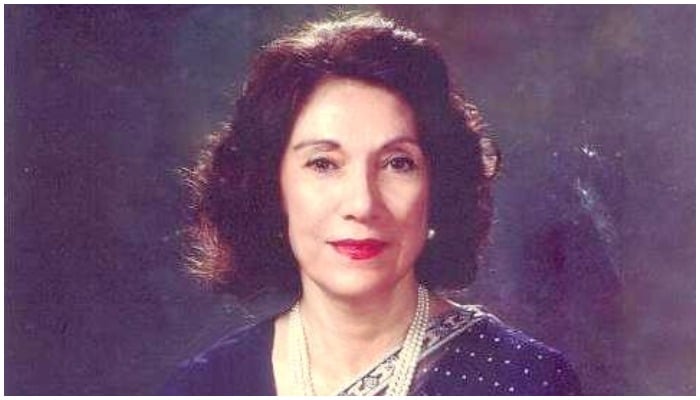
#Pakistan - #PPP pays tribute to 'mother of democracy' Begum Nusrat Bhutto

Khalid Hameed Farooqi
PPP-International Conferences and Seminars Forum (ICSF), in collaboration with the PPP Gulf-Middle East, organised a grand online seminar to celebrate Begum Nusrat Bhutto's 92nd birthday. The seminar was attended by Mohtarma Sanam Bhutto, daughter of Shaheed Zulfiqar Ali Bhutto, and Victoria Schofield, a long-time friend of Shaheed Benazir Bhutto, along with other senior PPP leaders and activists.
The seminar was hosted by senior party leader and human rights activist, Saifullah Saify and PPP-ICSF chief organiser Syed Tahir Abbas Bukhari. Thousands of Bhutto's lovers from all over the world watched the conference live on social media and paid homage to Begum Nusrat Bhutto in their comments.
The seminar was presided over by PPP Gulf-Middle East President Mian Munir Hans, while the special guests included senior journalist and intellectual Mujahid Barelvi and in-charge PPP Research and Co-ordination Cell Bilawal House Karachi, Lal Bakhsh Bhutto.
Leaders from all over Pakistan, Sindh, Punjab, Balochistan, Khyber Pakhtunkhwa, and Azad Kashmir, Gilgit-Baltistan, including people from more than 23 countries, participated in the online seminar which lasted for more than four hours. They expressed their views on the struggle and the long story of not bowing to the tyranny of past dictators.
During the programme, the eyes of many, including Sanam Bhutto and other participants, were filled with tears while talking about Begum Nusrat Bhutto. President of the seminar Mian Munir Hans highlighted the sacrifices of Begum Bhutto during her stay in Dubai till her last breath.
Senior journalist Mujahid Barelvi said that those who remember Begum Sahiba's struggle deserve a tribute. "The only way to remember Begum Sahiba's sacrifices for democracy is to hold constant ceremonies in her memory at every level," he said. Lal Bakhsh Bhutto, in-charge PPP Research and Co-ordination Cell, Bilawal House, Karachi, said that Shaheed Bhutto's mission must be fulfilled to pay homage to the Mother of Democracy.Victoria Schofield, a long time friend of Shaheed Benazir Bhutto, shared her memories with Sanam Bhutto and paid rich tributes to Begum Nusrat Bhutto.
In his address, PPP Central Punjab General Secretary Chaudhry Manzoor said that the sacrifices of Begum Nusrat Bhutto could not be ignored in the history of Pakistan.
"Without remembering Begum Sahiba’s sacrifices Pakistan's history is incomplete," said Manzoor.
PPP KP President Humayun Khan said in his address that his relationship with Begum Bhutto was like that of a mother and son.
"She loved all party workers like her children," he said and reiterated the commitment to continue the sacrifices and struggle till the completion of the mission of Shaheed Bhutto under the leadership of Chairman Bilawal Bhutto Zardari. Paying homage to Begum Nusrat Bhutto, PPP Balochistan President Haji Ali Madad Jattak said: "We are proud to belong to a party led by brave leaders. Chairman Bilawal Bhutto and Co-Chairman Asif Zardari are leading the nation who will spare no sacrifice in getting Pakistan out of crisis.
Afzaal Hussain Inqalabi read out a special message from Wajid Shamsul Hassan, former High Commissioner of Pakistan to the UK and special adviser to Shaheed Mohtarma Benazir Bhutto. On the occasion, the eyes of all the participants including Sanam Bhutto were filled with tears and everyone present at the ceremony was saddened by the memory of the Bhutto family.
Senior party leader and intellectual Dr Zarar Yousuf read his special article on Begum Nusrat Bhutto. Former Special Assistant Chief Minister Sindh and in-charge People's Secretariat Sindh, Farid Ansari, referring to his mother Begum Nargis Ansari's long association with Begum Bhutto, said that whether anyone remembers Begum Nusrat Bhutto or not, "we will always remember her and history as well."
"Her name will be written in the history book with golden words," he said, adding that the "Bhutto family is not something to be forgotten."
Anwar Zeb, in-charge of the PPP KP Study Circle, said that Begum Nusrat Bhutto kept the party alive at the time when Shaheed Bhutto was in prison and, even after his martyrdom, continued to fight for the rights of the people in the streets and courts. Other speakers and participants who paid homage to Begum Nusrat Bhutto included senior journalist Khalid Hameed Farooqi, Senior leader PPP Belgium and Europe Malik Muhammad Ajmal, PPP Germany President Syed Zahid Abbas, PPP Research and Coordination Cell Bilawal House Sub Office Central Punjab Saadat Hussain Shah, Sanaullah Jattak, President of People's Youth Balochistan, Seemi Asad, General Secretary of PPP US, Syed Muzahir Bukhari, former Chief of PPPICF.
Members including Athar Sharif, Sardar Arshad, Shazia Tahmas, Sohail Khawar, Khurram Kiyani, Inam Qadri, Kuldeep Singh, Malik Akhlaq, Shehzad Khan, Raja Azam Advocate, Asghar Shahid, Ashraf Chughtai, Dr Ziaullah, Bilal Ali, Syed Aizaz Shah and others.
At the end of the event, Begum Nusrat Bhutto's birthday cake cutting ceremony took place at the residence of President PPP Gulf-Middle East Mian Munir Hans.
Accompanied by Mian Munir Hans, Vice-President Nisar Khattak, Secretary Information Zulfiqar Ali Mughal, Deputy Secretary General Irfan Qamar Gondal, Secretary Information Women Wing Najma Jilani, Deputy Secretary Women Wing Najma Shah and Senior Vice President Dubai Shafiqur Rehman Siddiqui cut the birthday cake.
Finally, Chief Organiser Syed Tahir Abbas Bukhari thanked all the participants, forum members, and party leaders for making the event a success.
https://www.geo.tv/latest/341409-ppp-pays-tribute-to-mother-of-democracy-begum-nusrat-bhutto

Monday, March 22, 2021

Video Report - The Israeli Election – 5 Things to Know

Video Report - Will Israel's fourth election produce a clear winner?

Video Report - Trump Left Biden With 'Challenging' Situation at U.S.-Mexico Border: Harris

Video Report - Harris Tours Vaccine Site in Jacksonville to Tout $1.9 Trillion Covid Stimulus

Video Report - Psychologist explains how our brains have changed during the coronavirus pandemic

Video -ذوالفقار علی بھٹو کا لیاقت باغ راولپنڈی میں لاکھوں جیالوں سے خطاب 1973

Music Video - Dilan Teer Bija - #جمہوری_تھے_جمہوری_ہیں

Video Report - Joint press conference of Chairman PPP Bilawal Bhutto Zardari and Ameer JI Siraj ul Haq in LHR

Video Report -#NayaDaur - Bilawal's Strong Statement On Maryam #جمہوری_تھے_جمہوری_ہیں

#جمہوری_تھے_جمہوری_ہیں - PPP does not have it in its genes to compromise, Chairman PPP Bilawal Bhutto Zardari

 Chairman Pakistan Peoples Party Bilawal Bhutto Zardari called on Jamaat-e-Islami chief Siraj ul Haq in Lahore. Both the leaders discussed the political situation in the country.


Syed Yousuf Raza Gillani, Raja Pervaiz Ashraf, Nayyar Hussain Bukhari, Qamar Zaman Kaira, Syed Hassan Murtaza, Faisal Karim Kundi, Sardar Salim Haider and Saeed Ghani accompanied the Chairman PPP.
After the meeting, Bilawal Bhutto Zardari talking to the media said that according to the democratic traditions, the opposition leader in the Senate should be from the party that has the majority. Chairman Bilawal responding to a question said that the PPP does not have it in its genes to compromise and be selected because we have always believed in a fair competition.
The manner, with which Maryam Nawaz Sharif has been called by the NAB, makes it obvious that the institution itself is inviting criticism. Responding another question he said that any statement by Maryam Nawaz will be addressed by my vice president.
Chairman PPP said that it is the responsibility of the politicians to ensure that political parties look for common ground on issues such as that of electoral reforms, accountability and Kashmir. The PPP and the JI have the similar stance on these issues. We are organic political parties. However, there are political parties in the country that use foul language. We have been resisting and condemning rigging in elections and it should be stopped.
Chairman Bilawal responding to the questions by the journalists said that the economic crisis is the biggest challenge that the country is facing, and that he had made an effort to engage all parties while forming the PDM. Nawaz Sharif’s demand of there being the same standard of accountability for everyone including generals has been made today, while we have been demanding the same for the past three generations. NAB, as an institution should not be used for carrying out personal vendetta. In both the National and Punjab assemblies, the situation is extremely favorable to no-confidence movements. A tough time should be given to the government from inside and outside the Parliament.
Bilawal Bhutto Zardari said that he will hold a separate press conference on PDM if needed, and that we want to create hurdles for the government by reaching a common ground with JI as well as other opposition political parties. 

https://www.ppp.org.pk/pr/24509/

Sunday, March 21, 2021

Music Video - #BillyJoel #WeDidntStartTheFire #Rock Billy Joel - We Didn't Start the Fire

Video Report - CNN Fareed Zakaria GPS 3 21 2021 - China, Russia, Pandemic

Video Report - President Biden says he will visit southern border "at some point"

Video report - Rallies, vigils continue across US to show support for Asian-Americans in wake of spa shootings

Opinion: On Covid Relief, Democrats Deserve a Victory Lap


By The Editorial Board March 10, 2021
A giant aid package is what the country badly needed and what voters wanted.
President Biden made it clear that he wanted to move fast and go big to deliver emergency aid to a nation reeling from the coronavirus pandemic. On Friday, he will realize this goal with the signing of the American Rescue Plan, a sweeping, $1.9 trillion aid package aimed at rescuing the nation from its pandemic slump.
This is an early and impressive political win for Mr. Biden: He pushed for a $1.9 trillion deal, and he got an approximately $1.9 trillion deal that largely follows the contours he proposed. Better still, the bill passed and will be signed before the expiration of the current enhanced unemployment aid on Sunday.
Far more important, this is a big win for the American public — especially those of modest economic means. The legislation has the potential to cut poverty by a third and reduce child poverty by more than half, according to an analysis by Columbia University’s Center on Poverty and Social Policy. Black and Hispanic Americans are expected to see the largest benefit. It is being characterized by fans and critics as among the most expansive and progressive legislative achievements in decades.
The package is ambitious. Directly tackling the pressing public health challenges, it provides billions for coronavirus tracing, testing and vaccination efforts.
It also includes another round of cash relief: People earning up to $75,000 a year will receive $1,400, plus an additional $1,400 for every dependent they claim on their taxes. Enhanced unemployment benefits of $300 will extend through Labor Day. The earned-income tax credit will be expanded. There is money for child care facilities, schools, transit systems and restaurants. There is rental and mortgage assistance, debt relief for minority farmers and funding for small-business loans.
One of the plan’s most notable measures is an expansion of the child tax credit. Parents up to a certain income level will receive $3,600 for each child younger than 6 and $3,000 for those ages 6 to 17. The credit is structured so that even those who don’t pay income taxes can receive the benefit as a cash refund. The program is set to expire after one year, but supporters hope it will prove popular enough that it can be made permanent, effectively establishing a guaranteed base income for parents.
The new law also provides for a two-year expansion of subsidies for purchasing health insurance under the Affordable Care Act, which fulfills another of Mr. Biden’s key campaign promises. The list goes on and on.
Not everyone is a fan of the plan. Not a single Republican in either chamber voted for it despite its broad public support. Republicans have denounced it as too expensive and too unfocused. They also complain that Democrats shut them out of the legislative process — that, for all of his big talk about bipartisanship, Mr. Biden barreled ahead with only the support of his own congressional team.
The legislating was messy, as these things tend to be, with clashes both within and between the parties. Moderate Democrats demanded concessions from progressives, and Republicans sought to make the entire process as protracted and painful as possible.
Senator Ron Johnson, the Wisconsin Republican, demanded that the 628-page bill be read aloud on the floor. Senate Republicans en masse turned the consideration of amendments into a marathon exercise in political theater that went straight through Friday night and into midday Saturday. As the bill made its final pass through the House on Wednesday morning, Republicans there indulged in even more foot-dragging. So much for cross-party comity.
The Biden administration is betting that most Americans care less — if at all — about process than about product. It’s not a perfect bill. There will be bloat and inefficiencies. But the president’s unshakable position — backed by recent history — was that it was better to go too big than too small. No one on his team wanted to repeat the mistakes of the 2009 economic stimulus, now widely seen as having been too meager.
Mr. Biden learned another lesson from 2009: It is not enough to give Americans a win. You need to trumpet that win from the rooftops. So he is embarking on a combination victory tour and marketing blitz, aimed at driving home how the recovery plan will improve individuals’ lives — and the nation as a whole. He has scheduled a prime-time address, the first of his presidency, for Thursday evening. Soon, he will be hitting the road to sell the plan, as will the first lady and the vice president, among others. Friendly super PACs are planning related PR campaigns, and Mr. Biden has urged congressional Democrats to “continue to speak up and speak out” about it.
Big legislative wins are rare. Democrats have earned a victory lap for doing just what voters sent them to Washington to do.
https://www.nytimes.com/2021/03/10/opinion/biden-covid-bill-stimulus.html

Pakistan’s Counter-Terrorism Department using new pressure tactics against families of disappeared Baloch

 Since the coldblooded murder of five Baloch youth in a staged encounter by the CTD (Counter-Terrorism Department) of Pakistani forces, more Baloch families have complained that the department has been using pressure tactics to coerce them into changing their statements and withdrawing their cases.

Several families of disappeared Baloch complained that the Intelligence Agencies and CTD called them and threaten them to withdraw the cases of the disappearance of their loved ones.

According to Hani Baloch, who has been searching for her abducted fiancé Mohammed Naseem Baloch for the past several months, first, People called families of disappeared Baloch on withheld numbers and threaten them to stop perusing the cases of their loved ones. Now the state forces are attacking them.

Hani Baloch another with her fiancé Mohammad Naseem was abducted from Karachi. She was later released but her fiancé is still in the custody of Pakistani forces. She has been struggling for Naseem Baloch’s recovery like other family members. The Pakistan forces instead of recovering and releasing her fiancé are pressurising her to withdraw the case and stop looking for him.  

Recently on March 11 2021, Hani Baloch had an accident in Karachi and as a result, she sustained injuries on her face but remained safe.

Hani Baloch argues that the state (Pakistan) was pressuring her to withdraw the case of her fiancé Naseem Baloch but she refused. ‘Now the state is trying to kill her.’

It may be recalled that recently, another Baloch social and human rights activist Hooran Baloch also received threatening phone calls from the intelligence agencies.

She had made it clear that if anything happened to her the state would be held responsible.

Meanwhile, the family of abducted Rashid Hussain Baloch has also reported similar pressure tactics by the CTD of state forces.

The family in a statement claimed that they were summoned by Airport Police Station on Monday, March 15, ‘locked up in a room and threatened’ to signs a misleading statement about the disappearance of Rashid Baloch and in case of refusal to sign their loved ones will be harmed.  

The family of Rashid Hussain was asked to sign a pre-written statement by the Counter-Terrorism Department on behalf of Mr Hussain’s mother which read that he has not been forcibly disappeared by UAE intelligence agencies but he was sent back by the company that had employed him to Dalbandin Balochistan.

It was also written in CTD’s false statement that Rashid Hussain had gone missing from Dalbandin and not in Karachi.  

It is pertinent to note that Rashid Hussian was arrested by UAE intelligence agencies on the 26th of December 2018 and was handed over to Pakistan after six months of illegal confinement in UAE.

Pakistan media at that time quoting Pakistani officials had confirmed Hussian’s arrested in UAE and his extradition to Pakistan.

https://balochwarna.com/2021/03/18/pakistans-counter-terrorism-department-using-new-pressure-tactics-against-families-of-disappeared-baloch/

#Pakistan - #Balochistan - Education of Hundred Thousand Children at Stake

By Yahya Reki -Shabbir Rakhshani
Rukhsana Bibi is a part of the educational system in the remote village of Tehsil Jhao. Where 142 girls and boys are also linked up and girls are in majority. The children are going to this school for education which foundation laid by their teacher Rukhsana! She is the first women teacher appointed from her village and performing her duties in the education department for the last 5 years. That’s why the girls got confident whom elders were afraid to send them to school. This educational system can wrap its board any time when Rukhsana will be compelled to leave school. Causes exist which had been also addressed. Instead of performing her duty, Rukhsana is deprived of salary for 7 last months. She was appointed as “Junior Vernacular Teacher” (JVT) in 2015, due to the “Global Partnership for Education” project. Government has to continue the maintenance and administration of said schools. Schools were handed over to the Balochistan government as to the contract/Deal. They extended the contract of Teachers and paid salaries for 2 years but the case of regularization and salaries of teachers is hanged since July 2018. It had been gone through cold storage after sent to the Chief Minister of Balochistan twice. This situation has not only created financial hurdles for Rukhsana but also affected her 2 brothers’ educational system who be dependent on their sister’s monthly salary.
1493 teachers of the “Global Partnership for Education” (GPE) project along with Rukhsana facing the same situation. They came to the provincial capital in December 2020 and staged a protest camp in front of Quetta Press Club. They sat down in front of the Balochistan Assembly during the session on December 30, 2020. Almas Qadir is also one of these protestors who traveled from Naal to Quetta to communicate to the authorities. Almas spent many days in protest camp along with her 4 months child. She is telling “whenever our issue was not resolved for a long time we compelled for the procession. We were not paid salaries for a couple of months but we haven’t closed schools because children are ours but need to run the house”.
Global teachers have started a sit-in on 28th December 2020 led by Fazal Ilyas. His wife was also there in affected teachers. He was arrested on the first day of agitation and shifted to “Bijli Ghar Thana” along with his 2 friends and then released. He is telling “Provincial Minister for Education Sardar Yar Muhammad Rind and Deputy Speaker Balochistan Assembly Babar Musakhail came to their camp in the evening and assured to draft summary and forward it to CM Balochistan to resolve the matter and if not, they will be separated from the government. And they postponed protest”.
The protest was continued for 10 days where women teachers and other family members were present along with children. The government has formed a committee that has to make recommendations on the matter and report CM Balochistan. however, the committee has died without any progress. Last information summary has been moved to Chief Secretary Balochistan Table.
World Bank in collaboration with European Union, has initiated the GPE project in 2015-16. Pakistan is in these countries which were agreed on it. The main purpose of this education was to introduce a gender-free education system among countries and deliver it from village to village. 709 new schools were made in Balochistan under the network of this project. Due to the contract, 95 government Middle and 20 High schools were mentioned in the said project. It was the main objective to pay salaries to the teachers as well establish schools on modern lines. The ratio of girl’s education improved in front of boys due to this project. Due to the report provided by the GPE project when these schools were shifted to the government 25, 404 boys and 65, 578 girls were enrolled in 709 primary schools.
The government of Balochistan has announced 9, 433 vacancies through National Testing Service (NTS) to fulfill the lack of teachers in education. But not completing the pattern of NTS candidates was not succeed which deprived the educational system in Balochistan. on the other side, the silence of the government could increase in the educational crisis. The government should think about it because this crisis will affect the education of lac children. https://balochistanvoices.com/2021/03/education-of-hundred-thousand-children-at-stake/

#Pakistan - What students think


PAKISTANI universities are not contributing enough in the areas of research and development or to the knowledge-based economy. The reasons are not difficult to comprehend. For one, the environment of educational campuses is not conducive to intellectual pursuit, and in the lecture halls critical discourse is virtually considered a sin. The problem is that state and society demand too much from our education system that is purposeless.
Prime Minister Imran Khan’s words amounted to nothing more than wishful thinking as he addressed a seminar of the National Security Division recently, saying that universities can contribute to developing a national security paradigm in Pakistan. The prime minister is well aware of the state of higher education in Pakistan and has himself established an educational institute in the hopes of generating graduates. He must be aware of the state of academic affairs and the level of intellectual capacity in our universities. It would have been better had he recommended building up the dwindling intellectual capacity at our universities as critical to the country’s national security priorities. Pakistan ranked 98th in 2020 on the Good Country Index, which measures the contributions of nations to humanitarian well-being. On the same index, Pakistan’s score in ‘science & technology’ was 91, which cannot be termed satisfactory even by South Asian standards.
This is not only about public-sector universities; private educational institutes are also producing graduates of the same quality even if their attire is different and their communication skills better. After all, their thinking pattern is hardly dissimilar. At the other end, madressahs have their own sets of problems in terms of education, research and critical discourse.
Private universities have become money-minting enterprises and they adopt all possible marketing tactics to attract students of privileged classes. For them, knowledge production is not a priority. They promote an apolitical atmosphere on campus that includes not only a complete ban on political activities but also encourages certain political and social narratives, which suit the security establishment. When a university in Lahore expelled two students for a proposal followed by hugging on campus, it reflected a mindset that was concerned more about its ‘reputation’ and the prospects of attracting business rather than ensuring freedom for its students.
The state desires to control the thoughts of its citizens.
The state desires to have control over the thinking process of its citizens to instil in them a submissive attitude. Power elites deem politics, especially dissent, a negative trait for the youth and prefer ‘depoliticised’ individuals who don’t question their power and might. With this goal in their sights, they do not bother much about how the controlled environment at the campuses kills creativity and intellectual capacity. Recent interaction with educated youth in Punjab, Sindh and KP made it clear that the absence of critical discourse and an apolitical atmosphere on campuses are not only creating anxiety and insecurity among the youth regarding their future but also inculcating in them a sense of victimhood. The youth have ambitions for their careers but they don’t have a plan and are not prepared for life’s challenges ahead. This uncertainty leads to visions of a nightmarish future, and most of them blame their teachers and the poor quality of education they receive for this. In particular, they are not satisfied with the scholarship and expertise of their teachers. Many youths complained that their teachers hardly update their own knowledge of the subjects they teach and also discourage students from asking questions or voicing criticism inside the classroom.
The youth are developing a narrow worldview, one which is mostly based on skewed and irrational narratives they absorb from the social and mainstream media. The proportion of those who train their minds to think critically is very low. In the absence of any critical or interactive educational practice, the sense of victimhood is only enhanced — something that lends itself to believing in conspiracy theories. State-led propaganda and constant glorification of the past only makes matters worse and leads them further away from the path of critical thinking. Indeed, our leadership itself has often been seen to encourage ‘self-pity’ through promoting dramas that are based on fictional depictions of historical characters. The youth blame the ruling elites of the Muslim world including Pakistan for the loss of Muslim glory.
A number of students from the tribal districts of KP and Balochistan have a bitter opinion about the establishment and religious groups and parties. The reasons are understandable, as they have suffered the consequences of extensive conflicts in their regions. A good number of educated youths have moderate views about religion and don’t agree with the agendas of radical groups, but faith still shapes their worldview. For them, religion is an issue of identity and they believe that the Muslims are suffering because of their ignorance and that glory can be achieved through practising a moderate version of Islam. Alternative views are missing on campuses and among many students there is a craving for perspectives which can broaden their horizons. However, those who are inclined towards radicalism and extremist groups have power and their links with like-minded teachers help them to control the narrative. Nobody can challenge or disagree with them. The radical segments think of themselves as the custodians of Pakistan’s ideology and identify with establishment narratives. Not content with their current strategy, they have more radical ambitions for achieving ‘glory’ and for defeating the ‘enemies’ of the Muslim world. This is a frightening scenario as it indicates that human resource for extremist and militant groups is still available on our campuses.
An aptitude for or interest in research is sorely lacking in the teachers and students in universities. This is quite evident as the research publications of many private and public universities simply don’t qualify to be presented at academic fora. The prime minister’s wish for our universities to contribute towards developing a national security paradigm is nothing less than asking for the moon.
https://www.dawn.com/news/1613746/what-students-think

#Pakistan - The challenge of “learning poverty”

Dr Lubna Naz
The government should invest in devising strategies that can prevent dropouts before students reach high school.
In Pakistan, school-age children make up 30-34 percent of the population. Amongst the 65 million school-age children, 22.8 million are out of school (OOSC). The high number of OOSC pose numerous challenges, ranging from weakening of the economy to making social cohesion fragile.
According to a World Bank research in 2020, learning losses may contribute up to $67-155 billion losses to Pakistan’s economy. The unschooled children are more likely to join the unskilled labour-pool, implying an increase in unemployment.
A majority of OOSC belong to the poor and vulnerable communities, i.e, migrants, daily wage labourers and beggars, which furthers economic inequality and social stratification.The pool of out-of-school children (OOSC) includes children who have never enrolled in a school and those who have attended school but left before completing high school. Educationists have studied the causes and consequences of the phenomenon and proposed a raft of measures to remedy the situation.The most noticeable causes of poor schooling outcomes are extreme poverty, early marriages, unemployment of adult working family members, and parents’ disinterest in education. The reforms have aimed at increasing school enrolment through informal education, flexible school timing, provision of stipends and school meals.
The prime focus of current policies seems to be children who have never attended school. They include full-time workers at workshops, domestic help and beggars.
In education sector planning, little attention has been given to address retention and school dropout issues. According to the Annual Status of Education Report-Pakistan (ASER 2019), 26 percent of the children aged 11-16 in a rural region dropped out before completing school, while 16 percent in the same age group never attended school.
The report shows higher dropout rates among girls (9 percent) than boys (7 percent). A greater number of girl dropouts can have severe implications for the economy, for instance, lower female labour-force participation, early-age-marriages and higher fertility rates.
Academic researchers should ponder on why children leave school before completion and if they leave mainly due to school-related factors, would any effort to bring them back in school be successful unless schooling system is overhauled? Pakistan has a highly polarised schooling system, including government schools, elite private school, low-cost private schools, seminary schools or madrassas, and NGO-run schools. The ASER 2019 showed that 2.1 percent children were enrolled in madrassa, and 20.6 percent in private schools. Only 0.5 percent children were found in other schools.
More than three-fourth of school-age children are enrolled in government schools. Therefore, the need is to assess the government school preparedness in improving retention rates. School readiness depends on a host of factors, including school physical infrastructure, structured school activities, parents’ engagement, community-school linkages and learning methods.
After the 18th Constitutional Amendment, the curriculum, policy, syllabus, planning, and the standard of education fall under the domain of provincial governments. According to Wilson Report 2016, provincial governments spend 17-28 percent of their budget on education. Interestingly, the amount spent on education by provinces far exceeds the UNESCO-recommended 15 percent of budget spending on education by the countries. Despite significant provincial budgetary allocations, the dilapidated conditions of public sector schools raise concerns about the effectiveness of the utilisation of education budget. According to ASER 2019, only 56 percent of schools have electricity connections, 61 percent have safe drinking water, and 59 percent have toilet facility in rural government schools.
There is a need is to consolidate primary, middle, and high schools to maximize the benefits of existing infrastructure and provide catalytic funds to support implementation of early childhood care and education reforms in provinces.

 These figures do not shed light on the quality of basic facilities available in government schools. Most schools in rural areas frequently experience an interruption in water supply and long power outages. Furthermore, as per ASER 2019, there are noticeable regional disparities in school infrastructure. Schools (primary, middle and high) in Balochistan, for example, have 3-5 rooms, 25-59 percent schools have electricity, and only 4 percent an internet connection, while in rural Punjab government schools have 5-12 rooms on average, 95-98 percent of schools have safe drinking water, and 12-63 percent have an internet connection.
The irony is that most high schools have better infrastructure as compared to primary and middle schools. The need is to consolidate the primary, middle, and high schools to maximise the benefits of existing infrastructure and provide catalytic funds to support implementation of early childhood care and education reforms in provinces, particularly in disadvantaged areas. This will help improve the retention rate of children at school, especially for girl students who drop out after primary school for lack of access to a middle school in their village.
The teacher absenteeism, under-qualified teachers, and surplus non-teaching staff are common in government schools. According to the Wilson Centre report 2016, 70-80 percent of provincial education budget is spent on teachers’ salaries. When teachers do not show up (20 percent in the Punjab and 30 percent in Khyber Pakhtunkhwa), these expenditures represent inefficient utilisation. In consequence of recently initiated early childhood care and education reforms (ECCE), the Punjab and the KPK have strengthened monitoring mechanisms for public schools through assistant education officers (AEOs) stationed at the district level. Further, the learning data is being collected through a monitoring application based on MELQO, developed by the Punjab Information Technology Board (PITB) and Programme Monitoring, and Implementation Unit (PMIU).
The constant monitoring and installation of biometric system have improved teachers’ attendance in public sector schools. Sindh and Balochistan need to invest in workforce training, district-level delivery, and governance structures to avert the deepening learning crises. In both provinces, as per ASER 2019, school dropout ranges between 30 and-51 percent among children aged 11-16. The current schooling system relies on the traditional method (knowledge-based-abilities) of teaching, which, unfortunately, fails to inculcate employable skills among students. Moreover, the overstructured school system lays stress on completing a pre-defined syllabus without instilling the knack for exploration, and assessments are generally based on reproducing the material memorised by the students, usually without any understanding. According to the World Bank Report 2019, 74 percent of children in Pakistan are unable to read and understand a simple text by age 10. The children who do not learn at primary school fail to deal with the curriculum as they progress to higher levels. These children either leave school before completing education or accomplish eight or 10 years of schooling without basic knowledge and skills, whether they be formal skills (reading and writing), cognitive skills, technical skills, reasoning or critical thinking.
The World Bank has coined the term “learning poverty” to refer to this problem. Compared to Pakistan, several countries like Vietnam, Cambodia and Bangladesh have almost eliminated learning poverty at the same level of economic development. Pakistan needs policies specific to acquired skills, job market placement and learning outcomes, rather than a focus on inputs like curricula, school hours and funding.
There are currently many social protection programmes, such as Waseela-i-Taleem, to improve enrolment of the children of low-income families, particularly girls. These demand-side interventions are useful to address the affordability-related constraints. However, it is the school quality that determines the retention rate and learning outcomes of children. The government needs to invest in devising strategies that can prevent dropouts before students reach high school and set up early warning systems to detect students who are more likely to drop out. The academicians need to investigate types of school dropout and pathways to dropping out and suggest doable measures to avert learning crises in Pakistan.
School attainment should not be taken only to promote productivity, and subsequently output or income. Education has social value. In this respect, it is an end in itself rather than a means for achieving other ends.
https://www.thenews.com.pk/tns/detail/807250-the-challenge-of-learning-poverty

#Pakistan #PPP stakes claim to the slot of opposition leader in Senate, Raja Pervaiz Ashraf

Former Prime Minister and Senior Vice President of PDM Raja Pervez Ashraf has expressed the hope that the issue of the leader of the opposition in the Senate will be settled amicably with consensus among the combined opposition parties in accordance with the established democratic norms and traditions.
He said this while commenting on reports that PML-N had nominated its candidate for the slot of opposition leader in the Senate and that it was asking other parties in the opposition PDM to endorse its candidate for the same.
He said that with 21 senators in the upper house the PPP was the single largest opposition party in the Senate. The PPP believed that in accordance with democratic traditions the slot of opposition leader in the Senate should go to it, he said.
Raja Pervez Said that the two other most important parliamentary positions namely the opposition leader in the National Assembly and chairman of the public accounts committee both were held by the PML-N. It would be only right and proper that the third important parliamentary position namely the leader of the opposition in the senate was given to the largest opposition party in the upper house instead of the party which already held the other two important parliamentary positions.
He said that he was also a member of the Committee formed by the sarbarahi ijlas of PDM to propose opposition names for the slots of Chairman, Deputy Chairman and Opposition leader in Senate. He said that he had agreed that the three Senate slots be distributed among the three largest opposition parties in PDM by proposing candidate of PPP for Chairman, of JUI for DeputyChairman and PML-N for the Opposition leader. However after manipulation in the said election and denial of the Chairmanship to Mr. Gillani by wrongly rejecting 7 votes cast in his favor the situation had completely changed.
Raja Pervez Ashraf said that after election to the office of Chairman Senate the situation with regard to the available slots in the upper house and its distribution among various opposition parties had completely changed. The stance of the PPP with regard to the opposition leader was based on democratic principles, equity and fair play, he said.
https://www.ppp.org.pk/pr/24496/