Friday, March 5, 2021

Chairman PPP felicitated PDM leaders on Syed Yousuf Raza Gillani’s victory


Chairman Pakistan Peoples Party, Bilawal Bhutto Zardari telephoned Balochistan National Party chief, Sardar Akhtar Mengal and National Party head Dr. Abdul Malik and congratulated both leaders on the success of PDM joint candidate, Syed Yousuf Raza Gillani in the Senate elections.

Bilawal Bhutto Zardari while talking to them said that PDM’s joint candidate Syed Yousuf Raza Gillani’s victory is the victory of democracy. Strong opposition alliance created cracks in government’s ranks. 

Chairman PPP said that Imran Khan’s so-called change was also rejected by conscientious public representatives of the government.

Chairman PPP also telephoned the president Awami National Party Khyber Pakhtunkhwa chapter, Aimal Wali Khan and discussed the current political situation of the country. He also congratulated Aimal Wali Khan on the victory of PDM’s joint candidate Syed Yousuf Raza Gillani.  

https://www.ppp.org.pk/pr/24419/

Thursday, March 4, 2021

Ghazal - A Gham-E-Zindagi Kuch Toh De Mashwara - Pankaj Udhas

Music Video - Dil Khoya Khoya Gum Sum ~ Muhabbat Ke Dushman

Video Report - #falcons​ عقابوں کی سرکاری سمگلنگ، بچے کا وزیر اعظم کو خط، چیف جسٹس اطہر من اللہ کو دفتر خارجہ کو حکم

Video - #NayaDaur #Politics Imran Khan Attacks ECP, Bilawal Hints At No-Confidence Move Against Buzdar

Video - چیئرمین پاکستان پیپلز پارٹی بلاول بھٹو زرداری اور مسلم لیگ ن کی نائب صدر مریم نواز، اسلام آباد میں پریس کانفرنس

#Pakistan - Senate upset

THE Senate election results have delivered a stunning blow to the PTI. While the ruling party has seen an increase in its overall Senate numbers, the control of the upper house remains with the opposition parties — a development which is viewed by many as a much-needed victory for the PDM. The key Islamabad seat, which saw a battle between the PPP’s Yousuf Raza Gilani and Finance Minister Abdul Hafeez Sheikh, has been the defining moment of this election with significant symbolic and practical consequences. With 169 votes, Mr Gilani defeated Mr Sheikh who got 164 votes — a shortfall that not only has shaken the PTI’s confidence but which also warrants introspection within the party.
Predictably, elements in the government have already started the conversation about Mr Gilani’s disqualification, based on the leak of a controversial video which shows his son Ali Haider Gilani instructing someone on how to waste a Senate vote. Though the video is a dramatic last-minute twist to the Senate election saga, it is very much in keeping with the season of horse-trading, vote-buying, threats and engineering that haunt every upper house poll — a continuation of an unsavoury tradition that favours personal gain over party stance. While there may be some truth to the allegations of horse-trading in the Gilani-Sheikh upset, the unscrupulous deal-making on Senate seats is not something restricted to any one party.
The PTI must seriously reflect on how a seat Prime Minister Imran Khan himself was so confident about was lost. It is entirely possible that elements in the PTI, who make no secret about their grudges against non-elected position holders, defected to thwart the possibility of a cabinet dominated by technocrats. Time and again, there have been reports of factions in the PTI that have worked against each other, to the extent that some have been accused of engineering sackings and cabinet reshuffles. The ‘unelected versus elected’ guard in the PTI has been at war since the beginning of this government — a reality ignored by Mr Khan who placed his trust in unelected individuals. Today, those rifts in the party have come to the fore. The PTI will pay a heavy price for it, as it appears it will have to find a new finance minister at a time when the economy needs stability. No doubt, this seat is a huge symbolic victory for the opposition, and the new composition in the Senate will set the tone for the future of political discourse in the country. For all its bravado ahead of the Senate election, the government’s desperate push to have an open ballot perhaps was one indication that it feared the upset that was witnessed yesterday. One thing is certain: the Gilani victory will haunt the PTI for a long time — even if the prime minister goes for a vote of confidence in parliament.
https://www.dawn.com/news/1610605/senate-upset

Pakistan: Senate election deals a blow to Imran Khan

The ruling PTI party has failed to win a majority in the 100-member Senate, with many lawmakers switching allegiance and voting for opposition candidates. Prime Minister Khan finds himself in a precarious position now.
Prime Minister Imran Khan will seek a vote of confidence in the lower house of Pakistan's Parliament, the National Assembly, following a major setback in the upper house elections on Wednesday. The move is aimed at restoring confidence in Khan's leadership after his Pakistan Tehreek-e-Insaf (PTI) party failed to win a majority in the 100-member Senate, despite having a numerical advantage in the lower house.
Members of the National Assembly in the capital, Islamabad, and four provincial assemblies vote for the Senate members. Upper house lawmakers are elected for six years, however, all of them are not elected at the same time.
On Wednesday, elections were held for 37 Senate seats. After the vote, opposition parties — mainly former Prime Minister Nawaz Sharif's Pakistan Muslim League (N) and former president Asif Ali Zardari's Pakistan People's Party (PPP) — now enjoy the support of 53 members, and the ruling alliance of 47 members.
Ruling parties generally secure a majority in the Senate. Since PTI and its allies won the 2018 general elections, many experts were expecting Khan to win the upper house also.
Calls for Khan's resignation Opposition parties on Thursday demanded that Khan step down from premiership after the Senate setback. Khan's party has rejected the calls.
"Imran Khan and his party have taken a unanimous decision to take a vote of confidence from Parliament to confirm he still has a majority (in lower house)," Foreign Minister Shah Mahmood Qureshi told media.
Constitutional experts say the reason behind holding a vote of confidence for the premier is to determine which party members switched allegiances in the Senate elections, as, unlike the upper house election, National Assembly lawmakers cast their votes through an open ballot.
"Those who revolted against the PTI could be disqualified under election laws," Osama Malik, an Islamabad-based legal expert, told DW.
Securing a vote of confidence on Saturday will also boost the morale of the ruling party. However, experts say the damage has already been done.
Not having a majority in the Senate means that Khan will have difficulties passing crucial legislation. At the same time, the opposition parties, which have been staging mass street protests to oust Khan, now feel more emboldened than ever.
"Imran Khan's dream of a single-party hegemony cannot be realized now," Zaigham Khan, a political analyst, wrote on Facebook. Changing political landscape
"This is the biggest upset in Pakistan's parliamentary politics. Khan is now a lame duck premier and has only one political option: dissolve the National Assembly and hold midterm polls," Mushahid Hussain, a senator belonging to PML-N party, told DW. "The country's political scenario has changed. The government is now on a back foot, worried about its majority and loyalty of its own lawmakers," Hussain said.
Salman Masood, a political analyst and editor of The Nation newspaper, told DW that the ruling party felt embarrassed after the Senate results.
"The government is crying foul and claiming that the opposition used money to sway the loyalty of its members, but it is a fact that opposition parties have received a major boost. They will now put more pressure on the government," Masood said. Mosharraf Zaidi, an Islamabad-based political analyst, differs. "I don't think that Khan will be particularly weakened by the Senate polls. He is likely to win the vote of confidence, but it will certainly reenergize the opposition," Zaidi told DW. Alluding to the country's powerful military generals, Hussain said that, after the Senate election, "those who installed Khan in 2018 will also reevaluate their support for him."
Legislative hurdles
Khan will find it almost impossible to pass legislation in Parliament, as a majority in the Senate is crucial. That means he will have to rely on President Arif Alvi, a party loyalist, to pass presidential ordinances to keep the government functioning. But major constitutional changes will remain beyond Khan's reach. For instance, Khan has wanted to scrap the 18th constitutional amendment, which was promulgated by former president Zardari's government (2008-2013) and which gives more administrative and financial powers to provinces. It is unlikely now that Khan can centralize all powers in Islamabad.
Legislation is also required to reform various judicial and financial departments to address the concerns of the International Monetary Fund (IMF) and the Financial Action Task Force (FATF) money laundering watchdog.
Analyst Zaidi believes that it is not a bad thing that the ruling party does not have a majority in the Senate. "Sooner or later, Khan has to realize that serious and sustained reforms require political consensus," he said. "No party can afford constant aggression."
https://www.dw.com/en/pakistan-senate-election-deals-a-blow-to-imran-khan/a-56772461

Pakistan learns the cost of an alliance with China

BY SAIM SAEED
Wedded to Beijing, Islamabad has discovered it could be difficult to get out.
Protests, massive debt, dwindling cash reserves. Those are the consequences of Pakistan's increasing reliance on China — but the country has still decided it's all worth it.
It's not what Pakistan anticipated when it happily embraced a $60 billion handout from China in 2013, when the countries formalized the China-Pakistan Economic Corridor (CPEC), part of Beijing's international infrastructure strategy known as the Belt and Road Initiative. Initially, the realignment with Beijing seemed a win-win situation, as the cash-strapped South Asian country drifted away from its traditional ally: the United States.
Beyond the geostrategic satisfaction of outflanking India, the traditional mutual archenemy of both China and Pakistan, there have been plenty of tangible economic benefits too.
Thanks to Chinese money and expertise, Pakistan has added more electricity to its faltering grid and is now better connecting its own cities with new roads and public transit systems. In international forums, Islamabad has a more reliable backer than the U.S., especially when it comes to the issue Pakistan cares about most: berating India. "They're all in," said Uzair Younus, a U.S.-based consultant who hosts a podcast on Pakistan's economy, referring to Islamabad's alliance with Beijing. "There is broad consensus that this the path forward for the country."
For Pakistan, the alliance has also meant relying on China for everything from fighter jets to coronavirus vaccines. In January, Islamabad said it would receive a "gift" of 500,000 doses of the Sinopharm vaccine. It is currently in talks with Beijing to secure more doses of both the Sinopharm vaccine and the Cansino vaccine.
"We ... value our unassailable friendship and strategic partnership," Pakistan's Prime Minister Imran Khan said last year.
The U.S. has had some cautious words about Pakistan's deepening romance with Beijing. A State Department spokesperson said Washington remained "concerned that some CPEC projects lack transparency and impose unsustainable levels of debt on Pakistan, with Chinese state-owned enterprises benefitting disproportionately."
It's not just the Americans who are worried. Many Pakistanis also observe that the alliance has been exacting on their country's resources, people and international reputation.
Money problems
For one thing, Islamabad simply isn't able to pay China back. Bloomberg reported earlier this month that the Pakistani government will ask China for debt relief on the projects it splashed out on. Between 2018 and 2020, Pakistan added $17 billion to its external debt, totaling $113 billion last year.
Even in the best of times, Pakistan's finances are notoriously unstable. It's currently in a $6 billion International Monetary Fund bailout program — its 13th — but the size and terms of China's investment have meant an even greater cash crunch at a time when its economy is squeezed by the coronavirus pandemic. As a consequence, its debt has ballooned, its currency has nosedived and inflation has skyrocketed. "They find themselves in a bit of a trap, but it's a trap of their own making," said Husain Haqqani, the director for South and Central Asia at the Hudson Institute, a Washington-based think tank, and a former Pakistani ambassador to the U.S.
Khan issued a public plea for debt assistance last year as the pandemic halted Pakistan's economy.
Younus, the consultant, said Pakistan's debt trap alone hardly tipped the scale against China. "The business community will say, yes we have debts, but Pakistan has always struggled to pay back debts." Pakistan has essentially swapped creditors, he said, while all its economic fundamentals remain the same.
But Pakistan might be trading away more than it bargained for.
"The U.S. or the IMF has never, ever, taken over someone else’s territory as payment for a loan," Haqqani said, citing China's takeover of the Sri Lankan port of Hambantota after the island nation ran out of cash.
"The terms of loans with a Western country are predictable and realistic," he said. "It's not the same with China. There’s less transparency." Experts warn that the port of Gwadar, near Pakistan's border with Iran, has the potential to become a new Hambantota. Recent work on a fence around the port was only paused after local residents protested. It is unclear whether the order to build it came from the Pakistani government or at China's request, which is concerned about the province's security issues.
Neither the Chinese nor Pakistani government responded to requests for comment.
The projects have not boosted local employment either, with the Chinese construction companies preferring to ship their labor from China rather than hire local workers, fueling tensions further. And Haqqani points out that stronger trade and road links have helped Chinese goods be sold in Pakistan, but not the other way round.
Bundled together
The problem, Haqqani said, is that the various aspects of Pakistan's relationship with China are intertwined. While European politicians can strike an investment deal with China while simultaneously criticizing its human rights record, Pakistan has a "one window operation."
"If you don’t give them what they want in the economic realm, they push back in the military realm. To keep the military relationship going, they have to give up the economic realm," he said. China is now Pakistan's biggest arms supplier, and with Pakistan's military playing an oversized role in its politics, the civilian government has to be wary it doesn't upset its generals in addition to Beijing.
"In the end Pakistan ends up giving everything," Haqqani said.
The "one window operation" partially explains Islamabad's reluctance to criticize Beijing for the human rights abuses being reported in China's western region of Xinjiang, which borders Pakistan. Khan, the prime minister, sees himself as a spokesperson for Muslims worldwide. He has accused French President Emmanuel Macron of peddling Islamophobia and has written to Facebook chief Mark Zuckerberg about banning anti-Muslim sentiment on his platforms. But on the plight of Uighur Muslims who report systematic rape and forced labor, the Pakistani prime minister has been less vocal.
Experts say there is reluctance within the government and the military about the relationship, but that contrasts with both countries' official statements. Last year the governments announced an additional $11 billion in infrastructure projects, and the countries routinely talk up the partnership.
That's partly because Pakistan can't get itself out, explains Khurram Husain, a journalist who has written extensively about CPEC. "There is concern, but the space to do anything about it is very limited. They have very little room for maneuver."
Meanwhile Pakistan's relations with the West continue to unravel. With the U.S. winding down its military presence in Afghanistan, Islamabad's importance to Washington has diminished. Pakistan was not a party to the Muslim countries who recognized Israel last year, despite Washington's efforts.
The EU, meanwhile, is an important importer of Pakistani goods, but that trading relationship has not evolved into a deeper partnership — especially as the bloc prepares to host India for a top-level summit in Porto in May.Pakistan has maintained that it's still open for business with Brussels and Washington, but Younus said the country's leaders "haven’t articulated that vision clearly and concisely." Accusing the French of "hate-mongering" hasn't helped the high-wire act."Pakistan has very few friends in the region, East or West," said Husain, the journalist. "China is the largest trading partner, the largest military supplier and playing a very helpful role in balancing out India. Pakistan needs China."
Haqqani, the former ambassador, said it didn't have to be this way. He cited the former Yugoslavia as a communist country that developed an independent foreign policy while preserving its distance from the Soviet Union.
"It's not too late," he said. "You can always break out."
https://www.politico.eu/article/pakistan-learns-cost-of-economic-alliance-with-china/

Imran Khan is in sorrow, wants vote of confidence. Opposition hopes it can finally oust him

NAILA INAYAT
Foreign Minister Shah Mahmood Qureshi has called it 'a sorrowful day for democracy in Pakistan'. This is a moment where you are either with Imran Khan or against him.

It is the season of elections and a reason for leaking videos. That’s the way it is on this side of the border, how about you people? But some fights can’t be won even after leaking videos. Test case: the critical upset by Pakistan’s opposition on an Islamabad Senate seat, where Pakistan Democratic Alliance’s Yousaf Raza Gilani beat Finance Minister Hafeez Sheikh by five votes. The win is being looked at as a vote of no-confidence against the government of Prime Minister Imran Khan and its policies. 

Springing into action after the election debacle, Pakistan Tehreek-e-Insaf announced that the prime minister will seek a vote of confidence in parliament, with Foreign Minister Shah Mahmood Qureshi calling it “a sorrowful day for democracy in Pakistan.” This is a moment where you are either with Khan or against Khan, we are told.


Even though the ruling PTI became the majority party in the Upper House of Parliament with 18 new seats on Wednesday, it was worrisome that the 180 votes the government was confident it had in hand to win the Islamabad seat were not of the government anymore. The call by the PM to take a confidence vote could also end up in his ouster. If he survives, he will be weaker than he currently is. And that’s with or without the support of the establishment. Imran Khan is now playing on a sticky wicket.
Opposition shows up This is a win of political narrative for the opposition alliance. Called out as chor, corrupt mafia, ghaddar, incarcerated and rebuked for being a ‘hindrance’ in making Naya Pakistan. The win of former prime minister Yousaf Raza Gilani and now a senator from Pakistan Peoples’ Party signals a new dawn. The dawn where the establishment is now ‘perceived’ as neutral and the opposition thinks it has plenty of space to do its politics. The win also cements former president Asif Zardari’s idea of bringing change from within the assembly — change of government through no-confidence — rather than taking to streets, resigning from assemblies and calling for fresh polls, all of which was considered former prime minister Nawaz Sharif’s strategy to oust Imran Khan. So, the long march in March won’t be needed after all?
Now we understand the jitteriness of the Imran Khan government over the Senate election from the get-go. It all began with feelers that disgruntled PTI members in provincial and national assemblies were contemplating ‘tabdeeli’ (change). And there is no better remedy against sorrow than trading votes for hefty sums of money. It wouldn’t have been the first time nor the last time when parliamentarians voted against party lines. Every ruling party is an equal opportunity offender, and Imran Khan’s PTI is no different. But this time it wanted to stop people from jumping to the other side and so began the operation.
First came an ordinance from the government to hold the Senate election through open vote and not secret ballot, which President Arif Alvi cleared. A video of paying bribes to buy votes for a Senator by PTI leaders from two years ago was leaked – PTI leaders then used the video to highlight the menace of secret ballot. PM Imran Khan, whose own party was caught in the act, was now speaking against the vices of buying votes, as if he knew nothing two years ago. However, the ordinance was contested in the Supreme Court, which upheld the secret ballot, thus washing away hopes of the government. The secret shalt be kept.
All that effort for what
Gilani eventually defeated finance minister Hafeez Sheikh. Now, Sheikh is commonly known as ‘the IMF man’ (for dealing with the International Monetary Fund on Pakistan’s behalf), But we remember him most as the man who gave us tomatoes for Rs 17 per kg when they were as high as Rs 320 per kg. If Sheikh can’t be minister anymore, he could become an adviser to the PM. No defeat can be bigger than the IMF, after all.
Before all was lost, never say never was the order of the day, as another video was leaked on the election eve. This one intended to get an opposition nominee – Gilani – disqualified. In the leaked video, Gilani’s son was seen suggesting a PTI member to waste his vote. PTI went to the election commission demanding Gilani’s disqualification, but to no avail. The election commission hasn’t been much of a government fan of late, especially after last month’s by-election in Daska, where 23 polling officers went missing when the time came to count the ballot.
Yes, history has enough record of votes going missing but here, officers with ballots went missing – only to return the following day with the excuse that they got lost in dhund (fog). This is the stuff dreams are made up of. Re-election was announced in Daska. Some thought the election commission was showing spine; others felt the establishment had become neutral. What is life and politics, after all, without some hope.
PTI was marred with infighting over the selection of candidates. One prominent member was federal minister Faisal Vawda, who is facing a dual nationality case. The same minister had showed up with a boot on a news show. Then on Wednesday, he showed up without the boot, cast his vote, resigned from the National Assembly — all within 15 minutes and was crowned senator in the evening. However, the Islamabad High Court didn’t seem much elated and held him responsible for submitting a false affidavit in the dual nationality case, directing the election commission to take action against him.
Success or not?
It was said that PM Imran Khan himself would oversee the progress of the Senate election preparations. How? Don’t ask. On the election day, Shehryar Afridi, the Kashmir Committee Chairman, ended up getting his vote rejected because he signed off his name on the ballot paper. His request to cast his vote again was denied. Such was the preparation that Afridi thought he was giving an autograph. Imagine the government trusts him with the jugular-ly important Kashmir cause? And according to the opposition grapevine, PM Khan’s vote was wasted too, along with Environment Minister Zartaj Gul’s vote. Shocking, if untrue. This shows how well Imran Khan had trained his flock to bowl no-ball in the super over. No wonder one PTI insisted that if Imran Khan had told them to vote for a khotta (donkey), they would have done that too.
Only time can tell what is in store for Imran Khan after the confidence vote. If the last 24 hours tell us anything, it is that the winds of tabdeeli have started blowing from the other end. If Khan survives, we would understand how it all happened — no, not what First Lady Bushra Imran told us that behind every successful man is his wife’s hand. To be kamyab now, Imran Khan now needs the hands of his selectors.
https://www.blogger.com/blog/post/edit/6906155786122195046/8762245299671934136

جب بےنظیر بھٹو نے سینیٹر بننے سے انکار کیا


حامد میر

قیامِ پاکستان سے ایک ہفتہ قبل بانیٔ پاکستان قائداعظم محمد علی جناح نے 7اگست


1947کو دہلی سے کراچی روانگی سے قبل آل انڈیا مسلم لیگ کے مرکزی دفتر کے انچارج سید شمس الحسن کو ملاقات کیلئے بلایا اور مختلف شخصیات کے ساتھ اپنی خط و کتابت کا پلندہ اُن کے حوالے کر دیا۔ کچھ دنوں بعد سید شمس الحسن کے دہلی میں واقع گھر پر حملہ ہو گیا۔

پولیس اُنہیں گرفتار کرکے لے گئی لیکن پھر کسی نہ کسی طرح وہ رہائی پا کر اپنے اہلِ خانہ کے ساتھ پہلے لاہور اور پھر کراچی پہنچ گئے۔ سید شمس الحسن سب کچھ دہلی چھوڑ آئے لیکن قائداعظم کی دی ہوئی امانت کو سنبھال کر پاکستان لے آئے۔

یہاں آ کر انہوں نے بانیٔ پاکستان کو بتایا کہ آپ نے جو خطوط میرے حوالے کئے تھے وہ محفوظ ہیں۔ بانیٔ پاکستان نے ہدایت کی کہ ان خطوط کو 20 سال کے بعد شائع کر دینا۔ 1958میں مارشل لا لگا تو مسلم لیگ کے دفتر میں موجود سارے ریکارڈ پر حکومت نے قبضہ کر لیا۔

سید شمس الحسن نے اس مشکل وقت میں بھی قائداعظم کی امانت کو کسی نہ کسی طرح سنبھال کر رکھا اور پھر جب ذوالفقار علی بھٹو پاکستان کے وزیراعظم بنے تو اُن کے دور میں قائداعظم کے خطوط کو اپنے طویل پیش لفظ کے ساتھ شائع کیا۔ اس کتاب کا اُردو ترجمہ ’’صرف مسٹر جناح‘‘ کے نام سے شائع ہوا۔

سید شمس الحسن کے ایک برخوردار واجد شمس الحسن صحافی بن گئے اور پھر برطانیہ میں پاکستان کے ہائی کمشنر بنے۔ 1994میں فرانس سے ایٹمی آبدوزیں خریدنے کے معاملے پر میں نے ایک اسٹوری بریک کی جس کے نتیجے میں مجھے ملازمت سے ہاتھ دھونا پڑے۔ اس معاملے پر جب قومی اسمبلی میں بحث ہوئی تو وہاں بار بار مجھ ناچیز کا ذکر آیا۔

اپوزیشن نے الزام لگایا کہ حامد میر کو آصف علی زرداری نے نوکری سے نکلوا دیا۔ وزیراعظم بےنظیر بھٹو نے مجھے بلایا اور اپنی حکومت میں شامل کرنے کی پیشکش کی۔ میں نے فوری طور پر جن دو لوگوں سے مشورہ کیا اُن میں واجد شمس الحسن اور بشیر ریاض شامل تھے۔ دونوں بزرگ محترمہ بےنظیر بھٹو کے بہت قریب تھے۔ دونوں نے مشورہ دیا کہ صحافت مت چھوڑو۔ میں نے محترمہ بےنظیر بھٹو کا شکریہ ادا کیا اور معذرت کر لی جس پر وہ بھی خوش ہوئیں کہ میں صحافت جاری رکھنا چاہتا ہوں۔

واجد شمس الحسن اور بشیر ریاض سے نیاز مندی کا رشتہ بدستور قائم ہے۔ بشیر ریاض نے کچھ سال قبل بھٹو خاندان کے حوالے سے اپنی یادوں پر مشتمل کتاب ’’بھٹو خاندان... جہدِ مسلسل‘‘ لکھی تو اس میں میری ملازمت سے برطرفی کے واقعے کا بھی ذکر کیا اور لکھا کہ کس طرح کچھ لوگوں نے وزیراعظم کا نام استعمال کیا حالانکہ وہ اس معاملے سے بےخبر تھیں۔ واجد شمس الحسن نے بھی حال ہی میں بھٹو خاندان کے ساتھ اپنے پچاس سال پر محیط تعلق پر مبنی یادوں کو ’’بھٹو خاندان میری یادوں میں‘‘ کے عنوان سے قلم بند کیا ہے۔

واجد شمس الحسن کی اس کتاب کا تعارف بلاول بھٹو زرداری نے لکھا ہے اور اس کتاب میں واجد صاحب اور محترمہ بےنظیر بھٹو کے درمیان ہونے والی کچھ اہم خط و کتابت بھی شامل ہے۔ یہ کوئی بائیو گرافی نہیں ہے لیکن واجد صاحب نے قائداعظم سے لے کر محترمہ بےنظیر بھٹو تک اہم شخصیات کے ساتھ اپنے تعلق کا حال لکھا ہے۔ قائداعظم کے ساتھ اُن کی ملاقات اپنے والد سید شمس الحسن کے ساتھ ہوا کرتی تھی۔ اس وقت واجد صاحب بچے تھے اور ایک دفعہ قائداعظم نے اپنے گھر کے ایک درخت سے آڑو توڑ کر واجد صاحب کو دیا جس کا ذائقہ وہ آج تک نہیں بھولے۔

خان آف قلات سلمان دائود جب بھی دہلی آتے تو سید شمس الحسن کے گھر ٹھہرتے۔ کتاب کا مطالعہ بتاتا ہے کہ خان آف قلات اور قائداعظم کا رشتہ کتنا گہرا تھا اور جب واجد صاحب صحافی بنے تو اُنہوں نے خان آف قلات کے ساتھ اپنا رشتہ برقرار رکھا۔ واجد شمس الحسن نے اپنی اس کتاب میں محترمہ بےنظیر بھٹو کے متعلق کچھ ایسی باتیں لکھی ہیں جن سے آج کی نئی نسل واقف نہیں۔

محترمہ بےنظیر بھٹو نے آل پارٹیز حریت کانفرنس کو او آئی سی میں مبصر کا درجہ دلوانے کے لئے سولہ مسلم ممالک کا دورہ کیا تو واجد صاحب اُن کے ساتھ تھے۔ عراق کے صدر صدام حسین نے حریت کانفرنس کو او آئی سی میں مبصر کا درجہ دینے کی مخالفت کی۔ بےنظیر بھٹو نے صدام حسین سے درخواست کی کہ آپ مظلوم کشمیریوں کی حمایت کریں تو صدام حسین نے کہا کہ اگر میں کشمیریوں کی حمایت کروں گا تو پھر مجھے کُردوں کے مطالبات بھی تسلیم کرنا پڑیں گے۔

واجد صاحب نے محترمہ بےنظیر بھٹو اور صدام حسین کے درمیان ہونے والی طویل ملاقاتوں کی تفصیل لکھی ہے اور بتایا ہے کہ آخر کار محترمہ نے صدام حسین کو قائل کر لیا اور اُنہوں نے حریت کانفرنس کو او آئی سی میں مبصر کا درجہ دینے کی حمایت کر دی۔

واجد شمس الحسن کی اس کتاب کا اہم ترین حصہ وہ ہے جہاں اُنہوں نے مشرف دور میں جاری ہونےوالے اُس این آر او کی اصل کہانی لکھی ہے جسے بعد میں سپریم کورٹ نے مسترد کر دیا لیکن عمران خان آج بھی بار بار اس این آر او کا ذکر کرتے ہیں۔ اس این آر او سے قبل امریکی سیکرٹری آف اسٹیٹ کنڈو لیزا رائس اور برطانوی وزیر جیک سٹرا کے محترمہ بےنظیر بھٹو کے ساتھ اہم مذاکرات اور ملاقاتیں واجد شمس الحسن کے ذریعہ ہوئیں۔ واجد صاحب نے لکھا ہے کہ ابو ظہبی میں محترمہ بےنظیر بھٹو اور جنرل پرویز مشرف کی ملاقات میں مشرف نے کہا کہ بی بی میں آپ کو پاکستان واپس نہیں آنے دوں گا۔ اسی میں آپ کی بہتری ہے۔

مشرف نے کہا کہ میں آپ کو الیکشن لڑنے کی اجازت نہیں دوں گا، نہ آپ تیسری مرتبہ وزیراعظم بن سکتی ہیں۔ مشرف نے کہا کہ میں آپ پر چلنے والے مقدمات ختم کر دوں گا جس پر بی بی نے کہا کہ میں نے تو آپ کو مقدمات ختم کرنے کا نہیں کہا، مجھ پر تمام مقدمات جھوٹے ہیں، میں سب مقدمات کا مقابلہ کروں گی۔

مشرف کچھ نرم پڑ گیا اور کہا کہ ہم آپ کو سینیٹ میں لے کر آ جائیں گے لیکن میں آپ کو وزیراعظم نہیں بننے دوں گا۔ بی بی نے انکار کر دیا۔ مشرف کے ساتھ مذاکرات کے اس اُتار چڑھائو میں بار بار محترمہ کو نیب میں چلنے والے مقدمات ختم کرنے کی پیشکش ہوئی اور کہا گیا آپ الیکشن سے پہلے پاکستان نہ آئیں۔ بےنظیر صاحبہ نے بار بار کہا کہ مقدمات ختم کرنا یا نہ کرنا آپ کا مسئلہ ہے میں پاکستان ضرور آئوں گی۔

واجد صاحب نے ڈاکٹر عبدالقدیر خان سے متعلق محترمہ بےنظیر بھٹو کے ایک بیان کی حقیقت بھی بیان کی ہے۔ محترمہ بےنظیر بھٹو نے یہ نہیں کہا تھا کہ وہ ڈاکٹر قدیر کو امریکہ کے حوالے کریں گی۔ انہوں نے کہا تھا میں ان معاملات کی انکوائری ایک پارلیمانی کمیٹی سے کرائوں گی۔ واجد صاحب لکھتے ہیں کہ آخر کار امریکی وزیر خارجہ کنڈو لیزا رائس نے بی بی سے کہا کہ آپ پاکستان جائیں، آپ کو وہاں سیکورٹی ملے گی۔

مشرف حکومت نے ایک این آر او جاری کر دیا لیکن واجد صاحب نے محترمہ کو پاکستان جانے سے روکا۔ محترمہ جانتی تھیں اُن پر حملہ ہو گا لیکن وہ شہید ہونے پاکستان آ گئیں۔

اُنہوں نے صاف لکھا ہے کہ محترمہ کے قتل کی انکوائری میں پیپلز پارٹی کی حکومت سے کوتاہی ہوئی، اسی لئے کتاب میں رحمٰن ملک پر کچھ تنقید بھی نظر آتی ہے۔ وہ این آر او جس کا بڑا ذکر ہوتا ہے، اُسے محترمہ نے 10؍نومبر 2007کو خود مسترد کر دیا تھا کیونکہ یہ این آر او ایک دھوکہ تھا، آج بھی ایک دھوکہ ہے، آئندہ بھی دھوکہ ہی رہے گا۔

https://jang.com.pk/news/893050

Wednesday, March 3, 2021

Music Video - کل بھی بھٹو زندہ تھا،آج بھی بھٹو زندہ ھے

گیلانی کی جیت کے بعد حکمران جماعت اور اپوزیشن قائدین و کارکنوں کے کیمپوں کے مناظر،چہروں کے تاثرات

Video Report - #SenateElection Yousuf Raza Gillani Win In Senate Elections | Future Of Imran Khan And PDM After

#PAKISTAN - Democracy is the best revenge: Bilawal bhutto Zardari

 Chairman of the Pakistan Peoples Party Bilawal Bhutto Zardari on Wednesday after the defeat of the Abdul Hafeez Sheikh he tweeted that ” Democracy is the best revenge. jeya Bhutto!” .

Yousaf Raza Gillani defeated Abdul Hafeez sheikh in senate elections 2021 and its a big victory for PDM.

After the result was announced, Abdul Hafeez Shaikh and the former prime minister shook hands and hugged each other. The news of Hafeez’s defeat was told to him by Zain Qureshi — who was the minister’s polling agent — following which the two men embraced each other.

Polling for the Senate election commenced at 9am and continued till 5pm after which the votes were counted.

The PDM fielded former prime minister Yousaf Raza Gillani as its joint nominee for the Islamabad seat against the PTI’s Abdul Hafeez Shaikh.

https://dailytimes.com.pk/730153/democracy-is-the-best-revenge-bilawal-bhutto-zardari/

'Win for democracy': PDM celebrates Gilani's Senate victory against Hafeez Shaikh as PTI cries foul


Members of the Pakistan Democratic Movement (PDM) celebrated Yousuf Raza Gilani's win in the Senate elections over PTI's Abdul Hafeez Shaikh on Wednesday, while the government decried the win and said that the results would be challenged.

In a blow to the government, the joint opposition candidate Gilani won the hotly contested general seat from Islamabad, beating Shaikh. Gilani secured 169 votes while Shaikh bagged 164 votes.

PPP chairman Bilawal Bhutto-Zardari took to Twitter with a succinct "Democracy is the best revenge", adding: "Jiye Bhutto."

He thanked the PDM leadership and said that Gilani's win was a win for all democratic forces in Pakistan. "This puppet government has lost from its own parliament and the people of Pakistan have won."

"[Prime Minister] Imran Khan should resign, this is not only the opposition's demand but of the government's own members," claimed Bilawal.

Gilani thanked PDM leaders and said the movement had been successful in securing the coveted Islamabad seat.

PML-N supremo Nawaz Sharif called the win "a glorious victory".

PML-N vice president Maryam Nawaz also tweeted her congratulations to Gilani and the opposition alliance's Pakistan Democratic Movement (PDM). She commended the PML-N MNAs for accepting the party supremo Nawaz Sharif's stance and "refusing to bow down and sell out".

"Well done PML-N! The future is yours," said Maryam.

In another post, she claimed that "the fake mandate has been snatched back by the people's representatives".

"Their own people, despite the pressure on them, refused to vote for [...] (Prime Minister) Imran Khan," she said, adding that the premier now had no right to occupy the Prime Minister House.

"Vote chor (thief), leave the chair."

Sindh Education Minister Saeed Ghani congratulated Bilawal on the "historical win" of Gilani and the PDM.

PML-N senior leader Ahsan Iqbal said after Gilani's win, Prime Minister Imran should resign tonight. "Imran and his ministers can't even cast their votes properly; how can they run a country?" he questioned in a tweet.

https://www.dawn.com/news/1610483/win-for-democracy-pdm-celebrates-gilanis-senate-victory-against-hafeez-shaikh-as-pti-cries-foul

Tuesday, March 2, 2021

Video Report - Sarkozy convicted: What does it mean for politics and justice in France?

Video Report - Biden gives remarks on COVID-19 pandemic

Video Report - White House Holds Press Briefing: March 2

Video Report - A deep dive into political polarization in the US

Video Report - Republican lawmaker: Trump is a loser and we will move on

#Pakistan - Foreign policy lessons from Zulfikar Ali Bhutto


 Eric Shahzar 


With PTI steering the foreign policy wheel, little has been achieved but more has been lost at international forums.

With the new United States administration coming into power, many foreign policy experts have started to lay out various scenarios of America’s new South Asian policy as President Biden bids to reverse much of Trump’s foreign policy adventurism and revive the very stalled international liberal order once again. At home, with the PTI government steering Pakistan’s foreign policy trembling wheel since 2018, little has been achieved but more has been lost at international forums. To name a few, in 2019, our Kashmiri narrative became less convincing as India’s draconian military lockdown in the Illegally Indian Occupied Jammu and Kashmir (IIOJK) remains till today and the international community is mostly taciturn. Recently, Foreign Minister Shah Mahmood Qureshi, in a Senate session on foreign policy, questioned what the opposition has done about the Kashmiri cause instead of highlighting the incumbent government’s track record, which matters in today’s strategic political scenario.
Second, the PM, at the eleventh hour, backed out from the historic Kuala Lumpur Summit. This was seen as a major foreign policy blow for the country.
Third, despite bulldozing the FATF bills in the parliament without even consulting the opposition, Pakistan still remains in the task force’s grey list with uncertainty looming large as India’s malicious attempts to undermine Pakistan at global forums remain manifest. Instead of promoting a soft image inside the country, many national security analysts now argue that Pakistan might become a police state with relentless powers given to law enforcement authorities without any checks and balances.

Most importantly, Pakistan, as the only Muslim nuclear-armed country in the world, has lost its leadership role in the Muslim world which was once our pride back in the day. With all of this, what really is the urgent need of the hour is looking back at the real foundations of Pakistan’s foreign policy, which were set by Shaheed Zulfikar Ali Bhutto. Not only did we have a robust and resilient leadership role in the Muslim world but we also stood firm with our stance among the major powers in times of crisis.
Today, illiberal values and undemocratic practices are rampant in the country with political victimisation of political opponents, relentless media censorship, persecution of minorities and demoralising of the parliament’s spirit. Bhutto was a firm advocate of the notion that foreign policy begins at home. Despite the Fall of Dhaka in 1971 — which was indeed a dark chapter in the history of Pakistan — Bhutto strived for civilian supremacy and the revival of the Constitution of Pakistan. It was he who gave us the 1973 Constitution and restored democracy when authoritarianism was looming large in the country. He advocated forming a ‘perfect union’ where all provinces were on the same page, regardless of political differences. The Constitution’s Article 153 gave us the Council of Common Interests (CCI), where the PM sits down with the chief ministers of all provinces every 90 days to discuss matters for the greater good of the country. Bhutto understood that for a constructive and sound foreign policy narrative in a fast-changing world, internal domestic stability was crucial.
Despite intense political pressure from the US and other major powers to halt Pakistan’s nuclear programme, Bhutto remained resilient. He argued: “If India makes an atomic bomb, then we will also do so, even if we have to eat grass, an atom bomb can only be answered by an atom bomb.” The US went to great lengths to halt Pakistan’s nuclear weapons programme, but Bhutto was clearly not having it. In his 1969 book, The Myth of Independence, he wrote that it was “vital for Pakistan to give the greatest possible attention to nuclear technology, rather than allow itself to be deceived by an international treaty limiting this deterrent to the present nuclear powers”.
Today, when Yemen is on fire, instability looms large in the Middle East, and where the Kashmir issue at the backburner, we need a charismatic leader like Bhutto to unite the Muslim world, and one who had also played a pioneering role in the creation of the Organisation of Islamic Cooperation (OIC). We need someone like Bhutto who understood the complexity of the fast-changing international political arena and steered the wheel of Pakistan’s foreign policy with unparallel command, especially in the Muslim world. In his book, The Third World, The Imperative of Unity, Bhutto clearly argued that the Muslim world must unite as a galvanising force in order to survive in the international political arena.
Without a doubt, Bhutto pulled the country back from imminent anarchy and collapse and infused more dynamism into Pakistani society. Former US secretary of state Henry Kissinger in his memoir, Years of Upheaval, described Bhutto as a man of extraordinary abilities, capable of drawing close to any country that served Pakistan’s national interests. His foreign policy anchored resilience, promoted multilateralism, had a commanding seat at every global forum and ensured Pakistan came first — something which is clearly an urgent need in today’s time.
https://tribune.com.pk/story/2286954/foreign-policy-lessons-from-zab

#Pakistan - ECP Decides to Conduct Senate Elections Per Past Practice

Committee cites ‘time constraints’ for not implementing Supreme Court guidance in tomorrow’s polls.
The Election Commission of Pakistan (ECP) on Tuesday issued a statement verifying that the Senate elections scheduled for March 3 (tomorrow) will be conducted “per past practice” as there is insufficient time to implement any of the guidance provided by the Supreme Court. “The commission deliberated on the order/opinion of the Supreme Court passed today [Monday] in presidential reference No. 1/2020 and decided to implement it in letter and spirit,” it said following a meeting of ECP under the chairmanship of Chief Election Commissioner Sikandar Sultan Raja. Noting that the ECP was already taking all possible steps to curtail corruption in the Senate polls, it stressed that a detailed opinion was still awaited.
“The honorable Supreme Court of Pakistan has held that the election to the Senate of Pakistan is under the Constitution and the law, which is through secret ballot,” it said, adding that the short order had stressed that the ECP was “required” to utilize technology to develop a mechanism “for fulfilment of its constitutional duty in terms of Article 218(3) of the Constitution.” Emphasizing that this required the input of various professional/technical organizations, it constituted a committee comprising the special secretary, the director general (I.T.) and the joint provincial election commissioner of Punjab to seek further guidance.
“The committee shall prepare recommendations regarding use of technology in Senate election within a period of four weeks. The committee may also take assistance from NADRA, FIA, Ministry of I.T., and any person from these organizations may step into it or co-opt it for giving better recommendations,” read the statement.
“The commission also decided that due to time constrain, ensuing Senate elections scheduled for March 3, 2021 will be conducted as provided in the Constitution and Law as per past practice,” it added.
On Monday, the Supreme Court issued an order/guidance noting that the upcoming Senate elections would be conducted in accordance with the law and Constitution via secret ballot. It said that the ECP was responsible for protecting the polls from corruption, adding that the secrecy of ballots was “not final.” Speaking to media, members of the federal cabinet claimed the ECP would now be required to print ballots that would encourage transparency by printing barcodes or similar identifiers. They claimed that if the ECP did not do this, it would be committing “contempt of court.”
https://www.newsweekpakistan.com/ecp-decides-to-conduct-senate-elections-per-past-practice/

Pakistan: Punjab Assessment 2021- Analysis - Attacks on religious minorities in #Pakistan

 On January 11, 2021, a four-year-old Christian girl Eshal was abducted, raped and killed in Malkhanwala village in Waras Pura tehsil (revenue unit) of Faisalabad District.

On January 9, 2021, the dead bodies of two Christian girls were found in a sewer near Makhan Colony in the Kahna area of Lahore. They were abducted and killed by Muhammad Mumtaz and Naeem when the girls refused to convert to Islam.

According to partial data compiled by the Institute for Conflict Management (ICM), Punjab has already recorded three incidents of attacks on religious minorities resulting in three deaths in 2021, so far (data till February 14).

During 2020, there was a considerable increase in incidents of the persecution of minorities in comparison to previous year. At least 37 such incidents were recorded, resulting in six deaths and 12 persons injured in Punjab in 2020, as against seven incidents in 2019. No casualty was reported in 2019.

Scores of women from minorities were forcibly converted to Islam. During an online consultation on “Forced conversion complaints and religious freedom” organized on November 28, 2020, by the Center for Social Justice (CSJ), a Pakistan-based organisation, CSJ Director Peter Jacob noted that there had been a rise in incidents of forced conversion of women, and specifically of underage girls from the religious minority communities.

Moreover, minorities are also bearing the brunt of the ‘blasphemy law’. On February 4, 2021, CSJ released data for incidents between 1987 and December 2020, which showed that at least 1,855 people had been charged with offences related to religion, Section 295-B of the Pakistan Penal Code (PPC), (blasphemy against the Holy Quran) was introduced in 1982, and Section 295-C, PPC (desecration against Prophet Muhammad) in 1986. Punjab has had the most blasphemy complaints (76 per cent of all complaints), followed by Sindh (19 per cent).  As of December 2020, Punjab’s prisons were holding 337 prisoners for blasphemy, both those convicted and those awaiting trial. The largest number of inmates are in the Lahore district jail (60). Some of the prominent blasphemy-linked incidents in Punjab in 2020 include:

September 8, 2020: A Sessions Court in Lahore, Punjab, sentenced a Christian man, Asif Pervaiz, to death, after convicting him of sending text messages containing “blasphemous content.” The court order issued by Additional Sessions Judge Mansoor Ahmad Qureshi added that Pervaiz would first serve a three-year prison term for “misusing” his phone to send the derogatory text message, and then “he shall be hanged by his neck till his death.” He was also fined PKR 50,000. Asif Pervaiz has been in custody since 2013, fighting blasphemy charges that were levelled against him by the supervisor of the garment factory he once worked at. The supervisor had accused him of sending derogatory remarks about Prophet Muhammad to him in a text message. Following the sentence, Asif’s lawyer, Siaf-ul-Malook, however, stated, “He [Asif] denied the allegations and said that this man was trying to get him to convert to Islam.”August 23, 2020: Several individuals lodged separate complaints for “blasphemy” against journalist and human rights activist, Marvi Sirmed in different parts of the country, including Lahore (in Police Stations of Ravi Road, Faisal Town and Garden Town) and Jhang (Kotwali Police Station) in Punjab Province; Karachi, in Sindh Province; and Islamabad with the Federal Investigation Agency (FIA). According to the information received, on August 22, 2020, Sirmed allegedly posted a satirical Tweet from her personal account, referring to the many enforced disappearances of human rights defenders and government critics in Balochistan Province, Pakistan.August 13, 2020: Police filed a case under the blasphemy laws against actor Saba Qamar and singer Bilal Saeed, for shooting a music video inside Wazir Khan Mosque in Lahore, Punjab Province. The case was registered at the Akbari Police Station of Lahore on the complaint of advocate Farhat Manzoor. Manzoor filed the complaint following the release of a clip of the video on August 8. Both Qamar and Saeed have published statements apologizing on their respective social media accounts.

Adding more weaponry to the armoury of religious bigots, the Punjab Assembly passed the Punjab Tahaffuz-i-Bunyad-i-Islam Bill 2020 on July 22, 2020. The law makes the publication of objectionable material punishable by a maximum of five years in prison and up to PKR 500,000 fine. In its editorial of July 29, 2020, Dawn noted,

The new law can justifiably be criticised for being superfluous and capable of stoking more religious intolerance, which this country can well do without.

Earlier, on July 24, Human Rights Commission of Pakistan (HRCP) in a release asserted that HRCP was

…appalled at recent developments that are set to further whittle down space for freedom of intellectual thought, enquiry and expression… There is also ample reason to expect that Section 3(f) of the new Act will be used to target religious minorities and sects… The Commission urges the Punjab government to heed its concerns and roll back such measures before they backfire.

Meanwhile, terrorism-linked fatalities continued to decline in Punjab, as in the rest of the country. Fatalities fell from 28 (12 civilians, nine Security Force, SF, personnel and seven terrorists) in 2019 to 16 in 2020 (three civilians and 13 terrorists). At peak, there 392 overall fatalities in Punjab in 2009.  A high of 296 civilian fatalities was recorded in 2010.

However, the growing presence of religious extremists/fundamentalists and the state’s encouragement of such elements, is worrisome. These elements have the potential to provide a breeding ground for more violent and terrorist formations.

Moreover, there are no signs of genuine efforts to tighten the grip against terrorist groups such as the Jamaat-ud-Dawa (JuD), the front organisation of Lashkar-e-Toiba (LeT), and the Jaish-e-Mohammad (JeM) – the ‘foreign oriented’ terrorist groupings that have strong bases in the Province. The leadership elements of these outfits continue to comfortable enjoy state hospitality, despite being convicted in several terrorism-related cases – the convictions primarily forced by international and particularly Financial Action Task Force (FATF) pressure. JuD chief Hafiz Saeed who was officially arrested in July 2019, and should have been servicing his sentence in jail, continues to live at his Johar Town house in Lahore, from where he continues to freely run his terrorist organisation. Most recently, on December 25, 2020, an Anti-Terrorism Court sentenced Hafiz Saeed to 15 years and six months imprisonment, without significant impact on his living conditions. Similarly, JeM chief Masood Azhar, who is facing several cases of terrorist funding, lives in a “safe place” in his native town – Bahawalpur. All proof enough to further establish that the arrests and sentences are superficial and only intended to bring Pakistan out of Financial Action Task Force’s ‘grey list’. 

Meanwhile, the global terrorist Islamic State (Daesh) remains a challenge. On May 17, 2020, Counter Terrorism Department (CTD) personnel killed four Daesh terrorists, while another three managed to escape during a security operation carried out near Azam Chowk in Bahawalpur city (Bahawalpur District). The CTD spokesperson confirmed that the terrorists were planning to carry out an attack at a religious minority’s place of worship.

Former Minister of Interior, Senator Rehman Malik, in his column in The Nation on September 24, 2020, wrote,

I have been watching the fast growth of Daesh in the region and I was the first one who pointed out the presence of ISIS [Islamic State in Iraq and Syria, Islamic State], but successive governments have been refusing to accept its presence just as a policy. In fact, I have always been advocating that Daesh is very much in Pakistan. The Daesh handlers recruited over 80 thousand Pakistanis mostly from south Punjab.

Despite Prime Minister Imran Khan’s false claim of a safe Pakistan for all minorities in ‘Naya Pakistan’, persecution of religious minorities continues in Punjab and across Pakistan. The growing radicalisation which is encouraged by the Government has undermined the achievements reflected in declining terrorism-linked fatalities and incidents. Rising extremism, moreover, threatens future the security in the province and the country. 

https://www.eurasiareview.com/02032021-pakistan-punjab-assessment-2021-analysis/

GERMANY: Pakistan and Iran are a threat to regional and world peace: FBM

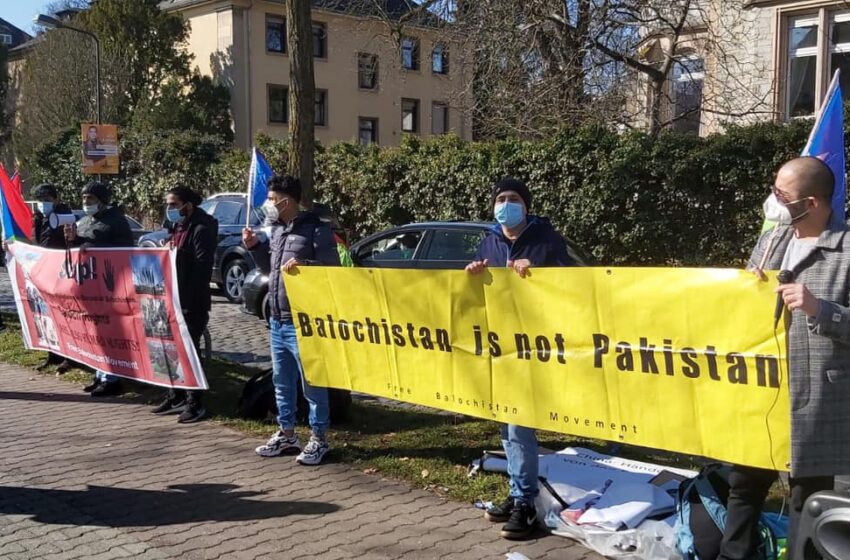
 The Free Balochistan Movement Germany Branch organized a protest in front of the Pakistani Consulate in Frankfurt, Germany on Monday, 1st March.


The demonstration was organized to express solidarity with the families of the state victims of enforced disappearance in Occupied Balochistan and to inform the international community about Pakistan and Iran’s atrocities against Baloch people.

Demonstrators held banners and placards with various slogans. They also chanted slogans against Pakistani and Iranian atrocities. Sadiq Baloch, Moin Azizi, Naveed Baloch and others addressed the protesters.

Moin Azizi said that the Baloch nation is living on their historical land. Baloch are neither Pakistani nor Iranian but Baloch have had their separate national identity for thousands of years.

He further said that Pakistan and Iran are occupying the Baloch homeland, to end this occupation and achieve their national independence, the Baloch people have been engaged in a continuous process of national resistance since the date of occupation of their sovereign country.

We have sacrificed many precious lives in this national resistance which continues to this day. The legacy of resistance is being passed down from one generation to the other. He said it was sad to notice that some people were wrongly justifying the abominable act of Iranian occupation and annihilation of Baloch national identity by Iran. ‘This silence will be noted down as crime in the history of Baloch struggle,’ he added.

Today we desperately need to unite and move forward so that we can tell the world that Pakistan and Iran are illegally occupying our land and that the Baloch are waging a national resistance to end this occupation for which the responsible Institutions the world need to play their part.

Sadiq Baloch said that our homeland – Balochistan – was divided by Britain and we were handed over to bloodthirsty wolves. Despite being aware of the historical facts on our massacre, it is silent, which is encouraging the occupying armies to expand their atrocities in occupied Balochistan with immunity.

He further said that the recent Baloch national liberation movement has been going on for the last two decades and to suppress it the Pakistani army has forcibly disappeared thousands of Baloch men, women, children and the elderly. ‘Our mother and sister are have been peacefully protesting for their release of their loved in across Balochistan but the Pakistan institution including judiciary have failed to trace the disappeared Baloch.’

He added that the international human rights organisations including the UN are aware of the Iranian and Pakistani state crimes against the Baloch people but they are silent which beyond understanding.

Sadiq Baloch said that Pakistan and Iran have proved to be irresponsible states in the region where human rights are of no importance to them.

https://balochwarna.com/2021/03/02/germany-pakistan-and-iran-are-a-threat-to-regional-and-world-peace-fbm/

2 more foreign cricketers positive for virus in Pakistan

Two more foreign cricketers and one staffer tested positive for the coronavirus in the Pakistan Super League on Tuesday.
One unnamed player was from Islamabad United, while the other two’s names and teams were not identified by Pakistan Cricket Board media and communications director Sami Ul Hasan.
They bring to four the number of known infections in the league after Australian legspinner Fawad Ahmed tested positive on Saturday. His Islamabad side had its scheduled game against Quetta Gladiators on Monday postponed to Tuesday.
Hasan said that game will go ahead, and the league will continue with testing every three days. Spectators will also continue to be allowed.
All four people who tested positive are in 10-day isolation.
https://www.seattletimes.com/sports/2-more-foreign-cricketers-positive-for-virus-in-pakistan/