Wednesday, March 3, 2021

'Win for democracy': PDM celebrates Gilani's Senate victory against Hafeez Shaikh as PTI cries foul


Members of the Pakistan Democratic Movement (PDM) celebrated Yousuf Raza Gilani's win in the Senate elections over PTI's Abdul Hafeez Shaikh on Wednesday, while the government decried the win and said that the results would be challenged.

In a blow to the government, the joint opposition candidate Gilani won the hotly contested general seat from Islamabad, beating Shaikh. Gilani secured 169 votes while Shaikh bagged 164 votes.

PPP chairman Bilawal Bhutto-Zardari took to Twitter with a succinct "Democracy is the best revenge", adding: "Jiye Bhutto."

He thanked the PDM leadership and said that Gilani's win was a win for all democratic forces in Pakistan. "This puppet government has lost from its own parliament and the people of Pakistan have won."

"[Prime Minister] Imran Khan should resign, this is not only the opposition's demand but of the government's own members," claimed Bilawal.

Gilani thanked PDM leaders and said the movement had been successful in securing the coveted Islamabad seat.

PML-N supremo Nawaz Sharif called the win "a glorious victory".

PML-N vice president Maryam Nawaz also tweeted her congratulations to Gilani and the opposition alliance's Pakistan Democratic Movement (PDM). She commended the PML-N MNAs for accepting the party supremo Nawaz Sharif's stance and "refusing to bow down and sell out".

"Well done PML-N! The future is yours," said Maryam.

In another post, she claimed that "the fake mandate has been snatched back by the people's representatives".

"Their own people, despite the pressure on them, refused to vote for [...] (Prime Minister) Imran Khan," she said, adding that the premier now had no right to occupy the Prime Minister House.

"Vote chor (thief), leave the chair."

Sindh Education Minister Saeed Ghani congratulated Bilawal on the "historical win" of Gilani and the PDM.

PML-N senior leader Ahsan Iqbal said after Gilani's win, Prime Minister Imran should resign tonight. "Imran and his ministers can't even cast their votes properly; how can they run a country?" he questioned in a tweet.

https://www.dawn.com/news/1610483/win-for-democracy-pdm-celebrates-gilanis-senate-victory-against-hafeez-shaikh-as-pti-cries-foul

Tuesday, March 2, 2021

Video Report - Sarkozy convicted: What does it mean for politics and justice in France?

Video Report - Biden gives remarks on COVID-19 pandemic

Video Report - White House Holds Press Briefing: March 2

Video Report - A deep dive into political polarization in the US

Video Report - Republican lawmaker: Trump is a loser and we will move on

#Pakistan - Foreign policy lessons from Zulfikar Ali Bhutto


 Eric Shahzar 


With PTI steering the foreign policy wheel, little has been achieved but more has been lost at international forums.

With the new United States administration coming into power, many foreign policy experts have started to lay out various scenarios of America’s new South Asian policy as President Biden bids to reverse much of Trump’s foreign policy adventurism and revive the very stalled international liberal order once again. At home, with the PTI government steering Pakistan’s foreign policy trembling wheel since 2018, little has been achieved but more has been lost at international forums. To name a few, in 2019, our Kashmiri narrative became less convincing as India’s draconian military lockdown in the Illegally Indian Occupied Jammu and Kashmir (IIOJK) remains till today and the international community is mostly taciturn. Recently, Foreign Minister Shah Mahmood Qureshi, in a Senate session on foreign policy, questioned what the opposition has done about the Kashmiri cause instead of highlighting the incumbent government’s track record, which matters in today’s strategic political scenario.
Second, the PM, at the eleventh hour, backed out from the historic Kuala Lumpur Summit. This was seen as a major foreign policy blow for the country.
Third, despite bulldozing the FATF bills in the parliament without even consulting the opposition, Pakistan still remains in the task force’s grey list with uncertainty looming large as India’s malicious attempts to undermine Pakistan at global forums remain manifest. Instead of promoting a soft image inside the country, many national security analysts now argue that Pakistan might become a police state with relentless powers given to law enforcement authorities without any checks and balances.

Most importantly, Pakistan, as the only Muslim nuclear-armed country in the world, has lost its leadership role in the Muslim world which was once our pride back in the day. With all of this, what really is the urgent need of the hour is looking back at the real foundations of Pakistan’s foreign policy, which were set by Shaheed Zulfikar Ali Bhutto. Not only did we have a robust and resilient leadership role in the Muslim world but we also stood firm with our stance among the major powers in times of crisis.
Today, illiberal values and undemocratic practices are rampant in the country with political victimisation of political opponents, relentless media censorship, persecution of minorities and demoralising of the parliament’s spirit. Bhutto was a firm advocate of the notion that foreign policy begins at home. Despite the Fall of Dhaka in 1971 — which was indeed a dark chapter in the history of Pakistan — Bhutto strived for civilian supremacy and the revival of the Constitution of Pakistan. It was he who gave us the 1973 Constitution and restored democracy when authoritarianism was looming large in the country. He advocated forming a ‘perfect union’ where all provinces were on the same page, regardless of political differences. The Constitution’s Article 153 gave us the Council of Common Interests (CCI), where the PM sits down with the chief ministers of all provinces every 90 days to discuss matters for the greater good of the country. Bhutto understood that for a constructive and sound foreign policy narrative in a fast-changing world, internal domestic stability was crucial.
Despite intense political pressure from the US and other major powers to halt Pakistan’s nuclear programme, Bhutto remained resilient. He argued: “If India makes an atomic bomb, then we will also do so, even if we have to eat grass, an atom bomb can only be answered by an atom bomb.” The US went to great lengths to halt Pakistan’s nuclear weapons programme, but Bhutto was clearly not having it. In his 1969 book, The Myth of Independence, he wrote that it was “vital for Pakistan to give the greatest possible attention to nuclear technology, rather than allow itself to be deceived by an international treaty limiting this deterrent to the present nuclear powers”.
Today, when Yemen is on fire, instability looms large in the Middle East, and where the Kashmir issue at the backburner, we need a charismatic leader like Bhutto to unite the Muslim world, and one who had also played a pioneering role in the creation of the Organisation of Islamic Cooperation (OIC). We need someone like Bhutto who understood the complexity of the fast-changing international political arena and steered the wheel of Pakistan’s foreign policy with unparallel command, especially in the Muslim world. In his book, The Third World, The Imperative of Unity, Bhutto clearly argued that the Muslim world must unite as a galvanising force in order to survive in the international political arena.
Without a doubt, Bhutto pulled the country back from imminent anarchy and collapse and infused more dynamism into Pakistani society. Former US secretary of state Henry Kissinger in his memoir, Years of Upheaval, described Bhutto as a man of extraordinary abilities, capable of drawing close to any country that served Pakistan’s national interests. His foreign policy anchored resilience, promoted multilateralism, had a commanding seat at every global forum and ensured Pakistan came first — something which is clearly an urgent need in today’s time.
https://tribune.com.pk/story/2286954/foreign-policy-lessons-from-zab

#Pakistan - ECP Decides to Conduct Senate Elections Per Past Practice

Committee cites ‘time constraints’ for not implementing Supreme Court guidance in tomorrow’s polls.
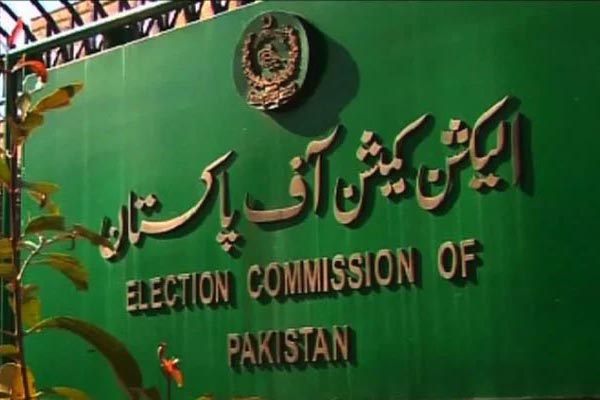
The Election Commission of Pakistan (ECP) on Tuesday issued a statement verifying that the Senate elections scheduled for March 3 (tomorrow) will be conducted “per past practice” as there is insufficient time to implement any of the guidance provided by the Supreme Court. “The commission deliberated on the order/opinion of the Supreme Court passed today [Monday] in presidential reference No. 1/2020 and decided to implement it in letter and spirit,” it said following a meeting of ECP under the chairmanship of Chief Election Commissioner Sikandar Sultan Raja. Noting that the ECP was already taking all possible steps to curtail corruption in the Senate polls, it stressed that a detailed opinion was still awaited.
“The honorable Supreme Court of Pakistan has held that the election to the Senate of Pakistan is under the Constitution and the law, which is through secret ballot,” it said, adding that the short order had stressed that the ECP was “required” to utilize technology to develop a mechanism “for fulfilment of its constitutional duty in terms of Article 218(3) of the Constitution.” Emphasizing that this required the input of various professional/technical organizations, it constituted a committee comprising the special secretary, the director general (I.T.) and the joint provincial election commissioner of Punjab to seek further guidance.
“The committee shall prepare recommendations regarding use of technology in Senate election within a period of four weeks. The committee may also take assistance from NADRA, FIA, Ministry of I.T., and any person from these organizations may step into it or co-opt it for giving better recommendations,” read the statement.
“The commission also decided that due to time constrain, ensuing Senate elections scheduled for March 3, 2021 will be conducted as provided in the Constitution and Law as per past practice,” it added.
On Monday, the Supreme Court issued an order/guidance noting that the upcoming Senate elections would be conducted in accordance with the law and Constitution via secret ballot. It said that the ECP was responsible for protecting the polls from corruption, adding that the secrecy of ballots was “not final.” Speaking to media, members of the federal cabinet claimed the ECP would now be required to print ballots that would encourage transparency by printing barcodes or similar identifiers. They claimed that if the ECP did not do this, it would be committing “contempt of court.”
https://www.newsweekpakistan.com/ecp-decides-to-conduct-senate-elections-per-past-practice/

Pakistan: Punjab Assessment 2021- Analysis - Attacks on religious minorities in #Pakistan

 On January 11, 2021, a four-year-old Christian girl Eshal was abducted, raped and killed in Malkhanwala village in Waras Pura tehsil (revenue unit) of Faisalabad District.

On January 9, 2021, the dead bodies of two Christian girls were found in a sewer near Makhan Colony in the Kahna area of Lahore. They were abducted and killed by Muhammad Mumtaz and Naeem when the girls refused to convert to Islam.

According to partial data compiled by the Institute for Conflict Management (ICM), Punjab has already recorded three incidents of attacks on religious minorities resulting in three deaths in 2021, so far (data till February 14).

During 2020, there was a considerable increase in incidents of the persecution of minorities in comparison to previous year. At least 37 such incidents were recorded, resulting in six deaths and 12 persons injured in Punjab in 2020, as against seven incidents in 2019. No casualty was reported in 2019.

Scores of women from minorities were forcibly converted to Islam. During an online consultation on “Forced conversion complaints and religious freedom” organized on November 28, 2020, by the Center for Social Justice (CSJ), a Pakistan-based organisation, CSJ Director Peter Jacob noted that there had been a rise in incidents of forced conversion of women, and specifically of underage girls from the religious minority communities.

Moreover, minorities are also bearing the brunt of the ‘blasphemy law’. On February 4, 2021, CSJ released data for incidents between 1987 and December 2020, which showed that at least 1,855 people had been charged with offences related to religion, Section 295-B of the Pakistan Penal Code (PPC), (blasphemy against the Holy Quran) was introduced in 1982, and Section 295-C, PPC (desecration against Prophet Muhammad) in 1986. Punjab has had the most blasphemy complaints (76 per cent of all complaints), followed by Sindh (19 per cent).  As of December 2020, Punjab’s prisons were holding 337 prisoners for blasphemy, both those convicted and those awaiting trial. The largest number of inmates are in the Lahore district jail (60). Some of the prominent blasphemy-linked incidents in Punjab in 2020 include:

September 8, 2020: A Sessions Court in Lahore, Punjab, sentenced a Christian man, Asif Pervaiz, to death, after convicting him of sending text messages containing “blasphemous content.” The court order issued by Additional Sessions Judge Mansoor Ahmad Qureshi added that Pervaiz would first serve a three-year prison term for “misusing” his phone to send the derogatory text message, and then “he shall be hanged by his neck till his death.” He was also fined PKR 50,000. Asif Pervaiz has been in custody since 2013, fighting blasphemy charges that were levelled against him by the supervisor of the garment factory he once worked at. The supervisor had accused him of sending derogatory remarks about Prophet Muhammad to him in a text message. Following the sentence, Asif’s lawyer, Siaf-ul-Malook, however, stated, “He [Asif] denied the allegations and said that this man was trying to get him to convert to Islam.”August 23, 2020: Several individuals lodged separate complaints for “blasphemy” against journalist and human rights activist, Marvi Sirmed in different parts of the country, including Lahore (in Police Stations of Ravi Road, Faisal Town and Garden Town) and Jhang (Kotwali Police Station) in Punjab Province; Karachi, in Sindh Province; and Islamabad with the Federal Investigation Agency (FIA). According to the information received, on August 22, 2020, Sirmed allegedly posted a satirical Tweet from her personal account, referring to the many enforced disappearances of human rights defenders and government critics in Balochistan Province, Pakistan.August 13, 2020: Police filed a case under the blasphemy laws against actor Saba Qamar and singer Bilal Saeed, for shooting a music video inside Wazir Khan Mosque in Lahore, Punjab Province. The case was registered at the Akbari Police Station of Lahore on the complaint of advocate Farhat Manzoor. Manzoor filed the complaint following the release of a clip of the video on August 8. Both Qamar and Saeed have published statements apologizing on their respective social media accounts.

Adding more weaponry to the armoury of religious bigots, the Punjab Assembly passed the Punjab Tahaffuz-i-Bunyad-i-Islam Bill 2020 on July 22, 2020. The law makes the publication of objectionable material punishable by a maximum of five years in prison and up to PKR 500,000 fine. In its editorial of July 29, 2020, Dawn noted,

The new law can justifiably be criticised for being superfluous and capable of stoking more religious intolerance, which this country can well do without.

Earlier, on July 24, Human Rights Commission of Pakistan (HRCP) in a release asserted that HRCP was

…appalled at recent developments that are set to further whittle down space for freedom of intellectual thought, enquiry and expression… There is also ample reason to expect that Section 3(f) of the new Act will be used to target religious minorities and sects… The Commission urges the Punjab government to heed its concerns and roll back such measures before they backfire.

Meanwhile, terrorism-linked fatalities continued to decline in Punjab, as in the rest of the country. Fatalities fell from 28 (12 civilians, nine Security Force, SF, personnel and seven terrorists) in 2019 to 16 in 2020 (three civilians and 13 terrorists). At peak, there 392 overall fatalities in Punjab in 2009.  A high of 296 civilian fatalities was recorded in 2010.

However, the growing presence of religious extremists/fundamentalists and the state’s encouragement of such elements, is worrisome. These elements have the potential to provide a breeding ground for more violent and terrorist formations.

Moreover, there are no signs of genuine efforts to tighten the grip against terrorist groups such as the Jamaat-ud-Dawa (JuD), the front organisation of Lashkar-e-Toiba (LeT), and the Jaish-e-Mohammad (JeM) – the ‘foreign oriented’ terrorist groupings that have strong bases in the Province. The leadership elements of these outfits continue to comfortable enjoy state hospitality, despite being convicted in several terrorism-related cases – the convictions primarily forced by international and particularly Financial Action Task Force (FATF) pressure. JuD chief Hafiz Saeed who was officially arrested in July 2019, and should have been servicing his sentence in jail, continues to live at his Johar Town house in Lahore, from where he continues to freely run his terrorist organisation. Most recently, on December 25, 2020, an Anti-Terrorism Court sentenced Hafiz Saeed to 15 years and six months imprisonment, without significant impact on his living conditions. Similarly, JeM chief Masood Azhar, who is facing several cases of terrorist funding, lives in a “safe place” in his native town – Bahawalpur. All proof enough to further establish that the arrests and sentences are superficial and only intended to bring Pakistan out of Financial Action Task Force’s ‘grey list’. 

Meanwhile, the global terrorist Islamic State (Daesh) remains a challenge. On May 17, 2020, Counter Terrorism Department (CTD) personnel killed four Daesh terrorists, while another three managed to escape during a security operation carried out near Azam Chowk in Bahawalpur city (Bahawalpur District). The CTD spokesperson confirmed that the terrorists were planning to carry out an attack at a religious minority’s place of worship.

Former Minister of Interior, Senator Rehman Malik, in his column in The Nation on September 24, 2020, wrote,

I have been watching the fast growth of Daesh in the region and I was the first one who pointed out the presence of ISIS [Islamic State in Iraq and Syria, Islamic State], but successive governments have been refusing to accept its presence just as a policy. In fact, I have always been advocating that Daesh is very much in Pakistan. The Daesh handlers recruited over 80 thousand Pakistanis mostly from south Punjab.

Despite Prime Minister Imran Khan’s false claim of a safe Pakistan for all minorities in ‘Naya Pakistan’, persecution of religious minorities continues in Punjab and across Pakistan. The growing radicalisation which is encouraged by the Government has undermined the achievements reflected in declining terrorism-linked fatalities and incidents. Rising extremism, moreover, threatens future the security in the province and the country. 

https://www.eurasiareview.com/02032021-pakistan-punjab-assessment-2021-analysis/

GERMANY: Pakistan and Iran are a threat to regional and world peace: FBM

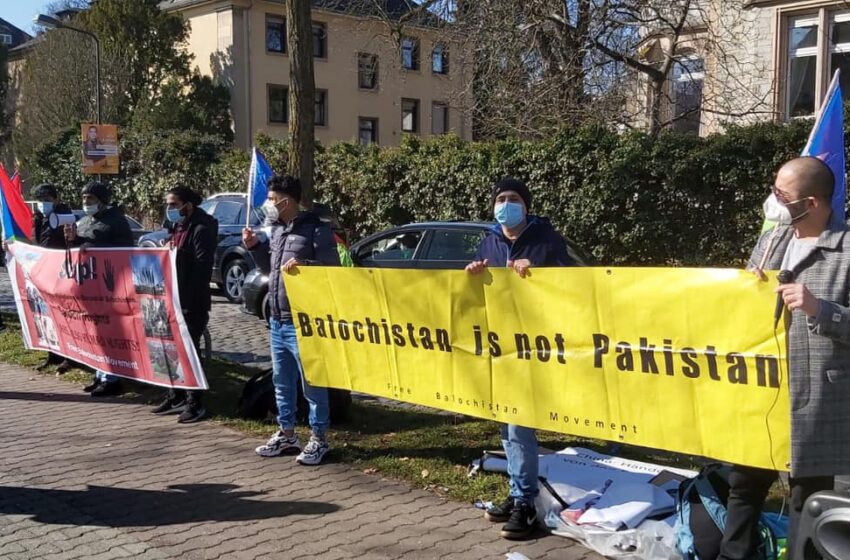
 The Free Balochistan Movement Germany Branch organized a protest in front of the Pakistani Consulate in Frankfurt, Germany on Monday, 1st March.


The demonstration was organized to express solidarity with the families of the state victims of enforced disappearance in Occupied Balochistan and to inform the international community about Pakistan and Iran’s atrocities against Baloch people.

Demonstrators held banners and placards with various slogans. They also chanted slogans against Pakistani and Iranian atrocities. Sadiq Baloch, Moin Azizi, Naveed Baloch and others addressed the protesters.

Moin Azizi said that the Baloch nation is living on their historical land. Baloch are neither Pakistani nor Iranian but Baloch have had their separate national identity for thousands of years.

He further said that Pakistan and Iran are occupying the Baloch homeland, to end this occupation and achieve their national independence, the Baloch people have been engaged in a continuous process of national resistance since the date of occupation of their sovereign country.

We have sacrificed many precious lives in this national resistance which continues to this day. The legacy of resistance is being passed down from one generation to the other. He said it was sad to notice that some people were wrongly justifying the abominable act of Iranian occupation and annihilation of Baloch national identity by Iran. ‘This silence will be noted down as crime in the history of Baloch struggle,’ he added.

Today we desperately need to unite and move forward so that we can tell the world that Pakistan and Iran are illegally occupying our land and that the Baloch are waging a national resistance to end this occupation for which the responsible Institutions the world need to play their part.

Sadiq Baloch said that our homeland – Balochistan – was divided by Britain and we were handed over to bloodthirsty wolves. Despite being aware of the historical facts on our massacre, it is silent, which is encouraging the occupying armies to expand their atrocities in occupied Balochistan with immunity.

He further said that the recent Baloch national liberation movement has been going on for the last two decades and to suppress it the Pakistani army has forcibly disappeared thousands of Baloch men, women, children and the elderly. ‘Our mother and sister are have been peacefully protesting for their release of their loved in across Balochistan but the Pakistan institution including judiciary have failed to trace the disappeared Baloch.’

He added that the international human rights organisations including the UN are aware of the Iranian and Pakistani state crimes against the Baloch people but they are silent which beyond understanding.

Sadiq Baloch said that Pakistan and Iran have proved to be irresponsible states in the region where human rights are of no importance to them.

https://balochwarna.com/2021/03/02/germany-pakistan-and-iran-are-a-threat-to-regional-and-world-peace-fbm/

2 more foreign cricketers positive for virus in Pakistan

Two more foreign cricketers and one staffer tested positive for the coronavirus in the Pakistan Super League on Tuesday.
One unnamed player was from Islamabad United, while the other two’s names and teams were not identified by Pakistan Cricket Board media and communications director Sami Ul Hasan.
They bring to four the number of known infections in the league after Australian legspinner Fawad Ahmed tested positive on Saturday. His Islamabad side had its scheduled game against Quetta Gladiators on Monday postponed to Tuesday.
Hasan said that game will go ahead, and the league will continue with testing every three days. Spectators will also continue to be allowed.
All four people who tested positive are in 10-day isolation.
https://www.seattletimes.com/sports/2-more-foreign-cricketers-positive-for-virus-in-pakistan/

Monday, March 1, 2021

Video Report - #HighRiskPatient #COVID19 #Cancer How are immunocompromised patients dealing with the pandemic? | COVID-19

Video Report - Former President of France Nicolas Sarkozy sentenced to prison

Video Report - Vaccine passports: All you need to know

03/01/21: Press Briefing by Press Secretary Jen Psaki and Alejandro Mayorkas

Video Report - President Biden Meets Virtually with President Andrés Manuel López Obrador

Video - #Kaghan #Glacier #ClimateChange Kaghan: Scary video of glacier breaking and flowing through valley

Video - Former PM Raja Parvaiz Ashraf expresses his views in the NA| 01 March 2021

Video - #PTI #Sindh PTI MPAs From Sindh Refuse To Vote For Party Candidate

#Pakistan - #PPP hails SC's opinion on Senate polls presidential reference

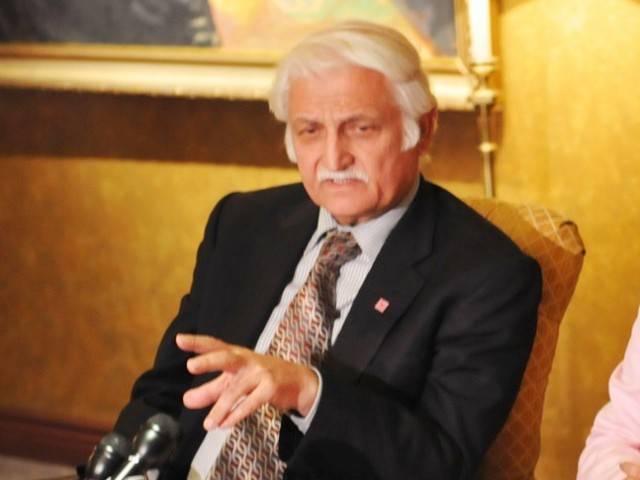
Farhatullah Babar says decision vindicates party's position taken in top court.

The Pakistan People’s Party (PPP) welcomed on Monday the Supreme Court's (SC) opinion on the Senate polls presidential reference on open balloting.

Earlier in the day, the apex court said that the polls for the upper house must be held through a secret ballot according to Article 226 of the Constitution.

In a stinging statement issued by PPP Secretary General Farhatullah Babar, the verdict was hailed as the “triumph of law, justice and Constitutionalism”. It is also a vindication of the position taken by the PPP in the top court on the issue, he said.

The PPP deplored that the Pakistan Tehreek-e-Insaf government for "abusing the office of the president by filing the reference and then in making the president’s office also issue an ordinance even before the verdict was pronounced and the court was already seized of the matter".

Never before has legislation been sought to be done through what has come to be known as ‘anticipatory ordinance’, Babar added.

He said it was "no less deplorable that the president also signed on the dotted line of the advice sent to him in filing reference under the Constitution before the SC as well as in issuing an ‘anticipatory ordinance’ without applying his mind and without asking any questions from the government".

“The office of the president of Pakistan is and ought to be much more than merely an ordinance making workshop,” the PPP stalwart stated.

In its opinion, the top court stated that the ECP was empowered to take all measures to curb corrupt practices under Article 218(3).

The decision was taken with a 4-1 majority. "Secrecy is not absolute," the decision added.

Identifiable ballot papers

Meanwhile, Attorney General of Pakistan (AGP) Khalid Jawed Khan said that the SC had directed for identifiable ballot papers to be used in Senate polls. “We have got what we wanted!” he stated.

The AGP further said that, “Now it is up to the ECP to either print the barcode or the serial number on the ballot paper."

Khan opined that the electoral authority has to now take measures to make the polls transparent in light of the top court’s decision.


SC says Senate elections to be held through secret ballot under Article 226 of Constitution

 Haseeb Bhatti

The Supreme Court on Monday announced its opinion on the presidential reference regarding Senate elections, saying that polls for the upper house of parliament will be held through secret ballot, according to Article 226 of the Constitution.
The 4-1 majority opinion was announced by a five-member larger bench of the Supreme Court, headed by Chief Justice of Pakistan Gulzar Ahmed and including Justice Mushir Alam, Justice Umar Ata Bandial, Justice Ijazul Ahsan and Justice Yahya Afridi.Justice Afridi disagreed with the majority opinion, while observing that "the opinion sought by the Worthy President, Islamic Republic of Pakistan in the instant Reference, is not a question of law within the contemplation of Article 186 of the Constitution of the Islamic Republic of Pakistan, 1973". Therefore, he abstained from giving na opinion on the reference.
The Supreme Court said that Senate elections are held in accordance with the law and the Constitution.
"It is the duty of the Election Commission of Pakistan [...] to ensure that the election is conducted honestly, justly, fairly, and in accordance with law and that corrupt practices are guarded against," it said.
The apex court suggested that the ECP could use latest technology to hold transparent elections. "The Election Commission is required to take all available measures including utilising technologies to fulfill the solemn constitutional duty to ensure that the election is 'conducted honestly, justly, fairly and in accordance with law and that corrupt practices are guarded against'."
It emphasised that all institutions were bound to follow the ECP.
The bench said that the secrecy of the ballot papers, however, was "not final", quoting a decision by the top court on the same in 1967 (Niaz Ahmed case).
It also said that the ECP could "use the latest technology to ensure the holding of transparent elections" under powers granted to it according to Article 218 of the Constitution (related to the formation of election commission).
'Victory for Pakistan'
Talking to reporters outside the Supreme Court, PTI's Senator Faisal Javed termed the opinion a "splendid decision" and a "victory for Pakistan".
He said he was grateful to the court for listening to everyone. "The attorney general's team worked hard and great arguments were done. Such a detailed discussion on the Senate has not happened before."
He added that Prime Minister Imran Khan had made efforts to end corruption from every level, including bringing an end to "bribery, thievery and buying and selling" in the Senate elections.
"The honourable court said secrecy is not absolute. That means it cannot stay [this way] till the Day of Judgement".
Talking further on the court's opinion, he said it had instructed the ECP to work on matters including proportional representation and take measures against corruption in elections.He said that when elections are held through identifiable ballots, no one would dare to sell their vote. "This is a splendid opinion for transparency," he stressed.He said after the court's opinion, the ECP would have to ensure three things: identifiable ballots, proportional representation and ensuring free and transparent elections.Speaking separately to reporters, Minister for Information Shibli Faraz called on the ECP to take "practical steps" to end corruption and secrecy in Senate elections.
He said the primary reason behind the presidential reference was to find out what practical steps can be taken to end corruption in Senate elections.
"Today's decision is a very historic decision which apparently seems [to state] that Senate elections will be held according to Article 226. But at the same time, the honourable judges of the Supreme Court acknowledged that technology should be used to make elections transparent."
The minister requested the ECP to "use technology — in the form of a bar code or a serial number on the ballot paper — to ensure that these [Senate] elections do not become secret as per the SC's opinion".
He also termed the government's decision to file a presidential reference as a "very important and good decision", saying it was a significant milestone in the PTI's struggle.
It would ensure that members elected to the upper house of parliament were done so on merit and their personal and business interests did not affect their efforts for legislation, he added.
Faraz also expressed confidence that Finance Minister Hafeez Sheikh would win the Senate election, saying "people vote for Imran Khan, not the candidate".
'ECP bound to follow SC opinion'
Meanwhile, Attorney General Khalid Javed Khan said the ECP was "constitutionally bound to follow the opinion of [the] SC and implement it for the Senate election scheduled for March 3".
In a statement, he said the opinion of the apex court was "binding" and ignoring or violating it amounts to contempt and misconduct.
The attorney general said the court was of the view that secrecy in Senate elections was not absolute or eternal, thus it was up to the ECP to select the method to be used for the upcoming polls such as printing a bar code or serial number on the ballot paper. "ECP is bound to print such identifiable or traceable ballot papers under Section 122(5) of the Election Act, 2017 [...] No change in law is required to give effect to SC opinion as 122(5) is existing law."
He said if there was any evidence to suggest corruption or rigging in the Senate elections after they were over, then any party head or citizen could "lodge [a] complaint with available material or evidence against any voting MPA/MNA with ECP".
"ECP is bound to investigate and trace the ballot to see whether any corrupt practice occurred," said AG Khan, adding if it did not, the complainant could go to court or tribunal to take up the issue.
The court had reserved its opinion on Saturday.
Attorney General Khalid Jawed Khan had on Dec 23, 2020, moved the 11-page reference under Article 186 of the Constitution relating to the advisory jurisdiction of the Supreme Court. The president had sought the answer to the question of whether or not the condition of secret ballot under Article 226 of the Constitution applied to the Senate elections. The hearing started on January 4.
Ahead of the announcement, the registrar office had issued notices to the attorney general, chief election commissioner, Senate chairman and speakers of the national and provincial assemblies, advocates general for the four provinces, members of the Election Commission of Pakistan (ECP) and others.
https://www.dawn.com/news/1609941/sc-says-senate-elections-to-be-held-through-secret-ballot-under-article-226-of-constitution

Sunday, February 28, 2021

Video - #TrevorNoah​​ #BritishTookOverIndia​​ #India "How The British Took Over India" - TREVOR NOAH

Video Report - President Biden Delivers Remarks to Workers

Video Report - Dr. Fauci on US case count: This is what history tells us

Video Report - Germany tightens Covid controls at French border over variants

Opinion: The Era of Vaccine Diplomacy Is Here

The coronavirus threat is global. So is the remedy.

It is only natural that the American government and the American people have focused on getting coronavirus vaccines to as many of its people as possible, with the most vulnerable first in line. But as the pace of domestic vaccination accelerates, two facts are worth bearing in mind.
One is that the pandemic will not be vanquished anywhere until it is vanquished everywhere. Several known coronavirus variants are making their way around the world, and epidemiologists know more will evolve so long as the virus continues to spread, potentially challenging the efficacy of existing vaccines. South Africa, for example, halted use of the Oxford-AstraZeneca vaccine when it showed “disappointing” results against a new, more contagious variant of the virus that has made landfall in the United States.
The second fact is that while more than 45 million Americans, nearly 14 percent of the U.S. population, have received at least one dose of vaccine, and most high-income countries have launched their own vaccination programs, the Think Global Health project of the Council on Foreign Relations estimates that only 7 percent of low-income countries had vaccinated anyone at all as of Feb. 18.
That is a yawning gap. Dr. Tedros Adhanom Ghebreyesus, the director general of the World Health Organization, has correctly described it as “another brick in the wall of inequality between the world’s haves and have-nots.”
The good news is that the gap is finally being addressed. Last week, a cargo plane landed in Ghana with 600,000 doses of vaccine developed in Britain and manufactured in India, the start of a program to deliver at least 1.3 billion shots to 92 low- and middle-income countries this year through Covax, an international effort backed by the World Health Organization.
The effort has had a rocky start. Under the Trump administration, the United States pulled out of the W.H.O. altogether, and along with other wealthy nations it grabbed what vaccine it could for itself. But the Biden administration has moved quickly to rejoin the W.H.O. and has pledged $4 billion to the global vaccination drive. President Emmanuel Macron of France has further suggested that instead of money, wealthy countries should donate vaccine doses to African governments, sparing Covax the need to compete for existing supplies.
All this is just a start. The 600,000 doses that arrived in Ghana are barely enough to inoculate 1 percent of its population, and Covax will need a lot more money and help. While conquering the virus is the obvious and primary reason for the United States to pitch in, there is also this: It is very much in America’s national interest not to cede a critical “soft power” advantage to autocratic rivals like Russia or China.
Poor countries will remember who came to their assistance, and when. Moscow and Beijing saw an opportunity early on, sending masks and protective gear to hard-hit countries last spring. Now, with low- and middle-income countries clamoring for vaccines, countries from Serbia and Algeria to Brazil and Egypt are getting doses from China and Russia. Serbia, in fact, is ahead of most countries in the European Union in the percentage of its population that has been vaccinated, in part because it’s one of the few countries where both Russian and Chinese vaccines are already available.
China has made sharing its homegrown vaccines a centerpiece of its “Belt and Road Initiative,” a global strategy to invest in more than 70 countries and international organizations. Beijing’s vaccine diplomacy has had its glitches, most notably the lack of verified information about the efficacy of its vaccines, but for many poor countries, China’s vaccines are far better than nothing. Recently, for example, China announced it would donate 300,000 doses to Egypt. Russia claims it has orders for its Sputnik V vaccine from about 20 countries — including America’s southern neighbor, Mexico, which has contracted to receive 7.4 million doses between February and April. After a bout of Covid-19 in late January, President Andrés Manuel López Obrador of Mexico reported that he had received a warm phone call from President Vladimir Putin of Russia and that he had invited Mr. Putin to visit Mexico. At about the same time, the president and vice president of Argentina, Alberto Fernández and Cristina Fernández de Kirchner, both received their first jabs of Sputnik V.
India, among the world’s largest producers of generic medicines, has also moved to develop its own vaccines and to ship them abroad, in part as a counter to China’s outreach. Though India has a population of more than 1.3 billion, it has already sent 3.2 million free doses to neighboring countries and has contracted with a host of governments around the world to supply vaccines. One reason India can do this is that it’s producing more vaccines than it can currently distribute domestically. The U.A.E., which is vaccinating its residents faster than any country except Israel, has also begun donating Chinese-made Sinopharm to countries where it has strategic or commercial interests.
Vaccine diplomacy has drawbacks. Dr. Ghebreyesus of the W.H.O. has complained that too many countries and vaccine manufacturers are focused on making bilateral or selective deals, which pushes the poorest countries to the side. That is the advantage of the W.H.O.’s Covax initiative, and the Biden administration has made a good start in supporting it.
President Biden has assured Americans that most will be vaccinated by the end of summer. He should also assure them that it is very much in their interest, for reasons of morality, common sense and national interest, to be at the forefront of the global war against that vicious little spiked blob.
https://www.nytimes.com/2021/02/28/opinion/covid-vaccine-global.html

Video - Chairman PPP Bilawal Bhutto Zardari addresses media at the residence of Moulana Fazalur Rahman

#senatevote​ سینٹ ووٹ فیصلہ، کیا ہو گا اور کیا ہو سکتا ہے؟

Analysis: #Pakistan - By-election surprises

Shehryar Warraich
ECP annuls Daska by-election, orders re-polling on March 18.
Citing reports of polling-day violence and massive rigging in the NA-75, Daska, by-election, the Election Commission of Pakistan has ordered re-polling in the constituency.
By-elections for three National Assembly and four Provincial Assembly seats were held in the country on February19.
The elections and their results highlight the reality that local politics have overwhelmed the narratives supported by the government and opposition parties.The by-elections have sprung two upsets. The Pakistan Tehreek-i-Insaf (PTI) and the Jamiat Ulema-i-Islam Fazl (JUIF) both lost seats, in Nowshera and Kurram, respectively, that they had won in 2018.However, the violence-riddled NA-75 election remained the talk of the town. The media reported that five polling stations situated in Daska city remained closed for at least five hours; another five were operational for only 30 minutes. Video clips aired by Geo News and other channels clearly showed people involved in firing and physical clashes. The police were unable to stop them and maintain order.
“In our country, the history of by-elections shows that local administrations have always facilitated pro-government candidates, allowing them to commit some illegal acts,” political analyst Suhail Warraich says.
The disappearance of the presiding officers of the 23 polling stations and their apparent involvement in rigging, as a press release of the ECP states, has added another disappointing episode to the litany.All these 23 polling stations are situated in the constituency of Pakistan Muslim League-Quaid (PML-Q) MPA Baoo Muhammad Rizwan. The PML-Q is a coalition partner of the PTI in the Punjab and at the Centre.
In Daska city, the PML-N has maintained a strong hold. This claim is backed by the results of the last three general elections. “The firing in the air and scuffles in several parts of the city appeared to be a part of a plan to sabotage the peaceful atmosphere and deter voters,” Sialkot-based journalist Umer tells The News on Sunday.
“The presiding officers stopped the polling as soon as they heard the shots being fired outside. On every occasion, the shooting went on for a couple of hours. As a result, voters in Daska city, a PML-N stronghold, were unable to cast their votes. In every Provincial Assembly or National Assembly election held in the area since 2008, PML-N candidates have received a majority of votes,” Umer adds. PTI’s NA-75 candidate Ali Asjad Malhi had won the general election in 2002. “Malhi looked desperate to make an impression on his party leadership by winning the election…by any means,” Warraich says. Prime Minister Imran Khan has been stressing that most of the opposition parties and their leaders are out-and-out corrupt. Talking about the electoral process, he and his party have always pleaded for free and fair elections. However, Warraich believes that the incidents occurring during NA-75 polls and afterwards have “damaged PTI’s political image”.
“The NA-75 by-election has put a huge question mark on the capacity of civil administration to hold upcoming local government elections as well as general elections in a peaceful way. Therefore, the strong yet due role of the ECP in identifying those involved in illegal practices in this by-election can only help address these apprehensions,” he adds.
For its part, the Pakistan Peoples Party (PPP) has won two Provincial Assembly and one National Assembly seats in Sindh. PML-N has secured a Provincial Assembly seat each in Khyber Pakhtunkhwa and the Punjab. The JUI-F has retained its Provincial Assembly seat in Pishin, Balochistan, but lost its National Assembly seat in Kurram to the PTI. The by-election results show an increase in PPP’s votes on all seats in Sindh and a considerable decrease in the votes polled by the PTI and its allies. However, the PTI has secured more votes in Kurram, Daska and Wazirabad than in the previous election. However, it has lost a seat in Nowshera that it had won in 2018. Both PML-N and JUI-F have secured more votes than in the general elections. Despite being in the government, the PTI and its allies have won only one of the seven seats. This does not support Prime Minister Imran Khan’s suggestion from his days in opposition that sitting provincial governments tend to win by-elections. The current trend, especially in the KP, Balochistan and the Punjab is different.
“The NA-75 by-election has put a huge question mark on the capacity of civil administration to hold upcoming local government elections as well as general elections in a peaceful way. Therefore, only the strong role of the ECP in identifying all elements involved in illegal practices in this by-election can help put these apprehensions aside,” says analyst Suhail Warraich. The 11-party Pakistan Democratic Movement (PDM) is claiming that voters have rejected the PTI-led coalition and vindicated their narrative against the government.
Nevertheless, in PK-63 Nowshera, some other factors too have played a role in bringing about the defeat of the PTI candidate. “The rift between former KP irrigation minister Liaqat Khattak and his brother Minister for Defence Pervez Khattak; PDM parties’ support to the PML-N candidate, inflation and unemployment,” Nowshera-based journalist Mushtaq Paracha says. According to media reports, Liaqat Khattak wanted the party ticket for his son, Ahad Khattak. When his request was rejected, he set up the Nowshera Kalan Tehreek that supported the PML-N candidate, Ikhtiar Wali, in the by-election against his own party.
This defeat has soured the PTI’s celebrations to mark the winning of the National Assembly seat from Kurram. It also led to the expulsion of Liaqat Khattak from the provincial cabinet.
In NA-221 Tharparkar, the candidate supported by the Grand Democratic Alliance (GDA), the PTI and Makhdoom Shah Mahmood Qureshi’s Ghousia Jamait was unable to give a tough time to the PPP candidate. Qureshi had lost twice in this constituency, in 2013 and 2018 general elections, against the PPP candidate.
Journalist Farooq Soomro believes that three factors have played a role in the comfortable PPP win. “Rift between former Sindh CM Dr Arbab Ghulam Rahim and PTI leadership in Tharparkar; the anti-PTI sentiment; and the development projects launched by the Sindh government that have provided jobs to locals; 172 reverse osmosis plants that supply drinking water to most of the Tharparkar district; health projects that have brought down the infant mortality rate by 40 percent, and the Mithi airport are the major elements. In addition, Bilawal Bhutto has announced plans for a university for Thar,” he says. Traditionally in Sanghar, the political tussle is between the Pakistan Muslim League Functional (PML-F) and the PPP. “However, this time the PTI fielded its candidate for PS 43 by-election. The PML-F nominally supported the PTI candidate but its local leaders Jam Maddad Ali and Imam Din Shaukeen joined the PPP prior to election,” Soomro says.
In Kurram, the PTI managed to win the seat because of its candidate. Historically, personalities with greater tribal connections have played an important role in winning any election in the area. Political researcher Majid Nizami thinks that the selection of Malik Fakhar Zaman Khan Bangash as the PTI candidate from the area won the party one more National Assembly seat.
“In Daska, the turnout surprisingly increased. This shows that the on-going political debate in the country has brought more voters to the polling stations. Moreover, the one-on-one competition between the PML-N and the PTI candidates in Daska and Wazirabad resulted in more votes being cast for both parties,” Nizami says.
Political analysts say that local electoral alliances, political groups, baradaris, tribes, and polling management have always played an important role in by-elections. The current elections should be viewed accordingly. An important aspect of this election is that all major political parties have attracted a significant number of voters. It appears that narratives of the government against the opposition and vice versa have had little impact.
https://www.thenews.com.pk/tns/detail/796037-by-election-surprises

Pakistan expert: Religiosity aiding spike in militancy


By KATHY GANNON

Militant attacks are on the rise in Pakistan amid a growing religiosity that has brought greater intolerance, prompting one expert to voice concern the country could be overwhelmed by religious extremism.

Pakistani authorities are embracing strengthening religious belief among the population to bring the country closer together. But it’s doing just the opposite, creating intolerance and opening up space for a creeping resurgence in militancy, said Mohammad Amir Rana, executive director of the independent Pakistan Institute for Peace Studies.
“Unfortunately, instead of helping to inculcate better ethics and integrity, this phenomenon is encouraging a tunnel vision” that encourages violence, intolerance and hate, he wrote recently in a local newspaper. “Religiosity has begun to define the Pakistani citizenry.”
Militant violence in Pakistan has spiked: In the past week alone, four vocational school instructors who advocated for women’s rights were traveling together when they were gunned down in a Pakistan border region. A Twitter death threat against Nobel laureate Malala Yousafzai attracted an avalanche of trolls. They heaped abuse on the young champion of girls education, who survived a Pakistani Taliban bullet to the head. A couple of men on a motorcycle opened fire on a police check-post not far from the Afghan border killing a young police constable.
In recent weeks, at least a dozen military and paramilitary men have been killed in ambushes, attacks and operations against militant hideouts, mostly in the western border regions.
A military spokesman this week said the rising violence is a response to an aggressive military assault on militant hideouts in regions bordering Afghanistan and the reunification of splintered and deeply violent anti-Pakistan terrorist groups, led by the Tehreek-e-Taliban. The group is driven by a radical religious ideology that espouses violence to enforce its extreme views.
Gen. Babar Ifitkar said the reunified Pakistani Taliban have found a headquarters in eastern Afghanistan. He also accused hostile neighbor India of financing and outfitting a reunified Taliban, providing them with equipment like night vision goggles, improvised explosive devises and small weapons.
India and Pakistan routinely trade allegations that the other is using militants to undermine stability and security at home. Security analyst and fellow at the Center for International Security and Cooperation, Asfandyar Mir, said the reunification of a splintered militancy is dangerous news for Pakistan.
“The reunification of various splinters into the (Tehreek-e-Taliban) central organization is a major development, which makes the group very dangerous,” said Mir.The TTP claimed responsibility for the 2012 shooting of Yousafzai. Its former spokesman, Ehsanullah Ehsan, who mysteriously escaped Pakistan military custody to flee to the country, tweeted a promise that the Taliban would kill her if she returned home.Iftikar, in a briefing of foreign journalists this week, said Pakistani military personnel aided Ehsan’s escape, without elaborating. He said the soldiers involved had been punished and efforts were being made to return Ehsan to custody.
The government reached out to Twitter to shut down Ehsan’s account after he threatened Yousafzai, although the military and government at first suggested it was a fake account.
But Rana, the commentator, said the official silence that greeted the threatening tweet encouraged religious intolerance to echo in Pakistani society unchecked.“The problem is religiosity has very negative expression in Pakistan,” he said in an interview late Friday. “It hasn’t been utilized to promote the positive, inclusive tolerant religion.”Instead, successive Pakistani governments as well as its security establishments have exploited extreme religious ideologies to garner votes, appease political religious groups, or target enemies, he said. The 2018 general elections that brought cricket star-turned-politician Imran Khan to power was mired in allegations of support from the powerful military for hard-line religious groups.
Those groups include the Tehreek-e-Labbaik party, whose single-point agenda is maintaining and propagating the country’s deeply controversial blasphemy law. That law calls for the death penalty for anyone insulting Islam and is most often used to settle disputes. It often targets minorities, mostly Shiite Muslims, who makeup up about 15% of mostly Sunni Pakistan’s 220 million people.
Mir, the analyst, said the rise in militancy has benefited from state policies that have been either supportive or ambivalent toward militancy as well as from sustained exposure of the region to violence. Most notable are the protracted war in neighboring Afghanistan and the simmering tensions between hostile neighbors India and Pakistan, two countries that possess a nuclear weapons’ arsenal.
“More than extreme religious thought, the sustained exposure of the region to political violence, the power of militant organizations in the region, state policy which is either supportive or ambivalent towards various forms of militancy ... and the influence of the politics of Afghanistan incubate militancy in the region,” he said.
Mir and Rana both pointed to the Pakistani government’s failure to draw radical thinkers away from militant organizations, as groups that seemed at least briefly to eschew a violent path have returned to violence and rejoined the TTP.
Iftikar said the military has stepped up assaults on the reunited Pakistani Taliban, pushing the militants to respond, but only targets they can manage, which are soft targets.
But Mir said the reunited militants pose a greater threat.
“With the addition of these powerful units, the TTP has major strength for operations across the former tribal areas, Swat, Baluchistan, and some in Punjab,” he said. “Taken together, they improve TTP’s ability to mount insurgent and mass-casualty attacks.”
https://apnews.com/article/world-news-pakistan-taliban-6267ae43371163a2ef19863db3077796

Pakistan is isolated and talking peace. But India knows this game too well by now

By SESHADRI CHARI
As things stand now, the US, China and Saudi Arabia are pulling in different directions with Pakistan caught in the crossfire.
This is not the first time that Pakistan is proposing a peace plan. The more than 70 years of joint history is replete with instances of doublespeak and treachery by Pakistan — peace proposals followed by ceasefires and then their subsequent violation.
But this time it was the turn of Pakistan Army chief General Qamar Javed Bajwa to sermonise on peace, saying, “Pakistan is committed to the idea of mutual respect and peaceful coexistence….”. Ironically, two days after this homily, the army and the rest of the establishment in Islamabad held the ritual of observing ‘Kashmir Solidarity Day’ by organising anti-India protests.
Bajwa’s short-lived peace offer should also be seen in the background of changing geopolitical realities in the region. While Pakistan was considered part of the larger Islamic coalition but a poorer cousin, recent events have resulted in a drift between Saudi Arabia and Islamabad. The relationship took a hit when in 2015, Pakistan disallowed its military from participating in the Yemen conflict much to Riyadh’s displeasure. Islamabad once again stepped on Saudi toes when Prime Minister Imran Khan walked away disrespectfully and in breach of protocol after meeting the Saudi King during the OIC summit in 2019, without waiting for the translator to interpret the words he had exchanged. In November 2020, the Organisation of Islamic Cooperation (OIC) issued a statement that did not mention Kashmir in spite of Pakistan’s efforts to get the OIC to condemn India’s abrogation of Article 370. In August that same year, Imran Khan ‘accused’ the Saudi-led OIC of inaction over the Kashmir issue and plotted to convene an OIC meeting with the help of Malaysia and Saudi’s bête noire Turkey, bypassing Saudi objection. Saudi Arabia promptly asked Pakistan to repay the $1 billion loan immediately. China came to Pakistan’s rescue.
But China will prefer to wait and watch before advising Pakistan on further moves in the region. It is possible that it was under Chinese prodding that Imran Khan undertook his maiden visit to Iran to play matchmaker between Riyadh and Tehran. The Middle East conflicts are too serious a subject for Pakistan to resolve. The only reason Beijing would have prodded Islamabad is to play a greater role in Afghanistan and the Indian Ocean Region (IOR).
Meanwhile, the White House under President Joe Biden might not appreciate Islamabad rushing in where angels fear to tread. It is clear that Washington wants Iran to “obey and not negotiate”. As it stands now, the US, China and Saudi Arabia are pulling in different directions with Pakistan caught in the crossfire. None of these countries can afford to lose the commercial part of the relationship with India. As for China, it would not want any escalation of the conflict between India and Pakistan that could endanger its assets and strategic calculations in the China-Pakistan Economic Corridor (CPEC) or Belt and Road Initiative (BRI) projects.
With none of these countries wanting to get into the India-Pakistan conflict, it is clear that an isolated Pakistan has no choice but to return to the table for talks, at least for the time being.
Dissent in PoK, and China holding back
It is becoming an uphill task for the Pakistan Army to meet the demands of the Chinese (army and civilian alike) engaged in CPEC projects and the increasing protests in Rawalakot in Pakistan-occupied Kashmir (PoK) against rising inflation. Earlier in 2019, there were protests against the Pakistan Army and local police at several areas of PoK like Muzaffarabad, Tatto Pani, Rawalakot, Poonch, Hajira, and Tatrinote, with people accusing Islamabad of illegally taking over land for CPEC projects. In September 2018, political activists from PoK held a massive protest in front of the United Nations Human Rights Council (UNHRC) office to protest gross human rights violations and exploitation of water resources by Pakistan as part of the CPEC projects.
China seems to be in a tearing hurry to complete the highway project between Chitral and Chakdara, which would be connected to the existing motorway that reaches Rashakai, the nerve centre of the proposed lucrative CPEC Special Economic Zone. More importantly, these projects are linked to the westbound highway linking the Karakoram Highway from Gilgit Baltistan to Chitral district in Khyber Pakhtunkhwa province that straddles the Wakhan Corridor, which borders Afghanistan, China, and Tajikistan. About 12 km from the corridor, China’s People’s Liberation Army (PLA) has reportedly stationed troops at a dedicated military base in Tajikistan and has been conducting regular joint patrols and counterterrorism operations with Afghan security forces to prevent infiltration by militant Uygur groups.
All this irritates the local population and has strong repercussions on political parties that have to tackle people’s ire.
Little wonder then that, every time an election approaches, the political class sets about to make two promises. First is the resolve to send the army back to the barracks. Although this has never happened, the army top brass seems to allow the political parties to have temporary hallucinations about such a possibility. The second promise they make is to undertake efforts to mend fences with India and begin a long life of peace and tranquility. During the 2018 parliamentary election, all the prospective prime ministerial candidates — Imran Khan, Bilawal Bhutto and Shahbaz Sharif — declared their pious intentions to improve relations with India if elected. Ostensibly, such promises must be finding resonance with the masses encouraging them to vote for the right candidate who can engage with New Delhi for peace efforts.
Terms like ‘composite dialogue’, ‘comprehensive dialogue’ and ‘discussing all issues including Kashmir’ have been mentioned at every possible instance on international platforms. While Pakistan unfailingly raises the issue of Kashmir in every peace talk, India repeats the mantra of ‘talks and terror cannot go together’.
India’s brush with various ‘peace’ plans
Successive prime ministers of India have come across peace proposals from Pakistan and also witnessed the brutal terror attacks unleashed by the so-called non-State actors there.
The current phase of composite dialogue between Pakistan and India, which evolved into what is generally referred to as the peace process, began in January 2004 after the summit meeting between then Prime Minister Atal Bihari Vajpayee and then Pakistan President General Pervez Musharraf. The meeting was touted as one that helped thaw the post-Kargil bitter relations between the two countries. But Islamabad did very little to reign in its non-State actors or prevent use of territory under its control to be used as terror launch pads.
In 2006, then Prime Minister Manmohan Singh had said, “We can make borders irrelevant.” But soon after that, another series of terror attacks took place. Again, after Narendra Modi became the prime minister in 2014, the peace process received a new lease of life, only to disappear in the aftermaths of Uri (2016) and Pulwama (2019).
It is unfortunate that peace proposals from the political institutions in Islamabad have never met with success because they do not have the support of the army establishment, which has assumed a significant role in the country’s political ecosystem. Even more unfortunate is the reality that every serious peace proposal has been followed up by some terror attack or aggression by the army and the so-called non-State actors, most of them patronised by the country’s intelligence wing, ISI. It is doubtful if the all-powerful Pakistan military would really appreciate the two countries deciding to live in peace and bury the hatchet. Pakistan has three power centres; the army, the clergy, and the political establishment, which can be said to be the weakest of the three. The people and the civil society seemingly play little to no role in the decision-making process or overall functioning of the country. One can come across a number of anecdotal evidence highlighting the aspirations and hopes of peace nurtured by the people of Pakistan since the tragic Partition.
Pakistan is a perennial concern for India and one of the biggest impediments to peace and progress in the region. New Delhi must keep all the options for peace talks open but never lower its guard lest it is caught unawares again with yet another terror attack.
https://theprint.in/opinion/pakistan-is-isolated-and-talking-peace-but-india-knows-this-game-too-well-by-now/607747/