Monday, January 25, 2021

It's Bakhtawar's wedding week - Here comes the bride and weeklong wedding festivities. — these are all the festivities planned starting tomorrow

Around 300 guests are expected at the baraat function on Jan 30 due to Covid-19.

Bakhtawar Bhutto-Zardari, who was engaged to the son of a US-based businessman in November 2020, is set to tie the knot with him later this month.

Weeklong functions have been planned for the wedding of the daughter of former prime minister Benazir Bhutto and former president Asif Ali Zardari.According to PPP sources and spokesperson, Bakhtawar's nikah with her fiancé Mahmood Chaudhry would be held on January 29 and the function of baraat would take place the next day (Jan 30).

“Before these two functions, a milad will be organised on Jan 24 and a mehndi ceremony will take place on 27th,” said a source privy to the details of the ceremonies.

Meanwhile, a brief statement issued by Bilawal House said that some 300 guests were expected at the main function — baraat — on Jan 30 considering the arrangements under the standard operating procedures due to Covid-19 precautions.

The spokesman for Bilawal House also confirmed that all functions would be held in Karachi.

In a simple November 2020 engagement ceremony, the couple exchanged rings amid celebratory shouts and claps from the guests, who included a few senior politicians, PPP leaders, business giants, real estate tycoons, prominent lawyers, some legislators and close relatives at Bilawal House.

PPP Chairperson Bilawal Bhutto-Zardari, who was in self-isolation after testing positive for Covid-19 that time, had joined the engagement ceremony through video link.

There was plenty of conjecture surrounding Bakhtawar's engagement dress and when she uploaded her engagement portrait with her fiancé, under a glorious pink bougainvillea tree, fashion aficionados were quickly able to discern that her tea pink outfit, with an ornately embroidered shawl draped over it, was the work of designer Nida Azwer.

While we wait to see what else the bride will wear this week, you can read all about the quintessential Nida Azwer custom-made design here. 

https://images.dawn.com/news/1186441

#Pakistan #PPP - Bakhtawar Bhutto humbled by ‘overwhelming birthday love’

  Former PPP chairperson and slain ex-prime minister, Benazir Bhutto's daughter Bakhtawar Bhutto Zardari on Monday said she was “humbled” by all the “overwhelming birthday love” for her 31st birthday.

Taking to Twitter, she thanked her fans and followers for wishing her, joking that she was 30 years old since 2020 didn't count. 


The eldest daughter of the late Benazir Bhutto and former president Asif Ali Zardari, Bakhtawar Bhutto is celebrating her 31st birthday today.
Wishing good fortune for her years ahead, Twitteratis flooded the micro-blogging site with their love for her as 'Happy Birthday BakhtawarBZ' started trending on Twitter.
Born on January 25, 1990 to Benazir and Zardari, Bakhtawar was the first child born to a sitting female prime minister.
Bakhtawar also established her own non-governmental organisation known as 'Save the Flood and Disaster Victims Organization' for early recovery response to those who were impacted by natural calamities in Pakistan.
Being a staunch believer in living life to the fullest, she is an avid adventurist who's fond of paragliding, archery and other adventure sports.
She is getting married on January 29 with Dubai-based businessman, Mahmood Choudhary.
https://www.thenews.com.pk/latest/779584-bakhtawar-bhutto-humbled-by-overwhelming-birthday-love

Sunday, January 24, 2021

#Chile #PortilloFestival #PortilloFest Chile: Portillo Music Festival goes virtual amid COVID-19

Video Report - Sen. Elizabeth Warren: Pandemic's effect on women will have lifetime consequences

Video Report - #COVID19 #SARSCoV2 Coronavirus Update 120: Anticoagulants (Blood Thinners) Improve Hospital Outcomes (Full Dose)

#DailyShow #Trump #Biden The Inauguration of Joe Biden | The Daily Social Distancing Show

#Fauci on What Working for Trump Was Really Like

By Donald G. McNeil Jr.
From denialism to death threats, Dr. Anthony S. Fauci describes a fraught year as an adviser to President Donald J. Trump on the Covid-19 pandemic.

For almost 40 years, Dr. Anthony S. Fauci has held two jobs. As director of the National Institute of Allergy and Infectious Diseases, he has run one of the country’s premier research institutions. But he has also been an adviser to seven presidents, from Ronald Reagan to, now, Joseph R. Biden Jr., called upon whenever a health crisis looms to brief the administration, address the World Health Organization, testify before Congress or meet with the news media.
For Dr. Fauci, 80, the past year has stood out like no other. As the coronavirus ravaged the country, Dr. Fauci’s calm counsel and commitment to hard facts endeared him to millions of Americans. But he also became a villain to millions of others. Trump supporters chanted “Fire Fauci,” and the president mused openly about doing so. He was accused of inventing the virus and of being part of a secret cabal with Bill Gates and George Soros to profit from vaccines. His family received death threats. On Jan. 21, appearing in his first press briefing under the Biden administration, Dr. Fauci described the “liberating feeling” of once again being able to “get up here and talk about what you know — what the evidence, what the science is — and know that’s it, let the science speak.”
In an hourlong conversation with The New York Times over the weekend, Dr. Fauci described some of the difficulties, and the toll, of working with President Donald J. Trump. (This interview has been condensed and edited for clarity.)
When did you first realize things were going wrong between you and President Trump?
It coincided very much with the rapid escalation of cases in the northeastern part of the country, particularly the New York metropolitan area. I would try to express the gravity of the situation, and the response of the president was always leaning toward, “Well, it’s not that bad, right?” And I would say, “Yes, it is that bad.” It was almost a reflex response, trying to coax you to minimize it. Not saying, “I want you to minimize it,” but, “Oh, really, was it that bad?”
And the other thing that made me really concerned was, it was clear that he was getting input from people who were calling him up, I don’t know who, people he knew from business, saying, “Hey, I heard about this drug, isn’t it great?” or, “Boy, this convalescent plasma is really phenomenal.” And I would try to, you know, calmly explain that you find out if something works by doing an appropriate clinical trial; you get the information, you give it a peer review. And he’d say, “Oh, no, no, no, no, no, no, no, this stuff really works.”
He would take just as seriously their opinion — based on no data, just anecdote — that something might really be important. It wasn’t just hydroxychloroquine, it was a variety of alternative-medicine-type approaches. It was always, “A guy called me up, a friend of mine from blah, blah, blah.” That’s when my anxiety started to escalate.
Did you have any problems with him in the first three years of his presidency?
No, he barely knew who I was. The first time I met him was in September 2019, when they asked me to come down to the White House, bring my white coat and stand there as he signed an executive order regarding something about influenza. Then, starting in January, February of 2020, it was an intense involvement going down to the White House very, very frequently.There was a point last February when things changed. Alex Azar was running the White House Coronavirus Task Force, and then suddenly Mike Pence was, and President Trump was at the podium taking the questions and arguing with reporters. What happened?
To be totally honest with you, I don’t know. We were having, you know, the standard kind of scientifically based, public-health-based meetings. Then I started getting anxious that this was not going in the right direction — the anecdotally driven situations, the minimization, the president surrounding himself with people saying things that didn’t make any scientific sense. We would say things like: “This is an outbreak. Infectious diseases run their own course unless one does something to intervene.” And then he would get up and start talking about, “It’s going to go away, it’s magical, it’s going to disappear.”
That’s when it became clear to me: I’m not going to proactively go out and volunteer my contradiction of what the president said. But he would say something that clearly was not correct, and then a reporter would say, “Well, let’s hear from Dr. Fauci.” I would have to get up and say, “No, I’m sorry, I do not think that is the case.” It isn’t like I took any pleasure in contradicting the president of the United States. I have a great deal of respect for the office. But I made a decision that I just had to. Otherwise I would be compromising my own integrity, and be giving a false message to the world. If I didn’t speak up, it would be almost tacit approval that what he was saying was OK.
That’s when I started to get into some trouble. The people around him, his inner circle, were quite upset that I would dare publicly contradict the president. That’s when we started getting into things I felt were unfortunate and somewhat nefarious — namely, allowing Peter Navarro to write an editorial in USA Today saying I’m wrong on most of the things I say. Or to have the White House press office send out a detailed list of things I said that turned out to be not true — all of which were nonsense because they were all true. The very press office that was making decisions as to whether I can go on a TV show or talk to you.
Were you ever taken to the woodshed? Did anyone say, “Stop disagreeing with the president”?
It wasn’t that. After a TV interview or a story in a major newspaper, someone senior, like Mark Meadows, would call me up expressing concern that I was going out of my way to contradict the president.
Did Peter Navarro or Dr. Scott Atlas, another adviser to the president, or anybody else confront you directly?
Oh, no. Peter Navarro, for some strange reason, had a thing about me. He came in one day, and he had a whole list of reprints that were completely nonsense. And he says, “How dare you say that hydroxychloroquine doesn’t work? I have 25 papers here that says it works!” That’s when we had a little bit of sharp words in the Situation Room. After that, I said I didn’t want to be bothered with him. I don’t like to be confronting people. After he wrote that editorial, the papers wanted me to lash back at him. I didn’t want to do that.
Did Mr. Trump himself ever yell at you or say, “What are you doing contradicting me?”
There were a couple of times where I would make a statement that was a pessimistic viewpoint about what direction we were going, and the president would call me up and say, “Hey, why aren’t you more positive? You’ve got to take a positive attitude. Why are you so negativistic? Be more positive.”
Did he say why? People were dying. Someone he knew died early on.
No. I didn’t get into the whys or anything. He would get on the phone and express disappointment in me that I was not being more positive.
He didn’t say, “This is killing the stock market” or “This is killing my chances for re-election”?
No, he didn’t do that kind of specificity. He just expressed disappointment.
When did the death threats start?
Wow. Many, many months ago. In the spring. Hold on — just bear with me. [He consults someone who answers “March 28.”] So there — you got it from the head of my Secret Service detail. That’s when I got protection, so maybe two weeks prior to that.
It was the harassment of my wife, and particularly my children, that upset me more than anything else. They knew where my kids work, where they live. The threats would come directly to my children’s phones, directly to my children’s homes. How the hell did whoever these assholes were get that information? And there was chatter on the internet, people talking to each other, threatening, saying, “Hey, we got to get rid of this guy. What are we going to do about him? He’s hurting the president’s chances.” You know, that kind of right-wing craziness.
Were you ever shot at or confronted?
No, but one day I got a letter in the mail, I opened it up and a puff of powder came all over my face and my chest.
That was very, very disturbing to me and my wife because it was in my office. So I just looked at it all over me and said, “What do I do?” The security detail was there, and they’re very experienced in that. They said, “Don’t move, stay in the room.” And they got the hazmat people. So they came, they sprayed me down and all that.
Yeah. It was a benign nothing. But it was frightening. My wife and my children were more disturbed than I was. I looked at it somewhat fatalistically. It had to be one of three things: A hoax. Or anthrax, which meant I’d have to go on Cipro for a month. Or if it was ricin, I was dead, so bye-bye.
Was Mr. Trump told?
I have no idea.
Did you alert anyone around him? As in, “Hey, you’re going to get me killed?”
No, no. I didn’t. Who was I going to tell? What good would it be to tell anyone? Also, it was under F.B.I. investigation, and they don’t like you to talk about it.
Did anyone close to Mr. Trump ever say, “We were wrong, you were right”?
No. No.
Even after he got so sick that he had to be flown to Walter Reed hospital?
No.
Did the president ever ask you for medical advice?
No. When he was in Walter Reed and he was getting monoclonal antibodies, he said, “Tony, this really just made a big difference. I feel much, much better. This is really good stuff.” I didn’t want to burst his bubble, but I said, “Well, no, this is an N equals 1. You may have been starting to feel better anyway.” [In scientific literature, an experiment with just one subject is described as “n = 1.”] And he said, “Oh, no, no no, absolutely not. This stuff is really good. It just completely turned me around.” So I figured the better part of valor would be not to argue with him.
Was nobody else advising him: “Hey, maybe we ought to pay attention to the science?” Jared Kushner? Mike Pence?
There could have been, behind closed doors, but to my knowledge there was not.
There was one time — we were in the Oval Office sitting in the chairs around the Resolute Desk. We had this interesting relationship, kind of a New York City camaraderie thing where we kind of liked each other in the sense of “Hey, two guys from New York.” And he was holding forth on some particular intervention, and saying something that clearly was not based on any data or evidence. There were a bunch of people there, and he turned to me and said, “Well, Tony, what do you think?” And I said, you know, I think that’s not true at all because I don’t see any evidence to make you think that that’s the case. And he said, “Oh, well,” and then went on to something else.
Then I heard through the grapevine that there were people in the White House who got really surprised, if not offended, that I would dare contradict what the president said in front of everybody. And I was, “Well, he asked me my opinion. What do you want me to say?”
But no confrontation?
No, he was fine. To his credit, he didn’t get upset at all.
Later he joked with crowds about firing you. How did that make you feel?
I thought he wasn’t going to do it. I think that’s the way he is. People said, “Oh, weren’t you horrified that the next day you were going to get a call?” I didn’t think at all that he was going to fire me. It was just, you know, Donald Trump being Donald Trump.
But then he brought in Scott Atlas and in effect made him your replacement.
Well, Scott Atlas was less a replacement for me than a pushing out of Debbie Birx. My day job is that I’m the director of N.I.A.I.D. I would go to the White House, sometimes every day during the intense period, but I was considered an outside person. This is a subtlety that people need to understand. I tried to approach him and say, “Let’s sit down and talk because we obviously have some differences.” His attitude was that he intensively reviews the literature, we may have differences, but he thinks he’s correct. I thought, “OK, fine, I’m not going to invest a lot of time trying to convert this person,” and I just went my own way. But Debbie Birx had to live with this person in the White House every day, so it was much more of a painful situation for her.
Did you ever think about quitting?
Never. Never. Nope.
Weren’t you concerned that you would be blamed for the failures if you didn’t resign?
When people just see you standing up there, they sometimes think you’re being complicit in the distortions emanating from the stage. But I felt that if I stepped down, that would leave a void. Someone’s got to not be afraid to speak out the truth. They would try to play down real problems and have a little happy talk about how things are OK. And I would always say, “Wait a minute, hold it folks, this is serious business.” So there was a joke — a friendly joke, you know — that I was the skunk at the picnic.
Did your wife ever suggest that you quit?

She brought up that I might want to consider it. She’s an incredibly wise person, knows me better than anybody else in the world, obviously. She said, “Do you want to have a conversation to balance the pros and the cons of what it would accomplish?”
And after a conversation, she ultimately agreed with me. I always felt that if I did walk away, the skunk at the picnic would no longer be at the picnic. Even if I wasn’t very effective in changing everybody’s minds, the idea that they knew that nonsense could not be spouted without my pushing back on it, I felt was important. I think in the big picture, I felt it would be better for the country and better for the cause for me to stay, as opposed to walk away.
What are you going to do now? Four more years with President Biden?
I don’t know. Right now I’m not thinking about how many more years. You know, my whole life professionally has been fighting pandemics, from the very early years of H.I.V., influenza, Ebola, Zika or what have you. This is what I do. We are living through a historic pandemic, the likes of which we haven’t seen in 102 years. I think what I bring to the table is something that’s very much value-added. I want to keep doing it until I see us crushing this outbreak, so that people can get back to normality. And even after then, I’ve left some unfinished business. There’s still H.I.V., to which I’ve devoted the overwhelming proportion of my professional life. I want to continue the work that we’re doing on influenza, on H.I.V., on malaria and tuberculosis. As I said, this is what I do.
Let me ask: Do you think Donald Trump cost the country tens or hundreds of thousands of lives?
I can’t comment on that. People always ask that and … making the direct connection that way, it becomes very damning. I just want to stay away from that. Sorry.
https://www.nytimes.com/2021/01/24/health/fauci-trump-covid.html?action=click&module=Spotlight&pgtype=Homepage

Video Report - #NayaDaur Broadsheet Exposed Govt, NAB, Civil-Military Bureaucracy, Lawyers: Najam Sethi

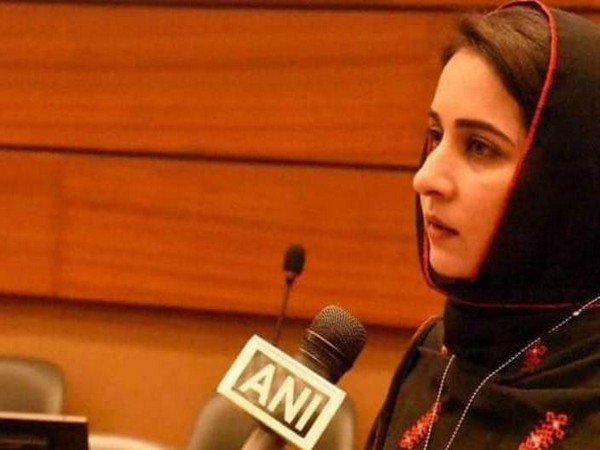
Karima Baloch death: Scholars urge Canada to reconsider diplomatic relations

 Waghmar said that there has been a systematic campaign by the Pakistani state elements to "liquidate any and every Baloch voice."

After the mysterious death of Baloch activist Karima Baloch, Tarek Fatah, an author on Pakistani affairs and scholar Burzine Waghmar slammed the crackdown on dissent in Balochistan and urged the Canadian Government to reconsider diplomatic relations with Pakistan.
Speaking to a Canadian News outlet recently, Waghmar said that there has been a systematic campaign by the Pakistani state elements to "liquidate any and every Baloch voice."
"We have seen nothing official come out of Ottawa on this count. Not even the Pakistani High Commissioner in Ottawa has been called into the foreign ministry for an explication on this. Absence of evidence is not evidence of absence," he said, while speaking on reactions of Karima's death.
He added, "Pakistani intelligence has taken a leaf from Iranian intelligence in targetting their own dissidents abroad... Silence on Ottawa's part is simply not an option. Why has he not been prepared to speak on Pakistan? What is happening in Pakistan's Balochistan is atrocious."
Fatah, who is also leading the Friends For Karima Baloch committee, called for Karima's death to not be considered a suicide stating that "there is no reason to" do so.
"There was no reason for her to commit suicide. She had her whole life ahead of her," he said.
Karima, a prominent Baloch voice, went missing last Sunday and her body was found a day later in Toronto.
The Baloch activists' death has also sparked protests across Europe and North America as the Baloch diaspora took to the streets in Toronto, Berlin and Netherlands calling on the Canadian government to investigate.Baloch had campaigned vigorously against the disappearances and human rights violations in the troubled Balochistan province of Pakistan.Requesting the United Nations to intervene, Baloch Human Rights Council (BHRC) in a letter has said Pakistan has "responded violently to the genuine demands of the Baloch people".
In a letter to UN Secretary-General Antonio Guterres, Naseer Dashti, BHRC executive president, wrote, "Her family and political friends believe that Pakistani secret agencies are involved in the death of Karima Mehrab and have rejected the initial report of the Toronto police." https://www.hindustantimes.com/world-news/karima-baloch-death-scholars-urge-canada-to-reconsider-diplomatic-relations-101611275538351.html

#KarimaBaloch #Pakistani authorities close entryways to Karima Baloch’s hometown

 Pakistani authorities have shut down all communication systems in Balochistan’s Kech area and closed all entry points to Tump, the hometown of slain human rights activist Karima Baloch.

“Pakistani authorities shutdown all communication systems in Kech, Balochistan. All entryways to Tump, Karima Baloch’s hometown, are closed. We don’t know what Pakistan’s security forces are doing to Karima’s body and her family who went to receive the body,” said Lateef Johar Baloch, an activist, in a tweet.


Karima, a prominent Baloch activist who died in Canada in December last year, was slated to get buried on January 25, Balochwarna reported. However, before the corpse could be transported from Karachi to Balochistan, Pakistani authorities took Karima’s body along with her family from the airport, to an “unknown location.”
Sameer Mehrab, brother of slain human rights activist Karima Baloch, lashed out at Pakistani authorities on Sunday after the body of his sister was forcefully taken away while it was being escorted to her hometown in Tump, Balochistan.
“Previously we thought only living Baloch are prone to abductions. Here, this is a new law. Even a Baloch dead woman is not spared from abduction by Pakistan,” Sameer tweeted.
In December 2020, Karima was found dead a day she went missing in Toronto. The activist’s death sparked protests across Europe and North America as the Baloch diaspora took to the streets in Toronto, Berlin and Netherlands calling on the Canadian government to investigate.
Karima had campaigned vigorously against the disappearances and human rights violations in the troubled Balochistan province of Pakistan. Requesting the United Nations to intervene, Baloch Human Rights Council in a letter had said Pakistan has “responded violently to the genuine demands of the Baloch people”.


Recently Pakistan affairs expert Tarek Fatah, and scholar Burzine Waghmar had slammed the crackdown on dissent in Balochistan and urged the Canadian Government to reconsider diplomatic relations with Pakistan.


Speaking to a Canadian News outlet recently, Waghmar said that there has been a systematic campaign by the Pakistani state elements to “liquidate any and every Baloch voice.”
“We have seen nothing official come out of Ottawa on this count. Not even the Pakistani High Commissioner in Ottawa has been called into the foreign ministry for an explication on this. Absence of evidence is not evidence of absence,” he had said.

Fatah, who is also leading the Friends For Karima Baloch committee, called for Karima’s death to not be considered a suicide stating that “there is no reason to” do so. “There was no reason for her to commit suicide. She had her whole life ahead of her,” he had said.

https://www.sundayguardianlive.com/world/pakistani-authorities-close-entryways-to-karima-balochs-hometown

#Pakistan #PDM set to evaluate Bilawal’s ‘in-house’ change formula

By Mian Abrar
Zardari rules out differences between the opposition alliance.
The opposition alliance of Pakistan Democratic Movement (PDM) is all set to discuss the proposal of Pakistan People’s Party (PPP) Chairman Bilawal Bhutto-Zardari to bring in an in-house change in the National Assembly (NA) and remove Prime Minister Imran Khan and Speaker Asad Qaisar through a no-confidence motion.
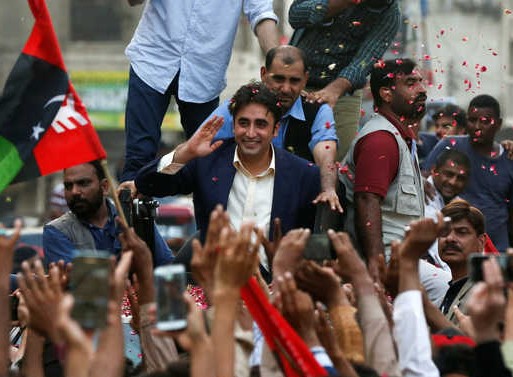
Earlier in Larkana, Bilawal had announced on behalf of the opposition that the PDM would bring a no-confidence motion against PM Imran and the NA speaker, as well as Punjab Chief Minister Usman Buzdar.
However, Ahsan Iqbal had rejected the proposal, asking Bilawal to discuss the matter with the opposition parties. He had also said that the PDM would rather work on planning the long march next month to help topple the Pakistan Tehreek-e-Insaf (PTI) government.
Reliable sources in the PDM have informed Pakistan Today that in wake of the proposal floated by Bilawal, the opposition parties have joined hands and would be discussing the proposal to table a no-confidence motion against Prime Minister Imran.
In this regard, sources said, an important meeting of the parliamentary leaders of the opposition has been convened on Monday, in which consultations will be held on the no-confidence motion against the premier and the other leaders.
While there had been rumours of dissent amid the ranks after Iqbal’s comments, PPP Co-chairman Asif Ali Zardari has insisted that there is no division within the ranks of the 11-party anti-government coalition.Speaking to the secretary-general of the PPP’s Punjab chapter, Chaudhry Manzoor, during a phone call, Zardari said that the opposition parties’ coalition under the PDM banner “is united and will strike the government from all directions”.
“The PDM will use all options, in turn, to get rid of the PTI government,” he said.
“The country is in grave danger and the [incumbent] rulers are likely to make a huge blunder,” the former president said, adding that it is “crucial to send the government packing”.“The incompetence of these inept rulers may lead to a major accident in the country [and therefore] the next few months are crucial for the future of national politics.”Speaking of the ongoing pandemic, the PPP leader — whose son and party chairman Bilawal contracted Covid-19 in November 2020 and recovered a month later — stressed that the Imran administration would “no longer be allowed to hide behind coronavirus”.
“They [government] could neither purchase the coronavirus vaccine nor could they help people during the coronavirus pandemic,” he stated.
Comparing the PTI regime to his own government, Zardari cited the Great Recession and said: “We increased exports from $19 billion to $26 billion despite the 2008 global financial crisis.”
“We doubled the country’s revenue, increased the salaries of employees by 125 per cent. We bumped up government employees’ pensions by 100 per cent,” he added.
Slamming the “incompetent” PTI government, he said that the rulers had “turned all indicators negative”.
“I said in the past that these elected rulers will fall under their own weight. Now that they have crashed, only one last shove is needed.
“Together with the PDM, the PPP will send this failed and incompetent lot home,” he vowed.
Moreover, the opposition leadership has purportedly devised a strategy to deal with the no-confidence motion and the same would be discussed in the meeting.
Sources said that the federal government has also contacted the PDM leadership at the parliamentary level to hold the ongoing NA session in a truly democratic manner.In this regard, Defence Minister Pervez Khattak has contacted the opposition leaders, however, differences remain between the government and the opposition over the proceedings of both the houses of the parliament.The sources said that the opposition would also meet Khattak and seek ‘written guarantees’ for smooth parliamentary proceedings.
These written guarantees would relate on their demands, such as equal time in the National Assembly.
Sources said that the opposition parties are no longer seeking fulfilment of their previous demand of releasing production orders for its imprisoned top leaders, including the opposition leader Shehbaz Sharif, Khursheed Shah and Khawaja Asif.
They said that the opposition has taken a stand that if the written guarantees are not implemented, they will boycott the next NA session and would also raise lack of quorum.
https://www.pakistantoday.com.pk/2021/01/24/pdm-set-to-evaluate-bilawals-in-house-change-formula/

United Nations Officials Warn Staff Against Flying Pakistani Airlines

By Pranjal Pande
The United Nations, and subsidiary agencies, has cautioned its staff against flying with any Pakistani airlines. The UN warning comes after the ongoing pilot license scandal, wherein pilots were flying with fake licenses. The statement names 14 Pakistani carriers, including flag carrier Pakistan International Airlines (PIA).
UN says no
According to an advisory from the United Nations Security Message System, seen in the Times of India, employees have been told not to fly any Pakistan registered carrier. The warning means that UN staff in Pakistan will be unable to fly internationally or domestically with the listed airlines, setting up transport issues in the future.Explaining the reason for the ban, the advisory states, “Due to an ongoing investigation of the CAA (Civil Aviation Authority) Pakistan…due to dubious licenses caution is advised on the use of Pakistan-registered air operators.”
The list of airlines banned includes every single Pakistan-registered carrier, numbering 14 in total. This means PIA, Serene Air, Air Blue, and others will likely no longer carry UN officials. The blow will be particularly impactful for PIA, which previously may have carrier dozens of staff on its international flights.
Arising from the scandal
The UN’s advisory is only the latest in a string of responses to Pakistan’s pilot license scandal. In June, Pakistan’s Aviation Minister Ghulam Sarwar Khan said at the time that possibly 30% of the country’s pilots had fake licenses and weren’t qualified to fly. The news came as a shock to aviation regulators globally and raised critical safety issues. Flag carrier PIA moved quickly to suspend 150 pilots, out of 434 in total, over possibly dubious licenses. This meant nearly 35% of the airline’s pilots were not qualified to fly. Since then, the airline has sacked dozens of pilots and restored some too. However, international regulators have moved quickly to address the situation.
The European Union Air Safety Agency (EASA) banned Pakistan International from flying in EU airspace for at least six months and even recommended suspending the licenses of all Pakistan-qualified pilots. The FAA also banned and downgraded PIA’s rating to Category 2, preventing new routes to the country in the future.
No appeal
In September, PIA opted not to appeal its six-month EU ban and instead focus on continuing to resolve the pilot scandal. Since then, the airline remains banned from the EU for a few more months, which can be extended again. Until Pakistan’s Civil Aviation Authority and PIA both pass stringent safety checks, they are unlikely to return to the EU.
While Pakistani airlines, and domestic flights, might be banned for UN employees, international flying remain intact. Virgin Atlantic began flying to Pakistan in December, while British Airways extended its services. This means international connectivity remains to the country, but carriers like PIA will continue to struggle until issues are resolved.
https://simpleflying.com/un-pakistani-airlines-warn-against/

Saturday, January 23, 2021

Music Video - Guns N' Roses - Paradise City

Music Video - Madonna feat. Justin Timberlake & Timbaland

Music Video - Boney M - Rasputin

Video - Sen. Bernie Sanders Reacts to His Photograph Becoming a Viral Meme

Video - #Colbert #ALateShow #Monologue Pandemic Reset: Biden Moves On Masks and Workplace Safety While Fauci Zings Previous Administration

Video Report - 'America is back and we have big expectations': EU Commission VP Vera Jourova

Video Report - The trillion dollar man: Biden's plan to revive the economy

Video Report - Larry King, legendary talk show host, dies at 87

Video Report - #Coronavirus #NewVariant #Lockdown UK warns new coronavirus variant could be more deadly

Video Report - #Coronavirus #Therapy #Treatment Which treatments are most effective against COVID-19? | COVID-19 Special

Video - Chairman PPP addresses the Inauguration Ceremony of “Larkana Industrial Estate”, Larkana

Video Report - #KhabarSayAagay #NayaDaur #PDM - Bilawal Wants No-Confidence Motion Against Imran Khan. Will PDM Side With Him?

India slams Pakistan over temple vandalism, says Islamabad can’t ‘hide behind’ UN resolution

The Indian ambassador to UN said Pakistan being one of the co-sponsors was a matter of 'great irony' as rights of minorities 'are being emasculated' in the country.India on Thursday slammed Pakistan for being one of the co-sponsors of a United Nations resolution on promoting a culture of peace even as Pakistan authorities remained “mute spectators” as a mob vandalised a historic temple in its Khyber Pakhtunkhwa province.
“The resolution can not be a smokescreen for countries like Pakistan to hide behind,” TS Tirumurti, the Indian ambassador to the United Nations said. The United Nations General Assembly on Thursday adopted a resolution on ‘Promoting a culture of peace and tolerance to safeguard religious sites.
The resolution calls for strengthened international efforts to foster a global dialogue on the promotion of a culture of tolerance and peace at all levels, based on respect for human rights and for the diversity of religions and beliefs.
“It is a matter of great irony that the country where the most recent attack and demolition of a Hindu temple took place in a series of such attacks and where the rights of minorities are being emasculated is one of the co-sponsors of the resolution under the agenda item “Culture of Peace”, Tirumurti said.
Citing the destruction of a Hindu temple in Karak town in the Khyber Pakhtunkhwa province in December 2020, Tirumurti said, “a historic Hindu temple was attacked and set on fire by a mob in the town of Karak in Pakistan with explicit support and connivance with the law enforcement agencies which, stood as mute spectators while the historic temple was being razed.”
India said that in this world of growing terrorism, violent extremism, radicalization and intolerance, religious sites and cultural heritage sites remain vulnerable to terrorist acts, violence and destruction.
Further, Tirumurti pointed to instances in different parts of the world that remained vulnerable to terrorist acts.
“The images of the shattering of the iconic Bamyan Buddha by fundamentalists are still vivid in our memories. The terrorist bombing of the Sikh gurudwara in Afghanistan where 25 Sikh worshipers were killed is yet another example of this vulnerability,” he said.
Trirumurti said India attaches great importance to safeguarding cultural heritage and religious sites. He further said that India also has a strong legal framework for acts of violence or discrimination based on religion including violence targeted towards the places of worship.
India, he said reiterates its call for the application of the principles of objectivity, non-selectivity and impartiality to form the basis of discussions in the United Nations especially on the issue of religion.
“The United Nations including UN Alliance of Civilizations should not take sides and as long as such selectivity exists, the world can never truly foster a culture of peace. We must stand united against the forces that supplant dialogue and peace with hatred and violence, Tirumurti said.
Tirumurti also acknowledged the efforts of Saudi Arabia and Morocco to pilot the delicate negotiations for achieving a consensus text of the draft resolution.
https://theprint.in/world/india-slams-pakistan-over-temple-vandalism-says-islamabad-cant-hide-behind-un-resolution/590171/

It's Bakhtawar's wedding week — these are all the festivities planned starting tomorrow

Around 300 guests are expected at the baraat function on Jan 30 due to Covid-19.
Here comes the bride and weeklong wedding festivities.
Bakhtawar Bhutto-Zardari, who was engaged to the son of a US-based businessman in November 2020, is set to tie the knot with him later this month.Weeklong functions have been planned for the wedding of the daughter of former prime minister Benazir Bhutto and former president Asif Ali Zardari.According to PPP sources and spokesperson, Bakhtawar's nikah with her fiancé Mahmood Chaudhry would be held on January 29 and the function of baraat would take place the next day (Jan 30).
“Before these two functions, a milad will be organised on Jan 24 and a mehndi ceremony will take place on 27th,” said a source privy to the details of the ceremonies.
Meanwhile, a brief statement issued by Bilawal House said that some 300 guests were expected at the main function — baraat — on Jan 30 considering the arrangements under the standard operating procedures due to Covid-19 precautions.
The spokesman for Bilawal House also confirmed that all functions would be held in Karachi.

In a simple November 2020 engagement ceremony, the couple exchanged rings amid celebratory shouts and claps from the guests, who included a few senior politicians, PPP leaders, business giants, real estate tycoons, prominent lawyers, some legislators and close relatives at Bilawal House.

PPP Chairperson Bilawal Bhutto-Zardari, who was in self-isolation after testing positive for Covid-19 that time, had joined the engagement ceremony through video link.

There was plenty of conjecture surrounding Bakhtawar's engagement dress and when she uploaded her engagement portrait with her fiancé, under a glorious pink bougainvillea tree, fashion aficionados were quickly able to discern that her tea pink outfit, with an ornately embroidered shawl draped over it, was the work of designer Nida Azwer.

While we wait to see what else the bride will wear this week, you can read all about the quintessential Nida Azwer custom-made design here.

https://images.dawn.com/news/1186441

Bilawal Bhutto demands foreign funding case against Imran Khan be made public

Will use democratic ways to remove Imran from power, says PPP chairperson.
Pakistan Peoples Party (PPP) chairperson Bilawal Bhutto-Zardari has demanded foreign funding case against Prime Minister Imran be made public, stating that his party will only use constitutional and democratic means to remove the Pakistan Tehreek-e-Insaf (PTI) government.“We want to establish the democratic rule in the country and will only use democratic ways to remove Imran Khan from power,” Bilawal said at a press conference in Karachi on Saturday.During the briefing, the PPP chairperson said that in terms of the country’s economy and its health sector, “Imran Kahn government has failed and this is why the people are suffering. This is why we demand that they step down.”
He also mentioned that anti-corruption body Transparency International says the “most corrupt government” in Pakistan is the PTI government.
Seeking details about the foreign funding case against Imran Khan’s PTI, he said: “There are very serious allegations that PTI is a foreign-funded party. Their own member has raised allegations. But unfortunately, whether it is the court or the election commission, the truth has not been put forth before the people.”
“This is why the Pakistan Democratic Movement (PDM) will protest on January 19 outside the Election Commission of Pakistan and will demand that the case be taken to its conclusion and all the facts of the case be made public,” Bilawal said.
He asserted that the public must be made aware of the countries that “gave so much money to PTI”.
He said he believes “if such a senior member has provided proof of such a serious allegation”, the truth of these allegations should have been put before the public by now, The News International reported.The foreign funding case against PTI in November 2014 was registered by Akbar S Babar, one of the founding members of the party, alleging major financial irregularities in the party’s accounts. The allegations made by Babar included illegal sources of funding, concealment of bank accounts in the country and abroad, money laundering, and using private bank accounts of PTI employees as a front to receive illegal donations from the Middle East, Dawn reported.
The Pakistan Democratic Movement (PDM), an 11-party opposition alliance, has demanded the resignation of the Prime Minister by January 31.
Pakistan Muslim League (Nawaz) (PML-N) Vice President Maryam Nawaz and Bilawal Bhutto-Zardari are among major leaders who have said that they will send the Imran-led government packing and have organised several PDM rallies including those in Peshawar, Gujranwala, Karachi, Quetta, Multan, and Lahore since October 16, 2020.
https://www.tribuneindia.com/news/world/bilawal-bhutto-demands-foreign-funding-case-against-imran-khan-be-made-public-199712

Friday, January 22, 2021

Video Report - #DailyShow #TrevorNoah #Biden Biden’s First Day of Clearing Trump’s Extremely Low Bar | The Daily Social Distancing Show

Video Report - Biden's America: What are the new US president's priorities?

Video Report - #France France's Truth Commission to address colonial rule over Algeria

Video Report - Biden speaks about economic recovery and COVID relief plan

Video Report - Biden Seeks Rapid Economic Aid for Millions With Big Covid Stimulus at Risk

Pashto Music Video - Ghezaal Enayat | Rata Ma Kaway Zari

Video Report - #KhabarSayAagay #NayaDaur #Politics Sheikh Azmat Saeed On Broadsheet Inquiry| Hussain Haroon New PM?| Electricity Price Rises Again

China's illegal 'profiteering' in power sector leads to massive blackouts in Pakistan


China has invested billions in Pakistan's power sector but all the deals made with Pakistan are tainted that contributed to the recent nationwide blackout, which is likely to return in future, reported Asia Times.

Citing a report of the nine-member committee headed by Muhammad Ali, a former chairperson of the Security and Exchange Commission of Pakistan (SECP) of April 2020 FM Shakil, writing an opinion piece in Asia Times said the report made startling revelations about widespread malpractice in the power sector.

The report lifted the lid on the extent of Independent Power Producer (IPP) corruption, including among Chinese units installed under a government-to-government arrangement for China-Pakistan Economic Corridor (CPEC) related operation.

The report traced 100 billion Pakistani rupees (USD 625 million) in annual over-payment to the IPPs and discussed the magnitude of illegal "profiteering" of Chinese energy companies.

Asia Times disclosed that Huaneng Shandong Ruyi Energy (HSR), which set up the 1,320 MW Sahiwal Coal Power Project in Punjab and the Port Qasim Electric Power Company Limited (PQEPCL), had inflated their set-up costs. Both companies were valued at USD 3.8 billion at the time of launching. The Committee found overpayments of 483.64 billion Pakistani rupees (USD 3 billion) to these companies during the last three years.

The report revealed that most of the IPPs, including those set up under the CPEC arrangement, had defied the government policy and made 50 to 70 per cent profits, as against the 15 per cent maximum determined by the regulatory authority with dollar indexation.

China has earmarked USD 30 billion for Pakistan's energy sector through CPEC funds. Several Chinese IPPs have been involved in the construction of as many as 27 power plants in Pakistan with a total installed capacity of 12,000 MW under the CPEC program, reported Asia Times.

These include 14 coal-fired units, six wind power, six hydropower and one solar energy project that have either been operationalised or would start generation over the next few years.

Out of these power plants, 16 are in Sindh, four in Punjab, two in Balochistan, one in Khyber Pakhtunkhwa, two in Pakistan-occupied Kashmir (PoK), and two in Gilgit-Baltistan (PoK).

"Analysts, however, have questioned the viability of these energy projects, primarily because most of the Chinese investments focused on power generation and ignored the distribution of power, which is clearly in a shambles judging by the recent blackout," expressed Shakil.

With an inadequate capacity and rundown transmission system, Pakistan has suffered large and frequent blackouts for decades.

As per the analysts, Chinese-funded power projects, after completion, will mostly utilise existing rundown distribution infrastructure, which is currently making 25 per cent annual losses.

Moreover, transmission and distribution losses, overdue payments, and theft and pilferage of electricity also power up the debts that threaten to keep the lights out in Pakistan, reported Asia Times. 

https://in.news.yahoo.com/chinas-illegal-profiteering-power-sector-102858267.html

Bilawal Bhutto pitches for no-confidence motion to oust Imran Khan-led Pak govt

 By Sajjad Hussain

Pakistan Peoples Party chairman Bilawal Bhutto-Zardari on Friday said the Opposition parties should bring a no-confidence motion against the Prime Minister Imran Khan-led government, as a majority vote in the House would be the most effective method to topple the government. 

Addressing the public at an event in Sindh province''s Larkana city, the Opposition leader said he would talk to other Pakistan Democratic Movement (PDM) leaders on the no-confidence motion as it would be better than continuing their protest movement.

The 11-party PDM, formed in September last year, has demanded the present government resign, alleging the 2018 elections were rigged with the help of the Army to install "puppet" Prime Minister Imran Khan.

“The democratic way to send this incompetent, illegal, unqualified prime minister is through a no-confidence motion. Even 10 rallies will not yield the kind of results as a strategic meeting (opposition leaders) over a cup of tea which is sure to cause the government to worry," Bhutto said.

Bhutto said he would ask the Opposition parties to "strike" in the Parliament.

In the last few months, the PDM has held scores of anti-government rallies in major cities.

Though Bhutto had earlier proposed that PDM leaders must resign en-mass from the  Parliament, the plan has not been executed.

Political pundits have also suggested cracks in the PDM leadership. 

https://www.outlookindia.com/newsscroll/bilawal-bhutto-pitches-for-noconfidence-motion-to-oust-imran-khanled-pak-govt/2015762

We will send home the present incompetent and illegitimate government in a democratic, constitutional and legal manner, Chairman PPP

 Chairman Pakistan Peoples Party (PPP) Bilawal Bhutto Zardari has said that we will send home the present incompetent and illegitimate government in a democratic, constitutional and legal manner, and for attacking it through a no-confidence motion we will convince all the parties in PDM.

Addressing the inauguration ceremony of the Larkana Industrial Estate, the PPP Chairman said that the parties in the PDM would be persuaded that if we have to attack, we have to attack in the assembly in a democratic way. “All the allies in the PDM will be on the same page and even our meetings over a cup of tea are scaring the PTI regime more than rallies,” he stated.

Bilawal Bhutto Zardari said that nowadays PTI ministers are trying to create cracks in the opposition alliance, which is a reflection of their fears as PTI government is afraid of the joint power of attack of all democratic forces.

He said that the federal government of PTI has left the people especially the people of Sindh destitute. But we are continuing to fight for the rights of the people at all levels. The government ministers also believe that the PPP and the Sindh Chief Minister are the obstacles to Imran Khan’s anti-people policies. “PPP leaders are targeted through media trial and NAB, but we know how to counter conspiracies, and we know how to get undemocratic forces out of politics,” he added.

The PPP Chairman said that the PTI government wants to run the economy and the country through intimidation and pointed out that the Sindh government increased tax revenue but did not use sticks for this.

Bilawal Bhutto Zardari said that his party has always served the people under its manifesto adding that he wanted to send a message to the business and industrial communities that like in the rest of the country, the role of PPP is being tarnished in front of them. “We are definitely people-friendly, but that does not mean that we are opponents of industrialisation and business.

He said that establishment of Larkana Industrial Zone would not only benefit the local industries and businesses but also create employment opportunities for the people. “We have to work together in this difficult economic situation. PTI government has not provided a single job of the committed 10 million jobs or 5 million houses instead it has deprived tens of thousands of employment and homes”, he added.

https://www.ppp.org.pk/pr/24323/

Thursday, January 21, 2021

Video - Biden inauguration puts US poet Amanda Gorman on bestseller list

Video - #LateShowLIVE #Inauguration2021 #Monologue President Biden's Joyful Inauguration Day Felt Like A Return To Normalcy

Video - #JoeBiden #COVIDResponse #ExecutiveOrder President Biden speaks on COVID-19 response, signs executive orders

Video Report - Dr. Anthony Fauci gives update on Biden administration vaccine efforts

Video - Amanda Gorman, 'Overjoyed': Hear from poet who stole the show at inauguration

Music Video - Hamari sanson main aj tak - Madam Noor jahan

#Pakistan - Racism and marginalisation of minorities in Punjab school textbooks

Prof Anjum James Paul writes to Prime Minister Imran Khan to denounce a new example of intolerance. A dialogue in a middle school textbook is at the centre of a controversy. But “there are hundreds of examples,” Prof James warns. Students must be taught “humanity, ethics and moral values”.
Racism “is a crime against humanity, it is the enemy of pluralism, peaceful coexistence and harmony in society,” writes Anjum James Paul, president of the Pakistani Minority Teachers Association (PMTA) a letter addressed yesterday to Prime Minister Imran Khan, denouncing a new case of discrimination in school textbooks.
“Pakistan’s foreign policy has always condemned racial discrimination, but unfortunately it still exists in our country,” he adds. “The religious identity of minorities matters as much as that of the majority” and for this reason every form of racism and marginalisation must be “fought”.
In this case, a middle school textbook is at the centre of a controversy, but “there are hundreds of examples,” warns the educator and activist from Faisalabad.
The offending words had a wide echo on social media, sparking anger and pain in the Christian community according to which this attitude is now rooted in a part of the population and is instilled in school to new generations of pupils in Punjab.
On page 155 of an Urdu language middle school textbook (pictured) distributed by the provincial government of Punjab, the following dialogue can be read:
                       Nasir: I have brought a dish of sweets for your guests
                       Girl: But who is that black boy?
                       Nasir: He is our neighbour, Joseph, who is my friend
                       Girl: I don't like to eat anything from black people
Nasir: Oh Saima, what are you talking about. We have to see the inner beauty of a person.  
This is just one of many examples from recent years. Activists, experts and human rights groups have long underlined that racism and confessional hatred must be opposed from an early age and that peace and integration must be promoted in school classrooms, starting with the youngest. In this context, a crucial role is played by school textbooks which, in too many cases, are themselves the first to sow divisions and promote intolerance.
Mariyam Kashif Anthony, a teacher and human rights activist from Karachi, stresses the urgent need to “counter” hate speech in textbooks. “As a teacher my priority is to teach my students about humanity, ethics and moral values ​,” she said.Many associations share such concerns, including the Pakistani National Commission for Justice and Peace (NCJP), which has long been involved in this area.
From 2011 to 2020, Christian experts point out, a climate of hatred seem to have increased and episodes of intolerance have multiplied, despite the appeals and demands for greater attention to the material published for students, especially the youngest. 
 http://www.asianews.it/news-en/Racism-and-marginalisation-of-minorities-in-Punjab-school-textbooks-52128.html

EDITORIAL: #Pakistan - Who’ll answer for the gas crisis?

The gas crisis has been handled so badly that news reports suggest that unhappiness with the prime minister’ special assistant on energy, Nadeem Babar, has reached the federal cabinet itself. At the heart of the problem is the government’s own incompetence since for some reason it did not purchase Liquefied Natural Gas (LNG) during the summer, when the price was low, and did not wake up to the need for it till market volatility pushed up prices very sharply. Now it has only itself to blame since Dubai-based Emirates National Oil Company (ENOC) went back on its commitment and it must now make a rush for new, definitely more expensive, contracts. So, on top of the millions already lost because of the delay, the country must now pay yet more exorbitant fees for no reason at all.

This is not just a case of a couple of deals gone wrong, rather such things not only amount to a lot of suffering for households who are suddenly struggling with no gas, but also drive up production cost for industry and end up harming revenue collection in no small manner. Already the demand-supply situation has forced the petroleum division to recommend discontinuation of natural gas from February 1 to all industrial units using it primarily for power-generation and self-consumption. Therefore the prime minister must initiate an urgent inquiry into the matter; on which will also investigate if Nadeem Babar’s present duties amount to a conflict of interest considering his personal stakes in the private energy business.

Now the long-term LNG deals signed by the previous government, which PTI criticised to no end at the time and later, are the only thing ensuring what little gas that is still flowing in the country. These developments do not speak very highly of the government since it had been warned in advance of a hard winter yet not only did it not prepare for it, it also made the existing situation much worse. These are very genuine concerns and the government must address them. If a part of the official machinery, or some of its advisors, is responsible for causing harm to the treasury as well as industry, then it must be fixed immediately. Anything less would be unbecoming of a party that came to power on promises of fair play and transparency. 

https://dailytimes.com.pk/714890/wholl-answer-for-the-gas-crisis/

#Pakistan journalists face charges for criticizing military

 Criticizing Pakistan's military has become riskier, and journalists are being singled out for flimsy offenses under a beefed-up "electronic crimes" law. DW speaks with one of the journalists targeted.

It was a normal day in September 2020 for Pakistani journalist Asad Ali Toor, who started his morning with a fresh newspaper and a cup of tea. But when Toor turned to page three, he was shocked to see a so-called First Information Report (FIR) had been registered against him.

Toor was being charged with spreading "negative propaganda" against the Pakistani state and its institutions through social media under the Pakistan Electronic Crimes Act 2016 (PECA).
Since it was passed in 2016, PECA has been heavily criticized by civil society in Pakistan as a draconian tool used to muzzle free speech. The act criminalizes speech considered "blasphemous," along with speech that criticizes state institutions, which are colloquially referred in Pakistan as "the establishment."
Authorities are attempting to extend PECA's reach with a new section inserted into Pakistan's penal code stipulating up to two years in prison and a fine of over €2,500 ($3,018) for anyone that "intentionally ridicules, brings into disrepute or defames the Armed Forces of Pakistan" or its members.

PECA targets social media

Toor has been working in Pakistani digital media since 2005, and says he has witnessed the erosion of journalistic freedom and a simultaneous strengthening of censorship with each successive government.

"Traditional media has had to bow down to governments and censorship. Social media is not as censored, so they are now introducing these laws to scare people into silence," Toor told DW.

A week before the FIR was registered against him, Toor was let go from his longtime job at Samaa TV, a major Pakistani broadcaster. The journalist says he had not backed away from his reporting on the government and military.

Toor said the most frustrating part of the three-month judicial process was that he was never told which of his tweets were deemed illegal, or who had filed the FIR.

"I was not told even during the hearings at the High Court in Lahore. It is very frustrating when you are standing trial for a crime you don't understand you committed," Toor added.

In addition to Toor, two other journalists were charged with "spreading hatred" against the state and its institutions in the same week. Free speech activists say the charges are intended as a warning that the state is willing to enforce PECA.

Civil society comes to journalists' defense

In November 2020, Toor was cleared of charges by the Lahore High Court. He wrote on Twitter that the Lahore High Court judge ruled there was not enough evidence, and he gave credit for the dismissal to the overwhelming support he received from lawyers and free speech activists.

Toor's case was taken up by the non-profit Media Matters for Democracy and the Pakistani Bar Council's "Journalists Defence Committee," which provides free legal assistance and services to journalists.

Imaan Zainab Mazari-Hazir, a committee member who worked extensively on the case, told DW that the journalists were targeted because the Pakistani state wishes to avoid the accountability and criticism brought on by free and independent media.

Mazari-Hazir said she worries the PECA's amendment into the penal code will weaponize the act against journalists.

"It will impact freedom of expression and journalism by curtailing this right, and intimidating and punishing those who exercise it," she said.

"We are already not able to discuss many issues that relate to the military and intelligence agencies, including enforced disappearances," she added.

Since PECA was passed, many activists and journalists have been subject to arrests and sedition charges.

However, there has also been a countermovement seen in digital activism that safeguards people's right to freedom of expression. This pushback has allowed for journalists like Toor to challenge claims made against them under the PECA.

Targeting social media

The Pakistani digital rights organization Bolo Bhi keeps track of PECA-related arrests, restrictions and takedowns.

Their most reliable estimates show that from 2006 to 2020, there have been 84 incidences of content blocking and takedown requests.

In 2006, the Pakistan Telecommunication Authority (PTA) blocked more than 1,000 websites over a Supreme Court ruling targeting online "blasphemy."

In the meantime, there have been numerous temporary bans on social media platforms like TikTok, Facebook and YouTube.

It is also estimated that the Pakistani government has allocated an estimated budget of $10 million towards internet filtering tools and blocking systems to control data.

According to Bolo Bhi, there have been a total of 36 "government announcements to crackdown and regulate social media" between 2016 and 2020.

Between 2017 and 2019, the organization has recorded at least 51 incidents during which

legal action was taken against individuals based on their social media posts.

"The Federal Investigation Agency is not transparent and many accusations seem baseless and frivolous. When freedom of speech is criminalized, we cannot have a free, critically thinking society or government," Toor said.

https://www.dw.com/en/pakistan-journalists-military-press-freedom/a-56265949

#Pakistan #PPP - Chairman PPP Bilawal Bhutto Zardari congratulates the newly-elected President of the USA, Mr Joe Biden

Chairman Pakistan Peoples Party Bilawal Bhutto Zardari has congratulated the newly-elected President of the United States of America USA Mr Joe Biden on taking oath as 46th President of the oldest democracy of the world.

In his felicitation message, the PPP Chairman hoped that swearing in of Mr Joe Biden will augur well for the democracies and democratic nations on the map of this planet.

Bilawal Bhutto Zardari further expected that democracies around the world will be strengthened and autocratic, selected and sponsored regimes will find no support to undermine the will and aspirations of the people around the democratic world.

https://www.ppp.org.pk/pr/24321/