Saturday, January 16, 2021

Book Review: In Afghanistan’s Shadow: Baloch Nationalism and Soviet Temptations

 Bahraam Baloch

    The late American scholar Selig .S. Harrison in this book, glimpses briefly on the history of Baloch and
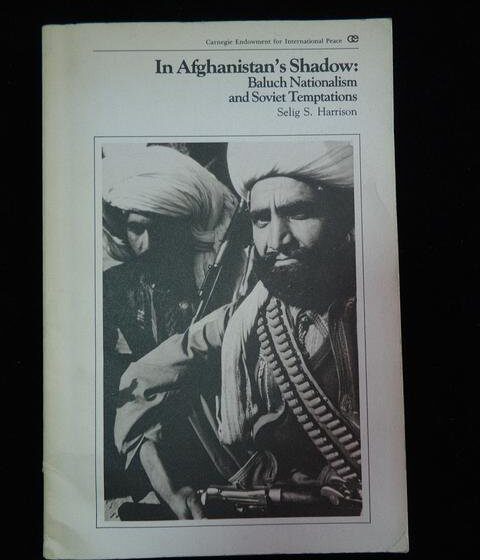

Balochistan. He serves a cryptic view of migrations of Baloch to the then location with multiple examples of the historians, whereas, he is in the self-complacency concerning the other historians based on Baloch migration. However, the book is a crystal-clear focus on the emergence of Baloch nationalism and the waves of insurgencies and Guerrilla warfare in both Eastern and Western parts of Balochistan – Pakistan and Iranian Occupied Balochistan.

    As do others, he references the Chronicles of geology that Baloch were the kindred branches of a tribe that migrated from Aleppo (Syria) to the current location of Asia before Christ. Many historians are in disagreement with this point of view. Broadly, many of them consider the Baloch as the ethnic group evolved from the Semitic Chaldean rulers of Babylon. In contrast to that, some argue that Baloch Arabs descents others believe that they are Arians from Asian minors.

    In obscure conjecture, it is said that the both, Kurds and Baloch, were under the Chaldean rulers. It happened so, that the Kurds headed towards Iraq, Turkey and North-west Persia, and the Baloch to the coastal area of Caspian Sea in 5th to 6th century. But mostly it is believed that Baloch dwelled in the Caspian Sea and the reason behind that is Balochi is linked to the Parthian and Median civilizations.

    Moreover, it is mentioned that Balochi language is a mystery but it is also linked to Indo-European languages which include Farsi (Persian), Pashtu, Balochi and Kurdish.

    Discussing the political unity, it is mentioned that the first unification of Baloch and motherland was held by Mir Chakar Khan Rind, whose approached boundaries of Balochistan start from Makran Belt to Marri area till Shall (Quetta) before the British Raj in 15th to 16th century. It is of no denial that he had the cultivated possession of Multan and South Punjab until 16th century. According to Justice Khudabaksh, he had an army of 4000 men.

 Notwithstanding this, Baloch did not keep a political identity until the establishment of the confederacy by Mir Abdullah Khan from Ahmadzai tribe. His created boundaries spread to Dera Gazi Khan, Kandahar and Bandar Abbas but still, the task was left to a more dissent ruler Mir Naseer Khan who ruled from 1741 for half a century. To his utmost endeavouring, he managed an army of 25000 men with 100 camels and many other necessities of war. Constitutionally, he managed the parliament in a categorized way having lower chambers chosen by tribes and upper chambers of elders serving in an advisory capacity. To be sure, that Mir Naseer Khan held international treaties, such as, a tribute to Nadir Shah for helping him and limitedly once being under the hands of Suzerainty of Ahmad Shah Durrani for eleven years was also a form of a temporary treaty.

    Unfortunately, the Western part of Balochistan did not have a political unity in any way as compared to the Eastern part of Balochistan. However, Dost Mohammad held the confederacy in western Balochistan but it was soon subdued and crushed by Reza Shah Pahlavi with the power of gunship helicopter and heavy artillery. Heartbreakingly, an unbearable Baloch genocide took place under such colonialists.

   Coming back to Eastern part of Balochistan, there was a similar case of colonialism where Nasir Khan’s confederacy collapsed. Many consider the collapse of his confederacy was due to the British “Forward Policy” to Persia in 1871; Afghanistan in 1894 and then to Balochistan.

   The Baloch Nationalism germinated since the subjugation of the Pahlavi Dynasty and Muslim League regime of Mohammad Ali Jinnah. Juxtaposing the differences in Western and Eastern parts of Balochistan, the meticulousness of nationalism is less in Western Balochistan. The reason behind that is Iran curtailed the education and Baloch culture but Pakistan has only simply ‘modernized’ the education but not the culture so far.

   The same nationalistic circumstances turned to Guerrilla warfare in 1948, 1952, 1962 and going to its extremes in 1973-1977 and the currently ongoing phase of the Baloch national struggle for freedom.

    Since the British Raj suppressed the Baloch nationalism and its education, the little exposure of Baloch political consciousness surged in “October Revolution” and the resistance of Mohandas K. Gandhi and Jawaharlal Nehru against British. However, the pro-Soviet activists did not turn to communism but found their roots of the nationalistic question for a revolution and it turned to armed militancy.

    In 1930 great leaders came forward including Abdul Aziz Kurd the founder of (Anjumn-e-Ithad Balochistan) and Yousuf Aziz Magsi with other nationalists formed Kalat National Party. However, it demanded an independent and unified Balochistan but was, lamentably, outlawed in 1939. Many magazines and newspapers published like “Al-Baloch” which in 1933 firstly published the map of “GREATER BALOCHISTAN”.

    During the partition, the Baloch already informed the British Raj that the preceding government would only inherit the New Delhi but not the Whitehall. Because Balochistan and Nepal had direct relations with Whitehall and the other princely states were dealt by New Delhi. In addition to that, when the British Raj forwarded to this area, they signed a treaty with Balochistan’s rulers which read, “The British would respect the sovereignty and independence of Kalat”.

    But, heartrendingly, rather than that internationally agreed treaty, Balochistan was annexed to Pakistan, forcefully. Ghaus Bakhsh Bizenjo firstly resisted being amalgamated to Pakistan.

     The annexation occurred in April 1948 when the army was sent to arrest Khan and coerced him to sign the so-called ‘annexation treaty’. Though he has capitulated, his younger brother Abdul Karim resisted against Pakistan and fled to Afghanistan to seek international support and continue armed resistance against the forcible occupation of Balochistan by Pakistan.

     However, later the Khan and Pakistani government convinced him (under the oath of Holy Quran) to come on the negotiation table for a peaceful solution to Balochistan issue but when he was on his way for negotiations, the Pakistan army confronted and arrested him along with his 102 companions thus violating their pledge on Holy Quran.

    One day after the Martial law the army raided Kalat and ordered the chieftains to handover their guns at a nearby police station to which Nawab Zouroz Khan Zehri, famously known a Babo Nouroz, refuse to obey the order and led his tribe to the mountains and continued resistance.

 Once again the Pakistani army took the oath of Holy Quran and convinced Nawab Nouroz and his companions to opt for a peaceful solution but as usual, Pakistan did not honour its promise and sentenced the Nawab and his comrades to death. Nawab’s sentence was later changed to life imprisonment because of his ‘old’ age but his son and other friends were hanged in Hyderabad jail in 1964. Norouz died in jail a year later.  It is said that one of Nouroz Khan’s colleagues took the Holy Quran as walked to the gallows to be executed. He demanded that since the Pakistani had broken their pledge to Quran hence it should also be hanged along with him.

    After this many leaders planned to form Guerrilla movement against Pakistan. The surplus leader Sher Mohammad Marri later went to the mountains and in 1963 and reportedly commanded 23 Guerrilla camps. They were mostly influenced by Marxist-Leninist ideologies.

    The situation occurred due to the establishing of One-Unit. In December 1964, 500 Parrari attacked the Pakistani army where high casualties occurred on both sides.

Soon after, in 1969 Yaya Khan came to a truce and agreed to withdraw the One-Unit. Thus, Yaya Khan announced a ceasefire and Bhutto agreed to the provincial government so that One-Unit broke in 1970. The government of Pakistan issued a mandate to Balochistan provincial government headed by Governor Ghaus Bakhsh Bizenjo and Chief Minister Sardar Attaullah Mengal.

But again Bhutto dismissed the provincial government on 12 February 1973. In trumped-up charges, Bhutto accused the Balochistan government of receiving support from Iraq and the Soviet Union and had 3000 soviet machine guns and 48000 rounds discovered in Iraq Embassy in Islamabad. One must keep the fact in mind that weapons, if any, were found in Islamabad but the government of Balochistan was dismissed.

     Not only Bhutto had dismissed the Balochistan government but under the pretext of arms recovery but with Bhutto has Prime Minister Pakistan army launched brutal military offensives in Balochistan. In retaliation to Pakistan’s offensives, in early April 1973 after six months Baloch guerrillas began to attack Pakistan army. The army in return started shelling and bombing villages of Marri Baloch people in Kohistan Marri region of Balochistan.

Later, however, when the Baloch parari (Sarmachars) despite being less in number were having an upper hand against Pakistan army, the Shah of Iran sent cobra helicopters and Iranian pilots to rescue the trapped Pakistan forces. Pakistani army Lieutenant General Arbab Jahanzeb acknowledged that the situations were out of control in 1974 in Chamalang and that the Iranian support came handy as its Cobra helicopters killed at least 15,000 Marri Baloch fighters.

    This was the time when thousands of Marri Baloch migrated to Afghanistan and BPLF (Baloch Peoples Liberation Front) was founded, guerrilla fighters were headed by Mir Hazar Khan Marri and other regional commanders who continued to resist Pakistan army in Balochistan. BPLF had founded its monthly “Jabbal” circular.  

    Baba Khair Bakhsh Marri, Sardar Attaullah Mengal and Mir Ghaus Bakhsh Bezenjo who shared common ideology about Balochistan but after their release in 1977 their activities diverged and they parted ways. Bezinjo and Mengal favoured parliamentary politics within the framework of Pakistan but Nawab Khair Bakhsh Marri was not convinced with their approach and favoured armed resistance. He supported the Baloch Peoples Liberation Front (BPLF).

    The nationalistic movement of Baloch Peoples Liberation Front (BPLF) was in progress against Pakistan. Though firstly, as they mentioned in their monthly “Jabbal” manifesto, that they wanted to liberate all the nationalities of Pakistan and clearly said that struggle for western Balochistan is not feasible with the situation of this regime.

At the same time, unarmed political organizations such as BSO (Baloch Student Organisation) were working too in the region. Though later it was divided into two parts. But both continued their struggle and published their monthlies, as, “Girokhk”, “Sangat” and “Baam” these were of BSO and similarly “Pajjar”, “Labzank” these were owned by BSO-Awami.

     The case of nationalism in Iranian occupied Balochistan where the first confederacy held by Dost Mohammad Baloch was defeated, in way of forgery, by Shah of Iran in the year 1928. On the other hand, the first guerrilla fighter Dad Shah emerged as one of the stalwarts of Balochistan independence. Though at first, he was not fighting against Iran for a unified and independent Balochistan he instead did what Robbin Hood had done.  To the prosperity of poor Baloch, he looted the tycoons and distributed the looted wealth to the poor Baloch.

However, later his guerrilla warfare took a new turn and he then continued war for an independent Balochistan. His most attacks were on Persian police and military. Once he attacked a convoy of police resulting in high casualties after ten months of this attack he was martyred. However, before his martyrdom, Iran had put a bounty of $10,000 on him dead or alive. At the time of insurgency, his hideouts were in Ahuran Mountains in Iranian occupied Balochistan.

    After Dad Shah, the Persian colonialists arrested his brother Ahmad Shah and later executed him. Some say Dad Shah’s brother and other family members were arrested by Pakistani forces and handed over to Iran. The execution of Ahmad Shah ignited another wave of resistance lead Jumma Khan Baloch, also known as JK Baloch, who at first took refuge in Damascus, Syria and formed the Balochistan Liberation Front (BLF) in 1964 to wage an armed struggle against Iran.

    Similarly, few unarmed organizations were working for provincial autonomy and demanding the fundamental rights of Baloch people. In Iranian occupied Balochistan, the government under Article 15 of the constitution had banned the Balochi language at Schools, Universities and all other educational centres.

In addition to that Balochi Cultural clothes, magazines, and hence every aspect of the Baloch history and culture were outlawed sans any significant reason. This was seen as Persianisation of the Baloch values.

    Accurately this book in a precise statement talks about the Baloch Nationalism, its emergence, hurdles and impediments, modus operandi, unity, and somewhat the suggestions of further improvements,  in Western and Eastern parts of Balochistan. Apart from that the support of few countries for armed struggle and their political influence is also discussed thoroughly.

https://balochwarna.com/2021/01/15/book-review-in-afghanistans-shadow-baloch-nationalism-and-soviet-temptations/
Free Balochistan Movement to protest against Pakistan’s atrocities

 The Free Balochistan Movement Germany Branch held its general body meeting presided by the Branch Organiser on 13 December 2020 in presence of the majority of FBM members.


According to FBM press release, the Germany Branched decided to hold a protest against Balochistan’s occupation and ongoing human rights violations by the Pakistani army in Balochistan.

The protest will be held outside Pakistan embassy on 25 January in the German capital Berlin.

FBM has invited all Baloch political parties’ activists and human rights organisations to in Berlin and Germany to join the protest.

Earlier the FBM has also announced to organise a webinar on Saturday 16 January where speakers will present their analysis about ‘successful freedom movements and the current Baloch liberation struggle’.
https://balochwarna.com/2021/01/15/free-balochistan-movement-to-protest-against-pakistans-atrocities/

#Pakistan #Baluchistan - Lying Far-off Rural Development Track!

 Sher Jan P. Shohaz

@SheeranRind
The principal goal of rural development is to improve lives in less privileged and backward areas through comprehensive development plans. Despite this, the concept of rural development is void of practical development and progress in Balochistan. Due to the failure of rural development in the province, it has become difficult for the already poverty-stricken province to overcome poverty which is rooted in rural areas. Thus, Kikken, a rural area in the Makran division, lies far off the rural development track too.
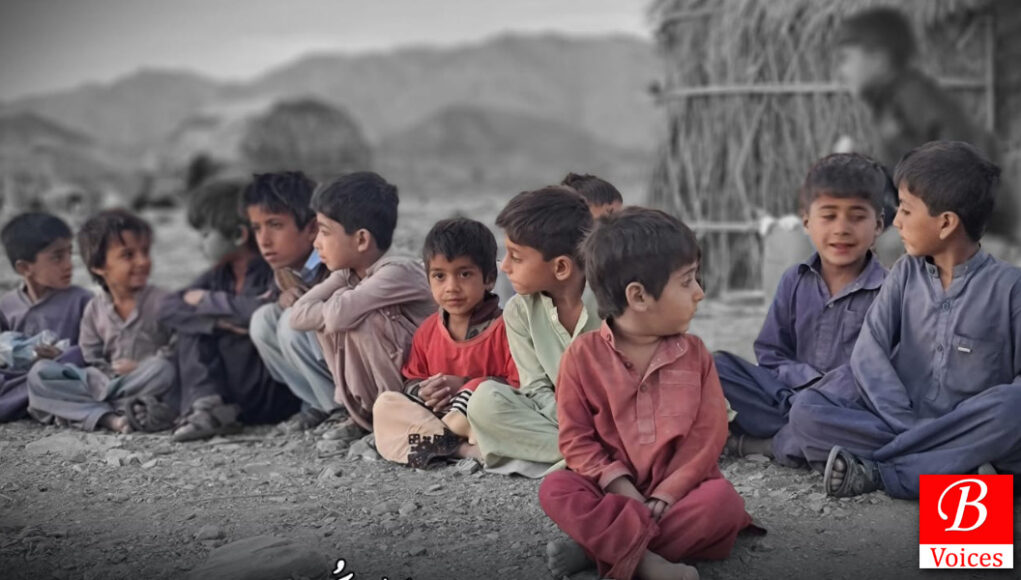
Situated 28 km to the east of Turbat, between Shahrak and Kissak, Kikken is the village left in disarray. The depressed residents of the area never avail of rural development projects. The state of education paints a gloomy picture. located close to Kech (Turbat), one of the coldest cities of Balochistan in winter, the people of the village suffer from extreme cold. Wearing coats and shoes apart, children can be seen wearing torn clothes and walking barefooted.
Unfortunately, from the development plans unleashed by the provincial government, the area remains untapped and undiscovered. In December 2020, a Non-governmental Organisation NGO, the School of All Welfare Organisation, started calling practical and online campaigns after some of their members paid a visit to the village. The campaign aimed to collect some basic stuff for the destitute majority living in the village. The one-week campaign won the trust of the people. Similarly, the campaign facilitated the village’s disadvantaged masses with several gears including blankets, shoes, coats, and clothes. The campaign, too, satiated hungry masses.
Locals of the village are getting their shares. Picture courtesy: Kamanchar Baloch
“We are thankful for this kind of assistance for providing us valuable gears and stuff. We didn’t have coats and blankets to fight against this cold December. We thought we couldn’t survive if the weather gets colder at the end of the day.” Said a resident to Kamanchar Baloch, a professional photographer from Balochistan who was one of the organizers of the campaign on behalf of the organization and visited the village.
According to Kamanchar Baloch, the area’s poverty-stricken population suffers bitterly because of the lack of development in the area. The majority of the children are raised illiterate since they don’t get the school environment in the village. Despite having a primary school, the condition of the education sector is zero. The only teacher who has been hired for the post is rarely seen teaching children, Kamanchar says further.
Moreover, Balochistan remains prone to severe poverty. Being the largest province in terms of geography, Balochistan, containing approximately two-thirds of the country’s coastline which can undoubtedly allow for ample livelihood opportunities in terms of trade and fisheries, is the second-largest province having the highest incidence of multidimensional poverty in Pakistan after FATA. Overall, 71% of the province is considered multi-dimensionally poor whereas 85% of the province is rural and 38% is urban.
An old man from the village thanks campaigners. Picture courtesy: Kamanchar Baloch
As reported by the Pakistan Bureau of Statistics’ Labour Force Statistics for 2017-18, Balochistan has a 45% illiterate population (30% males and 63% females). Illiteracy in rural areas stands at 50%  while 32% is estimated in urban areas.
According to Senator Sanuallah Baloch, a member of the Balochistan Provincial Assembly, the never-ending poverty in the province is due to a lack of basics of growth and pro-poor development principles and caused by the stupefied annual budget. He further points to the dreadful low share of 2019-20 PSDP’s pertinent growth and production-related areas and department with agriculture getting 3.2 percent, fisheries 0.7 percent, livestock 0.6 percent, industry 0.8 percent, minerals 0.2 percent, and power 2.4 percent.
To sum up, the rural areas such as Kikken in the Kech district should avail of people-oriented welfare schemes. A proper rural development authority ought to have been engaged in continuing work in rural areas, for development and having standard life is a constitutional right of the masses residing in any part of the country. To improve public life, proper education, a healthcare system, safe housing conditions, sanitation facilities, and potable water including constructing roads to connect rural areas to urban must be the first priority of the government’s development agenda.
https://balochistanvoices.com/2021/01/lying-far-off-rural-development-track/

Friday, January 15, 2021

Music Video - Shawn Mendes, Camila Cabello - Señorita

Video - #DailyShow #Trump Trump’s History of Condoning White Supremacy | The Daily Social Distancing Show

Video - #Colbert #BernieSanders #SenatorSanders "Congress Is Going To Have To Rise Up And Be Extremely Bold" - Sen. Sanders On America's Way Forward

Video Report - Expert analyzes Biden's $1.9 trillion economic rescue package

Video Report - Furious Pelosi calls out Capitol riot 'punk'

Video Report - #Biden #Coronavirus #COVID19 Coronavirus: Biden unveils "bold" 5-part plan to ramp-up vaccinations

#hazaras #balochistan بلوچستان سے تعلق والے سابق سفیر اشرف جہانگیر قاضی کا سانحہ ھزارہ پر تجزیہ

Controls tighten on Pakistan's media

 W. Tariq


Government using threats and advertising cuts to curb criticism
Pakistan's media is facing unprecedented challenges in terms of both financial viability and censorship, as the ruling Pakistan Tehreek-e-Insaf -- Movement for Justice -- government, which came to power in 2018 on promises of reform, tries to break the media status quo. In the name of fighting corruption, Prime Minister Imran Khan has accused previous governments of awarding advertising contracts based on
favoritism, and withheld payments worth billions of rupees for official advertisements already printed and aired. A drastic reduction in the overall volume of government advertising has forced media groups that rely heavily on state funding to cut jobs and salaries.
In October 2018, at a newspaper where I was working, many reporters were fired and the Islamabad bureau was shut. The paper's editor, clearly distressed by the publisher's decisions, contemplated quitting but said he was in no position to fight a deeply flawed system.
Government curbs on official advertising have widened the disparity between electronic and print media. Pakistan's electronic media regulator has issued 105 licenses for private satellite TV channels since it was formed in 2002, and a large chunk of their earnings come from corporate advertising.
Pakistan's nearly 350 print publications -- including those with an online presence -- largely depend on display and classified advertising from the government. There is also a huge gulf between the high salaries earned by television news anchors and the low wages for print and online journalists.
Yes, previous administrations have exploited print's dependence on state funds, with advertising contracts often awarded to government cronies, and in some cases the owners of "dummy" newspapers, with no actual readership, managed to win contracts. But the current attempts to fix the system have created another set of problems, with many outlets accusing the government of acting at the behest of the powerful military to make journalists fall in line.
This has hurt credible journalism, with newspapers preferring to hire sub-editors who can churn out curated clickbait more attractive to online advertisers, while cutting back on investigative, long-form storytelling.
The ensuing financial pressure has led to self-censorship. Warned of the consequences, most newspapers have been unable to take an independent editorial line as "unofficial" government press advisories are sent to reporters, editors and news directors by WhatsApp messages or over the phone. Other curbs on press freedoms include the Prevention of Electronic Crimes Act passed in 2016, which provides tough online content regulations clearly designed to tighten censorship. Failure to comply can lead to questionable charges or being taken for "a trip to the northern areas" -- a euphemism for torture by Pakistan's security agencies. According to the Freedom Network, a local media watchdog, 27 journalists in Pakistan were arrested and charged in 2020, including eight under the cybercrime laws.
In September, journalist Bilal Farooqi was arrested in Karachi as a result of a "complaint" that he had ridiculed the country's armed forces in a tweet. He was released on bail a few hours later only after his colleagues protested on Twitter, showing that at least social media pressure can work, particularly in cases where the motive is just to intimidate.
That journalism and reporters in Pakistan are struggling, is unmistakable. According to the Pakistan Federal Union of Journalists, at least 7,500 journalists and associated media employees have lost their jobs over the last two years. While almost every organization has scaled back operations, more than two dozen publications including several respected magazines and two TV channels have closed. As print declines, small-scale digital news portals such as Voicepk.net, The Current and Fact Focus are springing up. But most of them have yet to figure out the basics such as financial stability and winning credibility with readers.
As official constraints continue to undermine truth, impartiality and accountability in Pakistan's media, the broader international community must take notice to help prevent the slide into the authoritarianism of neighboring countries where free media is nonexistent.
Local initiatives such as the Pakistan Entrepreneurial Journalism Program launched by the Global Neighborhood for Media Innovation that focuses on creating financially sustainable journalism can also help ensure both the survival and independence of journalism in Pakistan. Reporters and editors also need to free themselves from the stranglehold of the seths -- media moguls -- who prefer making money to nurturing critical journalism. Public opinion remains deeply divided about Pakistan's journalists. Some accuse them of pursuing a Western agenda and refer to them as lifafas -- those who are bribed to write favorable articles. But other people still believe that journalists are performing a valuable public service.
The authorities must stop differentiating between "good" and "bad" journalists, end the arbitrary approach in awarding state advertising, approve impending legislation for the protection of journalists, repeal cyber regulations that threaten online outlets, and encourage big media groups to improve the wages of print journalists.
The press must not be starved into submission or forced to engage in public relation exercises or artificially "positive" reporting. Instead, its goal should be to continue to educate and hold the powers that be to account.
https://asia.nikkei.com/Opinion/Controls-tighten-on-Pakistan-s-media

Pakistan: Worsening Crackdown on Dissent


Minorities, Women Face Increased Risks
Pakistan’s government intensified its crackdown on the media, political opponents, and civil society in 2020, while failing to stem violence against women and minorities, Human Rights Watch said today in its World Report 2021.
Pakistani authorities harassed, and at times, prosecuted human rights defenders and journalists for criticizing government policies. They deployed the National Accountability Bureau, Pakistan’s anti-corruption watchdog, to detain political opponents and critics of the government, including the Jang group editor Mir Shakil-ur-Rehman, who was held without bail for six months.
“Pakistan’s continuing assault on political opponents and free expression put the country on an increasingly dangerous course,” said Brad Adams, Asia director at Human Rights Watch. “Threatening opposition leaders, activists, and journalists who criticize the government is a hallmark of authoritarian rule, not a democracy.”
In the 761-page World Report 2021, its 31st edition, Human Rights Watch reviews human rights practices in more than 100 countries. In his introductory essay, Executive Director Kenneth Roth argues that the incoming United States administration should embed respect for human rights in its domestic and foreign policy in a way that is more likely to survive future US administrations that might be less committed to human rights. Roth emphasizes that even as the Trump administration mostly abandoned the protection of human rights, other governments stepped forward to champion rights. The Biden administration should seek to join, not supplant, this new collective effort.
Violence against Pakistan’s Ahmadiyya religious community worsened in 2020, with at least four Ahmadis killed for alleged incidents of blasphemy. Among them was Tahir Naseem Ahmad, who was charged with blasphemy, imprisoned in 2018, and fatally shot in July by an assailant who had smuggled a gun inside a high-security courtroom in Peshawar. The Pakistani government also failed to amend or repeal blasphemy law provisions that have led to arbitrary arrests and prosecutions, and provide a pretext for violence against religious minorities.
In August, leading women journalists issued a statement condemning the “well-defined and coordinated campaign” of social media attacks, including death and rape threats, against women journalists and commentators whose views and reporting have been critical of the government.
In September, nationwide protests took place to demand police reform after the Lahore police chief made a public statement suggesting that a woman who had been gang-raped on a highway in Punjab was herself at fault because she should not have been traveling “without her husband’s permission” on a motorway late at night.
Pakistan had over 350,000 confirmed cases of Covid-19, with at least 7,000 deaths in 2020. With little testing available, the actual numbers were most likely much higher. Partial or complete lockdowns to prevent contagion had a disproportionate effect on women workers, especially home-based and domestic workers. The Sindh provincial government took some measures to protect workers from layoffs and ensure pay.
Data from domestic violence help lines across Pakistan indicated that cases of domestic violence increased 200 percent from January-March 2020, and further worsened during the Covid-19 lockdowns after March.
https://www.hrw.org/news/2021/01/13/pakistan-worsening-crackdown-dissent

Terrorism in Pakistan has declined, but the underlying roots of extremism remain

Madiha Afzal
@MadihaAfzal
According to the South Asia Terrorism Portal, Pakistan saw 319 terrorism-related
 
incidents in 2020, and 169 associated deaths of civilians. That represents a decline, from a high of nearly 4,000 such incidents in 2013, with over 2,700 civilian deaths (see figure below).

 This fall is largely due to the Pakistani army’s kinetic operations against the Pakistani Taliban — also known as the Tehrik-e-Taliban Pakistan (TTP) — which had been responsible for the majority of deaths of civilians and security forces since 2007, the year it formed officially as an umbrella organization of various militant groups. Over the years, American drone strikes targeted and killed successive TTP leaders, including Baitullah Mehsud in 2009, Hakimullah Mehsud in 2013, and Mullah Fazlullah in 2018. The Pakistani military’s Zarb-e-Azb operation (named for the sword of the Prophet Muhammad) began in 2014 — after a TTP attack on the Karachi airport that June — and increased in intensity after the Peshawar Army Public School attack of December that year, which killed more than 130 schoolchildren. Since 2017, having largely routed the TTP (because of limited information access to the area, there are questions about how many terrorists were killed, versus simply displaced across the Pakistan-Afghanistan border), the military’s operation entered a new phase of “elimination” of militant groups. The operation is called Radd-ul-Fasaad, which literally means elimination of all strife.

Figure: Terrorism-related fatalities in Pakistan

Terrorism-related fatalities in Pakistan
Author’s graph; Source: South Asia Terrorism Portal, https://www.satp.org/datasheet-terrorist-attack/fatalities/pakistan.

While this top-line picture in terms of number of attacks and casualties is clearly a positive one, the TTP has been regrouping since last summer. Various breakaway factions pledged allegiance to the group last July, and there are reports of it making a comeback in at least six districts in Khyber Pakhtunkhwa “with the intimidation of locals, targeted killings, and attacks on security forces.” The TTP is reported to have killed at least 40 security forces between March and September 2020. Official Pakistani sources blamed India as “behind” the revival. On the other end, the Pashtun Tahaffuz Movement, an ethnic protest movement that claims human rights violations against civilians by the Pakistani military during its operations against the Taliban, has alleged (without systematic proof) that “the Taliban are being allowed to return” to the tribal areas in a “secret deal with the military.”

The TTP, of course, maintains ties with the Afghan Taliban and al-Qaida. Some have speculated that the TTP comeback may be linked with the Afghan peace process and Pakistan’s fencing of the border with Afghanistan, both of which threaten the group’s sanctuary in Afghanistan. (A U.N. report from July 2020 stated there were 6,000 Pakistani fighters in Afghanistan, most affiliated with the TTP.) There has also been some speculation that the Afghan peace process might include, at some point, a separate Afghan-Pakistan deal, with Afghanistan denying safe haven to the TTP potentially in return for Pakistan denying sanctuary to the Haqqanis (though it is unclear whether that will be possible, or acceptable to Pakistan). Pakistan has already raised questions about Afghanistan’s sanctuary for the TTP.

The Islamic State in Khorasan (ISIS-K), which operates in Afghanistan and is the Afghan Taliban’s rival, has been responsible for recent attacks in Baluchistan, including of 11 Shia Hazara ara coal miners this January — complicating Pakistan’s already violent sectarian landscape. In discussing this attack, Pakistan’s Prime Minister Imran Khan again blamed India for “backing ISIS” to “spread unrest” in Pakistan. (Pakistan has also long claimed that India uses Afghan soil — on which ISIS-K is based — to destabilize Pakistan.) Anti-India militant groups continue to have a foothold in Pakistan, but Pakistan has begun taking action against the Lashkar-e-Taiba (LeT) in recent years, especially in the wake of its enhanced monitoring by the Financial Action Task Force (FATF) in 2018 for terrorism financing; it is a key goal of Khan’s government to have Pakistan removed from this “grey list,” because it hurts the country’s image and causes it financial harm. Most notably, Pakistan has sentenced Hafiz Saeed, the leader of the LeT, to 11 years in prison for terrorism financing. Another LeT leader, Zaki-ur-Rehman Lakhvi, was also recently sentenced to five years for terrorism financing. The United States has acknowledged these steps, but has argued that Pakistan needs to hold these LeT leaders accountable for more than terrorism financing. Pakistan has taken less action against Jaish-e-Mohammad, the terrorist group responsible for the Pulwama attack of February 2019; its leader, Masood Azhar, is at large. Notably, Pakistan-based militant groups have not been responsible for any violence in Kashmir since the Pulwama attack; in an interview later in 2019, Khan asked Pakistanis not to engage in any violence or “jihad” in India, because it would be blamed on Pakistan and would harm it. That signal seems to have worked.

Placing the blame on India for terrorism in Pakistan is something the country has long done, although not always in as direct a manner as in 2020. Beyond linking the recent ISIS-K attack with India, Pakistan also linked the Baluch Liberation Army’s June 2020 attack on the Karachi Stock Exchange with its eastern neighbor (Pakistan has longed argued India supports the Baluch insurgency). In November, the Pakistani foreign minister, in a splashy press conference, released details of the “dossier” Pakistan has compiled linking India to funding, arming, and training terrorists (including the TTP) against Pakistan. Only the summary — not the full dossier — discussed in that meeting has been made public. It found a receptive audience in a Pakistani population already wary of the Narendra Modi government for its actions in Kashmir and the alarming rise in intolerance toward Muslims in India. The Pakistani government says it has shared the dossier with the U.N. and various governments, but those parties have not publicly acknowledged it.
Pakistan’s strategy toward militant groups has long been two-pronged, as it were: to take overt (and successful) action against groups targeting the Pakistani state and citizenry — the TTP — without taking action against the groups it has considered “strategic assets,” including the Afghan Taliban that have sought sanctuary on its soil and anti-India militants that its intelligence agencies have covertly supported. Underlying this approach has been an effort to hedge bets: regarding the Taliban’s possible influence in Afghanistan after an international withdrawal, and regarding militant proxies who may give Pakistan parity on an otherwise lopsided conventional military footing with India. There are signs some of this is changing. For instance, Pakistan has developed a good relationship with Kabul, especially in recent months, but it also knows its leverage over the Taliban keeps it relevant to the Afghan peace process. The FATF listing has induced Pakistan to take its strictest action to date on militant groups, especially LeT. It also helps that Pakistan is keen to shed an image associated with terrorism. Yet the long-term sustainability of actions Pakistan has taken in response to pressure from FATF remains to be seen; will they be reversed when the FATF grey-listing is lifted? And what happens after the international withdrawal from Afghanistan is complete?
The central issue is not one of state capacity, but an unwillingness of the Pakistani state to paint all jihadist groups with the same brush, to recognize the linkages in ideology that connect them all — and to acknowledge how those ideologies find fodder in Pakistan’s laws, educational curricula, politics, and indeed the very nature of how Pakistan has defined itself, as I detailed in my book. This issue holds for Pakistan’s military, and also across its spectrum of major political parties, as has been demonstrated over the last 12 years with all three of them successively holding power. That lack of recognition of how terrorism and extremism are connected, and of the very roots of extremism, is the crux of the problem: Militant groups can always find recruits, from other groups or from the general population. Non-armed right-wing fundamentalist groups, notably the Tehreek-e-Labbaik Pakistan (TLP), share these ideologies, glorify violence (the TLP, after all, celebrated the murder of Salmaan Taseer for daring to propose reform in Pakistan’s blasphemy laws), and enjoy growing support and sympathy.
For a brief time after the Peshawar school attack of 2014, there was some clarity in recognizing the homegrown nature of the Pakistan Taliban, and the country devised a National Action Plan to tackle extremism and terrorism. While it was incomplete and never acknowledged the deeper roots of extremism, it was a start. But it has gone by the wayside as the Pakistani state has turned back once again to blaming India for terrorism in the country. Meanwhile, the underlying roots of extremism — the country’s curricula, the way its politics works, and its laws, which have all primed its citizenry to buy into and sympathize with the propaganda of extremist groups — remain intact. Pakistan’s claims about India deserve to be heard and investigated, as the international community ignoring them only worsens Pakistan’s sense of victimhood, but that does not absolve the state of its own policies that have fostered extremism and allowed terror groups to proliferate on its soil.
As the Biden administration takes office, it is worth recognizing the effectiveness of the FATF tool, and the limited leverage of the United States to effect real change on security matters in Pakistan, at least initially. Ultimately, Pakistan must be the one to connect the dots linking all the terrorist groups on its soil and their ideologies, acknowledge how it has contributed to extremism within its borders, and decide on addressing the roots of that extremism. I would argue that the best way to encourage it to do so is for America to develop a relationship with the country that is separate from Afghanistan, and separate from India: to deal with Pakistan on its own terms. Meanwhile, security concerns in Pakistan are more or less contained, with the FATF listing and the Pakistani state’s action against the TTP being the primary mechanisms for that control, and the Biden administration need not make them the center of its Pakistan policy.
https://www.brookings.edu/blog/order-from-chaos/2021/01/15/terrorism-in-pakistan-has-declined-but-the-underlying-roots-of-extremism-remain/

Thursday, January 14, 2021

Music Video - #IggyAzalea #INMYDEFENSE Iggy Azalea - F*ck It Up - ft. Kash Doll

Video Report - Biden's Relief Plan Is 'Big and Bold,' Rep. Meeks Says

Video Report - #US #Trump What's the impact of Donald Trump's second impeachment? | Inside Story

Video - President-elect Biden introduces a $1.9 trillion spending plan

Opinion: We Disagree on a Lot. But We Both Think Trump Should Be Convicted.

By Steven G. Calabresi and Norman Eisen 


  There’s no real reason for the Senate not to try him immediately. 

 One of us is a Republican who proudly served in the Reagan administration and voted for Donald Trump in 2016; the other is a Democrat who worked for President Barack Obama and served as a special counsel for the House Judiciary Committee during the first Trump impeachment and trial.
We have considerable political differences. But we firmly share a view that should transcend partisan politics: President Trump must be impeached again and tried as soon as possible in the Senate, either before or after Inauguration Day on Jan 20.
Mr. Trump’s most egregious impeachable offenses are inciting a violent insurrection against his own vice president, the Senate and the House of Representatives, and pressuring Georgia’s secretary of state to “find” enough votes for him to overturn the legitimate election result there.
An article of impeachment encompassing those acts has been introduced in the House. Once Mr. Trump is impeached — the equivalent of an indictment — by the House, Republican senators must join their Democratic colleagues and provide the two-thirds majority required to convict and remove him from office.
The Senate must also disqualify him from ever again holding any public office. That vote after conviction only requires a simple majority of 51.
With the House set to impeach the president on Wednesday, there is no real reason that a full-fledged and scrupulously fair trial cannot begin the very next day in the Senate. This is not a complex case factually. Audio of Mr. Trump’s call to Brad Raffensperger, the Georgia secretary of state, is in the public record. So are the president’s videotaped words inciting his supporters to march on the Capitol. The violence that followed was on television for all to see.
Nor is the law hard to understand. High crimes and misdemeanors, impeachable offenses enumerated in the Constitution, are crimes against American democracy. Mr. Trump’s incitement of an insurrection qualifies, without question, as an impeachable offense.
The Senate’s majority leader, Mitch McConnell, has said that he cannot commence an impeachment trial before Jan. 20, unless all members of the Senate agree to allow it sooner. In fact, as Chuck Schumer, the minority leader, has suggested, in emergency situations, the rules allow him and Mr. McConnell to reconvene the Senate immediately. Removing from power at once a president who has incited an attack on his own government certainly qualifies as an emergency situation.
If Senator McConnell disagrees, the House should still impeach Mr. Trump immediately, and he should be tried at any convenient time in the first 100 days of the new administration. There are precedents for such trial proceedings after officials leave office. Impeached officials can also be disqualified in a separate vote from ever holding any public office again.
Mr. Trump may seem too weak to pose a threat to American democracy now, but he has hinted that might run again for the White House in 2024. He raised $495 million during a brief period last fall in political contributions.
But not everyone who wants to occupy the Oval Office is qualified to do so. The Constitution’s framers recognized that in establishing both qualifications and empowering disqualification. It is both appropriate and necessary to bar Mr. Trump from the White House even if, as incredible as it may seem, some voters might wish to vote for him again.
We should not allow that to happen. He tried to steal the election and incited a mob to abet his wrongdoing. He is a danger to the nation and must be removed immediately and disqualified from ever holding public office again.
https://www.nytimes.com/2021/01/13/opinion/trump-impeachment-bipartisan.html

Musoc Video - Jagjit Singh - HOTHON SE CHHU LO TUM

Video - #KhabarSayAagay #NayaDaur #PDM - Muhammad Ali Durrani On Meetings With Shehbaz Sharif, And His Efforts For Dialogue

Video Report - Why Imran Khan Is Scared | Big Changes In Punjab Soon | Reham Khan Latest

Despite Russian, Chinese Support, Why Covid-19 Vaccination Will Be An Uphill Task For Pakistan?

By Aakriti Sharma
The Covid-19 vaccination is likely to be an uphill task for Pakistan. Although the Imran Khan government is hoping to receive the Chinese vaccine by mid-February and talks are on with Russia as well, there are roadblocks ahead.
The country has recorded a total of 511,921 Coronavirus cases so far, with the number of active cases rising to 33,869, news agency ANI reported. On Tuesday, Pakistan concluded all trials of the vaccine made by the Chinese state-owned company Sinopharm, paving the way for its import.
“All three phases of the trial have been successful. It was tested on 18,000 volunteers and we are fully confident of its potential. But to distribute the vaccine across the country and giving it to people is a big challenge,” President of Pakistan Medical Association Qaiser Iqbal told BBC.Earlier this month, Parliamentary Secretary for Ministry of National Health Services Dr. Nausheen Hamid had announced that the country will receive the first coronavirus vaccine shipment by the end of this month.Before that, science minister Fawad Chaudhry had tweeted, “The Cabinet Committee has decided to initially purchase 1.2 million doses of the vaccine from the Chinese company Sinopharm, which will be provided free of cost to frontline workers in the first quarter of 2021.”
As for the Russian vaccine, Qaiser Iqbal said Islamabad is in talks with Moscow.
Meanwhile, Russia is “hoping” Pakistan will purchase Sputnik V. Russian Foreign Ministry’s Second Asian Department Director Zamir Kabulov had said on Tuesday: “We are in regular contact with Pakistani partners who express interest in Russia’s Sputnik V and other foreign vaccines. We hope that Islamabad will eventually opt for purchasing a batch of this vaccine in particular.”
Among the first ones to be vaccinated will be health workers and ‘frontline workers’ besides senior citizens.
While neighboring India has undertaken large-scale production of the Covid-19 vaccine, Pakistan is dependent on other countries for its supply. The Pakistan Medical Association has said that apart from China and Russia, Islamabad has been making efforts to get Pfizer, Moderna, BioNtech.
A former public service officer told BBC that Pakistan has allocated $150 billion to purchase vaccines, which will get only a million doses.
This will only vaccinate 0.2 percent of Pakistan’s population, hence the money set aside for vaccines is not enough to vaccinate the whole country. In order to attain herd immunity, about 21 crore people need to be vaccinated in Pakistan, experts claim.
Another concern that is bothering experts in Pakistan is the availability of the vaccine. Since many countries have placed orders for vaccines, there is a chance that the vaccines might not be available this year, hence Pakistan should be quick in placing orders for such a large population, experts say.
https://eurasiantimes.com/despite-russian-chinese-support-why-covid-19-vaccination-will-be-an-uphill-task-for-pakistan/
https://eurasiantimes.com/despite-russian-chinese-support-why-cvid-19-vaccination-will-be-an-uphill-task-for-pakistan/

Diehard terrorists and a docile state in Pakistan

By SALMAN RAFI SHEIKH
Brutal killing of 11 Hazara Shiites by Sunni militant group shows terrorism is alive and well in Imran Khan's Pakistan.
When 11 ethnic Hazara coal miners were brutally murdered on January 3 in the restive Pakistan province of Balochistan, it wasn’t the first time the minority community had come under terrorist attack.
Targeted killings of Hazaras is part of an ongoing ideological war perpetrated by Pakistani Sunni fanatics against Shiite minorities, a brutal campaign that runs the risk of retaliation from neighboring Iran.The desire to impose Sunni over Shiite Islam is the extremist linchpin of such terror networks as Lashkar-e-Jhangavi (LeJ), a Punjab-based Sunni supremacist jihadi group that claimed responsibility for the recent killings.The fact that Sunni jihadist militants continue to wage such campaigns shows that the Pakistani state has, despite repeated counterclaims, largely failed to uproot and eliminate the jihadi networks it created in the 1980s to fight the Soviets in neighboring Afghanistan.
It was clear even in the 1980s that the use of religious ideology to resist the Soviet communists, who were largely portrayed as “heathens”, would inevitably transform into a monster that targets religious minorities, who are likewise seen as “unbelievers” by hardcore Sunni Islamists.
Established as an offshoot of the anti-Shiite Sipah-e-Sahaba Pakistan party in 1996, LeJ quickly transformed into Pakistan’s most feared sectarian death squad targeting religious and other minorities across the country.A US and Pakistan designated terror organization, LeJ has known ties with the Afghan Taliban and has received training in the past from al Qaeda. That’s lent credence to reports LeJ maintains a sanctuary in southern Afghanistan’s Zabul province, from where it can launch attacks across the border into Pakistan.The list of LeJ-claimed atrocities against the Hazara is long and wide. In 2013, LeJ launched multiple bombings in the Pakistan city of Quetta that killed over 200 Hazaras. They also claimed responsibility for the 2016 bombing of a Quetta-based police training center, killing 61 cadets and army officers, among them ethnic Hazaras.
Hazaras, which number somewhere between 600,000-900,000 in Pakistan, are largely based in Quetta. They are also an oppressed minority in neighboring Afghanistan. Some 500,000 Hazaras live in Iran, where many have fled persecution in Pakistan and Afghanistan.
The Hazara-led sit-in protest over the recent coal miner killings, staged in Quetta, was not the first the beleaguered community has mobilized to demand an end to the attacks. In 2018, a Hazara sit-in was staged in response to nine killings of their community members between March and May of that year. The sit-in was called off only after the Army chief met the protestors and guaranteed their security.
While Prime Minister Imran Khan was quick to allege an “Indian hand” in the recent killings, he had a different view in 2013 as a parliamentarian when he called for swift and strict action against LeJ for Hazara attacks. It’s unclear if LeJ’s attempted assassination of then-premier Nawaz Sharif in 1999 may have influenced his view.
Most militant and terror incidents in Pakistan are reflexively blamed on an “Indian conspiracy.” While this is often true, especially in the historically restive province of Balochistan, where an armed separatist movement has been ongoing for decades, the finger-pointing also aims to distract attention from Islamabad’s patent failure to uproot the jihadi infrastructure it established in the 1980s, despite the banning of some 77 different militant outfits.
This is due largely due to the state’s own docile and at times deliberate negligence in protecting religious and sectarian minorities. This is particularly evident in the state’s behavior in Balochistan and its capital of Quetta, where most of the attacks on the Hazara have taken place.
Anti-Shiite jihadist groups active in the city have not confined their attacks to religious and sectarian minorities, but have also targeted progressive and other politically active groups. In 2016, after a suicide bombing that killed over 70 people including dozens of lawyers in Quetta’s Sandeman Hospital, the Supreme Court of Pakistan established an inquiry commission into the attack’s causes. The commission found a combination of factors, including state negligence (rather than foreign involvement) and poor functioning anti-terrorism institutions including the Ministry of Religious Affairs and provincial police forces, contributed to the lethal assault. It also found the powerful Interior Ministry had failed to curb and was even complicit with militant organizations and their leadership.
The report specifically refers to how the then-government of Balochistan had written to the Federal Interior Ministry to “proscribe Lashkar-e-Jhangvi and referred to five specific FIRs that recorded their crimes, which included the murder of policemen and Frontier Corps personnel.
“The Ministry of Interior did not to respond to either letter of the government of Balochistan nor proscribed the said organizations,” the report said, adding that state inaction showed an “abject failure” of both The National Counter Terrorism Act and the National Action Plan.The Pakistan state, instead of working to curb such attacks before they happened, was more focused on co-opting the terror groups that perpetuate them, the report said.According to the findings of the said inquiry report, the then-Interior Minister Chaudhry Nisar Ali Khan had on October 21, 2016 met Maulana Mohammad Ahmed Ludhianvi, the head of three banned organizations — Sipah-i-Sahaba Pakistan, Millat-i-Islamia and Ahle Sunnat Wal Jamaat — to listen to his demands and apparently conceded to them.While the report urged the state to re-exert itself in the face of rampant extremism and the targeted killings of minorities, the Imran Khan regime’s limp response to the latest killings shows that the state – instead of guaranteeing security – has receded even further in the face of blatant terrorism.
The inability and unwillingness of state actors to uproot the jihadi infrastructure it had an original hand in creating is not only hurting Pakistan’s efforts to curb militancy and jihad but has also kept the nation on a key international terror-financing blacklist. Meanwhile, the Hazaras and other religious minorities live in constant fear of the next attack.
https://asiatimes.com/2021/01/diehard-terrorists-and-a-docile-state-in-pakistan/

Editorial: Three Flawed Decisions of Balochistan Government

The provincial government in Balochistan led by Chief Minister Jam Kamal ended the year 2020 with a series of questionable decisions. The year-end decisions of fencing Gwadar, cracking down on informal oil trade, and handing over the operational command of the Levies force to police have raised many eyebrows, with many people pointing out these decisions have further exposed the inability of the Balochistan Awami Party (BAP) led government to deliver effectively. In the second week of December, the Balochistan government suddenly began fencing Gwadar city. The plan, as told by government officials, was to fence 24 square kilometer area of Gwadar city and only allow two to three entry points. People with special permits can enter through these points, as per government plans. It was also claimed that the idea of fencing was part of the Gwadar smart city masterplan. A government official even revealed to the media that fencing was being done so that Chinese personnel could go for an outing and cherish a marvelous walk along the beaches of Gwadar.
This decision by the government triggered strong opposition from people across the province. A jirga held in Gwadar rejected the government’s plan to fence off the port city and termed it an attempt to restrict the entry of local people in the area. Political parties, media, and civil society also questioned the rationale behind this decision. Balochistan Bar Council challenged this decision in the high court. However, some businessmen and politicians associated with the ruling party expressed support for this decision. In the face of mounting opposition, a delegation of provincial government ministers visited Gwadar on December 29. After hearing the opposition of locals, the government announced to stop the fencing till the complaints of residents are addressed. Although the opposition of locals prevented the government from moving ahead with the fencing, the government is still adamant about carrying on with it. A fenced city will never be able to get the confidence of foreign investors and this decision, if implemented, will effectively kill all chances of any foreign direct investment in Gwadar.
The second questionable decision of the government was taken on December 28, when the Home Department issued orders to security agencies to crack down on informal trade of Iranian oil in Balochistan. It is an open secret that Iranian oil is smuggled from the border to Balochistan, from where it is transported to the entire province and bordering areas of Sindh, Punjab and Khyber Pakhtunkhwa. This informal oil trade was taking place with the tacit approval of both Pakistan and Iranian governments. This trade helps provide cheap fuel in bordering districts of Balochistan and a source of livelihood to tens of thousands of people who take risks to transport the oil from the Iranian border to its destination. The reason such decisions are made and implemented is that this government does not have a proper debate and discussion mechanism to take input and perspectives from all stakeholders. The government also does not listen to the advice of the opposition.
This oil trade is not strictly legal but successive governments have ignored it because it is the only source of livelihood for people in many districts of Balochistan. Upon the insistence of the PTI government in the center, the BAP government in Balochistan has ordered an ill-thought-out crackdown on this oil trade while completely ignoring the negative repercussions of this decision on the people. The provincial government is in no position to provide an alternative source of livelihood to these people and has embarked on a journey that will snatch their existing sources of livelihood. This insensitive behavior by the Balochistan government is attracting negative attention in the province, but still, the government is going ahead with its decision for now.The third questionable decision of the government is handing over the command of the Levies force to the police in Quetta, Gwadar, and Lasbela. This is part of the wider plan of the government to eventually merge Levies into the police force. Levies is a more than a century-old local policing force, which is unique to Balochistan. Unlike police, all personnel and officers of Levies are local residents of Balochistan. The police force, on the other hand, is infested with the problems of corruption and favoritism, which enables crime in the cities.
On the other hand, the performance of Levies is far better than the police and it manages a far greater geographical area with relatively limited resources. In fact, according to the United Nations Office on Drugs and Crimes (UNODC) study on Citizen Perception in Balochistan Rule of Law Road Map Project, the average citizen in Balochistan is more satisfied with the performance of the Levies than other law enforcement agency. This is a testament to the public trust in the Levies but still, the government wants to get rid of this force. In reaction to this decision, Balochistan’s law secretary has written a letter to the Home Department explaining that government cannot hand over the operational command of Levies to the police. This is a violation of the law, which the Balochistan government is committing to implement its flawed governance agenda. This will also result in bad press and negative backlash for the already unpopular government.
The three aforementioned examples of flawed decisions provide a glimpse into the overall governance of the provincial government. The reason such decisions are made and implemented is that this government does not have a proper debate and discussion mechanism to take input and perspectives from all stakeholders. Likewise, the government also does not listen to the advice of the opposition and dismisses all their statements as political rhetoric. If the government does not change its decision-making mechanism then the people of Balochistan will witness more flawed decisions in 2021.
https://balochistanvoices.com/2021/01/editorial-three-flawed-decisions-of-balochistan-government/

Pakistan Continues to Sacrifice Shia Hazaras to Safeguard Jihadist ‘Assets’


 By 

A wide array of causes has led to Pakistan adopting a decades-old policy of appeasement toward anti-Shia militancy. The Hazaras pay the price.

Pakistan’s Prime Minister Imran Khan on January 10 claimed that India is backing the Islamic State (IS) and facilitating attacks in the country. Khan’s statement came a week after 11 Shia Hazara coal miners were brutally massacred by IS affiliated militants. In the interim, the Pakistani premier labeled the mourning families as “blackmailers” for refusing to bury their dead until Khan visits them to hear their demands for justice and security. Protesting with unburied coffins has become a means of expressing outrage against the state for the Shia Hazaras, thousands of whom have been targeted and killed since the turn of the century. The Hazaras, rooted in Uzbek-Turkic ancestry with a vast majority adhering to the Twelver Shia sect of Islam, have been victims of ethnic cleansing and pogroms in the region for almost two centuries, since they were recruited in the First Anglo-Afghan War (1839-1842). From being shunned by Mughals to being expelled at the turn of the 20th century by Afghan Emir Shah Abdur Rehman Khan from Hazarajat and the former Kafiristan, many Hazaras found refuge in the Balochistan province along the western front of what eventually became the state of Pakistan.
The Af-Pak border became the multipronged corridor for Afghan jihad in the 1970s and 1980s, giving rise to, among other jihadist groups, anti-Shia outfits like the Sipah-e-Sahaba Pakistan (SSP) and Lashkar-e-Jhangvi (LeJ). These groups enjoyed Pakistan’s patronage, as the state also allowed itself to become a battleground for the Saudi-Iran proxy wars. That sectarian warfare fast metamorphosed into anti-Shia pogroms being carried out by jihadist groups proudly owned by the military and intelligence as “strategic assets,” an array of non-state actors designed to cause disruption and destruction in the region in line with a Sunni Islamist narrative.
Post 9/11, beginning with the 2001 Poodgali Chowk killings in Quetta, the Hazara population of Balochistan has been regularly targeted by the Taliban, LeJ, and SSP, the latter two having rechristened themselves into political fronts like Ahl-e-Sunnat Wal Jamaat (ASWJ) or the more recent Pakistan Rah-e-Haq Party (PRHP) after military ruler Pervez Musharraf was globally pressured by international leaders into outlawing numerous jihadist groups.
As Pakistan saw its worst bout of terror in the following decade, so did the Hazara population, with back-to-back Quetta bombings at the start of 2013 killing at least 165. From 2012 to 2017 over 500 Hazaras were killed in terror attacks in the capital of Balochistan alone; over 2,000 Pakistani Hazaras have been killed since 2004.
A spree of terror raids targeting the local Hazaras in April 2018 saw community members launch a hunger strike, which ended after reassurances from Army Chief General Qamar Javed Bajwa. Less than a year after those reassurances, a bomb blast targeted the Hazara community in Quetta’s Hazarganji area, killing at least 20 and wounding 48 in April 2019. Attacks on the Hazara continued in 2020 as well, with the massacre of the coal miners at the start of 2021 pushing the community to once again demand what it has been repeatedly promised in hollow words.
Most of the attacks against the Shia Hazaras, and even other religious minorities like the Christian community, in Balochistan have been perpetuated by the LeJ and IS. The two groups converged in the immediate aftermath of the latter announcing its Khorasan faction in the region in 2015, starting with the Safoora Chowrangi massacre in Karachi, in which 46 Ismaili Shia were killed.
Before announcing its new wilayah (provinces) in India and Pakistan at the end of 2019, and until its eradication from the Middle East, the Islamic State’s operational capacity in South Asia was largely limited to a jihadist umbrella, under which foot soldiers belonging to groups like LeJ carried out operations.
In Pakistan, the goriest attacks claimed by IS — the 2016 Quetta hospital bombing, the 2017 Bethel Memorial Methodist Church attack, and the 2018 Mastung rally blast, the second deadliest attack in the country’s history — were carried out in a similar operational manner. IS, in tandem with fellow ideologues like LeJ, has upheld the anti-Shia jihadist inertia, especially in Balochistan, with the Hazara community being its most vulnerable prey.
While the target killings of the Hazaras continued last year, the state was simultaneously allowing anti-Shia hysteria to be propagated across the country. From the Punjab Assembly passing the blatantly anti-Shia Tahaffuz-e-Bunyad-e-Islam (Protection of Foundation of Islam) Bill in July to permitting anti-Shia rallies in urban centers like Karachi, the state was bystander at best, and accomplice at worst, in gory Sunni supremacism.From Saudi subservience, to political parties forming Islamist electoral alliances, to the military creating Islamist pressure groups against civilian rulers, to the need for Sunni terror outfits to perpetuate jihad in Afghanistan and Kashmir, a wide array of causes has led to Pakistan adopting a decades-old policy of appeasement toward anti-Shia militancy.
The Pakistan Army has also actively deployed groups like LeJ to counter Baloch insurgency. Furthermore, given the jihadism long endorsed by the military, there are many sympathizers of anti-Shia terror outfits within the Army ranks as well. The spectacular failure of the state’s military-led policy in the province can be gauged by echoes of “occupied Balochistan” now reverberating in the National Assembly in Islamabad.
During the army chief’s meeting with Hazara protestors in April 2018, Bajwa even conceded the possibility of military collaborators in attacks on the community, saying “such a mindset has existed in the institution for 40 years.” Imran Khan too in the past has underlined how the military and intelligence fuel anti-Shia radicalism in Pakistan.
Indeed, blaming India for decades of anti-Shia killings in Pakistan is a preposterously duplicitous departure of both the army chief and prime minister from their own stated positions of the past. However, more than individual, or institutional, hypocrisy such a narrative in the aftermath of a targeted community’s massacre reaffirms that the state will continue to throw its Shia Hazaras under the bus.
For, as U.S. talks with Taliban are already encouraging the state into claiming a win in the yet-to-be-settled Afghanistan question, Pakistan is unlikely to abandon its “strategic assets” or the jihadist infrastructure that make it an inalienable stakeholder in the lucrative theater of bloodshed and militancy along the Af-Pak border.
https://thediplomat.com/2021/01/pakistan-continues-to-sacrifice-shia-hazaras-to-safeguard-jihadist-assets/