Sunday, January 3, 2021

#Pakistan #salmantaseer - The day Salman Taseer fell silent

 This article was originally published in Dawn on Jan 4, 2011.


“I remember Bhutto saying history is written in the blood of martyrs,” Salman Taseer said while giving an interview to monthly Herald in 2008, two years before he was gunned down by his security guard in Islamabad.
His violent death adds another bloodstained chapter to the history of a country that has been frequently held hostage by agents of hatred. Taseer was born in 1946.
His father Mohammad Deen Taseer (famously known as M.D. Taseer) was a poet and guides to legends like Faiz Ahmed Faiz as well as being one of the founders of the Progressive Writers’ Movement in the 1930s. His mother Christabel (Bilquees) was a British leftist activist and elder sister of Alys, later Alys Faiz. The two sisters had left their homes and come to India where they met their future husbands.
Taseer studied at Saint Anthony’s School and the Government College Lahore — institutions where he was a few years senior to Nawaz Sharif.
In the 1960s, he went to England to study accountancy. Early in his professional career, he successfully set up two chartered accountancy and management consultancy firms in the UAE and Pakistan.
In 1994, he established First Capital Securities Corporation Limited (FCSC), a full service brokerage house and had been actively involved in establishing other companies in the financial services sector as well as the telecommunications, media, insurance and real estate/property development sectors in Pakistan.
Taseer authored a number of articles on investment and financial subjects.
When he picked up the pen to write on politics, there was little surprise that he chose Zulfikar Ali Bhutto as his topic. The outcome was ‘Bhutto: A political biography’.
Taseers’s association with the Pakistan People’s Party went way back in time. In his maiden speech after taking charge as governor of Punjab in 2008, he declared that he wanted to turn Lahore into another Larkana for the PPP.
He was elected to the Punjab Assembly from Lahore in the 1988 election. That was his only electoral victory and he lost the elections in 1990, 1993 and then in 1997.
Taseer was among the PPP stalwarts who were drawn to Gen Pervez Musharraf, even though he did not formally join the general’s establishment until agreeing to be a federal minister for commerce and industry in the caretaker set-up of Muhammadmian Soomro in 2007-08.
While the caretakers wrapped up after overseeing the general election in 2008, the tag of being a Musharraf associate stuck to Taseer until his death.The Pakistan Muslim League-Nawaz strongly criticised his appointment as governor in May 2008. The PML-N called him a Musharraf’s man “installed to destabilise its government in Punjab”.Over the next two and a half years, Taseer was involved in a war of words with the PML-N, especially Shahabz Sharif’s law minister Rana Sanaullah.
The worst in the series came when Sanaullah targeted the Taseers in a malicious campaign that found the law minister distributing ‘objectionable’ pictures of the governor’s family among media personnel and MPAs outside the Punjab Assembly.
Salman Taseer was not known to take any accusation levelled against him lying down and would react with anger to anything that was thrown his way.
And he was not averse to initiating a few attacks and a few controversies of his own. He was perhaps the only man from his party to have raised voice for the construction of Kalabagh dam. He said the dam was the “need of the hour”.
As governor, he frequently clashed with the Sharifs. He invoked his experience as a fortune-maker as he sought to win over Punjab’s trading community and applying his own ideology to paint the Sharifs as the supporters of extremist groups.
He was severe on both Shahbaz Sharif and Rana Sanaullah after some photographs which made it to the newspaper pages showed the provincial law minister currying favour with leaders of a banned outfit in the run-up to a bye-election in Jhang last year.
Later on in the year, Sanaullah targeted the governor for disappearing and going on a clandestine visit abroad, leaving the province without its constitutional head.
Taseer remained defiant in the face of punches thrown at him. Some time later he turned up in person at a Lahore photo exhibition to prove his detractors wrong after a section of the media had reported that he had gone on another of his foreign missions.
Taseer never made any secret of his take on the Sharifs with whom he had long and unsuccessfully contested power in Lahore and Punjab. It appeared as if he was eager to use his position as the governor to press his case.Taseer was also tortured by police in November 1992 when Nawaz Sharif was the prime minister — an incident which he later remarked had rid him of all fears about his person.In what could have led to his assassination, he also followed a line on the blasphemy law which was independent of the PPP. He spoke with passion about the case of Aasia Bibi who had been sentenced to death by a lower court, and even committed to seeking a presidential pardon for her.
This landed Taseer in trouble with a group of people who accused him of trying to protect a blasphemer. There were protests outside the Governor’s House in Lahore and rallies in other parts of the country. Some relatively less known clerics issued edicts calling for his head. This led to concerns being expressed about his safety, something he himself was not always too bothered about.
Governor Taseer was all too keen to steal a few moments for himself, his family and friends from the hectic itinerary he had to follow as the constitutional head of the province of Punjab.
https://www.dawn.com/news/1230498

Chairman PPP Bilawal Bhutto Zardari pays glowing tribute to former Governor Punjab Shaheed Salman Taseer on his 10th martyrdom anniversary

Chairman Pakistan People’s Party Bilawal Bhutto Zardari has paid glowing tributes to former Governor Punjab Shaheed Salman Taseer on his 10th martyrdom anniversary.
In his message for the occasion, the PPP Chairman said that Shaheed Salman Taseer stood like a rock against extremism and laid down his life protecting the vulnerable segments of society.
Bilawal Bhutto Zardari said that PPP has always fought for equal rights and safeguarding the voiceless and vulnerable citizens. “PPP suffered a lot and gave innumerable sacrifices for the cause of equality, democracy and rule of law,” he added.
PPP Chairman said that we are against the misuse of any law on the basis of religion, caste, creed or ethnicity in the country. Shaheed Mohtarma Benazir Bhutto struggled for democracy and tolerance for her whole life and was martyred for pursuing the ideology of Pakistan professed by the founders of the nation, he added.Bilawal Bhutto Zardari pledged that PPP would continue to move forward for the Party ideals for which Shaheed Mohtarma Benazir Bhutto, Shaheed Salman Taseer, Shaheed Shahbaz Bhatti and thousands of others gave sacrifices to make Pakistan an egalitarian, democratic and a role-model nation in the Muslim world.
https://www.ppp.org.pk/pr/24251/

US blocked $63 mn in funds of global terrorist groups including LeT, JeM in 2019 — report

The report, released by the US Treasury Department Thursday, stated that $342,000 in funds of Lashkar-e-Taiba and $ 1,725 of Jaish-e Mohammed were blocked.
The US blocked USD 63 million in funds of designated terrorist groups, including Pakistan-based outfits, in 2019 as part of its crackdown on foreign terrorist organisations, according to an annual report by the treasury department.The report released by the US Department of Treasury on Thursday states the US blocked USD 342,000 in funds of the Lashkar-e-Taiba (LeT), USD 1,725 of the Jaish-e Mohammed (JeM) and USD 45,798 of the Harkat-ul-Mujahideen-al-Islami.
All the three groups are Pakistan-based terror outfits. Harkat-ul-Mujahideen-al-Islami is a Islamic jihad group operating primarily in Kashmir.
Another Pakistan-based Kashmir centric terrorist outfit Hizbul Mujahideen has USD 4,321 blocked by the US in 2019 as against USD 2,287 the previous year, the report said.
For the Tehrik-e Taliban Pakistan, the US blocked USD 5,067 in 2019 as against a paltry USD 318 in 2018.
The Department of Treasury’s Office of Foreign Assets Control (OFAC) is the leading US Government agency responsible for implementing sanctions against the assets of international terrorist organisations and terrorism-supporting countries.
The federal body implements these sanctions as part of its general mission to administer and enforce economic and trade sanctions based on US foreign policy and national security goals.
According to the report, in 2019 the US blocked USD 63 million in funds of nearly 70 designated terrorist organisations, with the highest being USD 3.9 million of the al-Qaeda group. While the total blocked funds in 2018 was USD 46 million, that of the al-Qaeda was USD 6.4 million that year.
The list includes the Haqqani network (USD 26,546). It is a significant increase from USD 3,626 in 2018.
The US continues to block USD 580,811 in funds of the Sri Lanka-based Liberation Tigers of Tamil Eelam (LTTE), which has remained the same for two years — 2018 and 2019.
The report indicated a significant drop in Taliban funds being blocked by the US from USD 296,805 in 2018 to USD 59,065 in 2019.
According to the report, the combination of sanctions programmes targeting international terrorists and terrorist organisations with those targeting terrorism-supporting governments constitute a wide-ranging assault on international terrorism and its supporters and financiers. The US also blocked USD 200.19 million in funds of countries designated as sponsors of terrorism — Iran, Sudan, Syria and North Korea.
https://theprint.in/world/us-blocked-63-mn-in-funds-of-global-terrorist-groups-including-let-jem-in-2019-report/577558/

Has Balochistan Toppled Kashmir To Emerge As The Most Dangerous Place In South Asia?

By Smriti Chaudhary
Earlier, 7 Pakistani troops were shot dead in Harnai, Balochistan. “Terrorist fired on Frontier Corps Balochistan post in Sharig, Harnai, Balochistan late Saturday night,” Pakistani Army said in a statement.
Balochistan was once again rocked by a deadly terror attack after eleven coal miners were killed in the Mach area of Balochistan after militants abducted and shot the miners, point-blank.
The incident took place in the remote Mach area of the southwestern Balochistan province, a key route to the China-Pakistan Economic Corridor (CPEC) project, according to Murad Kaas, the deputy commissioner of the provincial capital Quetta.Kaas told reporters that four miners were also injured in the incident, who were taken in critical condition to a local hospital. He said the miners were on their way when kidnapped by a group of armed militants who took them to nearby mountains and later shot them before escaping.
Terror Attacks in Balochistan
In October, the Baloch ethnic terror outfit attacked a convoy carrying State-run Oil & Gas Development Company Ltd (OGDCL) workers in Ormara town in Gwadar district killing 14 people, including seven soldiers.
Baloch Raji Ajoi Sangar (BRAS), a banned terrorist organization formed with the coalition of several extremist outfits, took the responsibility for the attack, local media reported.
In June, the Baloch Liberation Army (BLA) carried out an attack on the Pakistan Stock Exchange in the city of Karachi. Two guards and a policeman were killed along with seven people wounded before security forces killed all four attackers.The police chief of Karachi, Pakistan’s biggest city and financial hub, Ghulam Nabi Memon, told Reuters the gunmen attacked with grenades and guns after pulling up in a silver Corolla car. These attacks are a pushback against Beijing backed China Pakistan Economic Corridor (CPEC). Balochistan province remains one of the poorest in Pakistan and now with the Chinese investment taking over, the ethnic Balochis have expressed anguish over it.
They believe that Pakistan and China are exploiting resources in the region in a bid to colonize the province.
In response, the Balochi separatists have waged a guerilla war against the ‘occupants’. They have accused the successive government of benefiting from Balochistan’s resources and making the rich Punjab province even richer. Insurgency continues till the day, with the most recent attack resulting in the death of numerous Pakistani soldiers.
Kidnapping Of Doctors & Women In Balochistan
Another dangerous ring of kidnapping has been happening in the region of targetting doctors. 33 doctors were kidnapped, 18 target killed and more than 90 abandoned in Balochistan during the past decade, according to the Pakistan Medical Association (PMA) reported The Dawn.
Local media has reported several kidnappings of doctors, businessmen and politicians from different parts of Balochistan including Quetta.
According to a report in BBC, the kidnappers target doctors based on their bank account and transaction information. It further added that most doctors in Quetta practice in private hospitals and are accused of earning more than their salaries in these hospitals.
While the government agencies have never provided any details of these kidnappers in Balochistan, BBC said that some sources allege the involvement of key figures including politicians who sponsor these kidnapping groups.Not just doctors, reports of abduction of women have also been on the rise for the region. The World Baloch Women Forum has alleged that the Pakistani Army is behind these abductions. Reportedly, earlier families of activists were targetted but now the “they take people more or less randomly, behaving more like goons than like the army of a civilized country,” said a report in Business Standard.“The Pakistan army has well-documented brutal use of heavy artillery against unarmed innocents, along with helicopter gunships, and its merciless acts of burning village hutments, the slaughter of unarmed civilians, rape, kidnap, torture, and extra-judicial killings are utterly incomprehensible acts of inhumanity,” read a statement released by the World Baloch Women Forum (WBWF).
Imran Khan’s Move In a bid to woo the people and garner support for Xi Jinping’s flagship CPEC under Belt and Road Initiative (BRI), Khan announced a mega-development project for South Balochistan.
During a visit to Turbat last month, Khan announced that the project featured the construction of 1,100-kilometre roads, skill training to 35,000 youth and expansion of power and gas supply networks.
The project is expected to cost 10 billion Pakistani rupees. However, critics have raised questions on the feasibility of the project given the cash strapped government.
Islamabad has repeatedly blamed India for supporting the insurgents in the region by training and funding the Baloch Republic Army (BLA), a separatist group. Reportedly, the Baloch people have been struggling to gain independence from the Pakistan occupation and have expressed solidarity with India on several occasions.
https://eurasiantimes.com/has-balochistan-toppled-kashmir-to-emerge-as-the-most-dangerous-place-in-south-asia/

#Pakistan - Gunmen kill many Hazara Shia coal miners in southwest Pakistan

Attackers identify miners from the Hazara Shia minority community and take them away for execution, leaving others unharmed, probe suggests.

Gunmen have opened fire on a group of minority Hazara Shia Muslim coal miners after abducting them, killing 11 in the southwestern Balochistan province, a Pakistani official has said.Moazzam Ali Jatoi, an official with the Levies Force which serves as police and paramilitary in the area, said the attack took place early on Sunday near the Mach coalfield, about 48km (30 miles) east of the provincial capital, Quetta.
Jatoi said armed men took the coal miners to nearby mountains where they opened fire on them. He said six miners died on the spot and five others were critically wounded and died on the way to hospital.Jatoi said an initial investigation revealed the attackers identified the miners as belonging to the Hazara Shia community and took them away for execution, leaving others unharmed.Local television footage showed security troops surrounding a desolate mountainous area diverting traffic and guiding ambulances to pick up the bodies.
Security forces were also seen spreading out in the mountains to search for the attackers.
The ISIL (ISIS) group later claimed responsibility for the attack, through its Amaq news agency via its Telegram communications channel.
“The condemnable killing of 11 innocent coal miners in Mach Baluchistan is yet another cowardly inhuman act of terrorism,” Pakistan’s Prime Minister Imran Khan said in a tweet.
“Have asked Frontier Constabulary to use all resources to apprehend these killers and bring them to justice,” he said.
Multifaceted threats Quetta is home to roughly 600,000 Hazara Shia Muslims, largely confined to two fortified enclaves on either side of the city.
The enclaves are ringed with high walls topped with barbed wire, and many checkpoints are manned by paramilitary personnel.Members of the community have long complained that security restrictions have cut them off from the rest of the city, not allowing them to effectively manage businesses or send their children to school.Balochistan faces multifaceted threats from several armed groups, including the Taliban, which have targeted Shia Muslims and nationalist groups seeking independence for the province.Attacks against workers from other provinces, especially those working on projects initiated by China under a $62bn investment plan, are common.
On December 26, gunmen attacked a security post and killed seven soldiers in Harnai district of the province.Lashkar-e-Jhangvi, a banned Sunni hardline group, has targeted the minority Hazara community in Balochistan province in the past. https://www.aljazeera.com/news/2021/1/3/gunmen-kill-at-least-11-from-shia-minority-in-south-west-pakistan

Saturday, January 2, 2021

Music Video - #DuaLipa #BreakMyHeart #FutureNostalgia Dua Lipa - Break My Heart

Video Report - COVID in France | Suicide rates rise as French businesses suffer amid ongoing lockdown

Video Report - #COVID19 US surpasses 20 million COVID cases on first day of 2021

Video Report - 'Outrageous': Warnock reacts to GOP's planned certification opposition

Video Report - Are Congressional Republicans breaking away from Trump?

'Beautiful memory': Bakhtawar's fiance wishes for a better 2021 with throwback photo

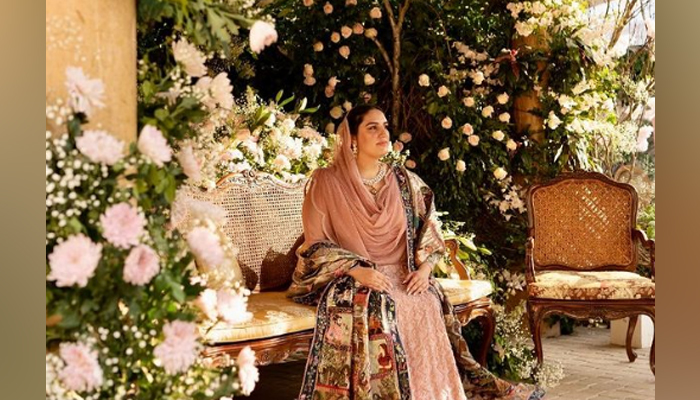
Bakhtawar Bhutto-Zardari's fiance Mahmood Choudhry, on Saturday, shared a beautiful throwback picture to their engagement ceremony as he wished for a better year ahead. "Beautiful Memory from 2020. Praying for a better 2021 for all," Choudhry wrote on Instagram.

mahmood.y.choudhry's profile picture

Beautiful Memory 🌸 from 2020. Praying for a better 2021 for all. 🤲🏼
أَصْبَحْنَا وَأَصْبَحَ الْمُلْكُ لهِ رَبِّ الْعَالَمِينَ، اللَّهُمَّ إِنِّي أَسْأَلُكَ خَيْرَ هَذَا الْيَوْمِ فَتْحَهُ، وَنَصْرَهُ وَنُورَهُ، وَبَرَكَتَهُ، وَهُدَاهُ، وَأَعُوذُ بِكَ مِنْ شَرِّ مَا فِيهِ وَشَرِّ مَا بَعْدَهُ

A few days ago, Mahmood Choudhry had announced the location for the couple's wedding.He shared a new picture from their engagement with family and friends with a short caption on Instagram.Mahmood said his friends had asked him if his and Bakhtawar's wedding will be a destination wedding. He announced that the destination will be the one and only Pakistan.
At least 100-150 guests were present at Bakhtawar's engagement ceremony including father Asif Ali Zardari and sister Aseefa Bhutto. Bilawal Bhutto Zardari skipped the festivities after he tested positive for the novel coronavirus.The late Benazir Bhutto's sister Sanam Bhutto was also in attendance, in addition to Zardari's sisters Faryal Talpur and Dr Azra Fazal Pechuho, PPP Senator Sherry Rehman, and Omni Group Chief Executive Anwar Majeed.
https://www.geo.tv/latest/327813-beautiful-memory-bakhtawar-bhuttos-fiance-wishes-for-a-better-2021

#Pakistan #Balochistan #KarimaBaloch - Why is #UN silent on death of Baloch refugees?

 By Aaliyah Shah

After each murder, we wonder who the next target is. Now, whose body will we get as a gift? Whether being it in Balochistan or foreign countries, Baloch are on the next target everywhere. The sad part is the world ‘the civilised world’ including the UN seems to remain criminally silent on the death of Baloch is Balochistan and Baloch refugees abroad.
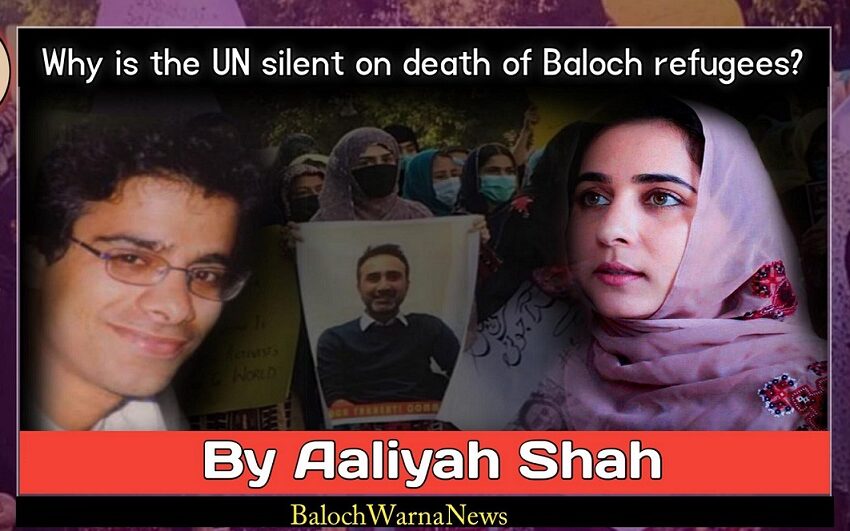
If the United Nations, International Community and International Human Rights Organizations fail to protect the Baloch people or consider them a lesser human being, then why are they given refuge? Is it to make them easy prey of the enemy or is deliberately allowing Baloch enemy states to expand their genocide of Baloch people with impunity on foreign countries?

The United Nations is so blind and deaf that every missing person in Balochistan and the death of Karima Baloch is a slap on its face. Today we have not failed, today Karima Baloch has not been killed but the United Nations and other so-called champions of human rights have died. Western democracy died and morality has died.

The question is if people in these civilized countries, which have security cameras (CCTVs) in every street and pathway, which know about the activities of people inside their houses,  then how was it possible that a person (Karima Baloch) walked from his home to killing spot undetected? By the look of the place where Karima died (was murdered) is a public place and yet there were no security cameras around? Unless the Canadian authorities provide satisfactory answers to these questions their intentions and sincerity will always be questioned.

How I can believe that the Canadian police are ignorant and they are deliberately not looking into the death of Karima Baloch from different angles?

We have been told if a crime is committed in a civilized country, then the government is responsible for each and everything. The authorities (police) will not rest until they reach to the bottom of that case. It was disappointing to note that the Canadian (Toronto Police) have declared Karima death ‘non-criminal’ nearly in 24 hours without even bothering to look into the threats that she has been receiving.

Karima’s case is not the first on Western soil and probably not the last case of Baloch refugees who had the refugee status and which entitled protection under international and UN conventions.  On the same day when Karima disappeared, two Baloch refugees were killed in Afghanistan, son of another Baloch elder from Nimroz Afghanistan was kidnapped and his dead body was also later found.

It started with Arif Barakzai then it was Sajid Hussain and now it’s Karima Baloch …. We wonder who will be next in the target list of the enemy and whose death probably will be declared by western authorities as ‘non-criminal’ or ‘suicide’.

Arif  Barakzai was also a member of the Baloch Students Organization (BSO), who was died in a student hostel in the Norwegian capital Oslo. He died after falling from the 11th floor of his hostel on 10, January 2008, the authorities declared his death as an accident. After 13 years still, the case has not been solved. His family awaits justice.

Then Ehsan Arjumandi Baloch a Norwegian citizen was arrested by Pakistani forces while he was visiting his family. Despite knowing that he’s in the custody of Pakistani forces the government of Norway failed to get him released. He is still suffering torture in Pakistan army’s torture cells.

Just when we were not expecting another murder of an innocent Baloch, Sajid Hussain disappeared. He was a journalist and had just enrolled for a master’s degree at Uppsala University in Sweden’ “a world-renowned academic institution with eight Nobel Prizes.

He disappeared the day he moved into his hostel room and was later found dead. After two months of disappearance, Sajid’s dead body was in a river. What took the Swedish Police to find his body after two months? They declared his death as ‘accident’.  Why would someone commit suicide after he was granted asylum, who was happy with his life and with his work, especially who was waiting for his family to join him in Sweden very soon?

The phenomenon of Sajid death has not been resolved yet his family rejected the police report and asked for evidence but they received no answer so far.

In the same year (2020) Karima Baloch, ex-Chairperson of the Baloch Students Organization Azad (BSO Azad), an active student organization in Balochistan who has also recently joined the Baloch National Movement (BNM) was found dead on 21 December.

‘Coincidently’, like Sajid Hussain, Karima’s dead body was also pulled from the water.  How ‘Ironic’ it sounds that two Baloch refugees who risked their lives all the way from Baloch leaving behind their loved one to seek refuge in Canada and Sweden. Just when their life was safe, they had the best opportunity to carry out their work (political campaign in a free and democratic manner), they had access to UN and rest of the civilised world to inform them about the plight of Balochistan, and they commit suicide? This is absolutely unbelievable.

Morality dictates that the Canadian and Swedish Police have a moral and legal responsibility to prove their claims not just verbally declare someone death as ‘accident’ or ‘suicide’.

This is can’t be suicides; three conscious people how can suicide?

These three people (Arif, Sajid and Karima) were not just ordinary people, they were highly educated, sophisticatedly conscious-minded and fiercely brave enough to face difficulties of life if they had any challenges.

This is thought of as matter. There must be a thorough investigation into these deaths. The UNHRC, International Red Cross, the Reporter Without Border must put pressure on the government of Canada and Sweden to prob these deaths from different angles.

If and when ‘push comes to shove’ and the UN, the Western government and International Human Rights bodies fail to do anything about the death of these three Baloch, then it is the responsibility of Baloch Diaspora Communities to hire private lawyers and homicides and leave no stone unturned until they reach to the truth and get justice for the families of the deceased.

https://balochwarna.com/2020/12/27/why-is-un-silent-on-death-of-baloch-refugees/

#Balochistan #KarimaBaloch #Pakistan’s Macabre policy of “kill and Dump” Abroad

 By Dr Shahzavar Karimzadi

Karima Baloch, a well-known Baloch human rights and political activist went missing on Sunday 20 December 2020 in Toronto, Canada. 

She was last seen at about 3 pm on that day. Her body was found the next day, Monday 21 December. Karima was a gifted and exceptionally committed individual. She was the most influential Baloch woman political leader in the contemporary history of Balochistan. Karima grew up at the most difficult time in Baloch history. Her struggle was for freedom, equality, democracy, and justice. From an early age, she was drawn to a battle of right and wrong, freedom or subjugation. She chose the path of right and freedom and bravely defended it.  Karima was a former chairperson of Baloch Students Organisation – Azad. The impact of her activities was such that her name was on the 2016 BBC list of 100 most influential women in the world for her work on human rights and gender equality.

What happened to Karima Baloch is the extension of Pakistan’s dirty “kill and dump” policy from occupied Balochistan to abroad against Baloch dissidents who have taken asylum in democratic nations or have escaped into the neighbouring countries. On the same day that Karima went missing, two Baloch dissidents, Gul Bahar Bugti and his son Murad Ali Bugti were shot dead by Pakistani agents in Kandahar, Afghanistan.  In the same year, on 2 March 2020, Sajid Hussain Baloch a journalist and the chief editor of the Balochistan Times, went missing in Sweden. He was writings about violations of human rights by Pakistani forces in Balochistan and about the forced disappearances. The Swedish police discovered Hussain Baloch’s body on Friday 23 April outside Uppsala in the Fyris River. On 10 January 2008, the body of Arif Barakzai was found in Oslo, Noway. Arif was a member of BSO with high scholarly and political leadership potential. These individuals were exceptional strong personalities. They were very well-informed, highly committed to human rights and freedom and independence for Balochistan.   

The policy of “kill and dump” is not a new occurrence in Balochistan. This gruesome policy is the invention of the Islamo-fascist states of Pakistan and Iran that they have been using it extensively in different parts of Balochistan under their occupation. There is no precedent of such policy in Balochistan before the colonization of Balochistan by these fake states.  The age range of Baloch political and human rights activists that have fallen the victims of Pakistan state’s “kill and dump” policy in Balochistan ranges from 12 to 85 years. This policy has affected all walks of life and social groups in Balochistan. 

The list of Baloch victims of the Pakistani army’s “Kill and Dump” policy in eastern occupied Balochistan runs into thousands. Here we only provide a very short list for only five years to demonstrate the scale of the tragedy under the colonial rule of Punjabi Muslims. Among the list of children abducted and their bodies being discovered later are

  • 13 years old Majeed Zehri Baloch. He was abducted on 18 October 2010 and his body was discovered on 24 October 2010.
  • Waheed Balaach Baloch, 14 years old, was abducted on 8 August 2011 and his body was discovered on 9 October 2011.
  • Mir Khan Marri, 15 years old, was abducted on 2 February 2011 and his body was discovered on 7 February. 
  • Arafat Baloch, 17 years, was abducted on 23 September 2011 and his body was discovered on 6 October 2011.
  • Hamid Nasir Baloch, 18 years, was abducted on 12 August 2011 and his body was discovered on 18 August 2011. 

The largest number of Pakistan’s state policy of “kill and dump” in Balochistan are Baloch students. Kamber Chaker and Ilyas Nizar were two of the leading Baloch students.  Kambar was abducted on 26 November 2010 and Ilyas on 22 December 2010. The bodies of these students were found on 5 January 2011. Baloch journalists were another target of this policy. Lala Hameed Baloch was abducted on 25 October 2010 and his body was recovered on 18 November 2010. Zarif Fara Baloch was abducted on 21 April 2011; his body was recovered on 25 April 2011. Mohammad Khan Marri was abducted on 11 April 2012 and his body was recovered on 28 May 2012. Javid Nasser Rind was kidnapped on 11 September and his body was discovered on 5 November 2011. Khan Mohammed Marri was kidnapped on 11 April 2012 and his body was found o 28 May 2012.  

Waheed Qambarani was among many dedicated Baloch teachers who were abducted on 7 October 2010 and his body was found on 1 December 2010. In the same way, Ali Jan Saqib was one among many Baloch popular singers who was abducted on 12 January 2011 and his body was discovered on 31 January 2011.  Naseer Kamalan was one among many poets who were abducted on 5 November 2010 and his body was discovered on 17 January 2011.  

There are the names of many much respected elderly Baloch who became the victims of this policy. Shadi Khan Marri, 80 years old, was abducted on 23 September 2010 and his body was discovered on 26 December 2010.  Haji Jan Mohammad, 78 years old, was another much respected elderly Baloch who was abducted on 12 February 2012 and his body was discovered on 14 February 2012.  

Among leading Baloch political leaders who were abducted and their bodies were found in different parts of Eastern occupied Balochistan we have Ghulam Mohammad Baloch, Lal Munir Baloch, and Sher Mohammad Baloch. These three political leaders were kidnapped at the same time on 3 April 2009 and their bodies were discovered on 9 April 2009. Rasool Baksh Mengal, another leading political leader, was abducted on 23 August 2009 and his body was found on 30 August 2009. This is not a secret policy of Panjabi Muslim occupier of eastern Balochistan.  

Even the Supreme Court of Pakistan has admitted that IGFC and ISI are responsible for the abduction and disappearance of Baloch political and human rights workers (www.dawn.com 1061888).

What is Pakistan?

Baloch is a nation and Pakistan is not. But Balochistan is under illegal occupation of Pakistan. This amounts to a nation being hijacked by crooks and criminals. Punjabi rulers of Balochistan are these crooks and criminals. To make matter worse than common crooks and criminals, Punjabi rulers of Balochistan have invented their version of Islam and use it to justify their heinous crimes. This is the root cause of the problem in Balochistan under the occupation of Balochistan. It is the islamo-fascist apparatus that has murdered Karima Baloch. Unless one gets this crucial point about the death-trap of occupying states, one will not understand the nature of this fake state in the name of Pakistan. This artificial criminal state was an invention of a dying Empire. The British forged it at the end of the Second World War. Indeed, Pakistan is the most toxic legacy of the British Empire. Both the left and right in Britain are guilty of creating this Frankenstein state.

A brief history of this colonial geopolitical structure would be enough for any sound mind to deplore the entire scheme forever.

But first, what is Pakistan, how and why it came into being?  The term was coined in 1933 by Chaudhry Rahmat Ali (1897-1951) a fundamentalist Indian Muslim student in Cambridge. Inspired by the rise of fascism in Europe, Mr. Chaudhary coined the term to heighten the religious divide between Muslims and non-Muslim in India. It is worth reminding the readers at this juncture that after the Turkish Ghaznavid conquest of India in the fourteenth century many Indians converted to Islam. The main reason for conversion to Islam was the Muslims under Ghaznavid colonial rule in India were exempt from paying tax.

The acronym ‘Pakistan’ was selected with a clear purpose. Pakistan literally means the land of the ‘clean nation.’ It was selected intentionally in reverse to the designate, Hindustan (India), the land of the Hindu nation. To Mr. Chaudhry and other fundamentalists, Indian Muslims Hindus were held as being ‘Najis’ (filthy) and Muslims as ‘Pak’ (clean). In Pakistan’s formal curriculum and school textbooks this how they describe Hindus as “unclean” and “inferior” to Muslims. 

Trade and the British Colonization of India

The East India Company began trading with India in 1600. This trading relation, in the end, resulted in the complete colonization of India by 1858. The religious divide was the most deadly instrument of the British policy of divide and rule. This was implemented most effectively in India after 1857 Indian revolted against the British colonial rule.  After crashing the Indian mutiny in 1857, the British turned to Indian Muslims to safeguard their colonial rule in India.   The British Raj army was a military force of about 1.2 million by the end of the First World War. About 355,000 of them were recruited from the Indian Punjab province. During the Second World War, this number was increased to 2.5 million. At least one-third of them were Indian Muslims, mostly recruited from the province of Punjab.

The time came. The British conceded their defeat in India. The old empire did not want to lose all of India. Winston Churchill, the holy father of the expiring empire, called for the division of India into “Pakistan, Hindustan, Pricestan” and to “keep a bit of India.” The entire British establishment, right and left, went with this plan. Cyril Radcliffe, a Welsh lawyer, was sent to India to secure a bit of India for Britain. He arrived in India on 8 July 1947 and was given about five weeks to divide India. However, it only took him a few minutes to draw the lines. He divided two Indian provinces of Bengal and Punjab.  The East Bengal became East Pakistan and the West Punjab, West Pakistan but the two sides were about 1,000 miles apart. The population of East Bengal then was about 44 million and West Punjab about 20 million. From the very day of the partition of India, Pakistan was the Punjabi Muslim Raj army and bureaucracy. This comprised about 30% of the British Raj army. This 30% British Raj army from west Punjab and their family associates practically became what Pakistan is today. 

The British had been working on dividing the Indians since the 1857 Indian mutiny. They continuously supported a section of Indian Muslims against the rest of the Indian population. The first Indian Muslim political party, the All-India Muslim League, was established by the British on 30 December 1906 in Dhaka. Its first article reads “to promote among Mussalmans [Muslims] of India, feelings of loyalty to the British government.” It was this party that the British colonial rulers used to divide the Indians from Indians and the Indian Muslims from Indian Muslims. During the division in 1947, up to 2 million Indians perished and about 15 million of them were displaced.  

Pakistan – the First British Islamic State

In effect, the British created the first Islamic fundamentalist state. A baseless state that is Indian in origin. In the act of self-denial, this fake state employs any violent means, religious absurdities, and deception to hide its true reality. As soon as the British divided the Indian provinces of Punjab and Bengal, the newly created state of Pakistan has engulfed Sindh and the Pashtun area. The latter area was annexed to the British Raj in 1893 after the ‘Durand Line’ was drawn.  The renowned Sindhi leader, Ghulam Murtaza Syed who took part in the creation of Pakistan spent over 30 years in prison in opposing Pakistan. Under the Punjabi army colonial rule, Sindh has been totally ruined. In the case of Pashtuns, Afghans have never accepted the Durand line and opposed the admission of Pakistan soon after its creation to the UN in September 1947.

Abdul Ghaffar Khan, the Pashtun leader who spent many years in the British Raj prisons for his opposition to the Durand Line – after partition, he spent about 15 years in Pakistani jails. In his autobiography, he compared living under the colonial rule of the British Empire and the colonial rule of the Punjabi Muslims. He wrote (1969): “The British had never looted our homes, but the Islamic Government of Pakistan did. The British had never stopped us from holding public meetings or publishing newspapers, but the Islamic Government of Pakistan did both. The British had never treated the Pakhtun women disrespectfully, but the Islamic government of Pakistan did.”   

Baloch Independence in 1947

The Baloch in Eastern Balochistan regained their independence from Britain, in 1947. This news was reported by the New York Times on 12 August 1947. On 27 March 1948, the Panjabi army of the theocratic state of Pakistan invaded Balochistan and annexed it to Pakistan. From the day of invasion to the present day, Baloch has firmly resisted Pakistan’s occupation of Balochistan.  Pakistan so far has carried out five major military operations in Baluchistan; from 1948, 1958, 1962, 1973-74, and 2000 to the present day. In the 1973-77 conflict, only about 15,000 Pakistani mercenaries and about 25,000 Baloch were killed and many thousands of Baloch were displaced and disappeared. Since the year 2000, as a result of Pakistan’s army macabre ‘kill and dump’ policy – many thousands of Baloch political and human rights activists are reported to have been disappeared. 

The relatives of the state-enforced disappeared Baloch, mostly Baloch women and children walked over 2,000 km from Quetta, the capital city of eastern Balochistan to Islamabad, the capital city of Pakistan for the recovery of Baloch missing persons. This long march started in October 2013 and ended in February 2014. While, the long march for Baloch missing person on its way, on 17 January 2014, three mass graves of Baloch activists in Tootak, Khuzdar were discovered. Over a million Baloch have been internally displaced or sought sanctuary in another country. All-natural resources of Balochistan are under the control of the Panjabi army. Pakistan also tested its nuclear bombs in the Koh Kambaran ranges and the Chaghai hills in Balochistan on 28 and 30 May 1998. Balochistan under rulers of the Punjabi Islamic cult has been reduced to one of the most deprived and poverty-stricken regions of the world. 

It was less than a year after the partition of India that the battle between two parts of Pakistan, East Bengal, and West Punjab, had started. M. A. Jinnah in 1948 declared that “Urdu and only Urdu” should be the national language of Pakistan. Urdu was the mother language of only 4% of the population on both sides of Pakistan. Bengalis protested against it and on 21 February 1952 Panjabi army attacked Bengali students and killed five of them. In 1999, UNESCO declared 21 February in the memory of the victims as International Mother Language Day. The battle between East Bengal and West Panjab reached its turning point in the 1971 general elections.  The East Bengal (East Pakistan) won the election. Out of a total of 300 seats, the Awami League in East Pakistan won 167 seats, 56% of the total votes, the absolute majority whereas West Punjab won 86 seats. With only 29% of the total votes, the Punjabi establishment prevented the Bengalis to form the government.  General Ayub Khan, the ruler of Pakistan in 1969 described Bengalis as subhuman who came from the “downtrodden races.”  

His successor, General Yahya Khan ordered the killing of three million Bengalis to teach them a lesson and make “the rest” “eat out of [their] hand.” Subsequently, just in 267 days in 1971, the Panjabi army killed 1,247,000 Bengalis. Forty million Bengalis were displaced, ten million went to India and the rest were displaced internally. The Panjabi army of West Pakistan set up “rape camps” throughout of East Bengal. According to S. Brownmiller, an American journalist, Panjabi soldiers raped up to 400,000 Bengali women within this short time. East Bengal became independent on 26 March 1971.

Boundless Savagery and the Panjab Islamic Cult  

The Panjabi Islamic cult has no mercy even to its own sort. It dumped M. A. Jinnah the founder of Pakistan. Jinnah was abandoned and died in despair in 1948. Choudhry Rahmat Ali, the inventor of the term Pakistan, left England for Pakistan in April 1948. Liaquat Ali Khan (1895-1951), the first prime minister of Pakistan, confiscated all his belongings and threw him out the country in October 1948. Choudhry died destitute on 3 February 1951 in Cambridge. His body was discovered a few days after his death. The expenses for his burial were paid by his British colleagues.

On 16 October 1951, Liaquat Ali Khan was shot dead.  From 1948, the year of creation of the state of Pakistan, to the mid-1950s Pakistan replaced seven prime ministers. From 23 March 1956 when Iskander Mirza (1899-1969) became the head of the state, Pakistan has effectively been ruled by the army. The Economist on 11 October 1958 described the state of Pakistan as fluctuating between -“the grotesque and macabre.”

Most prime ministers of Pakistan have been either dismissed or killed since its creation in 1947. Zulfkar Ali Bhutto was hanged by Zia-ul-Haq on 4 April 1979 – by his former chief of the army. Zia was killed in a plane crash on 17 August 1988. Benazir Bhutto was assassinated by the command of her own former army on 27 December 2007.

Pakistan has been the epicentre of most global Islamic terrorist groups. In the 1970s, the jihadist groups were organized to destroy the East Bengal movement. Naseerullah Barbar, the former interior minister of Pakistan was the mastermind behind Afghan Taliban groups and Kashmiri Jihadist groups. Also, there are over fifty Islamist terrorist groups including the Hizb-ul-Mujahideen, Lashkar-e-Taiba, Jaish-e-Mohammad, the Haqqani network, Taliban, and Al Qaeda that operate under the protection of the Pakistani security forces. Pakistan has initiated several wars with India and has regularly been dispatching their jihadist groups to India to commit their terrorist acts.

The Panjabi army of Pakistan provided sanctuary to Osama bin Laden, the head of Al-Qaida. He was found and killed in his compound in Abbottabad, Panjab on 2 May 2011. Almost, all terrorist attacks in Afghanistan are organized by the Punjabi army of Pakistan. Besides, most of the western soldiers that have been killed and injured in Afghanistan are also masterminded by the Pakistan army.

Pakistan means the Punjabi army. Punjabi Muslims like the rest of other non-Muslims Panjabis are Indian. So the whole idea of Pakistan as a separate nation is completely groundless. To deceive the world the Panjabi Muslims of India hide under the term Pakistan, which is not any national identity. In maintaining this fraudulent identity they have resorted to any forms of crime and deception imaginable.  

Simply, they have fooled the world as being a victim of the British Empire. The fact is they were the most subservient Indians of the British Empire.   Under this false claim of victimhood, they have committed the most gruesome crimes imaginable in about seven decades of their existence. There is not any form of deception or lies or religious fabrication that during this period that they have not employed to preserve this fraudulent political entity. There is not any form of violence that they have not used to eliminate their opponents. There is not any more skilful state beggar than the Punjabi Muslim rulers of Pakistan. They have devised begging bowls in the name of Islam, freedom, socialism, communism, anti-communism, development, equality and the list goes on just enrich themselves. For this reason, they do not want the world to know who they are.

Moreover, they know without Balochistan under their colonial control Pakistan will cease to exist. Karima Baloch was a bright light in this long tunnel of darkness with a great potential of becoming a shining Sun that could reveal the crimes of the Punjabi army of Pakistan in Balochistan to the world. For this reason, the deep state of Pakistan has murdered these strong, brave, committed, and progressive Baloch men and women.

https://balochwarna.com/2020/12/29/pakistans-macabre-policy-of-kill-and-dump-abroad/
Balochistan: Pakistan Intelligence agencies intimidating peaceful protesters: BSC

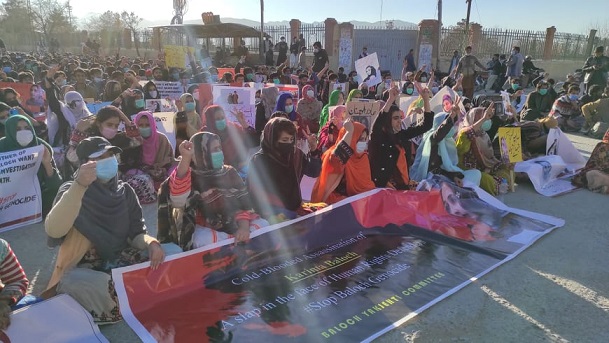
The Baloch Solidarity Committee (BSC) has said in a statement that it had received reports from various parts of Balochistan that Pakistan’s intelligence agencies were trying to interfere in their peaceful protests.The Baloch Solidarity Committee (BSC) also known as Baloch Yakjehti Committee (BYC) comprises of Baloch public from all walks of life and apparently is not affiliated with any particular political party.The Committee was formed after a string of attacks, acts of robbery and killing of innocent Baloch youth by Pakistani security forces and Pakistan army-backed criminal death squads in different areas of Balochistan.
Its latest wave of Balochistan-wide protests started after the news of mysterious death of ex-chairperson of BSO-Azad (Baloch Student Organisation – Azad) in Toronto, Canada.In the last few days, the Committee has organised peaceful demonstrations in all major cities of Balochistan including Karachi, Dera Ghazi Khan and Quetta – the capital of Balochistan. They have announced several other protests in coming days and weeks to demand justice for Karima Baloch.
In its statement on Saturday, the BSC said that participants from Pasni send pictures of plain-clothed intelligence operatives trying to harass peaceful protesters but people gathered on the platform of the Baloch Solidarity Committee and continued their peaceful demonstration.
According to the statement of BSC Bank Karima’s murder is not a trivial incident for the Baloch nation, People in Balochistan are in grief and anger, and the youth are losing hope for justice. ‘Even in such circumstances, on the appeal of Baloch Solidarity Committee People took part in the demonstrations and so far in these demonstrations, there has not been a single incident of violence which is a proof of our message for peace and justice.’The BSC statement maintained that it had received reports from Dera Bugti that people there had been beaten up by pro-army deaths squads for posting pictures of Bank Karima on social media. People’s mobile phones were also snatched but BSC activists did not lose patience. ‘We directed people to focus on their peaceful rallies and demonstration which is our basic right,’ the BSC said.
However, the manner in which MI (Military Intelligence) officials were raiding the houses of the organizers after the peaceful protest rallies in Pasni was not acceptable, the committee statement said adding that social activist Shiraz Akbar and a woman’s house in Pasni were raided for their arrest or extrajudicial arrest and disappearance.
The BSC said that a large number of political activists and members of student organizations were reported missing and thousands of mutilated bodies of these peaceful people were dumped. The situation was worsening day by day. ‘Political activities stagnated, People stopped writing and speaking out of fear but the attitude of law enforcement agencies and the government has changed only to the extent of rhetoric. Instead of reducing military operations and kidnappings, they have been intensified day by day,’ the BSC charged.
The BSC statement further said that the people protesting in Balochistan are not part of any political party’s plan or it is not for power politics but people are coming out against the atrocities against them. The parties supporting these demonstrations are present in the Parliament of Pakistan because it is not a problem of any one political party but a matter of life of the people of Balochistan and the Baloch nation.
In its statement, the Committee clarified that the BSC was not a political party but a human rights organization which came into being in response to the failed performance of human rights institutions in Pakistan. In Balochistan, the bodies of innocent Baloch are being dumped.The Baloch Solidarity Committee said that earlier, people were accused of being linked to separatism and armed resistance. It has become commonplace for dissidents to be accused of being agents of RAW, but our protests are about justice and human freedom. How can they threaten the very existence of a country? And why would an enemy of Pakistan help anyone build a peaceful and progressive society here? The Committee appealed to the human rights organizations working in Pakistan, Human Rights Commission of Pakistan, Amnesty International, Human Rights Minister Shirin Mazari support people’s right to peaceful assembly and freedom of expression, and stop the security forces from intimidating organisers of peaceful protests.
The Baloch nation can no longer bear any loss of life and we will not remain silent killing of innocent people.
In its message to Baloch nation, the Solidarity Committee said, ‘We have to bring unity and solidarity in our ranks and the forces that are preventing us from peacefully protesting want to kill us quietly. It is not that if we will be silent, then our lives will be spared, so fearlessly go out for your legitimate human and civil rights, support each other and do not be afraid, if we leave the people alone to raise their voices today, tomorrow there will be no one to raise a voice for us. So do not compromise on your rights and do not leave each other at any cost.”
https://balochwarna.com/2020/12/27/balochistan-pakistan-intelligence-agencies-intimidating-peaceful-protesters-bsc/

Pakistan's foreign minister Shah Mehmood Qureshi is waiting for Imran Khan’s departure

 “More than half a dozen members of Pakistan Tehreek-e-Insaf are in queue to become prime minister.”

This was said by secretary information Pakistan Peoples Party Parliamentarians Dr. Nafisa Shah in a statement today. She said the most restless among those candidates is Shah Mehmood Qureshi. It seems that he cannot wait to wear a sherwani.
Dr. Nafisa Shah said that the long march has been decided by the PDM and the only thing which will be decided is that where the march will be heading. She said that the PPP will not leave the field in politics and will avail every opportunity to represent people of Pakistan. The people want Imran Khan to go home because he has failed in every respect. He is not a politician and never will be. Shah Mehmood Qureshi is not waiting for the resignation of opposition rather waiting for Imran Khan’s farewell. 

https://www.ppp.org.pk/pr/24237/

Friday, January 1, 2021

Pashto Music Video - Nashenas _ زخوشرابی.یم.شیخه سه.راسره.جنگ.کری.برخی ازلی.دی.کاشیکی.مادزان.پرنگ کری.ای.ناشناس.دمت.گرم

Video - #NayaDaur #PDM #PTI PDM's Make Or Break Meeting, And Durrani's Grand National Dialogue Project

#Pakistan - PDM's long march to Islamabad could also be to Rawalpindi

Pakistan Democratic Movement (PDM) chief Maulana Fazlur Rehman said on Friday that the opposition's movement would no longer be directed only at the Prime Minister Imran Khan-led government but also "his backers", hinting that the alliance's possible long march to the capital "could also be to Rawalpindi".Addressing a press conference after a meeting of the PDM leaders in Raiwind, Rehman said it was decided after detailed discussions that the opposition will participate in the upcoming by-elections, but indicated that there had been no decision on contesting the Senate elections.
"In principle, we are not opposed to the elections of any institution but there is some time until [Senate polls]," he said, adding that the final decision will be taken in future PDM meetings while keeping in view the prevailing conditions.
The JUI-F leader said news of rifts within the PDM was being run on media as part of a "campaign", but stressed that such rumours had died today.
"PDM has come out stronger than before and is more determined than before to rid the nation of this illegitimate government," said the PDM chief, speaking alongside other top opposition leaders including PML-N Vice President Maryam Nawaz but not PPP chairperson Bilawal Bhutto-Zardari, who attended the meeting virtually.
He said all PDM constituent parties had reported to the meeting today that the resignations of "all" opposition lawmakers had reached their party leaderships, in accordance with the Dec 31 date given for this purpose by the alliance. "So one of the targets has been achieved today," he said, reiterating that the government had one month to resign. He said if the premier refused to step down by January 31, the PDM leadership will announce the long march to Islamabad and decide its date. "It will also decide whether the long march should be staged towards Islamabad or to Rawalpindi," Rehman added. Rawalpindi is a metonym for the headquarters of the Pakistan Army.
"We agree that the establishment has held the entire system hostage by turning Pakistan into a deep state. Imran Khan is a pawn [and] the people who did rigging and imposed him upon the nation, we want to make it clear [to them that] we blame the establishment and army leadership for this," the PDM chief said.
He continued: "The direction of our criticism will now be manifestly aimed at them (establishment). Now it is for them to decide whether they will further sink their claws on Pakistan's politics or retreat and move towards their constitutional responsibilities." Rehman said the PDM considered the army "as our army" and it respected all generals. "But when this defence power interferes in politics forgoing its professional duties, it creates confusions," he added, attributing Pakistan's alleged constitutional, political and economic crises to this "transgression".
"All parties are unanimous that the movement's direction should not be turned only towards the pawn but also against his backers." He announced that the PDM will stage a demonstration in front of the Election Commission of Pakistan offices in Islamabad on January 19, while a similar protest was being planned to be held in front of the National Accountability Bureau (NAB) headquarters as well.
Rehman said all opposition members summoned by NAB had appeared before it but said "it has been proven that this is not accountability but revenge". The meeting had been summoned to come up with a united stance on the issue of en masse resignations and participation in the upcoming elections on a number of seats of the national and provincial assemblies and the Senate. On Wednesday night, Rehman had met PML-N leader Maryam, after which they had announced that they wanted to provide an opportunity to PPP chairman Bilawal Bhutto-Zardari to present his viewpoint on the issues of resignations and participation in the coming elections, following which they would try to develop a consensus.
The confusion arose earlier in the week when Bilawal, while addressing a press conference after his party’s central executive committee meeting in Karachi, said the CEC believed “that if we (joint opposition) take up the challenge of Senate elections collectively we can make a better impact and achieve larger success”.
He added that he would take up the CEC’s decisions before the PDM leadership and discuss a further plan of the opposition’s movement against the incumbent government.
En masse resignations
The first phase of the PDM’s anti-government movement had come to an abrupt end with the public meeting in Lahore on December 13 as the leadership had failed to announce any future plan to intensify their campaign. Though the PDM leaders had declared they would make an announcement regarding district-wise protests, shutter down and wheel-jam strikes and the long march during the Lahore public meeting, no such plan was announced from the stage. Later, the PDM leaders set Jan 31 deadline for Prime Minister Imran to resign or face a decisive long march to Islamabad sometime in February. It was after a meeting of the heads of the constituent parties of the PDM in Islamabad on Dec 8 that Rehman had announced that all the national and provincial lawmakers belonging to the opposition would hand over their resignations individually to the heads of their parties by Dec 31. The Maulana had announced the decision during a press talk after presiding over a more than four-hour-long summit of the alliance which was also addressed by PML-N supremo Nawaz Sharif and former president Asif Ali Zardari through video link from London and Karachi, respectively. The PDM leadership, however, had failed to come up with an agreed plan regarding the use of their most lethal weapon of en masse resignations and its timing and Rehman simply announced that the steering committee of the PDM would meet in Islamabad the next day “to decide the schedule for further rallies and demonstrations and the date for long march towards Islamabad”.
The next day, however, before the meeting of the steering committee could take place, the PDM leaders once again gathered at Rehman's residence for a luncheon meeting after which Bilawal categorically declared that his party would come out with a final decision regarding en masse resignations after discussing it at its CEC.
Sources in the PDM earlier said PPP leaders during the meeting were not very enthusiastic about the proposed move and Zardari was not in favour of Sharif’s proposal to hand over the resignations to Rehman for future use and it was on his proposal that other parties finally agreed on the PPP’s suggestion that the resignations should be collected by the party heads.
https://www.dawn.com/news/1599076/pdms-long-march-to-islamabad-could-also-be-to-rawalpindi-fazl

Chairman PPP Bilawal Bhutto Zardari extends felicitations to the newly-elected members of Pakistan Bar Council (PBC)


Chairman Pakistan Peoples Party Bilawal Bhutto Zardari has extended felicitations to the newly-elected members of Pakistan Bar Council (PBC) and termed their victory as a good omen for the democracy, supremacy of the Constitution and independence of judiciary.

In his felicitation message to the newly-elected members Farooq H. Naek, Syed Qulbe Hassan, Mohammad Ahsan Bhoon, Abid Saqi, Shahadat Khan Awan and others, the PPP Chairman said that lawyers fraternity has always been in forefront in the struggle for the restoration of democracy and they offered numerous sacrifices for the cause.

Bilawal Bhutto Zardari said that PPP always stood for rule of law and supremacy of the Constitution and the Parliament and lawyers community forms the backbone of the Party since its inception.

PPP Chairman hoped that newly-elected Pakistan Bar Council will continue its endeavors for a truly independent judiciary and for removal of the bad impressions and perceptions not suitable for any free judiciary anywhere. 

https://www.ppp.org.pk/pr/24232/

Pakistan's #MeToo movement hangs in the balance over celebrity case

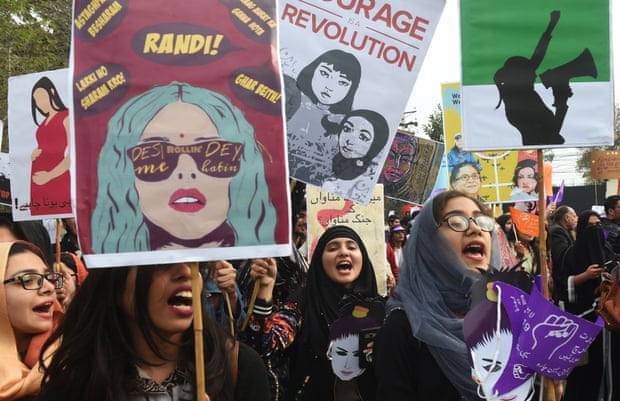
It takes a lot to rattle Leena Ghani. As an artist turned activist helping to raise the voices of Pakistan’s women, she has often fielded abuse, threats and harassment.
But when she learned, on a morning in late September, that police had charged her for criminal defamation, linked to Pakistan’s most high-profile #MeToo case, Ghani says she was shaken. “In terms of silencing and demonising people speaking out against sexual assault, it was a new low even for Pakistan,” she says.Ghani was not alone. Eight others were also named in the case, facing three years in jail for criminal defamation. Some only learned of their involvement through a newspaper article.Lawyers say the case has exposed how cyber defamation laws passed under the guise of protecting women from online harassment are being used instead to silence Pakistan’s victims of sexual assault.
On 16 December, the authorities said there was enough evidence to take Ghani and others to trial – and the future of Pakistan’s #MeToo movement now hangs in the balance.
That movement began in April 2018 after Meesha Shafi, a singer and actor who starred in The Reluctant Fundamentalist, sent out a tweet alleging sexual harassment.
Shafi alleged that she had “been subjected, on more than one occasion, to sexual harassment of a physical nature” at the hands of one of Pakistan’s most beloved celebrities, Ali Zafar. Shafi wrote that by speaking out, she hoped to “break the culture of silence that permeates through our society”.
Zafar denies “any and all claims of harassment lodged against me by Ms Shafi”, and so far has successfully defeated the sexual harassment claims she brought against him in court.The allegations reverberated through Pakistan’s deeply conservative Islamic society, where women speaking out against assault is rare and taboo. Because of Zafar’s popularity disbelief was rife, but dozens of women and men came out in support of Shafi on social media, including several who alleged assault by Zafar.Among them was Ghani, who said her concerns about Zafar’s treatment of women emerged after they became friends in 2014. Writing on Twitter, Ghani accused Zafar of behaviour towards her that “displays a clear lack of respect for women”, including “inappropriate contact, groping, sexual comments”.“You hide from him,” read Ghani’s post, “hoping his sleazy eyes and hands don’t find you again. His hands don’t make their way up and down your waist or hold you too tight while you desperately try to wriggle and run.”
Similar accusations followed. Blogger Humna Raza alleged that Zafar had groped her at an event, while Maham Javaid, a journalist, recounted on Twitter an alleged incident where Zafar had “tried to kiss my cousin and pull my cousin into a restroom with him. Luckily, my cousin’s friends were there to push him off.”
Zafar has accused Shafi of organising a social media campaign against him. According to newspaper reports, he said he could not believe that “anyone can come forward and accuse someone who is innocent and decent, has worked hard for over two decades – solely on social media”. Zafar filed a civil defamation lawsuit against Shafi, seeking a billion rupees in damages. The court accepted the lawsuit and placed a gag order on Shafi, which still prevents her from discussing the allegations in public. Over the next two and a half years, Zafar appeared on a dozen television shows to defend his name, sometimes breaking down into tears and occasionally accompanied by his wife. He alleged the accusations were a smear campaign, coordinated by a group of women who created fake accounts and were funded by foreign money. Last month, Pakistan’s president awarded Zafar the Pride of Pakistan, one of the country’s highest honours. In July 2018, Shafi also began legal proceedings, attempting to take Zafar to court for sexual harassment in the workplace. Her case was dismissed on the technicality that freelancers were not covered by the law. An appeal to the Lahore high court was unsuccessful and although her lawyers have challenged the ruling in the supreme court, the case has still not been heard.
In November 2018 rumours began to swirl that Zafar had also filed criminal charges against Shafi and 25 of her online supporters and fellow accusers with the Federal Investigation Agency (FIA), Pakistan’s most powerful investigating body.
By July 2019, dozens of people, mainly women, who had written social media posts either making allegations about Zafar or expressing support for Shafi, began to receive notices to appear before the FIA for questioning. Ghani, Javaid and Raza were among them, as well as Iffat Omar, an actor who knew Shafi and Zafar personally. When Zafar claimed on television that the women taking Shafi’s side were being paid by the west to spread propaganda, Omar wrote “stop lying harasser” on her social media. Omar and Ghani were questioned by the FIA and both separately alleged they had been put under pressure by officers to retract their allegations against Zafar and apologise. Both refused. The senior FIA officer on the case was later suspended over a tweet which led to accusations he was being “Ali Zafar’s personal spokesperson” on social media. The FIA declined to comment on the case.
At least three of the women also allege that Zafar applied “indirect harassment” through social networks. Omar says she received a “clear message from Ali Zafar that if I just apologise, everything will be better for me – and I have given him the direct answer that it is not happening.”
Ghani alleges that “Zafar also tried to get to me through my family and would send cruel messages about my family’s problems through third parties. A lot of dirty tactics. He was trying to put pressure on me to apologise and I’ll admit it was scary.” But in late 2019, after she had filed a legal petition against Zafar and the FIA for harassment and Javaid had written to the senate human rights committee to complain, everything went quiet. Until September 2020, when news of the charges broke. Nine people, five women including Shafi, Ghani, Omar, Javaid and Raza, and four men, had been booked for defamation by the FIA’s cybercrime wing over the alleged social media “character assassination” of Zafar. The charges carried a three-year jail sentence.
There was confusion as to why only nine had been booked in the case, when the original list had 25 names. But then, says Javaid, the penny dropped: “We realised we were the only ones who had refused to apologise to Zafar.”
One of the accused, journalist Haseem uz Zaman, is facing charges for tweets that claimed “Ali Zafar harasses women”. They refuse to apologise. “That would not only harm my future and my journalistic credibility, but it would also harm every other survivor of sexual harassment who comes forward in the future,” they say. “And I could not live with that.”After news of the criminal charges broke, Ghani and the others began to face a barrage of online rape and death threats and harassment, and say they were vilified in Pakistani media.A week later, the blogger Raza created a new Twitter account and published a handwritten note retracting her allegations against Zafar and apologising for “the hurt” she had caused him and his family. Zafar shared the tweet. Raza’s name has been dropped from the case.For the women, most galling of all was the law they had been charged under. The Prevention of Electronic Crimes Act was passed in 2016 partly to protect women from online harassment, but the wing of the FIA tasked with prosecuting these cases is accused of being ineffective.Nighat Dad, Shafi’s lawyer, says she knows dozens of women who have complained to the FIA about online abuse, hate-speech, rape threats and vindictive sharing of intimate videos, but had received no response.
“It’s rare the cybercrime wing will register cases lodged by women activists, and even if they do, it usually takes years for anything to happen,” says Dad. “So I was never expecting that they would be so shameless as to take action against women survivors who are speaking up.”
This was not an isolated use of the law against women. When girls at the prestigious Lahore Grammar School recently alleged harassment by teachers and fellow students, several were threatened with criminal defamation, after which the accusations went quiet. At Lahore University of Management Sciences, a Facebook page for student testimonials of sexual assault was shut down with a letter threatening to report them to the FIA. “We are seeing this happen over and over,” says Dad. “The cyber laws that were enacted in the name of protecting women in Pakistan now are being misused and weaponised to silence them.”
As Shafi’s lawyer, Dad claims she herself has been subjected to a “vicious smear campaign”, with newspapers making allegations that she is a foreign operative running an “illegal NGO”, unsubstantiated claims retweeted by Zafar. “They will not only try and silence victims, but anyone who tries to help victims fight for justice,” says Dad.
On 15 December, the FIA presented evidence that Shafi and others in the case were “guilty” of defamation and asked for court proceedings against them to begin.
Ambreen Qureshi, Zafar’s lawyer, declined to talk to the Guardian about the allegations but said “we have presented evidence to the FIA on account of which Ms Shafi and eight others are booked”. Qureshi says Shafi had failed to provide any witnesses to support her allegations. Shafi’s lawyers say she was not given the opportunity.
According to Qureshi, the court documents so far show “in this case an innocent man was made a target of a criminally motivated malicious campaign by a group of closely related women.” The eight women facing charges deny any previous relationship or any campaign and say they intend to fight the case in court and push for the cyber defamation law to be repealed.
Ghani says: “People keep saying #MeToo is dying in Pakistan, which is so terrible because it’s not like women are not getting harassed and assaulted and raped, but we are being silenced. We all realise that Pakistan’s #MeToo movement hinges on this case.”
“The whole system is against us; Ali Zafar is a powerful man, and going to court is hard – but what can be harder than lying and living with that lie,” she adds. “I would rather go to jail.”
https://www.theguardian.com/global-development/2021/jan/01/pakistans-metoo-movement-hangs-in-the-balance-over-celebrity-case