Friday, December 25, 2020

#Pakistan - The circle of dissent is widening; the state is responding by pushing society towards further polarisation

By Aasim Sajjad Akhtar
THE dust had barely settled on the hugely triggering sight of South Waziristan MNA Ali Wazir in chains when news arrived from Canada that Karima Mehrab, a prominent figure of contemporary Baloch nationalism, had been found dead after having mysteriously disappeared.

In May, Ali Wazir’s cousin Arif was shot dead in his home district by ‘unknown assailants’, while another Baloch exile, Sajid Hussain, had been discovered dead in Sweden, after having vanished without trace. These are hardly novel events, even if foul play in the Baloch cases has not been established by police.
In recent years, Baloch, Pakhtun, Sindhi and even Punjabi dissidents have been seen as the target of state repression, or have fallen by the wayside in suspicious circumstances that have deepened feelings of mistrust between the state and long-suffering ethnic peripheries.
Balochistan has experienced at least five insurgencies, the first after Kalat’s ‘accession’ in 1948. Sindhi nationalists have long called attention to issues of demography and control over Karachi in particular. Pakhtun nationalists like Bacha Khan who used non-violence were, even before Partition, declared traitorous.
The state should reach out to, not criminalise, the youth.
The secession of East Pakistan is still the only example of a modern state in which a majority seceded from a minority. From the mid-1980s, even Urdu-speaking ‘Mohajirs’ have been politicised and, in the shape of the MQM, demanded that they be recognised as a separate nationality with claims to rights and resources.
The MQM was patronised by Gen Pervez Musharraf’s military regime. It has since fallen almost completely out of favour with the establishment, but the Musharraf years deepened polarisations between many ethnic peripheries and the centre. It was then that the practice of enforced disappearances became common, unaccountable military operations were conducted, and intensified geopolitical wrangling involving China, Russia, Iran, India, Afghanistan and the US deepened a siege mentality under the guise of the ‘war on terror’.
Notwithstanding the restoration of formal democracy in 2008, the state apparatus has continued to wield the big stick in ethnic peripheries, and in metropolitan centres too. The circle of dissent is, in fact, widening. To which the state is responding by pushing society and the polity towards further polarisation.
What explains this widening circle of dissent? First, the ethnic peripheries have spilled over into the centre, and, indeed, into the diaspora. Pakhtun workers, students and small businesspeople have migrated in the millions to urban centres across Pakistan; the Baloch diaspora is littered across the world; Sindhis and Seraikis have migrated in unprecedented numbers to Karachi since the floods of 2010; and other regions like GB have experienced similar out-migration.Second, historically dominant Punjabi- and Urdu-speaking masses from the developed, central regions are increasingly stratified and politicised. The pandemic will exacerbate tensions within otherwise pro-establishment segments of Pakistan’s population. To sustain establishment hegemony in central regions is harder than ever; it is not by chance that Punjabi dissidents that have made common cause with the ethnic peripheries have been subjected to increasing coercion, the disappearance of bloggers in 2017 the start of a clear trend.
Third, mega projects designed and funded by big players both domestic and foreign are establishing a clearer line than ever between winners and losers of ‘development’. Within Pakistan, there are Bahria Town, big sugar and wheat lobbies, as well as establishment-run logistics, communications and construction companies. In terms of interventions by foreign power, CPEC stands out, but the economic, political and cultural footprint of the Gulf states and the Pakistani state’s major patron of choice, the US, will also continue to engender conflicts over resources and power. The fencing of Gwadar is an example of the ghettoisation of winners and losers that is happening more broadly across the social formation.
On the one hand, then, there is an increasingly no-holds-barred race for resources and power, with the establishment in the role of arbiter. On the other hand, brutalisation of peripheries provides a fillip to narratives of ethnic nationalism that have historical bases. The state ought to be reaching out to a young generation of politicised nationalists rather than criminalising them. The resort to ideological warfare by branding any and all demands for inclusion and dignity as ‘anti-state’ is particularly galling. Whether the individual decried as fanning separatism is an elected MNA, a Baloch who came of age under enforced disappearances, or even ordinary youth expressing their opinions on social media, history confirms the futility of a nation-building project founded on exclusion and coercion.
https://www.dawn.com/news/1597719/circle-of-dissent

US 'deeply concerned' at SHC order to release men charged in Daniel Pearl case


The US State Department on Friday expressed its reservations after the Sindh High Court (SHC) ordered that the four men charged in journalist Daniel Pearl's abduction and murder case be released immediately, terming their detention illegal.

In a message on Twitter, the state department said it was "deeply concerned" at the Dec 24 ruling of the SHC to release "multiple terrorists responsible for the murder of Daniel Pearl".

"We have been assured that the accused have not been released at this time," the statement added.

It said the department will continue to monitor any developments in the case and will continue to support the Pearl family "through this extremely difficult process" while honouring the legacy of Daniel Pearl as a journalist.

The statement came a day after the SHC struck down a preventive detention order issued by the Sindh government to keep four men behind bars after their convictions by a trial court were set aside around eight months ago in the abduction and murder case of US journalist Daniel Pearl.

The bench also barred the federal and provincial authorities from placing the men under any preventive detention order without prior permission of the SHC. However, their names were placed on the no-fly list and they were also directed to appear before the court whenever summoned.

In April, the high court had acquitted all the appellants of the charges of murder and kidnapping for ransom and only found main accused Ahmed Omar Sheikh guilty of abducting the slain journalist and sentenced him to seven-year imprisonment. However, the sentence had been completed as the convict had already spent around 18 years in detention.

The Supreme Court is hearing the appeals of provincial government and the parents of the slain journalist against the SHC’s order.

#Pakistan - People should support #PPP to complete Quaid's mission: Bilawal Bhutto

While paying tribute to the founder of the nation, Pakistan Peoples Party (PPP) Chairman Bilawal Bhutto Zardar has on Friday said people should support his party to complete Quaid-e-Azam Muhammad Ali Jinnah’s mission.
In his message on the Quaid’s Day, Bilawal Bhutto said Jinnah’s mission of making Pakistan a role model state for the entire Muslim community is yet to be completed and the entire nation needs to play its role in this regard.
The PPP chairman said former prime ministers Zulfikar Ali Bhutto and Benazir Bhutto sacrificed their lives for the same ideology. He said the country needs strong leadership instead of being an experimental factory for dummies.
https://dunyanews.tv/en/Pakistan/579881-People-support-PPP-complete-Quaid-mission-Bilawal-Bhutto

Bilawal Extends Christmas Greetings To Christian Community

Pakistan Peoples Party (PPP) Chairman Bilawal Bhutto Zardari has extended Christmas greetings to the Christian community in Pakistan and the world over, on the eve of auspicious festival.

In his felicitation message, he eulogised the role of Christians and other minority communities in the development of the country and assured them that their rights, enshrined in the Constitution, will always be protected.
Bilawal said his party was the true follower and inheritor of the ideology of Pakistan as envisaged by the founder of the nation Quaid-e-Azam Mohammad Ali Jinnah.
"PPP has always taken steps for political, social, and economic rights of the minorities and former prime minister Shaheed Benazir Bhutto established a full-fledged Minority Affairs Department and following her vision, gave representation to the non-Muslim population in the Senate of Pakistan for the first time," he added.
He appealed the Christian community to hold special prayers for strengthening democracy, peace, and prosperity in Pakistan, for the establishment of an egalitarian society.
https://www.urdupoint.com/en/pakistan/bilawal-extends-christmas-greetings-to-christ-1123725.html

Thursday, December 24, 2020

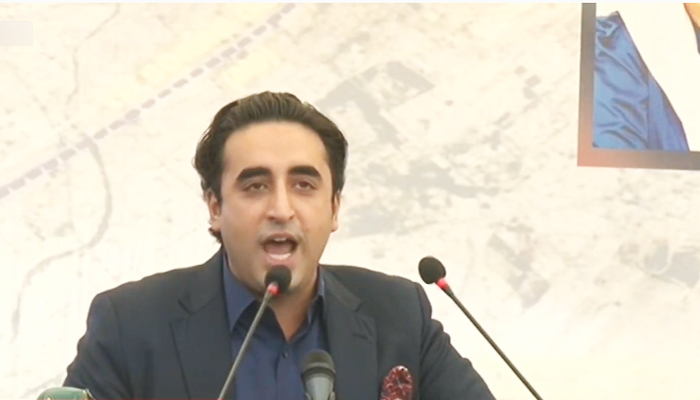
Video - Chairman Bilawal Bhutto Zardari addresses the inauguration ceremony of Malir expressway in Karachi

Govt talks about improved economy but people are committing suicide: Bilawal Bhutto


PPP Chairman Bilawal Bhutto Zardari on Thursday said that while the PTI-led government is busy making tall claims about improved economic indicators, people are committing suicide because of poverty.

He was addressing a press conference after the inauguration ceremony of the Malir Expressway in Karachi, during which he said that Pakistan is even lagging behind Afghanistan and Bangladesh in terms of gross domestic product (GDP).

Shedding light on woes of the common man, Bilawal said that people are slapped with hiked electricity and gas bills, but they do not get an adequate supply of electricity or gas in their houses.

"What solutions do you have for the masses? What are you even doing for them," Bilawal questioned Prime Minister Imran Khan. "The PM only says 'what can I do' whenever the country finds itself in crises."

He added: "When Kashmir was attacked, the PM said 'what can I do?' People are suffering from extreme poverty and inflation, and the premier continues to say 'what can I do'."

The PPP chairman went on to say that PM Imran Khan should resign from his position and go home if he does not have the solution to Pakistan's problems.

"We are the ones who know how to solve people's problems because we steered Pakistan away from crises [in 2008] when the entire world was struggling with a global recession," Bhutto-Zardari claimed. "We did not abandon the masses even during the most critical situation in history."

Speaking about the initiatives the PPP government took during its tenure, Bilawal said that the Benazir Income Support Programme (BISP) alleviated the conditions of the people and helped them fight poverty.

"We even gave increments to people on their salaries and pensions despite the national kitty being empty at the time," he maintained. "We even increased the Pakistan Army's salary by 175 %, which had been unprecedented in the country's history."

Bilawal warned that if the ongoing situation continues, it would become impossible for the government to control the wrath of the masses.

Speaking about Balochistan, he said that "the region where gas is produced is itself deprived of gas supply."

"People of Karachi cannot light their stoves, how would they contribute to the economy?"

The PPP chairman also shed light on the ongoing issue of his party members' resignations from the national and provincial assemblies, saying that all PPP MPAs and MNAs have already submitted their resignations to him.

"I know how each and every member is being pressurised to retract their decisions. Do not treat my people like this," he said. "I know who is doing this, so don't compel me to expose you."

"You cannot blackmail civil servants," he said.

Developmental projects in Sindh

Elaborating on the different developmental projects that the Sindh government introduced in the province, Bilawal Bhutto said that the ruling PPP — with the help of public-private partnership — completed and initiated more projects in the province than the Centre and all other provinces combined. 

https://www.geo.tv/latest/326277-govt-talks-about-improved-economy-but-people-are-committing-suicide-bilawal-bhutto

We can’t let the country turn into an experiment and training factory for the selected puppets, Chairman PPP


 Chairman Pakistan Peoples Party Bilawal Bhutto Zardari has said that instead of turning the country into an experiment and training factory for the selected and puppets, Pakistan needs strong leadership to uphold the democratic ideals of its Founder Quaid-e-Azam Mohammad Ali Jinnah for Pakistan.

In his message on the 145th birthday anniversary of Quaid-e-Azam Mohammad Ali Jinnah, the PPP Chairman paid glowing tributes to the visionary leader who established a country through a peaceful and democratic movement for the Muslims of united India.

Bilawal Bhutto Zardari said that Quaid-e-Azam’s mission for an egalitarian and strong Muslim-majority nation as a role-model for the entire Ummah has yet to be achieved completely and now it is the collective responsibility of the entire nation to fully realize his dream.

He said PPP is the real torchbearer of the ideology of Pakistan conceived by Quaid-e-Azam Mohammad Ali Jinnah as both our former Chairpersons and Prime Ministers Shaheed Zulfikar Ali Bhutto and Shaheed Mohtarma Benazir Bhutto laid down their lives for this ideology.

Bilawal Bhutto Zardari pledged to carry forward the struggle for a peaceful, prosperous, and egalitarian Pakistan and called upon the people to join his Party’s endeavors to achieve the mission of our Founder of the Nation.

https://www.ppp.org.pk/pr/24208/

وزیراعظم صاحب۔۔! عوامی مسائل کا حل معلوم نہیں تو گھر چلے جائیں، بلاول بھٹو

پیپلز پارٹی کے چیئرمین بلاول بھٹو نے کہا ہے کہ ملک پر ہمارے وزیراعظم ابھی تک زیر تربیت ہیں۔ تمام


بوجھ عوام کو اٹھانا پڑ رہا ہے۔ عمران خان کے پاس عوام کے مسائل کا حل نہیں ہے تو وہ گھر چلے جائیں۔

بلاول بھٹو زرداری کا کراچی میں ملیر ایکسپریس وے کا سنگ بنیاد رکھنے کی تقریب سے خطاب کرتے ہوئے کہنا تھا کہ یہ افسوس کا مقام ہے کہ پاکستان آج افغانستان اور بنگلا دیش سے بھی پیچھے ہے۔ مشکل حالات میں وزیراعظم کا ایک ہی جواب ہوتا ہے کہ میں کیا کروں۔

چیئرمین پیپلز پارٹی نے کہا کہ مشکل حالات کا مقابلہ کرنے کا پیپلز پارٹی کا ٹریک ریکارڈ موجود ہے۔ ہم نے نااہل اور نالائق وزیراعظم کو بھگانا ہے۔ ہم نے عوامی حکومت لانی ہے جس کا کام عوام کے مسائل حل کرنا ہوتا ہے۔ دوسروں کے اشاروں پر آنے والے عوام پر توجہ نہیں دیتے۔

ان کا کہنا تھا کہ عمران خان کی حکومت صوبوں کو لاوارث چھوڑ دیا ہے۔ جب صوبوں نے حساب مانگنا شروع کیا تو انکے پاس کچھ نہیں رہے گا۔ اگر یہی حالات رہے تو پھر عوام پر کوئی قابو نہیں پا سکے گا۔ کراچی جیسے شہر میں گیس نہیں ہے۔

https://samachar.pk/

ایک یونانی کا غم: تُم نے بھٹو کو کیوں مارا….؟ | ڈاکٹر عبدالخالق

تحریر: ڈاکٹر عبدالخالق

میرا واپسی کا ہوائی ٹکٹ ہفتہ بھر مسلسل پسینے میں بھیگنے سے اتنا خراب ہو چکا تھا کہ اس پر تمام لکھائی مٹ چکی تھی۔ مجھے اندازہ نہیں تھا کہ کمر والی بیلٹ میں پسینے کی نمی داخل ہو جائے گی۔ پاسپورٹ تو اپنے دبیز کور کی وجہ سے محفوظ رہا لیکن ٹکٹ کی خاطر میں بہت پریشان تھا۔ کمپیوٹرائزڈ ٹکٹ ہوتا تو کوئی مسئلہ نہ تھا مگر اس وقت یہ رائج نہ تھا لہذا ٹکٹ ہاتھ سے ہی لکھے جاتے تھے۔ آسانی رہی کہ ٹکٹ دوہرا کر کے رکھا تھا اور اندر کے دو کوپن قدرے پڑھے جا رہے تھے جو استعمال کر کے میں کراچی اور پھر راولپنڈی پہنچا۔

پی آئی اے آفس رجوع کیا تو انہوں نے نیا ٹکٹ دینے سے انکار کر دیا۔ نائجیریا سے آئے ہوئے ایک دوست عبدالقیوم صاحب سے بات کی انہوں نے کہا ٹکٹ اور ایک کاغذ پر باقی ماندہ سفر کی تفصیل لکھ کر لاہور بھجوا دو کچھ کرتا ہوں۔ عبدالقیوم صاحب نے لاہور میں مین پاور عراق بھجوانے کے لئے ایک ریکروٹمنٹ ایجنسی بنائی ہوئی تھی۔ اللہ کا شکر ہے کہ نیا ٹکٹ بن گیا۔

چھٹی ختم ہونے کے قریب تھی مگر بیگم صاحبہ میکے والوں کا پیار مزید سمیٹنا چاہتی تھیں۔ مجھے تو ڈیوٹی پر پہنچنا تھا لہذا میں روانہ ہوا اور ان کا آنا بعد میں ٹھہرا۔ میں پی آئی اے کی کوپن ہیگن کی پرواز سے سفر کر رہا تھا۔ ایتھنز اس کا پہلا سٹاپ اوور میری پہلی منزل تھا۔ ان دنوں یہ فلائٹ دو سٹاپ اوورز کے بعد کوپن ہیگن پہنچتی تھی اور ایک منافع بخش روٹ تھا جسے پی آئی اے کی مہارت نے پہلے غیر منافع بخش بنایا اور بعد میں بند کر دیا گیا۔

ایتھنز ائرپورٹ بڑا سادہ اور پر سکون لگا۔ عمارت سے باہر نکلتے ہی سڑک پر ہوٹل کی گاڑی تیار کھڑی تھی اور دس بارہ منٹ بعد میں ہوٹل پہنچ گیا۔ ایتھنز یورپ کے پرانے شہروں میں سے ایک ہے جو 3400 سال پہلے آباد ہوا۔ ایتھنز کو سب سے پرانا دارالحکومت ہونے کا بھی اعزاز حاصل ہے۔ یہ سقراط بقراط ارسطو اور افلاطون جیسے ذی علم اور فلسفی شخصیات کا مسکن رہا۔ فنون لطیفہ اس شہر کی پہچان ہیں۔ ایتھنز کو مغربی تہذیب اور جمہوریت کی جنم بھومی بھی کہا جاتا ہے۔ ارسطو کو سکندر اعظم کا استاد ہونے کا اعزاز بھی رہا۔ ایتھنز کو 1896 میں پہلی اولمپک کھیلوں کی میزبانی کا شرف بھی رہا۔ اس شہر کی دنیا میں سب سے زیادہ سٹیڈیم اور تھیٹرز ہونے کی شہرت بھی ہے مگر ایکرو پولس سب سے زیادہ ایتھنز کی شہرت کا باعث ہے۔

ایکروپولس ایک پہاڑی کے اوپر ہموار سطح پر بنا ہوا قدیم قلعہ ہے جو ساڑھے سات ایکڑ سے زیادہ رقبہ پر پھیلا ہوا ہے اور اس کے گرد ایک پندرہ فٹ چوڑی اور بیس فٹ اونچی دیوار ہے۔ پہاڑی کے دامن سے اوپر تک بہت خوبصورت سیڑھیاں بنی ہوئی ہیں۔ سیڑھیوں کی سمت اور لمبائی چوڑائی قدرتی ڈھلوان کے مطابق ہے اور راستے میں کہیں کہیں درمیانے سائز کے پودے بھی اس راستے کو حسین تر بنا دیتے ہیں۔ یہ سیڑھیاں اوپر ایک ستونوں والی خوبصورت عمارت تک لے جاتی ہیں جسے پروپائلیا کا نام دیا گیا ہے۔

صدیوں کی شکست و ریخت کے باوجود اب بھی یہ عمارت اتنی دلکش ہے کہ اس کو مسکن بنا لینے کو جی چاہے۔ سلطنت عثمانیہ کے دور میں پروپائلیا کو بادشاہ کی رہائش گاہ کے طور پر بھی استعمال کیا گیا۔ اس کے درمیان سے گزر کر ہم ایکروپولس میں داخل ہوتے ہیں یا یوں کہیں کہ یہ اس کمپلیکس کی پہلی عمارت ہے جو سیاحوں کی توجہ کا مرکز بنتی ہے۔ دراصل پروپائلیا اس عظیم الشان عالمی ورثے کا استقبالیہ ہے۔ اس کے بعد کھلی جگہ میں اگر ہم چاروں اطراف نظر دوڑائیں تو ایکروپولس کی تمام عمارات دیکھ سکتے ہیں۔

پروپائلیا کے بائیں جانب اریکنیان کے نام سے ایتھنا دیوی اور دیگر دیوتاؤں اور ہیروز کے اعزاز میں ایک شاندار ٹیمپل بنایا گیا ہے جس کے پورچ کی چھت کو ستونوں کے بجائے چھ نسوانی مجسموں نے اٹھایا ہوا ہے اور دائیں جانب ایتھنا نائیکی ( فتح کی دیوی) کا ٹیمپل بھی بنایا گیا ہے۔ نائیکی کا نام کھلاڑیوں کے لئے جاگر اور ٹریک سوٹ وغیرہ بنانے والی کمپنی نے خوب استعمال کیا ہے۔

یونانی مائتھالوجی میں عقل، ہینڈی کرافٹ اور جنگ کی دیوی کو ایتھنا دیوی کا نام دیا گیا ہے۔ پروپائلیا سے کچھ آگے جا کر دائیں طرف یہاں کی سب سے عالیشان اور سب سے بڑی عمارت ہے جو اسی دیوی کے اعزاز میں بنائی گئی تھی اور اسے پارتھینان کہتے ہیں۔ جب عیسائیت پھیلی تو پارتھینان کو حضرت مریم کے لئے مخصوص کر دیا اور اریکنیان کو گرجا بنا دیا گیا۔ سلطنت عثمانیہ کے دور میں یہ بارود کے ذخیرے کے لئے استعمال ہوئی اور جب حملہ آوروں کی گولہ باری سے بارود کا ذخیرہ پھٹا تو بہت تباہی مچی۔ پارتھینان کے ساتھ ہی ایک اور ٹیمپل بنا جو کہ حاملہ خواتین کی دیوی ارتیمس برارونیہ کا مزار سمجھا جاتا ہے۔

پارتھینان سے کچھ آگے جا کر دائیں طرف ایک بڑے ہال میں داخل ہوئے جہاں بہت سے نوادرات اور مجسمے شو کیسز میں بند نمائش کے لئے رکھے ہوئے تھے۔ یہ نوادرات ایکروپولس کے اندر سے ہی اکٹھے کیے ہوئے تھے۔ آثار قدیمہ سے دلچسپی رکھنے والوں کے لئے ایکروپولس ایک بے بہا خزانہ ہے جہاں وقت گزرنے کا احساس نہیں ہوتا۔ میرے پاس کیمرہ نہیں تھا اس لئے وہاں موجود ایک فوٹو گرافر سے میں نے تصویر بنوانے کا ارادہ کیا۔ پارتھینان اور پروپائلیا کے درمیان بکھرے ہوئے بے شمار ماربل کے ٹکڑوں اور پتھروں کے بیچ ایک پتھر پر بیٹھے فوٹوگرافر سے میں نے تصویر بنانے کا کہا۔

یہ یونانی شخص پچاس برس سے کچھ اوپر کا ہو گا اور اپنا مدعا بیان کرنے کی حد تک انگریزی زبان جانتا تھا۔ وہ اپنی جگہ سے اٹھا اور تصویر بنانے کی کارروائی کرتے ہوئے پوچھا آپ کہاں سے آئے ہیں؟ میرا پاکستان کا نام لینا تھا کہ اس کے چہرے کے تاثرات یکسر بدل گئے۔ کہنے لگا کہ میں تصویر بعد میں بناؤں گا پہلے بتاؤ تم نے علی بھٹو کو کیوں مارا؟ اسے بھٹو صاحب کا پورا نام بھی نہیں آتا تھا۔ بار بار کہے جا رہا تھا کہ تم نے علی بھٹو کو کیوں مارا۔

وہ انتہائی جذباتی ہو رہا تھا اور اس کی خشمگیں نگاہوں سے یہی اندازہ ہو رہا تھا کہ یہ جرم مجھ سے ہی سرزد ہوا تھا۔ وہ اپنے جذبات کے زبانی اظہار سے آگے اگر نہیں بڑھا تو اس کا واحد سبب میرا غیر ملکی ہونا تھا۔ میں نے اسے سمجھایا کہ ہم بھی ایسا نہیں چاہتے تھے اور یہ ایک عدالتی فیصلہ تھا اور ادھر ادھر کی باتیں کیں تو وہ نارمل ہوا اور میری تصویر بنائی جو میں شیئر کر رہا ہوں۔

میں سوچتا رہا کہ بھٹو صاحب کی شخصیت کا جادو تھا یا ان کی غیر طبعی موت کا شہرہ کہ سمندر پار ایک غیر قوم کا فرد جس کی ان کے ساتھ نہ تو فکری آگہی تھی نہ ہی کوئی رشتہ مگر وہ ان کی موت کا غم اتنی گہرائی تک محسوس کر رہا تھا جبکہ بھٹو صاحب کی سزا پر عملدرآمد ہوئے پونے دو سال بیت چکے تھے۔ یہ بھی اتفاق ہے کہ اسی سر زمین پر ڈھائی ہزار سال پہلے سقراط کو زہر کا پیالہ دیا گیا تھا۔

غروب آفتاب سے قبل میں ہوٹل پہنچ گیا تھا۔ رات کھانے کے بعد ہوٹل سے باہر چہل قدمی کے لئے نکلا۔ سڑک کے پار ساحل سمندر پر رنگا رنگ روشنیوں نے متوجہ کیا تو اس طرف چل دیا۔ یہ ایک امیوزمنٹ پارک تھا جہاں چھوٹے بچوں سمیت ہر عمر کے لوگ تفریح میں مشغول تھے۔ مختلف اقسام کے جھولے اور رولر کوسٹر وغیرہ سے لطف اندوز ہو رہے تھے جبکہ کچھ جنک فوڈ کا مزہ لے رہے تھے۔ کچھ دیر وہاں ٹھہرنے کے بعد ہوٹل واپس آ کر جلدی سو گیا کیونکہ صبح صبح ائرپورٹ روانگی تھی۔

https://samachar.pk/ 

Wednesday, December 23, 2020

#DailyShow #TrevorNoah #TheDailyShow Donald Trump, Loser-in-Chief | The Daily Social Distancing Show

Video - #JoeBiden #MiguelCardona #BidenCabinet Biden introduces Miguel Cardona as nominee for secretary of education

Video Report - Why Trump vetoed bipartisan defense spending bill

Trump Delays COVID Bill, Leaving Millions Of Desperate Americans In Limbo

 Jonnelle Marte

The president’s apparent refusal to sign the bill has injected uncertainty into efforts to protect millions of Americans from financial disaster.

resident Donald Trump’s threat late Tuesday to veto the $892 billion coronavirus relief bill approved by Congress this week may delay aid for millions of families on the cusp of eviction and about to lose unemployment benefits.

Trump’s apparent refusal to immediately sign the bill “has injected uncertainty or worse into the effort to protect millions of Americans from falling over a financial cliff,” said Mark Hamrick of Bankrate Wednesday.

Trump said the bill, which passed Congress Monday night, did not provide enough support for small businesses, and he asked Congress to increase stimulus checks to individuals to $2,000, instead of the “ridiculously low” $600 in the bill.

Many economists agree the bill’s aid is too low, but say the immediate support to the economy is still welcome and necessary.

These households are in limbo:

14 MILLION COULD LOSE INCOME THE DAY AFTER CHRISTMAS

About 14.1 million people are receiving unemployment benefits through pandemic programs that are set to expire on Dec. 26, according to Labor Department data.

The bill extends two programs which support self-employed workers and the long-term unemployed until mid-March. It also adds an extra $300 per week in aid to the 20.3 million people receiving unemployment benefits.

Letting the bill lapse would amount to a sudden cutoff in income for households that already saw unemployment benefits shrink drastically over the summer, when a $600 weekly supplement expired.

CASH DWINDLES FOR HOUSEHOLDS

Democrats embraced Trump’s $2,000 check proposal Monday, but Republicans are unlikely to join them. In the meantime, the $600 checks that were supposed to be mailed by Treasury next week are on hold.

Households used the $1,200 direct cash payments from the Cares Act in the spring to boost spending, pay down debt and pad savings.

Now lower-income U.S. households, earning between $12,000and $30,267, are quickly depleting savings, JPMorgan Chase Institute found in a report released earlier this month.

The cash cushion is nearly gone for these households, increasing the risk they could fall further behind on housing payments and other bills, the research showed.

EVICTION THREAT LOOMING

The bill extends a moratorium on evictions that expires Dec.31 through the end of January, and provides $25 billion inemergency rental assistance.

About 40 million people could face eviction over the next several months, according to research from the Aspen Institute.They owe about $70 billion in unpaid back rent and utilities, Moody’s Analytics Chief Economist Mark Zandi estimates.

https://draft.blogger.com/blog/post/edit/6906155786122195046/1402647115383283781

Opinion: Trump Corrupted the Presidential Pardon. Biden Must Repair It.

There are clear ways to reform the pardon process to work as the founders intended.
President Trump doesn’t use his pardon power often, but when he does, he abuses the process for all it’s worth.
In less than four years in office, Mr. Trump has made a mockery of mercy, doling out clemency to some of the most deplorable people in the country while ignoring tens of thousands of more deserving applicants.
He did it again on Tuesday night, issuing 20 pardons and sentence commutations, many to a rogues’ gallery of wrongdoers who shouldn’t have been on anyone’s mercy list. These included four Blackwater security guards convicted in connection with the killing of Iraqi civilians, three corrupt Republican former members of Congress and two figures who pleaded guilty as part of the special counsel’s Russia investigation.
Sure, Mr. Trump tossed a bone to a few people sentenced under outrageously harsh three-strikes laws, like Weldon Angelos, who got 55 years in prison for selling marijuana while carrying a handgun. But those are the exceptions. In general, if you are not a xenophobic sheriff, a right-wing troll, a homicidal military officer, an old friend or a turkey, your odds of being pardoned by this president hover around zero.
What makes Mr. Trump’s clemency record even worse is how paltry it is. As the old joke goes, the food is terrible, and the portions are too small. To date, Mr. Trump has issued a not-so-grand total of 65 pardons and sentence commutations — the fewest of any president in more than 100 years. He may add a few more to that list, of course, if only by pre-emptively pardoning his lawyers and family members.
Mr. Trump’s stingy, self-serving approach to clemency is due in part to his transactional view of the law as something to punish his enemies and to protect himself, his friends and his allies. But it’s a power that is easy to abuse because it is nearly unlimited. While Mr. Trump may be the most flagrant abuser, he’s far from the first. From Bill Clinton’s pardon of the fugitive financier Marc Rich to Gerald Ford’s pardon of his predecessor Richard Nixon, there are plenty of examples of presidents of both parties exploiting mercy for dubious reasons.
The solution isn’t for presidents to pardon fewer people; it’s to pardon more, with more consideration and more consistency.
As President-elect Joe Biden prepares to take over, he has the opportunity to reimagine this deeply important but long-abused power and make it work more as the founders intended: as a counterweight to unjust prosecutions and excessive punishments. “Without an easy access to exceptions in favor of unfortunate guilt, justice would wear a countenance too sanguinary and cruel,” Alexander Hamilton wrote in the Federalist No. 74.
If ever there was a moment to reform the system, it is now. The decades-old American prison crisis has dumped millions of people behind bars, many suffering under hugely disproportionate sentences. Last summer, the nation was engulfed by mass protests over criminal-justice abuses, and prisons continue to endure many of the nation’s worst coronavirus outbreaks. Recent federal laws, including one signed by Mr. Trump, have alleviated some of the most egregious sentences, but they haven’t done nearly enough. There are currently nearly 14,000 clemency petitions waiting for action. And unlike so many other parts of the federal government, clemency is one area in which presidents can do a lot of good on their own, and fast.
First and most important: Take back control of the pardon process. The power to grant mercy may be the president’s alone, but the office of the pardon attorney operates out of the Justice Department. Under most administrations, before any request for clemency can land on the president’s desk, it has to survive review by a gantlet of people whose job it is to win convictions, not undo them. In some cases, the same prosecutors who sent a person to prison are asked to weigh in on granting that person mercy. It’s “akin to having Yankees fans pick the Red Sox’s starting pitcher,” wrote Mark Osler, a law professor at the University of St. Thomas School of Law who advocates for comprehensive clemency reform.
Prosecutors’ built-in biases are exacerbated by the fear of public blowback if any grant of clemency goes wrong — say, if a person commits a crime after being granted relief.
https://www.nytimes.com/2020/12/23/opinion/trump-biden-pardon.html?action=click&module=Opinion&pgtype=Homepage

Music Video - Hamari sanson main aj tak - Madam Noor jahan

Video - #NayaDaur #JoorJahan Celebrating Madam Nur Jahan| Legend of Pakistan| Jugnu Mohsin, Dr Omer Adil

Video - #PDMMardan #PDMJalsa - #ANP Ameer Haidr Khan Hoti Speech

Video - #PDMMardan #PDMJalsa Fazal-ur-Rehman Speech In PDM Mardan Jalsa | 23rd December 2020

Video - #PDMMardanRally - PMLN Maryam Nawaz Sharif's Speech

Tuesday, December 22, 2020

Video Report - UK facing even tougher restrictions to curb new coronavirus variant

Video Report - Armenians take to streets of Yerevan to call for PM’s resignation

Video Report - Fauci on new Covid-19 strain found in UK: You have to assume it's here

Video Report - Joe Biden receives first dose of Covid-19 vaccine

Video Report - President-elect Joe Biden delivers remarks in Wilmington, Delaware — 12/22/2020

Pashto Music Video - Kala Na Kala Sath Da Jam Kava Pa Ta Mainyin Yam Pama Pam Kava

#Pakistan - Imran Khan admits his incapacity to run the government

 Deputy information secretary of Pakistan Peoples Party, Palwasha Khan in a reaction to the prime minister Imran Khan’s speech in front of his ministers has said that at last the selected and puppet prime minister has admitted his incapacity and inability to understand the people’s problems and running of the government.

In a statement Palwasha Khan said that Imran Khan had claimed of having 200 economic experts in his disposal but the economy is down the drain and no expert is seen anywhere in the government. She said that Chairman Bilawal was right to say that the government has been handed over to incapable bunch of people. Palwasha said that Imran Khan has embarrassed the selectors as well. This novice prime minister is destroying the country bit by bit. The incapable and inept government has failed in every front., Khan concluded.

https://www.ppp.org.pk/pr/24197/

Prominent Pakistani rights activist found dead in Toronto


By Asad Hashim
Rights groups call for a full and independent investigation amid a rise in attacks and threats to Pakistani dissidents abroad.

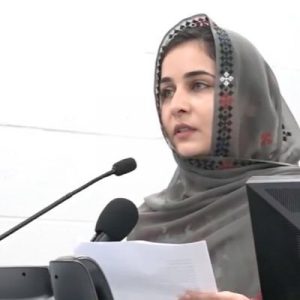
Police say they have found the body of a Pakistani dissident living in the Canadian city of Toronto on refugee status, with rights group Amnesty International and others calling for a full and transparent investigation into the circumstances surrounding her death.The body of 37-year-old Karima Mehrab Baloch was found on Monday evening, although no immediate cause of death was given by police, said Lateef Johar Baloch, a rights activist. “I am with her family [and] I was there when police came to us and confirmed that they found her body,” Lateef Baloch told Al Jazeera by telephone.
“It is confirmed that she is dead, and her body was found from water near Toronto.”
A Toronto police spokesperson confirmed the body of a 37-year-old woman had been located on Monday.
“It is currently being investigated as a non-criminal death and there are not believed to be any suspicious circumstances,” said Caroline de Kloet, a police media relations officer.
Karima had earlier been reported missing by Toronto police, having last been seen at about 3pm local time (20:00 GMT) on Sunday in the Bay Street and Queens Quay West area, according to a police statement.
Rights groups and Pakistani rights activists, particularly those living on asylum status in foreign countries, have called for a thorough investigation into her death, alleging it may have been carried out by state actors.Karima was a prominent ethnic Baloch rights activist, having led the Baloch Student Organisation’s Azad faction (BSO-A), an organisation at the forefront of the political movement calling for the independence of Pakistan’s ethnic Baloch areas and documenting alleged human rights violations there.Baloch activists, particularly those calling for independence, have been subject for years to a sustained and documented campaign of enforced disappearances and extrajudicial killings, local and international rights groups say.
Located in Pakistan’s southwest, Balochistan is the country’s largest but least populated province and is rich in minerals and other resources.
Baloch rights groups have long decried what they term Pakistan’s extractive policy towards the region, mining it for resources but leaving it languishing at the bottom of most socioeconomic indicators in the South Asian country.
For more than a decade, armed ethnic Baloch groups have also been fighting a separatist war against Pakistani security forces, killing many Pakistani security forces and civilians in attacks they say are aimed at achieving independence.
Pakistan’s military routinely denies allegations of rights abuses, saying most of the region’s “missing people” are members of armed groups who fled their homes voluntarily.Karima was one of the most prominent voices calling for justice for political activists who were allegedly abducted or killed by Pakistan’s intelligence services. She took over the leadership of the BSO-A after the disappearance of its previous head, Zahid Baloch, in 2014.In 2016, the BBC named her as one of its 100 “inspirational and influential women” for that year, citing her activism.Facing threats to her life, she fled to Canada and was granted permanent political asylum in 2017.
Pattern of violence
“Recently, her husband told me that he got some threats regarding her [in the last week],” said Lateef Baloch, who is not related to Karima but is a close friend and associate.
“People that sent messages to him saying that they will send a ‘gift’ to Karima by Christmas or something like this.”
A screenshot of those threatening messages was shared with Al Jazeera.
On Tuesday, international rights organisation Amnesty International called for a thorough investigation into the rights activist’s death.
“The death of activist Karima Baloch in Toronto, Canada is deeply shocking and must be immediately and effectively investigated,” the group said in a tweet.
“The perpetrators must be brought to justice without recourse to the death penalty.”
Karima’s is the second death of a Pakistani dissident under mysterious circumstances this year.
On March 2, Sajid Hussain, a Pakistani activist and journalist who often wrote on human rights violations in Balochistan and was living in self-imposed exile in Sweden, was reported missing.
His body was found almost two months later in a river near the Swedish town of Uppsala, authorities said.
Police did not investigate Hussain’s death as a crime, but media rights watchdog Reporters Without Borders said there was “a strong possibility that he was killed in connection with his work as a journalist”.
In February, rights activist and critic of Pakistan’s powerful military Ahmed Waqass Goraya was physically attacked outside his home in Rotterdam, where he lives in self-imposed exile.Pakistani activists living in exile say the deaths and attacks come after a sustained increase in the number of threats they have faced in the last year.Taha Siddiqui, a prominent Pakistani journalist known for his strident criticism of the military, fled the country in 2018 after he escaped an attempted abduction. He was granted political asylum in France later that year.
Siddiqui told Al Jazeera he had received multiple warnings from the United States and French intelligence agencies since he moved to the French capital Paris regarding threats to his life, and documented at least three incidents of what he deemed to be surveillance of his activities there.
“In Pakistan, we are seeing that there has been a growing oppression and crackdown and suppression of independent voices,” he said.
“Now that they’ve done it at home, it seems they are replicating that model and expanding this model globally.”
https://www.aljazeera.com/news/2020/12/22/prominent-pakistani-rights-activist-found-dead-in-toronto

Suspicious Death of Baloch Activist in Toronto Raises Uncomfortable Questions for Pakistan

By Abhijnan Rej
Karima Mehrab was outspoken in her criticism of 

Pakistan’s powerful military.
Well-known Baloch activist Karima Mehrab (also known as Karima Baloch) was found dead by the police in Toronto on December 21. According to media reports, Mehrab, a former chairperson of Baloch Students Organization-Azad (BSO), a separatist group proscribed in Pakistan, was found dead a day after she was reported missing. At the time of filing this report, no further details around the circumstances of her death – including the result of the autopsy – is known. However, as many media outlets have already noted, the case’s similarity with that of Sajid Hussain Baloch’s – another activist who was found dead in a river outside Uppsala, Sweden in April this year – raises the distinct possibility of foul play.
Baloch activists such as the 37-year-old Mehrab have long been at the loggerheads with Pakistan’s powerful army and intelligence service, as they have demanded justice for human rights violations in Balochistan and the right to self-determination towards an independent “Azad” Balochistan. Pakistan, for its part, accuses them of being terrorists engaged in anti-state activities, and of working at the behest of archrival India and its security services. Most key Baloch activists are in exile.
Resource-rich Balochistan, the largest of the five provinces of Pakistan, has acquired additional salience for Pakistan in the recent years after China’s investments there toward the construction of the Gwadar port as well as other projects under the banner of the China-Pakistan Economic Corridor (CPEC). Pakistan has also maintained that India seeks to destabilize CPEC through the deployment of Baloch separatists.
Named as one the 100 most “inspirational and influential” women by the BBC in 2016, Mehrab’s asylum claim proceedings in Canada were suspended that year by the Canada Border Services Agency pending review in 2017 due to its determination that the BSO was engaged in subversive activities against Pakistan, the Toronto Sun reported in December 2016.
While India has traditionally eschewed expressing overt support for Baloch activists, Prime Minister Narendra Modi broke new ground in 2016 when he referred to the province in his Indian Independence Day address on August 15. In his speech, Modi had thanked the people of Balochistan and Gilgit-Baltistan for the “goodwill” they had shown him. Three days after Modi’s speech, Mehrab appealed to him to diplomatically intervene on behalf of the Baloch people. “We appeal to you that as our brother, you speak about the genocide and war crimes in Baloch on international forums and become the voice of the sisters of Baloch,” she said at that time.
However, there is little public evidence that India has provided material support to Baloch rebels despite periodic accusations by Islamabad to that effect, the latest installment of which was a “dossier” Pakistan apparently sent to the United Nations and key countries in November. According to Pakistani officials, the dossier included concrete evidence of India’s involvement in anti-Pakistan terrorist activities.
While it is too early to determine who or what may have caused Mehrab’s death, pending further investigation by Canadian authorities, civilian experts of South Asian security and intelligence issues point to the distinct possibility that she was assassinated by, or at the behest of, Pakistan’s powerful Inter-Service Intelligence (ISI).
When asked about the motivations that the Pakistani state may have had when it comes to the alleged assassination, School of Oriental and Asian Studies (SOAS), London professor Avinash Paliwal told The Diplomat: “The main message is to dissidents of the Pakistani security establishment the world over … that exile is not escape, and that they’ll have to cull criticism of, and activism, against the fauj [Pakistan’s Army].”
“It comes at a moment when the threshold for dissent within Rawalpindi [the headquarters of Pakistan Army] is at an all-time low given the domestic situation,” he added.
Pakistan is currently in the throes of major political agitation organized by a coalition of 11 opposition parties, the Pakistan Democratic Movement (PDM), against the military-backed Imran Khan government. One of the parties, the Pakistan Muslim League (Nawaz), has, in one instance during the protests, gone as far as to demand the resignation of not only Khan, but also that of army chief General Qamar Javed Bajwa and ISI chief Lieutenant General Faiz Hameed. While Khan supporters are putting up a defiant face and point to many cracks within the PDM that are already visible, there is no denying that the Pakistan military is under considerable pressure because of it.
Additionally, Balochistan has seen a spate of violence over the past year. A Baloch separatist group – the Baloch Liberation Army – took responsibility for an unsuccessful attack on the Karachi Stock Exchange in June this year that killed two guards and a policeman.
Paliwal suggests that all of the above-mentioned factors – Pakistan’s need to secure CPEC, the rising level of violence in Balochistan and elsewhere, as well as pressure on and within the Pakistan army – may explain the timing, should it indeed be established that Mehrab was assassinated by Pakistan-linked entities. “Pakistan’s recent dossier against India offers another contextualizing element that a momentum has been built according to the ISI which enables it to credibly counter India or those individuals and groups it perceives to be connected to India,” he added by way of an additional hypothesis.Another SOAS scholar Ayesha Siddiqa, an expert on Pakistan’s military establishment, told The Diplomat: “This is the second mysterious death of a Baluch dissident in exile in a year that is being applauded by Twitter accounts acclaimed to be close to Pakistan’s agencies.”
“If the ISI is involved it would indicate the agency downgrading Western states in its estimation as places where crime can be committed without retribution or getting caught,” Siddiqa noted, echoing something Paliwal had also told The Diplomat.
“The question is will the COVID-19 environment be used as creating bigger space to attack the dissidents?” Siddiqa wondered.
https://thediplomat.com/2020/12/suspicious-death-of-baloch-activist-in-toronto-raises-uncomfortable-questions-for-pakistan/

Karima Baloch, Pakistani human rights activist, found dead in Canada

Shah Meer Baloch & Hannah Ellis-Petersen

Husband says foul play cannot be ruled out after body of 37-year-old dissident discovered in Toronto.
A dissident Pakistani human rights activist living in exile in Canada has been found dead in Toronto after going missing.
Karima Baloch, 37, was granted asylum in Canada in 2016 after her work as a human rights activist in the troubled Pakistan state of Balochistan had led to her being followed and threatened by the authorities.
The first chair of the Baloch Students Organization (BSO-Azad), a political student organisation, she had been advocating for the rights of those in a region home to a long-running insurgency movement, and raising the ongoing issue of enforced disappearances.
She was listed by the BBC in its 100 most inspirational and influential women of 2016 for her work in human rights.
Baloch is the second Pakistani dissident from Balochistan living in exile to be found dead this year. In May, Sajid Hussain, a journalist who wrote about human rights violations in Balochistan, was found dead in a river in Sweden, where he had sought asylum after threats to his life in Pakistan.
Baloch’s husband, Hammal Haider, also a Pakistani activist living in exile, said she had left home at midday on Sunday for a walk on Toronto’s Centre Island as she often did, but never returned. Toronto police later put out an appeal for information on Twitter and her body was found on Monday on the island.
“I can’t believe that it’s an act of suicide. She was a strong lady and she left home in a good mood,” Haider said. “We can’t rule out foul play as she has been under threats. She left Pakistan as her home was raided more than twice. Her uncle was killed. She was threatened to leave activism and political activities but she did not and fled to Canada.”
Later on Tuesday, Toronto police said Baloch’s death was “currently being investigated as a non-criminal death and there are not believed to be any suspicious circumstances.” They did not provide further details. But Haider said a month ago he had received multiple threatening messages over social media after raising the issue of human rights abuses and military operations in Balochistan.
He said: “I was told that my brothers and wife can be targeted. I didn’t take them seriously. We often get such trolls and threats while talking about human rights abuses.
Lateef Johar, a Baloch activist and close friend in exile in Canada, told the Guardian the police had said Baloch’s body had been found near a body of water. “The police have not provided any further details. They have not told us the cause of death nor have they returned the body of Karima.”
Johar said he had met Baloch on Thursday at the University of Toronto, where they were both students. They talked on the phone on Friday. “I don’t think this is an accident or an act of suicide,” Johar said. “We all feel threatened here. Even after the killing of Sajid Hussain I fear when I find myself in a dark street.”
Amnesty International said: “The death of activist Karima Baloch in Toronto, Canada is deeply shocking and must be immediately and effectively investigated. The perpetrators must be brought to justice without recourse to the death penalty.”
Since moving to Canada, Baloch had continued to be vocal about human rights abuses in her home province and across Pakistan. She regularly spoke at conferences, addressed the media and attended protest rallies in Canada.
“She had received threats from unknown Pakistani numbers on WhatsApp after a few Baloch students were abducted in late 2017,” said Johar. “Those threats also mentioned me. She was asked to come back to Pakistan and told that if she comes back, the cases against her would be quashed and those abducted students would be freed.”
The Swedish authorities ruled out foul play in the death of Hussain but an autopsy did not confirm an exact cause of death. A friend of the family who has seen the autopsy report and police investigation told the Guardian: “The family was not convinced by the investigation and they have requested for more evidence from the Swedish authorities. Their request has yet to be entertained.”
https://www.theguardian.com/world/2020/dec/22/karima-baloch-pakistani-human-rights-activist-found-dead-in-canada

Monday, December 21, 2020

Video Report - Chairman PPP Bilawal Bhutto Zardari addresses press conference in Lahore

Video Report - #NayaDaur #Politics #Pakistan Bilawal Says No Talks Before Imran Khan's Resignation But Splits Emerging Within JUI

#Pakistan - A colossal foreign policy failure


  • Pakistan’s relations with Gulf  

Pakistan has a history of decades of warm relations with the Gulf countries which has benefitted both sides. The agreement about the return of Gwadar to Pakistan from Oman was a landmark event under Prime Minister Feroz Khan Noon. Pakistan provided manpower that played a significant role in the massive development of the Gulf region’s infrastructure, trained its military personnel and helped set up airlines in the Gulf. The Gulf provided jobs to tens of thousands of Pakistanis whose remittances became an important source of the much needed foreign exchange to Pakistan. Despite occasional problems, the relations never lost their warmth.

Relations with Saudi Arabia suffered a strain earlier this year when FM Qureshi, in an unusually sharp warning, asked Saudi Arabia-led OIC to stop dilly-dallying on the convening of a meeting of its Council of Foreign Ministers (CFM) on Kashmir. Pakistan was subsequently required to pay back $1 billion out of a $3 billion Saudi loan after the kingdom reportedly decided to reduce its financial support. Meanwhile, the UAE suspended issuance of work or employment visas to Pakistan. Had the ban been related to Covid-19, India and not Pakistan would have faced the restriction. There must have been some other reason that the government is reluctant to reveal.

Initially the PTI government flatly denied the suspension of visas with SAPM Zulfikar Bukhari asserting that the UAE authorities had maintained there was no ban on the export of Pakistani workforce. This was a patent untruth. Despite staying in Dubai for two days, FM Qureshi failed in his mission to persuade Sheikh Mohammed bin Rashid Al Maktoum, vice president and prime minister of the UAE, to lift the ban.

Since the ban that came into effect on Nov 18, one recruitment agency in Rawalpindi alone is reported to have lost 3,000 jobs that have now been avowedly diverted to India. That a country which is home to 1.2m Pakistanis is arbitrarily taking such a harsh position on the entry of Pakistani citizens is deeply troubling and can have serious implications for long-term ties.

The government should come upfront about the reasons behind the UAE’s decision instead of remaining in a state of denial over an issue that can have serious consequences for tens of thousands of Pakistanis. It would hurt Pakistan a lot if the ban was to continue.

https://www.pakistantoday.com.pk/2020/12/21/a-colossal-foreign-policy-failure/

Imran Khan Should Resign If He Cannot Provide Solutions To People's Problems, Says Bilawal Bhutto

Pakistan Peoples' Party (PPP) chairman Bilawal Bhutto-Zardari lashed out at the Prime Minister Imran Khan-led government for being unaware of ground realities, while calling for the premier to resign if he cannot provide solutions to the issues faced by the public.

"I think the government is not aware of ground realities. The current government does not realise the kind of issues the people are facing [and] their hatred for a system which deprives them of meals," Bilawal said while speaking to the media in Lahore, reported Dawn.
Cornering Khan, the opposition leader said that the 'puppet' premier could not give an answer as to what he was doing for the public, which was 'enough evidence' for him to resign.
"If he does not have solutions for addressing the people's issues, he should resign. We have solutions for providing relief to the people," he asserted.
Speaking about the long march planned for next year by the opposition's 11-party alliance Pakistan Democratic Movement (PDM), Bilawal said that Khan would not be able to 'save himself' once the long march begins, Dawn reported.
Earlier, Pakistan Muslim League-Nawaz (PML-N) spokesperson Marriyum Aurangzeb had stated that the current Pakistan Tehreek-e-Insaf (PTI) government had nothing to show for its two years in power, according to Dawn.
"Did they manage to eliminate corruption? For two-and-a-half years they have used national institutions to exact political revenge under the guise of accountability," she had told reporters in Islamabad.
Aurangzeb further highlighted that inflation had risen in the country and the economy was not stabilised, and added that despite the government's claim of not taking any loans, it had taken out loans worth billions in an effort to "hide its own theft".
Earlier this month, the PDM demanded the Imran Khan-led government to quit by January 31 or face intensified movements by opposition parties such as the long march to Islamabad.
According to a Geo News report, PML-N Vice President Maryam Nawaz in her address at Minar-i-Pakistan last week urged supporters to answer the call for a march to Islamabad.
The next general elections in Pakistan are scheduled for 2023. 

http://www.businessworld.in/article/Imran-Khan-should-resign-if-he-cannot-provide-solutions-to-people-s-problems-says-Bilawal-Bhutto/21-12-2020-356452/

#Pakistan #PPP - Time for dialogue is over and now time is for long march

Chairman Pakistan Peoples Party, Bilawal Bhutto Zardari has reiterated his stance that the time for dialogue is over and now there will be a long march towards Islamabad to get the resignation of puppet prime minister Imran Khan.Bilawal Bhutto Zardari said this while talking to the media in Lahore on Monday evening after condoling with the family of PPP leader Dilawar Butt who passed away a few days ago. He paid rich tributes to Dilawar Butt and said that he was a loyal and committed PPP worker. He said that Dilawar Butt taught his family the loyalty with which he served the PPP, the people of Lahore and the democracy.
Chairman PPP said that Imran Khan is ignorant of the ground realities and does not have any solution of the problems the people are faced with. He said that the PPP knows how to provide relief to the poor people of Pakistan in difficult times. Bilawal Bhutto Zardari said that the PPP government provided relief to the people in 2008-2013 when the world economy was in deep recession. The PPP strengthened the agriculture of the country so that a prosperous grower can grow crops for the economy. Now this selected government is importing crops from abroad instead of giving the appropriate price to the growers for their crops thus destroying the agriculture of the country.
Responding to questions by the journalists, Bilawal Bhutto Zardari said that the PDM will decide when to start the long march towards Islamabad to get the resignation of the puppet prime minister Imran Khan. We will take the poor people, the unemployed, the students, the growers and all the people who are being troubled by this selected government to Islamabad with us. He said that dialogue will be held after this puppet prime minister is gone. When we will reach Islamabad this puppet will leave the government, he said.
On the subject of secret ballot in the senate elections, Bilawal Bhutto Zardari said that on secret ballot we will follow the constitution. The people and their representatives have the right to secret ballot. This right of secrecy of vote is protected by the secret ballots and no one can victimise anyone after voting. The members have the right to use their right to vote without any fear. This is their constitutional right to keep their votes secret. Any change in this procedure could only be brought by the change in the constitution. Imran and his coterie have no knowledge of constitution but the courts are aware of constitutions. He said that he enjoys when government feels pain by someone eating pizza. The pizza which should be discussed is Papa John’s pizza that the owner of dozens of franchises is neither on ECL nor in prison.
Chairman Bilawal said that his meeting with Shahbaz Sharif was in the presence of other people including police. He also said that the PDM collectively decides issues and chalk out strategies and we have not decided when to use resignation option. Imran Khan ran away from debate in the parliament and refused to have a debate in the media. Imran Khan has admitted his defeat and has said that he will think about resigning, Bilawal Bhutto Zardari said.
https://www.ppp.org.pk/pr/24191/