Wednesday, December 23, 2020

Trump Delays COVID Bill, Leaving Millions Of Desperate Americans In Limbo

 Jonnelle Marte

The president’s apparent refusal to sign the bill has injected uncertainty into efforts to protect millions of Americans from financial disaster.

resident Donald Trump’s threat late Tuesday to veto the $892 billion coronavirus relief bill approved by Congress this week may delay aid for millions of families on the cusp of eviction and about to lose unemployment benefits.

Trump’s apparent refusal to immediately sign the bill “has injected uncertainty or worse into the effort to protect millions of Americans from falling over a financial cliff,” said Mark Hamrick of Bankrate Wednesday.

Trump said the bill, which passed Congress Monday night, did not provide enough support for small businesses, and he asked Congress to increase stimulus checks to individuals to $2,000, instead of the “ridiculously low” $600 in the bill.

Many economists agree the bill’s aid is too low, but say the immediate support to the economy is still welcome and necessary.

These households are in limbo:

14 MILLION COULD LOSE INCOME THE DAY AFTER CHRISTMAS

About 14.1 million people are receiving unemployment benefits through pandemic programs that are set to expire on Dec. 26, according to Labor Department data.

The bill extends two programs which support self-employed workers and the long-term unemployed until mid-March. It also adds an extra $300 per week in aid to the 20.3 million people receiving unemployment benefits.

Letting the bill lapse would amount to a sudden cutoff in income for households that already saw unemployment benefits shrink drastically over the summer, when a $600 weekly supplement expired.

CASH DWINDLES FOR HOUSEHOLDS

Democrats embraced Trump’s $2,000 check proposal Monday, but Republicans are unlikely to join them. In the meantime, the $600 checks that were supposed to be mailed by Treasury next week are on hold.

Households used the $1,200 direct cash payments from the Cares Act in the spring to boost spending, pay down debt and pad savings.

Now lower-income U.S. households, earning between $12,000and $30,267, are quickly depleting savings, JPMorgan Chase Institute found in a report released earlier this month.

The cash cushion is nearly gone for these households, increasing the risk they could fall further behind on housing payments and other bills, the research showed.

EVICTION THREAT LOOMING

The bill extends a moratorium on evictions that expires Dec.31 through the end of January, and provides $25 billion inemergency rental assistance.

About 40 million people could face eviction over the next several months, according to research from the Aspen Institute.They owe about $70 billion in unpaid back rent and utilities, Moody’s Analytics Chief Economist Mark Zandi estimates.

https://draft.blogger.com/blog/post/edit/6906155786122195046/1402647115383283781

Opinion: Trump Corrupted the Presidential Pardon. Biden Must Repair It.

There are clear ways to reform the pardon process to work as the founders intended.
President Trump doesn’t use his pardon power often, but when he does, he abuses the process for all it’s worth.
In less than four years in office, Mr. Trump has made a mockery of mercy, doling out clemency to some of the most deplorable people in the country while ignoring tens of thousands of more deserving applicants.
He did it again on Tuesday night, issuing 20 pardons and sentence commutations, many to a rogues’ gallery of wrongdoers who shouldn’t have been on anyone’s mercy list. These included four Blackwater security guards convicted in connection with the killing of Iraqi civilians, three corrupt Republican former members of Congress and two figures who pleaded guilty as part of the special counsel’s Russia investigation.
Sure, Mr. Trump tossed a bone to a few people sentenced under outrageously harsh three-strikes laws, like Weldon Angelos, who got 55 years in prison for selling marijuana while carrying a handgun. But those are the exceptions. In general, if you are not a xenophobic sheriff, a right-wing troll, a homicidal military officer, an old friend or a turkey, your odds of being pardoned by this president hover around zero.
What makes Mr. Trump’s clemency record even worse is how paltry it is. As the old joke goes, the food is terrible, and the portions are too small. To date, Mr. Trump has issued a not-so-grand total of 65 pardons and sentence commutations — the fewest of any president in more than 100 years. He may add a few more to that list, of course, if only by pre-emptively pardoning his lawyers and family members.
Mr. Trump’s stingy, self-serving approach to clemency is due in part to his transactional view of the law as something to punish his enemies and to protect himself, his friends and his allies. But it’s a power that is easy to abuse because it is nearly unlimited. While Mr. Trump may be the most flagrant abuser, he’s far from the first. From Bill Clinton’s pardon of the fugitive financier Marc Rich to Gerald Ford’s pardon of his predecessor Richard Nixon, there are plenty of examples of presidents of both parties exploiting mercy for dubious reasons.
The solution isn’t for presidents to pardon fewer people; it’s to pardon more, with more consideration and more consistency.
As President-elect Joe Biden prepares to take over, he has the opportunity to reimagine this deeply important but long-abused power and make it work more as the founders intended: as a counterweight to unjust prosecutions and excessive punishments. “Without an easy access to exceptions in favor of unfortunate guilt, justice would wear a countenance too sanguinary and cruel,” Alexander Hamilton wrote in the Federalist No. 74.
If ever there was a moment to reform the system, it is now. The decades-old American prison crisis has dumped millions of people behind bars, many suffering under hugely disproportionate sentences. Last summer, the nation was engulfed by mass protests over criminal-justice abuses, and prisons continue to endure many of the nation’s worst coronavirus outbreaks. Recent federal laws, including one signed by Mr. Trump, have alleviated some of the most egregious sentences, but they haven’t done nearly enough. There are currently nearly 14,000 clemency petitions waiting for action. And unlike so many other parts of the federal government, clemency is one area in which presidents can do a lot of good on their own, and fast.
First and most important: Take back control of the pardon process. The power to grant mercy may be the president’s alone, but the office of the pardon attorney operates out of the Justice Department. Under most administrations, before any request for clemency can land on the president’s desk, it has to survive review by a gantlet of people whose job it is to win convictions, not undo them. In some cases, the same prosecutors who sent a person to prison are asked to weigh in on granting that person mercy. It’s “akin to having Yankees fans pick the Red Sox’s starting pitcher,” wrote Mark Osler, a law professor at the University of St. Thomas School of Law who advocates for comprehensive clemency reform.
Prosecutors’ built-in biases are exacerbated by the fear of public blowback if any grant of clemency goes wrong — say, if a person commits a crime after being granted relief.
https://www.nytimes.com/2020/12/23/opinion/trump-biden-pardon.html?action=click&module=Opinion&pgtype=Homepage

Music Video - Hamari sanson main aj tak - Madam Noor jahan

Video - #NayaDaur #JoorJahan Celebrating Madam Nur Jahan| Legend of Pakistan| Jugnu Mohsin, Dr Omer Adil

Video - #PDMMardan #PDMJalsa - #ANP Ameer Haidr Khan Hoti Speech

Video - #PDMMardan #PDMJalsa Fazal-ur-Rehman Speech In PDM Mardan Jalsa | 23rd December 2020

Video - #PDMMardanRally - PMLN Maryam Nawaz Sharif's Speech

Tuesday, December 22, 2020

Video Report - UK facing even tougher restrictions to curb new coronavirus variant

Video Report - Armenians take to streets of Yerevan to call for PM’s resignation

Video Report - Fauci on new Covid-19 strain found in UK: You have to assume it's here

Video Report - Joe Biden receives first dose of Covid-19 vaccine

Video Report - President-elect Joe Biden delivers remarks in Wilmington, Delaware — 12/22/2020

Pashto Music Video - Kala Na Kala Sath Da Jam Kava Pa Ta Mainyin Yam Pama Pam Kava

#Pakistan - Imran Khan admits his incapacity to run the government

 Deputy information secretary of Pakistan Peoples Party, Palwasha Khan in a reaction to the prime minister Imran Khan’s speech in front of his ministers has said that at last the selected and puppet prime minister has admitted his incapacity and inability to understand the people’s problems and running of the government.

In a statement Palwasha Khan said that Imran Khan had claimed of having 200 economic experts in his disposal but the economy is down the drain and no expert is seen anywhere in the government. She said that Chairman Bilawal was right to say that the government has been handed over to incapable bunch of people. Palwasha said that Imran Khan has embarrassed the selectors as well. This novice prime minister is destroying the country bit by bit. The incapable and inept government has failed in every front., Khan concluded.

https://www.ppp.org.pk/pr/24197/

Prominent Pakistani rights activist found dead in Toronto


By Asad Hashim
Rights groups call for a full and independent investigation amid a rise in attacks and threats to Pakistani dissidents abroad.

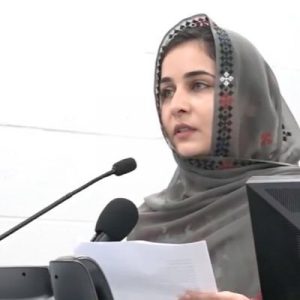
Police say they have found the body of a Pakistani dissident living in the Canadian city of Toronto on refugee status, with rights group Amnesty International and others calling for a full and transparent investigation into the circumstances surrounding her death.The body of 37-year-old Karima Mehrab Baloch was found on Monday evening, although no immediate cause of death was given by police, said Lateef Johar Baloch, a rights activist. “I am with her family [and] I was there when police came to us and confirmed that they found her body,” Lateef Baloch told Al Jazeera by telephone.
“It is confirmed that she is dead, and her body was found from water near Toronto.”
A Toronto police spokesperson confirmed the body of a 37-year-old woman had been located on Monday.
“It is currently being investigated as a non-criminal death and there are not believed to be any suspicious circumstances,” said Caroline de Kloet, a police media relations officer.
Karima had earlier been reported missing by Toronto police, having last been seen at about 3pm local time (20:00 GMT) on Sunday in the Bay Street and Queens Quay West area, according to a police statement.
Rights groups and Pakistani rights activists, particularly those living on asylum status in foreign countries, have called for a thorough investigation into her death, alleging it may have been carried out by state actors.Karima was a prominent ethnic Baloch rights activist, having led the Baloch Student Organisation’s Azad faction (BSO-A), an organisation at the forefront of the political movement calling for the independence of Pakistan’s ethnic Baloch areas and documenting alleged human rights violations there.Baloch activists, particularly those calling for independence, have been subject for years to a sustained and documented campaign of enforced disappearances and extrajudicial killings, local and international rights groups say.
Located in Pakistan’s southwest, Balochistan is the country’s largest but least populated province and is rich in minerals and other resources.
Baloch rights groups have long decried what they term Pakistan’s extractive policy towards the region, mining it for resources but leaving it languishing at the bottom of most socioeconomic indicators in the South Asian country.
For more than a decade, armed ethnic Baloch groups have also been fighting a separatist war against Pakistani security forces, killing many Pakistani security forces and civilians in attacks they say are aimed at achieving independence.
Pakistan’s military routinely denies allegations of rights abuses, saying most of the region’s “missing people” are members of armed groups who fled their homes voluntarily.Karima was one of the most prominent voices calling for justice for political activists who were allegedly abducted or killed by Pakistan’s intelligence services. She took over the leadership of the BSO-A after the disappearance of its previous head, Zahid Baloch, in 2014.In 2016, the BBC named her as one of its 100 “inspirational and influential women” for that year, citing her activism.Facing threats to her life, she fled to Canada and was granted permanent political asylum in 2017.
Pattern of violence
“Recently, her husband told me that he got some threats regarding her [in the last week],” said Lateef Baloch, who is not related to Karima but is a close friend and associate.
“People that sent messages to him saying that they will send a ‘gift’ to Karima by Christmas or something like this.”
A screenshot of those threatening messages was shared with Al Jazeera.
On Tuesday, international rights organisation Amnesty International called for a thorough investigation into the rights activist’s death.
“The death of activist Karima Baloch in Toronto, Canada is deeply shocking and must be immediately and effectively investigated,” the group said in a tweet.
“The perpetrators must be brought to justice without recourse to the death penalty.”
Karima’s is the second death of a Pakistani dissident under mysterious circumstances this year.
On March 2, Sajid Hussain, a Pakistani activist and journalist who often wrote on human rights violations in Balochistan and was living in self-imposed exile in Sweden, was reported missing.
His body was found almost two months later in a river near the Swedish town of Uppsala, authorities said.
Police did not investigate Hussain’s death as a crime, but media rights watchdog Reporters Without Borders said there was “a strong possibility that he was killed in connection with his work as a journalist”.
In February, rights activist and critic of Pakistan’s powerful military Ahmed Waqass Goraya was physically attacked outside his home in Rotterdam, where he lives in self-imposed exile.Pakistani activists living in exile say the deaths and attacks come after a sustained increase in the number of threats they have faced in the last year.Taha Siddiqui, a prominent Pakistani journalist known for his strident criticism of the military, fled the country in 2018 after he escaped an attempted abduction. He was granted political asylum in France later that year.
Siddiqui told Al Jazeera he had received multiple warnings from the United States and French intelligence agencies since he moved to the French capital Paris regarding threats to his life, and documented at least three incidents of what he deemed to be surveillance of his activities there.
“In Pakistan, we are seeing that there has been a growing oppression and crackdown and suppression of independent voices,” he said.
“Now that they’ve done it at home, it seems they are replicating that model and expanding this model globally.”
https://www.aljazeera.com/news/2020/12/22/prominent-pakistani-rights-activist-found-dead-in-toronto

Suspicious Death of Baloch Activist in Toronto Raises Uncomfortable Questions for Pakistan

By Abhijnan Rej
Karima Mehrab was outspoken in her criticism of 

Pakistan’s powerful military.
Well-known Baloch activist Karima Mehrab (also known as Karima Baloch) was found dead by the police in Toronto on December 21. According to media reports, Mehrab, a former chairperson of Baloch Students Organization-Azad (BSO), a separatist group proscribed in Pakistan, was found dead a day after she was reported missing. At the time of filing this report, no further details around the circumstances of her death – including the result of the autopsy – is known. However, as many media outlets have already noted, the case’s similarity with that of Sajid Hussain Baloch’s – another activist who was found dead in a river outside Uppsala, Sweden in April this year – raises the distinct possibility of foul play.
Baloch activists such as the 37-year-old Mehrab have long been at the loggerheads with Pakistan’s powerful army and intelligence service, as they have demanded justice for human rights violations in Balochistan and the right to self-determination towards an independent “Azad” Balochistan. Pakistan, for its part, accuses them of being terrorists engaged in anti-state activities, and of working at the behest of archrival India and its security services. Most key Baloch activists are in exile.
Resource-rich Balochistan, the largest of the five provinces of Pakistan, has acquired additional salience for Pakistan in the recent years after China’s investments there toward the construction of the Gwadar port as well as other projects under the banner of the China-Pakistan Economic Corridor (CPEC). Pakistan has also maintained that India seeks to destabilize CPEC through the deployment of Baloch separatists.
Named as one the 100 most “inspirational and influential” women by the BBC in 2016, Mehrab’s asylum claim proceedings in Canada were suspended that year by the Canada Border Services Agency pending review in 2017 due to its determination that the BSO was engaged in subversive activities against Pakistan, the Toronto Sun reported in December 2016.
While India has traditionally eschewed expressing overt support for Baloch activists, Prime Minister Narendra Modi broke new ground in 2016 when he referred to the province in his Indian Independence Day address on August 15. In his speech, Modi had thanked the people of Balochistan and Gilgit-Baltistan for the “goodwill” they had shown him. Three days after Modi’s speech, Mehrab appealed to him to diplomatically intervene on behalf of the Baloch people. “We appeal to you that as our brother, you speak about the genocide and war crimes in Baloch on international forums and become the voice of the sisters of Baloch,” she said at that time.
However, there is little public evidence that India has provided material support to Baloch rebels despite periodic accusations by Islamabad to that effect, the latest installment of which was a “dossier” Pakistan apparently sent to the United Nations and key countries in November. According to Pakistani officials, the dossier included concrete evidence of India’s involvement in anti-Pakistan terrorist activities.
While it is too early to determine who or what may have caused Mehrab’s death, pending further investigation by Canadian authorities, civilian experts of South Asian security and intelligence issues point to the distinct possibility that she was assassinated by, or at the behest of, Pakistan’s powerful Inter-Service Intelligence (ISI).
When asked about the motivations that the Pakistani state may have had when it comes to the alleged assassination, School of Oriental and Asian Studies (SOAS), London professor Avinash Paliwal told The Diplomat: “The main message is to dissidents of the Pakistani security establishment the world over … that exile is not escape, and that they’ll have to cull criticism of, and activism, against the fauj [Pakistan’s Army].”
“It comes at a moment when the threshold for dissent within Rawalpindi [the headquarters of Pakistan Army] is at an all-time low given the domestic situation,” he added.
Pakistan is currently in the throes of major political agitation organized by a coalition of 11 opposition parties, the Pakistan Democratic Movement (PDM), against the military-backed Imran Khan government. One of the parties, the Pakistan Muslim League (Nawaz), has, in one instance during the protests, gone as far as to demand the resignation of not only Khan, but also that of army chief General Qamar Javed Bajwa and ISI chief Lieutenant General Faiz Hameed. While Khan supporters are putting up a defiant face and point to many cracks within the PDM that are already visible, there is no denying that the Pakistan military is under considerable pressure because of it.
Additionally, Balochistan has seen a spate of violence over the past year. A Baloch separatist group – the Baloch Liberation Army – took responsibility for an unsuccessful attack on the Karachi Stock Exchange in June this year that killed two guards and a policeman.
Paliwal suggests that all of the above-mentioned factors – Pakistan’s need to secure CPEC, the rising level of violence in Balochistan and elsewhere, as well as pressure on and within the Pakistan army – may explain the timing, should it indeed be established that Mehrab was assassinated by Pakistan-linked entities. “Pakistan’s recent dossier against India offers another contextualizing element that a momentum has been built according to the ISI which enables it to credibly counter India or those individuals and groups it perceives to be connected to India,” he added by way of an additional hypothesis.Another SOAS scholar Ayesha Siddiqa, an expert on Pakistan’s military establishment, told The Diplomat: “This is the second mysterious death of a Baluch dissident in exile in a year that is being applauded by Twitter accounts acclaimed to be close to Pakistan’s agencies.”
“If the ISI is involved it would indicate the agency downgrading Western states in its estimation as places where crime can be committed without retribution or getting caught,” Siddiqa noted, echoing something Paliwal had also told The Diplomat.
“The question is will the COVID-19 environment be used as creating bigger space to attack the dissidents?” Siddiqa wondered.
https://thediplomat.com/2020/12/suspicious-death-of-baloch-activist-in-toronto-raises-uncomfortable-questions-for-pakistan/

Karima Baloch, Pakistani human rights activist, found dead in Canada

Shah Meer Baloch & Hannah Ellis-Petersen

Husband says foul play cannot be ruled out after body of 37-year-old dissident discovered in Toronto.
A dissident Pakistani human rights activist living in exile in Canada has been found dead in Toronto after going missing.
Karima Baloch, 37, was granted asylum in Canada in 2016 after her work as a human rights activist in the troubled Pakistan state of Balochistan had led to her being followed and threatened by the authorities.
The first chair of the Baloch Students Organization (BSO-Azad), a political student organisation, she had been advocating for the rights of those in a region home to a long-running insurgency movement, and raising the ongoing issue of enforced disappearances.
She was listed by the BBC in its 100 most inspirational and influential women of 2016 for her work in human rights.
Baloch is the second Pakistani dissident from Balochistan living in exile to be found dead this year. In May, Sajid Hussain, a journalist who wrote about human rights violations in Balochistan, was found dead in a river in Sweden, where he had sought asylum after threats to his life in Pakistan.
Baloch’s husband, Hammal Haider, also a Pakistani activist living in exile, said she had left home at midday on Sunday for a walk on Toronto’s Centre Island as she often did, but never returned. Toronto police later put out an appeal for information on Twitter and her body was found on Monday on the island.
“I can’t believe that it’s an act of suicide. She was a strong lady and she left home in a good mood,” Haider said. “We can’t rule out foul play as she has been under threats. She left Pakistan as her home was raided more than twice. Her uncle was killed. She was threatened to leave activism and political activities but she did not and fled to Canada.”
Later on Tuesday, Toronto police said Baloch’s death was “currently being investigated as a non-criminal death and there are not believed to be any suspicious circumstances.” They did not provide further details. But Haider said a month ago he had received multiple threatening messages over social media after raising the issue of human rights abuses and military operations in Balochistan.
He said: “I was told that my brothers and wife can be targeted. I didn’t take them seriously. We often get such trolls and threats while talking about human rights abuses.
Lateef Johar, a Baloch activist and close friend in exile in Canada, told the Guardian the police had said Baloch’s body had been found near a body of water. “The police have not provided any further details. They have not told us the cause of death nor have they returned the body of Karima.”
Johar said he had met Baloch on Thursday at the University of Toronto, where they were both students. They talked on the phone on Friday. “I don’t think this is an accident or an act of suicide,” Johar said. “We all feel threatened here. Even after the killing of Sajid Hussain I fear when I find myself in a dark street.”
Amnesty International said: “The death of activist Karima Baloch in Toronto, Canada is deeply shocking and must be immediately and effectively investigated. The perpetrators must be brought to justice without recourse to the death penalty.”
Since moving to Canada, Baloch had continued to be vocal about human rights abuses in her home province and across Pakistan. She regularly spoke at conferences, addressed the media and attended protest rallies in Canada.
“She had received threats from unknown Pakistani numbers on WhatsApp after a few Baloch students were abducted in late 2017,” said Johar. “Those threats also mentioned me. She was asked to come back to Pakistan and told that if she comes back, the cases against her would be quashed and those abducted students would be freed.”
The Swedish authorities ruled out foul play in the death of Hussain but an autopsy did not confirm an exact cause of death. A friend of the family who has seen the autopsy report and police investigation told the Guardian: “The family was not convinced by the investigation and they have requested for more evidence from the Swedish authorities. Their request has yet to be entertained.”
https://www.theguardian.com/world/2020/dec/22/karima-baloch-pakistani-human-rights-activist-found-dead-in-canada

Monday, December 21, 2020

Video Report - Chairman PPP Bilawal Bhutto Zardari addresses press conference in Lahore

Video Report - #NayaDaur #Politics #Pakistan Bilawal Says No Talks Before Imran Khan's Resignation But Splits Emerging Within JUI

#Pakistan - A colossal foreign policy failure


  • Pakistan’s relations with Gulf  

Pakistan has a history of decades of warm relations with the Gulf countries which has benefitted both sides. The agreement about the return of Gwadar to Pakistan from Oman was a landmark event under Prime Minister Feroz Khan Noon. Pakistan provided manpower that played a significant role in the massive development of the Gulf region’s infrastructure, trained its military personnel and helped set up airlines in the Gulf. The Gulf provided jobs to tens of thousands of Pakistanis whose remittances became an important source of the much needed foreign exchange to Pakistan. Despite occasional problems, the relations never lost their warmth.

Relations with Saudi Arabia suffered a strain earlier this year when FM Qureshi, in an unusually sharp warning, asked Saudi Arabia-led OIC to stop dilly-dallying on the convening of a meeting of its Council of Foreign Ministers (CFM) on Kashmir. Pakistan was subsequently required to pay back $1 billion out of a $3 billion Saudi loan after the kingdom reportedly decided to reduce its financial support. Meanwhile, the UAE suspended issuance of work or employment visas to Pakistan. Had the ban been related to Covid-19, India and not Pakistan would have faced the restriction. There must have been some other reason that the government is reluctant to reveal.

Initially the PTI government flatly denied the suspension of visas with SAPM Zulfikar Bukhari asserting that the UAE authorities had maintained there was no ban on the export of Pakistani workforce. This was a patent untruth. Despite staying in Dubai for two days, FM Qureshi failed in his mission to persuade Sheikh Mohammed bin Rashid Al Maktoum, vice president and prime minister of the UAE, to lift the ban.

Since the ban that came into effect on Nov 18, one recruitment agency in Rawalpindi alone is reported to have lost 3,000 jobs that have now been avowedly diverted to India. That a country which is home to 1.2m Pakistanis is arbitrarily taking such a harsh position on the entry of Pakistani citizens is deeply troubling and can have serious implications for long-term ties.

The government should come upfront about the reasons behind the UAE’s decision instead of remaining in a state of denial over an issue that can have serious consequences for tens of thousands of Pakistanis. It would hurt Pakistan a lot if the ban was to continue.

https://www.pakistantoday.com.pk/2020/12/21/a-colossal-foreign-policy-failure/

Imran Khan Should Resign If He Cannot Provide Solutions To People's Problems, Says Bilawal Bhutto

Pakistan Peoples' Party (PPP) chairman Bilawal Bhutto-Zardari lashed out at the Prime Minister Imran Khan-led government for being unaware of ground realities, while calling for the premier to resign if he cannot provide solutions to the issues faced by the public.

"I think the government is not aware of ground realities. The current government does not realise the kind of issues the people are facing [and] their hatred for a system which deprives them of meals," Bilawal said while speaking to the media in Lahore, reported Dawn.
Cornering Khan, the opposition leader said that the 'puppet' premier could not give an answer as to what he was doing for the public, which was 'enough evidence' for him to resign.
"If he does not have solutions for addressing the people's issues, he should resign. We have solutions for providing relief to the people," he asserted.
Speaking about the long march planned for next year by the opposition's 11-party alliance Pakistan Democratic Movement (PDM), Bilawal said that Khan would not be able to 'save himself' once the long march begins, Dawn reported.
Earlier, Pakistan Muslim League-Nawaz (PML-N) spokesperson Marriyum Aurangzeb had stated that the current Pakistan Tehreek-e-Insaf (PTI) government had nothing to show for its two years in power, according to Dawn.
"Did they manage to eliminate corruption? For two-and-a-half years they have used national institutions to exact political revenge under the guise of accountability," she had told reporters in Islamabad.
Aurangzeb further highlighted that inflation had risen in the country and the economy was not stabilised, and added that despite the government's claim of not taking any loans, it had taken out loans worth billions in an effort to "hide its own theft".
Earlier this month, the PDM demanded the Imran Khan-led government to quit by January 31 or face intensified movements by opposition parties such as the long march to Islamabad.
According to a Geo News report, PML-N Vice President Maryam Nawaz in her address at Minar-i-Pakistan last week urged supporters to answer the call for a march to Islamabad.
The next general elections in Pakistan are scheduled for 2023. 

http://www.businessworld.in/article/Imran-Khan-should-resign-if-he-cannot-provide-solutions-to-people-s-problems-says-Bilawal-Bhutto/21-12-2020-356452/

#Pakistan #PPP - Time for dialogue is over and now time is for long march

Chairman Pakistan Peoples Party, Bilawal Bhutto Zardari has reiterated his stance that the time for dialogue is over and now there will be a long march towards Islamabad to get the resignation of puppet prime minister Imran Khan.Bilawal Bhutto Zardari said this while talking to the media in Lahore on Monday evening after condoling with the family of PPP leader Dilawar Butt who passed away a few days ago. He paid rich tributes to Dilawar Butt and said that he was a loyal and committed PPP worker. He said that Dilawar Butt taught his family the loyalty with which he served the PPP, the people of Lahore and the democracy.
Chairman PPP said that Imran Khan is ignorant of the ground realities and does not have any solution of the problems the people are faced with. He said that the PPP knows how to provide relief to the poor people of Pakistan in difficult times. Bilawal Bhutto Zardari said that the PPP government provided relief to the people in 2008-2013 when the world economy was in deep recession. The PPP strengthened the agriculture of the country so that a prosperous grower can grow crops for the economy. Now this selected government is importing crops from abroad instead of giving the appropriate price to the growers for their crops thus destroying the agriculture of the country.
Responding to questions by the journalists, Bilawal Bhutto Zardari said that the PDM will decide when to start the long march towards Islamabad to get the resignation of the puppet prime minister Imran Khan. We will take the poor people, the unemployed, the students, the growers and all the people who are being troubled by this selected government to Islamabad with us. He said that dialogue will be held after this puppet prime minister is gone. When we will reach Islamabad this puppet will leave the government, he said.
On the subject of secret ballot in the senate elections, Bilawal Bhutto Zardari said that on secret ballot we will follow the constitution. The people and their representatives have the right to secret ballot. This right of secrecy of vote is protected by the secret ballots and no one can victimise anyone after voting. The members have the right to use their right to vote without any fear. This is their constitutional right to keep their votes secret. Any change in this procedure could only be brought by the change in the constitution. Imran and his coterie have no knowledge of constitution but the courts are aware of constitutions. He said that he enjoys when government feels pain by someone eating pizza. The pizza which should be discussed is Papa John’s pizza that the owner of dozens of franchises is neither on ECL nor in prison.
Chairman Bilawal said that his meeting with Shahbaz Sharif was in the presence of other people including police. He also said that the PDM collectively decides issues and chalk out strategies and we have not decided when to use resignation option. Imran Khan ran away from debate in the parliament and refused to have a debate in the media. Imran Khan has admitted his defeat and has said that he will think about resigning, Bilawal Bhutto Zardari said.
https://www.ppp.org.pk/pr/24191/

Sunday, December 20, 2020

Music Video - INNA - Yalla

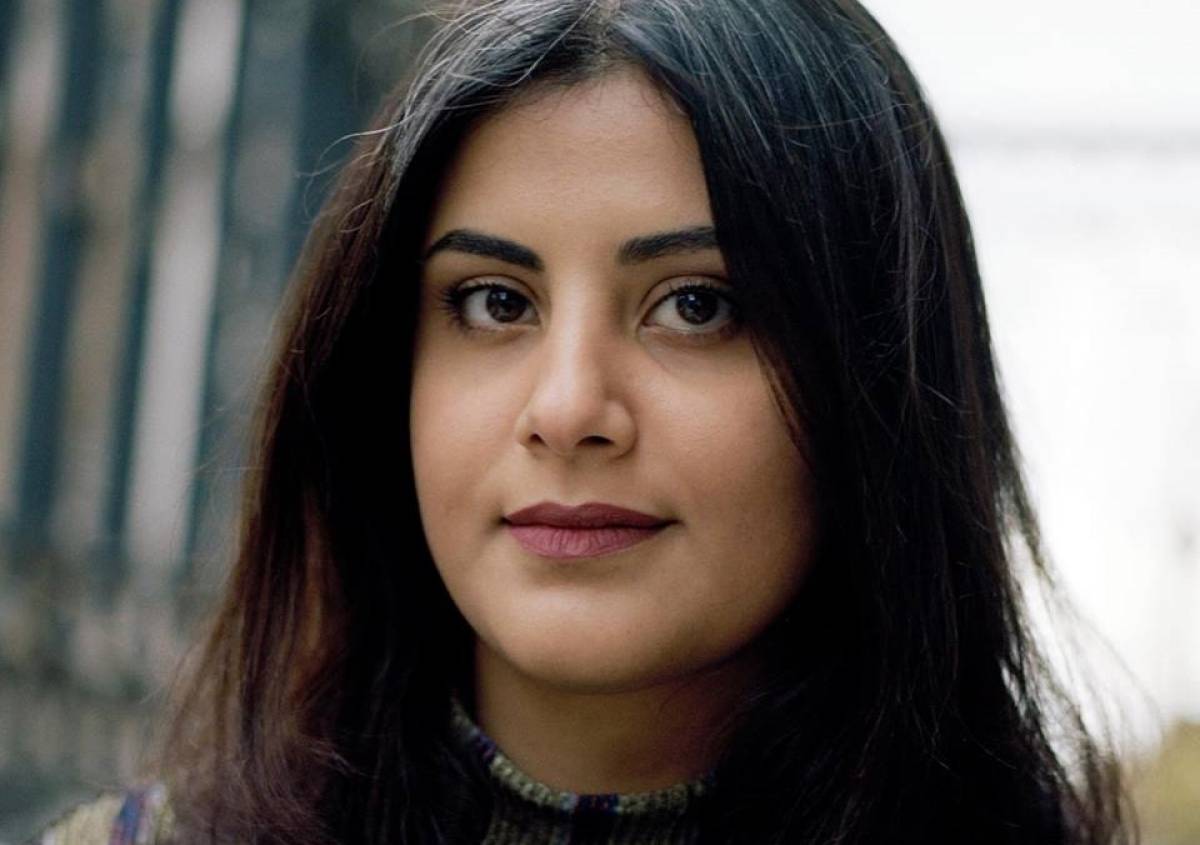
Campaign intensifies to free renowned Saudi women's-rights activist and UBC alumna Loujain al-Hathloul

 The #StudentsForLoujain movement wants the Canadian government to ramp up pressure on Crown Prince Mohammed bin Salman.

Saudi Arabia's ruler, Crown Prince Mohammed bin Salman, has been employing many public-relations tactics to persuade the world that he's not a bloodthirsty dictator.He's befriended White House senior adviser Jared Kushner, son-in-law of Donald Trump. In addition, the Saudi strongman has backed off criticizing the State of Israel.

MBS, as he's known, has even plastered his face on billboards in the U.K., purporting that he's opening Saudi Arabia to the world.
But the world will never forget how Washington Post columnist Jamal Ahmad Khashoggi, a fierce critic of MBS, was executed and dismembered by Saudi agents inside the Saudi consulate in Istanbul in 2018.
And in 2019, Saudi authorities escalated their repressive tactics at home, according to Amnesty International, cracking down on freedom of expression and freedom of assembly.
"They harassed, arbitrarily detained and prosecuted dozens of government critics, human rights defenders, including women’s rights activists, members of the Shi’a minority and family members of activists. Shi’a activists and religious clerics remained on trial before a counter-terror court for expressing dissent," Amnesty International stated in its country report on Saudi Arabia.
"The authorities used the death penalty extensively, carrying out scores of executions for a range of crimes, including drug offences."
#StudentsForLoujain campaign launched
Now, a former University of British Columbia student is caught up in the horrific Saudi legal system. And students in Canada are trying to free her.Loujain al-Hathloul, 31, could face 20 years in jail, according to the Guardian.She's being tried in terrorism court—yes, terrorism court—reportedly for "defying the country's ban on women driving and for campaigning for an end to the male guardianship system, which makes women second-class citizens".Driving while female is still a crime in that country, regardless of what you're being told by public relations consultants on MBS's payroll.Her relatives have told the Guardian that she's been sexually assaulted and tortured. That won't come as a surprise to Canadians who are familiar with the story of William Sampson.He was a Canadian and former member of the Seaforth Highlanders in Vancouver who was subjected to similar abuse at the hands of Saudi prison guards. This was after being sentenced to death for a bomb blast that was actually done not by him, but by opponents of the Saudi regime.
Sampson died prematurely of a heart attack in his early 50s, no doubt a result of what he endured at the hands of this vicious and despicable regime.
MBS's charm offensive in the West should be seen for what it is—a disgusting attempt to cover up his continuing assault on freedom and his stained reputation as one of the worst human-rights abusers in the world.The proof is on display in the execution of Khashoggi, the imprisonment and likely torture of writer Raif Badawi, and the trial and abuse of al-Hathloul, who should be seen as a national hero for her bravery.
Students across Canada are campaigning for al-Hathloul's freedom by trying to pressure Foreign Affairs Minister François-Philippe Champagne to escalate efforts to liberate her from this tyrannical treatment.
"As a member of our student community, Ms. Al-Hathloul is the embodiment of the values of equity, equality, and justice that we strive to uphold," UBC student associations stated in their letter to the minister.
"Loujain has been a bold and courageous champion for women's rights," they continued. "As an advocate, she has stood up for women's rights to operate vehicles and for opposing laws around male guardianship."
They're using the hashtag #StudentsForLoujain.
The Concordia Student Union, Capilano Students' Union, University of Victoria Students' Society, Camosun College Student Society, Douglas Students Union, Emily Carr Students Union, Justice Institute Students' Union, and several others have joined the campaign.
You can participate too by writing to the foreign affairs minister or by making your views known over social media.
The world has largely turned a blind eye to Saudi Arabia's war crimes in Yemen, done with the complicity of the United States. That's been documented by Human Rights Watch.
Everyone knows what a ghastly human being MBS is. If he's truly interested in conducting some genuine public relations that makes a real difference in the world, he'll step in and stop the persecution of Loujain al-Hathloul.
That's the very least he could do to convince the world that he's not an utterly irredeemable thug.
https://www.straight.com/news/campaign-intensifies-to-free-renowned-saudi-womens-rights-activist-and-ubc-alumna-loujain-al

Russia needs to protect borders given risks of smoldering regional conflicts - Putin

Russian President ordered to pay serious attention to information security, fight against extremism, corruption and economic crimes.

Russian President Vladimir Putin stressed the need to effectively protect its state border given the risks of smoldering conflicts in neighboring countries.
"We need to ensure a more effective protection of the state border, moreover given the risks of smoldering regional conflicts near our borders," Putin highlighted during a visit to the Foreign Intelligence Service’s headquarters.
Putin ordered to pay serious attention to information security, fight against extremism, corruption and economic crimes.
In their turn, staff members of the Federal Protective Service should continue effectively ensuring security of state facilities and vital events, while the Main Directorate of Special Programs should handle "a broad range of tasks on boosting stability of work of key state bodies and communications systems in any and even the most challenging situation," he said.
Russia’s intelligence services should continue a resolute struggle against terrorism, which has made it possible to significantly cut the number of such crimes, Russian President noted. According to Putin, the number of terrorism-related crimes in Russia over the past years has significantly decreased. Just two such crimes were registered in the past 11 months of this year compared with 36 in 2015.
"A huge everyday dangerous and hard work and its new quality are behind this statistics. The staff of the Federal Security Service and other services under the auspices of the National Anti-Terrorism Committee should continue acting in the same resolute and consistent way," he stated.
Putin also compared the current situation not only with the mid-1990s and early 2000s, but also with 2010, when some 779 terrorism-related crimes were recorded in Russia.
The Russian people "have a score to settle with" international terrorism, Putin noted. "We remember everyone who died defending Russia against this harsh enemy, which our country faced at the most challenging time of its history," the president stated.
https://tass.com/politics/1237609

Xi Jinping Thought on Diplomacy guides China's actions as responsible country amid pandemic

 In the special year of 2020 shaped by the COVID-19 pandemic, China has fulfilled its responsibilities as a major country in the world while safeguarding its national interests and dignity.

This has been achieved under the guidance of Xi Jinping Thought on Diplomacy.

The thought consists of 10 principles including building a global community of shared future to safeguard world peace and promote common development, pursuing peaceful development on the basis of mutual respect and win-win cooperation, and steering reform of the global governance system to promote greater equity and justice.

The key principles also include pursuing major-country diplomacy with distinctive Chinese features to accomplish the great rejuvenation of the Chinese nation, pursuing the Belt and Road Initiative under the principles of extensive consultation and joint contribution to benefit all, and upholding China's sovereignty, national security, and development interests as the core and non-negotiable position.

UPHOLDING COOPERATION TO AID ANTI-VIRUS FIGHT

Over the past year, President Xi Jinping has engaged in intensive head of state diplomacy.

He held more than 80 meetings and phone calls with foreign leaders and heads of international organizations, and attended over 20 important diplomatic events, including "cloud diplomacy" through the innovative virtual platform.

Xi proposed enhancing solidarity, following the guidance of science, giving full play to the leading role of the World Health Organization (WHO), and launching a joint international response to beat the pandemic.

Since the beginning of the COVID-19 outbreak in China, the government has worked closely with the WHO and the international community in an open, transparent, science-based and responsible manner.

China organized its largest global humanitarian campaign since 1949, providing anti-virus assistance to over 150 countries and nine international organizations and sent 36 medical teams to 34 countries in need.

China has joined COVAX, a global initiative backed by the WHO, to ensure effective and equitable global access to vaccines.

Xi promised on various occasions to make China's COVID-19 vaccines a "global public good."

ADVANCING OPENING-UP TO FACILITATE ECONOMIC RECOVERY

As the world's second-largest economy, China has deepened reform and opening-up across the board and actively pursued mutually beneficial cooperation to provide impetus and confidence for the world to cope with the deepest recession since World War II.

China is expected to become the only major economy to register positive growth this year.

Xi said in order to promote global recovery, the international community must close ranks and jointly respond to this crisis and meet the test, and keep global economy open.

China practiced what it preached. Over the past year, it continued to open up to the world.

In the first eight months this year, China's trade with Belt and Road partners reached 5.86 trillion yuan (about 896 billion U.S. dollars), and Chinese companies made 30 percent more non-financial direct investment in the partner countries year-on-year.

The third China International Import Expo was attended by over 3,600 companies from more than 150 countries and regions, sharing with the world the benefits and opportunities generated by the country's economic recovery and opening-up.

UPHOLDING MULTILATERALISM TO FACILITATE GLOBAL GOVERNANCE REFORM

As the world is caught up in headwinds and setbacks in global governance, Xi has expounded on China's perspectives on global governance while attending major multilateral meetings and put forward China's proposals on tackling global challenges.

"History teaches us that multilateralism, equity and justice can keep war and conflict at bay, while unilateralism and power politics will inflate dispute and confrontation," Xi said.

At various virtual meetings, Xi urged the G20 members and BRICS countries to safeguard the UN-centered international system and the international order underpinned by international law, calling the United Nations "the core institution for addressing international affairs through cooperation."

Xi has also called for forging broader consensus and stronger synergy in building a clean and beautiful world where man and nature coexist in harmony.

Supporting international cooperation on climate change, China promised that it will strive to peak CO2 emissions before 2030 and achieve carbon neutrality before 2060, demonstrating its readiness to contribute to global ecological preservation.

Actions to promote the Xi-proposed vision of a community with a shared future for mankind have been well underway, and China's proposals for building communities with a shared future in various fields including cyberspace, ocean and health have been warmly received.

Video Report - #LongCovid #Coronavirus #Covid19 Long Covid: When coronavirus symptoms don't go away

Video Report - Fears that new Covid variant is more infectious and harder to contain - BBC News

Video Report - #UK mutant coronavirus strain “out of control” as countries announce travel bans

Video Report - #NewStrain #Coronavirus #Pandemic New coronavirus strain in UK: How worried should we be?

Video Report - France latest country to ban travel to and from UK, as new virus strain 'out of control'

Video Report - #Congressional leaders reach agreement on $900 billion #COVID-19 relief package

Afghan Music Video - Ahmad Zahir "Khuda Bowad Yaret"

Afghanistan: Challenges For Joe Biden Administration – Analysis

By Dr. Manoj Kumar Mishra
The incoming Joe Biden’s administration will have lesser options in dealing with the Afghan insurgency. It cannot choose to go offensive, despite the fact that the peace table has not registered any notable progress thus far and insurgency continues unabated.
Considering the protracted nature of insurgency and squandering of American resources, will power and popular support after almost two decades of military entanglement, the new administration will not choose an unsuccessful strategy of the outgoing Trump administration which sought to address the Afghan situation by adopting an offensive gesture soon after assuming office through measures like increasing the number of American troops and resuming drone strikes – a strategy which was later discarded and Washington was forced to open direct talks with the Taliban in view of unremitting insurgency in many pockets of the country and mounting civilian as well as troops’ casualties. Thus, the Biden administration has no alternative except throwing its complete weight behind the peace process.
Ironically, even while the peace talks are very much on between the American and Taliban representatives with a temporary pause until January 5, 2021, the supporting conditions are far from being attained. The Biden administration will have the challenge to handle the existing lacunas with dexterity and enlist support from other regional stakeholders in the process. The administration cannot hope for a hasty yet successful peace process considering the fact that the Taliban cannot be viewed as the only Afghan stakeholder in the process. 

 Challenge of Regional Cooperation
The American efforts at shaping the contours of the Afghan peace efforts excluding the influence of geopolitical rivals like Iran and Russia fell squarely with its geopolitical ambitions of using Afghanistan as a bridge to the resource-rich Central Asian region and becoming a predominant player in energy politics. The Trump administration heavily relied on a containment policy toward Iran and Russia by reversing the nuclear deal with Iran and imposing multiple sanctions on both Iran and Russia on various ambiguous grounds. However, the divergences of geopolitical interests drove these regional powers to maintain contacts with and embolden the Afghan Taliban to move flexibly and negotiate from a position of strength. The Biden administration may soon realize that the internal political dynamics ran in favor of the Taliban and the US could only acquire a predominant position in the Afghan scenario by turning the tide of external dynamics by bringing in the influence of Russia, Iran, China and Pakistan to the Afghan peace efforts.
Besides, while the US Afghan peace interlocutor Zalmay Kalilzad is seeking guarantees from the Taliban that the group would not allow Afghanistan to be used as a launching-pad for terror operations, this assurance from the Taliban cannot guarantee the end of insurgency by various other militant groups operating within Afghanistan. According to the statistics put out by a Pentagon report in the first half of 2019, there are as many as 20 prominent militant organizations active in Afghanistan Thus, inclusion of Afghan government and support from regional powers in the peace talks would go a long way in addressing such a gloomy scenario.
Inclusion of Afghan Government
The Biden administration will have the challenge to persuade the Taliban and enlist the inclusion of the internationally recognized Afghan government in the peace process which has been sidelined in the entire gamut of the process due to the Taliban’s insistence that it is merely an American puppet and the insurgent group’s territorial control and far-reaching influence has restricted the leeway of the external powers in nudging the Taliban from its firm position. Exclusion of the Afghan government from the peace process not only indicates cornering of the present political institutions representing the country’s fledgling democratic multi-ethnic structure, the Taliban’s intentions remain unclear as to whether the group would work with others to take whatever socio-economic and political gains have been accrued all these years ahead. Exclusion of the Afghan government from the peace process so far means that the process is gravitating toward the Taliban’s agenda which largely remains unclear.
Addressing Pakistan’s Double Game
Another challenge would be to ensure continued and perceptible support from Pakistan in the peace process. The outgoing Trump administration’s experiments with tightening of screws over Pakistan to end its double game (it was committed to fighting terrorism on the one hand by joining the War on Terror whereas it threw its weight various insurgent groups on the other) were not effective as there was a surge in the incidents of terror attacks propped up by Pakistan as a retaliatory response to US action as well as to demonstrate its influence over the insurgents in Afghanistan.
For example, after Kabul ambulance bombing death toll reached beyond hundred, the head of Afghanistan’s intelligence service, National Directorate of Security (NDS) Masoom Stanekzai stated that these actions were deadly attempts by the Pakistani backers of the insurgency to show they could not be sidelined. Neither the Obama’s policy of aiding Pakistan nor did the Trump’s strategy of withdrawing aid work to attain success in Afghanistan in the past. Laxity on fighting terrorism on its soil and failure to meet the counter-terrorism standards set by FATF led to the chances of blacklisting of Pakistan by the watchdog which it narrowly escaped this year. Pakistan would use its influence over the Afghan Taliban as a way to gain strategic depth against India and may prefer an unstable Afghanistan to see its interests served.
Challenge of Democratic Deficit
Continuing insurgency by different militant groups including the Taliban has not only targeted foreign troops and Afghan government, rights of civilians and role of civil society organizations have been indiscriminately compromised too. Mina Mangal, a prominent Afghan journalist, an advocate of women’s rights to education and work as well as a cultural adviser to the lower chamber of Afghanistan’s national parliament was assassinated indicating the macabre dimension of insurgency as well as the fragility of the peace process. Meanwhile, Afghan women’s rights activists continue to complain that they have not been represented in the peace process and fear that any American deal with the Taliban would jeopardize their freedom.
The new administration will also have the challenge to work on the structure and nature of the political system that would ensue with the Taliban joining the mainstream political process which so far remains vague. For instance, Jalaluddin Shinwari, the deputy minister of justice under the Taliban government in the late 1990s, and who still maintains contact with its leaders, maintains the viewpoint that the modern insurgency will not settle for anything less than the return of the Emirate, and has a fundamental distaste for democracy. The US as the oldest democracy with vibrant civil society groups will have the pressures to address the questions of democracy and pluralism during the peace process.
https://www.eurasiareview.com/20122020-afghanistan-challenges-for-joe-biden-administration-analysis/

#Pakistan - Total active Covid-19 cases reach 40,553 as 2,615 more test positive


* Punjab's tally witnesses another spike with 722 new infections, 46 deaths

* Nearly 3,000 more recoveries reported across country.

The national tally of total active Covid-19 cases in Pakistan on Sunday reached 40,553 with 2,615 more people tested positive for the deadly virus and 2,904 people recovered from coronavirus.
Eighty corona patients, 68 of whom were under treatment in hospital and 12 in their respective homes or quarantines died on Saturday, according to the latest update issued by the National Command and Operation Centre (NCOC). Most of the deaths had occurred in Punjab followed by the Sindh. It added that out of the total 80 deaths during last 24 hours 44 patients died on ventilators. No Covid-affected person was on ventilator in Balochistan and Gilgit Baltistan (GB) while 272 ventilators were occupied elsewhere in Pakistan. The maximum ventilators were occupied in four major areas including Multan 46 percent, ICT 44 percent, Peshawar 26 percent and Lahore 33 percent.
The oxygen beds were also occupied in four major areas as in Rawalpindi 40 percent, Abbottabad 41 percent, Peshawar58 percent and Multan 38 percent. Some 37,206 tests were conducted across the country on Sunday, including 10,372 in Sindh, 14,622 in Punjab, 5,488 in Khyber Pakhtunkhwa (KP), 5,403 in Islamabad Capital Territory (ICT), 428 in Balochistan, 412 in GB, and 481 in AJK.
Around 407,405 people have recovered from the disease so far across Pakistan making it a significant count with over 86 percent recovery ratio of the affected patients. Since the pandemic outbreak, a total of 457,288 cases were detected that also included the perished, recovered and under treatment COVID-19 patients so far, including AJK 7,961, Balochistan 17,909, GB 4,822, ICT 36,117, KP 54,948, Punjab 131,428 and Sindh 204,103.
About 9,330 deaths were recorded in country since the eruption of the contagion, including 3,319 Sindh among 13 of them died in hospital and Four out of hospital on Saturday, 3,604 in Punjab 41 of them died in hospital and Five out of hospital on Saturday, 1,536 in KP 12 of them died in hospital and Three out of hospital on Saturday, 389 in ICT One of them died in hospital on Saturday, 179 in Balochistan, 99 in GB and 204 in AJK where One of them died in hospital on Saturday.
A total of 6,301,341 corona tests have been conducted so far, while 615 hospitals are equipped with COVID facilities. Some 2,891 corona patients were admitted in hospitals across the country. Three restaurants in Karachi’s Pearl Continental Hotel were sealed Saturday night for violating the government’s coronavirus SOPs. For restaurants, the SOPs include maintaining social distance between patrons, outdoor dining, wearing masks and closing at 10pm. The three restaurants did not close on time. The restaurants are Chandani Restaurant, Tai Pan and Sakura.
https://dailytimes.com.pk/704363/total-active-covid-19-cases-reach-40553-as-2615-more-test-positive/

Women rally to save #Pakistan’s taboo-busting ‘Oprah show’

Alia Waheed @AliaWaheed
Crowdfunder allows Kanwal Ahmed to keep sharing advice on sex, violence… and cooking.
A social media star has been dubbed Pakistan’s Kickstarter Oprah after her groundbreaking digital talk show in which women talk about taboo issues such as marital rape, cyberbullying and femicide was saved by fans.
Filming started this week on the new series of Conversations With Kanwal, in which presenter Kanwal Ahmed, 31, sheds light on issues that are rarely talked about within families, let alone in the public arena, after fans raised more than five million rupees (around £23,000) in less than a week using the online crowdfunding platform.
It was a remarkable achievement as the majority of fans were women living in Pakistan, where fewer than 30% are employed, so are often financially dependent on their spouses and don’t have their own bank accounts.
Ahmed’s journey towards becoming the nation’s favourite agony aunt began seven years ago when she launched Soul Sisters Pakistan (SSP), a women-only forum, where users could discuss taboo subjects such as domestic violence without fear of retribution. It also gave women the freedom to talk about anything from sex and relationships to Netflix and cooking tips. In a religiously and socially conservative nation such as Pakistan, where a selfie can result in an “honour killing”, SSP has become a lifeline for members or “Soulies” as they call themselves. The idea for the forum came about when Ahmed was working as a bridal make-up artist and found herself often dishing out advice to young women on everything from sex to handling in-laws.
“Many women don’t have anywhere to get information about sex and relationships and for many, their first experience of both may be on their wedding night,” said Ahmed. “It’s considered an act of shame to talk about something as intimate as sex.
“It’s ironic, because the word marriage is on everyone’s mind when a girl turns 18, but sex, body rights, contraception are hardly ever discussed with her. We grow up with biology books stapled to hide the reproduction section.”
SSP has more than 250,000 very active and vocal members, the majority of whom are aged between 18 and 35 and it was important to Kanwal that SSP should be an inclusive space for women of all backgrounds, including religious minorities, she said.
Any platform that unites such a diverse range of women will face controversy and many conservatives have accused Ahmed of promoting “promiscuity” and “wild behaviour”.
“SSP hosts a very diverse audience and the kinds of topics we discuss include those that are often considered shameful, so the SSP community routinely gets targeted for ‘leading women astray’,” said Ahmed. “When you try to challenge problematic norms, the backlash will occur. But it doesn’t mean we will back down. We only keep fighting harder.” Two years ago, Ahmed was selected as a community leader by Facebook in recognition of her efforts to use the social network to help others. She used its grant to launch Conversations with Kanwal on YouTube. “I wanted the things we championed for in the group to be talked about outside of it too, and hence within society at large. It was empowering for women to watch these stories and know they were not alone. Watching the struggles gave them strength and the happy endings gave them hope.” While the grant sustained the series for two seasons, it wasn’t enough to keep the show going, but despite hitting 30 million views – matched only by the most popular soap operas – most mainstream channels refused to touch the format because it was deemed too controversial, while others found it too hardhitting and wanted Ahmed to add a “beauty segment,” or comedy skit.
Like her Soulies, Ahmed turned to SSP for advice and launched a Kickstarter campaign. Donations flooded in, from a few rupees to thousands of dollars.
“Financial independence is not considered a birthright for those who identify as women. Many women either open a joint account with a male counterpart or only deal in cash, which is why it’s such a big deal,” said Ahmed. “It truly is a show that is powered by the people.”
https://www.theguardian.com/world/2020/dec/20/women-rally-to-save-pakistans-taboo-busting-oprah-show

Pakistan: Government Urged To Review Christmas Guidelines

 By Kamran Chaudhry

Church leaders are urging the Pakistan government to revise coronavirus guidelines for Christmas events regarding the prohibition of carpets in churches. 

The Ministry of National Health Services, Regulations and Coordination on Dec. 16 issued guidelines that prohibited carpets or mats in churches, touching Christmas trees, traditional gift exchange and recommended minimal travel during Christmas holidays.

“With the Covid-19 pandemic in full rage, the safest thing that can be done during this Christmas holiday is to stay home. There should be limited in-person contacts during holiday preparations and celebrations,” it states.

“In such events, prevention of importation of the virus from one household to other and other places like shopping malls and churches is an essential element in avoiding or minimizing the occurrence of infection and of serious outbreaks in these settings and beyond. Precautions are required by the public, especially the Christian community to protect themselves and prevent transmission.”

“There are no pews in our church. The faithful have been praying cross-legged for decades. It is Pashtun culture to sit for dining and praying. It will be impossible for them to sit on a freezing floor. We cannot arrange so many benches in one week,” he told UCA News.

The majority of churches constructed during the British era are equipped with pews. Originally meant for British Army officers and their families, they later became part of the local community. However, the later churches simply use carpets.

Churches already display banners for precautions from the virus. Caritas Pakistan has conducted awareness sessions and distributed masks and food for Covid-affected families in churches around the country. A notification of 10 guidelines, posted near the entrance of Sacred Heart Cathedral in Lahore, bans cake cutting inside churches or feasts in church compounds.

In his Christmas message, Archbishop Sebastian Shaw of Lahore urged all to pray for an end to the outbreak.

“The advent season has spread happiness and hope for good days amid dangers of the pandemic. Let us pray that this Christmas becomes the feast of recovery of public health. May employment opportunities open, a culture of peace begin and our country come out of the present crisis,” he said. 

According to Lutheran Bishop Jimmy Mathew of Mardan in Khyber Pakhtunkhwa province, almost all Pentecostal churches in Northern Province are carpeted with no benches.

“We are discouraging large gatherings and Christmas fairs in church compounds. Christmas carol services scheduled in the last week of December have been canceled,” he said.

“We agreed to open our doors for ventilation during Christmas Masses despite the winter season. However, a common strategy won’t work. The government should enforce SOPs [standard operating procedures] as per the nature of the district.”

According to the National Command and Operations Centre, the virus claimed 1,073 lives in Pakistan in the first 17 days of December.

The number of Covid-19 cases reached 451,494 after 2,972 new infections were detected in the last 24 hours, the Ministry of National Health Services said. The number of deaths in Pakistan has reached 9,164, it said, adding that 84 people had died in the previous 24 hours.

https://www.eurasiareview.com/20122020-pakistan-government-urged-to-review-christmas-guidelines/

Father Tariq Mehmood, parish priest of St. John Vianney Church in Peshawar, capital of Khyber Pakhtunkhwa province, is disturbed by the latest guidelines.