Friday, December 11, 2020

Supreme Court rejects Texas' and Trump's bid to overturn election


By Ariane de Vogue and Maegan Vazquez


The Supreme Court on Friday rejected a bid from Texas' attorney general -- supported by President Donald Trump -- to block the ballots of millions of voters in battleground states that went in favor of President-elect Joe Biden.

The court's order, issued with no public dissents, to dismiss the challenge is the strongest indication yet that Trump has no chance of overturning election results in court, and that even the justices whom he placed there have no interest in allowing his desperate legal bids to continue.
The Electoral College will convene Monday to affirm Biden's win.
The lawsuit, brought by Texas Attorney General Ken Paxton, a staunch Trump ally, sought to sue Pennsylvania, Michigan, Georgia and Wisconsin -- which all went for Biden -- and invalidate their election results. And this week, with his options narrowing, Trump, accompanied by the support of several Republican attorneys general and GOP lawmakers, cranked up pressure to have the Supreme Court weigh in.
"From a legal perspective, the fat lady has sung," said Steve Vladeck, a CNN Supreme Court analyst and University of Texas Law professor.
Trump and his legal team -- hamstrung by a series of coronavirus diagnoses among lawyers who had traveled across the country advocating on behalf of Trump's case -- have for weeks pushed increasingly desperate appeals and baseless conspiracy theories about his second term being stolen.
Republican election lawyer Ben Ginsberg said that Trump's crusade to undermine the election's results through rhetoric and court challenges "put a huge stress test on our democracy." "The Republicans who did follow Donald Trump really have an obligation now to make the country strong again, to heal the chinks that Donald Trump tried to put in the foundation of the country and the democracy," Ginsberg told CNN's Wolf Blitzer on "The Situation Room."
Texas denied for lack of standing
The court's order Friday night was unsigned, and court did not provide a vote count, but there were no dissents to the order made public. In its short order, the court said that Texas had not demonstrated that it had the legal right to bring the suit because it had not demonstrated a "judicially cognizable interest in the manner in which another State conducts its elections." The order states: "The State of Texas's motion for leave to file a bill of complaint is denied for lack of standing under Article III of the Constitution. Texas has not demonstrated a judicially cognizable interest in the manner in which another State conducts its elections. All other pending motions are dismissed as moot."
In a statement accompanying the order, Justices Samuel Alito and Clarence Thomas said they would have allowed the case to be filed, but would grant no other relief."Even Justice Thomas and Alito, who might otherwise have been sympathetic to these challenges, went out of their way to express that they would grant no relief on the merits," Vladeck said."Not only did the Court reject Texas's effort to challenge the results in four battleground states, but it did so on a ground that will prevent any other states from doing so," Vladeck added.
Another big loss for Trump
For the past five weeks, federal and state courts have rejected most of Trump's attempts thoroughly.
Hastily-written filings have contained a multitude of elementary errors. Many of the pro-Trump arguments hinged on what was ultimately hearsay or conjecture. And in many of the cases, Trump backers have said they don't have evidence proving their allegations yet, but want to review ballots or confidential elections data more closely to see if they can find proof of fraud. And though Trump has refused to move on, those closest to him -- including the legal team and his family -- are working on their next steps. Multiple sources told CNN earlier this week that Trump's legal team and inside what remains of his campaign staff have been sensing that efforts to overturn or delay the results of the election are coming to an end. White House staffers are resigning or are out the door, and members of Trump's Cabinet have also begun meeting with their Biden administration counterparts.
First lady Melania Trump, meanwhile, has begun overseeing shipments of family furniture and art to Mar-a-Lago. And Ivanka Trump and Jared Kushner are in the final stages of purchasing a plot of land within a Miami enclave known for its privacy and high net worth residents.
Presidential pressure
Hours ahead of the court's decision, the President called on the Supreme Court to intervene in the election, but seemed to acknowledge that a Biden administration is on its way."Now that the Biden Administration will be a scandal plagued mess for years to come, it is much easier for the Supreme Court of the United States to follow the Constitution and do what everybody knows has to be done. They must show great Courage & Wisdom. Save the USA!!!" Trump tweeted Friday morning.Each of the four battleground states targeted by the lawsuit -- Georgia, Michigan, Pennsylvania and Wisconsin -- issued blistering briefs on Thursday, with Pennsylvania officials going so far as to call the effort a "seditious abuse of the judicial process."And although the case started off with Texas challenging four states, it grew into a dispute featuring some 19 Republican attorneys general siding with Texas and 22 Democratic-led states and territories supporting the battleground states that Biden won.
In addition, 126 House Republicans signed on to an amicus brief in support of Paxton's motion, including Minority Leader Kevin McCarthy. Still, several Republican lawmakers in Washington slammed the basis of the suit, citing federalism concerns and saying Texas shouldn't have a say in how other states hold their elections.
https://edition.cnn.com/2020/12/11/politics/supreme-court-texas-trump-biden/index.html

Fauci addresses Black Americans' vaccine concerns: This was 'developed by an African American woman'

BY CAMERON JENKINS

The nation's top infectious diseases expert, Anthony Fauci, recently addressed skepticism among the Black community surrounding the safety of a coronavirus vaccine, stating that one of the major vaccine candidates has been worked on by an African American woman.
During a National Urban League event on Tuesday, Fauci acknowledged the history of government experimentation on communities of color and why there would be some distrust among the community surrounding the vaccine.
“The very vaccine that’s one of the two that has absolutely exquisite levels — 94 to 95 percent efficacy against clinical disease and almost 100 percent efficacy against serious disease that are shown to be clearly safe — that vaccine was actually developed in my institute’s vaccine research center by a team of scientists led by Dr. Barney Graham and his close colleague, Dr. Kizzmekia Corbett, or Kizzy Corbett,” Fauci said, according to CNN. “So, the first thing you might want to say to my African American brothers and sisters is that the vaccine that you’re going to be taking was developed by an African American woman. And that is just a fact," he said, referring to a vaccine that will be released by Moderna, The Root reported.
Corbett is the lead scientist for the National Institutes of Health’s coronavirus vaccine research and has addressed hesitancy within the Black community in the past. “I would say to people who are vaccine-hesitant that you’ve earned the right to ask the questions that you have around these vaccines and this vaccine development process,” Corbett said in the CNN podcast “Coronavirus: Fact vs. Fiction.”
“Trust, especially when it has been stripped from people, has to be rebuilt in a brick-by-brick fashion,” Corbett said. “And so, what I say to people firstly is that I empathize, and then secondly is that I’m going to do my part in laying those bricks. And I think that if everyone on our side, as physicians and scientists, went about it that way, then the trust would start to be rebuilt.” Chicago Mayor Lori Lightfoot (D) also recently emphasized the need to build trust in a coronavirus vaccine among the Black community. A Pew research study conducted in June showed that 54 percent of Black adults say they would definitely or probably get a coronavirus vaccine if one were available today, and 44 percent said they would not.
The FDA is set to approve an emergency use authorization for a Pfizer vaccine in the next few days. Health and Human Services Secretary Alex Azar says that the first vaccinations on the authorization could be administered as early as Monday or Tuesday.
https://thehill.com/homenews/news/529841-fauci-addresses-black-americans-vaccine-concerns-this-was-developed-by-an

Video - Resigns Confirm | Maryam Nawaz & Bilawal Bhutto Press Conference At Jati Umra

Video Report - #NayaDaur Bilawal-Maryam Meeting, Cabinet Reshuffle, And Lahore Jalsa

Bilawal Bhutto, Maryam Nawaz discuss PDM's anti-govt rally in Lahore

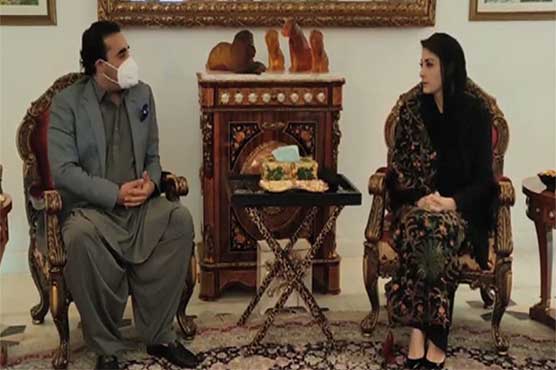
Pakistan People’s Party (PPP) chairman Bilawal Bhutto Zardari on Friday has met Pakistan Muslim League-Nawaz (PML-N) vice president Maryam Nawaz in Jati Umra in Lahore.
According to details, the PPP chairman offered condolences to PML-N vice president over the death of her grandmother Begum Shamim Akhtar.
Both the leaders discussed matters related to arrangements of Pakistan Democratic Movement (PDM) rally in Lahore and resignations of opposition’s lawmakers from provincial and national assemblies.
They also deliberated upon the ongoing political situation in the country.
Earlier, Maryam Nawaz had criticized Prime Minister (PM) Imran Khan and said that don’t take our revenge from the innocent people.
While reacting to the registration of a case against the owner of the hotel where she and other PML-N leaders had eaten food, Maryam Nawaz said that the incumbent government of Pakistan Tehreek-e-insaf (PTI) has crossed all the limits.
First, tent service and now hotel owner, the federation has lost its senses, she added.
The PML-N leader further said that the people of Lahore will come out of their houses on December 13 against such acts of the PTI government.
https://dunyanews.tv/en/Pakistan/577623-Bilawal-Bhutto,-Maryam-Nawaz-discuss-PDM%E2%80%99s-anti-govt-rally-in-Lahore

#PPP rejects dialogue offer from Imran Khan


Chairman Pakistan Peoples Party visited Jati Umrah to condole with vice president Pakistan Muslim League-Nawaz, Maryam Nawaz on Friday.

Responding the questions asked by the media persons Bilawal Bhutto Zardari said that the time of dialogue has lapsed and now the time for this government and its facilitators is to go. He said that all the parties in Pakistan Democratic Movement are democratic and would deliberate before every decision they take. We will play our card right and there will be no chance of third force to come forward. The parties in the PDM have decided to consult their Central Executive Committees and put before them the question of resignation. We are ready to sacrifice out Sindh government and national assembly seats if that is needed to send Imran Khan and his facilitators packing.

When asked what he means by facilitators, Bilawal Bhutto Zardari said that he has given the media person so many beautiful words and they can call these facilitators as selectors and establishment. He said that he did not name them because he wants to keep their self-respect. He said that Aseefa Bhutto Zardari conquered Multan by her presence there. He said that facilitators should be warned that my sister Aseefa Bhutto Zardari is there to hold the democratic flag after him. He said that the biggest strength for a brother is the support of his sister. When asked that why was he surprised by Nawaz Sharif’s taking names of selectors, he said that it was a surprise for everyone but now there is no surprise left for the nation.

https://www.ppp.org.pk/pr/24158/

مریم نواز، بلاول بھٹو ملاقات کی اندرونی کہانی سامنے آگئی


پیپلز پارٹی کے چیئرمین بلاول بھٹو زرداری اور سابق وزیراعظم نواز شریف کی صاحبزادی مریم نواز کی ملاقات کی اندرونی کہانی سامنے آگئی ہے۔

ذرائع کے مطابق ملاقات میں ن لیگ اور پیپلز پارٹی کی قیادت نے اس بات پر اتفاق کیا کہ اب مل کر چلیں گے اور لڑانے والوں کی باتوں میں نہیں آئیں۔

ملاقات میں اس بات پر اتفاق ہوا کہ گرفتاریاں ہوئیں تو سخت احتجاج کیا جائے گا اور حکومت کے خلاف جارحانہ انداز اپنایا جائے گا۔

ذرائع کے مطابق بلاول بھٹو زرداری اور مریم نواز نے اپوزیشن اتحاد (پی ڈی ایم ) کے فیصلوں پر من و عن عمل کرنے پر بھی اتفاق کیا۔

ن لیگ اور پیپلز پارٹی کی قیادت نے کہا کہ دونوں جماعتوں میں اتحاد اور احترام کا رشتہ ہر روز مضبوط ہوگا۔

ذرائع کے مطابق مریم نواز سے بلاول بھٹو کی ملاقات میں پی ٹی آئی حکومت کے خلاف تحریک میں مزید تیزی لانے کا فیصلہ بھی کیا گیا۔

پی پی اور ن لیگ کی رہنماؤں نے حکومت کے خلاف تحریک کے دوسرے مرحلے میں رویہ اور انداز مزید جارحانہ کرنے پر اتفاق کیا۔

ذرائع کے مطابق اپوزیشن کی دونوں بڑی جماعتوں نے گرفتاریوں کی صورت میں سخت احتجاج کرنے اور 13 دسمبر کے جلسے کے بعد پی ڈی ایم کے اجلاس میں سخت موقف اورت احتجاج کی تجاویز دینے کا بھی فیصلہ کیا۔

پی پی اور ن لیگ اپوزیشن اتحاد ( پی ڈی ایم ) کے پلیٹ فارم پر مشترکہ موقف اپنانے پر بھی اتفاق کیا۔

ذرائع کے مطابق ملاقات میں پی ڈی ایم کے پلیٹ فارم کو انتخابی اتحاد میں بدلنے پر بھی بات چیت کی گئی۔

https://jang.com.pk/news/856964 

Thursday, December 10, 2020

Video Report - #DailyShow #TrevorNoah #DonaldTrump The Supreme Court Rejects Trump’s Election Lawsuit | The Daily Social Distancing Show

Video Report - #Morocco #Israel agree to normalise relations in US-brokered deal

Video Report - These are the legal probes facing Trump when he leaves office

Video Report - #FDA advisers recommend authorization of #Pfizer/BioNTech coronavirus vaccine

Video Report - Happy #Hanukkah from Kamala Harris and Doug Emhoff

Music Video - PIYAR BHARE DO SHARMEELAY NAIN - MEHDI HASSAN

Video Report - #Pakistan - How to protect communities amid the pandemic. The Second wave

Hindu, Christian Women ‘Marketed’ by Pakistan as ‘Concubines’ in China: U.S. Official

  •  

Pakistan is marketing Hindu and Christian women as “concubines” and “forced brides” to China, according to top U.S. diplomat for religious freedom, Samuel Brownback.One of the sources of “forced brides” for Chinese men are “religious minorities, Christian and Hindu women, being marketed as concubines and are forced as brides into China,” Brownback told reporters Dec. 8.That was happening “because there’s not effective support and there’s discrimination against religious minorities that make them more vulnerable,” he said.
He mentioned this as one of the reasons for designating Pakistan as a country of particular concern (CPC) under the International Religious Freedom Act.
Because of the one-child policy imposed by China for decades, there is an acute shortage of women given the cultural preference for boys leading to Chinese men importing women from other countries as brides, mistresses and laborers.The U.S. Commission on International Religious Freedom had recommended placing India also on the CPC list, citing among other issues the Citizenship Amendment Act (CAA), but Secretary of State Mike Pompeo rejected the suggestion when he announced the designations Dec. 7.Brownback, however, said that Washington was watching the Indian situation closely and “these issues have been raised in private discussions at the government, high government level, and they will continue to get raised.”The CAA expedites citizenship for Hindus, Christians, Buddhists and Sikhs fleeing religious persecution in neighboring Islamic or Muslim majority countries but does not prevent Muslims from getting citizenship after following the usual procedures.
The U.S. has a legal provision similar to the CAA which is known as the Specter Amendment that is tucked into the budget bill giving asylum to some non-Muslim minorities from Iran, while pointedly excluding Muslim.
Asked by a Pakistani reporter if there was a double standard in Pompeo giving Pakistan the CPC designation and not India, Brownback said that while in Pakistan, a lot of the actions against minorities are taken by the government, that was not the case in India.
“Pakistan has half of the world’s people that are locked up for apostasy or blasphemy,” he said.
He said that in India, some of the actions like the CAA are taken by the government but there are others like “much of its communal violence” and then when they take place, “we try to determine whether or not there has been an effective police enforcement, judicial action after communal violence takes place.”
“That doesn’t mean that we don’t have problems with the statute (CAA),” he said. “The violence is a problem. We will continue to raise those issues.”
“Those are some of the basis as to why Pakistan continues to be on the CPC list and India is not,” he said.
“These are issues that people spend a great deal of time reviewing and we review extensively the situation in Pakistan, in both countries,” added Brownback, whose formal title is Ambassador-at-Large for International Religious Freedom.
Answering an American reporter’s question as to why Pompeo did not follow the USCIRF recommendation to designate India as a CPC, Brownback said, “I can’t go into the decision-making process that the Secretary went through.” But, he said, Pompeo is “well aware of a lot of the communal violence that is happening in India as well as aware of the statutes that have been enacted and some of the issues associated with the (Prime Minister Narendra) Modi government and, as I said, he has raised at the highest level, but just decided at this point in time not to place them on a CPC or a special watch list.”
Brownback said that there were also “several recommendations made by the commission that the secretary did not follow, and this was one of them.”
Pompeo did not follow the recommendations to designate Russia and Vietnam as CPCs.
In addition to Pakistan, Pompeo put China, Myanmar, Eritrea, Iran, Nigeria, North Korea, Saudi Arabia, Tajikistan and Turkmenistan on the CPC list.
https://www.indiawest.com/news/india/hindu-christian-women-marketed-by-pakistan-as-concubines-in-china-u-s-official/article_07791a3a-3b0d-11eb-876e-ef5a3f911209.html

On International Human Rights Day, Pakistan’s Religious Minorities Declare Dec. 10 as ‘Black Day for Human Rights’

 By 

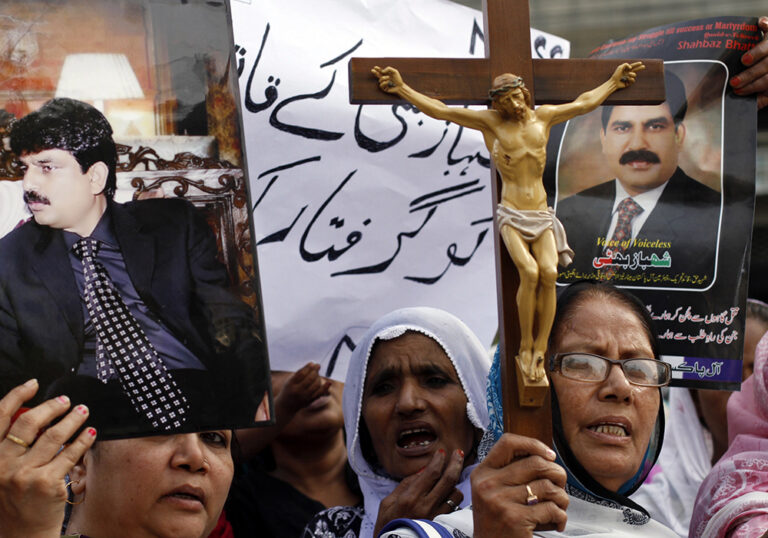
As the United Nations and various international organizations observe Dec. 10 as the annual day to declare the dignity and human rights of all persons, Pakistan’s religious minorities planned demonstrations against increased abductions and forced conversions and marriages of their women and girls by Muslims.

“Human rights activists, defenders of minority rights, social workers, as well as Church, political, and civil society leaders in Pakistan are inviting all citizens to join this ‘battle of civilization and democracy’ for the country,” Vatican News reported.

A string of unrelated events erupted in Pakistan in the days leading up to the Dec.10 event, including the release of 12-year-old Christian girl Farah Shaheen. Five months before Shaheen’s release on Dec. 6, three Muslim men allegedly kidnapped her from her parent’s house, forcibly converted her to Islam, and then one of the men married her. According to a local report, after her release, police brought Shaheen to a shelter house as her court trial was underway.

According to the faith-based advocacy organization, ADF International, an estimated 1,000 women and girls from religious minorities are forcibly married and converted to Islam every year.

“We hope the international community will open its eyes to what is happening in Pakistan and help protect Christians and other minorities who belong to some of the most vulnerable groups in the country,” said ADF International’s Director of Advocacy Tehmina Arora.

The day after Shaheen’s release, 37-year-old journalist Qais Javed, who identified as Methodist Christian, died in a drive-by shooting in the northwestern city of Dera Ismail Khan on Dec. 7. Javed became the fourth member of the media killed in the country in the past year.

Javed was the son of a former member of the ruling Pakistan Justice Party. According to the family’s police report, the two were about to enter their house when they came under attack. 

Religious minority

According to research by the Library of Congress, nearly 97 percent of all Pakistanis are Muslims, with most of that population identifying as Sunni Muslims. Official documentation states that Christians, Hindus, and members of other religions each account for about 1 percent of the population.

The non-Muslim minorities have limited influence on national policy, having secured representation only in provincial assemblies. In 1992, the Pakistani government allowed religious affiliation to be indicated on personal identification cards needed to complete tasks such as attending school, opening a bank account, casting a vote, or even obtaining a passport. Minority groups organized demonstrations to protest discriminatory policies but were shut down by the government at the time.

Speaking to Vatican News on behalf of the “Black Day” was activist Khalid Shahzad, known for supporting human and minority rights in Lahore, the capital of the Pakistani province of Punjab and the country’s second-largest city.

“We encourage all Pakistani citizens to join our call to observe International Human Rights Day as a ‘Black Day,’ especially for our Christian community,” said Shahzad. “We see fundamental rights and freedom trampled every day. Our daughters are kidnapped and forcibly converted, only to be forced to marry their kidnappers, often supported by the police because they are Muslim.”

Protecting the human rights of every citizen is the key responsibility of the state, Chairman PPP Bilawal Bhutto Zardari


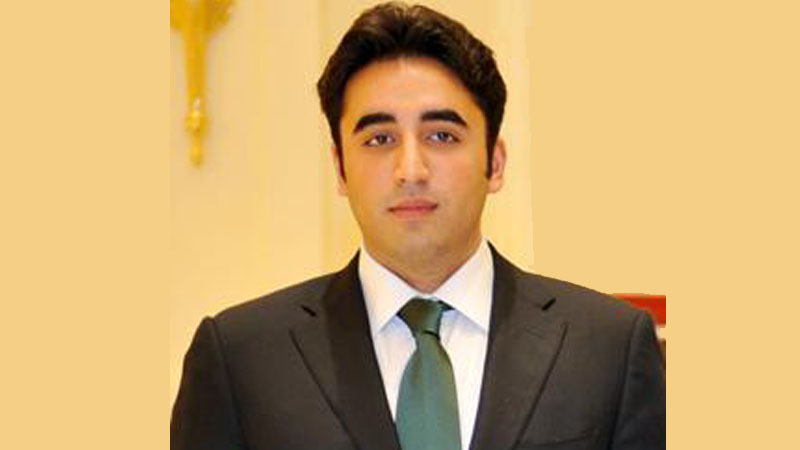
Chairman Pakistan Peoples Party Bilawal Bhutto Zardari has said that protecting the human rights of every citizen is the key responsibility of the state.

In his message on the occasion of Human Rights Day being celebrated worldwide under the United Nations, the PPP Chairman said that his Party was fighting for the protection of human rights of Pakistan since its inception. “Our struggle for equal respect and protection of human rights of every citizen continues despite facing martyrdoms, victimisation, imprisonments, torture and slanderous campaigns,” he stated.
Bilawal Bhutto Zardari said that countries are adjudged through their human rights record and progress and prosperity are naturally linked to upholding human rights of every citizen regardless of religion, gender, creed, caste or ethnicity.  ““Freedom of expression, freedom of religion and belief, women and children’s rights and protection of vulnerable segments has to be ensured for a peaceful and progressive society,” he added.
He stressed that the international community should take notice of the grave violations of human rights in Indian-held Kashmir and ensure that India ends its atrocities on Kashmir and respects the right of their franchise for a referendum.
PPP Chairman pledged that his Party’s role as the torch-bearer of human rights campaign would never compromise on protection of human rights under any situation.

https://www.ppp.org.pk/pr/24151/

Wednesday, December 9, 2020

SENATE VOTE AUTHORIZING ARMS SALES TO THE UAE COULD FUEL MORE WAR CRIMES IN YEMEN, LIBYA CONFLICTS

 Responding to authorization today from the United States Senate to sell several advanced military capabilities that are worth $23.37 billion and export over $7.2s billion in defense articles to the United Arab Emirates (UAE), Philippe Nassif, the advocacy director for the Middle East and North Africa at Amnesty International USA said:

“Today’s vote could be the first act in a domino effect which ends in human tragedy as this country provides capabilities which risk being used to injure and kill thousands of Yemenis and Libyans in their homes, their schools, and their hospitals.

“Today’s sale could result in United States weapons being used by the UAE for war crimes in Yemen, causing immense human suffering. The United States should be encouraging all states supplying parties to the conflict to stop the transfer of any arms, equipment, and military assistance which risk being used in Yemen – instead the United States is shamelessly arming a key protagonist in the conflict.”

Background

Since Saudi Arabia and UAE-led coalition air strikes began in March 2015, Amnesty International has visited and investigated dozens of air strike sites in eight governorates and repeatedly found remnants of munitions manufactured in the United States. In one instance, Amnesty International recovered a fragment of a U.S.-manufactured Raytheon Paveway guided bomb which destroyed a residential building in Yemen’s capital, Sana’a, killing 16 civilians and injuring 17 more; the remnants of a Raytheon Paveway bomb were also found in the aftermath of a coalition airstrike on a residential home in Ta’iz governorate which killed six civilians including three children. In 2018, the United Nations Panel of Experts published a report presenting evidence of United States and UK manufactured Paveway systems used in nine strikes, resulting in 84 civilian deaths and 77 injuries – 33 of them in a single incident, when a high-explosive bomb, assisted by a Paveway guidance kit, struck a motel in Arhab on August 23, 2017- surely just the tip of the iceberg.

The sale to the UAE is particularly worrying, as Amnesty International has acquired extensive evidence that the UAE used armed drones in Libya, to break the long-standing UN arms embargo by operating these drones on behalf of the Libyan Arab Armed Forces, an armed group controlling large swaths of Eastern Libya, in the conflict against the internationally backed Government of National Accord. Furthermore, the UAE has used these drones to target civilian houses and health facilities, including field hospitals and ambulances, which are war crimes, as medics, medical transport and medical facilities, including those treating wounded or sick fighters, are specially protected under international humanitarian law.

This sale would mark the first armed drone export since the Trump administration reinterpreted an arms agreement to allow United States contractors to sell more arms and ammunition, re-opening the floodgates for arms sales with weakened human rights criteria, and potentially fueling more war crimes. It would also add to the worrying proliferation of this advanced weapon, which has been used around the world for unlawful killings.

Amnesty International USA is calling for the United States to immediately halt transfers of all arms, equipment, and military assistance to all parties to the conflict for use in Yemen;  to enforce the United Nations arms embargo on Libya by prohibiting the transfer of arms and equipment that may be used in the armed conflict there; and for the incoming Biden administration to roll back these sales and bring back human rights into the arms sales process.

https://www.amnestyusa.org/press-releases/senate-vote-authorizing-arms-sales-to-the-uae-could-fuel-more-war-crimes-in-yemen-libya-conflicts/

Video Report - What we know about retired Gen. Lloyd Austin, Biden's choice for defense secretary

Video Report - #biden​ #politics​ #usatoday​ President-elect Joe Biden announces pick for defense secretary | USA TODAY

Video Report - Cuomo reacts to Trump's tweet about Supreme Court justice

Biden’s Win Is Sealed No Matter What Trump Camp Claims

Calvin Woodward
Joe Biden is on track to become president Jan. 20 despite Trump’s attempts to undermine the voters’ will.

There’s plenty of noise but no cause for confusion as President Donald Trump vents about how the election turned out and vows to subvert it even still.

This truth is self-evident: Joe Biden is on track to become president Jan. 20. The machinery of government and democracy is moving inexorably toward that end despite Trump’s attempts to undermine the voters’ will.

Trump on Wednesday demanded an “OVERTURN’ of the outcome in a collection of tweets arguing he could only have lost the election if it were ”FIXED.” He attempted to support his case by saying odds-makers on election night heavily favored his reelection, “the so-called ‘bookies,’” as if a gambler’s bet mattered. It doesn’t.

Americans who don’t wish to get caught up in the nitty gritty of Trump’s attempts to undermine the election can take their cue from one of the many judges who have dismissed the complaints of his team or his allies that the voting or counting was corrupt.

“This ship has sailed,” said U.S. District Judge Linda Parker in throwing out a lawsuit challenging Biden’s win in Michigan this week.

Not only has the ship sailed but it has reached safe harbor and dropped anchor.

Biden’s victory was essentially locked in Tuesday by the so-called safe harbor deadline set by federal law for states to finish their certifications and resolve legal disputes. It’s an insurance policy to guard against Congress trying to manipulate the electoral votes that will be cast next week and sent to the Capitol for counting on Jan. 6.

These steps — the deadline, the convening of the Electoral College in state capitals, Congress’ count in early January — are rituals that are routinely ignored by the public at large. They became less ignorable when Trump began exploring any and all avenues to stay in power.

But the election is over and has been for weeks. Here’s why:

—Biden won a decisive majority of electoral votes in states that certified their results.

—The Democrat is set to finish with even more electoral votes, 306, a total Trump called a landslide when he won the same in 2016.

—No systemic fraud or even consequential error has been established in an election that state monitors and courts have repeatedly found was run fairly. More than that, the election played out with striking efficiency given that it was held in the middle of a deadly pandemic.

—Trump’s attempts to browbeat Republican officials in Georgia and Michigan into upending Biden’s victory in those states came to nothing.

https://www.huffpost.com/entry/biden-win-sealed-despite-trump-claims_n_5fd15c8bc5b68256b1122178

Urdu Music - Tu meri zindagi hai - MEHDI HASSAN

Video Report - #AwamiNationalParty​ #PDM​ PDM Ka January Kai Aakhri Haftay Mein Long March Ka Elaan : Mian Iftkhar Hussain | Googly News TV

Video Report - جسٹس شوکت صدیقی کے کیس کا فیصلہ جون میں انکی ریٹائرمنٹ سے پہلے کرینگے؛ جسٹس عمر عطا بندیال

Video Report - #NayaDaur​ PDM Announces Sit-In | Imran Wants Talks | DJ Butt | PDM Resignations | Pakistan News Headlines

Video Report - #KhabarSayAagay​ #NayaDaur​ Lahore Jalsa, PDM Resignations, And Political Social Media

How laws in Pakistan and India discriminate against women from minority communities

Sulema Jahangir 

Not only do rules applicable to Hindu and Christian marriages in Pakistan make divorce difficult, they do not even provide for interfaith marriages.

The Indian and Pakistani constitutions provide equality for all, yet the rights of citizens from different religious groups in matters such as marriage, divorce, maintenance and succession, depend on religious identity. A Muslim man can practise polygamy but this is denied to men from other faiths.
Muslim women in India are unable to claim substantive maintenance from their former husbands after divorce whereas women from other religions do. In Pakistan, it is more difficult for Hindu and Christian couples to divorce than Muslim couples. Post Muhammad Zia-ul-Haq’s regime in Pakistan, there has been slow but steady progress on improving women’s rights in the domestic sphere through legislation, but this has left out women from the country’s religious minorities.
Successive governments in Pakistan have either ignored the matter or attempted to appease members of the ruling male elite from religious minorities, who have wanted to hang on to patriarchal rules on religious pretexts. Hence, women from religious minorities face the patriarchal standards of their own religious leaders as well as exploitation from right-wing elements in the majority community.
Different standards
In 2017, in a landmark judgement, then Lahore High Court Chief Justice Mansoor Ali Shah, observed that the Christian Divorce Act 1869 fell foul of the fundamental rights guaranteed to minorities under the Constitution. The law prescribed strict fault-based rules including proving adultery for Christian couples to obtain a divorce. The judge stated: “The limited grounds of divorce under the state divorce law when compared with the rights enjoyed by Christians in the world, amounts to discriminating against the Christian minority in Pakistan.” Perhaps one did not need to look outside the country – the law for Muslim couples in Pakistan to obtain a divorce has been amended a few times so that fault no longer remains relevant. Regrettably, the matter did not become a judicial precedent as the case was appealed and is pending adjudication.
Hindus in Pakistan have fared no better. Until recently, there was no law providing for the registration of Hindu marriages. Hence, the legal and social consequences of marriage were denied to Hindu families. Women were more often the victims and could not pursue claims to inheritance or maintenance for themselves or their children if they could not prove the marriage.
According to the Pakistan Hindu Council, lack of official recognition of marriage also made it easy for miscreants to forcibly marry Hindu girls. Hindu marriage, divorce, remarriage and right to maintenance are now regulated by the Sindh Hindu Marriage Registration Act, 2016, and the Hindu Marriage Act, 2017. While the law was hailed as a positive step by most, for others it was too little too late. As with Christians, divorce could only be obtained on narrow fault-based grounds requiring evidence.
Faith and marriage
Not only do laws applicable to Hindu and Christian marriages in Pakistan make it difficult to divorce they also do not provide for interfaith marriages. If a spouse converts to another religion the marriage is considered void. Unsurprisingly, this has led to several Christian and Hindu women converting to Islam.
Ironically, in 1939, the Dissolution of Muslim Marriages Act was the first statutory law providing the right to Muslim women in India to divorce their husbands. The intent of the law, as stated in its preamble, was to discourage married Muslim women from converting to other faiths to escape abusive marriages. Almost a century later, non-Muslim women in Pakistan face the same humiliation of having to choose between mistreatment and faith. Unlike the majority of women, they have to stand in court to satisfy a particular judge’s notion of cruelty or neglect.
India and Pakistan are often at loggerheads but have much in common in the treatment of their religious minorities. After an era of colonial domination, the founders of both countries firmly endorsed non-discrimination, but since then, the fundamental rights of an “under-class” have been frequently abandoned for political expediency.
In 1986, the Congress rulers in India rushed in legislation to appease Muslim religious leaders who opposed the supreme court’s decision in the Shah Bano case to grant a paltry sum of spousal maintenance to an indigent Muslim woman. For the Congress government in 1986, the Muslim vote bank counted and Muslim religious leaders felt that a man had no obligation to provide even basic sustenance to his former wife of 30 years.
In contrast, in 2017, the BJP government hailed the decision of the supreme court which outlawed an unregistered triple talaq for Muslim women. For them, the right-wing Hindu vote bank counted more. What does not count in both countries are the lives of millions of women from religious minorities who are already at the bottom of the socioeconomic ladder. They will always remain the last colony.

 https://scroll.in/article/980670/how-laws-in-pakistan-and-india-discriminate-against-women-from-minority-communities

Pakistan’s minorities plan Dec 10 "Black Day for Human Rights"


The United Nations marks Human Rights Day on December 10. But on that day, Pakistani Christians and religious minorities plan to protest against increasing abduction and forced conversion and marriage of their women and girls by Muslims.

Christians and other religious minorities, as well as vulnerable and defenceless people in Pakistan, have been called to observe a "Black Day for Human Rights" across Pakistan on Human Rights Day, December 10, in protest against the increasing number of violence and violations of their inalienable rights.  

Human rights activists, defenders of minority rights, social workers, as well asChurch, political, and civil society leaders in Pakistan, are inviting all citizens to join this "battle of civilization and democracy" for the country, the Vatican’s Fides news reported. 

Human Rights Day is observed every year on 10 December, the day the United Nations General Assembly adopted the Universal Declaration of Human Rights in 1948.  A milestone in the history of human rights, the Declaration set out, for the first time, the fundamental human rights of everyone to be universally protected.

Legislation and enforcement needed


"We encourage all Pakistani citizen to join our call to observe International Human Rights Day as a 'Black Day', especially for our Christian community,” said Khalid Shahzad, a well-known activist for human and minority rights in Lahore. “We see fundamental rights and freedom trampled every day. Our daughters are kidnapped and forcibly converted, only to be forced to marry their kidnappers, often supported by the police because they are Muslims," he told Fides.

Khalid Shahzad, who also runs a charity for disabled children, explained that they want to be the voice of all the other Christian and Hindu girl and woman victims. "We need adequate legislation and the enforcement of existing laws. We demand the protection of religious minorities, in particular women and minors, an easy target for criminals," he said.

Farah Shaheen’s case


The protest comes in the wake of the rescue on December 5 of a 12-year-old Christian girl, Farah Shaheen, 5 months after Muslim men allegedly abducted and forcibly converted her to Islam, and one of them married her. Khalid Shahzad said the girl was found with signs and injuries to her ankles and feet. 

He alleged the police officer falsified the documents, stating Farah was 17 years old. Because of the complicity of the police, it was not until last September that the family was able to file a complaint. After her rescue, police produced Farah Shaheen before the district court of Faisalabad last week, and the court sent to a shelter house, according to rights activists on social media.  

Lala Robin Daniel, a Christian and President of the "National Alliance for Minorities in Pakistan," also has appealed to all citizens to observe December 10 as "Black day for human rights." “The case of Farah Shaheen is exemplary. It is urgent to do justice," he said.

Father Bonnie Mendes, a priest from Faisalabad spoke about the recent killing of a Christian woman, stressing the need to halt the criminal activity of depriving Christians in Pakistan of their personal freedoms. He cited the case of Sonia Bibi, a 24-year-old Christian woman in Rawalpindi, who was shot in the head on November 30 by a Muslim man for refusing his marriage proposal. She died of serious injuries during her hospitalization. 

State obligation


Pakistan's National Commission on the Rights of Child on Monday issued a policy brief stressing the need for a new law to curb increasing incidents of abduction, conversion, and forced marriage of Hindu and Christian girls.

The policy brief, sent to the heads of all federal and state governments and the judiciary, said, “Pakistan is duty-bound to protect all its citizens' rights, including members of various religious faiths.” Child abuse cases in the country reported internationally have placed Pakistan's government "in a very fragile position," it said. The state agency wants the government to remove inconsistencies in laws banning child marriage, and in various other legislation, including laws on marriage in general and conversion. It also called for strict enforcement of existing laws in cases of forced conversions, child marriages, and violation of child rights.

Last month, a government official said that Prime Minister Imran Khan has “ordered an investigation on a case-by-case basis of incidents of forced conversions of minor girls belonging to minority communities, particularly Christian and Hindu, to find reasons for this issue.” “Law and rights are equal for all. Christians, Hindus, Sikhs and daughters of minorities are our daughters as well,” Tahir Mehmood Ashrafi, the PM's Special Representative on Religious Harmony said at a November 30 joint press conference in Lahore.

According to the Centre for Social Justice, 162 questionable conversions were reported in the media between 2013 and November 2020. The highest number of cases (49) were reported in 2019. Around 52 percent of forced conversions occurred in Punjab province, and 44 percent in Sindh.

More than 54 percent of victims (girls and women) belonged to the Hindu community, while 44 percent were Christians. More than 46 percent of victims were minors, with nearly 33 percent aged 11-15.

https://www.vaticannews.va/en/world/news/2020-12/pakistan-human-rights-day-blackday-protest-minorities-dec10.html

Pakistan and Saudi Arabia: Why Kashmir won't stop Riyadh's rush to embrace India

Pakistan's old relationship with Saudi Arabia has deteriorated under Imran Khan as India draws closer to the Gulf kingdom
Pakistan’s government last month claimed a victory at the Organisation of Islamic Cooperation annual summit in Niger, announcing that the 57-member Muslim bloc had supported a resolution condemning India over its rescinding of Kashmir’s semi-autonomous status.
In a statement on the final day of the summit on 28 November, Pakistan’s foreign ministry said OIC states had agreed unanimously to reaffirm their “strong support for the Kashmir cause”. The resolution “rejected the illegal and unilateral actions by India” since it revoked Article 370 of its constitution which granted the disputed region its own constitution and the right to make its own laws.

It “emphasised that the question of Kashmir is of utmost importance for the Muslim Ummah”, and described the resolution of the conflict as “indispensable for the realisation of the dream of peace in South Asia”.

But the resolution was not published nor circulated by the OIC itself and followed complaints by Pakistani Foreign Minister Shah Mahmood Qureshi prior to the summit that the Kashmir issue had not been included on the formal agenda for the meeting. 

And while India hit back at the OIC and Pakistan, accusing the former of “indulging in anti-India propaganda” at the behest of the latter, the diplomatic storm does not appear to have interrupted New Delhi’s pursuit of deepening ties with influential Gulf states.

On Tuesday, Indian army chief General Manoj Mukund Naravane embarked on a four-day diplomatic trip to the United Arab Emirates and Saudi Arabia in the first such visit to the region by an Indian military chief.

"The visit aims to further strengthen strategic and defence cooperation between the countries," the Indian Army said in a post on Twitter.

Navarane’s visit follows recent comments by Saudi Arabia’s ambassador to India, Mohammed al-Sati, in which he said that the two countries were expanding a security and defence partnership and had conducted joint naval exercises.

Despite this, Tahir Mehmood Ashrafi, a special representative advising Pakistani Prime Minister Imran Khan on religious harmony, told Middle East Eye that Saudi Arabian and OIC support for Pakistan over Kashmir was real.

 “Enemies like India propagate that Pakistan does not have support on Kashmir in the Islamic world, however this development [the OIC resolution] indicates very strong relations with Saudi Arabia and UAE. Also, during the OIC meeting the Saudi Foreign Minister Prince Faisal bin Farhan spoke on the Kashmir issue,” said Ashrafi.

But one representative of an OIC member state, speaking to MEE on condition of anonymity, expressed frustration that Pakistan had raised Kashmir at the summit and accused Islamabad of using it to distract from its own domestic problems despite the lack of prospect of any concerted international action to resolve the issue.

“The main focus of the gathering was to underline [the threat of] terrorism, and fighting extremism. However, Pakistan’s push on Kashmir really deflects the many issues they are facing on the home front which they would prefer to ignore,” said the representative.

The OIC summit was not the first time Pakistan has tried to leverage Muslim support for Islamabad against India over Kashmir.

In August, Qureshi accused the OIC, which has its headquarters in Mecca, of “dragging its feet on Kashmir” over its failure to call a meeting of foreign ministers, and urged Saudi Arabia to “show leadership on the issue”.
Many within Pakistani government circles interpreted Qureshi’s comments and the fact that he had not retracted them as part of a push by the foreign minister to make a case for closer ties with Iran.
A source in the foreign ministry told MEE: “Many believe the Qureshi diplomatic curve ball previously was approved by Imran Khan and the military.”
According to Pervez Hoodbhoy, a prominent Pakistani physicist and activist, Saudi Arabia has adopted a deliberately ambiguous stance on Kashmir that allows it to court India while using Pakistan’s economic dependency on the kingdom to keep it in line even as relations have soured.
“Kashmir is a non-issue for Saudi Arabia. They are not opposed to it, they approached it from a position that the Indians would understand, which they presumably will. The Saudis have successfully calculated ambiguity here. They want to prevent Pakistan from moving towards the Turkey, Iran and Malaysia camp,” he said.
Pakistani Prime Minister Imran Khan has made no secret of his government’s reliance on Saudi bailouts to stave off economic collapse.
Pakistan is facing an unprecedented economic crisis. With unemployment spiraling, inflation said to be at an all time high, millions of people are facing economic devastation. In 2018 Khan travelled to an investment conference in Riyadh at a time when many leaders were distancing themselves from the kingdom over the murder of Jamal Khashoggi a few weeks earlier, returning with pledges of loans worth $6bn.
But Pakistan has become increasingly vulnerable and more subservient to the kingdom as a result. Earlier this year, Saudi Arabia demanded early repayment of $1bn in loans and froze an oil credit facility worth $3.2bn. Relations have deteriorated not just over Kashmir but also Pakistan’s failure to support the Saudi-led coalition in Yemen.
Visa threat to migrant workers
Hoodbhoy told MEE that another vulnerability for Islamabad is the large number of Pakistani migrant workers employed in Saudi Arabia, especially after the United Arab Emirates last month suspended issuing work visas for Pakistani nationals and citizens from 12 other Muslim-majority countries.
“Given the downturn of the economies of the Middle East there is always a danger that either their recruitment would stop, slow down or reverse, meaning they would be sent back. Pakistan cannot afford the same situation with the UAE, that would cause a major financial crisis in Pakistan and the government would be held to blame by those returning,” he said.
The UAE visa ban, which has left about 250,000 Pakistani workers facing uncertain futures, shocked many in the government who assumed that an understanding between the two countries would be reached. Critics of the government however have accused officials of complacency and failing to recognise the Gulf states’ shift towards India.
Any restrictions imposed on Pakistanis’ right to work in Saudi Arabia could have significant consequences for large numbers of retired Pakistani army officers.“The army has looked to Saudi Arabia as a place they were able to acquire their retirement and be employed for another decade or two,” said Hoodbhoy.Ashrafi, Khan’s special advisor on religious harmony, played down the significance of the UAE visa ban, describing it as a “diplomatic glitch”.“An understanding has been reached by [Abu Dhabi Crown Prince] Mohammed Bin Zayed and the Minister for Overseas Pakistanis [Sayed Zulfiqar Abbas Bukhari]. The ban will be lifted in two weeks,” he said.
The Pakistani foreign ministry did not respond to requests for comment.
Saudi Arabia’s relationship with Pakistan has shifted in other ways as well. The kingdom once sought to aggressively export its austere Wahhabi ideology to Pakistan, but as the Saudi ultra-conservative religious establishment has been sidelined by Crown Prince Mohammed bin Salman this is no longer the case. Riyadh’s sole focus on the eastern side of the Arabian Sea at present is wielding its national power and resources to counter Iran. And while closer ties with Tehran might be attractive to some in Islamabad as a way of countering Saudi influence on domestic and foreign policy, Iran cannot compete in terms of offering the fiscal support on which Pakistan has grown dependent. There is a school of thought in Islamabad that the Saudis’ support, albeit silent, for the resolution on Kashmir at the OIC summit was an olive branch intended as a precursor to getting Khan’s government accustomed to a conversation on normalising ties with Israel.
Israel normalisation pressure
But many see such a development as impossible due to the fact that Khan has connected the Kashmir struggle to the Palestinian struggle, and because the Pakistani public would not accept such a move.
“There is tremendous pressure on Pakistan by the Arab states [to normalise ties with Israel],” said Hoodbhoy.
“However, it is all about timing. If this was 25 years ago the situation would be different but now the reality [in Palestine] is annexation and settlements. That means rewarding bad behaviour. Pakistan should resist pressure.”
Ashrafi said he did not believe that Saudi Arabia would follow its Gulf allies, the UAE and Bahrain, by recognising Israel.
“I can tell you clearly: Saudi Arabia will not accept Israel. I have talked to many inside the country and it is not possible. This is a Muslim Ummah issue and Crown Prince Salman has indicated he wants a clear stance on Palestine,” he said. But Michael Kugelman, a South Asia analyst at the Washington-based Wilson Center think tank, said that deepening ties between Saudi Arabia and India posed a “growing obstacle” to Pakistan’s own relations with the kingdom. “Let’s be clear: this hasn’t happened overnight. It was nearly two years ago when the Saudi-dominated OIC invited India to one of its meetings as a special guest. That sent a strong message and clearly did not go down well in Islamabad,” said Kugelman.
“This is a development that can be attributed, among other things, to a worsening US-Iran relationship that has compelled New Delhi to cut back on cooperation with Tehran, and to Saudi Arabia’s need to ensure it has friends in an era when the Khashoggi tragedy has made Riyadh a pariah in the eyes of many in the international community.”
Unless Khan’s government, or the Pakistani military, can find a way past that obstacle then Pakistan’s already strained relations with Saudi Arabia could be heading for a further damaging downturn.
https://www.middleeasteye.net/news/pakistan-saudi-arabia-kashmir-embrace-india

جنوری کے آخری ہفتے میں اسلام آباد کے جانب لانگ مارچ ہوگا، پی ڈی ایم

حکومت کے خلاف بننے والے اتحاد پاکستان ڈیمو کریٹک موومنٹ (پی ڈی ایم) کی طرف سے فیصلہ کیا گیا ہے کہ جنوری کے آخری ہفتے میں لانگ مارچ کیا جائے گا۔ 13 دسمبر کو مینار پاکستان پر ہر حال میں جلسہ ہو گا۔

وفاقی دارالحکومت میں پاکستان ڈیمو کریٹک موممنٹ (پی ڈی ایم) کی سٹیئرنگ کمیٹی کا اجلاس ہوا جس کے بعد ترجمان میاں افتخار نے پاکستان مسلم لیگ ن کے رہنما احسن اقبال کے ساتھ پریس کانفرنس میں فیصلوں سے آگاہ کیا۔

میاں افتخار نے کہا کہ جنوری کے آخری ہفتے میں لانگ مارچ ہوگا، جنوری کے آخری ہفتے تاجر، ڈاکٹرز، وکلا، اساتذہ، کسانوں سے رابطے کریں گے۔ مینار پاکستان کو ڈیم بنا دیا گیا ہے ، پانی میں کھڑے ہوکربھی 13 دسمبر کو ہر حال میں جلسہ ہو گا، پوری دنیا کی نظریں لاہورجلسے پرلگی ہیں،

اے این پی رہنما کا کہنا تھا کہ حکومت جومرضی کرلے فیل ہوگی،ملتان کا حشرانہوں نے دیکھ لیا ہے، لاہورکے جلسے میں اگلے شیڈول کا اعلان کیا جائے گا۔ گرفتاریاں شروع کر دی گئی ہیں، ڈی جے بٹ کو بھی گرفتار کیا گیا ہے۔

https://samachar.pk 

EDITORIAL: #Sindhi Cultural Day

The Sindhi Cultural Day unites all Sindhis across the globe. This is the day when all Sindhis regardless of their political affiliation, celebrate the rich cultural and heritage treasure of Sindh. This is good to see that all parts of the country join the celebrations too. The day was celebrated for the first time in 2009 when a TV anchor ridiculed President Asif Ali Zardari for wearing a Sindhi cap during his foreign visit. This triggered the Sindh people to come up with the culture day. What a cultured and calculated response the loudmouth anchor got from the culturally proud Sindhis. That is the beauty of culture. Since then, every year, the Sindh Culture Day is celebrated across the province and streets are filled with crowds wearing Sindhi caps and Ajraks. Popular Sindhi songs blaring out of houses and shops leave the people dancing.
Pakistan, a country of 220 million people, is lucky to have diverse social, ethnic, religious, linguistic and cultural settings. Of the several settings, the more prominent are Punjabi, Sindhi, Kashmiri, Baloch, Pashtun, Seraiki and a lot of other groups. This provides us with several regional languages, cuisines, music, and lifestyles. It is, however, our bad luck that our part of the world has not been educated enough to celebrate and own our local cultures besides showing respect for other people’s culture. The power of culture has united both urban and rural Sindhis as Karachi and Hyderabad hosted a large number of culture activities. A section of the people believes that being Pakistani means that no local culture or language should be promoted or highlighted. Moreover, people are not ready to accept different cultures and their thoughts. This has created a sort of gap and a tinge of resentment among different cultural, religious and ethnic groups.
The world over belief that culture unites people should be applied in Pakistan too. Every group should arrange their cultural days with zeal as Sindhis exhibit. Similarly, the national media should project diverse social, ethnic, religious, linguistic and cultural landscapes too. The government can work on the promotion and preservation of languages and culture. In recent times, Punjabi and Seraiki sections have raised their voice for classroom instructions in the native languages. The education departments should consider their demands. Happy Sindhi Cultural Day!
https://dailytimes.com.pk/698835/sindhi-cultural-day/