Wednesday, November 18, 2020

An Excerpt: ‘The Nine Lives of Pakistan: Dispatches From a Precarious State,’ by Declan Walsh


1
Insha’Allah Nation
Land of Broken Maps
In the summer of 2004, I drove from my new home in Islamabad to the dowdy garrison city of Rawalpindi, about fifteen miles away. The road led down a chaotic, fume-choked highway where tiny yellow taxis weaved around hulking rainbow-coloured trucks, their flanks painted with delicate floral motifs. After passing the army’s General Headquarters, I turned onto a quieter road and pulled up outside a quaint-looking, Victorian-era building. A pungent odour of brewing hops wafted through the air. The owner waited inside.
Minoo Bhandara perched behind an antique desk in a dimly lit office, resplendent in a three-piece suit despite the hundred-degree weather outside. He was in his sixties, a portly man with tinted glasses and a vaguely impish smile. A fan whirred overhead. ‘I’ll be with you in a minute,’ he said, signing some papers. The walls were lined with framed antique cartoons that depicted pearl-skinned British soldiers in battle, firing at wild-eyed tribesmen or spearing them with bayonets – century-old company calendars. The Murree Brewery had been founded in 1861 to slake the thirst of the soldiers of the Raj, as British rule in colonial India was known. Now it was listed on Pakistan’s stock exchange. ‘We’re one of the country’s biggest taxpayers,’ Bhandara boasted.
His success was puzzling. Prohibition had been in effect in Pakistan for a quarter-century, and any Muslim caught slugging one of Bhandara’s lagers could be sentenced to eighty lashes from an oil-soaked whip. Yet Murree Brewery was doing a roaring trade, largely on the back of sales to God-fearing Muslims, Bhandara cheerfully admitted. Trade was so strong, in fact, that the company was expanding into foreign markets. A new line of single-malt whisky was being casked in the cellar; ‘Have a Murree with Your Curry’ was the marketing slogan in Britain.
I’d been in Pakistan a month or so by then, and the breakfast beer would prove the first of numerous riddles in the country. At that point, though, I was struggling to warm to my new assignment. Islamabad seemed dull and bloodless, a shimmering monotone of broad avenues and gaudy mansions. It was a chessboard capital, a low suburban sprawl that was divided into square neighbourhoods named after grid references or primary colours. My guesthouse was in F-7/3; the sleepy main shopping drag was the ‘Blue Area’. Houses were built in a bewildering range of styles – imperial Rome, Spanish hacienda, seventies chic. Public monuments included a replica of the mountain where Pakistan exploded its first nuclear device in 1998, and replica missiles that appeared to be pointed in the direction of the Indian border. At night, rich kids drag-raced their fathers’ saloon cars under the Margalla Hills, swerving to avoid the wild hogs that ambled from the bushes. Getting a drink involved ridiculous subterfuge. ‘Special tea, sir?’ the waiters at the Marriott hotel would ask archly, proffering a teapot filled with bootleg Chianti.
Pakistanis from more spirited cities sneered at Islamabad’s antiseptic calm. ‘Don’t tell me that you live in that Hicksville,’ a peroxide-haired fashionista told me in Karachi. Westerners took a perverse pleasure in the capital’s isolation from the chaotic country it ruled. ‘Islamabad: only half an hour from Pakistan,’ diplomats would quip at stuffy parties where gloved attendants served gin-and-tonics on the terrace.
The torpor of Islamabad mirrored the wider mood of the country, then in the grip of its fourth bout of military rule. The generals had ruled directly for half of Pakistan’s history since independence in 1947, always seizing power with an air of feigned reluctance. The civilians had screwed things up again, they would mutter – time for a stiff dose of military discipline to set things right. The latest khaki messiah was Pervez Musharraf, the army chief who had ousted Nawaz Sharif five years earlier. A photo of Musharraf, broadcast on state TV in the early hours of the coup, was unpromising: a macho-looking officer in fatigues and brandishing a pistol, with a cigarette dangling from his lips. But Pakistanis quickly warmed to him. In contrast with Sharif, who had become erratic and autocratic in power, Musharraf turned out to have an endearing manner and a caddish charm. He played golf and tennis, smoked cigars, and sat in the front row of fashion shows where he flashed a cheeky smile at the models. He gave himself the title of ‘chief executive’ and made extravagant promises of eradicating corruption. At an early press conference, Musharraf posed for the cameras with his wife, his mother and his Pekinese dogs, Dot and Buddy – an image that enraged conservative clerics, who were unsure whether they hated dogs or women more, and delighted just about everyone else. Meanwhile, Sharif was taken to a remote fortress over the River Indus, stripped of property worth $8 million and later dispatched into exile at a palace in Saudi Arabia.
By the time I reached Pakistan, in 2004, the Musharraf magic was fading. The military leader had organised a referendum on his popularity that was supposedly approved by 98 per cent of voters, followed by an election that the ISI tilted in his favour. People grumbled, but it was too late. Parliament had been reduced to a toothless talking shop, stuffed with cronies and sycophants, and Musharraf’s political rivals languished in exile – a state of affairs that suited the Americans justfine.
The United States and Pakistan had been feuding and falling in love for decades. People often compared their tempestuous, co-dependent relationship to a bad marriage, but it was more accurately the worst kind of forced marriage – a product of shared interests rather than values, devoid of genuine affection and scarred by a history of dispute and betrayal. It started during the Cold War, in the 1950s, when the Americans ran a secret base in Peshawar from which Gary Powers, the pilot of a U-2 spy plane, took off before being shot down over the Soviet Union in 1960. The two countries forged a momentous partnership in the 1980s to expel the Soviets from Afghanistan, declaring victory in 1989. But barely a year later Washington slapped painful sanctions on Pakistan over its covert nuclear weapons programme. Stung, the Pakistanis made crude jokes about being treated like a used condom, and then eight years later exploded a nuclear bomb anyway. The September 2001 attacks on America threw them together again. President George W. Bush needed Pakistan’s help with the war in Afghanistan – American supply lines ran through Karachi – and with the hunt for the fugitive Osama bin Laden, who, as far as anyone could tell, had slipped into Pakistan’s tribal areas. Bush hailed Musharraf as his ‘buddy’ and lavished him with F-16 warplanes and billions of dollars in aid. The Pakistani leader reciprocated with terrorist scalps: Pakistan’s intelligence services rounded up hundreds of al Qaeda suspects and shipped them to Guantánamo Bay and CIA ‘black sites’ – secret prisons in Poland, Thailand and Afghanistan – where many were tortured. Grateful American officials heaped praise on Musharraf’s ‘controlled democracy’. ‘You have to realise,’ one State Department official told me over beers in his Islamabad garden, ‘that this is the best we can hope for.’ He didn’t even have the decency to blush.
Pakistan’s relations with India, meanwhile, bobbed along at a low ebb. A few years earlier, the two countries had flirted with mutual annihilation when an attack by Pakistan-backed militants against India’s Parliament building caused the mobilisation of one million soldiers in both countries, raising the possibility of a nuclear war. Now they were back to more mundane tit-for-tat. An Indian diplomat invited me for Sunday brunch at her home. I arrived to find her standing at the door, sheened with sweat and proffering apologies. The electricity had been cut off, most likely by the Pakistani spooks who harassed the other guests as they arrived, and there was no air-conditioning. The diplomat shrugged. ‘Don’t worry,’ she said nonchalantly. ‘We do the same to their people in New Delhi.’
Pakistan was once a hopeful prospect of the post-colonial world. In the 1960s, when its economy was on a par with Singapore’s, cheering throngs greeted the American president, Dwight Eisenhower, as he toured Karachi in an open-top limousine. Jackie Kennedy visited in 1963, jaunting around the garden of the military ruler, Field Marshal Ayub Khan, on the back of a camel. Indians, whose leaders were closer to the Soviet Union, laboured under a suffocating bureaucracy and a socialist economy; Pakistanis had Coca-Cola, imported Toyotas, and a modern new capital. But disaster struck in 1965 in the form of a misbegotten war with India, triggered by Pakistani attempts to instigate a revolt in the disputed territory of Kashmir. Pakistan lost, and the mishaps kept piling up: assassinations, insurgencies, more military coups, and, through the 1980s, an influx of guns, narcotics and refugees from war-torn Afghanistan.
The greatest calamity by far occurred in 1971, with the secession of East Pakistan. The country was an oddly shaped entity from its birth, composed of two ‘wings’ – East Pakistan, on the Bay of Bengal, and West Pakistan, centred on Karachi and Lahore – that were separated by a thousand miles of hostile Indian territory. The awkward arrangement was exacerbated by discrimination and racism. The East Pakistanis were poorer and more dark-skinned than their Western cousins, who disregarded the Bengalis’ language and treated them with condescension. The inevitable uprising, following an election in 1970, met with a brutal response. Pakistan’s army, aided by Islamist militias, massacred Bengali villagers, executed intellectuals and raped an untold number of women. American diplomats warned privately of ‘selective genocide’, but the Nixon administration, mindful of its alliance with Pakistan, turned a blind eye to the atrocities. India sided with the Bengali rebels, decisively tipping the military balance, and in December 1971, Pakistan’s generals submitted to a humiliating surrender. War Till Victory read the headline in Dawn. East Pakistan became Bangladesh.
It was a devastating blow – not only because the Bengalis accounted for half of Pakistan’s population and held one-third of its territory, but because their departure had shattered a foundational myth: that Pakistan was the sole homeland for the Muslims of SouthAsia.
After 2001, when the attacks on America thrust Pakistan to global prominence, the country occupied an uncomfortable place in the Western imagination, as a crucial yet perfidious ally. Daniel Pearl of the Wall Street Journal was kidnapped from Karachi in 2002 and beheaded nine days later. News stories were invariably accompanied by photographs of rabid-looking clerics torching American flags. Successive opinion polls ranked it among the least popular countries on Earth. If Pakistan was a person, Christopher Hitchens wrote, he would be ‘humourless, paranoid, insecure, eager to take offence and suffering from self-righteousness, self-pity and self-hatred’; Thomas Friedman of the New York Times, visiting Peshawar, complained of ‘cold stares and steely eyes’.
‘Those eyes did not say, “American Express accepted here”,’ Friedman wrote. ‘They said, “Get lost.”’
Once I had settled in, though, a more complex and interesting country came into view, softer around the edges than its dour image suggested, where people loved to let their hair down.
An early revelation was Basant, Lahore’s spectacular spring fiesta. Kites filled the skies over the Old City, where giddy boys coursed through the narrow streets, in the shadow of the ancient Lahore Fort, tugging on strings as they did battle in the sky. On the rooftops, I mingled with city grandees who chewed kebabs at lavish parties in traditional haveli mansions. The forbidden pleasures were at street level. One night I attended a rave party at an abandoned bakery, where young Pakistanis high on the drug Ecstasy bopped to a throbbing techno beat. Another time, I ended up at a party hosted by an underground gay collective. Hot Boyz read the sign on the door. Outside, several hundred men danced to the top Bollywood hits, some in dresses and lipstick, others with heavy moustaches. I lingered awkwardly on the edge of the crowd, until a man in a sequinned dress – a hijra, as Pakistan’s third sex are known, who make money dancing at weddings or begging in traffic – beckoned me onto the floor.
Pak is the Urdu word for ‘clean’, so Pakistan translates literally as ‘Land of the Pure’. But the pockets of permissiveness, at odds with the country’s reputation, weren’t limited to the party scene. I visited art exhibitions that explored Islamist violence or the intimacies of the heart. In the countryside, I visited religious shrines where Hindus and Muslims worshipped side by side in a tradition that stretched back centuries. Climbing to a remote valley in the Hindu Kush, I met the Kalash, a tiny tribe of animist believers supposedly descended from Alexander the Great, who carefully guarded their traditions.
My story on the Murree Brewery was a cliché of foreign correspondence – nearly every newly arrived reporter had covered it – but the company’s unlikely success spoke to a broader truth about Pakistan. Despite its harsh Islamic laws, every neighbourhood had a semi-official bootlegger, which made it as easy to order a bottle of whisky as a pizza. (The whisky usually arrived more quickly.) Newspapers carried advertisements for clinics that treated alcoholism. Nobody had been lashed with an oil-soaked whip for decades. At Murree Brewery, Minoo Bhandara led me to a first-floor window where he pointed to a grand, white-columned house across the street: the residence of President Musharraf who, it was widely known, was partial to a dose of Johnnie Walker premium blend Blue Label in the evening.
I rented a house on the Islamabad chessboard, a four-bedroom villa with a capacious garden, bought a 1967 Volkswagen Beetle (of a marque known to Pakistanis as a ‘Foxy’) for scooting around the city, and acquired three dogs, all strays. Spike and Luna came via friends; Pookie straggled through the front gate as a puppy. When I told a visiting American diplomat, who was versed in the ways of the intelligence world, that Pookie was a ‘walk-in’, he shot back: ‘Well, I hope she brought some useful information.’
I hired a housekeeper named Mazloom Raja, a gentle man in his fifties with speckled hair that he frequently dyed black, in the style of Musharraf. Mazloom meant ‘The Suffering One’, which was apt. He seemed weighed down by the tribulations of a working-class life: squabbling relatives, scheming young men seeking to bed his daughter and regular attendance at funerals for unfortunate relatives struck down by disease or accidents. When I was out, I realised, he sneaked into the TV room to catch up on Bollywood movies. He could be excessively deferential. When Mazloom started to call me ‘sir’, I asked him to use my name. He shuffled awkwardly.
‘Yes, sir,’ he replied.
Autumn arrived, and with it Ramzan, as Pakistanis and Indians call the Muslim holy month of fasting and prayer. Pakistanis advertised their piety with long faces during the day, when restaurants were closed, and donned their finest duds at night, when they gorged on rich food and socialised until it was time for suhoor, the predawn breakfast. As my car idled at a traffic light, a young man on a bicycle – a student at a madrassa religious seminary, judging from his wiry beard and hitched trousers – rapped on the window of my Beetle and proceeded to admonish me for chewing gum. I told him I was a Christian. No matter, he shot back testily. ‘Pakistan is a Muslim country.’ A rule was a rule.
Or was it? The country’s most notorious madrassa was the Darul Uloom Haqqania, a vast complex near Peshawar whose 4,000 students were taught a harsh, fundamentalist brand of Islam. In the 1980s, when the madrassa churned out radicalised students who later crossed the border to fight in Afghanistan, it was informally known as the ‘University of Jihad’. Its head was a stern, henna-bearded cleric who liked to claim that his students included the Afghan Taliban’s top leaders. But he also had his mortal weaknesses. I heard accounts that, some years earlier, the Pakistani intelligence services had caught the cleric on camera at an Islamabad brothel with two other people, at least one of whom was a prostitute. Subsequently, the cleric, Maulana Sami ul Haq, was informally known in political and media circles as ‘Sami the sandwich’.
In Pakistan, it seemed, prose could be as rich as poetry. Novelists such as Mohammed Hanif, Mohsin Hamid and Kamila Shamsie were gaining global acclaim for their artful depictions of the country. But daily life offered the best material. ‘We have no need for magic realism,’ a lawyer friend told me. ‘We just have realism.’
https://www.nytimes.com/2020/11/17/books/review/the-nine-lives-of-pakistan-dispatches-from-a-precarious-state-by-declan-walsh-an-excerpt.html

He Reported on Pakistan’s Volatile Politics. Then He Became a Story Himself. ''THE NINE LIVES OF PAKISTAN''


By Amna Nawaz
THE NINE LIVES OF PAKISTAN
Dispatches From a Precarious State
By Declan Walsh
The question has confounded many: How does Pakistan stay alive?
The 73-year-old nation born of a bitter postcolonial divorce has heaved through humiliating defeats, careened from coup to coup and stubbornly endured despite relentless forces working to unweave it.
How?
The New York Times foreign correspondent Declan Walsh is the latest to try to answer that question. In his new book, “The Nine Lives of Pakistan: Dispatches From a Precarious State,” he pulls from years of contact with sources on the ground, presenting nine narratives — each given its own chapter — to paint a vivid, complex portrait of a country at a crossroads.
This nuclear-armed nation is today the fifth most populous in the world. Its subcontinental perch grants it strategic geopolitical importance. And though its past wars with India seem to consume Pakistan’s almighty army leaders, for the past two decades it’s largely been America’s war in neighboring Afghanistan that’s demanded their attention.
Walsh spent nearly a decade living in and covering Pakistan, first for The Guardian, then for The Times. His tenure coincided with some of the country’s most turbulent modern years: fraught elections, assassinations and military rule; a war next door and within; and a tenuous alliance with the United States fraying to the breaking point, particularly after American Special Forces found Osama bin Laden hiding inside Pakistan, and killed him.
During Walsh’s years in Pakistan, he produced news story after news story, until, in 2013, he became one himself.
He was unceremoniously kicked out of the country by the government, presented the decision by police officers who showed up at his Islamabad home in the middle of the night. Among the group was a bearded man in civilian clothes, who handed him an envelope marked “By Special Messenger,” containing a letter giving him 72 hours to leave. “The Special Messenger,” Walsh writes, “flashed me an awkward smile and then, in the finest tradition of subcontinental bureaucracy, politely asked me to sign for my own expulsion order.”
It’s here that Walsh begins his book, with his own departure, a personal mystery that needs solving: What was it about his work that led the authorities to throw him out?
Most of the “nine lives” he goes on to profile were previously subjects of Walsh’s reporting. The two exceptions are an intelligence source he tracks down to try to understand his expulsion, and the country’s founder, Muhammad Ali Jinnah. Jinnah is Pakistan’s original enigma: a thoroughly westernized, secular barrister who fought for a Muslim homeland after Partition. Walsh offers Jinnah’s vision of what Pakistan could be — a nation of faith, unity and discipline — and then proceeds to document just how far from that vision it has moved.
Walsh’s writing is elegant and expressive. It does what the best foreign correspondence should: transport the reader. Chaudhry Aslam, a Karachi policeman profiled in 2011 by Walsh as “Pakistan’s toughest cop,” along with the teeming city of 20 million he policed, takes robust form through Walsh’s words. He writes of the city at night after “the last rickshaws skittered home along streets bathed in flickering amber light” and of Aslam’s office, which “had the gleam of a mortuary and the furtive bustle of a mobster’s den.”
In Lahore, Asma Jahangir, a diminutive human rights lawyer with a reputation for speaking unvarnished truth to power, comes alive through Walsh’s precise, observational reporting, her “rapid-fire sentences flicking between plain English and legalese as she pulled on beedis — thin, hand-rolled cigarettes of a kind typically used by poor Pakistanis.”
Deep in the restive Balochistan Province, home to a separatist movement that still bedevils Pakistan’s powerful military, Walsh introduces us to a local chieftain, Nawab Akbar Shahbaz Khan Bugti — “a tribal aesthete, poetry lover and insufferable snob,” who, “in this lost corner of Pakistan … was as close to a deity as you could get.”
War is a constant. Aslam’s war against surging Taliban forces in Karachi. Jahangir’s war against the powerful elite. Bugti’s war against Pakistan’s military (and the army’s brutal campaign to stop it). Every character is fighting on his or her own front line in some way. But a nation is surely more than the wars it fights, and the focus on these particular voices presents a somewhat limited picture.
The selection of overwhelmingly male subjects, most of them in positions of relative privilege and power, further narrows the scope. Pakistan is a country of more than 200 million people. Nearly half are female. By some estimates, almost one-quarter of Pakistanis live in poverty. Except for Jahangir, no woman is given more than a supporting role in the book, and the poor remain largely in the background.
Even the chapter featuring the story of Asia Bibi — a Christian woman who is sentenced to hang for blasphemy, and, after international outrage, later acquitted by the Supreme Court — is told through the lens of a man, Salmaan Taseer, Punjab’s governor, who was murdered by one of his own guards for demanding justice for Bibi.
Walsh beautifully braids in brief history lessons, placing each voice in proper context and feeding a richer understanding for readers coming to the region fresh. To grasp the layered vista on which Aslam operates, Walsh traces Karachi’s growth from quiet backwater to megacity over a full century. He journeys to Punjab Province’s 17th-century Mughal roots before unfurling Jahangir’s fight for justice today. And before diving into Bugti’s battles, he gives us the story of the Balochs’ 12th-century migration and the generations of uprisings that followed.
Peppered throughout are reminders that this work is not easy. It is telling that among the nine profiled in the book, only one subject remains alive; more than half were killed. Walsh functions with the assumption that his lines are tapped, works to avoid intelligence tails and continues to pry into the dark corners that those in power wish he wouldn’t.
Eventually it is that prying that puts him in the cross hairs of Pakistan’s leaders. A supplicant civilian government can’t save him. Diplomatic entreaties fail. The military and its intelligence arm flex their muscles, flick their wrists and have Walsh removed, after a much longer stint than many foreign correspondents in Pakistan.
That investment on the ground is apparent in his book. Despite the fighting, the uncertainty and the sheer degree of difficulty involved in reporting in Pakistan, his familiarity with and fondness for the people and places he covers is clear. Even after he is kicked out, he unsuccessfully petitions officials overseas for one last chance to return: “If nothing else, I wanted closure, an opportunity to say farewell to the country that filled my life for a decade.”

Tuesday, November 17, 2020

Video Report - #Colbert #CNN #JakeTapper Jake Tapper: Joe Biden Will Be Sworn In On January 20th. Period.

Video Report - Dr. Fauci's 'best words of hope' before holiday season

Video Report - Trump fires DHS official Chris Krebs

Opinion: Trump Runs Red Light. Almost Kills Lady Liberty.

By Thomas L. Friedman 

 
With Biden’s election, American democracy narrowly escaped disaster.
So how do I feel two weeks after our election? Awed and terrified. I am in awe at the expression of democracy that took place in America. It was our most impressive election since 1864 and maybe our most important since 1800. And yet, I am still terrified that, but for a few thousand votes in key states, how easily it could have been our last election.
To put my feelings in image form: It’s like Lady Liberty was walking across Fifth Avenue on Nov. 3 when out of nowhere a crazy guy driving a bus ran the red light. Lady Liberty leapt out of the way barely in time, and she’s now sitting on the curb, her heart pounding, just glad to be alive. But she knows — she knows — how narrowly she escaped, that this reckless driver never stops at red lights and is still out there, and, oh my God, lots of his passengers are still applauding the thrilling ride, even though deep down many know he’s a menace to the whole city.
Let’s unpack all of this. Stop for a second and think about how awesome this election was. In the middle of an accelerating pandemic substantially more Americans voted than ever before in our history — Republicans, Democrats and independents. And it was their fellow citizens who operated the polling stations and conducted the count — many of them older Americans who volunteered for that duty knowing they could contract the coronavirus, as some did.
That’s why this was our greatest expression of American democratic vitality since Abraham Lincoln defeated Gen. George B. McClellan in 1864 — in the midst of a civil war. And that’s why Donald Trump’s efforts to soil this election, with his fraudulent claims of voting fraud, are so vile.
If Trump and his enablers had resisted for only a day or two, OK, no big deal. But the fact that they continue to do so, flailing for ways to overturn the will of the people, egged on by their media toadies — Lou Dobbs actually said on Fox Business that the G.O.P. should refuse to accept the election results that deny Trump “what is rightfully his” — raises this question:
How do you trust this version of the Republican Party to ever hold the White House again?
Its members have sat mute while Trump, rather than using the federal bureaucracy to launch a war against our surging pandemic, has launched a war against his perceived enemies inside that federal bureaucracy — including the defense secretary and the head of the National Nuclear Security Administration — weakening it when we need it most.
Engineering Trump’s internal purge is 30-year-old Johnny McEntee, “a former college quarterback who was hustled out of the White House two years ago after a security clearance check turned up a prolific habit for online gambling,” but Trump later welcomed him back and installed him as personnel director for the entire U.S. government, The Washington Post reported.
A political party that will not speak up against such a reckless leader is not a party any longer. It is some kind of populist cult of personality.
That’s been obvious ever since this G.O.P. was the first party to conclude its presidential nominating convention without offering any platform. It declared that its platform was whatever its Dear Leader said it was. That is cultlike.
Are we just supposed to forget this G.O.P.’s behavior as soon as Trump leaves and let its leaders say: “Hey fellow Americans, Trump tried to overturn the election with baseless claims — and we went along for the ride — but he’s gone now, so you can trust us to do the right things again.”
That is why we are so very lucky that this election broke for Joe Biden. If this is how this Republican Party behaves when Trump loses, imagine how willing to tolerate his excesses it would have been had he won? Trump wouldn’t have stopped at any red lights ever again.
And the people who understood that best were democrats all over the world — particularly in Europe. Because they’ve watched Trump-like, right-wing populists in Turkey, Hungary, Poland, Russia and Belarus, as well as the Philippines, get themselves elected and then take control of their courts, media, internet and security institutions and use them to try to cripple their opponents and lock themselves into office indefinitely.Democrats abroad feared that this same political virus would overtake America if Trump were re-elected and have a devastating effect.They feared that the core democratic concept that America gifted to the world in 1800 — when John Adams lost his election to Thomas Jefferson and peacefully handed over the reins of power — was going to wither, undermining democracy movements across the globe. Every autocrat would have been emboldened to ignore red lights.Seeing an American president actually try to undermine the results of a free and fair election “is a warning to democrats all over the world: Don’t play lightly with populists, they will not leave power easily the way Adams did when he lost to Jefferson,” the French foreign policy expert Dominique Moïsi remarked to me.
That is why Biden’s mission — and the mission of all decent conservatives — is not just to repair America. It is to marginalize this Trumpian version of the G.O.P. and help to nurture a healthy conservative party — one that brings conservative approaches to economic growth, infrastructure, social policy, education, regulation and climate change, but also cares about governing and therefore accepts compromises.
Democrats can’t summon a principled conservative party. That requires courageous conservatives. But Democrats do need to ask themselves why Trump remains so strong among white working-class voters without college degrees, and, in this last election, drew greater support from Black, Latino and white women voters.
There is a warning light flashing for Democrats from this election: They can’t rely on demographics. They need to make sure that every voter believes that the Democratic Party is a “both/and” party, not an “either/or” party. And they need to do it before a smarter, less crude Trump comes along to advance Trumpism.
They need every American to believe that Democrats are for BOTH redividing the pie AND growing the pie, for both reforming police departments and strengthening law and order, for both saving lives in a pandemic and saving jobs, for both demanding equity in education and demanding excellence, for both strengthening safety nets and strengthening capitalism, for both celebrating diversity and celebrating patriotism, for both making college cheaper and making the work of noncollege-educated Americans more respected, for both building a high border wall and incorporating a big gate, for both high-fiving the people who start companies and supporting the people who regulate them. And they need to demand less political correctness and offer more tolerance for those who want to change with the times but need to get there their own ways — without feeling shamed into it.
We need our next presidential election to be fought between a principled center-right Republican Party and a “both/and” Democratic Party. Great countries are led from a healthy center. Weak countries don’t have one.
https://www.nytimes.com/2020/11/17/opinion/trump-democracy-republican-party.html

د اشنا تلویزیون د سه شنبې خپرونه د ۲۰۲۰ د نومبر ۱۷ - لړم ۲۷

Video - #PPP MNA Dr. Nafisa Shah addresses press conference at Media Cell Bilawal House, Karachi

Opinion: #Pakistan - When I Step Outside, I Step Into a Country of Men Who Stare

By Fatima Bhojani 
 
Pakistan fails its women from the very top of government leadership to those who live in our homes.
I am angry. All the time. I’ve been angry for years. Ever since I began to grasp the staggering extent of violence — emotional, mental and physical — against women in Pakistan. Women here, all 100 million of us, exist in collective fury.
“Every day, I am reminded of a reason I shouldn’t exist,” my 19-year-old friend recently told me in a cafe in Islamabad. When she gets into an Uber, she sits right behind the driver so that he can’t reach back and grab her. We agreed that we would jump out of a moving car if that ever happened. We debated whether pepper spray was better than a knife.
When I step outside, I step into a country of men who stare. I could be making the short walk from my car to the bookstore or walking through the aisles at the supermarket. I could be wrapped in a shawl or behind two layers of face mask. But I will be followed by searing eyes, X-raying me. Because here, it is culturally acceptable for men to gape at women unblinkingly, as if we are all in a staring contest that nobody told half the population about, a contest hinged on a subtle form of psychological violence. “Wolves,” my friend, Maryam, called them, as she recounted the time a man grazed her shoulder as he sped by on a motorbike. “From now on, I am going to stare back, make them uncomfortable.” Maryam runs a company that takes tourists to the mountainous north. “People are shocked to see a woman leading tours on her own,” she told me.
We exchanged hiking stories. We had never encountered a solo female hiker up north. When I hike solo, men, apart from their usual leering, offer unsolicited advice, ask patronizing questions and, on occasion, follow in silence. I pretend to receive a call from my imaginary husband who happens to be nearby and wants to know exactly where I am. Even in the wilderness, you can’t escape.
Years ago, a friend told me about the time her dad beat her up after he saw her talking to a boy outside school. It wasn’t the first time. Until she left for college in the United States, she lived in constant terror of when the next wave of violence would arrive. Her mother stood by and let it happen.Internalized patriarchy rears its head often when Aunties (an Auntie is any older woman who exists to profess her uninvited opinion) are concerned that you are not married. Aunties emphasize that motherhood is your assigned purpose on this planet. Aunties comment on your body as if you are not there.
This country fails its women from the very top of government leadership to those who live with us in our homes. In September, a woman was raped beside a major highway near Lahore, Pakistan’s second largest city. Around 1 a.m., her car ran out of fuel. She called the police and waited. Two armed men broke through the windows and assaulted her in a nearby field.
The most senior police official in Lahore remarked that the survivor was assaulted because, he assumed, she “was traveling late at night without her husband’s permission.”
An elderly woman in my apartment building in Islamabad, remarked. “Apni izzat apnay haath mein.” Your honor is in your own hands. In Pakistan, sexual assault comes with stigma, the notion that a woman by being on the receiving end of a violent crime has brought shame to herself and her family. Societal judgment is a major reason survivors don’t come forward.
Responding to the assault, Prime Minister Imran Khan proposed chemical castration of the rapists. His endorsement of archaic punishments rather than a sincere promise to undertake the difficult, lengthy and necessary work of reforming criminal and legal procedures is part of the problem. The conviction rate for sexual assault is around three percent, according to War Against Rape, a local nonprofit. Mr. Khan’s analysis of the prevalence of gender-based violence is even more regressive. Fahashi (indecency) in society is the culprit, deflecting responsibility from the police and government. Mr. Khan blamed Bollywood for widespread incidents of rape in neighboring New Delhi, missing the point that, like Pakistan, India suffers from similar issues with policing, public safety and the judicial system.
The highway assault shook the women of Pakistan, but it did not shock us. We grew up with stories of women killed for “honor” and women raped for revenge. Women doused with acid and women burned with stoves. Pakistan ranks 164 out of 167 countries on the Women, Peace and Security Index 2019-2020, barely hovering above Yemen, Afghanistan and Syria.
In the two months since the highway assault, a police officer raped a woman in her home. A girl was murdered by her cousin and uncle for speaking to a male friend on her phone. A woman waiting for a bus after work was kidnapped and raped. A teenager committed suicide after being blackmailed by the men who raped her and videotaped the assault. A six-year-old was clubbed to death by her father for making noise. Between January and June alone, there have been 3,148 reported cases of violence against women and children. Many go unreported.
There are slices of Pakistan where a woman can bare her arms, smoke, drink, escape abroad, become a minister. But class does not protect her from the stares and the fears of assault when she ventures outside. Yet for women in the lower socio-economic strata of society, women in rural Pakistan, things are much worse. The insecurity and harassment working-class women face daily at a bus stop are experiences that are foreign to those behind the wheel of a Mercedes.
On a recent afternoon, I pulled up to a traffic stop. Twenty or so motorcycles zigzagged their way up to right under the light, as they commonly do here. The riders were men. With one exception. I only noticed her because the men around her were consuming her. It’s rare to see women driving bikes in Pakistan — probably because when they do, they’re on display.
Although she had her back to me, face obscured by a helmet, I imagined her staring resolutely ahead, pushing through the discomfort, the sheer creepiness, of being watched. A wave of fury passed over me. Don’t let the bastards grind you down, I tried to telepathically transmit to her, a refrain from “The Handmaid’s Tale” that frequently floats through my head when I’m back here.
https://www.nytimes.com/2020/11/17/opinion/pakistan-women-patriarchy.html

PDM announces 12-point 'Charter of Pakistan', rejects GB election outcome


Jamiat Ulema-e-Islam (Fazl) chief Maulana Fazlur Rehman on Tuesday announced the goals and principles of the 11-party opposition alliance — the Pakistan Democratic Movement (PDM).

The 'Charter of Pakistan', established by the opposition alliance, lists a dozen goals which include:

  • ensuring supremacy and protection of federal, democratic, parliamentary and Islamic constitution's supremacy

  • independence of Parliament

  • distancing establishment and intelligence agencies from politics

  • establishing an independent judiciary

  • reforms for free and fair elections

  • protection of the public's basic and democratic rights

  • protection of provincial rights and 18th Amendment

  • establishment of an effective mechanism for local governments

  • protection of freedom of expression and independent media

  • elimination of extremism and terrorism

  • introducing an emergency economic package to eliminate poverty, inflation and unemployment

  • protection and implementation of Islamic sections of Constitution

The charter was announced by Rehman after a meeting of the PDM in Islamabad.

Addressing the media after the meeting, the JUI-F chief said that the alliance had "rejected" the results of the Gilgit-Baltistan elections, adding that the polls were a "replay of 2018 general elections". He declared that the elections were "stolen" from the masses and "state machinery and institutions were used freely".

Rehman, who is also president of the PDM, said that the GB polls had proven the PDM's stance on the 2018 elections as true and vowed that the alliance will not "sit back until this selected government goes home".

The complete but unofficial results of all the 23 constituencies, where polling was held on Sunday, show that the PTI has emerged as the single largest party with 10 seats, followed by seven independents. The PPP won three seats, the PML-N two and the Majlis Wahdatul Muslimeen, which had a seat adjustment arrangement with the PTI, got one seat.

With the possible inclusion of four, out of six reserved seats for women, and two out of three reserved seats for technocrats, the total number of seats of the PTI and its allies will become 16 in the 33-member GBLA, indicating that it will need the support of only one more winning candidate to form the government.

In his press talk today, Rehman also said that PDM's "momentum will be increased" and all rallies and public meetings will be held as per schedule.

"We reject the decision that is being taken to suspend rallies and public meetings in the garb of coronavirus," he told reporters. The PDM, which has already held public meetings in Gujranwala, Karachi and Quetta, is now scheduled to hold public meetings in Peshawar on November 22, in Multan on November 30 and in Lahore on December 13. The PDM has already given the call for a long march to Islamabad in January next year to seek the resignation of Prime Minister Imran Khan.

However, the government has hinted at banning public meetings and rallies in light of rising coronavirus cases.

When asked about Prime Minister Imran's announcement regarding the introduction of electoral reforms earlier today, Rehman said: "They (government) are used to rigging. They are trying to pressurise other members [of Parliament] and this will not happen. We are taking measures to block this but we won't tell you about this at this stage."

The premier had said that the government has decided to move a constitutional amendment in Parliament to introduce a 'show of hands' during voting in the Senate elections, instead of secret ballots, as part of its efforts to bring about electoral reforms in the country.

In response to another question, the JUI-F chief said that PDM will not hold talks with the government as the latter "does not represent masses".

https://www.dawn.com/news/1590896/pdm-announces-12-point-charter-of-pakistan-rejects-gb-election-outcome

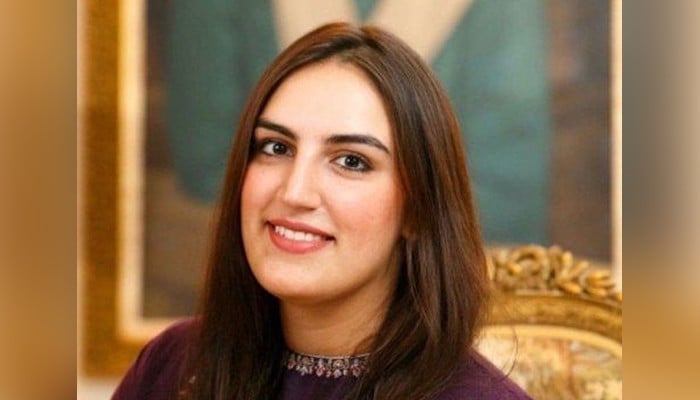
بدقسمتی سے منگنی کے کارڈز پہلے ہی لیک ہوگئے، بختاور بھٹو

شہید محترمہ بے نظیر بھٹو اور سابق صدر پاکستان آصف علی زرداری کی بڑی صاحبزادی بختاور بھٹو  کا کہنا ہے کہ بدقسمتی سے منگنی کے کارڈز باضابطہ طور پر بھیجے جانے والے شیڈول سے پہلے ہی لیک ہوگئے۔

سماجی رابطے کی ویب سائٹ ٹوئٹر پر بختاور بھٹو زرداری نے ایک پیغام جاری کرتے ہوئے کہا کہ آپ تمام لوگوں کی نیک خواہشات اور نیک تمناؤں کا بے حد شکریہ۔

انہوں نے مزید کہا کہ بدقسمتی سے منگنی کے کارڈز باضابطہ طور پر بھیجے جانے والے شیڈول سے پہلے ہی لیک ہوگئے۔ اُن کی امریکا میں کسی بھی خاندان کے ساتھ بالکل کوئی وابستگی نہیں ہے، جس کا مشہور حوالہ بیشتر میڈیا کے ذریعے دیا جارہا ہے۔

اپنے ٹوئٹ کے آخر میں انہوں نے مزید لکھا کہ اُمید ہے اس سے تمام غلط معلومات ختم ہوجائیں گی اور اس کے ساتھ ہی انہوں نے پیپلز پارٹی کے آفیشل ٹوئٹر اکاؤنٹ کی جانب سے شیئر کیا جانے والا ایک اہم معلوماتی بیان بھی جاری کیا ہے۔

پی پی پی کی طرف سے جاری کردہ بیان میں کہا گیا ہے کہ بختاور بھٹو کی منگنی 27 نومبر کو محمود چوہدری سے ہو گی، محمود چوہدری یونس چوہدری اور ثریا چوہدری کے پانچ بچوں میں سب سے چھوٹے بیٹے ہیں۔

یونس چوہدری 1973 میں متحدہ عرب امارات آئےتھے جبکہ اُن کا تعلق لاہور سے ہے۔ یونس چوہدری بہت محنت کے بعد تعمیرات اور ٹرانسپورٹ کے شعبے سے وابستہ ہوئے۔

یونس چوہدری کے سب سے چھوٹے بیٹے محمود چوہدری 27 جولائی 1988 کو ابو ظہبی میں پیدا ہوئے، انہوں نے ابتدائی تعلیم ابوظہبی اور اعلیٰ تعلیم برطانیہ سے حاصل کی۔

محمود چوہدری اپنے والد کے کنسٹریکشن کے کاروبار سے وابستہ ہیں۔

https://jang.com.pk/news/846008 

بختاور بھٹو کی منگنی سے متعلق پیپلز پارٹی کا اہم بیان

سابق صدر آصف زرداری اور شہید محترمہ بے نظیر بھٹو کی بڑی صاحبزادی بختاور بھٹو کی منگنی سے متعلق پیپلز پارٹی کی جانب سے اہم بیان جاری کیا گیا ہے۔

بختاور بھٹو کی منگنی سے متعلق پیپلز پارٹی کی طرف سے جاری کردہ بیان میں کہا گیا ہے کہ بختاور بھٹو کی منگنی 27 نومبر کو محمود چوہدری سے ہو گی، محمود چوہدری یونس چوہدری اور ثریا چوہدری کے پانچ بچوں میں سب سے چھوٹے بیٹے ہیں۔

یونس چوہدری 1973 میں متحدہ عرب امارات آئےتھے جبکہ اُن کا تعلق لاہور سے ہے۔ یونس چوہدری بہت محنت کے بعد تعمیرات اور ٹرانسپورٹ کے شعبے سے وابستہ ہوئے ۔

یونس چوہدری کے سب سے چھوٹے بیٹے محمود چوہدری 27 جولائی 1988 کو ابو ظہبی میں پیدا ہوئے، انہوں نے ابتدائی تعلیم ابوظہبی اور اعلیٰ تعلیم برطانیہ سے حاصل کی ۔

محمود چوہدری اپنے والد کے کنسٹریکشن کے کاروبار سے وابستہ ہیں۔

واضح رہے کہ تین روز قبل بلاول ہاؤس کراچی سے بختاور بھٹو کی منگنی کے حوالے سے اعلامیہ جاری کیا گیا تھا، جس میں آصف زرداری نے بختاور بھٹو کی منگنی کا اعلان کیا تھا۔

آصف زرداری کا کہنا تھا کہ بختاور بھٹو زرداری کی منگنی کی تقریب 27 نومبر کو کراچی میں ہو گی۔

https://jang.com.pk/news/845986 

Monday, November 16, 2020

#DailyShow #TrevorNoah #IfYouDontKnowNowYouKnow Presidential Concessions - If You Don’t Know, Now You Know | The Daily Social Distancing Show

Video Report - What we know about Moderna's COVID-19 vaccine candidate -- and what we don't

Video Report - Joe Biden: 'More people may die' without a smooth transition

#USElections2020 - Michelle Obama on presidential transition: 'This isn't a game'

Alicia Cohn
Former first lady Michelle Obama on Monday criticized "groundless conspiracy theories" about the election and urged a "smooth transition of power" to the next president.

"Our love of country requires us to respect the results of an election even when we don't like them or wish it had gone differently-the presidency doesn't belong to any one individual or any one party," Obama wrote on Instagram.

"To pretend that it does, to play along with these groundless conspiracy theories-whether for personal or political gain-is to put our country's health and security in danger. This isn't a game," she added.

The post follows The Associated Press declaring Joe Biden the winner of the presidential election. President Trump has refused to acknowledge Biden as the next president and is not providing Biden's team access to government resources. Intelligence briefings and other preparation to take charge of various parts of the federal government are typically provided to the president-elect as part of the transition process.

 In the post, Obama reminisced about the transition to the Trump administration at the end of her husband's term. She wrote that she was "hurt and disappointed" when Trump won the election in 2015 but that she chose to "listen" to the American people's decision. She pointed to the tradition of helping the incoming administration that was set for the Obamas by former Republican President George W. Bush and former First Lady Laura Bush.

"I have to be honest and say that none of this was easy for me," Obama wrote. "Donald Trump had spread racist lies about my husband that had put my family in danger. That wasn't something I was ready to forgive. But I knew that, for the sake of our country, I had to find the strength and maturity to put my anger aside."

"I knew in my heart it was the right thing to do-because our democracy is so much bigger than anybody's ego," she added.

"So I want to urge all Americans, especially our nation's leaders, regardless of party, to honor the electoral process and do your part to encourage a smooth transition of power, just as sitting presidents have done throughout our history," Obama wrote.

Former President Obama also urged Trump this week to "think beyond your own ego."

"My advice to President Trump is, if you want at this late stage in the game to be remembered as somebody who put country first, it's time for you to do the same thing," he told CBS's "60 Minutes."

Trump, whose campaign has filed lawsuits in multiple states contesting the election, has doubled down on alleging a "rigged election" without evidence.

Over the weekend, he tweeted, "I concede NOTHING!"

Opinion: Trump or No Trump, Religious Authoritarianism Is Here to Stay

By Katherine Stewart

Ms. Stewart is the author of “The Power Worshippers: Inside the Dangerous Rise of Religious Nationalism.”

     
    Their unlikely ally may have lost the White House, but Christian nationalists still plan to win the war.
    Will President-elect Joe Biden’s victory force America’s Christian nationalists to rethink the unholy alliance that powered Donald Trump’s four-year tour as one of the nation’s most dangerous presidents? Don’t count on it.
    The 2020 election is proof that religious authoritarianism is here to stay, and the early signs now indicate that the movement seems determined to reinterpret defeat at the top of the ticket as evidence of persecution and of its own righteousness. With or without Mr. Trump, they will remain committed to the illiberal politics that the president has so ably embodied.
    As it did in 2016, the early analysis of the 2020 election results often circled around the racial, urban-rural, and income and education divides. But the religion divide tells an equally compelling story. According to preliminary exit polls from Edison Research (the data is necessarily rough at this stage), 28 percent of voters identified as either white evangelical or white born-again Christian, and of these, 76 percent voted for Mr. Trump. If these numbers hold (some other polls put the religious share at a lower number; others put the support for Mr. Trump at a higher number), these results indicate a continuation of support for Mr. Trump from this group.
    The core of Mr. Trump’s voting bloc, to be clear, does not come from white evangelicals as such, but from an overlapping group of not necessarily evangelical, and not necessarily white, people who identify at least loosely with Christian nationalism: the idea that the United States is and ought to be a Christian nation governed under a reactionary understanding of Christian values. Unfortunately, data on that cohort is harder to find except in deeply researched work by sociologists like Andrew Whitehead and Samuel Perry.
    Most pollsters shoehorn complex religious identities into necessarily broad labels, so they fail to separate out the different strands of Mr. Trump’s support. There are indications that the president in fact expanded his appeal among nonwhite evangelical and born-again Christians of color, particularly among Latinos. Mr. Biden, on the other hand, who made faith outreach a key feature of his campaign, appears to have done well among moderate and progressive voters of all faiths.
    Conservative voters of faith “came in massive numbers, seven and a half million more above the 2016 baseline, which was itself a record,” Ralph Reed, head of the Faith and Freedom Coalition and a longtime religious right activist, said at a postelection press briefing. “We believe they’re the reason why Republicans are going to hold the Senate.”
    In their responses to the election outcome, some prominent religious right leaders have enabled or remained true to the false Trumpian line of election fraud. Michele Bachmann, the former Minnesota congresswoman and 2012 presidential candidate, said, “Smash the delusion, Father, of Joe Biden is our president. He is not.” In Crisis Magazine, a conservative Catholic publication, Richard C. Antall likened media reporting on the Biden-Harris ticket’s victory to a “coup d’état.” Mat Staver, chairman and founder of Liberty Counsel, added, “What we are witnessing only happens in communist or repressive regimes. We must not allow this fraud to happen in America.”
    Even as prominent Republican figures like George W. Bush and Mitt Romney slowly tried to nudge Mr. Trump toward the exit, leaders of the religious right continued to man the barricades. The conservative speaker and Falkirk Center fellow David Harris Jr. put it this way:
    If you’re a believer, and you believe God appointed Donald J. Trump to run this country, to lead this country, and you believe as I do that he will be re-elected the President of the United States, then friends, you’ve got to guard your heart, you’ve got to guard your peace. Right now we are at war.
    Others stopped short of endorsing Mr. Trump’s wilder allegations of election fraud, but backed his right to challenge the results. Mr. Reed told Religion News Service, “This election will be over when those recounts are complete and those legal challenges are resolved.” The Rev. Franklin Graham tweeted that the courts will “determine who wins the presidency.” The conservative pastor Robert Jeffress, who gave a sermon before Mr. Trump’s inaugural ceremony in 2017, noted that a Biden win was “the most likely outcome.”
    After processing their disappointment, Christian nationalists may come around to the reality of Joe Biden’s victory. There is no indication, however, that this will temper their apocalyptic vision, according to which one side of the American political divide represents unmitigated evil. During a Nov. 11 virtual prayer gathering organized by the Family Research Council, one of the key speakers cast the election as the consequence of “the whole godless ideology that’s wanted to swallow our homes, destroy our marriages, throw our children into rivers of confusion.” Jim Garlow, an evangelical pastor whose Well Versed Ministry has as its stated goal, “Bringing biblical principles of governance to governmental leaders,” asserted that Mr. Biden and Ms. Harris are at the helm of an “ideology” that is “anti-Christ, anti-Biblical to its core.”
    The comments pouring in from these and other figures may be forgotten when Mr. Biden takes office. But they are worth paying attention to now for what they say about the character of the movement. While many outsiders continue to think of Christian nationalism as a social movement that arises from the ground up, it is in fact a political movement that operates mostly from the top down. The rank-and-file of the movement is diverse and comes to its churches with an infinite variety of motivations and concerns, but the leaders are far more unified.
    They collaborate in a densely interconnected network of think tanks, policy groups, activist organizations, legal advocacy groups and conservative pastoral networks. What holds them together is not any centralized command structure, but a radical political ideology that is profoundly hostile to democracy and pluralism, and a certain political style that seeks to provoke moral panic, rewards the paranoid and views every partisan conflict as a conflagration, the end of the world. Partisan politics is the lifeblood of their movement.
    If one considers the movement from the perspective of its leaders, it is easier to see why it is unlikely to change in the new political circumstances we find ourselves in. The power of the leadership is the function of at least three underlying structural realities in America’s political and economic life, and those realities are not going to change any time soon.
    The first is the growing economic inequality that has produced spectacular fortunes for the few, while too many ordinary families struggle to get by. Leaders of the movement get much of the support for their well-funded operations from a cadre of super-wealthy individuals and extended families who are as committed to free-market fundamentalism as they are to reactionary religion. The donors in turn need the so-called values voters in order to lock down their economic agenda of low taxation for the wealthy and minimal regulation. These donors include, among many others, the Prince-DeVos family, the fracking billionaire Wilks brothers, and members of the Green family, whose Hobby Lobby fortune helped build the Museum of the Bible. The movement gets another big chunk of its funding from the large mass of people who are often in the middle rungs of the economic spectrum and whose arduously cultivated resentments toward those below them have been turned into a fund-raising bonanza.
    The second structural reality to consider is that Christian nationalism is a creation of a uniquely isolated messaging sphere. Many members of the rank and file get their main political information not just from messaging platforms that keep their audiences in a world that is divorced from reality, but also from dedicated religious networks and reactionary faith leaders. The fact that Mr. Trump was able to hold on to a high percentage of the vote in the face of such overwhelming evidence of malfeasance is proof enough that the religious-nationalist end of the right-wing information bubble has gotten more, not less, resistant over time.
    The third critical factor is a political system that gives disproportionate power to an immensely organized, engaged and loyal minority. One of the most reliable strategies for producing that unshakable cohort has been to get them to agree that abortion is the easy answer to every difficult political policy question. Recently, religious right leaders have shifted their focus more to a specious understanding of what they call “religious freedom” or “religious liberty,” but the underlying strategy is the same: make individuals see their partisan vote as the primary way to protect their cultural and religious identity. Republicans have long known that the judiciary is one of the most effective instruments of minority rule. Mr. Trump’s success in packing the federal judiciary — as of this writing, 220 federal judges, including three Supreme Court justices — will be one of his most devastating legacies. The prospect of further entrenching minority rule in the coming years will keep the alliance between Republicans and the religious right alive.
    Perhaps the most troubling aspect of the Christian nationalist response to the 2020 election is that we’ve seen this movie before. The “stolen election” meme won’t bring Mr. Trump back into the Oval Office. But then, the birther narrative never took President Barack Obama out of office, either. The point of conspiratorial narratives and apocalyptic rhetoric is to lay the groundwork for a politics of total obstruction, in preparation for the return of a “legitimate” ruler. The best guess is that religious authoritarianism of the next four years will look a lot like it did in the last four years. We ignore the political implications for our democracy at our peril.
    https://www.nytimes.com/2020/11/16/opinion/trump-religion-authoritarianism.html?action=click&module=Opinion&pgtype=Homepage

    Video - #NayaDaur #GB_Election #TLP Khadim Rizvi's Return To Islamabad, And GB Election Rigging Allegations

    Video - #NayaDaur #News #Pakistan Student Unions | Inflation | Case Against Tareen, Hamza

    #NayaDaur #History #Pakistan Officers Involved In Sindh IG Abduction Should Be Named: Hamid Mir