Tuesday, October 13, 2020

پاکستان ایک ‘ڈیپ سٹیٹ’ ملک ہے، جسے اسٹیبلشمنٹ چلاتی ہے: سابق امریکی وزیر خارجہ کا انکشاف

سابق امریکی وزیر خارجہ اور ڈیموکریٹس پارٹی کی سابقہ صدارتی امیدوار ہیلری


کلنٹن نے ایک انٹرویو کے دوران ڈیپ سٹیٹ کی اصطلاح کی وضاحت کرتے ہوئے انکشاف کیا ہے کہ علم سیاسیات کے مفکرین نے ڈیٹ سٹیٹ  کو سمجھانے کیلئے کچھ ریاستوں کے سیاسی ڈھانچے کی اصطلاح کے طور پر استعمال کیا ہے جہاں منتخب حکومت نہیں بلکہ کچھ ادارے حقیقی حکمران ہوتے ہیں جسکی مثال پاکستان جیسے ملک کی دی جاسکتی ہے۔ انہوں نے کہا کہ پاکستان میں ملٹری اور اسٹیبلشمنٹ بالواسطہ طور پر ملک چلاتے ہیں۔ یعنی اگر کوئی وہاں منتخب بھی ہو مگر ان کے احکامات نا مانے تو ان کے خلاف سازش کر کے انہیں با آسانی باہر کیا جاسکتا ہے،گرفتار کیا جاسکتا ہے ،ان پر کوئی اور سنگین الزام لگایا جاسکتا ہے ،حتیٰ کہ مارا بھی جاسکتا ہے۔ انہوں نے کہا کہ ڈونلڈ ٹرمپ نے بھی اسے آزمانے کی کوشش کی مگر وہ اسے درست طریقے سے نا کر پائے۔

ہیلری کلنٹن کے اس انٹرویو نے پاکستان میں تہلکہ مچا دیا ہے کہ دنیا کے سب سے زیادہ طاقت ور ملک کی وزیر خارجہ پاکستان کو ایک غیر جمہوری ریاست تصور کرتی ہیں۔  ان حالات میں جب پی ڈی ایم اور اپوزیشن کی تمام جماعتیں حکومت اور اسٹیبلشمنٹ مخالف تحریک چلا رہی ہیں ایسے میں ہیلری کا یہ بیان بہت سے سوالات کو جنم دیتا ہے۔

https://urdu.nayadaur.tv/47490/

سکول میں گنجائش نہیں، باجوڑ کے طلبہ کہاں جائیں؟


محمد بلال یاسر 

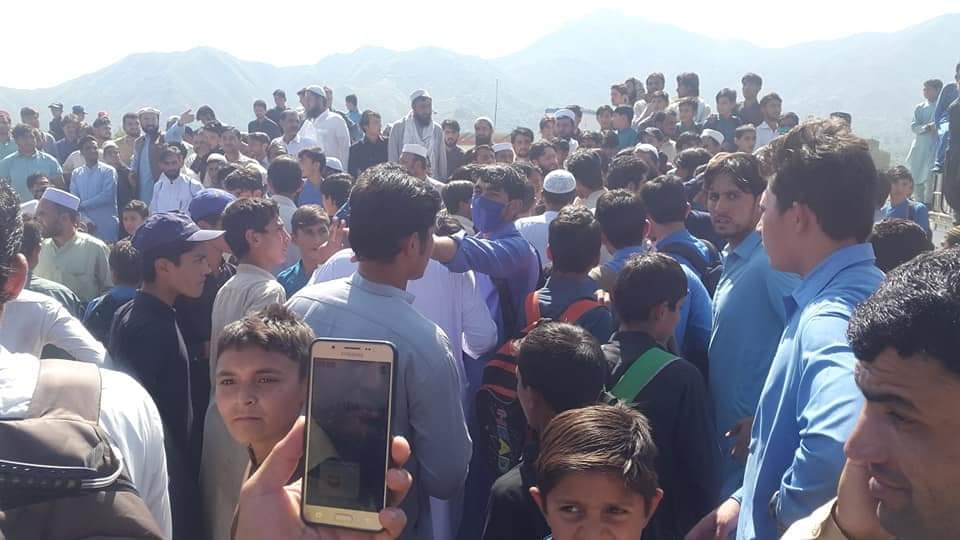
باجوڑ کے علاقے لغڑئی ماموند میں صرف ایک ہائی سکول ہے، لیکن اس میں گنجائش نہ ہونے کے باعث درجنوں طلبہ کا مستقبل داؤ پر لگ گیا ہے۔


باجوڑ میں ہائی سکول میں داخلے کے خواہشمند طلبہ سکول میں گنجائش نہ ہونے کے باعث داخلے سے محروم ہیں۔ انہیں اس ہائی سکول سے ملحقہ سکولوں سے فراغت کے سرٹیفیکیٹ بھی دیے جا چکے ہیں، مگر پورے علاقے میں ایک ہائی سکول کے باعث اب وہ کہیں اور جا نہیں سکتے اور اس سکول میں انہیں داخلہ مل نہیں رہا۔

رواں ہفتے باجوڑ کے طلبہ مسلسل گورنمنٹ ہائی سکول لغڑئی ماموند آتے رہے مگر سکول میں مزید گنجائش نہ ہونے کے باعث وہ پورا دن گزار کر واپس گھر چلے جاتے ہیں۔ اس دوران محکمہ ایجوکیشن، ضلعی انتظامیہ اور دیگر متعلقہ حکام خواب غفلت میں پڑے رہے۔ بالآخر ان طلبہ نے مجبور ہو کر احتجاجاً مین لغڑئی عنایت کلے شاہراہ کو گورنمنٹ ہائی سکول کے سامنے ہر قسم کی ٹریفک کے لیے بند کر دیا۔

اس موقعے پر ان درجنوں طلبہ کے ساتھ دیگر طلبہ اور سماجی کارکن بھی شریک ہوئے۔ طلبہ کا احتجاج اس لحاظ سے منفرد تھا کہ انہوں نے اپنے پرائمری سکولوں سے فراغت کے سرٹیفکیٹ اٹھائے ہوئے تھے اور سکول میں داخلے کے لیے متعلقہ حکام کی توجہ طلب کر رہے تھے۔

مذکورہ گورنمنٹ ہائی سکول لغڑئی ماموند کے پرنسپل شیر علی نے انڈپینڈنٹ اردو کو بتایا کہ ’اس وقت ہمارے پاس سکول میں طلبہ کی تعداد 1400 سے زائد ہے جبکہ سٹاف کی تعداد 10 ہے، پہلے ہی ہم بڑی مشکل سے ان طلبہ کو سنبھال رہے ہیں، مزید طلبہ کے لیے نہ تو سکول میں داخلے کی گنجائش ہے اور نہ ہی میں اپنے اساتذہ پر مزید بوجھ ڈال سکتا ہوں کیونکہ پہلے ہی وہ بہت بڑے بوجھ کا شکار ہیں۔ کلاسوں میں نہایت رش ہوتا ہے اور بیٹھنے کی جگہ تک نہیں ملتی۔‘

انہوں نے مزید بتایا، ’رش کی وجہ سے تعلیم دینے اور سیکھنے کا عمل دونوں متاثر ہوتے ہیں۔ اتنے رش میں معیاری انداز میں پڑھانا ممکن ہی نہیں۔ یہاں کوئی ساؤنڈ سسٹم بھی نہیں ہے۔ ہم کلاسوں میں لیکچر کے دوران چیختے ہیں جس کی وجہ سے گلا خراب ہو جاتا ہے۔‘

اس حوالے سے اسسٹنٹ ایجوکیشن آفیسر عبدالرحمٰن نے انڈپینڈنٹ اردو کو بتایا کہ ’صرف ماموند نہیں بلکہ پورے باجوڑ میں سکولوں میں مزید گنجائش نہ ہونے، عملے اور عمارت کی کمی کے باعث ہمیں اس مسئلے کا سامنا کرنا پڑ رہا ہے۔ اس مسئلے کے حل کے لیے ہم کوششیں کر رہے ہیں تاکہ مستقل بنیادوں پر یہ مسئلہ حل کیا جا سکے۔

انہوں نے مزید بتایا کہ ’مذکورہ سکولوں کی جماعت پنجم میں طلبہ کی تعداد تین سو سے زیادہ ہے، اب مزید طلبہ کو بغیر عملے میں اضافہ کیے سکول انتظامیہ کیسے سنبھال سکے گی۔ مگر اس کے باوجود ہم نے ان سکولوں کے پرنسپل صاحبان کو احکامات جاری کر دیے ہیں کہ جو بھی ہو ان طلبہ کو داخلے دیے جائیں تاکہ ان کا سال ضائع نہ ہو۔‘

انہوں نے کہا، ’باجوڑ میں تعلیم کے مواقع اور سہولیات بہت کم ہیں۔ ہم سکول کے سٹاف پر اضافی بوجھ ڈال کر زیادہ طلبہ کو داخلہ دلانے کا پابند کرتے ہیں مگر ہمارے پاس اساتذہ اور کلاس رومز کی شدید کمی ہے۔‘ انہوں نے بتایا کہ اس سلسلے میں انہوں نے ڈائریکٹر ہائر ایجوکیشن کمیشن کو کئی بار تحریری طور پر آگاہ کر رکھا ہے، مگر اب تک اس سلسلے میں ایجوکیشن کے شعبے کے لیے درکار مزید چھ ہزار خالی آسامیاں پُر نہ ہو سکیں اور نہ ہی سکولوں میں عمارت کا اضافہ ہوا۔

طلبہ کو درپیش اس مسئلے کے بارے میں ضلعی انتظامیہ کے متعلقہ آفسر اسسٹنٹ کمشنر ناوگئی سب ڈویژن حبیب اللہ وزیر سے کئی بار رابطہ کرنے کی کوشش کی گئی، مگر کامیابی نہ ہو سکی۔

تعلیم بچوں کا بنیادی حق ہے۔ یہ مسئلہ پورے باجوڑ میں ہر سال سر اٹھاتا ہے، معلوم نہیں کب حکمران جاگیں گے تاکہ مسئلے کا حل مستقل بنیادوں پر ممکن ہو سکے۔ 

Monday, October 12, 2020

Video - #NajamSethiShow - Story of Sedition Case !!! | Najam Sethi Official

Video Report - #NayaDaur #NawazSharif #PervezMusharraf 12 October 1999 When General Musharraf Staged A Coup Against Nawaz Sharif | What Happened On

Video Report - #Pakistan #Coronavirus COVID-19 crisis fuels Pakistan inflation, poverty

#Pakistan - #Coronapandemie - The second wave

By Attiya Munawer
Since the onset of the corona epidemic, the virus has killed one million people worldwide, while the number of people infected with the coronavirus has been steadily rising, with 32 million people currently. With the onset of winter, the second wave of corona is being witnessed in most of the northern countries of the world and people are being affected by it on a daily basis. So far, the United States, Brazil and India have been the most affected by the epidemic, with a total of 1.5 million people in these three countries. In recent days, the number of COVID-19 victims in Europe is once again increasing and restrictions and lockdowns, similar to the rise of the first wave of corona, are being re-imposed in these countries. The situation is deteriorating in some parts of Pakistan due to the new wave of corona as well, so the National Command and Operation Centre has decided to lockdown affected areas.
The coronavirus epidemic had been declining worldwide, but with the end of the summer, the sudden increase in the number of patients is a cause for concern. Due to this, SOPs have been strictly enforced at entry points. The move comes as the number of Corona patients in Azad Kashmir is 8.3 percent. In Pakistan, 632 new cases of corona were recorded on October 6, bringing the number of active cases to 9,135. There were six new deaths on this day, while 95 patients were transferred on ventilators. The highest number of corona patients is currently in Sindh, numbering 138,000, followed by Punjab with 99,812 patients. Several wedding halls, restaurants, shops and factories have been sealed in Karachi for violating SOPs. But despite this, a large number of people are not ready to take the corona epidemic seriously; government SOPs are being ignored, leading to fears of an increase in deaths in the new wave of the virus. The World Health Organisation (WHO) also warns that before the widespread use of effective vaccines in the future, the coronavirus could cause 2 million deaths worldwide. The head of the World Health Organisation, Dr Mike Ryan, says the death toll could rise further if concrete steps are not taken globally.
There is no doubt that the Pakistani people, with the strong cooperation of the government and the medical sector, have largely managed to prevent deaths from the coronavirus, but the return of the second wave of corona is once again a cause for concern. Reports of new cases of coronavirus in Azad Kashmir, Karachi, Islamabad and other parts of the country are eye-opening. The Azad Kashmir and Sindh governments have taken immediate steps to alert the federal and other provincial governments that the response of the system should be restored. In view of the information that is being received, appropriate steps should be taken to control the situation as soon as possible. The world’s major economic powers, despite all their resources, have failed to control the devastating effects of the epidemic. We have limited resources to deal with the epidemic, so we must ensure that all sections of society follow the precautionary measures. If the coronavirus has resurfaced, there is a need to rekindle the same spirit to prevent this monster from raising its head. The Ministry of Health, the medical department, the government and the World Health Organisation should continue to provide relief and assistance to Pakistan so that the second wave of coronavirus does not wreak further havoc. If the number of corona cases increases, it will lead to lockdown; the economic effects of this year’s lockdown have not faded from people’s memory. If someone is forgetting, they should remember that we cannot cope with the economic effects of the closure for less than six months. If precautions are not taken and another wave of epidemic strikes, there will be many more unusual negative effects on the economy.
There is no denying that the people did not take the corona epidemic as seriously as it should have. If people really want to avoid the effects of the new wave of coronavirus, the only solution is to ensure timely safety and precautionary measures. The Prime Minister has rightly said that now we have to take precautionary measures and live with corona. Therefore, in the case of a global epidemic, the people must adopt a serious and wise attitude and abandon negligence and carelessness, but the government must also realise its responsibility and strictly implement SOPs. It is a question of collective responsibility, often the negligence of one individual causes trouble for many. In view of this situation, it is the responsibility of the government to make arrangements to ensure that the people take precautionary measures and any violation not to be overlooked. If the public wants to maintain their daily routines and economic activities, they will have to ensure compliance with the precautionary measures against the coronavirus in winter, then a new wave of corona can be avoided.
https://nation.com.pk/11-Oct-2020/the-second-wave

#Pakistan - Bureaucracy under PTI - Civil servants as rolling stones

Civil servants as rolling stones:
Politically motivated postings and transfers of bureaucrats have taken place under the previous governments also. However, what the previous two governments did in 10 years, the PTI has managed to do in two. In Punjab, district-level administrators and police officers who insisted on acting according to the book were replaced with those who were expected to accommodate the ruling alliance’s MPAs and MNAs and thus help them strengthen their hold over their constituencies.
The provincial bureaucracy is required to carry out the political agenda of the provincial government, which includes cooking up cases against opposition leaders and helping the PTI government win the local government elections whenever they take place. This explains why the Punjab government has replaced three chief secretaries and five IGPs within two years.
The way NAB treated bureaucrats who were close to the PML(N) government made civil servants feel insecure. A perception was created that they too might be hauled up for decisions made in good faith gone wrong. A demoralized bureaucracy decided to go slow, resulting in inefficiency on the part of the government.
Secretaries and other officers working at the federal level were also required to help the ruling party and reduce the influence of the opposition. More courageous civil servants who had the temerity to tell the PM that what he wanted them to do was illegal or against the national interest were made OSDs, the most prominent case being that of a federal finance secretary who was seen to be tough in negotiations with the IMF and was therefore told not to attend the last few meetings of the mission representatives. A DG FIA was transferred to an inconsequential department because allegedly he refused to get terrorism cases filed against members of Ms Maryam Nawaz’s social media team for lack of any solid evidence. For similar reasons he declined to oblige when told to file cases against PML(N) President Mian Shahbaz Sharif and his family members. Both Grade 22 officers resigned.
By making the bureaucrats rolling stones, the PTI government has violated the Supreme Court injunctions laid down in Anita Turab’s case. The case of the Lahore CCPO indicates the type of public servants it likes, irrespective of the social consequences of their acts of omission and commission.
https://www.pakistantoday.com.pk/2020/10/09/bureaucracy-under-pti/

The Army Public School in Peshawar Report


 Rahimullah Yusufzai


Six years after the deadliest terrorist attack in Pakistan’s history, the commission’s report has been made public.

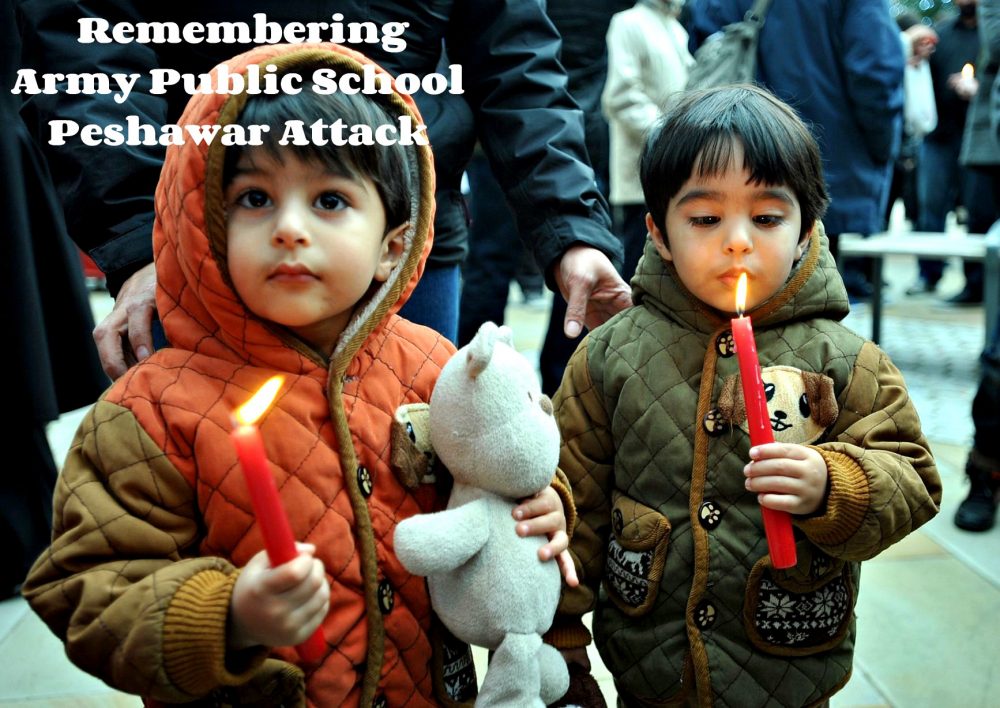
Nearly six years after the deadliest terrorist attack in Pakistan’s history, a judicial commission has shed some light on the incident that caused the martyrdom of 147 persons, including 132 schoolchildren, at the Army Public School in Peshawar.

It isn’t common in Pakistan for reports of judicial commissions formed to inquire into important incidents to be made public. Often such commissions are constituted to calm down the citizens. The government’s refusal to make public the Hamoodur Rahman Commission report on the 1971 debacle in East Pakistan that led to its separation and creation of Bangladesh is widely quoted as an example of hiding facts and keeping the people in the dark. Ironically, the report was leaked by unknown sources to the Indian media which broke the story.

However, in the case of the Army Public School (APS) carnage, the Supreme Court of Pakistan headed by Chief Justice Gulzar Ahmed ordered the government to make the report of the judicial commission public and also give its copy to the parents of the victims along with the government’s response to it. The apex court under the then Chief Justice Mian Saqib Nisar had taken suo motu notice of the incident in response to the demand by the victims’ parents and asked the Peshawar High Court in October 2018 to set up the judicial commission.

The bereaved parents, who split into at least two groups owing to differences in their ranks, had been staging protests to demand a judicial probe as they believed that the real culprits involved in it had not yet been apprehended. Even now some of them are calling it an incident of “target-killing” rather than an act of terrorism. Though the government and the Pakistan Army have done their best to console and compensate the families of those martyred and wounded through cash payments, plots of land, special education facilities and overseas trips, most of the parents have maintained that their loss was huge and unforgettable. They wanted answers to their questions as to how the army-run school was left almost undefended on that fateful day, December 16, 2014, which was the anniversary of the fall of Dhaka.

Though the government managed to arrest four men based in Peshawar and Khyber, in December 2015 for their involvement in the attack as they had allegedly facilitated the six terrorists who stormed the school, their conviction by a military court and hanging did not satisfy the parents as they argued that the masterminds of the assault had yet to be nabbed and punished. They also wanted those guilty of neglect in protecting the school to be identified and taken to task.

Senior army officials at the time of the attack had pointed out that most of the available troops in Peshawar had been sent to North Waziristan to participate in the Zarb-e-Azb military operation, the biggest operation to-date against terrorists in Pakistan launched in June 2014, and the subsequent Khyber-1 action.

However, the one-man judicial commission of Peshawar High Court, consisting of Justice Mohammad Ibrahim Khan, noted that the security guards present in the school weren’t properly positioned to engage the attackers and buy time for the Quick Response Force and Rapid Response Force, both of whom were rushed to the site of the incident. Besides, it said, the security patrol present near the school was misled by the terrorists who set their vehicle on fire to distract its attention and enter the school premises from the rear to launch the attack. Though the commission in its report praised the armed forces for offering sacrifices and winning the battle against terrorists, it nevertheless noted that “the incident of APS plagued their success stories which deserved deification.” It admitted that terrorism in Pakistan had reached its peak in 2013-14, but it “doesn’t obligate us to hold that our sensitive installation(s) and soft target(s) could be forsaken as a prey to the terrorists’ attack.”

Senior army officials at the time of the attack had pointed out that most of the available troops in Peshawar had been sent to North Waziristan to participate in the Zarb-e-Azb military operation.

The commission, which compiled the 525-page report after recording the statements of 132 persons, including 31 army and police officials, during its nearly 20 months proceedings, had also mentioned the porous border between Afghanistan and Pakistan and unrestrained movement of Afghan refugees as a reason for the entry of the terrorists who attacked the school. The report used strong words such as “infidels” for the facilitators of the attack. It also noted that some of those found guilty of negligence including army personnel had already been awarded punishment.

Concerning the widespread belief that the APS had not been properly protected despite a threat alert by the National Counter Terrorism Authority (Nacta), the commission argued that the alert was of a generic nature about terrorists seeking to target army families and academic institutions as retribution for the successful military operations, Zarb-e-Azb and Khyber-1.

Chief Justice Gulzar Ahmad made two important observations while hearing the case after submission of the judicial commission report in his court. He regretted that traditionally “lower-ranked officials” were held responsible for such incidents and those holding senior positions were spared. He made the remark when the attorney general representing the government said that every possible action was being taken against those involved in the carnage. The chief justice also observed that the militants were able to “achieve their objective”, adding that the security institutions “should have been aware of this conspiracy”.

The two masterminds of the APS attack, both based in Afghanistan and belonging to the Tehrik-i-Taliban Pakistan (TTP), were subsequently killed in US drone strikes. Khalifa Umar Mansoor aka Umar Naray, who had claimed responsibility for the attack and was seen in pictures with the six terrorists as they embarked on their journey to Pakistan, was killed on July 9, 2016, in Afghanistan’s eastern Nangarhar province. The TTP head Maulana Fazlullah, who must have been aware of the planning of the terrorist assault on APS and had defended it, was eliminated in another US drone strike on June 14, 2018, in Kunar province.

These two deaths may have brought closure to the parents and relatives of the victims and the judicial commission’s report has tried to answer some of their questions. The tragedy will, of course, continue to haunt not only the victims’ parents but also rest of the nation.

The Cat and Mouse game between Pakistan and FATF

 By Hafeez Hassanabadi 

Pakistan is on the grey list of the International Financial Action Task Force (FATF) for supporting terrorists and being involved in serious crimes of money laundering since 2018, and so far it has dodged the blacklist by tricking the United States with false promises of help to exit Afghanistan, these procrastinating tactics have become a cat and mouse game between FATF and Pakistan.

It is noteworthy to remind that Pakistan was blacklisted for two years in 2008 but somehow it made to grey list in 2010, but again it slid into blacklist for its shenanigans in 2012. Again it made to grey list in 2014. Later, it extracted itself from the grey to white list, however, in 2018 it was again put on the grey list. It shows that Pakistan has been playing cat and mouse games with the FATF, having been blacklisted twice and grey-listed three times since 2008. Despite being given the chance to improve itself, it has not broken its ties with terrorist organizations.

 If it is ready to risk being globally isolated and lose ten billion dollars annually but not ready to give up its relationship with terrorists, then it means that the terrorists and their organizations are much more beneficial to Pakistan than the annual loss of ten billion dollars. Otherwise, how can a country that is on the brink of economic bankruptcy, sunken in external debt, faces internal political turmoil, begging for alms all over the world, play games with an influential international organization like FATF for the last twelve years?

In recent days, hastily laws have been passed in the Pakistani Parliament in the pretext of fulfilling the requirements of FATF, such as spying on people without permission, imprisoning them without giving any reason, transferring them to unknown places without any warrant or FIR. These illegal laws will reinforce the pre-existing state terrorism and create difficulties for personal freedom, including freedom of expression. Pakistan, at the state level, has been treating its citizens in an illegal and inhumane manner for a long time. The rampantly disappearing thousands of Baloch, Pashtuns and Sindhis without giving any reason, getting them killed by unknown people, strewing of mutilated corpses are routine practices in Pakistan. Now that these inhuman measures have the legal backing, it is not difficult to imagine how miserable could be the life of a common man when faced with such absolute power of a state that has never bothered to respect the human rights of its citizens.

The dangerous thing is that the courts in Pakistan are not independent, which certainly reinforces the fact that the law can be molded and folded according to the will of the state, which means the laws, that are being made in keeping with the demands of FATF, are the laws that will further allow the unstrained state to increase its lawlessness by hoodwinking the international community.

If Pakistani forces can find out secular Baloch and Pashtun political activists and kill them in remote villages and mountains of Balochistan, Waziristan; then why it has failed to apprehend bin Laden, Mullah Omar, Akhtar Mansour, Dawood Ibrahim, Ranjit Singh Neta of Khalistan Zinda Bad Force, Babar Khalsa International,  Leaders of Wadhwa Singh Babar, Khabir Singh of Khalistan Zinda Bad Force, Paramjit Singh of Khalistan Commando Force,

at a time when Pakistan was listed in grey and black because of being non-compliance with FATF’s demands and remain hidden from the eyes of Pakistani agencies under the shadow of Pak army cantonments in different cities of Pakistan?

 Dozens of terrorists including Hafiz Saeed, Masood Azhar, Zakir-ur-Rehman Lakhvi are on the UN Security Council’s list of global terrorists, some of them have been arrested under the pressure of FATF, but the reality is different, they are not in any prison, rather, they’ve been provided VVIPs protocol in state-owned luxury guest houses, from where they’re continuing their terrorist activities in Afghanistan and India.

Baloch, Pashtun and Sindhi are subjected to the worst form of atrocities and brutalisation in Pakistan, and abroad, Afghanistan and Kashmir are their centers from where they are spreading their dirty mayhem all over the world which is known as global terrorism.

The intensification of their activities in Kashmir and the extent of the horror of their war in Afghanistan are no secret. There are still at least three or four Pakistani nationals among every ten terrorists who’re killed in Afghanistan every day and they belong to Lashkar-e-Taiba and Jaish-e-Muhammad fighting under the umbrella of one or another terrorist organization.

While providing training camps to Afghans themselves with all kinds of facilities, is a different topic. It is quite clear that if their terror activities have not been affected, it means the arrest of their leaders, the closure of their accounts, the confiscation of their properties are all eyewash tactics Pakistan continuously uses to further its hidden agenda of Punjabi domination.

The catchy slogan,  “Operation Zarb-e-Azb” was carried out in 2015 to eradicate terrorists but in reality, it was all about evacuating its deep state assets and transferring them to safe havens in Afghanistan, Kashmir and Balochistan so that they could be saved from any possible US drone attacks.

Pakistani army cashed in billions of dollars from US and NATO in the name of war against terrorism by a simple act of deception that it was a genuine ally against terrorism, while the homes, shops and properties of innocent Pashtuns were demolished as evidence of its performance, and anyone who raised a voice against this atrocity was selectively killed.

As a result of these atrocities Pashtun Protection Movement, PTM was formed by Pashtun nationalists. State terrorism is also on the rise in occupied Balochistan. On the one hand, hundreds of madrassas have been turned into factories for producing terrorists, on the other, the dirty act of rampant abduction of educated secular members of Baloch society is continuing. While the process of torture and dumping of mutilated dead bodies of Baloch political activists never abates. 

Those who are aware of the state-sponsored terrorism, money laundering and corruption, are well aware that Pakistan must have arranged alternatives for these terrorists before closing their accounts and businesses, exactly in the same way as Pakistan’s military generals, politicians, bureaucrats steal billions in the name of their relatives by manipulating under the pretext of business. 

The FATF does not need to go far; it should only trace the overseas assets of some of the Pakistani ex-army generals including Gen. Pervez Musharraf, Gen. Kayani,  Gen. Jahangir Karamat, Gen. Mirza Aslam Baig and Gen. Asim Saleem Bajwa how these generals have misused their power to commit every robbery and corruption –  How they’ve laundered billions of Pakistani rupees into dollars and shifted the black money abroad and how they’ve fooled the civilized world, including the United States, in the name of the war on terror by turning terrorism into a lucrative business and money earning industry?

In the process, they will also learn how Pakistani generals have turned occupied Balochistan into an “efficient” delivery corridor of billions of dollars’ drugs from Afghanistan to the rest of the world against the will of Baloch and how they’ve entrapped Afghans in a stupid war thereby exploiting and exporting their minerals resources with the fake name of Pakistani brand.

The economic interests top the list in Pakistan’s proxy war against Afghanistan, besides many other political motives behind terror catastrophes in Afghanistan that have directly benefited Pakistani security forces. That is why they are hatching each passing day a new kind of conspiracy to perpetuate their terrorism in Afghanistan.

If the FATF wants to stop Pakistan from supporting terrorism, it must ensure two more things: first, to bring to justice the heads and sponsors of those terrorists who were killed and captured in Afghanistan and Kashmir and secondly ensure that all terrorists are referred to the International Court of Justice because they’ve been designated as global terrorists by the UN Security Council.

We are convinced that if the FATF ensures the accountability of the masterminds of the terrorists in Afghanistan, Kashmir and around the world who are linked to and centered in Pakistan, at least fifty to sixty percent of all such crimes in the world could be reduced. This is what the FATF is trying to control. Otherwise, Pakistan will not only maintain the financial support and political backing of these terrorists at the state level but will also try new ways to mislead the world.

In conclusion, it is enough to say that if a state can terrorize its citizens, how can one expect it to have mercy on others? Hence, we strongly argue that blacklisting Pakistan is the best solution to contain it until it has practically given up all forms of sponsorship of terrorists.

https://balochwarna.com/2020/10/01/the-cat-and-mouse-game-between-pakistan-and-fatf/

Pakistan Is Doing Its Own Political Reengineering in Kashmir

BY KUNWAR KHULDUNE SHAHID
After condemning New Delhi for its machinations in Jammu and Kashmir, Islamabad is quietly changing the status of Gilgit-Baltistan on its side of the Line of Control.

Ahead of general elections in the Pakistan-administered region of Gilgit-Baltistan on Nov. 15, 554 candidates had submitted their nomination forms to run. India, which also claims the area as part of the broader dispute about the border between the two countries, has slammed the decision to hold the vote as an illegal annexation.

In some ways, New Delhi is right about Islamabad’s intentions. It is holding the elections as part of an attempt to mainstream the area as a fifth province of the country. The move also comes in reaction to India’s own decision last year to revoke Article 370 of its constitution, which had granted Indian-administered Kashmir some autonomy and had protected the region against any attempts from the central government to repopulate it with non-Kashmiris.

After Article 370 was revoked, Pakistan was quick to register its outrage, particularly focusing on the fate of Kashmir’s Muslims. But the rhetoric was largely designed for domestic consumption, especially given that Islamabad has engaged in demographic engineering in Kashmir as well. Following the Partition of India in 1947, Pakistan separated the region it was given to administer into two parcels—the Northern Areas (the northern part of the broader Kashmir region) and Azad Jammu and Kashmir—until a final settlement of the borders between it and India. That divide was formalized in 1974 through the Northern Areas Council Legal Framework Order. Following that order, Islamabad actively encouraged Pakistanis from the rest of the country to settle in the Northern Areas, which tilted the region’s demographics away from its Ismaili Shiite population.
Further, although Pakistan’s Azad Jammu and Kashmir has enjoyed some token autonomy over the past 73 years, the Northern Areas have been ruled from the center, with Islamabad maintaining the area’s legal status quo ostensibly to protect its claim on the entirety of Kashmir if there is ever a settlement with India.
Over the course of that history, Islamabad has often faced dissent from protesters in the Northern Areas demanding that it be turned into an official fifth province and granted all the associated rights. Faced with growing demands from the locals, in 2009, Pakistan renamed the Northern Areas “Gilgit-Baltistan” and gave the region its first legislative assembly. Islamabad also created a legal framework to potentially provide anyone living in Gilgit-Baltistan, including those from outside of the region, with formal residency there. More reforms, supposedly to give residents of Gilgit-Baltistan greater say in their governance, came in 2018. But when Islamabad maintained its tight-fisted control over Gilgit-Baltistan anyway, protests ensued.
The protests among Gilgit-Baltistan nationalists have been met with pushback from Kashmiri nationalists on both sides of the Line of Control between the Indian- and Pakistani-controlled parts of the region, who have condemned plans to alter the status of the Pakistani-administered territories. In 2016, one prominent figure, Syed Ali Shah Geelani, wrote a letter to then Pakistani Prime Minister Nawaz Sharif, calling the plans to elevate Gilgit-Baltistan a “disaster” for an independent Kashmir that includes all of the disputed regions. Sayyid Abdullah Gilani, another prominent Kashmiri nationalist, has similarly urged Pakistan to reconsider the upcoming election.
But with locals in Gilgit-Baltistan increasingly forceful in their anger—and with Pakistan looking for an opportunity to needle India after India’s own moves in Kashmir—now must seem like an opportune time for Islamabad to mainstream the area as a province.

Of course, the growing nationalist movement in Gilgit-Baltistan was only one factor in Pakistan’s decision to move forward with the vote. Another came from China.
In 2015, Beijing set in motion the transformation of Gilgit-Baltistan when it formally inaugurated the now $87 billion China-Pakistan Economic Corridor (CPEC). The corridor, meant to connect China’s Xinjiang with Pakistan’s coastline in Baluchistan, has to pass through Gilgit-Baltistan. The CPEC is said to be China’s largest-ever overseas investment, and Beijing does not want to see it embroiled in the protracted dispute over Kashmir.
The ongoing Chinese-Indian conflict in Ladakh, an Indian-administered region along the disputed Indian-Chinese border, has led to further militarization of the Pakistani-Indian dispute. However, China’s muscle-flexing to establish itself as the region’s stand-alone power may suggest that Beijing is warning India off any tussles with Pakistan. China is helping develop businesses and infrastructure in Gilgit-Baltistan, most notably the Diamer-Bhasha Dam. The growing Chinese presence has reassured Islamabad that Beijing will have its back.
https://foreignpolicy.com/2020/10/12/gilgit-baltistan-election-pakistan-india-kashmir/

Why Pakistan will regret opening the door to radical Islamist parties

MIHIR SHARMA
Pakistani politics may see a three-way tug-of-war between a middle-class populist, an aggressive military establishment and radical Islamists.

 Across Asia, populists and authoritarians have taken advantage of the pandemic to go after their political opponents. Last week, Pakistan’s already frail opposition was dealt a further blow: A case was filed against the former prime minister and stringent critic of the military, Nawaz Sharif, for “sedition,” while former president Asif Ali Zardari was formally charged with corruption. Sharif and Zardari lead different parties and are old antagonists; all they have in common is that they are now tentative and distrustful allies against the army-backed government of Prime Minister Imran Khan.


It isn’t hard to see why the Pakistani state has escalated its attacks on the opposition. Zardari, Sharif and the Islamist cleric-politician Fazlur Rehman — three very unlikely fellow travelers — recently launched a joint movement to unseat the government. In exile in London, Sharif has delivered a series of belligerent, unrestrained speeches in which he has accused the military of being a “state behind the state” and of manipulating the election of 2018 that brought Khan to power.
That seems to have been the last straw for Pakistan’s military establishment. Sedition cases weren’t just registered against Sharif but also his daughter and heir-apparent Maryam, as well as 44 other leaders of his Pakistan Muslim League. Sharif’s brother Shahbaz, until recently the chief minister of Pakistan’s populous Punjab province, has also been arrested. Shortly afterwards, Pakistan’s media regulator banned speeches or interviews with “fugitives,” clearly meant to prevent the re-broadcast of Sharif’s speech or others like it.
Others, including ministers from Khan’s party, have said that criticism of the military in Pakistan is unconstitutional. Imran Khan’s own response has been to claim that Sharif — thrice elected prime minister of Pakistan — is an agent of the Indian government.
The Pakistani military has some hard thinking to do. Most of its choices in the past three or four years have been bad ones. First it decided to prop up Khan and his party. As the Pakistani security analyst Ayesha Siddiqa points out, Khan’s government has failed on at least two counts that matter to his uniformed backers. It has not been able to ensure that funds continue to flow into Pakistan’s fragile, externally dependent economy. Meanwhile, foreign-policy grandstanding, including cozying up to his fellow populist, Turkish Prime Minister Recep Tayyip Erdogan, seems to have irritated Pakistan’s most reliable supporters in Riyadh and Beijing.
In time, too, the military may discover that Khan himself is not quite as biddable as they would like. Earlier this month, in response to Sharif’s claim that the then-chief of military intelligence had asked him to quit as prime minister in 2014, Khan claimed that, in Sharif’s position, he would have demanded the spymaster resign for making the threat.
While a bit over the top, Khan’s boast is a reminder that the prime minister has had a proper populist’s ego ever since his days as a star cricketer. He has claimed that he himself is the personification of Pakistani democracy and that the army is quietly obedient to him because of his clean image. One wonders if the only person in the Pakistani establishment who doesn’t believe Imran Khan is beholden to the military is Khan himself.
On Oct. 16, the joint opposition will face its first test — a rally in Sharif’s Punjabi heartland. It is a long road back to power for Sharif’s party and Zardari’s; the former has lost Punjab and the latter its own power base in Pakistan’s only global city, Karachi. Yet it won’t be easy to root for the new opposition alliance, either. It is being led, after all, by the radical Fazlur Rehman, a canny cleric-politician who has openly said he shares the objectives (if not the dedication to violence) of the Taliban.
While Pakistan’s Islamist parties have been junior parties in government before and can draw large numbers of demonstrators, they have always been electorally marginal. Now, given that the mainstream political parties are unpopular and enfeebled, this might be the moment that Rehman and his colleagues have been waiting for. Egypt has shown us how hard it is for military dictators to fight political Islamism. And in India, Hindu nationalists were similarly marginal to electoral politics until they became part of the alliance, 40 years ago, that defeated the authoritarian Indira Gandhi.
If mainstream parties continue to fade, Pakistani politics may well see a three-way tug-of-war between a middle-class populist, an aggressive military establishment and radical Islamists. That’s in nobody’s interest — not even the Pakistan army’s.
https://theprint.in/opinion/why-pakistan-will-regret-opening-the-door-to-radical-islamist-parties/521686/

#FATF regional group says Pakistan’s measures ‘not sufficient’ against terror financing


The Asia-Pacific Group has kept Pakistan in its 'Enhanced Follow-up' list, saying the country has improved full compliance on only two of the 40 FATF recommendations.

Noting that Pakistan’s measures against money laundering and terror financing “is not yet sufficient to justify a re-rating”, a regional affiliate of the Financial Action Task Force on Monday retained the country on its ‘Enhanced Follow-up’ list, according to a media report.
The development came only a few weeks ahead of the meeting of the FATF — the Paris-based global money laundering and terrorist financing watchdog — to decide on Pakistan’s grey list status.
The first Follow-Up Report on Mutual Evaluation of Pakistan released by the Asia-Pacific Group (APG) underlined that the country’s progress on the 40 FATF recommendations on the effectiveness of anti-money laundering and combating financing terror (AML/CFT) system largely remained unchanged — non-compliant on four counts, partially compliant on 25 counts and largely compliant on nine recommendations, the Dawn News reported.
Pakistan has improved its full compliance on only two of the 40 FATF recommendations, the APG report noted.
Pakistan will remain in enhanced (expedited) follow up, and will continue to report back to the APG on progress to strengthen its implementation of AML/CFT measures, the APG concluded in its 12-page report.
The APG Mutual Evaluations is a peer-review system to determine whether countries meet the compliance standards for money laundering and terror financing.
After a country submits a Mutual Evaluation report, APG members can decide to place a member either through regular or enhanced follow-up. While a regular follow-up means just biennial reports, a country put under enhanced follow-up has to send four reports of compliance the following year.
The APG report noted that though the country has taken measures on recommendations pertaining to money laundering and terror financing, the progress is not yet sufficient to justify a re-rating .
Pakistan had requested for re-ratings on three areas declared partially compliant by the APG in October last year. The request was accepted on one count and rejected on two due to “insufficient” progress to the satisfaction of international experts.
The 41-member APG in August last year had downgraded Pakistan’s status to ‘Enhanced Follow-up’ category from ‘Regular Follow-up’ over technical deficiencies to meet normal international financial standards by October 2018. ‘Enhanced follow-up’ is an intensive process of correction that deals with members with significant deficiencies (for technical compliance or effectiveness) in their AML/CFT systems. The APG’s report came ahead of the virtual FATF plenary scheduled for October 21-23 during which it would be decided if Pakistan should be excluded from its grey list, based on a review of Islamabad’s performance to meet global commitments and standards on fight against money laundering and terror financing (ML&TF).
FATF had placed Pakistan on its grey list in June 2018 and asked Islamabad to implement a plan of action to curb money laundering and terror financing by the end of 2019 but the deadline was extended later on due to COVID-19 pandemic.Seeking to wriggle out of the FATF’s grey list, debt-ridden Pakistan in August imposed financial sanctions on 88 banned terror groups and their leaders, including 26/11 Mumbai attack mastermind and Jamaat-ud-Dawa (JuD) chief Hafiz Saeed, Jaish-e-Mohammed (JeM) chief Masood Azhar and underworld don Dawood Ibrahim.In February, the FATF gave Pakistan, which missed 13 targets, a four-month grace period to complete its 27-point action plan against ML&TF committed with the international community.
In its third plenary held virtually in June, the FATF decided to keep Pakistan in the grey list as Islamabad failed to check flow of money to terror groups like Lashkar-e-Taiba (LeT) and Jaish-e-Mohammed (JeM).
With Pakistan’s continuation in the ‘grey list’, it is increasingly becoming difficult for the country to get financial aid from the International Monetary Fund (IMF), World Bank, Asian Development Bank (ADB) and the European Union, thus further enhancing problems for the nation which is in a precarious financial situation.
The APG report noted that Pakistan considered 12 terrorist organisations, including eight UN-designated entities of concern (EOCs), for threat profiles but only in terms of inflows and not outflow of funds to support terrorist activities.
It also noted that the National Risk Assessment (NRA) 2019 has confirmed that abuse of non-profit organisations for terror financing purposes continued to pose a significant threat both domestically and externally and that charities and fund-raising was a source of funds for almost all EOCs.
https://theprint.in/world/fatf-regional-group-says-pakistans-measures-not-sufficient-against-terror-financing/521884/

Sunday, October 11, 2020

Video - Trump and Biden tied in Iowa as Biden leads in Michigan and Nevada

Video - #DailyShow #TrevorNoah #ColumbusDay What’s with Columbus Day? | The Daily Social Distancing Show

Video - How America Bungled the Plague | NYT Opinion

Video - #US #Trump - How has COVID-19 changed the US campaign?

EDITORIAL BOARD #NYT - Elect Joe Biden, America

Joe Biden has vowed to be a president for all Americans, even those who do not support him. In previous elections, such a promise might have sounded trite or treacly. Today, the idea that the president should have the entire nation’s interests at heart feels almost revolutionary.

Mr. Biden has also vowed to “restore the soul of America.” It is a painful reminder that the country is weaker, angrier, less hopeful and more divided than it was four years ago. With this promise, Mr. Biden is assuring the public that he recognizes the magnitude of what the next president is being called upon to do. Thankfully, he is well suited to the challenge — perhaps particularly so.
Kathleen Kingsbury, acting editorial page editor, wrote about the choice to endorse Joe Biden for president in a special edition of our Opinion Today newsletter. You can read it here. In the midst of unrelenting chaos, Mr. Biden is offering an anxious, exhausted nation something beyond policy or ideology. His campaign is rooted in steadiness, experience, compassion and decency.
A President Biden would embrace the rule of law and restore public confidence in democratic institutions. He would return a respect for science and expertise to the government. He would stock his administration with competent, qualified, principled individuals. He would stand with America’s allies and against adversaries that seek to undermine our democracy. He would work to address systemic injustices. He would not court foreign autocrats or give comfort to white supremacists. His focus would be on healing divisions and rallying the nation around shared values. He would understand that his first duty, always, is to the American people.
But Mr. Biden is more than simply a steady hand on the wheel. His message of unity and pragmatism resonated with Democratic voters, who turned out in large numbers to elevate him above a sprawling primary field.
His team has put together a bold agenda aimed at tackling some of America’s most pressing problems. The former vice president is committed to working toward universal health care through measures such as adding a public option to the Affordable Care Act — which he played a significant role in passing — lowering the age for Medicare eligibility to 60 years old and cutting the cost of prescription drugs. He recognizes the fateful threat of climate change and has put forward an ambitious, $2 trillion plan to slash carbon emissions, invest in a green economy and combat environmental racism.
Mr. Biden will not be morphing into an ideological maximalist any time soon, but he has acknowledged that the current trifecta of crises — a lethal pandemic, an economic meltdown and racial unrest — calls for an expanded governing vision. His campaign has been reaching out to a wide range of thinkers, including former rivals, to help craft more dynamic solutions. In midsummer, he rolled out an economic recovery plan, dubbed “Build Back Better,” with proposals to bolster American manufacturing, spur innovation, build a “clean-energy economy,” advance racial equity and support caregivers and educators. His plan for fighting the coronavirus includes the creation of a public health jobs corps. Progressives who want even more from him should not be afraid to push. Experience is not the same as stagnation.
Mr. Biden has a long and distinguished record of accomplishment, including, as a senator, sponsoring the landmark Violence Against Women Act of 1994 and, as vice president, overseeing the American Recovery and Reinvestment Act of 2009, passed in response to the Great Recession. In a 2012 interview on “Meet the Press,” his remarks in support of gay marriage — which blindsided the Obama White House and caused a public kerfuffle — proved a watershed moment for the cause of equality. In 1996, Mr. Biden had voted as a senator in favor of the Defense of Marriage Act, which prohibited federal recognition of same-sex marriages, making his evolution on the issue particularly resonant.
He has an unusually rich grasp of and experience in foreign policy, which, as traditionally understood, has not played a central role in the presidential race — though the pandemic, the climate crisis, a more assertive China and disinformation wars against the American public argue strongly that it should. The next president will face the task of repairing the enormous damage inflicted on America’s global reputation.
Mr. Biden has the necessary chops, having spent much of his career focused on global concerns. He not only took on thorny diplomatic missions as vice president, he also served more than three decades on the Senate Foreign Relations Committee. Aware that an “America First” approach in reality amounts to “America alone,” he would work to revive and refurbish damaged alliances. He has the respect and trust of America’s allies and would not be played for a fool by its adversaries.
Certainly, not all of Mr. Biden’s foreign policy decisions through the decades look sage in hindsight, but he has shown foresight in key moments. He fought a rear-guard action in the Obama White House to limit the futile surge in Afghanistan. He was against the 2011 intervention in Libya and skeptical of committing American troops to Syria. He opposed renewing the Foreign Intelligence Surveillance Act in 2007 and 2008 because it gave the government too much power to spy on Americans. He’s supported closing the prison at Guantánamo Bay. Little wonder that he has the backing of a who’s who of the foreign policy community and national security officials from both parties.
Mr. Biden is not an ideological purist or a bomb-thrower. Some will see this as a shortcoming or hopelessly naïve. Certainly, it’s unlikely that if Republicans retain control of the Senate, their leader, Mitch McConnell, will abandon his policy of fanatical obstructionism of any Democratic president.
That said, as the emissary often dispatched by President Barack Obama to deal with Republican lawmakers during tough legislative fights, Mr. Biden has intimate experience with the partisan gridlock crippling Congress. He knows how the levers of power work on both ends of Pennsylvania Avenue, and he has longstanding relationships with members from both parties. More than any of this cycle’s other presidential hopefuls, he offered weary voters a chance to see whether even a modicum of bipartisanship is possible.
He is also offering a glimpse of the Democratic Party’s future in his choice of running mate, Senator Kamala Harris of California. Ms. Harris would become a number of firsts — a woman, a Black person and an Asian-American — as vice president, adding history-making excitement to the ticket. A former prosecutor, she is tough, smart and can dismantle a faulty argument or political opponent. She is progressive, but not radical. In her own presidential campaign, she presented herself as a unifying leader with center-left policy proposals in a mold similar to Mr. Biden, albeit a generation younger. Mr. Biden is aware that he no longer qualifies as a fresh face and has said that he considers himself a bridge to the party’s next generation of leaders. Ms. Harris is a promising step in that direction.
If he wins election, Mr. Biden will need to take his governing agenda to the people — all of the people, not just his party’s loudest or most online voices. This will require persuading Americans that he understands their concerns and can translate that understanding into sound policy.
Mr. Biden has a rare gift for forging such connections. In his younger days, he, like so many senators, could be in love with the sound of his own voice. Time and loss have softened his edges. He speaks the language of suffering and compassion with a raw intimacy. People respond to that, across lines of race and class — ever more so in this time of uncertainty. The father of the police-shooting victim Jacob Blake described his phone conversation with Mr. Biden as full of “love, admiration, caring,” in one of many recent examples of the former vice president’s hard-earned empathy.
Mr. Biden knows that there are no easy answers. He has the experience, temperament and character to guide the nation through this valley into a brighter, more hopeful future. He has our endorsement for the presidency.
When they go to the polls this year, voters aren’t just choosing a leader. They’re deciding what America will be. They’re deciding whether they favor the rule of law, how the government will help them weather the greatest economic calamity in generations, whether they want government to enable everyone to have access to health care, whether they consider global warming a serious threat, whether they believe that racism should be treated as a public policy problem.
Mr. Biden isn’t a perfect candidate and he wouldn’t be a perfect president. But politics is not about perfection. It is about the art of the possible and about encouraging America to embrace its better angels.
https://www.nytimes.com/2020/10/06/opinion/joe-biden-2020-nytimes-endorsement.html

#NayaDaur #NadiaJameel Nadia Jamil | Sania Saeed, Mohsin Sayeed And Raza Rumi Pay Tribute To Their Friend

Video Report - #NayaDaur - Is Martial Law Possible In Pakistan? | Suhail Warraich Explains Political Situation

Pakistan's Former President Asif Zardari shifted to hospital after feeling unwell

 Former president and Pakistan Peoples Party (PPP) Co-chairman Asif Ali Zardari has been shifted to hospital after his condition deteriorated.

According to sources, doctors are conducting medical check-up and various tests of former President Zardari.


It may be recalled that Bilawal Bhutto had said in a press conference last year that doctors had instructed his father to undergo an important test for heart, while the bail application filed by Farooq H.Naik said that three stunts have been inserted in the heart of former President Zardari.

Zardari has a disease called  ischemic , in this disease heart does not get enough blood and oxygen.

#Pakistan - Rootless PTI regime discrediting country, demolishing economy and discouraging meritocracy, says Bilawal Bhutto Zardari


Chairman Pakistan Peoples Party Bilawal Bhutto Zardari has said that incompetent and selected government of Imran Ahmed Niaz become a burden on the country as well its masses and the economy hence it should step down before the public ire kicks this dispensation into the dustbin of the history.

Presiding over a meeting of Party’s Karachi Coordination Committee at Bilawal House today, the PPP Chairman said that PDM Jalsa on the occasion of anniversary of Shuhda-e-Karsaz in Karachi would be a referendum against the puppet regime from the country’s commercial capital on October 18. “The Imran regime imposed on the people through stolen mandate has destroyed everything in the country and people are fed up with its anti-people policies of promoting unemployment, inflation, diplomatic isolation and economic assassination of Pakistan,” he added.

He said that PTI regime has no roots among the people and it has been selected to demolish and discredit the country and discourage meritocracy in every field.

Bilawal Bhutto Zardari asked the KCC to facilitate the people of Karachi to reach the venue of the public meeting without any hindrances and organize the Party’s and other democratic workers of PDM for better arrangements of the mammoth gathering.

The KCC Coordinator Waqar Mehdi, PPP Karachi Division President Saeed Ghani, MNA Qadir Patel, Lal Bux Bhutto, Najmi Alam, MPA Sajid Jokhio, Khalid Lateef, Ghulam Mohammed Samoon and others were present at the meeting. 

https://www.ppp.org.pk/pr/23899/

Fair trial concerns plague world’s largest death row in Pakistan

By Asad Hashim & Asad Hashim
Courts handed out record 632 death sentences last year in a country where the criminal justice system lacks an international standard, legal experts say.
When the judge read out a sentence of death, 17-year-old Muhammad Iqbal could scarcely believe it, and reached out for his brother.
As guards converged upon him to escort him away from the courtroom and back to prison, the teenager was desperate to speak to his family.
“The words ‘sentenced to death’, I didn’t know much at that time about appeals and everything else,” he recalls, sitting on a rope bed in the winter sunshine in his native Mandi Bahauddin, in central Pakistan. “I thought they were going to execute me [right then].
“My brother was in the courtroom at the time of the verdict, I called to him, to see him one last time and to say goodbye to him.”
Iqbal, now 39, would spend 21 years on death row before a court ruled earlier this year that he had been sentenced incorrectly, commuting his sentence and releasing him on June 30.
During his trial, where he was convicted for murder, he says he was largely unaware of how the legal proceedings functioned, a concern that is emblematic of fair trial concerns in a country where the death penalty is applied widely, according to lawyers and activists.
Pakistan is one of 56 countries worldwide who retain the use of the death penalty in law and practice. In 2019, it continued to hold the world’s largest recorded death row population, with more than 4,225 people awaiting execution, according to rights group Amnesty International.
Pakistan’s penal code carries the death penalty for at least 33 crimes, ranging from murder, gang rape and kidnapping to blasphemy, adultery, treason and various narcotics charges. The Pakistani government is currently considering a proposal to expand the use of the penalty and to add public hanging as a form of execution.
“The reason [for expanding the scope for rape cases] is that there is no deterrence,” says Faisal Javed Khan, a senator for the ruling Pakistan Tehreek-e-Insaf party. “We want severe punishments for rapists because there is no deterrence whatsoever.”
In 2019, Pakistan held the record for the most death sentences handed out by its court system, with more than 632 convicts sentenced to death, which is 27.3 percent of all death sentences worldwide, according to Amnesty’s data.
For prisoners like Iqbal, accused of murder, the problems begin right from the moment of arrest.
‘Needed to escape that hell’
“They tortured me, telling me to confess to the crime,” he says, of the days after he was arrested by police in connection with a robbery near his home in which a man was killed.“Under torture, I confessed that I had done it, I was so desperate that I accepted responsibility for it. I just needed to escape that hell somehow.”Pakistani police deny the use of torture officially, but rights groups have documented its routine use by police across the country, particularly in cases of violent crime.
Iqbal, whose family owns a small farm where they grow rice, wheat and fodder for their five buffaloes, did not have the resources, or knowledge of the justice system, to hire a competent lawyer, and his trial was conducted swiftly, taking no note of his allegations of a confession obtained under torture.
“I had […] the kind of lawyer who just files 13 bail applications a day. My father didn’t have the money to hire anyone else,” he says.
“He never met me. I only saw him many months later during a hearing, to know that this man is my lawyer.”
Access to the right lawyer, in a justice system like Pakistan’s, where a case depends greatly on proceedings at the trial court level, can be the difference between life and death, say experts.“It really does make a huge difference – if you have a committed lawyer or if you have a lawyer who knows the judges, which comes with a heavy price tag,” says Reema Omer, South Asia legal adviser for the International Commission of Jurists (ICJ).“Who you are plays a huge role in the kinds of lawyers you will get, how quickly the case is decided, the kind of facilities you get in prison, and whether you are even aware of your rights as an accused or a convict.”The Pakistani legal system mandates the right to a legal defence for those who cannot afford lawyers, but does not state guidelines or qualifications for lawyers to be appointed by the state.“The majority of people on death row are from indigent backgrounds and so they have state-appointed counsels,” says Sarah Belal, executive director of legal aid organisation Justice Project Pakistan (JPP).
“That state counsel has no money to do investigations, he never meets you, he gets the file a few days before [the hearing] and goes and argues the case. There is no minimum standard applied for what effective legal representation means.”
For many death row convicts, Iqbal says, that results in a situation where they have never spoken to their lawyers during the trial, and are often unaware of what the charges against them are, or their fundamental legal rights.“There are some people who don’t even know when their case is being heard,” says Iqbal, of prisoners he was jailed with. “Elderly parents, their child in jail, who have no idea that there is a hearing or that they need to get a lawyer.”At one stage, Iqbal says, his appeal had been suspended pending a response from a lower court, but his lawyer told his father that the appeal had been rejected.
For almost a decade, as he remained on death row, Iqbal believed that this was the case, and his family pursued the matter no further.
‘Felt my life had ended’
“In Punjabi we have a saying: ‘Even the most friendly dog, if you tie it up it will go mad’,” says Iqbal, of the mental toll that being on death row takes.
“It makes a man more irritable and makes you very frustrated. Any person who has been a victim of injustice, he starts to think that even those working for his betterment are trying to cheat him.”Death row prisoners in Pakistan are held in cells that are, on average, roughly eight feet (2.4 metres) wide by 10 feet (three metres) long, with at least five prisoners held to a single cell.
Conditions, Iqbal says, are difficult.
“There was just one daal, [and] it was black as night. Other than two times in the week … that was all that was cooked,” he says.
“Sometimes I would even find insects crawling in it.”
Pakistani prisons have separate sections for those sentenced to death.
“We would be shut in the cell for 23 hours a day,” says Iqbal, who was incarcerated in three different prisons during his 22 years in jail. “Half an hour in the morning and half an hour in the evening, we would be let out, but with handcuffs on.”
The afternoons, he says, were the hardest.
“In my experience, from the morning until the early afternoon, you are passing your life in routine. You can [pass the time], or speak to other people, or someone new comes in or someone leaves.”
He pauses, his eyes darting from left to right.
“But when the jail is shut, and no one is entering or leaving, that’s a very heavy time for a convict. You spend it just thinking. Thinking about where you are trapped, what will happen to you.”
In 2016, a prison officer came to his cell on one such afternoon, informing him that death warrants had been issued for his execution, in four days’ time. He was swiftly shifted to another prison, one equipped with a gallows to carry out the sentence.“I had fought so many cases, so many writ [petitions], so many appeals, thinking that through some appeal or writ my voice would be heard. I felt like my life had ended.”He was escorted to a small cell, where he was alone, and under strict guard to prevent him from doing any possible harm to himself. “The time passed very slowly,” he says. “Each day felt like a year. It was very difficult. The nights felt very long, and the days felt long as well.”
Hours before he was due to be executed, the Supreme Court issued a stay of execution, as it considered a petition lodged by his lawyers.
‘I had stopped climbing’
Pakistan’s Supreme Court is the court of final appeal in the country’s justice system, and hears dozens of cases a day. Lawyers and activists say the country’s overloaded justice system places a huge burden on the higher courts to overturn trial court verdicts that may be faulty due to inadequate police investigation, faulty evidence or incompetent legal representation.
Omer, the adviser at the ICJ, says the legal system does not have clear sentencing guidelines or standards for when the death penalty is to be applied.
“Judges have taken polar opposite positions, with some judges who believe that the death penalty should be the norm in the murder cases, while other judges have said it should only be applied in serious aggravating circumstances,” she says.
“It’s very problematic because the justice system should be a lot more consistent and you should be able to predict the penalty someone is given. In death penalty cases, it’s crazy, because it’s a case of someone’s life.”
Belal, of JPP, agrees that there is a lack of standardisation of how the law is applied in capital cases.
“Trial court is like breakfast, it’s like the most important meal of the day. They are the most important forum. They have the time and ability to hear all the evidence and call all the witnesses. You need to invest more in ensuring that we have better standards for the trial court.”
The data on criminal proceedings in capital cases appears to bear out the assertion that trial courts in Pakistan often get it wrong. According to a 2019 report by rights group Reprieve, prepared in consultation with Pakistani legal aid organisation the Foundation for Fundamental Rights (FFR), an overwhelming majority of capital cases are either overturned or commuted on appeal at the Supreme Court.
From a dataset of 310 capital crime cases heard by the Supreme Court between 2010 and 2018, Reprieve and FFR found that 73 percent resulted in acquittals, commutations or orders for a review by the lower court.
In 2018, the latest year included in the dataset, the Supreme Court upheld the death penalty in only three percent of cases.
For Iqbal, whose sentence was commuted in February ahead of his release later in the year, the intervention of the high court was something he could scarcely believe.
“My mind couldn’t accept it, that my case had really changed,” he says. “Because look, a man is constantly beaten down, beaten down, and he keeps climbing, keeps climbing in the belief that he will reach the top of the mountain eventually.
“At that time, I was exhausted, and I had stopped climbing.”
He spent his last day in prison on June 30, before he walked out into freedom.
One thing, he says, stood out for him, and continues to fascinate him every day.
“It was amazing, to see the open sky. I have spent most of my life within a few feet, and when I came out I felt like I was seeing the open sky for the first time in my life.”
https://www.aljazeera.com/features/2020/10/9/fair-trial-concerns-plague-worlds-largest-death-row-in-pakistan