Wednesday, October 7, 2020

Pakistan: Kill And Dump In Balochistan – Analysis


By Sanchita Bhattacharya

On October 1, 2020, a bench of the Supreme Court (SC) of Pakistan, including the Chief Justice of Pakistan (CJP) Gulzar Ahmed, while hearing a petition at its Quetta registry seeking recovery of missing persons in Balochistan, categorically rejected the inquiry report submitted by the Police. The SC bench ordered that the person who prepared the inquiry report must be removed from service and sent back home. “Is this a report? Person who prepared [this] must be fired from service,” the CJP remarked.

The CJP observed, further, “Police officials do not know how to investigate cases. Missing persons’ cases were reported between 2017 and 2018 while the police performance in their recovery has been zero.”

The report was submitted to the bench by Senior Superintendent of Police, Crime Branch (Investigation), Muhammad Akbar Raisani. The Court remarked, “You are a PSP [Police Service of Pakistan] officer but you do not know how to investigate.”

The hearing of the case was adjourned for four weeks, with direction for the Balochistan Inspector General of Police Mohsin Abbas Butt to appear through video link in the next hearing to be held at the Supreme Court in Islamabad.

During the hearing, the Court also expressed concern over the plying of smuggled vehicles on roads, aerial firing and other illegal acts committed daily in Balochistan, and ordered the authorities concerned to take action in this regard.

On September 20, 2020, Mama Qadeer Baloch, the vice-chairman of the Voice for Baloch Missing Persons (VBMP) – a group which pursues and monitors cases of enforced disappearances – asserted that state-backed death squads had spilled the blood of the Baloch in several areas of Balochistan.

On October 3, two dead bodies were recovered in separate incidents from Panjgur District and Lasbela District of Balochistan. The body of a man identified as Muhammad Niaz was found in the Kahen-Zangi area of Panjgur. The dead body of a 56-year-old man, Sabir, was discovered close to a hill near the Sakran Attock Cement Factory in Hub city.

On September 10, the mutilated dead body of Hafizullah Mohammad Hassani, who had been missing for four years, was found at Pul-Choto in Dalbandain area of Chagai District in Balochistan. Hassani was a resident of Killi Qasim and a farmer by profession. He was forcibly disappeared on August 30, 2016. According to locals, the body was discovered due to the recent rains.

Fiveincidents were reported in August 2020:

August 28: The bullet riddled body of a man, identified as Ashraf Dadain (50), resident of Buleda, was discovered from the mountains of the Kulbar area in Kech District, Balochistan. According to the locals, the man was abducted by unidentified armed persons a few days earlier.

August 11: A missing person’s body was recovered from the Buleda area of Kech District in Balochistan. Rahim,son of Dad Baksh, was abducted along with two others about a week earlier, allegedly during a raid by the Security Forces in the Kuchag area of Buleda. The other abductees are still missing.

August 6: The body of a man was recovered from the Killi Gishkori area of Quetta, the provincial capital of Balochistan.

August 6: The body of an unidentified man was recovered from the Labour Colony area of Hub town in Lasbela District.

August 6: The body of man, identified as Hussain-ul-Deen, was recovered from Sibi District.

According to Pakistan’s Commission of Inquiry on Enforced Disappearances data, as on August 31, 2020, atleast 509 cases cases of alleged Enforced Disappearances have been registered from Balochistan since March 13, 2011, when the Commission was formed.

However, the VBMP stated in 2018 that, between 2002 and September 2018, at least 6,428 persons have gone missing in the Balochistan Province.

Indeed, on June 17, 2020, the Balochistan National Party (BNP) quit the Imran Khan-led Federal Government saying it was upset over unfulfilled promises of the Government to address Baloch grievances, including the worsening issue of the missing people. As reported on July 20, 2020, when he led the BNP into an alliance with Khan’s coalition about two years ago, Akhtar Mengal gave a list of 5,128 missing people. Since then, Mengal claimed, another 1,800 were reported to have disappeared.

Shockingly, Pakistan is now practising the method of enforced disappearance on the Baloch Diaspora abroad as well. On March 2, 2020, a Baloch journalist and activist Sajid Hussain was ‘disappeared’ from Sweden. His body was later found in a river in Uppsala on May 1, 2020. Earlier, another Baloch social activist, Rashid Hussain, was arrested and ‘disappeared’ from Sharjah, by UAE secret agencies on December 26, 2018. Rashid had been living and working in UAE for several years. After six months Rashid Hussain was illegally deported and handed over to Pakistani authorities by UAE.

Meanwhile, Pakistan’s ‘kill and dump’ policy in the Province continues. Mutilated dead bodies, in different stages of decomposition and beyond recognition, dotting the roads of Balochistan are a common occurrence. These are part of the nefarious ‘kill and dump’ policy of the Pakistani state.

According to a March 2019 report, mass graves were found in Balochistan for the first time in 2014 in the Turbat District. Since then, every year, the people of the region have discovered similar graves in different areas. In each case the discovery follows the same pattern – the Army and intelligence agencies cordon off the area, keeping people away. Nobody really knows how many bodies are buried there or who they were. The report further states that, according to the Federal Ministry of Human Rights, since the year 2011, nearly 1,000 dead bodies have been found, mostly in the areas of Quetta, Kalat, Khuzdar, and Makran. 

As reported on March 15, 2020, acknowledging the grievous situation, Nigel Adams, the British Minister of State Affairs at the Foreign and Commonwealth Office and the Department for International Development, noted,

We are aware of reports of mass graves in Khuzdar, Turbat and Dera Bugti in Balochistan. These would be of deep concern to the British government… The British government regularly raises its concerns about human rights at the highest levels of the Government of Pakistan.

Enforced disappearances and recoveries of dead bodies have become rampant in Balochistan. Though the Supreme Court’s latest observations highlight the existing lawlessness, it is highly improbable that Rawalpindi will make any changes in its practice of using unbridled force against Baloch nationals.

https://www.eurasiareview.com/06102020-pakistan-kill-and-dump-in-balochistan-analysis/

Is rapid urbanization making Pakistan's cities less livable?


For developing countries, urban development is synonymous with economic growth and progress. In Pakistan, however, city planning experts say rapid urbanization is starting to cause more harm than good.

Lahore, the capital of Pakistan's Punjab province, is shrouded in plumes of smog from October to February every year as crop burning  exacerbates the city's air pollution problem. 

The monsoon season this year brought the southern city of Karachi, Pakistan's financial hub, to a standstill as the city experienced its heaviest rainfall in a single spell since 1931 and massive flooding. Its poor waste disposal and drainage systems aggravated the problem of water logging in parts of the city, which is home to roughly 15 million people.

Islamabad, Pakistan's capital, is a "planned city" that came in to being in the 1960s. Over the years, however, many informal settlements and ad hoc developments have worsened housing and traffic woes for the city's residents.

"I couldn't have imagined a few years ago that I would get stuck in traffic but now it is an everyday reality. The authorities keep widening roads as a solution but it's making traffic worse and making this once green city, grey," said Islamabad resident Amir Tariq.

Rather than being sites of development, democratization and opportunity, Pakistan's cities are fast becoming hubs of gross inequality and unlivable for many people, particularly as private economic interests outweigh public goods.

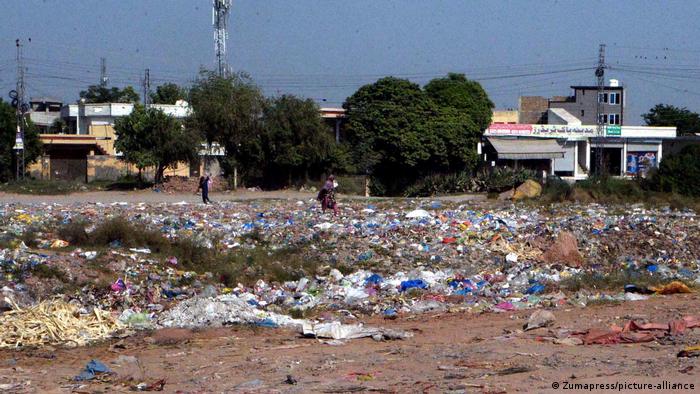
Trash piles up in Islamabad

Overpopulation means more trash, like the pile of garbage seen here in Islamabad

Economic growth and inequality

According to the United Nations Development Program, Pakistan has the highest rate of urbanization in South Asia, with 36.4% of the population living in urban areas. The UN estimates that by 2025 nearly half of the country's inhabitants will be living in cities.

Globally, it is estimated that cities generate about 80% of the gross domestic product (GDP). Cumulatively, cities in Pakistan generate 55% of the nation's GDP. Multi-dimensional poverty in cities is also generally lower compared to that in rural areas.

However, income inequality and limited access to mobility and resources such as water, job opportunities and housing are growing problems in every major city of the country.

Compounding the problems are the government's and city planners' focus on economic growth.

"Our cities are planned for exclusion and are poor unfriendly. Cities are over-planned rather than organic as the colonial paradigm is still used. So the privileged get resources and space, while poor people are in shantytowns," Nadeem ul Haque, vice-chancellor of the Pakistan Institute of Development Economics, told DW.

'Least livable' city

The United Nations' world cities report named Karachi's Orangi town, home to around 2.4 million people, as the largest among the world's five biggest slums. Karachi has also found a place in the Economist Intelligence Unit's 10 least livable cities in the world.

Around a quarter of the world's urban population live in slums — and the figure is rising fast.

Slums in Pakistan are the lifeblood of the city, housing people engaged in all sorts of professions – from cleaners, drivers and electricians to cooks, plumbers and domestic workers, among others, who allow the city to function optimally.

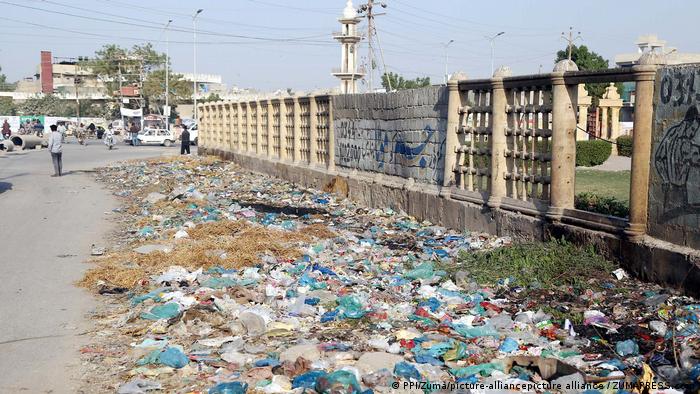
Trash piles in Karachi slum

Karachi's Orangi Town slum is one of the largest in the world

Nevertheless, there is no state-funded housing or welfare for these workers.

Impoverished slum residents sometimes turn to suicide. In February, a 44-year-old Orangi town resident died by setting himself on fire. A letter addressed to Prime Minister Imran Khan was found in the deceased person's pocket, in which he criticized the government for not providing Pakistanis opportunities for adequate income and housing.

Noman Ahmed, director at Karachi Urban Lab, believes that the government alone cannot tackle Pakistan's urban housing problem. To make cities more livable, he said, there must be an integrative approach to urbanization that views housing as a process and not a product.

"No housing census has been done since 1998, which poses problems in proper planning. Housing cannot be directly subsidized due to the enormity of the cost and resource intensiveness. The government can help create enabling options for people to build their own houses and other facilities," Ahmad told DW.

Reclaiming cities

Citizen-led sustainable urban organizations are steadily mushrooming across the country. Mome Saleem, executive director of the Institute of Urbanization, started a campaign called "Reclaim Green Islamabad" in 2015.

"In 2016, we successfully rallied against the cutting of 240 very old trees in Islamabad and even though the trees were eventually cut, it was the first time citizens of Islamabad came out in large numbers to demand a greener, cleaner city," Saleem told DW.

The Orangi Pilot Project's low-cost sanitation, health, housing and microcredit programs empowered residents to make this slum much more livable for themselves as it was a squatter community, and did not qualify for government aid due to their "unofficial" status.

Shehri, meaning "citizen," is an organization that's successful in shaping dialogue and organizing resistance to various government policies and actions that are detrimental to urban prosperity.

As urbanization in Pakistan increases rapidly, Saleem underlined, problems are growing, but so is citizen action against them. So there's still hope to turn around Pakistan's urbanization from problem to progress.

https://www.dw.com/en/is-rapid-urbanization-making-pakistans-cities-less-livable/a-55162735


Should it be the right of those in power to decide who is a patriot and who is not? - Anti-state mantra

Zahid Hussain
A RELIC of the British colonial past, sedition laws have been used with impunity as a tool to suppress fundamental democratic rights in this country. There have been very few Pakistani leaders who have not been accused of sedition and anti-state activities. Even writers and journalists have not been spared.A large number of opposition leaders including two former prime ministers, retired generals, and other former holders of important public offices have now been booked on sedition charges and for anti-state activities. Interestingly, the case has been filed on the complaint of an obscure individual.
It was apparently Nawaz Sharif’s virtual address from London to an opposition conclave in Islamabad that has raised the spectre of this draconian law against the former prime minister. The others are accused of listening to the ‘seditious’ speech that was telecast live on electronic media. The government maintains that it didn’t have anything to do with the filing of treason cases. But can a police officer act on his own on such a politically sensitive issue?
The three-time former prime minister has been accused of being an ‘Indian agent’. It was the incumbent prime minister who fired the first salvo blaming Sharif of ‘working on an Indian agenda’.
Taking their cue from their leader, the party spokesmen launched a campaign of vilification against the opposition leaders. Politics now seems to have descended into sheer vulgarity with rival groups questioning each other’s patriotism. Such an ugly spectacle may not be new to Pakistani politics, but things had never hit such a low before.
The PM needs to focus on governance, and not on policing the patriotism of his rivals.
Sharif’s scathing criticism of the role of the security establishment in the country’s politics seems to have been the main reason for action against the former prime minister. There has been little in Sharif’s speech that other political leaders have not said before. It has been criticism of the unlawful and unconstitutional indulgence of a state apparatus acting outside its mandate. How can it be described as an act of sedition and anti-state activity?
Justifying the sedition allegation, the prime minister’s spokesman maintained that criticism of the security establishment is defiance of the Constitution. He did not refer to the other, more important clause of the Constitution that prohibits members of armed forces’ involvement in politics. This country has repeatedly witnessed the suspension of the Constitution and usurpation of power by the security establishment. Over the decades, the latter’s deep involvement in political affairs under civilian rules has also not been a secret.
Virtually all elected civilian governments have had the bitter experience of what is commonly described as a ‘state within a state’. Their own failings notwithstanding, elected governments have never been fully autonomous in taking decisions on key national issues. It’s also no secret how the intelligence apparatus was used to destablise the civilian leadership and prop up pliant politicians. This dark game has been going on for the past seven decades. Political parties would all too willingly assume the role of pawn in this game of chess. This has also been a major cause of perpetual political instability in the country. The involvement of the security establishment is perceived as much more pronounced in the present political set-up than under previous civilian dispensations, pushing the establishment much deeper into political affairs. Naturally, this makes it the target of the opposition’s attack.
What makes establishment elements more controversial is the perception of their involvement in extra-constitutional activities and partisan role. From the opposition parties’ perspective, the establishment leadership has become a part of the current political dispensation which affects its professional responsibilities.
Criticising the establishment for wrong policies and excesses doesn’t make anyone anti-state. In fact, greater harm is done when there is a perception that national security institutions have become involved in politics. Observers have alleged that there are elements among them who did more damage to the institution’s reputation than its critics over the years. Today, the sedition cases filed against the opposition leaders will once again drag the establishment deeper into the political battle between the government and the opposition. This campaign of labelling opposition leaders ‘anti-state’ and ‘Indian agents’ indicates the government’s weakness and state of panic. It’s not the threat of the opposition alliance, as much as its own ineptitude that has caused this nervousness in the ranks. The prime minister needs to focus more on improving his government’s performance than policing the patriotism of political rivals. A number of recent scandals have worsened the Khan government’s predicament making it more vulnerable to the opposition’s attack. The latest sensational revelation by a former FIA chief that he was asked by the ‘highest authority’ to file cases under anti-terrorism and treason laws against some senior PML-N leaders raises serious questions.
The prime minister allegedly admonished the former chief for not pursuing corruption investigations against the Sharif family. The revelation came in an interview, exposing the government’s claim of strengthening state institutions.
There is a view that the current civilian set-up has done more damage to civilian institutions than any administration in the recent past. As previously, there is an attempt at using law-enforcement agencies against political opponents. In fact, it is such actions that have brought the opposition parties together to challenge the PTI government. Despite the perception that it is supported by the establishment, it will be hard for the Imran Khan government to defend itself.
Labelling the opposition ‘anti-state’ may not help the government to confront the most serious challenge yet to its rule. Such charges are certainly not good advertisement for the government that has come to power on the promise of delivering good governance and to establish the rule of law.
It should not be the right of those in power to decide who is a patriot and who is not. Many of those who are not tired of displaying their ‘patriotism’ may not consider it wrong to usurp the rights of other people.

بلین ٹری منصوبہ اور بی آرٹی منصوبہ عمران خان کے سینہ پر میگا کرپشن کے تمغے ہیں

قومی اسمبلی کے سابق ڈپٹی اسپیکر اور پاکستان پیپلزپارٹی کے پی کے جنرل سیکریٹری فیصل کریم کنڈی نے کہا ہے کہ بلین ٹری منصوبہ اور بی آرٹی منصوبہ عمران خان کے سینہ پر میگا کرپشن کے تمغے ہیں۔ اس طرح مالم جبہ کرپشن اسکینڈل کے اصل کردار بھی عمران خان ہی ہیں۔

 انہوں نے سوال کیا کہ آخر ایک ارب درخت کہاں گئے؟ کیا ان کا تیل نکال کر سلائی مشین میں ڈالا گیا ہے اور بھوسہ کٹے کھا گئے ہیں؟ 

سابق ڈپٹی اسپیکر قومی اسمبلی نے کہا کہ عمران خان نے پشاور بی آرٹی منصوبے کا افتتاح کرنے کے لئے اس لئے جلد بازی کی تاکہ وہ اپنی لوٹ مار پر پردہ ڈال سکیں مگر بی آرٹی کا ایک ایک انچ عمران خان کی کرپشن کی گواہی دے رہا ہے۔ فیصل کریم کنڈی نے کہا کہ سات سال سے کے پی کے عوام کا خون نچوڑ کر بنی گالہ کے سلطان کو کھلایا جا رہا ہے۔

 انہوں نے کہا کہ نیب اندھا بھی ہے، گونگا بھی اور بہرا بھی اس لئے اسے وفاق ، پنجاب اور کے پی میں ہونے والی کرپشن نظر نہیں آرہی۔ 


https://www.ppp.org.pk/pr/23866/ 

Tuesday, October 6, 2020

Music Video - #MCHammer #CantTouchThis #Remastered MC Hammer - U Can't Touch This

#DailyShow #TrevorNoah #Coronavirus Trump Has Coronavirus & The White House Does Damage Control | The Daily Social Distancing Show

Video Report - Biden delivers campaign speech in Gettysburg

Video - #JoeBiden #Joe2020 #BidenForPresident Michelle Obama's Closing Argument | Joe Biden For President 2020

#COVID19 : US military leaders quarantine after official tests positive

Top US General Mark Milley and other military leaders are self-quarantining after a senior Coast Guard official tested positive for coronavirus.
Admiral Charles Ray, vice commandant of the US Coast Guard, tested positive after experiencing mild symptoms.
Other officials were quarantining "out of an abundance of caution" after attending meetings with Adm Ray last week, the Pentagon said.
None of them had tested positive or exhibited symptoms, it added.
It is not known how Adm Ray contracted the virus, but officials told the Associated Press news agency it was not believed to be related to the outbreak affecting President Donald Trump and others at the White House.
The Coast Guard said in a statement that Adm Ray tested positive for coronavirus on Monday and was now isolating at home. It added that any Coast Guard personnel who were in close contact with him would also quarantine.
BBC partner CBS News reported that nearly all members of the Joint Chiefs of Staff - a body consisting of senior military officials who advise the US president - were in quarantine after attending meetings with Adm Ray last week.
In addition to the chairman of the Joint Chiefs, Gen Milley, it said others in quarantine included the vice chief of staff, Army chief of staff, chief of naval operations, Air Force chief of staff, CyberCom commander, the Space Force chief, chief of the National Guard and deputy commandant of the Marine Corps.

Pentagon spokesman Jonathan Hoffman told reporters there had been "no change to the operational readiness or mission capability of the US Armed Forces."

"Senior military leaders are able to remain fully mission capable and perform their duties from an alternative work location," he said.

The Pentagon is conducting contact tracing related to last week's meetings.

Cases rising at the White House

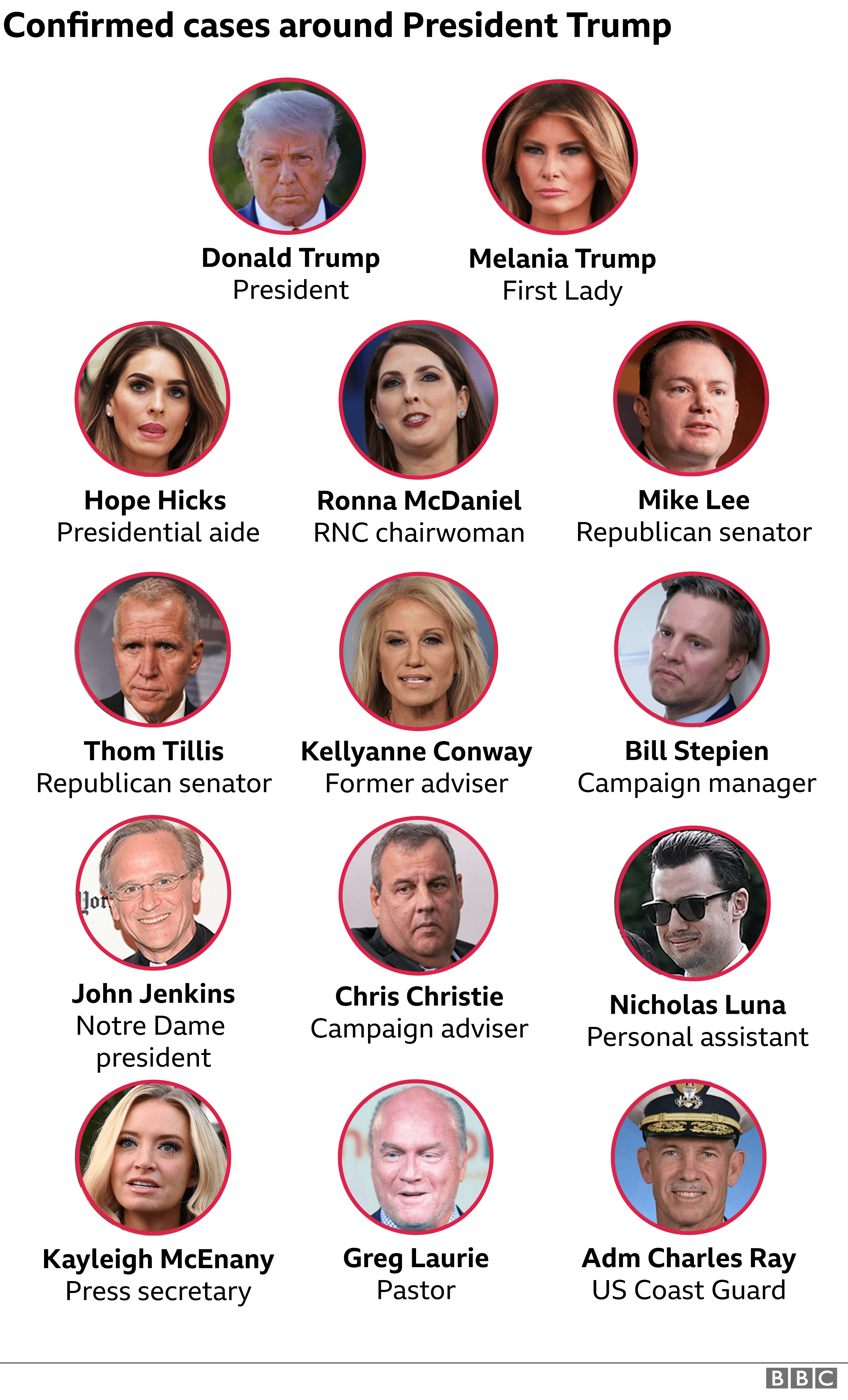
Meanwhile, since President Trump tested positive last week, a number of senior Republicans and others close to him have been confirmed as having the virus as well.

This includes First Lady Melania Trump, aide Hope Hicks, and a number of Republican senators. Several junior White House staff members have also tested positive.

Press Secretary Kayleigh McEnany was the latest person close to the president to test positive, announcing her diagnosis on Monday.

Graphic showing Trump associates who have been infected
1px transparent line

US media said two other aides to Ms McEnany had had positive results. The press secretary was seen speaking to journalists without wearing a mask on Sunday but said no members of the press had been listed as close contacts by the White House medical unit.

Many of the people in Mr Trump's inner circle who have tested positive attended a gathering at the White House Rose Garden on 26 September that is being scrutinised as a possible "super-spreader event".

The latest coronavirus case to emerge from that event, at which the president unveiled his nominee for the US Supreme Court, is a Christian minister from California.

Pastor Greg Laurie, who is said to have mild symptoms, was also with US Vice-President Mike Pence earlier in that day at a prayer march in central Washington DC.

Plexiglass will be used to separate Vice-President Mike Pence and Democratic challenger Kamala Harris and limit the risk of Covid transmission when they go head-to-head in a debate in Salt Lake city, Utah, on Wednesday. Both candidates have recently tested negative.

President Trump, meanwhile, returned to the White House yesterday after being hospitalised with the virus.

While at Walter Reed Medical Center, he was treated with dexamethasone - a steroid medication usually given to severe and critical Covid patients - and supplemental oxygen.

https://www.bbc.com/news/world-us-canada-54441986

Music Video - Lokan do do yaar banaye afshan zebi

#BashirMemon #ImranKhan #NAB سابق ڈی جی ایف آئی اے نے احتساب کا بھانڈا پھوڑ دیا، وزیر اعظم کیا کہتے

Covid-19 recoveries cross 300,000 mark in Pakistan

Punjab crosses grim mark of 100,000 infections: 12 marriage halls, 193 restaurants, 4 schools, 23 shops sealed in Karachi.
The number of patients recovered from coronavirus in the country has now crossed 300,000 mark, reaching 300,616 with more than 95 per cent recovery ratio of the affected patients, said the National Command and Operation Centre (NCOC) on Monday.
According to the latest statistics shared by NCOC, 467 new cases of coronavirus surfaced in the country after tests of 28,280 people were conducted over the last twenty-four hours, lifting the national tally of infections to 315,727. There are now 8,588 active cases in the country. The pandemic claimed the lives of six more people during the last twenty-four hours. So far, 6,523 Covid-19 related fatalities have been reported across the country.
Since the pandemic outbreak began, 315,727 infections have been detected in the country, including 138,593 in Sindh, 100,033 in Punjab, 38,105 in Khyber Pakhtunkhwa (KP), 15,420 in Balochistan, 16,845 in Islamabad, 2,874 in Azad Jammu and Kashmir (AJK) and 3,857 in Gilgit-Baltistan (GB). A total of 3,702,607 coronavirus tests have been conducted so far.
Meanwhile, Punjab crossed the grim mark of 100,000 Covid-19 infections with 92 new cases in the province during the last 24 hours.
Overall cases of coronavirus in the province have reached 100,033, provincial health department spokesperson said in a statement.
Most of the new infections, 39 were reported in Lahore, while nine cases surfaced in Rawalpindi and two in Attock, the spokesperson said. Three coronavirus patients, who were under treatment in hospitals, died in the province, increasing fatalities by the virus to 2,243 spokesperson of the Primary and Secondary Healthcare Department said.Meanwhile, local administration in Karachi continued its crackdown against marriage halls, restaurants, and schools violating Covid-19 standard operating procedures (SOPs) amid rising virus cases.According to details, the district administrations in Karachi imposed heavy fines and sealed marriage halls, restaurants and schools violating the Covid-19 SOPs, besides issuing a warning to some of them. The authorities sealed 12 marriage halls, fined five others and issued a final warning to 47 marriage halls in the city.
Around 193 restaurants were sealed over severe violations against precautionary measures, besides imposing a fine of Rs300,000 against 38. Four schools and 23 shops were also sealed during the drive of the district administrations in the city.

https://www.pakistantoday.com.pk/2020/10/06/covid-19-recoveries-cross-300000-mark-in-pakistan/#comment-1241246997748759026

#Pakistan’s Drug Habit Is Endangering the Region


By Habiba Ashna Marhoon

In the past, Pakistan’s clandestine services have used profits from drug trafficking to fund proxy groups in South Asia.

The Golden Crescent of South Asia – a region comprising Afghanistan, Iran and Pakistan – is a principal site for the production and distribution of opium and heroin. Over the past few decades, war, terrorism and a shifting political landscape have facilitated an active heroin trade throughout the region.

There are three well-defined heroin trafficking routes that originate in the Golden Crescent region. The Balkan route operates through Iran and Turkey and traffics the bulk of Afghan heroin to Europe. The northern route supplies heroin to the Russian Federation and Central Asia. Due to increased law enforcement along these two routes, alternate routes have emerged, collectively called the southern route, which traffics heroin to Iran and Pakistan, and from these countries, via sea and air, to other parts of the world.

Pakistan’s geographic location next to Afghanistan, the world’s largest producer of opium, places the country in a veritable front-row position in terms of drug trafficking. Its establishment has left no stone unturned in exploiting this geographic location to its own advantage. The money generated from the drug trade has been used to fund proxy terror groups. The role of narcotics in funding terror activities by Pakistan was revealed by Lashkar-e-Taiba (LeT) terrorist David Coleman Headley, one of the main accused in the 26/11 Mumbai attacks. During his interrogation in 2010, he revealed the role played by Pakistan’s spy agency, the Inter-Services Intelligence (ISI), in linking drug lords and terrorists and facilitating the transportation of weapons, along with drugs, to India.

While poppy cultivation has largely been eliminated in Pakistan, the crop is still grown in large parts of southern provinces of Afghanistan like Kandahar and Helmand, where the Taliban has a strong  influence. Analysts say opium poppies and heroin are among the main sources of income for the Taliban, which controls 80 percent of the drug production area in Afghanistan. The problem for them is how to transport these drugs to other countries. Here, Pakistan acts as a facilitator. The drug consignments, in connivance with Pakistan’s authorities, are smuggled through the Pakistan-Afghanistan border. From there, these consignments head for Pakistan’s air and seaports and, hence, to further destinations in China, Southeast Asia, Africa and Europe.

As United Nations World Drug Report 2012 reported, “Pakistan provides a vital transit route for smuggling of drugs worth $30 billion from neighboring Afghanistan.” Though not a major reason, Pakistan backs restoration of Taliban rule in Afghanistan because if the group returns to power, all these drug cartels could be resuscitated and its major benefactor Pakistan will have even more funds with which to sponsor its proxy terror groups.

Pakistan’s role in drug proliferation is validated by a number of arrests of its nationals in other countries on charges of drug trafficking. Shahbaz Khan, a Pakistani national, was the leader of a drug trafficking organization (the “DTO”) based in Afghanistan and Pakistan, which produced and distributed massive quantities of narcotics around the world. He was arrested by Liberian authorities in December 2016 and later deported to the United States, where in 2019 he was sentenced to 15 years for conspiring and attempting to import heroin into the U.S. In May 2017, officials for the U.K.’s Border Force impounded a Pakistan International Airlines (PIA) flight from Islamabad at London’s Heathrow airport. Later, the National Crime Agency said that a quantity of heroin had been found hidden in different panels of the plane. In March 2018, two members of the cabin crew of a PIA flight, traveling on an Islamabad-Paris flight (PK-749), were caught smuggling narcotics on board the flight.

Of late, speculations abound that PIA has come under the scanner of Qatar authorities who have recently discovered narcotics smuggling modules by Pakistani nationals who arrive in Doha, taking advantage of the country’s Visa on Arrival (VoA) facility. Some suggest that Qatari officials have photographic and video evidence of arrested drug smugglers from Pakistan. If these speculations turn out to be true, then it is quite possible Qatar could suspend the VoA facility for Pakistan’s nationals if it does not take action to prevent the smuggling of narcotics into Qatar.

The issue of narcotics smuggling has the potential to derail Pakistan’s bilateral relations and besmirch its international reputation. Indeed, the question arises as to why Pakistan would jeopardize its relations with other countries in order to benefit from narcotics. The answer is that the money derived from drug smuggling serves Pakistan’s larger agenda of sponsoring proxy terror groups. With the plenary session of the intergovernmental Financial Action Task Force (FATF) scheduled for later this month, Pakistan’s role in funding terror organizations through drugs/narcotics smuggling is sure to come up for discussion, as the FATF determines the country’s listing. If Pakistan does not want to be blacklisted, it must take action to stop drug proliferation. Blacklisting by FATF could spell ruin for Pakistan’s already dwindling economy.

#Pakistan - Sindh islands illegally annexed by Imran Khan govt: #PPP chairman Bilawal Bhutto

President Dr Arif Alivi on September 1 promulgated the ordinance for establishing Pakistan Islands Development Authority (PIDA) for "development and management of islands in internal and territorial waters of Pakistan".
A presidential ordinance by the Imran Khan government to take control of two islands in Sindh province has been slammed by the Opposition parties in Pakistan, with PPP chairman Bilawal Bhutto calling it an “illegal annexation”.
President Dr Arif Alivi on September 1 promulgated the ordinance for establishing Pakistan Islands Development Authority (PIDA) for “development and management of islands in internal and territorial waters of Pakistan”. Its ultimate objective was stated to be development of cities on the islands of Bundal and Buddo along the Karachi coast.
While the Pakistan Tehreek-i-Insaf government managed to keep it out of limelight, Bhutto on Monday posted the development on Twitter, vowing that his party would oppose the federal government’s move in the National Assembly, Senate and the provincial assembly.

“The Pakistan People’s Party (PPP) will oppose the illegal annexation of Sindh’s Islands through Presidential ordinance by the PTI government,” he said in a tweet on Monday.
“The PPP rejects this unconstitutional ordinance establishing island development authority. This is no less than a land grab and occupation of islands that belong to the people of #Sindh under article 172/2 of the Constitution,” said PPP central information secretary Dr Nafisa Shah on Twitter.
Former chairman of Senate and PPP leader Raza Rabbani termed the ordinance a crude attempt to bring under control of the federal government the coastal areas of the provinces of Sindh and Balochistan,” the Dawn newspaper reported. Under the ordinance, PIDA would be exempted from paying income tax for one full decade. It is also empowered to retain, lease, sell, exchange, rent of otherwise dispose of any land vested in it, the report said.Sindh based political parties, civil society organisations as well as the PPP led Sindh government on Saturday expressed their dismay and anger over a presidential ordinance.
Several nationalist parties, writers, intellectuals and poets also announced to launch a massive movement against the decision by organising rallies and demonstrations in various cities and towns if the decision was not taken back, The Express Tribune reported. Human rights activist I A Rehman said these islands were property of the people.
“You cannot take them without their consultation. Any takeover of the islands will be against the country,” Rehman said.
“Due to this recent decision, 800,000 fishermen who live there for centuries would be displaced. The federal government’s decision is not only against the Constitution of Pakistan but it is also against international conventions and agreements, which provide social, economic and cultural sovereignty to the indigenous people,” said Pakistan Fisher-folk Forum (PFF) Chairman Mohammad Ali Shah.
Noting that this was not the first time the islands (over 12,000 acres of land) were being snatched, Shah said such an attempt was also made in 2007 when a memorandum of understanding (MoU) was signed to hand over two islands to Dubai based investors.
Former PPP chairperson Benazir Bhutto had announced a movement against the decision to take over the islands during General Pervez Musharraf’s regime in 2007. After protests by the PPP, the national parties and the civil society organisations, the government had to take back the decision.
https://indianexpress.com/article/pakistan/sindh-islands-illegally-annexed-by-imran-khan-govt-ppp-chairman-bilawal-6705690/

Monday, October 5, 2020

Music Video - Lady Gaga - Stupid Love

Video Report - Trump and Covid: What next in U.S. presidential race?

Video Report - #NobelPrize #HepatitisC #Medicine Nobel Prize: Virologists' Hepatitis C research 'saved millions of lives'

Video Report - Kayleigh McEnany: White House press secretary tests positive for Covid-19

#TrumpCovid19 - GOP Sen. John Cornyn Criticizes Trump On COVID-19: ‘A Lesson To All Of Us’

By Josephine Harvey

In some of his harshest criticism of the president to date, Sen. John Cornyn (R-Texas) on Monday said Donald Trump’s inconsistent rhetoric on the COVID-19 pandemic has stoked confusion, as the coronavirus continues its spread among high-ranking White House and GOP officials.

“I think he let his guard down,” the Republican senator told the Houston Chronicle when asked about Trump’s repeated flouting of various public health guidelines. “And I think in his desire to try to demonstrate that we are somehow coming out of this and that the danger is not still with us — I think he got out over his skis and frankly, I think it’s a lesson to all of us that we need to exercise self-discipline.”

Cornyn, the former second-ranking Senate Republican, has himself shared misinformation about COVID-19, and defended and espoused Trump’s use of racist misnomers to blame the virus on China.

On Monday, he defended Trump’s policy responses such as shutting off travel from China, which he said “demonstrated the seriousness of the virus,” but went after Trump’s messaging.

“He tries to balance that with saying, ‘Well, you know, we got this.’ And clearly we don’t have this,” Cornyn said, according to the Chronicle. “I think the biggest mistake people make in public life is not telling the truth, particularly in something with as much public interest as here because you know the real story is going to come out.”

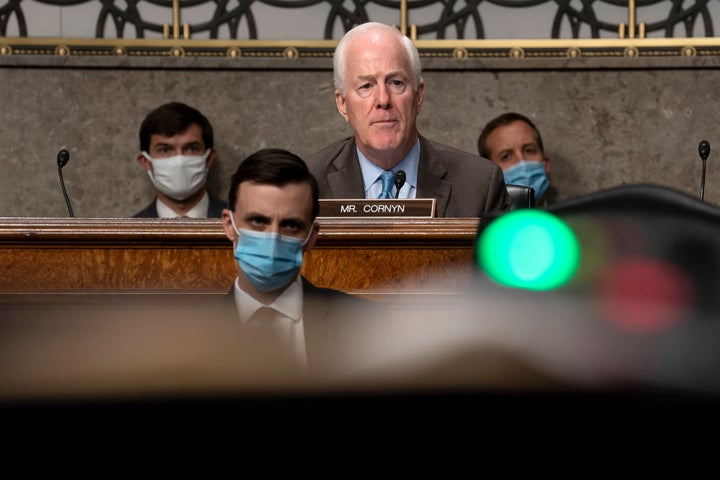
Sen. John Cornyn attended Senate Judiciary Committee hearings on Capitol Hill last week. Two other senators on that committee
Sen. John Cornyn attended Senate Judiciary Committee hearings on Capitol Hill last week. Two other senators on that committee have since tested positive for the coronavirus.

His comments came as the coronavirus tears through the West Wing and Capitol, where a mounting number of top Republicans, including Trump, his press secretary Kayleigh McEnany, his campaign manager Bill Stepien and Sens. Mike Lee (R-Utah.) and Thom Tillis (R-N.C.) ― both members of the Senate Judiciary Committee ― have tested positive.

Cornyn, who also sits on that committee, may have been exposed to the virus when he attended hearings last week.

Many of the positive cases involve those who attended a Sept. 26 Rose Garden ceremony for Judge Amy Coney Barrett, Trump’s Supreme Court pick to replace the late Justice Ruth Bader Ginsburg. Maskless people did not socially distance at the event.

Trump has persistently ignored mask-wearing, social distancing and other public health guidelines throughout the pandemic, which has now killed more than 200,000 people in America. He’s mocked others for wearing masks; held packed campaign rallies for hundreds, sometimes thousands, of supporters; pushed to reopen schools and businesses even when his own metrics for safely doing so had not been met; and acted as though the disease would just miraculously disappear of its own accord, even after admitting on tape in March that it’s much more deadly than he was letting on.

https://www.huffpost.com/entry/john-cornyn-trump-coronavirus_n_5f7b93bac5b6e5aba0ce8dd3

Video Report - #NayaDaur #Economy #Politics Pakistan Headed In Wrong Direction| IPSOS Survey| Sedition Cases ag. Nawaz Sharif, Maryam & AJK PM

Pakistani women have led democracy protests. Can Maryam Nawaz do it now?

AYESHA IJAZ KHAN
@ayeshaijazkha

Imran Khan, another divisive world leader, is more interested in incarcerating political opponents than delivering for the people.

 From India to Brazil, and the United States to Europe, a drift to authoritarianism is derailing democracy. Divisive polarising figures occupy high offices, challenging the very edifice on which democracies thrive. Respecting political opponents, fair play and transparency are hallmarks of democratic tradition. But these values are increasingly disappearing.

The manhandling of Rahul Gandhi by Indian police on the orders of the UP chief minister as he attempted to reach out to a Dalit rape victim’s family has been viewed globally as an attack on India’s democracy. So has Donald Trump’s attempt to pack the US supreme court with right-wing justices not representative of changing American demographics, or his attempts at discrediting mail-in ballots, endeavouring to call into question the credibility of the November presidential election. Less talked about internationally, but equally worrying, are the efforts of the Tories in the UK to appoint an ex-tabloid editor known for his partisan views as head of the BBC.

All of this is shocking for many in established democracies but it is an unfortunate sign of our times. So many who previously thought that the US, for instance, a strong democracy with checks and balances and a clear separation of powers, could survive a Trump presidency without any damage to American democratic ideals have changed their minds. More and more Americans have begun to realise that the politics of resistance is the need of the hour.

In Pakistan, we have not historically had the robust democratic structure that countries like the US, UK and even India had, but we have had our share of democratic movements, at various junctures, to push back against dictators and undemocratic forces. Curiously, the burden to lead these movements has often fallen on female shoulders. From Fatima Jinnah fighting against Ayub Khan’s dictatorial regime, to Benazir Bhutto standing firm against Ziaul Haq, it has been Pakistani women who have been the biggest symbols of resistance to authoritarianism. Is Maryam Nawaz up to the task?
We know that Maryam often disagreed with the uncles in her party and was characterised by the establishment as a hardliner pursuing ‘the politics of confrontation’. What this really means is that she was far less willing to meet kingmakers through back-door channels, and preferred a more above-board politics. With the arrest of leader of the opposition Shahbaz Sharif, previously considered conciliator-in-chief, Maryam’s stance has been vindicated.
The question now arises — will she speak out only when the Sharif family is politically victimised or will she also raise her voice for more marginalised activists and politicians, the likes of the PTM, for instance? There was a time when the Sharif brothers were simply corrupt. Now, like PTM leaders, Nawaz Sharif has also moved into the traitor category. Will Maryam be able to reach out beyond the Punjabi heartland to make alliances in the peripheral regions of ex-Fata and Balochistan?
In the US, it took the Democratic Party far too long to embrace the Black Lives Matter movement, and include within its fold the marginalised segments of society. Four years ago, like the PTM in Pakistan, BLM was considered a radical movement from which Democrats cautiously kept their distance, but this election cycle the movement has been mainstreamed to the point of not only influencing American but also European politics.
Towards the end of Musharraf’s reign, when he failed to end corruption or dynastic politics in Pakistan, as he had promised on taking over, a minister in his cabinet confessed to me that, “When the establishment propped up Nawaz Sharif, it unwittingly provided a political voice to the Punjabi trading classes, and that base isn’t so easy to dismantle now.”
Maryam’s support in Punjab, therefore, isn’t in question. If she wants to emerge as a leader on the national stage, however, she will need to make unconventional alliances and speak out for those in the peripheries, who have borne the brunt of the establishment’s high-handedness for a lot longer than she and her family have.
It is quite clear that Imran Khan, another polarising and divisive world leader, is more interested in incarcerating political opponents than delivering for the people. But it was heartening to see that Maryam did not only call him out but also questioned the role of other key players in the hybrid regime. The most honest and relevant statement in her recent press conference was her acknowledgement that it isn’t easy to resist undemocratic forces. She spoke about journalists, judges, politicians — all being put under pressure to compromise on principled positions.
It is a cost that is difficult to bear and should not be asked of any citizen, particularly not in a state that claims to follow Madina ki riyasat. Resistance is a tall order, but resist we must.

Pakistan PM Imran Khan heads into his biggest challenge. Military is also target

Shishir Gupta
Prime Minister Imran Khan faces the immediate challenge this month when FATF takes a decision on continuing Pakistan on the ‘grey list’.
Prime Minister Imran Khan is facing the biggest challenge to his leadership from opposition parties that united over the weekend to appoint firebrand cleric Maulana Fazalur Rehman to lead the freshly-minted 11 party anti-government alliance trying to unseat him.
Rehman had last year the first round of his campaign against Imran Khan when he launched the ‘Azadi March’ from Karachi to the capital city of Islamabad against the ruling Pakistan Tehreek-i-Insaf, or PTI government. That effort had fizzled out. This time, Khan’s orange-turbaned rival has support from other parties to keep the street protests going.
A 26-point resolution adopted by the coalition - they call it Pakistan Democratic Movement - a fortnight earlier seeks to force “the selected prime minister’s resignation and an end to the role of the establishment in politics.” It also wants to ensure the “end of establishment’s interference in politics”, a reference to the army.
The opposition’s combined attack on the powerful military is unusual in Pakistan; the army has ruled Pakistan for roughly half of its 73-year history and often had the last word in the country’s governance for the other half. Like Imran Khan’s critics say, it does now.
That it was Army chief General Qamar Javed Bajwa who summoned political parties to a secret meeting last month to build consensus on turning the Gilgit Baltistan in the occupied northern areas into Pakistan’s fifth province at China’s behest underlined the role that the military was playing in the country’s politics.
“It is saddening that the situation has escalated to the level where we now have a state above the state,” Nawaz Sharif said at the first opposition conference late last month, echoing their sentiment that Imran Khan was their proxy. His daughter and Pakistan Muslim League-Nawaz (PML-N) vice president Maryam Nawaz - who has been fronting the party’s battles with the government in the absence of Pakistan’s three-time prime minister - has been among the loudest to demand action against retired Lt Gen Asim Saleem Bajwa, China-Pakistan Economic Corridor chairman and PM Khan’s aide on corruption charges.
Imran Khan, who came to power on the back of populist assurances to root out corruption, faces allegations that his anti-corruption drive only aims at opposition leaders. In July this year, Pakistan’s top court also remarked in one case that the anti-corruption watchdog appeared “reluctant in proceeding against people on one side of the political divide”.
A Pakistan watcher in New Delhi said it is not a surprise that the National Accountability Bureau arrested Pakistan’s Leader of the Opposition and PML-N President Shahbaz Sharif soon after the first opposition conference.
“Nawaz Sharif is no hero but he represents the very essence of democratic choice,” he said, stressing that investigations directed at Nawaz Sharif and his family were important since he was the only leader to stand up to the army.
In the absence of her father who is in exile in London, Maryam Sharif has been taking a blunt aim at the military. She has called Gen Bajwa’s meeting last month on Gilgit-Baltistan as an attempt by the military to tighten its grip over the country’s politics. “These decisions should be made in parliament, not in GHQ (army headquarters),” she said.
A second Pakistan watcher in Delhi said there was an assessment that Maryam Sharif’s shrill pitch against the military did appear to expose her to “serious risk of physical harm”. She hasn’t backed down from her sharp criticism of the military and Imran Khan despite her uncle’s arrest.Street protests and mega rallies had been Imran Khan’s favourite tool to build public opinion against the Nawaz Sharif government back. Analysts say that the opposition doesn’t expect to succeed in the short term but is building the momentum to overthrow the Khan regime, quite like the 2014 Azadi march that he had led against Nawaz Sharif.
Khan faces other challenges as well, some of them much more immediate. Next month’s meeting of the Financial Action Task Force, or FATF, is one. The meeting, scheduled for 21-23 October, is to decide on Imran Khan’s request to take Pakistan off the global watchdog’s ‘grey list’.
An Indian counter-terror official said Islamabad was likely to be disappointed given its patchy record of implementing anti-terror laws. That would make it hard for Khan’s government to access international markets at a time when the country’s economy has been faltering.
https://www.hindustantimes.com/world-news/pm-imran-khan-heads-into-his-biggest-challenge-military-is-also-target/story-khmBRSwEci9qDEAJXrecJO.html

Ahmadi professor shot dead in Peshawar

 62-year-old Gulzar Ahmad was attacked at his store located in the Qissa Khawani market of Peshawar. He managed to escape with four bullet wounds to his leg and one to his hand. Ahmad was rushed to a local hospital for treatment, Police said.

Sunday’s attack is the third attack on Ahmadis in Peshawar in less than three months. On July 29th an American-Ahmadi Tahir Naseem was shot dead in a courtroom. Soon after on August 12, another Ahmadi Mairaj Ahmad was shot dead outside his pharmacy.

https://www.rabwah.net/ahmadi-man-wounded-peshawar-shooting/

Bilawal opposes ‘illegal annexation’ of Sindh’s Islands


Sindh island authorities’ new ordinance was likened to Indian Prime Minister Narendra Modi’s annexation of Kashmir by Pakistan People’s Party (PPP) Chairman Bilawal Bhutto-Zardari, who added that his party will strongly oppose the “illegal annexation”.
“I ask how is this act any different to [Indian PM] Modi’s actions in Occupied Kashmir? Move will be opposed in National, Provincial Assembly and the Senate,” he tweeted on Monday, adding that the PPP will seek a presidential ordinance through the federal government.
Similarly, the ordinance was rejected by Sindh Information Minister Nasir Hussain Shah. He released a statement saying that the Islands belonged to the provincial government and Sindh’s land cannot be “occupied by any ordinance”.
“The land of these Islands belonged to the people of Sindh and it is rightfully theirs,” he said. The minister asserted that the ordinance infringed on the rights of the people, and demanded its revocation.
On September 1, President Dr Arif Alvi publicised the ordinance for establishing “Pakistan Islands Development Authority” for “development and management of islands in internal and territorial waters of Pakistan”.
“Whereas the Senate and the National Assembly are not in session and the president of Islamic Republic is satisfied that circumstances exist, which render it necessary to take immediate action,” said the ordinance which emerged on social media on Friday.
The islands being discussed by the ordinance, in particular, are Bhandar and Bundal are located near Karachi and Thatta districts bordering Korangi, Phitti and Jhari creeks. Pakistan has a coastal belt of over 1,050 kilometres and there are 300 small and big islands located in Sindh coastal belt. The federal government will take control of all these islands if the law is promulgated.
A number of rallies and protests have been threatened by different nationalist parties, writers, intellectuals and poets, who were shocked by the attempt to “encroach” on Sindh’s land. A Sindh government official said regarding the matter that federal authorities had intimated the Sindh government that mega city schemes worth $20 billion would be started on the islands.
“The Sindh government claiming ownership of the island had said the ToR [terms of reference] of the schemes would be framed by the provincial government. But now an ordinance has surfaced,” he said.
There were rumours on social media that the ordinance was issued in connivance with the PPP leadership which has in return sought relief in corruption cases filed against it.