Monday, October 5, 2020

#TrumpCovid19 - GOP Sen. John Cornyn Criticizes Trump On COVID-19: ‘A Lesson To All Of Us’

By Josephine Harvey

In some of his harshest criticism of the president to date, Sen. John Cornyn (R-Texas) on Monday said Donald Trump’s inconsistent rhetoric on the COVID-19 pandemic has stoked confusion, as the coronavirus continues its spread among high-ranking White House and GOP officials.

“I think he let his guard down,” the Republican senator told the Houston Chronicle when asked about Trump’s repeated flouting of various public health guidelines. “And I think in his desire to try to demonstrate that we are somehow coming out of this and that the danger is not still with us — I think he got out over his skis and frankly, I think it’s a lesson to all of us that we need to exercise self-discipline.”

Cornyn, the former second-ranking Senate Republican, has himself shared misinformation about COVID-19, and defended and espoused Trump’s use of racist misnomers to blame the virus on China.

On Monday, he defended Trump’s policy responses such as shutting off travel from China, which he said “demonstrated the seriousness of the virus,” but went after Trump’s messaging.

“He tries to balance that with saying, ‘Well, you know, we got this.’ And clearly we don’t have this,” Cornyn said, according to the Chronicle. “I think the biggest mistake people make in public life is not telling the truth, particularly in something with as much public interest as here because you know the real story is going to come out.”

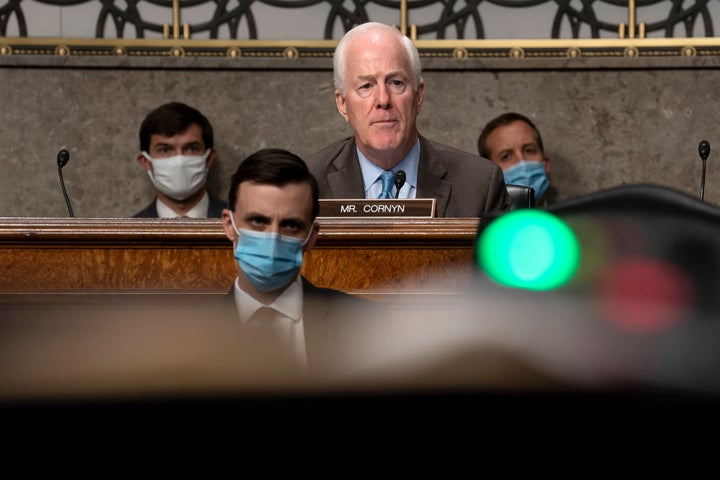
Sen. John Cornyn attended Senate Judiciary Committee hearings on Capitol Hill last week. Two other senators on that committee
Sen. John Cornyn attended Senate Judiciary Committee hearings on Capitol Hill last week. Two other senators on that committee have since tested positive for the coronavirus.

His comments came as the coronavirus tears through the West Wing and Capitol, where a mounting number of top Republicans, including Trump, his press secretary Kayleigh McEnany, his campaign manager Bill Stepien and Sens. Mike Lee (R-Utah.) and Thom Tillis (R-N.C.) ― both members of the Senate Judiciary Committee ― have tested positive.

Cornyn, who also sits on that committee, may have been exposed to the virus when he attended hearings last week.

Many of the positive cases involve those who attended a Sept. 26 Rose Garden ceremony for Judge Amy Coney Barrett, Trump’s Supreme Court pick to replace the late Justice Ruth Bader Ginsburg. Maskless people did not socially distance at the event.

Trump has persistently ignored mask-wearing, social distancing and other public health guidelines throughout the pandemic, which has now killed more than 200,000 people in America. He’s mocked others for wearing masks; held packed campaign rallies for hundreds, sometimes thousands, of supporters; pushed to reopen schools and businesses even when his own metrics for safely doing so had not been met; and acted as though the disease would just miraculously disappear of its own accord, even after admitting on tape in March that it’s much more deadly than he was letting on.

https://www.huffpost.com/entry/john-cornyn-trump-coronavirus_n_5f7b93bac5b6e5aba0ce8dd3

Video Report - #NayaDaur #Economy #Politics Pakistan Headed In Wrong Direction| IPSOS Survey| Sedition Cases ag. Nawaz Sharif, Maryam & AJK PM

Pakistani women have led democracy protests. Can Maryam Nawaz do it now?

AYESHA IJAZ KHAN
@ayeshaijazkha

Imran Khan, another divisive world leader, is more interested in incarcerating political opponents than delivering for the people.

 From India to Brazil, and the United States to Europe, a drift to authoritarianism is derailing democracy. Divisive polarising figures occupy high offices, challenging the very edifice on which democracies thrive. Respecting political opponents, fair play and transparency are hallmarks of democratic tradition. But these values are increasingly disappearing.

The manhandling of Rahul Gandhi by Indian police on the orders of the UP chief minister as he attempted to reach out to a Dalit rape victim’s family has been viewed globally as an attack on India’s democracy. So has Donald Trump’s attempt to pack the US supreme court with right-wing justices not representative of changing American demographics, or his attempts at discrediting mail-in ballots, endeavouring to call into question the credibility of the November presidential election. Less talked about internationally, but equally worrying, are the efforts of the Tories in the UK to appoint an ex-tabloid editor known for his partisan views as head of the BBC.

All of this is shocking for many in established democracies but it is an unfortunate sign of our times. So many who previously thought that the US, for instance, a strong democracy with checks and balances and a clear separation of powers, could survive a Trump presidency without any damage to American democratic ideals have changed their minds. More and more Americans have begun to realise that the politics of resistance is the need of the hour.

In Pakistan, we have not historically had the robust democratic structure that countries like the US, UK and even India had, but we have had our share of democratic movements, at various junctures, to push back against dictators and undemocratic forces. Curiously, the burden to lead these movements has often fallen on female shoulders. From Fatima Jinnah fighting against Ayub Khan’s dictatorial regime, to Benazir Bhutto standing firm against Ziaul Haq, it has been Pakistani women who have been the biggest symbols of resistance to authoritarianism. Is Maryam Nawaz up to the task?
We know that Maryam often disagreed with the uncles in her party and was characterised by the establishment as a hardliner pursuing ‘the politics of confrontation’. What this really means is that she was far less willing to meet kingmakers through back-door channels, and preferred a more above-board politics. With the arrest of leader of the opposition Shahbaz Sharif, previously considered conciliator-in-chief, Maryam’s stance has been vindicated.
The question now arises — will she speak out only when the Sharif family is politically victimised or will she also raise her voice for more marginalised activists and politicians, the likes of the PTM, for instance? There was a time when the Sharif brothers were simply corrupt. Now, like PTM leaders, Nawaz Sharif has also moved into the traitor category. Will Maryam be able to reach out beyond the Punjabi heartland to make alliances in the peripheral regions of ex-Fata and Balochistan?
In the US, it took the Democratic Party far too long to embrace the Black Lives Matter movement, and include within its fold the marginalised segments of society. Four years ago, like the PTM in Pakistan, BLM was considered a radical movement from which Democrats cautiously kept their distance, but this election cycle the movement has been mainstreamed to the point of not only influencing American but also European politics.
Towards the end of Musharraf’s reign, when he failed to end corruption or dynastic politics in Pakistan, as he had promised on taking over, a minister in his cabinet confessed to me that, “When the establishment propped up Nawaz Sharif, it unwittingly provided a political voice to the Punjabi trading classes, and that base isn’t so easy to dismantle now.”
Maryam’s support in Punjab, therefore, isn’t in question. If she wants to emerge as a leader on the national stage, however, she will need to make unconventional alliances and speak out for those in the peripheries, who have borne the brunt of the establishment’s high-handedness for a lot longer than she and her family have.
It is quite clear that Imran Khan, another polarising and divisive world leader, is more interested in incarcerating political opponents than delivering for the people. But it was heartening to see that Maryam did not only call him out but also questioned the role of other key players in the hybrid regime. The most honest and relevant statement in her recent press conference was her acknowledgement that it isn’t easy to resist undemocratic forces. She spoke about journalists, judges, politicians — all being put under pressure to compromise on principled positions.
It is a cost that is difficult to bear and should not be asked of any citizen, particularly not in a state that claims to follow Madina ki riyasat. Resistance is a tall order, but resist we must.

Pakistan PM Imran Khan heads into his biggest challenge. Military is also target

Shishir Gupta
Prime Minister Imran Khan faces the immediate challenge this month when FATF takes a decision on continuing Pakistan on the ‘grey list’.
Prime Minister Imran Khan is facing the biggest challenge to his leadership from opposition parties that united over the weekend to appoint firebrand cleric Maulana Fazalur Rehman to lead the freshly-minted 11 party anti-government alliance trying to unseat him.
Rehman had last year the first round of his campaign against Imran Khan when he launched the ‘Azadi March’ from Karachi to the capital city of Islamabad against the ruling Pakistan Tehreek-i-Insaf, or PTI government. That effort had fizzled out. This time, Khan’s orange-turbaned rival has support from other parties to keep the street protests going.
A 26-point resolution adopted by the coalition - they call it Pakistan Democratic Movement - a fortnight earlier seeks to force “the selected prime minister’s resignation and an end to the role of the establishment in politics.” It also wants to ensure the “end of establishment’s interference in politics”, a reference to the army.
The opposition’s combined attack on the powerful military is unusual in Pakistan; the army has ruled Pakistan for roughly half of its 73-year history and often had the last word in the country’s governance for the other half. Like Imran Khan’s critics say, it does now.
That it was Army chief General Qamar Javed Bajwa who summoned political parties to a secret meeting last month to build consensus on turning the Gilgit Baltistan in the occupied northern areas into Pakistan’s fifth province at China’s behest underlined the role that the military was playing in the country’s politics.
“It is saddening that the situation has escalated to the level where we now have a state above the state,” Nawaz Sharif said at the first opposition conference late last month, echoing their sentiment that Imran Khan was their proxy. His daughter and Pakistan Muslim League-Nawaz (PML-N) vice president Maryam Nawaz - who has been fronting the party’s battles with the government in the absence of Pakistan’s three-time prime minister - has been among the loudest to demand action against retired Lt Gen Asim Saleem Bajwa, China-Pakistan Economic Corridor chairman and PM Khan’s aide on corruption charges.
Imran Khan, who came to power on the back of populist assurances to root out corruption, faces allegations that his anti-corruption drive only aims at opposition leaders. In July this year, Pakistan’s top court also remarked in one case that the anti-corruption watchdog appeared “reluctant in proceeding against people on one side of the political divide”.
A Pakistan watcher in New Delhi said it is not a surprise that the National Accountability Bureau arrested Pakistan’s Leader of the Opposition and PML-N President Shahbaz Sharif soon after the first opposition conference.
“Nawaz Sharif is no hero but he represents the very essence of democratic choice,” he said, stressing that investigations directed at Nawaz Sharif and his family were important since he was the only leader to stand up to the army.
In the absence of her father who is in exile in London, Maryam Sharif has been taking a blunt aim at the military. She has called Gen Bajwa’s meeting last month on Gilgit-Baltistan as an attempt by the military to tighten its grip over the country’s politics. “These decisions should be made in parliament, not in GHQ (army headquarters),” she said.
A second Pakistan watcher in Delhi said there was an assessment that Maryam Sharif’s shrill pitch against the military did appear to expose her to “serious risk of physical harm”. She hasn’t backed down from her sharp criticism of the military and Imran Khan despite her uncle’s arrest.Street protests and mega rallies had been Imran Khan’s favourite tool to build public opinion against the Nawaz Sharif government back. Analysts say that the opposition doesn’t expect to succeed in the short term but is building the momentum to overthrow the Khan regime, quite like the 2014 Azadi march that he had led against Nawaz Sharif.
Khan faces other challenges as well, some of them much more immediate. Next month’s meeting of the Financial Action Task Force, or FATF, is one. The meeting, scheduled for 21-23 October, is to decide on Imran Khan’s request to take Pakistan off the global watchdog’s ‘grey list’.
An Indian counter-terror official said Islamabad was likely to be disappointed given its patchy record of implementing anti-terror laws. That would make it hard for Khan’s government to access international markets at a time when the country’s economy has been faltering.
https://www.hindustantimes.com/world-news/pm-imran-khan-heads-into-his-biggest-challenge-military-is-also-target/story-khmBRSwEci9qDEAJXrecJO.html

Ahmadi professor shot dead in Peshawar

 62-year-old Gulzar Ahmad was attacked at his store located in the Qissa Khawani market of Peshawar. He managed to escape with four bullet wounds to his leg and one to his hand. Ahmad was rushed to a local hospital for treatment, Police said.

Sunday’s attack is the third attack on Ahmadis in Peshawar in less than three months. On July 29th an American-Ahmadi Tahir Naseem was shot dead in a courtroom. Soon after on August 12, another Ahmadi Mairaj Ahmad was shot dead outside his pharmacy.

https://www.rabwah.net/ahmadi-man-wounded-peshawar-shooting/

Bilawal opposes ‘illegal annexation’ of Sindh’s Islands


Sindh island authorities’ new ordinance was likened to Indian Prime Minister Narendra Modi’s annexation of Kashmir by Pakistan People’s Party (PPP) Chairman Bilawal Bhutto-Zardari, who added that his party will strongly oppose the “illegal annexation”.
“I ask how is this act any different to [Indian PM] Modi’s actions in Occupied Kashmir? Move will be opposed in National, Provincial Assembly and the Senate,” he tweeted on Monday, adding that the PPP will seek a presidential ordinance through the federal government.
Similarly, the ordinance was rejected by Sindh Information Minister Nasir Hussain Shah. He released a statement saying that the Islands belonged to the provincial government and Sindh’s land cannot be “occupied by any ordinance”.
“The land of these Islands belonged to the people of Sindh and it is rightfully theirs,” he said. The minister asserted that the ordinance infringed on the rights of the people, and demanded its revocation.
On September 1, President Dr Arif Alvi publicised the ordinance for establishing “Pakistan Islands Development Authority” for “development and management of islands in internal and territorial waters of Pakistan”.
“Whereas the Senate and the National Assembly are not in session and the president of Islamic Republic is satisfied that circumstances exist, which render it necessary to take immediate action,” said the ordinance which emerged on social media on Friday.
The islands being discussed by the ordinance, in particular, are Bhandar and Bundal are located near Karachi and Thatta districts bordering Korangi, Phitti and Jhari creeks. Pakistan has a coastal belt of over 1,050 kilometres and there are 300 small and big islands located in Sindh coastal belt. The federal government will take control of all these islands if the law is promulgated.
A number of rallies and protests have been threatened by different nationalist parties, writers, intellectuals and poets, who were shocked by the attempt to “encroach” on Sindh’s land. A Sindh government official said regarding the matter that federal authorities had intimated the Sindh government that mega city schemes worth $20 billion would be started on the islands.
“The Sindh government claiming ownership of the island had said the ToR [terms of reference] of the schemes would be framed by the provincial government. But now an ordinance has surfaced,” he said.
There were rumours on social media that the ordinance was issued in connivance with the PPP leadership which has in return sought relief in corruption cases filed against it.

Sunday, October 4, 2020

Video Report - These are the questions Dr. Sanjay Gupta wants Trump's doctors to answer

Video Report - Turkish law tightening rules on social media comes into effect

Video Report - Telecommuting more productive than office work – workplace guru | SophieCo. Visionaries

Video Report - #Azerbaijan #Armenia Armenia, Azerbaijan blame each other for civilian casualties

Opinion: The American People Need the Truth

The president is hospitalized. The public doesn’t need to know every detail, but they don’t deserve to be misled.

The American people deserve better than to be misled about the health of the president.

Several days into President Trump’s battle with Covid-19, even basic facts about his illness — when he was diagnosed, how high his fever climbed, what triggered his hospitalization — remain hard to come by. The White House is being evasive and secretive. That’s nothing new, nor is it unreasonable to withhold some sensitive information from the public.
But too often in the past few days, the administration has appeared to be actively misleading the American people. Administration insiders are expressing frustration that no one even among Mr. Trump’s own staff seems to know what is going on. Among the broader public, anxious speculation and wild conspiracy theories are multiplying. The unnerving impression is of a White House in chaos.
We wish the president — and everyone stricken with this horrible disease — a full and speedy recovery. Critical to the protection of the nation’s health, however, is an honest accounting of what’s going on.
Despite reassurances from the White House on Friday afternoon that Mr. Trump was experiencing only “mild symptoms,” he was transported to Walter Reed National Military Medical Center early that evening. The visit was pitched as a precautionary measure, but this requires an incredibly loose definition of “precautionary.”
The president, as later came to light, had a high fever on Friday and his blood oxygen levels dropped to the point that he was given supplemental oxygen. To get the situation under control, his medical team is hitting him with, among other measures, steroids and an experimental antibody treatment.On Saturday, Mr. Trump’s doctors assembled outside of Walter Reed for a news briefing, overseen by the White House physician, Dr. Sean Conley. Far from providing clarity, the spectacle was surreal. Dr. Conley delivered a sunny assessment that made it sound as though the president had popped out for a weekend spa getaway. He dodged questions about testing, Mr. Trump’s symptoms and whether the president had ever received supplemental oxygen.The briefing also created confusion about the progression of Mr. Trump’s illness. Dr. Conley suggested that the president’s disease had been diagnosed on Wednesday — a day earlier than originally thought, and before Mr. Trump attended a Thursday fund-raiser. Dr. Conley later issued a “timeline clarification,” saying he had misspoken.
Immediately after the briefing, Mark Meadows, the White House chief of staff, painted a far grimmer picture: “The president’s vitals over the last 24 hours were very concerning and the next 48 hours will be critical in terms of his care,” Mr. Meadows said. “We’re still not on a clear path to a full recovery.”
Mr. Trump was furious with the negative comments, according to media reports. He issued upbeat comments through Rudy Giuliani, his friend and lawyer. A couple of perky tweets popped up on his Twitter feed. Early Saturday evening, a video of Mr. Trump was posted on Twitter. Wearing a dress shirt and suit jacket, he sat at a table and delivered a four-minute message of reassurance. “I think I’ll be back soon,” he predicted, offering thanks for all the good wishes he had received, praising his medical care and even doing a little low-key campaigning.
At Sunday’s briefing, Dr. Conley provided a bit more detail but continued his evasive maneuvers. He danced around numerous inquiries about precisely how low the president’s blood-oxygen levels had dipped on Friday and then again on Saturday, and he claimed not to know whether a second round of supplemental oxygen had been administered since Friday. Dr. Conley said that the president’s oxygenation issues had prompted doctors to start him on a course of dexamethasone, a corticosteroid aimed at reducing inflammation. But he dodged questions about what scans of the president’s lungs showed, saying only that there were “expected findings.” It is unclear what Dr. Conley meant.
Dr. Conley did address a question about why he had been untruthful about the president’s condition on Saturday. “I was trying to reflect the upbeat attitude that the team, the president, his course of illness has had,” he said. “I didn’t want to give any information that might steer the course of illness in another direction, and in doing so, you know, it came off that we were trying to hide something, which wasn’t necessarily true.”
There is a long history of misleading the public about a president’s health. Grover Cleveland’s White House lied about his cancer. Woodrow Wilson’s lied about his stroke. Franklin D. Roosevelt’s team covered up his deteriorating medical condition, and John F. Kennedy hid his chronic health problems for his entire presidency.
Today, information is hard to contain, and misinformation is too easily spread. Yet at the root of all of the things we must to do fight coronavirus is honesty. Honesty about where those who test positive have been and who they’ve seen is the only way that contact tracing works. Honesty about the science — what works in fighting the disease and what doesn’t — is how we best treat it in the human body. Honesty about how we can try to protect ourselves and our communities is a key to stopping the spread.
Efforts by the administration to manipulate the public fuel distrust and frustration. Moreover, Mr. Trump is not suffering from an infirmity particular to him. He has contracted a virus that has already killed more than 209,000 Americans. His refusal from the start to be straight with the public about the severity of this disease has made it harder for the country to get the pandemic under control, and an untold number of lives have been lost as a result.
However sick the president may be, the truth cannot be more harmful than the thick fog of confusion the White House has created. The American people are entitled to the truth.

 https://www.nytimes.com/2020/10/04/opinion/trump-coronavirus-news.html?action=click&module=Opinion&pgtype=Homepage

Music Video - NAHEED AKHTAR - Aaye Mausam Rangeele Suhane

Imran Khan is proving that Pakistan’s state policy is to lie and Balochistan doesn’t exist


PM Imran Khan is concerned about Kashmir and Palestine but can't see atrocities against Baloch and Pashtuns in Pakistan.

It almost felt like Pakistan Prime Minister Imran Khan was stating the national policy of his country when he said at the start of his United Nations General Assembly speech that “non-use of or threat of unilateral force, self-determination of peoples, the sovereign equality and territorial integrity of States, non-interference in their internal affairs, internal affairs, international cooperations — all these ideas are being systematically eroded”.

Ironically, he was complaining about “the foundations of ‘world order’” being changed. It must be the state policy of Pakistan to lie.

Imran Khan continued his speech and, as expected, talked about the ‘injustices against Muslims and Islamophobia around the world’. However, he shamelessly ignored inhuman treatment of religious and ethnic minorities in his own country.

He showed ‘grave concern’ for Kashmir and Palestine while staying silent on the atrocities against Baloch and Pashtuns in Pakistan. He raged against India for the “killings of muslims with impunity” without providing a shred of evidence, even as he pushed under the carpet the systematic genocide of Baloch people by his own army, which he had publicly spoken about and ‘exposed’ before becoming the prime minister with the blessing of the mighty Pakistan Army.

Imran Khan admitted on many occasions that the Pakistan Army was bombing villages populated with women and children in Balochistan as it did in Bangladesh. This makes one think whether lying through the teeth is the state policy of Pakistan, which has led to the public believing in those lies and living in a world far away from reality.

This is the reason that you can find Pakistanis giving expert opinion on Kashmir, Palestine and Afghanistan while remaining completely oblivious about the happenings in their country and especially about crimes of their own army.

What do average Pakistanis know? 

A question to an average Pakistani reader: What comes to your mind when you read or hear the word “Balochistan”? The exotic landscape? The riches and minerals? Gwadar, the ‘future dubai’ and China-Pakistan Economic Corridor (CPEC)?

Do you think there are ‘estranged Balochies’ and ‘tribal sardars’ who do not allow development in their areas because they fear that ‘an educated and developed people will reject the medieval tribal system’? Or do you think more about the poverty-stricken people? The tales of missing persons and their crying families on the roads, in front of press clubs and at the doorsteps of government offices?

Your answer really depends on where you come from in Pakistan and your interest in the geopolitics of this region. For example, if you come from Lahore or some other metropolitan city of Punjab, chances are that you have either never heard about the Baloch missing persons and the agonies of their families or you ‘know’ that the missing persons are actually people who went into foreign countries and the recovery of their dead bodies is a result of intra-tribal conflicts in Balochistan.

BBC News conducted a survey in Punjab in 2014 where it asked random people on the streets if they knew Balochistan and if they could tell the names of any cities there. Most of the people had no clue about the geography, culture, language and people of Balochistan. Some of the top media persons and politicians too did not know the basic difference between Balochi (the language) and Baloch (the people).

A systemic operation

Who is to be blamed for this unawareness among the people from the largest province of Pakistan about Balochistan that covers almost half of Pakistan? Is it the lack of interest of people? But how can people be uninterested about a region that covers 50 per cent of their country and, more importantly, supplies natural gas to their kitchens, while the Baloch have to rely on firewoods?

One can easily put the blame on the media and news agencies for not giving coverage to the human tragedy that is taking place in Balochistan, and it will be true to some extent. Few journalists who do talk about Balochistan and its suffering are silenced through use of force. Attack on Hamid Mir and the brutal killing of Sabeen Mahmud are just a few examples.

The real reason behind the ignorance of the average Pakistani is the policies of state institutions that have been ruling the country since its inception, sometimes blatantly occupying the driving wheel and other times taking the back seat while still calling the shots. This does not automatically exempt the media and the politicians from the moral and legal duty of standing for truth but simply exposes the real culprits behind the curtain.

When it comes to Balochistan, this policy of keeping the Pakistanis, and to some extent the international community, in complete darkness and misleading them with disinformation is as old as the country itself.

This policy has been furthered after the assassination of Baloch leader Nawab Akbar Bugti in a military operation in 2006, in order to cover the real motive behind his killing and the brutalities against the Baloch populace that followed it.

Military operations in civilian areas get reported as ‘action against a handful of RAW agents’. For the Pakistani media, and by extension the average populace of the country, cases of enforced disappearances in Balochistan are just ‘people moving to foreign countries’ and the recovery of their mutilated dead bodies become the result of ‘intra-tribal fights within Baloch people’.

The betrayal of political class

The Pakistani politicians are equally responsible for furthering these propaganda statements for their temporary political power. They play at the hands of the security establishment while in power, and reveal bits and pieces of truth when they become useless to the same establishment.

One example is the Chaudhary brothers, who were part of the Pervez Musharraf dictatorship when Nawab Akbar Bugti was killed. It was later revealed that Bugti’s demands were justified and that killing him was wrong.

Same is the case with the Pakistan People’s Party (PPP) government, which left no stone unturned to malign the political Baloch leadership and to paint the indigenous Baloch movement as ‘India-funded miscreants’. The PPP ministers who blamed the abduction of UN official John Solecki in 2009 on Nawab Brahumdagh Bugti, the successor of Nawab Akbar Bugti, later confessed in private gatherings that they did so on the behest of the security establishment that wanted to ‘get rid of Brahumdagh Bugti just like his grandfather’.

Nawaz Sharif is no different. Every time he is thrown out of the government, he “speaks up” for Balochistan and Musharraf to be brought to justice but forgets even the name of Balochistan when in power.

Social media and calls for justice

Things have started to change with the rise of social media. Now, more and more people are getting informed about the injustices being meted out to the people of Balochistan and human rights crises that are taking place there.

The plight of missing persons and their families in Balochistan is reaching a wider audience through social media and voices in their support are getting louder and louder. More importantly, social media has given a platform to the oppressed Baloch, Pashtuns, Sindhis and religious minorities — all those who have been suffering at the hands of the Pakistani security establishment — to be united and rise against the injustices.

The Inter-Services Public Relations (ISPR) of Pakistan Army has also launched its counter narrative campaigns against the voices of the oppressed people, which they shamelessly call ‘fifth generation warfare’. But these voices can no longer be silenced now.

It becomes the moral duty of every individual, whether a Pakistani or a member of wider international community, to not only become aware of the sufferings of Baloch and other people in Pakistan. They must stand on the right side of history by supporting their movement for justice and rights.

https://theprint.in/opinion/imran-khan-is-proving-that-pakistans-state-policy-is-to-lie-and-balochistan-doesnt-exist/515662/

Baloch Rights Activists Protest Atrocities By Pakistan, Remember Disappearance Of Activist Shabir

Baloch rights activists protested against Pakistani atrocities in Balochistan. October 4 commemorates the fourth year of the disappearance of Baloch student leader, Shabbir Baloch who was arrested and disappeared on Oct 4, 2016, from Awaran, Balochistan.

Speakers; Karima Baloch, Lateef Johar, Zaffar Baloch, Tarek Fatah, and Hajan Kalhoro condemned human rights violations in Balochistan, Sindh and Khyber Pakhtunkhwa. They demanded the immediate release of Shabbir Baloch and all disappeared persons.

World Sindhi Congress and Pashtun Tahafuz Movement actively participated in the protest gathering in the Canadian city.

“#ReleaseShabirBaloch Toronto protest rally demanded an end to atrocities, political abductions & extrajudicial killings in #Balochistan #Sindh #Pakhtunistan #StopBalochGenocide . End Pakistani military occupation of Balochistan, Sindh and Pakhtunistan. #FreeBalochistan,” Zaffar Baloch, a Baloch activist, wrote on Twitter.

The activist further shared a video on Twitter with the message, “We have gathered here today to remember who Shabbir Baloch is and why he was taken away by the Pakistani army during an operation in 2016 in Balochistan. Shabbir Ahmed is a student of Balochistan University and the secretary of BSO Azad.”

His video message further added that the reason why the Pakistani authorities “had a problem” with the student leader was because “of his agitation, his demands” asking the rights of the Baloch people and Balochistan.

“The reason why the Pakistani authorities had a problem with Shabbir Baloch (was) because of his agitation, his demands that he was asking–from the authorities–for the rights of the Baloch people and the rights of Balochistan,” it added.

Shabir was allegedly abducted by the Pakistani Army on October 4, 2016, from Gowarkop and was attending a gathering the China Pakistan Economic Corridor (CPEC) when the army conducted a raid at the place where a gathering was being held. Apart from Shabir, 29 others were also picked up.

Balochistan is a resource-rich but least developed province of Pakistan where a movement for freedom is ongoing for the past several decades. Many Baloch believe that the region was independent before 1947 and was forcibly occupied by Pakistan.
Pakistan Army has launched several operations in Balochistan and has supported criminals, which locals call “death squads”.

A large number of political activists, intellectuals, women and children in Pakistan’s Balochistan province are victims of enforced disappearances by the security agencies.

Many of them are languishing in detention centres whereas mutilated bodies of some of these abducted Baloch are found in isolated places. 

https://balochwarna.com/2020/10/04/canada-baloch-rights-activists-protest-atrocities-by-pakistan-remember-disappearance-of-activist-shabir/

Opposition's PDM: A storm on the horizon?

Mubasher Bukhari
@Bukharimubasher
Will the opposition be able to maintain its unity and momentum against the PTI government and the establishment?

Pushed to the wall by the government, opposition parties, especially the Pakistan Muslim League-Nawaz (PML-N), have finally decided to up the ante in their tussle with the establishment.

Though the outcome of this political battle is yet to be decided, both sides have chosen their strategies.

Talking to The News on Sunday, top PML-N leaders outlined their future course of action. “Nawaz Sharif will not return to Pakistan until he is physically fit and feels safe returning,” they said.

Addressing a party meeting on September 30, Nawaz Sharif too had hinted at not returning to Pakistan any time soon: “I am not prepared to live under the tyranny of certain people. We have to rid our country of their oppression.”

Meanwhile, the government has written to the British authorities, seeking Nawaz Sharif’s extradition. However, the UK government has reportedly declined the request on the grounds that most of the cases against the former PM appear to be politically motivated.

“The second decision is to launch Maryam Nawaz as the party’s top leader. Nawaz Sharif did not even take Shehbaz into confidence about the content of his speech at the Multi-Party Conference. He has ruled against his younger brother’s idea of avoiding confrontation with the establishment,” a party insider said.

“The PML-N will launch a mass mobilisation campaign, alongside the Pakistan Democratic Movement (PDM) rallies. The first PML-N rally will be held at Gujranwala on October 16. The PDM will hold its first public rally in Quetta. If Maryam is arrested, Nawaz loyalists will continue their protest campaign,” said another PML-N stalwart.

The Pakistan Peoples Party (PPP) too expects that its principal leaders Asif Ali Zardari and Bilawal Bhutto might be arrested. “If this happens, we may bring Aseefa Bhutto to the field. She will be our trump card,” a PPP leader said.

On the other hand, the PTI has decided to launch a massive crackdown against the opposition parties. “The government has decided to handle the opposition parties with an iron hand. In this connection, Imran Khan has given a free hand to Punjab Chief Minister Usman Buzdar. The recent meeting between Buzdar and Punjab Assembly Speaker Chaudhry Parvez Elahi was meant to seek the latter’s support for the campaign,” a PTI source said.

Most of the top leaders of the PML-N, the PPP and Jamiat Ulama-i-Islam-Fazl (JUI-F) face accountability cases.

Following the September 20 MPC, there have been a lot of developments. Shehbaz Sharif has been arrested in a money laundering case and arrest warrants have been issued for his wife and daughter by the National Accountability Bureau (NAB). Asif Zardari and his sister Faryal Talpur have been indicted in corruption cases. The NAB also issued a notice to Maulana Fazlur Rehman. It was, however, withdrawn after he threatened to storm the NAB offices.

A highly informed source says that Prime Minister Imran Khan is in no mood to accommodate the opposition. “The powers that be had advised the PM to go slow, but he is not prepared to take that advice. He has also been advised recently to replace Buzdar who has been unable to deliver good governance. However, the PM has said he would not do so.” “The establishment is thinking differently and is not satisfied. They fear that it will become harder for them to support the government in the near future on account of its rigidity. The government’s failures on the administrative front are another factor behind their disappointment.”

On October 1, posters in support of the army chief and the intelligence chief appeared in Islamabad. Those have apparently been put up by a civilian. However, opposition parties claim that the government is behind this move.

As matters head towards a dramatic confrontation, the political calm of only a month ago appears unbelievable in hindsight. Then, Nawaz Sharif and his daughter Maryam Nawaz were silent and PPP’s Asif Zardari and Bilawal Bhutto spoke in a more measured tone. Maulana Fazlur Rehman seemed to be the only vocal critic of the government trying unsuccessfully to convince other opposition parties to make common cause with him against the government.

The Multi-Party Conference has proved a political game-changer. Speeches by former president Asif Ali Zardari, former PM Nawaz Sharif and Maulana Fazlur Rehman are being seen as a declaration of war against the government.

In his address Zardari said: “We don’t want to derail the system. We want restoration of democracy in the country.” Zardari, known for his political acumen, also predicted: “I might be the first one to go to jail after the conference. I will request Maulana Fazl to visit me; I will be waiting for him.” However, it was Nawaz Sharif who stole the show through his speech via video link. “I am not targeting Imran Khan but those who have installed him by rigging the elections. The practice of stealing people’s mandate must stop.”

Such statements, coupled with the strongly-worded joint declaration issued at the end of the conference, were seen as a direct challenge to the PTI and the establishment. The resulting Pakistan Democratic Movement (PDM) has the potential to rival the Movement for the Restoration of Democracy (MRD), launched during Gen Zia’s regime and the Alliance for the Restoration of Democracy (ARD) during Gen Musharraf’s era. It is ironic that a democratic movement has now been launched against an elected government. It is probably because opposition parties increasingly believe that the establishment is micromanaging the current government and it is time to demand a stop to the increasing interference in political affairs.

Soon after the APC, the army spokesman reiterated that military leaders were not interfering in politics. Several government ministers then joined the chorus of criticism of the opposition.

As matters head towards a dramatic confrontation, the political clam that prevailed only a month ago appears unbelievable in hindsight. Nawaz Sharif and Maryam Nawaz had been silent and Asif Zardari and Bilawal Bhutto spoke in a more measured tone. Maulana Fazlur Rehman was then the only one trying to convince other opposition parties to make common cause with him against the government.

In a bid to undermine the opposition’s anti-establishment narrative, Federal Minister Sheikh Rasheed Ahmed broke the news that only recently some PML-N leaders had held meetings with the establishment. He also stated that several ministers were in contact with the opposition over proposed legislation on the status of Gilgit-Baltistan.

The disclosure dented the narrative of the opposition parties and their credibility. Analysts and supporters of the opposition parties also sought justification for the secret meetings with military leaders. The government also reacted the same way and called the MPC a group of corrupt people trying to avoid the accountability process.

It appears that the opposition’s objective is to get rid of the PTI government before the Senate elections in March. The coming days can thus be tough for the government. Their biggest challenge is to hold the local government elections in the Punjab without losing face. Some PTI leaders have advised the government to delay the local elections, sensing that the PML-N will win a lot of seats. They believe that the government should instead focus on chipping away at the PML-N and PPP strength in the provincial assemblies.

Given the circumstances, the most important question is: will the opposition be able to maintain its unity and momentum?

Already, PML-N’s Khawaja Asif has expressed his apprehensions about the PPP and stated that he does not trust Zardari. Nawaz Sharif, however, has distanced himself from the statement. “It is Asif’s own point of view and has nothing to do with the party’s mindset. I respect Zardari and trust him.”

Talking to the TNS, Senator Pervaiz Rasheed, a PML-N stalwart, said: “The nation is watching how Imran Khan is using the NAB against his political opponents. He is violating all political ethics. Some of the courts are also acting his tool.”

To a question about the future of the PDM and opposition unity, he said: “All parties in the PDM strongly believe that there should be rule of law in accordance with the constitution, supremacy of the parliament and unadulterated democracy in the country. I don’t think that anybody will back out. If any party backs out, it will be answerable to the democratic people of Pakistan.”

To a question about the possibility of arrests of PML-N leaders and the future campaign, he said: “Even if all our leaders are arrested, PML-N workers will launch the movement.”

Pakistan Peoples Party’s Punjab chief Qamar Zaman Kaira said: “We appreciate Nawaz Sharif for his speech. What he is asking for now is a decades-old demand of the PPP. We have been demanding supremacy of the parliament as enshrined in the constitution. We demand that all [national] institutions work within the limits defined by the constitution.”

“The army chief’s statement that army will not interfere in politics is music to our ears. We wish his words come true, but it will only be possible if the constitution is strictly followed by all including the army and the judiciary,” said Kaira. “We don’t want any confrontation with a national institution. Our fight is for the supremacy of the parliament.”

About the future of the PDM, he said: “In 2006, the PPP and the PML-N signed the Charter of Democracy. Despite having several differences, the two parties implemented 90 percent of the clauses of the CoD. Now, these forces would ensure implementation of the joint declaration of the APC.” The PPP and the PML-N have both committed mistakes in the past but they have learned from them and made CoD a success, he added.

Nawaz Sharif’s seriousness about the movement can be judged from the recent activities of his party and his fiery address to the meeting of PML-N central executive committee and council on two consecutive days. The present political tussle between the opposition and the government is expected to peak in the coming two months.

https://www.thenews.com.pk/tns/detail/723448-a-storm-on-the-horizon
کراچی یکجہتی ریلی نفرت ، لسانیت اور تقسیم کی سیاست کے خلاف عوامی ریفرنڈم تھی ۔


 پاکستان پیپلز پارٹی کے رہنماؤں نے کہا ہے کہ کراچی یکجہتی ریلی نفرت ، لسانیت اور تقسیم کی سیاست کے خلاف عوامی ریفرنڈم تھی ۔سندھ کے دارالحکومت کراچی والوں نے سندھ کی تقسیم کو مسترد کر دیا ہے، اورتصب کی سیاست کو دفن کر دیا ہے ، پیپلز پارٹی بلدیاتی انتخابات میں کراچی سمیت صوبے بھر سے کامیابی حاصل کرکے عوام کا مقدمہ لڑے گی ، کراچی کی ریلی احتجاج کی ابتداء ہے ، اگر ہم نے سندھ بھر میں احتجاج کی کال دی تو عوام حکمرانوں کے خلاف سڑکوں پر ہوں گے، کراچی یکجہتی ریلی صرف پیپلز پارٹی کا اجتماع ہے ، جب 11 جماعتیں یکجاء ہو کر سڑکوں پر طاقت دکھائیں گی تو حکمرانوں کی نیند حرام کر دیں گے ، ،پیپلز پارٹی کو کچی آبادیوں میں رہنے والوں پر فخر ہے ، جو آئین اور جمہوریت کی سربلندی کے لیے جانیں قربان کرنے کی پرواہ نہیں کرتے ۔ ان غریبوں کی تیسری نسل پیپلز پارٹی کے پلیٹ فارم سے اپنے حقوق کی جنگ لڑ رہی ہے کراچی پر قبضہ کرنے کی خواہش کرنے والے اب یہ خواب دیکھنا چھوڑ دیں ۔ ان خیالات کا اظہار پاکستان پیپلز پارٹی کے رہنماؤں نثار احمد کھوڑو ، سعید غنی ، وقار مہدی نے کراچی یکجہتی ریلی کے اختتام پر صدر میں ریلی کے شرکاء سے خطاب کرتے ہوئے کیا ۔

 اس موقع پر پیپلز پارٹی کے رہنما جاوید ناگوری ، پروفیسر این ڈی خان ، سینیٹر تاج حیدر شہلا رضا ، سردار خان ، ذوالفقار قائمخانی ، آصف خان ، ڈاکٹر شاہدہ رحمانی ، سینیٹر انور لعل ڈین ، مرزا مقبول ، امان اللہ محسود ، ظفر صدیقی ، اقبال ساند ، جاوید شیخ ، لیاقت آسکانی ، خلیل ہوت اور دیگر بھی موجود تھے ۔ قبل ازیں پاکستان پیپلز پارٹی کراچی ڈویژن کے تحت کراچی یکجہتی ریلی عائشہ منزل فیڈرل بی ایریا سے نکالی گئی ۔ ریلی کے شرکاء شاہراہ پاکستان ، کریم آباد ، الکرم اسکوائر ، لیاقت آباد فلائی اوور ، لیاقت آباد ڈاکخان ، تین ہٹی ، جہانگیر روڈ ، گرومندر ، مزار قائد ، پیپلز سیکرٹریٹ ، لائنزایریا سے ہوتی ہوئی صدر پارکنگ پلازہ پہنچی ۔ ریلی کے شرکاء کا جگہ جگہ پرجوش استقبال کیا گیا جبکہ ریلی کے روٹ پر آنیوالی پلندو بالا عمارتوں ، فلائی اوورز ، پیڈسٹن برج اور استقبالیہ کیمپوں سے ریلی کے شرکاء پر پھولوں کی پتیاں نچھاور کی گئیں ۔ پاکستان پیپلز پارٹی سندھ کے صدر نثار احمد کھوڑو نے خطاب کرتے ہوئے کہا کہ کراچی کو سلام پیش کرتا ہوں کہ انہوں نے نفرت ، لسانیت اور سندھ کی تقسیم کو مسترد کر دیا ہے ۔ انہوں نے کہا کہ سندھ کے دارالحکومت کراچی والوں نے سندھ کی تقسیم کو مسترد کر دیا ہے ۔ انہوں نے کہا کہ پیپلز پارٹی کراچی کے حقوق کی جنگ لڑے گی اور کراچی کے حقوق پر کسی کو ڈاکہ نہیں مارنے دیں گے ۔ قائد اعظم محمد علی جناح نے کبھی تقسیم کی بات نہیں کی ۔ 

سندھ کی تقسیم کی بات کرنے والوں نے اردو بولنے والوں کی تین نسلیں تباہ کر دیں ، انہوں نے کہا کہ مجھے تو شرم آتی ہے کہ کراچی پر قبضہ کرنے کی خواہش کرنے والے یہ خواب دیکھنا چھوڑ دیں اور ہوش کے ناخن لیں ۔ اس شہر کے لوگوں نے ہمیشہ محبتیں بانٹی ہیں مگر وہ پاکستان بنانے والے سندھ صوبے کو تباہ کرنا چاہتے ہیں اور سندھ کو تقسیم کرنا چاہتے ہیں ۔ انہوں نے کہا کہ کراچی والے سندھ کو تقسیم کرنے اور لسانیت کی سیاست کو مسترد کردیں گے ۔ انہوں نے کہا کہ وزیر اعظم خود میانوالی سے ، عثمان بزدار جنوبی پنجاب سے جیت کر حکمرانی کرتے ہیں اور پیپلز پارٹی کو طعنہ دیتے ہیں کہ یہ اندرون سندھ سے جیت کر کراچی پر حکمرانی کرتے ہیں ۔ انہوں نے کہا کہ جنرل مشرف نے طاقت کے بل بوتے پر جب کالا باغ ڈیم بنانے کی کوشش کی تو ہم نے ان کا بھی مقابلہ کیا ۔ کراچی کی حق تلفی نہیں ہونے دیں گے اور نہ سندھ تقسیم کرنے دیں گے ۔ انہوں نے کہا کہ کراچی کی ریلی احتجاج کی ابتداء ہے ۔ اگر ہم نے سندھ بھر میں احتجاج کی کال دی تو عوام حکمرانوں کے خلاف سڑکوں پر ہوں گے ۔ انہوںنے کہاکہ سندھ دھرتی ماں ہے ۔ اس کا تحفظ کریں گے اور مخالفین سے کہتے ہیں کہ ماں پر بری نظر مت ڈالو ۔ انہوں نے کہا کہ ملک کی ترقی ، خوش حالی ، مہنگائی کی ماری عوام کا مقدمہ پیپلز پارٹی لڑتی رہے گی ۔ انہوں نے کہا کہ پیپلز پارٹی کے بانی ذوالفقار علی بھٹو کو راستے سے ہٹایا گیا ۔ گولیاں ، جبر ، تشدد ، پھانسیاں ہمارا راستہ نہیں روک سکیں ۔ طاقت کے باوجود ہمیں عوامی جدوجہد سے روکا نہیں جا سکتا ۔ انہوں نے کہاکہ پیپلز پارٹی کو کچی آبادیوں میں رہنے والوں پر فخر ہے ، جو آئین اور جمہوریت کی سربلندی کے لیے جانیں قربان کرنے کی پرواہ نہیں کرتے ۔ ان غریبوں کی تیسری نسل پیپلز پارٹی کے پلیٹ فارم سے اپنے حقوق کی جنگ لڑ رہی ہے ۔

 انہوں نے کہا کہ لسانیت ، فرقہ واریت ، اور تقسیم کی سیاست سے بالا تر ہو کر بلاول بھٹو کی قیادت میں عوامی حقوق کی جنگ لڑیں گے ۔ انہوں نے ریلی کے شرکاء سے عہد لیا کہ جب بلاول بھٹو احتجاج کی کال دیں گے تو کیا وہ اس پر لبیک کہیں گے جس پر ریلی کے شرکاء نے ہاتھ بلند کرکے اور پرجوش نعرے لگا کر یکجتی کا اظہار کیا ۔ انہوں نے کہا کہ یہ تو صرف پیپلز پارٹی کا شو ہے ۔ جب11 جماعتیں یکجاء ہو کر سڑکوں پر طاقت دکھائیں گی تو حکمرانوں کی نیند حرام کر دیں گی ۔ انہوں نے کہا کہ پیپلز پارٹی الیکشن چوری نہیں کرتی ۔ ہم عوامی طاقت کے بل بوتے پر اقتدار تک پہنچتے ہیں ۔ پاکستان پیپلز پارٹی کراچی ڈویژن کے صدر سعید غنی نے کہا کہ کراچی یکجہتی ریلی تقسیم کی سیاست ، لسانیت اور نفرت کے خلاف نکالی گئی ریلی میں شریک ہر امن پسند شہری نے یہ پیغام دیا کہ وہ سندھ کی تقسیم کو مستر د کرتے ہیں اور کراچی سے لسانیت کا خاتمہ چاہتے ہیں ۔ انہوں نے کہا کہ ہم وزیر اعظم کے اس مفروضے کو غلط ثابت کریں گے کہ پیپلز پارٹی والے اندرون سندھ سے جیت کر کراچی پر حکمرانی کرتے ہیں ۔ سعید غنی نے کہا کہ وزیر اعظم یہ بات کس منہ سے کرتے ہیں۔ کیا وہ خود میانولی اور عثمان بزدار جنوبی پنجاب سے ، محمود خان سوات سے جیت کر نہیں آئے ۔ 

اگر انہیں اسلام آباد ، لاہور اور پشاور میں بیٹھ کر حکمرانی کا حق ہے تو پیپلز پارٹی کے لیے کراچی میں حکومت کرنا جرم کیوں ہے ۔ انہوں نے کاہ کہ کراچی کے لوگوں نے وزیر اعظم ایم کیو ایم اور کراچی میں نفرتوں کی سیاست کو پروان چڑھانے والوں کو واضح جواب دے دیا ہے ۔ انہوں نے کہاکہ آج کی پرامن ریلی جس میں ہر زبان ،مذہب اور قوم سے تعلق رکھنے والے شریک تھے انہوں نے کراچی میں امن کا پیغام دیا ہے اور بتا دیا ہے کہ سندھ کی تقسیم ہم کسی صورت نہیں ہونے دیں گے اور نہ کسی کو کراچی کا امن خراب کرنے دیں گے ۔ ہم کسی کو لسانیت کی سیاست نہیں کرنے دیں گے ۔ ہم وزیر اعظم کے بیان کی پرزور مذمت کرتے یں ۔انہوں نے کہا کہ کراچی کے لوگ اسی طرح نفرت کی سیاست کو دفن کرنے کے لیے اپنا کردار ادا کرتے رہیں گے ۔ انہوں نے کہا کہ کراچی یکجہتی ریلی سندھ کے خلاف سازش کرنے والوں کے لیے نوشتہ دیوار ہے ۔ کسی بھی قومیت، زبان یا ملک کے کسی بھی حصے سے کراچی میں آبادہونے والے محب وطن ہیں۔سندھ میں رہنے والے تمام لوگ سندھی ہیں۔ پیپلز پارٹی کی ریلی نے لسانی سیاست کی سازش کو ناکام بنادیا ہے، کامیاب ریلی میں شریک تمام قومیتوں اور زبانیں بولنے والوں نے سازشوں کو ناکام بنادیاہے ۔ انہوں نے کہا کہ سندھ کے خلاف سازش کرنے والوں کے خلاف پیپلز پارٹی کی ریلی عوامی ریفرنڈم ثابت ہوئی ۔ پاکستان پیپلز پارٹی سندھ کے سیکرٹری جنرل وقار مہدی نے کہاکہ کراچی یکجہتی ریلی نفرت ، لسانی سیاست کے خلاف ریفرنڈم تھی ۔ آئندہ بلدیاتی انتخابات میں پیپلز پارٹی کراچی سمیت صوبے بھر سے نمایاں کامیابی حاصل کرے گی ۔ انہوں نے کہا کہ پیپلزپارٹی وفاق کی سیاست کرتی ہے ۔ لسانیت کی سیاست ملکی یکجہتی کے خلاف ہے ۔کراچی والے قومی دھارے کی سیاست کرتے ہیں ۔ کراچی کوقومی سیاست سے الگ کرنے کی سازش ناکام ہوگئی ہے ۔ کراچی کی ترقی کا سفر شہید ذوالفقار علی بھٹو نے شروع کیا ۔ سابق وزیراعظم ذوالفقار علی بھٹو نے 1970 میں کراچی کی ترقی اور بس منصوبوں کے لئے پروگرام پیش کیا تھا ۔


https://www.ppp.org.pk/pr/23862/ 

Saturday, October 3, 2020

Music Video - Lewis Capaldi - Someone You Loved

Video - #Colbert #ALateShow #Monologue A Very Unusual Friday And A Very Unexpected Friday Late Show

#WearADamnMask - What Happens If Trump Is ‘Unable’ to Govern

By Cass R. Sunstein 

 A crash course in the 25th Amendment, from someone who was in the Justice Department when Reagan was shot.
Now that President Donald Trump has tested positive for Covid-19, the Department of Justice is almost certainly focusing on the 25th Amendment, which provides for the transfer of presidential authority to the vice president.
No one who works for a sitting president wants to think about that amendment. But in any administration, worst-case scenarios get attention, and if the president is sick, the lawyers and the vice president have to be clear on what the 25th Amendment says and requires.
The good news is that for most imaginable health outcomes associated with the virus, it is entirely clear. The less good news is that for some imaginable health outcomes, especially those associated with Covid-19, the 25th Amendment is ambiguous.
It offers two different routes by which the transfer of power can occur. Section 3 says this:
Whenever the President transmits to the President pro tempore of the Senate and the Speaker of the House of Representatives his written declaration that he is unable to discharge the powers and duties of his office, and until he transmits to them a written declaration to the contrary, such powers and duties shall be discharged by the Vice President as Acting President.
Section 4 says this:
Whenever the Vice President and a majority of either the principal officers of the executive departments or of such other body as Congress may by law provide, transmit to the President pro tempore of the Senate and the Speaker of the House of Representatives their written declaration that the President is unable to discharge the powers and duties of his office, the Vice President shall immediately assume the powers and duties of the office as Acting President.
Under section 3, the president voluntarily transfers power to the vice president. Under section 4, the decision is made by the president’s own team – by majority vote.
Section 4 also allows a role for Congress. If power has been transferred to the vice president, the president can produce a written declaration that he is well and can become president again – unless the vice president and a majority disagree. In the (unlikely) event of disagreement, Congress resolves the issue, with the president prevailing unless both houses vote, by a two-thirds margin, that he cannot discharge the powers and duties of his office.
In 1981, I was a young lawyer in the Office of Legal Counsel of the Department of Justice, and I saw the operation of these provisions in real time. My boss, Theodore Olson, had asked me, very early in Ronald Reagan’s presidency, to become the resident expert on the 25th Amendment.
I thought it was a hypothetical exercise (and pretty pointless). But when John Hinckley shot Reagan, Olson quietly called me aside and told me that the president was in worse shape than the press was reporting. He told me to write two declarations, transferring power to Vice President George H.W. Bush. Both were sent over to the White House.
Fortunately, Reagan recovered well, and no one needed to invoke the 25th Amendment.
For that reason, we didn’t need to focus on a crucial unresolved question: the meaning of “unable,” which is the amendment’s most important word.
As everyone knows, people who test positive for Covid-19 have a continuum of symptoms. These can include essentially nothing; mild flu-like systems; serious but not life-threatening unpleasantness for a week or two; heart problems; severe respiratory problems requiring hospitalization; and worse.
That means that for 25th Amendment purposes, the Department of Justice’s analysis is mostly straightforward. The purpose of the amendment is to handle just one problem: incapacitation.
If the president has mild flu-like symptoms, or anything in that vicinity, the 25th Amendment should not and cannot be invoked. If the president is essentially flat on his back and unable to do his job (realistically speaking), the 25th Amendment must be invoked. That is not discretionary. If he is capable of doing so, he himself must sign the declaration required by section 3; if he cannot, the vice president and the cabinet must proceed under section 4.
Unfortunately, we can also imagine hard cases. The course of Covid-19 is unpredictable, and for some of its symptoms, people can reasonably disagree about whether it renders its victims “unable” to do their jobs. Symptoms that involve extreme fatigue, headaches and cognition could present borderline cases. It’s highly unlikely, but we cannot rule out a situation in which the president refuses to sign a declaration under section 3 but in which the vice president and the cabinet are compelled to proceed under section 4.
For anyone who gets Covid-19, including the president, there is a good chance that the disease will not prove incapacitating. If so, we will have no need to worry about the 25th Amendment. But it’s essential to understand what it makes clear, and what it leaves open.
https://www.bloomberg.com/opinion/articles/2020-10-02/what-happens-if-trump-is-unable-to-govern?sref=2o0rZsF1&utm_source=twitter&utm_medium=social&cmpid%3D=socialflow-twitter-view&utm_campaign=socialflow-organic&utm_content=view&__twitter_impression=true&__twitter_impression=true

#WearADamnMask - The president’s personal agony is also a moment of deep national reckoning

Geoffrey Kabaservice
Before he went into hospital, we saw Donald Trump as seldom seen – sombre, scared. The country he leads is facing its own demons
Impending death, as the saying goes, has a way of focusing the mind. There’s no reason to believe President Trump faces imminent death as a result of his recently testing positive for the coronavirus.
But the brief video he released before he went into hospital showed a Trump we’ve rarely seen before: sombre, scared and, perhaps for the first time, truly shaken by the pandemic’s threat to both the nation and himself. It’s conceivable that this momentous new development in the US presidential race, just a month from election day, could restore a seriousness to our politics that it has lacked for quite a while.
Exhibit A in the unseriousness of American political life has, of course, been our tragically inept response to the pandemic. Not all of the blame can be pinned on the Trump administration. The coronavirus has demonstrated a widespread breakdown in national competence that has become increasingly evident since the end of the cold war, which likely will receive further confirmation when we prove ourselves incapable of conducting a successful election next month.
Trump’s opponents have some justification for considering his contracting the coronavirus to be karmic retribution But Trump’s distinctive contribution to our cack-handed response to this pandemic has been to politicise the public health measures to combat it. His irresponsible pursuit of partisan advantage over the national interest led him to downplay the threat of the virus, to demand a premature return to business as usual, to ignore social distancing at his public rallies and to mock wearing a mask as somehow weak and un-American.
Trump’s opponents have some justification for considering his contracting the coronavirus to be a kind of karmic retribution. Bu fortunately, most prominent Democrats and Never Trumpers understand that the presidency as an institution, as opposed to any particular individual who occupies the White House, is too important to the nation’s security and wellbeing to be completely a matter of partisan politics.
Most have also refrained from publicly indulging in the kind of schadenfreude that will only deepen our tribal divisions. Joe Biden hit exactly the right note with his message wishing the first couple a speedy recovery and his campaign’s suspension of negative advertising.
It’s distantly possible that Trump, after what I pray will be his complete recovery, might return to campaigning with a new maturity brought on by being forced to confront his mortality. He might issue a bipartisan call for mask-wearing and social distancing and for taking the pandemic out of politics.
No one seriously expects this of Trump, however, even though such a course would be the most likely to give him a rally-around-the flag bump in popularity. As Biden observed in the last debate, Trump is who he is.
It’s far more likely that Trump will boast that his recovery is a tribute to his personal strength and shows that the coronavirus is, as he has said on many occasions, not much worse than the flu. And, given that his admission to hospital will take him off the campaign trail at the very moment when he most needs to narrow his polling gap with Biden, the likelihood of his defeat will increase his desperation. That in turn makes it likelier that he will try to sabotage the legitimacy of the election.
But if the virus can’t change Trump, perhaps it can have a sobering effect on a critical mass of Americans who, for too long, have regarded politics merely as cheap entertainment and the venue for the expression of culture war grievances. Just as Trump has not been a saviour for his supporters, removing him from office will do little in itself to arrest the reality of American decline.
Vladimir Putin has claimed that the breakup of the Soviet Union was the “greatest geopolitical catastrophe of the century,” but hindsight may show America’s victory in the cold war as the prelude to a greater tragedy. The end of the cold war at least deprived the US of the desire to live up to its image as the leader of the free world and the national unity needed to pursue that end.
Perhaps it will have a sobering effect on a critical mass of Americans who have regarded politics as cheap entertainment There was a time when it would have been a matter of deep and widely shared national embarrassment that the US, which makes up 4% of the world’s population, should account for 20% of all Covid-19 deaths. There was a time when the country that saw itself as the beacon of global democracy would have undertaken the kind of reforms needed to conduct a national election during a pandemic.
The lukewarm enthusiasm of most of Biden’s supporters, in sharp contrast to their passionate determination to oust Trump, is an indication of political maturity. The fact that few of them expect Biden to be a saviour indicates a wider understanding that the responsibility for reversing our national decline rests with the American people. Some of this same understanding has glimmered, however faintly, with those of Trump’s supporters who have been forced by his illness to think about the possibility of his defeat or even his incapacitation or death.
Just as the pandemic has touched every part of the country, the problems driving our national decline extend to both red and blue America. The solutions will have to come from the same kind of national mobilisation, skill at practical problem-solving and facility for governance and political compromise that allowed the country to win a world war, put a man on the moon and extend the benefits of peace and prosperity to much of the globe.
P
erhaps Trump’s illness will, in hindsight, be seen to have provided a much-needed national wake-up call.
https://www.theguardian.com/commentisfree/2020/oct/03/the-presidents-personal-agony-is-also-a-moment-of-deep-national-reckoning