Wednesday, August 26, 2020

ORDER FROM CHAOS: The Pakistan-Saudi Arabia relationship hits a bump in the road What happened, and what lies ahead


In recent weeks, the “brotherly” relationship between Pakistan and Saudi Arabia — with decades of close economic, political, and military ties — has hit a bump in the road. The immediate reason: On August 5, the one-year anniversary of India’s revocation of Kashmir’s autonomy, Pakistan’s foreign minister, Shah Mehmood Qureshi, pointedly demanded that Saudi Arabia “show leadership” on the Kashmir issue. He asked Riyadh to call a special meeting of the Organization of Islamic Cooperation (OIC, which Saudi Arabia leads) to discuss it. This apparently capped months of “frustration,” according to media reports, in Islamabad at Saudi inaction on Kashmir. Qureshi also said that if Saudi Arabia did not call a meeting of OIC foreign ministers, Pakistan would be compelled to go to Muslim countries — Malaysia, Turkey, and Iran — that had voiced concern over Kashmir and stood by Pakistan’s side.

Saudi Arabia did not take kindly to this overt pressure. It immediately recalled a $1 billion loan, part of a $3 billion loan it had given Pakistan in November 2018. China stepped in to cover Pakistan with a replacement loan. A $3.2 billion Saudi oil credit facility to Pakistan has not been renewed after it expired in May this year. But while this bump in the road for the Saudi-Pakistan relationship is notable, it is premature to conclude that it will be long-lasting.

THE BACKSTORY

Pakistan and Saudi Arabia have long been close. The kingdom has helped bail out Pakistan’s economy at multiple points. Saudi influence in Pakistan has increased over the decades, with Saudi funding for madrassahs leading to the import of Wahhabi Islam into the country. At the same time, Pakistan also maintains a good relationship with Iran, in part because of its large Shiite minority (with Saudi Arabia taking precedence if Pakistan is forced to choose between the two). The desire to balance the relationship with Iran was one reason that Pakistan did not send troops to Yemen, per Saudi Arabia’s request, in 2015 — despite having just received a large Saudi loan. In recent months, Pakistan has stepped up this balancing act, offering and trying to mediate between Iran and Saudi Arabia last fall. Prime Minister Imran Khan has spoken often of a foreign policy that rests on a solid relationship with all Muslim countries.
Last fall, Khan announced that he would attend Malaysia’s Kuala Lumpur summit for Muslim countries to be held in December, which Saudi rivals Iran, Turkey, and Qatar would also attend (and to which Saudi Arabia was not invited). This reportedly irked Saudi Arabia, and after Khan visited the kingdom, Pakistan abruptly withdrew from the Kuala Lumpur summit, ostensibly due to Saudi pressure. Saudi Arabia officially denies pressuring Pakistan, but in his remarks this month, Qureshi implied as much when he suggested that Pakistan expected Saudi Arabia to call an OIC meeting given that Pakistan had skipped the Kuala Lumpur summit.
Saudi Arabia has not shown any interest in calling a special OIC meeting on Kashmir. The reticence is explained by economics and the kingdom’s close and growing ties with India: Bilateral trade between India and Saudi Arabia is $27 billion annually, whereas Pakistan-Saudi trade is just $3.6 billion. The implication, then, according to analysts, is that Saudi Arabia will not want to anger India by asserting itself on Kashmir. (Saudi Arabia, it should be noted, has also remained silent on China’s mistreatment of its Muslim minority Uighur population.)

A MINISTER GONE ROGUE OR A CONCERTED APPROACH?

Many in Pakistan were stunned by Qureshi’s recent remarks — which were out of character with anything Pakistan has officially said to Saudi Arabia in the past — and opposition parties roundly condemned them. Some wondered whether Qureshi spoke out unilaterally, but a number of factors (beyond Qureshi’s deliberative nature) suggest that he may not have acted on his own. It’s not how Khan’s government, which acts in concert with the military, conducts its foreign policy — and especially not on anything to do with Kashmir. There was no immediate rollback from the Foreign Office, which stood by the remarks; nor was Qureshi asked to issue a clarification or apology, as in the past when government members have acted on their own (for example, in September 2018, when one of Khan’s advisers said that China-Pakistan Economic Corridor loans had not been negotiated fairly). It seems unlikely that Qureshi acted without explicit approval from Islamabad and Rawalpindi. Instead, his interview may have been a risky pressure tactic on Saudi Arabia that backfired.

A MILITARY TRIP TO THE KINGDOM

Pakistan has sought to downplay the Saudi response and the recall of the loan. But soon after Pakistan paid back the loan, it was announced that army chief General Qamar Javed Bajwa would visit Saudi Arabia on August 17. The trip was billed as pre-planned, and for military-to-military purposes. Before the trip, the director general of the Inter-Services Public Relations (ISPR), the military’s PR arm, sought to dispel the idea of a rift, saying the relationship with Saudi Arabia “is historic, very important and excellent, and will remain excellent. There should be no doubt about it.” He also said Saudi “centrality” to the Muslim world was clear.
If the army chief’s visit was a damage-control trip, it’s unclear that it worked. Details were kept quiet, and it played out as it was billed, for military-to-military meetings. There was no official press release from the ISPR, and Riyadh released a spare statement. Bajwa met the Saudi chief of general staff and the vice minister of defense, Khalid bin Salman. The director general of the Inter-Services Intelligence, Pakistan’s spy agency, accompanied him. It seems Bajwa did not meet Crown Prince Mohammed bin Salman (MBS), which is significant. Bajwa and MBS had met on the army chief’s previous visits to the kingdom, and on MBS’ visit to Islamabad last year. (MBS has had a close relationship with Khan as well, who was one of the few leaders who stood by him after the killing of Washington Post journalist Jamal Khashoggi. But so did Indian Prime Minister Narendra Modi, and MBS also visited Delhi after his Islamabad trip last year.) All in all, there was no big rapprochement.

LOOKING AHEAD

If Pakistan felt snubbed by how the army chief’s visit went, it has refused to acknowledged it. In an interview last week, Khan sought to dispel the sense of a rift. Yet he also seemed resigned to the idea that Saudi Arabia would not act the way Pakistan wanted on Kashmir going forward: “Saudi has its own foreign policy. We shouldn’t think that because we want something Saudi will do just that.”
What’s clear is that Pakistan’s bold move — concerted or not — didn’t work, and the Saudi response shows Pakistan that it cannot be the “brother” Pakistan wants it to be, at least on Kashmir. The whole episode only serves to reinforce China’s status as Pakistan’s closest partner — its “all-weather” friend, as Khan repeated in his interview last week. (Foreign Minister Qureshi was in China for two days last week, for the second round of the China-Pakistan Foreign Ministers’ Strategic Dialogue, and the two countries reaffirmed their relationship as “iron brothers.”)
It’s also clear that Pakistan may have to look to other Muslim countries for the support it wants on Kashmir. Turkey, Malaysia, Iran, and Qatar seem willing to step up. But the question is whether Saudi Arabia will let Pakistan move closer to these countries. The kingdom has Pakistan in a bit of a box, and economics on its side. Pakistan can potentially rely on China to cover some Saudi loans, as it did — but likely not all, and Pakistan also relies on remittances from more than 2 million Pakistanis who have traveled to Saudi Arabia for work. It simply cannot afford to alienate the kingdom. Sure enough, late last week, the Foreign Office reaffirmed Pakistan’s commitment to the OIC and recounted actions it had taken in the past on Kashmir.
For now, Pakistan may have to lay low on the issue of Kashmir’s autonomy. And while there may be cracks in the friendship with Saudi Arabia, it is premature to expect any big realignments.
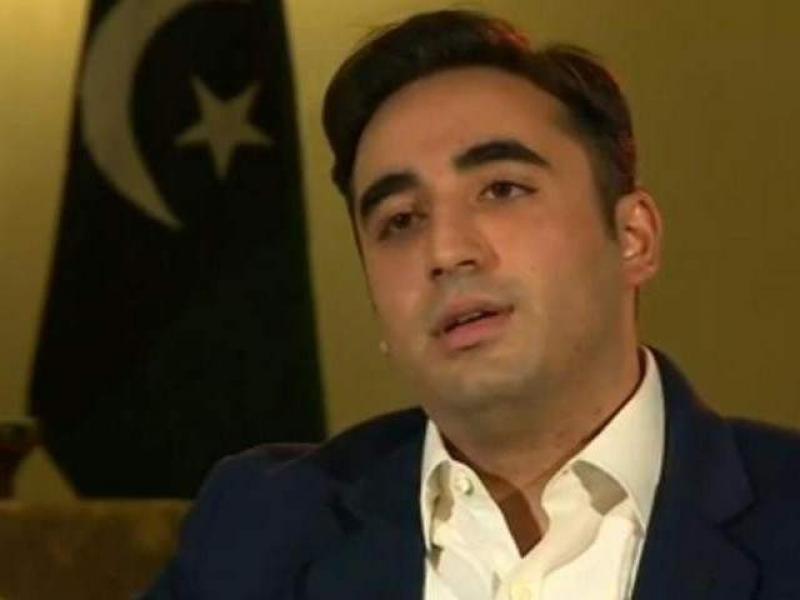
بلاول بھٹو کی سید قائم علی شاہ سے تعزیت

پیپلز پارٹی کے چیئرمین بلاول بھٹو زرداری نے سابق وزیراعلیٰ سندھ سید قائم
علی شاہ کے بڑے بیٹے سید مظفر علی شاہ کے انتقال پر گہرے دکھ اور  افسوس کا اظہار کیا ہے۔
 اپنے ایک تعزیتی بیان میں بلاول بھٹو زرداری نے  مظفر علی شاہ کے انتقال پر سید قائم علی شاہ اور ان کی صاحبزادی نفیسہ شاہ سمیت جیلانی خاندان سے دلی تعزیت کا اظہار کیا ہے۔ 
پی پی پی چیئرمین کا مزید کہنا ہے کہ پارٹی قیادت سمیت پوری پارٹی آپ کے غم میں برابر کی شریک ہے۔ میں دعاگو ہوں، کہ اللّٰہ تعالیٰ مرحوم مظفر علی شاہ کو جنت الفردوس میں اعلیٰ مقام اور سوگوار خاندان کو صبر جمیل عطا فرمائے۔ (آمین

#Pakistan - Imran Khan is facilitator of terrorists

The deputy information secretary Pakistan Peoples Party Palwasha Khan in a reaction to the bad-mouthing of the information minister Shibli Faraz against PPP and Sindh government has said that it is ironic that Shibli Faraz has turned into Firdous Ashiq Awan.

Palwasha Khan said that the people who make cuts into the funds for Sindh are making hue and cry. The chief minister Sindh cannot stop a natural disaster. She said that Karachi is the capital of Sindh which means Sindh collects most revenue for the federal government. The federal government cuts funds for Sindh and then asks the Sindh government to develop the province. She said that the federal government has been exposed during this natural disaster.


Meanwhile, Dr. Nafisa Shah in a separate statement said that Imran’s rule is at its last legs now. The defeat of the government in the senate is the first drop of rain. Imran Khan wants to become a dictator in the garb of FATF legislation. The prime minister who declares Osama Bin Ladin a Shaheed is in fact a facilitator in the escape of Ehsanullah Ehsan.


 The nation will not tolerate political terror in the name of accountability. Imran Khan has already given NRO to Jahangir Tareen, Khusro Bakhtiar, and Alima Khan, she concluded. 
https://www.ppp.org.pk/pr/23601/

Tuesday, August 25, 2020

Video - #DailyShow #TrevorNoah #Trump Trump’s Sister Caught Talking S**t & Trump Bullies the FDA | The Daily Social Distancing Show

Video Report - Dr. Gupta breaks down the effects of convalescent plasma

Video Report - #Polio - Will polio be eradicated worldwide?

Video Report - #COVID19 #corona #LongTermEffects More long-term damage caused by COVID-19 than expected

Opinion: The Senate Is on Vacation While Americans Starve

By Janet Yellen and Jared Bernstein

Thirty million households didn’t have enough food in the last week. Only the Fed has acted forcefully.
It became clear this summer that public health measures across much of the country were relaxed too soon and without proper medical safeguards against the coronavirus. So now, once again, the commerce that Americans rely upon is retrenching. About 80 percent of Americans live in places that are pausing or dialing back reopening.
Yet the Senate left for its August recess without a compromise plan on a coronavirus relief bill for states, cities, the unemployed, businesses and the public health system. If senators still fail to resolve stalled negotiations when they return after Labor Day, millions of needy Americans will suffer — and the overall economy could degrade from its current slow rebound in growth to no growth at all.
Both monetary policy, which is the Federal Reserve’s job, and fiscal policy, the job of the federal government, have complementary roles to play in supporting the economy. (State governments can’t help because their revenues are plummeting and they are mandated to balance their budgets, which require spending cuts and layoffs and only add to the economy’s woes.)
The economics of this moment are not complicated: A self-sustaining recovery cannot occur unless the virus is controlled. It is true that after the first shutdowns of March and April, the economy did begin, in May and June, to pull itself out of a deep, pandemic-induced hole, thanks in part to generous $600 per week federal unemployment assistance that the Senate let expire in July after negotiations between Democrats and Republicans broke down.
Now, so-called real-time data show consumer spending slowing overall and deteriorating conditions for low-income households, who have become more anxious about how they will pay for their rent and their food. In a recent survey, 12 percent of American adults, or 30 million, reported that their household sometimes or often didn’t have enough food in the past week. (For Black and Latino households, the share was about 21 percent.)
These numbers reflect the confluence of at least three forces: acceleration of the spread of the virus; expiration of the supplemental federal unemployment benefits; and the ending of various eviction moratoriums. All three developments disproportionately affect low-income people and persons of color. And aside from the grave ethical questions raised by ending crucial safeguards for the vulnerable, such actions endanger the economy as a whole. The Federal Reserve has largely done its job. By mid-March, it cut short-term interest rates to zero, and all but promised to keep them there for quite a long time. The Fed also bought large quantities of government bonds and government-backed mortgage securities to keep markets functioning and to keep borrowing costs low. These actions have pushed the 10-year Treasury yield down to almost its lowest level ever, which will spur more spending in crucial sectors like housing and automobiles.
In March, when the credit market, the economy’s bloodstream, began to clog, the Fed established so-called emergency “facilities” to keep credit flowing — to businesses small and large and to state and local governments. This forceful response cleared the blockages.
Congress, however, cannot expect the Fed to keep everything together on its own.
When unemployment is exceptionally high and inflation is historically low, as they both are now, the economy needs more fiscal spending to support hiring. Monetary power sets the table and Congress’s fiscal dollars bring in the diners.
In this way, they form a potent one-two punch against stagnation. The Fed makes sure the credit backdrop supports growth; Congress and the president make sure families and businesses have enough money in their pockets.
As its chair, Jerome Powell, has recently stressed, the Fed has “lending powers, not spending powers.” The Fed can’t send out checks to households, increase unemployment payments, stay evictions or provide grants to small businesses on the verge of shuttering. These are jobs for Congress and for the Trump administration.
Until August, Congress had actually been quite a strong partner to the Fed’s work. The situation now — congressional inaction in extending fiscal support — is reminiscent of a similar period after the last recession.
At the start of 2011, unemployment was still elevated at just over 9 percent. The Fed had lowered interest rates to around zero. But Congress allowed fiscal support to lapse, worried more about deficits than all those still unemployed. The Fed chair at the time, Ben Bernanke, summarized the problem well when he said, “With fiscal and monetary policy working in opposite directions, the recovery is weaker than it otherwise would be.”
With inflation as low as it is, servicing the debt required by the one-two punch of aggressive monetary and fiscal policies is relatively inexpensive.
So why, then, are we back here again? Why is Mr. Powell having to make the same pleas to Congress that Mr. Bernanke did and why is a Fed chair being ignored again?
We weren’t in the room, so we don’t know exactly why congressional negotiations broke down or what it will take for them to restart. But we could not be more confident that our economic prescription is the right one. The Fed stepped up. Once again, it’s Congress’s turn.
https://www.nytimes.com/2020/08/24/opinion/coronavirus-federal-reserve.html?action=click&module=Opinion&pgtype=Homepage

#AhmadFaraz - Remembering Pakistan’s revolutionary poet Ahmad Faraz - Ahmad Faraz Shayari

Pakistani Christian man resists forced conversion, threats from young Muslims

by Shafique Khokhar
The video of the incident, which went viral, sparked a lot of criticism. Despite threats, the man says it is his right to keep his faith and that he is ready to suffer all the consequences, that he will not abandon his religion. The Pakistani Telecommunications Authority admits that immoral content on TikTok and Bigo negatively impacts young people, but no one in authority has so far criticised abusers. For Fr Ifran James, “Should a Christian do something similar, he would be immediately accused of blasphemy”.
 A video posted on TikTok in July shows a Christian man being pressured to reject his faith and convert to Islam. Despite threats, he can be heard saying that "for nothing in the world" will he abandon the Christian faith.
The video, posted by bilalmaher479, went viral, but also sparked a strong reaction from Christians and members of other religious minorities.
Hitherto, non-Muslims have to had to witness the forced conversions of girls and young women, compelled to marry Muslim men. The forced conversion of boys and young men is something relatively new.
In the video in question, the Christian man is seen being pressured to recite the shahada, the Islamic creed, surrounded by people who are not seen. Despite everything, he refuses, saying that for nothing in the world would he recite the Muslim creed and reject the Christian faith.
His tormentors then begin to threaten him, saying that he will face serious consequences. Even then, the victim says no, stating that it is his right to keep his faith and that he is ready to suffer all the consequences, that he would not give up his religion.
In a statement, the Pakistan Telecommunication Authority (PTA) said that it has received many complaints about the immoral, obscene and vulgar contents in social media, especially TikTok and Bigo, for their negative impact, especially on young people.
After contacting the two companies, the PTA said that their response was unsatisfactory and that it blocked Bigo under the Prevention of Electronic Crimes Act.
Taskeen Khan, a Glory TV presenter and human rights activist, came to the victim’s defence, posting the video on his official page and slamming the forced conversion attempt.
"Will the Pakistani authorities find the offenders through their TikTok account and punish them according to the law?” he asked.
For his part, Rev Irfan James of Peshawar said that "Pakistani Christians suffer many challenges and [endure] persecution. They face difficult situations every day.”
“It is sad that young Muslims, the majority community, constantly threaten Christians and our faith. Time and time again, they make fun of our faith, but neither the government nor law enforcement do anything about it.”
“If we report these cases, the offenders get away with it by apologising and saying that they did it in an unconscious way. Should a Christian do something similar, he is immediately accused of blasphemy and the local Christian community is guilty by association.”
“They rape our women, kill our people, destroy or burn our properties,” and all “We want is for our constitution and the law to treat us as equals, with justice, and for the guilty to be put on trial.”

http://www.asianews.it/news-en/Christian-man-resists-forced-conversion,-threats-from-young-Muslims-(Video)-50862.html

Chairman PPP Bilawal Bhutto Zardari asks Sindh govt, PPP members to focus on rescue and relief by ignoring allegations from immature political opponents

Chairman Pakistan Peoples Party (PPP) Bilawal Bhutto Zardari has expressed concern over the losses caused by heavy rains across the country including Sindh and its capital Karachi and said that the masses would not be left alone in difficult times as their sorrows and joys are one.
In a statement issued here, the PPP Chairman stressed that all resources should be utilized for the rescue and relief operations in the rain-affected areas. He directed all the Party elected representatives of the party to ensure the solvation of the problems of the rain-affected people in their respective constituencies and ameliorate their sufferings.
Bilawal Bhutto Zardari also asked the Party’s office-bearers and workers to cooperate with the administration in the relief work and take all possible care of the rain victims.
PPP Chairman said that in this difficult time, the Pakistani nation is as brave and united as ever. “We, the Pakistanis, also know how to move forward as a united nation in difficult situations”, he added.
Bilawal Bhutto said that this was not the time to get involved in the blame game initiated by the immature political opponents, but we all should contribute efforts in protecting the people from the ravages of the rains. He urged that after declaring monsoon flood emergency, the government of Sindh and Jiyalas (the party workers) should completely ignore the elements involved in the baseless allegations against them and focus only on serving the masses in these testing times.
https://www.ppp.org.pk/pr/23599/

Isolated at UN, Pakistan fakes speech to Security Council

Pakistan was not on the list of speakers for virtual meeting held online.
Isolated at the UN, Pakistan faked a speech to the Security Council posting it on the website of its permanent mission pretending it was delivered even though its Ambassador did not speak at the session on terrorism.
Pakistan was not on the list of speakers circulated for the virtual meeting held online on Monday, nor does its Permanent Representative Munir Akram figure on the video of the meeting.
Unable to rally support for its campaign against India at the UN, Islamabad appears to have resorted to creating a false record for the Security Council.
Introducing fake elements at the UN is an old tactic for Pakistan.
At the 2017 General Assembly session, Pakistan's Permanent Representative at that time, Maleeha Lodhi, displayed a picture of an injured Palestinian girl from Gaza claiming she was a Kashmiri.India's UN mission said: "We fail to comprehend where exactly did the permanent representative of Pakistan make his statement since the Security Council Session today was not open to non-members." Referring to the allegations against India in the fake speech that wasn't, the statement said that "big lies of Pakistan lies exposed" and responded point by point.
Akram's fake speech that was also circulate through Twitter said that the Tehrik-e-Taliban Pakistan and the Jamaat-ul-Ahrar were backed by an "Indian terror syndicate" and New Delhi was using "mercenary terrorists".
Coming from a country which is a known sponsor of cross-border terrorism that has made the world suffer due to its actions, the allegation that India has hired mercenary terrorists is "laughable" and "preposterous." Akram's fake speech listed four people it said were Indians and their names had been submitted for being included in the list of international terrorists under UN sanctions.
The Indian mission said the list of the Security Council's 1267 Committee, named for the resolution on sanctioning international terrorists, is public and does not include any Indians.
The committee "works on the basis of evidence and not random accusations thrown in to divert their time and attention", it added.
Responding to the Pakistani fake speech's claim that the Islamic nation has been "target of cross-border terrorism for decades", the Indian statement said" "The biggest sponsor of cross-border terrorism now tries to masquerade itself as the victim of terrorism by India." It noted that Pakistan's Prime Minister Imran Khan had himself admitted at the General Assembly last year that there were 40,000 to 50,000 terrorists inside his country.
"Many of the sanctioned terrorists and entities continue to operate with impunity inside Pakistan," the statement said.
It also dismissed Akram's fake speech assertion that it had "decimated Al Qaeda" pointing out that its slain leader Osama bin Laden had been living in plain sight in Pakistan and Khan had praised him as a "martyr".Akram, whose officially Islamic nation that legally deprives non-Muslims as well Ahmedya Muslims of full citizenship rights, critcised India's Citizenship Amendment Act which gives expedited citizenship to minorities fleeing religious persecution in his country.
The Indian mission's statement pointed out that the minority population of Pakistan had dropped to 3 per cent since 1947, a sign of ethnic cleansing.
During Independence in 1947, the minority population of Pakistan was 23 per cent.
https://www.tribuneindia.com/news/world/isolated-at-un-pakistan-fakes-speech-to-security-council-131148

‘Five big lies of Pakistan exposed’

The statement further says that the detailed statement exposed the ‘five big lies’ being peddled and pushed by Pakistan.
India on Monday (local time) hit out at Pakistan over lies peddled by its mission at UN. In a strong statement, the Indian Mission said that Pakistan has put out a false statement claiming that their envoy Munir Akram spoke at the United Nations Security Council while the session was not open to non-members.
“We have seen a statement put out by the Pakistan Mission to the UN, claiming that these remarks were made by the Permanent Representative of Pakistan at the UN Security Council. We fail to comprehend where exactly did the Permanent Representative of Pakistan make his statement since the Security Council Session today was not open to non-members of the Security Council”, Indian mission at UN said in a statement.
The statement further says that the detailed statement exposed the ‘five big lies’ being peddled and pushed by Pakistan.
Dismissing assertions that Pakistan has been a target of cross-border terrorism for decades, the Indian Mission in its statement said: “A lie repeated a hundred times will not become truth. The biggest sponsor of cross-border terrorism against India now tries to masquerade itself as a victim of terrorism by India!”
“Pakistan is home to the largest number of terrorists proscribed by the United Nations. Many of the sanctioned terrorists and entities continue to operate with impunity inside Pakistan. Prime Minister of Pakistan admitted at the UN General Assembly in 2019, the presence of 40,000-50,000 terrorists inside Pakistan,” it added.
It further rejected the claim that Pakistan has decimated Al Qaeda from the region.
“The claim that Pakistan has decimated Al Qaeda from the region. Perhaps, the Permanent Representative of Pakistan is not aware that Osama Bin Laden was hiding in their own country in plain sight, and it is the US forces which got him inside Pakistan. Nor have they heard their Prime Minister refer to Osama Bin Laden as a “martyr”,” the statement read.
Indian Mission at UN said Pakistan makes the “laughable claim that India has hired terrorist as mercenaries to hit them.”
“Coming from a country which is a known sponsor of cross-border terrorism, which has made the world suffer due to its actions, this claim is nothing short of being preposterous!” it said.
The statement also rejected claims of Indians being in 1267 sanctions list. “The 1267 Sanctions list is public, and the world can see none of these individuals are in it. The 1267 Committee works on the basis of evidence, and not random accusations thrown in to divert their time and attention,” read the statement.
Further, it slammed Pakistan for making “ridiculous assertions” about internal affairs of India.
“Pakistan makes ridiculous assertions about internal affairs of India. This is a country whose minority population has dropped drastically from 1947 to what it is today which is just about 3 per cent, which is nothing short of systemic cleansing,” it said.
“This is in addition to false allegations about India’s sovereign actions in the Union Territory of J&K, which are for the welfare of the people. The world has seen through their lies yet again,” the statement added.
This comes after Pakistan’s Permanent Representative Munir Akram put out a random statement today masquerading it as if the statement was made by him to the United Nations Security Council.
But for their purpose, the statement was picked up by Pakistani media and was portraying it as Munir Akram’s statement at the Security Council.
https://www.hindustantimes.com/world-news/five-big-lies-of-pakistan-exposed-says-indian-mission-at-un/story-cMnt2cWIjekcAhGierbz2L.html

Monday, August 24, 2020

Music Video - MUNDAYA DUPATTA CHAD MERA - NOOR JEHAN - BABRA SHARIF -

Video Report - #CapitalTVPk #CapitalNews #Pakistan CHOR Apka BAAP Hai | Shahid Khaqan Abbasi VS Shah Mehmood Qureshi & Asad Qaisar Heated Debate in NA

Video Report - #NayaDaur #Karachi #Lahore Making Cities Work: Crisis of urban governance in Pakistan

Censored: Is It Time for Pakistan and Saudi Arabia To Part Ways?

Imad Zafar
The Express Tribune newspaper in Pakistan published, and then deleted, an article sharply critical of Islamabad's relations with Riyadh.
It was a reader who alerted Pakistani newspaper columnist Imad Zafar that the link to his column published on the Express Tribune’s website on August 20 was missing. His regular column had been uploaded on Thursday night, but within an hour, it was taken down.
Zafar, who has been writing a regular column for the Karachi-based English language paper, said that he wasn’t surprised by this move, due to the subject matter of the article. “In Pakistan, anything to do with Saudi Arabia is highly sensitive,” he said.
He told The Wire that he offered two topics to the Tribune editors for his column – two years of the PTI government and the fruitless visit of the Pakistani Army chief to Saudi Arabia. “I gave the choice thinking that they will not accept the Saudi subject, but they felt that it would be more topical. I asked them repeatedly if they are sure that they will be able to carry it, and they said yes.”
Having worked in Pakistani media for a long time, Zafar noted that he was aware of the unwritten rules. “We used to discuss the topics before the publication… I know what’s the line and where to stop before that.”
When the article was not published on time on Thursday, Zafar again checked with the editors about its status. “I asked them twice, whether they will be able to stand the pressure. But, they again replied that there is no issue.”
After the article went missing shortly after being uploaded, he believes it was taken down due to instructions from outside, rather than an internal decision. “This was certainly done due to external pressure,” Zafar stated, adding that he intends to end his association with the Express Tribune.
The Wire is re-producing below the cached version of his article that was taken down from the newspaper’s website.
An e-mail was sent to the concerned editor in the newspaper and the response, if received, will be added here.


https://thewire.in/south-asia/pakistan-saudi-arabia-relations-media-censorship

شاہی جوکرز این آر او کی راگنی بند کریں۔ ڈاکٹر نفیسہ شاہ

پاکستان پیپلزپارٹی پارلیمنٹیرینز کی سیکریٹری اطلاعات ڈاکٹر نفیسہ شاہ نے کہا ہے کہ شاہی جوکرز این آر او کی راگنی بند کریں۔ جب حزب اختلاف مطالبہ کرتی ہے کہ عوام کی مشکلات ختم کرو تو کہا جاتا ہے کہ حزب اختلاف والے این آر او مانگ رہے ہیں۔ جب ان سے کہتے ہیں کہ آٹا اور چینی کا بحران پیدا کرکے عوام کو لوٹنے والوں کے خلاف کارروائی کی جائے تو عمران خان اور وفاقی وزراءگھسی پٹی راگنی گانا شروع ہو جاتے ہیں کہ کسی کو این آراو نہیں ملے گا۔ اپنے ایک بیان میں ڈاکٹر نفیسہ شاہ نے کہا کہ غریب بیچارا زندگی بچانے والے ادویات خریدنے کے لئے پریشان ہے۔
 سرکاری ہسپتالوں میں ادویات میسر نہیں مگر سادہ لوگوں کو نام نہاد انصاف صحت کارڈ کے نام پر دھوکہ دیا جا رہا ہے۔ ڈاکٹر نفیسہ شاہ نے کہا کہ صحت کارڈ سفید اور کورا تعویز ہے جس کی کوئی افادیت نہیں ہے۔ تعویزوں اور گنڈوں کے بل بوتے پر چلنے والی حکومت صحت کارڈ کے نام پر عوام کے ہاتھوں میں سفید تعویز تھما رہی ہے۔ انہوں نے کہا کہ ملک کو آئی ایم ایف اور عوام کو منافع خوروں کے رحم و کرم پر چھوڑ دیا گیا ہے۔ یہ منافع خوروں کی حکومت ہے کیونکہ منافع خور ہی عمران خان کی اے ٹی ایم مشین رہے ہیں۔ ڈاکٹر نفیسہ شاہ نے کہا کہ غریب کے لئے دال، روٹی مشکل بن چکی ہے۔ سلیکٹڈ حکومت بھوک، بیروزگاری اور معاشی بدحالی کے ذریعے عوام میں مہلک بیماریاں پھیلا رہی 
ہے۔ 

Sunday, August 23, 2020

Video - #DailyShow #TrevorNoah #DNC DNC Day 4: Biden’s Big Speech | The Daily Social Distancing Show

Video Report - #DailyShow #TrevorNoah #SteveBannon In Other News: Bannon Gets Indicted & Mosquitos Get What’s Coming |The Daily Social Distancing Show

Video Report - #Coronavirus What's behind the record rise in global COVID-19 infections?

Video Report - #Trump's sister criticizes her brother in secretly recorded audio

Video Report - Fareed Zakaria points out Biden and Reagan's winning political formula

Pashto Classic Song | Adam Khan Darkhanai | Damangi Gara Maa Shina

Pashto Music Video- Ajab Khan Afirdi - Grana Ajab Khana

Video Report - #NayaDaur #PakistanSaudiArabia Is Pakistan's Alliance With Saudi Arabia Under Threat?

#Pakistan - The single national curriculum and the problems of education

By Tahir Kamran
A hurried implementation of the proposed SNC is not going to help anyone.
The Single National Curriculum recently proposed by the Pakistan Tehreek-i-Insaf government has triggered acrimony in several segments of society, and the reverberations of this can be heard from one end of Pakistan to the other. Because of my own abiding interest in education, I feel drawn to scrutinise the SNC even though much of what I want to say has already been said. Prof Tariq Rahman’s insightful analysis of various provisions of the SNC, indeed, leaves extraordinarily little for one to ruminate over and posit.
I earnestly believe that by making the SNC public rather hastily, the government has opened a can of worms which has added to the myriad problems that it has to contend with. Two of the SNC’s components have drawn particularly trenchant flak. First and the foremost is the role entrusted to religion in the proposed system of instruction and second which, too, is equally significant, is the medium of instruction.
Both these issues are vital and contentious. They are, as in the past, deployed as instruments of homogenisation in a country that has ethnic, lingual, cultural and sectarian plurality. But stress on these two tools of homogenisation in the past has yielded a result that was diametrically opposite to the intended harmony.
Religion and a single national language engendered parochialism. Sectarian and ethnic fissures got crystallised and in the 1990s and 2000s, exclusionary tendencies became perilously pronounced. Keeping all this in view, it becomes even more critical for decision-making bodies to be extremely circumspect while underscoring religion and Urdu language as the seminal features of the education policy. Many commentators have already expressed their concerns about the impact such a curriculum is likely to have in further alienating religious and ethnic minorities.
The aim of this entire exercise is to bring the parallel system of the madrassa into the educational mainstream, an undertaking that none of the previous governments had the vision to execute. Those having stakes in the continuity of the madrassa tradition have resisted any such measure, conceived to reform that hackneyed system.
A few months ago, Mr Shafqat Mahmood, the federal minister for education, invited several scores of educationists and members of the intelligentsia to seek their opinion. I tried to persuade him that the PTI government must allow several languages, including English, to be taught and give all of them the status of national languages.
Why cannot we propound a version of (Pakistani) English because that is a language of power and a source of employment? I argued that by circumscribing to the dominance of Urdu, the prospects of Pakistani youth to seek employment globally would be drastically reduced and in the professional fields they would lose the competitive edge, if at all they have any.
If all the reforms proposed by the SNC are implemented, the first few years will be lost to experimentation because no new policy initiative automatically fits into the existing situation. Initial reforms are mostly followed by several alterations to bring the policy in consonance with the existing disposition and the psychological make-up of the people at large. The possibility of a new policy backfiring also cannot be ruled out. That period of transition is one of pain and anguish.
Those forming and implementing policies should also be mindful of the fact that, in post-colonial societies, every language, social tradition, and fundamental postulates of pedagogy are the outcomes of a pre-independence interface between the colonial power and the representatives of the natives. Therefore, in a post-colonial society like Pakistan, calling anything purely and solely our own, is just a misnomer. Running after socio-religious imaginaries is of no use.
Shafqat Mahmood, astute and erudite as he is, alluded to a stark fact, the gravity of which cannot be understated. A student from one educational stream (he meant English medium schools like Aitchison or Karachi Grammar School, etc) cannot even start a conversation with a student hailing from another stream (he must be implying a student from a madrassa). While inhabiting the same country, their world views, language, ambitions, and career options do not converge at any stage. They are traversing different paths, seeking different destinies. The mutual alienation is frightening.
It goes without saying that such a situation is ominous for the future of the country which has a citizenry split at several levels. Thus, socio-epistemic distancing among the Pakistani youth must be bridged sooner than later for any homogenizing SNC to be feasible.
The minister’s concerns were justified, and his social diagnosis too was valid. However, dismantling the existing structure of school education to improve the state of the madrassa, hardly makes sense. English education at least opens avenues to the wider world of which we want to be an integral part. An isolationist policy, based on hyper-nationalism, which does not recognize Pakistan’s presence in the comity of nations, will only lead to further problems at home.
A streamlining of the madrassa system, which is the fundamental motive of the Single National Curriculum, can, I am sure, be pursued differently. Here is one suggestion that might help address the concerns regarding possible promotion of sectarianism and religious bigotry raised by most critics.
The government should consider dedicating a government school with boarding facilities at every tehsil level to be used for housing students from poor families, who will be fed, lodged, and instructed free of cost by the government. In addition, the government should pay a monthly stipend to the parents of those students as an incentive for them to educate their kids in these schools instead of sending them to madrassas.
The general perception is that many families send their sons to madrassas because in a madrassa, poor students are enrolled and provided free lodging, clothing and food. Thus, a madrassa student passes out completely indoctrinated and without any skill to speak of, except being able to lead prayers in a mosque. The government school, in the scheme I am proposing, will be an effective alternative to the madrassa. The curriculum of those schools should teach Islam with a South Asian specificity, with Arabic and Persian as allied disciplines. Such schools must provide a less militarised version of the education provided at cadet colleges, while replicating their discipline. Such students should be instructed in skills through which they can have employability.
It must be stressed that such a system of school education that helps bring the madrassa into the mainstream of education cannot be envisaged and implemented in a hurry. This scheme would take decades to bring successful results. Perhaps the SNC’s most obvious fault is that its architects imagine a quick solution to the problems they have set out to address.
However, as the views of most educationists have shown, the SNC poses considerable problems. Perhaps consultation is needed with senior academics and educationists not included in the first round before critical decisions are taken. A hurried implementation of the proposed SNC is not going to help anyone.

Imran govt now denies presence of Dawood Ibrahim in Pakistan, calls media claims ‘baseless’

 By NAYANIMA BASU

Dawood Ibrahim was among 88 others who figured in two notifications, or Statutory Regulatory Orders, issued by Pakistan to the UN on 18 August.
Pakistan Sunday distanced itself from the controversy surrounding the presence of terrorist Dawood Ibrahim in the country, and said it had issued the names of 88 banned terror groups and their leaders in a “routine exercise”.
The Imran Khan government had on 18 August issued two notifications, or Statutory Regulatory Orders (SROs), giving details of the present status of 88 terrorists and their entities, including Dawood Ibrahim, Jamaat-ud-Dawa (JuD) chief Hafiz Saeed and Jaish-e-Mohammed (JeM) leader Masood Azhar, to the United Nations.
It also gave details about Taliban, ISIL and the Al-Qaeda, which are already proscribed in the UN Security Council’s sanctions list.
“The consolidated SROs are issued periodically as a routine matter. Similar SROs have been issued by the Ministry of Foreign Affairs, in the past, as per statutory requirements to meet our international obligations. Last such SROs were issued in 2019. The SROs issued reflect information contained in the list entry of UN designated individuals/entities,” the Pakistan foreign ministry said in a statement Sunday.
According to Pakistani media reports, the Imran Khan government has ordered seizure of all movable and immovable properties of these banned outfits and their leaders, as well as freezing of their bank accounts.
“The reports in certain sections of the media about Pakistan imposing new sanctions measures, through these SROs, are not factual. Similarly, the assertions made by some sections of the Indian media, as to Pakistan admitting to the presence of certain listed individuals on its territory, based on the information contained in the SRO, are baseless and misleading,” the statement said.
It added, “It is once again reiterated that the information contained in the SRO is reproduced as per the details in the list entry of the individuals/entities designated under the two sanctions regime, which is publicly available, and contains names of individuals who despite their confirmed deceased status still continue to be on the sanctions list.”

‘Dawood Ibrahim continues to enjoy patronage’

Earlier this month, India had told the UN Security Council that Dawood Ibrahim, who is the main mastermind behind the 1993 Mumbai serial blasts, continues to enjoy “patronage” in Pakistan.
“An organised crime syndicate, the D-Company, that used to smuggle gold and counterfeit currencies transformed into a terrorist entity overnight causing a series of bomb blasts in the city of Mumbai in 1993. The attack resulted in the loss of more than 250 innocent lives and damage to property worth millions of dollars,” India had said in the statement.

Saturday, August 22, 2020

Pashto Ghazal - ساقی ماښام دي

Teenage Pakistani Christian domestic servant beaten for not converting to Islam

A Christian girl, Anika Shehzad, 18, from Ferozwala district Shakhupura, who was working as a domestic servant was beaten after refusing to convert to Islam, and accused of theft.
Anika comes from a poor family, and to support her family she accepted a job for Rs. 5000, around $30 a month, as a live in domestic servant. The job was suggested to her by her neighbor.
After a few days Anika was asked to convert to Islam, but she refused but when pressure mounted and became unbearable, she decided to leave the job and informed the family about her decision.
This infuriated the family members and they started beating her. At last one her employer took her to her parents’ house in Ferozwala, and when they saw their daughter’s condition, they asked the employer what had happened.
She told them she Anika had been beaten because she has stolen their money.
The family called on the local pastor to help them to deal with the situation, and they took Anika for medical treatment.
When the parents raised objections and asked questions of the employer to save her skin, the family accused Anika’s father of stealing Rs. 50,000 and gold as well. But according to the family none of them ever visited Anika where she was working.
The family has contacted the local MP Tariq Masih Gill and asked him to get them justice for their daughter, who they believe is innocent and was only tortured because she refused to convert to Islam.Nasir Saeed, Director CLAAS-UK said that although the Punjab Domestic Workers Act 2019 was passed by the Lahore High Court last January, this atrocious practise still continues in Pakistan.He added: “Christians in Pakistan are illiterate and poor, and many poor families are forced to take risks such as sending their young daughters to rich Muslim families to work as live in domestic servants for a little money. These young girls are often sexually harassed, tortured and sometimes are asked to convert to Islam.
“Many times such cases are reported in the mainstream media, like the gruesome torture of 10-year-old housemaid Tayyaba by an additional district and sessions judge, and his wife, in the capital Islamabad which made headlines in 2016.
“Several girls have even been killed, like Shazia Masih, 12. And several cases are taken to the courts but hardly any family has got justice and the practise still continues because perpetrators are always influential and rich, and sometimes victims are pressurised to withdraw their cases and some victims are compensated with money.”
http://www.pakistanchristianpost.com/head-line-news-details/7420

Pakistan risks losing Arab allies over its 'new Kashmir policy'

Lacking support from Arab countries for its stance on the Kashmir dispute, Pakistan is looking for new alliances under China's leadership. How practical is it for Islamabad to pursue its new foreign policy? DW analyzes.
Earlier this month, Foreign Minister Shah Mahmood Qureshi blasted the 57-member Organization of Islamic Cooperation, accusing the OIC of failing to support Pakistan's stance on Kashmir. Qureshi's comments infuriated officials in Saudi Arabia, which plays a key role in the OIC's affairs and froze a $3.2 billion (€2.72 billion) oil credit facility and demanded that Pakistan repay part of a $3 billion loan, according to the Financial Times newspaper.
"I am once again respectfully telling the OIC that a meeting of the Council of Foreign Ministers is our expectation. If you cannot convene it, then I'll be compelled to ask Prime Minister Imran Khan to call a meeting of the Islamic countries that are ready to stand with us on the issue of Kashmir and support the oppressed Kashmiris," Qureshi told a broadcaster in Pakistan.
"We have our own sensitivities. You have to realize this. Gulf countries should understand this," the foreign minister said.
Later, Qureshi laid out a four-point strategy for the Kashmir issue, which entailed "confronting, exposing and pushing back against New Delhi's intentions; deterring it through military preparedness, conflict resolution and confidence-building; not being distracted by India's actions; and continuing with regional integration projects through participation in the China-Pakistan Economic Corridor, the Shanghai Cooperation Organization, and the Economic Cooperation Organization."
The diplomatic row with Saudi Arabia prompted Khan's government to send Army Chief General Qamar Bajwa to Riyadh. "The army chief's visit is being viewed in the context of Foreign Minister Shah Mahmood Qureshi's criticism of the Saudi Arabia-dominated Organization of Islamic Cooperation," according to the Dawn newspaper.

Does Pakistan have a real plan on Kashmir?

Last year, Indian Prime Minister Narendra Modi ended the special constitutional status of the Indian state Jammu and Kashmir (J&K). The region's autonomy and its own constitution, as well as its special rights for permanent residents, the majority of whom are Muslims, were abolished. Furthermore, the parliament in New Delhi passed a bill to split Jammu and Kashmir into two union territories — J&K and Ladakh — which would be directly administered by New Delhi.
Modi said the move was aimed at ending separatism and remove terrorists from Kashmir. He said that Article 370 was being used as a weapon of terror and that the people of the region were missing out on key laws and protections afforded to people in the rest of India.
Since 1989, Muslim insurgents have been fighting Indian forces in the Indian-administered part of Kashmir – a region of 12 million people, about 70% of whom are Muslim. India and Pakistan have fought two of their three wars since independence in 1947 over Kashmir, which they both claim in full but rule in part.
Islamabad condemned New Delhi's move to abrogate Kashmir's special status and urged its allies in the Muslim world to act against India. Experts say it has so far failed to get much support for its Kashmir stance.
"Islamabad wants to push back against the well-founded criticism that Pakistan doesn't really have a plan on Kashmir. It has been waging an international diplomatic offensive over the last year, but this effort — which is not exactly a new thing for a country that has long sought to push the Kashmir issue in global forums — has not garnered the results Islamabad has wanted," Michael Kugelman, a South Asia expert at the Washington-based Woodrow Wilson Center for Scholars, told DW.
"And that leads to a natural question: If the international diplomatic campaign doesn't pay off, then what's the second plan," Kugelman added.
Experts also say that Pakistan's foreign policy on Kashmir and India lack clarity, and the country's recent measures, such as the unveiling of a new map showing the entire disputed region of Jammu and Kashmir as its territory, are only meant for domestic consumption.
"The situation needs aggressive diplomacy. Apart from China, Malaysia and Turkey, no other country supports Islamabad on Kashmir," Raja Qaiser Ahmed, an assistant professor of International Relations at Quaid-e-Azam University, Islamabad, told DW.
Vali Nasr, an international affairs professor at Johns Hopkins University, told DW that Riyadh is unlikely to take measures against India over New Delhi's Kashmir policy. "Saudi Arabia sees India as an important trading partner. It would prefer to have ties to both India and Pakistan but is clearly no longer willing to support Pakistan [on the Kashmir issue]. The manner with which it is punishing Pakistan also reflects the fact that Islamabad has little leverage with Riyadh," Nasr said.

Pakistan looking for new allies

In the absence of support from powerful Arab nations, Pakistan is looking to strengthen ties with other powers.
"Pakistan's increasing outreach to Iran, Malaysia, and Turkey — and more broadly to Russia, as deepening US-India partnership is reducing the scope of Russia-India ties — is a space to watch in the coming months," said Kugelman. "I don't think we should overstate the damage to Pakistan's relations with Saudi Arabia, but that dust-up does suggest that a new foreign policy framework is taking shape that reasserts Pakistan's deep ties with Beijing while scaling up ties with Russia and with Muslim-majority states outside of the Arab Gulf," he added.
Amid these changing regional dynamics, Pakistan's Foreign Minister Qureshi began a two-day visit to China on Thursday, which he dubbed "very important" to deepen the strategic partnership between the two countries.
"The visit aims to project Pakistan's political and military leadership's vision," Qureshi said in a video message before leaving for China.
Experts say that Pakistan wants to play a key role in the emerging China-led alliance, which could possibly include Iran as well.
"In the past, Islamabad tried to get closer to China, Russia and some Southeast Asian states, but except China, no one pushed India to change its position on Kashmir. Pakistan should keep in mind that having close relations with a state does not guarantee consensus on all international disputes," according to Ahmed.
The experts DW spoke to are of the view that Islamabad's desire to be part of new regional alliances may not yield the desired outcome or lead to the permanent solution of its long dispute with India. At the same time, Pakistan may risk further diplomatic isolation by angering Saudi Arabia and its other Gulf allies.

Balochistan: Human Rights bodies express concern over the abduction of Baloch women

The Turbat region Special Task Forces of the Human Rights Commission of Pakistan has expressed deep concern over the news of the abduction of six women and five children by the Pakistani security forces during an offensive in Panjgur.
 It said that the issue of human rights has existed in Balochistan for many years and its intensity is increasing day by day.
The HRCP in its press statement further said, “HRPC not only condemns the abduction of six women and five children in Panjur but it also regards it as an inhumane, immoral and unconstitutional move and demands the immediate release of all arrested men, women and children.”  
The HRCP spokesman said that steps should be taken to change attitudes and ensure civil liberties by seriously considering the deteriorating human rights situation in Balochistan.
The Voice for Baloch Missing Persons (VBMP) also deplored the enforced disappearance of Baloch women and children from Panjgur and said it was a matter of concern and unconstitutional, immoral and inhumane act.
Meanwhile, the Chairman of Voice for Baloch Missing Persons Nasrullah Baloch has also issued an appeal to provide full details of the missing women and children from Panjgur to the organisation so that it can effectively take up the issue with the government and other concerned agencies.
It is important to note that since the past several days’ Pakistani forces have launched a large-scale ground and air offensive in different areas of Gichk in the Panjgur district of Balochistan, as a result of which several people, including women and children, have reportedly been abducted so far.
The military offensive later has been extended to other areas including Gichak. There were also reports from locals that the Pakistani army had buried two bodies under its supervision yesterday. Residents of the area and eyewitnesses confirmed that the bodies were burnt.
So far, there are reports of the abduction of seven women along with 11 children and burning down of wheat and other farms and setting ablaze the houses of eight people by Pakistani forces during these latest offensives.
The abducted women and children have been named as Maryam, Muharram, Mahal, Mah Gul, Razia, Jamati, Bego, 14-year-old Shakila, 6-year-old Jamila, 12-year-old Khairina, 6-year-old Sabrina, 1-year-old Adeela, 8-year-old Zubair, 7-year-old Sameer, six-year-old Shahdad, four-year-old Shahram, two-year-old Shantul and another two-year-old child is also among the victims.
The Pakistan forces have laid a siege around the area and blocked communication system that’s why the exact number of abductions, damage to properties and any casualties cannot be confirmed so far.