Friday, August 21, 2020

Israel-UAE deal can boost India’s PoK plans. Modi just needs to keep the balancing act on


The Organisation of Islamic Cooperation’s refusal to allow a stand-alone meeting on Kashmir issue signals a new era of understanding of New Delhi’s position.

The agreement between Jewish Israel and the United Arab Emirates, known as the ‘Abraham Accord’ that has been brokered by the Christian US, holds little hope for the divided Middle East unless a true change of heart occurs among the followers of the three Abrahamic faiths. This uncertainty offers India a window of opportunity to not only participate in the common business platforms but also widen the scope and scale of the emerging security arrangements in the Middle East, which can have far-reaching and positive significance concerning any action plan on Pakistan-occupied Kashmir (PoK).
But even before the ink could dry, the UAE-Israel agreement has run into controversy on the Palestinian issue. The UAE has interpreted the reference in the relevant clause to mean an “immediate end” to Israeli plans to annex areas in the West Bank under its control. The Israeli officials have stuck to the word “suspend” to suggest negotiations with Palestine would continue.
Naturally then, New Delhi will have to study the accord, go into the background details and deeply ruminate over the likely fallout of the agreement in the Indian and regional context, especially in the emerging post-Covid-19 world order. The Palestinian cause has been relegated to the background in the wake of economic meltdown, falling demand for oil, and rising joblessness due to the coronavirus pandemic.
Moreover, this emerging non-Arab coalition would like to see the back of the US in the Arab world. But the Arab solidarity is not yet a thing of the past and it is too early to conclude that the US has vacated the Middle East.
The post-Covid-19 world order is likely to be very different from what it appears to be now. New Delhi should prepare itself for an enhanced and more active role in the new and emerging geopolitical architecture.

So far so good 

It helps that when the Trump administration was moving its embassy in Tel Aviv to Jerusalem, India was continuing with its “neutral posturing” with a view to balance its strategic engagement with the US and Israel and the economic and energy security pacts with the Arab World.
China, meanwhile, formalised its ‘four-point’ position on the Israel-Palestine conflict as enumerated by President Xi Jinping in his July 2017 speech with a close resemblance to India’s position of calibrated balancing with a realist approach to national interest. Interestingly, Pakistan has refused to toe the Arab big brother’s line in recognising Israel.
Invoking Quaid-e-Azam Muhammad Ali Jinnah, Pakistan Prime Minister, in a veiled reference to the UAE, has said that “whatever any country does we cannot ever accept Israel as long as Palestinians are not given their rights”. What is important to note is his reasoning that (if Pakistan accepted Israel and ignored the oppression of the Palestinians), “we will have to give up Kashmir as well then”.
Seen in this context, Prime Minister Narendra Modi has made all the right moves so far.
Breaking all taboo, Modi in 2017 became the first Indian prime minister to visit Israel. India-Israel defence trade is likely to touch the $20-billion mark with India becoming one of the core countries to be dealing with the high-powered defence ministry department SIBAT in Israel. The best part of Modi’s balancing act was revealed when the Arab world took notice of the immense opportunities in India and signalled its readiness to work on trade and investments. More importantly, the Organisation of Islamic Cooperation (OIC)’s refusal to allow a stand-alone meeting on Kashmir issue signals a new era of understanding of New Delhi’s position.

But Delhi needs to watch out

One significant subject in the Abraham Accord is the increased security cooperation between Israel and the UAE against regional threats. Needless to say, the three parties to the accord have a common adversary in Iran. The Trump administration recently seized three Venezuela-bound Iranian oil tankers, with both countries facing heavily punitive sanctions by the US.
Given the effect of US sanctions and its strict implementation, the increased clout of the new partners in the Middle East and elsewhere and the emerging new alliances between China and Iran and Iran-Turkey-Malaysia, New Delhi has to go back to the drawing board for a fresh policy formulation.
China is deeply entrenched in Gwadar and the Indian Ocean region. Tehran is having serious rethink over India’s role in the Chabahar Port project. Turkey, which has threatened to recall its ambassador from Abu Dhabi, is busy forging a new non-Arab Islamic alliance to include Pakistan and Malaysia to achieve its dream of reviving the Khilafat-2, especially at a time when a section of the Arab world seems to be distancing itself from the Palestinian cause while cosying up to Israel. In the event of this non-Arab Islamic coalition gaining ground, it would be interesting to see which way Beijing tilts and what this portends for New Delhi and the region.
The economic catastrophe brought about by the Covid-19 pandemic is probably posing a real challenge and forcing new and hitherto unexpected alignments that will impact India seriously.

Behind Pakistan’s cartographic hallucination on Kashmir lies Imran’s domestic woes, China’s invisible hand


Sreemoy Talukdar
China has never been a disinterested party in Kashmir, and its interventions are getting more frequent in tune with Beijing’s hold over its client state Pakistan.
Imran Khan is in trouble, to put it mildly. The Pakistan prime minister initially dismissed COVID-19 as common flu and had advised citizens to stay at home even if showing symptoms. When the pandemic raged beyond control, Imran’s answer was to implement a ‘Corona tiger force’, a youth recruitment program to “wage jihad” against the virus.
The virus was unmoved by such gimmicks. As the crisis deepened, an alarmed World Health Organisation shot off a letter in June slamming hasty lifting of lockdown in provinces without meeting any of the requisite conditions and expressed concern over Pakistan’s high positivity rate and lack of testing.
Meanwhile, Pakistan’s already fragile, debt-burdened economy is collapsing. According to World Bank estimates, Pakistan is heading towards “major recession”. The New York Times quoted Pakistan Institute of Development Economics, an independent research firm, to report that “up to 18 million of Pakistan’s 74 million jobs could be lost.”
A broke Pakistan is set to become the first large developing country to apply for a debt repayment relief under a G-20 initiative.
Alongside and unsurprisingly, Pakistan’s rickety public health infrastructure is also in a coma. Doctors and caregivers are functioning without basic protective gear and risking public ire to boot.
Amid the healthcare disaster, Pakistan is also staring at a food security crisis. Mishandling of the pandemic, lack of government planning, supply chain disruption, unseasonal rains and pestilence may result in a 3.5 million-ton shortfall of wheat, Pakistan’s staple, raising fears that the country is limping towards a famine. It is worth noting that Imran’s popularity was nosedivingeven before the pandemic. Last year, hardline Islamists hit the streets demanding his ouster. Forced to take a $6 billion loan from the International Monetary Fund in last May  — Pakistan’s 13th such bailout since 1980s — Imran had no option but to cut subsidies, devalue further the rupee and raise taxes — all unpopular moves in a struggling economy. While the interventions didn’t work, all that Imran managed to do was to trigger more inflation, slash consumption and witness mass layoffs in private sector. To quote Maulana Fazlur Rehman, leader of Jamiat Ulema-e-Islam (JUI-F) who led the protests against Imran last year, “Khan was ‘selected’ earlier but he has now been rejected.” Imran’s ascension to power was widely believed to have been engineered by Pakistan’s all-powerful military, and Rawalpindi was growing increasingly impatient with Imran’s hubris, inefficiency and incompetence. Imran’s botched  response to coronavirus, falling popularity and waning influence saw Pakistan Army tighten its grip on the civilian government and squeeze further the space for democracy. At the best of times, Imran was a military puppet. His masters have now clipped his wings and taken full control. All major policy decisions on the pandemic are now being taken either by Rawalpindi or army-backed political appointees. Since March, the military has been overruling Imran and releasing public advisories on army letterheads. Imran is aware and unhappy, threatening abruptly to leave press conferences when questioned on his authority. Scholar Madiha Afzal, fellow of Center for Middle East Policy writes in Brookings, “For a time after his election, it seemed that Khan’s closeness with the military might give him the space to implement the domestic policies that he wanted. It seems that period is over. Khan is now clearly constrained by a military whose role has grown progressively through Khan’s term in office and has expanded to the ambit of domestic policy during the pandemic.” The picture that emerges is of a politician rapidly losing popularity, power, influence and control and increasingly given to ranting in Parliament. To add to his pressure, terror financing watchdog Financial Action Task Force (FATF) has kept up the squeeze. Last October, Pakistan received a “clear warning” from the FATF for addressing only five out of 27 action items to tackle terror financing. The FATF had threatened to blacklist Islamabad unless it does more and does so quickly. Pakistan has managed to get one more extension from FATF until October 2020 owing to the pandemic, but it received more setbacks on this front with the US state department bringing out a report on terrorism in June that continues to designate Pakistan as a “safe harbour for regionally focused terrorist groups.” Then there is Kashmir. India’s decision last year to remove Jammu and Kashmir’s semi-autonomous status and bring the erstwhile state under New Delhi’s direct control effectively buried Pakistan’s dreams of seizing the prized real estate for which it has launched multiple wars against India and used terrorism as a State policy since the 1990s to carry out a relentless proxy war and stoke militancy within Indian borders. Kashmir is not only Pakistan’s “jugular vein” or an article of faith, it is central to Pakistan’s national and ideological frontiers. Pakistan never had operation control over Kashmir that acceded to India during Partition except the portion that it had invaded, but a never-ending battle against India to grab Muslim-majority Kashmir remains the fulcrum of Pakistan’s existence as a nation-state. It also makes space for Pakistan military’s outsized role in its polity since it is deemed to be the only institution that can turn that improbability into a reality. As C Christine Fair, author and scholar of South Asian political and military affairs, noted in her book Fighting to the End: The Pakistan Army’s Way of War, for the Pakistan Army, failure lies not in unsuccessful attempts to wrest Kashmir from India but in abandoning the effort. In perpetual struggle lies victory. New Delhi’s move to abrogate Article 370 and turn Jammu and Kashmir into a Union Territory made it even more difficult for the Pakistan to sell its revisionist agenda back home — a despondency best expressed by Opposition leader Sherry Rehman.
In its latest edition of the Green Book, an internal confidential publication of the Pakistan military containing essays by serving officers and others (mostly for in-house consumption), Pakistan’s chief of army staff General Qamar Javed Bajwa admitted that Balakot airstrikes and abrogation of Article 370 have transformed the geopolitics of the region and restricted Pakistan’s options.
The battle for Kashmir isn’t just an existential totem, it is also the silver bullet to paper over all the cracks of a failing State. Stunned by India’s decision, and hamstrung by lack of options, an unprepared Imran launched a vitriolic campaign against India and threatened nuclear holocaust in a column for The New York Times and even from the podium of United Nations last year, but he had little to show for his efforts.
Not just the international community, Khan failed to gain sympathy for his anti-India campaign even in the Arab world.
Imran’s frustration was palpable. At the UN last year, the Pakistan prime minister admitted that he has failed to find any buyers for his apocalyptic narrative on Kashmir, and there was “no pressure on Narendra Modi”.
The reasons behind Pakistan’s failure to corner India on Kashmir have been explained well by Ashley Tellis, former top US government official and now a senior fellow at Carnegie in a report by London-based Financial Times: “India is seen as a great power in waiting, and nobody messes around with the claims of a great power… The Pakistanis have discredited themselves with their use of jihadi terrorism as a means to change the status quo.”
Imran had not only run out of options, but his inefficacy on Kashmir also had a bearing on Pakistan military’s domestic stature. The people in Pakistan were beginning to see that not only will they never get control over their promised land, their ‘infallible’ army actually had a very weak hand. What damaged Pakistan the most was that India’s move went a long way towards decoupling the adjective ‘disputed’ from Kashmir and made it an issue ‘internal’ to India.
Something had to give. And it did. On the first anniversary of India’s abrogation of Article 370, Pakistan released a “new political map” claiming the entire Kashmir and Ladakh, along with Sir Creek and Junagadh in Gujarat.
Among other oddities, the so-called map also has an “undefined frontier” to let China draw its own line while keeping Shaksgam Valley and Aksai Chin out of its parameters. There has also been another change in nomenclature. ‘Indian occupied Jammu and Kashmir’ is now ‘Indian Illegally occupied Jammu and Kashmir’ — the extra ‘i’ apparently loosens India’s and fortifies Pakistan’s claim.
The “undefined frontier” apart — which indicates that Pakistan is petrified of China and has no clue what Beijing will claim tomorrow — the so-called map evidently is Pakistan’s answer to India’s move on Kashmir.
While India has revoked Kashmir’s ‘semi-autonomous’ status — a temporary constitutional measure — abrogated Article 370 and 35-A, bifurcated the state into two union territories of Jammu and Kashmir and Ladakh and brought Kashmir under the ambit of Indian Constitution, Imran and his cabinet waited for a year to finally take some coloured pencils and redraw the map to snatch Kashmir away from India.
Depending on how one looks at it, Pakistan’s act was a strategic masterstroke or a fool’s errand. Imran will certainly hope that his countrymen believes the former. Not just ‘one mapmanship’, Imran had more aces up his sleeve to reclaim Kashmir — such as renaming Kashmir Highway in Islamabad as Srinagar Highway.
The claim on Junagadh (that voted to join India in 1947 in a plebiscite when Pakistan received 91 votes) isn’t new. Pakistan’s survey maps have included it on earlier instances unlike Sir Creek but in both of these cases as in Kashmir, Islamabad’s reliance on cartography reflects its helplessness on Kashmir and desperation at home.
At this point, Imran is less worried about his strategic and diplomatic options on Kashmir than in placating the Pakistani public and showing that within a span of a year, he has made some progress in wresting back the prized land. What better way than to redraw a map?
Imran was perhaps inspired by Nepal prime minister KP Sharma Oli, who recently pushed through a new map claiming sovereignty over Indian territories of Limpiyadhura, Lipu Lekh and Kalapani. Oli’s cynical plan had a political motive. Nepal’s beleaguered prime minister is battling to save his seat and political future and saw in the cartographic misadventure a chance to whip up nationalism to sail through the polls.
However, in Pakistan’s cartographic hallucination — that India has dismissed as “ridiculous”, “untenable” and a “political absurdity” lacking in “legal or international credibility” — lies a blunder and a self-inflicted wound.
By claiming the entire Valley, Pakistan has ended up exposing its own lies on Kashmir’s “self-determination” and UN-monitored plebiscite. In one stroke, Pakistan has also invalidated the so-called ‘self-determination’ movement by ‘separatists’ and revealed it for what it is — an asymmetric war planned and executed for decades by Pakistan through ‘non-State actors’ and jihadist forces to create unrest within India’s borders and seize Kashmir.
All Imran and his ‘crayon cabinet’ has managed to do is to bust its own lie and remove the fig leaf of legitimacy.
The dragon’s invisible hand
In dismissing Pakistan’s cartographic aggression, however, India has no reasons to be smug. A coordination on the Kashmir issue between Pakistan and its patron China is evident and increasingly intensifying.
China has never been a disinterested party in Kashmir, and its interventions are getting more frequent in tune with Beijing’s hold over its client State. The strategic importance of China-Pakistan Economic Corridor and Beijing’s holding of considerable real estate in Kashmir make China a crucial and influential third party in the Kashmir issue.
There’s one more good reason for China to get involved. Beijing uses Islamabad as a cat’s paw against India, and it is in China’s interest to stabilize Pakistan so that it may play the role Beijing wants it to play.
The client-patron relationship is evident from the fact that China — as ORF’s Sushant Sareen points out — “is not just emerging as the largest debtor to Pakistan but is also the largest investor. What is more, China is Pakistan’s largest trading partner and the lender of last resort to bail out Pakistan from its chronic deficit on the external account. In short, China is virtually the only game in town as far as the tottering Pakistan economy is concerned.”
The Sino-Pakistan coordination on Kashmir since India’s move to abrogate Article 370 has played out in interesting ways. Security Council member China has initiated the issue three times at the United Nations — ostensibly to ‘internationalise’ the dispute at the behest of its iron brother — and while each of these attempts have proven unsuccessful, the calibrated steps leading to the first anniversary is worth noting.
On 27 July, China held a virtual foreign ministers’ meeting with Pakistan, Afghanistan and Nepal — an alternative quadrilateral mechanism bang in India’s immediate neighbourhood — and Wang Yi urged his counterparts from Afghanistan and Nepal to follow Pakistan’s footsteps to promote CPEC and tighten interconnectivity. Chinese economic imperialism in India’s backyard raises New Delhi’s security and strategic concerns.
In addition, as ORF senior fellow Sareen points out in “Alt Quad+ with Chinese characteristics”, China has been openly interfering in Nepal’s political process to ensure Oli’s survival, debt-trapping Nepal with white elephant projects, offering trade deals to Bangladesh that Dhaka can’t refuse end up being dependent on Chinese market and “encouraging Imran Khan to reach out to Bangladesh and move towards normalisation of ties.”
Interestingly, just a few days before the ‘Alt Quad’ meeting was held, Imran made a rare phone call to Bangladesh prime minister Sheikh Hasina and ostensibly discussed Kashmir.
A day after Pakistan released its ‘new map’, a Chinese foreign ministry spokesperson on 5 August called India’s Kashmir move “unilateral, illegal and invalid” and glossed over a question on Pakistan’s cartographic aggression. On that very day, China initiated the third attempt to stir the Kashmir pot at UN.
These attempts have all been thwarted but, as Syed Akbaruddin, who served as India’s Permanent Representative to the United Nations points out in Hindustan Times, India should be ready for a diplomatic two-front war at the UN.
A short-on-options Pakistan may be blundering its way even more on Kashmir, but the real joker in this pack is China.

Pakistan denies Saudi Arabia rift, but Qureshi's rush to China soon after Bajwa snub tells different taleReports of strain in relations between Pakistan and Saudi Arabia have been doing the rounds ever since Riyadh declined to toe Islamabad's line on Kashmir

Reports of strain in relations between Pakistan and Saudi Arabia have been doing the rounds ever since Riyadh declined to toe Islamabad's line on Kashmir
Pakistan on Thursday may have denied reports of a rift with Saudi Arabia, but its recent actions and comments tell a different tale.
Note how Shah Mahmood Qureshi rushed to China on Thursday for a two-day summit with its "all-weather friend" just days after army chief General Qamar Javed Bajwa was denied an audience with Saudi Crown Prince Muhammad Bin Salman during his visit to the Kingdom. Add to that Prime Minister Imran Khan's recent remarks that news of a breakdown in relations with Saudi Arabia is "completely baseless", but in the same breath adding that Pakistan's future is connected to China.Imran added that China had stood by Pakistan through good and bad times. "We are further strengthening our ties with China. China also needs Pakistan very much. Unfortunately, Western countries are using India against China," Imran said.Reports of strain in relations between Pakistan and Saudi Arabia have been doing the rounds ever since Riyadh declined to toe Islamabad's line on Kashmir.
Pakistan has been pushing the Organisation of Islamic Cooperation (OIC), the second largest intergovernmental body after the UN, for a meeting of foreign ministers since India revoked the special status of Jammu and Kashmir last August.
Islamabad's attempts to garner international support against India for withdrawing Jammu and Kashmir's special status have not been successful, to say the least.
A large part of this can be chalked up to the Jeddah-based OIC, the largest bloc of Islamic countries in the world, which is dominated by Saudi Arabia and other Arab countries, not giving Pakistan an opportunity to take aim at India from their perch.
India has categorically told the international community that the scrapping Article 370 of the Constitution was its internal matter and advised Pakistan to accept reality and stop all anti-India propaganda.
Qureshi, a key player
Qureshi seems to be at the centre of this drama.
The foreign minister recently criticised the Saudi government in a TV interview (a first) and threatened to sidestep the Kingdom by calling an OIC meet.
Qureshi had said, "Today, I am telling the OIC to convene the meeting of the council of foreign ministers. If they cannot do it, then I will be compelled to ask the prime minister [Imran Khan] to call a meeting of Islamic countries [Iran, Turkey and Malaysia] that are ready to stand with us on the issue of Kashmir."
While the Saudis did not respond directly to Qureshi's remarks, they did stop renewing an oil credit of $3.2 billion to Pakistan and also demanded the repayment of a loan given to Islamabad in 2018 after a visit from Prime Minister Imran Khan.
Part of that loan was duly repaid with an assist from its deep-pocketed benefactor: China.
Pakistan draws China closer
In a video message ahead of his departure to China, Qureshi gushed about his “very important trip to China”. "I am leaving on a very important visit to China. I had a discussion with the prime minister regarding this visit yesterday. My delegation will represent the stance of the political and military leadership of the country. I am hopeful that my meeting with Foreign Minister Wang will prove to be beneficial for both countries,” Qureshi said.
The Chinese and Pakistani foreign ministers, meeting at the island resort of Hainan, are slated to discuss a host of issues, including the progress of the $60 billion China-Pakistan Economic Corridor and Islamabad’s request for a $1 billion loan. Meanwhile, Islamabad's relations with the Kingdom seem to be on a downward slope.
Kingdom puts distance
There are plenty of reasons for the Kingdom wanting to put space between itself and Pakistan.
Jeremy Garlick, author of The Impact of China's Belt and Road Initiative: From Asia to Europe, told Nikkei Asian Review Saudi Arabia's hesitance stems from its desire to avoid becoming part of China and Pakistan's attempts at containing India.
"Saudi Arabia is closely allied with the US, which may also be [applying behind-the-scenes pressure on] Saudi Arabia to stay away from Chinese initiatives," said Garlick, an assistant professor with the Jan Masaryk Center for International Studies at the University of Economics in Prague.
This snub to the all-powerful army chief Bajwa, whose visit to Riyadh was aimed at containing the fallout from Qureshi's explosive remarks, is sure to send a message to the Pakistani establishment, who are already said to be unhappy with Imran. As per this Economic Times piece, "While Imran Khan has sought to expand traditional close ties with Turkey riding on its president's ambitions to emerge as a leader of the Islamic World, Saudi Arabia continues to matter for Pakistan’s most powerful institution: Army."
The piece argued that it is inconceivable that Qureshi did not have Imran's backing and that the entire episode did not sit well with the generals in Rawalpindi, and has left Imran in an unenviable situation.
Pakistan has historically been a strong military ally of Saudi Arabia.
But it seems that Beijing has, for the moment at least, supplanted Riyadh as Islamabad's main backer.
https://www.firstpost.com/world/pakistan-denies-saudi-arabia-rift-but-qureshis-rush-to-china-soon-after-bajwa-snub-tells-different-tale-8737751.html

Thursday, August 20, 2020

Video Report - Barack Obama’s full speech at the 2020 Democratic National Convention | 2020 DNC

Video Report - Kamala Harris’ full speech at the 2020 Democratic National Convention | 2020

Video Report - Joe Biden to accept Democratic nomination at DNC

Video Report - Steve Bannon charged with fraud in border wall fundraising

U.S: #SteveBannonArrested #SteveBannon - Steve Bannon Is Charged With Fraud in We Build the Wall Campaign

By Alan Feuer, William K. Rashbaum and Maggie Haberman
Mr. Bannon and three others are accused in a scheme to use funds raised for construction to pay for personal expenses. Stephen K. Bannon, President Trump’s former adviser and an architect of his 2016 general election campaign, was charged on Thursday with defrauding donors to a private fund-raising effort called We Build the Wall, which was intended to bolster one of the president’s signature initiatives: erecting a barrier on the Mexican border.
With a wounded Air Force veteran and a Florida venture capitalist, Mr. Bannon conspired to cheat hundreds of thousands of donors by falsely promising that their money had been set aside exclusively toward building a new section of border wall, according to a federal indictment unsealed in Manhattan. Prosecutors said that after siphoning money from the project, Mr. Bannon plowed nearly $1 million into paying off his personal expenses.
Mr. Bannon was arrested early Thursday on a $35 million, 150-foot yacht that was off the coast of Westbrook, Conn., law enforcement officials said. Working with the Coast Guard, federal postal inspectors and special agents from the United States attorney’s office in Manhattan boarded the vessel, which belonged to the exiled Chinese businessman Guo Wengui, the officials said.
The charges, filed days before Mr. Trump was to be nominated for a second term at the Republican National Convention, marked a stark turn of fortune for Mr. Bannon, a high-living and flamboyant political strategist. He had first burst into the public eye when he was in charge of the right-wing media outlet Breitbart, where he had aligned himself with the alt-right, a loose network of groups and people who promote white identity.Now in custody in New York, Mr. Bannon joins a growing list of Trump associates who have been charged with federal crimes, including Paul Manafort, Mr. Trump’s former campaign manager; Michael T. Flynn, the former national security adviser; and Michael D. Cohen, Mr. Trump’s onetime lawyer and fixer.
Audrey Strauss, the acting United States attorney in Manhattan, said Mr. Bannon and his three co-defendants defrauded donors to We Build the Wall by “capitalizing on their interest” in the border wall and falsely telling them that “all of that money would be spent on construction.”
The 24-page indictment, unsealed in Federal District Court in Manhattan, was by far the most politically sensitive case that Ms. Strauss has handled since she assumed her job after her predecessor, Geoffrey S. Berman, was fired in June by Mr. Trump.Mr. Bannon was expected to appear before a federal magistrate judge in New York on Thursday afternoon. Investigators from Ms. Strauss’s office and postal inspectors conducted several searches around the country on Thursday morning, at the homes of the defendants and at other locations, law enforcement officials said.Shortly after the charges were announced, Mr. Trump sought to distance himself from Mr. Bannon and the fund-raising initiative, though the president also expressed sympathy for his former chief adviser.
“I feel very badly,” Mr. Trump told reporters in the Oval Office on Thursday. “I haven’t been dealing with him for a very long period of time.”
The president said he knew nothing about the multimillion-dollar campaign but quickly contradicted himself, saying he disliked it.
“I don’t like that project,” Mr. Trump said. “I thought it was being done for showboating reasons.” He called paying for the border wall privately “inappropriate.”
A White House official said Mr. Trump did not know ahead of time that Mr. Bannon was being arrested, and he was told by aides after it happened. One of Mr. Trump’s sons, Donald Jr., publicly promoted the We Build the Wall effort at an event in 2018, calling it “private enterprise at its finest.”
Donald Trump Jr. said in a statement on Thursday that he had no involvement with the effort beyond praising it at that one event.
According to the authorities, Mr. Bannon hatched the plot to defraud the donors with three other men: Brian Kolfage, a 38-year-old Air Force veteran and triple amputee from Miramar Beach, Fla.; Andrew Badolato, 56, a venture capitalist from Sarasota, Fla.; and Timothy Shea, 49, of Castle Rock, Colo. Mr. Kolfage and Mr. Badolato were arrested in Florida on Thursday, and Mr. Shea was arrested in Denver.
Mr. Kolfage, who lost both his legs and one of his arms during his service in Iraq, created We Build the Wall as a GoFundMe page in December 2018. It was an immediate success, raising nearly $17 million in its first week online, prosecutors said. To persuade donors to contribute to the effort, prosecutors said, Mr. Kolfage promised them that he would “not take a penny in salary or compensation” and that all of the money he raised would be used “in the execution of our mission and purpose.” According to the indictment, Mr. Bannon described We Build the Wall as a “volunteer organization.”
But all of that was false, prosecutors said. Instead, they claimed, Mr. Kolfage secretly took more than $350,000 in donations and spent it on home renovations, boat payments, a luxury S.U.V., a golf cart, jewelry and cosmetic surgery.
Mr. Bannon, working through an unnamed nonprofit organization, received more than $1 million from We Build the Wall, prosecutors said, some of which he used to pay off hundreds of thousands of dollars in personal expenses.
To conceal the illicit flow of money, prosecutors said, the four men routed payments from We Build the Wall not only through Mr. Bannon’s nonprofit group, but also through a shell company that Mr. Shea controlled.
Court papers suggested that prosecutors were in possession of several text messages between the men, including one in which Mr. Kolfage told Mr. Badolato that the payment scheme was “confidential” and should be kept on a “need to know” basis.
It remained unclear precisely when the yearlong investigation into the scheme began. But last year, a bank informed Mr. Bannon that federal prosecutors had subpoenaed records related to We Build the Wall, according to a person briefed on the matter.
Prosecutors said that despite the effort’s early success, there were questions almost instantly “about Mr. Kolfage’s background” and the viability of his promises to give the money he had raised to the government to actually build Mr. Trump’s wall.
Because of these concerns, prosecutors said, GoFundMe warned Mr. Kolfage that if he did not find a “legitimate nonprofit organization” to handle the money, it would return it to the donors. Mr. Kolfage claimed that the group had determined that only $800,000 of the funds needed to be given back.
“No rules were broken,” Mr. Kolfage said in an interview last year. “Ninety-four percent of the donors we have been able to reach are opting in. We’ve reached 75 percent of all the donors so far.”
But some donors wondered what had happened to their money. Harvey Garlotte of Hattiesburg, Miss., donated $60 to the fund and was among those who complained when he received a refund — minus the $3 he had added as a tip for the group. In a complaint to the Florida secretary of state filed last year, Mr. Garlotte wrote that he felt he had been cheated by We Build the Wall, noting that even though Mr. Kolfage lived in Florida, he could find no record of a Florida charity registration.
“From my side of the road, Mr. Kolfage was simply using a hot button topic, a very emotional topic, and his status as a wounded veteran, for selfish and self-serving reasons and personal financial gain,” Mr. Garlotte wrote in his complaint. As the problems with donors mounted, Mr. Kolfage said that he would establish a board of advisers for the group and incorporate it as We Build the Wall Inc. Mr. Kolfage enlisted Kris Kobach, the former Kansas secretary of state, to serve on the board. Mr. Kobach, a longtime Trump supporter and a prominent immigration hard-liner, was not named in the indictment. Mr. Kolfage also brought in Mr. Bannon, who had joined Mr. Trump’s campaign as chief executive officer in August 2016 and became the White House’s chief strategist after Mr. Trump was elected.
Prosecutors said Mr. Bannon was by then already working with Mr. Badolato on a separate project: a nonprofit group dedicated to “promoting economic nationalism and American sovereignty.”
And within days of becoming involved with the wall-building effort, the two men took “significant control” of its day-to-day activities, prosecutors said, including its “finances, messaging, donor outreach and general operations.” In January 2019, prosecutors said, the group announced that it was changing its mission and would seek to build a wall privately. The group told its donors that they would have to “opt in” to the altered plan, prosecutors said.
Several times, prosecutors said, Mr. Kolfage falsely assured his donors that every dime they gave him would go to the wall.
“It’s not possible to steal the money,” he said at one point, according to the indictment. “We have an advisory committee. I can’t touch that money. It’s not for me.”
But prosecutors contended that Mr. Bannon and Mr. Badolato started making secret payments to Mr. Kolfage in February 2019 through Mr. Bannon’s nonprofit group.
Some of the payments, prosecutors said, were made to Mr. Kolfage’s wife and were disguised on tax forms as “media” expenses.

Music Vdeo - Ghazal - Sabko Maloom Hai Main Sharabi Nahin By Pankaj Udhas

Video Report - Mir Hasil Bizenjo Death | Khalilur Rehman Qamar

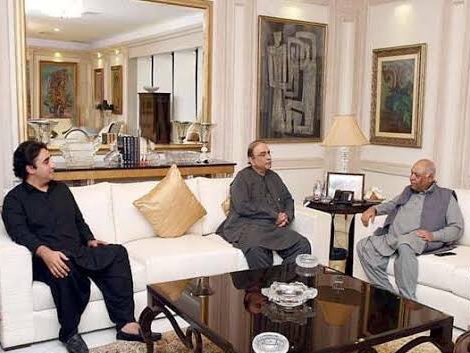
Chairman PPP Bilawal Bhutto Zardari expresses deep grief and sorrow over the death Mir Hasil Khan Bizenjo

Chairman Pakistan Peoples Party Bilawal Bhutto Zardari has expressed deep grief and sorrow over the death Mir Hasil Khan Bizenjo, chief of National Party and described this as a great loss to the country, its democratic forces and Balochistan.

In a condolence message, the PPP Chairman said that Mir Hasil Khan Bizenjo remained in the forefront in the struggle for supremacy of the Constitution and strengthening of democracy adding that he was a strong voice against injustices to Balochistan and his sacrifices would be remembered by the political and democratic workers like his father Mir Ghous Bux Bizenjo.

PPP Chairman eulogized the services of late Mir Hasil Khan Bizenjo for upholding the Constitution, restoration, and strengthening of democracy and respect and protection for human rights.  He said the death of Mir Hasil Bizenjo is not only the loss of Balochistan but for the entire Pakistan.


https://pukhtunkhwatimes.blogspot.com/

Pakistan’s enemy number one is Israel now. India can wait


Now that Israel and UAE have reached a deal, Pakistan is in a quandary again. Will friendship with it help it check India or will it betray Palestine?

Prompted by last week’s historic deal between Israel and the United Arab Emirates to normalise relations, it is that time of the year again when a discussion in Pakistan begins, rather discretely: Do we accept Israel, or not? And like all the other times, this too shall pass, or not.
Prime Minister Imran Khan has stated that no matter what other countries do, Pakistan will never recognise Israel until “Palestinians are given their right of a just settlement”. If Pakistan accepts Israel, it will have to give up Kashmir as well, because the same situation applies there. Khan’s statement came after a carefully drafted response from the Pakistan Foreign Office that the UAE-Israel deal “is a development with far-reaching implications”. Neither condemning nor commending, staying clear of creating troubles for itself with the Gulf state, while still recovering from the diplomatic fiasco with Saudi Arabia.

Pakistan, for decades, has ideologically aligned itself with the Gulf and the Arab world. So, will their warming up to Israel now make Pakistan reconsider its politics?

The star of conspiracy

After Partition, Pakistan solemnly opposed the idea of ties with Israel, despite it being the only other ideological state in the world apart from Pakistan.
For a state that Pakistan refuses to recognise, we certainly worry about Israel a bit much, and also think that it worries about us. But of course, Pakistan is the centre of the universe, and every country out there is conspiring against us. That’s why most ‘traitors’ and ‘agents’ are coloured Yahoodi (Jew) and all ‘lobbies’ working against Pakistan are Jewish. A close second winner is the Hanood (Hindu) with their R&AW agents.
Those who advocate acceptance of Israel by Pakistan often point to India and Israel’s friendly relations. To keep India’s ‘nefarious‘ designs in check and to counter it, this could be a good way forward. Such is the paranoia that half of Pakistan still believes that our country arrested an Israeli pilot on the day Abhinandan Varthaman fell in Pakistan. While the other half believes that Israeli pilots led the Indian airstrike on Balakot. One can always blame India for using Israeli bombs in Balakot, hence the confusion.
This just goes to show anything and everything Israeli is a ‘Zionist’ conspiracy. Naya Pakistan has witnessed a couple of them. A member of parliament from Pakistan Tehreek-e-Insaf (PTI) suggested ties with Israel, urging Muslims and Jews to come to a peaceful settlement. This rang alarm bells that the PTI is working on a “Jewish agenda”. Then there was the curious case of an Israeli plane landing in Rawalpindi in 2018, while Israeli PM Benjamin Netanyahu was on a visit to Oman, but the Pakistan government continued to deny it. Then Pakistan’s Immigration and Passports Office listed Israel among countries whose citizens were allowed to visit Pakistan, but later clarified it was a mistake.
The passport of Pakistan says: “This passport is valid for all countries of the world except Israel.” So, if Jewish or Christian Pakistanis want to go for a pilgrimage to Israel, what should they do? Perhaps, Navjot Singh Sidhu can help find a way to lead them to Jerusalem given his magical hug with army chief Gen Qamar Javed Bajwa opened up the Kartarpur corridor. Or else, they could get arrested like David Ariel, a Pakistani citizen who protested in Islamabad saying he wanted to travel to Israel on his Pakistani passport.

Who cares what Pakistanis think

The first leader to openly challenge the status quo was military ruler Gen Pervez Musharraf, who said that if the Palestinians and Israelis reach a peace deal, then why should Pakistan not recognise the country? In 2005, in Ankara, the foreign ministers of Israel and Pakistan held the first-ever officially acknowledged meeting, which was met with much condemnation by religious groups back home. Understandably so, because the anti-Israel sentiment has been good for rabble-rousing.
The notion that public sentiment is against any association with Israel is as accurate as the notion that Pakistanis’ emotions don’t matter when their vote is stolen. But to think that the common Pakistani has a say in foreign policy is laughable. If the winds have to change, they will change, and the jazbaat of the people will be the last thing anyone would worry about.
Before recognising Israel, it will be good for Pakistan to recognise itself. And decide what it actually wants as a State. Foreign minister Shah Mahmood Qureshi said that international relations are above religious sentiments — a thought hardly adhered to by anyone in Pakistan. For now, Israel is Pakistan’s enemy number one until Palestine is freed. This gives us a break from India for a while.

India asks international community to isolate Pakistan

India on Thursday gave a befitting reply to Pakistan at the 5th World Conference of Speakers of Parliament, and asked the international community to isolate Pakistan for sponsoring terrorism.
The Indian Parliament, led by Lok Sabha Speaker Om Birla, exercised its Right of Reply to underline that “Pakistan PM admitted there are nearly 40,000 militants on its soil. Pakistan’s aggressions against J-K in 1965, 1971, 1999 (Kargil), attack on Mumbai and Parliament, Uri, Pulwama etc. show Pakistan’s state-sponsored policy of terrorism as evident in the inaction against the likes of Hafiz Saeed, Masood Azhar and Ehsanullah Ehsan.”
The Indian authorities also said that “Jammu & Kashmir has been and will remain an integral part of India. We call upon Pakistan to end cross-border terrorism. Our overtures should not be taken as a sign of weakness.”
India’s strong reply comes amid Pakistan PM Imran Khan’s continued attempts to call an OIC meeting on Kashmir despite being snubbed by the Saudi kingdom. Khan is also believed to be aligning with Turkish President Recep Tayyip Erdoğan to form a new Islamic axis against India.
At the conference, organized jointly by the Inter-Parliamentary Union (IPU), Geneva, and the Parliament of Austria with the support of the United Nations (UN), India’s reply came during the special event on ‘Countering Terrorism and violent Extremism: The perspective of victims’ today. The reply reads:
“India exercises its Right of Reply to a statement by Pakistan, a country whose PM glorified dreaded terrorist “Osama Bin Laden” as a ‘martyr’ from its Parliament,” said the Indian response.
Indian Parliament also highlighted that the UN Analytical Support Sanctions Monitoring Team mentions Pakistan as the leading exporter of terror with more than 6,000 nationals currently engaged in terrorism. https://www.hindustantimes.com/india-news/cwc-to-meet-soon-as-clamour-for-rahul-gandhi-s-return-as-party-chief-grows/story-RydJDfEl3MqCHUsSfsarCN.html

Wednesday, August 19, 2020

Music Video - Luke Bryan - One Margarita

Video - #Biden #Harris Kamala Harris to speak at Democratic party's virtual convention

Video - Colin Powell’s full speech at the 2020 Democratic National Convention | 2020 DNC Night 2

Video - Alexandria-Ocasio Cortez seconds Bernie Sanders' DNC nomination

Video Report - #Clinton : Bill Clinton says Trump wants to pass the buck on Covid-19

Music Video - Nahid Akhtar - Zinda Rahein To Kya Hai Jo

Music Video - Naheed Akhtar - Ghunghat Uthaaloon Ke Ghunghat Nikaaloon

Video - #KhabarSayAagay #OnThisDay #NayaDaur Two Years Of Imran Khan Rule: The State Of Governance

Outrage in Pakistan after girl, six, is raped, tortured and bludgeoned to death with a stone before being dumped in a sack


A six-year-old girl has been raped, tortured and bludgeoned to death with a stone before her body was dumped in a sack in Pakistan. The child, named locally as Seema, left her home to go outside and play in the city of Nowshera, in the north of the country.But when she failed to return home, mosques played calls on their loudspeakers on behalf of the girl's parents.
People helping in the search for Seema discovered a sack in a field and called the police, Gulf News reported.
Police said that she had been tortured before her death, struck over the head and other parts of her body with a stone repeatedly.
Outraged social media users posted pictures of the girl, one with another child who is perhaps her brother, and another horrific image of the child's dead body, her face marked with bloody and blue bruises.
Human rights group Voice of Pakistan Minority, tweeted: 'Once again an angel left the Earth in pain and tears. A 6 yr old girl, Seema from Bajaur was raped and brutally murdered in Nowshera. Is this the kind of atmosphere we are creating for our children?' It is not clear whether the police have any suspects or if arrests have been made. Earlier this year the city of 120,000 was rocked by the case of an eight-year-old girl who had been raped and murdered.
The girl had gone to classes at the local madrassa in January and had not returned home in the evening. Two men were later arrested on suspicion of raping and killing the child.
https://www.dailymail.co.uk/news/article-8642715/Outrage-Pakistan-girl-six-raped-tortured-bludgeoned-death-stone.html

How can Balochistan prosper if its poor children are out-of-school and uneducated?


By: Munaj Gul Muhammad
Tariq Baloch, 13, gets up early in the morning and moves to the nearby garage in Turbat city every day so as to earn a little sum of money for the family. He uses the work tools at a very young age rather than picking up books to be at school. And schooling has not been a daydream for him since his childhood besides having the constitutional rights.
”School is not for us.” Says Tariq Baloch in tears before I put a question. “Who could buy clothes and shoes for my younger sister if I were in school? How can we survive without the basic facilities like, food-stuffs, lodging and other indispensable necessities? No one can measure the problems we are going through.” Thought-provoking, indeed.
  The expensive fee structure of the education and negligence of the government constrained the boy to work in this garage instead of securing education to lodge a comfy living. He is as poor as sometimes his family members sleep without taking a loaf of bread.

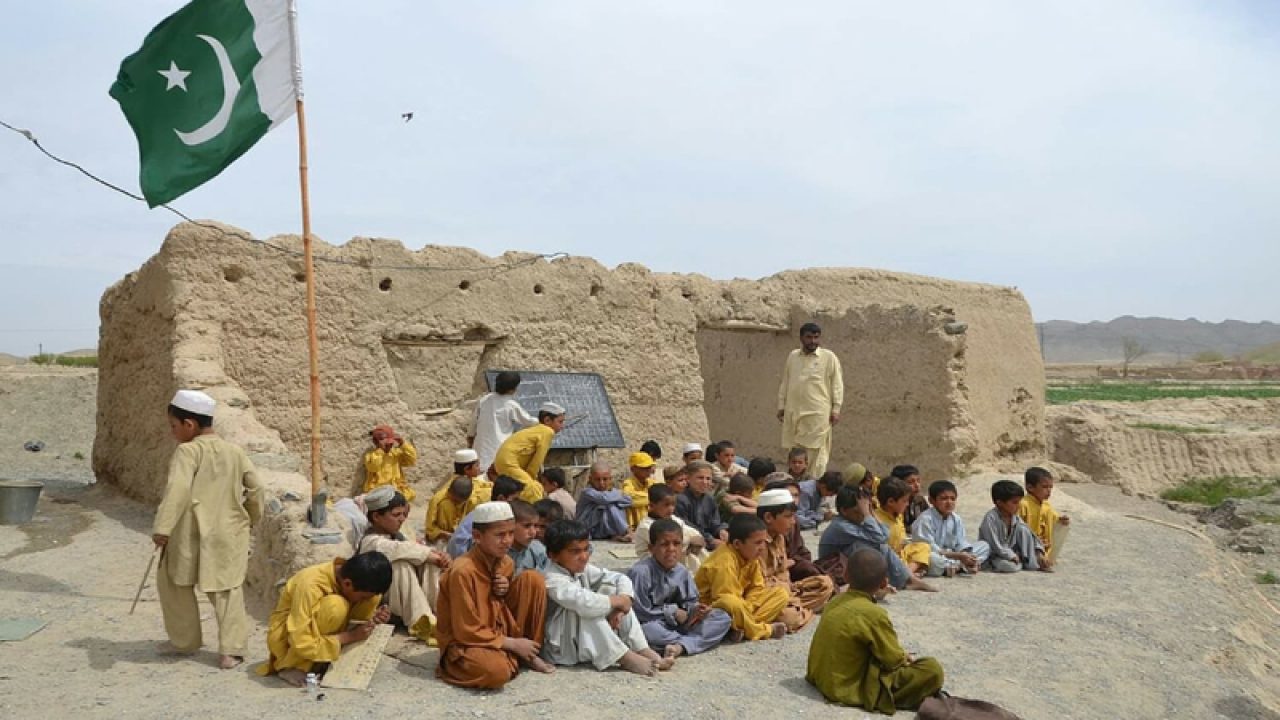
Balochistan, a resource-rich province, is confronted with a staid challenge to ensure all children to be at school and thwarting out-of-school children is another quandary in the province.
60 to 70 percent children in the province are out-of-school according to a report by UNICEF. Among which, 78% girls and 67% boys of school going age are out-of-school, the sole reason why Balochistan always has a handful number of out of school children is because Balochistan governments-in-rule have always snubbed the decades-long education emergency.
  1.8 million Children in Balochistan do not attend school, over half of whom are girls, a report by the Academy for Educational Planning and Management (AEPAM) says.
In Balochistan mainly girls are out-of-school owing to the gender-based discrimination and regressive societal norms. The dismal state of education, expensive fee structure, and apathy of the government are the other reasons for the great drop-out of the students in the province.
“If my daughters were able to be enrolled in any school in the area someday, it could be the happiest day of my life.” Says Mahtab Baloch. “A fraction of unfortunate and indigent daughters of the soil end their lives up without stepping into schools.”
Correspondingly, the non-functional schools and absence of ultimate amenities in the schools are the main drives behind the rife unenrollment of the school-going children; therefore, the province has been home to the highest proportion of illiteracy among girls. Getting the out-of-school children into school is the constitutional duty of the government which remains unaddressed.
 1, 1627 primary schools are registered in Balochistan, of which 1,271 are middle schools and 947 are high schools as per as a study by Alif Ailaan. The study highlights that each year 165,869 girls are enrolled in the primary section, of which the number drops to 44,076 in the middle section and 20,015 in the higher section.
The absence of rudimentary education always impedes progress of the society so as the province grieves from the plagues.
” Whenever I see children going towards schools having bags and wearing uniforms, I wish to get my children enrolled in a school, but forlornly, we cannot go to a lot of expenses to educate our children well since we are paupers,” complains Bibi Gangi.
Her children are out of school and have no other options besides opting work tools at a very young age. They are abused and beaten.
According to the annual report citizen-led household ASER Survey 2018,“In Baluchistan, the proportion of out-of-school children has improved as compared to 2016 but 28% children are still not going to school and the province has recorded overall 7% increase in enrollment.”
Visiting a friend in Mand, district Kech, a few months ago, I was dazed to see the government primary schools in scruffy state. The education minister of Balochistan has on no occasion taken decent steps to bring out-of-school children into school and address the longstanding education crisis in the province.
The education crisis in Balochistan would not come to an end until and unless a basic education is accessible for all. The government had better show its commitment to tackle the problem of ghost teachers and absenteeism of teachers by applying biometric system and ensure that all children are provided with free textbooks and uniforms besides basic amenities in schools.