Wednesday, August 19, 2020

Matiullah Jan: Critical journalists 'routinely threatened' in Pakistan

For journalists in Pakistan, criticizing the establishment can have dire consequences, says Matiullah Jan in a guest opinion for DW. The Islamabad-based journalist was kidnapped and beaten last month.
As a Supreme Court reporter in Islamabad, I have been caught in the crossfire between independent-minded judges and Pakistan's powerful military establishment.
Last month, I was kidnapped, tortured and released by a group of unknown assailants. The incident came a day before I was due to appear in court over a tweet I wrote criticizing the Supreme Court. At the hearing, the judge didn't believe that I was abducted.
Pakistan today may seem like a democracy for rest the world, but to many Pakistanis it is not.
Political activists, social media bloggers and journalists who are opposed to the military establishment's role in politics are being subjected to draconian cybercrime and anti-corruption laws used to silence them.
Although there is a democratic government in the country, activists and journalists are still being abducted and forced to change their opinions in what has sarcastically come to be known as a "software update" — if and when they are released.
Even before Khan came to power, Pakistani journalists faced threats and intimidation from both sides of the civil-military divide.

Threats to journalists and forced censorship

Many journalists confirm on the condition of anonymity that they are harassed and threatened by security agencies directly, or through their employers, for stories and social media posts.
In some cases, journalists are picked up the street and driven around by unknown assailants for a "short course on patriotism."
Certain media groups are known for backstabbing and throwing journalists under the bus when there is a "complaint" from "above."
Some journalists, writers and anchors get a slap on the wrist, while others are kicked out the door.

Years of harassment and intimidation

I personally have experienced 10 years of harassment and intimidation for my critical work as a journalist. None of these incidents were investigated by police.
In one incident, my car was attacked with bricks as I drove with my family. My picture had been shown by a military spokesman at a press conference, and I was accused of being part of an anti-military, anti-state network.
Before the 2018 elections, I was warned about a potential terrorist attacks targeting me and other journalists.
I faced an undisclosed government inquiry for posting murdered Saudi journalist Jamal Khashoggi's image as my social media profile picture during a visit of the Saudi crown prince to Islamabad.
My talk show was also shut down, and my family and I have been followed and harassed. The latest incident involved a tweet criticizing the Pakistani Supreme Court. I was charged with contempt of court.

Kidnapped in broad daylight

On July 21, the day before I was due to appear in court for the contempt proceedings, I was dropping off my wife at the school where she teaches. I parked my car outside the building, and was reading through some documents and making calls in my car, when a white vehicle with police lights approached me.
A bulky man in civilian clothes got out, opened my door, and pulled me out of my car and said, "Come with us."
I tried to resist as several uniformed police personnel with "anti-terrorist" squad written on their clothes jumped out of other vehicles that had joined the scene.
They manhandled me into one of the vehicles. As we drove off, some uniformed police officers grabbed me by the neck and arms, pushed my head towards my knees and handcuffed me.
They then blindfolded me, put a black hood on my head and started hitting me on the back as I gasped for air.
I told them I couldn't breathe, and they kept shouting: "Keep quiet, why do you do all this? Now we will teach you a lesson."
After a 30-minute ride, I was taken out of the vehicle and thrown down onto concrete. I could hear the sound of iron gates opening and shutting. I assumed we were in some kind of prison.
Beaten in a police jail
Fully blindfolded, hooded and handcuffed, I was then hit with a wooden stick on the back and legs and punched in the head.
I repeatedly tried to tell them that I had been summoned by the Supreme Court of Pakistan for a hearing the next day. If failed to make it, I would be in big trouble
My assailants were unmoved. I asked them if they wanted something from me, and they said: "You are an educated and wise man. You know better."
They also named some of my children and asked about their whereabouts. Before leaving, they put the blindfold on my forehead rather than the eyes. I think they wanted me to see the surroundings, which was an official police jail.
I kept asking them to inform my wife and children that I was alive. But they ignored me and continued to threaten me with serious injury like breaking my nose and teeth.
After few hours, I was again blindfolded, handcuffed, and my mouth was taped. I was carried outside the jail and thrown into what felt like a big vehicle with leather seats and air conditioning.
After about an hourlong journey the vehicle stopped on a quiet side street, someone pulled me out of the vehicle and I was dragged out.
I heard one of my assailants say, "This guy is not Zarak Khan," and that there seemed to have been a mistake.
One of the guys took off the handcuffs behind my back, and I heard them run away.
Pakistan's legal system 'abducted'
I sat up, removed my blindfold and hood and saw I was alone on a dark street. I walked towards the main road nearby where traffic was visible.
I borrowed a phone from a passing pedestrian and called my brother to pick me up. I was glad to see my family, and they were relieved that I was alive.
I was told that the national and international media and political groups reacted to my kidnapping in an unprecedented way. The public pressure may have been too much for my abductors.
The next day when I appeared before the Supreme Court to face the contempt of court allegations, the judge in his order described the incident as an "alleged abduction."
This reopened the wounds of the torture I had experienced the day before. No wonder, many people believe that Pakistan's entire legal system has been abducted.

#Pakistan #Balochistan - Hyrbyair Marri’s interview - independent #Balochistan

Interviwer Mark Kinra
Hyrbyair Marri is a Baloch nationalist activist and one of the most influential members of the Baloch community. He currently lives in London, UK. The fifth son of Nawab Khair Bakhsh Marri, Hyrbair Marri is the founder of Free Balochistan Movement (FBM), a political party working towards the goal of an independent Balochistan.
In an online interview, I spoke to him about Balochistan’s freedom struggle, the BLA, China’s presence, expectations from India, and sovereignty and nationhood in South Asia. Excerpts:
When and why did you leave Balochistan?
In December 1999, I was visiting London for some personal work, when [Gen. Pervez] Musharraf slapped charges of murder of Judge Nawaz Marri against me and my family. By murdering a member of our tribe and charging us with it, they tried to kill two birds with one stone.
The main reason, however, was that previously they had approached my father [the late Nawab Khair Bakhsh Marri] with a proposal to explore gas and petroleum reserves in the Marri tribal area of Balochistan, which we had rejected. The land and its wealth belong to the Balochs and these false murder charges were their reaction to our rejection.
They arrested over 500 people, mostly from the Marri tribe, and jailed my father for 18 months. It was a collective punishment, politically motivated for economic gains. The case is still going on; it’s been 21 years and the ‘speedy’ courts of Pakistan as they call them have still not passed judgement.
Meanwhile, they lodged and dropped about 2-3 dozen cases against me. This was blackmail – they would lodge a case, then I would get requests for reconciliation and return to Balochistan, offering me a [government] position and political standing. I would refuse.
They issued an Interpol red notice against me and in London, tried me in an anti-terrorism court. Pakistan has tried hard through blackmail and threats, but thankfully, I still stand for my cause, our freedom, our rights, and our community, and continue working for them.
So, in the last two decades, you have not returned to Pakistan?
I have nothing to do with Pakistan. I am native to Balochistan, and if I go, I will go to Balochistan. So, no, I haven’t been to Balochistan after 1999.
There are many militant organisations in Balochistan fighting for its independence. Why has the US proscribed only the BLA?
Around 1996-1997, when the call and efforts for independence picked steam, it was BLA who organised everyone and worked for Balochistan’s independence. Pakistanis fear BLA’s grassroots connect and local support. In the early 2000s, they got Britain to proscribe BLA.
During US-Taliban negotiations, one of the points on the agenda was to ban BLA.
Both Pakistanis and Americans acknowledged this. Pakistan pushed its agenda through Taliban; Taliban became Pakistan’s mouthpiece and pressurized the US. Also, Zalmay Khalilzad (US Special Envoy to Afghanistan) stated that the Balochs must not be supported. The truth is, Balochs are not being supported. If they were, by Americans or Afghans, things would move ahead.
At that time, I had tweeted to the Americans to not heed the Taliban. However, the US ignored us – a secular, tolerant organisation created for Balochistan’s defence and not against any language, community, or religion.
Instead, it chose to listen to the Taliban, the exact opposite, who is against different languages and communities, who kills a Tajik for being a Tajik, Shia for being a Shia, Hindus and Christians for their religions.
The US listened to Pakistani generals, who take their money and along with the Taliban, kill their soldiers, and ultimately proscribed the BLA. This is unfortunate and they will suffer in the long term.
One of the main reasons why Balochistan’s struggle lacks international coverage is because it is scattered and the Balochs don’t have a leader like Mahatma Gandhi who would unite all Balochs in one solid front. What do you think about this?
The enemy [Pakistani establishment] has created this disunity. In the process, they have spent billions of dollars and bribed people with land and powerful positions, just like British used India’s wealth and people to keep Indians as slaves for two centuries.
Mahatma Gandhi wasn’t the only leader in Indian history. He was one of the leaders; Bhagat Singh, Subhashchandra Bose and Jawaharlal Nehru were there too. The culmination of their efforts plus World War II, and not Gandhi alone, won India its independence.
Some cracks are created by the enemy, some, unfortunately, are our own. Some external actors see that Balochistan is big and strategic, and sow seeds of friction in Baloch minds. When Indian politicians and journalists start using divisive terms such as “common Baloch” and “elite Baloch”, they are indirectly and unwittingly helping the Punjabis [read: Pakistani establishment] create more cracks within the Baloch community.
I would ask my Indian friends to not export the concept of ‘common’ and ‘elite’ to our community. Baloch society has a different social fabric and lifestyle – please understand it first. We are occupied by Iran and Pakistan and common or elite, we are all slaves of Iranians and Punjabis. Why would you bring out such differences if both are slaves and both are struggling?
Also, this is a freedom struggle; we are not bringing about a social revolution – Russian or Chinese Communist – here.
Would a non-violent struggle for an independent Balochistan have been more effective?
Was our independence snatched away peacefully? Or was it done using tanks, jets, and bullets, causing heavy destruction? If the takeover had been peaceful, we would have thought of peaceful solutions.
We are not using violence – we don’t want it, and we have never used it against anyone. But there is a clause in international law which gives one the right to defend oneself. The US resorted to pre-emptive strikes in Iraq when they didn’t even know if Iraq possessed WMDs or not.
They also took action in Afghanistan. With big countries, it’s self-defence and acceptable, but with smaller, weaker communities like the Balochs, its violence and crime. Balochs are against violence, but we reserve our right to self-defence to save our lives and livelihoods.
There are quite a few reports on China building a naval base at Jiwani in Balochistan. Is Pakistan, who always has an emotional take on Kashmir’s sovereignty, selling Balochistan’s sovereignty to China?
Balochistan already lost its sovereignty in 1948. Pakistan inviting China in Balochistan is like a thief inviting a dacoit to loot Balochistan together. I have heard the Turkish and Arabs are secretly coming too. Pakistan’s grip on the Balochs is loosening, so they are inviting more thieves and dacoits to join them.
The naval bases at Jiwani are not being built for Balochistan. If tomorrow, they bring their [Chinese] forces here, they will control us. But this isn’t just about Baloch sovereignty, it is a plan to control the entire region for the next 50, 100, 200 years, to checkmate the US and India and extend control over the Middle East. Once the CPEC opens, Balochs will definitely suffer, but India too will suffer long term losses.
They [China and Pakistan] have a century-long plan to counter every move of yours, but you don’t. Indians need to pressurize their leaders into thinking and working on this.
India mustn’t assume that being a US ally will solve their problems. You need to stand on your own feet. We are small in comparison, but we are openly protesting China and Pakistan’s moves. If you call yourself a regional superpower, you must behave like one and take bold decisions.
Bold moves can get you some friends like Balochistan, Pashtunistan, Sindh and Afghanistan. Based on Iran’s recent statements on Kashmir, it seems they can’t be reliable friends of yours, so you must gather other reliable allies and build good relations with them.
Whenever India and Balochistan talk, we must talk as equals. The Punjabis have played the ‘big brother-small brother’ game with us, and Britain, Russia and America tried it with the Afghans. It is a mistake. Talking to a community with respect, as equals, will increase friendship and trust. An imperialistic attitude borne out of economic strength will not work, especially in our subcontinent.
Pakistan always cries fowl over threats to its own sovereignty, but if it can forfeit Balochistan’s sovereignty to sustain Punjab, could it do so to Sindh as well?
Forget Sindh, Pakistani Punjab is ready to forfeit itself too. And they are not sovereign, Pakistani Punjab is your renegade territory. They tried to erase our already independent, separate identity. But why is India handing them a separate identity as Pakistanis, an identity which they don’t have, on a platter? What is a Pakistani?
The term has no meaning, it was simply cooked up by the British to divide India in order to weaken it and you accepted it. The British are long gone, but their decisions are still being implemented in India through Indians themselves.
Democracy is for your own people, not for outsiders. As an emerging superpower, you mustn’t accept this injustice. You have been independent for more than 70 years, why do you consider Pakistan a separate entity? Be it Sindh or Punjab, these are an integral part of India. How can you let them go?
For thousands of years ‘Bharat’ was one, how can Pakistan become a separate country? Sure, they are Muslims, but it doesn’t give them any right to be a separate country, even today there are more Muslims in India than in Pakistan.
We Balochs might be slaves, but we are at least saying we will be one united Balochistan, like we were in 1839, when Noori Naseer Khan created the current map of Balochistan. I uphold this map. Despite being slaves, we don’t accept the Goldsmith and Durand lines drawn by the British, but India is free and independent, yet it accepts the divisions. So, you need to change your mindset.
Four years have passed since the PM last mentioned Balochistan. How serious do you think PM Modi is about the Baloch cause?
It is possible that your PM is serious about what he said, but from what we saw on the ground, it did not seem so. Instead, it turned out to be more harmful. If you had checked social media 10 days after the statement, you would have seen that Pakistanis killed 60-70 Balochs each day in Kalat, Mastung and Bolan. They had screamed at us, “let us see now how your Indian friends come and save you.”
It might be undiplomatic to say this, but we are victims of circumstances and the actions of our naïve friends might have intensified our enemy’s actions against us. Your PM’s statement only led Pakistan to prepare itself better and commit more atrocities on Balochs. Between then and now, thousands of Balochs have been killed, thousands more have disappeared.
You must first decide as a nation whether you will support us or not. If not, please don’t mention us. If you tell a bluff – it might be inappropriate to use this term – to Pakistan, they will neither be afraid nor take your words seriously. Speak only if you intend to help, as only then will Pakistan, Balochs, and your own people value your words.
Previously you used to say you don’t want India’s help but now you have changed your stance. How do you expect India to support the Baloch struggle for independence?
It must be from an old BBC interview which I had protested even then. I refer to BBC Urdu as the BBC Kashmir service as it talks only about India’s actions in Kashmir. It speaks about Balochs rarely, takes our statements about twice a year, and gives no meaningful news about Balochistan.
I have faced problems with them previously. They have interviewed me and then distorted the interviews before publishing them. When I was asked if I would take help from India I had said ‘not India, all the countries of the world and India’. My intention was to highlight that I would take support from all the countries in the world and India is one of them.
We Balochs want good relations with all countries and we want them, including India, to raise the issue of Balochistan on every forum. I expect India and other countries to help us with all tools and means, everything that helps a country achieves independence. Some Indians think supporting us would anger Pakistan. If your plan is to please Pakistan, then it’s neither been happy with you in the past 70 years nor is it going to be in the coming future.
Pakistanis accuse us of taking help from India, the ‘enemy country’, however, India is not my enemy. India is my neighbour. My enemy is the Pakistani Punjabi occupying my land. Pakistanis portray us as traitors, but, in fact, they are traitors of India because they divided their country. I do not have a problem with the Republic of India and its people, but I have a problem with those Indians who divided India and presently call themselves Muslim Punjabi Pakistanis.

Monsoon Rains expose Balochistan’s Crumbling Infrastructure

Adnan Aamir
Last week, a monsoon rain alert was issued by the Weather Department. The alert warned that the seasonal monsoon rains could trigger flash floods which would be devastating for the mountainous passways and plains of Balochistan. Over the weekend, the rainfall was not more than the normal average every year, but the devastation it caused was much more than expected.
The flash floods, overflow of seasonal streams, and the collapse of mud houses have so far resulted in the death of 10 people. This number can increase as access to more areas is made available over time. This moderate rainfall wreaked havoc in Balochistan and destroyed the infrastructure of the province in several ways.
First, three major communication highways were blocked due to the flash floods. Land sliding near Fort Monroe suspended traffic on Loralai-Dera Ghazi Khan road, which is the primary road connection between Balochistan and Punjab. The Bibi Nani Bridge washed away in the rainwater in Bolan Valley, disconnecting the road link between Quetta and Sibi, onwards to Sindh. This prevented thousands of people from commuting along this highway. The Makran coastal highway – connecting Gwadar with Karachi – was blocked near Badook area where portions of a bridge were washed away by the rainwater.
An orange truck hanging on the precipice of a broken bridge was the most viral photo from the devastation caused by the flooding. This photo was taken at the Badook area on Makran Coastal Highway and it suspended traffic to and from Gwadar for more than a day. This picture embodies the broken infrastructure in Balochistan.
THIS SITUATION HAS REINFORCED THE PERCEPTION THAT CPEC IS FAILING TO IMPROVE INFRASTRUCTURE IN BALOCHISTAN
Second, the rainwater and floods damaged the main gas pipeline carrying gas supply from Sindh to Quetta and up north. The pipeline was damaged in the Bolan region and it disrupted gas supply to Quetta and cities in further north. A small portion of the city, inhabited by VIPs, was provided limited gas supply through alternative means. The majority of the residents of Quetta are without proper gas supply for the last five days. This resulted in unexpected problems for residents who were not prepared for such a situation.
This is not the first time flash floods has destroyed the main gas pipeline in the Bolan region. Still, the Sui Southern Gas Company Limited (SSGCL) has not made concrete arrangements to protect the pipeline in such a situation. It speaks volumes about the negligence of SSGCL and their lack of interest in the welfare of the people of the province. Proper maintenance of the pipeline should be enough to protect it from all sorts of floods but this does not seem to be a priority for SSGCL.
Third, rainfall disrupted electricity transmission. There was no electricity supply in major parts of Quetta for over a day. This power cut was in addition to long hours of so-called load shedding which people of the province suffer due to the flawed electricity distribution policy of the federal government.
Furthermore, Gwadar – the centre stage of $50 billion China-Pakistan Economic Corridor (CPEC) – was also badly affected by this rainy spell. As mentioned earlier, Makran Coastal Highway was blocked near the Badook region. M8, another highway connecting Gwadar with Khuzdar and onwards was damaged from multiple places due to the floods. This means that the city which is the centre stage for CPEC was completely cut off from the rest of the country. How can Gwadar be a functional port and a mega project of CPEC when moderate rain spells disconnect it from the country? The rainwater engulfed the streets and roads of Gwadar in the same way as it did in Karachi and Lahore, despite it being much smaller.
This situation has reinforced the perception that CPEC is failing to improve infrastructure in Balochistan. At a time when other provinces got Orange Line Metro Train and Karachi-Lahore Motorway Main-Line 1 Railway Project, residents in Balochistan got a two-lane narrow M8 highway, which gets destroyed by moderate rains. This situation is a legacy of the government led by the PML-N, but the current government continued with the status quo and failed to compensate for the lost share of Balochistan in CPEC.
Calamities like quarantine of pilgrims in Taftan and now these monsoon floods expose the rotten infrastructure of Balochistan. Infrastructure mainly relies on highways, energy supply, and rail networks and all of these are federally controlled subjects. This means the provincial government cannot do anything about them and the federal government is not interested in doing anything to resolve these pressing problems of Balochistan.
Another example of how the federal government has ignored infrastructure needs of the province is its refusal to upgrade Quetta-Karachi Highway (N-25). Instead, the federal government wants the private sector to build the road on Build Operate and Transfer (BOT) basis. There are many problems with this approach. First, the citizens of Balochistan using this road will have to pay for the construction of this road for decades to come in the form of exorbitant toll taxes. Second, it is too early to assume that the private sector would even agree to this project because some portions of this 790 km highway might not be economically feasible for such an arrangement. The ideal solution to this problem could have been financing it through CPEC but the PML-N government and its nationalist allies from Balochistan back then did not show interest.
The main priority for governments in Quetta and Islamabad should be to upgrade the infrastructure of the province. Without proper infrastructure, Balochistan can never develop and it will act as a stumbling block for all mega projects such as CPEC.
https://balochistanvoices.com/2020/08/monsoon-rains-expose-balochistans-crumbling-infrastructure/

India's growing stature in Islamic block gives sleepless nights to Pakistan

Recently, Saudi Arabia insulted Pakistan as Crown Prince Mohammed bin Salman refused to meet Pak Army chief General Qamar Javed Bajwa, who reached there to apologize on behalf of his country.
Prime Minister Narendra Modi's foreign policy has enhanced India's diplomacy stature on global forums. His farsightedness has not only won several friends in the Islamic block, where Pakistan so far had a greater presence but has also increased its influence among Muslim countries through trade and strategic partnership.
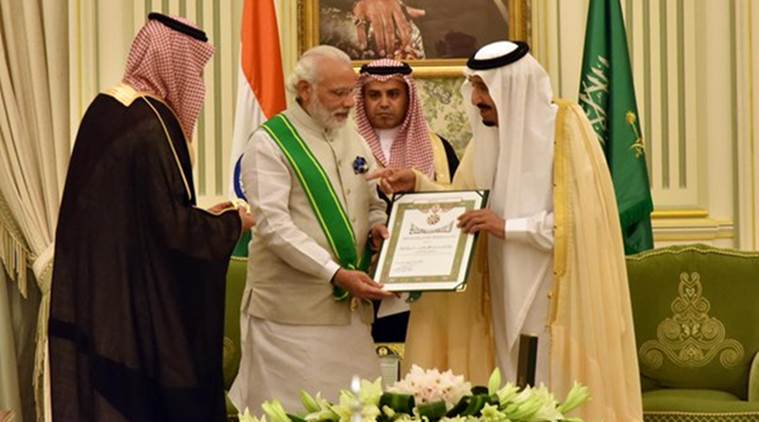
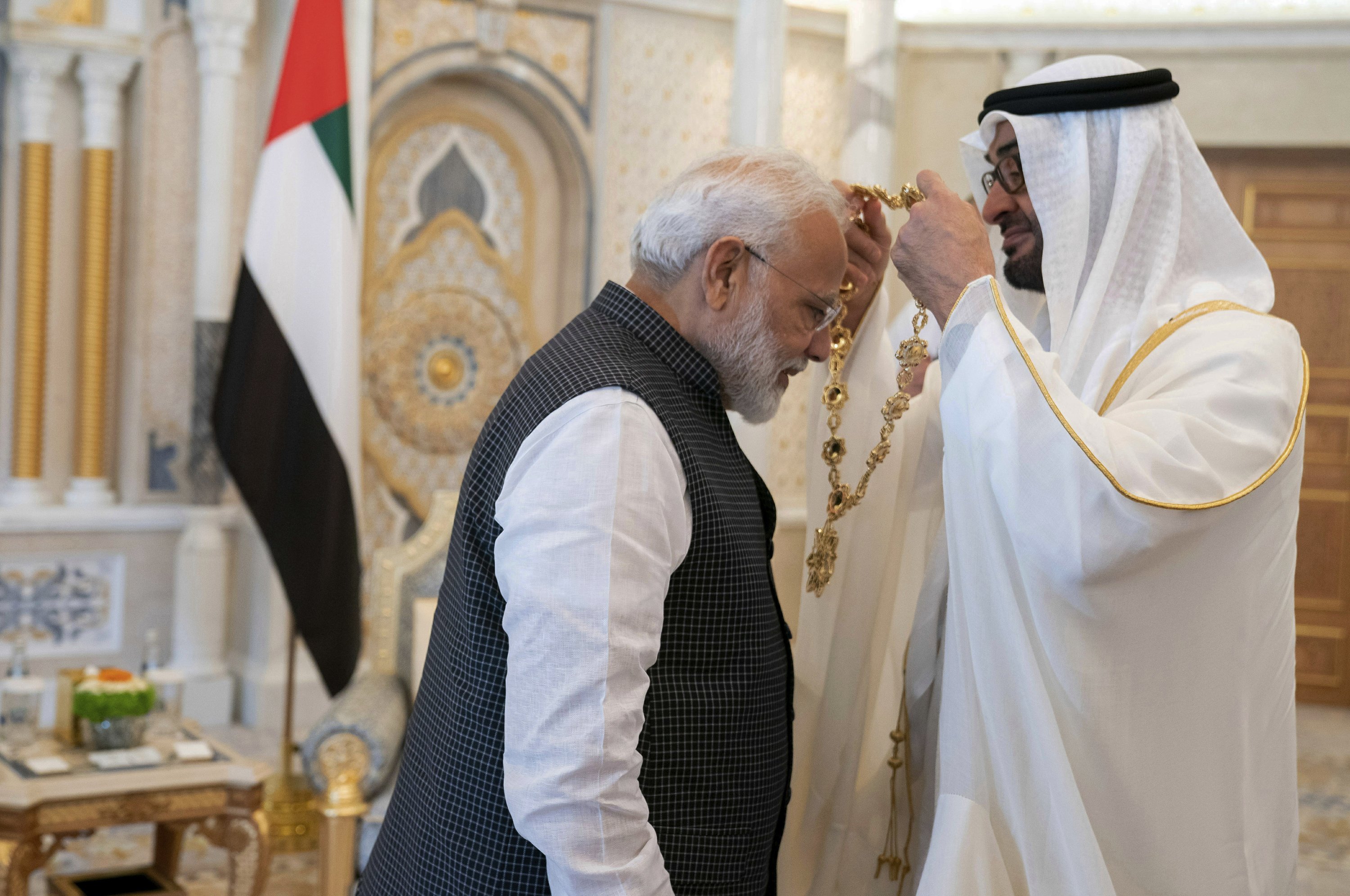
So far, six Muslim countries have awarded their highest civilian award to Prime Minister Narendra Modi. In 2016, Saudi Arabia gave PM Modi its highest civilian honour King Abdulaziz Sash Award. UAE also honoured Prime Minister Modi with its highest civilian honour, Order of Zayed Award in 2019. Other nations include Bahrain and Maldives in 2019, Palestine in 2018, and Afghanistan in 2016. All these honours show Prime Minister Modi's close relations with these Islamic countries.
On the contrary, Pakistan is being snubbed on international fora due to its anti-India narrative. Recently, Saudi Arabia insulted Pakistan as Crown Prince Mohammed bin Salman refused to meet Pak Army chief General Qamar Javed Bajwa, who reached there to apologize on behalf of his country. General Bajwa was accompanied by ISI chief, but Saudi Arabia ruler did not spare time to meet them despite their repeated requests and they returned empty-handed.
Saudi Arabia's royal snub to Pakistan is symbolic of changing equations in the Islamic world. Notably, there are 53 countries in the world where Islam is the largest religion, and Saudi Arabia is considered the most powerful among these nations. There are three big reasons for this:
The first reason is that Saudi Arabia has 18 percent of the world's oil reserves; Secondly, it has a very strong economy among the Arab countries. The third and the most important reason is that Saudi Arabia is the center of Islam religion because of Mecca and Medina, which are considered the most sacred places for global Muslims.
Except for Qatar, Kuwait, and Iraq, Saudi Arabia enjoys good relations with all other countries in the Arab League, and 20 percent of the Muslim population of the world live in these Arab countries.
Pakistan too is a member of the Organization of Islamic Cooperation (OIC). It is second in the world in terms of the Muslim population, after Indonesia, and is the only Islamic nation with nuclear power. Because of this reason, many Islamic countries don't dare go against Pakistan and often support it.
The situation has now changed as Saudi Arabia and Pakistan came face to face on the issue of India, and the former refused to stand with Pakistan. The DNA report will let you know why this happened and how India managed to win Saudi Arabia's favour.
On August 5, the completion of one year of the removal of Article 370 from Kashmir, Pakistan Foreign Minister Shah Mehmood Qureshi stated that the OIC and Saudi Arabia are not supporting Pakistan on the Kashmir issue. He also threatened Saudi Arabia that Pakistan is always ready to sacrifice for Mecca and Medina, but Saudi Arabia does not listen to Pakistan. He urged Prime Minister Imran Khan to go ahead on this issue alone and stop trusting Saudi Arabia.
After his statement, Saudi Arabia asked Pakistan to return the loan amount of Rs 7500 crore. Shocked Pakistan borrowed from China to repay the debt. In 2018, Saudi Arabia has a loan of Rs 46000 crore to save Pakistan's economy. Reports say that Saudi Arabia has also sought the repayment of another installment of Rs 7500 crore from Pakistan. Shah Mehmood Qureshi's statement of 15 seconds on Saudi Arabia has cost Pakistan Rs 15000 crores.Qureshi later tried to control the damage citing his country's historical relations with Saudi Arabia, but it was too late. Saudi Arabia even ended the contract to sell oil to Pakistan.This is a big diplomatic victory for India as this is the first time when Arab nations have supported India on the issue of Kashmir. Pakistan also failed to call a high-level meeting of OIC to put forth its anti-India agenda through Kashmir. India has managed to separate Pakistan from Arab block which now stands with India like a rock.
This development has shocked Pakistan. Pakistan Army Chief and ISI Chief were sent to Saudi Arabia in a huff to control the damage but were snubbed. Experts believe that Pakistan is also showing its back to Saudi Arabia at the behest of China, which wants Pakistan to emerge as the leader of the Islamic world.
In an interview, Pakistan Prime Minister Imran Khan, however, claimed that his country's ties with Saudi Arabia are still strong and he is rather trying to connect the Muslim world. "The rumours that our relations with Saudi Arabia have soured are totally false," Khan said told Dunya News television channel, adding "Our relations are very good. We are constantly in touch."
"On the Kashmir issue, there is a view that OIC should have stepped forward," Khan said, adding "Saudi has its own foreign policy. We shouldn`t think that because we want something Saudi will do just that."
He also rejected any possibility of establishing diplomatic relations with Israel. "Our policy on Israel is clear: The Quaid-i-Azam (Muhammad Ali Jinnah) had said that Pakistan can never accept the state of Israel until the people of Palestine get rights and an independent state," Imran Khan added.Imran Khan further said, "If we recognise Israel and ignore tyranny faced by the Palestinians, we will have to give up Kashmir as well, and this we cannot do." His remarks came in the backdrop of recent peace overtures between the UAE and Israel, with the former becoming only the third Arab nation to enter into a peace deal with the Jewish state.On the UAE's ties with Israel, Khan said that every state had its own foreign policy. Khan, however, praised Pakistan's ties with China and said that the country's future was linked to China which stood with it in all difficult times.
Pakistan currently has an international debt of Rs 43 lakh crore, comprising 90 percent of its GDP. Pakistan pays an interest of Rs 1.60 lakh crores every year. In such a situation, Pakistan has to pay a heavy price after losing the support of Islamic countries.
https://zeenews.india.com/india/indias-growing-stature-in-islamic-block-gives-sleepless-nights-to-pakistan-2303970.html

Chairman PPP Bilawal Bhutto Zardari appreciates PPP workers’ spirit who recorded peaceful protests in every district headquarters to express their anger against the anti-people and anti-economy policies of PTI’s govt.

Chairman Pakistan Peoples Party Bilawal Bhutto Zardari said that successful protest demonstrations by the PPP workers across Sindh province against PTI government’s conspiracies against 1973 Constitution, 18th Amendment, NFC Award and its failure to control load-shedding of long durations, inflation, price-hike of utility commodities, unemployment and poverty should be an eye-opener for the PTI regime.
In a statement, the PPP Chairman said that PPP workers recorded peaceful protests in every district headquarters to express their anger against the anti-people and anti-economy policies as the PTI’s Federal government has dragged the nation into a quagmire of despair and hopelessness.Bilawal Bhutto Zardari said that PPP is a democratic Party and it would apply all the democratic and peaceful means of protests against the highhandedness of PTI’s selected regime against the masses of the country.
He said that PPP has served this country and lost its leadership and thousands of workers during its struggle for the basic human and democratic rights of the people and it would continue the legacy under every situation.PPP Chairman appreciated the spirit of the Party workers for holding completely peaceful protests as not a single stone was thrown during the province-wide protests and warned the PTI government to read the writings on the wall and desist from conspiring against the people, their unanimous constitution, 18th amendment, NFC Award and pursuing anti-people policies otherwise the protests can be expanded to the Tehsil and UC levels.
https://www.ppp.org.pk/pr/23565/

Tuesday, August 18, 2020

Video - DailyShow #TrevorNoah #DNC The DNC Kickoff & Trump’s Boat Parade | The Daily Social Distancing Show

Video Report - #Coronavirus #WorldHunger #Covid19 After COVID: A global hunger pandemic? | COVID-19 Special

Video Report - #DNC20 Your 2020 Democratic National Convention questions, answered

Video Report - Former Trump official backing Biden says others will speak out

Video Report - Michelle Obama Complete Remarks at 2020 Democratic National Convention

Urdu Ghazal - Malika Pukhraj, Tahira Syed - Abhi To Main Jawan Hoon

Video Report - #NayaDaur #TajJoyo Can't Accept Presidential Award When Citizens Are Being Disappeared: Taj Joyo

Video Report - #NayaDaur Shah Mahmood Qureshi Slaps Principal Secretary Azam Khan | Claims AbbTak News

China Appears To Increase Foothold In Strategic Port In Pakistan

H I Sutton

China has a commercial and political interest in developing the port of Gwadar in Pakistan. It is of strategic importance because it will provide Beijing with a port facility connected to China by road and rail that bypasses the Strait of Malacca. In wartime, that narrow choke point between the Malay Peninsula and the Indonesian island of Sumatra could be closed off by the Indian Navy. Gwadar is also believed to be a possible future overseas base for the Chinese Navy, adding to the existing one in Djibouti on the Horn of Africa. Now new buildings point towards the next phase of China’s development at the port.
Open-source intelligence reveals that a third new site of interest has been constructed in the past few months. Twitter account d-atis, which monitors Asian defense topics and specializes in image intelligence, shared a tweet showing the three sites. These have characteristic blue-roofed buildings which contrast with existing local building materials and styles. They are seen as a leading indicator of the next stage of port construction.
Construction of the first site, nearest to the port facility, began around May last year. The first of the blue-roofed buildings appeared there in June 2019. Then the blue roofs appeared at the second site, farther north, in September 2019. The land at the third site started to be prepared in January this year and the blue roofs were substantially completed in July. These later two sites are nearer to the heavily defended Chinese compound built at the anticipated northern end of the new port.
This newest site is behind the local hospital. Construction started in January this year. Its proximity to the hospital raises the question of whether it is pandemic related. It was started over a month before Pakistan registered its first case, however, and it appears to be a separate compound, so it is unlikely that it is a coronavirus related extension.
It has been suggested that these sites are barracks for Chinese military. Given the comparatively low security, this seems unlikely. A more prosaic possibility is that they are accommodation for workers to construct the next phase of the port development. This may include a Chinese naval base.
Chinese investment in the port is part of the wider Belt and Road initiative. It will be connected to China by road, rail and pipelines. This wider project is known as the China-Pakistan Economic Corridor (CPEC) and may take until 2030 to fully put in place.

The naval aspect may have impact, however. If China does indeed base warships or submarines there, possibly as part of a future Indian Ocean Squadron, it could alter the naval balance in the region. For this reason analysts will be watching the construction of these blue-roofed camps very closely.

PPP will not compromise on 18th Amendment: Bilawal Bhutto

PPP Chairman Bilawal Bhutto Zardari said on Monday that the National Accountability Bureau can arrest his entire family but it still won't deter him from changing the PPP's stance on democracy, the National Finance Commission and the 18th Amendment.
The PPP chairman was addressing media outside an accountability court on Monday where former president Asif Ali Zardari had attended a hearing related to the Toshakhana reference.
Bilawal alleged that his lawyers were not allowed to go inside the court. “The public and lawyers were not allowed to come to the court. Is this an attempt to pressurise us or the judiciary,” he asked.
“Are you so afraid of president Zardari?” said Bilawal, adding that the “entire police” of Islamabad was deployed at the court's premises. Bilawal said that the government can do whatever it wants but the PPP will not compromise on the 18th Amendment.
“We are feeling that there is pressure on us, we are being threatened so that we can tow the same line,” he said.
The PPP chairperson accused police and administration of misbehaving with the people.
“Today is August 17, every jiyala remembers August 17,” said the PPP chairman, calling it a “mango day” in reference to the plane crash of former military dictator Zia-ul-Haq.
Bilawal continued that there was a “puppet” sitting in the Prime Minister House and “his strings are being operated from elsewhere”.
The PPP chairman warned that attempts were being made to control everyone like a puppet.
“PPP has faced the dictatorships of Yahya Khan, Zia-ul-Haq and Musharraf,” said Bilawal.
The accountability court hearing the Toshakhana reference against former president Asif Ali Zardari will frame charges against the PPP leader on September 9. Today, Zardari appeared before the accountability court to attend a hearing in the reference. Due to the COVID-19 situation, the party leadership had advised workers not to attend his hearing. As soon as the former president arrived in the courtroom, Bilawal called upon party workers present to leave the premises. He urged even the attorneys' assistants to leave the courtroom due to the prevalent COVID-19 situation.
The NAB reference filed against Zardari and former prime minister Nawaz Sharif accuses them of obtaining the cars from Toshakhana (gift depository) by paying 15% of the price of the cars.

 https://nation.com.pk/17-Aug-2020/ppp-will-not-compromise-on-18th-amendment-bilawal-bhutto

Monday, August 17, 2020

#Pakistan - Two years of #PTI’s rule - PTI’s incompetence in handling the economy during its first year in office

  • Dangers of making opposition desperate
It is incorrect to blame coronavirus alone for the country’s economic woes. Thanks the PTI’s incompetence in handling the economy during its first year in office, fiscal deficit in first three quarters peaked to five per cent of GDP as expenditures broke past records and revenue performance was the lowest almost in a decade. Last year imports shrank, exports stagnated, and FDI plummeted. This year PTI’s inability to comprehend the ways the hoarders and smugglers manipulate the prices in Pakistan led to rise in the prices of wheat, sugar and most of the commodities of daily use. What was left was accomplished by coronavirus
Coronavirus entered Pakistan through Iran due to the failure to arrange proper quarantine facilities in Taftan. A government out to please the religious lobby then allowed the Tablighi Jamaat to hold its multinational gathering in Raiwind thus further facilitating the spread of virus. The permissions given during Ramzan and Eid spread the pandemic all over the country. It goes to the government’s credit though that it has managed to bring down the number of positive cases and the death rate. Its failure to impose the SOPs and leaving everything to the people’s choice can again multiply infections. The government has to learn from other countries who after remaining coronavirus free for weeks are witnessing a spike in it
Unemployment on a massive scale not seen before combined with a spike in the prices of commodities of everyday use can act as a tinderbox.
Kashmir issue has been mishandled. Instead of raising the issue at world forums and international think tanks and displaying films about atrocities in IHK, PTI confined itself this year to holding walks in Pakistan and preaching to those at home who are already converted. FM Qureshi’s indiscreet remarks regarding Saudi Arabia have created a problem for Pakistan
The PTI has continued its policy of persecuting the opposition leaders through NAB. It has also bypassed the parliament to rule through ordinances; 33 this year compared to 6 last year. The PTI MNAs generally respond with personal attacks instead of giving convincing answers to those criticizing government policies.
This is making the opposition restive which can confine itself to parliament or take to the streets. Much will depend on the PTI’s behavior.

Is Pakistan Losing Saudi Arabia?

By Sudha Ramachandran

Pakistan’s relationship with Saudi Arabia, which has been its friend and benefactor for decades, is in trouble. Last week, Pakistani Foreign Minister Shah Mehmood Qureshi warned the Saudi-led Organization of Islamic Cooperation (OIC) that if it didn’t convene a meeting of the OIC’s Council of Foreign Ministers to discuss India’s abrogation of autonomy to Jammu and Kashmir on August 5 last year, Pakistan would go ahead to call a meeting of Islamic countries that would stand by it on the Kashmir issue.
In effect, Qureshi was threatening the OIC and the Saudis that Pakistan would go outside the OIC to convene a session on Kashmir.
The Saudis didn’t take kindly to Pakistan’s hectoring and have cracked the whip. They forced Pakistan to return $1 billion recently, which Islamabad repaid after Beijing came to its rescue. The two sides are now locked in tough negotiations for repayment of the rest of the debt.
In 2018, with Islamabad facing a current accounts crisis, the Saudis had extended Pakistan a $6.2 billion package, which included $3 billion in loans and oil on deferred payments worth $3.2 billion. In addition to calling in the loans, Riyadh has frozen the oil credit facility.
This is a major development.
Saudi-Pakistani relations have been strong for decades. Riyadh has been among Pakistan’s strongest supporters on the Kashmir issue and the two have been allies for decades in the Afghan conflict. Saudi Arabia is also the source of 50 percent of Pakistan’s oil imports and the two countries have strong defense ties too.
Saudi Arabia is also a major source of financial support for Pakistan. Indeed, rarely has Pakistan paid back these loans. That the kingdom is now expecting repayment marks a shift in the bilateral relationship.
There are several reasons for the souring relations. Saudi Arabia is not happy with Pakistan fraternizing with countries like Iran, Turkey, and Malaysia, which are rivals to Riyadh’s leadership of the Muslim world. Last year, Pakistan showed much enthusiasm in the planning of a summit of Islamic countries in Malaysia. That drew Saudi ire. Crown Prince Mohammed bin Salman, who allowed Pakistani Prime Minister Imran Khan to ride in his private jet to attend the United Nations summit in New York, abruptly withdrew the jet for the return flight. An embarrassed Khan had to return home on a commercial flight. Khan subsequently stayed away from the Malaysia summit as the Saudis are reported to have warned Pakistan of economic costs.
Another important reason for Saudi Arabia cracking the whip on Pakistan is its strengthening economic and security relationship with India over the past decade. Riyadh and New Delhi are now working together even on counterterrorism issues, which would have been impossible even a few years ago, given Saudi Arabia’s long-standing endorsement of Pakistan’s policy of supporting anti-India terrorist groups.
With its ties with India on the upswing, the Saudis would like to avoid raising the Kashmir issue. There is nothing to be gained from doing this, and a sure price to be paid in its relations with New Delhi. Hence, Riyadh has repeatedly refused to call a high-level meeting on Kashmir at the OIC.
So what lies behind Qureshi’s tirade? Is he trying to position himself in Pakistan’s domestic politics as the most vociferous champion of the Kashmiri cause? His rant could be aimed at showing up Khan’s ineffectiveness in showing results on the Kashmir issue over the past year. He could be trying to impress the military, which is known to favor a hard line on Kashmir and is said to have become increasingly impatient with Khan.
Qureshi has said that his comment was his personal opinion. However, the Pakistan foreign office subsequently endorsed his position. It is unlikely that Qureshi would have made a provocative statement relating to a key ally without the blessings of the military.
Pakistan’s army chief, General Qamar Javed Bajwa, is heading to Saudi Arabia this weekend. Will he be able to smoothen ruffled feathers in Riyadh? New Delhi will be watching.

Pakistan Threatens To Divide The Islamic World – Analysis

By Dr. Subhash Kapila
Pakistan in run-up to its Independence Day 14 August 2020, in characteristic propensity to box much above its geopolitical weight, directly threatened Saudi Arabia heading the Organisation of Islamic Countries (OIC) that should it not convene an OIC Foreign Ministers Meet on Kashmir, then Pakistan would convene he same with Non-Arab Muslim countries.
Pakistan’s Foreign Minister’s impetuous threat of convening an OIC Foreign Ministers Meet on Kashmir, independent of OIC, alluded to the Non-Arab Islamic nations of Turkey and Malaysia presently in cahoots with Pakistan including vocalising Pakistani stances on Kashmir.
The Pakistan-Turkey-Malaysia Bloc (PTM) spearheaded by Pakistan needs to be taken note of by the Islamic World as yet another divisive step against unity of the Islamic Ummah which is already riven by Islamic sectarian rivalries and geopolitical regional power tussles.Should this development be of diplomatic concern to India? India does not have to be concerned except to the extent of keeping PTM further developments especially on Kashmir and pre-empt PTM political mischief on Kashmir-related and Islamic-related meddling to embarrass India.Pakistan’s insidious attempts to divide the Islamic World not on sectarian Sunni-Shia divide but on Islamic ethnicities of Arab Islamic nations and Non-Arab Nations indicates to what extent Pakistan can stoop to in pursuit of its controversial political objectives which are India-centric.
Regular readers of my S AAG Papers would recall that in February 2020 I had pointed out Pakistan’s insidious attempts to form a Non-Arab Muslim Group of Islamic Countries to counter Arab domination of the OIC. Please refer to “Pakistan-Turkey-Malaysia Bloc Challenges Arab Domination of Islamic World’.
Following my above quoted Paper, some weeks later an Israeli columnist came out with a column in an Israeli paper on similar lines but with Iran also added to the PTM Bloc. That added grouping has inherent contradictions as while Iran may be a Non-Arab Islamic nation but it cannot be forgotten that Iran is an Islamic Shia nation and the Sunni-Shia divide in Islam is virtually unbridgeable. The PTM Bloc comprises of Sunni nations only.
The above quoted paper of mine carried out a detailed analysis of the impulses which prompted the emergence of the PTM Islamic Bloc, the present preferences of the PTM Bloc towards China as opposed to the United States and a predictive assessment on the longevity of the PTM Bloc. Hence without a repetitive recounting of the analysis of the above quoted Paper, this Paper would confine itself to an analysis of factors in play on Pakistan’s present threat to Saudi Arabia.
Needless to state that such an outburst by Pakistan’s Foreign Minister Shah Mehmood Qureshi was extremely reckless when Pakistan’s economic survival is dependent on Saudi Arabia financial largesse and from other Arab Muslim countries.Pakistan’s threat was asserted publicly by its Foreign Minister Qureshi intensely piqued by Saudi Arabia’s reluctance to afford Pakistan a forum to castigate India on Pakistan’s controversial perpetuation of Kashmir issue.Contextually, it needs to be recalled that the Malaysian PM Mahathir had convened a PTM Meet in Kuala Lumpur some months back in which Pakistan PM Imran Khan backed out of attending after actively espousing such a Meet. This was done under pressure from Saudi Crown Prince Mohammed bin Sultan who leads the Saudi Government.
In the immediate aftermath of this Pakistani threat two significant developments have taken place. The first impact of the Pakistani threat was Saudi Arabia making Pakistan immediately pay $ 1 Billion of the $ 3Billion loan advanced to Saudi Arabia and also soft-pedalling if not stoppage of nearly $3billion of Saudi subsidised oil supplies to Pakistan. It needs to be recalled that Saudi Arabia had extended a $3 billion loan to Pakistan a year or so back and credit of $3 billion for subsidised oil supplies.
The second impact emerging yesterday was that Pakistan Army COAS General Bajwa is rushing to visit Saudi Arabia on a damage control visit and assuage Saudi Crown Prince Mohammed bin Sultan’s outrage against Pakistan’s threat to Saudi leadership of the Islamic World. At the time of writing, Pakistan Army official spokesperson has reiterated that Saudi Arabia enjoys a centrality in Pakistan’s eternal relations.
Damage control by the Pakistan Army Chief cannot undo the grievous act of challenging Saudi Arabia’s leadership of the Islamic World. Pakistan in earlier years harboured the grandiose illusion that with its over-sized Islamist Pakistan Army and as the only Islamic State with Nuclear Weapons it stood eminently qualified to lead the Islamic World.
That myth got shattered by Pakistan’s economic fragility and the dubious appellation of Pakistan as a ‘Failed State’ always hovering over Pakistan’s head. Despite the foregoing, Pakistan’s illusions still persist amongst most of its more impetuous politicians and especially in persons like Foreign Minister Qureshi who perceives himself as Pakistan’s ‘Prime Minister-in-Waiting’.
Be as it may, what needs to be analysed are the underlying impulses that emboldened Pakistan to challenge Saudi Arabia’s traditional leadership of the Islamic World represented by the OIC. Need it be stated that the foregoing arises from Saudi Arabia’s uniquely significant status as the ‘Custodian of the Holy Places of Islam’ and also the vast financial resources that back the leadership status of Saudi Arabia.
Pakistan’s Foreign Minister Qureshi who is more noted for arrogant flamboyance than prudence would not have dared to cross the ‘red lines’ in terms of official criticisms of Saudi Arabia on his own volition. Somewhere lurking behind this ultimatum on Kashmir issue would have been an implicit backing of the Pakistan Establishment and Pakistan PM Imran Khan If the Pakistan Foreign Minister threats against Saudi Arabia were a stand-alone personal frustration with Saudi Arabia for delaying Pakistan’s insistence to convene an OIC Meet on Kashmir, then one can foresee a sacking of the Foreign Minister sometime soon. Pakistan Army Chief could possibly feel that this action may be able to mollify Saudi Arabia’s outrage against this Pakistan temerity.
Noticeably, there does not emerge any public resentment amongst the Pakistani masses against Saudi Arabia’s reluctance to accede to Pakistani political leadership’s clamour for immediate convening of an OIC Meet to highlight the Kashmir issue.
In Pakistani public’s mind dominated by conservative Islamist Mullahs surviving on financial doles from Saudi Arabian charities and the nearly two million or more Pakistani expatriates from Pakistan’s economically weaker segments seeking fortunes in Saudi Arabia, such resentment against Saudi Arabia as asserted by Pakistan Foreign Minister Qureshi would find no traction.
In my assessment it is in the top echelons of the Pakistan Government represented by Pakistan PM Imran Khan and his Foreign Minister Qureshi that this impulse to forge the PTM Bloc of Non-Arab Islamic nations to challenge the Arab Muslim domination of OIC thrives most noticeably.
For the survival of Pakistan’s ruling PTI Government headed by PM Imran Khan raising the bogey of the Kashmir issue becomes currently a pressing imperative to divert Pakistan’s public discontent on PM Imran Khan’s political failures to provide a ‘Naya Pakistan’ as promised during his opportunistic political campaigning as Pakistan Army’s preferred “Selectee” for proxy governance of Pakistan. With Saudi Arabia not becoming complicit in providing an OIC Forum for Pakistan’s hyperactive salience to Kashmir issue discussions to embarrass India to gain domestic mileage within Pakistan, the Saudi lack of alacrity to concede Pakistani demands becomes irksome and frustrating for Pakistan PM Imran Khan and his Foreign Minister. Noticeably while no political resonance is available to Pakistan PM Imran Khan within Pakistan’s domestic milieu on salience of Kashmir issue at a juncture when Pakistan is groaning under economic misery and China’s Wuhan Virus19 onslaughts, the Pakistani Establishment seems to be drawing political sustenance from Pakistan’s external relationships.
Here coming to the fore are the other two PTM Bloc nations of Turkey and Malaysia and so also China which effectively today has colonised Pakistan courtesy the Pakistan Army Generals who dominate both the CPEC Chines flagship projects in Pakistan and the Pakistan Army security for Chinese workforce handling CPEC projects.
Turkey and Malaysia today are the most vociferous Islamic nations backing Pakistan on the Kashmir issue against India at various international for a through their diplomats as well as public utterances of Turkish President Erdogan and Malaysian PM Mahathir Mohammed. Malaysia continues to harbour Indian Islamic Jihadi preacher Zakir Naik facing criminal charges in India and refuses his extradition. Turkey and Malaysia besides being anti-Indian in their political stances akin to Pakistan also have a larger political aim in the wider Islamic World which borders more on racial arrogance which perceives that the Arab leadership and domination of OIC needs to be replaced with a more modernised Islamic Bloc which could find more international acceptance as ‘Forward Looking Islamic Nations’. My article of February 2020 points out the self-perceived notion of Pakistan, Turkey and Malaysia as leading an ‘Islamic Renaissance’ to dispel the Islamophobia that grips the world today. Well, this is only a self-perceived notion of the PTM Islamic Bloc and unlikely to find traction in the wider Islamic World which survives on the generosity of the oil-rich Arab Monarchies of The Gulf.
In 2020, the above illusion of Pakistan, Turkey and Malaysia however becomes a handy tool for these three nations beset with domestic challenges, virtual diplomatic isolation and unable to spearhead their regional aspirations on their own steam. Highlighting also is required that all the three PTM nations are in testy relationships with the globally predominant United States. Need it be stated that Saudi Arabia which seems to be the intended target of the Pakistan-Turkey-Malaysia Bloc, despite its diplomatic parleys with Russia and China is still the staunchest supporter of the United States and vice versa.
Moving on to the ‘China Factor’ operating in the PTM Bloc dynamics one can observe that this factor greatly is in play here for various reasons and in different manifestations notwithstanding that China assiduously woos Saudi Arabia since the 1970s. Currently China has more reasons in 2020 to geopolitically discomfit the United States and the PTM Bloc is one such instrument. In relation to Pakistan which cannot survive without Saudi Arabian largesse both financial and energy supplies, the question arises whether China can fill up the void should Saudi Arabia cut off all aid to Pakistan?
Similarly, neither Turkey nor Malaysia as Pakistan and PTM Bloc supporters can fill any voids that may emerge with Saudi Arabian outrage against initiatives or assertions directed at Saudi leadership from any quarters in Pakistan.
In my assessment, China neither has the political intention nor the inclinations to loosen its purse-strings to bail out Pakistan’s failing economy nor underwrite Pakistan’s grand geopolitical illusions which could bring China into contention with Saudi Arabia. China’s interest in Pakistan is limited to colonial domination of Pakistan, exploit its rentier state propensities and exploit Pakistan’s vast natural resources in Balochistan. China could at some stage have second thoughts on Balochistan if the Baloch China-centric insurgency and against Pakistan Army becomes intensified.
Concluding, it can be asserted that Pakistan Establishment’s threats against Saudi Arabia’s reluctance to provide a ready OIC forum for hyperactive ventilations of Pakistan against India on Kashmir voiced through its impetuous Foreign Minister Qureshi can be analysed as more arising from political pressure signalling to Saudi Arabia that Pakistan has other foreign policy options. But does Pakistan have such options? All. the same this Pakistani trend and the political inclinations of the PTM Bloc needs constant watching by India, if for nothing else, but to pre-empt political mischief against India.
https://www.eurasiareview.com/17082020-pakistan-threatens-to-divide-the-islamic-world-analysis/

#Pakistan - #PPP - Senate standing committee on HR to move privilege against NAB Chairman

 Senate Standing Committee on Human Rights has decided on bringing a privilege motion against NAB Chairman Justice (R) Javed Iqbal as he did not present himself before the Committee. He had been summoned by the Senate Standing Committee on Human Rights in relation to the cases of missing persons.

Chairman of the Standing Committee Senator Mustafa Nawaz Khokhar stated that the NAB Chairman had been called for a briefing due to his capacity as the Chairman of the Missing Persons Commission. He said that the IG Sindh attended the meeting but Javed Iqbal did not.


According to the registrar, Chairman NAB could not attend the meeting because of health concerns. The registrar also said that Chairman NAB could not come for security reasons due to former President Asif Ali Zardari’s NAB court hearing. It is understandable that Chairman NAB could not attend due to his health; however, security reasons due to Asif Ali Zardari’s summoning and Pakistan Peoples Party are not fathomable and justified. Senator Mustafa Nawaz Khokhar said that the Standing Committee has decided on proceeding with a privilege motion in the Parliament against NAB Chairman Justice (R) Javed Iqbal.


https://www.ppp.org.pk/2020/08/17/senate-standing-committee-on-hr-to-move-privilege-against-nab-chairman/

پورے خاندان کو گرفتار کرنا ہے کرلو، بلاول

پاکستان پیپلز پارٹی کے چیئرمین بلاول بھٹو زرداری کاکہنا ہے کہ پورے خاندان کو گرفتار کرنا ہے کرلو،جمہوریت، این ایف سی، اٹھارہویں ترمیم کسی پر اپنا موقف تبدیل نہیں کریں گے۔
احتساب عدالت کے باہر میڈیا سے بات کرتے ہوئے چیئرمین پیپلزپارٹی بلاول بھٹوزرداری نے کہا کہ عوام اوروکلاء کوعدالت آنے سے روکا گیا، یہ سب جج پردباؤ ڈالنے کی کوشش تھی یا ہم پر۔
انہوں نے کہا کہ زرداری کا اتنا ڈرہے کہ اسلام آباد کی تمام پولیس یہاں کھڑی کر دی، انہوں نے کہا کہ ایک جج کورونا اور بیماری کی وجہ سے آصف زرداری کو وڈیو لنک پر لاتا ہے، ایک عدالت میں زبردستی آصف علی زرداری کو پیش کرایا جاتا ہے ،یہ انکے اور انکے خاندان کے ساتھ نفسیاتی کھیل کھیل رہے ہیں۔
بلاول بھٹو نے کہا کہ آج یہ ہمارے ساتھ ہورہا ہے، کل یہ کسی اور کے ساتھ ہوسکتا ہے، یہ نا ملٹری کورٹ ہے نہ ان کیمرہ کورٹ ہے ،عوام کو حق ہے عدالت آنے کا اور کارروائی دیکھنے کا ۔
پی پی چیئرمین نے بتایا کہ پولیس نے وکلاء فاروق نائیک اور لطیف کھوسہ کو مس ہینڈل کیا، انہیں عدالت میں جانے نہیں دیا، کیا ایسا آزاد ریاست میں ہوتا ہے، آپ کو کیا خوف کیا ڈر ہے؟
انہوں نے کہا کہ آج 17 اگست ہے، ہر جیالے کو 17 اگست یاد ہے، 17 اگست کو مینگو ڈے ہوتا ہے، 17 اگست کو ہی ایک آمر کا آخری دن تھا۔
بلاول بھٹوکا کہنا تھا کہ جو کٹھ پتلی وزیراعظم ہاؤس میں بیٹھا ہے اس کی ڈور کہیں اور سے ہلتی ہے، یہ کٹھ پتلی اور جعلی حکومت نہیں چلے گی،یہ لوگ اپوزیشن پر دباؤ ڈال کر کٹھ پتلی کی طرح چلانے کی کوشش کررہے ہیں۔
انہوں نے کہا کہ پیپلزپارٹی نے یحی، ضیاء اور مشرف آمریت کا بھی مقابلہ کیا ، ہمیں دھمکیاں دی جارہی ہیں کہ ہم بھی لائن میں آجائیں،ہم نہ پہلے دباؤ میں آئے ہیں نہ اب دباؤ میں آئیں گے ۔
پی پی چیئرمین نے کہا کہ جب آپ کے پاس کوئی کیس نہیں ہوتا کوئی دلیل نہیں ہوتی تو گالی دی جاتی ہے، آج سپریم کورٹ کے وکلاء کے ساتھ بدتمیزی کی گئی ، نیب کے وکیل کے پاس کوئی دلیل نہیں تھی تو وکیل ساتھیوں کو گالی دے رہا تھا۔
بلاول نے کہا کہ اگر میں اپنے موقف سے پیچھے نہیں ہٹتا تو یہ میرے خاندان اور کارکن کو انتقام کا نشانہ بناتے ہیں،میں اپنے موقف سے پیچھے نہیں ہٹوں گا، ہم عدالتوں سے انصاف کی توقع کرتے ہیں ، اگر ہم عدالتوں پر یقین نہیں رکھیں گے تو کون رکھے گا۔
انہوں نے کہا کہ ہم انتظار کررہے ہیں عدالت میں ذوالفقار بھٹو کے ماورائے عدالت قتل کیس زیرالتواء ہے، کسی نے نہیں سمجھا کہ اے پی ایس کا ملزم بھاگ چکا ہے ۔