Wednesday, August 19, 2020

Monsoon Rains expose Balochistan’s Crumbling Infrastructure

Adnan Aamir
Last week, a monsoon rain alert was issued by the Weather Department. The alert warned that the seasonal monsoon rains could trigger flash floods which would be devastating for the mountainous passways and plains of Balochistan. Over the weekend, the rainfall was not more than the normal average every year, but the devastation it caused was much more than expected.
The flash floods, overflow of seasonal streams, and the collapse of mud houses have so far resulted in the death of 10 people. This number can increase as access to more areas is made available over time. This moderate rainfall wreaked havoc in Balochistan and destroyed the infrastructure of the province in several ways.
First, three major communication highways were blocked due to the flash floods. Land sliding near Fort Monroe suspended traffic on Loralai-Dera Ghazi Khan road, which is the primary road connection between Balochistan and Punjab. The Bibi Nani Bridge washed away in the rainwater in Bolan Valley, disconnecting the road link between Quetta and Sibi, onwards to Sindh. This prevented thousands of people from commuting along this highway. The Makran coastal highway – connecting Gwadar with Karachi – was blocked near Badook area where portions of a bridge were washed away by the rainwater.
An orange truck hanging on the precipice of a broken bridge was the most viral photo from the devastation caused by the flooding. This photo was taken at the Badook area on Makran Coastal Highway and it suspended traffic to and from Gwadar for more than a day. This picture embodies the broken infrastructure in Balochistan.
THIS SITUATION HAS REINFORCED THE PERCEPTION THAT CPEC IS FAILING TO IMPROVE INFRASTRUCTURE IN BALOCHISTAN
Second, the rainwater and floods damaged the main gas pipeline carrying gas supply from Sindh to Quetta and up north. The pipeline was damaged in the Bolan region and it disrupted gas supply to Quetta and cities in further north. A small portion of the city, inhabited by VIPs, was provided limited gas supply through alternative means. The majority of the residents of Quetta are without proper gas supply for the last five days. This resulted in unexpected problems for residents who were not prepared for such a situation.
This is not the first time flash floods has destroyed the main gas pipeline in the Bolan region. Still, the Sui Southern Gas Company Limited (SSGCL) has not made concrete arrangements to protect the pipeline in such a situation. It speaks volumes about the negligence of SSGCL and their lack of interest in the welfare of the people of the province. Proper maintenance of the pipeline should be enough to protect it from all sorts of floods but this does not seem to be a priority for SSGCL.
Third, rainfall disrupted electricity transmission. There was no electricity supply in major parts of Quetta for over a day. This power cut was in addition to long hours of so-called load shedding which people of the province suffer due to the flawed electricity distribution policy of the federal government.
Furthermore, Gwadar – the centre stage of $50 billion China-Pakistan Economic Corridor (CPEC) – was also badly affected by this rainy spell. As mentioned earlier, Makran Coastal Highway was blocked near the Badook region. M8, another highway connecting Gwadar with Khuzdar and onwards was damaged from multiple places due to the floods. This means that the city which is the centre stage for CPEC was completely cut off from the rest of the country. How can Gwadar be a functional port and a mega project of CPEC when moderate rain spells disconnect it from the country? The rainwater engulfed the streets and roads of Gwadar in the same way as it did in Karachi and Lahore, despite it being much smaller.
This situation has reinforced the perception that CPEC is failing to improve infrastructure in Balochistan. At a time when other provinces got Orange Line Metro Train and Karachi-Lahore Motorway Main-Line 1 Railway Project, residents in Balochistan got a two-lane narrow M8 highway, which gets destroyed by moderate rains. This situation is a legacy of the government led by the PML-N, but the current government continued with the status quo and failed to compensate for the lost share of Balochistan in CPEC.
Calamities like quarantine of pilgrims in Taftan and now these monsoon floods expose the rotten infrastructure of Balochistan. Infrastructure mainly relies on highways, energy supply, and rail networks and all of these are federally controlled subjects. This means the provincial government cannot do anything about them and the federal government is not interested in doing anything to resolve these pressing problems of Balochistan.
Another example of how the federal government has ignored infrastructure needs of the province is its refusal to upgrade Quetta-Karachi Highway (N-25). Instead, the federal government wants the private sector to build the road on Build Operate and Transfer (BOT) basis. There are many problems with this approach. First, the citizens of Balochistan using this road will have to pay for the construction of this road for decades to come in the form of exorbitant toll taxes. Second, it is too early to assume that the private sector would even agree to this project because some portions of this 790 km highway might not be economically feasible for such an arrangement. The ideal solution to this problem could have been financing it through CPEC but the PML-N government and its nationalist allies from Balochistan back then did not show interest.
The main priority for governments in Quetta and Islamabad should be to upgrade the infrastructure of the province. Without proper infrastructure, Balochistan can never develop and it will act as a stumbling block for all mega projects such as CPEC.
https://balochistanvoices.com/2020/08/monsoon-rains-expose-balochistans-crumbling-infrastructure/

India's growing stature in Islamic block gives sleepless nights to Pakistan

Recently, Saudi Arabia insulted Pakistan as Crown Prince Mohammed bin Salman refused to meet Pak Army chief General Qamar Javed Bajwa, who reached there to apologize on behalf of his country.
Prime Minister Narendra Modi's foreign policy has enhanced India's diplomacy stature on global forums. His farsightedness has not only won several friends in the Islamic block, where Pakistan so far had a greater presence but has also increased its influence among Muslim countries through trade and strategic partnership.
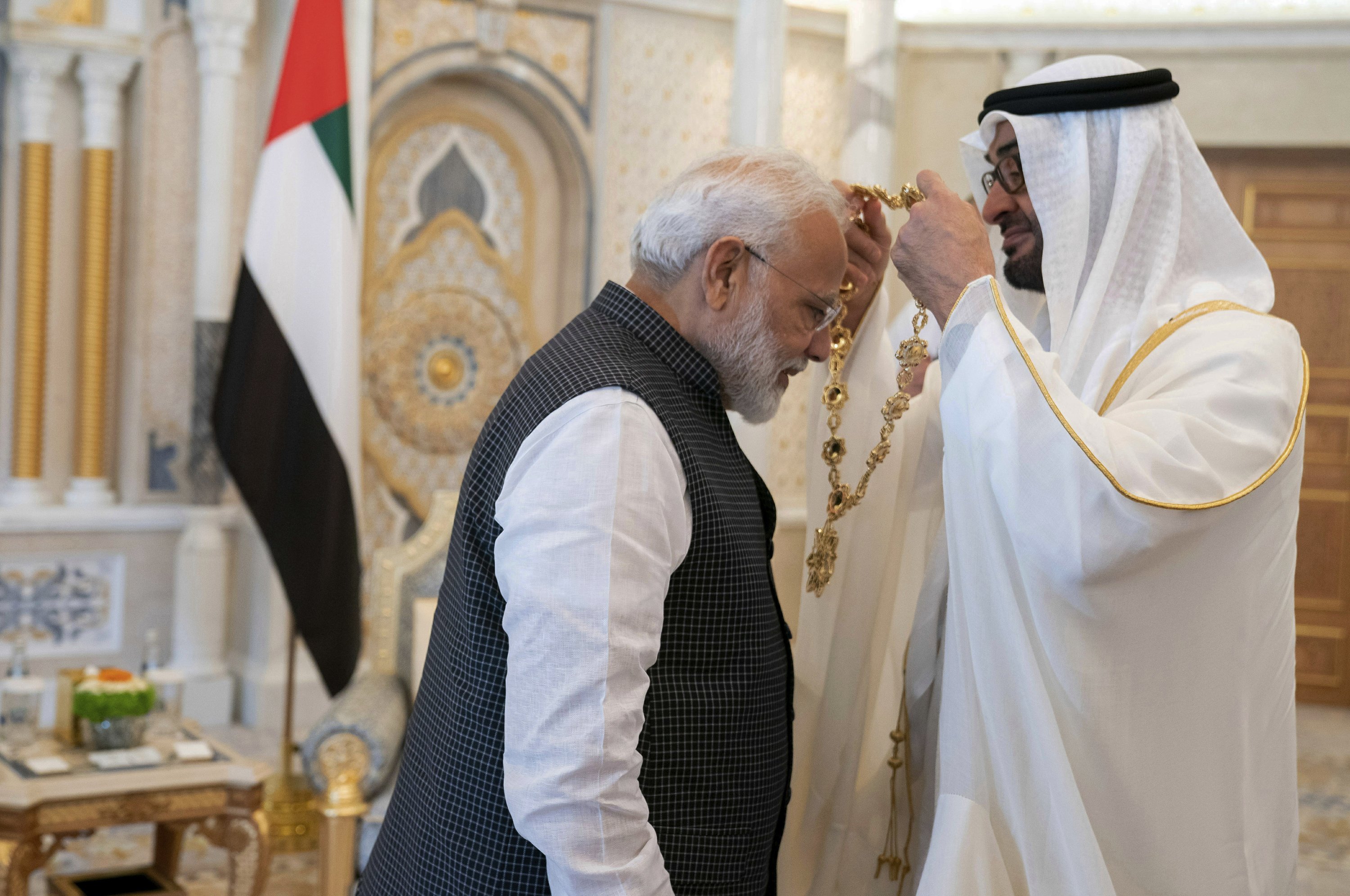
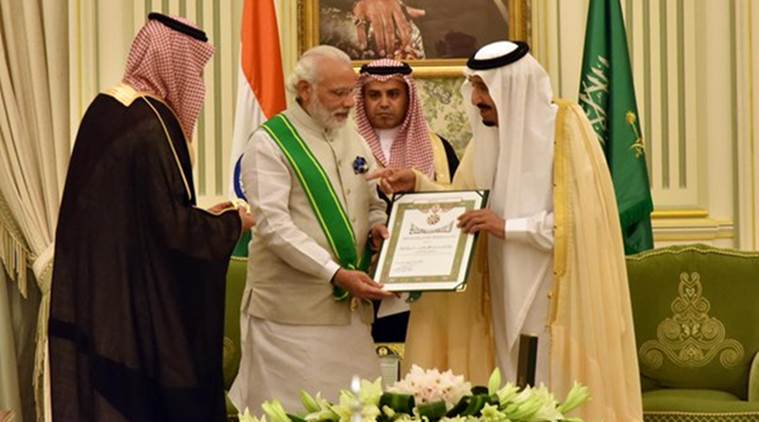
So far, six Muslim countries have awarded their highest civilian award to Prime Minister Narendra Modi. In 2016, Saudi Arabia gave PM Modi its highest civilian honour King Abdulaziz Sash Award. UAE also honoured Prime Minister Modi with its highest civilian honour, Order of Zayed Award in 2019. Other nations include Bahrain and Maldives in 2019, Palestine in 2018, and Afghanistan in 2016. All these honours show Prime Minister Modi's close relations with these Islamic countries.
On the contrary, Pakistan is being snubbed on international fora due to its anti-India narrative. Recently, Saudi Arabia insulted Pakistan as Crown Prince Mohammed bin Salman refused to meet Pak Army chief General Qamar Javed Bajwa, who reached there to apologize on behalf of his country. General Bajwa was accompanied by ISI chief, but Saudi Arabia ruler did not spare time to meet them despite their repeated requests and they returned empty-handed.
Saudi Arabia's royal snub to Pakistan is symbolic of changing equations in the Islamic world. Notably, there are 53 countries in the world where Islam is the largest religion, and Saudi Arabia is considered the most powerful among these nations. There are three big reasons for this:
The first reason is that Saudi Arabia has 18 percent of the world's oil reserves; Secondly, it has a very strong economy among the Arab countries. The third and the most important reason is that Saudi Arabia is the center of Islam religion because of Mecca and Medina, which are considered the most sacred places for global Muslims.
Except for Qatar, Kuwait, and Iraq, Saudi Arabia enjoys good relations with all other countries in the Arab League, and 20 percent of the Muslim population of the world live in these Arab countries.
Pakistan too is a member of the Organization of Islamic Cooperation (OIC). It is second in the world in terms of the Muslim population, after Indonesia, and is the only Islamic nation with nuclear power. Because of this reason, many Islamic countries don't dare go against Pakistan and often support it.
The situation has now changed as Saudi Arabia and Pakistan came face to face on the issue of India, and the former refused to stand with Pakistan. The DNA report will let you know why this happened and how India managed to win Saudi Arabia's favour.
On August 5, the completion of one year of the removal of Article 370 from Kashmir, Pakistan Foreign Minister Shah Mehmood Qureshi stated that the OIC and Saudi Arabia are not supporting Pakistan on the Kashmir issue. He also threatened Saudi Arabia that Pakistan is always ready to sacrifice for Mecca and Medina, but Saudi Arabia does not listen to Pakistan. He urged Prime Minister Imran Khan to go ahead on this issue alone and stop trusting Saudi Arabia.
After his statement, Saudi Arabia asked Pakistan to return the loan amount of Rs 7500 crore. Shocked Pakistan borrowed from China to repay the debt. In 2018, Saudi Arabia has a loan of Rs 46000 crore to save Pakistan's economy. Reports say that Saudi Arabia has also sought the repayment of another installment of Rs 7500 crore from Pakistan. Shah Mehmood Qureshi's statement of 15 seconds on Saudi Arabia has cost Pakistan Rs 15000 crores.Qureshi later tried to control the damage citing his country's historical relations with Saudi Arabia, but it was too late. Saudi Arabia even ended the contract to sell oil to Pakistan.This is a big diplomatic victory for India as this is the first time when Arab nations have supported India on the issue of Kashmir. Pakistan also failed to call a high-level meeting of OIC to put forth its anti-India agenda through Kashmir. India has managed to separate Pakistan from Arab block which now stands with India like a rock.
This development has shocked Pakistan. Pakistan Army Chief and ISI Chief were sent to Saudi Arabia in a huff to control the damage but were snubbed. Experts believe that Pakistan is also showing its back to Saudi Arabia at the behest of China, which wants Pakistan to emerge as the leader of the Islamic world.
In an interview, Pakistan Prime Minister Imran Khan, however, claimed that his country's ties with Saudi Arabia are still strong and he is rather trying to connect the Muslim world. "The rumours that our relations with Saudi Arabia have soured are totally false," Khan said told Dunya News television channel, adding "Our relations are very good. We are constantly in touch."
"On the Kashmir issue, there is a view that OIC should have stepped forward," Khan said, adding "Saudi has its own foreign policy. We shouldn`t think that because we want something Saudi will do just that."
He also rejected any possibility of establishing diplomatic relations with Israel. "Our policy on Israel is clear: The Quaid-i-Azam (Muhammad Ali Jinnah) had said that Pakistan can never accept the state of Israel until the people of Palestine get rights and an independent state," Imran Khan added.Imran Khan further said, "If we recognise Israel and ignore tyranny faced by the Palestinians, we will have to give up Kashmir as well, and this we cannot do." His remarks came in the backdrop of recent peace overtures between the UAE and Israel, with the former becoming only the third Arab nation to enter into a peace deal with the Jewish state.On the UAE's ties with Israel, Khan said that every state had its own foreign policy. Khan, however, praised Pakistan's ties with China and said that the country's future was linked to China which stood with it in all difficult times.
Pakistan currently has an international debt of Rs 43 lakh crore, comprising 90 percent of its GDP. Pakistan pays an interest of Rs 1.60 lakh crores every year. In such a situation, Pakistan has to pay a heavy price after losing the support of Islamic countries.
https://zeenews.india.com/india/indias-growing-stature-in-islamic-block-gives-sleepless-nights-to-pakistan-2303970.html

Chairman PPP Bilawal Bhutto Zardari appreciates PPP workers’ spirit who recorded peaceful protests in every district headquarters to express their anger against the anti-people and anti-economy policies of PTI’s govt.

Chairman Pakistan Peoples Party Bilawal Bhutto Zardari said that successful protest demonstrations by the PPP workers across Sindh province against PTI government’s conspiracies against 1973 Constitution, 18th Amendment, NFC Award and its failure to control load-shedding of long durations, inflation, price-hike of utility commodities, unemployment and poverty should be an eye-opener for the PTI regime.
In a statement, the PPP Chairman said that PPP workers recorded peaceful protests in every district headquarters to express their anger against the anti-people and anti-economy policies as the PTI’s Federal government has dragged the nation into a quagmire of despair and hopelessness.Bilawal Bhutto Zardari said that PPP is a democratic Party and it would apply all the democratic and peaceful means of protests against the highhandedness of PTI’s selected regime against the masses of the country.
He said that PPP has served this country and lost its leadership and thousands of workers during its struggle for the basic human and democratic rights of the people and it would continue the legacy under every situation.PPP Chairman appreciated the spirit of the Party workers for holding completely peaceful protests as not a single stone was thrown during the province-wide protests and warned the PTI government to read the writings on the wall and desist from conspiring against the people, their unanimous constitution, 18th amendment, NFC Award and pursuing anti-people policies otherwise the protests can be expanded to the Tehsil and UC levels.
https://www.ppp.org.pk/pr/23565/

Tuesday, August 18, 2020

Video - DailyShow #TrevorNoah #DNC The DNC Kickoff & Trump’s Boat Parade | The Daily Social Distancing Show

Video Report - #Coronavirus #WorldHunger #Covid19 After COVID: A global hunger pandemic? | COVID-19 Special

Video Report - #DNC20 Your 2020 Democratic National Convention questions, answered

Video Report - Former Trump official backing Biden says others will speak out

Video Report - Michelle Obama Complete Remarks at 2020 Democratic National Convention

Urdu Ghazal - Malika Pukhraj, Tahira Syed - Abhi To Main Jawan Hoon

Video Report - #NayaDaur #TajJoyo Can't Accept Presidential Award When Citizens Are Being Disappeared: Taj Joyo

Video Report - #NayaDaur Shah Mahmood Qureshi Slaps Principal Secretary Azam Khan | Claims AbbTak News

China Appears To Increase Foothold In Strategic Port In Pakistan

H I Sutton

China has a commercial and political interest in developing the port of Gwadar in Pakistan. It is of strategic importance because it will provide Beijing with a port facility connected to China by road and rail that bypasses the Strait of Malacca. In wartime, that narrow choke point between the Malay Peninsula and the Indonesian island of Sumatra could be closed off by the Indian Navy. Gwadar is also believed to be a possible future overseas base for the Chinese Navy, adding to the existing one in Djibouti on the Horn of Africa. Now new buildings point towards the next phase of China’s development at the port.
Open-source intelligence reveals that a third new site of interest has been constructed in the past few months. Twitter account d-atis, which monitors Asian defense topics and specializes in image intelligence, shared a tweet showing the three sites. These have characteristic blue-roofed buildings which contrast with existing local building materials and styles. They are seen as a leading indicator of the next stage of port construction.
Construction of the first site, nearest to the port facility, began around May last year. The first of the blue-roofed buildings appeared there in June 2019. Then the blue roofs appeared at the second site, farther north, in September 2019. The land at the third site started to be prepared in January this year and the blue roofs were substantially completed in July. These later two sites are nearer to the heavily defended Chinese compound built at the anticipated northern end of the new port.
This newest site is behind the local hospital. Construction started in January this year. Its proximity to the hospital raises the question of whether it is pandemic related. It was started over a month before Pakistan registered its first case, however, and it appears to be a separate compound, so it is unlikely that it is a coronavirus related extension.
It has been suggested that these sites are barracks for Chinese military. Given the comparatively low security, this seems unlikely. A more prosaic possibility is that they are accommodation for workers to construct the next phase of the port development. This may include a Chinese naval base.
Chinese investment in the port is part of the wider Belt and Road initiative. It will be connected to China by road, rail and pipelines. This wider project is known as the China-Pakistan Economic Corridor (CPEC) and may take until 2030 to fully put in place.

The naval aspect may have impact, however. If China does indeed base warships or submarines there, possibly as part of a future Indian Ocean Squadron, it could alter the naval balance in the region. For this reason analysts will be watching the construction of these blue-roofed camps very closely.

PPP will not compromise on 18th Amendment: Bilawal Bhutto

PPP Chairman Bilawal Bhutto Zardari said on Monday that the National Accountability Bureau can arrest his entire family but it still won't deter him from changing the PPP's stance on democracy, the National Finance Commission and the 18th Amendment.
The PPP chairman was addressing media outside an accountability court on Monday where former president Asif Ali Zardari had attended a hearing related to the Toshakhana reference.
Bilawal alleged that his lawyers were not allowed to go inside the court. “The public and lawyers were not allowed to come to the court. Is this an attempt to pressurise us or the judiciary,” he asked.
“Are you so afraid of president Zardari?” said Bilawal, adding that the “entire police” of Islamabad was deployed at the court's premises. Bilawal said that the government can do whatever it wants but the PPP will not compromise on the 18th Amendment.
“We are feeling that there is pressure on us, we are being threatened so that we can tow the same line,” he said.
The PPP chairperson accused police and administration of misbehaving with the people.
“Today is August 17, every jiyala remembers August 17,” said the PPP chairman, calling it a “mango day” in reference to the plane crash of former military dictator Zia-ul-Haq.
Bilawal continued that there was a “puppet” sitting in the Prime Minister House and “his strings are being operated from elsewhere”.
The PPP chairman warned that attempts were being made to control everyone like a puppet.
“PPP has faced the dictatorships of Yahya Khan, Zia-ul-Haq and Musharraf,” said Bilawal.
The accountability court hearing the Toshakhana reference against former president Asif Ali Zardari will frame charges against the PPP leader on September 9. Today, Zardari appeared before the accountability court to attend a hearing in the reference. Due to the COVID-19 situation, the party leadership had advised workers not to attend his hearing. As soon as the former president arrived in the courtroom, Bilawal called upon party workers present to leave the premises. He urged even the attorneys' assistants to leave the courtroom due to the prevalent COVID-19 situation.
The NAB reference filed against Zardari and former prime minister Nawaz Sharif accuses them of obtaining the cars from Toshakhana (gift depository) by paying 15% of the price of the cars.

 https://nation.com.pk/17-Aug-2020/ppp-will-not-compromise-on-18th-amendment-bilawal-bhutto

Monday, August 17, 2020

#Pakistan - Two years of #PTI’s rule - PTI’s incompetence in handling the economy during its first year in office

  • Dangers of making opposition desperate
It is incorrect to blame coronavirus alone for the country’s economic woes. Thanks the PTI’s incompetence in handling the economy during its first year in office, fiscal deficit in first three quarters peaked to five per cent of GDP as expenditures broke past records and revenue performance was the lowest almost in a decade. Last year imports shrank, exports stagnated, and FDI plummeted. This year PTI’s inability to comprehend the ways the hoarders and smugglers manipulate the prices in Pakistan led to rise in the prices of wheat, sugar and most of the commodities of daily use. What was left was accomplished by coronavirus
Coronavirus entered Pakistan through Iran due to the failure to arrange proper quarantine facilities in Taftan. A government out to please the religious lobby then allowed the Tablighi Jamaat to hold its multinational gathering in Raiwind thus further facilitating the spread of virus. The permissions given during Ramzan and Eid spread the pandemic all over the country. It goes to the government’s credit though that it has managed to bring down the number of positive cases and the death rate. Its failure to impose the SOPs and leaving everything to the people’s choice can again multiply infections. The government has to learn from other countries who after remaining coronavirus free for weeks are witnessing a spike in it
Unemployment on a massive scale not seen before combined with a spike in the prices of commodities of everyday use can act as a tinderbox.
Kashmir issue has been mishandled. Instead of raising the issue at world forums and international think tanks and displaying films about atrocities in IHK, PTI confined itself this year to holding walks in Pakistan and preaching to those at home who are already converted. FM Qureshi’s indiscreet remarks regarding Saudi Arabia have created a problem for Pakistan
The PTI has continued its policy of persecuting the opposition leaders through NAB. It has also bypassed the parliament to rule through ordinances; 33 this year compared to 6 last year. The PTI MNAs generally respond with personal attacks instead of giving convincing answers to those criticizing government policies.
This is making the opposition restive which can confine itself to parliament or take to the streets. Much will depend on the PTI’s behavior.

Is Pakistan Losing Saudi Arabia?

By Sudha Ramachandran

Pakistan’s relationship with Saudi Arabia, which has been its friend and benefactor for decades, is in trouble. Last week, Pakistani Foreign Minister Shah Mehmood Qureshi warned the Saudi-led Organization of Islamic Cooperation (OIC) that if it didn’t convene a meeting of the OIC’s Council of Foreign Ministers to discuss India’s abrogation of autonomy to Jammu and Kashmir on August 5 last year, Pakistan would go ahead to call a meeting of Islamic countries that would stand by it on the Kashmir issue.
In effect, Qureshi was threatening the OIC and the Saudis that Pakistan would go outside the OIC to convene a session on Kashmir.
The Saudis didn’t take kindly to Pakistan’s hectoring and have cracked the whip. They forced Pakistan to return $1 billion recently, which Islamabad repaid after Beijing came to its rescue. The two sides are now locked in tough negotiations for repayment of the rest of the debt.
In 2018, with Islamabad facing a current accounts crisis, the Saudis had extended Pakistan a $6.2 billion package, which included $3 billion in loans and oil on deferred payments worth $3.2 billion. In addition to calling in the loans, Riyadh has frozen the oil credit facility.
This is a major development.
Saudi-Pakistani relations have been strong for decades. Riyadh has been among Pakistan’s strongest supporters on the Kashmir issue and the two have been allies for decades in the Afghan conflict. Saudi Arabia is also the source of 50 percent of Pakistan’s oil imports and the two countries have strong defense ties too.
Saudi Arabia is also a major source of financial support for Pakistan. Indeed, rarely has Pakistan paid back these loans. That the kingdom is now expecting repayment marks a shift in the bilateral relationship.
There are several reasons for the souring relations. Saudi Arabia is not happy with Pakistan fraternizing with countries like Iran, Turkey, and Malaysia, which are rivals to Riyadh’s leadership of the Muslim world. Last year, Pakistan showed much enthusiasm in the planning of a summit of Islamic countries in Malaysia. That drew Saudi ire. Crown Prince Mohammed bin Salman, who allowed Pakistani Prime Minister Imran Khan to ride in his private jet to attend the United Nations summit in New York, abruptly withdrew the jet for the return flight. An embarrassed Khan had to return home on a commercial flight. Khan subsequently stayed away from the Malaysia summit as the Saudis are reported to have warned Pakistan of economic costs.
Another important reason for Saudi Arabia cracking the whip on Pakistan is its strengthening economic and security relationship with India over the past decade. Riyadh and New Delhi are now working together even on counterterrorism issues, which would have been impossible even a few years ago, given Saudi Arabia’s long-standing endorsement of Pakistan’s policy of supporting anti-India terrorist groups.
With its ties with India on the upswing, the Saudis would like to avoid raising the Kashmir issue. There is nothing to be gained from doing this, and a sure price to be paid in its relations with New Delhi. Hence, Riyadh has repeatedly refused to call a high-level meeting on Kashmir at the OIC.
So what lies behind Qureshi’s tirade? Is he trying to position himself in Pakistan’s domestic politics as the most vociferous champion of the Kashmiri cause? His rant could be aimed at showing up Khan’s ineffectiveness in showing results on the Kashmir issue over the past year. He could be trying to impress the military, which is known to favor a hard line on Kashmir and is said to have become increasingly impatient with Khan.
Qureshi has said that his comment was his personal opinion. However, the Pakistan foreign office subsequently endorsed his position. It is unlikely that Qureshi would have made a provocative statement relating to a key ally without the blessings of the military.
Pakistan’s army chief, General Qamar Javed Bajwa, is heading to Saudi Arabia this weekend. Will he be able to smoothen ruffled feathers in Riyadh? New Delhi will be watching.

Pakistan Threatens To Divide The Islamic World – Analysis

By Dr. Subhash Kapila
Pakistan in run-up to its Independence Day 14 August 2020, in characteristic propensity to box much above its geopolitical weight, directly threatened Saudi Arabia heading the Organisation of Islamic Countries (OIC) that should it not convene an OIC Foreign Ministers Meet on Kashmir, then Pakistan would convene he same with Non-Arab Muslim countries.
Pakistan’s Foreign Minister’s impetuous threat of convening an OIC Foreign Ministers Meet on Kashmir, independent of OIC, alluded to the Non-Arab Islamic nations of Turkey and Malaysia presently in cahoots with Pakistan including vocalising Pakistani stances on Kashmir.
The Pakistan-Turkey-Malaysia Bloc (PTM) spearheaded by Pakistan needs to be taken note of by the Islamic World as yet another divisive step against unity of the Islamic Ummah which is already riven by Islamic sectarian rivalries and geopolitical regional power tussles.Should this development be of diplomatic concern to India? India does not have to be concerned except to the extent of keeping PTM further developments especially on Kashmir and pre-empt PTM political mischief on Kashmir-related and Islamic-related meddling to embarrass India.Pakistan’s insidious attempts to divide the Islamic World not on sectarian Sunni-Shia divide but on Islamic ethnicities of Arab Islamic nations and Non-Arab Nations indicates to what extent Pakistan can stoop to in pursuit of its controversial political objectives which are India-centric.
Regular readers of my S AAG Papers would recall that in February 2020 I had pointed out Pakistan’s insidious attempts to form a Non-Arab Muslim Group of Islamic Countries to counter Arab domination of the OIC. Please refer to “Pakistan-Turkey-Malaysia Bloc Challenges Arab Domination of Islamic World’.
Following my above quoted Paper, some weeks later an Israeli columnist came out with a column in an Israeli paper on similar lines but with Iran also added to the PTM Bloc. That added grouping has inherent contradictions as while Iran may be a Non-Arab Islamic nation but it cannot be forgotten that Iran is an Islamic Shia nation and the Sunni-Shia divide in Islam is virtually unbridgeable. The PTM Bloc comprises of Sunni nations only.
The above quoted paper of mine carried out a detailed analysis of the impulses which prompted the emergence of the PTM Islamic Bloc, the present preferences of the PTM Bloc towards China as opposed to the United States and a predictive assessment on the longevity of the PTM Bloc. Hence without a repetitive recounting of the analysis of the above quoted Paper, this Paper would confine itself to an analysis of factors in play on Pakistan’s present threat to Saudi Arabia.
Needless to state that such an outburst by Pakistan’s Foreign Minister Shah Mehmood Qureshi was extremely reckless when Pakistan’s economic survival is dependent on Saudi Arabia financial largesse and from other Arab Muslim countries.Pakistan’s threat was asserted publicly by its Foreign Minister Qureshi intensely piqued by Saudi Arabia’s reluctance to afford Pakistan a forum to castigate India on Pakistan’s controversial perpetuation of Kashmir issue.Contextually, it needs to be recalled that the Malaysian PM Mahathir had convened a PTM Meet in Kuala Lumpur some months back in which Pakistan PM Imran Khan backed out of attending after actively espousing such a Meet. This was done under pressure from Saudi Crown Prince Mohammed bin Sultan who leads the Saudi Government.
In the immediate aftermath of this Pakistani threat two significant developments have taken place. The first impact of the Pakistani threat was Saudi Arabia making Pakistan immediately pay $ 1 Billion of the $ 3Billion loan advanced to Saudi Arabia and also soft-pedalling if not stoppage of nearly $3billion of Saudi subsidised oil supplies to Pakistan. It needs to be recalled that Saudi Arabia had extended a $3 billion loan to Pakistan a year or so back and credit of $3 billion for subsidised oil supplies.
The second impact emerging yesterday was that Pakistan Army COAS General Bajwa is rushing to visit Saudi Arabia on a damage control visit and assuage Saudi Crown Prince Mohammed bin Sultan’s outrage against Pakistan’s threat to Saudi leadership of the Islamic World. At the time of writing, Pakistan Army official spokesperson has reiterated that Saudi Arabia enjoys a centrality in Pakistan’s eternal relations.
Damage control by the Pakistan Army Chief cannot undo the grievous act of challenging Saudi Arabia’s leadership of the Islamic World. Pakistan in earlier years harboured the grandiose illusion that with its over-sized Islamist Pakistan Army and as the only Islamic State with Nuclear Weapons it stood eminently qualified to lead the Islamic World.
That myth got shattered by Pakistan’s economic fragility and the dubious appellation of Pakistan as a ‘Failed State’ always hovering over Pakistan’s head. Despite the foregoing, Pakistan’s illusions still persist amongst most of its more impetuous politicians and especially in persons like Foreign Minister Qureshi who perceives himself as Pakistan’s ‘Prime Minister-in-Waiting’.
Be as it may, what needs to be analysed are the underlying impulses that emboldened Pakistan to challenge Saudi Arabia’s traditional leadership of the Islamic World represented by the OIC. Need it be stated that the foregoing arises from Saudi Arabia’s uniquely significant status as the ‘Custodian of the Holy Places of Islam’ and also the vast financial resources that back the leadership status of Saudi Arabia.
Pakistan’s Foreign Minister Qureshi who is more noted for arrogant flamboyance than prudence would not have dared to cross the ‘red lines’ in terms of official criticisms of Saudi Arabia on his own volition. Somewhere lurking behind this ultimatum on Kashmir issue would have been an implicit backing of the Pakistan Establishment and Pakistan PM Imran Khan If the Pakistan Foreign Minister threats against Saudi Arabia were a stand-alone personal frustration with Saudi Arabia for delaying Pakistan’s insistence to convene an OIC Meet on Kashmir, then one can foresee a sacking of the Foreign Minister sometime soon. Pakistan Army Chief could possibly feel that this action may be able to mollify Saudi Arabia’s outrage against this Pakistan temerity.
Noticeably, there does not emerge any public resentment amongst the Pakistani masses against Saudi Arabia’s reluctance to accede to Pakistani political leadership’s clamour for immediate convening of an OIC Meet to highlight the Kashmir issue.
In Pakistani public’s mind dominated by conservative Islamist Mullahs surviving on financial doles from Saudi Arabian charities and the nearly two million or more Pakistani expatriates from Pakistan’s economically weaker segments seeking fortunes in Saudi Arabia, such resentment against Saudi Arabia as asserted by Pakistan Foreign Minister Qureshi would find no traction.
In my assessment it is in the top echelons of the Pakistan Government represented by Pakistan PM Imran Khan and his Foreign Minister Qureshi that this impulse to forge the PTM Bloc of Non-Arab Islamic nations to challenge the Arab Muslim domination of OIC thrives most noticeably.
For the survival of Pakistan’s ruling PTI Government headed by PM Imran Khan raising the bogey of the Kashmir issue becomes currently a pressing imperative to divert Pakistan’s public discontent on PM Imran Khan’s political failures to provide a ‘Naya Pakistan’ as promised during his opportunistic political campaigning as Pakistan Army’s preferred “Selectee” for proxy governance of Pakistan. With Saudi Arabia not becoming complicit in providing an OIC Forum for Pakistan’s hyperactive salience to Kashmir issue discussions to embarrass India to gain domestic mileage within Pakistan, the Saudi lack of alacrity to concede Pakistani demands becomes irksome and frustrating for Pakistan PM Imran Khan and his Foreign Minister. Noticeably while no political resonance is available to Pakistan PM Imran Khan within Pakistan’s domestic milieu on salience of Kashmir issue at a juncture when Pakistan is groaning under economic misery and China’s Wuhan Virus19 onslaughts, the Pakistani Establishment seems to be drawing political sustenance from Pakistan’s external relationships.
Here coming to the fore are the other two PTM Bloc nations of Turkey and Malaysia and so also China which effectively today has colonised Pakistan courtesy the Pakistan Army Generals who dominate both the CPEC Chines flagship projects in Pakistan and the Pakistan Army security for Chinese workforce handling CPEC projects.
Turkey and Malaysia today are the most vociferous Islamic nations backing Pakistan on the Kashmir issue against India at various international for a through their diplomats as well as public utterances of Turkish President Erdogan and Malaysian PM Mahathir Mohammed. Malaysia continues to harbour Indian Islamic Jihadi preacher Zakir Naik facing criminal charges in India and refuses his extradition. Turkey and Malaysia besides being anti-Indian in their political stances akin to Pakistan also have a larger political aim in the wider Islamic World which borders more on racial arrogance which perceives that the Arab leadership and domination of OIC needs to be replaced with a more modernised Islamic Bloc which could find more international acceptance as ‘Forward Looking Islamic Nations’. My article of February 2020 points out the self-perceived notion of Pakistan, Turkey and Malaysia as leading an ‘Islamic Renaissance’ to dispel the Islamophobia that grips the world today. Well, this is only a self-perceived notion of the PTM Islamic Bloc and unlikely to find traction in the wider Islamic World which survives on the generosity of the oil-rich Arab Monarchies of The Gulf.
In 2020, the above illusion of Pakistan, Turkey and Malaysia however becomes a handy tool for these three nations beset with domestic challenges, virtual diplomatic isolation and unable to spearhead their regional aspirations on their own steam. Highlighting also is required that all the three PTM nations are in testy relationships with the globally predominant United States. Need it be stated that Saudi Arabia which seems to be the intended target of the Pakistan-Turkey-Malaysia Bloc, despite its diplomatic parleys with Russia and China is still the staunchest supporter of the United States and vice versa.
Moving on to the ‘China Factor’ operating in the PTM Bloc dynamics one can observe that this factor greatly is in play here for various reasons and in different manifestations notwithstanding that China assiduously woos Saudi Arabia since the 1970s. Currently China has more reasons in 2020 to geopolitically discomfit the United States and the PTM Bloc is one such instrument. In relation to Pakistan which cannot survive without Saudi Arabian largesse both financial and energy supplies, the question arises whether China can fill up the void should Saudi Arabia cut off all aid to Pakistan?
Similarly, neither Turkey nor Malaysia as Pakistan and PTM Bloc supporters can fill any voids that may emerge with Saudi Arabian outrage against initiatives or assertions directed at Saudi leadership from any quarters in Pakistan.
In my assessment, China neither has the political intention nor the inclinations to loosen its purse-strings to bail out Pakistan’s failing economy nor underwrite Pakistan’s grand geopolitical illusions which could bring China into contention with Saudi Arabia. China’s interest in Pakistan is limited to colonial domination of Pakistan, exploit its rentier state propensities and exploit Pakistan’s vast natural resources in Balochistan. China could at some stage have second thoughts on Balochistan if the Baloch China-centric insurgency and against Pakistan Army becomes intensified.
Concluding, it can be asserted that Pakistan Establishment’s threats against Saudi Arabia’s reluctance to provide a ready OIC forum for hyperactive ventilations of Pakistan against India on Kashmir voiced through its impetuous Foreign Minister Qureshi can be analysed as more arising from political pressure signalling to Saudi Arabia that Pakistan has other foreign policy options. But does Pakistan have such options? All. the same this Pakistani trend and the political inclinations of the PTM Bloc needs constant watching by India, if for nothing else, but to pre-empt political mischief against India.
https://www.eurasiareview.com/17082020-pakistan-threatens-to-divide-the-islamic-world-analysis/

#Pakistan - #PPP - Senate standing committee on HR to move privilege against NAB Chairman

 Senate Standing Committee on Human Rights has decided on bringing a privilege motion against NAB Chairman Justice (R) Javed Iqbal as he did not present himself before the Committee. He had been summoned by the Senate Standing Committee on Human Rights in relation to the cases of missing persons.

Chairman of the Standing Committee Senator Mustafa Nawaz Khokhar stated that the NAB Chairman had been called for a briefing due to his capacity as the Chairman of the Missing Persons Commission. He said that the IG Sindh attended the meeting but Javed Iqbal did not.


According to the registrar, Chairman NAB could not attend the meeting because of health concerns. The registrar also said that Chairman NAB could not come for security reasons due to former President Asif Ali Zardari’s NAB court hearing. It is understandable that Chairman NAB could not attend due to his health; however, security reasons due to Asif Ali Zardari’s summoning and Pakistan Peoples Party are not fathomable and justified. Senator Mustafa Nawaz Khokhar said that the Standing Committee has decided on proceeding with a privilege motion in the Parliament against NAB Chairman Justice (R) Javed Iqbal.


https://www.ppp.org.pk/2020/08/17/senate-standing-committee-on-hr-to-move-privilege-against-nab-chairman/

پورے خاندان کو گرفتار کرنا ہے کرلو، بلاول

پاکستان پیپلز پارٹی کے چیئرمین بلاول بھٹو زرداری کاکہنا ہے کہ پورے خاندان کو گرفتار کرنا ہے کرلو،جمہوریت، این ایف سی، اٹھارہویں ترمیم کسی پر اپنا موقف تبدیل نہیں کریں گے۔
احتساب عدالت کے باہر میڈیا سے بات کرتے ہوئے چیئرمین پیپلزپارٹی بلاول بھٹوزرداری نے کہا کہ عوام اوروکلاء کوعدالت آنے سے روکا گیا، یہ سب جج پردباؤ ڈالنے کی کوشش تھی یا ہم پر۔
انہوں نے کہا کہ زرداری کا اتنا ڈرہے کہ اسلام آباد کی تمام پولیس یہاں کھڑی کر دی، انہوں نے کہا کہ ایک جج کورونا اور بیماری کی وجہ سے آصف زرداری کو وڈیو لنک پر لاتا ہے، ایک عدالت میں زبردستی آصف علی زرداری کو پیش کرایا جاتا ہے ،یہ انکے اور انکے خاندان کے ساتھ نفسیاتی کھیل کھیل رہے ہیں۔
بلاول بھٹو نے کہا کہ آج یہ ہمارے ساتھ ہورہا ہے، کل یہ کسی اور کے ساتھ ہوسکتا ہے، یہ نا ملٹری کورٹ ہے نہ ان کیمرہ کورٹ ہے ،عوام کو حق ہے عدالت آنے کا اور کارروائی دیکھنے کا ۔
پی پی چیئرمین نے بتایا کہ پولیس نے وکلاء فاروق نائیک اور لطیف کھوسہ کو مس ہینڈل کیا، انہیں عدالت میں جانے نہیں دیا، کیا ایسا آزاد ریاست میں ہوتا ہے، آپ کو کیا خوف کیا ڈر ہے؟
انہوں نے کہا کہ آج 17 اگست ہے، ہر جیالے کو 17 اگست یاد ہے، 17 اگست کو مینگو ڈے ہوتا ہے، 17 اگست کو ہی ایک آمر کا آخری دن تھا۔
بلاول بھٹوکا کہنا تھا کہ جو کٹھ پتلی وزیراعظم ہاؤس میں بیٹھا ہے اس کی ڈور کہیں اور سے ہلتی ہے، یہ کٹھ پتلی اور جعلی حکومت نہیں چلے گی،یہ لوگ اپوزیشن پر دباؤ ڈال کر کٹھ پتلی کی طرح چلانے کی کوشش کررہے ہیں۔
انہوں نے کہا کہ پیپلزپارٹی نے یحی، ضیاء اور مشرف آمریت کا بھی مقابلہ کیا ، ہمیں دھمکیاں دی جارہی ہیں کہ ہم بھی لائن میں آجائیں،ہم نہ پہلے دباؤ میں آئے ہیں نہ اب دباؤ میں آئیں گے ۔
پی پی چیئرمین نے کہا کہ جب آپ کے پاس کوئی کیس نہیں ہوتا کوئی دلیل نہیں ہوتی تو گالی دی جاتی ہے، آج سپریم کورٹ کے وکلاء کے ساتھ بدتمیزی کی گئی ، نیب کے وکیل کے پاس کوئی دلیل نہیں تھی تو وکیل ساتھیوں کو گالی دے رہا تھا۔
بلاول نے کہا کہ اگر میں اپنے موقف سے پیچھے نہیں ہٹتا تو یہ میرے خاندان اور کارکن کو انتقام کا نشانہ بناتے ہیں،میں اپنے موقف سے پیچھے نہیں ہٹوں گا، ہم عدالتوں سے انصاف کی توقع کرتے ہیں ، اگر ہم عدالتوں پر یقین نہیں رکھیں گے تو کون رکھے گا۔
انہوں نے کہا کہ ہم انتظار کررہے ہیں عدالت میں ذوالفقار بھٹو کے ماورائے عدالت قتل کیس زیرالتواء ہے، کسی نے نہیں سمجھا کہ اے پی ایس کا ملزم بھاگ چکا ہے ۔

Sunday, August 16, 2020

Music Video - #BillyJoel #WeDidntStartTheFire #Rock Billy Joel - We Didn't Start the Fire

Video Report - Bernie Sanders: ‘Trump Is The Most Dangerous President In American History’

Video Report - Fareed Zakaria : Washington is fiddling while America burns

Video Report - Stelter: Trump eroding Americans' confidence in voting system

Video Report - Rep. Adam Schiff: This is a shocking betrayal of our democracy

Pashto Music - Nashenas - زخوشرابی.یم.شیخه سه.راسره.جنگ.کری.برخی ازلی.دی.کاشیکی.مادزان.پرنگ کری.ای.ناشناس.دمت.گرم

Video Report - #NayaDaur #PervezHoodbhoy Dr Hoodbhoy Answer: How Can Pakistan Fix Its Education System?

Pakistan’s education ‘reforms’ are privileging the madrassa system

By Khaled Ahmed
Teachers labeled “liberal” and “secular” are the first to be rendered jobless under the looming reform. Nuclear physicist Pervez Hoodbhoy and another “science” teacher have been sacked from a Lahore university as a foretaste of what is to come.
In July, Pakistan saw another so-called reform in education. The government of Imran Khan decided to conclude its “unification” of the three “systems” of education (Urdu medium schools, English medium schools and the madrassa) predictably imposing more of the madrassa on the other two streams. It announced an Islamic course at the Master’s level, and allowed raids on printing presses in Punjab province to confiscate “hostile” publications. Since education is a provincial subject, Punjab and Khyber-Pakhtunkhwa are bound to bear the brunt of this “reform” as they are ruled by Khan’s Tehreek-e-Insaf party.
Teachers labelled “liberal” and “secular” are the first to be rendered jobless under the looming reform. Nuclear physicist Pervez Hoodbhoy and another “science” teacher have been sacked from a Lahore university as a foretaste of what is to come. Hoodbhoy’s thesis is that the reform will make the madrassa dominate the other two streams and that an already “religiously oriented” educational system will be further Islamised. Pakistan’s universities are not recognised outside Pakistan because of the heavy ideological content in their syllabi and the daunting presence of religious-fundamentalist elements in them.
The problem with education in a Muslim state is its reluctance to impart “analytical and critical” thinking. When a Pakistani educationist sits down to frame textbook content, he is scared of the “critical” trait of the human mind. His objective is to prevent the student from applying a “critical” yardstick while analysing “ideology”. The recent law allows the Punjab administration to form vigilante groups that could assault publishing houses to cull “objectionable content” and destroy it and subject the publisher-writer to punishment.
Pakistan is not alone among the Muslim states to have an educational system hostile to “free knowledge”. The Arab world is equally crippled while Iran and Turkey have succumbed to Islamism and its anti-knowledge worldview. The other negative factor in the Muslim world is the frequent incidence of war that upsets the intellectual conditions required for education, replacing it with “propaganda”. There is also the rise of Islamism that damages the edifice of rational learning. Boko Haram, an Islamic revival terrorist organisation active in several states in Africa, attacks “rational” (read English-medium) institutions and translates its own name as “English-medium education not allowed”. The other factor negating education is the incidence of violence in the shape of war and civil war. In the case of Pakistan, there is little money left after “fighting” or “preparing” for wars and there is simply no money left in the kitty for education after meeting the expenditure on the armed forces. In the Arab world too, there is frequent war during which no one thinks of education.
Teachers too are a problem. Most of the primary school teachers in Pakistan are madrassa graduates who have acquired knowledge that equips them for no secular profession. Children in most state-funded schools get poor training in math and history as fact-based narrative. The state sector education mostly relies on brainwash as teaching methodology. Looking for good teachers is a problem of the Islamic world where war and high birth rate outstrips the capacity of the state to produce good teachers capable of imparting “modern knowledge”.
In an article in Arab News, Zaid M Belbagi wrote: “Compounded by record levels of teachers reaching retirement age alongside unprecedented numbers of children entering the education system, UNESCO’s Institute for Statistics indicated that 1.6 million new teaching posts will need to be created in the Arab world if universal education is to be achieved. This figure is likely to increase.” Huma Yusuf in Dawn (May 7, 2018) states: “The threats to critical thinking and debate come from many sources: So-called state functionaries, student wings of religious political parties, firebrand students wielding blasphemy charges, politicised academics, complicit university administrators, and even right-wing media commentators who name and shame educational institutions, forcing them to go on the defensive and resort to self-censorship to protect students from mobs.”
It is curious that English and its “logical-sequential” discourse should disturb Imran Khan, who frequently lambasts modern “liberal” Pakistanis. His clubbing together of the three systems of education in Pakistan and squeezing “one system” out of them is typical of the Muslim educationist who is scared of English as a purveyor of rational thought.
https://indianexpress.com/article/opinion/columns/pakistan-education-reform-madrassa-system-6544847/

How Pakistan’s Military Lost Kashmir

BY 
@azeemibrahim

For over seven decades, Kashmir has been the major flash point in the conflict between Pakistan and India. Since August 2019, the region has been in crisis after India’s prime minister, Narendra Modi, scrapped the special designation the region once held, which recognized its unusual status as a Muslim-majority area. New Delhi put the region under military lockdown, arrested Kashmiri local representatives, and blocked virtually all communication lines between the region and the outside world. There are reports of the abuse of civilians and shortages of food and medicines. Amid worldwide criticism, no voice has been louder than that of Pakistan, where Prime Minister Imran Khan has raised concerns of ethnic cleansing. Given the Hindu supremacist administration in New Delhi, these are not unjustified.

Yet Pakistan is not without blame in what is going on in Kashmir at the moment. And while Khan of Pakistan himself has acted in good faith, the military-intelligence state, the real power in Pakistan, has many questions to answer as to how it managed to be completely outmaneuvered on Kashmir—especially as it justifies its bloated budgets by emphasizing the need to keep Indian ambitions in Kashmir in check.

One of Pakistan’s greatest foreign-policy successes was its cooperation with the United States and the mujahideen in the Soviet-Afghan War (1979-1989). In this exercise, Pakistan proved itself indispensable to the United States’ Cold War grand strategy, but it also achieved its own strategic objectives to escape encirclement from Soviet-aligned Afghanistan and Soviet-aligned India.
Once that war was comprehensively won, Pakistan found itself with a great deal of spare military and intelligence capacity, as well as potentially useful relationships with militant groups and leaders that it could now redirect toward its traditional foe, India.
 Pakistan never stood a chance in a direct military conflict with India—and an all-out war between two nuclear powers was a terrifying possibility for everyone. But Pakistan thought that it could now leverage those same tactics that succeeded in Afghanistan against the militarily superior Soviet Union to put pressure on India. In the game-theoretical mindset of military and intelligence leaders, this seemed like a perfectly rational use of the available resources, especially since the key theater of conflict with India, Kashmir, shared remarkable similarities with Afghanistan: a remote, mountainous region, with a Muslim and friendly population, where it was easy to fight an insurgency against a larger foreign force, with relatively much lower use of resources.


But India was no Soviet Union. India was not entirely foreign to Kashmir linguistically and culturally, and the state was not being stretched to a breaking point economically and politically by maintaining its presence in the region. Nor did Pakistan’s adventures in Kashmir have the backing of the United States and the free world. In Afghanistan, Pakistan was a key lieutenant in a cover war sponsored by the world’s foremost superpower. In Kashmir, Pakistan was waging its own war, alone. And by sponsoring extreme militant groups such as Lashkar-e-Taiba and Jaish-e-Mohammed, Pakistan crowded out genuine Kashmiri movements of self-determination. It also did little to endear itself to local Muslim sentiments: Mainstream Kashmiri Islam is much more deeply steeped in Sufi mysticism and is ideologically opposed to the kind of reactionary fundamentalism that drives the majority of jihadi terrorist groups that Pakistan was sponsoring.

To be sure, India did itself no favors in how it governed its half of Kashmir.
 Ham-handed attempts at installing puppet governments in the state’s capital and constantly manipulating elections engendered genuine hostility toward New Delhi among Kashmiri locals. This policy eventually gave an opening to pro-Pakistan militants in 1989 to create a reign of terror that drove out almost all Hindus from the valley, forcing India to militarize the whole region.


But then the broader geopolitical realities also changed from underneath the Pakistani military establishment, when their old friend and ally from the Afghanistan campaign, Osama bin Laden, started waging a global campaign of terrorism against U.S. assets, culminating in the 9/11 attacks on U.S. soil in 2001. At this point, the Pakistani military establishment faced a choice: Would they retain their loyalty to the United States that had underwritten the independence of Pakistan throughout the Cold War, or would they retain the alliances with the Islamist militants that were key to their strategic depth against India?

Successive governments in Islamabad, and especially the autonomous military-intelligence complex, refused to make that choice. Nominally, they wished to retain their prized alliance with the United States, of course, but they were unwilling to forfeit the resources provided by the militants, which could be used against India—most notably in Kashmir. Instead of making that unavoidable choice, they tried to play both sides and sidelined any civilian administration that spoke of dialogue or rapprochement with India. This was the wrong strategy—and played directly into the hands of Indian hard-liners.

There is something remarkably stupid about the calculation those military leaders made that they could deceive the United States and keep both Washington and the Islamists on board. The United States had the foremost intelligence apparatus in the world. And it had the ability to act near-unilaterally even in Pakistan itself, as was demonstrated when the United States finally located Osama bin Laden in hiding near Pakistan’s military headquarters in Abbottabad and executed the operation to kill him without bothering to consult Islamabad.

With that raid, the charade was over. Pakistan had lost all credibility with the United States, as well as the close security ties it enjoyed throughout the Cold War. But the militants no longer had much reason left to believe that Pakistan could shelter them when push comes to shove. After playing both sides, Pakistan lost the trust of both and the ability to influence either. The United States continued its drone and ground campaigns against Islamists throughout Pakistan and Afghanistan as it saw fit. And the Islamists started conducting terrorist attacks all over the world according to their own calculations, without taking instruction from Pakistan’s Inter-Services Intelligence. Yes, they would on occasion help Pakistani geopolitical designs, but they were just as ready to carry out attacks within Pakistan, with little regard for the interests of the Pakistani state.

Pakistan thus lost a great deal of control over former proxies in the region. In Kashmir, this played directly into Modi’s hands. As Islamabad could no longer be relied upon to keep the Islamists in Kashmir on a tight leash, Modi had sufficient pretext to abandon all restraint in the territory of Kashmir while rejecting any dialogue with Pakistan’s civilian government as pointless.

Meanwhile, the Trump administration has moved to make peace with the Taliban in Kabul. If this comes to pass, that will once again release resources from Afghanistan for the regional Islamist networks. And the so-called liberation of Kashmir is almost certainly the next focus of those networks. Indian military chiefs would argue that Modi has been astute to move in on Kashmir before any such redeployment of resources could happen.

None of this is to defend the way in which New Delhi went about its crackdown in Kashmir. One year on, the humanitarian situation in Kashmir has only gotten worse. Nor should we lose track of the significance of Kashmir to the ongoing war New Delhi is waging against its Muslim citizens. A Hindu-supremacist Indian prime minister rolling out a military occupation into the only Muslim-majority state in India is cause for acute concern.

But looked at from the point of view of the history of India-Pakistan relations, Pakistan’s historical approach to Kashmir is just as responsible for enabling and facilitating this crisis as those Indians who vote for Modi in India’s general elections. Pakistan’s military-intelligence complex has only ever used Kashmir as pretext to increase its own power and to constantly attack India. And the suffering brought by that foolishness is falling on the civilians, especially Muslims, trapped on the Indian side of the border.

Bilawal Bhutto Zardari - Plan to divert Sindh and its capital Karachi’s revenue to Islamabad will not succeed because Karachi is an integrated part of Sindh and the city would remain its integrated part forever.

Pakistan People’s Party (PPP) said that the plan to divert Sindh and its capital Karachi’s revenue to Islamabad will not succeed because Karachi is an integrated part of Sindh and the city would remain its integrated part forever. Former President Asif Ali Zardari has been summoned by the National Accountability Bureau (NAB) without any reason. On the directive of Asif Ali Zardari, workers wouldn’t gather in front of NAB office on August 17. Former president Asif Ali Zardari has said that he has been facing NAB cases alone in the past and will continue to do so.
A meeting of the Central Executive Committee of the PPP was held at Bilawal House Karachi, Saturday, which was co-chaired by the party chairman Bilawal Bhutto Zardari and former president Asif Ali Zardari. Bilawal Bhutto Zardari attended the meeting in person along with other party leaders, while former President Asif Ali Zardari attended the meeting via video link. Syed Qaim Ali Shah, Sindh Chief Minister Syed Murad Ali Shah, Mian Raza Rabbani, Sardar Abdul Lateef Khosa, Sherry Rehman, Syed Naveed Qamar, Nafisa Shah, Humayun Khan, Shazia Marri, Nawab Yusuf Talpur, Saeed Ghani, Jamil Soomro, Sadiq Imrani, Waqar Mehdi, Syed Nasir Hussain Shah, Manzoor Hussain Wassan and Pir Mazharul Haq attended the meeting, while Nayyar Hussain Bukhari, Farhatullah Khan Babar, Faryal Talpur, Farooq H. Naik, Qamar Zaman Kaira, Ali Madad Jattak, Chaudhry Manzoor, Haider Zaman Qureshi, Faisal Karim Kundi, Azam Khan Afridi, Makhdoom Jameel-uz Zaman, Maula Bux Chandio, Nisar Ahmad Kharo, Chaudhry Latif Akbar, Advocate Amjad and others participated in the meeting through video link.
While addressing a post-meeting press conference, Mian Raza Rabbani said that the meeting was based on a 6-point agenda, including Gilgit-Baltistan elections, political situation and organisational issues in Punjab, recent legislation in the country, the developing situation in Karachi especially in light of a statement made by the Attorney General (AG), the NAB and Human Rights Watch reports and the situation in view of the Supreme Court remarks, as well as matters related to the August 17 NAB summons of former President Asif Ali Zardari and the overall situation of the party. The meeting discussed all the issues mentioned above.He said that Gilgit-Baltistan elections have been postponed for three months, while preparations for the elections and issues of giving tickets to candidates were discussed in the meeting. In the meeting, Syed Naveed Qamar gave a detailed briefing on the recent legislation regarding FATF.
Senator Raza Rabbani said that the government deliberately presented the bills related to FATF in the last hours of the stipulated deadline, so that they could not be reviewed in detail. The government once again tried to make the Parliament a rubber stamp through that move, but the opposition parties, especially the PPP, ensured for a limited time that the constitutional rights of ordinary citizens were not affected. The government included clauses in the bills that would deprive ordinary citizens of their rights, and they would live in fear of victimisation. He added that the opposition and especially the PPP has taken position on three laws. Among these are; the law on terrorism is such that if it is passed, every citizen will be affected by it, because the definition of terrorism described in it is very vague. This law is not just a black law, but a “king of black laws”. The second law is about amendments to the criminal procedure code (Cr.PC), examples of which can only be found in Hitler and Mussolini’s times. The government wants the investigating officer to have unlimited powers. The third bill is about anti-money laundering, as a result of which the entire nation would suffer. The bill violates a citizen’s confidence. Raza Rabbani said that PPP would resist these laws together with other opposition parties.
He said that the second issue was the role of NAB, which is naked to everyone. The role of NAB in the making Patriot party is not hidden. The PPP knows very well how the NAB is being used. Human Rights Watch report has fully exposed the NAB while the apex judiciary’s observations and decisions have exposed the NAB.He said that President Zardari did not need to be summoned by NAB at that time. He had appeared in the past, and will be again, if necessary. The PPP and its affiliates want party workers to appear before the NAB office. But President Asif Ali Zardari said that workers should not gather there, as he had faced NAB cases alone in past and would also face it in coming days. The party should protest on issues like sugar and flour crisis, inflation, bad governance and failures of the PTI government.Raza Rabbani said that during the meeting, the statement of the AG regarding Karachi in the Supreme Court was reviewed. This is nothing new. Ever since the PPP formed the provincial government, the PTI has sometimes talked of Governor Rule and sometimes of separating Karachi from Sindh. PTI does not recognise the federal concept in the constitution. Making Karachi a colony of the Federal government is tantamount to centralisation. PTI wants to take Pakistan back to 1962. In the 1962 constitution, the cabinet was not accountable to the Parliament. Even now, these people are not accountable to the Parliament because special assistants do not come to the Parliament and there are more than 18 people in the cabinet who have ministerial powers and they are not accountable to the Parliament. The solution and management of Karachi problem is the responsibility of Sindh government. The PPP will solve the problems of Karachi in an efficient manner. The conspiracy to separate Karachi from Sindh is not new. Islamabad wants to use Sindh capital’s revenue and people of Sindh will not accept it.
Raza Rabbani said that the party would increase its contacts with democratic forces and PPP chairman Bilawal Bhutto Zardari would meet democratic parties and civil society members. Speaking on the occasion, PPP leader Latif Khosa said that Shaheed Mohtarma Benazir Bhutto, Begum Nusrat Bhutto and Asif Ali Zardari were targeted by NAB rules and Musharraf also used it. Chaudhry Pervez Elahi and others were also affected by NAB. The NAB has summoned two former prime ministers Nawaz Sharif and Makhdoom Yousuf Raza Gilani as well as former president Asif Ali Zardari in the same case. All this is happening in the case of Tosha Khana in which the gifted car was bought in a transparent manner and money was given and no illegality occurred and the vehicle was taken in a transparent manner. He said that earlier other rulers have also made such payments and purchases. If there was any objection in such case, notice would have be given to them. He said that where there is unconstitutional work, it is the responsibility of the lawyers to protest. Peoples Lawyers Forum will appear on the 17th to defend the case.
He further said that there are references against the Punjab Chief Minister (CM) to which he has no answer. When the NAB calls, he says he does not know anything. Asif Ali Zardari is not a party in the case of taking loan on fake account and Park Lane case. NAB has no authority in this but media trial is being conducted. They should first arrest Punjab CM Usman Buzdar and should file a case against him. To a question, Raza Rabbani said that we will not compromise on the 18th amendment. We will try to protect basic human rights in the FATF laws. The party is united. At present the situation in the country is different from ten to fifteen years. Changes are being made keeping in view the situation but they are sticking to their principles but PTI regime wants to disperse opposition by creating differences between PPP, PML-N and other opposition parties.
https://www.ppp.org.pk/2020/08/15/plan-to-divert-sindh-and-its-capital-karachis-revenue-to-islamabad-will-not-succeed-because-karachi-is-an-integrated-part-of-sindh-and-the-city-would-remain-its-integrated-part-forever-2/