Wednesday, August 12, 2020

Pakistan women journalists say they face online abuse by officials for criticising Imran govt

By UNNATI SHARMA

36 women journalists in Pakistan have alleged that online attacks are instigated by officials of the Imran Khan government and 'amplified by a large number of Twitter accounts'.
Several Pakistani women journalists and commentators issued a statement Wednesday condemning alleged trolling and online abuse by government officials and other Twitter users affiliated to the ruling Pakistan Tehreek-e-Insaf (PTI).
The joint statement said “vicious” online attacks at women journalists have made it “incredibly difficult” for them to carry out professional duties. It also said those who have been critical of the Imran Khan-led government and its handling of the pandemic were specifically targetted.
As many as 36 women journalists from Pakistan have signed the statement (at the time of publishing this report), including many award winning names such as Benazir Shah, Asma Shirazi, Mehmal Sarfraz, Ayesha Bakhsh and Amber Shamsi.
“The target of these attacks are women with differing viewpoints and those whose reports have been critical of the PTI government, and more specifically its handling of the coronavirus pandemic,” the statement read.
It also alleged that online attacks were instigated by government officials and then “amplified by a large number of Twitter accounts, which declare their affiliation to the ruling party”.
The signatories have accused the alleged abusers of morphing their photographs and videos, apart from making gender-based slurs and sexual threats.
“To further discredit, frighten and intimidate us, we are referred to as peddlers of ‘fake news’, ‘enemy of the people’ and accused of taking bribes (often termed as ‘paid’ journalists or lifafas),” the statement said.
Reacting to the statement, Pakistan’s Minister for Human Rights Shireen Mazari said abusing women because they are critical of the government “is never acceptable”.
“Disturbing to learn of women journalists being targeted and abused. Abusing women bec they are critical is never acceptable. Journalists do their job & to target them, especially gender-based abusive attacks on women journos, is absolutely unacceptable and disgusting,” she posted on Twitter.
In a subsequent tweet, Mazari also said she has requested the country’s information minister to assist in “fast-tracking our Journalist Protection Bill, which is not only an urgent need in Pakistan but an obligation under our Constitution and international law”.

‘Social media platforms must formulate policy against abuse’

The journalists have asked the Pakistani government to take action against such perpetrators and stop them from targetting women online.
Ramsha Jahangir, one of the signatories and journalist at Dawn, told ThePrint that all political parties must formulate a social media policy against harassment and abuse.
“There should be accountability for accounts affiliated to political parties hurling abuse and involved in smear,” she added.
Jahangir also said the statement, which was initially shared among 10 people, has now been made public.
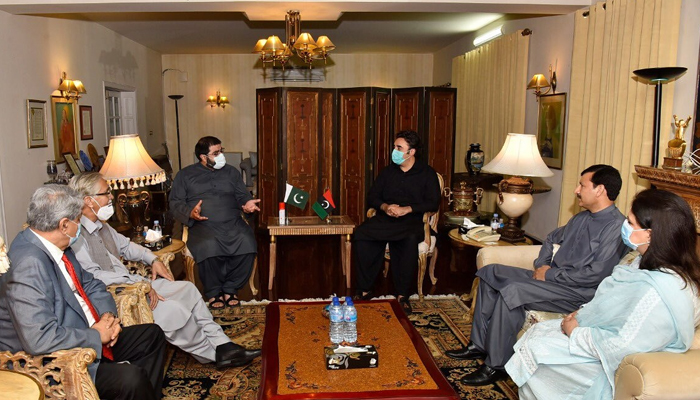
Meanwhile, Pakistan Peoples Party (PPP) chairperson Bilawal Bhutto Zardari, who is also chairman of the National Assembly Standing Committee for Human Rights in Pakistan, tweeted saying he has taken note of threats to women journalists. He has also invited them to brief the committee on issues faced by them.


Tuesday, August 11, 2020

Music Video - Madonna - La Isla Bonita

Video Report - #Coronavirus #Covid19 #CoronavirusTheories How to make coronavirus skeptics believe what they can't see

Video Report - #Russia #Coronavirus Russia claims to have developed 'first' coronavirus vaccine

Video Report - Who is Kamala Harris? A look at her background and career in politics

Video Report - Joe Biden picks Kamala Harris as running mate

Music Video - Ghazal - Sharab Cheez He Aisi Hai - Pankaj Udhas -Jashn-

#Pakistan is fast losing other friends in Islamic world - Oil to Kashmir — Why China, not Saudi Arabia, is Pakistan’s only Big Brother now


It has been a good week for China and Pakistan, with Big Brother helping out its poor cousin at the UN Security Council on the Kashmir issue and even paying off its ‘EMI’ with Saudi Arabia. But the question Islamabad should be asking itself this week is, ‘Is its obsession with Jammu and Kashmir losing it both friends and influence?’
Certainly, there was little left of J&K’s special status under Article 370 even before 5 August 2019, except the fig leaf that it was somehow exceptional – although the diminishing of the state’s obligations to its citizens ever since are both immoral and unconstitutional. But of that, another time.
This week also belongs to External Affairs Minister S. Jaishankar, who on the first anniversary of the scrapping of Article 370, tweeted that “a transformation is underway” in J&K and in Ladakh, in the “application of progressive laws, delivery of social justice, advancement of women’s rights and empowerment and support for vulnerable sections”.
Sometimes it seems like the good minister has outsourced his Twitter handle to someone who lives in the Land of Gup. Salman Rushdie surely needs a sequel to his brilliant novel Haroun and the Sea of Stories to properly explain the inversion of reality where everything is somehow the opposite of what it is supposed to be, at least in the Kashmir valley.

‘Youm-e-Istehal’

Significantly, the inversion of reality has long been a hallmark of the Pakistani state, which has believed its own stories of planting the crescent moon on Srinagar’s Lal Chowk over the decades, from Operation Gibraltar in 1965 to Kargil in 1999.
Since that is never going to happen – whatever India’s own multiplicity of views on what’s happening inside J&K – it was interesting to see Pakistan foreign minister Shah Mehmood Qureshi marching down Islamabad’s main avenue on 5 August marking ‘Youm-e-Istehsal’ or Kashmir Siege Day.
Only days before, Pakistan’s infamous Inter-Services Intelligence (ISI) media wing, ISPR, had asked Shafqat Amanat Ali, the Pakistani singer who has sung dozens of Bollywood songs in better times (Mitwa to Manchala), to sing about the continuing atrocities in J&K. He is said to have been paid Rs 3.8 crore for his efforts.
In fact, nothing illustrates the massive change in India-Pakistan relations than Ali’s superlative performance of Gandhi’s favourite bhajan, ‘Vaishnava jan toh”, in 2018, commissioned by then High Commissioner in Islamabad Ajay Bisaria in the hope that culture could join at least a few hearts and minds, despite surgical strikes and cross-LoC infiltrations.

Saudi closes tap, on Kashmir too

We don’t know if Ali was finally paid or not by ISPR, but Pakistan has increasingly been reduced to paying lip-service to a cause its own establishment knows is increasingly hopeless. None other than Qureshi admitted that the Organisation of Islamic Countries (OIC) was not paying heed to the Muslim world’s pain on Kashmir and not even convening a meeting, which would rap India on its knuckles.
The enormous irony of this statement cannot be underestimated. The OIC is headquartered in Saudi Arabia, which has remained the foremost and fiercest Muslim brother of Pakistan these past several decades. From bustard hunting in Pakistan’s Thar desert to setting up the 39-nation Islamic Military Counter-Terrorism Coalition in 2015, first headed by former Pakistan army chief Gen. Raheel Sharif, the Saudi-Pakistani relationship has been a thick bond.
Ironically, most nations part of this Islamic military coalition are members of the OIC.
The day after Qureshi & Co’s frenzied march in Islamabad, Pakistan was embarrassed enough by its Saudi brother, which asked it to pay back $1 billion out of the $3 billion cash it had borrowed in October 2018. This was in addition to $6.2 billion in oil the Saudis had promised to loan to Pakistan.
Except, the Saudis seem to have lost patience with their little Pakistani sibling. Two months ago, they turned off the oil tap when Pakistan was unable to pay back that EMI. So, guess who signed a cheque last week to keep Pakistan’s izzat intact? China.

A win for India

Meanwhile, on 5 August, China tried to bring back Jammu & Kashmir to international attention again. It sought a meeting of the Permanent-5 at the UN Security Council, under the rubric of ‘Any Other Business,’ like it had done twice before this past year. With the US and China at daggers and the rest of the world equally furious with the impact of the Wuhan-originated virus on their economies, the Kashmir mention died as quickly as it was raised. No one was remotely interested.
In the ‘dangal’ or contest of Big Brotherhood, the Chinese have certainly trumped the Saudis this week. Remember, though, that Saudi, Emirati and increasingly the OIC’s disinterest in Pakistan is as much a victory of the Modi government’s outreach to the Islamic Ummah – Sushma Swaraj’s invitation to the OIC foreign minister’s meeting in UAE last year and Saudi crown prince Mohammed bin Salman visit to India are proof.
For the time being at least, neither the OIC, the UAE or the Saudis are paying serious attention to Pakistan’s tantrums on Jammu & Kashmir – as recently as 1996, the last three were the only countries in the world to have recognised the Taliban when it took power in Afghanistan.
Still, the prize for the biggest irony this week must be awarded to four Chinese labourers who beat up Pakistani soldiers because they wanted to work on a new site on the China-Pakistan Economic Corridor (CPEC) and the Pakistani havildar ostensibly protecting them couldn’t make out a word of what the Chinese were saying. Before he could call the local military camp, he was assaulted by the furious Chinese not used to being told to wait for permission.
In its obsession with Jammu & Kashmir and the constant iteration of its friendship with China being ‘higher than the mountains, deeper than the seas and sweeter than honey’, Pakistan forgot the basic slogan that trumps everything else: Keep your friends close, but your enemies closer.

#Pakistan #PPP - Chairman PPP Bilawal Bhutto Zardari congratulates 9-year-old Pakistani girl Natalia Najam on achieving a Guinness World Record

Chairman Pakistan Peoples Party Bilawal Bhutto Zardari has congratulated 9-year-old science enthusiast Pakistani girl Natalia Najam on achieving a Guinness World Record when she arranged the elements of the periodic table in 2 minutes, 42 seconds breaking a previous record of an Indian Ph.D Professor.
Natalia Najam is the granddaughter of Afzal Siddiqi from Lahore, an old member of PPP and a lawyer for Shaheed Zulfikar Ali Bhutto, Shaheed Mohtarma Benazir Bhutto, Begum Nusrat Bhutto and other Party leaders in different cases.

Natalia had broken an Indian Chemistry Professor’s Guinness record (who had previously broken a Pakistani’s record), by being the fastest to arrange all elements of the periodic table (in 2 min 42 seconds). This was announced by Guinness on 18 July 2020. She had broken the record by seven seconds.

Bilawal Bhutto Zardari said that entire Pakistan was proud of Natalia Najam and her feat adding that she is an inspiration for the Pakistani girls and boys who aspire and dream to achieve great accomplishments in their life through hard work and dedication.

https://www.ppp.org.pk/2020/08/11/chairman-ppp-bilawal-bhutto-zardari-congratulates-9-year-old-pakistani-girl-natalia-najam-on-achieving-a-guinness-world-record/

مریم نواز اور پارٹی ورکرز پر پتھراؤ قابل مذمت ہے، بلاول

چیئرمین پیپلزپارٹی بلاول بھٹو زرداری کا کہنا ہےکہ مریم نواز اور ان کے پارٹی ورکرز پر پتھراؤ قابل مذمت ہے۔
سماجی رابطے کی ویب سائٹ ٹوئٹر پر اپنے بیان میں چیئرمین پیپلزپارٹی بلاول بھٹو زرداری نے کہا کہ لاہور میں پولیس کی جانب سے آج مریم نواز اور ان کے پارٹی ورکرز پر آنسو گیس کا استعمال کیا گیا ہے۔
انہوں نے کہا کہ ہم اس عمل کی مذمت کرتے ہیں۔
واضح رہے کہ قومی احتساب بیورو (نیب) لاہور نے مریم نواز کو رائے ونڈ میں خلافِ قانون اور خلافِ ضابطہ اراضی انتہائی سستے داموں خریدنے کے الزام میں انکوائری کے لیے آج طلب کر رکھا تھا۔
ذرائع کے مطابق نیب کا کہنا ہے کہ زمین کی منتقلی میں ایل ڈی اے کے قواعد و ضوابط کو نظر انداز کیا گیا، شریف فیملی کی اراضی کے ارد گرد تعمیرات کو روکنے کے لیے اراضی کو گرین لینڈ قرار دیا گیا تھا۔
انکوائری میں سابق ڈی سی لاہور نور الامین مینگل اور سابق ڈی جی ایل ڈی اے احد خان چیمہ کو بھی طلب کیے جانے کا امکان ہے۔

اسلام آباد: بلاول بھٹو سے ایمل ولی خان کی ملاقات

چیئرمین پیپلز پارٹی بلاول بھٹو زرداری سے عوامی نیشنل پارٹی (اے این پی) خیبرپختونخوا کے صدر ایمل ولی خان نے ملاقات کی ہے۔ بلاول اور ایمل ولی خان کی اسلام آباد میں ہونے والی ملاقات میں ملکی سیاسی صورتحال پر گفتگو ہوئی۔ اس موقع پر پارلیمان کے اندر اور باہر اپوزیشن کی جانب سے بھرپور کردار ادا کرنے پر اتفاق کیا گیا۔ ایمل ولی خان نے بلاول بھٹو زرداری کے خدشات، تحفظات اور اپوزیشن کی جدوجہد سے متعلق نکات سے مکمل اتفاق کیا۔ دوران گفتگو بلاول بھٹو زرداری نے کہا کہ حکومت ہر محاذ پر ناکام ہوچکی ہے، اس حکومت کی کوئی سمت نہیں۔ انہوں نے کہا کہ پی ٹی آئی کی حکومت جتنے عرصے رہے گی ملک اور عوام کا نقصان زیادہ سے زیادہ ہوتا چلاجائے گا۔ 
 پی پی چیئرمین نے مزید کہا کہ یہ حکومت چھوٹے صوبوں کے حقوق چھیننا چاہتی ہے، ہم چھوٹے صوبوں کے حقوق اور آئین کی پامالی کو کسی صورت برداشت نہیں کریں گے۔ ان کا کہنا تھا کہ این ایف سی ایوارڈ پر حکومت کی جانب سے ناانصافی پر سمجھوتہ نہیں کیا جائے گا، ملک کو ون یونٹ کی جانب دھکیلنے کی کوشش ہر صورت ناکام بنائیں گے۔
https://jang.com.pk/news/807694

Monday, August 10, 2020

#MohammedBinSalman #SaadAljabri - Saad al-Jabri case: US court issues a summons to Saudi crown prince

Video Report - #Lebanese PM announces government’s resignation over Beirut blast

Video Report - Election 2020: what a Biden victory could mean for America

Video Report - U.S: - #Coronavirus cases in children jump as they prepare to go back to school

Video Report - #Georgia teen says school used students as guinea pigs

Video Report - #NayaDaur #SaudiArabia #Pakistan Saudi Arabia's Response To Shah Mehmood Qureshi's Threat

'Holy warrior' selfies: Pakistan teen feted for killing U.S. blasphemy suspect

Umar Farooq, Jibran Ahmad
Faisal Khan, a 15-year-old Pakistani, beams for selfies with lawyers and police. Thousands hail him in the streets as a “holy warrior.”
His claim to adulation? Allegedly gunning down in open court an American accused of blasphemy, a capital crime in this Islamic republic.
Khan is charged with murder, which also carries a death sentence. But while lawyers line up to defend him, the attorney for Tahir Naseem, the U.S. citizen, has gone into hiding.
The teen, according to officials and witnesses, got through three security checkpoints on his way into a courtroom in the northwestern Pakistani city of Peshawar on July 29, pulled out a pistol and fired multiple shots into Naseem, 57, at a bail hearing.
Naseem died on the spot, onlookers spattered with his blood.
His killing grabbed global headlines, put a fresh spotlight on Pakistan’s blasphemy laws and drew criticism from abroad, even as many in the country praised the shooter. The United States and human rights groups decried the killing and urged changes to Pakistan’s blasphemy statutes, among the harshest in the world.
Closer to home, Khan is a hero.
“It’s one of those cases where everyone wants to be his lawyer,” Inamullah Yusufzai, who represented Khan at his first court hearing last week, told Reuters. Yusufzai said lawyers from across Pakistan had called to defend Khan for free, to support what they see as the justified killing of a heretic.
The case has not reached the stage for Khan to enter a plea.
Thousands rallied, calling for Khan’s release. Delegations of well-wishers - lawyers, clerics, local politicians - have visited the Khan family home in Peshawar to congratulate the family. He has received messages of support from the Pakistani Taliban.
A selfie shot by Elite Force police guards in a van escorting Khan to court after his arrest was shared widely on social media. Wearing all white, the teen grins broadly. Several officers smile, one gives a thumbs-up.
A senior police official, who said the force had looked the photo, said it was authentic. Reuters could not independently confirm its authenticity.
Another selfie shows a crowd, some black-clad lawyers, escorting a beaming Khan into court.
BLASPHEMY
The U.S. State Department, in an unusually blunt statement, said Naseem “had been lured to Pakistan from his home in Illinois by individuals who then used Pakistan’s blasphemy laws to entrap him.”
It called on Pakistan to reform its blasphemy laws and prosecuting Naseem’s killing.
Pakistan’s Foreign Ministry says a special team is investigating the case and it “will be dealt with in accordance with the law.”
But prosecuting Khan and any potential accomplices will be an immense challenge.
In blasphemy cases in Pakistan, “an accusation becomes a death sentence, whether carried out by the state or by mobs or vigilantes,” Omar Waraich, head of South Asia for Amnesty International, told Reuters.
The rights group said in a 2016 report, “Pakistan’s blasphemy laws are often used against religious minorities and others who are the target of false accusations, while emboldening vigilantes prepared to threaten or kill the accused.”
In 2011, the governor of Punjab, Pakistan’s largest province, was killed by his own police guard for offering support to a Christian woman facing blasphemy charges. His killer was tried and awarded the death penalty, but not before thousands rallied for his release and rioted after he was executed.
SELF-STYLED ‘PROPHET’
Naseem was born in a village outside Peshawar but had long lived in the United States, according to clerics and locals who knew him.
He often visited his village, where he expressed views that “upset locals,” said Wajid Ali, a cleric who runs a seminary there.
Naseem’s statements landed him in prison several times, said Ali and another local who knew him Naseem. In those cases, they said, the intervention of locals, who believed Naseem was mentally unstable, got him released.
“On the internet, he kept saying things like, ‘I’m a messiah, or a prophet,’ and that caused great trouble in our village,” Ali said.
Naseem set up a website proclaiming himself a messiah, with a link for people to pledge allegiance to him. On LinkedIn, he described himself as “Jesus’s second coming, reviver, Prophet.” His distance from Pakistan kept him safe, even as he reached out to its Islamic seminary students to preach his messianic call.
In 2018 one of those students convinced Naseem to travel to Pakistan, where they met at a Peshawar shopping mall, according to court documents seen by Reuters.
“He came thinking this student will believe him and others will join his call,” Ali said. “But the student had already told the police. They were standing nearby in plainclothes and they arrested him.”
Naseem was charged with denigrating the Koran and the Prophet Muhammad. Two years later, awaiting his bail hearing surrounded by police and lawyers, he was gunned down.
https://www.reuters.com/article/us-pakistan-blasphemy-court/holy-warrior-selfies-pakistan-teen-feted-for-killing-u-s-blasphemy-suspect-idUSKCN255105

#Chaman Five Killed, 10 Injured as Blast Rocks Market in Pakistan's Balochistan Province

A powerful bomb blast at a market in a Pakistani town bordering Afghanistan on Monday killed at least five people and injured 10 others, police said.
The blast occurred at the Haji Nida market of Chaman town in Balochistan province, according to the police.
"Five people were killed and 10 others injured," police said.
Nobody claimed the responsibility of the attack.
Militants and separatists belonging to the banned outfits have stepped up terror attacks in Balochistan in recent weeks.
At least one person was killed and six others were injured after an explosion in Turbat bazaar on July 21.

Saudi Arabia pulls support for Pakistan as Kashmir tiff widens

By ADNAN AAMIR

Pakistan last week repaid a $1 billion Saudi loan that was called in after Pakistan began insisting that Saudi Arabia allow it to marshal the Islamic world's support on the Kashmir issue.
The $1 billion to repay the loan came from China in the form of another loan.
The original loan was a part of a $6.2 billion package announced by Saudi Arabia in November 2018, when Islamabad was struggling with a rapidly expanding trade deficit and declining foreign reserves. The package included $3 billion in loans and a $3.2 billion oil credit facility. Saudi Arabia at the time was something of a white knight, providing much-needed cash before the International Monetary Fund approved a $6 billion bailout in July 2019.
According to Pakistani media, the oil credit facility was suspended in May, with the Saudis later asking Pakistan to also repay the loan in full.
The countries' relations deteriorated quickly, beginning in February when Saudi Arabia turned down a request by Pakistan to convene a special meeting of the Council of Foreign Ministers of the Organization of Islamic Cooperation. Islamabad did not back down, demanding to use the OIC to pressure India on the Kashmir issue. It was then that Saudi Arabia decided to call in the loan.
The OIC is a group of 57 Muslim countries that is largely guided by Saudi Arabia.
India and Pakistan have been disputing claims over Kashmir since gaining their independence from Britain in 1947. Each of the neighbors controls parts of Kashmir, but they also have overlapping claims.
Since 1963, China has controlled the Aksai region of Kashmir. Lately, China has adopted an aggressive posture toward Kashmir that favors Pakistan. This has resulted in a number of border clashes, including ones with India that erupted May and June.
Shah Mahmood Qureshi, Pakistan's foreign minister, has continued openly demanding that Saudi Arabia convene an OIC council meeting.
Last week in a TV interview, he said, "Today, I am telling the OIC to convene the meeting of the council of foreign ministers. If they cannot do it, then I will be compelled to ask the prime minister [Imran Khan] to call a meeting of Islamic countries [Iran, Turkey and Malaysia] that are ready to stand with us on the issue of Kashmir."
The latest developments have also cast doubt on the future of memorandums of understanding that call on Saudi Arabia to invest $20 billion in Pakistan; they were signed during Saudi Crown Prince Muhammad bin Salman's visit to Pakistan in February 2019.
The proposed investments include $10 billion in an oil refinery in Gwadar, a port city that because of its strategic location at the mouth of the Gulf of Oman has made it a focal point of the $50 billion China-Pakistan Economic Corridor, itself a big part of China's much wider Belt and Road Initiative.
Experts believe Saudi Arabia is reluctant to become entangled in the efforts of Pakistan and China to contain India.
"Saudi Arabia is closely allied with the U.S., which may also be [applying behind-the-scenes pressure on] Saudi Arabia to stay away from Chinese initiatives," said Jeremy Garlick, an assistant professor with the Jan Masaryk Center for International Studies at the University of Economics in Prague.
Garlick is also the author of "The Impact of China's Belt and Road Initiative: From Asia to Europe."
"It is probably less risky for Saudi Arabia to withdraw its support for Pakistan than to stay in Gwadar," Garlick told the Nikkei Asian Review, "since Pakistan is so closely allied to China and both are forming a wedge against India."
James M. Dorsey, a senior fellow at the S. Rajaratnam School of International Studies at Singapore, believes close economic ties between the Saudis and India are driving the kingdom's change of heart toward Pakistan.
"Saudi Arabia has significant investments in India, which is also a major buyer of oil from the kingdom. Consequently, Riyadh has been less forthcoming to extend support to Pakistan's stance on Kashmir," Dorsey told Nikkei.
Other experts say the Saudis are on a diplomatic high wire and are sure to try to find a balance. "Saudi Arabia also needs Pakistan due to its proximity with Iran and being home to world's largest Shiite minority," Dorsey said. He added that the Saudis will try to do something on the issue of Kashmir to placate Pakistan but not go so far as to provoke India.
Experts believe the Saudis are not alone in exercising caution, that Beijing is also wary. "China needs Saudi oil," Garlick said, adding that it will "play a waiting game at this stage and try not to become involved in Middle Eastern politics for as long as possible."
Einar Tangen, an author and economic affairs commentator based in Beijing, maintains that China's approach to the Islamabad-Riyadh tiff is more practical than ideological. "China needs multiple land and sea routes to protect its economic interests," he told Nikkei, "hence regional divides will not serve China's interests."
Analysts fear the Islamabad-Riyadh spat will make Pakistan further reliant on Chinese loans. "With China, Pakistan has put all its eggs in one basket at this stage," Garlick said, adding that Pakistan has a difficult task ahead -- finding more allies.

#Pakistan #PPP #HaqZardariSachZardari - Asif Ali Zardari – always persecuted never prosecuted


By Bakhtawar Bhutto-Zardari
After the assassination of Shaheed Benazir Bhutto, Asif Ali Zardari found himself at the epicentre of a broken country. He had to console a nation in mourning, suture together a party battered and wounded, resentful and hurt. How do you make up for such a colossal loss? How do you move forward? He found leadership in coming together “Pakistan Khappay” and direction in her vision “Jeay Bhutto”. Pakistan was a hairline away from being declared a failed state with almost daily terrorist attacks. The PPP government of 2008 had a lot to overcome. It was Asif Ali Zardari’s resolve that despite all the political turmoil and natural calamities, despite all the terror threats, he pushed ahead to resurrect the vision of his late wife by ousting the longstanding military dictator Musharraf without bloodshed, impeachment or domestic unrest and re-establishing the foundations of democracy for which she laid down her life.
One of his first acts as the president was wilfully surrendering his presidential powers to Parliament thus restoring its supremacy. Previous dictators had usurped this power to dismiss elected governments through presidential ordinances. By doing so he became the first president in history to voluntarily give up his powers. His was a coalition government of consensus and reconciliation with monumental achievements like creating the first social safety net, The Benazir Income Support Programme, that empowered women in low income households. He promulgated the 18th Amendment to the Constitution of Pakistan that devolved powers and funds to provinces allowing for more provincial autonomy and equitable distribution of resources. In the backdrop of the World Recession as well as the height of the war on terror, his appointed governor of Punjab was murdered in cold blood; his minister for minorities was assassinated. The threats could not be understated. His government was always treading on eggshells, as no democratic government before it, had ever been able to realise a full term in power.
Despite very serious reservations on the 2013 election, and lack of a level playing field for the Pakistan People’s Party, for the first time in the history of Pakistan, President Asif Ali Zardari oversaw the transition of power from one democratically elected government to another. This process was intrinsic to the evolution of democracy in Pakistan.
The years leading up to the 2018 elections saw Pakistan slipping back to old ways. This time the face bearer was going to be Imran Khan. He led a campaign based on guile and gumption, election slogans of complete hyperbole and hysterical claims of repatriating 200 billion dollars of looted money stashed abroad by opposition leaders. This was well orchestrated chaos, politics not of policy but of person. Spewing hatred in public gatherings for the leaders of the last 10 years, bifurcation of the youth and fanning the flames of religious bigotry. The campaign slogans read that all aliments of Pakistan were due to their “corruption”. He spoke openly of his fanboy vision of a glorified Pakistan era under the military rule in the 60s and early 2000. The biggest irony is Pakistan has never had an uninterrupted period where democracy was allowed to flourish. What he was actually doing was creating a hatred for civilian rule. He was known for his lack of attendance in Parliament, deeming it as a wasteful exercise. Cursing even the very existence of the Prime Minister House like it was a personal property of Zardari or Sharif. This leaflet of propaganda was well backed, funded and sold to the masses. A direct repercussion of this were the corruption allegations brought against Asif Ali Zardari.
In the weeks before the 2018 general elections, a hysterical frenzy broke out on all media channels of corruption allegations against Asif Ali Zardari. The timing of it mirroring the likes of the Hilary Clinton email fiasco. On June 7, 2018, an FIR was registered by the Federal Investigation Agency questioning some private intra-banking transactions. The investigating FIA officer happened to be Najaf Mirza who facilitated Asif Ali Zardari’s torture during his previous incarceration and had an active pending FIR investigation on him. It became obvious very early on that this matter was more personal and against the person. In the following weeks, the matters brought against Asif Ali Zardari were suddenly elevated from the banking courts in Karachi, to the highest court of law – the Supreme Court in Islamabad due to “slackness in the progress of pending enquiries” on fake bank accounts. This was an unprecedented legal move where a pending enquiry on private intra-banking transactions was considered slack. The Supreme Court had overstretched its insight deeming it as a matter of fundamental rights thus exercising its suo motu powers under Article 184(3) of the Constitution.
It is unfathomable to understand how slackness was a legal reason when the judicial and wrongful murder of Shaheed Zulfikar Ali Bhutto (1979) and the case of the assassination of Shaheed Benazir Bhutto (2007) are still pending in our honourable courts for decades. I understand there may be benefits of judicial activism in cases of swift justice but for the first time we see our courts entering into a phase of judicial expediency with selected justice. On July 9th 2018, ten days after the suo motu notice, the Supreme Court ordered for both President Zardari and his sister Faryal Talpur to be placed on the Exit Control List. This would be the start of curbing his human rights. Despite this, he was elected from his constituency on July 26, 2018 regardless of these blatant attempts to tarnish his campaign. Even the notion of him returning to Islamabad was bound to ruffle feathers. Election day was a complete debacle and deserves an entire chapter on the vast contraventions of the Election Act. Our Rangers went from securing polling booths to counting votes, in the absence of polling agents. They wanted my father out of the political scene but here he was elected by the people right back in the heart of the capital as an elected member of the National Assembly to defend what he had so carefully put together - the institution of democracy and supremacy of Parliament.
The morning the House gathered for the prime ministerial vote - arrest warrants were issued for Asif Ali Zardari. Instead of attending Parliament to vote, he was rushed to court for bail proceedings. Simultaneously, our prime minister began his maiden speech where he hurled direct threats, vowing to persecute and imprison his incumbents of the last 10 years. This would be exactly the course of events that followed. In the following months, several PTI top ranking ministers met privately with the then Chief Justice of Pakistan, Saqib Nisar, where the government endorsed his call for collecting donations to build a dam. The same Chief Justice ordered to form a Joint Investigation Team (JIT) with extra constitutional powers including members of the secret service (ISI) with the purpose to investigate the intra-banking transactions case alleging involvement of Asif Ali Zardari. Clearly this was not a matter of funding terrorism nor a matter of national security. It was just a gimmick of national propaganda and well orchestrated chaos.
The people of Pakistan would soon realise how the PTI government was never prepared for the job. It was a government with a vision completely misconstrued. They had set the nation on a course to nowhere. A government of oxymorons, clearly confused and absolutely useless. However, what they have mastered is a fascist form of government of slander and accusations against the opposition to divert attention from the relevant, curbing liberties and rights of the press and the people. During the JIT investigations, the PTI minister of information would repeatedly pre-empt legal developments on national television. There was no subtleness in their collusion. They wanted to undo what Asif Ali Zardari had done in his tenure, and destabilise the majority PPP government in Sindh. Therefore, they started openly denouncing the 18th Constitutional Amendment, questioning why funds had to be given to the provinces. This debate took place in tandem with carefully orchestrated corruption allegations against Sindh cabinet members. The speaker of the Sindh Assembly was suddenly arrested, without any probe or investigation, on frivolous charges of “assets beyond means”, and he still remains in custody.
On Dec 27th 2018, PTI leaders addressed a press conference announcing their intent to form their own government in Sindh. Hours later, a whole host of elected representatives from the PPP government in Sindh were placed on the Exit Control List including the Chairman of the party, Bilawal Bhutto-Zardari. There was not an iota of legal ground or justification – this was nothing short of dictatorship and the enforcement of a one party rule with all other leaders of opposition behind bars.
On January 7, 2019, the Supreme Court decided to move the findings of the JIT reports to the National Accountability Bureau in Rawalpindi and ordered them to take over the investigation. Not only was this absolutely unjustified, given that it was a jurisdictional leap across provinces but that NAB itself is a highly controversial entity. NAB is an investigative body set up by the military dictator Musharraf (who himself is an absconder and wanted man with swiss bank accounts, international properties but not a single investigation) wildly used as a tool to pressurise and coerce politicians and undermine and dismiss elected governments. They boast unbridled power with unaccounted deaths in their custody but have never been held answerable or accountable. The achievements of NAB is a tale of absolute shambles where instead of recovering money their misadventures have cost Pakistan’s exchequer billions. The public accounts committee and parliamentary procedures are undermined and bypassed with the existence of this extra constitutional body. In a completely unrelated series of events NAB have just inaugurated an art gallery in Quetta. The threshold today is, if you are with PTI you are given a clean chit by NAB and if you are on the other side of the aisle, you get persecuted.
Up until June 2019, Asif Ali Zardari was present and complicit for all JIT and NAB summons. In an outrageous power trip, he was arrested and sent to detention in a NAB cell on June 10th 2019. A medical examination arranged by NAB authorities at the Rawalpindi Institute of Cardiology on the 13th of June discovered a depleted state of his health. After all he suffers from ailments brought on from his first 11 years of unjust incarceration and physical torture. The report conducted by Professor Maj Gen Azhar Mahmood Kayani revealed three coronary arteries are severely blocked. His blood sugar levels had been uncontrollable exasperating his daily condition. Despite all of this, the courts went ahead and sent him to Adiala Jail on judicial remand on August 16, 2019, where he still remains. He is being kept in a fenced off Class B 12x12 prison cell in complete isolation. The courts are even scrambling over a decision as to whether he should be allowed an air condition in his cell. Both his family and lawyers are denied access in complete violation of his human rights. Apart from being the former President of Pakistan, and a law abiding citizen, his pre-trial treatment is not only unwarranted but also criminally negligent with an intent to harm.
On August 29th media broke the news of his midnight shift from jail to a cardiac hospital. The next morning, my sister Aseefa rushed to the hospital to see him. She barely caught a glimpse of our ailing father when she was denied access and manhandled by police at the hospital gates despite brandishing her court orders in hand. The hospital doors were locked and barricaded – even patients were not permitted entry or exit. I must reiterate at this point, that this is a former president, not a terrorist or enemy state pilot and up till now no charges have been formally brought against him; the references are still pending investigation and the trial has yet to even begin. He was brisked back to Adiala Jail the very same day without even completing the required check-ups or obtaining a discharge form. No record of this visit has been shared with us or his lawyers till date. This was not the first time a court order was so unabashedly dismissed. We also had permission for Eid visitation but were denied the most basic of prison rights. I narrate these events to highlight the absurdity of what is taking place in Pakistan. PTI’s interior minister who served the same post under Musharraf is not only personally nominated accused in my mother’s assassination but has now been tasked to personally oversee the treatment being handed down to Asif Ali Zardari. Make no mistake about it, it is very clear that this fascist regime is after his life.
President Asif Ali Zardari never once objected to being investigated. As a matter of fact, he has been the single most scrutinised, investigated, persecuted, but never once convicted person in the history of Pakistan. Not a single conviction to date, despite spending 11 years in prison on falsified charges, he is now again sent to Adiala Jail in Rawalpindi – the city where my mother was assassinated in 2007. My grandfather, Zulfikar Ali Bhutto’s crime was saying, “all power to the people” and he was sent to the gallows on trumped-up charges. My mother, Benazir Bhutto returned from exile to fulfil the dream of restoring democracy in Pakistan but she was assassinated for saying, “Democracy is the best Revenge”. My father, Asif Ali Zardari, resonated the slogan, “Jeay Bhutto”. His crime is that he managed to succeed in realising their vision of democracy in Pakistan. Now the intention is to break him, mentally, physically as he defies the new orders of power. Time will decide how he goes down but that time is not now.
https://www.thenews.com.pk/print/525846-asif-ali-zardari-always-persecuted-never-prosecuted

Sunday, August 9, 2020

Music Video - Lady Gaga - Stupid Love

Video Report - #DailyShow #TrevorNoah #BetweenTheScenes Four Times Trevor Was Starstruck - Between the Scenes | The Daily Show

Video Report - Pelosi calls Trump's executive actions 'absurdly unconstitutional'

CNN's Fareed Zakaria: Trump's internet initiatives starting to look like China's

Video Report - Bill Gates: Wouldn't have predicted US would do so poorly handling pandemic

اشنا تلويزیون د یکشنبې خپرونه د ۲۰۲۰ د اګست ۹ - زمري ۱۹

اب بلاول آخری جمہوری امید

تحریر: نعیم مسعود
حقیقی جمہوریت کی طلب کو زندہ رکھنا بھی بہت بڑا کام ہے ورنہ مصلحتوں کی راہ اور اقتدار کی چاہ
سچا نعرہ اور پکی سوچ بھی چھین لیتی ہے۔ اقتدار کی کشتی ہچکولے کھانے لگے تو نیم جمہوری فکر کو بھی مکمل جمہوری نظریات کا خیال آنے لگتا ہے، اور مرتے کیا نہ کرتے کے مصداق کوئی نعرہ لبوں پر سجا کر عوام کو سر بازار لے آتے ہیں جسے اہل نظر سیاسی صورت گری تو گردان لیتے ہیں تاہم جمہوری نقش و نگار نہیں مانتے۔
یہ تاریخ وہ باب تو نہیں بھولی جب عمرانی دھرنے سے جمہوری در و دیوار لرز رہے تھے تو وہ زخمی اور نڈھال لوگ اٹھ کر ان ہاتھوں کو مضبوط کرنے پارلیمنٹ میں بیٹھ گئے جو ہاتھ کاری ضرب دینے میں پیش پیش تھے۔
چوہدری نثار علی خان کو روزانہ کی دلخراش پریس کانفرنسیں، خواجہ آصف کے تابڑ توڑ حملے، خواجہ سعد رفیق کی تیز دھار لفاظی، پرویز رشید کی طنزیہ نشتر زنی اور مشاہد اللہ خان کا شاعرانہ و عارفانہ گولہ و بارود کو پس پشت رکھ کر خورشید شاہ نے کسی اور کے بجائے پھر سے جمہوریت ہی کو پارلیمان میں کھڑے ہو کر چشم ما روشن دل ماشاد کہا تھا۔
خوف کے سائے جونہی فضا میں تحلیل ہوئے تو پھر سے نون لیگ نے کراچی تا کشمیر پیپلزپارٹی قیادت کو تختہ مشق بنانے میں دیر نہ کی۔ پھر جب بڑے میاں نے جی ٹی روڈ کی مسافت اختیار کی تو بھی پیپلزپارٹی جمہوریت کے نعرہ مستانہ کے ساتھ تھی۔ خیر دل مضطرب نے اسے کسی پر احسان نہ سمجھا جنہیں ادراک ہے ان کا یہ کہنا تھا پیپلزپارٹی نے جمہوریت پر اسٹینڈ لیا ہے ورنہ اہل قلم و قرطاس کو تو معلوم ہے کب کس نے کھانے میں شرکت ہی سے انکار کردیا۔
بچوں کو ہوسکتا ہے نہ معلوم ہو تاہم بڑوں کو معلوم ہے کہ پیپلزپارٹی نے تو نیب کے قصے کو تمام کرنے کا ارادہ بنایا تھا مگر کن کے امدادی فقدان کے سبب قانون سازی نہ ہوسکی!
پچھلے دنوں ہمارے بچپن سے شباب کے ہم عصروں تک نے کہا کہ آپ کے صریر خامہ سے بلاول بھٹو کی گونج ہے دیگر اپوزیشن کی کیوں نہیں؟ ہم نے کہا قطعی غافل نہیں : ’’اپوزیشن کی پولی پولی ڈھولکی احسن اقبال بھی بجا رہے ہیں مگر نون لیگ کی توانا اور بےخوف و خطر آواز محض شاہد خاقان عباسی ہی کی بازگشت ہے۔
روز چیلنج دینے والے شاہد خاقان عباسی کا ایک بھی چیلنج حکومت نے تاحال قبول نہیں کیا ، اسے کہتے ہیں اپوزیشن لیڈر‘‘ (14جون 2020) ۔۔۔ رہی بات مریم نواز شریف کی تو جب وہ اور اس کا ٹویٹر خاموش ہوگا ’’حکمت‘‘ کے پیرہن میں ہوگا کہ آنے والے وقتوں میں مخصوص سہاروں کو قابل استعمال بنانے کیلئے خاموشی ہزار نعمت ہے۔بلاول بولے گا تو بلاول کی بات تو ہوگی۔
پیپلزپارٹی کی خوبی ہی اس کا’’المیہ‘‘ ہے کہ قانون سازی میں یہ ماہر ہے، بات 1973کے آئین کی کریں یا 2010 کی 18ویں ترمیم کی، کچھ کیلئے یہ سب ناقابلِ برداشت ہے۔ پیپلزپارٹی جب کبھی 100 سیٹیں جیتنے کی پوزیشن میں ہو تو 50 جیت پاتی ہے کیونکہ مقابل کیلئے جو ہموار ریس ہوتی ہے اس کیلئے وہی رکاوٹوں کی دوڑ ہوا کرتی ہے۔
ہمیں جن پر ناز تھا وہ شاہد خاقان عباسی تھے لیکن پرویز رشید کی ووٹنگ کے حوالے جو اقوال عباسی سامنے آئے کہ’’ اُن سے استعفیٰ لے لینا چاہیے‘‘ ۔اس پر ہم اپنا تبصرہ فی الحال ’’محفوظ‘‘ ہی رکھتے ہیں کیونکہ 14 جون والے رشحات قلم کا ذائقہ بےمزہ ہو گا۔ جانے اسے قول و فعل کو تضاد کہیں یا لڑائی کے بعد والا مکا؟ اوپر سے ہمارے شیر ببر نے بھی کلیئر کردیا کہ وہ ’’مخلوق‘‘ والا بیانیہ ہمارا تھا ہی نہیں۔ اجی وہ ووٹ کو عزت دو والا بیانیہ تو آپ ہی کا تھا نا جس پر بلاول نے کھل کر نون لیگ کی حمایت کی۔
بلاول نے تین دن قبل پھر پارلیمنٹ کے مشترکہ اجلاس میں مریم کا تذکرہ یوں کیا ہے کہ’’ مودی کوئی واجپائی یا من موہن نہیں، یہ بُچر آف گجرات کے بعد بُچر آف کشمیر ہے، پلوامہ واقعے کے بعد بھی وزیراعظم کہتا ہے کہ مودی الیکشن جیتے گا تو مسئلہ کشمیر حل ہوگا، پلوامہ عمل کے بعد کہا کہ مل کر نماز پڑھیں گے جبکہ انہوں نے مریم نواز کو گرفتار کر کے مودی کی نقل کی‘‘۔
بلاول کی اس بات میں دم خم ہے اور پیغام بھی۔ گویا گلوبل اور لوکل چیلنجز تقاضا کررہے ہیں کہ رنجیدگیوں کی ڈگر چھوڑ کر سنجیدگیوں کی شاہراہ پر گامزن ہوا جائے مگر حکومتی اہلکار سنجیدگی کا دامن تھامیں تو ہی یہ سب ممکن ہے۔
دو باتیں رہ رہ کر دماغ ہر دستک دیتی ہیں: (1) ضروری ہے ملک میں نوجوان قیادت ہو مگر تاریخ اور کلچر سے آشنا، خواتین بھی میدان سیاست میں آئیں مگر انہیں اپنے حلقہ و شہر کا جغرافیہ معلوم ہو، یہ نہیں کہ سسٹم پر پیراسائیٹس ہوں۔ (2) جمہوریت ہی ریاست کا حسن ہے مگر ہم اہلِ حکم کو بھی ریاست کا رومانس سمجھتے ہیں۔
ان دونوں اہم باتوں پر غور یہ کہتا ہے نوجوان وہ نہیں جو ایک دن میں تین تین پیپر کا امتحان پاس کرلیں بلکہ وہ جو جوش کے برعکس ہوش اور ڈیجیٹل گلوبل ولج کی نزاکتوں اور تعصب سے پاک تحقیق کے علاوہ شبانہ روز محنت کے عادی ہوں۔ نیوزی لینڈ سے فن لینڈ اور کینیڈا تک کئی ممالک میں نوجوان اور جوان قیادت کا عمل قابل تحسین رہا۔
جمہوریت کو جمہوریت ہی کی کسوٹی پر رکھ کر دیکھیں گے تو انسانی حقوق کی پاسداری نظر آئے گی اگر جمہوریت کو انجینئرنگ اور ٹیکنالوجی کی لیبارٹریوں میں لے جائیں گے تو ممکن ہے اسے مکینیکل تو بنالیں مگر یہ بے رنگ، بے بو، بے ذائقہ اور بد روح ہو جائے گی۔ مایوسی کا یہ عالم ہے کہ ووٹ کو عزت دینے والے بھی تھک گئے اور یہ حکومت بھی وعدوں کے بالکل برعکس نکلی تاہم بلاول نے جس سنجیدگی اور وسیع القلبی سے 2018 سے جو پارلیمانی سفر شروع کیا ہےاگر وہ اپنے رخت سفر میں پارٹی تعلق سے ہٹ کر انسانی حقوق کی پاسداری، تعلیمی انس، امورصحت، آئین فہمی ، اسٹیٹس مین خوبی اور خالص جمہوری فکر کو لازمی حصہ بنائے رکھیں تو ملک و قوم انہیں جی آیاں نوں کہے بغیر نہیں رہ سکے گی!

#Pakistan - A single curriculum is no solution

 By Dr Tariq Rahman

It is a dark alley we are entering. I hope I am wrong but this is my honest opinion.

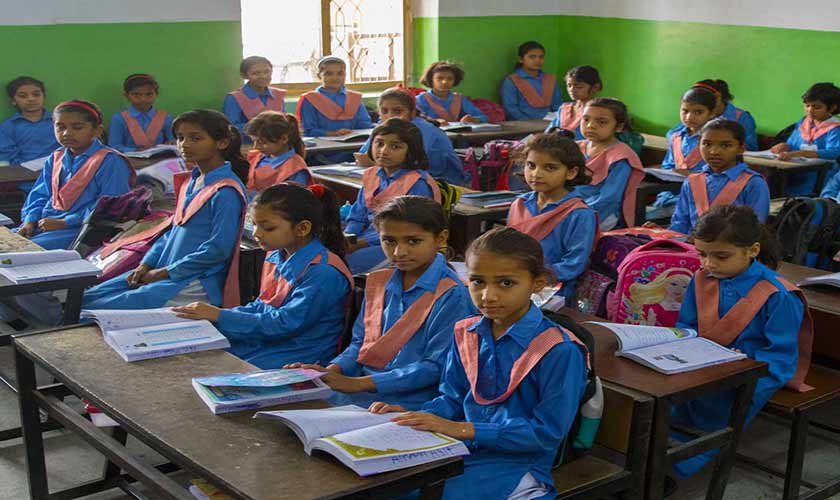
The government has recently come up with what it calls a ‘single curriculum’ for Classes 1-5. Let me first acknowledge that some important subjects, previously neglected, have been introduced. Among these are hygiene, care of neighbours and some idea of politeness markers in speech and body language. These, I have always contended, should be taught in all schools and to all students. These are part of general knowledge curriculum, however, whereas they deserve to be subjects in their own right. Also, the ahadith have been well-chosen.
Now I come to what I find alarming: there is a greater burden of learning on all students; no incentive for critical thinking and an increase in intolerance, sectarianism and discrimination against religious minorities.
Let us look at the learning burden first. What children were taught at the maktab (the junior schools in the madarsa system), namely, Quran nazira (i.e reading without translation or memorising), will now be taught in all schools. In addition to that, the hadith, which was taught in the madrasa but not in the maktab, will also be taught.
Muslim children have always been taught reading of Holy Quran at their homes. So the basic change here is to transfer this obligation to the schools. Will this have any unintended consequences? Yes, it will increase memorisation since children will be asked to memorise the texts from both the Quran and the ahadith.
When parents teach children the Quran there are no examinations to test the children’s memory. Moreover, parents can space out the learning of the sacred texts over as many years as they think appropriate whereas the schools will allow no flexibility.
The ahadith were never memorised by children; now that they will be examined, it will be required. Lest anyone should imagine that only the children of secular schools will face this additional burden, I should add that the madrasa children will also suffer. If they take the matriculation and intermediate examinations, they will have to learn their own subjects besides mathematics, Urdu, English and general knowledge, including science.
The maktab ends at Class 8 and the Dars-i-Nizami starts with Oola (9th) followed by Sania (10th).The Arabic courses in the Oola and Sania alone include several medieval books on grammar: Mizan as SarfMunsha’ibNahw-i- Mir and so on.
Besides the traditional books, the children have to learn Arabic from more modern texts with emphasis on memorisation. If anyone thinks this will leave them sufficient time to tackle modern subjects also—and this makes me think of the overladen satchels of our children and the loads of homework they are given—I would politely ask that person to go study in a madrasa.
Another real-life aspect of the matter which the architects of this single curriculum never thought about is that it simply is not ‘single’ anyway. The children of religious minorities will still be taught other subjects during the time Muslim children are made to memorise what the teachers order. Whether what these children study is as difficult, as demanding and how they are taught is one problem.
I am most concerned with the ‘othering’ these children will be subjected to. Their class fellows will see them going out and will be told by insensitive teachers that they are ‘unbelievers’. Thus, the minorities will be further alienated and ostracised in our schools. There is already a study by the SDPI called, Connecting the Dots, which makes it clear that Hindu children are forced by teachers to study Islamic studies. Some teachers even taunt them calling them ‘idol worshippers’ and ‘kafir’ and so on. Will this discrimination be extended now to Christians, Sikhs and Ahmadis? Incidentally, the last mentioned religious minority revere the Quran as their holy book, so what will they study?
If the present trend of including large parts of madrasa education continues, another consequence of the policy of single curriculum in senior classes will be creating the potential for further religious polarisation. While there may be some sectarian undertones even in teaching up to Class 5, the senior classes will have more amplified versions of those.
The madaris teach refutation of other points of view (radd). Indeed, the debates (munazara) in all schools of thought—Deobandi, Barelvi, Ahle Hadith, Shia, etc—teach students how to refute the beliefs of the other sects and sub-sects. So, at this stage, even the teaching of Islamic history (Jang-i-Jamal, for instance) and hadith will lead to controversies. Moreover, even if the exegesis of the Quran is not formally taught, the maulvis will refer to it and their interpretations of verses will vary.

Let me be blunt for a change: I think this pursuit of sameness in the name of equity and justice is a blunder; I think it has the potential to increase religious and sectarian controversy and increase intolerance: I think it will not help children become more gender-sensitive.
The traditional Sunni exegetes, the modernists (progressives) and the radical Islamists (among whom there are some militant groups) will interpret the same verses in different ways, leading to controversy. The Pakistan Army has already experienced this state of affairs when fighting the Taliban in what used to be the FATA. Initially, some of our soldiers got seduced by the militant interpretations they heard from radical Islamist preachers. Some even defected but the army succeeded in containing this tendency. Will we be able to control the preachers we recruit for our schools and colleges? Suppose some students prefer the more radical interpretations they hear or read?
The government claims that students will develop critical thinking. The instructional model of the madrasa system is based upon memorisation because the system is based on preservation and respect for the past and not on questioning. Modern science, on the other hand, is based on questioning the past not revering it; on critical thinking not on uncritical acceptance of authority. The two paradigms are based on different ways of responding to the world and if we want critical thinking to increase, then we would have to develop analytical skills and questioning. Will this aim be served by this large dose of memorisation and the basic premise of unquestioning acceptance of what the teacher tells us?
Yet another factor which nobody seems to have paid sufficient attention to is the huge influx of madrasa graduates in schools to teach Islamic studies. As it is, our society is critical of those who are different from the majority or the fashionable normative framework. Teachers of religion, no matter what sect they belong to, will probably be critical of girls who dress differently from what they prescribe. As they will operate in the name of the sacred, they will be difficult to refute or ignore.
Girls and women teachers will either be forced to change their lifestyle or bear the guilt of appearing as sinners. Indeed, with so many religious teachers in all institutions the very atmosphere of these institutions will change. We will have less tolerance for Western dresses, liberal ideas, religious minorities and even certain sects and sub-sects. So, how can we employ madrasa graduates? Well, they are specialists in theology and there are places for them in the mosque and seminary system. However, the state should not abandon poor children so that they are forced to study in the free madrasas. State schools should teach all children so that only those committed to a clerical life study the Dars-i-Nizami and graduate from a madrasa.
From a personal point of view, the whole thing is ironical for me because some of my work (Denizens of Alien Worlds, 2004 for instance) has been quoted in support of the present policy. What I was interested in was justice and equity, not sameness.
I had argued that all children, as far as possible, should be taught in their mother languages during the first three years of education. Then, I suggested, secular schools should teach English as a library language through the most innovative and interesting methods of instruction (play, drama, real-life dialogue, film, song, etc). However, the medium of instruction should be the language of wider communication (Urdu or maybe Sindhi in parts of Sindh).
Higher education, however, should be in English in all subjects. I also said that more liberal-humanist texts should be prepared in Urdu and that modern knowledge should be translated into it. My aim was to dilute the advantage rich people in English-medium schools have in South Asia. I also never envisaged that we should abandon English at the higher level as it is a world language. I did advocate making some core subjects the same. These were hygiene, basic preventive medicine, mental health, environment, human rights, women rights (anti-harassment sensitiveness) and world history.
I thought they should be taught to all students in Urdu supplanted with English videos and films. But the history and heroes of ethnic groups (Sindhi, Pashtun, Balochi, Punjabi, Seraiki, Urdu-speaking people, other ethnic and linguistic minorities etc.) would be different, not the same. I also suggested that, with schools not using English as a medium of instruction, the O- and A- level examinations will come to an end. I knew that the English-medium schools would be up in arms against my suggestion. I know now that none of the things I suggested, including an end to O- and A-level system, has been accepted in the new policy. To suggest that I recommended the idea of sameness in education is simply ignorance.
Let me be blunt for a change: I think this pursuit of sameness in the name of equity and justice is a blunder; I think it has the potential to increase religious and sectarian controversy and increase intolerance: I think it will not help children become more gender-sensitive or caring for the environment or aware of health issues. In short, it is a dark alley we are entering. I hope I am wrong but this is my honest opinion.