Saturday, August 8, 2020

Lesbian lovers and a boxer in a burqa: a new look for Pakistani TV


 By Alia Waheed

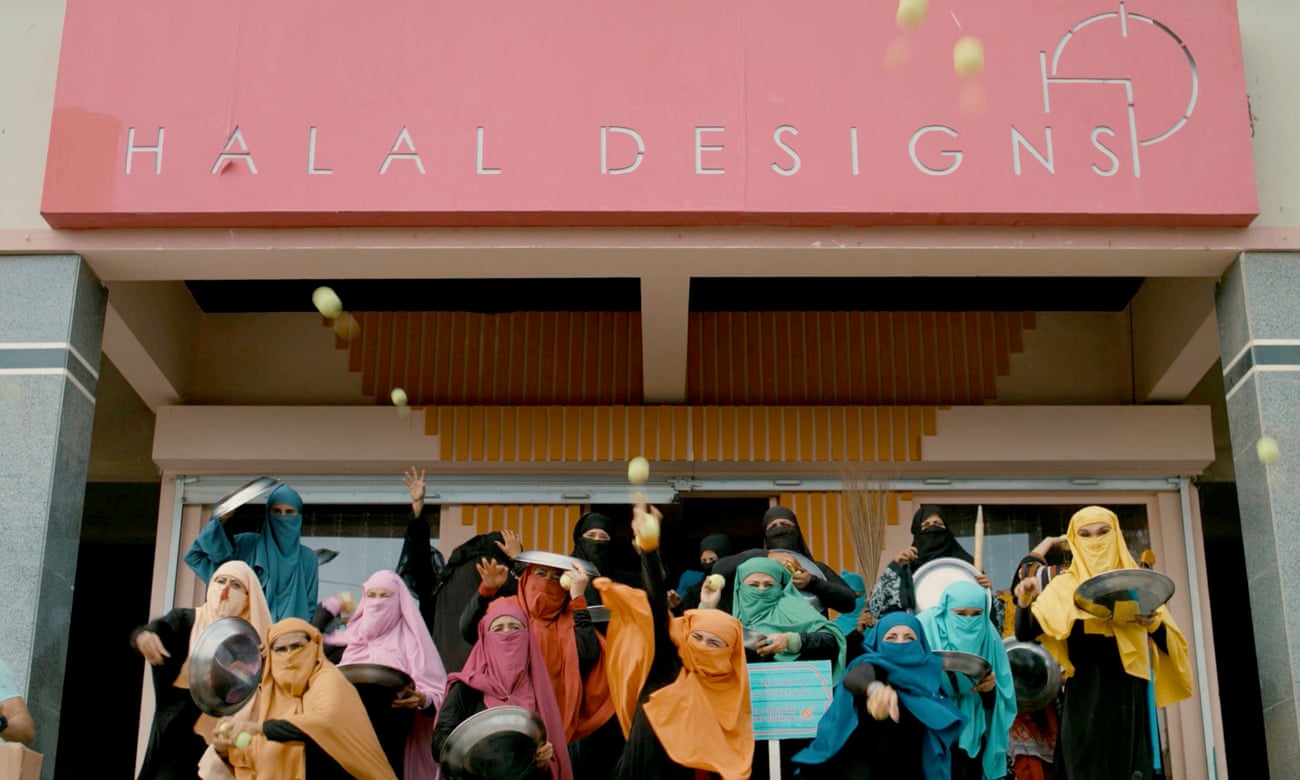
 Aburqa-clad boxer, a high-society wedding planner and an ex-convict may sound more like the wish list for the next series of Big Brother, but they are just some of the characters in a groundbreaking new Pakistani drama show.
Dubbed “Lock, Stock and Four Smoking Burqas”, the series, called Churails, is the first made in Pakistan to feature a lesbian relationship. It was written and directed by British Pakistani film-maker Asim Abbasi, and tells the story of four women who start a detective agency to catch out cheating husbands, behind the facade of a burqa boutique.
“Churails is a story about women on the fringes of society,” said Abbasi. “In Pakistan, being a woman is the equivalent of being a sexual or ethnic minority because of the power dynamics of patriarchy. The series is very culturally specific, but also very universal.”
However, the series, which starts this week is more than just Desperate Housewives in hijabs. The smoking and swearing of the main characters has proved controversial, as has the tackling of issues such as child abuse and domestic violence, as well as same-sex relationships, which are illegal in Pakistan.
 The title of the show literally translates to mean witches, but is more commonly used as an insult for rebellious women


Asim Abbasi, film-maker
“Because we are showing such a diverse range of women, it was important to show the entire spectrum of sexuality. It would have been wrong if they were all straight because not all women in Pakistan are straight,” said Abbasi, who is based in Leeds.
There is also a transgender character. “The reason the women open the detective agency is to level the playing field for everyone who identifies as a woman, so a transgender character who identifies as a woman should be included.”
He added: “The fact that she’s transgender is not addressed on the show and that is deliberate. It’s not that I was overlooking her identity or ashamed of it. It was to show the women coming to the agency were all equal.” The title of the show literally translates to mean witches, but is more commonly used as an insult for rebellious women. “The associations of women who don’t conform with witchcraft is a global phenomenon, but in Pakistan specifically, any woman who is sexually and emotionally liberated, who has the ability to be aggressive when threatened is called a churail. We are taking it as a badge of honour.”

Character boxer Zubaida in boxing ring.


Abbasi, who was born in Pakistan and moved to the UK as a teenager, was approached by Indian streaming service Zee5 to make the series, following the success of his debut film, Cake. “When people say this is not representative of our culture, what they mean is they don’t want to acknowledge these women exist in our society. What people think is vulgar today will not be considered vulgar in 10 years’ time. If we are going to change things, we as film-makers have to push boundaries.”
With TV dramas in Pakistan traditionally female-oriented, they tend to focus on domestic issues such as cheating husbands and hard-to-please in-laws. However, with Churails, Abbasi hopes to capture not only the young generation in Pakistan who are more influenced by Breaking Bad than Bollywood, but also global audiences who have more exposure to foreign TV shows thanks to streaming services.

You could say that Churails should have been made by a woman, but those opportunities aren’t there for women in Pakistan yet. I want to be an ally so their stories can be told
Asim Abassi

 Actress Mehar Bano, 26, who plays a boxer, Zubaida, said: “The fact that we have moved on from pandering to a national audience and are now targeting a global market is a feat in itself. To initiate this with a show about women taking charge of their own lives, claiming their space and dismantling the patriarchal structures is outrageous and groundbreaking, especially for a country like Pakistan where female characters on local TV reinforce misogynist values.”
The launch of the series comes at a time when the representation of Asian women on British TV has been in the spotlight in shows such as the BBC’s A Suitable Boy, and Indian Matchmaking on Netflix, but for many it has not been as progressive as it could be, with critics saying they were regurgitating the same arranged marriage narratives.
“While we aren’t where we should be in terms of diversity, we have to start somewhere and adaptations are culturally rich,” said Abbasi. “You could say that Churails should have been made by a woman, but those opportunities aren’t there for women in Pakistan yet so I want to be an ally so their stories can be told.”
So at a time of A Suitable Boy, could a series about a group of unsuitable girls be the one that brings radical change to Asian representation on TV? “I hope so,” he said.
#Pakistan - The Assembly cannot tell anyone what his/her sect would be.

Parliamentary Leader Pakistan Peoples Party Punjab Syed Hassan Murtaza while expressing reservations in the Punjab Assembly on the Protection of Islam Bill (Punjab Tahaffuz-e-Bunyad-e-Islam Bill 2020) has said that the Assembly cannot tell anyone what his/her sect would be. Describing his dissociation from the bill, he said, “My name was also included in the committee. Although I do not know what the bill was and when and how it was passed, I have never been attended the meeting of the committee and I have never been involved in the whole legislative process, nor was I informed of any kind of the meetings, We were kept in the dark about this bill and without our knowledge, this controversial bill was passed, he added.
Demanding the withdrawal of the bill, he said, “We believe in ‘Khatam-un-Nabiyeen’ (The Last Prophet), we greatly respect all the companions, but we cannot give anyone the right to interpret my or anyone else’s creed, sect.” Let the people live according to their faith, sect, creed. He asked whether the politicians, parliamentarians have solved the basic issues, problems of the citizens, like employment, health and education, have they eliminated the exploiting classes from the society? So, now they are correcting and interpreting peoples’ sects and cults? He said that textbooks should not contain hateful and malicious material that would offend anyone, insult anyone, and hurt the beliefs, feelings, and sentiments of any sect, jurisprudence. But the officer of the Directorate General Public Relations cannot be given the authority to tell the nation what education to get. The matter of the nation’s education cannot be left to the discretion of a government official, he noted. He maintained that the duty of politicians is to provide relief to the citizens and to legislate in this regard. It is not our job to interpret any creed or sect; rather, such issues belong to the religious institutions, the Ulema Board, the Islamic Ideological Council, in which all schools of thought are represented, he concluded.

Friday, August 7, 2020

Music Video - Dua Lipa - Break My Heart

Video Report - #Coronavirus #SecondWave - Coronavirus Second Wave: Scaremongering or Real Danger?

Video Report - #Beirut #Lebanon Will the Beirut explosion lead to political change in Lebanon?

Video Report - Anti-government protest in #Beirut | DW News

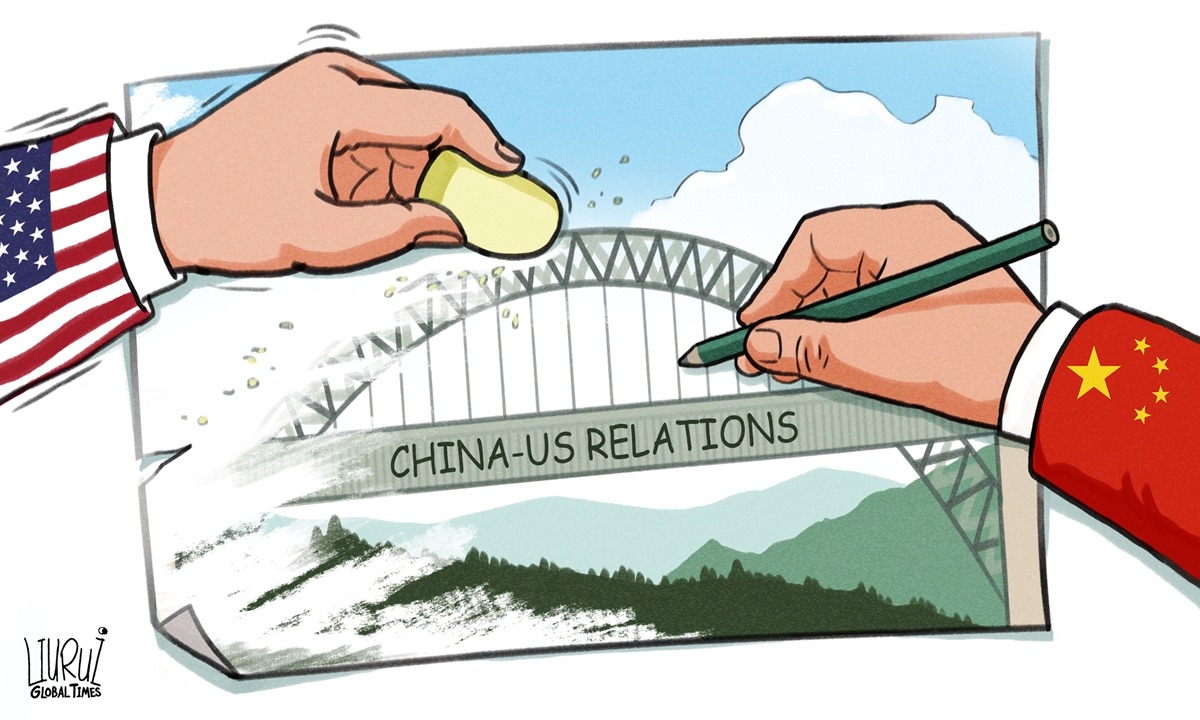
Why has the US abruptly turned against China?: Global Times editorial

Why has the US unexpectedly turned against China? Is there still room for China and the US to ease tensions and avoid an all-out confrontation?

This is the most common sentiment among US political elites: The US has been in contact with China since the early 1970s, and has long believed that the market economy boom, brought by such contact, will eventually lead to the so-called political liberalization in China. However, they are completely disappointed now.

We believe such an explanation is the US elites' selective self-beautification, as well as their moral mobilization of the US and the Western world's confrontation with China.

The détente in the China-US relations started with former US president Richard Nixon's China visit in 1972 during the peak of the Cold War. The US, forced by the Cold War, had to take the initiative to approach China. At that time, China had a sharp ideological confrontation with the West. But the rapprochement of China-US relations reshaped the geopolitical structure of the Asia-Pacific region and affected the trend of the Cold War. This was Washington's true purpose.

After China's reform and opening-up in late 1970s, China and the US formed a wide range of contacts. But until the end of the 1980s, the US' biggest consideration for China had been using China's power to accumulate bargaining chips against the Soviet Union. 

After the end of the Cold War and throughout the 1990s, Washington's strategic focus was to digest its achievements during the Cold War. China, as an emerging market, attracted the huge interest from the US during that period. The US conservative elites have never given up hostility toward China, but the huge potential of the Chinese market prevented the spread of such hostility.

After the US' counter-terror war, the sense of major power competition was strengthened again in the US. China's rise has gradually reached the critical point of US strategic tolerance. The Trump administration considers China the US' largest strategic competitor. US policy toward China has undergone a fundamental reversion.

The US never faced a country like China before - a huge country with rapid development and unlimited potential. Washington's political elites are panicking. Their Cold War mentality has been fully mobilized. The US' hegemonic interests have been placed in an overwhelming position in the China-US relations, and the two countries' huge economic interests have been relegated to the back seat. It seems the US has suddenly returned to the 20th century. 

China also has no experience in interacting with the world hegemony. In the face of the US' fierceness, should we try to calm it down, or should we do our own thing well and counterattack? This is what we need to explore.

However, we believe China's overall innocence will affect the development of the situation for a long time to come. That China is growing into a major country is driven by Chinese people's desire to get rid of poverty and become prosperous. It is not a conspiracy campaign to overthrow the US. China's military development is also in line with its expanding strategic risks and its need to protect national interests. China is still a strategically defensive country without any ambition to expand. Our "toughness" is a strategy to protect our core interests, not to reset the world order.

The US has seriously misjudged China's strategic motives. China is a huge society, and internal affairs have been the country's focus of governance. The Communist Party of China (CPC) is the core force leading the Chinese people to fulfill arduous tasks. Since the 18th National Congress of the CPC held in 2012, the anti-corruption campaign has profoundly changed the style of government, the information industry has brought convenience, and China has also taken steps in new countryside construction, and fairness and justice. China has also adequately put the COVID-19 epidemic under control. This is the period when China's politics is unprecedentedly stable. 

The US has no ability to crush today's China, because China is already powerful enough but it does not take the dangerous road of expansion. Although China has ideologies different from those of some Western countries, it does not sow seeds of hatred. This is why the US has encountered resistance while trying to form an anti-China camp.

The US ruling team's understanding of US interests as well as China is outdated. It is the 21st century, rather than China, that they are fighting against. They will inevitably run up against the wall.

https://www.globaltimes.cn/content/1195495.shtml

Pashto Music Video - Gulnar Begum - Na Darze Pa Laas Zulfi Zama

Video Report - #NayaDaur We Call PM As Taliban Khan Because He's A Coward | Bilawal Bhutto

Video Report - #NayaDaur #SaudiArabi #Pakistan Pakistan, Saudi Arabia To Part Ways?

Four Baloch men abducted from Sindh and Balochistan

Pakistani security forces and intelligence agencies have abducted at least four Baloch men from the Kech district in Balochistan and Sindh’s Khairpur district.
According to details, the Pakistani intelligence agencies and Sindh Rangers have raided a house in Mesali Goath area in Khairpur Sindh and abducted two brothers on Wednesday evening (04/08/2020).
The victims have been named as Kachi Khan Marri and Zamur Khan Marri, Baloch Internally Displaced Persons (IDPs) who were forced to flee Balochistan due to continuous attacks by Pakistan military.
The Sindh Rangers has not informed the family of both brothers about their whereabouts and wellbeing.
It has been the modus operandi of the Pakistani intelligence agencies including ISI, MI, and the local authorities they once they abduct someone, they keep them incommunicado for several months without any legal representation.  
Previously, the Sindh Rangers and Punjab police have abducted disappeared several Baloch IDPs belonging to Marri and Bugti tribes of Balochistan.
It must be recalled that on the eve of Eid the Punjab police had shot dead five previously abducted Bugti Baloch in Arabi Dabba near Rajanpur in a staged encounter.
Pro-freedom Baloch political parties including the Free Balochistan Movement (FBM) and the Baloch Republican Party (BRP) strongly condemned the brutal extrajudicial murder of the five Bugti Baloch by Punjab Police.
The Baloch Republican Party has also held protests in the UK, Germany and Greece to condemn the Rajanpur incident and highlight ongoing Pakistani state brutalities against Baloch people.
On Wednesday, Baloch and Sindhi human rights activists held a protest in Karachi and strongly condemned the killing of five Bugti Baloch in Rajapur by Punjab police.
The protesters have demanded full independent inquiry of the incident.
In another similar incident in Balochistan, the Pakistani security forces whisked away two Baloch youths during an offensive in district Kech, Balochistan in the early hours of Tuesday morning on the 4th of August.
The abducted youths have been identified as Mukhtar son of Majeed and Abdul Wahab son of Mullah Abdul Hakim residents of Menaz region of Buleda, district Kech.
The incessant disappearances in Balochistan continue unabated and in recent days, several persons including Waqar son of Hashim was abducted from Pidarak area of Ketch, Abdul Qaddos from Dasht and Wajid son of Muhammad, Muhammad Ali son of Wajid, Elahi Bakhsh son of Talaho were arrested and disappeared from Kolwah Balochistan.

Afghanistan: Extremism To Increase After Peace Process And Threaten Security – OpEd

By Saber Amini
Extremism and terrorism are twin phenomena ,but unfortunately for years in Afghanistan we fight against terrorists with no plan against extremists, where extremism is a preparatory (radical thoughts) but terrorism is the practice of violence act.
Extremism is a ground for terrorism. Extremism appears first in the form of some very radical ideology which opposes to the acceptable laws, norms of the society, government and foundations, then extremism turns to the terrorism. Therefore, to break the cycle of violence, efforts to counter- extremism should be done simultaneously while countering- terrorism.
When the government increased joint Afghan-US military operations, we had seen some positive result in fight against terrorists group like Al Qaeda and Daesh branch of Khurasan but extremism is still active in the country.
The Daesh branch of Khurasan in North of Afghanistan claimed to gain the territory and want to make their own government in Khurasan (part of Afghanistan, Iran and Turkmenistan) but after their military defeat in North and East the establishment of Wilayah Khurasan remains a part of propaganda that Daesh continues to push.
As Afghan and US governments announced new approach of peace process with Taliban the concerns increased regarding extremism in the country. Taliban fighters in Khogiani district of Nangarhar province, Afghanistan. Since 2011, Qatar has hosted Taliban leaders who have moved there to discuss peace in Afghanistan.
In 2014 US and NATO ended their combat mission in Afghanistan, staying only to train Afghan forces (RS) so, the message was clear; both Afghan and US government announced there is no military solution to end war in Afghanistan.
Finally, US and Taliban signed the peace agreement in Doha, Qatar in February 2020 that mentioned US government should decrease their forces and Taliban accepted refraining from using the Afghan territory against US. Meanwhile, the intra-Afghan peace process is on the way and the government selected the team to start negotiation with Taliban and agreed to release 5000 prisoners of Taliban.
So far, two important points increase extremism in Afghanistan: First, in Doha, while the Taliban accepted refraining from the use of the Afghan territory against US and other countries, however they did not mention stopping extremism and terrorist acts in Afghanistan.
Therefore, Taliban have open hand to continue their terrorist attacks against Afghan national defense and security forces.
As per national Security Council report which announced on 22 June 2020 Taliban killed at least 41 Afghan defense and security forces each day.
Second, the Taliban precondition for Afghan peace talks the government should release their prisoners and if the peace process succeeds a large number of Taliban fighters will return to cities with their radical ideology.
In the absence of intervention strategies, it is without doubt that both the Taliban prisoners and Taliban Fighters will continue their extremist’ path in Afghanistan and It is plausible, these extremists may gradually transform into domestic terrorist group or join regional terrorist groups. Furthermore they can cross the Afghan borders and operate on an international level.
Releasing the Taliban prisoners with no monitoring system and rehabilitation programs can prove a large strategic threat in the long run.
Then returning of Taliban fighters from battlefield with their radical ideology to cities will increase the concerns regarding heightened extremism in the country and will as a result threaten national, regional and international security.
As mentioned above counter- extremism should be addressed simultaneously with countering – terrorism. We need to develop the firm monitoring system and rehabilitation programs for extremists especially for Taliban prisoners and their fighters. A strong legal framework against extremism is a necessary step forward because we can`t fight against extremism when there is no criminal responsibility for acts, which are characterized as extremist. https://www.eurasiareview.com/07082020-afghanistan-extremism-to-increase-after-peace-process-and-threaten-security-oped/

New China-Pakistan Axis Undermines U.S. in Afghanistan, Strengthens Uighur Persecution

By Paul D. Shinkman
A previously unreported intelligence arrangement between Beijing and Islamabad reveals increasingly potent influence in Afghanistan and elsewhere in the region.

CHINA AND PAKISTAN HAVE begun an unprecedented intelligence-sharing arrangement in an attempt to secure Beijing's influence in Afghanistan at the expense of the American government, U.S. News has learned.
The new relationship is the culmination of a series of previously unreported moves, designed to help China exploit its economic investments in Afghanistan while also stifling outcry over its persecution of the Uighur minority Muslim population near China's western border with Afghanistan and Pakistan.
The timing of the new relationship has become deeply consequential as President Donald Trump intensifies his designs to withdraw U.S. forces from Afghanistan after 20 years of war. It has created new concerns among American intelligence officials, who believe China will capitalize on ongoing problems in the administration's effort to secure a peace deal with the Taliban and that Beijing will further expand its influence into other contested parts of the region.
"The reality is now dawning within the intelligence community," says a source familiar with a U.S. assessment who spoke on the condition of anonymity. "We are now leaving Afghanistan, but who are we leaving it to?"
In a seemingly unprecedented move, China has granted the Pakistani Defense Ministry access to one of the most secretive gatherings within its military infrastructure as a show of good faith. Little is known about the Joint Staff Department within China's elite Central Military Commission, including who attends, but access has historically been limited only to senior Chinese leaders. However, as a part of Beijing's realization it needs Pakistan's experience in neighboring Afghanistan as well as Islamabad's connections to the insurgent groups operating there who will determine the war-torn country's fate, it has invited a Pakistani general to sit in on its highly restricted meetings as an observer.
Working together, China and Pakistan have secured pledges from Taliban leaders not to provide safe haven or support to their fellow Muslim Uighurs from neighboring western China who have become a central concern of Beijing's. The arrangement far exceeds any accommodation the Afghan insurgent network has ever afforded the U.S. with regard to Washington's concerns about al-Qaida presence in Afghanistan.
These revelations are a part of a new U.S. intelligence assessment detailed for U.S. News with wide-reaching implications, including granting China a strategic – and deadly – advantage in other regional aspirations, principally its ongoing border dispute with India, Pakistan's chief rival.
Neither the Pakistani nor the Chinese governments responded to requests for comment about the arrangement or how it could affect future relations with the U.S.
Current U.S. government officials and analysts who spoke with U.S. News described how closely Pakistan fits into China's ambitions for its southern and western border regions, and that shifting priorities in Beijing necessitate more cooperation than before with a limited number of outside countries.
"If the Chinese are bringing Pakistan more 'behind the curtain,' in terms of intelligence and military cooperation, it will be tailored to their common interests like confronting India over territorial disputes," says Vikram Singh, a former top official at the Pentagon for South and Southeast Asian affairs, now senior adviser at the U.S. Institute of Peace's Asia Center. "Pakistan's leadership has really backed China on Uighur internment, even though Pakistanis are upset by the repression of Muslims in Xinjiang."
And the idea of new intelligence sharing is not unprecedented. The New York Times reported earlier this month that China and Iran created a new military and economic pact, to include new forms of collaboration on intelligence.
Though Pakistan's alliance with China is not new, the latest developments represent a dramatic escalation of the partnership in recent years. And they follow tensions with the Obama and Trump administrations that spiked in 2018 when long-standing American concerns tumbled into public view, centering on Islamabad's support for the same terrorist networks that the U.S. was trying to defeat in neighboring Afghanistan. Pakistan at the time pledged to cease intelligence sharing with the U.S., and Washington said it would cut off hundreds of millions of dollars in military aid to Pakistan. At that time, Chinese President Xi Jinping felt mounting pressure regarding the economic investments China had made in Afghanistan in prior years – principally in mineral wealth costing billions of dollars but left largely inaccessible due to the ongoing violence there. Beijing also faced surging condemnation globally for its attempts to clamp down on the Uighurs, native to the part of Xinjiang province in western China that Beijing considers a threat to its unilateral control of the vast nation.
Uighur extremists have previously looked to the Taliban in Afghanistan as a potential source of support for an insurgent campaign against Beijing. China's latest moves have all but ensured that will not take place. And they follow other military adventures there – Sen. Lindsey Graham, South Carolina Republican, told a small group of reporters in December shortly after visiting the region that China has deployed a battalion of troops across its border into a narrow sliver of land connecting to Afghanistan's extreme northeast as a part of an experiment in working with local forces to determine if future direct partnerships are possible.
Relations between the U.S. and Pakistan have marginally improved in recent years, not in the least due to Islamabad's participation in U.S.-led negotiations with the Taliban over a shaky peace deal. However, U.S. intelligence now assesses that Pakistan believes it can manipulate its relationship with the Americans in a way it cannot with its gargantuan northern neighbor. Indeed, China's partnership with Pakistan is not limited to enticing it into cooperation. Beijing has also gained significant economic leverage over Pakistan through its Belt and Road Initiative, including projects to create new transportation networks through the country to its southerly coast, known as the Chinese-Pakistan Economic Corridor, which Beijing sorely needs to maintain shipping access to its economic interests in and around the Indian Ocean.
China also benefits from Pakistan's insights on other regional concerns. U.S. intelligence officials noticed that Chinese forces had a greater understanding than before into Indian troop positions and movements ahead of the deadly border clash on June 15. The officials believe Pakistan's military leadership likely shared their intelligence assessments of the Indian army's disposition with their Chinese counterparts. This comes as China has used its influential position within the U.N. to support Pakistan's claims on the contested region of Kashmir amid new forcefulness from India.The arrangement appears to have also worked in muzzling Pakistan over China's more provocative actions in recent months. Pakistani Prime Minister Imran Khan has shown particular discipline in not criticizing China about its treatment of the Uighurs – a notable achievement in that Pakistan is a principally Muslim nation. The U.S. assessment reflects a belief that his silence serves as a critical component of Beijing's attempts to appear legitimate in its treatment of that ethnic sect.
In response to a detailed question last year about his silence, Khan hinted at a new understanding with Beijing. "With the Chinese, we have a special relationship. And – it's the way China functions – any issues like these we talk to them privately, we don't make public statements, because that's how China is," Khan said during an event organized by the Council on Foreign Relations in September.
Khan referenced the series of bailouts China afforded his country shortly after he became prime minister amid an economic crisis in 2018.
"China came to help when we were right at the rock bottom," he said.
May marked the 69th anniversary of Pakistan and China's formal diplomatic ties. A spokesman for the Chinese Foreign Ministry described the occasion to say the relationship remains "firm as a rock."
https://www.usnews.com/news/world-report/articles/2020-08-06/new-china-pakistan-axis-undermines-us-in-afghanistan-strengthens-uighur-persecution

Imran Khan’s Pakistan might end up regretting its new ‘political map’. Here is why

Shishir Gupta
PM Imran Khan’s new political map sounds the death knell to the self-determination movement among separatists in Kashmir as it leaves no scope for a plebiscite, or to sell the dream of an independent Kashmir.
Prime Minister Imran Khan’s move to unveil the so-called new ‘political map’ of Pakistan by including the entire erstwhile state of Jammu and Kashmir as well as Junagadh in Gujarat may be an exercise to appease the domestic political sentiments but the move is fraught with serious implications. And none of them are good for Pakistan.
Such maps were published in 1947-48 when Mohammed Ali Jinnah was Pakistan’s first governor general. But the Islamic Republic had to rework the map that then had also included East Pakistan or the present day Bangladesh.
The so-called new political map released by PM Imran Khan sounds a death knell to the self-determination movement among separatists in Kashmir Valley as Islamabad has now co-opted Jammu and Kashmir, leaving no space for either plebiscite or independent Kashmir. This does not come as a surprise to Kashmir watchers in New Delhi as both self-determination and so-called freedom struggle was a ruse for cross border terror activities.
By showing the northern areas of Gilgit-Baltistan as part of Jammu and Kashmir, Islamabad’s promise of greater autonomy to this mountainous region stands nullified as the region has been merged with predominantly Sunni regions of Mirpur and Muzaffarabad as also the Valley.
However, the impact of PM Khan’s cartographic hallucination on India-Pakistan ties is very significant. By reopening the 1947-48 maps, Pakistan has given up on bilateralism of 1972 Shimla Agreement and 1999 Lahore Declaration - the two agreements that committed both nations to resolving bilateral disputes bilaterally - and paved a way for unilateralism. Does Imran Khan’s ‘Naya Pakistan’ also want to give up other bilateral pacts too? Like the bilateral 1960 Indus Water Treaty that allows waters of Indus, Chenab and Jhelum to be used by Pakistan while allocating Beas, Ravi and Sutlej waters to India?
While the Indian government has dismissed the new Pakistan map as a “political absurdity”, the map opens up the route for unilateralism by India should it choose to invoke it in future as Islamabad has indulged in unilateralism by issuing a new map that depicts territories firmly under Indian control as Pakistani territory.
But the map is also telling commentary about Pakistan’s relationship with its ‘iron brother’ China that has been engaged in a standoff with India for the last three months in East Ladakh. PM Khan, who is often accused of reducing Pakistan as a client-state of Xi Jinping’s China, has not only kept Shaksgam Valley and Aksai Chin out of its cartographic expansion but also left this frontier undefined to let China draw the line on the map.
It is quite evident that Pakistan has followed Nepal. Kathmandu had issued a map to emphasise its illegal claims on Lipulekh, Limiyadhura and Kalapani in India’s Uttarakhand on 21 May 2020. It is not mere coincidence that both Pakistan and Nepal are close allies of Beijing with the latter pumping in money in form of infrastructure aid to prop up both regimes.
Although India has no desire to either expand its territorial claims or give up on bilateralism vis-a-vis Pakistan, the map reflects the frustration within the Imran Khan government over its inability to get the international community to side with Islamabad on the Kashmir issue after the abrogation of Article 370 on August 5 last year.
Pakistan watchers also see the move as a response to the rise of India in the comity of nations, particularly after the Indian troopers stood up to an aggressive People’s Liberation Army in Ladakh, particularly the bloody clash at Galwan on June 15. The larger question on how to deal with India is part of regular interlocution between foreign offices of China and Pakistan.
https://www.hindustantimes.com/india-news/imran-khan-s-new-political-map-will-backfire-on-pakistan-here-is-why/story-6PhKeCSkiproZshBGypkEI.html

Why Pakistan blames Saudi Arabia and the OIC for Kashmir setback

Angered by Indian belligerence, Islamabad wants Muslims countries to do more in highlighting the plight of Kashmiri Muslims. Experts say, however, its own response is lacking.August 5 was a tense day in the Indian subcontinent. Amid the chants of Hindu religious slogans, Indian Prime Minister Narendra Modi laid the foundation stone for a temple at a disputed holy site in the northern Ayodhya city.
In video footage and photographs, Modi was seen pressing his forehead to the ground and performing religious rites during the ceremony. The temple is being built atop a site where the 16th century Babri Masjid (mosque) once stood.
Hindu extremists had demolished the mosque in 1992, sparking communal riots in which hundreds of people - mostly Muslims - were killed. For years, Indian Muslims fought a legal battle to rebuild it. Last year, an Indian court handed it over to the Hindus.
It is not just the temple, named Ram, that has angered the Muslims. The inauguration took place on the first anniversary of the abrogation of Indian administered Kashmir’s nominal autonomy. The scenic Himalyan region of Kashmir is claimed by both India and Pakistan, which the latter also partly controls. However, India-administered Kashmir is the only Muslim-majority state in the country of 1.2 billion people. As well as this, Kashmiri Muslims fear Modi’s ruling Hindu natiionalist Bharatiya Janata Party (BJP) is trying to alter demographics by turning Muslims into a minority.
“Basically, with the events coinciding, India is trying to say it doesn’t fear anyone anymore,” says Dr Shaista Tabassum, a Karachi-based international relations expert. “This is happening at a time when Pakistan is seriously lacking in its response. I’m not even sure if we even have a concrete policy to deal with the Kashmir issue.”
A brotherhood no more
In this context, it came as a surprise when on the same day, Pakistan’s Foreign Minister, Shah Mehmood Qureshi, expressed frustration over the response of the Organisation of Islamic Conference (OIC) and Saudi Arabia on the human rights violations in IAK.
“I am once again respectfully telling OIC that a meeting of the Council of Foreign Ministers is our expectation. If you cannot convene it, then I’ll be compelled to ask Prime Minister Imran Khan to call a meeting of the Islamic countries that are ready to stand with us on the issue of Kashmir and support the oppressed Kashmiris,” he said in Urdu on a TV talk show. When the show’s host asked if that meant a move forward, except without Saudi Arabia, Qureshi said Islamabad will proceed “with or without” its oil-rich Arab backer. The next day, Pakistan’s foreign office reaffirmed the minister's statement, saying it reflects the “aspirations” of Pakistani people.
Pakistan has for months pushed the 57-member grouping, based in the Saudi city of Jeddah, to call a meeting of top Muslim diplomats. The move, though, has been blocked by Saudi Arabia.
Qureshi’s comment coincided with news that Pakistan has prematurely repaid a $1 billion loan to Riyadh, something that has given billions of dollars in loans to Islamabad to boost its foreign currency reserves and avert a balance of payments crisis. “It’s certainly possible that Pakistan will participate in a meeting about Kashmir outside of the OIC framework,” says Rupert Stone, a Middle East analyst, adding that a forum of Muslim leaders that met in Malaysia last year can be an option.
In December 2019, Imran Khan faced embarrassment as he backed out of a meeting of Muslim leaders in Kuala Lumpur under Saudi pressure.
That summit was attended by leaders from Iran, Malaysia, Qatar and Turkey - these are countries that have openly come out in support of Pakistan on the Kashmir issue.
At the same time, the Saudis and Emiratis have reinforced economic and diplomatic ties with Modi’s government. The Saudis gave a muted response when Modi’s government changed the status of Kashmir last year, and the UAE brushed it under the carpet, saying it was India’s “internal matter”.
Abu Dhabi’s Crown Prince Zayed Al Nahyan conferred the highest civilian award to Modi who had just days earlier unilaterally decided to strip disputed Kashmir its special status and enforced a communications lockdown. “The Kuala Lumpur summit seemingly pressured the OIC into taking a more proactive stance on Kashmir, showing it is a useful mechanism for raising the issue,” says Stone. Experts say, however, that Pakistan would ultimately end up fighting for Kashmir itself.
On its own
This week Imran Khan also unveiled a new ‘political map’ of Pakistan. The new map identifies IAK as disputed territory and states that a decision on the final status of the region will be decided under resolutions of the UN Security Council.
International relations expert, Tabassum, wonders why it took Islamabad an entire year to conjure up a map which clearly delineates its boundaries.
“Imran Khan could have shown it to the world when he spoke at the UN General Assembly last year.” India has successfully mobilised international opinion against Kashmiris who are fighting for their right to self determination, she says. “Anything that Pakistan does is now painted as cross-border terrorism.”
Islamabad has historically maintained that militancy in Indian-controlled Kashmir is an expression of frustration on part of the locals who have for decades aspired to be part of Pakistan. Khalid Rahman, the executive president of Islamabad-based think tank, the Institute of Policy Studies, says Pakistan must be a “bit more aggressive” on its Kashmir stance. “Pakistan has a very strong case as Kashmiris themselves are not ready to accept Indian rule. We should be blatant in telling the world that all the options are on the table,” he says, adding that over the years Pakistan has invested heavily in its armed forces.
“Diplomatic nuance on one side but when Indian leadership is threatening you at the highest level, when it's violating the borders and when it's a matter of survival, talk alone will not solve the problem.”
https://www.trtworld.com/magazine/why-pakistan-blames-saudi-arabia-and-the-oic-for-kashmir-setback-38727

Pakistan Concerned For Muslims In Kashmir But Apathetic Towards Chinese Uighur Muslims

But even amid a harsh crackdown on the Uighur population in China’s Xinjiang region, Pakistan PM Imran Khan has refused to be drawn into the domestic affairs of Pakistan’s long-time ally and focussed on Kashmir.
Even as Pakistan this week drew international attention to the plight of Muslims in Indian Kashmir, Islamabad stayed conspicuously silent about another embattled Muslim community — China’s Uighur population.
PM Imran Khan has presented himself as a defender of Muslims worldwide and routinely speaks out on the disputed Kashmir region, even comparing Indian Prime Minister Narendra Modi to Adolf Hitler and accusing him of overseeing a genocide.
“We will never accept, and neither will the Kashmiris, the illegal Indian actions and oppression of the Kashmiri people,” Khan said Wednesday as Pakistan marked the one-year anniversary of India stripping the Muslim-majority region of its semi-autonomous status.
This week he led a march through Muzaffarabad, the capital of Pakistan-administered Kashmir, as thousands took to the streets across the country.
But even amid mounting evidence of a harsh crackdown on the Uighur population in neighbouring China’s Xinjiang region, Khan has refused to be drawn into the domestic affairs of Pakistan’s long-time ally.
Rights groups estimate more than one million Uighurs and other Turkic-speaking minorities have been rounded up into a network of internment camps, which China has branded “re-education centres”.
Both Kashmiris and Uighurs have been subjected to curfews, profiling, and a massive presence of security forces along with moves to allow outsiders to settle in their homelands.
“Silence on Uighurs will also cost Pakistan credibility on the Kashmir issue,” columnist Huma Yusuf wrote in Pakistan’s Dawn newspaper.
“Khan has previously argued that the scale of the two issues is different. But this argument will not be enough if Pakistan wants to be perceived as a genuine champion of Muslims’ and human rights when speaking on Kashmir.”
Michael Kugelman, deputy director of the Asia Program at the US-based Wilson Center, said such criticism was “justifiable”.
“Pakistan should be held to a higher standard because it accords so much bandwidth and policy space to the plight of Kashmiri Muslims as well as Indian Muslims, while saying nothing about Uighurs,” Kugelman said. ‘Grateful to China’ Pakistan and India have clashed over Kashmir since independence from Britain in 1947, with both countries claiming the territory that has sparked two full-blown wars between the foes. China meanwhile has steadily poured cash into Pakistan, investing more than $50 billion as part of the China-Pakistan Economic Corridor (CPEC) that has upgraded infrastructure, power and transport links connecting Xinjiang to Pakistan’s newly refurbished Gwadar port. China has also offered steadfast diplomatic support to Pakistan during its frequent bouts of unrest with India. “Pakistan sees China as its principal supporter against India and is unwilling to say or do anything that disrupts ties with Beijing,” Husain Haqqani — Pakistan’s former ambassador to the US who is now a senior fellow at the Hudson Institute — told AFP. When asked about the Uighurs, Khan has wafted between citing unfamiliarity with the issue and defending Pakistan’s vital relationship China.
“China has helped us when we were at rock bottom. We are really grateful to the Chinese government, so we have decided that any issues we have had with China we will handle privately,” Khan said at the World Economic Forum in Davos in January.
Pakistan’s silence on the Uighurs is not unique in the Islamic world. Prince Mohammed bin Salman, heir to the throne of Saudi Arabia and the country’s de facto leader, has also defended China, saying he respected Beijing’s “anti-terrorism” efforts. Turkey has also toned down criticism on the issue.
Analysts say Khan and future Pakistani leaders are unlikely to change course. “Because Pakistan’s population doesn’t know much about and doesn’t feel strongly about the Uighur issue, the state insulates itself from charges of hypocrisy,” said Madiha Afzal, a Brookings Institution fellow. “On the other hand, Kashmir is an issue of visceral importance to many Pakistanis, and central to Pakistan’s conflict with India — as such, the Pakistani state is almost expected by its people to raise its voice.”
https://eurasiantimes.com/kashmir-or-uighur-pakistan-concerned-for-kashmiri-muslims-but-ignoring-chinas-uighur-muslims/

Colonizing Balochistan – Chinese Investments in Pakistan Spreads Outrage In Poverty-Stricken Balochistan


Despite heavy investments by China, Balochistan toils in poverty and remains largely underdeveloped. The recent decision by Pakistan to allow a Chinese mining company to extend its lease for another 15 years has been met with anger.
Ethnic Balochis have expressed their anger about the Chinese ‘Colonizer’ projects in Balochistan permitted by the Government Pakistan. The ethnic Balochis believe that Pakistan and China are exploiting resources in the region in a bid to colonize the province.
Despite heavy investments by China, Balochistan toils in poverty and remains largely underdeveloped. The recent decision by Pakistan to allow a Chinese mining company to extend its lease for another 15 years has been met with anger. They accuse Beijing of expropriating their province’s mineral resources. Saindak copper-gold mine, located near Saindak in Balochistan’s Chagai district, has been cleared for a lease running till 2035. The Chinese company – MCC Resources Development Company will invest $45 million to explore copper and gold in the East Ore Body area of the town where 278 million tons of deposits are estimated. Anger amongst ethnic Balochis and separatists stems from the neglect of Balochistan. The province remains Pakistan’s poorest and least populous province despite several development projects announced by Pakistan and China.
In response, the Balochi separatists have waged a guerilla war against the ‘occupants’. They have accused the successive government of benefiting from Balochistan’s resources and making the rich Punjab province even richer. Insurgency continues till the day, with the most recent attack resulting in the death of numerous Pakistani soldiers.
Islamabad blames India for training and funding the Baloch Republic Army (BLA), a separatist group that has handed several setbacks to Pakistan. Prime Minister Imran Khan even blamed the recent attack on Pakistani Stock Exchange in Karachi on India.
Colonizing Balochistan
Brahamdagh Bugti, leader of the Baloch Republican Party living in exile in Switzerland, and grandson of slain nationalist leader Nawab Akbar Bugti, says that Chinese economic projects in Balochistan were aimed at “colonizing” the province, and must be resisted.
‘’None of the previous development projects in Balochistan have ever been beneficial to the province or its people,” Bugti said. “We have been complaining for decades that Islamabad has never sought the consent of the Baloch people before initiating these projects.’’
’It is quite obvious that they are not launched to boost the province’s economy or to help people out of poverty. They are started for the benefit of the rulers in Islamabad,” he added. Speaking to Deutsche Welle (DW), Senator Akram Baloch said that the Islamabad is giving contracts to Beijing without taking the Baloch people into confidence, to appease China.
Despite Chinese investments, Balochistan remains extremely poor with no proper health facilities, education, and housing, or even clean drinking water,” Baloch said.”The alleged plundering of resources will further stoke anti-Chinese feelings in the province,” he added.
Balochistan’s former chief minister, Abdul Malik also told DW that the province is not getting its due share of royalties from these projects. Independent researchers in Balochistan have also backed these claims and say that locals are not benefiting from the Pakistan-China collaborative projects.
Why is Chinese Investment Important?
Beijing has been an all-weather ally in Islamabad and the China-Pakistan Economic Corridor (CPEC) is a testament to their friendship.
As reported by EurAsian Times earlier, the $46 billion CPEC aims to expand Chinese influence in Pakistan and across Central and South Asia to counter US and Indian influence. The CPEC would link Pakistan’s southern Gwadar port in Balochistan on the Arabian Sea to China’s western Xinjiang region.
Supporters of CPEC in Balochistan claim that the project has brought in much needed foreign investment and generated employment in the region.
Ashfaq Hassan, a member of PM Imran Khan’s Economic Council, says that Anti-Pakistan elements are spreading false allegations against China. He feels that Chinese investment will help Pakistan’s economy that has been hit hard by the coronavirus pandemic.
With a debt of over $100 billion (€87 billion), the South Asian country is on the verge of an economic collapse. Coronavirus has rendered more than 20 million people unemployed as over 1,000 private and public sector institutions have closed their operations since March.
https://eurasiantimes.com/chinese-investments-in-pakistan-spreads-fear-of-colonizing-balochistan/

Thursday, August 6, 2020

اب وقت کی آواز ھے بلاول بلاول بلاول بلاول بلاول

کل بھی بھٹو زندہ تھا آج بھی بھٹو زندہ ھے

Neither Islamabad nor Delhi can decide the fate of Kashmir, only Kashmiris have the right to decide for themselves, Chairman PPP Bilawal Bhutto Zardari

Chairman Pakistan Peoples Party Bilawal Bhutto Zardari in his address in the joint session of the Parliament said that today is the 6th of August, the day on which Shaheed Mohtarma Benazir Bhutto’s government was dismissed and to this day we are suffering due to that dismissal. Today, Pakistan has to follow the direction of international institutions just because an elected government was unjustifiably dismissed. Chairman PPP said that it was Shaheed Zulfikar Ali Bhutto who had said that we will fight for Kashmir for a thousand years. Shaheed Zulfikar Ali Bhutto used to respond to international powers. Now, the Kashmiri and Pakistani people are accusing this government of selling Kashmir because one year as passed since India has annexed Kashmir but we did not do anything. India tried to change the demography of Kashmir and our government remained silent. 

The government is now observing one-minute silence and changing the name of Kashmir Highway to Srinagar Highway but the Kashmiri people are not satisfied with the role being played by this government. Pakistani people are also dissatisfied with this government. After one year our foreign minister thought of observing this day. This puppet prime minister displayed cowardice and tells the people not to worry. PPP workers have given their lives for Kashmir's cause. Why are we changing our stance on Kashmir? PPP stance has always been that Modi was the butcher of Gujarat and he is the butcher of Kashmir now. 

Pakistanis want to side with their Kashmiri brothers and sisters but the way this government is behaving is similar to the way Modi is acting. Modi arrested his opposition and the women of opposition the same way this government arrested Maryam Nawaz and Faryal Talpur. This government shredded the unity of the nation. It is so unfortunate that on this important day of joint sitting of Parliament, the prime minister is absent. Imran Khan is prime minister only for his party and Twitter. Bilawal Bhutto Zardari said that we are following the instructions of FATF just because of the role of this state. When our prime minister calls Osama Bin Laden a shaheed and the notorious terrorist Ehsanullah Ehsan escapes the detention, then you will have to follow the FATF instructions and you will remain in the grey and blacklists. He said that the foreign minister says that the opposition called Imran Khan the Taliban Khan because Imran Khan is a coward and says that we cannot go to war. Indian Prime Minister Modi has crossed the red line and one day, our prime minister Imran Khan supports him in elections and the other day he calls him Hitler so nobody believes him. Why are you so inconsistent in your stance? 

Chairman PPP said that in the garb of FATF, this government wanted to bring a bill that violated the human rights of the people of Pakistan. We are here to protect the human rights of our people. We know that we have to follow some of FATF’s instructions which are beneficial to us as well and we will do as much as needed by the FATF. We will not let this government pass any draconian bill. Chairman Bilawal said that the foreign minister talked about the Simla agreement and criticized it but this was the Simla agreement which brought back our 90000 soldiers and got back Pakistani land lost in the battleground and if anybody has studied history, then they very well know that it was General Yahya Khan who lost East Pakistan. He said that Imran Khan is the council of Kulbhushan Jadhav, not the ambassador of Kashmiri people. He said that the Kashmir issue will not be resolved by hypocrisy. We will have to tell the truth to Pakistani and Kashmiri people. Our slogan is a plebiscite. 

The issue of Kashmir will neither be decided by Islamabad or Delhi, but by the Kashmiri people. It is very unfortunate that the people of Kashmir are disappointed with the role of this government. We have to make this country, a democratic Islamic country envisioned by Quaid e Azam where the rights of every citizen are protected. It is unfortunate that this government is not protecting the rights of its citizens. We want the Pakistani government to play its role. This government could not form a Humanitarian Corridor for Kashmiri people so that medicines and other medical facilities could be provided to them, this was a lost opportunity by this government, he concluded.

https://www.ppp.org.pk/2020/08/06/neither-islamabad-nor-delhi-can-decide-the-fate-of-kashmir-only-kashmiris-have-the-right-to-decide-for-themselves-chairman-ppp-bilawal-bhutto-zardari/

عمران خان صرف اپنی جماعت اور ٹوئٹر کے وزیراعظم ہیں، بلاول بھٹو

پاکستان پیپلز پارٹی (پی پی پی ) کے چیئرمین بلاول بھٹو زرداری نے کہا ہے کہ عمران خان صرف اپنی جماعت اور ٹوئٹر کے وزیراعظم ہیں، پارلیمنٹ میں کشمیر کے معاملے پر قرارداد منظور ہوگئی اور وزیراعظم ایوان میں موجود نہیں۔
پارلیمنٹ ہائوس کے مشترکہ اجلاس سے خطاب کرتے ہوئے بلاول بھٹو زرداری نے کہا کہ حکومت اپنے عمل سے جواب دے، ایک سال جمعہ جمعہ کا احتجاج نہ ہوسکا، انہوں نے مودی کو کیا جواب دیا، نقشہ بدلےگا، سری نگر روڈ نام رکھا جائے گا، کشمیر کے عوام آپ کے کردار سے مطمئن نہیں ہیں۔
انہوں نے کہا کہ کشمیر کے معاملے پر پیپلز پارٹی کی تاریخ واضح ہے، ذوالفقار علی بھٹو نےکہا تھا کہ کشمیریوں کے لیے سو سال جنگ لڑنا پڑی تو لڑیں گے۔
بلاول بھٹو نے کہ آج وزیراعظم تقریر کرکے بری الذمہ ہوجاتے ہیں اور پھر بات ان کی مان لیتےہیں، آج عوام اور کشمیری سمجھتے ہیں کشمیر کا سودا ہوچکا ہے۔
انہوں نے کہا کہ آج 6 اگست ہے بینظیر بھٹو شہید کی پہلی جمہوری حکومت اس دن برطرف کی گئی، اگر آج تک عارف علوی نےعمران خان کی حکومت برطرف نہیں کی تویہ میثاقِ جمہوریت کا نتیجہ ہے، ہمیں اس میثاق جمہوریت کو بنانا چاہیے، یہاں اتفاق رائے ہوسکتا تھا مگر حکومت کی وجہ سے نہیں ہوا۔
بلاول بھٹوزرداری نے کہا کہ بل سے پہلے تقریر کرتے تو شاید فائدہ ہوتا، بعد میں کوئی فائدہ نہیں، اپوزیشن جماعتوں کو بات کرنے دیتے تو قانون سازی بہتر ہوسکتی تھی۔

Video - #PPP Bilawal Bhutto Zardari Complete Speech In National Assembly - 6 August 2020

Wednesday, August 5, 2020

Pashto Music - Ahmad Zahir - Pashto - Lakra Sharab De Sra Labano Sanam

Video Report - #Pakistan's Changing Popular Culture & Society

Video Report - Another Blasphemy Accused Arrested In #Pakistan

#Pakistan - Education: PTI’s plan exposed – Pervez Hoodbhoy

BE prepared, Pakistan! Imran Khan’s government is poised to inflict damage upon this country’s education system in a manner never seen before. Its so-called Single National Curriculum (SNC) hides systemic changes going far deeper than the ones conceived and executed by the extremist regime of Gen Ziaul Haq. Implementation is scheduled for 2021.
At first glance a uniform national curriculum is hugely attractive. Some see it striking a lethal blow at the abominable education apartheid that has wracked Pakistan from day one. By the year, a widening gap has separated beneficiaries of elite private education from those crippled by bad public schooling. So what could be better than the rich child and the poor child studying the same subjects from the same books and being judged by the same standards?
But this morally attractive idea has been hijacked, corrupted, mutilated and beaten out of shape by those near-sighted persons now holding Pakistan’s future in their hands, and who, like their boss, kowtow to the madressah establishment. Prime Minister Khan was widely criticised in 2016-17 for making huge grants to madressahs of the late Maulana Samiul Haq, self-professed father of the Taliban who was murdered by an associate in mysterious circumstances.
The SNC massively prioritises ideology over education quality and acquisition of basic skills.
As yet only SNC plans for Class I-V are public. But the huge volume of religious material they contain beats all curriculums in Pakistan’s history. A column-by-column comparison with two major madressah systems — Tanzeemul Madaris and Rabtaul Madaris — reveals a shocking fact. Ordinary schools will henceforth impose more rote learning than even these madressahs. Normal schoolteachers being under-equipped religiously, SNC calls for summoning an army of madressah-educated holy men — hafiz’s and qaris — as paid teachers inside schools. How this will affect the general ambiance and the safety of students is an open question.
The push for a uniform national curriculum idea derives from three flawed assumptions:
First: It is false that quality differences between Pakistan’s various education streams stem from pursuing different curricula. When teaching any secular subject such as geography, social studies or science, all streams have to cover the same topics. While details and emphases obviously differ, each must deal with exactly seven continents and water being H2O.
Instead, learning differentials arise because students experience very different teaching methods and are evaluated using entirely different criteria. So, for example, a local examination board will typically ask a mathematics student to name the inventor of logarithms whereas an ‘O’-level student must actually use logarithms to solve some problem. The modern world expects students to reason their way through a question, not parrot facts.
Second: It is false that a hefty dose of piety will somehow equalise students of Aitchison College and your run-of-the-mill neighbourhood school. The legendary Mahmood and Ayyaz prayed in the same suff (prayer line) and established a commonality without ending their master-slave relationship. Similarly, rich and poor schools will remain worlds apart unless equalised through school infrastructure, well-trained teachers, high quality textbooks and internet access. How the needed resources will be generated is anybody’s guess. Under the PTI, defence is the only sector seeing increases instead of cuts.
Third: It is false that school systems belonging to the modern world can be brought onto the same page as madressahs. Modern education rests squarely upon critical thinking, and success/failure is determined in relation to problem solving and worldly knowledge. Madressah education goals are important but different. They seek a more religiously observant student and a better life after death. Understandably, critical thinking is unwelcome.
While some madressahs now teach secular subjects like English, science and computers, this comes after much arm-twisting. Soon after 9/11, madressahs were spotlighted as terrorist breeding grounds. Musharraf’s government, beholden as it was to America, ordered them to teach secular subjects. Most rejected this outright but others were successfully pressurised. However, madressahs teach secular and religious subjects identically; reasoning is sparse and authoritarianism dominates.
While the new Class I-V SNC document also discusses secular subjects, much of this is pointless tinkering with the minutiae of teaching English, general knowledge, general science, mathematics and social studies. They are not accompanied by plausible plans for how the necessary intellectual or physical resources will be garnered and the plans implemented. Still bigger changes are around the corner. The Punjab government has made teaching of the Holy Quran compulsory at the college and university level. Without passing the required examination no student will be able to get a BA, BSc, BE, ME, MA, MSc, MPhil, PhD or medical degree. Even the Zia regime did not have such blanket requirements. To get a university teaching job in the 1980s, you had to name all the wives of the Holy Prophet (PBUH) and recite some difficult religious passages such as Dua-i-Qunoot. Still, students could get degrees without that. That option is now closed.
Starkly inferior to their counterparts in Iran, India and Bangladesh, Pakistani students perform poorly in all international science and mathematics competitions. Better achievers are invariably from the elite ‘O’-/‘A’-level stream. More worrying is that most students are unable to express themselves coherently and grammatically in any language, whether Urdu or English. They have stopped reading books.
Significantly, as yet the PTI’s new education regime is mum on how it will advance its goal of closing a huge skill deficit. So poor is the present quality of technical and vocational institutes that private employers must totally retrain the graduates. That’s why private-sector industrial growth is small and entire state enterprises, such as PIA and Pakistan Steel Mills, have collapsed. Pakistan’s space programme flopped but Iran has just put a military satellite into orbit and India is well on the way to Mars.
Empowered by the 18th Amendment, Pakistan’s provinces should vigorously resist the regressive plan being thrust upon the nation by ideologues that have usurped power in Islamabad. Else Pakistan will end up as the laughing stock of South Asia, left behind even by Arab countries. Pakistan’s greatest need — and its single greatest failure — is its tragic failure to impart essential life skills to its citizens. To move ahead, the priority should be to educate rather than score political points.
https://lubpak.net/archives/358590

To stop cross-border violence, Pakistan and Afghanistan must put an end to militant sanctuaries


The latest spate of terrorist attacks in Pakistan’s tribal areas has once again brought into the focus the issue of cross-border militant sanctuaries becoming a major source of violence in the region. The attacks on the security forces in North Waziristan and Bajaur border districts are traced to Pakistani militants who have found safe havens in Afghanistan.
According to a UN monitoring committee report from last month, some 6,000 militants, mostly members of various factions of the Pakistani Taliban (TTP), are operating from their bases in Afghanistan. Safe havens across the border give them greater freedom of movement. The long, porous border makes it much easier for militants to escape any crackdown.  These groups are not only involved in terrorist activities in Pakistan but also in Afghanistan.
These cross border sanctuaries have been a major reason for the latest escalation of terrorist attacks both in Pakistan and Afghanistan. While many recent incident of violence in Pakistan’s border regions have been traced to TTP splinter factions, some of the fugitive militants have joined the Daesh, a group that has its origins in the Middle East.
Daesh are not only fighting the Afghan and American forces but are also in conflict with the Afghan Taliban. The original leadership of the Khorasan chapter of the outfit emerged from the ranks of the TTP fugitives in Afghanistan.
The Daesh have been able to launch some spectacular raids in capital Kabul and parts of eastern Afghanistan, where they have the strongest presence. The UN report estimates their membership in Afghanistan to be 2,200.  
There has been a marked escalation in Daesh activity in Afghanistan since the signing of a peace deal between the United States and the Taliban in February. The main objective of these attacks seems to be disrupting the fragile Afghan peace process for which the peace agreement raised hopes. To create fear, Daesh have been mainly targeting civilians, not even sparing hospitals.
The increased activity of TTP splinters on both sides of the Pakistan-Afghan border raises some serious questions. It’s not only the TTP but also groups like the Balochistan Liberation Army (BLA), whichhave been involved in some recent terrorist attacks in Pakistan, that are using Afghanistan as its base for cross-border actions. Pakistani security officials alleged that BLA has been receiving financial and material support from Indian intelligence services.
There is a long history of Pakistan and Afghanistan offering sanctuary to each other’s opponents — a major source of bitterness and mistrust between the two neighbors.
Zahid Hussain
The ongoing war in Afghanistan and regional conflicts make it easier for foreign agencies to operate and use militants as proxies. The dangerous approach of "my enemy’s enemy is my friend" has provided terrorists greater space to operate, thereby threatening the entire region. The Afghan government says it does not have the kind of control needed to take action against militant sanctuaries because of the ongoing conflict in the country.  But the danger is that outside interests could exploit this situation. Many of the militants of all hues, who have reportedly turned into mercenaries, are being used as proxies in the regional conflict. It is indeed a very dangerous situation.
It’s not just about Afghanistan but also militant sanctuaries inside Pakistan allegedly engaging in cross-border terrorist activities. The presence of militant sanctuaries and involvement of foreign interests could weaken the country’s sovereignty. Indeed, there is a long history of Pakistan and Afghanistan offering sanctuary to each other’s opponents — a major source of bitterness and mistrust between the two neighbors.  
Undeniably, cross-border sanctuaries are major obstacles in the fight against insurgencies and terrorism. It is not only true for Pakistan, but also for Afghanistan confronting the rising violence. Hostile relations between the two neighboring nations have certainly made it much more difficult for them to deal with the scourge of terrorism.  
Pakistan’s move to secure the borders and restrict illegal cross-border movement is understandable, given the serious security situation. But its efforts cannot succeed with the current state of tension with Afghanistan.
Both countries must end this destructive war of sanctuaries in order to formulate a joint strategy to confront the challenges of terrorism and violent insurgency. A joint anti-terrorism policy is vital to the interests of not only Pakistan and Afghanistan, but also the regional and global fight against the terrorist menace.

Tuesday, August 4, 2020

Pashto Music - sta maolawi sada zalmian ghulawi

#Pakistan - Chairman #PPP Bilawal Bhutto Zardari pays glowing tribute to the martyrs of Police

Chairman Pakistan Peoples Party Bilawal Bhutto Zardari has paid glowing tributes to the martyrs of Police who laid down their lives while protecting the fellow citizens.

In his message on Youm-e-Shuhda-Police being observed today, PPP Chairman said that police personnel who embraced martyrdom fighting the terrorists and criminals were heroes of the nation and we all are proud of them.


Bilawal Bhutto Zardari said Police force has always fought valiantly against the terrorists and hardened criminals as evident from their brave resistance to the terror attack on Karachi Stock Exchange a month ago.


PPP Chairman expressed solidarity with families of martyred policemen and asked the government to take every possible effort for their welfare and well-being including the provision of education and health facilities to them.


He said that law enforcement agencies including the Police have rendered great sacrifices for protecting lives and properties of the citizens and entire nation salutes as well as honours all our martyrs.


https://www.ppp.org.pk/2020/08/04/chairman-ppp-bilawal-bhutto-zardari-pays-glowing-tribute-to-the-martyrs-of-police/