Tuesday, July 7, 2020

#pakistanagainstminorities #PakistanHinduHateExposed #pakistanexposed - #Pakistan - OP-ED The Temple Debate continued

 Yasser Latif Hamdani
@theRealYLH
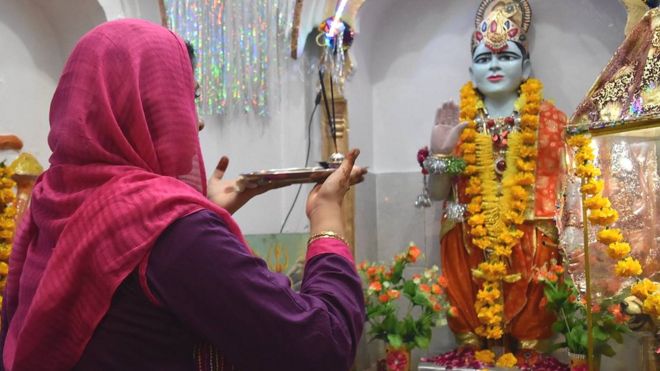
A religious debate is ensuing in the country as to whether or not a Hindu temple can be built in an “Islamic state”. As I wrote in my previous article, this is precisely the kind of debate that arises in a theocracy and which retards the progress of a modern nation state. However the facts are that Pakistan is a theocracy under the present constitutional dispensation and there is no escaping this fact. The question then is whether or not new Non-Muslim places of worship can be built in an Islamic land and whether or not the government can fund it? We have historical precedents in Islamic history in the subcontinent where Muslim rulers not only allowed the building of Hindu places of worship but gave them land grants for the purpose. There was no greater Islamic puritan in Mughal History than Emperor Aurangzeb. Rutgers historian Audrey Truschke in her classic “Aurangzeb, the man and the myth” lists in detail the instances of Aurangzeb granting land to temples and ensuring their upkeep. In 1687 Aurangzeb granted land to Brahmins and Hindu holy men in Benaras to build a complex of residences and worship right next to a mosque. In 1691 he gave eight villages and land for Balaji Temple of Chitrakoot, on the banks of River Mandakini Ganga, which was built on official funds provided by the Mughal Empire. The land so given was free of lagan requirements i.e. tax free land for the temple. There are numerous such examples from Emperor Aurangzeb where he bequeathed land grants and funds to Hindu and Jain communities for temples and other community welfare related projects.
The truth is that both Pakistan and India are priest ridden religious societies, which are by design intolerant.
Same is true of the other “iconoclast” – the destroyer of Somnath- Mahmud of Ghazni, who had in his employ numerous Hindu soldiers, Pandits, holy men and Sanskrit scholars. He is said to have made a temple in Ghazni for their worship. Tipu Sultan, the Tiger of Mysore, contributed to the upkeep of no less than 150 Hindu temples in his kingdom. One could cite Akbar but Akbar is notoriously considered Kafir by the pious amongst Muslims. However Aurangzeb, Tipu Sultan and Mahmud of Ghazni were all considered pious Muslim rulers who ruled under the sanction of Islamic law. Their actions therefore are persuasive precedents. Therefore to argue that Islamic law does not permit building of Non-Muslim places of worship especially where idolatry is practised flies in the face of historical example. This is unless we are to argue that Aurangzeb, Mahmud of Ghazni and Tipu Sultan were also bad Muslims.
The real question however is the debate itself, which is occasioned by Pakistan’s status as a theocratic state. First of all let us be clear that in the Islamic doctrine the only place where a Non-Muslim place of worship cannot be built is the land of Hijaz. Outside of the land of Hijaz there is no such bar. Quite the contrary the Islamic precedent shows autonomous religious communities not only being tolerated by accepted in Muslim history. The part of the problem is the rhetoric with respect to Medina that the current Prime Minister is fond of using. Riyasat-e-Medina cannot be replicated because it was subject to prophetic guidance. It is an aspiration that is cumbersome for a worldly nation state devoid of any divine guidance. The best we can do as mere mortals is create a just and fair nation state and that in turn means giving equal rights to all citizens.
There are two approaches that can be adopted in this regard. The first one is the US approach under the First Amendment of the US Constitution, which bars the US Federal funding for purposes of worship. This means that the US Federal Government cannot build a Church, a Mosque or a Temple. The rule is consistent and does not privilege any one community over another. Pakistan on the other hand funds mosques and their upkeep. By the same token – reading Articles 4, 20 and 25 of the Pakistani Constitution together- Pakistan is bound to similarly fund religious places of all communities listed in Article 260 of the Constitution and not just Muslims. As things stand, it is heads I win, tails you lose. No consistent rule exists in our Islamic Republic except that Muslims are privileged over Non-Muslims in every possible way. At the very least we should stop claiming that Pakistan treats its minorities well and that they are equal citizens. Pakistan’s minorities are from equal. They are at best third class citizens and that too only a piddling subsection. Sikhs are pampered for other reasons, which one does not want to get into, which is why no hue and cry was raised when Kartarpur was built on public funds. One does not begrudge their special status in our Islamic Republic but one wishes that such status was accorded to all minorities and better still we just had one rule for all citizens of Pakistan, as was so eloquently promised by the now defunct 11 August speech.
Coming back to the temple debate though, the reason why the present government wanted to make a temple in Islamabad was not necessarily out of any love for the Hindu citizens of Pakistan but to make a symbolic point vis a vis India. It was to be Pakistan’s answer to the Babri Masjid demolition and judgment in India. Imran Khan is obsessed with showing Modi that Pakistan is a more egalitarian and tolerant society. The truth is that both Pakistan and India are priest ridden religious societies, which are by design intolerant. There is however one difference between the two countries. The priests who have the final say in Pakistan through the theocratic constitution, which is what the 1973 Constitution is, always hold Imran Khan, no matter how tolerant he tries to present himself, hostage. Meanwhile Hindu bigot Modi is kept in check by the secular constitution of India.
Thus gimmickry such as building a temple in Islamabad means nothing at all. If you really want to one-up Modi, implement Jinnah’s 11 August speech in letter and spirit. Pakistan must cease to be a theocracy. Only then can Muslim majority Pakistan claim moral superiority over Hindu majority India.
https://dailytimes.com.pk/636538/the-temple-debate-continued/

Video Report - #NayaDaur #PervezHoodbhoy FIRING PROGRESSIVE TEACHERS WILL TAKE PAKISTAN TO DARK AGES

Pakistan: Protect religious freedom for Hindus

Pakistan’s authorities must protect the right to freedom of religion and belief for the country’s beleaguered Hindu community, including the construction of temples to exercise that right, Amnesty International said today.
The human rights organization’s call came as authorities in Islamabad capitulated to pressure from a discriminatory campaign mounted by politicians, media outlets and clerics to halt the construction of a rare temple in the Pakistani capital. The boundary wall of the site where the temple is supposed to be constructed has also been torn down by a mob.
“The respect for the right to freedom of religion was promised to Pakistan’s Hindus by the country’s founder, Muhammad Ali Jinnah. Those who deny a long-marginalized community the right to practise their faith freely not only betray his legacy, but also violate the human rights of religious minorities protected under Pakistan’s constitution and its international human rights obligations,” said Omar Waraich, Head of South Asia at Amnesty International.
 “Pakistan claimed positive global attention last year when it opened the Sikh temple at Kartarpur to pilgrims from India. By caving into hateful pressure, it now threatens to reverse that achievement and deepen the discrimination that Pakistan’s Hindu community faces.”
 The destruction of the Hindu temple site is yet another example of persistent discrimination faced by the Hindu community in Pakistan. In recent years, they have faced increasing marginalization, with individuals facing false accusations of “blasphemy” – a crime that carries a mandatory death penalty in Pakistan – attacks on temples and shops, and the horrific abduction, forced conversion and forced marriage of hundreds of young Hindu women.
 In 2019, in two separate incidents, mobs attacked Hindu properties and places of worship in the southern Sindh province after allegations of “blasphemy” were made against a Hindu school principal and a Hindu veterinarian.
Every reported act of violence against minorities must be promptly investigated and those responsible must be brought to justice. 
Omar Waraich
 "The Pakistani authorities must clearly and publicly condemn such acts instead of giving into them. Every reported act of violence against minorities must be promptly investigated and those responsible must be brought to justice. A recurrence can only be prevented if adequate measures are taken," said Omar Waraich.
In Pakistan, “blasphemy” allegations are often made on the basis of little or no evidence.  There is overwhelming evidence that the laws violate human rights and have encouraged people to take the law into their own hands. Once a person is accused, they become ensnared in a system that presumes them guilty and fails to protect them against people willing to use violence.
Prime Minister Imran Khan has made repeated commitments to protect Pakistan’s religious minorities. In February 2020, he said: “I want to warn our people that anyone in Pakistan targeting our non-Muslim citizens or their places of worship will be dealt with strictly. Our minorities are equal citizens of the country.”
“Prime Minister Imran Khan must lend his commitments some weight to ensure religious freedom for all and to ensure that Pakistan’s Hindus and other religious minorities are able to practise their faith freely and without fear,” said Omar Waraich.
Background
Hindus constitute Pakistan’s largest non-Muslim minority, estimated at between two and four per cent of the population. They include members of parliament, a former chief justice, military officers, and prominent names in the arts.
 In a landmark speech on religious freedom, Pakistan’s founder Muhammad Ali Jinnah said in August 1947: “You are free; you are free to go to your temples, you are free to go to your mosques or any other place of worship in the state of Pakistan. You may belong to any religion or caste or creed – that has nothing to do with the business of the state.”

‘Will Kill Each And Every Hindu If Temple Built In Islamabad’: Brainwashed Pakistani Kid Warns Imran Khan In Tik Tok Video

Construction of the first Hindu temple in Pakistan's capital city Islamabad has unleashed large-scale Hinduphobia in the Islamic republic.
Not only the construction work on the proposed Shri Krishna temple has been stopped under pressure from Islamic fanatics, the temporary boundary wall of the temple plot was also dismantled by an extremist Islamist radical youth who recieved much applause on social media for his act.
Now, a video has surfaced on social media where a brainwashed kid can be seen warning prime minister Imran Khan that if the temple is constructed, he would "kill each and every” Hindu in the country.
In the video, shared by ‘Ex-Muslims of North America’ on Twitter, a Pakistani man says that his son wants to convey a message to Imran Khan and then points the camera towards him.
The child says, "Khan Sahab (referring to PM Imran Khan Niazi), if the temple is constructed in Islamabad, then remember that I will kill each and every Hindu. Got it? (translated from Urdu).”
The father then says to Khan, "You see? It's now up to you, brother."
The temple was sanctioned by the current government with a grant of Rs 10 crore Pakistani rupees, but its construction is being vehemently opposed by the religious fanatics.
A leading religious school in Pakistan had issued a “fatwa”, or religious edict, against the construction of the temple, calling it "Un-Islamic".
The religious parties like Jamiat Ulema-e-Islam (F) and Jamiat Ahle Hadith were also against the construction of a Hindu temple as according to them it was against Pakistan’s ideology.
Even Pervaiz Elahi, the speaker of Pakistan's Punjab assembly, said that Pakistan was created in the name of Islam and construction of a temple on its soil is against the very spirit of Islam.
Last week however the Islamabad Capital Development Authority (CDA) stopped the construction of the boundary wall on the plot meant for the temple citing legal reasons.

Mehbooba slams Pakistan for stopping construction of Hindu temple in Islamabad

Pakistan had halted the construction of a temple in its capital city Islamabad.

PDP president and former J&K Chief Minister Mehbooba Mufti on Tuesday slammed Pakistan for stopping the construction of a temple, claiming that this was unethical and against the spirit of Islamic Welfare state.
Pakistan had halted the construction of a temple in its capital city Islamabad. The government officials had halted the work, beginning with the construction of a wall for the Lord Krishna temple, of what was going to be the first temple in the city.
Mehbooba lashed out at the Pakistan government for the “unethical act.”
In a tweet, the first in her name (by her daughter Iltija Mufti) since she was detained on August 5 last year when Article 370 was scrapped, she said: “Preventing construction of a temple in Islamabad is antithetical to idea of an Islamic welfare state model that gives religious freedom to all.”
Mufti, whose secular credentials have often been challenged for her stand on preserving Article 370 and maintaining the Muslim-majority character of the erstwhile state of J&K, said that while the opening of the Karatarpur Corridor was appreciated, this move was “regressive”.
The PDP chief continues to be under PSA detention, though she was shifted to her residence a couple of months ago.

Amnesty International asks Pakistan to reverse decision against building temple

The Amnesty International on Tuesday urged Pakistan to reverse a decision halting the construction of a temple in the federal capital.
“Everyone has a right to freedom of religion or belief, a right that is guaranteed in Pakistan’s constitution and its international obligations. Halting the construction of a Hindu temple in Islamabad is an unconscionable act of bigotry that must be reversed immediately,” the organisation said.
According to The reports, the government last week decided to consult the Council of the Islamic Ideology (CII) on the sensitive issue as the construction work at the site of Hindu temple in Sector H-9/2 has also been stopped for want of a building plan.
The government will seek guidance and consultation from the CII and also respect the opinion of religious circles and leaders in this connection, the spokesman for the Ministry of Religious Affairs and Interfaith Harmony had earlier said.
Earlier reports of government land and funds being allocated for the construction of the temple had been circulating on social media. The Ministry of Religious Affairs had made it clear that it assists religious minorities in repairing and renovating existing places of worship, not building new ones.
The foundation stone of the temple was laid recently in Sector H-9 of Islamabad, the land of which was allotted during the previous regime.
The Islamabad High Court (IHC) on Monday reserved judgement on a petition filed against the construction of a Hindu temple in Islamabad.
Last month, Prime Minister Imran Khan had approved the release of funds for the construction of the first Hindu temple in Islamabad.
https://nation.com.pk/07-Jul-2020/amnesty-international-asks-pakistan-to-reverse-decision-against-temple-construction

Monday, July 6, 2020

#Video - DailyShow #Coronavirus #TrevorNoah Growing Up in the Time of Corona | The Daily Social Distancing Show

Video Report - Fareed: Coronavirus won't be a death knell for big cities. Here's why

Video Report - Gov. Andrew Cuomo begs Trump: Just wear the mask

Video Report - Dr. Anthony Fauci discusses the coronavirus with top U.S. health official — 7/6/2020

Video Report - US setting records as Covid-19 cases soar

#Pakistan #NiaziKillingPressFreedom - Police, 24 News Journalists Clash Outside PEMRA Office

#Pakistan - PM Imran Khan’s ‘A-B-C’ Approach To The Uighur Crisis – OpEd

By Nilesh Kunwar
The old saying about there being no smoke without a fire stands vindicated because the continuous flow of news trickling from across the bamboo curtain regarding ongoing religious persecution of ethnic minorities ultimately galvanised the otherwise reticent international community to complain against Beijing’s highhandedness. The major area of global concern were reliable reports that Uighur Muslims of Xinjiang Autonomous Region (XAR) were being interned in ‘detention camps’, of infants being separated from their parents and how besides being physically and mentally abused, the detenues were also being forced to do things that were proscribed in Islam.
There are credible reports of how Uighur Muslims are being forced to eat pork and consume alcohol; about men not being allowed to keep beards and women prohibited from wearing hijab (head covering worn in public). Fasting during the holy month of Ramzan is discouraged and the Chinese national flag and portraits of Xi Jinping are required to be displayed in mosques and every Muslim household. Forced sterilizations and insertion of contraception implants against the victim’s will as well as reports of Uighur women being lured to marry Han men through material inducement are rampant. Even a simple thing like usage of the term ‘Halal’ (permissible under Islam) labelling for food products is criminalised.
So, in July 2019, when a statement signed by 22 countries submitted a notice to the Office of the High Commissioner for Human Rights (OHCHR) expressing concerns over widespread surveillance and repression in China and called upon Beijing to “refrain from the arbitrary detention and restrictions on freedom of movement of Uighurs, and other Muslim and minority communities in Xinjiang” was many believed that China would be forced to end repression of its minorities. But as is its wont, Beijing not only refused to oblige but instead, displaying its characteristic arrogance, decided to brazen it out by going on the counter-offensive.
Playing the game by the same ground rules, Beijing countered the complaint against it by delivering a powerful riposte. After just four days, it handed over a letter to OHCHR that mentioned China’s “remarkable achievements in the field of human rights”. Signed by 37 countries, this communication went on to state that “Now safety and security has returned to Xinjiang and the fundamental human rights of people of all ethnic groups there are safeguarded.” But even though Qatar subsequently withdrew its support, Beijing was busy adding more signatories in its favour.
When this letter was resubmitted during the same month, 13 new states as well as the Palestinian Authority had come out in support of Beijing, bringing the total number of signatories to whopping 50! But the irony here is that while none of the 22 signatories demanding justice for the persecuted Muslim Uyghurs were Islamic countries, amongst the 50 who abandoned the oppressed people of their own faith by giving Beijing a ‘clean chit’ included almost two dozen states that boasted being Islamic nations or had a predominantly Muslim population.
The most shocking part is that the list of Beijing’s supporters also included self-proclaimed leaders and heavy weights of the Islamic world like Saudi Arabia and Pakistan; the two countries that keep waxing eloquent about their unconditional and consummate dedication to alleviate the suffering of ‘ummah’ (entire community of Muslims bound together by ties of Islam)! But this comes as no surprise because both the international community (in general), as well as Muslim countries (in particular) are well aware of duplicity that plagues the ‘House of Saud’ and ‘Land of the Pure’ on this issue!
Three months later, another letter signed by 23 countries was handed over to OHCHR, which called upon China to “uphold its national and international obligations and commitments to respect human rights,” as well provide international monitors access to Xinjiang. But once again, Beijing had the last laugh when its ally Belarus came out with a statement on behalf of 54 countries that concluded with the “appreciation that human rights are respected and protected in China in the process of counter-terrorism and deradicalisation.”
Though the Belarusian statement claims support of 54 countries, its text includes the names of only six states. But while this may have been necessitated by a need for brevity, the order in which these names appear in the text are “Pakistan, the Russian Federation, Egypt, Bolivia, Democratic Republic of the Congo, and Serbia.” Listing Pakistan first is intriguing as it doesn’t make any sense- either from the alphabetical indexing or international standing status point of view. But diplomats don’t make careless mistakes and a bit of correlation does provide a plausible reason for this.
Readers would recall that just a week before the ‘Belarus statement’ was issued, Pakistan Prime Minister Imran Khan, while delivering his UNGA address took upon himself the onerous task of speaking up against Islamophobia on behalf of the global Muslim community. His passionate and lengthy discourse probably gave him the halo of what he subsequently referred to as “enlightened moderation” and so, putting Pakistan’s name even before the Russian Federation while expressing solidarity with Beijing makes sense, because the leading light of the Islamic world backing China adds ‘weight’ to the statement!
But it was Khan and his government’s crafty ‘A-B-C’ (A-avoid, B-bypass, C-confuse) approach towards the religious persecution of Uighur Muslims that proved to be his undoing. During an interview with Financial Times on March 28, 2019, when asked about China’s ill-treatment of Uighur Muslims, Khan simply chose to “avoid” the question by saying, “Frankly, I don’t know much about it.” Even when the interviewer reminded him that Pakistan’s close ally Turkey had termed Chinese atrocities against Uighurs as a “great shame on humanity,” Khan once again avoided answering by saying, “If I had enough knowledge about it, I would comment, but I don’t.”
In September 2019, there were news reports that during his meeting with Chinese Ambassador to Pakistan Yao Ping, Pakistan’s Federal Minister for Religious Affairs and Interfaith Harmony Noorul Haq Qadri told him that “The placement of restrictions (on Uighur Muslims in Xinjiang) increases the chances of an extremist viewpoint growing in reaction.” However, just two days later, Qadri too showed his great ability to “bypass” the Uighur ill-treatment issue, when he quashed all speculation by saying that “This (topic) was not discussed.”
But ultimately, it’s Khan’s three-in-one ‘ABC’ response to the Uighur crisis given to Foreign Policy Magazine in January this year that takes the cake. When asked why he’s hyper about ill-treatment of Muslims in India and elsewhere but completely silent on the persecution of Uighur Muslims, Khan avoided, bypassed and finally confused the question. He ‘avoided’ the query by saying, “frankly, I don’t know much about it,”; then, by adding “whatever issues we will have with China, we will deal with them privately. We will not go public,” he ‘bypassed’ the reply, and finally, by opining that “it (the Uighur crisis) is nothing compared to what is happening in Kashmir,” Khan cleverly ‘confused’ the whole issue.
However, by saying “China came to help our government when we were at the rock bottom. So, we are really grateful to the Chinese government,” Khan has made it amply clear that his pain for the oppressed ‘ummah’ isn’t all-pervasive. Au contraire, it’s highly subjective and completely subservient to Pakistan’s ‘sweeter than honey’ friendship with China, and since the cricketer turned politician doesn’t dare rock the boat, he wants the world to believe that all is well with the Uighur Muslims of Xinjiang.
https://www.eurasiareview.com/06072020-pm-imran-khans-a-b-c-approach-to-the-uighur-crisis-oped/

#Balochistan: #Pakistan border forces shot dead two Baloch fuel traders

Pakistani troops shot dead two Baloch residents of Iranian occupied Balochistan (IOB) on GoldSmid Line on Friday.
According to details, two Baloch fuel traders named Mehboob Pesh Bahar son of Mohammad Ali and Barakat Siddiqui son of Sayed Mohammad residents of Dor village in Dashtyari region of Iranian occupied Balochistan were shot dead by Pakistani forces.
Barkat and Mehboob are among thousands of young Baloch fuel traders who under the shadow of discriminatory policies of the Islamic Republic of Iran had no jobs but to import fuel.
In recent months, Pakistan’s military has intensified its brutalities against Baloch residents of Iranian occupied Balochistan.
Pakistani forces also arrested and imprisoned several Baloch fuel traders.
It should be noted that on June 25 Pakistan fired rockets which landed at the village of Bugan’s Ali Abad area in the outskirts of Rask town.  
The Iranian regime has not protested or shown any concern over this attack.
It seems as if both Islamic states, Iran and Pakistan, have begun fresh cooperation in suppressing the Baloch nation on both sides of the border (Goldsmid Line).
The pro-freedom Baloch political parties from both sides of the Goldsmid Line have long been alleging that Iran and Pakistan are on the same page when it comes to suppressing the Baloch voice for justice and freedom.

Chairman PPP Bilawal Bhutto Zardari on Monday called Jamiat Ulema-e Islam (JUI-F) Chief Maulana Fazlur Rehman and discussed about the political situation in the country

Chairman Pakistan People’s Party Bilawal Bhutto Zardari on Monday called Jamiat Ulema-e Islam (JUI-F) Chief Maulana Fazlur Rehman and discussed about the political situation in the country.
The Chairman PPP said that the government was deliberately testing the #COVID_19 in lesser numbers and trying to mislead the world by hiding the factual statistics from the international community. The federal government has also forgotten the issue of locusts.
With the JUI Chief, the Chairman PPP discussed, too, about the anti-people budget. The earlir, invited the Chairman PPP to attend the All Parties Conference to be held in Sindh. The APC will be held on July 9 in Sindh under the auspics of JUI.
Apart from this, an important video link meeting was also held at the Bilawal House, Lahore under the chairmanship of Chairman PPP.
While, addressing the meeting, the party chairman directed the party leaders that in order to convey the correct facts to the people, it was necessary to present the position of the PPP in a polite manner. The baseless allegations of corruption against the PPP should be answered bluntly as the PPP leaders have never been found guilty of corruption and have been honorably acquitted of all charges while the leaders of other political parties have been found guilty of corruption.
The PPP chairman condemned the firing on journalists protesting against the closure of Channel 24 and said that PEMRA security personnel had proved by firing on journalists what their policy was regarding free media.
The PTI government is restricting the airing of the independent anchors with independent views. The PTI government’s attempt to make the #COVID_19 non-issue should be thwarted, said the Chairman PPP adding that the statistics and facts testify that the performance of the PPP government has been much better than other governments so the party leaders should highlight the achievements of the PPP governments in the media.
Bilawal Bhutto Zardari expressed the hope that the anchors should show impartiality and bring the position of all parties to the fore.
In the video link meeting, Syed Nayyar Hussain Bukhari, Senator Farhatullah Babar, Aitzaz Ahsan, Senator Sherry Rehman, Naveed Qamar, Saleem Mandviwala, Shazia Murree, Qamar Zaman Kaira, Chaudhry Manzoor Maula Bakhsh Chandio, Nafisa Shah, Palwasha Khan, Rubina Khalid, Shehla Raza, Sharmila Farooqi, Nawab Yousuf Talpur, Nawab Iftikhar Ahmed, Haider Zaman Qureshi, Barrister Amir Hassan, Syed Hassan Murtaza, Ali Haider Gilani, Asghar Nadeem Kaira, Raja Khurram Pervez, Nabil Gabol, Saeed Ghani, Nisar Khoru, Latif Akbar, Nasir Shah, Owais Shah, Imtiaz Sheikh, Aajez Dhamra, Qadir Patel, Chaudhry Munawar Anjum, Murtaza Wahab, Timur Talpur, Dr Shazia Sobia, Sehar Kamran, Faisal Karim Kundi, Jam Ikram Dharijo, Sadia Danish, Sarbland Jogzai, Javed Ayub, Naz Baloch, Ismail Rahu, Sohail Sial, Gyan Chand, Nazir Dhoki and others were present in the video link meeting.
 
  •  
  •  
  •  

طلباءپاکستان کا مستقبل ہیں اور ہم اپنے مستقبل پر کوئی سمجھوتہ نہیں کر سکتے، چیئرمین پی پی پی بلاول بھٹوزرداری

چیئرمین پاکستان پیپلزپارٹی بلاول بھٹو زرداری نے کہا ہے کہ طلباءپاکستان کا مستقبل ہیں اور ہم اپنے مستقبل پر کوئی سمجھوتہ نہیں کر سکتے۔ انہوں نے کہا کہ طلباءیونین پر پابندی کی وجہ سے طلباءاپنے مسائل اجاگر نہیں کر پا رہے ہیں۔ پیر کے روز بلاول ہاﺅس لاہور سے پیپلزاسٹوڈنٹس فیڈریشن پنجاب کے عہدیداروں سے ویڈیو لنک کے ذریعے ہونے والے اجلاس سے خطاب کرتے ہوئے چیئرمین پیپلزپارٹی نے کہا کہ وباءکے دنوں میں تعلیمی اداروں سے متعلق حکومت کی واضح پالیسی سامنے نہ آنا افسوسناک ہے۔
بہتر انٹرنیٹ سپیڈ کے بغیر آن لائن کلاسز طلباءکے ساتھ زیادتی ہے۔ کانفرنس کے دوران پی ایس ایف کے عہدیداروں نے چیئرمین بلاول بھٹو زرداری سے تعلیمی اداروںکے کورونا وائرس کی وجہ سے بند ہونے کے باوجود اضافی فیس وصول کرنے کے حوالے سے بریفنگ دیتے ہوئے طالب علم رہنماﺅں نے کہا کہ کورونا وائرس کی وجہ سے معاشی سرگرمیاں متاثر ہوئی ہے۔ والدین میں اتنی سکت نہیں کہ وہ فیس ادا کر سکیں۔ یونیورسٹی کے دو سمسٹروں کی فیس معاف کی جانی چاہیے۔ ویڈیو لنک اجلاس میں پی ایس ایف پنجاب کے صدر موسیٰ کھوکھر سمیت دیگر عہدیداروں کامران وڑائچ، یعقوب خان، عامر شہزاد، اسلم بھٹی وقاص عباسی، ملک عطاس، سبط حسن، راجہ ذیشان، لقمان میو، عثمان ستی، ایاز الحق، قاضی اسد، صابر مول، قمر خان، حسن پیرزادہ، وسیم میو، احتشام دانیا، سلمان رانا، راشد جمیل، توقیر جدون، چوہدری جہانزیب، محمد علی، سلمان جیالا، محسن شیرازی، ربنواز، عمار گجر، سہیل گجر، شہریار کھٹانہ، عدنان وڑائچ، شاہزیب مرزا، توصیف حیدر، عون گجر، انصار جھلوکہ، وقار شاہ، صدام شاہ، حسن اظہر، عثمان ہاشمی، عامر خان، رائے رشید چوہدری شکیل، رانا وقاص اور دیگر ویڈیو لنک اجلاس میں شریک تھے۔
چیئرمین بلاول بھٹو زرداری نے پی ایس ایف کے رہنماﺅں کو ہدایت کی کہ وہ تعلیمی اداروں میں پارٹی کی نظریاتی پرچار کریں اور طالب علموں تک ان کا پیغام پہنچائیں۔
https://www.ppp.org.pk/2020/07/06/talba-pakistan-ka-mustaqbil-hain/

Sunday, July 5, 2020

Video Music - #BlackDay #5JulyBlackDay - Mai Baghi Hoon (Jeyay Bhutto) -

Video Music - #BlackDay #5JulyBlackDay Kal Bhi Bhutto Zinda Tha Aaj Bhi Bhutto Zinda Hai..

Pakistan’s Black Day How the military engineered its July 5, 1977 coup, leading to 11 years of martial law.


By Ahsan Chaudhary

July 5 is a “Black Day” (not necessarily the only one) in Pakistan’s political and constitutional history. Exactly 39 years ago on this day in 1977, General Muhammad Zia-ul-Haq, then Chief of Army Staff (COAS), imposed martial law in the country and dissolved national and provincial assemblies—all in one go. In his first post-coup speech, General Zia clarified that the decision to impose martial law was taken as a last resort and only to save the country from the tumult and chaos that had ensued in the wake of controversial March 1977 parliamentary elections. According to Zia, the parleys between the government and the protesting opposition conglomerate, Pakistan National Alliance (PNA) were going nowhere; a schism within the ranks of junior army officers was taking hold; and the country was at the brink of collapse.
However, in the same breath he reaffirmed that “the survival of this country [Pakistan] lies in democracy and democracy alone,” and that his “sole aim is to organize free and fair elections, which would be held in October this year,” or within 90 days of Zia’s coup. Emphasizing his commitment to parliamentary elections, Zia proclaimed, “Soon after the polls, power will be transferred to the elected representatives of the people. I give my solemn assurance that I will not deviate from this schedule.” (Quotes in this paragraph come from Hasan-Askari Rizvi’s The Military and Politics in Pakistan, pp. 289-93).
Although there’s little conclusive evidence that General Zia’s declaration of martial law was premeditated, or that he extended active support to PNA leaders to create conditions favorable to the military take-over, the events leading up to the 1977 elections and what transpired later however, cast doubt on the credibility of men in uniform. It seems unlikely that the coup was anything but carefully thought out. By 1977, Zulfikar Ali Bhutto, then-prime minister of Pakistan, had already successfully averted two botched coups by the military establishment since he assumed office in 1971. The military was constantly looking for excuses to get power back from civilians. Bhutto gave plenty of excuses to the generals by arbitrarily sacking government officials, persecuting his political opponents, and nettling the generals by making new security and intelligence agencies — notably the Federal Investigation Agency (FIA) and the Federal Security Force (FSF) — that arguably set Bhutto on a collision course with GHQ. However, that alone was not enough to help military wrestle power from the most popular and charismatic leader with a wide and ferocious fan-base in Sindh and Punjab.
Clearly, the military wanted something concrete to hedge their bets which, according to Husain Haqqani, could reasonably be achieved if a legitimacy crisis was engineered through a “political disorder.” As Haqqani wrote in Pakistan: Between Mosque and Military, “Bhutto’s legitimacy as a civilian leader derived from his success in a general election; only electoral defeat or election victory attained by questionable means could render Bhutto’s political legitimacy questionable. The military could not topple Bhutto without [first] delegitimizing his leadership position [among the populace].”
Hence, as Haqqani argues, the Inter-Services Intelligence’s (ISI) position paper to Bhutto recommending that he hold early elections should be interpreted—although not conclusively—as an incipient attempt by the military leadership to entrap Bhutto. The first paper came in April 1976 and a second followed on October 5. Entitled “General Elections” and signed by General Jilani, then director-general of ISI, the 53-page paper suggested that “Bhutto was at the height of his popularity and would sweep the polls in the face of a divided opposition.” Indeed, in hindsight, while facing trial before the Supreme Court and in the deposed prime minister’s private conversations, Haqqani notes, “Bhutto hinted [at] the possibility of having been trapped in a conspiracy by the military and intelligence services.” However, as Haqqani cautions, Bhutto would likely not have taken the military’s recommendations on their face if the empirical evidence had not strongly laid on his side.
In the article “The March 1977 Elections in Pakistan: Where Everyone Lost,” Marvin Winbaum notes the many reasons Bhutto had to be confident: “the rate of inflation at 6 percent was down from an average of 25 percent between 1972 and 1975. Real GNP was growing at 5 percent, up from a 3 percent a year earlier. The agricultural sector was growing after years of stagnation with the help from ‘heavy public investment in tube wells and subsidies for fertilizer, pesticides and other farm inputs.’” Overall, although Bhutto had several potential pitfalls on his side in terms of mass-scale nationalization of industries and his suppression of opponents, he fared well in many sectors, including law and order, political stability, economic progress, and human development. That might have convinced him to reap the political dividends before any spoiler could arise.
Thus the polls date for national assembly elections was set as March 7, 1977, with elections for the provincial assemblies on March 10. The elections, however, did not go as smoothly as predicted. There were incidents of violence and the stealing of ballot boxes from polling stations. The Pakistan Peoples’ Party (PPP) government was accused of rigging the elections and the conglomerate of opposition political parties took to the streets. Bhutto ordered the military to “act in aid of civil power”—a constitutional right of the federal government— to control the protesters. Nearly 200 people died with even more wounded in less than four months, from March 7 to July 4.
However, that does not mean the warring parties could not have come to the negotiating table. In fact, Saudi-brokered negotiations followed on the heels of the demonstrations. By mid-June, Bhutto had agreed to hold parliamentary elections afresh in October and the PNA agreed to drop its insistence on Bhutto’s resignation. However, Bhutto then went on a tour of Middle Eastern countries, leaving everything up in the air. Although he might have breathed a sigh of relief in the hope that an agreement had been reached and a political cyclone had passed, the opposition and military, on the other hand, got the impression that Bhutto perhaps was insincere or indifferent to the grievances of the opposition.
Upon his return Bhutto was amazed to learn that the opposition was still up in arms. In fact, there are indications that the military was playing the role of a “spoiler” rather than of a “facilitator.” Asghar Khan and a coterie of his PNA hardliners, for instance, tried to block the conciliatory efforts of the PNA moderates under the “iron-clad guarantee from the army headquarters” that generals would hold “free and fair elections within three months of ousting Bhutto,” according to Aqil Shah in The Army and Democracy: Military Politics in Pakistan. This account is corroborated by Ghafoor Ahmed, then-secretary general of the PNA and a key negotiator in the talks, who later admitted that “we were under constant pressure from the hawks to abort the negotiations. It could not have been just a bluff. Asghar Khan could not have claimed to speak on behalf of the army without the high command’s nod.” Similar claims were made by Nawabzada Nasrullah Khan, a key figure in the PNA. In his words, “the ISI was playing each side against the other, sowing mistrust in the minds of the PNA regarding Bhutto and vice versa” (For more, see Shah, pp. 137-138 and Haqqani, pp. 124-25).
The military’s spoiler role, if any, notwithstanding, the warring political parties still reached an agreement in the first week of July 1977. As host Farrukh Sohail Goindi explained in an interview with General Faiz A. Chishti, “the government and PNA had reached an agreement on July 3, 1977. On July 4, both parties had a press conference and on July 5, they were set to sign the agreement. But before that could happen, Zia struck the axe of martial law on the night of July 5.” According to Chishti however, when asked if it was the right decision by the military establishment to impose martial law on July 5, the answer was yes. Chishti explained that the decision to impose martial law was justified but what came later—the prolongation of martial law and reneging on the promise to hold elections within 90 days—was not.
It’s plausible. Martial law is a slippery slope, whereby a general and what Chishti calls his “loyal lieutenants” (and Chishti himself was one of them), initially driven by a desire to stabilize law and order later deem themselves too indispensable to cede power to civilians. However, the fundamental question remains: was the sky really falling when General Zia imposed martial law? In other words, was it really the case that law and order was in shambles and the country was at the brink of collapse?
The empirical evidence on ground does not fully support coup-makers’ claim that the situation was so terribly bad or that the country was on the brink of disintegration. Intuitively, the crisis should have peaked before the negotiations started and incrementally deflated after the parleys seemed to be working. If accounts from Goindi, Shah, and Haqqani, among others, are reliable, then the parties had reached a workable agreement on July 2-3. In that case, the crisis should have subsided if not fully eliminated, (assuming there were only two parties to the agreement and no one was left aggrieved) and the coup would have become anything but warranted.
Indeed, as Shah notes, “After the initial wave of heightened protest and violence between March and April, the levels of violence had [actually] gone down, and curfews in the main cities had been relaxed.” According to PPP sources, “the general law and order situation in the country had remained calm since at least May 26, and there was no immediate necessity for action on July 5, 1977.”
Counterintuitively named as “Operation Fairplay,” the martial law declared on July 5 would be the longest and the most brutal in Pakistan’s politico-constitutional history. Initially, both the senior leadership of PPP, including Bhutto, and the PNA leadership were taken into custody, but later released. Only Bhutto was taken into custody again. He was convicted in a sham trial for the murder of a political opponent and executed. Zia would not hold elections for more than 90 months, after originally promising polls within 90 days. But before that, Zia got himself elected president in a questionable referendum that gave him 97.7 percent support from the electorate.
Yet, despite winning a nearly absolute majority, Zia never doffed his military uniform and continued to wear two hats—the chief of army staff and the president. During that period, most of the parties that made up the PNA (including Jamaat-e-Islami and the Pakistan Democratic Alliance) joined Zia’s cabinet rather than pressing for early elections. However, Nawabzada Nasrullah Khan, the head of the Pakistan Democratic Alliance, later withdrew from Zia’s cabinet and joined the Movement for the Restoration of Democracy (MRD), which he co-founded with the PPP to oppose the military rule and restore the democracy. The government brutally tortured and killed the MRD activists and leaders but never ceded power to the civilians.
In 1985, General Zia held parliamentary elections—albeit on a non-party basis—and devolved power to the newly elected prime minister, Muhammad Khan Junejo. Critics such as Craig Baxter argue that Zia organized elections under U.S. pressure and never transferred real power to the prime minister—simply because the power to sack the government, notably under article 58(2)b, still remained with Zia himself. Burki and Baxter cite evidence to point out that the first victim of article 58(2)b was none other than Junejo himself, as Zia dismissed the government when he saw Pakistan’s controlled democracy getting out of hand.
Nonetheless, it’s significant to note that in 1985 Zia still kept his promise to hold elections and devolved power to the elected government. The fault for the new government’s inability to perform better and stay in power however lay with the civilians not with the general.

Video Report - #BlackDay #5JulyBlackDay - Black Day For Democracy In Pakistan | 5 July | Zulfiqar Ali Bhutto

Video Report - #BlackDay #5JulyBlackDay - 5th July 1977 coup: Gen. Zia ul Haq legacy continues

وسعت اللہ خان کا کالم بات سے بات: مندر نہیں بنے گا!

حالانکہ اسلام آباد ہائی کورٹ نے پاکستان کے دارلحکومت میں تین ہزار ہندو شہریوں کی سہولت کے لیے پہلے مندر کمپلیکس کی تعمیر روکنے سے انکار کر دیا۔ حالانکہ حکومت نے اس منصوبے کے لیے دس کروڑ روپے کی اعانت کا بھی اعلان کیا۔

مگر اسلام آباد کے انتظامی ادارے کیپیٹل ڈویلپمنٹ اتھارٹی (سی ڈی اے) نے اس مندر کے لیے مختص اراضی کے گرد احتیاطی چار دیواری کی تعمیر یہ کہہ کر رکوا دی کہ تعمیراتی نقشے کی منظوری تک کسی بھی اراضی پر کوئی تعمیراتی سرگرمی قانوناً نہیں ہو سکتی۔ چنانچہ ہندو پنچائیت نے اجازت ملنے تک چار دیواری کی تعمیر روک دی ہے۔
تعمیراتی قوانین کے نفاز میں سی ڈی اے کی سنجیدگی قابلِ قدر ہے۔ سنہ 2015 میں وزارتِ داخلہ کے سروے سے معلوم ہوا کہ سی ڈی اے کی حدود میں 492 مساجد آباد ہیں مگر ان میں سے 233 یعنی 47 فیصد مساجد قبضے کی زمین پر بغیر کسی قانونی منظوری کے قائم ہیں اور کئی مساجد کے ساتھ بلا اجازت مدارس بھی متصل ہیں۔
کیا سی ڈی اے میں اتنا دم ہے کہ وہ ان مساجد و مدارس کی ایک اینٹ بھی ہلا سکے؟کیا کوئی عالمِ حق ببانگِ دہل آج کل کے ماحول میں کہہ سکتا ہے کہ قبضے کی زمین پر نماز نہیں ہو سکتی۔
مسجدِ نبوی کی زمین کے مالک دو یتیم بچوں نے اسے تحفتاً پیش بھی کر دیا مگر پیغمبر اسلام نے اس قطعہِ اراضی کو قیمتاً حاصل کیا تاکہ آنے والے ادوار کے لیے مثال قائم ہو۔
اسلام آباد میں مکتبہ دیوبند کے علما کرام نے گذشتہ ہفتے پریس کانفرنس کی کہ اسلامی مملکت میں بت خانے کی تعمیرِ غیر شرعی ہے اور صرف پرانے مندروں کی بحالی و توسیع ہو سکتی ہے۔
البتہ ایک عالم مفتی راغب نعیمی نے کہا کہ مندر کی تعمیر میں سرکاری پیسہ استعمال نہیں ہو سکتا تاہم ہندو برادری اپنے سرمائے سے قطعہِ اراضی خرید کے مندر تعمیر کر سکتی ہے۔ اب یہ معاملہ حکومت نے اسلامی نظریاتی کونسل کو بھجوا دیا ہے۔
اس دوران پنجاب اسمبلی کے سپیکر چوہدری پرویز الٰہی بھی بحث میں کود گئے اور انھوں نے دو ہاتھ مزید آگے بڑھ کے کہا کہ اسلامی ملک کے دارالحکومت میں مندر کی تعمیر ریاستِ مدینہ کی روح کے خلاف ہے۔ صرف پرانے مندر بحال ہو سکتے ہیں۔
اس پوری بحث میں کسی نے نہیں کہا کہ ہمیں اس بارے میں اسلام آباد ہائی کورٹ کے فیصلے کا احترام کرنا چاہیے ظاہر ہے کہ یہ فیصلہ آئین کی روشنی میں ہی دیا گیا ہو گا۔
آئین میں اقلیتوں کو برابر کے حقوق اور مذہبی عبادت کے حق کے تحفظ کی ضمانت دی گئی ہے۔ آئین میں کہیں نہیں کہا گیا کہ برابر کے شہری ہونے کے باوجود وہ کوئی نئی عبادت گاہ تعمیر نہیں کر سکتے یا ٹیکس دینے کے باوجود ریاست سے عبادت گاہوں کی تعمیر و مرمت کے لیے گرانٹ نہیں لے سکتے۔
جس طرح پاکستان میں مسلمان شہریوں کی آبادی بڑھ رہی ہے اور اس بڑھتی ہوئی آبادی کی ضروریات کے اعتبار سے نئی مساجد اور قبرستانوں کی تعمیر ہو رہی ہے اسی طرح غیر مسلموں کی آبادی بھی بڑھ رہی ہے مگر ان کی عبادت گاہوں یا آخری رسومات کی سہولتوں میں اضافہ نہ ہونے کے برابر ہے۔
مثلاً آل پاکستان ہندو رائٹس موومنٹ کے سروے کے مطابق تقسیم کے وقت موجودہ پاکستان کی آبادی ساڑھے تین کروڑ تھی جبکہ 428 مندر آباد تھے۔ 73 برس کے دوران 20 کو چھوڑ کے باقی تمام مندر گوداموں، گھروں، دفاتر، تعلیم گاہوں وغیرہ میں غائب ہو گئے۔
ملک میں اس وقت ہندو آبادی 40 لاکھ کے لگ بھگ ہے۔ اس 40 لاکھ کے لیے سندھ میں 11، پنجاب میں چار، بلوچستان میں تین اور خیبر پختونخوا میں دو مندر فعال ہیں۔ ہندو کمیونٹی سینٹرز عنقا ہیں جبکہ شمشان گھاٹ کی سہولتیں سینکڑوں میل کے فاصلے پر ہیں۔
حکومت نے چار ماہ پہلے اعلان کیا کہ لگ بھگ چار سو مندروں کو دوبارہ بحال کر کے ہندو برادری کے حوالے کیا جائے گا مگر رفتار کا عالم یہ ہے کہ 73 برس میں صرف چار مندر بحال ہو سکے۔
چکوال میں کٹاس راج (یہ عبادت سے زیادہ نمائشی مقاصد کے لیے ہے)۔ سیالکوٹ، پشاور اور ژوب میں ایک ایک مندر بحال ہو پایا۔ یہی رفتار رہی تو باقی 396 مندر زیادہ سے زیادہ اگلے ایک ہزار برس میں بحال ہو جائیں گے۔
سعودی عرب اور ایران دو مسلمان ممالک ہیں جہاں قانوناً کوئی نئی غیر مسلم عبادت گاہ تعمیر نہیں ہو سکتی۔ اس کے علاوہ کسی اور ملک میں قانوناً اس کی مناہی نہیں البتہ شرعی تشریحات الگ الگ ہیں۔
جیسے خلیجی ممالک میں عبادت گاہوں کی تعمیر کو آبادی کے تناسب اور مذہبی سہولت سے جوڑ کے دیکھنے کا چلن ہے۔ چنانچہ اومان میں سوا سو سال پرانا شیو مندر مسقط میں قائم ہے۔ بحرین میں ہندو کارکنوں کے لیے آٹھ مندر ہیں جنھیں سرکاری و بین الاقوامی سرپرستی حاصل ہے۔
دبئی میں سنہ 1958 میں ایک کمرشل عمارت کی چھت پر مندر قائم تھا۔ ابھی دو برس پہلے متحدہ عرب امارات کی حکومت نے ابوظہبی میں 27 ایکڑ رقبہ سوامی نارائن مندر کی تعمیر کے لیے عطیہ کیا۔
اس وقت امارات میں تیس لاکھ کے لگ بھگ ہندو کارکن ہیں اور نیا مندر کمپلیکس ہندو آبادی کے تناسب سے بنایا جا رہا ہے۔ توقع ہے کہ اس سال کے اختتام تک یہ مندر عبادت و سماجی سرگرمیوں کے لیے کھول دیا جائے گا۔
مندرتصویر کے کاپی رائٹSHIRAZ HASSAN
Image captionپہلے بڑے مسلمان ملک انڈونیشیا کے جزیرے جاوا میں نویں صدی کا پرمبنان مندر جنوب مشرقی ایشیا کا سب سے بڑا مندر اور عالمی وراثت کی یونیسکو فہرست کا حصہ ہے
پہلے بڑے مسلمان ملک انڈونیشیا کے جزیرے جاوا میں نویں صدی کا پرمبنان مندر جنوب مشرقی ایشیا کا سب سے بڑا مندر اور عالمی وراثت کی یونیسکو فہرست کا حصہ ہے۔
سرکار نے تمام قدیم مندروں کو محفوظ اور پرکشش بنانے کے لیے خطیر رقم مختص کی چنانچہ مذہبی سیاحت میں پچھلے ایک عشرے میں دوگنا اضافہ ہوا۔
دوسرے بڑے مسلمان ملک بنگلہ دیش کے دارالحکومت کے ڈھاکیش واری مندر کو مسجدِ بیت المکرم کی طرح قومی عبادت گاہ کا درجہ حاصل ہے۔ وہاں ہر صبح کا آغاز قومی پرچم لہرانے اور ترانے سے ہوتا ہے۔ یاد رہے کہ سنہ 1988 میں اسلام ریاست کا قومی مذہب قرار دیا گیا۔
جبکہ تیسرے بڑے مسلمان ملک پاکستان میں یہ بحث ہو رہی ہے کہ ہندو شہریوں کے لیے نیا مندر جائز ہے کہ ناجائز۔
یقین نہیں آتا کہ یہ وہی ملک ہے جہاں 60 کے عشرے تک جو 22 سرکاری چھٹیاں ہوتی تھیں ان میں 25 تا 31 دسمبر کرسمس کی ایک ہفتے کی چھٹیوں کے علاوہ ایسٹر، بیساکھی، دسہرے، دیوالی اور ہولی کو بھی قومی تعطیل کا درجہ حاصل تھا۔
ریاست اس دور میں بھی تھی، حکمران اس دور میں بھی تھے اور علما کرام تب بھی تھے۔ پھر شاید یوں ہوا کہ ذہنی قد چھوٹے ہونے لگے اور سائے لمبے۔۔۔ ارے یاد آیا، آج پانچ جولائی بھی تو ہے۔

Governing Ineffectively: Has Pakistan’s Ruling Party Turned a Health Crisis Into a Political Crisis?


Pakistan’s political crisis is deepening with the rise of COVID-19 cases.
Pakistan’s national government has followed a highly politicized approach to dealing with the COVID-19 threat. The result has reignited fears that the current government is not fit to rule the country let alone deal with a raging health crisis that is fast becoming a national security issue.
Over the last few months, there has been a steep decline in public trust about the capacity of the government’s efforts to deal with the COVID-19 threat. After putting in some surface-level effort, the government has nearly left the entirety of the country’s population at the mercy of the virus.
The government’s top decision-makers remain unprepared and unwilling to take the threat seriously. A few days ago, the Minister of State for Climate Change Zartaj Gul Wazir presented a novel definition of COVID-19 by saying that “COVID-19 means that it has 19 points that can be applied to any country in any way.” Another senior leader of the PTI who is also Sindh province’s Governor recently said that COVID-19 is nothing more than the flu and people shouldn’t worry about it.
It shouldn’t come as a surprise then that the current government’s approval ratings have fallen sharply in recent months. According to a recent Gallup survey, “The percentage of Pakistanis who believe that the current PTI government’s performance up to this point in its tenure is worse than that of the previous government has increased from 35 percent in December 2018 to only 59 percent in February 2020.”
The government’s political allies are either estranged or walking away to join the opposition parties. In the province of Punjab, several disgruntled lawmakers of the ruling party have been threatening to form forward blocks if they are not given development funds. A weak chief minister in the province often cites the phrase “I am not aware” regarding key decisions related to his province. A looming wheat crisis in the country has involved several top ministers of the government that manipulated the domestic market to make billions. The problem is expected to morph into a serious food crisis in Pakistan in the coming months.
The issue has created deep divisions within the government as Prime Minister Imran Khan has sidelined one of his key advisers, Jahangir Tareen, after his role in the wheat crisis was proved recently. Tareen, who has been credited with managing the ruling party’s political alliances, has not only fled the country, but has also left a vacuum to fill in the government. In the absence of Tareen, no one could effectively reach out and satisfy the government’s political allies.
Thus no one in the government has the political clout to negotiate with the head of the Balochistan National Party (BNP-M), Sardar Akhtar Mengal, who recently left the government to join the opposition. A few days ago, Mengal met with the chief of the Jamiat Ulema-i-Islam (JUI-F), Maulana Fazlur Rehman, to chart out a plan to potentially bring the government down. “In our meeting, we discussed the changes that have already taken place in the country and the changes which are about to come,” said Mr. Mengal.
Understandably, Mengal’s departure from the coalition has made the government weaker and its other political allies stronger. “MQM, PML-Q, GDA, and BAP may not walk out like Mengal did … but their threat of walking out will now hold greater weight for PTI. Do not be surprised if you see the allies becoming a bit more vocal in their grievances, a bit more aggressive in their dealings, and a bit more demanding in their requirements,” notes an op-ed published in Dawn.


Adding to the crisis are rising incidents of terrorism across the country. Last week, three consecutive explosions claimed by a little-known separatist group, Sindhudesh Revolutionary Army (SRA), has put policymakers on alert. Reports indicate that the group’s leadership operates from the province of Sindh and “wants the province to break from the Pakistani federation.”
In another incident on June 22, an officer and a soldier of the Pakistani Army were killed in clashes with militants in North Waziristan. Over the last few months, groups such as the Tehrik-e-Taliban Pakistan (TTP), the Islamic State (IS), the Baluchistan Liberation Army (BLA), the Baluchistan Liberation Tigers (BLT), and others carried out attacks across Pakistan. The list of militant organizations targeting Pakistan has now been joined by a new militant group known as the SRA.
It is a worrying development for Pakistan for two reasons. First, the rise in militant attacks is taking place at a time when a governance and health crisis is consuming law enforcement agencies majority of the focus. Second, the growth in attacks, particularly from new organizations, underscores that militant networks in the country or aspirations from different ethno-nationalist groups in this regard, remain strong. Thus, any sense of weakness from the state would be taken as an opportunity to mobilize operations to weaken the state further. Certainly, COVID-19 has exposed Pakistan’s looming governance and security woes.
Pakistan’s all-powerful military is monitoring all these developments closely. It would not be imprudent to argue that the military itself is strained due to the existing political and governance crisis that COVID-19 has brought to fore. Pakistan’s security establishment may want an increased role in managing politics in Pakistan, but it doesn’t mean that the institution is interested in running everything for the government.The next few months are going to be very important for Pakistan as COVID-19 exposes the current government’s inability to govern effectively and manage its allies aptly. As political uncertainty grows in Pakistan, issues lying on the periphery have started to move to the core, challenging the country’s national security.

48 doctors in #Pakistan resign citing shortage of protective gears


The health department of Pakistan's Punjab province said the doctors, mostly young ones, resigned from govt teaching hospitals & their resignations were accepted.

Pakistan on Sunday suffered a setback in the fight against COVID-19 as 48 doctors working in the teaching hospitals of Punjab province resigned, citing non-provision of safety gear to protect them from the virus that has killed more than 4,700 people in the country.
According to a notification of the Punjab health department issued here on Sunday, 48 doctors, mostly young ones, resigned from the posts at the government teaching hospitals. Their resignations have been accepted, it said.
The doctors who resigned were from Lahore’s Mayo, Services, Jinnah, General, Lady Aitcheson, Children and Sheikh Zayed hospitals, Allied and Civil hospitals in Faisalabad, SZH Rahim Yar Khan and Nishter Hospital Multan.
“The doctors in question have resigned after the government’s failure to their repeated requests to provide them protective gear against the deadly coronavirus and other inadequate facilities,” a senior doctor of a public hospital Lahore told PTI.
He said the government seems to be least interested in the protection of the medics.
“We are front-line soldiers in the war against COVID-19 and see what the Imran Khan government is doing with us. A couple of days ago police baton-charged doctors in Muzaffarabad (Pakistan-occupied Kashmir), whose only sin was that they were protesting for not getting protective medical kits and salaries, he lamented.
Following the arrest of 23 young doctors in Muzaffarabad the Young Doctors Association shutdown emergency wards in all hospitals in PoK.
The senior doctor warned that more doctors will quit their job if the government does not pay attention to this issue. Punjab Health Minister Dr. Yasmin Rashid, however, claimed that the government was providing required safety kits to doctors, nurses, and para-medical staff.
More than 70 medics, most of the doctors, in Pakistan have lost their lives to COVID-19 and over 5,000 infected so far.
According to a report of the National Institute of Health, more than 70 health professionals including 47 doctors have lost their lives to the coronavirus. Of them, 35 victim doctors belong to Punjab province.
Over 5,000 health professionals including 3,000 doctors and 600 nurses have been infected by the deadly virus so far in the country.
Till Sunday, there are over 228,000 confirmed COVID-19 cases with over 4,700 deaths reported in Pakistan.
https://theprint.in/world/48-doctors-in-pakistan-resign-citing-shortage-of-protective-gears/455088/