Tuesday, May 26, 2020

#Pakistan - Stand With Kashmir not an innocent hashtag, it supports violent Islamists and terrorists


By MARTHA LEE
With noted academics and ‘experts’, Stand With Kashmir has become the voice of India resistance in the US. But it has a dangerous agenda.
As protests over Kashmir intensified around the world after India’s dilution of Article 370 last year, Stand With Kashmir — SWK — became an essential voice of the anti-Indian movement in the US. But while this “grassroots group” is represented publicly by academics who, somewhat reasonably, appear to discuss the question of Kashmir’s self-determination, the organisation’s actual intentions look far more sinister. The Middle East Forum has uncovered that the SWK also works to lionise and defend violent Islamists committed to the murder of Indian troops and civilians.
Across the US, the SWK can be found forming university chapters, organising protests, sending representatives as guest-speakers to events, and working with various Islamist organisations, such as the US proxy for Jamaat-e-Islami, the Islamic Circle of North America. The SWK has rapidly become one of the most influential voices in America on the subject of Kashmir. But behind the humanitarian appeals for Kashmir and Kashmiris, lies a dangerous agenda.

Support for extremism

While the SWK lists neither founders nor employees on its website, it does offer the names of dozens of its “experts”, some of whom frequently represent the movement at events. Many of these so-called experts are academics at American universities who specialise in subjects such as human rights, colonialism, and gender studies. As could be expected, the SWK and its experts frame their support for Kashmiri resistance to India using the topical, Left-leaning language of today’s social sciences – insisting on the area’s “indigenous” population, praising women’s role in the resistance, generally portraying the conflict as a struggle against an imperial power, and even – somehow – linking it to “climate change”.
But unabashed extremism is found amid the progressive niceties. Despite the obscurity surrounding its organisational structure, SWK is very active on social media. Along with regular posting of poetry, drawings, and articles, it also paints terrorists as victims. On Twitter, the organisation recently tweeted about a Kashmiri named Riyaz Naikoo being “killed” and his house destroyed, failing to mention he was a senior commander in Hizbul Mujahideen, a Kashmiri terrorist group designated as such by the US government and tied to the South Asian Islamist movement Jamaat-e-Islami.
 The SWK calls for the immediate release of all Kashmiri prisoners,” whom they present as inoffensive activists – arrested merely for benign political beliefs. In reality, several of these prisoners have been involved with dangerous terrorist organisations, while one has even met with al-Qaeda members and openly declared Islamist aspirations for Kashmir. These violent extremists are profiled and venerated by the SWK online.

‘Angel of death’

The most compelling example is that of Asiya Andrabi, whom the SWK simply presents as a “sociopolitical activist” who has been unjustly jailed. In fact, Andrabi is a notorious Islamist activist and founder of the India-banned outfit Dukhtaran-e-Millat (Daughters of the Nation), which The Economist notes “supports terrorists” and advocates jihad. Some in Kashmir refer to Andrabi as the “angel of death”.
In one interview, Andrabi explains that she has met with al-Qaeda officials and told them that if  “you belong to Sheikh Osama’s al-Qaeda then you are very welcome because he was a legitimate leader of Jihad”. Andrabi describes the possible arrival of the Taliban and al-Qaeda in Kashmir as “our brothers […] coming to help us to liberate us from India”. In another interview in 2001, Andrabi expresses her support for the killing of “not only the [Indian] police, but all the Indian politicians, too.” When asked about “a call made by a Kashmiri militant group for the assassination of India’s prime minister”, she replies that “we’d be very happy, inshallah [God willing] ….”
As for her eight-year-old son, according to the 2001 interview, Andrabi “would like him to be a jihadi, and fight for Islam anywhere in the world.”
While the SWK experts insist on the importance of Kashmiri self-determination, Andrabi argues that it is “purely an Islamic struggle”. Andrabi does not appear to favour an independent Kashmir, instead saying “we want Pakistan” and “then it will be our first and foremost duty to Islamise Pakistan”.

Not an inclusive dream

Stand With Kashmir’s academics, meanwhile, claim that Kashmiri culture is threatened by India, and highlight the issue of feminism in Kashmir. SWK expert Huma Dar even led a discussion on “the resistance of women, queer and non-binary gender Kashmiri”. It seems unlikely, however, that any “queer” or “non-binary” Kashmiri would be accepted in the Islamist Kashmir envisioned by Andrabi, who has affirmed her opposition to “traditional Kashmiri culture” and intends to “return our women to Islamic culture”.
SWK representatives, nonetheless, prefer to offer a rather different image of Andrabi. Ather Zia is an assistant professor of anthropology at the University of Colorado and one of SWK’s “experts”. In an article about the resistance of Kashmiri women, she describes Andrabi as an iconic figure of women’s resistance, and insists, while making no mention of Islam, that these Kashmiri women “are not anomalies to be objectified by rank misogyny camouflaged as religious ideals” nor should they be “patronized by men who judge their dress, language, and expressions”. Incidentally, SWK’s Zia recently mourned the death of Hizbul terrorist Riyaz Naikoo, referring to him as a martyr, and declaring: “death to Indian occupation!”

Astounding duplicity

The SWK is evidently aware that Andrabi’s long history of support for violent extremism does not corroborate their portrayal of nonviolent activists facing injustice for their political views and peaceful resistance. The organisation and its academics carefully avoid mentioning Andrabi’s violent activities and associations, only noting that Andrabi was imprisoned with her two aides.
In fact, these two aides, Sofi Fehmeeda and Nahida Nasree, are mentioned in another slide on SWK’s website – described as “female political activists” involved “in the movement for self-determination in Kashmir”. The SWK does note that they are members of Dukhtaran-E-Millat (DeM), presenting it simply as “a women’s organization”. But according to the SWK, Fehmeeda and Nasree were arrested not because of DeM’s terrorist activities, but because of a sinister attempt by India to “stifle political participation”.
This astounding duplicity – from academics at prominent American universities no less – does not stop there. Another SWK-championed prisoner is Yasin Malik, whom the SWK describes as having “embraced nonviolent resistance”. The SWK does not mention that he “was arrested […] for his role in fomenting unrest in Kashmir during separatist agitations in 2010 and 2016 that was triggered by the killing of Hizbul Mujahideen commander Burhan Wani”.
The SWK also does not include the fact that according to India’s National Investigation Agency (NIA), Malik visited the “Lashkar e Taiba (LeT) camps in Muree in Pakistan occupied Kashmir and addressed the LeT cadres there”. LeT is a designated terrorist organisation under US law, and is best known for the 2008 Mumbai attacks, in which more than 160 people were murdered.
In March 2020, a Jammu court announced it had “enough prima-facie evidence” to prosecute Malik for involvement in the “killing of four unarmed Indian Air Force (IAF) officials in 1990 in Srinagar”.
Other SWK prisoners include Altaf Ahmad ShahPeer Saifullah, and Aftab Hilali Shah. All three were arrested with other separatists in 2017 on charges of “raising, receiving and collecting funds” for terror activities. According to the NIA, the militants were “acting in connivance with active militants of Hizbul Mujahideen, Dukhtarane Millat, Lashkar-e-Taiba”. Another, Shabir Ahmad Shahwas “in touch with the global terrorist Hafeez Sayeed, chief of banned outfit ‘Jamat-ud-Dawa’ [a branch of LeT] based in Pakistan” and was reportedly given money to conduct separatist activities in Kashmir.

The true face

Stand With Kashmir is gradually wielding more and more political influence in the United States. In October 2019, it denounced an Indian investigative journalist, Aarti Tikoo Singh, before she testified in a congressional hearing focusing on the political situation in Kashmir. During this hearing, Rep. Ilhan Omar attacked Singh using curiously similar arguments and rhetoric. Six months later, the congresswoman joined SWK for an event on “racial justice” and “militarization in Kashmir”.
Are SWK’s experts – academics of purported renown – really so guileless and such negligent academics that they are not aware they are championing terrorists? Or, do they knowingly support al-Qaeda sympathisers and jihadists, deceitfully presenting them as pacifist political activists?
In any case, it seems almost certain that Stand With Kashmir itself is intentionally advocating for terrorists under the pretence of peaceful progressivism. As the SWK becomes more influential, and as its experts continue to disseminate misleading claims regarding Kashmiri “resistance”, it is imperative that the media uncovers who is really behind this organisation, and that policymakers are made aware of its true agenda.

Monday, May 25, 2020

Video Report - Human trials begin in Melbourne today for a potential COVID-19 vaccine: Press conference | ABC News

Video Report - Old dog, old tricks | US uses Cold War tactics to pin blame for COVID-19 on China

Video Report - #Coronavirus cases have exploded in #Brazil, Latin America's largest economy

Video Report - #WHO #Hydroxychloroquine WHO suspends clinical trial of hydroxychloroquine for COVID-19

Video - #COVID19 #coronavirus Coronavirus outbreak: Former VP Joe Biden marks Memorial Day with 1st public appearance in 2 months

Pashto Music Video - Malanga Yara - by Sofia Kaif |

Video Report - #NayaDaur #PakistaniFilms #PakistaniMovies 5 Best Pakistani Movies You Must Watch This Eid

#Pakistan - The missing girls


By 

SINCE 1986, the Human Rights Commission of Pakistan has acted as a conscience keeper of the nation. Its flagship, the annual State of Human Rights in Pakistan, should jolt any government out of its stupor.
How did this government respond to the latest report? The human rights ministry, headed by Shireen Mazari, had a knee-jerk reaction and apparently without reading the report carefully issued a statement accusing the HRCP of having “overlooked several major milestones towards securing and safeguarding the rights of vulnerable groups” in 2019. It even questioned the ‘intent’ of the HRCP.

The HRCP immediately issued a statement giving meticulously the page numbers indicating the locations of all those ‘milestones’ that Ms Mazari’s ministry had overlooked.
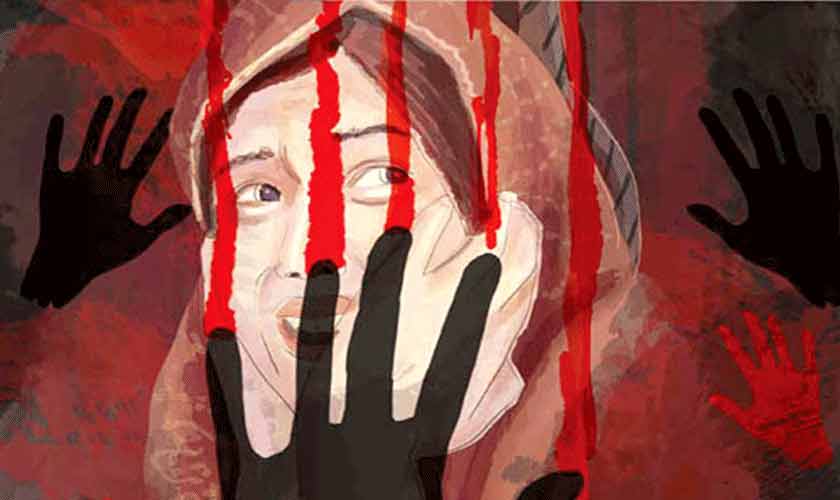
The fact is that the working of the government is tardy and inefficient — especially in matters affecting the common man, woman or child like Zainab, the little girl who was raped and murdered. Take the case of the Zainab Alert, Response and Recovery Act, 2020, (adopted in March) that took two years to legislate in the National Assembly. It still has to become functional. No director general has been appointed so far to head the Zarra Agency. This was pointed out to me by Naeem Sadiq, that intrepid champion of the Right to Information Act, 2017, and Citizens against Weapons. He has written to the prime minister and Ms Mazari’s ministry asking for information on this matter.
The state cannot safeguard the security of its women and children.
While the government hems and haws, we do not know how many little girls will be meeting a fate similar to Zainab’s or would be there being trafficked for prostitution.
This is another issue that needs the government’s immediate attention. I hope the HRCP will also single it out in their future reports rather than garb it under the cloak of ‘violence against women and girls’. The annual report states, “Despite the legislation enacted to protect and promote women’s rights in recent years, violence against women has escalated.” The report mentions all kinds of use of force and discrimination against women. But it fails to take explicit note of trafficking for prostitution. The closest it comes to this taboo issue is when it reveals that “629 women had been trafficked as brides to China”. This is nothing to be made light of.
I have been following this issue closely since I stepped out to help a ‘vulnerable woman’, my domestic help, recover her two teenage daughters who vanished after being abducted by her stepson in 2016. When she confided in me and accepted my offer of help, the gravity of the situation dawned on me.
I managed to have her FIR registered and the stepson was arrested, though he somehow succeeded in obtaining his release on bail without the mother even being summoned before the judge to plead her case. I was told by the police that the stepson refuses to divulge the whereabouts of his sisters who were sent by him to work as “domestics in a household for Rs120,000 a month”. The police also expressed their inability to trace the girls. One officer, however, indicated that he had found some clues and was preparing for a raid. We were excited but suddenly he was transferred from his post at the Anti-Violent Crime Cell (of the CIA) where I had managed to take the case with the help of Roshni Trust, an NGO working for the recovery of abducted children. The case drags on at the City Courts.
I would like to remind the HRCP as well as the Minister for Human Rights, that M and S, my protégées, are not the only girls whose childhood has been devastated because the state of Pakistan cannot safeguard the security of its women and children. A seminar held last year in Islamabad in which representatives of the FIA (the security agency concerned with cases of human trafficking), UN Women and other agencies dealing with this heinous crime estimated that the number of the victims runs into the thousands.
If the custodians of human rights still need to be convinced of the magnitude of the crime they would do well to look up the website of the US State Department which publishes every year an international report on the Trafficking in Persons covering 177 countries. The last report covers 2018 and places Pakistan on Tier 2 with the comment: “The Government of Pakistan does not fully meet the minimum standards for the elimination of trafficking.” It obviously gets its data from reliable sources. According to this document, Pakistan reported investigating 2,367 alleged cases of sex trafficking and initiating prosecutions in 2,212 cases in 2018 while the data for conviction was glossed over. Here it must be clarified that each case would be involving several girls.
My heart goes out to Zainab as it also does to the Ms and Ss who met a somewhat similar fate, except that they may still be alive somewhere with their agony continuing night after night.

'Many will starve': locusts devour crops and livelihoods in Pakistan

 and 

Mir Gul Muhammad, a farmer in Balochistan province, was blunt. “The worst that we have ever seen, ever, in our whole life,” he said of the swarms of locusts that descended on his village of Gharok.
“I cultivated around 50 acres of cotton crops and all of them have been eaten and destroyed by locusts,” he said. “Besides cotton, my other crops – onion, chilli and tomato – have been affected badly too. It is a loss of around 10m rupees [£51,000]. As a farmer, it will take years to recover from this loss.”
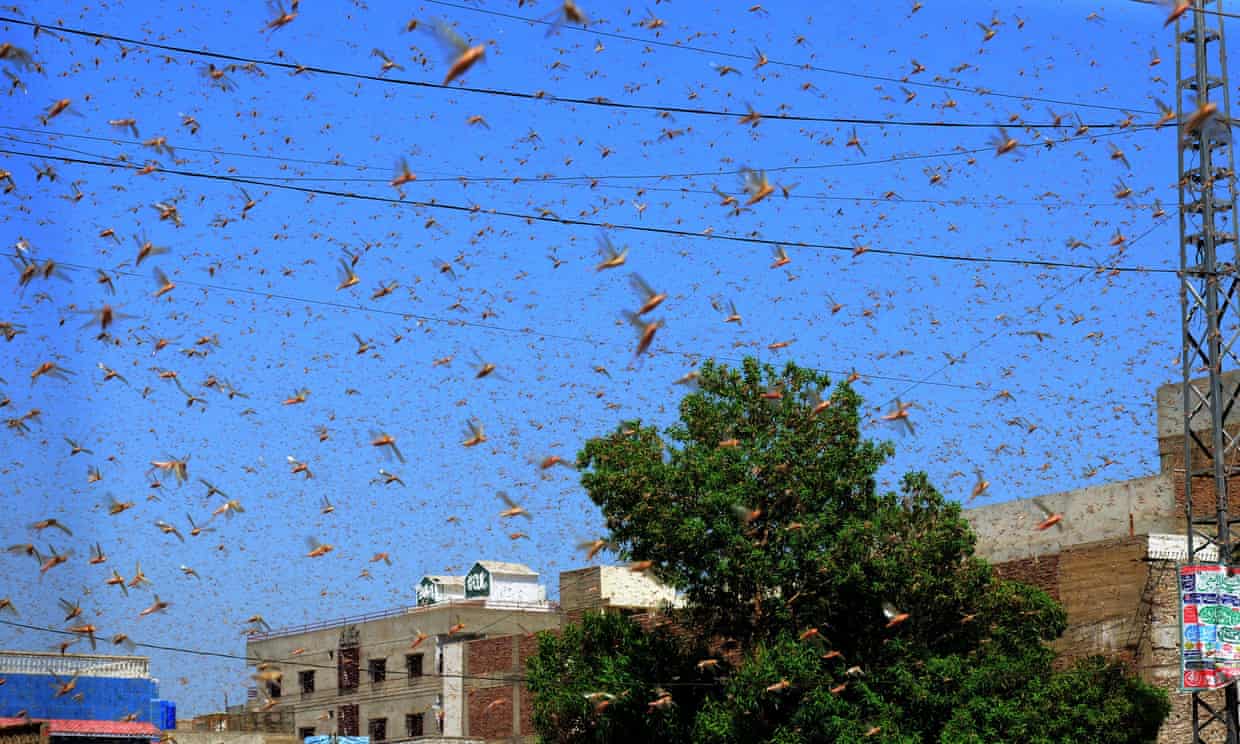
Farmers across Pakistan are suffering the worst plague of locusts in recent history, which has caused billions of dollars in damage and led to fears of long-term food shortages.
The Pakistani government declared a national emergency this year after the locusts began to decimate winter crops. The first swarm came from the United Arab Emirates in mid-2019, and in the next few weeks time a new infestation is expected to arrive from Iran.

Locusts swarm in Hyderabad, Sindh province
Pinterest
 Locusts swarm in Hyderabad, Sindh province. Photograph: Anadolu Agency via Getty Images

Muhammad said he had no means of dealing with locusts and that the government was in “deep slumber” about farmers’ plight. “The government is not doing anything. It’s a helpless situation,” he said.
One of the worst hit provinces is Sindh, where Moti Lal said his livelihood was destroyed last week in one fell swoop.
“All my green crops, such as wheat and mustard, were attacked and ruined by locusts,” he said. “We had borrowed 40,000 rupees [£400] through micro-financing schemes to invest in farming. Now, all that amount is gone.”

Pakistan will incur losses of about £2bn in winter crops, such as wheat, and a further £2.3bn in the summer crops being planted now, according to the UN’s Food and Agriculture Organization (FAO).

This will be economically devastating for a country where agriculture accounts for 20% of GDP and 65% of the population live and work in agricultural areas. Pakistan is already suffering from crippling inflation, which is now at a 12-year high, and the unprecedented economic burden imposed by the coronavirus pandemic.
The cost of flour and vegetables had already risen 15% this year, and the locust infestation could make even basic food staples unaffordable.
Ismail Rahoo, state minister of agriculture for Sindh, described the plague as a “dangerous and catastrophic threat to the economy, agriculture and food security in Pakistan”.
“This year it will be ten times worse than last year. They are attacking from three sides,” he said. “The locusts and their eggs have now covered 50,000 square kilometres of farmland. We are expecting them to infest more than 5m hectares. And they are not just attacking Sindh province, but also the agricultural areas of Punjab and Balochistan.”
Heavy rains on the Arabian peninsula in 2019 triggered explosive growth in the locust population, and they began causing problems in India, Pakistan and a number of African countries last year. The second generation is 20 times bigger. Locusts move in swarms of up to 50 million, can travel 90 miles a day, and lay as many as 1,000 eggs per square metre of land.
Rahoo said the federal government had ignored various requests to spray pesticide from the air, something he said the Sindh state government did not have the resources to do.
Muhammad Akram Dashti, a senator from Balochistan, gave a speech in parliament in May 2019 urging the federal government to start preparing for the locust plague that had just emerged in his province.
“It could have been prevented,” he said. “I raised this issue when it was confined to a division of Balochistan province. It’s the responsibility of federal government to help farmers against such destruction, but the federal government didn’t take it seriously. I requested for spraying of crops times and again. Nothing happened.”
Now, he says, it is too late. ‘“Many people will starve,” he said.

#Pakistan - Murders by any name - killings of two girls in the name of‘ honor’ in South Waziristan

A. Ali


The recent killings of two girls in the name of‘honour’ in South Waziristan reveal not only the paradox of ‘culture’ and ‘tradition’ but also are a test for the KP police.
Afew days ago, an ‘objectionable’ mobile phone video that went viral on the internet resulted in the murder of two teenage girls of Zangarra village, Shaktui, South Waziristan in the name of ‘honour’. A call for the death of those involved in bringing dishonour to the tribal culture, made by an influential tribal head Badshahi Khan via a Facebook live video, sealed the fate of the girls.
The man who killed both the girls, a few others who abetted him, and the one in the video seen kissing the girls have been arrested by the police after an FIR was registered against them at Razmak police station in North Waziristan.
The murders in the name of ‘tribal honour’ in the erstwhile Federally Administered Tribal Areas, now referred to as Merged Areas, is a test case for the civilian law enforcement agency, the police, whose powers were extended to the region after it was merged with Khyber Pakhtunkhwa.
The initial response has been prompt. The man who murdered the girls, their cousin, Muhammad Aslam (son of Shadar Khan) along with the three who abetted the crime, and Ayaz Wazir who made the video were apprehended and produced in court. An intervention at an earlier stage might have prevented the crime.
How the video went viral
The family of the deceased girls belongs to the Mehsud tribe and has lived in Zangarra village, Shaktui, South Waziristan. They were displaced during the military operation and relocated to the Shaplin village, Garyum, North Waziristan, where they ran a retail shop. According to a local journalist, the man in the video, Umar Ayaz Wazir, was part of a group of men known for having relationships with girls and blackmailing them after making their videos. In this video, one of the girls the man had kissed had had links with a friend of his in the group. After a dispute between them, he sent the video to his estranged friend taunting him that he had kissed the girl he had befriended. The friend was outraged and leaked the video, apparently to expose Umar and get him killed.
How the girls were killed
After the video went viral, the family tried not to avoid identification. They left the area and moved to their native villag,e Zangarra. The murderer, Muhammad Aslam, the husband of the third veiled woman in the video whose fate is still unknown, was in Karachi and returned to look for Umar Wazir in Garyum and Shawwal, but couldn’t find him. He then went back and killed the two girls (his cousins). Since people in their native village didn’t know the details; they were told that the girls had died in a roof collapse. A funeral was held. Later, it was discovered that the girls had been dead before the roof collapse.
The conservative religious circles, however, are having a field day. They found an opportunity to support and advocate strict controls, like in the days of militants’ takeover of the region.
Who is Badshahi Khan?
Badhshahi Khan belongs to the family that has been linked to militants in the past. He belongs to Nazar Khail, a Mehsud sub-tribe. His uncle Khushal Mehsud, a tribal chief, and a few others were targeted and killed by unknown assailants in Gomal, in Tank district. Allegedly, he had had links with Baitullah Mehsud. It is said that the dera of Khushal Mehsud would be used by the TTP kingpin for holding its shura meetings. His house and dera were later bulldozed during a military operation.
Badshahi Khan went to Karachi and allegedly used his links with militants to set up a crime and extortion racket in the name of TTP. Later, he switched allegiances and worked as an informer for Rao Anwar, the former Malir SSP and helped him trace militants who were killed in staged encounters.
Last year, he ‘married’ 12-years-old girl from Quetta after paying a huge amount to her parents as valvar (bride money). A few years back, Badshahi Khan had moved to Dera Ismail Khan, where he still lives. In the viral video, he called for the death of the girls and the man in the video, and spoke against 3G/4G services available in the region, saying these would lead to more of such videos being spread and disseminated, eventually bringing ‘dishonour’ to the tribal culture.
A test case
In a region that has witnessed mayhem and deaths during periods of insurgency and the subsequent military operations, and due to tribal feuds and disputes over lands, murders in the name of ‘honour’, hardly anyone would have raised an eyebrow if this story hadn’t made it to the headlines and the region hadn’t become a centre of attention in the last couple of years due to the political upheavals. It led to a debate over the response of the leadership and supporters of the Pashtun Tahaffuz Movement. Some people said that they didn’t come out as strongly against the killings as they would have had the violence had anything to do with the militants or the law enforcement agencies.
The conservative religious circles, however, are having a field day. They found an opportunity to support and advocate strict controls, like in the days of militants’ takeover of the region. Some of them are trying to make a case against the use of cellular phones and the 3G/4G services.
A youth from Waziristan worries that the incident might be used as a pretext for denying citizens access to 3G/4G services in the area. He says this has been a demand by the extremists. During the prevailing Covid-19 crisis, the shift of universities and colleges to the web and online platforms has made it necessary for thousands of students to have access to fast internet.
“Blaming 3G/4G and the internet for the video going viral means they don’t have an issue with the [apparently] ‘immoral’ acts per se, or killing in the name of ‘honour’, their only concern is stopping the spread of the video. It is ironic on many counts,” he concludes.
The police have apprehended the murder suspect and the person responsible for making the video, but the person who disseminated the video is yet to be identified and apprehended. Prosecuting the culprits while ignoring pressure from influential tribal chieftains would still be an uphill task.
 https://www.thenews.com.pk/tns/detail/662368-murders-by-any-name

Sunday, May 24, 2020

Music Video - #Technotronic #PumpUpTheJam - Pump Up The Jam

Music Video - Madonna - Hung Up

#StephenAtHome #JoeBiden #Election2020 - Joe Biden: Trump Put The Country In A Terrible Spot By Failing To Act - EXTENDED INTERVIEW

Comedy - Operation Nintendo | Gabriel Iglesias

Music Video - Skank - Estare Prendido en Tus Dedos

Video Report - #Coronavirus Pandemic Illustrates Importance of Scientific Literacy | MSNBC

Video Report - Hear Trump criticize Obama for playing golf during crisis

Joe Biden attacks Trump for playing golf over Memorial Day weekend as death toll heads toward 100,

Video Report - #China #PostCoronavirus What is China's post-coronavirus strategy? I Inside Story

Video Report - Fareed Zakaria: Why Trump changed his tune on China

Music Video - Mausam Haseen Hai Lekan - Aag 1967 - Mala Begum, Ahmad Rushdi

Music Video - Dil Ko Jalana Humne Chorr Diya - Armaan 1966 - Ahmad Rushdi

Music Video - Lokan do do yaar banaye - Afshan Zebi

Pashto Music Video - Akhtar - Laila Nehal

Pashto Music Video - Akhay Akhay Mra De Kram | Ghezaal Enayat - آخی آ خی مڑا دی کڑم 🙏

The military and the mullah: Priorities for the Imran Khan government


Is Pakistan simply incapable in securing terrorists or are they hand-in-glove with them?
 In less than two years since the Imran Khan government came to power in Pakistan, backed by military support, the PTI government has ceded a great amount of political space to the military. Since the start of this year in particular, the government has ensured that even though the country is over Rs 33 trillion in debt and battling an international pandemic, priority must always been given to the desires and wants of the military and the mullah.
Pakistan has struggled in dealing with the outbreak of COVID-19 ever since the first case was discovered in the country on 26 February. The government underplayed the seriousness of the virus, choosing to not evacuate its citizens from Wuhan to demonstrate to China that it supported and stood by its ally during its time of crisis. In fact, Pakistani President Arif Alvi travelled to China, at the request of Xi Jinping, during the peak of the crisis as a public display of the two countries’ friendship. In the meanwhile, pilgrims returning from the border with Iran were quarantined in the border town of Taftan in Balochistan. Thousands returning to the country from the holy city of Qom were confined in close quarters and unhygienic conditions, contributing to the further spread of the virus. The government specifically targeted Shia and Hazara neighbourhoods, prohibiting members of the community from attending work and restricting their movements. The sectarian discrimination was not confined only to the province, but at the federal level as well with two senior government ministers, who happen to be Shia, being accused of exacerbating the spread of the virus. The scapegoating of the persecuted communities during such a time is an example of the state of religious minorities in Khan’s Pakistan.

Pakistani President Arif Alvi travelled to China, at the request of Xi Jinping, during the peak of the crisis as a public display of the two countries’ friendship.

While many Muslim majority countries, such as Saudi Arabia and Turkey have ordered the closure of mosques and religious gatherings, the Pakistani president met with religious leaders and prominent ulema to form a plan for congregational prayers during Ramazan, announcing a ‘20 point’ plan. Under this plan, put forward by the government, all mosques would remain open and religious leaders who were arrested for violating restrictions during the lockdown would be released. Vernacular Urdu newspapers which remain the main source of information amongst Pakistanis argued that COVID-19 was God’s punishment on people for the sins they have committed, while others stated that it was a conspiracy against Muslims and Islam. Khan government’s “Islam friendly” decision to open mosques on the suggestion of the ulema while ignoring the potential healthcare nightmare would pose for the public shows where the PTI government’s priorities lie.
While the spread of the coronavirus has demonstrated the government’s logistical and organisational incompetence, they have shown great skill and expertise in crushing dissent, crippling free speech and empowering militancy. There has been a longstanding tradition to label those who question the military establishment in Pakistan as traitors, “Indian agents” or anti-state elements. This practice has continued if not intensified under the Khan government. On 1 May, the body of missing journalist Sajid Hussain was discovered in Sweden two months after he went missing. Hussain, the editor of Balochistan Times had fled Pakistan in 2012 after receiving death threats on his reportage of enforced disappearances and crime in Balochistan. On the same day, Arif Wazir, a Pashtun nationalist and member of the Pashtun Tahafuz Movement (PTM) was shot outside his home in South Waziristan. Supporters of the government immediately launched an ugly social media campaign smearing Wazir after he succumbed to his injuries, accusing Afghanistan’s intelligence agency (NDS) of killing Wazir. It seems the establishment forgot that all this while they have blamed the NDS for fostering the PTM.

There has been a longstanding tradition to label those who question the military establishment in Pakistan as traitors, “Indian agents” or anti-state elements.

Attacks on the PTM and media have been a hallmark of the PTI government. In the runup to the general election in 2018 media organisations such as Dawn and Jang faced censorship and heavy pressure from the establishment for their coverage of Nawaz Sharif. Now, this has evolved to coverage of PTM rallies and gatherings which are banned. Senior leaders of the movement, including members of the National Assembly are routinely arrested, harassed and threatened.
Earlier this year in February, Ehsanullah Ehsan, the terrorist responsible for the attack on the Army Public School in Peshawar and the shooting of Malala Yousafzai, announced that he had escaped from prison and had managed to flee the country. Given his high-profile nature, it is not only shocking that Ehsan managed to ‘escape’, but was able to leave the country and seek refuge in Turkey. It gives rise to the age-old question: is Pakistan simply incapable in securing terrorists or are they hand-in-glove with them?

While in the past, extending the tenure of the chief of the army has been common practice, this time around the court questioned the bureaucratic process for Bajwa’s extension, while not disapproving of it all together.

The military has also further extended its reach into matters of civil governance, with the Pakistan army overseeing all the coordination between federal and provincial governments in tackling COVID-19. The National Command and Operation Centre (NCOC), the government’s lead agency in tackling the virus is being led by the Commander of the Army’s Air Defence Command as the military continues to directly intensify its role in matters of policy. Last year after increasing pressure from China over delays in the completion of key CPEC projects, the army took control of the CPEC Authority body with Lt. Gen Asim Bajwa being appointed the chairman of the body in November. The body was given vast powers to summon any information related to CPEC activities and impose penalties on those who fail to do so. Bajwa who earlier served as the Director-General for the Inter-Services Public Relations or the military media wing was also recently appointed as the Prime Minister’s special assistant on information and broadcasting. The timing of the appointment is interesting to note, as the government faces increasing criticism over its tackling of COVID-19; Bajwa’s appointment can be viewed as an effort for the Khan government to make amends with the military.
Towards the end of last year, the government found itself in an unprecedented face-off with the Supreme Court as the top court temporarily halted the extension of Chief of Army Staff General Qamar Bajwa’s term. While in the past, extending the tenure of the chief of the army has been common practice, this time around the court questioned the bureaucratic process for Bajwa’s extension, while not disapproving of it altogether. Through careful wording, the chief justice directed the PTI government to pass legislation formalizing the extension, which it hurried to do, granting General Bajwa another three-year extension. This goes to show that in Pakistan, civilian institutions continue to strengthen the military at their own expense, not learning their lesson, that the major causes of instability in its past have come from the overcentralized rule and strong men at the center. Today, Imran Khan remains beholden to the military and bound to the mullah stronger than ever before.

#COVID-19: Harbinger of cold warfare and significance of Free #Balochistan

By Shahdad Baloch
The world is changing around us. As we move into an era where the political, military and economic dominance of the West is coming under pressure, the sense of uncertainty is unsettling and the reason is West’s soft corner for China. Xi Jinping in 2013 strongly suggested that China is planning for the future. Despite the traumas and difficulties, the challenges and problems, seem to be birthing pains-signs of a new world emerging before West.
The reason is West pondering on where the next threat might come from, how to deal with religious extremism, how to negotiate with states like Iran and Pakistan and how to build relations with the anti-west and hypocrite states and their people, how to settle terms with those states who are disregarding international law. West has confused itself with such aforementioned issues whereas; China is stretching its muscles across Asia, Europe and the world. Beijing with its policy of economic grants to underdeveloped states and technology to the western world is covertly driving its derisive desires of being a global leader of the world.
Amid the setback of COVID-19 the age of the west, in particular, is at a crossroads, if not at an end. According to a report by the Ministry of Defence in London, the world is going through a period of turbulence and transformation. Among the challenges to be faced in the coming decades, it declared, are the reality of climate change, rapid population growth, resources scarcity, the resurgence in ideology and shift in power from west to east.
The West’s growing preoccupation with China before COVID-19 is not surprising, China has been at the forefront of Telecom revolution, much of this has been built by Huawei and ZTE, companies with a close link to the People’s Liberation Army of china the aim of which is long term regional stability and mineral wealth in Central Asia and Balochistan for which China is granting billions of dollars to Pakistan in the name of CPEC. Concern about these telecoms companies was enough to prompt US congressional hearings which concluded that Huawei and ZTE cannot be trusted on the basis that they are too close to Chinese state influence and thus pose a security threat to the United States.
To attain global leadership China is creeping with a fast pace by investing 43 billion Dollars to build railroads that will pass through Iran, Pakistan, Turkey, the Balkans and Siberia to Moscow, Berlin and Paris and new routes link Beijing with almost the world. There is even talk of a tunnel under Bering Strait that will allow trains to pass from China through Alaska and Canada and into the continental United States. The Chinese government is building networks carefully and deliberately to connect to minerals, energy sources and access to cities and harbours and oceans.
Once China succeeded in getting its economic imperialism done, no country would be spared from its military doctrine of controlling the affairs of the world. History is evident that every imperial power gets its start from economic control of the world and ended to military might. China is busting its spleen with enormous pace because of the reason that west has been indulged in mere issues of protecting human rights violation and building of inter-personal relations with those nations which hates west the most. The example of which is fanatic states like Pakistan and Iran.
Western Human Rights Organisations have never held accountable Pakistan, Iran and China for Human Rights violations in laters occupied territories of Balochistan and the former detained province of Xingjian-the Uyghur Muslims-which was once part of east Turkmenistan.
Concurrently, West’s perception against China is at the stake owing to COVID-19, which brought catastrophe to the United States and Western world just because of negligence did by china that could be a turning point for West perspective about China. It would have taken decades for the Western world to understand China global ambitions but COVID-19 has probably brought cold warfare between the West and China. What mistakes the British did in their heydays are now birthing pains for the Western world.
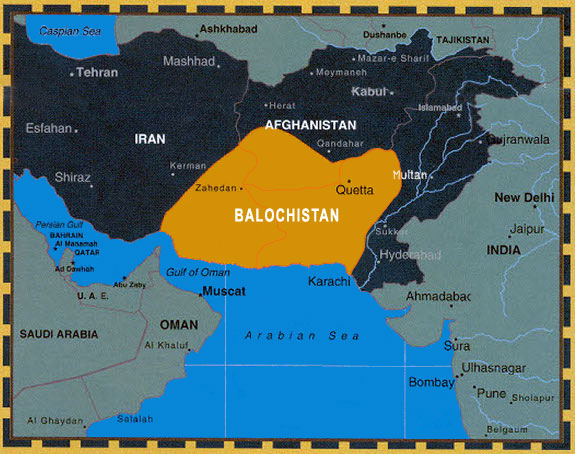
Firstly, the division of Balochistan in 1839 among Iran, Pakistan and Afghanistan rendered the West as friendless in the region. Secondly, the creation of Pakistan by the British is proving to be a major tool of a mass-producing factory for replicating anti-West rhetoric, which is a crucial ally of China against the United States and the Western world. The COVID-19 has already created a World War like situation countries with a fragile economy, rising death tools and reshuffling of allies are accelerating change in the paradigm of power politics globally.
China with its technology is replacing the domination of Western civilisation. This clash of civilisation may trigger the cold warfare amid COVID-19 because of the realisation that the West is getting in a short span of time. Any race of technology among the West, America and China desire for a crucial ally, strategic location and global market, China has sorted out its new allies and markets but America and West have yet to do.
The Baloch nation has always remained pro-West and America, with its territories occupied by Pakistan and Iran, but both fanatic states have suppressed Baloch nation beneath the nose of the West and United States. COVID-19 has rendered Pakistan as an optionless country that would soon succumb the mineral-rich Balochistan to China against the will of the Baloch nation. Not only Baloch nation suffer under Sino-Pak occupation but the Western world, India and the United States will be deprived of adjoining oceans seas, central Asian market and Asia almost.
Today COVID-19 is serving China’s interests because under the heat of this virus China is increasing its labours number at Gwadar to bring speedy construction for the Silk Road thereby retaining its hegemony in Makuran Balochistan coastal belt. All this is happening when Chinese birth COVID-19 has brought catastrophe to Western and American economy. Beijing is intended to replace global health institutions by building its own parallel governance institutions. According to Axios reports, Chinese think tanks are already floating the idea of “Beijing led global health organisations that would rival WHO” but the outbreak of COVID,-19 has underscored China’s place in an increasingly interconnected world. Now it depends on the Western world that what approach it takes to purge the menace created by china in global politics.
Besides, for durable peace and tranquillity, the Western powers coupled with the United States has to look to nations like Balochistan which is thriving for regaining its freedom since the first day of occupation. COVID-19 has left a lesson for the entire world that the globe cannot be left on the mercy of China and its allies like Pakistan and Iran but the region needs reshuffling where it’s incumbent for Balochistan to be a free state.

پاکستان پیپلزپارٹی کے چیئرمین بلاول بھٹو زرداری کی سادگی کے ساتھ نوڈیرو ہاؤس، لاڑکانہ میں عید، شہدائے جمہوریت کے مزارات پر بھی حاضری

: پاکستان پیپلزپارٹی کے چیئرمین بلاول بھٹو زرداری نے کہا ہے کہ عید کے موقع پر قوم کے لئے قربانی دینے والوں کی جدوجہد کو ضرور یاد رکھیں، آج ہم طیارہ حادثے کے المناک واقعے کی یادوں کے ساتھ عید منارہے ہیں، اس عید کو اپنے شہداء کے نام کریں، چیئرمین بلاول بھٹو زرداری نے مزید کہا کہ اس عید کو ان ڈاکٹرز، نرسوں اور پیرامیڈیکل اسٹاف کے نام کرنا چاہئیے جو کرونا وائرس کے خلاف جدوجہد کررہے ہیں، اس موقع پر پاکستان پیپلزپارٹی کے چیئرمین کا کہنا تھا کہ زندگی سے بڑھ کر کوئی قیمتی اثاثہ نہیں، سماجی فاصلہ رکھ کر زندگیوں کو محفوظ بنایا جاسکتا ہے، چیئرمین بلاول بھٹو زرداری نے ان خیالات کا نوڈیرو ہاؤس میں سادگی کے ساتھ عید مناتے ہوئے کیا، اس موقع پر چیئرمین بلاول بھٹو زرداری نے سماجی فاصلے کے اصول و ضوابط کو ملحوظ خاطر رکھتے ہوئے گڑھی خدا بخش میں شہدائے جمہوریت کے مزارات پر حاضری دی،
 چیئرمین بلاول بھٹو زرداری نے عید کے موقع پر شہید ذوالفقار علی بھٹو، مادر جمہوریت بیگم نصرت بھٹو، شہید بے نظیر بھٹو، شہید میر شاہنواز بھٹو اور شہید میر مرتضی بھٹو کے مزارات پر حاضری دی اور پھول چڑھائے، اس موقع پر چیئرمین بلاول بھٹو زرداری نے شہدائے جمہوریت کے درجات کی بلندی کے ئے 
فاتحہ خوانی بھی کی۔

Video - #Eid #Covid_19 #EidUlFitr PPP Chairman Bilawal Bhutto Zardari's Video message regarding Eid-Ul-Fitr 2020

Music Video - MEHDI HASAN - EID KA DIN HAI - INTIZAR NADEEM SHABNAM - #EIDMUBARAK

Saturday, May 23, 2020

Arabic Music Video - (نسرين طافش - 123 حبيبي (فيديو كليب حصري

Turkish Music Video - #AyşegülCoşkun #SözVerdim #TürkçePop Ayşegül Coşkun - Söz Verdim

From China: National security law a 'death knell' for US intervention in HK: Global Times editorial

Will a national security law that is to be implemented in Hong Kong undermine the "one country, two systems" principle? Before answering this question, we'd like to ask: Which country does not have national security laws? Which country would allow its administrative regions to become a void of national security where some internal forces collude with foreign forces and jeopardize national security?

Article 23 of the Basic Law stipulates that the Hong Kong Special Administrative Region (SAR) shall enact national security laws on its own. But it has been almost 23 years since Hong Kong's return to China, and the Hong Kong SAR has failed to enact such laws.

Some extreme opposition forces in Hong Kong are inciting the public to resist Article 23 legislation, which has been supported by countries such as the US and the UK. In Hong Kong's opinion sphere, Article 23 legislation has almost become taboo and can barely be mentioned. 

In 2003, mass protests took place in opposition to Article 23 legislation. The legislation of national security laws has become a long-term point of contest between the central government and Hong Kong's extreme opposition which rallies support from Western forces.

The absence of a national security law is one of the very reasons that Hong Kong has become chaotic and its value system has deviated from the normal track. The rule of law has been undermined by extremists who play a destructive role in national security and set a bad example to society.

This must end. National security legislation in Hong Kong is a necessary guarantee for the "one country, two systems" principle to function normally and for Hong Kong to enjoy a high degree of autonomy. As the Hong Kong SAR is in a difficult position to fulfill this task, the National People's Congress needs to shoulder the responsibility based on the right given by the Constitution and the Basic Law. It must help a lost Hong Kong find its position as a special administrative region of China.

The logic of the move is clear, and its urgency is known to all. Saying the national security law in Hong Kong undermines "one country, two systems" and puts Hong Kong's high degree of autonomy in jeopardy is simply a US-centric value and disregards the fact that Hong Kong has returned to China.

We believe most countries will understand China's moves and not follow US rhetoric. Washington has already rallied support from its Western allies to attack China. Some have taken a stance, but only the US has said that it will have a strong reaction.

All countries need to guarantee national security. Western countries can understand this political and legal need as long as they are not biased.

Obviously, Beijing is determined to prevent external forces from interfering in Hong Kong affairs and to reconstruct the national security system in Hong Kong regardless of the costs. We advise Washington and extreme forces within Hong Kong not to misjudge the situation and wrongly believe they can obstruct the legislation and implementation of the law.

US Secretary of State Mike Pompeo warned on Friday that Beijing's plan to bypass Hong Kong's legislative process and pass a national security law would be a "death knell" for the Hong Kong's high degree of autonomy. Yes, there would be a "death knell," but for the US' interference in Hong Kong affairs. Washington will be made to realize that Hong Kong's high degree of autonomy is ensured under Chinese jurisdiction, not US manipulation. 

https://www.globaltimes.cn/content/1189224.shtml

We must listen to women’s warnings about the Middle East

In 2000, the UN Security Council unanimously recognized that the key to peace and security lies in the equal participation of women in civil society. UN Resolution 1325 reaffirmed the important role of women in the prevention and resolution of conflicts, peace negotiations, peacebuilding, peacekeeping, humanitarian response and post-conflict reconstruction. Canada is one of 79 member states with a national action plan to achieve these goals. Last June, the government went one step further by appointing Jacqueline O’Neill as its first ambassador for women, peace and security.
And yet, the full participation of women in civil society is fraught with danger in countries where women’s rights are lacking – especially when demanding basic human rights and speaking truth to power. For their efforts, many have been beaten, sexually abused, imprisoned or killed in an attempt to silence their call for human dignity. Now, the pandemic has multiplied the challenges faced by these courageous activists.
In late April, the Nobel Women’s Initiative launched an ambitious online campaign to highlight the work of seven extraordinary women striving for human rights in the Middle East. This took place in lieu of a one-day conference originally planned for April in Ottawa, during which Nobel peace laureates Tawakkol Karman, Jody Williams and Shirin Ebadi were to address delegates.
A number of common themes emerge from this campaign.
Foremost is the worry that with countries focused on domestic initiatives regarding the pandemic, less attention will be paid to human-rights abuses elsewhere. Omaima Al Najjar, an exiled Saudi human-rights activist, believes the Saudi government will further violate rights “because the world is busy with COVID-19.”
Many of these activists are pleading with us to remember the vulnerable – especially in conflict zones where many of the NGOs that had been working on peacebuilding are now also helping with the COVID-19 response with very limited resources. Muna Luqman, a Yemeni peacebuilder, points out that despite the recent ceasefire, women human rights defenders (WHRDs) are now “more isolated to face the threats of warring parties on their own,” given the decreased oversight of ceasefire violations. She also reminds us that the basic act of hand-washing is a challenge for many Yemenis lacking access to clean water. She fears the spread of COVID-19 through her war-ravaged country.
There is also deep concern that prisons in the Middle East will become COVID-19 hot spots – perhaps by design.
Fahima Hashim of Sudan has devoted her life to women’s equality and rights. Years ago, she led a successful campaign to reform rape laws. She warns that female prisoners in Sudan “are at great risk for the spread of COVID-19” due to poor living conditions, overcrowding and lack of access to health care.
Mozn Hassan, a prominent Egyptian feminist human-rights defender, has been under a travel ban and asset freeze because of her work. She reminds the world that “when priorities shift, we need not to forget WHRDs who have been jailed because of their legitimate activism. We need to call for their release.”
While a number of countries have released prisoners to ease overcrowding, COVID-19 is being used to endanger the lives of political prisoners who remain incarcerated. Reem Al-Ksiri, a Syrian women’s human-rights lawyer and expert on torture, leads research at the Syrian Centre for Legal Studies and Research. She has raised the alarm: “Women in prison, especially those imprisoned with children and those imprisoned for political reasons, are at present in a catastrophically dangerous situation due to the COVID-19 pandemic.” She is calling for the release of all political and pre-trial detention prisoners.
Similarly, Maryam Shafipour is an Iranian human-rights activist who spent time in Evin Prison for her political views. She advocates for the release of female Iranian political prisoners, observing that “COVID-19 has become a tool in the hands of the Iranian authorities to do more harm to political prisoners” and accusing authorities of using COVID-19 to “kill political prisoners.”
Finally, the spectre of increased domestic violence is on the mind of Yanar Mohammed, a prominent Iraqi feminist who heads an organization that runs underground shelters for women fleeing honour killings, sex trafficking and domestic violence. COVID-19 is a ”double jeopardy,” she believes, since authorities are ”threatening us and trying to shut us down” while ”at the same time COVID-19 has locked us in our homes.” Please spare a thought for these brave women who, at great personal risk, are demanding basic rights that we often take for granted. https://www.theglobeandmail.com/opinion/article-we-must-listen-to-womens-warnings-about-the-middle-east/