Thursday, May 21, 2020
New Pentagon report says Pakistan continues to harbour Taliban, Haqqani Network
Pakistan's Ruling Party, Powerful Military Accused Of Trying To Roll Back 'Democratizing Laws'
By Daud Khattak, Frud Bezhan
During his iron-fisted reign, Pakistani military dictator Pervez Musharraf toppled an elected government, dismissed judges, suspended the constitution, and imposed emergency rule.
General Musharraf's bloodless coup in 1999 restored power to the military, which has ruled for around half of the country's 73-year history, staging three coups d'etat.
When Musharraf was forced to resign in 2008 amid widespread protests, Pakistan's new civilian government and opposition parties were united in thwarting attempts by the military to forcibly seize power again.
In 2010, President Asif Ali Zardari enacted sweeping constitutional reforms that undid provisions that military dictators had introduced to tighten their grip on power and legitimize their coups.
Under the 18th Amendment, the president no longer had the authority to dissolve parliament and impose emergency rule on his own. The courts no longer had jurisdiction to validate suspensions of the constitution. And powers were transferred from the presidency to a prime minister and his cabinet.
The amendment also transferred power from the center to the provinces, restored parliamentary democracy, and closed off paths to generals overturning civilian rule.
Now, a decade on from that landmark move, there are fears that the government of Prime Minister Imran Khan, who is backed by the military, is seeking to roll back the changes, which are widely seen as the bulwark of the democratization process in the South Asian nation of 220 million people.
The ruling Tehrik-e Insaf party (PTI) has called for a review to "fix" what it perceives as flaws in the 18th Amendment, including restoring federal authority over legislation and finances.
The government has cited the ongoing coronavirus pandemic, arguing that the amendment has limited the federal government's authority to devise a national strategy to fight the COVID-19 disease. Pakistan had officially registered more than 35,000 coronavirus infections and 770 deaths as of May 14.
Critics and opposition parties accuse the government of using the pandemic as a pretext to undermine the legislation and reassert national clout from the political center.
Michael Kugelman, South Asia senior associate at the Woodrow Wilson International Center for Scholars in Washington, has argued that reining in the amendment would "amount to a demoralizing defeat for the forces of democracy in a nation where such forces have long struggled to secure a sustained foothold."
"The 18th Amendment has long endured as a brave and bold achievement that showcases the very real potential for strong democracy in Pakistan," he said.
'Weak Points'
The ruling PTI party has discussed reviewing and possibly changing the 18th Amendment since coming to power nearly two years ago.
Opposition politicians have accused the powerful military of manipulating the 2018 elections to help the PTI win.
Since the coronavirus outbreak in Pakistan, Khan's government has intensified its criticism of the reforms, which devolved many powers and resources to the provinces.
Information Minister Shibli Faraz warned on May 1 that Pakistan was facing an "unprecedented challenge" from the coronavirus and the amendment had tied the government's hands, lamenting that the federal government could "only issue policy guidelines."
Then Foreign Minister Shah Mehmood Qureshi said on May 12 that the government did not want to scrap the amendment, but he added that its "weak points should be reviewed and addressed."
The federal government has come under criticism for its perceived mishandling of the outbreak and for only imposing a partial lockdown.
The opposition Pakistan People's Party (PPP) that runs Sindh Province, which includes the industrial and financial center of Karachi, has imposed a strict lockdown and won praise for its management of the outbreak.
'Undemocratic Elements'
Opposition parties have condemned government calls to review the amendment.
Ahsan Iqbal, a member of parliament and former member of parliament from the opposition Pakistan Muslim League-Nawaz (PML-N) party, told RFE/RL that the federal government has "raised the 18th Amendment issue to hide its poor governance."
The ruling PTI party has come under growing scrutiny over the country's economic performance, which has been exacerbated by the coronavirus outbreak.
Senator Usman Khan Kakar of the Pakhtunkhwa Milli Awami Party told RFE/RL that any party that backed the rolling-back of the amendment could undermine national interests and, in particular, the interests of minority groups like ethnic Baloch, Pashtun, and Sindhis.
"Repealing or changing the amendment will have serious repercussions," he said.
Afrasiab Khattak, a former senator and a senior leader of the opposition secular Awami National Party (ANP) in Khyber Pakhtunkhwa Province, was one of the framers of the 18th Amendment.
Khattak accused the military establishment of being behind the push for its review.
"The 18th Amendment was a great development in strengthening democracy in Pakistan," he told RFE/RL. "But undemocratic elements, who oppose provincial autonomy, are opposing this amendment."
He said the government was using the coronavirus outbreak as a "lame excuse" to undermine the amendment, adding that if Islamabad was serious about devising a unified strategy in fighting the disease, it could do so through parliament.
The ruling PTI party does not have the necessary two-thirds majority in both the National Assembly and Senate that it would take to repeal or change the 18th Amendment. The government has said it will consult with provincial governments and opposition political parties to review the changes.
Khattak said he feared the opposition parties had "a history of succumbing to pressure from the establishment and there is chance that they will bow before the establishment to bring changes to or repeal this amendment."
'Dangerous' Move
Pakistan's military, which has an oversize role in domestic and foreign affairs, has said it is not opposed to the 18th Amendment.
But analysts suggest the military wants to weaken it because it is affecting the military's ability to influence policy and threatens its control over national resources.
Khan is widely believed to be backed by the army.
The army fell out with Khan's predecessor, Nawaz Sharif, who looked to curb the military's traditional dominance of national politics. Sharif, a three-time prime minister, was removed from office in 2017 after his disqualification by the Supreme Court.
Sharif, who was sentenced earlier this year to seven years in prison on corruption charges, has denied wrongdoing and suggested collusion between the military and courts threw him from power.
Kugelman suggested the military and the ruling party agreed on most issues, and the civilian leadership has been willing to cede policy space to the army.
"The military has a lot of momentum right now, and the PTI government -- unlike the previous government -- has served as an enabling force in the armed forces' growing policy clout," Kugelman said.
"So, this would be an opportune time for the military, using the civilian leadership as a vehicle, to try to make a play for undermining one of Pakistan's most important and democratizing laws of recent times," he said.
Army chief General Qamar Javed Bajwa, in an off-the-record briefing with journalists in March 2018, was quoted widely as saying that the 18th Amendment was "more dangerous than Sheikh Mujibur Rehman's six points."
Rehman was the founding father of Bangladesh, which gained independence from Pakistan after a devastating war in 1971. His "six points" were a demand for greater autonomy five years before the Bengali war of independence erupted.
The Pakistani military said Bajwa's comments were taken out of context.Source: https://www.rferl.org/a/pakistan-s-ruling-party- powerful-military-accused-of-trying-to-roll-back- democratizing-laws-/30612080.html
Wednesday, May 20, 2020
#CoronaVirusInPakistan - The worst is yet to come- The rush to reopen may harm the economy more than it helps

By: Sahil Yar Muhammad
The novel coronavirus and the disease it causes, COVID-19, has affected the world on such a scale that it is not an exaggeration to say it has affected the social chains of people at the grass-root level. Due to the risk of infection, people are staying at home, governments are fearing a further increase in infection cases. They have imposed lockdowns that have ravaged the world economy, leading to a recession that has easily surpassed that of the 2008 financial crisis.
The curve has begun to flatten and governments such as that of Italy, the USA, and others are relaxing some restrictions to allow the economy to gasp for a breath of fresh air. The Pakistani government is also contemplating ease in some restrictions which can see some businesses carrying out their activities although by following some Standard Operating Procedures (SOPs).
However, it is a reduction in the alertness level of the governments which will prove most detrimental to them. The flattening of the curve, or a reduction in the transmission of the virus, does not mean that it has begun to disappear or a cause for celebration, but it is at such a critical time that a government must not lower its guard and observe vigilance to not lose its gains.
The second wave of an epidemic or pandemic is in most cases more deadly than the first, if one looks at the Spanish Flu, the Black Death, H1N1 Flu, Ebola, and SARS. The second wave of the Spanish Flu in 1918 caused significantly more deaths than the first one, the reason for the second wave being a relaxation in the restrictions.The second wave of the Black Death in the 1500s was far nastier than the first wave. The second wave of Ebola was due to end but the death of an 11-month-old girl in the Democratic Republic of Congo and a 26-year-old electrician said otherwise. The H1N1 Flu, which the Centre for Disease Control (CDC) estimates took the lives of between 151,700 and 575,400 people, had a second wave more hellish than the first. While it is not by any means guaranteed that a second wave will happen but looking back at previous pandemics, a second wave is most likely.
The governments must listen and believe in the voices of reason from the professionals who know what it is they are doing and not to the voices of buffoons like Donald Trump who believe the coronavirus is no more dangerous than a flu. The ultimate goal of every government must be to make sure the damage to life as well as the economy is as low as possible. Relaxing restrictions will help in the shortest term but will have devastating consequences over the longer term because the health experts and other professionals mean it in the truest sense when they say, “The worst is yet to come”
It is the mistake of lowering their guard which will come back to haunt the governments relaxing the lockdowns in their territory, although the reasons for relaxing them are quite understandable, as they have frozen economic activity and put the livelihoods of countless people at risk, so relaxation will provide them a breath of fresh air.
It is unfortunate that the relaxation will also provide the pandemic with fresh air which will come at the ignorant population with an even greater force. The devastation which is yet to come will not be a love tap but a heavy blow to the gut which will not leave a bruise or two but a gaping wound. The economy will suffer more, people will suffer even more and the government best contemplates the option of slitting its own throat if this keeps up.
The relaxation from the government of Pakistan has done less to allay the fears of experts. The population of Pakistan is not as averse to danger as those of many other countries, perhaps because of the recent troubled times as well as the illiteracy. It is evident from the utter ignorance of the people who do not obey instructions to limit chances of transmission, going to shopping malls in such numbers that it is hard to find a place to put your foot down. The lack of implementation of SOPs by traders and businesses does not do much in helping the cause, although they too are justified in their actions as most shops are only big enough to accommodate only a few people at a time. It is the responsibility of the citizens to obey the government but it is the responsibility of the government to create a suitable environment for its citizens.
The government fails to understand that the suffering of the underprivileged sections of the population can be abated through economic packages for their households but once the people are infected, it takes a while for them to recover and they may in the most likely of cases infect others as well and with Pakistan’s health system as it is, the situation will be in simple words, ‘not good’. However, if the safety of the people is the government’s top priority as it should be, then introduce further relief packages for the most vulnerable sectors of the population, which will do much good to them and the country in the long run.
Yes, steps to provide relief to the population will affect the economy, but what the government must understand is that the economy no matter how much it goes into recession can be put on track. It will take time to recover but it will recover nonetheless, as long as there is a desire, a passion, a stubborn mind to revitalize the economy. What good will revitalizing the economy do if there are no people to do it for?
Instead of listening to rubbish, the governments must listen to the voice of experts, it will do much good. The voice of doctors and professionals have started to go hoarse from shouting too much about the dangers of relaxing the lockdown when the curve has just started to straighten, or in Pakistan’s rare case which has decided to relax the lockdown despite the corona curve steadily rising.
Almost all health experts have expressed dread on what is an almost certain second wave. Dr. Ian Lipkin of the Columbia University’s Center for Infection and Immunity says, “We’re risking a backslide that will be intolerable”.
Olivier Schwartz, head of the virus unit at France’s Pasteur Institute said, “There will be a second wave, but the problem is to which extent. Is it a small wave or a big wave? It’s too early to say”, and by the time it is just right to say, it will be too late to react.
Josh Michaud, the associate director of global health policy with the Kaiser Family Foundation in Washington said, “If we relax these measures without having the proper health safeguards in place, we can expect more cases, and unfortunately, more deaths.”
The governments must listen and believe in the voices of reason from the professionals who know what it is they are doing and not to the voices of buffoons like Donald Trump who believe the coronavirus is no more dangerous than a flu. The ultimate goal of every government must be to make sure the damage to life as well as the economy is as low as possible. Relaxing restrictions will help in the shortest term but will have devastating consequences over the longer term because the health experts and other professionals mean it in the truest sense when they say, “The worst is yet to come”.
Pakistan records around 2,000 new Covid-19 cases, 46 fatalities in past 24 hours


A total number of infections in the country stand at 45,898 with 985 deaths. Pakistan has partially resumed its domestic air services.
Pakistan recorded 1,932 new cases of the novel coronavirus and 46 fatalities during the last 24 hours, taking the total number of infections in the country to 45,898 with 985 deaths, the health ministry said on Wednesday.
As many as 414,254 coronavirus tests have been conducted so far, it said, adding that 13,962 examinations were done in the last 24 hours.
Sindh recorded 17,947 coronavirus cases, followed by Punjab at 16,685, Khyber-Pakhtunkhwa 6,554, Balochistan 2,885, Islamabad 1,138, Gilgit-Baltistan 556 and Pakistan-occupied Kashmir 133.
So far 13,101 patients have recovered from the virus, the ministry said.
Pakistan has started easing in phases the coronavirus lockdown and partially resumed its domestic air services.
#PPP - Bilawal Bhutto reminds judiciary of ‘medical realities’ as PTI hails SC order

While expressing his views on social media, Bilawal did not mention his remarks as reaction or comment on the SC verdict, but rather what he was thinking over the challenges posed by the coronavirus.
“Hoping sanity prevails in the highest court of our land,” tweeted Mr Bhutto-Zardari. “I don’t want to believe that the superior judiciary would pass any judgement endangering the health & lives of the people of Pakistan. I’m sure all honorable judges will give judgements based on facts & medical realities. IA (Insha Allah).”
PTI welcomes verdict
Thanking the SC for allowing shopping malls to resume business and lifting the restrictions on major commercial centres, the Pakistan Tehreek-i-Insaf demanded that the Sindh government allow business round the clock in the last days of Ramazan and let public transport services, banned till Eid holidays, resume.
The senior leaders of the party in Sindh strongly criticised the PPP government in Sindh for not allowing business even days before Eid celebrations. They also expressed their doubts and reservations over the measures put in place by the provincial government in the name of “standard operating procedures”.
“We are fighting for the rights of the people,” said the PTI Karachi president and Sindh Assembly member Khurram Sher Zaman while speaking at a press conference at the party office called Insaf House.
“Our objective is to bring relief to the people. We are very much grateful to the Chief Justice of Pakistan for his suo motu notice that led to the opening of markets and malls. The governments of Khyber Pakhtunkhwa and Punjab have already reopened the malls. We demand here in Sindh the markets should be kept open for 24 hours till the last night of Ramazan. Public transport should be opened under the SOPs.”
Flanked by Leader of the Opposition in Sindh Assembly Firdous Shamim Naqvi, PTI’s parliamentary leader Haleem Adil Sheikh and other party colleagues, he questioned the credibility and qualification of the chief minister’s advisers who were devising a strategy for the daily life of the people in Sindh.
“My question is that does threat of the coronavirus emerge after 5pm? Does it only threaten the traders?” He said the closure of petrol stations after certain time was also beyond his understanding.
https://www.dawn.com/news/1558087/bilawal-reminds-judiciary-of-medical-realities-as-pti-hails-sc-order
Tuesday, May 19, 2020
Chairman PPP Bilawal Bhutto Zardari condemns the terrorist bomb blasts in Balochistan in which seven security personnel embraced
Chairman Pakistan Peoples Party Bilawal Bhutto Zardari has condemned the terrorist bomb blasts in Balochistan in which seven security personnel embraced martyrdom.

In a statement, the PPP Chairman expressed solidarity with the families of the martyred soldiers and prayed for them adding that those who sacrifice their lives for motherland are our heroes.
Bilawal Bhutto Zardari said that terrorism remains the biggest threat to the country as well as the nation and every citizen and institution has to play their role in unison to eliminate the menace of terrorism. Terrorism in whatever form is condemnable and intolerable, he added.
https://www.ppp.org.pk/2020/05/19/chairman-ppp-bilawal-bhutto-zardari-condemns-the-terrorist-bomb-blasts-in-balochistan-in-which-seven-security-personnel-embraced/

In a statement, the PPP Chairman expressed solidarity with the families of the martyred soldiers and prayed for them adding that those who sacrifice their lives for motherland are our heroes.
Bilawal Bhutto Zardari said that terrorism remains the biggest threat to the country as well as the nation and every citizen and institution has to play their role in unison to eliminate the menace of terrorism. Terrorism in whatever form is condemnable and intolerable, he added.
https://www.ppp.org.pk/2020/05/19/chairman-ppp-bilawal-bhutto-zardari-condemns-the-terrorist-bomb-blasts-in-balochistan-in-which-seven-security-personnel-embraced/
#Pakistan as both terror perpetrator and victim
By Mohammed Ayoob

Warfare with neighbors
This contradiction can be traced to the deliberate policy of the Pakistani state to create and foster terrorist groups in order to engage in low intensity warfare with its neighbours. Pakistan first operationalised this strategy in regard to Afghanistan following the overthrow of Zahir Shah by his cousin Daud Khan in 1973 and intensified it with the cooperation of the U.S. and Saudi Arabia after the Marxist coup of 1978.
The Soviet withdrawal in 1989 left the Pakistani military with a large surplus of Islamist fighters that it had trained and armed. Islamabad decided to use this “asset” to intensify the insurgency in the Kashmir Valley. However, the decade-long Afghan “jihad” had also radicalised a substantial segment of the Pakistani population, especially in the North-West Frontier Province and Punjab, as well as augmented sectarian divisions not only between Sunnis and Shias but also among various Sunni sects — especially between the puritanical Deobandis and the more syncretic and Sufi-oriented Barelvis.
In the process, a number of homegrown terrorist groups emerged that the Pakistan Army co-opted for its use in Kashmir and the rest of India. But, it soon became clear that Pakistan had created a set of Frankenstein’s monsters some of whom turned against their creator especially after the Musharraf government, under American pressure, decided to collaborate with the latter in the overthrow of the Taliban regime in Afghanistan.
‘Loyalist’ LeT
But not all terrorist groups acted in this way. Lashkar-e-Taiba (LeT), the group involved in the latest terrorist encounter in Handwara, is a classic example of a “loyalist” terrorist organisation that has played by the rules set by the Pakistani military. It only launches attacks on targets outside Pakistan, primarily in India. As the evidence in the case of the Mumbai carnage of 2008 clearly indicates LeT operations are coordinated with the Inter-Services Intelligence that provides it with intelligence and logistical support in addition to identifying specific targets.
This is why the LeT and its front organisations have continued to receive the military’s patronage and unstinting support. Consequently, its leader, Hafiz Saeed, was until recently provided protection by the Pakistani state despite being designated an international terrorist by the UN and the U.S. putting a $10 million bounty on his head. A Pakistani court finally sentenced Saeed to 11 years in prison in February for terror financing activities in order to stave off the global anti-terror watchdog, Financial Action Task Force (FATF), blacklisting Pakistan as a terror-financing state.
Bad terrorists
At the other end of this good-bad spectrum lies the Tehreek-e-Taliban Pakistan (TTP), which has ideological affinity with the Afghan Taliban. The TTP and its affiliates have fought pitched battles with the Pakistan Army in the Federally-Administered Tribal Areas and parts of the NWFP (now Khyber-Pakhtunkhwa). While both the LeT and the Jaish-e-Mohammed (JeM) have been engaged in attacks on Indian targets identified by Pakistan’s ISI, the latter has not hesitated to launch terrorist attacks on targets within Pakistan as well, especially against the Shias and Sufi shrines.
Leading Pakistan watcher Christine Fair in her book, Fighting to the End: The Pakistan Army’s Way of War, explains that the difference between LeT and JeM lies in the fact that while the former is more pragmatic and less ideological, the latter is highly ideological and sectarian. JeM draws its ideological inspiration from a very extreme form of Deobandi puritanism that considers all those who do not believe in its philosophy beyond the pale of Islam and, therefore, legitimate targets of attack. For many JeM diehards, these include not only Shias and Barelvis but also the Pakistani state and the Pakistani military.
LeT on the other hand does not consider Muslims of different theological orientations as non-believers and therefore legitimate targets of attack. According to Ms. Fair, this relatively “liberal” interpretation is related to the fact that LeT draws its ideological inspiration from the sect called the Ahl-e-Hadis, which composes only a small proportion of Pakistan’s Muslim population and cannot afford to engage in sectarian conflict. Moreover, it draws its membership from different Muslim sects including the Sufi-oriented Barelvis and the puritanical Deobandis. Both these factors drive LeT toward greater tolerance in sectarian terms and to eschew intra-Islamic theological battles. Its primary goals are political; above all, driving India out of Kashmir. This jells well with the objectives of the Pakistani military and makes LeT and Hafiz Saeed, favourites of the Pakistani establishment.
This narrative makes one thing very clear. Many of the terrorist groups were deliberately created by the Pakistani state to serve its purposes. However, its ability to control the various terrorist outfits is uneven and some of them have turned against their creator. It establishes the fact that using terrorist outfits for state objectives is a highly risky business whose blowback cannot be predicted and can have very negative consequences for the stability of the state itself.
https://www.thehindu.com/opinion/op-ed/pakistan-as-both-terror-perpetrator-and-victim/article31626503.ece
Twitter & Zoom Throttled In Pakistan; VPN Users Accuse PM Imran Khan Of Being Behind It
By Brigitte Fernandes
Twitter has mostly stopped working in Pakistan for reasons not known; however, users are able to access their social media accounts using VPNs at the moment.Twitter has stopped working in Pakistan for reasons not known; however, hardcore users are able to access their social media account using the Virtual Private Network (VPN). Some of the Twitter users in Pakistan have alleged that the disruption in their social networking is caused by the Pakistan government.
According to the internet's observatory, NetBlocks.org, which tracks interruptions and shutdowns across the world, there is a disruption in Twitter and Periscope registered across in Pakistan.
"Disruption to Twitter and Periscope registered across Pakistan with impact to multiple networks; incident ongoing," said NetBlocks.org.
Another internet's observatory named the 'Downdetector' also showed a live blackout of Twitter in Pakistan.
Twitteratis blame Pak govt
A Twitter user named Ammar Rashid said "So lots in Pakistan saying Twitter has stopped working for them and they are having to use it via VPN. I'm using it without VPN right now but its extremely slow & barely anything is loading. Very strange".
Twitter users in Pakistan have further gone on to suggest that the disruption is caused by the Pakistan government. "@Twitter is down in Pakistan only. It seems the Government is throttling the service," said a user. Few users also said that the internet is being blocked to block the SAATH Virtual Conference, being held to discuss the issue of enforced disappearances of minorities in Pakistan.
Social media users also complained that they can not connect to the Zoom video conferencing Application and are claiming that both the apps are deliberately blocked.
"Can't connect to Zoom either. Some people are claiming both have been blocked on most ISPs because of the #SAATHVirtualConf2020. Don't know if this is true, but if so then it seems pretty counterproductive since I only found out about the conference because of this," said Reema Khurshid, another Twitter user from Pakistan.
The Twitter support team is yet to respond to this matter.
Monday, May 18, 2020
#Pakistan- Schools closure not a new phenomenon for #Waziristan students
Khalida Niaz
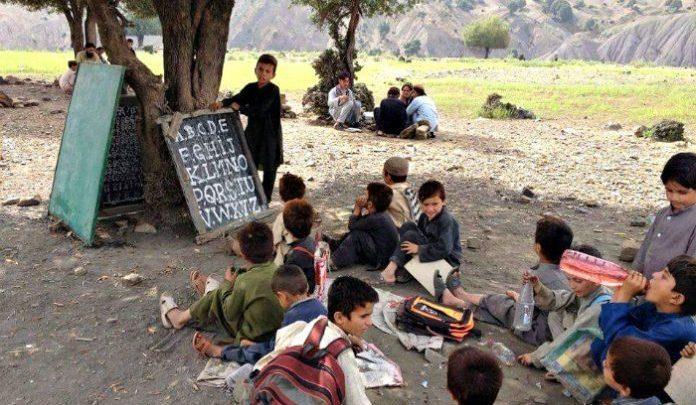
Schools used to remain closed in Waziristan due to law and order issues, military operations, displacement of people and destruction of educational institutions during militancy and several precious years of students were lost in the process, and now coronavirus has added to the already miserable situation.
A local resident, Wajid, said while talking to TNN that several academic years of students in Waziristan were wasted due to militancy and military operations, and the pandemic has further deteriorated the situation of the education sector. He said the education of children remained disturbed during the life of displacement as the displaced families could not stay in any area for longer due to financial and other constraints.
Wajid said the situation did not improve much after the displaced persons returned to North Waziristan as most of the schools were already destroyed and the remaining schools were in poor condition with no facilities and absent teachers.
Aamir Khan, a student from Miranshah, told TNN that most of the students of the tribal district had to leave education due to the closure of schools and colleges.
Wajid said students in North Waziristan have no internet facility or any other facility to continue their education during the lockdown. He demanded the government pay special attention to the improvement of the education sector in North Waziristan as future prospects of the local people will remain grim without the promotion of education.
Kamran, a teacher from Miranshah, said the studies of almost 90 percent of students were impacted due to law and order issues. He said most of the population in the area is poor which cannot afford to send their children to expensive private educational institutions.
Kamran said the education sector started a little improvement after the return of displaced persons and mergers with KP, but coronavirus has again stopped the academic activities and now the students are sitting at homes and their precious time is being wasted.
Assistant Education Officer Fida Wazir said arranging online classes for local students is impossible due to lack of internet facility. He said 54 schools were completely destroyed and 147 partially damaged during militancy in North Waziristan and most of them were reconstructed after the improvement of law and order. He said the remaining schools will also be reconstructed in the next budget. He said displaced persons have still not returned to some areas of North Waziristan and education for children of these areas has been arranged at their camps.
#Balochistan: #Pakistan forces whisk away four including two brothers, four released
Pakistan FC and intelligence agencies have carried out offensives in different areas of Balochistan and abducted at least four persons in the past two days. Whereas, four previously abducted men have been released.
According to details, a contingent of Pakistan army last night raided the house of Mohammed Karim and abducted his two young sons, Meraj and Imran without any legal procedure.
Sources told Balochwarna News that the forces raided the house on 17th May 2020 late night terrifying the family members of Mahommed Karim and they took away two brothers to Turbat FC camp which is under the command of Colonel Shahid who is reportedly notorious for abducting and ordering abductions of Baloch political activists.
It is worth mentioning that at the beginning of Ramadan two young Baloch, Shahdad and Ehsan Baloch who were murdered in Parod area of Kalat by Pakistan army’s death squads. They were said to be relatives of Mohammad Karim an employee of WAPDA (Water & Power Development Authority).
Two days earlier on 15 May 2020, Pakistani forces abducted Samiullah son of Sanaullah Kubdani has also been detained in the Gwash (Bedi) area of district Kharan Balochistan and transferred to an unknown location.
Samiullah was a labourer by profession who used to go to Taftan and Iran to work, he has come back to his home due to lockdown after the Coronavirus pandemic.
On May 14, Pakistan FC abducted another Baloch student named Parvez Baloch so of Sadiq district Kech Balochistan.
Sources reported that Pakistan intelligence agencies raided a house in Jusak area of Turbat at midnight on Thursday and forcefully disappeared Pervez who originally hails from Haroon-Dan area of district Awaran Balochistan.
It may be recalled that on the second day of Ramadan, Shah Dad and Ehsan Baloch two student-turned-militants were killed in a clash with the death squad formed by the Pakistani army in Parod area between Kalat, Kharan and Noshki.
Now it is being reported that Pakistani forces offensives against their relatives. The abductions Mehraj and Imran is an act of avenge against Baloch people on the part of the unbridled army of Pakistan.
Meanwhile, four previously abducted Baloch youth have been released and reached to their homes. The Voice for Baloch Missing Persons, on their Facebook Page, has confirmed their release as ‘good news’.
The released youth have been identified as Behroz son of Master Samad, Ali Haider son of Dil Jan, Muslim son of Ghulam Jan and Shahdost son of Rahim Bakhsh. They were abducted during a military offensive on 14 May from Tump Sarnakan area of Kech district in Balochistan.
Pakistan Discovers the High Cost of Chinese Investment

A new report sheds light on the true costs of the China-Pakistan Economic Corridor for Pakistan.
Pakistan’s desire to maintain strategic relations with China has resulted in the $62 billion China-Pakistan Economic Corridor (CPEC), a set of infrastructure projects, being mired in insufficient transparency.
But a Committee formed by Pakistani Prime Minister Imran Khan to examine the causes for the high cost of electricity to Pakistani consumers has lifted the lid on corruption involving Chinese private power producers in Pakistan.
The report reveals that the Huaneng Shandong Ruyi (Pak) Energy (HSR) or the Sahiwal and the Port Qasim Electric Power Company Limited (PQEPCL) coal plants under CPEC inflated their set-up costs.
For Pakistan’s citizens, who are always told how China is their most reliable friend in the world, it was a shock to discover that China does business mercilessly and unscrupulously.
Successive civilian governments and Pakistan’s military have looked upon China as their principal backer against India.
But it seems now that China is not in Pakistan to help its people but rather as a predatory economic actor.
The 278-page report by the “Committee for Power Sector Audit, Circular Debt Reservation, and Future RoadMap” listed malpractices to the tune of 100 billion Pakistani rupees ($625 million) in the independent power generating sector, with at least a third of it relating to Chinese projects.
Given the close ties between CPEC and the all-powerful Pakistan military — the CPEC Authority is currently chaired by Lt. General Asim Saleem Bajwa, who is also the Prime Minister’s Special Assistant on Information and Broadcasting — the Committee treaded softly in relation to the Chinese projects.
According to the committee’s report, “excess set-up costs of Rs. 32.46 billion (approximately $204 million) was allowed to the two coal-based [Chinese] plants due to misrepresentation by sponsors regarding [deductions for] the ‘Interest During Construction’ (IDC) as well as non-consideration of earlier completion of plants.”
The interest deduction was apparently allowed for 48 months whereas the plants were actually completed within 27-29 months leading to entitlement of an excess Return on Equity (RoE) of $27.4 million annually over the entire project life of 30 years in the case of the Sahiwal plant.
The estimated excess payment, keeping in mind the 6 percent annual rupee depreciation against the dollar, works out to a whopping Rs. 291.04 billion (approximately $1.8 billion).
The Chinese company HSR claimed IDC based on a long-term loan at the rate of LIBOR +4.5 percent for the length of the entire construction period, even though it borrowed no money during the first year of construction and used only short-term loans at substantially lower interest rates during the second year.
The magnitude of profiteering by the Chinese companies is incomprehensible. The two projects examined by the Pakistani experts’ Committee were worth $3.8 billion at the time of their launch. The Committee found overpayments of Rs. 483.64 billion, which amounts to $3 billion at current rates of exchange.
This includes overpayment of Rs. 376.71 billion (approximately $2.3 billion) to HSR and Rs. 106.93 billion (approximately $672 million) to PQEPCL on account of excess set-up cost, excess return due to excess set-up cost in 30 years, and excess return due to miscalculation in Internal Rate of Return (IRR).
In its report, the Committee recommended that Rs. 32.46 billion (approximately $204 million) be deducted from the project cost of PQEPCL and HSR; the return payment formula be corrected to reflect actual construction time; and Tariff of PQEPCL and HSR be adjusted accordingly.
Under the current formula, in two years of operation, HSR has already recovered 71.18 percent of its original equity invested whereas PQEPCL has recovered 32.46 percent of its original equity in the first year of operation.
This is over and above the profits that the companies would have made without subterfuge. Imagine the return the Chinese will generate on the $62 billion CPEC projects. These numbers are way too large to have been missed as oversight or malfeasance of individuals within the companies and their Pakistani counterparts.
The experience of the Sri Lankan and Maldives governments suggests that these overpayments are generated with the complicity of leaders in the Pakistan government and the loot shared by all parties.
Pakistan’s economy has been teetering on the verge of bankruptcy for some time and the COVID-19 pandemic has made the situation even worse.
Instead of reforming their country’s policies, Pakistan’s leaders, once again, sought debt restructuring and waivers on account of the pandemic, just as they previously sought international assistance as a reward for fighting terrorism.
But expecting the international community to repeatedly bail Pakistan out from one economic crisis after the other is unrealistic. Massive military expenditure, deep rooted corruption, and lack of accountability are at the heart of Pakistan’s perennial and ever widening gulf between revenue and expenditure.
Now, it seems, Chinese investments have become a new liability. The International Monetary Fund (IMF) has been pushing Pakistan’s officials to raise taxes and power tariffs, effectively asking the Pakistani public to foot the bill for China’s rapacious practices.
The United States and Western financial institutions should not help Pakistan’s ruling elites in their own and China’s predatory behavior. The people of Pakistan deserve better.
How terror exporter Pakistan has ducked sanctions. Something North Korea, Iran couldn’t do

TARA KARTHA
Pakistan has staved-off the threat of being tagged as a terrorist state by a careful calculation of the threshold that is tolerated by the US, India and others.
Pakistan is on a roll. Over a span of 10 days, terrorists trained on its soil have managed to attack and kill India’s hardened counter-terrorism soldiers in Kashmir at Handwara. The country has also managed to cause the assassination of Sardar Muhammed Arif Wazir, leader of an entirely peaceful group demanding Pashtun rights. Even more recently, its murderous protèges were accused of a heinous attack at a maternity ward in Afghanistan, killing newborns. Few other countries can aspire to touch such heights of brazen sub-conventional war, without having a tonne of sanctions thrust on them.
Iran, North Korea are lesser mortals
Now, consider this. Iran has been described as the “world’s worst sponsor of terrorism”, with US President Donald Trump designating the Iranian Revolutionary Guard Corps (IRGC) as a terrorist entity in April 2019. That’s the first time that a government body has been designated a terrorist entity. Yet, as analysts point out, Shia terrorism has never found a place in the Annual Reports on Terrorism issued by the State Department in the last 20 years. Iran is certainly prone to go out and kill its adversaries, but its operations are a pale shadow of what Islamabad can achieve on a reasonable day.
Then there is the perpetual bad boy, North Korea, which was re-designated as a terrorist sponsor in 2017. That was more to do with the politics of the Trump administration. Though the North Korean regime does prefer to wipe out dissidents, it is incapable of sustaining a virtual army in one country and 20 years of terrorist activities in another, the way Pakistan has.
The Taliban is an army that depends on Pakistan for shelter, banking, medical care and money, among other things. In the Afghan conflict, 20,260 civilians have been killed or injured between 2009 and March 2020, according to UNAMA‘s conservative estimates. That doesn’t take into account the preceding ten years of war, which may be assumed to have killed a similar number of civilians. Total casualties (both civilian and military) in Kashmir have been estimated to be around 41,000 till 2017. Add to that about another 855 killed since then. In total, Pakistan has been directly or indirectly responsible for more than one lakh deaths since 1990. Yet, Iran remains at the top of the charts for spreading terror.
Pakistan’s covers
How Pakistan has gotten away with this for decades is a question that has puzzled even the best of security experts. Barring the single threat post 9/11 to ‘bomb Pakistan back into the stone age’ the US seems to have shied away from even limited air attacks on Taliban camps in Pakistan. When questioned on this diffidence, many in Washington scornfully dismissed the possibility of attacking a nuclear weapon state, forgetting that Pakistan was already a nuclear state when Richard Armitage, then US assistant secretary of state, made his historic threat.
However, the US has arm-twisted Pakistan on other occasions: when it used drones to attack deep into Pakistani territory, when US Aircraft crossed Pakistani air space to bomb Osama bin Laden’s camps in Afghanistan, and when it went into Pakistan itself to get Bin Laden. So, whether Pakistani nuclear weapons deter the US or not seems to depend heavily on its own interests, political context and the extent of punishment that it calculates Pakistan can bear.
The second view is that the US is much too dependent on Pakistan for anything operational in Afghanistan. That this is true is apparent from US secretary of state Mike Pompeo’s counsel following the most recent attacks in Afghanistan, when he recommended that Kabul “cooperate” with the Taliban to bring peace to the country.
It is also true that Islamabad is adept at turning bad cards into a winning hand. So, it milked US operations for all it was worth, moving from $177 million before 9/11 to reach $2.7 billion in 2010.
Pakistan’s intelligence trade
Pakistan managed to cash in other ways as well. As analysis notes, 3 out of 4 terrorist attacks in the UK, for instance, had Pakistani roots. An earlier paper by the Heritage Foundation warns of a UK-Pakistan “terror connection” that poses a serious threat. The paper recommends a “coordinated” UK-US policy on Pakistan. Clearly, the UK follows its own path in ‘assisting’ Pakistan in return for intelligence about terrorist movement. So do other countries, including Russia, Uzbekistan and China.
Cooperation with the Pakistani army and its intelligence services arehighly prized by governments as well as academics looking for sources. Few are deceived by Pakistan’s duplicity, but go along for the sake of a good paper and contacts they can tout back home. Hence, the criticism is subdued in international journals. In other words, terrorism keeps Pakistan in business and also lets it influence the narrative.
There is a third view. Diplomats quietly admit that as an Islamic state, Pakistan has an ‘in’ to troublesome countries like Iran or Saudi Arabia, and uses its access to assist Western friends. Then, there are suspicions that the US operates into Iran through Pakistani groups to access intelligence from a country it cannot hope to access itself. In 2008, then Pakistan President Gen (retd) Pervez Musharraf was flown to China’s restive Xinjiang region to preach peace to Chinese Muslims. Pakistan is no leader of the Islamic world, but it certainly is a useful pawn.
Careful calculations
Pakistan has staved-off the threat of being tagged as a terrorist state primarily by a careful calculation of the threshold that is tolerated by the US, India and others. This was upset by the Balakot strikes, leading it to rely on other levers, including a dire American need to end a debilitating war in Afghanistan and offering information on terrorists it spawns.
Meanwhile, Chinese aircraft carrying medicines and military doctors are being welcomed in Pakistan, at a time when Beijing faces opprobrium everywhere else due to its failure to handle the coronavirus spread. For Rawalpindi, Chinese physical presence is additional insurance.
None of this has hindered India in the past, and it should not now. As India considers an appropriate response to the Handwara attack, there will be consideration of another air strike, despite the fact that Beijing has chosen to heat up the border in Ladakh rather conveniently for Islamabad.
While the air option must be kept open, an aggressive call for sanctions on Pakistan as a terrorist state must be considered, rather than the tedious demand for a seat on the United Nations Security Council. This may receive support at a time when there is global tiredness of Pakistan’s endless wars, and more importantly, the costs it imposes on budgets stressed by a pandemic far more deadly than anything Pakistan can come up with. This time round, Islamabad’s levers may lose their edge.
Subscribe to:
Posts (Atom)