M WAQAR.....
"A man's ethical behavior should be based effectually on sympathy, education, and social ties; no religious basis is necessary.Man would indeed be in a poor way if he had to be restrained by fear of punishment and hope of reward after death."
--Albert Einstein !!!
NEWS,ARTICLES,EDITORIALS,MUSIC... Ze chi pe mayeen yum da agha pukhtunistan de.....(Liberal,Progressive,Secular World.)''Secularism is not against religion; it is the message of humanity.''
تل ده وی پثتونستآن
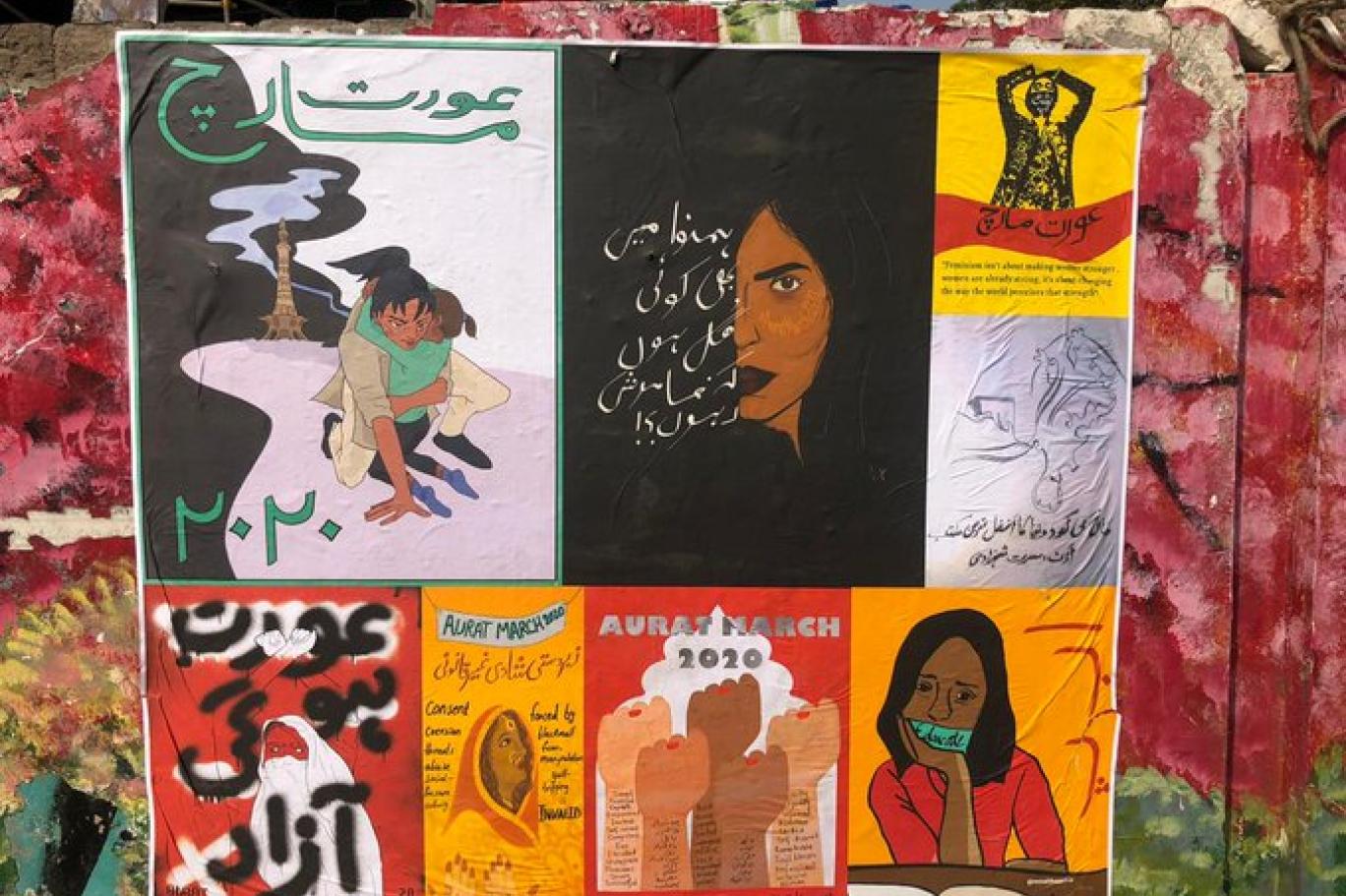
کچھ مرد حضرات نے یہ بھی کہا کہ یہ عورتیں اپنا جسم اور اپنی مرضی کا یہ مطلب لیتی ہیں کہ یہ طوائف بن جائیں۔ میرا جسم، میری مرضی کا ہرگز یہ مطلب نہیں لیکن آپ نے کبھی یہ سوچا ہے کہ عورت طوائف کیوں بنتی ہے؟
میرا جسم، میری مرضی کا نعرہ جو کہ پچھلے سال ہونے والے عورت مارچ کے بعد سے ہر طرف زیر بحث ہے۔ جتنے بحث مباحثے اس حوالے سے ہوئے اس کا لبِ لباب نکالنے سے معلوم ہوتا ہے جیسے اعتراض میرے جسم پر نہیں، میری مرضی پر ہے۔ یہی تو ہمیشہ ہوتا آیا ہے، مسئلہ سارا اس مرضی کا ہے اور ہمارا معاشرہ آج بھی یہ چاہتا ہے کہ چاہے عورت کا جسم ہو، تعلیم کا حق ہو، نوکری کا حق ہو، پسند کی شادی کرنے کا حق ہو، کسی بات سے انکار کا حق ہو، اس سب میں مرضی مرد کی چلنی ہے۔ جہاں عورت نے اپنی مرضی چاہی، اس عورت کو نافرمان، بدچلن اور بری عورت قرار دیا۔
آخر اتنا خوف کیوں ہماری مرضی سے؟ یا شاید اس خوف کی وجہ یہ تو نہیں کہ آپ کو مرضی کا مطلب سمجھ میں نہیں آتا؟ اس مرضی کا مطلب ہرگز وہ نہیں جو آپ سمجھتے ہیں، کہ اگر کسی لڑکی کو شادی کے لیے پوچھا اور اس نے انکار کر دیا تو آپ کی مرضی ہے کہ آپ اس پر تیزاب پھینکیں۔ اگر کو ئی لڑکی پڑھنا لکھنا چاہے یا نوکری کرنا چاہے تو آپ نے اسے مار دیا اور اسے اپنا گھریلو ذاتی معاملہ قرار دے کر صاف بچ گئے۔ کیونکہ مرضی تو صرف آپ کی چلتی ہے۔ بیوی نے کھانا صحیح نہیں بنایا اور آپ نے تشدد کیا۔ بیٹیاں پیدا کرنے پر عورت کا جینا حرام کر دیا کیونکہ قدر تو صرف اولاد نرینہ کی ہے۔
بھائی یا باپ تیش میں آیا اور کسی کو مار دیا۔ اب اسے بچانے کے لیے خاندان سر توڑ کوشسشیں کرے گی کہ اس کی زندگی بچ جائے لہذا یہاں پھر مرد حضرات کی مرضی کام آئے گی اور وہ یہ فیصلہ کریں گے کہ گھر میں موجود کسی بچی یا خاتون کو ’سورہ‘ میں دے دیا جائے اور دشمنی ختم کر دی جائے کیونکہ اس بچی یا خاتون کی کوئی مرضی تو ہے نہیں۔ اس کے بعد چاہے اس کی زندگی کا ہر دن قیامت کا دن ہو کیونکہ اس کی شادی نہیں کی جاتی اسے ایک نعم البدل کے طور پر پیش کیا جاتا ہے۔ پھر اسے کے شوہر اور اس کے گھر والوں کی مرضی کہ اس دشمنی کے پاداش میں روز اسے پھانسی سنائیں یا اس کا گلہ گھونٹے، مرضی اس کی نہیں چلے گی۔
دنیا جہان میں جہاں جہاں جنگ ہوئی، ہم سب کو اس امر کا بخوبی پتہ ہے کہ مرد صرف قتل ہوتے ہیں لیکن عورت قتل سے زیادہ ریپ ہوتی ہے۔ ریپ کو جنگوں میں ایک ہتھیار کے طور پر استعمال کیا جاتا رہا ہے، کیونکہ عورت کے جسم پر اس کی مرضی نہیں، لہذا مرد آپس میں دشمنیاں اور جنگوں میں ایک دوسرے کو نیچا دیکھانے اور بے عزت کرنے کے لیے ایک دوسرے کی عورتوں کے جسموں کو ظلم کا نشانے بناتے رہتے ہے اور دشمنی کی آگ بجھائی جاتی ہے
کچھ مرد حضرات نے یہ بھی کہا کہ یہ عورتیں اپنا جسم اور اپنی مرضی کا یہ مطلب لیتی ہیں کہ یہ طوائف بن جائیں سب۔ میرا جسم، میری مرضی کا ہرگز یہ مطلب نہیں لیکن آپ نے کبھی یہ سوچا ہے کہ عورت طوائف کیوں بنتی ہے؟
بھائی جس معا شرے میں عورت کی تعلیم پر پابندی ہے۔ عورت کی تعلیم کے لیے ادارے نہ ہونے کے برابر ہوں، مناسب ملازمتیں نہ ہوں، وہاں عورت طوائف نہیں بنے گی تو کیا کرے گی؟ لیکن سوال تو یہ بنتا ہے کہ طوائف کے پاس جاتا کون ہے؟ مرد۔ وہ مرد جس کی مرضی ہے، جہاں جائے، جو کرے، کوئی مائی کا لال مرد کی مرضی پر سوال نہیں اٹھا سکتا۔
اسی مرد کی مرضی میں آتا ہے تو کم سن اور معصوم بچے بچیوں کو اپنی ہوس کا نشانہ بنا کر بےدردی سے مار دے گا کیونکہ اس کی مرضی ہے۔
اپنے ارگرد نظر دوڑائیں اور مرد کی مرضی کی ایسی بہت سی مثالیں آپ کو نظر آئیں گی جو روز انسانیت کا جنازہ نکالتی ہوں گی لیکن چونکہ ہمارے معاشرے میں کبھی مرد کی مرضی پر سوال نہیں اٹھایا گیا اس لیے ہمیں یہ کبھی محسوس ہی نہیں ہوا کہ اس مرضی پر سوال اٹھائیں اور اس کو روکنے کی بات کریں۔ عورت جس مرضی کی بات کر رہی ہے وہ ہرگز وہ مرضی نہیں جو آج تک ایک مرد کرتا اور سمجھتا آ رہا ہے۔
ایک متوازن معاشرے کی بنیاد ہی ایک ترقی یافتہ، پر امن اور خوشحال معاشرے کی ضامن ہے (اے ایف پی)
اب وقت آگیا ہے کہ ہم عورتوں کی مرضی چلے۔ ہم اپنے حق کے لیے آواز اٹھائیں۔ ہمارے جسم ہماری ملکیت ہیں۔ کسی مرد یا کسی انسان کو ہمارے جسم پر کوئی حق اور سروکار نہ ہو۔ ہم بھی ترقی کی منازل طے کریں۔ اپنی مرضی سے اپنی صلاحیتوں کو استعمال کریں۔
ہزار مشکلات اور جانفشانی کے بعد آج کی عورت جس طرح سے دنیا کے ہر کونے اور ہر شعبے میں کامیابی کی منازل طے کر رہی ہے، اس سے تو صاف ظاہر ہے کہ عورت کو اپنی مرضی کا مکمل حق حاصل ہونا چاہیے۔ اپنی مرضی اور خوشی سے جینا ہر انسان کا حق ہے لیکن پھر صرف ہم پر اعتراض کیوں؟
ہمارے معاشرے میں کنفرنٹیشن کی وبا ہر طرف پھیلی ہوئی ہے۔ کنفرنٹیشن سے مزید تنازعے اور مسائل پیدا ہوتے ہیں۔ لہذا ہم سب کو تھوڑے توقف سے سوچنے اور سمجھنے کے بعد اپنی بات کو مدلل طریقے سے آگے رکھنا چاہیے اور ترجیح اصلاح ہو۔ نہ کہ اپنی ذاتی انا اور جھوٹے وقار کی پرستش ہو۔
ایک متوازن معاشرے کی بنیاد ہی ایک ترقی یافتہ، پر امن اور خوشحال معاشرے کی ضامن ہے۔ میری یہ تحریر پڑھنے کے بعد گالی کا خیال دل میں آئے تو یہ سوچ لیجیے گا کہ آپ میری بات سمجھے نہیں لہذا توقف سے کام لیں اور سمجھنے کی کوشش کریں کہ میری مرضی سے آپ کو کوئی خطرہ نہیں لہذا مطمئن رہیں۔
چیئرمین پیپلز پارٹی بلاول بھٹو زرداری نے کہا ہے کہ پاکستان کی ہر عورت میری ماں جیسی ہے، جو حقوق ہمارا دین، آئین عورتوں کو دیتا ہے ہم انہی حقوق کا مطالبہ کرتے ہیں۔
چیئرمین پیپلزپارٹی بلاول بھٹوزرداری نےخواتین کنونشن سےخطاب کرتے ہوئے کہا کہ خواتین کوحقوق ملےہیں تو پیپلزپارٹی کے دور میں ملے ہیں۔ ہم اپنے ملک کی خدمت کرنا چاہتے ہیں، عورتوں کےحقوق یا جدوجہد کی بات ہوتی ہے تو شہید بےنظیر بھٹو کا نام ضرور آتا ہے۔
چیئرمین پیپلز پارٹی نے کہا کہ آج لوگ کہتے ہیں کہ عورت مارچ نہیں کرسکتی،میں ان لوگوں کو کہتا ہوں آپ کی سوچ پرانی ہے، آج پاکستان کی عورت مارچ بھی کرےگی، عورت اگر چاہتی ہے تو وہ وزیر اعظم بھی بنے گی۔
انہوں نے کہا کہ ہم کسی کواجازت نہیں دیں گے کہ وہ عورتوں کو بتائیں کہ کس طرح سیاست کرنی ہے، ہم کسی کواجازت نہیں دیں گے کہ وہ عورتوں کو بتائیں کس طرح احتجاج کرنا ہے، ریاست کی ذمہ داری ہے کہ خواتین کو تحفظ فراہم کرے، نوجوان پاکستان کے لیے نوجوان قیادت کی ضرورت ہے۔
انہوں نے کہا کہ عورتوں کےحقوق کی جدوجہد میں پیپلزپارٹی کا کردار سب سے آگے ہے، پاکستان کے کونے کونے میں لیڈی ہیلتھ ورکرز کام کرتی ہیں۔ پوری دنیا میں بے نظیر انکم سپورٹ پروگرام کو سراہا گیا، منہگائی بڑھ رہی ہے لیکن ریاست کی جانب سےکوئی مدد نہیں مل رہی۔
بلاول بھٹوزرداری نے کہا کہ پیپلزپارٹی نے ہر دور میں عورتوں کے لیےکام کیاہے، جہاں بھی ہمیں موقع ملتا ہے اس ملک کی عورتوں کے لیے جدوجہد کر رہے ہیں۔
چیئرمین پیپلز پارٹی نے کہا کہ عورتوں کےمسائل حل کرنے کی کوشش کر رہے ہیں، پیپلزپارٹی وہ جماعت ہے جو آپ کےحقوق کے لیے لڑ رہی ہے۔
Chairman Pakistan People’s Party (PPP) Bilawal Bhutto Zardari has highlighted sacrifices of media workers, saying that the PPP will not accept a Naya Pakistan devoid of freedom of expression.
According to the details, He criticised the government for blocking media houses’ dues. The PPP chairman said that the government was using censorship as a tool to stifle criticism on media workers, producers, media houses, cameramen and those who posted on Twitter and other social media websites.
The chairman of PPP claimed that the cases against Nawaz Sharif and Asif Ali Zardari had not been instituted due to corruption but political victimisation. Bilawal said no one agreed with the ruling party claims that Nawaz Sharif served the jail term because of corruption.
PEOPLE want to live in a society where they enjoy the freedom of thought and action and can exercise their right to speak out. Unfortunately, there is now an attempt to roll back these fundamental rights. We are witnessing an alarming rise of bigotry in society that is undermining democratic values. The strengthening of religious extremism not only weakens democratic institutions but also divides the country. One such example is the recent suspension of the release of an international award-winning Pakistani film under the pressure of a radical cleric.
The government’s retraction of the permission to screen Zindagi Tamasha gave certain religious elements a greater sense of empowerment. The move was yet another blow to the already shrinking freedom of expression. The assertion of authority by religious extremist groups is also manifested in the attempt by a radical cleric to seize control of Islamabad’s Lal Masjid. It brings back memories of the 2007 incident that led to the bloody military operation. The policy of appeasement shows that the government has not learnt any lesson from the past. It is yet another reminder that the state is being held hostage by bigots.
Meanwhile, the demand by some religious groups to ban the Aurat March that has become a symbol of struggle for women rights in this country is also an attempt to undermine fundamental rights. Accusing women activists of spreading ‘obscenity’ and ‘vulgarity’, the self-appointed guardians of so-called morality have threatened to stop women’s rights rallies on International Women’s Day to be observed on March 8.
Growing religious extremism presents the biggest threat to freedom of expression.
Leading the pack is Maulana Fazlur Rehman, head of the JUI-F, who has called upon his followers to use whatever means at their disposal against the participants. Ironically, the crafty maulana had recently led a march on Islamabad for the ‘restoration of democracy’. Sadly, many liberals had jumped onto his bandwagon declaring him a ‘champion of democracy’.
Going back to the film produced by Sarmad Khoosat, one of Pakistan’s most acclaimed filmmakers, Zindagi Tamasha premiered internationally last year and had been cleared by the federal and provincial censor boards for release in the country. The film was awarded the top fiction prize at the Busan International Film Festival. But days before it was to hit Pakistani cinema screens, the government gave in to the threat issued by the head of the Tehreek-i-Labbaik Pakistan (TLP), Khadim Hussain Rizvi, the notorious cleric who had recently faced terrorism charges. Its expected release was stopped and the film was sent to the Council of Islamic Ideology for review. It is the first time in the country’s history that a film already passed by the official censors now has to be cleared by a body that has no such authority.
A spokesman for the TLP described the film as being ‘blasphemous’ and threatened to launch a countrywide protest to stop it from being screened. Interestingly, the censor boards that reviewed it twice didn’t find any objectionable content in the film.
Blasphemy allegations are handy tools for bigots who want to silence rational voices. The film has simply depicted hypocrisy in the name of religion. It carries a strong message against the growing intolerance that is now so deeply entrenched in our society. The protest against an internationally acclaimed film is also a manifestation of a regressive mindset that the film itself has effectively portrayed.
These religious bigots are afraid of being exposed. It is alarming that violent extremist elements have gained strength largely because of the weakness of the state. It seems that we have learnt no lessons from the past. Growing religious extremism presents the biggest threat to freedom of expression and the democratic process. Most dangerous, however, is the impunity that some of the violent extremist groups enjoy.
The state’s policy of appeasement has further emboldened radical clerics like Rizvi who was released from detention. He had been arrested for provoking violent protests against the Supreme Court’s decision to free Aasia Bibi who suffered years in jail because of a concocted case of blasphemy against her.
It is intriguing how terrorism cases against him have been dropped. He has now returned to his vitriolic sermons. But the law does not swing into action against him — maybe because of the patronage of some strong elements within the establishment.
Sarmad Khoosat, his family and team have reportedly been subjected to threats and bullying by TLP goons. In an open letter to the prime minister, the renowned filmmaker who has been associated with the Pakistani film industry for over two decades described the torment he was going through.
Khoosat rightly pointed out that “like any other film, made in any other part of the world, Zindagi Tamasha is a reflection of its setting”. But there has been a deafening silence from the government over the ordeal of the brilliant artist who has won laurels for the country through his work.
The tacit ban on the screening of Zindagi Tamasha is hardly an isolated instance. It is a manifestation of a larger problem of shrinking space for rational and progressive voices. There is strong resistance from right-wing groups to any move that is intended to shake up the existing order. While there is unannounced censorship on progressive literature, the religious extremists have been given a free hand.
It’s such a pity that a film that has earned international acclaim cannot be watched at home. Banning films is a manifestation of a culture that is afraid to face the truth. We have a long history of suppressing dissenting views perceived as posing a threat to the prevailing order. The space for reason and freedom of expression is further shrinking thanks to growing authoritarianism and rising bigotry in society.
Democracy cannot exist without freedom of expression and equal rights for all segments of society. There is a need for a joint effort to deal with this rising menace that threatens the national fabric.
YouTube is increasingly becoming the platform of choice for reporters facing one of the harshest media crackdowns in Pakistan’s 72-year history.
For Pakistani journalists, there’s only one channel that doesn’t exercise the mute button when they report difficult stories that involve their government or the country’s powerful military: YouTube.
The video-sharing social media giant is increasingly becoming the platform of choice for reporters facing one of the harshest media crackdowns in Pakistan’s 72-year history.
One of them is Syed Talat Hussain, who quit Geo television — the country’s largest broadcaster — after he was told his programs were too critical of the army and the government.
“Hunting down dissidents and demonizing critics as traitors was always part of the media landscape, but the scale, audacity and scope of it we see now remains unprecedented,” said Hussain. “Pakistan’s media faces deep, structural constraints that translate into crippling censorship.”
Once a vocal advocate of free media, Prime Minister Imran Khan is increasingly frustrated with criticism of his government and its handling of the economy. At the same time, the powerful military, which has ruled Pakistan for about half of its seven-decade history, is expanding its control over foreign and security policies and playing a greater role in economic strategy.
Under pressure over rising inflation and unemployment, the former cricket star has taken to calling any media critical of his policies the “mafia.” Still, Khan cannot afford to be distracted as he struggles to stabilize the economy after taking a $6 billion International Monetary Fund bailout last year and stave off Pakistan being placed on a global anti-money laundering agency blacklist.
Military Muscle
Media freedom has always been challenged in the South Asian nation, where the military has repeatedly obstructed democratic rule and tried to muzzle dissenting voices. In the 1980s, journalists were jailed and beaten, while newspapers were censored during the Martial Law imposed by General Zia-ul-Haq from 1977 to 1988. In 2007, the former president and General Pervez Musharraf, who ruled from 1999 to 2008, banned all television channels for a few weeks.
Khan’s army-backed government is intensifying the crackdown.
The curbs pushed Hussain to start his own YouTube channel where he now posts regular bulletins. The popular journalist has 103,000 subscribers to his channel and some 3.3 million Twitter followers.
So far Khan’s administration has made no move to censor YouTube content. Pakistan has briefly banned the video-sharing platform in the past, most notably in September 2012 after protests against “Innocence of Muslims,” a film viewed as anti-Islam. Islamabad’s neighbor and ally China bans access to Youtube and countries like Thailand and Malaysia have in the past either censored content or asked for it to be taken down.
Pakistan Electronic Media Regulatory Authority in January banned Kashif Abbasi, an anchor at ARY News television channel, generally considered a pro-government news outlet, for three months after the regulator said his program sought to “debase and demean” the military.
An interview of the opposition leader and former President Asif Ali Zardari was taken off a few minutes after it was broadcast on Geo television in November. The reporter Hamid Mir blamed censorship by unidentified authorities. A week later, a televised interview of opposition leader Maryam Nawaz, who is also the daughter of three-time Prime Minister Nawaz Sharif, was taken off air midway without any reasons.
Firdous Ashiq Awan, a special assistant to the prime minister on information, said at a press conference the media regulator banned interviews with Zardari and Maryam because convicts were not allowed on TV. Both Zardari and Maryam are being tried for corruption in anti-graft courts.
Awan didn’t respond to calls from Bloomberg seeking comment.
“If you disagree with them, they take it as an attack on security interests,” Muhammad Ziauddin, a 50-year-veteran journalist and former editor of The Express Tribune and Dawn newspapers said, referring to the army and the government. “The situation is very bad. There is self-censorship” as well. Khan accuses Geo TV and Dawn, the country’s most read English language newspaper, of being biased against his government.
Silencing Media
Ziauddin said his voice was muted at least 10 times during a television talk show because he was critical of the army’s intervention in politics and the government.
The military denies any role in curbs on media, while the ministers say the measures are being taken by the media regulator without any interference from the authorities.
Still, Reporters Without Borders has lowered Pakistan’s ranking by three points to 142 out of 180 in 2019, placing it behind Afghanistan, Myanmar and South Sudan in the free media index, while Amnesty International is concerned about human rights activists and students being targeted. Pakistan Federal Union of Journalists, the top media-representative body, and press clubs across the country are protesting against censorship.
But it is not just censorship that’s worrying Pakistan’s media.
Journalists continue to be at risk of threats, kidnapping, and murder, while some have sought asylum in other countries. At least 33 journalists were killed in the past six years and so far, no one has been arrested or tried for their murders, according to Freedom Network, a Pakistan-based media rights watchdog.
At least three journalists spoke on the condition of anonymity, saying they fear backlash from security agencies. They reported receiving WhatsApp messages from military officials on reporting guidelines. If they don’t comply, they get angry calls, or visits by security officials or a social media campaign will be generated that brands them as “traitors.”
“In the past, there were some rules, clear red-lines and we knew who is on the other side,” Ziauddin said. “Now we don’t know who is doing it.”-
پیپلز پارٹی کے چیئرمین بلاول بھٹو زرداری نے کہا ہے کہ جب بھی سلیکٹڈ حکومت آتی ہے کم قیمت میں ادارے بکنے لگتے ہیں ، اگر مشرف ادارے نہیں بیچ سکے تو کٹھ پتلی بھی نہیں بیچ سکے گا۔
لاہور میں تقریب سے خطاب کرتے ہوئے چیئرمین پی پی نے کہا کہ جن اداروں میں محنت کشوں کا خون پسینہ شامل ہے اُن کی نج کاری نہیں ہونے دیں گے۔
بلاول بھٹو نے کہا کہ مزدوروں کو کوئی ایمنسٹی اسکیم یا بیل پیکج نہیں ملتا جبکہ آئی ایم ایف کے ساتھ بیٹھ کر مزدوروں کے حقوق پر سودے بازی کی جاتی ہے۔
انہوں نے کہا کہ یہ لوگ پھر کہتے ہیں کہ حکومت صحیح سمت میں ترقی کر رہی ہے۔
چیئرمین پی پی نے کہا کہ ہم عوامی حکومت بنائیں گے اور مزدوروں کو ان کے حقوق واپس دلائیں گے جبکہ تمام اداروں میں مزدوروں کو حصہ دار بنائیں گے ۔
بلاول بھٹو زرداری نے کہا کہ ہماری حکومت آئے گی تو دیکھیں گے کیسے نج کاری ہوتی ہے۔
انہوں نے کہا کہ ان 15 ماہ سے پہلے پانچ سالوں میں مزدوروں کے حقوق پر حملے کیے جارہے تھے، پاکستان پیپلز پارٹی اور تمام جماعتوں کی سوچ میں فرق ہے جبکہ پیپلز پارٹی کا لیبر وزیر واقعی مزدوروں سے تعلق رکھتا ہے۔
انہوں نے کہا کہ مزدور کی کم از کم تنخواہ اتنی ہونی چاہیے کہ نہ صرف گھر چل سکے، تعلیم اور علاج کا خرچ اٹھایا جاسکے۔
بلاول بھٹو نے کہا کہ ضیا آمر نے مزدوروں سے جو حق چھینا، شہید محترمہ نے پہلے دن یونین سازی کا حق واپس کیا جبکہ مشرف دور میں یونین سازی کا حق چھینا گیا، پھر ہم نے واپس کیا۔
SHERIDAN PRASSO Almost 7 years after the China-Pakistan Economic Corridor was established, there’s little evidence of its ambitious and grand vision being realised.
The four-times-a-week propeller plane from Karachi whips up a cloud of dust as it lands on an arid airstrip. Passengers cross the tarmac in the scorching sun and enter an arrivals terminal not much larger than a tractor-trailer. Outside, soldiers carrying AK-47s are waiting. This is Gwadar, a remote scratch of land on Pakistan’s southwest coast. Its port is the last stop on a planned $62 billion corridor connecting China’s landlocked westernmost province to the Arabian Sea, the crown jewel of President Xi Jinping’s Belt and Road Initiative, designed to build infrastructure and influence around the world.
Plans originally called for a seaport, roads, railways, pipelines, dozens of factories and the largest airport in Pakistan. But, almost seven years after the China-Pakistan Economic Corridor was established, there’s little evidence of that vision being realized. The site of the new airport, which was supposed to have been completed with Chinese funding more than three years ago, is a fenced-off area of scrub and dun-colored sand. Specks of mica in the dirt are the only things that glitter. The factories have yet to materialize on a stretch of beach along the bay south of the airport. And traffic at Gwadar’s tiny, three-berth port is sparse. A Pakistan Navy frigate is the only ship docked there during a recent visit, and there’s no sign of the sole scheduled weekly cargo run from Karachi.
Less than one-third of announced CPEC projects have been completed, totaling about $19 billion, according to government statements. Pakistan bears much of the blame. It has repeatedly missed construction targets as it ran out of money; it got a $6 billion bailout from the International Monetary Fund last year, the country’s 13th since the late 1980s. Two successive prime ministers have been jailed on corruption charges. And the Baloch Liberation Army’s desire for a separate homeland in Balochistan province, where Gwadar is located, has made life there uneasy. In May, militants stormed the city’s only luxury hotel, shooting up the white-marbled lobby and killing five people.
But setbacks in Gwadar point to larger problems along the Belt and Road. China is scaling back its ambitions, not just in Pakistan but around the world. Its economic growth has slowed to the lowest rate in three decades, inflation is rising and the country has been feeling the effects of a trade war with the U.S. The picture is getting even darker as a coronavirus epidemic that originated in central China threatens to cause further delays and cutbacks. “The biggest constraint for China now is its own economy,” says Jonathan Hillman, a senior fellow at the Center for Strategic and International Studies in Washington.
In a number of countries, projects have been canceled, downsized or scrutinized. Malaysia renegotiated the terms of a rail link being built by China and scrapped $3 billion of planned pipelines. In Kenya, a court halted construction last year on a $2 billion power plant financed by China. And in Sri Lanka, new leaders said they want to regain control of a port in Hambantota that was leased to a Chinese company for 99 years when the previous government couldn’t pay back a loan. That takeover sparked concern in many Belt and Road countries that China’s largesse comes with the risk of ceding critical infrastructure. And it has increased wariness about the price of indebtedness to China, which the Washington-based Center for Global Development says puts at least eight nations, including Pakistan, at high risk of debt distress.
All that could result in shaving hundreds of billions of dollars off an estimated $1 trillion of planned Belt and Road spending, according to a September report by law firm Baker McKenzie. While the value of signed projects increased last year, data from China’s Ministry of Commerce show actual spending stalled at $75 billion in 2019 after falling 14% the previous year. Total spending from the beginning of 2014, shortly after President Xi announced the initiative, through November 2019 is $337 billion, government figures show, far short of China’s ambitious goals.
Pakistan may be a harbinger of bigger problems, according to Hillman, who directs Reconnecting Asia, a project that tracks Belt and Road progress. “That is generally where the rest of the Belt and Road seems to be going,” he says. “It’s not dead in the water, but I’m skeptical whether China is going to be able to achieve what it set out to do.”
Gwadar is shaped like a barbell dangling from Pakistan’s coastline. A strip of sandbar and rocks less than 1 kilometer wide at its narrowest connects to a rocky outcrop where the luxury Zaver Pearl-Continental hotel sits like fortress. The city of 140,000 is closer to the Iranian border than to Karachi, a 10-hour drive, in an area so remote it was part of the Sultanate of Oman until 1958.
Just getting around is a challenge. Foreign visitors must be accompanied by an entourage of 10 Pakistani soldiers in flatbed trucks. At the deep-water port on the eastern side of the barbell, there’s little sign of commerce on a hot October day. The only cargo ship that calls in Gwadar, operated by China’s Cosco Shipping Holdings Co., delivers construction materials and sometimes departs with seafood. Occasionally, it doesn’t arrive at all. A manager who answers Cosco’s phone in Karachi, where the weekly run originates, says the line is operational, but it’s up to the captain whether he wants to stop in Gwadar or go directly to Oman. The captain recently had a cold and didn’t want to stop, the manager says.
Yet Naseer Khan Kashani, chairman of the Gwadar Port Authority, maintains that all is well. Cosco was frustrated by problems with a web-based customs system, but it has been sorted out, he says, sitting in his office at the port. He declines to give figures for cargo volume. “Everything is going to be fine,” Kashani says. “The volume of trade is going to increase tremendously.”
That view is echoed by Zhang Baozhong, chairman of China Overseas Ports Holding Co., which operates Gwadar’s port and free-trade zone. He dismisses the apparent inactivity with a wave of his hand, comparing it to four years earlier when he first arrived. Then, there was only one flight a week to Gwadar, with a handful of people on it. “My impression was that this place was completely neglected by the whole world,” Zhang says. “I felt this was a mission impossible.”
Now, he says, there’s progress—$250 million in port renovations, including new cranes for unloading cargo, a business center, a desalination plant and sewage disposal. “This port is now becoming a node in international shipping,” he says. “Of course, the quantity is not big enough, but it takes time. By 2030, we believe Gwadar will be a new economic hub of Pakistan and will be the highest GDP contributor to Pakistan’s economy.”
A free-trade zone was established in Gwadar in 2015, and officials say nine or 10 companies, including a Chinese steelmaker and a Pakistani producer of edible oils, have signed up. But there are no signs of any factories operating. An additional 30 are targeted for the Free Zone’s Phase II, closer to the site of the new airport, officials say, and $400 million has been invested so far. Zhang says twice that number of companies applied, including some from European countries. “It’s going to be established in the near future,” says Kashani. “They talk about CPEC slowing down, but nothing is slowing down.”
The zones still need critical infrastructure, including water and power, according to CPEC’s website. Construction began in November on a 300-megawatt, $542 million plant, which will run on imported coal and is expected to reduce the frequency of power cuts. An acute scarcity of water, with annual rainfall less than 4 inches, was alleviated by freak rains in 2018 that temporarily filled reservoirs, according to Shahzeb Kakar, director general of the Gwadar Development Authority. He says the city will meet future needs by building desalination plants. A plan for a “safe city” project with surveillance cameras may reduce the need for Gwadar to feel like it’s under military occupation. “We have three basic issues—power, water and security,” Kakar says. “All three of these issues have now been taken care of. Now things are moving in the right direction.”
Fishermen sort through their catch at the harbor in Gwadar in July 2018. Photographer: Asim Hafeez/Bloomberg
Not everyone is so upbeat. Mariyam Suleman, the Gwadar-based editor of the Balochistan Review, says life for people in the area hasn’t improved much after five years of planned developments. “Their neighborhoods are still without good infrastructure; there’s a sewage issue; there isn’t electricity for long hours, especially in summer; and the water crisis has always been an issue,” she says.
Even if Gwadar weren’t under threat of violence and had sufficient power and water to build and operate 40 factories, it doesn’t have enough people to work in them. The city’s population, mostly fishermen and their families, is about one-fifth that of Washington’s. A proposal for a project called China-Pak Hills envisages a gated community with a “Hong Kong financial district” and luxury housing for 500,000 Chinese professionals who could move to Gwadar and provide a labor force by 2022—an influx that wouldn’t sit well with either Baloch separatists or the Pakistani government, according to Asad Sayeed, an economist at the Collective for Social Science Research in Karachi.
It’s also hard to imagine how Gwadar would need Pakistan’s largest airport, with capacity for Airbus A300 jets and 30,000 tons of cargo annually. Yet that’s the plan for the 4,300-acre area demarcated by razor-wire fence on the outskirts of town. Announced in 2014, the new airport was supposed to have been built by China Communications Construction Co., the largest builder of projects along the Belt and Road, with a $230 million loan from China and a grant from Oman. But construction never started. The following year, the Chinese government said it would convert the loan to a grant, and Pakistani officials said the airport would be completed by the end of 2016, then by October 2017. Still nothing.
Last year, Prime Minister Imran Khan traveled to Gwadar and broke ground on a new airport site. And a new contractor was announced to take over from CCCC: a branch of state-owned China Railway Engineering Corp. that would also build schools and a hospital. Completion is now scheduled for 2022.
During a visit in October, a tractor started up and began driving around the empty, dusty stretch of land without evident purpose. “They are doing as much as they can at the moment to show it is still happening,” says Andrew Small, author of the 2015 book “The China-Pakistan Axis” and a senior fellow at the Washington-based German Marshall Fund. Small says Khan’s government is simply trying to complete about $20 billion worth of CPEC projects already in the works, mostly power plants, under pressure from China. “The full-scale version is not really in the cards,” he says. “It’s going to land in a far more modest place than envisaged. It’s not going to be a game changer.”
The CPEC project was intended to reduce oil and gas routes from the Middle East by thousands of miles, a way to cut overland into western China instead of going thousands of miles around South Asia and Southeast Asia by ship. Pakistan was supposed to get 2.3 million jobs and a 2.5 percentage-point boost to its gross domestic product. The deal, negotiated by former Prime Minister Nawaz Sharif and touted in a 2017 communique by his successor Shahid Khaqan Abbasi after Sharif was jailed on corruption charges, called for the corridor to start taking shape by 2020. It was described as a pilot project, a model for Belt and Road countries around the world.
Pakistan, long allied with China to counter the regional weight of India, wanted help developing its mineral-rich but poorest and most restive province. It also wanted to quell separatists in the Baloch Liberation Army who not only attacked the Pearl-Continental last year but also killed four people at the Chinese consulate in Karachi in 2018. The militant group was seeking to halt plans they believed would enable Pakistan’s government to take more resources from the area, rather than aid residents. Further attacks in recent months have killed more than a dozen Pakistani soldiers and security personnel.
China may have objectives besides better oil and gas routes. Western governments have long been concerned that Belt and Road spending is helping China develop what’s known as a “string of pearls”—ports that can be used by its navy, from the South China Sea across the Arabian Sea and on to Africa. Though China and Pakistan both deny any military intentions, Gwadar could be a stopping point on the way from Sri Lanka through the Maldives to Djibouti, where China has built its first military base on the Horn of Africa. China’s plans for the Pakistan corridor also include development in Xinjiang province, where it has attempted to curb unrest. The United Nations has estimated that 1 million Uighur people were being held in camps there, which the Chinese government has said was for reeducation and training.
If China’s interests were purely economic, says economist Sayeed, it could have helped expand the port of Karachi, already connected to the highway from China, instead of seeking to build new roads through desolate, dusty and dangerous Balochistan.
Whatever their ambitions, China and Pakistan have had to scale them back. Khan, the former cricketer who was elected in 2018 on an anti-corruption platform and who had criticized expensive infrastructure deals signed with China by previous governments, inherited an economic disaster. To address its current account deficit, his administration has cut imports, depreciated the rupee, slashed spending and raised taxes. GDP growth fell to an estimated 2.4% last year, from 5.8% in 2018, as manufacturing experienced double-digit declines and exports remained flat.
As for China, which has become the world’s largest creditor, it is refocusing on smaller projects crafted for the needs of recipient countries. Winning hearts and minds has become more important than announcements of gargantuan airports. Instead, according to guidelines issued by President Xi in late 2018, people-to-people exchanges in education, science and technology, culture, and tourism will help make Belt and Road projects “deeply rooted in the hearts of the people.”
All this seeks to downplay the more strategic aspects of what China has sought to achieve, says Nadege Rolland, senior fellow at the Washington-based National Bureau of Asian Research. “My hunch is there won’t be big splashes of money anymore,” she says. “The investments were only an incentive.” China’s ultimate objective, she says, “is not to build connectivity but to increase Beijing’s political and strategic influence.”
This means that even if Belt and Road spending ends up being a third of what was originally forecast, China may still have gotten its money’s worth. It will have broadened its influence in countries that are potential providers of natural resources, as well as future markets, and gained allies in international arenas such as the United Nations at a time when the U.S. is pulling back.
In Pakistan, an oil refinery in Gwadar and a railway and oil pipeline to China are among projects that have yet to materialize. An expressway connecting the new airport to Gwadar was supposed to have been completed by CCCC in 2018 for $168 million. It’s now scheduled to open later this year. In October, dump trucks with piles of rocks were parked on the edge of the existing roadway nearby, but no work was being done. The Chinese site manager says he’s too busy to speak. His assistant explains there’s no need for an interview, as all information about CCCC’s work can be found on the internet.
On a visit to Beijing in October, Khan assured Chinese officials that CPEC plans are proceeding. But with Pakistan’s budget maxed out and austerity imposed by the International Monetary Fund, it is clear there won’t be any big, new projects and unclear how many of the current ones can be finished, says CSIS’s Hillman. Still, both Pakistan and China pledged during Khan’s visit “to speedily execute the CPEC so that its growth potential can be fully realized,” according to an official communique.
Full realization may mean figuring out how much can be built to save face, provide some benefit to both sides and declare success. An update on the project from Pakistan’s ambassador to Beijing, published in Chinese state media last year, said 11 projects had been completed in the past five years and another 11 were underway, with total spending of $18.9 billion. It said an additional 20 were planned, without giving amounts, details or a time frame. There’s no longer any mention of the original $62 billion pledged.
Adding to Gwadar’s development challenges, other parts of Pakistan such as Karachi have started their own special economic zones. Even if the corridor to Gwadar could be developed and security issues resolved, there’s only the Karakoram Highway, an inhospitable, two-lane route through the treacherous mountains separating China and Pakistan. It is prone to landslides and threatened by attacks, and has yet to be connected to roads leading to Gwadar, says Alyssa Ayres, Washington-based senior fellow for India, Pakistan and South Asia at the Council on Foreign Relations. “It’s hard to imagine this as a viable freight corridor,” she says.
Hillman has come to a similar conclusion, though one with wider implications. “The Chinese are having some regret about making Pakistan the flagship,” he says. “There’s a lot more caution on all sides.”- Bloomberg
"In a democratic society, asking for your rights is valid and extremely important," she said in Senate.
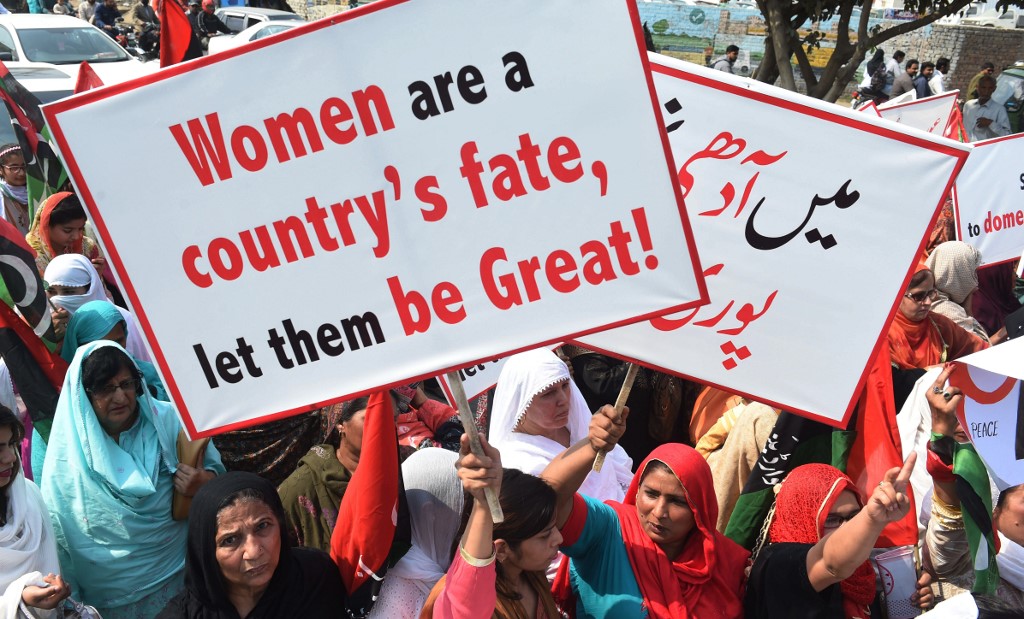
Over the course of the past two years, the annual Aurat March has been a union for Pakistani women to display massive resistance through a movement targeted against the structures of patriarchy.
While slurs, abuses and threats are only a few of the ways in which organisers and participants have faced backlash; this year the ball has gone too far in the court as petitions have been filed calling the march 'anti-state' and 'anti-Islamic'.
Condemning this, senator Sherry Rehman - spokesperson for the Pakistan People's Party spoke up in Senate to oppose Molvi Faiz Muhammad who claimed "mera jism meri marzi azadi nahi, awargi hai." (My body, my choice is not freedom, it is obscenity)
"In a democratic society, asking for your rights is not only valid, but also extremely important," Rehman opposed.
Demanding respect from the parliament members, she stated that shaming and degrading those who leave the comfort of their homes to ask for due rights, is a way for men to disregard the struggles of women.
"I am part of Shaheed Mohtarma Benazir Bhutto's party, who struggled, and because of whom we are standing here today."
She further called out the hypocrisy and double standards of society who do not put men on the same pedestal.
"This will not happen in Pakistan, and People's Party opposes this!" she concluded, adding "March tou zaroor hoga!" (The March will definitely happen).
پاکستان پیپلز پارٹی (پی پی پی) کے چیئرمین بلاول بھٹو زرداری نے کہا ہے کہ عمران خان نے حکومت بچانے کے لیے نواز شریف کو این آر او دے کر لندن بھیجا، نوازشریف کو لندن بھیجنے کے بعد عمران خان قوم سے جھوٹ نہ بولیں۔
چیئرمین پیپلز پارٹی (پی پی پی) بلاول بھٹو لاہور میں دیرینہ کارکن ڈاکٹر خالد جان کے گھر گئے اور سول سوسائٹی کے ارکان سے ملاقات کی۔
میڈیا سے گفتگو میں بلاول بھٹو کا کہنا تھا کہ عمران خان نے حکومت بچانے کے لیے نواز شریف کو این آر او دے کر لندن بھیجا، اب یہ ڈرامے بازی اور منافقت نہ کریں، رونا نہ روئیں، اگر نوازشریف مجرم تھا تو عمران خان نے لندن کیوں بھیجا؟
بلاول بھٹو زرداری کا یہ بھی کہنا تھا کہ عمران خان صرف اپنا کٹھ پتلی راج جاری رکھنا چاہتے ہیں، کرپشن کیسز اور کرپشن کو روکنے پر ان کی کوئی توجہ نہیں ہے۔
چیئرمین پی پی پی کا کہنا تھا کہ نواز شریف کو واپس لانے کی بات ڈرامہ اور رونے دھونے کے سوا کچھ نہیں، نواز شریف مجرم تھے تو کیوں انہیں لندن بھیجا گیا۔
بلاول بھٹو کا کہنا تھا کہ مشرف نے ریاست کو امریکا کے ماتحت رکھا، ان کے دور میں آٹا بحران عروج پر تھا، عمران نیازی نے آئی ایم ایف کے پاس جانے پر خودکشی کرنے کا کہا تھا۔
انہوں نے کہا کہ لاپتہ افراد کے معاملے پر ہمیشہ آواز اٹھائی ہے، اس سلسلے میں ہمارے کمیشن کو ہمیشہ کمزور کیا گیا، ریاست کے پاس ایسی طاقت نہیں ہونی چاہیے کہ وہ اپنے شہریوں کو لاپتہ کرے، ہمیں بھی دنیا کی طرح انسانی حقوق اپنانا ہوں گے۔