Tuesday, March 3, 2020

Pakistani Women Are Ready for Another Aurat March.

Since 2018, the march has attracted fierce criticism, especially online. But the organizers and participants are undaunted.
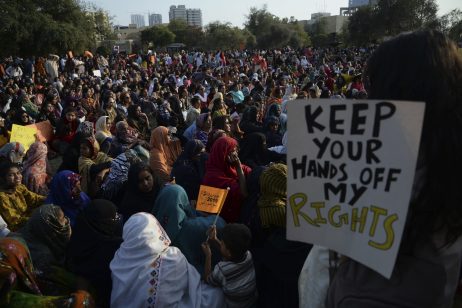
On International Women’s Day, while women around the world celebrate freedom, independence, and womanhood, Pakistani women will come out of their houses to demand their right to march. Over the past two years, the Aurat [women] march has turned into a massive resistance movement against the patriarchal structures of society, resulting in a strong backlash against the participants and organizers of the march.
The Aurat March is organized under the banner of “Hum Auratain” (we women), an umbrella term for a collective of feminist women, transgender individuals, nonbinary persons, and gender and sexual minorities who stand against the patriarchal structures that result in the sexual, economic, and structural exploitation of women.
It all started two years ago when a couple of feminist groups from Karachi decided to hold a march on International Women’s Day, March 8.
The core principles of Hum Auratain dictate that the march could not be funded by NGOs or corporations. Instead, the organizers arrange fundraising events to collect funds. The marches, designed to be anonymous and diverse, are held in all major cities of Pakistan, including Lahore, Islamabad, Karachi, Peshawar, and Quetta.
Each year, the organizers release an Aurat March manifesto that demands accountability and restorative justice against violence targeted at women at the workplace, at home, and in public spaces. It also pushes for economic justice, inclusion, and access to public spaces for all. The Aurat March gave new momentum to the feminist movement in Pakistan – but with that it put the organizers and participants at risk.
Last year, the march organizers complained that they received threats and were harassed online.
They were labelled as “bad women” and Western agents who want to damage the culture of Pakistan. Some men even threatened them with rape.
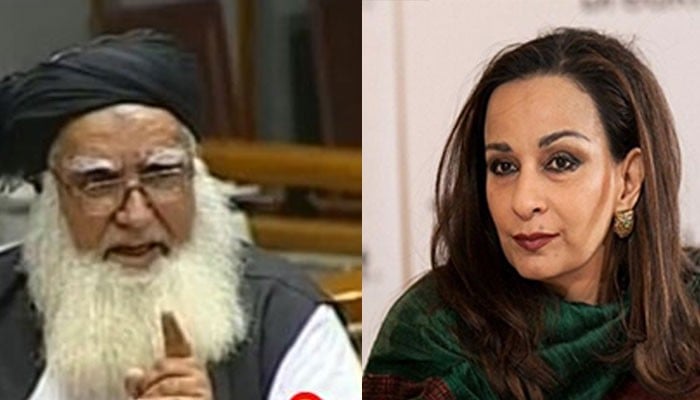
A video of a well-known Islamic cleric has circulated on social media over the past year. The cleric is visibly furious over a placard at the Aurat March reading “Mera jism meri marzi” (my body, my choice). He threatened women with rape, saying that if they claim the right to their bodies, men can also claim the right to rape women.
The Khyber Pakhtunkhwa provincial assembly unanimously passed a resolution condemning the Aurat March. The resolution was moved by a woman parliament, Rehana Ismail, who said that the demands made at the march about women empowerment were “un-Islamic and shameful.”
The backlash largely targets the placards women bring with them. At the first Aurat March, in 2018, a placard reading “Apna Khana Khud Garam Kar Lo” [heat up your own food], intended to highlight the imposed gender roles in society, was criticized in online platforms. A private television channel aired a drama television series with the same title to ridicule the placard and the idea behind it.
The placards at the second Aurat March showed the wittiness of women participants and their unapologetic attitude toward the backlash. This time, a placard read “Apna Moza Khud Dhond Lo” (find your sock yourself) was taken up by Twitter and became the most discussed placard of the 2019 march.
This year, organizers are seeing a strong reaction even before the march. A controversial drama series that ended in January has already started a debate on feminism and the Aurat March. The series, “Meray Paas Tum Ho” (I Have You), told the story of a woman who decides to leave her husband after she meets a wealthy man through a friend. Pakistani dramas often tell stories of men who cheat on their wives, but that is shown as their right or a mistake; this show encouraged viewers to side with the aggrieved husband. The drama gained popularity with each episode; its finale a was screened in cinemas across the country.
Yet at the same time, feminists took to social media to call out the show for its misogynist dialogue and plot. The controversy took another turn when the writer, Khalilur ur Rehman Qamar, began appearing on talk shows criticizing the Aurat March, feminism, and women rights activists for bringing a “Western agenda” into Pakistan.
In one interview, he said that “women should gang rape men if they want equality.” In another interview Qamar said that the Aurat March is a conspiracy of some 35 women who belong to a specific class.
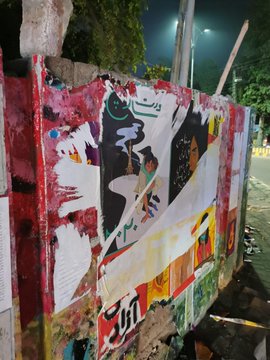
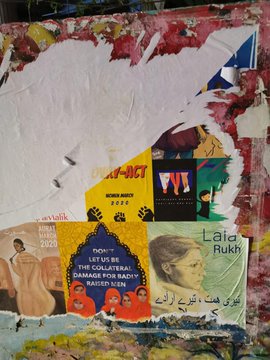
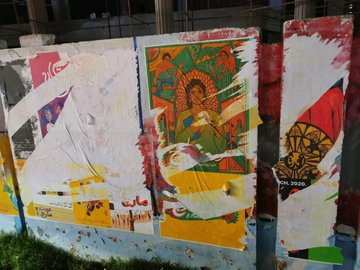
Artist Shehzil Malik designed some posters for the Aurat March, which she herself pasted in different areas of Lahore. These posters pay homage to brown women and celebrate their womanhood. The organizers found the posters torn down in some areas of the city. The Aurat March Lahore chapter tweeted that this is the reason they march.
Today we were buoyed by the love and behanchara on display today, only for it to be torn down hours later.

For those who say why we march--this is why!!

First picture: Earlier today as we built our mural.

Subsequent pictures: Later today, after our mural was torn down.
View image on TwitterView image on TwitterView image on TwitterView image on Twitter
141 people are talking about this
Makeup artist Leena Ghani is one of the main organizers of the Aurat March in Lahore. While talking about the preparations, she said the beauty of the march lies in its diversity. It involves women from a range of backgrounds who put their efforts toward making this event happen.
“The theme for this Aurat March is Khudmukhtari [autonomy] and violence, both sexual and economic, that women suffer because of patriarchy. We have planned some performances around these themes hoping those will send a clear message,” she explained.
Ghani says that it is participants’ right to express their anger and concern through their placards. She also said that they will not censor their voices, as whatever messages they bring on those placards tells the issues women face.
“It’s not easy to know what kind of backlash to expect. However like last year we are going to remain open to discussion,” she said. “We will never be apologetic because we don’t believe in silencing peoples voices.”
The march’s critics often claim that women in Pakistan enjoy the utmost rights. They reject all negative reports on poor gender equality in the country, calling them propaganda against Pakistan.
The World Economic Forum ranked Pakistan as third worst in its 2020 Global Gender Gap report, which gauges economic opportunity, education, health, and political empowerment. The report also highlights that Pakistan is the worst of all the countries in South Asia. The region’s highest scorer was Bangladesh, which separated from Pakistan in 1971. Bangladesh ranked 50th, Pakistan 151st.
Ghani sees the backlash as a testimony of the success of the Aurat March. She says the response has made the marchers stronger.
“We had support from senior feminists who have experienced such backlash during their struggle for women’s rights in Pakistan. In all honestly, the backlash made us all so much stronger and united.”
Tehreem Hassan is a designer and visual artist based in Islamabad. Last year, she was one of the marchers but this year she is volunteering in the communications department of the Aurat March, Islamabad organizing team. She says the Aurat March is a collective struggle to raise voices against patriarchal structures that limit gender equality.
“This is not struggle of an individual,” she said. “It is a collective struggle that has the power to turn into a mass movement all across Pakistan.”
Critics of the Aurat March often say that it does not highlight real issues of Pakistani women. Talking on the subject, Hassan said that every issue is a real issue.
“We believe that every issue is a real issue, whether it is about mobility, body, autonomy, or gender roles. So many women are harassed, raped, beaten, and forced into prostitution. That’s why we say ‘Mera Jism, Meri Marzi’ [my body, my choice]. Do they have an issue with it?”
She also said that this movement does not belong to any specific group or class.
“It is not a movement of any specific class; instead it is our collective struggle against patriarchy. Women from different backgrounds are part of this movement. If an issue is not real for me, it could be real for some other women.”
Ghani said those who think the Aurat March does not highlight the real issues of Pakistani women have probably missed out on the event. She invites them to attend this year’s march.
“I would like to extend an invitation to them so they can come see for themselves that the Aurat March platform is for those who have been forgotten, by this state and this country — the voiceless and the helpless. And that is something one doesn’t see in the media or online.”
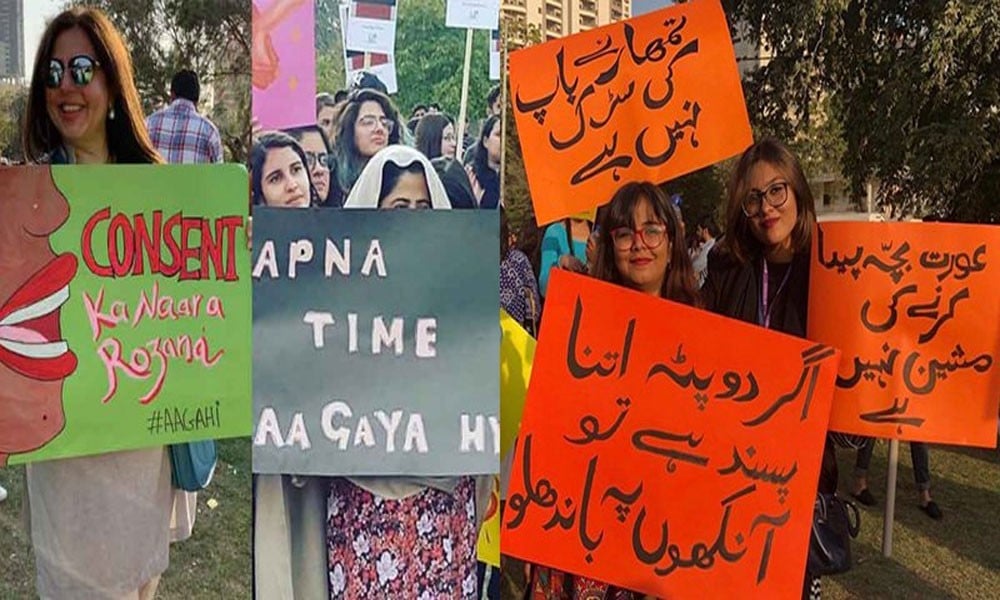
زرداری نے عورت مارچ کی حمایت کر دی - #AuratMarch2020 #AuratAzadiMarch2020

پیپلز پارٹی کے شریک چیئر پرسن آصف علی زرداری کی جانب سے عورت مارچ کی حمایت کی گئی ہے۔
سابق صدر آصف علی زرداری نے عورت مارچ کی حمایت کرتے ہوئے سندھ حکومت کو ہدایت کی ہے کہ خواتین مارچ کو تحفظ اورسہولیات فراہم کی جائیں۔

آصف علی زرداری کا کہنا ہے کہ پیپلزپارٹی خواتین مارچ کی مکمل حمایت کرتی ہے اور پیپلز پارٹی خواتین کے حقوق کی ضمانت ہے، پیپلز پارٹی شہید بھٹو اور شہید بی بی کے فلسفے پر ثابت قدم ہے۔

انہوں نے محترمہ بینظیر بھٹو کو یاد کرتے ہوئے کہا کہ شہید محترمہ بے نظیر بھٹو کا کردار خواتین کے لیے مشعل راہ ہے، شہید محترمہ بے نظیر بھٹو نے سفاک اور بے رحم آمریت کو شکست دی۔
آصف علی زرداری کا اپنی بیٹیوں سے متعلق کہنا تھا کہ بختاور بھٹو زرداری اور آصفہ بھٹو زرداری خواتین کی آواز اور طاقت ہیں۔
انہوں نے عورت مارچ کی حمایت کرتے ہوئے مزید کہا کہ خواتین کو کمزور اور کم ترسمجھنے کی سوچ کو شکست ہوگی، معاشرے میں خواتین کے برابری کے حق کو تسلیم کرنا ہوگا۔

Monday, March 2, 2020

Video Report - CrossTalk Bullhorns: Idlib crisis

Video Report - Election 2020: What could Super Tuesday mean for the future of the Democratic Party? | The Economist

Video Report - Bernie Sanders Confident Of Super Tuesday

Video Report - Amy Klobuchar will end 2020 presidential campaign

Video Report - Amy Klobuchar And Pete Buttigieg To Endorse Joe Biden

Carrying Forward Shahbaz Bhatti’s “Unfinished Business” To Protect Religious Minorities In Pakistan

   
    Ewelina U. Ochab

Nine years ago, on March 2, 2011, Shahbaz Bhatti, a prominent Christian politician elected as a member of the National Assembly from 2008 and the first Federal Minister for Minorities Affairs, was assassinated in Islamabad, Pakistan. Shahbaz Bhatti, the only Christian in the Cabinet at that time, was vocal on the issue of discrimination and persecution of religious minorities in Pakistan and the problematic blasphemy laws. This work became his death warrant. Tehrik-i-Taliban Pakistan claimed responsibility for his murder. The group justified the crime claiming that Shahbaz Bhatti was guilty of blasphemy, a crime that, according to the Pakistani Penal Code (§ 295C) and until this day, carries the death penalty.
Shahbaz Bhatti was a powerful advocate against the blasphemy laws in Pakistan, the very laws that have led to his murder. Among others, he also promoted interfaith harmony and the introduction of quotas for religious minorities in government posts and championed proposals to ban hate speech.
The memory of Shahbaz Bhatti and his contribution to the protection of religious minorities in Pakistan continues to be tarnished as the Pakistani government does little to ensure that religious minorities in Pakistan are granted basic human rights in equality with others, their human rights are protected and implemented adequately. And so, in the words of Lord Alton of Liverpool, the protection of religious minorities in Pakistan remains Shahbaz Bhatti’s “unfinished business.”
Indeed, nine years after the murder of Shahbaz Bhatti, the situation of religious minorities in Pakistan remains dire. Over the years, several international bodies have shed light on the treatment of religious minorities in Pakistan. For example, the UN Committee on the Elimination of Racial Discrimination highlighted the high incidence of hate crimes (including harassment and killings) against persons belonging to ethnic and religious minorities, particularly Hazaras, Christian Dalits, Hindu Dalits and Ahmadis. These are hate crimes that would rarely be investigated and prosecuted. The UN Committee on the Elimination of Racial Discrimination further stressed other severe issues faced by minorities in Pakistan, including of Christian and Hindu Dalit women and girls facing forced conversion and forced marriage. The UN Committee on the Elimination of Racial Discrimination and the Human Rights Committee also raised the issue of the early age indoctrination in that “some school curricula and textbooks, including those of madrasas, had content that had the potential to incite hatred against religious and ethnic minorities.” The UN Universal Periodic Review report, in 2017, emphasized that religious minorities were being marginalized in political engagement including that “the minority quota in the national and provincial parliaments and in public services was applied only to religious minorities.” The Human Rights Committee “was further concerned at the removal of Ahmadis from the general electoral list and their registration on a separate voting list, the low level of exercise of the right to vote by women and the continued obstacles to effective access to voting for persons with disabilities and persons belonging to minorities, including gypsies.” Last, but not least, the UN Committee against Torture has raised the issue of reports of violence against members of Shia, Christian and Ahmadiyya communities and individuals accused of blasphemy.
And indeed, nine years after the murder of Shahbaz Bhatti, blasphemy laws, the very reason why Shahbaz Bhatti was murdered, continue to significantly affect religious minorities. The majority of those convicted under blasphemy laws are religious minorities, especially Ahmadiyya and Christian minorities. Ultimately, the laws are being used and abused to persecute religious minorities. Reports suggest that, since 1990, vigilante mobs have killed at least 65 people in Pakistan over claims of blasphemy.
Shahbaz Bhatti lost his life so that others could live in accordance with their religion or belief. Nine years later, renewed efforts to protect religious minorities in Pakistan are essential. We need to act now to leave a legacy for further generations in Pakistan. In pursuance of this goal, Lord Alton of Liverpool marked the ninth anniversary of the assassination of Shahbaz Bhatti at the UK Parliament with an event entitled “For a better future of religious minorities in Pakistan” and launched “the Declaration for A Peaceful Coexistence of Religious Minorities in Pakistan.” The declaration calls upon the Pakistani government but also all parts of the Pakistani society to ensure that they play their part in the protection and implementation of human rights for all, to ensure human dignity for all. The declaration received significant support but its impact is yet to be realized. However, this may be the catalyst to jump-start renewed efforts to protect religious minorities. The murder of Shahbaz Bhatti may have prevented him from finishing his work on protecting religious minorities in Pakistan. However, his “unfinished business” will be carried forward by others who will not be silenced.

https://www.forbes.com/sites/ewelinaochab/2020/03/02/carrying-forward-shahbazbhattis--unfinished-business-to-protect-religious-minorities-in-pakistan/#2d4f4a414605

100 Pakistan mercenaries in Syria to fight on behalf of Turkey, says US journalist


Pakistani Shia mercenaries Pakistan have earlier fought in Syria on behalf of Iran, but this will be the first time its nationals collaborate with Turkey in the war-torn country.

A batch of 100 Pakistani mercenaries has landed in war-torn Syria to fight alongside the Turkey-backed Free Syrian Army (FSA), with more expected to come in the near future, ThePrint has learnt. 
Sources in the Indian defence establishment said they were trying to find out more about the development.
The fact that Pakistani mercenaries have landed in Syria has been revealed by Lindsey Snell, an American journalist who has covered the nine-year-long-and-counting Syrian war
Snell, who has reportedly been abducted by an al-Qaida affiliate and even jailed by Turkey, told ThePrint that the information was given to her by a “source in the FSA”.
According to her source, she said, a total of 1,400 Pakistani mercenaries are to join the Turkish-backed group, which is one of the many non-government militias involved in the Syrian civil war.
Snell, however, added that the information had not been independently verified.

Not the first time

The Syrian civil war started in 2011 over concerns such as employment, corruption and democracy but has since transformed into a chaotic conflict involving multiple entities and nations. It is estimated to have killed over 3.6 lakh people until December 2018.
The FSA is one of multiple opposition forces involved in the war, each of them driven by different agendas. Different groups involved in the war are backed by different countries, with Turkish support for the FSA primarily aimed at keeping a Kurdish militia in check in light of a decades-long insurgency at home
If Pakistan mercenaries have indeed entered Syria, it will not be the first time they play a role in the West Asian nation. In the past, several have fought under the Hezbollah flag, backed by Iran.
“There is a Zainebiyoun militia of Pakistani Shias deployed by Iran in Syria. We are looking into this new development involving Turkey and Pakistan,” a source in the security establishment said.
Sources added that the use of mercenaries in support of Turkey could not have occurred without the blessings of the Pakistani deep state — the ISI. It remains unclear whether the mercenaries in question are drawn from terror groups backed by the ISI or former servicemen.
There are several organisations that recruit former and current Pakistani soldiers as well as civilians to work in security-related jobs in West Asia, where they play a role similar to personnel of the US’ controversial Blackwater private security firm, the Washington-based think-tank Middle East Media Research Institute had said in 2011 while talking about Pakistan’s mercenary business.
Pakistan also formally sent its troops to ally Saudi Arabia, which backs some opposition fighters in Syria (rival Iran supports the Bashar al-Assad administration) on a “training and advice mission” in 2018.
Former Pakistan Army chief General Raheel Sharif (Retd) commands the Saudi-led Islamic military alliance to fight terrorism.

Bilawal Bhutto lashes PTI for targeting the spirit of democracy

By Syed Umarullah Hussaini
Chairman Pakistan Peoples Party Bilawal Bhutto lashes at the PTI government said on Monday that democracy is being targeted and economic rights of people are being stolen.
Addressing a news conference, Bilawal Bhutto lashes PTI and said, at this time political revenge was on the rise while “democratic struggle is everyone’s interest.
He said, “Today, attacks on democracy are being launched from all sides.”
“The government’s stance malfunctioned from the first day nobody is accepting that Nawaz Sharif went to jail or abroad due to corruption our leaders are in jail due to political revenge,” he said.
“Not even a political opponent’s late brother was sparred,” Bilawal added while referring to former PPP minister Khurshid Shah’s brother.
Bilawal further criticized the ruling Pakistan Tehreek-e-Insaf (PTI) for what he called “economic crisis”, and maintained that the National Accountability Bureau (NAB) and the state’s economy could not function parallel to each other. “After traders’ claim, Imran Khan also admitted that NAB and economy couldn’t run together democratic forces are disunited for some reason.” The current government attacked the media and stopped payments. Not only the political people but the people belonging to different institutions are at the helm of the government. Imran Khan also said that the NAB and the economy could work along.He added Positive criticism is good for the country it should be tolerated.
Today political revenge is on the rise, said Bilawal; he said.
Bilawal Bhutto said that he was surprised to see Sheikh Rasheed still to be the Railways Minister after all the incidents happened.

https://www.bolnews.com/pakistan/2020/03/bilawal-bhutto-lashes-pti-for-targeting-the-spirit-of-democracy/

#Pakistan #PPP - #NAB should be shut down | Bilawal Bhutto's press conference - Mar 2, 2020

Pakistani premier grapples with internal rifts

First-time premier Imran Khan is viewed as a rare breed of politician in Pakistan; one who garners immense public support but also enjoys the blessing of the country’s domineering army that has remained at odds with most civilian prime ministers over the past 72 years. 
However, after 18 months in power, his government is struggling to revive Pakistan’s teetering economy, and faces increasing domestic pressure due to recurring displays of poor governance.
But his greatest concerns at the moment come neither from the powerful security establishment -- the military and its affiliated organizations -- nor an opposition severely weakened through a concentrated campaign ostensibly focused on rooting out corruption.
It is the deepening cracks within Khan’s party, the center-right Pakistan Tehreek-e-Insaf (PTI), that pose the greatest threat to his government and his hard-earned political status.
Presently, the PTI and its allies are holding the reins in the center and three provinces, including the northeastern Punjab province that is considered the country’s political powerbase.
The other two are the northwestern Khyber Pakhtunkhwa (KP) province, where the PTI was handed a second consecutive term, and the southwestern Balochistan province.
Of the three, KP is the only one where the PTI has full power as both Punjab and Balochistan are coalition governments.
His party stands divided into several groups across its political power bases, something that has affected its performance.
Earlier this year, mounting rifts in his party's KP chapter forced Khan to remove three ministers from the provincial Cabinet. He also issued a "stern warning" to other dissidents reportedly trying to replace his hand-picked chief ministers in Punjab and KP.
In the center, his three confidants -- Foreign Minister Shah Mahmood Qureshi, former Finance Minister Asad Umar and Jahangir Khan Tareen -- are often at loggerheads with each other, and it is publicly known.
"It's unfortunate that our party is not unified. It will harm us in the long run," Tareen, a former PTI secretary general, acknowledged in a televised interview last week.
Despite being barred from holding public office by Pakistan's Supreme Court in 2017 for concealing assets, he is said to be Khan's top aide on matters ranging from political wheeling-and-dealing to managing the country's sugar and wheat crisis.

Power game
The growing rifts among Khan's key lieutenants, analysts say, have led to poor governance both in Punjab and the center.
“The split within the government and party ranks has resulted in bad governance -- the only potential threat to the incumbent setup,” Salman Ghani, a Lahore-based political commentator, told Anadolu Agency.
After every few weeks, he said, the premier is forced to give a "shut up call" to the "troublemakers".
"Instead of fully focusing on the problems facing the masses, Khan's additional responsibility is to deal with divisions in the party," he added.
The power game in Punjab, the country's largest province, Ghani says, is the key to all discords among party bigwigs.
"I hold Khan partially responsible for this bitter power struggle," he said. "Appointing a weak chief minister in Punjab reflects his desire of running the country’s political power base from Bani Gala [Khan’s personal residence in the outskirts of Islamabad]."
Ghani said there were multiple contenders, including Punjab Governor Chaudhry Mohammad Sarwar, for the coveted post, but Khan’s choice was little-known Usman Buzdar.
"Now, there are five centers of power in Punjab," he said, adding that this took a toll on decision-making in the province.
Salim Bokhari, an Islamabad-based journalist, shared a similar view.
"The premier has chaired 70% of Punjab Cabinet meetings to improve the deteriorating governance structure in the province -- a direct result of internal 'leg-pulling,'" he told Anadolu Agency.

Disgruntled allies
Khan’s disgruntled allies, considered to have been holding his otherwise minority governments, also frequently surface as bottlenecks to the cricketer-turned-politician's vision of 'Naya (new) Pakistan'.
His government in Punjab, which has a simple majority, depends on Pakistan Muslim League-Quaid.
Coalition governments in the center, as well as in Balochistan, also include several regional parties, including the Karachi-based Muttahida Quami Movement (MQM), and Balochistan National Party (BNP).
Both the parties, on and off, threaten to quit the coalition, alleging that the government has not fulfilled its "promises".
In January, former Information Technology Minister Khalid Maqbool Siddiqui, a central leader of the MQM, resigned from the federal Cabinet on similar grounds.
"Except for KP, alliances in the center, Punjab and Balochistan are vulnerable as allies have frequently expressed their dissatisfaction with the affairs of the government," Bokhari said. "But again, it is neither the opposition nor the allies but the internal tug of war and poor governance that could drive out the PTI government."

Sunday, March 1, 2020

Video - Trump Visits India & Countries Respond to Coronavirus | The Daily Show: Global Edition

Video - #AsiaBibi, #Pakistani #Christian woman jailed for blasphemy: 'I forgave all those who harmed me'

Video - Pete Buttigieg drops out of 2020 presidential race

Video - Bernie Sanders' reaction to Biden's win

Video - Fareed Zakaria GPS - 3/1/20

Music Video - Da Pashtunistan De ♥ دا پښتونستان دی

Video - #PTM Manzoor #Pashteen Speech In #Charsadda

بلوچستان میں جبری گمشدگیاں: ’واپس آنے والے اسی حکومت میں لاپتہ ہوئے‘


چارسده کې د پښتون ژغورنې غورځنګ جلسه پای ته ورسېده

شبیر احمد جان
د خیبر پښتونخوا په چارسده کې د پښتون ژغورنې غورځنګ جلسه پای ته ورسېده. جلسې ته د پښتون ژغورنې غورځنګ مشر منظور پښتین، د پارلمان غړيو علي وزیر او محسن داوړ تر څنګ یو شمېر نورو مشرانو ویناوې وکړې.
د منظور پښتین په ګډون نورو ویناوالو پر ریاست خپلې هغه نیوکې بیا تکرار کړې چې تر دې وړاندې یې په نورو غونډو کې کړې دي.
هغوی وویل چې ریاست دې د پښتنو پر خاوره بدامنۍ او ترهګري پای ته ورسوي، د پښتنو وسایل دې پښتنو ته پرېږدي او د غورځنګ نیول شوي ټول غړي دې ژر تر ژره خوشې کړي.
منظور پښتین په خپله وینا کې د نورو موضوعاتو ترڅنګ د امریکا او طالبانو ترمنځ د سولې د تړون هم هرکلی وکړ خو زیاته یې کړه چې دا تړون باید په افغانستان کې د رښتونې سولې او کرارۍ سبب شي.
منظور پښتین اعلان وکړ چې پښتون ژغورنې غورځنګ به د مارچ پر ۲۹مه په کوټه کې جلسه کوي.
د چارسدې په جلسه کې سیدعالم مسود، وړانګې لوڼۍ، رحیم شاه افریدي، لیاقت یوسفزي، جمیلې ګیلاني، فضل خان ایډوکیټ، او ثنا اعجاز هم ګډون درلود.
له اسلام اباد، بلوچستان، ډېره اسماعیل خان، پېښور او نورو سیمو نه خلک په ګڼ شمېر کې ورغلو خلکو په جلسه کې ګډون وکړ. د جلسې ځای ته په زیات شمېر کې هغه کسان هم ورغلي ول چې د کورنۍ غړي یا خپل خپلوان یې ورک دي. د سرډېرو ګل اباد یوې زړې ښځې د جلسې په ځای کې مشال راډیو ته وویل:
"څلور زامن مې ورک دي. تاڼې ته راغلي وو، له تاڼې نه ورک دي. زه ورسره پخپله راغلې وم، ما وی رابه شي خو بیا کور ته رانغلل. بیا مې چې څومره تپوس وکړو، نو تاڼې والا ویل، دلته نه دي راغلي، ما ورته وویل، ماسره پخپله دلته راغلل، تاسو څنګه وایئ چې نه دي راغلي؟" هغې زیاته کړه، که بچي یې ورته وژلي هم وي نو ورته دې ووايي او که ژوندي وي نو خوشې دې کړي چې خپلو بچو ته ستانه شي.
پښتون ژغورنې غورځنګ تر دې وړاندې د فبرورۍ پر ۱۶مه په ډېره اسماعیل خان کې لویه جلسه کړې وه چې پکې د غورځنګ د مشر منظور پښتین د خوشې کولو غوښتنه شوې وه. منظور پښتین چې د جنورۍ پر ۲۷مه نیول شوی وو، د فبرورۍ پر ۲۵مه ازاد شو.
https://www.mashaalradio.com/

پر اتم مارچ د پاکستان لویو ښارونو کې د مېرمنو لاریونونه کېږي

په پاکستان کې د مېرمنو د حقونو لپاره فعالو تنظيمونو اعلان کړی چې سږکال به د ښځو د نړيوالې ورځې په مناسبت د هېواد په اتو ښارونو کې «عورت مارچ» کېږي.

دغه لاريونونه ویمن ډېموکرېټک فرنټ، وېمن اېکشن فورم، هم عورتين، عورت مارچ لاهور او عوامي ورکرز پارټۍ له خوا تنظيم شوي دي.
د وېمن ډېموکرېټک فرنټ مشرې عصمت شاهجهان د مارچ پر لومړۍ نېټه مشال راډیو ته وويل، لاريونونه به په کوټه، اسلام اباد، سکر، حېدراباد، کراچۍ، لاهور او فیصل اباد کې کېږي.
دا دريم کال دی چې په پاکستان کې ښځې د نړيوالې ورځې په مناسبت نه يوازې سړکونو ته ووځي بلکې پر ټولنيزو رسنيو يې وار له مخه د خپلو حقونو لپاره کمپاين پیل کړی دی.
ښځې چې د پاکستان د نفوسو نږدې نيمايي جوړوي پکې زياتره په کليوالو سيمو کې ژوند کوي.
که وکتل شي نو لاريونونه په لويو ښارونو کې کېږي او پر ټولنيزو رسنيو ښاري ښځې فعالي دي.
هم دې ته په کتو سره دا ويل کېږي چې د کليوالو سيمو ښځې له دغو هلو ځلو څخه بې برخې پاتې شوې دي.
ندا کرمانۍ په کراچۍ کې د ټولنپوهنې ښوونکې ده. هغه د ښځو د لاريونونو ملاتړ کوي خو وايي بايد منتظمين يې کليو بانډو ته ولاړې شي او ښځې په لارويونو کې ګډون ته وهڅوي او يا هم هلته عورت مارچ وکړي.
البته هغه زياتوي چې په نړۍ کې زياتره ټولنيز غورځنګونه په ښارونو کې زېږېدلي چې ورو ورو يې اثر کليوالو سيمو ته رسېږي.
نداکرمانۍ سږني لاريونونه له پخوانيو هغو سره پرتله کوي او وايي چې له وخت تېرېدو سره به د دې جغرافيايي دايره هم ورو ورو پراخه شي.
هغه زياتوي:
"دا لاريونونه به اول په لاهور، کراچۍ او اسلام اباد کې کېدل، ورپسې کال پکې حېدراباد، کوټه او پېښور شامل شول او تمه ده چې سږ کال به پکې نور ښارونه هم شامل شي. حیدراباد کليوالو سيمو ته نور ورنږدې دی نو په لاريون کې د ګډون لپاره له کليوالو سيمو هم ښځې راځي. تمه ده چې سږکال به د ښځو په لاريون کې له کليو څخه هم ښځې راشي."
عصمت شاهجهان بیا له دې سره اتفاق نه کوي چې عورت مارچ يوازې د ښاري ښځو لپاره ګټور دی.
د هغې په وينا، د ښځو لاريونونه د برابرۍ، انصاف، حق، جمهوريت او د مترقي ټولنې د رامنځ ته کولو بيانيه پر مخ وړي چې د هغې په خبره ګټه به یې نه يوازې د کليوالو سيمو ښځو ته بلکې سړيو ته به هم رسېږي.
د نړيوال اقتصادي فورم ۲۰۲۰م زکال رپورټ پاکستان په هغو هېوادونو کې ياد کړی چې پکې جنسي عدم مساوات تر ټولو زيات دی.
د جنسي عدم مساوات د درجه بندۍ په لړ کې د ۱۵۳ هېوادونو په فهرست کې پاکستان په ۱۵۱نمبر دی.