Monday, February 10, 2020

Imran Khan’s Naya Pakistan arrests PTM rights activists & signs peace treaty with Taliban

JAHANZEB HUSSAIN

PTM's cause is Pakistan's cause. It is only asking for what’s in the Constitution, but the establishment has nothing to gain by implementing the Constitution.

Last week was yet another instance in Pakistani history when rights activists were arrested for peaceful assembly and protest — rights that are guaranteed under the Constitution.
On January 27, it was Manzoor Pashteen, the charismatic leader of the Pashtun Tahafuz Movement (PTM). On January 30, it was the turn of 23 activists as they protested Pashteen’s arrest outside the Islamabad Press Club. Among the 23 were well-known writers and activists such as Ammar Rashid and Ismat Shahjahan.
The full charge-sheet against Pashteen looks like this: Section 506 (punishment for criminal intimidation), 153-A (promoting enmity between different groups), 120-B (punishment of criminal conspiracy), 124 (sedition), and 123-A (condemning the creation of the country and advocating the abolishment of its sovereignty).
Pashteen had made some remarks in his speech during a peaceful gathering in Dera Ismail Khan that resulted in state action. The Islamabad protestors were booked for unlawful assembly, rioting — and sedition.
The Islamabad High Court (IHC) granted post-arrest bail to those arrested in the Federal capital, and the judge was informed that the treason charge was replaced by an anti-terrorism charge.
The charges laid against Pashteen and those in Islamabad are, to put it mildly, baseless. It’s not clear what exactly Pashteen said that constituted the crimes he has been accused of — the state has not presented the evidence — while no rioting took place in Islamabad. As for protesting outside press clubs, it is a time-honoured Pakistani tradition that even the right-wing engages in.
One might expect a nuclear-armed state to be unbothered by a small number of citizens peacefully voicing dissent — but any speech of such nature acquires dangerous proportions for a state whose rule is founded on rights violations; when violations are the norm and not the exception. Such a state can only reaffirm its rule by further injustices.
It is not that the state does not know how to negotiate differently. It knows very well how to open dialogue — just ask the Pakistani Taliban with whom it signed peace treaty after peace treaty despite the former’s bloodletting across the country and total rejection of the Constitution; or Tehreek-e-Labbaik Pakistan (TLP), whose workers were given pocket money to end their long sit-in that blocked Islamabad not long ago.
The reason why the state turns to direct coercion against a group like PTM or the Islamabad protestors is that it does not share common ground with them; whereas the Taliban and TLP were long of use to the state for reasons well known. The state only sought to eliminate Taliban when they became too independent, and the same can be said of TLP who have come under judicial pressure recently. Pashteen and those arrested for protesting his arrest, on the other hand, are not of the same political use.
PTM is only asking for what’s in the Constitution, but the state has nothing to gain by implementing the Constitution. For if it were to do so for PTM, tomorrow the Baloch might ask for the same; Mohajirs in Karachi and Sindhis, too, might want to resort to law against extrajudicial killings, kidnappings, and denial of a free and fair trial.
Setting a precedent for accountability would come at too great a cost for a state that has, since its inception, launched five military operations in Baluchistan, three in Karachi — and not to mention the genocidal civil war in former East Pakistan. Correcting past crimes of this magnitude implies course correction going forward, but the future does not look too different. For businesses to continue as usual, the country’s path will have to be dictated by the state, not the people.
PTM is criticized for being ‘ethnically exclusive’ but the charge is disingenuous: the demand to implement the Constitution is not an ‘ethnic demand’ but a citizens’ right. And since the Pashtun experience overlaps with that of all other minorities (and in the case of East Pakistan, majority), the issue is national.
The state, which otherwise ignores the Constitution — or, in the words of former dictator General Musharraf, considers it a piece of paper to be thrown in the bin — is all too happy to uphold it to charge Pakistanis with sedition when convenient. This cherrypicking is in line with how Pakistanis are generally treated by the state: they are asked to be loyal, but are offered no respect in return. Before the state demands allegiance from ethnic minorities, it should ask what reason has it given to them to begin with. When asking for Constitutional rights earns them the label of ‘anti-national’, what are they supposed to be loyal to?
PTM’s cause is the cause of Pakistanis. It’s an exercise in reimagining a country that has failed to equitably accommodate ethnic difference and has only dealt with it through violence to suppress it. A more just History cannot be created without the voice of the oppressed. The state knows this, which is why it wants to silence it. For now, there’s some semblance of sanity after the IHC decision, but it would be shortsighted to see it as a decisive victory. For a more fundamental shift, we need more Pashteens and more Islamabad protestors.

Runaway Taliban frontman: Ehsanullah Ehsan, the man and myth

OWAIS TOHID
I first met Malala Yousufzai after she was given the National Peace Award by the Pakistani government for her diary on BBC about life under the Taliban in Swat valley. I connected her with my daughter and the two of them chatted away on the phone while I looked on in amazement at the girl who courageously stood up to the Taliban.
Just a few months later, I was directing news coverage of an assassination attempt against her. Visuals poured in of her bullet-riddled school van, her bandaged face, of the military helicopter carrying her from Swat valley to Peshawar, eye witness accounts by her friends. The newsroom is no place for personal emotions, but I remember choking up when I got the phone call from the Taliban accepting responsibility. “Assalam-o-Alaikum. We, the Taliban, have shot the girl. She was propagating against the Mujahideen. She was becoming a tool of Jews and Christians. We did what we had to.”
The caller was Ehsanullah Ehsan, spokesman for the Pakistani Taliban.
Eights years have gone by. Malala fought for her life, went on to win the Nobel peace prize and become an ambassador for girls’ education. I fought cancer and survived. And Ehsanullah Ehsan surrendered to the state, didn’t face either prison or courts, and went on to escape from the custody of Pakistan’s security agencies.I first met Ehsanullah Ehsan some twelve years ago when I visited the Mohmand tribal belt, then a hotbed of militancy, bordering Kunnar and Nangarhar in Afghanistan and Khyber and Bajaur in Pakistan. At the time, Ehsan was still using his real name, Liaqat Ali of the Safi tribe. Years later he threatened to kill me unless the TV channel I was heading started referring to deceased Taliban Emir, Hakimullah Mehsud as ‘shaheed’ (martyr).
I vividly remember.
‘Why didn’t you call our respected leader a martyr?”
Eights years have gone by. Malala fought for her life, went on to win the Nobel peace prize and become an ambassador for girls’ education. I fought cancer and survived. And Ehsanullah Ehsan surrendered to the state, didn’t face either prison or courts, and went on to escape from the custody of Pakistan’s security agencies. Owais Tohid
Harsh words were exchanged and then a threat: “I can put four bullets in your forehead and kill you.” Ehsan entered the underworld of militancy as an apprentice to and spokesman of Taliban Emir Abdul Wali alias Omer Khalid Khorasani in Mohmand agency. Educated, technologically savvy and with a flair for languages – he spoke Urdu, Pushto, Arabic, Persian, and English – he later became the spokesman for the Pakistani Taliban under Hakimullah Mehsud when he became Emir of the militia after the death of Baitullah Mehsud. “I wanted to study law to become a lawyer but fate has brought me here. Now I will fight cases of Mujahideen as their lawyer,” Ehsanullah Ehsan told a group of journalists I was with. He institutionalized Taliban propaganda. Short films, videos of beheadings, Taliban songs were all produced under his command. A local tribal journalist states he witnessed how Ehsan roped in educated youth. “He sat there in his huge office with his Kalashnikov, handing over computer hard drives to university graduates and assigned them which TV channels to monitor including Al-Jazeera and CNN.”
It was Hakimullah Mehsud who asked him to use the name Ehsanullah Ehsan-- believed in Taliban circles to be the name of one of the first Mujahideen who ‘conquered’ Kabul in 1996, brutally murdering former Afghan president Dr. Najib and hanging his body from a traffic post. Under Hakimullah, he ran his setup from Miranshah, the district headquarters of North Waziristan. Ehsan became the coordinator for Al-Qaeda and foreign militants from Uzbekistan and Chechnya in the tribal belt, creating communication channels when their usual modes were in disarray because of US drone strikes. He also maintained close contacts with OBL’s son, Hamza bin Laden. When the massive military crackdown against militants was carried out in North Waziristan, Ehsan fled to Afghanistan with his old mentor, Omer Khorasani. They both splintered from the Pakistani Taliban and formed their own group, Jamaat ul Ahrar, which claimed several terror attacks. The Taliban commander who surrendered some three years ago was believed to have been kept in protective custody in Peshawar city where he lived with his family. He reportedly enjoyed the Internet and mobile phone facilities and even had a child from his second wife. One Peshawar based tribal journalist says he spoke to Ehsan a few months ago.
“I was at a music performance at Peshawar Press Club and a friend handed me his phone saying someone wants to talk to you. I was shocked to hear Ehsanullah Ehsan, I’ve met him enough times to know his voice. He said to me: ‘You are enjoying pop songs, you should listen to revolutionary songs and poetry as well,’” the journalist narrates.
Now, Ehsan has fled once again. While officials, both military and civilian, have remained silent on the issue, unnamed sources quoted in the news media say he escaped during a sensitive intelligence operation, implying confirmation of his escape. His getaway has raised questions about how such a high-value Taliban commander managed to escape and has triggered many conspiracy theories. Meanwhile, he has set up a new Twitter account to start his communications afresh. All the while, parents who lost their children in the APS schoolchildren massacre in Peshawar look on, furious as they reflect on the lifelong pain and agony the Taliban have inflicted on their lives.
https://www.arabnews.pk/node/1625741

’مشرف کے فارم ہاؤس کو بھی یتیم خانہ بنائیں گے؟‘


پنجاب حکومت نے دو روز قبل سابق وزیر خزانہ اسحٰق ڈار کی رہائش گاہ کو پناہ گاہ میں تبدیل تو کیا لیکن اس محل نما گھر میں 21 بے گھر افراد صرف دو راتیں ہی گزار سکے۔
پناہ گاہ کے ضابطے کے مطابق یہاں صرف رات گزارنے کی اجازت ہوتی تھی اور شام کا کھانا اور صبح کا ناشتہ بھی فراہم کیا جاتا رہا۔
تاہم اب عدالتی حکم پر اسحٰق ڈار کی رہائش گاہ پر قیام کرنے والوں کو پیر کی رات یہاں گزارنے کی اجازت نہیں ہوگی۔
آج لاہور ہائی کورٹ میں سابق وزیر خزانہ اسحٰق ڈار کی رہائش گاہ کو پناہ گاہ میں تبدیل کرنے کے خلاف درخواست پر سماعت ہوئی۔
اسحٰق ڈار کی اہلیہ تبسم اسحٰق کی جانب سے دائر کی گئی درخواست میں موقف اختیار کیا گیا تھا کہ حکومت پنجاب نے ان کے گھر کو غیر قانونی طور پر پناہ گاہ میں تبدیل کیا جبکہ اسلام آباد ہائی کورٹ نے رہائش گاہ کی نیلامی کے خلاف حکم امتناعی جاری کر رکھا ہے اور اس گھر کی احتساب عدالت کے حکم پر نیلامی کا عمل بھی روکنے کا حکم دیا گیا تھا۔
درخواست کے مطابق: ’اس رہائش گاہ پر پناہ گاہ بنانے کا عمل بھی پنجاب حکومت کی جانب سے خلاف آئین اور خلاف قانون اقدام ہے جبکہ پنجاب حکومت نے ہائی کورٹ کے حکم کی بھی خلاف ورزی کی ہے۔‘
عدالت نے درخواست پر سماعت کے بعد اسحٰق ڈار کے گھر، جو ان کی اہلیہ کے نام پر ہے، کو پناہ گاہ میں تبدیل کرنے کے خلاف حکم امتناعی جاری کر دیا اور پنجاب حکومت سے دس روز میں جواب طلب کرلیا۔
دوسری جانب سوشل میڈیا پر بعض سیاسی شخصیات اور سینیئر صحافیوں کی جانب سے اسحٰق ڈار کے مکان کو پناہ گاہ بنانے کے اقدام کے حوالے سے کہا جا رہا ہے کہ اگر حکومت کو ایسا کرنا ہی ہے تو سابق فوجی آمر پرویز مشرف کے فارم ہاؤس کو بھی شیلٹر ہوم بنایا جائے۔
سینیئر صحافی حامد میر نے اپنی ایک ٹویٹ میں لکھا: ’اسلام آباد کے علاقے چک شہزاد میں پرویز مشرف کا وسیع و عریض فارم ہاؤس بھی ضبط شدہ جائیداد ہے یہاں پر بھی ایک عظیم الشان شیلٹر ہوم بن سکتا ہے۔‘
پاکستان پیپلز پارٹی کے سابق سینیٹر فرحت اللہ بابر نے بھی اسی بارے میں بات کرتے ہوئے اپنی ایک ٹویٹ میں کہا تھا کہ ’اسحٰق ڈار کے مکان کو پناہ گاہ میں تبدیل کرکے عمران خان نے خود کو انتہائی گرا دیا ہے۔ کیا وہ ایک اور مفرور جنرل مشرف کے اسلام آباد میں فارم ہاؤس کو یتیم خانہ بنائیں گے؟‘
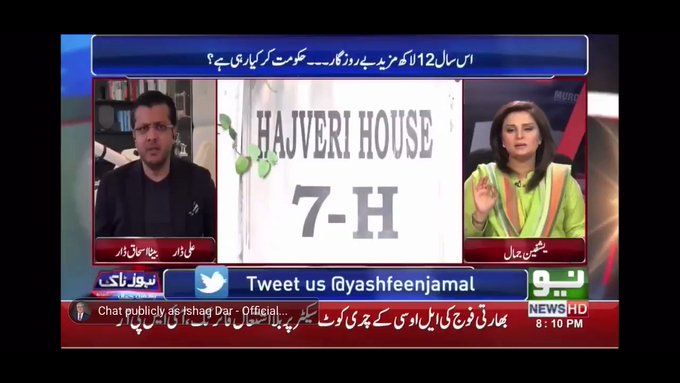
دوسری جانب اسحق ڈار کے صاحبزادے علی ڈار کا کہنا تھا کہ ’جو ڈار صاحب کے ساتھ ہو رہا ہے وہ سیاسی انتقام کی بدترین مثال نہیں تو اور کیا ہے؟ اگر کسی مفرور کے گھر کو پناہ گاہ میں تبدیل کرنا معمول کا عمل ہے، تو وزیر اعظم عمران خان صاحب کئی سال مفرور رہے۔ پرویز مشرف صاحب بھی ایک طویل مدت سے مفرور ہیں، ان کے ساتھ یہ سلوک تو نہیں ہوا!‘

مہنگائی مافیاز تبدیلی سرکار کے شراکت دار ہیں، وزیراعظم کا استعفیٰ ہی ریلیف دے سکتا ہے، ن لیگ پی پی پی

 مسلم لیگ(ن) اور پاکستان پیپلز پارٹی کے رہنمائوں نے کہا ہے کہ مہنگائی مافیاز تبدیلی سرکار کے شراکت دار ہیں،وزیراعظم کا استعفی ہی ریلیف دے سکتا ہے۔
ن لیگ کی ترجمان مریم اورنگزیب نے گزشتہ روز ایک بیان میں کہا کہ عمران خان چینی اور آٹا چور مافیا کو ساتھ بٹھا کر عوام کی جیب کاٹ رہے ہیں،ملک کو چلانا جھوٹوں ، نااہلوں ، نالائقوں اور چوروں کے بس کی بات نہیں، عمران خان اب استعفی دے کر ہی قوم کو فوری ریلیف دے سکتے ہیں، ڈرامے، تماشے اور جھوٹ سے تبدیلی نہیں صرف تباہی آسکتی ہے اور وہ عمران خان لے آئے ہیں،دوستوں کو ریلیف دے کر 2018 کے انتخابات اور بنی گالہ کا خرچہ پورا کیا جا رہا ہے۔
عمران خان اور ان کے دوستوں کی چوری نے جہانگیر ترین کو امیر ترین اور ملک کو مہنگا اور غریب ترین کر دیا، عمران خان 16 ماہ کا حساب دییں کہ جہانگیر ترین اور خسرو بختیار کی ملوں کو کتنا نفع پہنچا اور ملک کا کتنا نقصان ہوا، آٹا اور چینی کا بحران ختم اور قیمتیں کم کرنے کے لئے عمران خان، جہانگیر ترین اور خسرو بختیار کو تلاشی دینا پڑے گی۔
ترجمان (ن) لیگ کا کہنا تھا کہ عوام کو ریلیف دینا ہے تو تلاشی لیں کہ جہانگیر ترین اور خسرو بختیار کی ملوں سے کتنی چینی برآمد ہوئی تلاشی لیں، 24 گھنٹے گزر گئے لیکن اب تک جہانگیرترین اور خسرو بختیار کی ملوں کی تلاشی نہیں لی، اگر چینی اور آٹے کی چوری نہیں کی تو جہانگیر ترین اور خسرو بختیار کی ملوں کی تلاشی کا حکم کیوں نہیں دیتے۔ 
چیئرمین پی اے سی اور مسلم لیگ ( ن ) کے مرکزی رہنما رانا تنویر حسین نے مرید کے میں میڈیا سے بات چیت کرتے ہوئےکہا کہ اپوزیشن عوام کو مہنگائی اور لا قانو نیت کے رحم و کرم پر نہیں چھوڑ ے گی اور آئندہ ہفتے قومی اسمبلی کے باہر احتجاجی کیمپ لگایا جائے گا تا کہ بے رحم حکمران ہوش کے ناخن لیں۔ 
پی ٹی آئی حکومت پاکستان پر عذاب بن کرنازل ہوئی ہے جس سے جلد چھٹکاراحاصل ہو جائے گااور ملک دوبارہ ترقی کی طرف لوٹ جائے گا۔ 
موجودہ حکومت کا ساتھ چھوڑنا نیک کام میں حصہ ڈالنا ہے اور اگر کوئی حکومتی رکن اسے چھوڑتا ہے تو وہ نیک کام کرتا ہے اور ہم نیکی کے کام میں ان کی حوصلہ افزائی کریں گے۔
پاکستان پیپلز پارٹی کے سیکرٹری جنرل نیئر بخاری نے کہا کہ غریبوں کو تکلیف اور اشرافیہ کو ریلیف دینے والوں سے قوم بخوبی آگاہ ہے۔

Sunday, February 9, 2020

Video - Trump’s Impeachment Acquittal, State of the Union & Black America | The Daily Show: Trevor Noah

Video Report - US primaries: Republican challenges Trump in New Hampshire

Video Report - Bernie Sanders: Iowa was an embarrassment

Video Report - Fareed Zakaria: Democrats need a candidate who can do this

Saudi Arabia: Specialized Criminal Court a political tool to muzzle critical voices

A new report published by Amnesty International today exposes how despite all their rhetoric of reforms, the Saudi authorities are using the Specialized Criminal Court (SCC) as a weapon to systematically silence dissent. Alongside the report, the organisation is also launching a campaign calling for the immediate and unconditional release of all human rights defenders detained for their peaceful expression.

In the report titled “Muzzling critical voices: Politicized trials before Saudi Arabia’s Specialized Criminal Court” the organization documents the chilling impact of the SCC’s prosecutions of human rights defenders, writers, economists, journalists, religious clerics, reformists and political activists, including of Saudi Arabia’s Shi’a Muslim minority who have suffered grossly unfair trials before the SCC and received harsh sentences, including the death penalty, under vague counter-terror and anti-cybercrime laws.

The Saudi Arabian government exploits the SCC to create a false aura of legality around its abuse of the counter-terror law to silence its critics. 
Heba Morayef

Extensive examination of court documents, government statements and national legislation, as well as interviews with activists, lawyers and individuals close to the cases documented were included in the report. Amnesty International wrote to the Saudi authorities on 12 December 2019 and received one response from the official Human Rights Commission summarizing relevant laws and procedures but failing to directly address the cases raised in the report.
“The Saudi Arabian government exploits the SCC to create a false aura of legality around its abuse of the counter-terror law to silence its critics. Every stage of the SCC’s judicial process is tainted with human rights abuses, from the denial of access to a lawyer, to incommunicado detention, to convictions based solely on so-called ‘confessions’ extracted through torture,” said Heba Morayef, Amnesty International’s Middle East and North Africa Regional Director.
“Our research gives lie to the shiny new reformist image Saudi Arabia is trying to cultivate, exposing how the government uses a court like the SCC in the ruthless suppression of those who are courageous enough to voice opposition, defend human rights or call for meaningful reforms.”
The government’s rhetoric about reforms, which increased after the appointment of Crown Prince Mohammed bin Salman, stands in stark contrast to the reality of the human rights situation in the country. At the same time as they brought in a set of positive women’s rights reforms, the authorities unleashed an intense crackdown on some of the highest profile women human rights defenders who had for years fought for those reforms as well as other citizens promoting change.
very stage of the SCC’s judicial process is tainted with human rights abuses, from the denial of access to a lawyer, to incommunicado detention, to convictions based solely on so-called ‘confessions’ extracted through torture 
Heba Morayef
The SCC was established in October 2008 to try individuals accused of terror-related crimes. Since 2011, it has been systematically used to prosecute individuals on vague charges which often equate peaceful political activities with terrorism-related crimes. The counter-terror law, which has overly broad and vague definitions of “terrorism” and of a “terrorist crime”, contains provisions which criminalize peaceful expression of views.
Amnesty International’s report documents the cases of 95 individuals, mostly men, who were tried, sentenced or remain on trial before the SCC between 2011 and 2019. The trials of at least 11 individuals detained for their peaceful expression and association continue before the SCC until this day. Some 52 are now serving lengthy prison sentences of between five and 30 years.
Several Saudi Arabian Shi’a Muslims, including young men tried for “crimes” they were accused of having committed when they were under the age of 18 are at imminent risk of execution following grossly unfair trials before the SCC. At least 28 Saudi Arabians from the Shi’a minority have been executed since 2016, many of whom were sentenced to death by the SCC based solely on torture-tainted ‘confessions.’
Grossly unfair trials
Amnesty International closely reviewed eight SCC trials of 68 Shi’a defendants, the majority of whom were prosecuted for their participation in anti-government protests, and of 27 individuals prosecuted for their peaceful expression and human rights activism. In all cases of the 95 individuals, the organization concluded that the trials were grossly unfair. Defendants were convicted and, in many cases sentenced to death, on vague charges that criminalize peaceful opposition or in relation to charges of violence.
The most common charges used in proceedings analyzed by Amnesty International include “disobeying the ruler”; “questioning the integrity of officials and the judicial system”; “inciting disorder by calling for demonstrations” and “forming an unlicensed organization” – all of which describe acts protected by the right to freedom of expression, assembly and association.
Every single defendant in the SCC trials reviewed by Amnesty International was denied access to a lawyer from their arrest and throughout their interrogation. Appeals against SCC judgements are conducted behind closed doors without the presence or participation of defendants or their lawyers.
Our research gives lie to the shiny new reformist image Saudi Arabia is trying to cultivate, exposing how the government uses a court like the SCC in the ruthless suppression of those who are courageous enough to voice opposition, defend human rights or call for meaningful reforms 
Heba Morayef
One of the most striking failings of the SCC in the trials reviewed by Amnesty International is its unquestioning reliance on torture-tainted “confessions”. At least 20 Shi’a men tried by the SCC have been sentenced to death on the basis of such “confessions,” with 17 of them already executed.
Muzzling peaceful voices
Virtually all Saudi Arabian independent voices, including human rights defenders, writers and religious clerics are behind bars serving lengthy sentences handed down by the SCC and other courts since 2011 or remain on trial on charges related to their peaceful expression or activism.
Among those prosecuted by the SCC are founding members of independent human rights groups that the authorities shut down in 2013. For example, all 11 founding members of the Saudi Civil and Political Rights Association (ACPRA) have been tried and sentenced in recent years for their human rights work. Others include human rights defenders such as Mohammad al-Otaibi, a founding member of the Union for Human Rights, who was sentenced to 14 years in prison on charges related to his efforts to form an independent human rights organization. He is currently facing new charges for his communication with international organizations and his attempt to seek political asylum.
Others who remain on trial before the SCC include Salman al-Awda, a reformist religious cleric arrested in September 2017, who faces the death penalty for peacefully exercising his rights to freedom expression and of association. Amnesty International has documented the trials and sentencing of 27 such individuals by the SCC. It considers 22 of the 27 still unlawfully detained to be prisoners of conscience and calls for their immediate and unconditional release.
Crushing dissent in the Eastern Province
Since 2011, over 100 Saudi Arabian Shi’a Muslims have been brought before the SCC in relation to both peaceful criticism of the government in speeches or on social media and participation in anti-government protests. They have been tried on vague and varied charges ranging from organization or support for protests, to alleged involvement in violent attacks and espionage for Iran.
On 2 January 2016, the authorities announced that a Shi’a cleric, Nimr al-Nimr, known for his critical stance towards the government had been executed, sparking renewed protests in Eastern Province. In July 2017, Youssuf al-Muhsikhass, who was sentenced to death following a grossly unfair trial was executed with three other Shi’a men, and in April 2019 a mass execution of 37 men, the majority of them Shi’a, was carried out.

If the King and Crown Prince want to show they are serious about reforms, they should as a first step immediately and unconditionally release all prisoners of conscience, ensure their convictions and sentences are quashed, and declare an official moratorium on all executions with a view to abolishing the death penalty 
Heba Morayef

The SCC has also sentenced to death and executed several young men for crimes committed when they were below 18 years of age following “confessions” extracted through torture or coercion. Three juveniles – Ali al-Nimr, Abdullah al-Zaher and Dawood al-Marhoon – were arrested separately in 2012 aged 17, 16 and 17 respectively in relation to their participation in anti-government protests. The three are at imminent risk of execution after they were sentenced to death following grossly unfair trials before the SCC.
Urgent reform required
Amnesty International calls for the immediate and unconditional release of all prisoners of conscience as well as fundamental reform to the SCC to ensure it can conduct fair trials and protect defendants from arbitrary detention, torture and other ill-treatment. There must also be independent investigations into allegations of torture or other ill-treatment in custody and full reparation for all victims of torture and other human rights violations by state officials or those acting on their behalf.
“If the King and Crown Prince want to show they are serious about reforms, they should as a first step immediately and unconditionally release all prisoners of conscience, ensure their convictions and sentences are quashed, and declare an official moratorium on all executions with a view to abolishing the death penalty,” said Heba Morayef.
In March and September 2019, the UN Human Rights Council adopted unprecedented joint statements on Saudi Arabia setting out a number of benchmarks for urgent human rights reforms. None of these have been met and Council members must ensure sustained scrutiny at the Council by supporting the establishment of a monitoring and reporting mechanism over the human rights situation.

Pashto Music - Khayal Muhammad - Mugh you da Khybar Zalmi

Pashto Music - #PTM - Manzoor Pashteen ye nom day

Video - #PPP - #Bilawalbhutto - Bilawal Bhutto KO SALAM

Video - Najam Sethi Makes Big Prediction on Future of Imran Khan's Government

#Pashtuns hit streets in Loralai, #Karachi

Thousands of Pashtun Tahaffuz Movement (PTM) activists and supporters held peaceful rallies in Loralai district and Karachi city of Pakistan, demanding the release of their leader Manzoor Pashteen, who was arrested last month on charges of sedition.
Videos shared on social media under the hashtag PashtunLongMarch2Loralai show a large number of protesters participating in the rallies organised by the Pashtun Tahafuz Movement (PTM), a social movement which exposes the military offences and brings to the front the issues, which continue to plague the locals including enforced disappearances and fake encounters by the state.
Pashteen, the 27-year-old human rights activist and founder of PTM, was arrested last month along with nine other members of the organisation and sent to 14-day judicial remand by the magistrate on the charges of sedition.His arrest drew tens of thousands to rally across cities around Pakistan and worldwide, accusing the government and the Army of Human Rights abuses. It even drew criticism from European Foundation for South Asia Studies (EFSAS) -- a European think-tank -- who noted in its commentary that the arrest has engendered shock and dismay across Pakistan, as also internationally.Pashteen has since been granted bail in two of the four sedition cases while hearing on the remaining two are expected to be held in Dera Ismail Khan on Monday.The demonstrators rallying in Loralai and Karachi today also demanded justice for Arman Loni, a PTM leader who was killed during a sit-in in Loralai, Balochistan on February 2, last year. Loni's family and members of PTM had maintained that he was killed in a police crackdown and demanded that the Balochistan government take notice of his death.
Meanwhile, Dawn reported that Sunday's demonstration was joined by Ghinwa Bhutto, the chairperson of the Pakistan People's Party (Shaheed Bhutto).
Other than Loralai and Karachi, the Pakistani city of Peshawar has also witnessed a protest by traders of North Waziristan for nine consecutive days, who seek compensation for their damaged shops in Miramshah Bazaar of the tribal district.
Holding banners and placards, the traders marched from the Peshawar Press Club and observed a sit-in outside the provincial assembly building to record their protest against nonpayment of compensation to them for their losses, as per a report by Dawn.

The demonstrators told reporters that hundreds of shops were damaged and destroyed in Miramshah Bazaar during a military operation but the federal government has not yet fulfilled its commitment to compensate the affected traders.
https://www.bignewsnetwork.com/news/263970799/pashtuns-hit-streets-in-loralai-karachi

Pakistani clerics demand death for minor Hindu girl for renouncing Islam after she was abducted, forcibly converted and married to Muslim man

Mehak Kumari who had earlier admitted to willfully marrying Ali Raza and denied any external pressure behind her conversion to Islam has now retracted this statement of hers and alleged that she was forcefully converted to Islam.
Radical Islamists and clerics in Pakistan have demanded the beheading of a Hindu minor girl named Mehak Kumari, who was abducted, converted to Islam and forcibly married to a Muslim man, for leaving Islam. Mehak was abducted from the Jacobabad district of Sindh province in Pakistan on January 15. These Pakistani clerics now want the minor girl dead after Mehak retracted her previous statement in the court, where she had said that she had accepted Islam of her own free will.
In a video going viral on Twitter, few radical Islamists and clerics of Pakistan are heard blaming 14-year-old Mehak of murtad, or an act of Apostasy, and are demanding death punishment, accusing her of insulting Islam.
One of the clerics added that they have rejected the probe and proceedings of Sessions Court and have already moved to the high court. Additionally, one said that they will go to the Shariat Court if the girl is not brought to justice in a manner they want.
Mehak Kumari who had earlier admitted to willfully marrying Ali Raza and denied any external pressure behind her conversion to Islam has now retracted this statement of hers and alleged that she was forcefully converted to Islam.
Her parent’s had contended in court that Mehak’s confession should not be accepted as she is a minor. They said: “Pakistani law doesn’t give the voting right to a minor, they can’t get a driving license, then how could it accept a minor’s statement of willfully embracing Islam and marrying a Muslim man without the consent of her family?”
Age Verification certificate of Mehak Kuamri.She cried in court that she was forcefully raped & converted but judges been giving her back to her already married Muslim Rapist to keep her. Now Muslim Clerics demanding her Beheading for leaving islam.This is called justice in pakis
View image on Twitter
1,106 people are talking about this
The minor Hindu girl was abducted by a man, Ali Raza, in Quetta city of Balochistan province in Pakistan on January 15. Shiromani Akali Dal MLA Manjinder Singh Sirsa had on January 17, posted an undated video on Twitter of the 14-year-old girl Mehak’s father, who was allegedly kidnapped by a middle-aged man named Raza, while she was returning from school. The accused Raza is said to have two wives and four children.
The distressed father of Mehak could be heard saying that he approached the Station House Officer (SHO) and also the Supridentdent of Police (SP) to help him bring back his daughter. The father claimed that the authorities asked him to wait for two-three days.
A day prior to Mehek Kumari, two Hindu girls named Shanti Meghwad and Sarmi Meghwad were abducted in Pakistan on January 14. The girls are residents of Umar Village, Tharparkar, Sindh, Pakistan.
After the series of abductions of Hindu girls in Pakistan were brought to the fore, the government of India on January 17, had summoned a senior official from Pakistan High Commission to strongly protest and share serious concerns about the recent cases of abduction of minor girls belonging to the minority Hindu community of Pakistan.
Pakistan is notoriously known for its persecution of not only religious minorities but also ethnic minorities within their own country.
Few months ago, Huma Younus, a 14-year-old Christian girl from Karachi, was abducted, forcibly converted to Islam and married off to her captor Abdul Jabbar. According to the reports, Younas was kidnapped on October 10 by three men who waited on the girl’s parents to leave the house before forcibly abducting her. She was reportedly taken to Dera Ghazi Khan, a city in the Punjab province of Pakistan, about 600 Kms from her home. Shockingly, a Sindh court has ruled that the forced conversion and marriage of the minor girl is valid as per Islamic Sharia law as she had her first period.
Earlier, Jagjit Kaur, a Sikh girl was abducted and forcibly converted to Islam in Nankana Sahib which had caused a huge uproar. In another horrific incident, a 13-year-old Pooja Sotahar Kumari, daughter of Fatan Rathore, resident of village Bakhsho Laghari in Hyderabad district’s Hosri Taluka, was kidnapped, forcefully converted and subsequently married off to a man identified as Syed Irshad Shah.
The persecution of minorities in Pakistan and other Islamic countries have continued unabated with rampant cases of abduction and forcible conversion of girls belonging to minority communities to Islam being reported regularly.
The Citizenship Amendment Act introduced by the government seeks to provide relief to such Hindu, Sikh, Buddhist, Jain, Parsi, and Christian minorities who had fled persecution from Islamic countries like Pakistan, Bangladesh and Afghanistan.

Many countries are trying to evacuate citizens from China. Pakistan is not.

 By Haq Nawaz Khan and Shaiq Hussain


 The parents fought back tears as they exchanged pleasantries with their oldest son over a grainy video connection — their only portal into the cordoned-off Chinese city of Wuhan that has become his prison amid the deadly coronavirus outbreak.
The mother wanted to know: “Are you taking good care of your health and eating well?”
The father, struggling to keep his composure, turned away from the screen as his face reddened.
Their son, Azlan Nihar, is one of 800 Pakistani students stranded in Wuhan whom the government in Islamabad is refusing to evacuate. While other countries have evacuated their citizens from the epicenter of the coronavirus outbreak, officials in Islamabad said a similar move by Pakistan would be “irresponsible” because the country lacks the ability to prevent the spread of the virus and treat those infected.
Four Pakistani students in Wuhan have tested positive for the coronavirus.
The decision reflects the shortcomings of Pakistan’s health-care system, which has long struggled with limited resources and entrenched corruption. The country has a dismal record of containing viral outbreaks and is one of the few in the world still battling polio, with more than 130 cases in 2019. Dengue fever infected more than 47,000 last year.
“We will not let our son be sacrificed for others. Our government is doing this to sacrifice [him] for others,” said Nihar’s mother, Azra, referring to the government’s inability to quarantine people the way other countries have after evacuating them from Wuhan. Even though it is not bringing its citizens out of Wuhan, Pakistan has resumed flights to and from other cities in China. Pakistan’s Health Ministry justified the move with assurances that all passengers would be screened for the coronavirus before boarding planes in China and upon landing in Pakistan. Pakistan’s top health official, Zafar Mirza, defended the decision not to evacuate, saying in an interview that it is “good for the country and for the students there, too.” He said China is containing the virus.
“Our people are properly taken care of,” he said. “We want good for them, and we are doing what’s best for them. We believe any irresponsible act could lead to the spread of virus.” Families of the stranded students have protested the decision not to evacuate, as have opposition politicians. “The government should immediately bring our students back except those affected by the virus,” opposition lawmaker Khawaja Muhammad Asif said during a televised parliamentary session Thursday. “They should be brought back, and they can be tested again and kept in quarantine for some time.” But an editorial in Dawn, a leading newspaper here, suggested many Pakistanis greeted the decision not to repatriate the students with relief.
“While acknowledging the distress of the stranded Pakistanis and the fact that they should have been provided government assistance much earlier, pragmatism must dictate the state’s response,” the editorial said, adding that a coronavirus outbreak in Pakistan would be devastating.
“It is regrettable that facilities in this country are not equal to the task of properly managing quarantine requirements, an important aspect of a well-functioning health system,” the editorial said.
Zeeshan Abbasi, 23, had been studying Chinese in Wuhan when the coronavirus prompted officials to shut down the city. He has since been confined to a small room in his dormitory. The only people permitted to come and go are Chinese officials who drop off food and perform daily medical checkups on the students, according to his brother, Farhan Abbasi.
Before the virus outbreak, Zeeshan’s studies in China were a point of pride for his family. He had planned to stay for his graduate studies before returning to Pakistan to work. Now he says he feels trapped and just wants to return home immediately, according to his family members.
“I can see the deep negative impact on their minds. They are in isolation from their families and the entire world,” said Farhan, 34, who keeps in touch with Zeeshan through messaging apps and video phone calls. Every day, he said, his family fears for Zeeshan’s health as conditions in Wuhan deteriorate.
“This agony is beyond explanation,” Farhan said.