Tuesday, February 4, 2020

OP-ED: #Pakistan - Lessons from coronavirus!


Wajid Shamsul Hasan
It is regretfully noted that despite having crossed 70 Pakistan has yet to have a proper and effective infra-structure for meeting human challenges from the fall-out of natural or un-natural disasters. Not only that, to meet consequences of such eventualities like floods and earthquakes, there are hardly any preparations. Remember last earthquake in Pakistan that hit Islamabad and CDA was searching in private sector for giant bull-dozers and excavators to carry out the rescue operations from the debris of multi-storied buildings. One recalls that while authorities were desperately on the lookout for bull dozers to enable the then President General Pervez Musharraf put up his mock show of leading the rescue teams. On the other hand, described as miracle, a British rescue team managed to pull out alive from deep down the debris, victims lying buried for days.
The irony of the situation as we see in Pakistan today following the massive outbreak of coronavirus in China with threatening fall out consequences for Pakistan and other neighbouring countries or international travelling community– is the deplorable inadequacy of medical facilities at home to meet the eventuality. At least 300 people have died in China while several thousands are being treated in time to save them from the dreadful epidemic. It is creditable to the Chinese and their healthcare system to have successfully minimised the fatal consequences of the tragedy of such a vast magnitude. How gigantic is the Chinese effort to meet the challenge that it managed to construct a multi-storied block in matter of days to cater to the emergency medical needs in Wuhan-epicentre of epidemic. That single instance shows how great Chinese are.
Obviously the Chinese situation is one which only the Chinese could meet effectively. In our case-although PM’s Adviser Dr Zafar Mirza-ran into immediate action, the medical/trauma/emergency infra structure that he has available could suffice only to meet a few cases of coronavirus. He did manage to import virus detection kits from wherever they were available. Now one believes, as he claims, he has the internal situation under control as he has enough virus detection kits to scan cases of suspects. His teams of paramedics are diligently carrying out airport scanning of passengers travelling into Pakistan. Good news! One hopes, he is keeping into consideration cases of people having weaker flesh such as the one of his officials of the Polio eradication team found making money by selling expired vaccines. Besides, one must emphasise the need for in hand arrangements to meet challenges emanating from such natural and man-made calamities.
Indeed, this brings us to the over-all medicare system in the country. It must be regretfully stated that despite tall claims of success of “sehat” cards etc. Pakistan does not even have a rudimentary healthcare system to cater to the needs of country’s large population especially in the rural areas where we don’t even have basics of Chinese barefoot doctors. It is surely an irony-often underscored on occasions such as earthquakes/floods/epidemics-that despite Pakistan being seventh nuclear power in the world, having one of fifth biggest armies, and whole lot of richest generals-does not have state of-the-art-hospitals where complicated cases could be treated successfully with confidence, patient assured of first class professional and para-medic facilities. Take the case of Pakistan’s former Prime Minister. His heart condition is such that he has to be abroad to be satisfactorily treated. Similarly one comes across various cases where Pakistani nationals suffering from chronic heart, lung, cancer or needing transplant of organs-have to seek favours for special visas to travel to India for treatment. We don’t even have iota of facilities that could match with India.

Whenever we are caught up on the wrong foot, we write editorials and articles such as these, urging upon our government-to have a proper sense of direction and set of national priorities but to no avail. Remember how the whole Islamabad administration ran helter-skelter when the federal capital was hit by earthquake in 2005. It was an irony to note that Asia’s two nuclear powers were just nowhere in first aid operations when two of their major public places-such as Islamabad’s Marriott Hotel and Mumbai’s prestigious Taj-were set to burning for days by suicide bombers. It knocked the authorities off their senses when they learnt-both in Islamabad and Mumbai-two modern cities-they did not have fire tenders to put off the raging blaze. In Islamabad’s case, its Capital Development Authority (CDA) did not have fire tenders that could hose the inferno at the top floors since their machines had not enough water or strength to throw it up.
One comes across various cases where Pakistani nationals suffering from chronic heart, lung, cancer or needing transplant of organs-have to seek favours for special visas to travel to India for treatment. We don’t even have iota of facilities that could match with India
Situation at that while we found an over active health Advisor to the PM doing the monkey trick of jumping from one tree to another to show performance, we were lucky to have some government functionaries who grasped the Chinese situation in its correct perspective. One such person is our Ambassador to China Naghmana Hashmi put the record straight when Dr Zafar Mirza had announced in panic that the government would evacuate Pakistanis from Wuhan. Ambassador Naghmana took the bold stand to declare on Sunday that Pakistani students would not be evacuated from the virus-hit Chinese city of Wuhan as medical facilities in Pakistan do not meet the standards required to treat a patient diagnosed with coronavirus. In a conversation with Geo News, Hashmi acknowledged that China has the best medical facilities to handle the patients suffering from the disease.
The statement from the envoy came a day after a senior health official in Islamabad announced that the government will not bring its citizens despite multiple requests from the students and their families for immediate evacuation. Earlier speaking to media Special Assistant to Prime Minister on Health Dr Zafar Mirza said that no Pakistani will be allowed to travel back to the country from China till they complete a 14-day observation period-a statement contrary to his original view in which he had said that government was considering to carry out massive evacuation of Pakistanis medically stranded in Wuhan.
It was, however, our envoy Naghmana who assured Pakistani students in Wuhan that they were safe, adding that the four who had been diagnosed with the virus were also making speedy recovery. She conveyed to their parents that there were no problems regarding food and water in Wuhan. ‘Our Chinese hosts are going out of the way to take care of their essential needs.’ Hashmi said that some students were worried about the shortage of food and other issues in Wuhan, but the embassy is fully aware of their concerns and is in constant touch with Chinese authorities in Hubei province.
“I want to assure our citizens that Pakistani Embassy and Chinese government are working jointly to make sure their problems are immediately addressed. Currently, the province is quarantined and no one is allowed to go. As soon as the retrictions are lifted, we will be the first to be with our countrymen,” she assured. She also dismissed the reports that the Pakistani embassy was not receiving phone calls. She clarified that it might be possible that the phones of the mission may have been busy at that time. In the end she acknowledged excellent co-operation that both the Chinese and Islamabad are extending for the alleviation of the sufferings of their citizens.

https://dailytimes.com.pk/552308/lessons-from-coronavirus/
#Pakistan #PPP - Bilawal warns govt of countrywide movement if PTI doesn't renegotiate deal with IMF

Pakistan Peoples Party (PPP) Chairman Bilawal Bhutto Zardari warned the government of a "countrywide movement" if it does not renegotiate its deal with the International Monetary Fund (IMF).
The PPP chairman was speaking at the inauguration event of the People's Urban Forest programme in Lyari on Tuesday, where he spoke out against the government's deal with the international money lender.
He labelled it the "PTIMF" budget and said that the government had not negotiated the appropriate budget for the people. "We call upon the government to renegotiate its deal with the IMF," he said. "If that does not happen, we will launch a countrywide movement against this budget which is an enemy of the people," he added.
The PPP chairman said that neither did the people of Pakistan nor the PPP accept the budget by the PTI government. He blamed the PTI, saying that their government was robbing people of their economic rights. "The federal government is robbing people of their economic rights," he said. "Last year they gave us less than Rs100 billion in the NFC Award. This year, they have provided us Rs140 billion. With such an amount, how can we give employment to our people?" he asked.He said that the PPP had always empowered the poor of the country and made policies for their welfare. Bilawal said that the PPP had always provided employment to the people of Pakistan.
"If arrangements could not be made to employ people in Pakistan then we ensured that their passports were made free so they could seek employment abroad," he said.
Bilawal described the "Benazir Income Support Programme (BISP)" as a revolutionary concept and said that it was the first safety net initiative of Pakistan.
He blamed the government for "robbing" the people of the BISP and the money that was given to them as a result of the programme. The PPP chairman called upon the people to become his source of strength so that the party is able to form its government again.
Sindh Chief Minister Syed Murad Ali Shah spoke before the PPP chairman did at the event to criticise the federal government, warning them against committing conspiracies.
"At least think of your own people," he said, advising the government to work for the poor and stop conspiring.
He said that the federal government blames the Sindh government for everything. "I hope they don't blame us for the spread of the coronavirus," he said. Murad said that people had started to jump from the PTI's "sinking ship". He said that if the Sindh chief minister said something, it was viewed with doubt. However, if a government official says something, that is accepted.
"You won't get the injection that makes them see hoors," he said, mocking Prime Minister Imran Khan. "For you, relief will only be in the grave."
https://www.geo.tv/latest/270647-federal-govt-robbing-people-of-economic-rights-bilawal-bhutto

Monday, February 3, 2020

Video - Shakira & J. Lo's FULL Pepsi Super Bowl LIV Halftime Show

Video Report - The latest results from the #Iowa #caucuses

Video Report - #Israel and #Sudan aim to normalise relations at secret meeting in Uganda

Video Report - Burj Khalifa lights up in support for Wuhan and Chinese communities around the world

Video Report - #Indian students evacuated from Wuhan dance in a coronavirus quarantine facility

Music Video - Afshan Zaibe | I love you - Lokan Do Do Yar Banaye

Video Report - Is #Pakistan abandoning its citizens in #China? | DW News

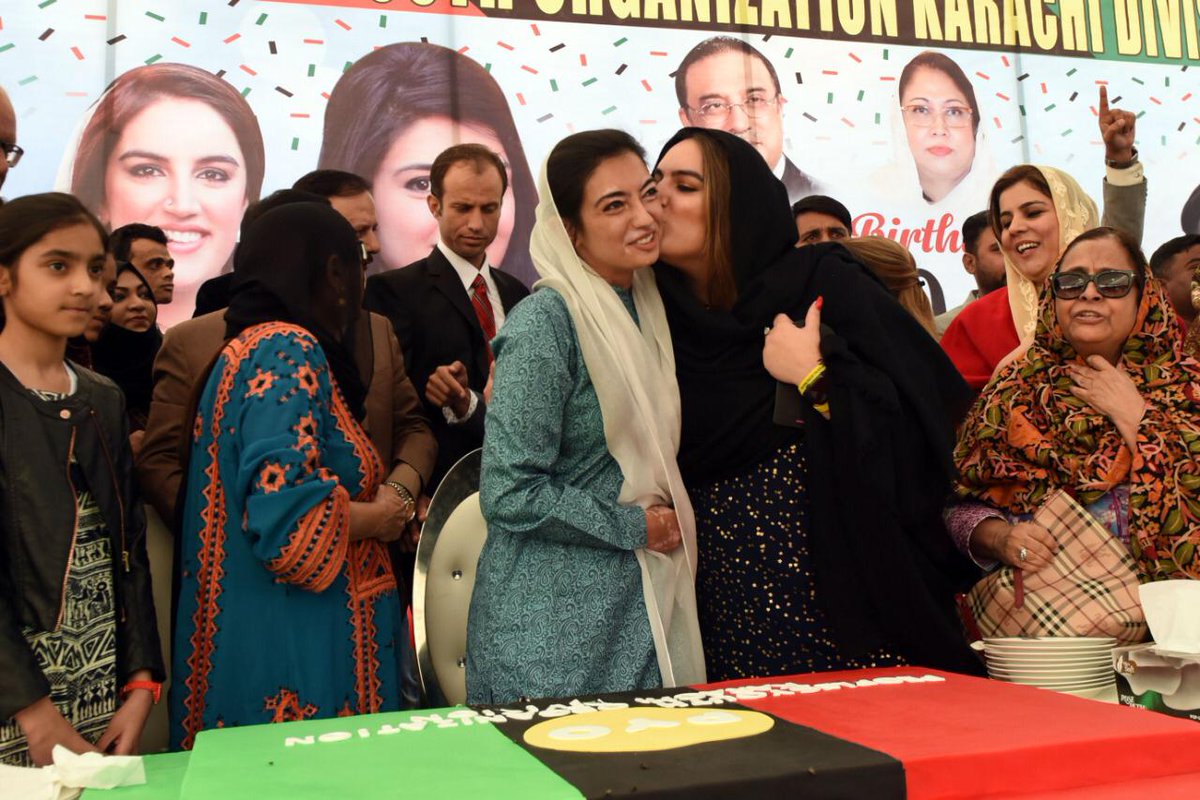
#Pakistan #PPP - Aseefa Bhutto’s birthday celebrated

Pakistan People’s Party on Sunday celebrated the birthday of the party leader and daughter of Asif Ali Zardari, Aseefa Bhutto Zardari in Karachi.
The event that was organized at the helipad of the Bilawal House Karachi was attended by Bakhtawar Bhutto Zardari, PPPP Women Wing President Faryal Talpur, Minister Health Azra Fazl Pechuhu and other party leaders.
The People’s Youth Organisation (PYO) office bearers including its Karachi chapter president Rashid Khaskheli and Information Secretary Fareed Memon that organized the event welcomed the guests at the venue. The PYO Sindh President Javed Nayab Leghari while addressing the event said that Aseefa Bhutto has not only played an important role in political arena but also in eradicating polio disease.
“It was due to her vision and efforts that the country is nearing to eliminate polio completely,” he said.
Later the guests along with Aseefa Bhutto Zardari cut the birthday cake. Aseefa applauded the PYO office bearers for organizing the event.
https://nation.com.pk/04-Feb-2019/aseefa-bhutto-s-birthday-celebrated

Sino-Pakistan Relations Amid the #Coronavirus Epidemic

By Eram Ashraf

The coronavirus outbreak revealed the weakest link in China-Pakistan relations: people-to-people ties.
The creation of the China-Pakistan Economic Corridor (CPEC), under which China plans to invest around $62 billion dollars in Pakistan, represents a “qualitative shift” in Sino-Pakistan relations, already touted officially as being “higher than the Himalayas…and sweeter than honey.” Alongside Chinese investments, the two countries have also seen an increase in the movement of people between them. These include Chinese workers linked to CPEC projects moving to Pakistan as well as students and entrepreneurs from Pakistan moving to China. It is this side of Sino-Pakistan relations, which involves citizens from both countries, that has come under great stress in recent days.
The global crisis created by the emergence of the novel Coronavirus 2019-nCoV in Wuhan city, capital of the central province of Hubei, China, has affected citizens from both countries along with the rest of the world. According to the latest data, in China so far 17,491 cases have been confirmed and 361 deaths reported (these figures are constantly changing).
Adding to worries over the outbreak, Wuhan, which has an approximate population of 11 million, hosts international students from various countries, including Pakistan. In Hubei province, where the virus originated, 21,371 international students have been registered.
China’s Ministry of Education (MOE) in 2018 reported a total of 492,185 international students in China from 196 countries who were pursuing studies in 1,004 higher education institutions. Out of these, 28,023 students were from Pakistan, the third-highest total of any country.
As the number of confirmed cases and death toll grew, the central government in China decided to take drastic steps to control the disease’s spread and put Wuhan under quarantine. What started out as restrictions on the movements of 11 million people soon progressed to the quarantine of at least 50 million to prevent the spread of the virus.
In light of the emerging situation, the United States arranged for its citizens to be flown out of Wuhan despite China’s efforts to contain the spread of the disease through quarantine. The United States was soon followed by other countries such as Japan, the United KingdomIndiaBangladesh, and others.
In the midst of these developments, the Foreign Office (FO) of Pakistan announced that 500 students from Pakistan were stuck in Wuhan. Subsequently, four of those students became infected with the coronavirus. In light of the situation, the Pakistani government formed a “Technical Committee” to monitor developments and on January 30 decided not to follow other countries in evacuating their citizens from Wuhan. Their decision was claimed to be in solidarity with China for the greater good of people in Pakistan and the world at large, so as to control the spread of the disease. Pakistan’s government hence demonstrated their full trust in measures taken by China in handling the coronavirus and “stands firmly with Chinese brothers,” entrusting Beijing with the welfare of Pakistani citizens inside China.
The FO estimates of 500 Pakistani students in Wuhan has already been disputed by some of those living inside China, who believe 2,000 is a better estimate. Already in a state of great concern, these students and their families viewed the Pakistan FO account in a state of panic. If their government didn’t even know how many Pakistani citizens were actually studying in the area, then what hope was there they would be provided any help in the future?
Some Pakistani students used their accounts on social media, such as Twitter, to raise awareness about themselves and their situation. As a result, private media channels in Pakistan were alerted and began to share news items related to the students on their digital platforms. Soon news of the plight of these students spread inside Pakistan, with opposition parties raising calls for their repatriation in Parliament.
This series of events related to the coronavirus, which unfolded over the course of just a few days, has exposed the soft underbelly of Sino-Pakistan relations: its people-to-people connections. There are no clear figures as to how many Chinese citizens are currently in Pakistan. A recent report pointed to a figure of 4,000, with some gone back to China for the Lunar New Year. Some of the Chinese citizens still in Pakistan have reportedly visited hospitals with suspected cases and been given the all clear.
The position of the Pakistani government, as of this writing, was still that they were not going to remove any of their citizens from China, entrusting their care instead to the Chinese government. How long they will be able to hold this position is difficult to guess. What is certain is that this is a delicate time in Sino-Pakistan relations in that it involves the welfare of each other’s citizens. If not handled with care, it could potentially rupture the already fragile relations among people in both countries.

Pakistan religious discrimination is enabling human trafficking

By Travis Weber & Arielle Del Turco
 At 24 years old, Samia Yousaf was forced into marriage. She was promised an escape from poverty in Pakistan, but her new Chinese husband abused her, denied her food, and eventually separated her from her own baby.
Horrific human trafficking stories such as these are common among young Christian women from Pakistan. And because religious minorities, especially Christians such as Samia, are disproportionately affected by such traffickers, their plight is also a religious freedom issue.
National Human Slavery and Trafficking Prevention Month has come and gone, but we must not cease to call attention to the plight of the 24.9 million people around the world who are affected by this scourge. Human trafficking is an affront to human dignity, and countries that suffer from it are obligated to do everything in their power to prevent it and end policies that directly contribute to the commercial sex industry. Forced marriage is one form of human trafficking, a broad umbrella term for any exploitation of individuals using force, fraud, or coercion.
The forced marriage pipeline from Pakistan to China was recently highlighted by a newly uncovered list of 629 Pakistani women and girls sold as brides to Chinese men and taken to China. Pakistani investigators painstakingly gathered this information, which points to an alarming trend in the lucrative crime of human trafficking — the targeting of Christians in Pakistan. For Pakistan, ending this barbaric trade means protecting religious freedom and ceasing the marginalization of Christian communities, which makes them easy targets for foreign traffickers.
Christian communities are among the poorest in Pakistan and have high illiteracy rates. They are often relegated to menial jobs as laborers and farmhands. In Lahore, the country's second-largest city, Christians take most of the jobs as sanitation workers and street sweepers, which further stigmatizes them. Christian communities are often geographically segregated from their Muslim neighbors into rural villages or urban ghettos.
Chinese traffickers are targeting these marginalized religious minorities. Traffickers approach impoverished families and offer to pay parents to marry their daughters off to Chinese husbands who will take them to a new life in China. The burden of poverty and social marginalization felt by some Christians drives them to accept this offer out of desperation. Brokers who arrange these marriages have even paid pastors to encourage their congregants to marry their daughters off to Chinese men.
What happens to these brides in China is tragic. Some are abused and isolated. Others are forced into prostitution. In one case, a Pakistani woman escaped back to Pakistan after only two months of marriage in China. She returned malnourished, weak, and unrecognizable. A few weeks later, she was dead.
China’s disastrous social policies have exacerbated the situation. Its one-child policy, combined with its cultural preference for sons over daughters, led to the killing of many female babies and created a severe shortage of women to marry. Now, Chinese traffickers are preying upon foreign populations to secure brides.
The Chinese government is an expert at concealing internal problems, and the scourge of human trafficking on its border is no exception. Pakistani investigations into hundreds of cases came to a halt in November due to fears of damaging Pakistan’s beneficial economic relationship with China. The Chinese government should stop denying that the problem exists and instead work together with Pakistan to end the flow of human trafficking across their shared border.
The U.S. State Department’s 2018 Report on International Religious Freedom cited claims that the Pakistani government is “inconsistent in safeguarding against societal discrimination and neglect, and official discrimination against Christians.” The government of Pakistan has shown an unwillingness to protect and assist its religious minorities — especially vulnerable women such as Samia. It’s time for that to change.
Pakistan’s failure to protect religious freedom has allowed its Christian minority to become vulnerable to foreign traffickers. That is cause for alarm. The government should be making a better effort to combat the stigmatized status of Christians and ensure they are treated equally in Pakistani society. The scourge of human trafficking is complex to address, but part of Pakistan’s solution should be to improve social and cultural respect for the religious freedom of its minority groups.
By working together, advocates fighting human trafficking and religious persecution can better achieve solutions to both issues.

Sunday, February 2, 2020

Video - #Wuhan #Delhi #RT India evacuates 300+ nationals from Wuhan amid coronavirus outbreak

Video Report - Police shoot man dead in London after several stabbed in 'terrorist-related' incident

Video Report - Is the response to #Coronavirus enough?

Video Report - Fareed Zakaria: Nothing changes peoples' views on Trump

Opinion - It’s 2020. Time for Democrats to Ignore These Two States.

 
By Michael Tomasky
Everybody talks about Iowa and New Hampshire, but nobody does anything about it. Here’s an idea.
Iowa and New Hampshire. Here they come again, reliably in grim tandem, like the flu and gastroenteritis. Two small, unrepresentative states will set the terms of the Democratic presidential campaign, exerting far more influence over the nominating process than states that rank 32nd and 42nd in population have any right to.
This must end for Democrats. Everyone knows it. Everyone argues it. But then, everyone throws up their hands. Iowa has been first for nearly 50 years now, a position to which the Democratic Party has given its tacit assent. And New Hampshire — why, New Hampshire has a law stating that it must be the first primary. So there.
To which I say: So what? What the Democrats must do is simple. Stop giving the assent, and break the law. We need a little Democratic Party civil disobedience.
Let’s quickly review how Iowa came to have this position. After the calamity of 1968 (the convention riots, the Vietnam War schism), the party opened up the nominating process. States were encouraged to have primaries and caucuses.
Iowa adopted a cumbersome, four-stage nominating process, of which the caucuses were the first step. So it had to go early. Kathie Obradovich, a former opinion editor for The Des Moines Register, said last year that “the old story is that they figured out how long it would take to print all the paperwork on their elderly mimeograph machine.” Mimeograph machine!
So that’s how Iowa got the first vote.
To Iowa’s half-century, New Hampshire goes back a full century. It has held the first primary since 1920. But it was, again, after 1968, when state politicians saw the nominating system was being changed, potentially threatening New Hampshire’s primacy, that they passed a law saying it had to have the first primary.As is often observed, the Democratic National Committee can’t do much about these dates. It’s the Constitution itself (Article I, Section 4) that says that states “shall” decide on the “time, place and manner” of their elections. So the committee can’t change the dates.
It can, however, do something else. It can ignore the two states.
That’s right. Let Iowa and New Hampshire hold their caucus and primary, but don’t participate. Make all the candidates agree that they won’t seek a spot on the ballot.
Impossible? That’s what everyone will say. But it’s not. Oh, I’m sure it’s all very complicated with respect to the committee’s bylaws. But bylaws can be changed, by people who want to change them.
The problem with Iowa and New Hampshire, as David Leonhardt laid out in detail in The Times, is that they are horribly unrepresentative of a party that is now, according to the 2017 Pew Typology Survey, 54 percent white, 19 percent each African-American and Latino, and 9 percent other. Iowa is 85 percent white non-Hispanic, and New Hampshire is 90 percent.So what the Democratic National Committee needs to do is choose two other, more representative states. I would suggest Florida and Michigan. Florida is more diverse than the country as whole. The United States is 60 percent white non-Hispanic, 13 percent African-American, and 18 percent Latino; Florida is 54, 17 and 26. Michigan is somewhat less diverse than the country, at 75, 14 and 5, but at least the black population is representative, and there are other strong arguments for making an important Rust Belt state an early test.These states are diverse in other important ways. They have major cities, smaller cities, suburbs, university towns and farms. They have economic diversity. And of course both are swing states with lots of electoral votes (29 and 16, respectively). They matter in a way Iowa and New Hampshire (six and four) do not.
I say Florida and Michigan, but take your pick. The point is, the Democrats should pick two large and diverse states — or it could be four states that are rotated, to add to the geographic diversity — and tell them to move their primary dates (and yes, primaries would be far, far preferable to caucuses) forward.
And then, let Iowa and New Hampshire do what they want, but just ignore them. The committee has some leverage here. It schedules debates. It should schedule them in Florida cities like Orlando, Tampa and Gainesville, and Michigan cities like Detroit, Lansing and Ann Arbor. Never in Ames or Manchester.
That’s a carrot. Now, here’s a stick. Impose a debate qualification that any candidate who seeks a ballot position in either state or spends more than three days campaigning there will be barred from the debate stage. Problem solved.
Yes, it’s hardball. But at this point, hardball is what’s needed. There is no rational argument against it. Well, maybe there’s one. Some will raise the possibility that treating the two states like this will ensure that the next Democrat running for president will lose the states and their electoral votes.
A generation ago, I would have believed this argument. But now, in this polarized country, I don’t. In the heat of a partisan general election campaign, given all the big things that are at stake now in every presidential election, Iowa and New Hampshire Democrats aren’t going to vote against their standard-bearer over a procedural move that many will know in their bones was justified. And my guess is that both states would object forcefully the first go-round, but after that would see they’d lost and just run up the flag and choose later dates.
Some traditions are oppressive, and some laws are bad. Democrats and liberals admire the Americans who’ve challenged them. I’m not saying the committee chair who takes on Iowa and New Hampshire will go down in history with Rosa Parks. But she or he will be lauded as the person who ended an anachronistic duopoly and brought the nominating process into the 21st century. https://www.nytimes.com/2020/02/02/opinion/iowa-new-hampshire-primary.html?action=click&module=Opinion&pgtype=Homepage

Why the Government of Pakistan Must Heed the Voices of Young Pashtuns

Imtiaz Alam
28/APR/2018

According to Imtiaz Alam, The News, one of Pakistan’s prominent English language dailies, refused to publish this column written by him. He released the text “to uphold my freedom of expression [and] for the people’s right to know.” The Wire is publishing the article to ensure it reaches a wide audience in South Asia and the world.
Gone are the days of colonialism, yet we see its remnants to this day. The Federally Administered Tribal Areas (FATA) is such a space that was either eulogised for the ‘free spirit’ of our valiant tribesmen or abused as a lawless region. It came to be the epicentre of terrorist structures, which were rooted out by our valiant armed forces.
As we slowly, lopsidedly and coercively move towards the ‘mainstreaming’ of FATA from outside and over the heads of its people, the death [of a young Pashtun man] Naqibullah Mehsud in a fake police-encounter [in Karachi] provoked our besieged tribal and not-so-tribal youth to vent their passionate indignation over their plight.
They came to Lahore to share their agony and lament our apathy towards the miseries they had suffered for too long with no light at the end of the tunnel. There were a few among the self-loving Punjabis, an odd combination of the Lahore Left Front (squabbling over the ideological plausibility of its worthiness), who decided to respect their civil right to express themselves from the ‘Hyde Park’ of the inner city – the historic Mochi Gate. With the new found emblem of “vote ko izzat do”, the ruling Pakistan Muslim League (N) – which prefers to close its eyes over the abuse of freedoms by the rebellious clerics – shivered in its pants in granting freedom of assembly and speech to the defiant youth as a brutalised and fragmented civil society dared to stand by the worthy visitors.
A mini-hell broke loose in Lahore and an ugly scene was created by a confused police and the wayward hot pursuit engaged in by a variety of intelligence sleuths late at night that ironically provoked even armchair revolutionaries like me to recall the day when we took out a procession to oppose military action in the then East Pakistan of 1970.
The protestors narrated their heart-rending stories of death and destruction from all sides and vented their anger against the fathers and grave-diggers of the terrorists and the bloody fiefdoms of a variety of warring Taliban. These were the stories of victimhood of recent generations, who lost their childhoods in the bloody wars fought in the name of faith or for hegemony of arms.
In the last four decades, tribal society has passed through the most torturous, bloody, destructive, divisive and increasingly brutalising phases. The sons and daughters of these dark times saw nothing except barbarities, hopelessness and helplessness. The children of jihad from the war zone had no window of opportunity or expression. As they saw a most handsome young man – an aspiring model with fascinating attire and alluring photo sessions – being cold-bloodedly murdered, they simply could not take it anymore and thronged to public spaces with a white flag in their hands. Suddenly, we see a Pashtun civil rights’ spring emerging from the death-fields of FATA.
It took everybody by surprise, which erroneously gave birth to conspiracy theories. Popular movements do not spring out of the womb of conspiracies. However, spontaneity can take any direction, depending on the sense and actions and reactions of the adversaries. If the mainstreaming of FATA, rehabilitation of its displaced people and rejuvenation of their lives is intended, then what could be a more humanistic societal change than these Pashtun youngsters providing a social base for civil society to fill the promising void created with the exit of the barbaric Taliban? An unwarranted and thoughtless conflict between the youth and the security forces could again push a new generation to the other side of the fence – only to become fodder in an inter-state conflict. Neither forcible integration nor separatism would help resolve the basic social and economic maladies and matters pertaining to the organic development of the people of FATA.
Indeed, after the horrifying slaughter of our children at Army Public School Peshawar, Operation Zarb-i-Azb and later Operation Rad-ul-Fasad became primarily instrumental in cleansing out the terrorists and destroying their hideouts among the populace and remote places. Military victory is always accompanied by its usual pitfalls. The military operations are not undertaken with kid-gloves; they are the baptism of Armageddon and bring death and destruction in their wake. The original sin is finally in the last phase of its ablution. It must be commended, even with or without a pinch of salt. The sacrifices of Pakistan’s soldiers and officers are incomparable and laudable. Let’s not question their valour and honour because of the misdeeds of those who put the country through perpetual pain and self-immolation. All have suffered under the tutelage of the jihadi paradigm –even the misguided teenage suicide-bombers. Now is the time for healing, recouping and allowing the nourishment of a new civil society across the fascinating lands of our indomitable tribal people.
Under a somewhat delayed process of mainstreaming FATA, parliament has legislated to extend the constitutional writ of the Supreme Court of Pakistan and the Peshawar High Court to the Federally Administered Tribal Areas, still ruled by coercion and without the rule of law. The armed forces have done a commendable job of eliminating the scourge of terrorism from almost all of FATA and other regions. Now, it’s time for civilianisation and the integration of lawless regions into the constitutional, political, economic and administrative framework of the national mainstream. And this can and should be done with the unhindered participation of the tribal people, through an organic process that empowers the people rather than reviving the relics of the colonial era or keeping the punitive structures that were part of the much needed operations. Annexation cannot work, nor can Balkanisation in a most tumultuous region.
Popular rights-based movements warrant the unity and support of all democrats and progressive people – not chauvinistic divisions. Both movements and their support system must be kept within the peaceful framework of constitutional and legal means. They must not entertain any adventurous tactics and slogans that strengthen the anti-people agendas of anti-democratic forces or provoke a possible crackdown against a nascent civil rights’ movement that needs consolidation on democratic lines, while discarding warlordism and ethnic chauvinism. They should also be mindful of all kinds of mischief mongers and guard against hostile alien elements. The agitators and the authorities must engage with patience for the acceptance of genuine civil rights. We have heard about some sort of engagements between the military authorities and the leaders of the Pashtun youth movement. Communication lines are being maintained, I have heard, despite provocations. We have seen a positive outcome of talks between the traders and the Inter-Services Public Relations office of the Pakistan army. However, the talks must not be piecemeal; they should be comprehensive and appropriately structured.

The following steps and processes should be given priority:
– Decolonisation: Bringing an end to the Frontier Crimes Regulation and the reign of Political Agents and Maliks.
– De-Talibanisation: To not let the Taliban and their variants take hold of FATA again.
– Demilitarisation: A timeframe to replace military structures and check-posts with civilian structures for administration.
– Disposal of landmines: It’s already underway and should be expedited.
– De-Guantanamoisation: Creating a truth and reconciliation commission to bring disappeared persons before a court of law or tribunal and satisfying the aggrieved families about their whereabouts or fate.
– Civilianisation: All fundamental, human, civil and social rights should be assured for the people of FATA.
– Mainstreaming: Constitutional, judicial, political and administrative mainstreaming of FATA, beginning with the determination of its status as either an autonomous region of the federation or its integration with Khyber-Pakhtunkhwa (KP) through an appropriate verdict of the people. It could be done through a ballot paper along with the elections to the provincial-tier during the course of general elections.
– The establishment of powerful local governments with proportionate representation of all people, classes, tribes and sub-tribes. The extension of the lower tiers of judicial structures along with local dispute resolution councils. Administrative structures and local police/levies responsible to local councils must be created.
– Rehabilitation and reconstruction: Rehabilitation of all Internally Displaced Persons with direct and full compensation, as was done in Swat. The reconstruction of villages, towns, businesses, handicrafts and agriculture. Due compensation for the losses of properties, businesses and other means of livelihood.
– Rejuvenation: Greater allocation of resources for poverty alleviation, education, health, water, energy and municipal provisions. Revival of cultural, social and sports activities.
– Resource allocation: appropriate resources, including due share in the divisible pool, which must be put at the disposal of local people.

Pakistan’s Pashtun Rights Movement is Alive and Kicking


By Mohammad Taqi
In the grand scheme of things in Pakistan, the PTM is a breath of fresh air, yet a drop in the bucket.
“In February, Arman Luni, a PTM activist from Balochistan, died after being beaten by police officers following his participation in a peaceful protest in the Lorelai district”, records a just-released scathing report by the venerable Amnesty International, on human and civil rights abuses in Pakistan.
This February 1 marks the first anniversary of the PTM – Pashtun Tahaffuz Movement or Pashtun Defense League – stalwart Professor Arman Luni’s killing due to police brutality. Luni was a teacher, poet and political organiser, who along with his sister Wrranga, had joined the PTM ranks to protest the Pashtun lands east of the Durand Line being used by the Pakistani army establishment to harbour and launch its Taliban proxies against Afghanistan and the US and Coalition forces stationed there.
The PTM had been catapulted on to Pakistan’s political stage after its massive protest against another police brutality in January 2018 when Naqibullah Mehsud – a young Pashtun man from the former tribal district of South Waziristan – was killed extrajudicially, by a police officer named Rao Anwar in the provincial metropolis Karachi. The PTM’s immediate demand then was to seek justice for Naqibullah, which still remains elusive.
The movement also sought an end to the army’s impunity in the former Federally Administered Tribal Areas (FATA), demanded that Pashtuns forcibly disappeared by the army in the so-called War Against Terrorism be produced before the courts, landmines removed from the ex-FATA, people displaced internally and externally due to military operation be repatriated to their homes and also be given reparations for destruction of their homes and businesses.
The PTM has, since, gone through the usual ups and downs that most similar movements undergo over the course of their evolution, with most important being the imprisonment of its two parliamentarians Ali Wazir and Mohsin Dawar last year on trumped-up charges of murder, and its charismatic figurehead Manzoor Pashteen earlier in the week.
Dawar – a cool-head lawyer – was arrested again last week, while leading a protest against the incarceration of Pashteen but was released the next day. Pashteen has been charged with sedition, conspiracy and a speech allegedly ‘subverting the constitution’.
The irony is that the army dictator General Pervez Musharraf, who has been convicted of high treason an sentenced to death by a special court, remains at large. Regardless, the spontaneous outpouring of support for the PTM leader within and outside Pakistan, and countrywide protests, indicate that the PTM, as well as its message and appeal, are alive and kicking, despite the Pakistan army’s dire warning that the movement’s “time is up”.
The PTM’s time is clearly not up. The tremendous support it generated across Pakistan, especially from the leftist Awami Workers Party (AWP), despite its ethno-national focus on Pashtuns, indicates that the PTM has room to grow and flourish.
That the AWP leaders and cadres came out in droves – and got arrested by the dozens – in support of the PTM, suggests that while the movement champions the Pashtun grievances, its message resonates across the national and class spectrum in Pakistan because of the common tormenter – the army.
The plight of the Okara’s Punjabi farmer, the toiling Baloch of Gwadar, the landless Sindhi peasant or a disappeared Urdu-speaking Shia Mohajir is the same as that of a Pashtun who has been squished under the army’s heavy boot. The ethno-national inequality and the class divide have always overlapped in multinational states like Pakistan and have posed the perennial conundrum for the progressive thinkers and activists, whether the national issue has to be addressed first or is it the class question that needs the immediate attention and remedy.
In Pakistan’s context it is an intertwined phenomenon where the army has acted not merely as the praetorian guard that has anointed itself to define the national interest but virtually as an economic class, as well. And it has done so with the help of collaborators across the ethno-national spectrum. The traditional political parties were forced to play ball with the army or face extinction.
On their part, the traditional or legacy political parties have remained under clan leaderships and derived electoral strength in large part from patronage politics rather than ideological and issued-based agenda. This, in turn, has led the mainstream political parties to remain beholden to the army that controls levers of patronage.
The two traditional Pashtun nationalist political parties viz. the Awami National Party (ANP) with its historical base in the present-day Khyber-Pakhtunkhwa (KP) province, and to a lesser extent the Pashtunkhwa Milli Awami Party (PMAP) that draws support from the Pashtun areas of the Balochistan province, have effectively remained Islamabad-oriented since at least 1988. They have been stakeholders in the federal and respective provincial governments, which inevitably entails remaining reticent about the army’s Afghanistan project, wherein the Pashtun areas contiguous to the Durand Line have been used as a bridgehead for harboring and launching the Afghan Taliban.
For example, one cannot think of a province-wide – let alone country-wide – protest by either the ANP or the PMAP demanding the Pakistani state and Deep State to stop meddling in Afghanistan. While the stalwarts of both parties have paid lip service to the issue, they have frequently governed their home provinces without ever practically trying to stop the Pakistan army’s intervention onto Afghanistan.
The ANP governed the KP province from 2008-2013 and the PMAP held the gubernatorial slot for Balochistan from 2013-2018. Not that there is anything wrong with coming to power through even a nominally democratic process, the problem was that neither of the signature Pashtun nationalist parties did anything material about the Pakistan army’s policy of using the erstwhile FATA as a sandbag against Afghanistan.
The army, on its part, never abandoned its pursuit of the so-called strategic depth in Afghanistan. For this purpose, the Afghan Taliban have remained the army’s tried and trusted proxies, who had to be homed and harboured in the ex-FATA and the Pashtun regions of Balochistan. This meant that the native Pashtuns of those areas had to suffer a double whammy i.e. face the brutality of the Taliban as well as the army, which went after the so-called Bad Taliban – the ones who disobeyed its command – and cosmetically, to placate international concerns, against the Good Taliban – the ones who have remained under its discipline. These were the circumstances, in which the PTM leaders and cadres came of age and realised that they have to fend for themselves.
Despite strong bonds of kinship and fraternity, the top leaders of the ANP and the PMAP have not visited any prominent population centre of the ex-FATA during almost two decades of war, death and destruction. The PTM rose from the ashes of this war and indignity at the hands of foes and abandonment by the friends. But could it make a difference?
In the grand scheme of things in Pakistan, the PTM is a breath of fresh air, yet a drop in the bucket. On its own, it can draw attention to the plight of the Pashtuns of ex-FATA, present their case nationally and worldwide, and serve as a roadblock of sorts, to the army’s decades-old policy of using the Pashtun regions straddling the Durand Line as a jumping board for its Taliban proxies. But, by itself, it may not be able to put an end to the policy and practice of the Pakistan army to seek hegemony over Afghanistan and to install its puppet regime there.
To this end the PTM will have to convert the mainstream Pashtun nationalist parties to its cause, which is a tall order. But even more difficult is to convince the three-time former prime minister Nawaz Sharif’s Punjab-based Pakistan Muslim League (PMLN) and the later former PM Benazir Bhutto’s Pakistan Peoples Party (PPP) to close ranks with the PTM and convince the army that its project of prosecuting foreign policy through jihadist proxies a la the Taliban, has a tremendously bloody domestic blowback.
While the PMLN supremo, Nawaz Sharif, had tried to confront and rein in the army, his ill health took a major toll on him and his campaign, and sidelined him for the foreseeable future. His party currently is toeing his younger brother Shahbaz Sharif’s line, which effectively is to plod along with the army in the hopes that the latter would ditch its blue-eyed boy Imran Khan and let the PMLN to return back to power. The PPP has almost been confined to Sindh, the home province of its founder Zulfikar Ali Bhutto, and has no inclination to take on the army over any major issue let alone the ex-FATA and Afghanistan, which hardly resonate with its electoral base, if at all. The Pakistan army under its chief, General Qamar Javed Bajwa, who has a three-year extended tenure under his belt, is unlikely to change its tack vis-à-vis the PTM. It would continue to try to crush the movement by force. With the political parties tamed and the media cowed down into submission, the army has its reasons to believe that it can prevail. History, however, tells another story. Each time the Pakistan army has overplayed its hand and tried to conquer its own people, it has backfired, and it had to beat a military or a political retreat.
The PTM’s cause is just, its means constitutional and the ends democratic and humanistic. The movement and its leaders have a long and arduous journey ahead of them. But then, the life and struggle of the Badshah Khan– the father of non-violent Pashtun nationalist campaign, known as the Frontier Gandhi – tells us that there is no shortcut to a good, old-fashioned political struggle. While attempting to build coalition bridges with the mainstream political parties, the PTM will have to slog on.
https://thewire.in/south-asia/pakistans-pashtun-rights-movement-is-alive-and-kicking

#Pakistan - The variability of corruption

By Muhammad Ali Jan


A worsening corruption perception rating at a time when anti-corruption drives are a top priority call for a deeper look at the narrative that has gripped public discourse for nearly three decades now
As the recent furore over Pakistan’s slight drop in Transparency International’s Corruption Perception Index ranking demonstrates, no other narrative has gripped the imagination of mainstream public discourse in the past 30 years than that of corruption: talk show hosts, politicians and even a number of international development agencies all pinpoint corruption as the most formidable hurdle in the country’s path to economic development. However, as a recent Gallup opinion poll revealed, there seems to be a deep chasm between the eagerness with which the chattering classes have embraced the anti-corruption mantra and the extent to which it figures in the imagination of ordinary people: when asked to identify the single biggest problem facing the country, only 4 percent of Pakistanis identified corruption to be the principal ill – 4 percentage points less than Kashmir and 2 percentage points above the dengue virus – while 76 percent of them thought inflation and unemployment were the main concerns.
Of course, anti-corruption crusaders will continue to insist that people need to be made aware of the clear relationship that exists between low levels of economic well-being and the endemic corruption that bedevils the country. But it is precisely this supposed link between corruption and economic development (usually restricted to growth) that is more complex and ambiguous than the activists allege. While years of research on the issue have identified several reasons for the ambiguity, I will focus on two key ones: first, the mainstream definition of corruption does not automatically assume negative economic outcomes; secondly, what is usually bracketed under the heading of corruption are a set of discreet practices, not all of whom are tied to negative growth; finally, more important than the existence and even level of corruption, is its predictability and whether states are able to facilitate and direct businesses towards productive ends in exchange for ‘under the table’ payments.
Although something akin to corruption may exist in any organization – for example a cricket club’s treasurer stealing from the common pool or an office employee embezzling funds – the common definition refers to the abuse of public office for private gain, or more specifically, the violation of formal rules of conduct in pursuit of private benefits, whether for wealth in the form of bribes or political advantage. While I leave aside the questionable assumption of the existence – or even the desirability – of a strong public-private dichotomy in all settings, regardless of historical and cultural context, for another article, what is striking about this definition is that despite the underlying moral judgment that rules are broken in order to benefit public officials (politicians, bureaucrats or military officials) there is no assumption that such an action automatically leads to negative economic outcomes.
Even by definition therefore, such rule-breaking can and has, co-existed with outright plunder, very low levels of development as well as with sustained rates of high economic growth. This is because not all corruption is created equal; nepotistic fire sales of productive assets for unproductive ends to family and friends is different from facilitating productive entrepreneurs in exchange for ‘access money’; likewise, graft is different from outright extortion (though difficult to distinguish in many contexts) and the impact on growth would be distinct as well; finally, several forms of ‘corruption’ like patronage and clientelism may have an even more ambiguous relationship to growth but can be extremely important in establishing democratic practices in the long-run and require a separate analysis.
Several forms of ‘corruption’ like patronage and clientelism may have an even more ambiguous relationship to growth but can be extremely important in establishing democratic practices in the long-run.
While extraction of a certain amount of economic surplus is common to all states, what distinguishes developmental outcomes is not the act, nor even the amount of such payments, but their predictability and the services that states are able to provide in return. The American development sociologist Peter B Evans, in his seminal comparative work on industrialization in the developing world, showed how in ‘predatory states’ like Zaire public property was essentially controlled by a small clique of bureaucrats and relatives of President Mobutu, who saw plunder of the public exchequer as a right. But even more importantly, it was not the magnitude, but the unpredictability with which the state plundered and levied random extractions, untied to any productive ends, which led to the abysmal economic performance.
By contrast, ‘developmental states‘ like South Korea also extracted surpluses (or ‘rents’) from businesses to shower upon incumbents and their friends at the expense of the citizenry as a whole – sometimes in extravagant amounts – but in exchange they facilitated capitalists by providing long-term investment credit, a stable business environment, favourable terms of trade and strategic protection, to create a highly productive and export-oriented model of economic development. Of course, the Korean case was aided by the existence of a tightly-knit and highly meritocratic (but by no means uncorrupt, though these two things are often conflated) bureaucracy, a version of this can and has existed in other states as well. Bangladesh is a key example of a country with very high levels of corruption and a far from meritocratic/competent bureaucracy, but it is the predictability of corruption (rather than its level) in an overall environment seeking to facilitate growth inducing sectors like garments, that are key to explaining success.
Since the prime minister is fond of reminiscing about the ‘development decade’ of Ayub Khan, it would be useful to remind readers that it was a tightly-knit nexus between state, bureaucracy and favoured capitalists (the infamous ‘22 families’) that was partially responsible for the high growth. The state selected a group of entrepreneurs – mostly Karachi-based refugee traders from the Indian state of Gujarat – who did not have local roots in the landlord-dominated polity of the country at the time and would not have been able to operate without such links; it gave them lucrative incentives to shift from trade to industry by guaranteeing extremely high profits, credit on favourable terms, as well as cheap imports through a dual exchange rate system. In response, these capitalists remained tied to the Ayub dispensation through various legal and illegal ties and were the main force behind financing his foray into electoral politics through the Convention Muslim League.
Moreover, even the squeaky clean image of the bureaucracy as entirely rule-bound is a misnomer as the case of the founder chairman of the Pakistan Industrial Development Corporation (PIDC), Ghulam Faruque Khan, clearly demonstrates. Described as a strong-willed, powerful individual who made rapid decisions, saw them carried out and worried about government rules, procedures, or approval afterwards, if at all, he leveraged his position in the state to establish one of the most successful business houses of the time, and was by no means the only bureaucrat to do so.
Finally, as the shift from the ‘Shahbaz Sharif system’ to the Buzdar dispensation in Punjab amply demonstrates, rapid decision-making and implementation along with weak adherence to rules may be able to deliver certain developmental outcomes – particularly in infrastructure – while an emphasis on punishing people for rule bending may actually disincentive actors from taking risks altogether and bring the entire developmental machinery to a halt. It is therefore important to think more deeply about the context in which ‘corruption’ takes place and its manifold links to growth, rather than a blanket condemnation which seems to be doing more harm than good.
https://www.thenews.com.pk/tns/detail/606912-the-variability-of-corruption

Is there a solution to the wheat crisis?

Qasim Shah


Maladministration allows certain people to make a quick buck before the government machinery moves in to address the problem.
 The rising prices of flour and disappearance of the commodity from many parts of the country require corrective action by the government. The blame game between different tiers of the government will not solve the issue. Policymakers and analysts should look at the issue from a food security perspective rather than as a problem that only has administrative and logistical aspects.
In a country where 39 percent of the population is poor (roughly 80 million, not counting the 20 million who have fallen into poverty during the last 2 years); 20 percent are deprived of all aspects of health, education and living standards; 68 percent of the households are unable to earn enough to secure nutritious diet; three quarters of the population depends on wheat flour alone for 72 percent of their daily caloric intake; where annual per capita wheat consumption is 124 kgs — one of the highest in the world — an unprecedented increase in wheat flour prices in recent weeks is indeed a big blow.
The average per capita caloric supply during the last decade has improved. It stands at 2430 kcal, above the minimum threshold of 2,350 kcal. Increased production of cereals has improved average daily caloric intake of Pakistanis marginally beyond the recommended daily intake of 2,350 kilo calories (kcal) per adult equivalent. However, the fact remains that among the urban poor, the averages intake barely touches the 1,786 kcal (undernourishment level).
The rural poor are slightly better off with an average intake at 1848 kcal. Yet since 55 percent of the rural population is poor, the caloric deficiency is a serious burden for the rural population as well.
Another approach to look at the issue arising due to unprecedented hike in wheat flour prices, which is a more realistic approach, is the percentage of household monthly expenditure on food. Households with lower incomes tend to spend a higher percentage of their monthly expenditure on food than those with high incomes.
Across Pakistan, on average a household spends 49 percent of the total monthly expenditure on food. Thus, poor households — and those which spend a higher proportion of their monthly expenditure on food — are particularly vulnerable to food price inflation which is the prime shock affecting food security in the country. It’s pertinent to note here that a majority of households in Pakistan are market-dependent to meet their needs: 79 percent for cereals, 92 percent for vegetables, 50 percent for milk and 70 percent for meat intake.
According to a study, jointly commissioned by the Planning Commission and World Food Programme, malnutrition is costing roughly 3 percent of the GDP. The study also points to the fact that the cost of malnutrition in Pakistan is 704 billion rupees annually.
This government, too, often highlights the challenge of malnutrition in its policy statements yet it has done very little to overcome it. One analysis shows that Pakistan needs an estimated Rs193 billion investment in 7-8 years to overcome the challenge of malnutrition. The money can be made available if the government decides to slash the annual direct and indirect subsidies provided to the agriculture sector, which amount to Rs450 billion, by approximately 10 percent.
Wheat is the staple food in Pakistan, cultivated on 60 percent of the agricultural area during the rabi season. It accounts for an estimated 10 percent of the value-added in agriculture and 2 percent of the GDP. The production during the last three years has fluctuated, registering the lowest during 2018-19. However, this was enough to meet the national needs by combining strategic reserves (which according to USDA Grain Report were between 2.2 to 3 million metric tonnes).
The decision to import wheat in the wake of the crisis on zero duty, therefore, has come under heavy criticism because people want to know the status of wheat reserves lying with PASSCO. What will happen to the local produce if imported and local wheat lands in the market at the same time?
It’s important to know that the government buys a quarter of the total wheat produced in a year driven by both food security and market intervention objectives followed by the private sector which procures 15 percent of the production; a small fraction is used for making animal feed and the remaining (about 58 percent) produce farmers retain to meet their household needs and for seed.
We must realise that the flour crisis is not the first of its kind. Such crises are mostly cyclical and so have been their administrative solutions which allow people and communities with vested interests in food shortages to make some quick bucks before the government machinery moves in to address the problem. These crises, indeed, have their origin in the fact that the state has left the food markers at the mercy of arhtees (middlemen and commission agents) just as it has handed over the economic management to the International Monetary Fund (IMF).
Without replacing this mechanism with something more helpful in ensuring food security and the nutritional needs of the poor, no government will ever be able to find a permanent solution to the problem.

پاکستان کے تعلیمی نصاب میں کسی خاتون ہیرو کا ذکر نہیں‘


نامور سماجی کارکن طاہرہ عبداللہ کہتی ہیں کہ پاکستان میں لڑکیوں کی ذہن سازی کر دی جاتی ہے کہ فیمینزم
ہماری تہذیب، مذہب اور مردوں کے خلاف ہے حالانکہ ایسا نہیں۔

انسانی حقوق کے لیے کام کرنے والی سرگرم کارکن طاہرہ عبداللہ کا کہنا ہے پاکستان میں خواتین خود کو فیمینسٹ کہنے سے اس لیے ہچکچاتی ہیں کیونکہ یہاں فیمینزم کو ’گالی سمجھا جاتا ہے۔‘
انڈپینڈنٹ اردو کے ساتھ خصوصی گفتگو میں طاہرہ عبداللہ نے کہا پاکستان میں لڑکیوں کی ذہن سازی کر دی جاتی ہے کہ فیمینزم ہماری تہذیب، مذہب اور مردوں کے خلاف ہے، حالانکہ ایسا بالکل نہیں اور یہ بات لوگوں کو تب سمجھ میں آئے گی جب فیمینزم کے بارے میں ہمارے تدریسی نظام میں پڑھایا جائے گا۔
ان کا کہنا تھا فیمینزم کی تحریک برسوں سے چلتی آ رہی ہے، بس وقت کے ساتھ اس کی شکل بدلتی رہتی ہے۔
نوجوانوں کی تعلیم کے حوالے سے انھوں نے کہا تعلیم ہر لڑکی اور لڑکے کا حق ہے لیکن یہ دیکھنا ضروری ہے کہ بچوں کو کس طرح کی تعلیم دی جا رہی ہے
طاہرہ نے بتایا کہ انھوں نے حال ہی میں ایک تحقیق مکمل کی ہے جس کے مطابق ملک میں پڑھائے جانے والے نصاب میں آج بھی کسی خاتون ہیرو کا ذکر نہیں جس کی وجہ سے نئی نسل کو ملکی تاریخ میں اہم کردار ادا کرنے والی خواتین کے بارے میں کچھ معلوم نہیں۔’حکومت بھی اکثر خواتین اور ان کی خدمات کو نظر انداز کرتی ہے۔‘

انھوں نے پی ٹی آئی حکومت پرتنقید کرتے ہوئے کہا کہ جب موجودہ حکومت نے 2018 میں معاشی مشاورتی کونسل بنائی تو اس کے اراکین کی فہرست میں ایک بھی خاتون شامل نہیں تھی۔ ’کیا انھیں پورے پاکستان میں ایک بھی عورت نہیں ملی جو معشیت میں ماہر ہو؟ کوئی ایک پی ایچ ڈی خاتون نہیں ملیں؟
’قانون ساز کمیٹیاں بناتے وقت خواتین کو برابری سے شامل نہیں کرتے اور جب شور مچتا ہے تو کوئی ایک عورت کو ٹوکن کے طور پر حصہ دار بنا لیتے ہیں لیکن ان کی نیت ان کی پہلی فہرست سے ہی پتہ چل جاتی ہے۔‘
طاہرہ نے مزید کہا کہ جب وہ نئی پود کو دیکھتی ہیں تو انھیں خوشی ہوتی ہے کہ وہ کتنی خود اعتماد اور پر جوش ہے اور اپنے طور سے خواتین کے 
حقوق کے حوالے سے کوشش کر رہی ہے۔