Sunday, January 26, 2020

Why Pakistan Isn’t Taking Sides After Outbreak of US-Iran Conflict

By Michael Lipin, Niala Mohammad, Mubashir Ali

 Pakistan’s bid to mediate a de-escalation of conflict between the U.S. and Iran is driven largely by its concerns about potential domestic fallout from hostilities between its two longtime partners, analysts say.
Islamabad’s peace effort, launched this month after the U.S. and Iran traded rare military blows in their decades-old tense relationship, also is rooted in its longstanding neutrality toward regional conflicts involving Iran or Iranian proxies, they say.
“We are not going to repeat our mistakes of getting involved in others’ wars. Pakistan will become a country which will make peace among states,” said Pakistani Prime Minister Imran Khan at a public event Jan. 9, a day after Iran carried out a missile strike on an Iraqi base housing U.S. troops.
FILE - Pakistani Shiite Muslims protest the killing of top Iranian commander Qassem Soleimani in Iraq, outside the U.S. consulate in Lahore, Jan. 7, 2020.
The Iranian attack, which left dozens of U.S. forces with concussion-related injuries but killed no one, was Tehran’s retaliation for what the U.S. called a self-defense strike that killed top Iranian general Qassem Soleimani at Baghdad airport Jan. 3.
“I have told U.S. President Donald Trump that Pakistan is ready to mediate between Iran and the U.S. to resolve differences between them,” Khan said in his public remarks, adding that he also wanted to resolve longstanding tensions between Iran and Saudi Arabia, a military ally of Washington.
Since then, Khan has dispatched Foreign Minister Shah Mahmood Qureshi to Tehran, Riyadh and Washington to urge them to exercise restraint and warn them that further hostilities could destabilize the region.
US-Pakistan relations
Pakistan has generally enjoyed a close relationship with the United States for decades, according to the Office of the Historian at the U.S. State Department.
Islamabad has benefited from U.S. economic aid and has been a major purchaser of U.S. military equipment. But the Trump administration suspended security assistance to Pakistan in 2018 to press Pakistani authorities to take more action against what it called “externally-focused militant groups and U.N.-designated terrorist organizations operating from its territory.”
When it comes to Iran, Pakistan has long expressed a mutual feeling of brotherliness toward its neighboring Muslim majority state. But those relations have been strained in recent decades by Pakistan’s close ties with predominantly Sunni Muslim regional states such as Saudi Arabia, its cooperation with the U.S. and its support for Afghanistan’s Sunni militant Taliban group — all rivals of predominantly Shiite Iran.
Islamabad has sought to mediate between the U.S. and Iran rather than take sides as it fears an escalation of their conflict could draw in U.S. ally Saudi Arabia and worsen Sunni-Shiite sectarian divisions in Pakistani society, according to political scientist Rasul Bakhsh Rais of Lahore’s LUMS University.
“One segment of Pakistani society supports (Sunni-majority) Saudi Arabia, while another feels closer to (Shiite-majority) Iran,” Rais said in a VOA Urdu interview.
Radicalized supporters
Saudi Arabia and Iran have radicalized their Islamist supporters in Pakistan for years by quietly funding thousands of Sunni and Shiite seminaries in Pakistan, respectively. Some Sunni and Shiite graduates of those seminaries have carried out violent attacks on members of the other sect, fueling Pakistan’s long-running sectarian tensions.
Pakistan also opposes letting U.S. forces use its territory for military action against Iran because of concerns about a potential domestic backlash from militants who would be angered by such cooperation, former Pakistani Interior Minister Lt. Gen. (Ret.) Moinuddin Haider told VOA Urdu in another interview.
In recent weeks, Pakistani Foreign Minister Qureshi repeatedly has said his nation will not allow its territory to be used in hostilities between the U.S. and Iran.
Policy of neutrality
In the years after the 2001 terrorist attacks on the U.S., Islamabad allowed U.S. forces to use an airbase in Baluchistan province to conduct drone strikes against Taliban-allied militants along the Pakistani-Afghan border, Wilson Center analyst Michael Kugelman told VOA. He said the Pakistani government ordered an end to such cooperation in 2011 as U.S.-Pakistani tensions intensified, especially following a NATO airstrike that inadvertently killed about two dozen Pakistani soldiers in the region.
Taliban-allied militants retaliated for the Pakistani-assisted U.S. drone strikes by carrying out suicide bombings across Pakistan. Former Pakistani Interior Minister Haider said Islamabad worries that if it helps the U.S. to attack a neighboring country such as Iran, a similar violent backlash would result.
Former Pakistani Foreign Secretary Najmuddin Sheikh told VOA Urdu that Islamabad’s push for peace between Iran, the U.S. and U.S. ally Saudi Arabia also reflects a pattern of Pakistani neutrality toward conflicts involving Muslim-majority nations.
Pakistan’s then-president Muhammad Zia-ul-Haq publicly expressed a neutral position regarding the Iran-Iraq war of 1980-88. More recently, then-Pakistani Prime Minister Nawaz Sharif first declared neutrality in Yemen’s ongoing conflict between a Saudi-led coalition and Iranian-backed Houthi militants in 2015. Sharif’s successor, Prime Minister Khan, has continued that approach.

Saturday, January 25, 2020

Pashto Music - قسمت || غنی خان || سردار علی ټکر - ملا جان وائ ازل کښے تا لیکلے هر یو کار دے

Pashto Music - Pashto Music - Sardar Ali Takkar - Ghani khan - وايا وايا ملاجانه ژوند تپوس دے که جواب

Pashto Music - Sardar Ali Takkar - Ghani khan - خمار

Pashto Music - SARDAR ALI TAKKAR - د عشق نور

Pashto Music - SARDAR ALI TAKKAR - په ځان او په جهان کی ما دوه څیزه دي وخکلي

EDITORIAL: #Pakistan - Shocks to textile sector

Pakistan’s continuous struggle for increase in exports is often marred by inconsistent government policies, mostly about taxes. Export-oriented sectors have faced increase in power tariff by 35 per cent, impacting industries’ competitiveness and investor confidence. Industry is demanding the withdrawal of a Power Division’s notification issued on January 13, 2020 directing the power distribution companies to include additional charges like financial cost surcharge, Neelum-Jhelum Surcharge, taxes, fixed charges, quarterly tariff adjustment and fuel price adjustment, in addition to 7.5 cents to power bills to the industries entitled for zero-rated tariff.
All Pakistan Textile Mills Association (APTMA) censured the Power Division’s notification, saying the government had taken U-turns on its commitment to provide electricity to export industry at a fixed rate of 7.5 cents per unit to compete in the global market with India, Bangladesh and others. There is confusion on the notification of the Power Division, as its officials say that all committed concessions are in place as only the subsidy to exports sector was allowed to the extent of ‘base tariff’ and other factors and surcharges would have to be borne by the industry.
The Power Division, led by Energy Minister Omar Ayub Khan, issued a notification on February 8, 2019 that under an Economic Coordination Committee decision, zero-rated industry would be charged 7.5 cents per unit only and all other elements such as financial cost surcharge, Neelum-Jhelum Surcharge, taxes, fixed charges, quarterly tariff adjustment and fuel price adjustment would not be charged to them but would be part of the subsidy claim to be picked up by the government. The decision was dubbed as a game-changer by the industry and stakeholders. The textile industry set a target of $26 billion exports by 2023. The recent power shock, however, shook exporter confidence.
Apart from APTMA, Pakistan Business Council has also shown its anger on the power shock. “Policy U-turns, especially with retrospective effect do not bode well for export competitiveness, import substitution, investment or employment”, the PBC said, adding all these factors were critical for Pakistan’s economy. “How are Pakistan’s exports when subjected to 13 cents/KWh expected to compete with those from India and Bangladesh at 7-9 cents/KWh and China between 7.5-10 cents/KWh”. The government needs to evaluate its budgetary constraints before granting concessions to industries. Now, both sides should sit together to talk out the issue. If there is misunderstanding on the notification that can be handled, but if the notification swells mills’ power bills that issue should be addressed.
https://dailytimes.com.pk/545820/shocks-to-textile-sector/

US Prelate Urges Pakistan PM To Foster Religious Freedom

An American archbishop has called on Pakistani Prime Minister Imran Khan to encourage a culture of religious freedom in the Muslim-majority country. 
Archbishop Charles Chaput of Philadelphia wrote to Khan on Jan. 21 to urge him to secure the full rights of all Pakistani citizens of every religion.
He highlighted the abuse of Pakistan’s blasphemy laws, economic disadvantages for religious minorities and attacks on minority places of worship.
“Of particular worry — as I’m sure you’re aware — is that Pakistani Christians are vulnerable to the misuse of blasphemy laws and are at risk of false accusations and wrongful criminal prosecution,” Archbishop Chaput wrote.
“Neighbors can settle ordinary disputes by leveling a charge of blasphemy against a Christian citizen who is then arrested and jailed. Even worse, the charge of blasphemy can sometimes lead to a mob attack on the one accused, and violence against that person’s family and property.”“Those falsely accused of blasphemy have been murdered with little serious effort by the government to bring such killers to justice. A reform of Pakistan’s blasphemy laws, and its investigation and prosecution procedures, is thus urgently needed.”
Pakistan’s blasphemy laws impose strict punishment on those who desecrate the Quran or insult the Prophet Muhammad. Many Pakistanis accused of blasphemy are murdered, while those who call for reform of the laws are often victims of violence.
The letter, published in First Things, encouraged Khan to “work urgently to assure true religious liberty for all citizens of Pakistan, especially for members of minority faiths.”Archbishop Chaput added: “I believe in the honest intentions of many in the Pakistani government to assure full religious freedom for their nation. But Pakistan still does not fully protect the religious liberty of all of its citizens.”He cited reports that Pakistan’s religious minorities face “chronic hostility, harassment and persecution” and that the government “seems to do little to ensure their personal safety and their full participation in public life.”
This situation is both unjust and aggravates misunderstandings and resentment of Islam among American Christians, he said.
Archbishop Chaput said that the government had failed to keep promises to provide quotas for public and education sector jobs for Christians and other religious minorities.
“Christian and other non-Muslim houses of worship, as well as homes and businesses, have many times been attacked and destroyed. This is repugnant in any civilized society. But police too often fail to protect non-Muslim sacred spaces. And little effort is made to prosecute and bring to justice the perpetrators of this religious hatred,” the archbishop wrote.
“I do believe in the goodwill of many citizens of Pakistan and many members of your government. I also know that Pakistan faces many economic and social challenges, and you have the difficult task of managing them. I respect the demands of your office, and I gladly pray for both justice and success in your public service.”
https://www.eurasiareview.com/25012020-us-prelate-urges-pakistan-pm-to-foster-religious-freedom/

Chinese belt and road workers could spread coronavirus, Pakistanis fear

Kaswar Klasra

  • Pakistan has put hospitals and clinics on alert after a report that the Wuhan coronavirus can be transmitted between people
  • The move comes amid fears that the thousands of workers who regularly travel between the countries could spread the disease.

Pakistan has alerted hospitals and clinics across the country to the threat posed by the Wuhan coronavirus, amid fears that the thousands of Chinese and Pakistani nationals who travel between the two countries every month could help spread the disease. A letter issued by Pakistan’s health ministry on Wednesday said that following a report by the China National Health Commission that the virus could be transmitted between people, it was directing the Disease Surveillance Division and Central Health Establishment to “monitor, direct and exercise the highest level of vigilance”.The virus, which originated in Wuhan, China, has already killed 17 people in China and infected more than 541 and reports of it spreading to other Asian countries have also begun to emerge.
Doctor Allah Bakhsh Malik, the Federal Secretary Ministry of the National Health Services Regulations and Coordination department, said Pakistan was prepared to deal with the virus if needed.“Hospitals and other departments have been put on standby to deal with the coronavirus. So far, not a single case has been detected in Pakistan,” he said.Thousands of Chinese nationals who are working on projects in various cities as part of the China-Pakistan Economic Corridor (CPEC) regularly travel between the two countries, raising fears they could spread the disease. The CPEC project is part of Chinese President Xi Jinping’s signature Belt and Road project.
Documents seen by the South China Morning Post suggest that before 2013 there were 20,000 Chinese expatriates living in Pakistan, but that figure had risen to 60,000 by 2018 in large part due to the economic corridor project. More than 400 Chinese companies are currently involved in projects in Pakistan.
On top of this, up to 500,000 Pakistani students visit China every year, with 22,000 of them studying on scholarships. Officials say Pakistani authorities have stepped up screenings at air and sea ports, checking people for symptoms of the disease. New Islamabad International Airport, Lahore International Airport, Gwadar International Airport and Jinnah International Airport have all announced they will screen passengers arriving from China. “Passengers will be screened and examined for symptoms of the coronavirus,” said a Civil Aviation Authority official. Reports of the virus have led to unease among some Pakistanis working on CPEC.
“If the reports about the coronavirus are to be believed, people like me [who are working with Chinese nationals] in Pakistan will be more at risk of getting this disease. I’m worried,” said Iqbal Hussain, 38, a civil engineer working on the Multan-Sukkar section of the Karachi-Peshawar Motorway, a CPEC project.Some Pakistanis working at Chinese restaurants and franchises of Chinese companies also said they were worried.“Our Chinese national supervisors frequently travel between Pakistan, China and the Middle East and many of our Chinese colleagues have travelled to China on vacation,” said an electrical engineer working in Huawei’s Islamabad office. “God forbid they encounter the coronavirus and transmit it to Pakistan.”
Sign up now for our 50% early bird offer from SCMP Research: China AI Report. The all new SCMP China AI Report gives you exclusive first-hand insights and analysis into the latest industry developments, and actionable and objective intelligence about China AI that you should be equipped with.
https://www.scmp.com/week-asia/health-environment/article/3047144/no-chinese-allowed-japanese-shop-criticised

The Imran Khan government has all but surrendered to Tehreek-e-Labbaik Pakistan by telling producer Sarmad Khoosat to delay release of ‘Zindagi Tamasha’.

 GUL BUKHARI

 Making a film about social hypocrisy can turn life into a circus in Pakistan simply because the protagonist sports a beard, and a religious party saw it as an insult to Islam. The Imran Khan government has all but surrendered to the Islamic far-Right group Tehreek-e-Labbaik Pakistan by announcing that it has advised the producer of the film Zindagi Tamasha to delay its release. The film won the prestigious Kim Ji-Seok Award at the Busan International Film Festival last year, the first Pakistani film to do so.

Director-producer Sarmad Khoosat has been receiving threat calls ever since the promo of the film was released on YouTube. The Tehreek-e-Labbaik Pakistan (TLP) immediately launched a social media campaign against both the film and Sarmad, labelling them as disrespectful of Islamic traditions and values.
Zindagi Tamasha had already been unanimously reviewed and approved for release on 24 January by all three censor boards of Pakistan, but the decision was suddenly reversed Tuesday. This came in the wake of TLP threatening to launch a country-wide protest, in addition to releasing Sarmad’s phone number and national ID card.
Is this new in Pakistan? No, the country has, time and again, shown its double face went it comes to religious extremism.
A manufactured campaign
An important fact is that the TLP’s campaign against Khoosat and the film was a classic campaign of manufactured outrage. Only film celebrities and progressives responded to it. Unlike the usual Islamist storms whipped up in Pakistan, the vast majority of Pakistanis did not jump on the outrage bandwagon and remained aloof. Those who spoke out, have expressed their exasperation at ‘Mullahs’ being foisted upon their freedoms.
Instead of providing protection to the producer and allowing the release of Zindagi Tamasha on time, the Imran Khan government has chosen to appease and preserve the extremist assets that it may need later. This tragic episode also shows that Pakistan, while showing the ability to crush terrorism when it wants to, still values and nurtures extremism that is the bedrock of terrorism.

A true Zindagi Tamasha

According to Khoosat, and many others I spoke to who have seen the film in private screenings, Zindagi Tamasha does not contain even a hint of disrespect for Islam. The protagonist is a religious ‘good enough Muslim’ man who is also fond of reciting naats (hymns in praise of Prophet Muhammad)A real estate agent by day, with a wife and daughters, he is a hard-working, kind and gentle soul.
Khoosat was shocked that a film unique in depicting the softer and more humane side of a conservative and religious member of society, should be accused of being disrespectful. The film is also a commentary on the hypocrisy of society.
To add insult to his injury, the federal information minister announced that the Central Board of Film Certification (CBFC) has decided to consult the obscurantist government body Council of Islamic Ideology (CII) on the film. The Tribune reported that the TLP representatives would also sit in on the screenings. Needless to say, they have no legal right to sit in or dictate decisions to a government body.
This has generated disgust and anger among the public, with some calling the capitulation itself a ‘zindagi tamasha (circus of life)’.


: One representative of Tehreek-i-Labbaik Pakistan (TLP) and one representative of information ministry will participate in the second preview
https://tribune.com.pk/story/2141568/4-khoosat-films-files-petition-tlp-interfering-films-release/ 
Keep accommodating them and keep drafting the nemesis of independent thought

See Najia Z. Nazir's other Tweets

A double game

Remember how the Imran Khan government came down hard on the TLP when the party challenged its writ over the release from prison of blasphemy accused Asia Bibi, just over a year ago?
At the time, the TLP had called for the resignation of Prime Minister Khan, killing of judges and mutiny within the army to overthrow General Qamar Javed Bajwa. For this and their violent protests, 86 TLP members, including leader Khadim Rizvi’s brother and nephew, were handed 55-year prison sentences last week.
But when it comes to people’s freedom to choose what they want to watch, Imran Khan’s government goes right back to appeasing and allowing extremists to be a nuisance.
According to acclaimed novelist Mohammed Hanif, “On the one hand, we are told that we are past the war on terror, and we have sacrificed tens of thousands of lives in this war, and on the other, the state is allowing the Ulema to tell us what we can watch. Why have the censor boards then, why not just leave it all to the Ulema? Unhin ko dikha kar ijaazat le liya karenge (We will show it to the Ulema only and take permission).
It is clear that this particular group can be controlled at will, and unleashed when required. In late 2017, the TLP was allowed to hold the Shahid Khaqan Abbasi government hostage through violent protests and blockade of the arterial road between the twin cities of Rawalpindi and Islamabad for three weeks. And when the interior minister at the time called the Rangers for help, the army chief refused flatly.

 General Bajwa instead suggested that the “government should determine the responsibility and punish those involved in the legislation regarding Khatm-e-Nabuwat oath”. After an agreement was brokered between the TLP and the government to end the protest, an ISI general was filmed purportedly distributing reward money to TLP activists and saying, “Are we not with you?”


Pakistan not meeting FATF obligations would be devastating for its economy, says US diplomat Alice Wells

  • Not meeting the obligations of the Financial Action Task Force (FATF) would have a devastating impact on Pakistan''s economic reform program, a top US diplomat said

  • 'Obviously, if Pakistan were not to meet FATF obligations or were to fail and be blacklisted, that would be devastating for Pakistan''s economic reform program and for its ability to attract investors,' Wells told reporters

  • She was responding to a question if the funding by the International Monetary Fund could get affected if Pakistan does not meet the FATF regulations or the rules.

  • Not meeting the obligations of the Financial Action Task Force (FATF) would have a devastating impact on Pakistan''s economic reform program, a top US diplomat said.
Acting Assistant Secretary of State for South and Central Asia made the comments on Friday, a day after Pakistan Foreign Minister Shah Mahmood Qureshi said the country should be taken off the FATF''s ''grey list'' as it has made considerable progress on the requirements of the international terror financing watchdog.“Obviously, if Pakistan were not to meet FATF obligations or were to fail and be blacklisted, that would be devastating for Pakistan''s economic reform program and for its ability to attract investors,” Wells told reporters.
“We've been pleased to see progress by Pakistan towards fulfilling FATF obligations,” said Wells, who has just returned from her trip to the region, including a visit to Islamabad.
She was responding to a question if the funding by the International Monetary Fund could get affected if Pakistan does not meet the FATF regulations or the rules.“There is a meeting underway currently in Beijing where Pakistan is presenting its actions to the task force. So I defer to that task force to make its evaluation,” she said.
“But the more evidence of Pakistan''s seriousness in both documenting its economy and in shrinking the space for militants to be able to take advantage of Pakistan''s either banking system or territory, the more confidence that the international community and business community will have in working with Pakistan,” Wells said.
A Pakistani delegation led by Minister for Economic Affairs Division Hammad Azhar is in Beijing to brief the financial task force about the steps taken by Islamabad to implement the recommendations made by the FATF.The FATF in October last decided to keep Pakistan on its ''Grey'' list for failure to curb funnelling of funds to terror groups Lashkar-e-Taiba, Jaish-e-Mohammad and others.If not removed off the list by April, Pakistan may move to a blacklist of countries that face severe economic sanctions, such as Iran.Observing that FATF is a technical process, Wells said that there has been an action plan that was presented to Pakistan.“It’s a question of fulfilling the requirements that have been spelt out and that are asked of all countries in the international system. So it’s not a political process, but we certainly support and stand ready to assist Pakistan as it implements these obligations,” she added.The US, she said, welcomes efforts by Pakistan to meet its counterterrorism financing obligations under FATF.
“We strongly encourage Pakistan to work with FATF and the international community to fully satisfy its action plan commitments,” she said.
Completion of the FATF action plan is critical to Pakistan''s economic reform efforts, including its IMF program, as well as for demonstrating sustained and irreversible action against all militant groups based in Pakistan without distinction, she added.
“We've seen obvious progress in our relations with Pakistan, from the high-level engagement such as the President''s (Donald Trump) warm and constructive meeting with Prime Minister (Imran) Khan at Davos to the restoration of the International Military Education and Training programs,” she said.
Wells during her trip to Islamabad had extensive conversations on how the two countries can bolster their economic partnership where the US is Pakistan''s largest export market, largest trade partner, and historically one of its most significant investors.
There are obvious synergies in energy and agriculture, and opening Pakistan''s markets to American investments creates jobs and wealth without sacrificing standards or fuelling corruption. “We' 're looking forward to welcoming 10 Pakistani buyer delegations to the US and five regional trade shows in 2020, which will build deeper relationships between US and Pakistani firms. Prime Minister Khan's economic reform efforts contributed to the World Bank identifying it as one of the top 10 reformers globally in 2019,” she said.
Responding to a question on China Pakistan Economic Corridor (CPEC), she said Pakistan needs to adhere to the “buyer beware.”
“That Pakistan is a buyer, these are not – this is not granted assistance from China, it’s loans, often not with concessional financing. And Pakistan should beware of the terms, to make sure that they''re getting the most for their money, that brings the greatest economic prosperity,” she noted.
“This is Pakistan''s sovereign right to decide what investment it seeks and on what terms. And a friend of Pakistan, we certainly urge that they take on investment projects that create wealth, generate employment, and are sustainable, and think we have great options for the Pakistani market,” she said in response to a question.
https://www.firstpost.com/world/pakistan-not-meeting-fatf-obligations-would-be-devastating-for-its-economy-says-us-diplomat-alice-wells-7955041.html

Friday, January 24, 2020

Music Video - Justin Bieber - Yummy

Video Report - #China #Coronavirus, Impeachment, Davos, Luanda Leaks

Video Report - #coronoavirus - A new global epidemic?

Video Report - #Coronavirus - The deadly new coronavirus has reached the US

Video Report - Second case of coronavirus confirmed in U.S.

Video - Real Force Behind The Lawyers Movement Of Pakistan | #SethiSeySawal

#Pakistan #PPP #Bilawal Bhutto Zardari presides party meeting at Naudero House

Pakistan People’s Party (PPP) Chairman, Bilawal Bhutto Zardari on Thursday visited Wassan House Khairpur to condole with Nawab Khan Wassan, Adviser to the CM Sindh, over the sad demise of his mother. Earlier, the PPP Chairman Bilawal Bhutto Zardari presided over a meeting of the Coordination Committee Larkana at Naudero House and ordered his party representatives to pay attention to addressing the issues of the common people. He also directed them to focus on the voters' registration. 

The members of the Coordination Committee Larkana had complained that the party leaders in the city were not responsive to their complaints, while the government officers including the deputy commissioners, commissioners, SSPs even Mukhtiarkars were not cooperating with them.
Bilawal asked MNA Khursheed Ahmed Junejo, the convener of the Larkana Coordination Committee, to clear his position with regards to the complaints. Junejo told the party chairman that he has no power to resolve people’s issues. The PPP Sindh President Nisar Ahmad Khuhro, MPA Burhan Chandio, MNA Naseban Channo, Youth Sindh President Javed Nayab Leghari, Mehran Khan Nareejo, and others were also present on the occasion.

https://www.thenews.com.pk/print/603230-bilawal-bhutto-zardari-presides-party-meeting-at-naudero-house

Pakistan's Beleaguered Ahmadis Decry 'Deplorable' Attempt To Isolate Them


By Frud Bezhan
To be considered Muslim, members of Pakistan's minority Ahmadi sect must deny the beliefs of their religion.
They must swear that the Prophet Muhammad is the final prophet, and denounce the Ahmadi sect's 19th century founder as a false prophet and his followers as non-Muslim.
The Ahmadis, or Ahmadiyya, consider themselves Muslim, but that is a view rejected by mainstream Islamic sects.
And since they refuse to declare themselves non-Muslims, the Ahmadis have been stuck in legal limbo, leaving them without fundamental human rights such as access to education and the right to vote.
Numbering almost 5 million, the community has been persecuted for decades, banned from publicly practicing their faith and the target of rising sectarian violence.
Authorities in the predominantly Muslim country of 208 million have done little to stem the attacks, with the government still refusing to grant the community equal status.
'Paranoia, Intolerance, And Bigotry'
In what Ahmadis say is the latest attempt to segregate its members, the Islamabad branch of Pakistan's Bar Association on January 15 made it mandatory for its 5,500 members to declare their religious affiliation. If they identify themselves as Muslim, members must sign an affidavit by January 31 declaring that they are not Ahmadis.
To be listed as a Muslim, the affidavit said the signatory must believe that Muhammad was "the last of the prophets"; that the founder of the Ahmadi sect was an "apostate, liar, and hypocrite"; and must not have ever referred to him/herself as "an Ahmadi."
The Islamabad Bar Association (IBA) said members who failed to comply would have their membership suspended and be publicly named.
The move has been condemned on social media and criticized by bar members and rights activists, who have alleged that it is an attempt to suspend Ahmadi lawyers from the association.
Amir Mahmood, a spokesman for the Ahmadi community, told RFE/RL that the IBA's "deplorable" decision risked further pushing the sect towards "isolation."
"This shows the level of religious extremism in society and how religious differences are getting deeper," Mahmood said. "It is a deliberate attempt to isolate the Ahmadis in Pakistan."
Mustafa Nawaz Khokhar, a senator and member of the bar, said the move had "buried" the South Asian country's vision for a secular state "in heaps of paranoia, intolerance, and bigotry."
"I am deeply saddened to be put under the spotlight to prove my faith," said Khokar, who added that he would refuse to submit the declaration.
Khokar said that "some in the fraternity" were contemplating challenging the move in the Supreme Court.
IBA President Malik Zafar Khokhar said the purpose of the declarations was to simply "identify" the Ahmadi members of the association.
'Rights Are Being Violated'
"Ahmadis are being discriminated against and their basic human rights are being violated in every sphere of life," Mahmood said, citing freedom of religion, right of assembly, and voting rights.
Under Pakistani law, the Ahmadis cannot refer to themselves as Muslims or engage in any Muslim practices, including using Islamic greetings, calling their places of worship mosques, or participating in the hajj, or holy pilgrimage. Ahmadis risk imprisonment for up to three years and a fine if they break those laws.
Ahmadis are allowed to vote only for parliamentary seats reserved for non-Muslims and, since they refuse to declare themselves non-Muslims, most do not vote.
The world's roughly 12 million Ahmadis are followers of Mirza Ghulam Ahmad, the man who founded the movement in British India in 1889 and who Ahmadis believe was a messiah and prophet. For the mainstream Islamic sects, that contradicts a cornerstone of their belief that Muhammad was the final prophet.
Those beliefs have seen the Ahmadis come under pressure in a number of countries, including Saudi Arabia and Indonesia. In Pakistan, members of the community have been systematically persecuted by both mainstream Muslim sects and the government.
In the 1970s, Prime Minister Zulfikar Ali Bhutto passed an amendment to the Pakistani Constitution declaring anyone who does not believe Muhammad was the last prophet as non-Muslim. Under the rule of military dictator Zia ul-Haq in the 1980s, the practice of the Ahmadi faith was declared a "blasphemous" criminal offense.
Ahmadis face a stark choice in Pakistan.
They can follow their faith and risk persecution and death or they can convert or leave the country. Thousands of Ahmadis from the subcontinent have left, with large communities in Britain, the United States, and Canada.
Growing Sectarian Violence
Religious discrimination and violence have increased in Pakistan, a mainly Sunni Muslim country, with attacks against Shi'a, Christians, Hindus, and Sikhs in recent years.
Ahmadis have become the target of the rising sectarian violence, with their burial grounds, mosques, and homes coming under attack. The community says the authorities have done little to stem the assaults.
In May 2018, a mob consisting of several hundred people led by hard-line Muslim clerics destroyed a 100-year-old mosque belonging to the Ahmadi community in the eastern city of Sialkot.
In August that year, a mob carried out a similar attack on an Ahmadi mosque in the eastern city of Faisalabad. Nearly 30 were wounded, and the mosque was largely destroyed.
In September 2018, Prime Minister Imran Khan revoked the appointment of Atif Mian, an Ahmadi and a Princeton-educated economist, to a key advisory role following protests by a hard-line Islamist party and opposition from within Khan's own party.
It is not only Ahmadis, but also those seen sympathizing with them, who have faced threats and violence.
Pakistan's justice minister was forced to resign in 2017 after followers of a radical cleric accused him of blasphemy for changes to the electoral law that were seen as a concession to Ahmadis. Protesters forced the virtual lockdown of Islamabad for weeks.

In 'Smog-istan', not all #Pakistanis are created equal - Pakistan's Lahore has some of the most toxic air on the planet

By Asad Hashim
Pakistan's Lahore has some of the most toxic air on the planet, but not all of its residents suffer its effects equally.
Lahore, Pakistan - Walking through the streets of Lahore's old city, once home to Mughal royalty but now overtaken by a maze of ramshackle shops and commercial buildings built seemingly on top of one another, you can see a thin layer of translucent brown air hang just above street level.
"We have been getting sore throats, colds and fevers," says Khurram Shehzad, 35, a salesman at a hardware store, covering his mouth with a scarf. "Our eyes burn, and our throats become dry. I've been coughing a lot [this year]."It has been like this for months, says Shehzad, throughout what has come to be known in Pakistan's eastern city of Lahore, home to more than 10 million people, as "smog season".Come October, changing weather patterns, high levels of environmental pollution and seasonal crop burning combine to make the air in Lahore some of the most toxic in the world, with the city's air quality index (AQI) reading regularly topping 500 (the upper limit on most meters), according to AirVisual, an international air quality monitoring service.The AQI is a measure formulated by the United States' Environmental Protection Agency (EPA) to measure how healthy or polluted air is, and takes into account levels of five major air pollutants.
Any reading higher than 100 is considered "unhealthy", with readings higher than 300 considered "hazardous", according to international standards. Pakistan's classification system for AQI considers levels up to 200 to be "satisfactory".
In 2015, an estimated 135,000 Pakistanis died due to air pollution, a study published in the medical journal The Lancet found. Perhaps more crucially, the study found that air pollution cost Pakistanis more than 42.3 million disability-adjusted life years - averaged out over Pakistan's cities, where air pollution is concentrated, that amounts to more than a year off every single urban citizen's life. In Lahore, a growing metropolis that is a hub of commercial activity in Pakistan's Punjab province, the AQI during the four months between October and January rarely dips below "hazardous" levels. This year, for the first time ever, the provincial government shut down schools for three days due to hazardous air quality, asking citizens to remain indoors as much as possible.For many in Pakistan, where the average per capita income is less than $1,600 a year, staying indoors, however, is simply not an option.
'We don't eat that day'
"My whole family can eat [only] because I am running this pushcart," says Jalal Hazrat Syed, a 24-year-old migrant to Lahore who sells household electrical equipment off a wooden cart in the old city. "If I shut it down, what will they do?"
"It's easier for those who work in offices. If I don't work for a day, we don't eat that day."
This year, the government and activists have been encouraging citizens to wear filter face masks to protect themselves while outdoors in the smog, as well as to install air purifiers at home to filter the air.
The main danger from the smog is high levels of particulate matter that is less than 2.5 microns in diameter, known as PM2.5. Such particles can be absorbed directly into the blood and organs after being breathed in, and have been linked to higher rates of cardiovascular disease, respiratory problems and other diseases.
Pakistan's standard for "safe" levels of PM2.5 in the air is 35 microns per cubic metre. At the peak of smog season, the level was regularly more than 15 times that amount.
For many in Pakistan, however, buying air purifiers for their homes or workspaces is out of the question, given their high cost.
"We would see the smog descend in the evenings, mostly," said Faiz-ul-Islam, 30, a tea seller in the city's congested Shah Alami market. "It is unlikely, given I earn 15,000 rupees a month [$96], that I would be able to buy an air purifier."
Most air purifiers in Pakistani stores are imported, with prices starting at about 30,000 rupees ($194), or roughly double the monthly minimum wage. Prices for face masks certified to filter out PM2.5 particles are more affordable, however, with most masks retailing for roughly 200 rupees (about $1.30).
Islam says he has no choice but to go to work, no matter what the air quality, because he needs to earn a living.
"I cannot survive for a single day without going outside and working," he says. "[If we are forced to stay home], I will be forced into debt, and it will take months to work it off."
A new generation of Pakistani activists, however, is working to change all that.
'We work together, or die together'
Young Pakistanis have taken on a leadership role in demanding that the government apply more sustainable environmental policies and take climate change more seriously.In September, thousands of young people marched in 26 cities across the country to register their protest against unsustainable climate policies, joining a global movement dubbed the Global Climate Strike.
Nida Afzal, a student at Lahore's Punjab University, was among those marching.
"[If] I am living under a system that is oppressing me and doesn't allow me to speak the truth, then I should leave that system, right?" she says. "That seems to be anarchist, but it is really not anarchist. It is about communicating your opinion to power." Afzal, 20, has been working on environmental issues for more than five years, ever since her mother died from liver disease linked to the quality of water in her middle-class Lahore neighbourhood."Students are now [engaging in this activism] because they know their rights," she says. "[Authorities] don't argue with us the same way, because they know ... that we really shut them up. That's the pride of this movement. How Greta [Thunberg] speaks, you know?"
Afzal says the time for governments to act is fast running out, and that for her, "it is do or die now".
"We have known about climate breakdown for 30 years, and we have been warned by scientists [...] We have now taken that stand, that we have to do something, because if we don't work together, we die together."
Other young activists say that they target other students and younger people, because they find it difficult to convince those who are middle-aged or older.
"[Young people] are easier to convince. It is more probable that a young person is more aware of this issue than someone in their mid-30s," says Raza Goraya, 25, a lawyer who co-founded the Clean Air Campaign in Lahore.
Goraya warns, however, that opposition to sustainable policies appears to be based in a paradigm that pits development against environmentally friendly policies.
"It is ingrained that [pollution] is necessary. That development with sustainability being brought into the equation is not possible, not on a fast pace."
There are, however, hurdles to climate activism - especially adapting global models of protest to Pakistan, some young activists explain.
Afzal works with the UK-based Extinction Rebellion (XR), a climate activism group that conducts civil disobedience protests where activists court arrest in order to force authorities to take notice of climate change.
In Pakistan, however, Afzal says it is more difficult to conduct those kinds of protests.
"They couldn't happen here, because people are scared. Over there, people are educated and very privileged. Their protests are flooded with middle-class white people, who are privileged," she says.
As elsewhere, however, she believes privileged Pakistanis will have to use their social power to agitate for change.
"The people will have to come forward and say, us educated people. A labourer cannot come forward to put his life and his wages in danger to say that they don't accept corporations. We should not expect that, either. We need to work with them and work for their rights, but we should not expect them to be revolutionaries."
'The biggest gap'
Pakistan's government dismisses criticism of its policies, saying it is taking effective steps to take on the smog crisis.
According to a United Nations Food and Agriculture Organisation (UNFAO) report commissioned by the Punjab government, roughly 43 percent of the province's air pollution is attributable to vehicle emissions. A further 24 percent is from industrial emissions, 20 percent from the burning of crops in the winter season, and 12 percent from the country's mainly coal- and furnace oil-fired power plants.
"We have identified that it relates to petroleum and oils that we import or manufacture in our refineries," says Tanveer Ahmed Warraich, director general of the provincial Environmental Protection Agency. "The government wants that whatever fuel we import, it must be of better quality."
Currently, Pakistan uses Euro-II standards for the quality of fuels used in vehicles, which allows for higher levels of pollutants. For example, the sulphur content in Euro-II grade diesel fuel is roughly 50 times higher than current global standards.
Vehicle inspection standards, however, remain lax, and many inefficient or higher polluting vehicles continue to ply Pakistan's roads. Warraich said his agency aims to impound 20 vehicles a day after spot checks on Lahore's roads.
According to a 2017 Smog Policy, the government is also working on reducing industrial emissions, especially from the more than 10,000 brick kilns scattered across Punjab province. The government is incentivising brick kiln owners to switch to more efficient "zigzag" technology at their kilns.
On crop burning, Warraich said more than 400 farmers were arrested this year for burning the stubble from the rice harvest to clear their fields for the upcoming wheat season.
Others, however, say the action is simply not fast enough to take on what is a "crisis".
"A lot of the measures that were supposed to be immediately implemented, I am yet to see evidence of that," said Attiya Noon, an environmental activist who sits on the government's anti-smog committee.
"That's the biggest gap, that you see political will, you see action even in terms of these meetings ... however, it remains to be seen when and how it will be implemented."
For those working on the streets of Lahore, action cannot come too soon.
"When the smog was bad [this year], we'd tell our kids to stay indoors, in their own rooms," says Shehzad, the electrical store worker. "But if I stay at home, how will we eat? The government won't help me.
"Whether we are sick, or whatever happens, we have to work."
https://www.aljazeera.com/indepth/features/smog-istan-pakistanis-created-equal-200123081038630.html

پاکستان میں کرونا وائرس کا خوف اور اس سے بچاؤ کی تدابیر

واضح رہے پاکستان میں ہزاروں چینی باشندے کام، کاروبار اور تعلیم کے سلسلے میں ملک میں موجود ہیں اور ان کا اپنے ملک آنا جانا بھی لگا رہتا ہے۔
طبی ماہرین نے کرونا وائرس کے چین میں پھیلنے پر سخت تشویش کا اظہار کیا ہے اور حکومت سے مطالبہ کیا ہے کہ وہ چین سے آنے والے افراد کی سخت نگرانی کرے اور وائرس کی علامات کی شکل میں فوری طور پر اقدامات کرے۔
واضح رہے پاکستان میں ہزاروں چینی باشندے کام، کاروبار اور تعلیم کے سلسلے میں ملک میں موجود ہیں اور ان کا اپنے ملک آنا جانا بھی لگا رہتا ہے۔ اس وائرس سے چین میں اب تک 400 سے زیادہ افراد متاثر ہو چکے ہیں جب کہ نو کے قریب ہلاکتیں ہوئی ہیں۔ ماہرین کا کہنا ہے کہ جب چین ترقی یافتہ ملک ہونے کے باوجود اس کا مقابلہ صحیح معنوں میں نہیں کر پا رہا تو پاکستان کیسے اس کا مقابلہ کرے گا۔ پاکستان میڈیکل ایسویسی ایشن کے سابق صدر ڈاکٹر ٹیپو سلطان کا کہنا ہے کہ اگر اس مرض کی وباء خدانخواستہ پاکستان آتی ہے تو ہم اس کا مقابلہ نہیں کر سکیں گے: ''یہ وائرس انسان سے انسان میں بھی منتقل ہو سکتا ہے، جس کہ لیے آپ کو آئیسولیشن وارڈز چاہییں جب کہ ہمارے سرکاری اور پرائیویٹ ہسپتالوں میں آئیسولیشن وارڈز نہیں ہیں۔ جس کا مطلب یہ ہے کہ اگر یہ وباء یہاں آتی ہے تو پھر تیزی سے پھیلے گی۔‘‘
ان کا کہنا تھا کہ حکومت کو چاہیے کہ چین سے آنے والے مسافروں کو فوری طور پر چیک کریں اور اگر کسی کا ٹمپریچر 100 کے قریب ہے یا اس سے تھوڑا کم ہے، تو فورا اس کو علیحدہ کرے: ''ٹمپریچرکا بڑھنا اس مرض کی ایک بڑی وجہ ہے۔ اس کے علاوہ ناک سے پانی بہنا، رنگ سرخ ہوجانا، بخار ہونا اور سانس کا تیز ہونا اس کی کچھ علامتیں ہیں۔ عموماﹰ سانس کی رفتار 12 سے 14 ہونی چاہیے لیکن اگر یہ 18 سے 20 ہے، تو یہ پریشانی کی بات ہے۔ اگر ایسی کوئی علامات ہیں تو ایسے شخص کو فورا کورنٹین کیا جائے۔‘‘
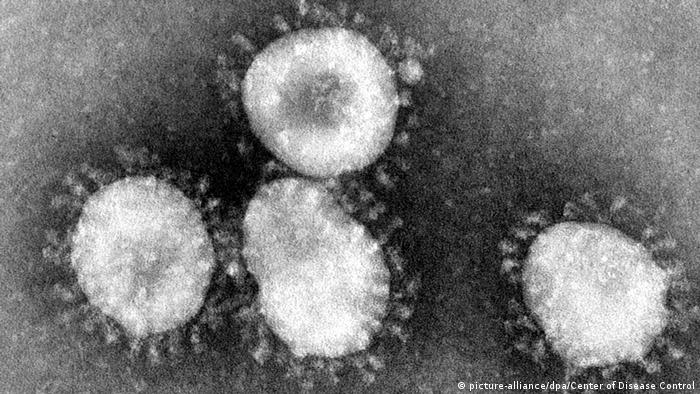
Corona Virus China (picture-alliance/dpa/Center of Disease Control)
کرونا وائرس سے چین میں اب تک 400 سے زیادہ افراد متاثر ہو چکے ہیں جب کہ نو کے قریب ہلاکتیں ہوئی ہیں۔
اسلام آباد سے تعلق رکھنے والے طبی ماہر ڈاکٹر عبید عثمانی کا کہنا ہے کہ یہ بات تشویش ناک ہے کہ وائرس کو پھیلے ہوئے کچھ دن ہو چکے ہیں اور حکومت نے اب ایئرپورٹ پر اسکرین لگائے ہیں: ''میرے خیال میں جو چینی باشندے حال ہی میں ملک میں آئے ہیں، ان کا فوراﹰ طبی معائنہ کرایا جائے۔ اس کے علاوہ ایئرپورٹ پر اسکریننگ بھی ہونی چاہیے اور میڈیکل ٹیم بھی وہاں موجود ہونی چاہیے۔ ورنہ اگر یہ وباء پھیلی تو ہمارا اللہ ہی حافظ ہے کیونکہ ہمارے ہاں صحت کا اور صفائی ستھرائی کا کوئی نظام نہیں ہے۔ ایسے وائرس کے لیے یہ صورت حال آئیڈیل ہے۔‘‘ تاہم پاکستانی حکومت طبی ماہرین کی تشویش سے متفق نہیں ہے اور اس کے خیال میں حکومت نے تمام احتیاطی تدابیر کر لی ہیں۔
کرونا وائرس کے پھیلاؤ سے بچنے کے لیے تمام اقدامات مکمل ہیں، پاکستانی حکومت
وزارت صحت کی طرف سے میڈیا کو بھیجی جانے والی ایک پریس ریلز کے مطابق حکومت نے اس وبا سے نمٹنے کے لیے خاطر خواہ اقدامات کیے ہیں۔ وزارت صحت کے ایک اعلٰی عہدیدار نے نام نہ ظاہر کرنے کی شرط پر ڈی ڈبلیو کو بتایا کہ کرونا وائرس کی اسکریننگ کے لیے حکومت نے ملک کے تمام ایئرپورٹس پر ڈیسک قائم کر دیے ہیں: ''چین سے پاکستان آنے جانے والوں کا طبی معائنہ کیا جائے گا کیونکہ چین سے پاکستان آنے جانے والے لاکھوں افراد کے ذریعے وائرس کی منتقلی کا خدشہ ہے۔ پاکستان چین کے پڑوسی ملک ہونے کی وجہ سے اس خطرے کی زد میں آسکتا ہے۔‘‘
وزارت صحت کی ایک پریس ریلیز میں اس بیماری کے حوالے سے ایسے نکات دیے گئے ہیں، جس سے طبی حکام اور عام عوام میں اس بیماری کی حوالے سے شعور بیدار ہو۔ اس اعلامیے میں اس وبا کی علامتیں، اس کی نوعیت اور اس کی منتقلی کے ممکنہ طریقے سے عام عوام اور طبی عملے کو آگاہ کیا گیا ہے۔ اس میں مزید بتا یا گیا ہے کہ ایسے افراد پر نظر رکھی جائے، جنہیں سانس لینے میں دشواری ہو، جنہیں بخار ہو اور کھانسی کی شکایت ہو اور جنہوں نے گزشتہ 15 دنوں میں چین کے متاثرہ علاقوں کا دورہ کیا ہو۔ ایسے افراد پر نظر رکھنے کا بھی کہا گیا ہے جو وائرس سے ممکنہ طور پر متاثر ہوں یا متاثرہ شخص سے کسی بھی طرح جسمانی طور پر رابطے میں آئے ہوں یا وہ متاثرہ جانوروں کے قریب رہے ہیں یا پھر سی فوڈز، گوشت یا کوئی اور اینمل پروڈکٹ کھایا ہو۔
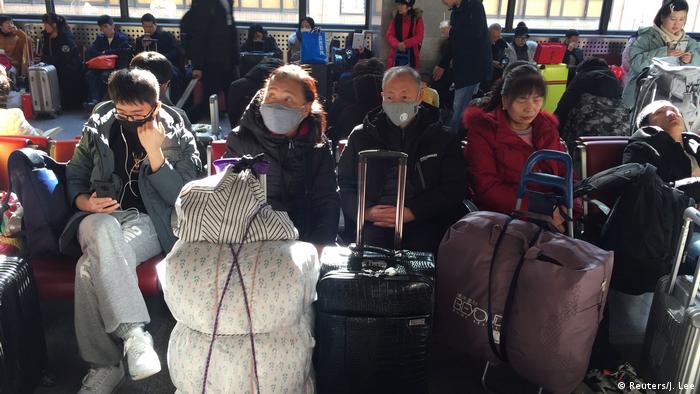
BG China Reisewelle Neujahrsfest Coronavirus
پاکستان میں ہزاروں چینی باشندے کام، کاروبار اور تعلیم کے سلسلے میں ملک میں موجود ہیں اور ان کا اپنے ملک آنا جانا بھی لگا رہتا ہے۔
پریس ریلیز میں کہا گیا ہے کہ ایسے افراد کے خون کے نمونے تربیت یافتہ اسٹاف کے ذریعے لیے جائیں اور انہیں ٹیسٹ کے لیے بھیجا جائے۔ کسی ایمرجنسی کے لئے وزارت صحت نے ٹیلی فون نمبرز بھی دیے ہیں۔
واضح رہے کہ ہزاروں کی تعداد میں چینی گلگت بلتستان کے ذریعے بھی پاکستان میں داخل ہوتے ہیں۔ جب ڈی ڈبلیو نے اس حوالے سے گلگت بلتستان کے وزیر اعلٰی کے ترجمان فیض اللہ فراق سے رابطہ کیا، تو انہوں نے بتایا، ''خنجراب کا باڈر بند ہے اور چین سے کوئی آمد و رفت نہیں ہو رہی۔ لہٰذا ہمارے علاقے میں اس وبا کے پھیلنے کا کوئی امکان نہیں۔‘‘
 چین سے پاکستان ہر ہفتے 41 فلائٹس آتی ہیں۔