Thursday, January 2, 2020

#Pakistan - A new social contract

Saleem Safi
We are told that Pakistan is facing serious threats at its eastern and western borders – and indeed it is a reality that the situation on both fronts is serious.
We are told that nuclear Pakistan is a thorn in the eyes of external powers like the US, which has joined hands with India to destabilize Pakistan. And we start believing this too.
We are told that Pakistan faces the fifth generation or hybrid war and our enemies are trying to destabilize us internally by exploiting citizens’ distrust against the state and its institutions. We accept that too.
We are also told that wars are now not only fought with weapons, but also via the economy. If Pakistan is economically weak then we would not be able to counter our enemies. For a stable and growing economy, political stability is a prerequisite. Since it is convincing logic, we buy this argument as well.
Now the question is: who is destabilizing Pakistan internally? Why are citizens distrustful and suspicious of the state and its institutions and whose behaviour causes such distrust and apprehension? Who is behind the political instability and who is causing distrust among politicians, intellectual, scholars and media persons by pushing them to the wall on account of not supporting a specific narrative?
In the past, we were told to call Wali Khan, Attaullah Mengal, GM Syed, Abdul Samad Khan Achakzai and Bhutto traitors – and we complied. We were told that the Afghan Jihad was obligatory and our duty – and we accepted it. Then we were told that the Taliban were fighting a holy war in Afghanistan for the sake of Islam and Pakistan – and we started to prove them holy warriors. Then 9/11 changed the whole scenario and we were asked to prove the Taliban as enemies of Islam and Pakistan – and we whole heartedly did that, and paid a huge cost.
We were also asked to prove Benazir Bhutto as an agent of India and Mian Nawaz Sharif as a great patriot. We did that too. Then we were told to call Zardari a thief – and we did it. Then we were directed to call Nawaz Sharif India’s friend (Modi Ka Yaar) and a thief – and we ensured we did that.
Then we were told to accept Imran Khan as our messiah – and we accepted him as that. Then we were told to call the arm-twisting of the opposition ‘accountability’ – and of course we did that.
Then we were told to do ‘positive journalism’ about the government for six months – and we did that not only for six but for fifteen months.
Despite it all, there was no positive outcome of the incumbent government; the situation further deteriorated and is getting worse with each passing day. The sinking economy is shrinking investor confidence and leading to brain drain as well as capital flight. The distrust and apprehension of the people is increasing. Huge blunders in foreign policy are being committed which have even caused cracks to appear in our ties with the few friends we had. The most alarming among all is the fact that, while earlier only common citizens felt a sense of insecurity, now that insecurity can be felt in state institutions and other segments of society as well.
The judiciary considers itself under attack. Politicians too think they are being coerced, suppressed and maligned. Similarly, the media feels itself under attack. Now we have reached a point where even state security institutions feel that they are under internal and external attacks. This shows that every institution feels threatened and every institution seems to be engaged in a war for survival.
Some institutions even consider an attack on any individual within them as an attack on the whole institution. But the story of politicians and the media is quite different. Besides external attacks, they are fighting with each other as well. The religious community is also anxious and thinks that they and their religion are under attack. The liberal and secular community too feels it is being pressurized and silenced.
The state is like a family and each and every institution and class of society is like a member of the bigger family. Ideally, an attack on one institution should be considered an attack on all institutions of the state. But the tragedy in Pakistan is that every institution is only conscious about its own position, interests and individuals. This self-obsession has brought us to the point that if one institution is under attack and is being weakened, the rest rejoice.Now, the question is: if every individual and institution of the state faces internal threats, how can we handle the external threats that Pakistan is exposed to? To counter the external threat, we must stand united internally. The only way for internal stability is a meaningful and open dialogue between all state institutions in which they may sit together, share with each other their concerns and grievances and find a way forward.Such dialogue will be helpful to figure out which institution is crossing its limits and interfering in the work of others. It will also provide an opportunity to initiate a system in which all institutions cooperate and help address each other’s shortcomings instead of exploiting each other’s weaknesses. Through open dialogue and mutual consultation, we would be able to bring a new social contract in light of the 1973 constitution.
Moreover, a Truth and Reconciliation Commission should be constituted to identify past blunders and give a future course of action. This is a now or never stage; we need a new social contract for the sake of a stable and prosperous Pakistan. If we fail this time, we can easily face a Rwanda-like situation.
https://www.thenews.com.pk/print/592060-a-new-social-contract

#Pakistan - Rape in Mansehra seminary

Within two weeks of an anti-terrorism court pronouncing the death sentence on three counts to the rapist and killer of the Chunian children, another horrific incident of child rape has surfaced in Mansehra, where the police have sealed a seminary in Thakra Parhana area and arrested four people. Of them, the main accused, stated to be a seminary teacher, is at large. The victim, an eight-year-old boy, is fighting for his life in Ayub Medical Complex in Abbotabad. The gory details of the rape have triggered a wave of shock and anger among the people, especially the parents of small children, across the country. 

The Mansehra incident points to the prevalence of heinous crimes against minor children. Despite handing down death sentences to the convict of first Zainab Ansari case, and now the Chunian case, there has been no letup in such crimes against children. After the massive coverage of such incidents, parents stop children from playing on streets. Recently, the Peshawar police took a measure to make the credentials of convicts of sex crimes public so they remain socially isolated once out of jail. The police were forced to take the step after a hike in crime against children across the province. In many cases, pedophiles were rearrested and convicted within months of their release. The Chunian case convict was first arrested and convicted of child molestation back in 2011.

https://dailytimes.com.pk/529371/rape-in-mansehra-seminary/

Wednesday, January 1, 2020

Music Video - Taylor Swift - You Need To Calm Down

Video Report - #vladimirputin #borisyeltsin #putinanniversary Russian President Vladimir Putin marks two decades in power

Video Report - Tragic fire at German zoo ape house kills dozens of animals | DW News

Video Report - 2019 in Africa: pro-democracy uprisings, regime change and terrorism in the Sahel

Video Report - Is Iraq becoming a battleground between Washington and Tehran? | Inside Story

Military is tightening its grip in Pakistan


G Parthasarathy

In Prime Minister Imran Khan’s government, army presence has extended beyond internal affairs to diplomacy and even the economy.

Many Pakistanis believed that cricketing icon-turned-politician Imran Khan would lead his country to new heights, much as he had led Pakistan to an unexpected win in the 1992 Cricket World Cup. Alas, to their disappointment, all that Imran Khan has succeeded in doing is leading his country to economic stagnation and greater political uncertainty.
Whatever pretensions and illusions Pakistan had of being a successful parliamentary democracy are now receding. Within two years of becoming Prime Minister, Imran’s bungling has led to a virtual military takeover of not just the country’s politics, but also its economy, and what little remained of its judiciary independence.
Well-known Sweden-based Pakistani academic Ishtiaq Ahmed described Pakistan as a “Garrison State,” in a book he authored about his country of birth nearly a decade ago. Ahmed declared that since 1958, “the Pakistan army continued to grow in power and influence and progressively became the most powerful institution. Moreover, it became an institution with de facto veto powers at its disposal, to overrule other actors within society, including elected governments. Simultaneously, it began to acquire foreign patrons and donors willing to arm it as part of the Cold War competition (the US), regional balance of power concerns (China) and ideological contestants for leadership over the Muslim world (Saudi Arabia, to contain Iranian influence)”.
Ahmed avers that over time, “Pakistan succumbed to extremism and terrorism within and was accused of being involved in similar activities within the South Asian region and beyond. Such developments have been ruinous to Pakistan’s economic and democratic development”.

Military politics

Nothing frightens Pakistani politicians more than prospects of a military coup, as this almost inevitably leads political leaders to arrest and eventual exile. Nawaz Sharif has faced this treatment twice, as have Benazir Bhutto and Asif Zardari. Even politicians who built their own political base nationally have been vulnerable to threats from the army, forcing them to leave the country — Imran Khan never had a national political following.
Former ISI Chief Lieutenant General Hamid Gul was one of the Founding Fathers of his Tehriq-e-Insaf party, which has long been regarded as the “B Team” of the army. The army is known to have backed large-scale demonstrations by the Tehriq-e-Insaf. The army has also played a key role in shaping political alliances to destabilise governments that become assertive. It is no secret that Imran Khan’s assumption of office as Prime Minister was engineered by the army.
The army in Pakistan plays a domineering role in the conduct of foreign and security policies, particularly on relations with India, the US, China, Russia and important Islamic countries such as Saudi Arabia and Iran. Nawaz Sharif faced huge pressure from his army chief Raheel Sharif to not attend the inaugural ceremony of Narendra Modi as Prime Minister.
The ISI, functioning under the army chief, has an exclusive role in covert operations and — allegedly — backing terrorist groups in India and Afghanistan. But this role was substantially enhanced when Qamar Javed Bajwa was hand-picked by Sharif to assume office as army chief. Bajwa himself faced pressures from his colleagues, evidently encouraged by his predecessor, who quietly had him labelled as an apostate “Qadiani” when he was being considered for the top job.

Expanding reach

Not satisfied with their background role, General Bajwa and his ISI chief Faiz Hameed accompanied Imran Khan when he met US President Donald Trump in Washington. This was the first time that the army bosses were present in a White House meeting. Even before this meeting, Bajwa put his personal stamp on relations with China and Iran.
But, it is really in Kartarpur that Bajwa publicly put his stamp on his role in shaping relations with India, ostentatiously fraternising with Punjab minister, the loquacious Navjot Singh Sidhu, together with well-known Pakistani advocates of “Khalistan,” who were present. The ISI desire to create a Hindu-Sikh divide, using the services of Sikh communities in the UK and Canada, is evident.
Going beyond his role in internal politics and foreign policy, Bajwa has used an ever-obliging Imran Khan to enter the realm of economic policymaking, by getting himself appointed to the newly established ‘National Development Council’, Pakistan’s apex economic policymaking body. He thereby clearly signalled the army’s dissatisfaction with economic policymaking, to civilians. Pakistani businessmen and financial ministries have another extra-constitutional body, the country’s army, to which they are now answerable.
All this is happening with the economy still in the doldrums. While the economy has been bailed out in 2019 by augmented financial aid from China, Saudi Arabia and the UAE, economic growth is down to 3.3 per cent — a fall of 40 per cent from the growth rate the previous year. This has been accompanied by similar rise in the fiscal deficit, with inflation soaring by the highest amount in the past five years. All this is happening amidst severe belt-tightening on welfare measures, necessitated by IMF demands.

Diplomatic ties

Pakistan is finding that despite embarking on a diplomatic overkill, it has failed to get the international community to back it in any significant measure on its territorial ambitions on Jammu and Kashmir, despite some sustained Chinese backing in the UN Security Council and other forums. Imran Khan seems to have gone on an ill-advised and counterproductive diplomatic overkill on Jammu and Kashmir, even amongst fellow Islamic countries.
Ignoring the vicious rivalries between major Islamic powers with Saudi Arabia, the UAE and Egypt on one side and Turkey, Iran, Qatar and Malaysia — led by the ageing Mahathir — on the other, Imran chose to join the hare-brained scheme by Mahathir to set up a new Islamic grouping to address problems of the Islamic world.
The Saudis, quite evidently with American backing, read out the riot act to Imran who, at the last minute, backed out of the Summit meeting earning the wrath of other participants. Despite Pakistan’s much touted “Islamic Bomb”, Imran learnt that it is money that matters in the real world.
India has played its cards well by its moves to promote energy security and cooperation with its western oil rich neighbours across the Indian Ocean. But, India’s own standing will depend substantially on its ability to maintain communal harmony and accelerate economic growth.


India and Pakistan Are Edging Closer to War in 2020

BY 

Two crises dominated South Asia in 2019, and each one stands to get worse.


The two nuclear-armed nations will enter 2020 just one big trigger event away from war. The trigger could be another mass-casualty attack on Indian security forces in Kashmir traced back to a Pakistan-based group, or—acting on the threats issued repeatedly by New Delhi in 2019—an Indian preemptive operation to seize territory in Pakistan-administered Kashmir.

Turmoil is never far away in South Asia, between disputed borders, acute resource shortages, and threats ranging from extremist violence to earthquakes. But in 2019, two crises stood out: an intensifying war in Afghanistan and deep tensions between India and Pakistan. And as serious as both were in 2019, expect them to get even worse in the coming year.
Afghanistan has already seen several grim milestones in the last 12 months that attested to the ferocity of the Taliban insurgency. Casualty figures for Afghan security forces and civilians set new records. It was also the deadliest year for U.S. forces since 2014.
Ironically, violence soared even as there was unprecedented momentum toward launching a peace process. U.S. President Donald Trump, eager to exit Afghanistan, stepped up efforts to secure a deal with the Taliban that would give him the political cover for a troop withdrawal. U.S. negotiators and senior Taliban representatives held multiple rounds of talks, and by September the two sides were finalizing a deal that centered on a withdrawal of U.S. troops coupled with a commitment by the Taliban to renounce ties to international terror groups.

However, in September, Trump abruptly called off talks, giving a recent Taliban attack on a U.S. soldier as the reason. The likelier explanation, as I wrote for Foreign Policy back then, was the administration’s recognition that the emerging accord with the Taliban—which didn’t call for any type of cease-fire—was a lousy deal for Washington and Kabul.

The suspension of talks didn’t last long. Trump announced plans to scale up offensives against the Taliban, but this was more of a bargaining tactic than a battlefield redirection. Washington wanted to increase military pressure on the Taliban so that the insurgents would make more concessions at the negotiating table—such as the cease-fire they had refused to agree to earlier. Indeed, several days after Trump made a surprise Thanksgiving visit to Afghanistan, talks resumed—and this time with U.S. negotiators aiming to get a Taliban commitment to reduce violence against U.S. troops.During the last few days of December, media reports revealed that the Taliban had agreed to a temporary ceasefire to clear the way for a deal with the United States. The Taliban, however, rejected these reports.

Meanwhile, 2019 was a dangerously tense year for India and Pakistan—two rivals that are both neighbors and nuclear states. In February, a young Kashmiri man in the town of Pulwama staged a suicide bombing that killed more than three dozen Indian security forces—the deadliest such attack in Kashmir in three decades. Jaish-e-Mohammad—a Pakistan-based terror group with close ties to Pakistan’s security establishment—claimed responsibility. India retaliated by sending jets across Pakistan-administered Kashmir and launching limited strikes, for the first time since a war in 1971. Soon thereafter, Pakistan claimed it had carried out six air strikes in Kashmir to showcase its might, and it also shot down an Indian fighter jet and captured the pilot. The confrontation, which de-escalated when Islamabad announced the pilot’s release several days later, represented the most serious exchange of hostilities in years.

Then, in August, India revoked the autonomy of Jammu and Kashmir, the India-administered part of Kashmir, and declared it a new territory of India. New Delhi also imposed a security lockdown in Kashmir that included the detention of hundreds of people and a communication blackout. For Islamabad, which claims Jammu and Kashmir as its own, the move amounted to a serious provocation, if not a hostile act. Pakistan retaliated by expelling India’s envoy from Islamabad and suspending trade with New Delhi. Undaunted, in the weeks that followed, senior Indian officials—including the defense and foreign ministers—turned their attention to Pakistan-administered Kashmir, which New Delhi has long claimed, and suggested they eventually planned to reclaim it. 

Bilateral relations remained fraught over the last few months of the year. Islamabad issued constant broadsides against New Delhi for its continued security lockdown in Kashmir. By year’s end, an internet blackout was still in effect. Then, in December, India’s parliament passed a controversial new citizenship law that affords fast-track paths to Indian citizenship for religious minorities—but not Muslims—fleeing persecution in Afghanistan, Bangladesh, and Pakistan. The new law angered Islamabad not just for excluding Muslims, but because of the implication—accurate but not something Islamabad likes to admit—that Pakistan persecutes its Hindu and Christian communities.

These prolonged tensions often overshadowed what was arguably the biggest story in both countries in 2019: economic struggle. India suffered its biggest economic slowdown in six years, and Pakistan confronted a serious debt crisis. The two weren’t unconnected: Given the inability of New Delhi and Islamabad to fix their economies, both governments arguably sought political advantages from the distractions of saber rattling.

Against this tense backdrop, the opening in November of a new border corridor that enables Indian Sikhs to enter Pakistan visa-free to worship at a holy shrine, which in better times could have been a bridge to an improved relationship, amounted to little more than a one-off humanitarian gesture.
Bad as these crises are, they are poised to get worse next year.

The good news for Americans is that a U.S.-Taliban deal likely isn’t far off; both sides are fully invested in a troop withdrawal. For Trump, the importance of troop departures will grow as the U.S. presidential election draws closer, and especially because the Washington Post’s release in December of the “Afghanistan Papers”—documents that feature senior U.S. officials admitting failure in the war—will likely solidify U.S. public opinion in favor of winding down America’s role in the 18-year war.  
However, any U.S.-Taliban deal will do little to reduce violence, other than halting attacks on U.S. troops. In other words, the war will continue. 

A U.S.-Taliban accord would clear the path for an intra-Afghan dialogue between the Afghan government, other political stakeholders, and the Taliban that aims to produce a cease-fire and an eventual political settlement that ends the war.

The path to intra-Afghan dialogue, however, is fraught with obstacles. Afghanistan held a presidential election in September. The preliminary results—released in December—showed President Ashraf Ghani in the lead, but with barely the 50 percent of votes needed to avoid a second round of voting with the second-place finisher, his bitter rival Abdullah Abdullah (who rejected the results). The close margin suggests that when final results are announced, the loser won’t accept them. 
This means Afghanistan is unlikely to have a new government in place for at least another few months, and even longer if the final results are different from the initial ones and require a second vote. Due to winter weather in Afghanistan, a runoff likely wouldn’t occur until the spring. Without a new government in place, it beggars belief that Afghanistan could launch a process to establish an intra-Afghan dialogue, much less negotiate an end to the war. And even if and when an intra-Afghan dialogue is launched, the hardest of sells will be required to convince the Taliban to lay down arms and agree to share power within a political system that it has long rejected and vowed to overthrow by force.

Consequently, Afghanistan in 2020 is likely to see a withdrawal of U.S. forces before a peace agreement is in place—a demoralizing outcome for already struggling Afghan forces that would deliver another boost to the Taliban and further increase violence.

Meanwhile, the underlying tensions between India and Pakistan remain sharp. 

Pakistan arrested dozens of Islamist militants this past year, but New Delhi wasn’t convinced Islamabad was taking strong and “irreversible” steps against India-focused terrorists and their networks. And New Delhi’s actions in Kashmir in 2019 represented worst-case scenarios for Islamabad. 

The two nuclear-armed nations will enter 2020 just one big trigger event away from war. The trigger could be another mass-casualty attack on Indian security forces in Kashmir traced back to a Pakistan-based group, or—acting on the threats issued repeatedly by New Delhi in 2019—an Indian preemptive operation to seize territory in Pakistan-administered Kashmir. 

In either scenario, escalation would be swift. Bilateral relations are much worse than they were during last February’s confrontation. Ever since its resounding reelection victory last spring, India’s ruling party has pursued its Hindu nationalist agenda in increasingly aggressive fashion—which gives it no incentive to go easy on Islamabad. Pakistan, not wanting to show weakness, will not give in easily. 
The doomsday clock for the next India-Pakistan war is at a minute to midnight. Diplomatic intervention from Washington and other third parties, and cooler heads on both sides, may keep it from ticking further forward. But it’s hard to see a path to unraveling such tightly knotted tensions—or to solving Afghanistan’s unending conflict.

#Pakistan - 'Is NAB law only there for politicians?' asks Raza Rabbani during Senate session

The first Senate session of the year, convened by the government on a 24-hour notice, took place on Wednesday. A regular session of the Senate was last held from Aug 29 to Sept 3.
Former Senate chairman Raza Rabbani while addressing the house raised questions on the amendments proposed by the government to the country's accountability law.

He said the government through the amendments had exempted businessmen, bureaucrats, judges and the military from being proceeded against under the law. "Who is then left? Only you and I are left," he said, addressing the Senate chairman.
"Is the NAB law only there for politicians?" he asked, suggesting that the parliament should be allowed to "try the parliamentarians".
Otherwise, he said, if the government really wanted to conduct accountability, then "the only path to meaningful accountability is one law, one bureau [and] across-the-board accountability".
Rabbani said there should be "no holy cows" under a fair accountability law which according to him should apply to the judiciary and military as well as the bureaucracy.
He said the government was not following the Constitution and its actions have rendered the parliament ineffective.
Speaking about the issue of extension in the service of Army Chief Gen Qamar Javed Bajwa, which underwent strict scrutiny in the Supreme Court in November, Rabbani said the PTI government due to its "incapability and incapacity" had landed a national institution (army) into an "embarrassing position".
"What kind of a government is this which cannot issue three or four notifications?" he said, urging the government to let the parliament and the Senate play their constitutional roles.
'Senate kept in the dark'
At the outset of the session, Leader of the Opposition in the Senate Raja Zafarul Haq regretted that the government had called the Senate session only after the opposition submitted a requisition.He said the upper house had been "kept in the dark" regarding the promulgation of the NAB ordinance. He alleged that the accountability process is being carried out in a "unilateral, oppressive and illegal manner" in the country.Haq said the opposition had submitted the agenda for the Senate session but a "negative mindset" prevented it from being included in the scheduled of proceedings.PPP Senator Sherry Rehman said they had found out through newspapers that a Senate session had been called for today. She said some members were unable to attend because of the prevailing smog.
She said ministers were not present in the house even though the session had been called after such a long gap. In addition, questions and answers were not made part of the agenda "which means that the government was not prepared", she alleged.
Rehman lambasted the government for promulgating 25 presidential ordinances last year, saying: "The parliament cannot be run from Bani Gala or Aiwan-e-Sadr."
She said the government had failed to issue a proper notification regarding the army chief's tenure extension and has now filed a review petition against the Supreme Court judgement on the issue. "What does the government going into review indicate?" she asked. The PPP leader also criticised the government for "doing nothing but giving a speech" regarding the issue of occupied Kashmir. She questioned why the foreign minister was not coming to the parliament to brief the lawmakers on the latest situation in the region.
JUI-F senator criticises ISPR over Musharraf statement
Jamiat Ulema-Islam (Fazl) Senator Abdul Ghafoor Haideri while addressing the upper house expressed concerns over the statement issued by the military's media wing on the verdict announced in the high treason case against former military ruler retired Gen Pervez Musharraf.
He said the debate on the verdict against Musharraf should have taken place in the parliament, and added that the statement given by the director general of the Inter-Services Public Relations regarding the judgement had sparked "an exchange of statements".
The JUI-F lawmaker said the matter of Gen Bajwa's service extension should also have been discussed in the parliament. Because that was not done, the country had to "face embarrassment", he added.

https://www.dawn.com/news/1525652/is-nab-law-only-there-for-politicians-asks-raza-rabbani-during-senate-session

#Pakistan - #NAB’s initial inquiry into #PTI’s ‘tree tsunami’ project finds losses of Rs462m

Accountability watchdog recommends six more investigations into ruling party’s flagship project.
The Pakistan Tehreek-e-Insaf’s flagship Billion Tree Tsunami Project has reportedly caused a loss of over Rs462 million to the public exchequer, according to an initial inquiry conducted by the National Accountability Bureau (NAB).
On March 26, 2019, NAB Chairman Justice (r) Javed Iqbal had authorised the inquiry into the Billion Tree Tsunami Project.
According to a media report on Wednesday, the NAB Peshawar office has recommended upgrading the inquiry along with authorisation for separate investigations and six inquiries to unearth the mega scam in KP.
The report claimed that NAB officials had checked only 10 to 20 per cent of only one region out of three regions during which it had detected the loss of Rs462m so far.
In 2014, the Khyber Pakhtunkhwa government had started the Rs14.32 billion tree plantation project.
According to the report, 24 different complaints were received by the Peshawar bureau regarding ghost payments, nepotism and favouritism in selection of nurseries. Overlapping of plantation of the other project was also pointed out by the complainants. Some of the complaints were regarding payments made for plants different from the actually purchased ones, it added.
Allegations of ghost labour, misappropriation and embezzlement of daily wages, enclosures failure and payments against ghost plantations were also received.
A NAB report further disclosed that a loss of Rs80.044m had been detected in Dera Ismail Khan due to a shortfall in the hectare-wise plantation area.
Embezzlement of plants in farm forestry/free distribution in KP worth Rs359.01m has been found during the inquiry. Furthermore, embezzlement on account of sowing/dibbling of seeds and salaries paid to nighebans (caretakers) of enclosures in Dera Ismail Khan amount to Rs10.62m. Embezzlement of Rs2.5m was found in 411,000 saplings received from other divisions in Bannu. A watchtower was constructed in Dera Ismail Khan without any PC 1 resulting in irregularities of Rs10m.
According to the report, NAB Peshawar has recommended four investigations against the Divisional Forest Officer and other officials regarding misuse of authority, embezzlement, corruption and corrupt practices and execution of BTAP against Divisional Forest Officer of Dera Ismail Khan along with region 1, 2, 3 i.e. Hazara and Swat.
Furthermore, six additional inquiries were also recommended against the officers and officials of the KP forest department and others regarding embezzlement, misappropriation, corruption, and corrupt practices in procurement of seeds, polythene bags, machinery, vehicles and office equipment in forest region 1, 2,3.
https://www.pakistantoday.com.pk/2020/01/01/initial-nab-inquiry-into-ptis-tree-tsunami-project-finds-rs462m-corruption/

- #HappyNewYear2020 - Bilawal Bhutto Zardari greets nation on New Year

 Pakistan People’s Party (PPP) Chairman, Bilawal Bhutto Zardari wished the nation ‘Happy New Year’ on the arrival of 2020.
In a message issued here today, the PPP Chairman hoped that the new year will herald an era of progress and prosperity for the people of Pakistan.
Bilawal Bhutto Zardari further said that the country’s unanimously-agreed constitution is a force that continues to keep the federation and its units together.
He linked the country’s bright future to strict compliance with the provisions of the Constitution.

Tuesday, December 31, 2019

Music Video - Madonna - Papa Don't Preach

Music Video - Wham! - Everything She Wants

Music Video - Bruce Springsteen - Dancing In the Dark

Music Video - Rasputin - Boney M

Music Video - Michael Jackson - Beat It

Music Video - #DamienEscobar Damien Escobar - Awaken | Dani Grigu

Music Video - Sasha Dith -

Music Video - Wael Kfoury - Enta Habibi - Isabella Arabic Belly Dance - وائل كفوري - انت حبيبي

Music Video - Belly Dance

Music Video - Ileana D'Cruz belly hot New Year dance ! mere raske kamar - #Welcome2020

Video - New Year's 2020: North Korea puts on elaborate show in Pyongyang |

Video - Angela Merkel's New Year's address: 'The 2020's can be good years' | DW News

Video Report - Chinese President Xi Jinping delivers 2020 New Year speech

Video Report - Putin's New Year Address #2020

Video - #HappyNewYear2020 #NewYearFireworksRussia #VladimirPutin Russia welcomes in 2020 with Putin's speech and fireworks

Ghazal - Abi Tu Main Jawan - Malika Pukhraj and Tahira Syed

Pashto Music Video - speeni spoogmai wa ya Ashna ba charta we na

Music Video - Googoosh - Man Amadeam گوگوش - من آمدم

Music Video - Alireza Ghaderi - Golpari joon

Nashenas _ Za Kho Sharabi yom. زخوشرابی.یم.شیخه

Pashto Music - Sardar Ali Takkar - Saqi Charta Kasa Nema Sharab, Poet Ajmal Khattak

#happynewyear2020 #2020NewYear #Welcome2020 #PPP - Dilan Teer Bijan

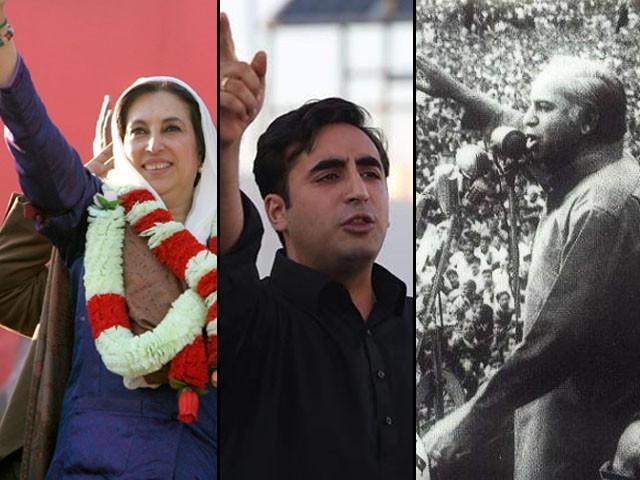
#Pakistan - #PPP; From Bhutto to Bilawal Bhutto


Khalid Mahmood Rasool


The journey of democracy in Pakistan has never been smooth. Turmoil and tremors have been the hallmark of Pakistani politics causing ripples of uncertainty, fear of political extinction and a continued fight for an uninterrupted democratic process. Few political parties could hold substantial ground to stay relevant in all seasons of politics like Peoples Party of Pakistan (PPP) which proved probably the most resilient one in the country’s political arena. As PPP is undergoing a transition to pass the reigns of its leadership to 3rd generation while struggling to redefine its relevance to national politics, the country’s own power dynamics are passing through a paradigm shift as well.
It was December 27th in the year 2007 that Benazir Bhutto fell victim to the brutal terror attack at Liaqat Bagh, Rawalpindi. After eight years in exile, raising three children in hard and harsh exiled life and fighting for her political comeback, Benazir Bhutto finally managed to return to Pakistan to lead her party in the forthcoming election. Her charisma rekindled her party’s hopes to turn the tides with a more matured and energetic persona of iconic Benazir Bhutto. But, sadly nature had different plans for her.
The ghost of Liaqat Bagh struck again; she fell to the same fate as of Liaqat Ali Khan. Benazir Bhutto met with the same fate; lost her life but the mystery of her assassination still shrouds till to date. With the demise of Benazir Bhutto ended the exclusive bloodline legacy of Bhutto family. Pakistan People’s Party was up for a new transition; a paradigm shift occurred in leadership and its outfit.
Zulifqar Ali Bhutto has left behind a legacy that has inspired his followers until today. He happened to be one of the most brilliant politicians of our time. He was equally most admired by many and most contentious for the rest of the people. His legacy of raising the common man issues as main political agenda; Roti, Kapra Aur Makan connected with millions of peasants and laborers who were hardly heard in electoral politics. Despite being one of the most divisive politicians and his tragic departure from the scene through judicial but contentious verdict, his pro-poor legacy has survived.
Benazir Bhutto emerged as political successor of her father. Repressive regime of Zia and all out efforts to marginalize the party had a severe toll on party’s ranks and cadres. She along with Nusrat Bhutto, her mother, withstood those harsh days. She picked up the piece of the party on her return to the country in 1986. She managed two stints as prime Minister but had all along to fight with so many abrasive and restraining forces leading to her dismissal twice. Her leadership style aside, the public goods delivery of her both tenures were marred by allegations of financial mismanagement and corruption. But all said done, she stood out as an outstanding successor of her father and had many admirers around the world for being first woman Prime Minister in Muslim world, well-educated and enlightened leader in a male dominated society and polity.
After her assassination, her children adopted the family name as Zardari Bhutto; announced by Asif Ali Zardari soon after the taking the reins of the party. The last and complete tenure of PPP in power is fresh in most the memories. The tenure was tainted by poor governance and allegations of corruption to that extent that party succumbed to losses in all provinces except in Sindh.
PPP is now in ruling Sindh uninterrupted since over 12 years. Still its politics draws more strength from its martyrs and less from its governance. Lately, removal of hundreds of thousands of recipients from Benazir Income Support fund for illegally extracting the benefits speaks volumes about a style of politics which largely is based on cronyism and buying loyalties at cost state coffers. Fake accounts saga has also exposed the web of cronies and plundering public sources.
Bilawal Bhutto Zardari in now the new face the party; addressing a death anniversary rally at the same place where her mother lost her life twelve years ago. Since then, the world has changed a lot in Pakistan and around the world too . Political dynasties in South Asia have been fighting hard to reclaim lost glories of the past but many have ended in the wilderness of obscurity. Bilawal Bhutto Zardari is at a historic juncture of family dynasty; which way he wants to move on would define his place in country’s politics. He would follow the tradition of clinging to sympathies attached with martyrs or carve out world of his own capable to deliver in a complex and changed world; the time would decide.

Bilawal wants 'farcical' NAB abolished as govt defends newly passed ordinance

Pakistan Peoples Party Chairperson Bilawal Bhutto Zardari on Sunday said that the recent promulgation of the National Accountability Bureau (NAB) Ordinance, 2019 was a tacit admission by the government that the corruption watchdog "is a farce" and should be "abolished".
Bilawal, in a tweet today, claimed that the ordinance was “proof that it agrees with President Zardari” that “NAB and the economy cannot run together”.

“Instead of clearly biased efforts, the government should work with opposition,” said the PPP chairperson, advising the government to do its "job and legislate".
The federal cabinet on Friday gave its approval to the NAB Ordinance, 2019, which was also approved by President Arif Alvi on the same day.
Under the ordinance, NAB will no longer be allowed to take action against government employees.
The proposed ordinance also states that the property of government employees cannot be frozen without a court order. Furthermore, if the accountability watchdog cannot complete an investigation against a suspect within three months, the accused will be entitled to bail.
In addition, NAB will now only be able to pursue corruption cases of Rs500 million and more.
Moreover, according to the new ordinance, NAB's jurisdiction over matters relating to tax, stock exchange, and IPOs has been curtailed. 
The Federal Bureau of Investigation, Securities and Exchange Commission of Pakistan and building control authorities will be the sole authorities tasked to act on all such matters.

Pakistan just sentenced a Fulbright scholar to death on a fabricated blasphemy charge

By Eugene Chudnovsky

On Dec. 21, a Pakistani court sentenced the 33-year-old writer Junaid Hafeez to death on a fabricated charge of insulting the Holy Prophet. Earlier this year, Vice President Mike Pence, speaking at the Annual Ministerial to Advance Religious Freedom in Washington, denounced the prosecution of Hafeez on unsubstantiated blasphemy charges.
This case is a grave threat to academic freedom — Hafeez is a scholar with a long record of academic accomplishment.
In 2009, Hafeez was awarded a Fulbright scholarship to study literature and theater in the United States, where he obtained a master’s degree. He returned to Bahauddin Zakariya University in Pakistan as a lecturer in 2011. Apart from teaching, he worked on English translations of Urdu documents, directed and acted in a few plays, and even appeared on television.
By 2013, Hafeez’s talents made him a leading contender for a permanent faculty position advertised by the English department. This was when his troubles started. His hiring was strongly opposed by an Islamist group that accused him of expressing liberal views on social media. The group initially sought to sabotage his candidacy in favor of Islamist candidates. When this failed, they accused Hafeez of blasphemy.
Such accusations, frequently used to settle disputes in Pakistan, have dire consequences.
Before 1980, blasphemy was punished by fines or, in extreme cases, by a few years in jail. Articles of the penal code that punish blasphemy by death were introduced between 1980 and 1986 by the Islamist ruler of Pakistan, General Muhammad Zia-ul-Haq. They were praised by religious fanatics who often kill people accused of blasphemy inside prisons, on the way to trials, or even after acquittal.
In March 2013, Hafeez was arrested for supposedly violating a section of the Pakistan Penal Code criminalizing derogatory remarks about the Holy Prophet. His first lawyer abandoned him after receiving death threats. For a few months, nobody dared to take the case until Rashid Rehman, a lawyer with the Human Rights Commission of Pakistan, agreed to defend Hafeez.
At the hearing held in April 2014, the prosecutor threatened Hafeez’s lawyer in front of the presiding judge. Rehman was told that he might not be around to participate in the next hearing. One month later, he was assassinated in his office by two armed men who were never found. Meanwhile, Hafeez was attacked by other prisoners and placed in solitary confinement, where he spent five and a half years before trial.
The loss of the second lawyer delayed the court proceedings. The case was transferred from one judge to another. Eight judges total were involved.
Additionally, the blasphemy charges against Hafeez led to his family being ostracized. His father lost his business, and the never-ending imprisonment of his eldest son took a hard toll on him. In 2017, he suffered a heart attack. After years in solitary confinement, Hafeez’s health deteriorated too.
Human rights organizations throughout the world demanded Hafeez’s release. After the news broke that the trial was near, hope grew that Hafeez would be acquitted. The brutality of the sentence delivered to a young Pakistani writer by the court in Multan came as a grim surprise to almost everybody.
Government lawyer Airaz Ali called it a “victory of truthfulness and righteousness.” Even more shocking was the jubilant reaction to the court’s decision by members of the government's prosecution team, who chanted “Allahu akbar” and distributed sweets to celebrate the sentence.
This is the same Pakistani government responsible for roughly 150 nuclear warheads. Their lack of respect for free speech poses a grave threat not just to dissidents in their country but to global peace and human rights.