Monday, December 30, 2019

A Case of Fragile Egos: the PIC violence and Pakistani mentality


Raja Muhammad Ali
A friend of mine used to say "In Pakistan the phrase 'do you know who I am?' should be read as 'do you know who I think I am?'"
Falsehood has crept so deeply into our society that we can't even stop lying to ourselves. The lie of who we think we are gets so distorted with time that even we lose track of who we actually are.
The false persona that we create about ourselves is necessary in a society where one constantly has to oversell one's self to stay relevant. A society which focuses on optics more than substance; a society in which appearing a certain way is more important than being that way. But all these fake facades leave our egos extremely vulnerable. The persona that we create needs to be kept in extensive care -- even a slight whiff of truth can be fatal for who we think we are, and we don't want to know that we are not what we think we are.
I see that all around me irrespective of profession, age, colour, gender and background. The fierce protection of our alter-egos. I see it on roads when our alter-ego of Micheal Schumacher refuses to accept that someone can overtake us. I see it in offices when perfectly nice people conspire against their colleagues to somehow protect their own alter ego of 'best worker'. I see it in colleges when an argument turns into a physical altercation because the alter-ego of Aristotle couldn't tolerate being outwitted. I can see it in the broken arms of underage domestic help, who inadvertently made the alter-ego of Raja Inder question the validity of their arrogance.
But what happened yesterday at the Punjab Institute of Cardiology should be a wake up call for all of us. We all saw the overwhelming power of the death of the collective alter-ego of lawyers. Don't get me wrong. Some of the best people I know are lawyers, some of my best friends are lawyers. I am talking about the fake persona that the black coat has come to represent now. The persona which forces a perfectly nice person to not wear a seat belt and refuse to accept a challan because of who he is made to think he is once he is in that black coat. The alter-ego of Goliath, which couldn't sustain a slight from the video of an unknown young doctor addressing his colleagues. Defending the fake persona became so important that the human inside forgot that it was human to begin with. The black coat successfully killed the last strain of humanity in those donning it, to attack and fiercely protect the alter ego. We didn't comprehend the full horrors of collective fragile egos being challenged when they burned Joseph Colony, maybe because it was away from cameras, or maybe because the victims were not worthy of our empathy. But this time we felt the pain differently. This death of ego resulted in a blazing asteroid that hit too close to home.
Sadly, even this debacle couldn't change our mentality of "us and them". We still think we can get away by blaming a profession, by discussing the symptoms and ignoring the real issue, and accepting that we are all a hostage to the alternate reality we have created on the shifting sands of lies.
It's high time that as a society we start looking inward and break free of the toxic effects of striving to appear pious rather than being pious.
Let's all take a lesson from this and never forget who we really are, not let our alter-egos command us. For when it's challenged, the lies won't defend it, and it will require the sacrifice of our humanity to protect itself. We are the first victim, so let's be kind to ourselves and let's be honest. Stop judging someone who sins differently, stop forcing people to adopt fake personas to be invited to dinner. Stop telling yourself and others around you that they have to be a fake persona to be even accepted by the society. Stop being the log from the phrase: "log kia kahen gai?"
Let's build up our egos on solid foundations, on our traits -- not on the traits we think we have because we are made to believe we need to have them to be "accepted". Trust me when the foundation of your ego is strong, it won't need such inhumane acts to protect itself. The ego will be protected by the virtue of truth, not by the virtue of violence. Being rejected by a girl won't shatter our alter-ego of Sharukh Khan and turn us into acid-throwing lunatics to teach a lesson. Being fired from a job won't send us into the depths of depression and anxiety. Being slighted by an act of road rage won't turn us into street fighters. Let's build our egos and truth and let's release ourselves from the prison of fake personas we all live in as a society.
So next time you find yourself asking "do you know who I think I am?" Stop and check whether you are being a victim of your own alter-ego. Let's all start trying to escape this trap of thinking as we step into a new decade.

In Pakistan, polio makes a comeback amid vaccine boycotts

By


Political transition and mass misinformation campaigns have contributed to growing polio rates.
Ali Zai, Pakistan - Clad in a colourful floral shalwar kameez, her head draped in a brown shawl against the winter chill, Kainat Mohmand goes door to door to make sure no child in this northern Pakistani village is left behind.
"If we are nice and well-mannered, then the people are convinced and they accept us," says the 19-year-old polio vaccinator in the village of Ali Zai, about 10km south of Peshawar, the capital of Khyber Pakhtunkhwa province.
"But this area is very dangerous," she adds, quickly.
In April, that danger crystallised. After a false rumour spread during a polio vaccination campaign that the drops were making children sick, hundreds of parents rushed their children to hospital, while thousands across the province refused to take part in the campaign at all.
In Ali Zai, dozens formed an angry mob that attacked a local government hospital, tearing down walls and, later, burning it to the ground. The violence led to the vaccination campaign being suspended across the province, an epicentre of polio infection in Pakistan.
The incident here was illustrative of Pakistan's struggle to contain the spread of polio in 2019, with cases rising to a five-year high amid suspicions of the vaccine and, officials say, a new trend: that of parents deprioritising polio vaccination due to the myriad other dangers to their lives that are of more immediate concern.
Political transition
Since 1988, worldwide cases of poliomyelitis have dropped by 99 percent, from more than 350,000 to just 33 cases in 2018, according to the World Health Organization (WHO). The near-eradication of the disease has been the result of a sustained campaign of oral and injected vaccines targeting children under five, who are at risk of contracting the debilitating, highly infectious disease that can lead to paralysis and death.
Today, polio remains endemic in just three countries: Pakistan, Afghanistan and Nigeria (which has not reported a case in three years). This year, however, has seen the disease bounce back, with at least 125 cases reported, according to the Global Polio Eradication Initiative (GPEI). The vast majority - 111 cases - have been reported from Pakistan, mostly in its northwestern Khyber Pakhtunkhwa province, according to government data.
So what has gone wrong for Pakistan's polio programme, which brought cases down from 306 in 2014 to just 12 last year?
Rana Muhammad Safdar, the coordinator of the country's National Emergency Operations Centre on polio eradication, says the main obstacle was a complete breakdown in national coordination after a general election in mid-2018 that saw a new government, led by the Pakistan Tehreek-e-Insaf's (PTI) Imran Khan, brought into power for the first time.
"[Last year] was a year of political transition in Pakistan, and the way that political transition happens here, we have three governments in a short span of time: the outgoing, the interim and the incoming," he said. "Whenever a government comes, they conduct transfers on a large scale […] These people, they kept on changing like anything."
For a programme that relies on more than 265,000 polio vaccinators going door to door to reach more than 35 million children, guarded by a further 100,000 security personnel, that kind of widescale bureaucratic change across almost every district in the country can be fatal.
"That affected the dynamics of our teams and the kind of oversight which was there, that dipped," said Safdar.
Mass misinformation campaigns
Further, as the number of cases began to rise, opposition political parties began to use the polio infections as a political issue to criticise the government, he says. The resulting political pressure pushed vaccinators to skew their results.
"When there is unnecessary pressure on them, and they feel that these are the kinds of results that [authorities] want to see, then they start providing those kinds of results, instead of focusing on real vaccinations," he said.
Hamid Jafari, the director of the WHO's polio eradication programme in the eastern Mediterranean region, agrees that there were technical shortcomings in the programme's ability to reach every child.
"The programme had under-estimated the number of children [that] missed vaccination repeatedly in core polio infected areas," he explained. "At its core, polio eradication is straightforward. If you vaccinate enough children in a given area, poliovirus has nowhere to hide and dies out. When not all children are reached poliovirus continues to find susceptible children."Also, mass misinformation campaigns were launched regarding the use of the vaccine, urging parents to refuse to give the drops to their children for fear of health concerns."They would take anti-vaxxer videos from Europe, then dub them in Urdu, professionally, and then they'd be promoted [online]," said Safdar. "And they would be timed so that they would circulate about a week before our immunisation campaigns."This year, Pakistan has successfully had at least 174 pieces of content promoting misinformation removed by websites including Facebook, YouTube and Twitter, the government says.
A bargaining chip
There has, however, been a new trend emerging among all of this: that of communities linking their use of the polio vaccine to other basic demands from the state, leveraging the international community's focus on eradication of the disease to achieve local governance outcomes. (Last year, international donors spent more than $800m on global polio eradication efforts, according to GPEI.)
"They see the importance [that the government] attaches to the polio vaccines, that is why they are making counter demands," said one polio programme official, speaking on condition of anonymity because he was not authorised to speak to the media. "They know that if they do not accept the polio drops, there will be pressure on government officials, and if the pressure comes then they will have to provide those other services."
"People say that you are providing us [polio vaccine] services, fine, but we also need these services along with them. Electricity, water and natural gas, jobs."
This year has seen numerous boycotts, with thousands of families in the Kurram, Orakzai, Bannu, North Waziristan and Peshawar districts refusing to give their children polio drops unless their local needs are met.
Protest organisers told Al Jazeera that while they had no doubt the polio vaccines were necessary for their children, they were using the polio campaign as a bargaining chip to address longstanding grievances. "[We boycotted] because there was a lot of focus from the government on polio," said Khalil Wazir, a protest organiser in North Waziristan district. His village refused to give their children polio drops for eight months until their demands - for government compensation owed to them to rebuild their homes - were met. Wazir's village of hundreds of residents had been flattened during the Pakistani military's operation to retake North Waziristan from the Pakistani Taliban in 2014. For the last two years, residents had been living in tents out in the open, he said. Within weeks of the boycott, government officials who Wazir had been unsuccessfully lobbying for years agreed to fulfil their obligations, he said.
"One day a woman died in our village from cold. Another was killed by a mad dog bite. Another died from a snake bite. We felt that our children were dying of heat, cold and other things, it was not polio," he said.
In Ali Zai, that sentiment echoes in the words of Mazhar Khan, a 32-year-old religious school administrator who had refused to give his three children the drops due to concerns about health implications.
"We see all these diseases, diabetes, blood pressure, jaundice," he said, sitting with a team of polio vaccinators on a rope-bed in the winter sun. "These are the diseases we see most often here. As far as polio is concerned, I don't think there would have been a single case of polio in our whole neighbourhood. But to treat it, police are being brought here [to force us to take the drops]."
"These questions regarding the polio vaccine are coming about because we have bigger problems than polio in our society, why is the government not solving those?"
It is a tricky problem to resolve, government officials admit.
"We work with the parents … we tell them that we understand that their requests are genuine, but if you go towards a boycott because of this, then you are depriving your children further," said Safdar, the polio programme chief.
Attacks on vaccinators
The polio programme in Pakistan has long been the subject of misinformation and rumours, with many linking it to an unspecified "Western" conspiracy to sterilise or otherwise harm Muslims. Many cite the US Central Intelligence Agency's (CIA) use of a fake vaccination campaign through a Pakistani doctor, Shakil Afridi, to verify the identity of Osama bin Laden before the raid to kill him in 2011 as proof of these theories.
The conspiracy theories do not just result in increased refusals, they also come at a far greater cost. Since 2012, at least 98 people have been killed in attacks on Pakistan's polio vaccination campaigns, according to an Al Jazeera tally.
The latest attack took place on December 18, with two policemen killed while on their way to join a vaccination team in the northern district of Lower Dir.
Out in the streets of Ali Zai, Kainat Mohmand is still trying to convince parents who had earlier refused the vaccine for their children to change their minds. There are no policemen here, despite the attacks in April. "Usually, they look at us with suspicion," she says. "They ask me to clarify things for them, about the vaccine. Many of them get convinced, then."
She smiles, broadly, and adds: "We try to make the impossible, possible."

https://www.aljazeera.com/indepth/features/pakistan-polio-comeback-vaccine-boycotts-191226142838246.html

Pakistan: Government Unable To Prevent Forced Marriages, Conversions Of Minority Women – Analysis

By Sanchita Bhattacharya
A 22-member parliamentary committee on forced conversions was formed by Pakistan Senate and National Assembly on November 21, 2019, to work on legislation to prevent forced conversions and protect rights of minorities in Pakistan.
In recent years, Pakistan has become infamous for enforced disappearances and abductions of people belonging to different ethnicities, sects and gender. The abduction of mostly minor girls belonging to sections of the religious minority has added a completely new dimension to Pakistan’s fractured social structure. 
Forced conversions take place when some sort of violence, physical, emotional and/or psychological, is used to guarantee a religious conversion. Thus, victims of forced conversions are usually abducted and submitted to intimidation or threats and coerced to select between bearing the abuse or converting. Violence is commonly directed not only at the victims, but also used or threatened on their close relations. 
Recent incidents of abduction, followed by forced conversation and marriage include: 14-year old Christian girl, Huma Younus from Karachi was kidnapped, forcibly converted and married to a Muslim man on October 10, 2019. A 19-year-old Sikh girl, who went missing for days, was forcibly converted to Islam and made to marry a Muslim man in Nankana Sahib near Lahore. Also in August, a Hindu girl was abducted and forced to marry a Muslim man in Pakistan’s Sindh Province. She was forcibly converted to Islam after being abducted by a classmate, Babar Aman, along with Mirza Dilawar Baig, a member of Pakistan’s ruling Tehreek-e-Insaf. In March, two minor Hindu sisters Reena and Raveena from near the town of Daharki in Sindh were kidnapped and forced to convert to Islam before being married to Muslim men. 
Pakistan has recently witnessed a large number of cases of abductions and forced conversions and subsequent marriages of girls from minority communities. Finding reliable data on this issue is difficult. However, according to a US-based Sindhi Foundation, over 1000 young Sindhi Hindu girls between the ages of 12 and 28 have been abducted, forcibly married and converted to Islam. A 2015 report by the South Asia Partnership-Pakistan in collaboration with Aurat Foundation found that that at least 1,000 girls are forcibly converted to Islam in Pakistan every year. The report said the conversions take place in the Thar region, particularly in the districts of Tharparkar, Umerkot, Ghotki, Sanghar, Jacobabad and Mirpur Khas. The report also mentioned the nexus of wealthy landlords, extremist religious organisations, weak local courts and an indifferent administration as working together in this forced arrangement. 
This issue affects women differently from men. Women are victims of forced conversion and subsequent forced marriage. It is not only related to democratic rights, but it is also related to discrimination based on class and gender. Pakistan’s prevalent feudal and patriarchal society makes women  more susceptible to forced conversion. They are poorer, considered subordinate to men and, in many cases, their identification documents are not prepared. Birth registration of girls are disproportionately lower to those of boys. Likewise, there is considerable disparity with the Identity Registration of girls and boys. Girls are perhaps not considered important enough or an employable member of a household. Therefore, there is no need to get their identification documents. 
Acts of forced conversion mostly have institutional support and legitimacy. If the women report any form of coercion to state authorities, their reports are disregarded. It is either the landlord, feudal system, religious seminary or shrine, working in tandem with the local administration and police, which hastens the process of abduction, forced conversion and marriage. They are shielded by the government, which is scared of upsetting them in the tense, often unstable environment of Pakistani politics, in which an attack on a religious figure is seen as an attack on Islam and liable to draw out extremists. 
“This appears to be a systematic, organized trend and it needs to be seen in the broader context of the coercion of vulnerable girls and young women from communities that are already marginalized by their faith, class and socio-economic status,” said Mehdi Hasan, Chairperson of Human Rights Commission of Pakistan (HRCP). He further stated, “The ugly reality of forced conversions is that they are not seen as a crime, much less as a problem that should concern ‘mainstream’ (Muslim) Pakistan.” 
On November 16, 2019, Asad Iqbal Butt, HRCP’s Vice-Chairperson for Sindh chapter, said a very sophisticated and organised campaign by religious leaders was behind forced conversions of Hindu girls. He said, “These spiritual leaders’ devotees first earn the trust of Hindu girls, and then motivate them to change their religion in some cases,” adding, “in other instances, the devotees kidnap the girls with the support of their pirs. Since the converted girls are not allowed to meet their families, we do not know what becomes of them.” 
In July, 2019, the Sindh Assembly unanimously passed a resolution demanding that the practice of forced conversions and abductions of Hindu girls must stop and action be taken against those involved in such activities. The resolution was adopted months after the HRCP, in its annual report, raised concern about incidents of forced conversions and marriages of Hindu and Christian girls, saying around 1,000 such cases were reported in the southern Sindh province alone in 2018.
According to the Centre for Social Justice, at least 159 cases were reported between 2013 and 2019. Some 16 girls and young women have gone before the Sindh High Court asking for support against their forced marriages. There are no concrete numbers for the rest of the country, which is around 96.28 percent Muslim, according to the official Pakistan Bureau of Statistics. 
Earlier, in 2016, Sindh Assembly unanimously passed a bill against forced religious conversions: The Criminal Law (Protection of Minorities) Act. The bill, however, was returned two months later by Sindh’s then Governor, Saeed-uz-Zaman Siddiqui, without being ratified, due to pressure from influential conservative and extremist Muslim groups. 
Earlier, the Hindu community in Pakistan carried out massive demonstrations calling for strict action to be taken against those responsible for forced conversions, while reminding Prime Minister Imran Khan of his promises to the country’s minorities. Last year, during his election campaign, Khan had said his party’s agenda was to uplift the various religious groups across Pakistan and said they would take effective measures to prevent forced marriages of Hindu girls. 
However, religious clerics claim that hardly any case of forced religious conversion occurs in Pakistan. Religious minorities in Pakistan are facing problems because of the power and influence of religion on the government and country. Unfortunately, in religious matters, the attitude of all Pakistani governments has been apologetic, causing distress to citizens from minority communities and marginal sections. 

Removal of 800,000 people from BISP grave cruelty, says Bilawal at Liaquat Bagh rally

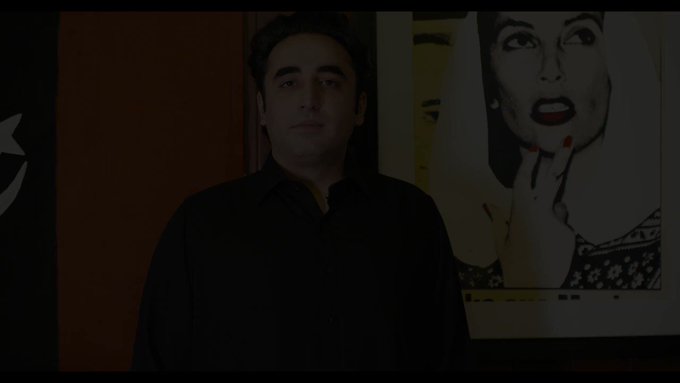
Pakistan People's Party (PPP) Chairman Bilawal Bhutto-Zardari on Friday lashed out at the government for removing more than 800,000 beneficiaries from the Benazir Income Support Programme (BISP), terming the move a grave cruelty on part of the government.
Speaking at a public gathering held to observe former prime minister Benazir Bhutto's death anniversary at Liaquat Bagh — the venue of her assassination — in Rawalpindi, Bilawal said the country was in danger and it was the duty of his party "to complete the mission of Benazir Bhutto".
"Benazir was a chain that united the federation of Pakistan, but this was not acceptable to her enemies," he added.
"Look at the state of this democracy. The parliament is locked, media is not free, there are attacks on the 18th amendment, the judiciary is not free," lamented the PPP chairman. "Terrorists may have been defeated but extremism is present all over the country," he added.
Recounting the struggles of his mother, Bilawal said, "Every street of Rawalpindi, all its walls and buildings and its land bear witness to what happened to Benazir".
"You people are witnesses to the atrocities faced by Bhutto. You are witnesses to how people's rule was ended. You are witnesses to the atrocities faced by jiyalas (party workers)".
Bilawal said Benazir continued the struggle of her father, confronted two dictators, faced 'selected' politicians and extremists but despite all that she "provided rights to women, freed the media and prisoners and also got missile technology for the country".
The PPP chairman said his mother had come back to Pakistan to establish awaami raj (people's rule) in the country once again but on "December 27th she addressed her last political gathering at this very ground".
"From one family, the father, two sons and then the daughter was also martyred."
Bilawal vowed to restore people's rule in the country once again. "Rawalpindi, bear witness for I will restore the power of the public, give rights to the youth and proper compensation to farmers for their efforts."
"I will continue the struggle of [Zulfikar] Bhutto and complete the mission of Benazir."
Before Bilawal came to address the crowd, PPP co-chairman and former president, Asif Ali Zardari, also addressed the gathering via a video message that was broadcast on a giant screen at the venue.
Speaking from a hospital bed, Zardari criticised the government for leading the country into its current political and economic situation. He said the present ruling regime "has nothing to do with the problems being faced by the country's poor".
He expressed hope that PPP Chairman Bilawal Bhutto will be able to solve these problems very soon and "will lead the nation".
Earlier, PPP leaders Raza Rabbani, Qaim Ali Shah, Murad Ali Shah, Aitzaz Ahsan, Qamar Zaman Kaira, Yousuf Raza Gilani, and Raja Pervaiz Ashraf addressed the rally.
Ahead of today's event, the venue and roads leading to Liaquat Bagh were decorated with PPP flags and pictures of Zulfikar Ali Bhutto, Benazir and Bilawal.
More than 50,000 seats were arranged at the venue.

Court allows rally at Liaquat Bagh

The Rawalpindi bench of the Lahore High Court on Thursday directed the district administration to provide all facilities and security for the event. Additionally, PPP has also made its own security arrangements.
Additionally, the court directed the district administration and police to provide Bilawal with adequate security upon his arrival in the city.
PPP had announced the rally at Liaquat Bagh. However, the district administration refused to give the party permission, citing security threats to Bilawal.
PPP city president Babar Sultan Jadoon immediately filed a petition in the LHC through his legal team challenging the decision of the district government. Yesterday, the LHC granted the party permission to hold the public meeting.
Senior party leader Sherry Rehman visited the site and inspected the arrangements ahead of today's event.
"After 12 years, the PPP is holding a public meeting and it is an attempt to dispel the perception that the party would not be able to arrange a jalsa in Rawalpindi," she said.
"It will be a sad moment for Bilawal Bhutto to visit the site where his mother was assassinated. It will also be difficult for all jialays (diehard party workers) to gather at the site and recall the tragic day."

Sunday, December 29, 2019

Video - Top 10 Funniest Interview Moments of 2019 | The Daily Show with Trevor Noah

Video Report - Putin thanks Trump for information that helped prevent acts of terrorism in Russia

Video Report - White Settlement, Texas, officials respond to church shooting

Video Report - Fareed Zakaria fears American democracy could be in peril - Dec 1, 2019

U.S: - The 2010s Were the End of Normal - A DECADE OF DISTRUST


By Michiko Kakutani


TWO OF THE MOST WIDELY QUOTED and shared poems in the closing years of this decade were William Butler Yeats’s “The Second Coming” (“Things fall apart; the centre cannot hold”), and W.H. Auden’s “September 1, 1939” (“Waves of anger and fear / Circulate over the bright / And darkened lands of the earth”). Yeats’s poem, written just after World War I, spoke of a time when “The best lack all conviction, while the worst / Are full of passionate intensity.” Auden’s poem, written in the wake of Germany’s invasion of Poland, described a world lying “in stupor,” as democracy was threatened and “the enlightenment driven away.”
Apocalypse is not yet upon our world as the 2010s draw to an end, but there are portents of disorder. The hopes nourished during the opening years of the decade — hopes that America was on a progressive path toward growing equality and freedom, hopes that technology held answers to some of our most pressing problems — have given way, with what feels like head-swiveling speed, to a dark and divisive new era. Fear and distrust are ascendant now. At home, hate-crime violence reached a 16-year high in 2018, the F.B.I. reported. Abroad, there were big geopolitical shifts. With the rise of nationalist movements and a backlash against globalization on both sides of the Atlantic, the liberal post-World War II order — based on economic integration and international institutions — began to unravel, and since 2017, the United States has not only abdicated its role as a stabilizing leader on the global stage, but is also sowing unpredictability and chaos abroad.
A 2019 Freedom House report, which recorded global declines in political rights and civil liberties over the last 13 years, found that “challenges to American democracy are testing the stability of its constitutional system and threatening to undermine political rights and civil liberties worldwide.”
If Lin-Manuel Miranda’s dazzling 2015 musical “Hamilton,” about the founders’ Enlightenment vision of the United States, embodied the hopes and diversity of America during the Obama years, dystopian fables and horror-driven films and television series — including “Black Mirror” (2016), a rebooted “Twilight Zone” (2019), “Joker” (2019), “Get Out” (2017), “Watchmen” (2019), “The Handmaid’s Tale” (2017) and “Westworld” (2016) — spoke to the darkening mood in the second half of the decade, as drug overdose deaths in America rose to nearly half a million by the decade’s end, life expectancy fell in the United States and Britain, and many of us started to realize that our data (tracking everything we viewed, bought and searched for online) was being sold and commodified, and that algorithms were shaping our lives in untold ways. In what was likely the hottest decade on record, scientists warned that climate change was swiftly approaching a “point of no return”; we learned that glaciers were melting at record speed at the top of the world; and fires ravaged California and Australia and threatened the very future of the Amazon rainforest.
Many of these troubling developments didn’t happen overnight. Even today’s poisonous political partisanship has been brewing for decades — dating back at least to Newt Gingrich’s insurgency — but President Trump has blown any idea of “normal” to smithereens, brazenly trampling constitutional rules, America’s founding ideals and virtually every norm of common decency and civil discourse.
The biggest casualty of the decade was trust. According to a Pew survey earlier this year, only 17 percent of Americans trust the government to do what is right “most of the time" or “just about always.” America’s reputation tumbled even further on the world stage: A 2018 Pew survey of 25 countries found that 70 percent of respondents said they lack confidence that the American president would make the right foreign policy moves. Between the end of President Barack Obama’s second term and late 2018, positive views of America fell 27 percentage points in Germany, 26 points in Canada, and 25 points in France. As with many things, Donald Trump is both a symptom and a radical accelerant of the decline in trust. While exploiting the anger at the establishment that snowballed around the world in response to the 2008 financial crisis, Mr. Trump has also cruelly amplified existing divisions and resentments in America, fueling suspicion of immigrants and minorities and injecting white nationalist views into the mainstream, in efforts to gin up his base.
Mr. Trump’s improbable rise benefited from a perfect storm of larger economic, social and demographic changes, and the profoundly disruptive effects of new technology. His ascent also coincided with the rising anxieties and sense of dislocation produced by such tectonic shifts. Around the world, liberal democracy is facing grave new challenges, authoritarianism is on the rise and science is being questioned by “post-fact” politicians. Echoes of Mr. Trump’s nativist populism can be found in Prime Minister Boris Johnson of Britain’s recent electoral victory and the Brexit referendum of 2016, and in the ascent of the far-right President Jair Bolsonaro of Brazil. Democracy is under threat in Hungary and Poland. Once fringe right-wing parties with openly racist agendas are rebranding themselves in Sweden and Belgium. And far-right groups in Germany and Spain are now the third-largest parties in those nations’ parliaments.
AT THE SAME TIME, Donald Trump remains a uniquely American phenomenon. Although the United States was founded on the Enlightenment values of reason, liberty and progress, there has long been another strain of thinking at work beneath the surface — what Philip Roth called “the indigenous American berserk,” and the historian Richard Hofstadter famously described as “the paranoid style.”
It’s an outlook characterized by a sense of “heated exaggeration, suspiciousness, and conspiratorial fantasy,” Hofstadter wrote in his 1964 essay, and focused on perceived threats to “a nation, a culture, a way of life.” Its language is apocalyptic (Mr. Trump’s “American carnage” is a perfect example); its point of view, extremist. It regards its opponents as evil and ubiquitous, while portraying itself, in Hofstadter’s words, as “manning the barricades of civilization.”
The “paranoid style,” Hofstadter observed, tends to occur in “episodic waves.” The modern right wing, he wrote, feels dispossessed: “America has been largely taken away from them and their kind, though they are determined to try to repossess it.” In their view, “the old American virtues have already been eaten away by cosmopolitans and intellectuals,” and national independence has been “destroyed by treasonous plots, having as their most powerful agents not merely outsiders and foreigners but major statesmen seated at the very centers of American power.”One well-known eruption of the “paranoid style” occurred in the 1950s with the anti-Communist hysteria led by Joseph McCarthy. It would surface again in the 1960s with the emergence on the national stage of George C. Wallace, who ran a presidential campaign fueled by racism and white working-class rage.In his 2018 book “The Soul of America,” the historian Jon Meacham also wrote about the cycles of hope and fear in American history, emphasizing the role that presidents play in setting a tone for the country and defining — or undermining — its founding ideals. He wrote about presidents who have worked to unify the country and appeal to what Abraham Lincoln called “the better angels of our nature,” and those who have courted discord and division.
Lincoln was followed in office by his vice president Andrew Johnson, a champion of white supremacy who pardoned more than 7,000 Confederates and opposed the 14th Amendment. Johnson was impeached in 1868: And while he was not convicted in the Senate, the historian Brenda Wineapple argues, the House’s decision to impeach him implied “the glimmering hope of a better time coming, a better government, a fairer and more just one” down the road in the years to come.
MR. MEACHAM NOTES that “extremism, racism, nativism, and isolationism, driven by fear of the unknown, tend to spike in periods of economic and social stress.” Periods, that is, like our own, when change of every sort is blowing across the globe.
The event that turned people’s sense of dislocation and disillusionment into populist anger on both the right (the Tea Party) and the left (Occupy Wall Street and, later, Bernie Sanders’s candidacy) was the 2008 financial crisis. Trust in government had been in sharp decline in previous decades — driven by Watergate and Vietnam in the 1970s, and more recently by the invasion of Iraq and the failure to find weapons of mass destruction there, and by frustration with worsening partisan gridlock in Washington. But the lingering fallout of the 2008 crash — growing income inequality, declining social mobility and dwindling job security — ignited rage against the elites and the status quo.
While the banks were bailed out and the fortunate 1 percent soon made back its losses (and more), working- and middle-class voters struggled to make up lost ground. Many students realized they were looking at jobs in the gig economy and years of crippling debt, while workers in the manufacturing sector found themselves downsized or out of work. As a candidate, Mr. Trump sold himself as the champion of such voters — whom he called “the forgotten men and women” — and he promised to “drain the swamp” in Washington. But once in office, he enlarged the swamp, hiring some 281 lobbyists, and set about cutting taxes for corporations and the very rich.
He also began a war on the institutions that were the very pillars of the government he now headed. In early 2017, Mr. Trump’s then adviser and strategist Steve Bannon vowed that the administration would wage a tireless battle for the “deconstruction of the administrative state” and the administration has done so ever since — nihilistically trying to undermine public faith in the efficacy, the professionalism, even the mission of the institutions that are crucial for guarding our national security, negotiating with foreign governments and ensuring the safety of our environment and workplaces. Mr. Trump also launched chilling attacks on those he reviled — from the F.B.I. to the judiciary — for having failed to put loyalty to him ahead of loyalty to the Constitution.
This is familiar behavior among authoritarians and would-be dictators, who resent constitutional checks and balances, and who want to make themselves the sole arbiters of truth and reality. A reporter said that in 2016 when she asked Mr. Trump why he continually assailed the press, he replied: “I do it to discredit you all and demean you all so when you write negative stories about me, no one will believe you.” It was fitting, then, that in January 2017, the month of his inauguration, George Orwell’s classic novel “1984” shot to the top of best-seller lists. The nearly 70-year-old novel suddenly felt unbearably timely with its depiction of a world in which the truth is whatever Big Brother says it is.
One of the terrible ironies of Mr. Trump’s presidency is that his administration’s dysfunction — little to no policymaking process on many issues, impulsive decision-making, contempt for expertise and plunging morale at beleaguered agencies — creates a toxic feedback loop that further undermines public trust in the government and lends momentum to his desire to eviscerate the “deep state.” The conflicts of interest that swirl around Mr. Trump and his cronies further increase the public’s perception of corruption and unfairness. MEANWHILE, TECTONIC SHIFTS were occurring in technology: Not just game-changing developments in artificial intelligence, genetic research and space exploration, but also new platforms, apps and gadgets that almost immediately altered people’s daily habits, including Instagram (2010), Snapchat (2011), the iPad (2010), Uber (2009), and digital assistants Siri (2011) and Alexa (2014). In these years, we also developed a growing appreciation of technology’s dark side: Gamergate, N.S.A. surveillance, Russian attacks on our elections, the fear that you might not only lose your job to a stranger on the other side of the planet, but also to robots in your hometown.
In the 2010s, we also became addicted to podcasts, and binge-watching became a thing. In fact, immersion or escape into compelling fictional worlds seemed to be one strategy people were embracing to cope with political outrage fatigue. Perhaps this also explains why nostalgia became so popular in the 2010s with reboots and returns of old television shows like “Mad About You,” “Twin Peaks,” “The X-Files,” “Dynasty,” “Lost in Space,” “Roseanne,” “Will & Grace,” “Gilmore Girls” and “The Odd Couple” — a phenomenon that’s both a reflection of the retro-mania catalyzed by the endless availability of old content on the web and a longing for older, saner times.
With his calls to “Make America Great Again,” Mr. Trump appealed to a different sort of nostalgia — for an era when white men were in charge and women, African Americans, Hispanics and immigrants knew their place.
At the same time, Mr. Trump and his campaign revived the culture wars of the 1960s and ’70s, and politicized everything from football and Starbucks coffee cups (criticized by some evangelicals for being too secular and part of the “war on Christmas”) to plastic straws and windmills. It might have been funny if we were living in a satirical novel, not in the real world with a former reality TV star as president.In his insightful forthcoming book, “Why We’re Polarized,” Ezra Klein observes that “our partisan identities have merged with our racial, religious, geographic, ideological, and cultural identities.” This is coming at a moment when the nation’s demographics are rapidly changing — census statistics project that America will become “minority white” in 2045 — and putting more emphasis than ever on questions of identity. Our political identities have become so crucial to us, Mr. Klein writes, that “we will justify almost anything or anyone so long as it helps our side, and the result is a politics devoid of guardrails, standards, persuasion, or accountability.”It’s a measure of just how partisan our politics has become that most Republicans now reflexively support Mr. Trump — despite broken promises, ballooning deficits, and tariffs that have hurt Americans, never mind the astonishing volume of lies he emits. Many Trump supporters inhabit a soundproofed echo chamber: A 2017 study, published in the Columbia Journalism Review, found that pro-Trump audiences got most of their information from an insulated media system, anchored around Breitbart News, that reinforced “the shared worldview of readers” and shielded “them from journalism that challenged it.”
No surprise, then, that the president’s hard-core supporters stubbornly repeat the lies and conspiracy theories that cycle through his Twitter feed, connecting him with Russian trolls, white nationalists and random crackpots, or that Mr. Trump’s assertions and fictional narratives are amplified further by Republican politicians and the right-wing media noise machine.
Social media, which came into its own in the 2010s, accelerated the filter bubble effect further, as algorithms designed to maximize user “engagement” (and therefore maximize ad revenues) fed people customized data and ads that tended to reinforce their existing beliefs and interests. This is why Republicans and Democrats, conservatives and liberals, increasingly have trouble even agreeing upon shared facts — a development that has undermined trust between different groups, fueled incivility and sped up the niche-ification of culture that began years ago with the advent of cable television and the internet.
In addition, platforms like Facebook, Twitter and Instagram have enabled politicians (as well as advertisers, Russian agents and alt-right conspiracy theorists) to circumvent gatekeepers like the mainstream media and reach out directly to voters. “Influencers” replaced experts, scientists and scholars; memes and misinformation started to displace facts. As the news cycle spun faster and faster, our brains struggled to cope with the flood of data and distraction that endlessly spilled from our phones. And in an era of data overload and short attention spans, it’s not the most reliable, trustworthy material that goes viral — it’s the loudest voices, the angriest, most outrageous posts that get clicked and shared.
Without reliable information, citizens cannot make informed decisions about the issues of the day, and we cannot hold politicians to account. Without commonly agreed upon facts, we cannot have reasoned debates with other voters and instead become susceptible to the fear-mongering of demagogues. When politicians constantly lie, overwhelming and exhausting us while insinuating that everyone is dishonest and corrupt, the danger is that we grow so weary and cynical that we withdraw from civic engagement. And if we fail to engage in the political process — or reflexively support the individual from “our” party while reflexively dismissing the views of others — then we are abdicating common sense and our responsibility as citizens.
In his wise and astonishingly prescient “Farewell Address,” from 1796, George Washington spoke of the dangers he saw the young new nation facing in the future. He warned against “the insidious wiles of foreign influence,” “the impostures of pretended patriotism,” and, most insistently, of “the baneful effects of the spirit of party” — imploring his fellow citizens not to let partisan or geographic differences plant seeds of mistrust among those who “ought to be bound together by fraternal affection.”
Every portion of the country, he wrote, should remember: “You have in a common cause fought and triumphed together; the independence and liberty you possess are the work of joint counsels, and joint efforts of common dangers, sufferings, and successes.” Citizens, he urged, must indignantly frown “upon the first dawning of every attempt to alienate any portion of our country from the rest, or to enfeeble the sacred ties which now link together the various parts.”

Music Video - Gul Panra - Dilbar Jani

بلاول بټو: د عمران خان حکومت د ولس لپاره عذاب جوړ شوی دی

د پاکستان پپلز ګوند مشر بلاول بټو زرداري ویلي دي چې د عمران خان په مشرۍ اوسنی حکومت د ملک د ولس لپاره عذاب جوړ شوی دی. نوموړی دا څرګندونې د ډېسېمبر پر۲۷مه په راولپنډۍ کې د خپلې مور بېنظیر بټو د ۱۲م تلین پر مهال په وینا کې کړې دي.

A silence envelops Pakistan - curb free speech and rein in the media as a means to divert attention from governance issues

Adnan Rehmat
 During 2019, the Imran Khan government made several moves to curb free speech and rein in the media as a means to divert attention from governance issues'

Another year of travails, some of the worst in recent memory has rolled by for the media in Pakistan, which hardly stands out for its free speech environment. Pakistan ranked a pathetic 142 out of 172 countries on the 2019 global annual press freedom ranking of global media freedom watchdog Reporters Sans Frontiers. Afghanistan and India, its neighbors which themselves have serious press freedom issues, ranked dozens of notches better than Pakistan on this index. It’s that bad.
Imran Khan marked his first year in power in 2019 and he has been a revelation in terms of his government’s undisguised contempt for the media throughout the year characterised by a steady erosion in the freedom of expression environment. Facing harsh criticism for its failures in delivering on pre-election pledges and growing economic hardship, the government became increasingly intolerant of dissent as the year progressed.
During the year the Imran Khan government made several moves aimed at curbing both free speech and reining in of media as a means of diverting attention from its governance failures. The cabinet and its ministers have variously announced measures including merging media regulators for print, electronic and internet into a singular body with draconian powers to fine and control the media and force annual renewal of licences to induce censorship; a new bill to stop the media providing coverage to the government’s political opponents facing controversial trials or given convictions, ban on opposition party leaderships’ interviews on TV and live coverage of all opposition press conferences, and preventing criticism of friendly states.
Some ministers throughout 2019 routinely tweeted against the media. One minister slapped a journalist in public, another made anti-Hindu comments and was removed from office, only to be restored within months. Press advice to censor news became routine.
The relentless intimidation of media in Pakistan in 2019 included several attacks on media houses by mysterious groups that raised slogans in favour of the government and the military; seven journalists murdered for their work; withholding of government advertising dues; of criminal cases against over a dozen journalists for their private social media postings under the controversial cyber crime law.
The relentless intimidation of media in Pakistan in 2019 included several attacks on media houses by mysterious groups that raised slogans in favour of the government and the military; seven journalists murdered for their work; withholding of government advertising dues; of media running into billions of rupees that forced major downsizing and loss of over 3,000 jobs of journalists; growing intolerance of the security establishment of even mild criticism; criminal cases against over a dozen journalists for their private social media postings under the controversial cybercrime law; and a ban on distribution of newspapers and TV channels deemed ‘unpatriotic’ in cantonment areas and other residential societies controlled by the security establishment.
For journalists just doing their jobs of being guardians of public interest it has been really tough out there being unhappy with the government in Pakistan in 2019! The year was annus horribilis for the media – making the current era one of the worst ever in Pakistan’s history to exercise free speech even within the constitutional limits on freedom of expression as guaranteed under Article 19 (dealing with freedom of expression) and Article 19-A (dealing with right to information).
This was the year of a growing hush in Pakistan wherein both the Deep State and government dropped all pretensions of tolerating criticism of their controversial scorched-earth policies and inept governance. This will not be without consequences for the body politic. With the government wantonly ratcheting up pressure on free speech, it appears that procedural censorship is being imposed on Pakistan aimed at re-drawing the very freedom of expression and right to information landscapes of the country.
Pakistan’s pluralistic constitutional foundations are under threat and the country’s declared democratic aspirations are being throttled. The silencing of civil society, the gagging of media and the censorship of political leadership strike at the very democratic project of Pakistan. The last time this happened, the country broke up into two in 1971. That lesson is clearly lost in the mists of time.
If this continues into 2020, the biggest consequence will be a shift away for Pakistan from democracy to authoritarianism, a process already far advanced, which may make it difficult to hold state actors accountable on policies that in the past have resulted in loss of hundreds of thousands of lives and displacement of tens of millions of people in the region and the country.
The social and economic costs of this will be massive, as they have been in the past. This notwithstanding the media story of the year – the death sentence for former dictator Musharraf by a special court. While the verdict constitutes a re-balancing of the power equation, it is expected to generate a new cycle of pressure on the media in 2020 to blunt media and political narratives in support of the judicial courage.A democratic Pakistan cannot exist without free media because it is a multi-national, multi-ethnic, multi-linguist, multi-religious and multi-cultural state wherein all these wondrous pluralisms want their voices to be heard and want direct and better engagement between the citizens and the State. Silencing the media will snuff out the voices.A citizenry able to express itself and reaching out to the government only ends up empowering the state. Freedom of expression and right to information are guaranteed in the constitution as fundamental rights. This is the big challenge handed by 2019 to 2020, so to speak.
There is a need to halt and reverse the wanton climate of censorship engendered in 2019 to foster greater pluralisms and engagement between the citizen and state to strengthen democracy in 2020. A closed Pakistan uneasy with itself and with no way to express itself, is a recipe for disaster. An open, democratic and accountable Pakistan is better for itself, for the region and for the world.

https://www.thenews.com.pk/tns/detail/589580-invisible-workers

#Pakistan #CPEC has not Benefited People of #Balochistan


Asif Murad Umrani
China with robust intentions wants to rule all over the world keeping the eyes on trade and business through Belt and Road Initiative (BRI). China Pakistan Economic Corridor (CPEC) has now become the sole option for Pakistan’s economic and strategic stability and prosperity. The center of all these activities is Gwadar port, which is in the province of Balochistan.
Whenever we hear the word “Balochistan”, we imagine the beautiful Rocky Mountains, decent traditions and a land bestowed by immense natural resources. The reality is, Balochistan is in the grasp of deprivation where the people are surviving in a dismal state. Undeniably, Balochistan has yet not tested the fruits of CPEC projects. The rich Balochistan is devoting of it’s everything to the rest of the provinces unarguably. Such as earning poverty, unemployment, illiteracy, health issues, terrorism, and countless others. If it is as a tribute for Balochistan’s public in name of CPEC, we then expect nothing more.
The rich Balochistan is battling against extreme poverty. Shockingly, 71% of the population in Balochistan is suffering from multidimensional poverty. The 21st century has no difference over the stone age to the people living there.
Although Balochistan has the least population from the rest of the provinces, it still suffers a huge dramatic problem of unemployment. People beg for a job to earn a living. In broader aspects, this is why Robbery and other illegal acts are emerging just because people are compelled to do so. We eventually hear about illegal oil supply and other daily life goods from Iran’s border. To direct the idea, according to preliminary statistics, CPEC projects have created more than 75, 000 direct jobs for Pakistanis. Miserably not many Baloch from Balochistan can be found employed under CPEC projects.
It is obvious that the nation who reads is the nation who leads. Although we are fully aware of the significance of education in the present era, our government has not paid attention and neglected the preferences of education for Balochistan’s residents. Then how would Baloch come onto the pace of today’s world competition? The number of government schools in Balochistan is very depressing and these numbered schools are ultimately in dilapidated conditions. Many of them even consist of one room. More, several have turned out to be the paling of headmasters. It can be seen that there are cows and goats instead of teachers and students. Schools lack basic facilities such as chairs, desks, boards, libraries, toilets, and boundary walls. Woefully, science laboratories have no existence there. Most of the teachers never confront the face of schools but receive their salaries on time.
Balochistan is being utilized like a tissue paper that our government throws whenever it gets benefited. Will Baloch compete in the technological world with this rusted educational system for which has no amendment and implementation can be seen far and wide.
Overall, the literacy rate in Balochistan province is 41%. This clearly shows how much vigilance our federal and provincial governments are paying off. Let me demonstrate the apathy further, around 25,000 Pakistani students are studying in China on the basis of scholarship. Regretfully, there are only 200 Baloch students among them.
Then now, health issues in the province have ranged a gigantic obstacle for the public. The condition of government hospitals is as same as the government schools pertaining. The common health issues in the province are Malaria, typhoid, hepatitis, respiratory disorders, Tuberculosis and dreadful cancer, etc. Other non-profit institutions also do not stay there due to terror attacks. Yet even today, the ecosystem is devastated. As a result, children are born with genetic abnormalities. Like, eye problems, skin diseases, limb dysfunction, cancer and more.
Balochistan is in the grip of cancer and other diseases, the state has not established a single hospital for the people but rather the pleaded hospital is installed in Punjab and other regions. Balochistan has always been victim, compromised, and politicized on account of health issues. When the state bother to perceive the plight of the Balochistan populace?
Moreover, the existence of CPEC means nothing to Baloch because this project has not valued Baloch the day one. Gwadar port is the gateway to Central Asia and the Middle East. Actually the main asset of Balochistan is in the hands of authorities. Let it be cleared here, Karachi Lahore motorway, Lahore orange line, Sukkur Multan sections, these projects costing $5.874 billion are being run under CPEC. What about Balochistan? Consisting of one-way roads resulting hundreds of deaths each month. The people of Gwadar have no safe drinking water. They are forced to either buy water from costly tankers or travel miles in search of water. If authorities cannot heal the pains of the people of Gwadar, how can we expect brotherhood and sharing from their side?
Turning towards CPEC, the second phase of CPEC started with the USD one billion grant whose prime focus would be the socioeconomic development of population, including health, alleviating pauperism, education, agriculture, industrial collaboration, and vocational training through 20,000 scholarships. Do all these commitments match the interest of Baloch? We should get united and prove to be true patriotic citizens of Pakistan. We should always remember the proverb that says, “United we stand divided we fall.”