Wednesday, December 25, 2019

After the Junaid Hafeez Verdict, Time to Face the Truth About Pakistan’s Blasphemy Law


Pakistan’s blasphemy law needs to be sentenced to death — not so-called ‘blasphemers.’
On Saturday, Multan-based academic Junaid Hafeez became the latest to be given the death sentence for blasphemy in Pakistan.
The 33-year-old former lecturer at Bahauddin Zakariya University had been arrested in 2013 over alleged “blasphemous” comments on Facebook, after accusations from an Islamist group that had explicitly taken issues with Hafeez’s “liberal views.”
After six years of solitary confinement, and a problematic trial, Hafeez has been sent to the gallows by a sessions court for “outraging religious sentiments.”
Pakistan is one of 13 countries where blasphemy is punishable by death. The constitution’s Islam-specific clauses, notably Section 295-C of the Pakistan Penal Code, maintain that the capital punishment is solely for sacrilege against the majority’s religion in the Muslim-dominated country.
Furthermore, given that unlike Saudi Arabia or Iran, Pakistan hasn’t executed anyone for blasphemy, apostasy, or atheism, the existence of the death penalty for blasphemy against Islam has been taken up by mobs as sanction for vigilante killings. As a result, there have been over 75 extrajudicial executions, and more than 4,000 blasphemy cases registered since the inclusion of Section 295-C in the PPC in 1986.
Islamist mobs haven’t spared HindusChristians, or Ahmadis after having their religious feelings outraged, which their country’s constitution reaffirms as sufficient cause for taking the culprit’s life. For atheists and agnostics, their apostatizing identity mandates the death penalty.
Meanwhile, the case of Junaid Hafeez and the lynching of Mashal Khan in 2017 underlines that even Muslims aren’t safe from the Islam-specific blasphemy law, for they can just as easily be deemed “not Muslim enough.”
And now, following the adaptation of the Penal Code clauses into the similarly draconian cybercrime laws, death sentences are being handed out for content that is posted online, resulting in silencing of progressive voices online and the exodus of anonymous accounts.


The few that have been vocally upset about the Junaid Hafeez verdict have long pointed out the drawbacks of the country’s blasphemy law. The diminishing voices against the blasphemy law have reiterated how the legislation leaves it open to misuse.
Given how former Punjab Governor Salmaan Taseer was killed for his criticism of the blasphemy law – especially now with his murderer’s shrine enjoying a holy status in the capital – these few voices mustering some form of criticism regarding the law, and the farcical trials, are courageous and commendable.
There have been similarly admirable revisionist efforts to highlight the ostensible flaws in the blasphemy law through study of Islamic jurisprudence.
Yet Pakistan’s blasphemy law remains untouched, nay untouchable. And the reason for that is as straightforward as it is ominous.
Amid all the failings that are echoed in the carefully camouflaged critiques of the blasphemy law – from its religious supremacism to loose verbiage, from false allegations to rigging of evidence – perhaps its greatest flaw is oft ignored: its very existence.
Critics often speak of “misuse,” but what possible use could there be for a law that at best hinders much-needed reform in Islam, and at worst sanctions death for words, cartoons, and other expressions?
No matter how repulsive or offensive it might be, the protection of free speech – guaranteed by Article 19 of both the Universal Declaration of Human Rights and Pakistan’s Constitution – is an inalienable feature of any democracy, unless the speech explicitly calls for violence.Critique of religion – any religion – is neither a call for violence nor a denial of rights for its adherents, which makes the very idea of blasphemy completely antagonistic to basic human rights. The “evidence” in such cases is intangible sentiments, making the “crime” victimless.Therefore, the battle against the blasphemy law cannot be won until the democratic principle of basic human rights supersedes religious dogma.Hence, it should not matter whether there is or isn’t any evidence for the allegations against any blasphemy accused. It should not matter which personality, belief, or religion was or was not offended. It should not matter what 1,400-year-old scriptures do or do not sanction for this victimless “‘crime.” Nobody, absolutely nobody, deserves death for outraging, mocking, or blaspheming words in a country that wants to self-identify as a democracy.
Given that such a realization isn’t anywhere in sight, one can only take solace in triumphs like Asia Bibi being found not guilty of blasphemy and managing to escape the country last year, while hoping the same for Junaid Hafeez.
However, it is not its victims but the blasphemy law itself that needs to go. It is not the “blasphemer” but the blasphemy law that needs to be given the death sentence.
https://thediplomat.com/2019/12/after-the-junaid-hafeez-verdict-time-to-face-the-truth-about-pakistans-blasphemy-law/

Pakistan-based terrorists Masood Azhar, Omar Sheikh and Mushtaq Ahmad Zargar - Where are the 3 terrorists who were swapped for 170 passengers of hijacked IC-814?


Tuesday, 24 December, marks 20 years since the hijacking of Indian Airlines flight IC-814 by five Pakistani terrorists. Their aim was the release of terrorists Masood Azhar, Omar Sheikh and Mushtaq Ahmad Zargar.
The hijack and subsequent hostage-release situation lasted a week until India agreed to release the three terrorists for about 170 passengers who were onboard.
The IC-814 was hijacked on 24 December 1999, when it was on its way to Delhi from Kathmandu. The flight, which made stops at Amritsar and Lahore, ultimately stationed itself in Kandahar, Afghanistan.The CBI had charged 10 people, out of which seven, including the five hijackers, are believed to be in Pakistan.On the 20th anniversary of the Kandahar hijack, ThePrint traces the activities of the three terrorists released — Azhar, Sheikh and Zargar — and how they still are a challenge for the security establishment in India.
Masood Azhar, Jaish-e-Mohammed
After his release, Masood Azhar regrouped his terror organisation, Jaish-e-Mohammed, and launched a series of deadly attacks, including on the Indian Parliament in December 2001, the 2008 Mumbai terror attacks and the Pathankot airbase attack in January 2016.
The most recent terror attack by the Jaish was in February 2019, when a suicide bomber rammed his explosives-laden vehicle into a CRPF convoy in Pulwama killing 40 personnel.
Azhar, who was arrested from Kashmir in 1994, is also believed to be supported by Pakistan’s intelligence agency ISI, and was so important that multiple attempts were made to get him released, even before the Kandahar hijack. In July 1995, Al-Faran, a Kashmiri Islamist militant group, kidnapped six foreign tourists from Pahalgam in Kashmir and demanded Azhar’s release in exchange for the tourists.
This year, after much persuasion, the United Nations declared Azhar a global terrorist. At present, he is believed to be suffering from severe renal illness and is undergoing treatment at a military hospital in Pakistan.
It is alleged that Sheikh lured Pearl into a trap by promising to arrange an interview with an Islamic cleric, and kidnapped him. Pearl was accused of being an American spy, and Sheikh demanded the release of a halted US shipment of F-16 fighter jets to the Pakistani government to let Pearl go.
Sheikh, along with his associates, kept Pearl captive for nine days before releasing a videotape which showed Pearl’s severed head.
Born in the UK, Sheikh was a student at the London School of Economics, where, it is believed, he came in contact with radical Islamists. He is said to have subsequently worked with several militant outfits, including the Jaish-e-Mohammed, al-Qaeda and even the Taliban.
Sheikh was first arrested from Uttar Pradesh’s Saharanpur in October 1994, after he had kidnapped four Western tourists to demand the release of Azhar and Harkat-ul-Mujahideen chief commander Sajjad Afghani.
His attempt was, however, foiled. Sheikh was arrested and the hostages were freed.
At present, Sheikh, who was arrested on 12 February 2002 in Lahore, is in a Pakistani jail for his role in Pearl’s death. He has been sentenced to death.
Mushtaq Ahmed Zargar, Al-Umar Mujahideen
Mushtaq Ahmed Zargar, who belonged to the Jammu and Kashmir Liberation Front (JKLF), was in jail since 1992.
Intelligence sources said after his release in 1999, Zargar is believed to have renewed the activity of Al-Umar Mujahideen in Muzaffarabad, close to the LoC. Sources also said that Zargar has recruited and trained youngsters for “war” in Kashmir and is believed to have been working to renew the sleeper cells.
Zargar is suspected to be the man behind the June 2019 terror attack in Kashmir’s Anantnag, in which five CRPF personnel were killed and three others were injured after their patrolling party was attacked with grenades.
Also, in 2017, Zargar claimed responsibility for many of the grenade attacks on the security forces in the Kashmir valley.
“I’m Mushtaq Zargar, the Al-Umar Mujahideen chief. I’m in Doda (a district in the eastern Jammu region) and am speaking to you on behalf of my organisation and Jaish-e-Mohammed. We together carried out the attacks and we do plan more such and similar strikes for we strongly believe India understands only the language of violence. The musallah jadujuhad (armed struggle) is the only way out as it alone can drive the occupying forces out and free our Kashmir from the Indian yoke,” he had telephoned Deccan Chronicle to say.
Zargar, a coppersmith by profession, grew up in Srinagar and crossed over to Pakistan to get arms training in 1988. In 1990, he drifted from the JKLF and founded the Al-Umar Mujahideen, which favours Kashmir’s merger with Pakistan.
https://theprint.in/india/pragya-thakur-blames-spicejet-for-seat-allotment-controversy-on-delhi-bhopal-flight/339758/?ref=is

#Pakistan - Chairman #PPP Bilawal Bhutto Zardari greets the #Christian community on the eve of #Christmas

Chairman Pakistan Peoples Party Bilawal Bhutto Zardari has extended greetings to the Christian community of Pakistan as well as the world on the eve of Christmas.
In his message of felicitation, he said that all religious festivals served the purpose to bring communities together. He added that Christmas was a time for unity and kindness and that we must learn from the story of Christmas the lessons of love and kindness.
On this auspicious occasion, I wish our Christian brothers and sisters a very merry Christmas and would like to assure them that the PPP will continue its role in protecting and safeguarding the rights of all minority religions in Pakistan.
Bilawal Bhutto Zardari said that the PPP has struggled for equal political, economic and social rights of all the citizens of Pakistan without any discrimination of caste, creed and religion.
The PPP Chairman praised the great contributions of the Christian community in nation-building and over all progress of Pakistan. From John Permal, Pakistan’s fastest man, in sports to Ground Captain Cecil Chaudhry, the hero who valiantly defended Pakistan’s skies against its enemies. From Justice Cornelius to Shaheed Shahbaz Bhatti, Christians have served Pakistan and defended its soil bravely.
He appealed the Christian brothers and sisters to hold special prayers for the integrity and sovereignty of Pakistan and for true democracy in the country.
اسلام اباد/کراچی (24 دسمبر 2019) پاکستان پیپلز پارٹی کے چیئرمین بلاول بھٹو زرداری نے پاکستان سمیت دنیا بھر میں مسیحی برادری کو کرسمس کی مبارکباد دی ہے۔ پی پی پی چیئرمین نے اپنے پیغام میں میں کہا ہے کہ تمام مذھبی تہواروں کا مقصد لوگوں کو ایک دوسرے کے قریب لانا ہے۔ انہوں نے مزید کہا کہ کرسمس اتحاد اور خدمت گذاری کا موقعہ ہے اور ہمیں کرسمس کی کہانی کو پیار و شفقت کے درس کی طور پر سمجھنے کی ضرورت ہے۔ میں اس پرمسرت موقعے پر اپنے مسیحی بہنوں و بھائیوں کو کرسمس کی مبارکباد دیتا ہوں اور انہیں یقین دلاتا ہوں کہ پاکستان پیپلز پارٹی ملک میں تمام اقلیتوں کے مذھبی حقوق کی حفاظت کرتی رہے گی۔ بلاول بھٹو زرداری نے کہا کہ پاکستان پیپلز پارٹی نے ہمیشہ تمام پاکستانیوں کے لیئے ذات، رنگ اور مذہب سمیت ہر قسم کے امتیاز کے بغیر یکساں سیاسی، معاشی اور معاشرتی حقوق کے لیئے جدجہد کی ہے۔ پی پی پی چیئرمین نے پاکستانی مسیحی کمیونٹی کی قوم سازی و ترقی میں کلیدی کردار کو سراہتے ہوئے کہا کہ کھیل کے میدان کے تیز ترین دوڑنے والے شخص جان پرمل سے لے کر دشمن سے بڑی بھادری سے نبرد آزما ہو کر ملکی فضائی حدود کی حاظت کرنے والے گراوَنڈ کئپٹن سِسئل چودھری تک، اور جسٹس کارنویل سے لے شہباز بھٹی تک، مسیحی کمیونٹی کے افراد نے ہمیشہ پاکستان کی خدمت اور اپنی دھرتی کی حفاظت کی ہے۔ بلاول بھٹو زرداری نے مسیحی بھائیوں و بہنوں کو اپیل کی کہ وہ کرسمس کے موقعے پر اپنی عبادات کے دوران پاکستان کی سالمیت اور خودمختیاری کے ساتھ ساتھ ملک میں حقیقی جمہوریت کے قیام کے لیئے بھی دعائیں مانگیں۔
اسلام اباد/ڪراچي (24 ڊسمبر 2019) پاڪستان پيپلز پارٽي جي چيئرمين بلاول ڀٽو زرداري پاڪستان سميت سڄي دنيا جي مسيحي برادري کي ڪرسمس جون واڌايون ڏنيون آهن. پي پي پي چيئرمين پنهنجي پيغام ۾ چيو آهي ته مذهبي ڏهاڙن جو مقصد ماڻهن کي هڪ ٻئي جي ويجهو آڻڻ آهي. هن وڌيڪ چيو ته ڪرسمس، اتحاد ۽ خدمتگذاري جي مهل آهي، ۽ اسان کي ڪرسمس جي قصي کي محبت ۽ شفقت جي درس طور سمجهڻ جي ضرورت آهي. خوشي جي هن موقعي تي مان پنهنجن مسيحي ڀينرن ۽ ڀائرن کي ڪرسمس جون مبارڪون ڏيان ٿو ۽ کين يقين ڏيارن ٿو ته پاڪستان پيپلز پارٽي ملڪ ۾ سمورين اقليتن جي مذهبي حقن جي حفاظت ۽ رکوالي ڪندي رهندي. بلاول ڀٽو زرداري چيو ته پاڪستان پيپلز پارٽي هميشه ذات پات، رنگ ۽ مذهب جي متڀيد کانسواءِ سمورن پاڪستانين لاءِ سدائين هڪجهڙن سياسي، معاشي ۽ سماجي حقن لاءِ جدوجهد ڪئي آهي. پي پي پي چيئرمين پاڪستاني مسيحي برادري پاران قوم سازي ۽ ملڪي ترقي ۾ ادا ڪيل اهم ڪردار جي واکاڻ ڪندي چيو ته راندين جي ميدان تي ڊُڪڻ جي مقابلن جي تيز ترين شخص جان پرمل کان وٺي دشمن سان بهادري سان جهيڙي فضائي حدن جي رکوالي ڪندڙ گراؤنڈ ڪئپٽن سسيل چوڌري تائين، ۽ جسٽس ڪارنيل کان شهباز ڀٽي تائين، مسيحي ڪميونٽي سدائين پاڪستان جي خدمت ۽ ڌرتي جي حفاظت ڪئي آهي. بلاول ڀٽو زرداري مسيحي ڀائرن ۽ ڀينرن کي اپيل ڪئي ته هو ڪرسمس جي عبادتن دوران پاڪستان جي سلامتي ۽ خودمختياري سان گڏوگڏ ملڪ ۾ حقيقي جمهوريت جي قيام لاءِ پڻ دعائون گهرن.

Tuesday, December 24, 2019

Comedy - Arsenio Hall Show Sax Jam

Comedy - Yes, The Trump Presidency Is Just A TV Show We All Have To Live Through

Comedy - Everything Is Stupid - Holiday Edition | The Daily Show

Comedy - Zozibini Tunzi - Becoming Miss Universe and Fighting Gender-Based Violence | The Daily Show

Comedy Video - #GabrielIglesias Fluffy's Adult Film | Gabriel Iglesias

Music Video - Mariah Carey - All I Want For Christmas Is You

#ChristmasEve #Christmas - Jingle Bells -

BAE Systems faces accusations of 'aiding and abetting' alleged Saudi war crimes in Yemen

Alex Daniel
BAE Systems has been accused of having contributed to alleged war crimes in the conflict in Yemen by a group of human rights organisations, in a complaint to the International Criminal Court (ICC).
The European Centre for Constitutional and Human Rights (ECCHR) has submitted a 300-page document accusing European arms executives at firms such as BAE, Airbus and Raytheon of “aiding and abetting” the alleged crimes.
The war in Yemen has been raging since 2015, and more than 100,000 people are estimated to have been killed.
A coalition led by Saudi Arabia against the Houthi rebels, who support Iran, has repeatedly carried out airstrikes that human rights groups have criticised. The document cites 26 strikes which killed 135 people. It describes some of as them attacks on hospitals and schools by Saudi bombers or those from its coalition ally the United Arab Emirates.
Radhya Almutawakel, chairperson of Yemeni organization Mwatana for Human Rights, said: “Saudi/UAE-led coalition airstrikes have caused terrible destruction in Yemen. Weapons produced and exported by the US and Europe have enabled this destruction.
“Five years into this war, the countless Yemeni victims deserve credible investigations into all perpetrators of crimes against them, including those potentially complicit.” Human rights campaigners from Amnesty International and Campaign Against the Arms Trade handed over the file in The Hague, where the ICC is based.
Linde Bryk, Legal Advisor at ECCHR, added: “European companies – and indirectly European states – have profited from arms exports to the Saudi/UAE-led coalition. At the same time these arms are used in Yemen in international humanitarian law violations that may amount to war crimes.”
UK ministers promised in June to stop green-lighting export licences to Saudi Arabia and its military coalition allies for use in Yemen, after a challenge by campaigners at the Court of Appeal. But trade secretary Liz Truss faced calls to resign in October after admitting to several “inadvertent” breaches of that promise.
Judges hearing the case earlier this year said existing licences should be reviewed, but that they would not be suspended straight away. However, Truss predecessor Liam Fox had assured them the government would not grant further export licences while it considered the ruling.
BAE Systems is contracted to the UK government, not to Saudi entities in the selling of arms to the kingdom.
Patrick Wilcken, Amnesty International’s arms control researcher, said: “An ICC investigation would be a historic step towards holding arms company executives accountable for their business decisions.
“Company executives have had ample time and access to plenty of reliable information to reassess their decisions to supply the coalition in the light of the horrific events in Yemen.”
A
spokesperson for BAE Systems said: “We provide defence equipment, training and support under government to government agreements between the UK and KSA [the Kingdom of Saudi Arabia].‎
“We comply with all relevant export control laws and regulations in the countries in which we operate. Our activities are subject to UK government approval and oversight.”
https://www.cityam.com/bae-systems-faces-accusations-of-aiding-and-abetting-alleged-saudi-war-crimes-in-yemen/

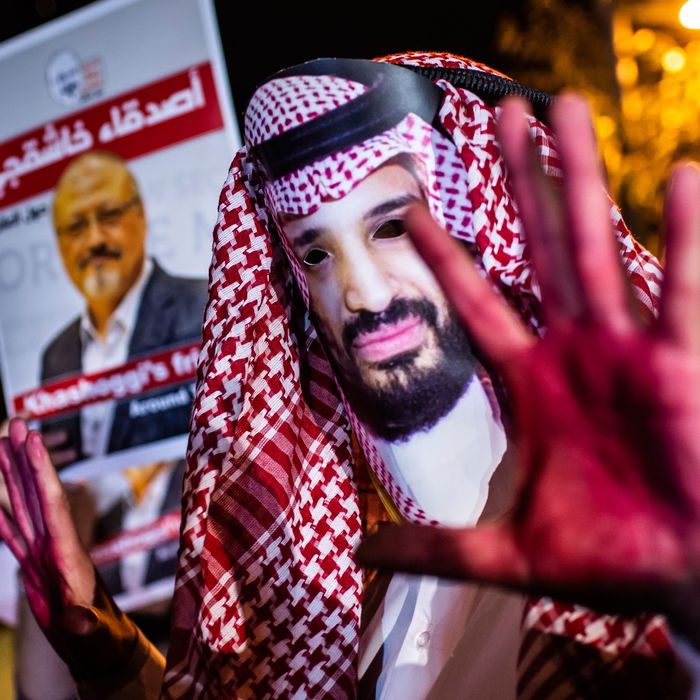
Masterminds of #Khashoggi's murder walk free after hitmen sentenced to death, says UN rapporteur

Agnès Callamard calls the sentencing a 'travesty of

justice'

The sentencing of eight men for Jamal Khashoggi's murder is a "travesty of justice" because the people who masterminded the killing have walked free, says UN special rapporteur Agnès Callamard.


On Monday, a court in Saudi Arabia sentenced five men to death and three others to a total of 24 years in prison for their role in the killing of the Washington Post columnist. 
Khashoggi was killed in the Saudi Consulate in Istanbul last year. His body was never found. 
Saudi Crown Prince Mohammed bin Salman has denied any involvement. 
The trial into his death was shrouded in secrecy, but the Saudi deputy public prosecutor said in a statement that "the killing was not premeditated" and that it was done in the "spur of the moment."
That is not what Callamard found in her investigation. She is the UN special rapporteur on extrajudicial killings, who authored an inquiry on Khashoggi's death. Here is part of her conversation with As It Happens guest host Helen Mann.
You called this trial in Saudi Arabia, and I'm quoting, "the antithesis of justice." Why?
Because the people that have been sentenced today are those at the lowest level of the chain of command. They are the hitmen. They executed an order.
The people who masterminded the killing of Jamal Khashoggi have all walked free. To me, that trial is a travesty of justice and it is enshrining impunity for the killing of journalists.

Agnes Callamard, left, UN special rapporteur on extrajudicial, summary or arbitrary executions, and Hatice Cengiz, Khashoggi's partner, are shown earlier this month in Brussels. (Francois Lenoir/Reuters)
So of the eight found guilty, three are going to jail. Five have been sentenced to death. There are going to be some who say this is justice in some form.
It cannot be justice when the hitmen only are facing justice.
I've been working on crimes against journalists for the last 15 years. There is a system of impunity worldwide because we never go for the mastermind.
It is crucial that the killing of journalists leads to an investigation into the chain of command. The killing of a journalist is not like any other killing. It involves corruption. It involves repression. It involves propaganda. It involves abuse of power.
In your very thorough investigation of Mr. Khashoggi's murder earlier this year, what did you determine about who actually ordered his killing?
The evidence points overwhelmingly — and, in fact, in only one direction — which is that the killing was the state killing.
That's the first thing. The second step should then consist in unpacking what we mean by state. That's what the prosecutor should have done — looked at who within the state has either allowed for the crime to take place, has ordered the crime, has incited the crime, has turned a blind eye to the crime. 
It is my conclusions, based on the evidence I collected ... there is absolutely no doubt that the liability of the crown prince is involved.
In that confidential material about the trial that you received, is there any indication that anyone raised the state's responsibility, be it the crown prince or anyone else?
Not directly. There is evidence — plenty of evidence, in fact — that the defendants throughout the trial have consistently argued that they were obeying orders. But that … seemingly has been rejected as part of the legal finding and reasoning. 
What the defendants also argued, against evidence, is that they killed Mr. Khashoggi in the spur of the moment.
To suggest for one second that Mr. Khashoggi could have been dismembered in the spur of the moment, that the body parts could have been carried out, handed over to an unknown individual, that the crime scene could have been sufficiently cleaned up so that people will come in the following day, will not be horrified by what they witnessed — I mean, clearly that cannot be done in the spur of the moment. It requires planning. 
The presence of the forensic doctor who was brought in the team at least 24 hours before the execution of the crime also testified to the effect that the killing of Jamal Khashoggi became part of the plan at least 24 hours before it actually happened. 
Finally, the fact that there is a recording of that same doctor explaining how he's going to proceed with dismembering a body and how body parts can be carried out two hours before exactly those crimes take place, you know, that cannot be an accident. So the crime was premeditated.
You are one of the only people to hear the recorded phone calls about this and also recordings of Mr. Khashoggi pleading for his life. Can you tell me how much of that has stayed with you?
Of course it has stayed with me. These are the last words of Jamal Khashoggi. He entered the consulate a happy man. He was coming to pick up the documents that would allow him to begin a new life. The love of his life was waiting outside for him. 
And what does he confront on his own? He confronts five killers in the consul office. And what does he have to oppose ... them? Nothing. Just his kindness, his politeness and, ultimately, his pen and his memory. 
That's what we have to fight for — for him. 
You say we must fight for Mr. Khashoggi. If this trial is a sham and not true justice, what recourse is there? What is next? 
It's a whitewash. It's important that the international community, the elected officials, our elected officials, do not go publicly now to pretend that this is a good step for Saudi Arabia. 
We want them to say that it is not justice. We want them to ask for an investigation in Saudi Arabia or elsewhere, i.e. to the United Nations system, into the chain of command that made possible the killing of Mr. Khashoggi.
Let me insist and reiterate that as long as we do not go after those that commission the killing of the journalist, we endorse their killing.

Violent Extremism in the #Maldives: The #Saudi Factor

By Henry Storey


The Saudi push to spread Wahhabism is contributing to the Maldives’ startling radicalization.
Last week, the Maldives Independent reported some rather startling news. Security services revealed that there are close to 1,400 Maldivians who would kill in the name of Islam. Officials also confirmed that an Islamic State bomb plot was foiled in 2017 and that, since 2013, 423 Maldivians attempted to enter Iraq and Syria – 173 successfully – to fight for the so-called caliphate. This makes the Maldives possibly the highest per capita source of foreign fighters of any nation.
The Maldives provide an interesting case study of how the international proliferation of Saudi-sponsored Wahhabism has contributed to violent extremism and the radicalization of foreign fighters. Although there are many complex factors contributing to extremism in the Maldives, Saudi proselytization is nonetheless an important factor.
The increasing religious conservatism and intolerance displayed in Maldivian society contrasts sharply with the island nation’s Sufi-orientated Shafi’i Sunni Islam. Interspersed with influences from the country’s Buddhist past, this mellow form of Islam emphasized tolerance. Overt signs of piety were relatively rare, as was religious-inspired violence.
Some context is necessary to understand the Saudi drive to export Wahhabism. In a bid to placate the powerful Wahhabi religious establishment, in the aftermath of Iran’s Islamic Revolution, Riyadh allowed Wahhabism a more prominent place in public life. Part of this grand bargain was to allow the religious establishment to export their puritanical version of Islam to the world. Wahhabi madrassas – or religious schools – began popping up around the world, as the Saudi state poured an estimated $100 billion into spreading the creed. The other side of the equation, of course, is that the spread of Wahhabism was viewed by some in Riyadh as being synonymous with the spread of Saudi influence. This was seen as vital to safeguarding Saudi Arabia’s place at the center of the Islamic world in the face of the challenge posed by Iran and its alternative velâyat-e Faqih (rule of the cleric) model.
The rise of Wahhabi-inspired Islam in the Maldives can thus be traced back to the 1970s and 1980s, when many Maldivian students returned home from studying at Wahhabi madrasas in Pakistan and Saudi Arabia. Although not a Wahhabi himself, the Maldives’ then president, the Egyptian-educated Maumoon Abdul Gayoom, moved to emphasis the country’s Islamic identity. Under Gayoom’s 1997 constitution, only Muslims can be citizens and non-Muslims are prohibited from practicing their religion in public.
However, it was not until the 21st century that Wahhabism was able to make rapid inroads into the Maldives. An important factor in this was the country’s political liberalization and transition to democracy in the mid-2000s. Wahhabi imams and activists who had previously been kept in check under Abdul Gayoom had a greater chance to influence the country’s politics and civil society.
Another development facilitating what one Maldivian scholar described as the “biggest transformation of the religious landscape of the Maldives” since its conversion to Islam in the 12th century was the deepening of Saudi-Maldives ties under the presidency of Abdulla Yameen. The now ex-president had grand ambitions for the nation’s economic development. Much has been made of the influx of Chinese funds into the Maldives, but Saudi largesse has also been significant. Since 2013, the Binladin group has won big construction contracts, Riyadh has promised over $300 million in soft loans and at one point, there were plans afoot for the Saudis to purchase the entire Faafu Atoll.
Increasing religious influence quickly followed the influx of Saudi cash. In 2014, then-Crown Prince Salman bin Abdulaziz Al Saud pledged to build a slew of mosques, including the 10-story King Salman Mosque and Islamic Center in the capital, Malé. More importantly, the Saudis deepened their efforts to educate Maldivian religious scholars, disseminate religious texts, and send preachers across the scattered archipelago. At the same time, Yameen moved to promote religion in the public sphere and compete with the opposition to talk up his religious credentials. In 2014, Yameen introduced the death penalty for apostasy.
Just months before Yameen’s controversial decree, in October 2013, the first reports emerged of Maldivians quietly slipping away to Syria. Many of the almost 200 came from Malé, where in 2015 hundreds of protesters marched through the city waving Islamic State and Jabhat al-Nusra flags.
Social and economic conditions in the capital are another key element in violent extremism’s ascendancy. Around 100,000 residents cram into Malé’s one square mile. Unemployment, substance abuse, and gang violence are all high, while wages are low. As in other contexts, former gang members – often exposed to extremists in jail – see becoming a foreign fighter as a chance at a perverse kind of redemption. A disturbing synergy between jihadists and gang members has seen the latter involved in attacking gay rights activists and moderate politicians – and possibly murdering secular bloggers.
Establishing a definitive causal link between Wahhabism and violent radicalism is difficult. It is important to note that Wahhabism itself – although promoting extreme intolerance and sharing significant commonalities with violent jihadi ideologies – often does not actively advocate violence. However, it seems indisputable that combined with the aforementioned political, social, and economic factors, Saudi-sponsored Wahhabi ideas have helped create fertile ground for the spread of violent extremism.
Ultimately, the international community must hold Crown Prince Mohammed Bin Salman to his pledge to promote moderate Islam not only within the Kingdom but also abroad.
https://thediplomat.com/regions/south-asia/

Video - Benazir Bhutto talks to #NDTV about her decision to return - (Aired: October 2007)

The story of a Pakistani #Christian rape survivor - “They Forced Me Down, All I Did Was Pray”:

It was four in the evening when 15-year-old Maria Jalal, was alone at home, and she heard a knock at the door. Making her way to the front door, she assumed it must be her mother. But what happened next would change her life forever.

Outside 25-year-old Muhammad Sajid, stood saying he had come to collect the family’s dues.

Sajid came every month for the monthly installment of Rs1500 – the repayment of a microfinance loan totaling Rs30,000.

Nasreen Bibi, 48, a sweeper at the Municipal Co-operation and her electrician husband Jalal Masih, along with Maria’s 19-year-old brother Shahid struggle to bring in enough wages to feed the family. Maria herself is uneducated and the youngest of the four children.

In more ordinary circumstances, Sajid would arrive before 3 pm, as the family would be home. As fate would have it, or perhaps as pre-planned by him – on 9th June 2019, he came around later than usual.

Maria’s mother, Nasreen Bibi (48), had to go to a funeral, and could not wait around for Sajid any longer. Leaving instructions with her young daughter, she left.

Maria told Sajid to wait at the door while she went inside to bring him the money.

“I told him this but instead of waiting, he said to me that his officer needed to speak to him about something, and that I should come around to the street corner where he was standing,” remembers Maria.

In her naivete, Maria followed him outside at once. She had not gone far when she noticed that the streets were empty and no one else was around. Around the corner outside a white Suzuki Bolan van, stood four middle aged men. Before she knew what was happening, they grabbed her at gunpoint, dragged her into the van, with Sajid’s hand tightly clamped over her mouth, muffling her frightened screams.

Maria’s eyes mist over as she remembers the scene.

“I did not keep time, but roughly after 15 minutes they stopped the car, and I was taken from the van into a building,” she said. “It was a large and dark, carpeted room. I was still screaming and crying, and the more I did so, the more they slapped me to keep me silent. I instructed to obey them or be killed.”

Maria says she did not recognize any of the men apart from Sajid. Then she refuses to speak anymore. Her eyes glaze over and she looks away. Watch Maria's first ever video account of her ordeal (here)

Mehwish Bhatti from British Asian Christians Association (BACA) gives details.

“Sajid ripped her clothes off and the four men repeatedly raped her all evening, all night and again in the morning,” says Mehwish, adding that the men were drinking too and tried to force her to drink some too. BACA, whose headquarters are in London, has been at the forefront in trying to provide justice to Maria.

“When I met her she would not speak to me,” says Mehwish. “She was suffering intensely and she was ashamed of her ordeal. But after she established some trust, she told me things that make me stay up at night. She told me that she remembered lying naked on the floor as the men smoked and drank alcohol whilst taking turns to rape and abuse her, beating her more if she tried to resist. The men, punched and slapped her, spat on her while abusing her and laughed at her, forcing her to do whatever they wanted.”

As the men got more and more drunk, they yelled at her for being a Christian and “worthless” and added that if she told anyone what had happened, they would kill my entire family.

“All I did was pray,” says Maria. “I blanked my mind but I was terribly scared.”

The next evening as the five men finally tired themselves out, they ensured Maria had a bath, (did not even let her shower in private), dressed her up and dropped her outside a church near her house. It was dusk when she got back, and it was getting darker.

She had fainted, because someone picked her up and brought her home. When she came to, she found her mother crying and her aunts and uncles staring at her questioningly.

The first premise was to blame her. As if to continue her ordeal, Maria found herself being interrogated sharply by her own brother.

“Why did you elope?” he yelled but before she could answer, her uncles started beating her up claiming that she had bought ruin to the family’s honour.

In her trauma and fear, Maria did not say anything in her defense, so she did not stop the beating.

“All I could think of was that Sajid and the others would kill my family if she revealed the truth,” she says. Finally, she collapsed again, and her mother took her inside the bedroom and sprinkled water over her face to bring her round.

Alone now with her mother, Maria burst into tears and pleaded with her not to distrust her. She had done nothing wrong. She then told her the whole story.

It felt like a mountain had crumbled down on the family as they were stuck between the girl’s misery and pain, and how the others would think of them.

“It took them five whole days to realize that the right way to go forward was to try and access justice for Maria,” says Mehwish.

Later that day on June 15, 2019, Maria’s father and some other elders of the family found the courage to report the incident to the Ferozewala police in Sheikhupura – six days after the event.

At first the police did not cooperate. But on the intervention of the Minister for Human Rights and Minority Affairs (HR&MA), Ejaz Alam Augustine the police lodged a First Information Report (FIR).

“If I had not intervened, the police would not have filed the FIR,” said Mr Augustine, while speaking to VoicePKdotnet. “I had to push them hard – one of the suspects were arrested from Kashmir!”

Mr Augustine laments the bad attitudes of the police, saying nothing will change unless they are trained properly.

“There is no use of changing uniforms, that is not what the police needs,” he said. “What we need are police reforms.”

He said the police had been also pushing the family to make peace with the culprits, until Mr Augustine came down the police station himself to make the police lodge the case.

The identities of the four men were shocking. When Sajid was arrested from his house the following day, he named the others. Two of them were from the law enforcement, including a policeman Mobeen and a Dolphin Police Officer Yasir, while the other two were named as Mohammad Imran and Jamshed. They were arrested three to four days later.

Identifying the men was another problem altogether.

“I had to enter a room with all the suspects lined up in front of me,” said Maria. “All had been charged with rape and kidnap offences. Standing just a few feet away from them, I had to stare at their faces – the faces of the men who had threatened to kill me for divulging the crime – and point out who was the criminal.”

The men have been arrested and bail was refused, adds the Minister.

Meanwhile the BACA in order to protect the family have moved them to a safe house.

Apart from the rape case, the BACA is also trying to have an online petition signed in order to improve the identity parade protocol for vulnerable witnesses and to review existing laws and practices to reduce rape and kidnap (click here).

Initially Nasreen was not allowed to enter the police station cell during the process and only a male social worker named Muhammed Shabbir accompanied Maria.

Worse still Maria had to stand before her rapists (with no protective barrier or screen) with only a headscarf wrapped around her, pointing them out with her finger as directed by the police.

“It was really painful describing everything but I am glad I did it, because it helped put those criminals away,” she says. “I hope no other girls have to suffer what I did.”

Maria’s rape experience has left her physically sick. She has been constantly suffering from various illnesses, bad dreams, and anxiety.

“Sometimes I wake up in the middle of the night sweating and frightened,” she says. “The men’s faces hover over me. I can’t tell what is real what is not.”

https://www.pakistanchristianpost.com/head-line-news-details/7275

Pakistan: "Saving one Christian girl suffering persecution will help others"

By Francesca Merlo

Over two months after the abduction and forced conversion of Huma Youmus in Pakistan, her Catholic lawyer speaks out about the importance that winning the case and bringing her home will have on numerous girls in similar positions.
38 year-old Catholic lawyer, Tabassum Yousaf, considers assisting persecuted Christians her mission, and a service to God and her Church. This is why she has not allowed the threats she has received to “stop her”, as she defends Huma Younus’ parents in their battle to get their daughter back.

Huma's story

Huma is a 14-year-old Christian girl from Zia Colony in Karachi, Pakistan. On the 10th of October, whilst her parents were out, she was abducted from her home and forced to convert and marry a Muslim man.
Though her parents received Huma’s conversion papers and marriage certificate - to a man named Abdul Jabar - the family are sure the papers are fake, due also to them being dated to the very same day the young girl went missing.
Recently, Huma’s abductor has threatened both her parents and their lawyer, Tabassum Yousaf, that he would accuse them of blasphemy. The High Court of Sindh lawyer has worked on many cases of forced marriage, and speaking with Aid to the Church in Need, she says that these threats are common. She explains that the abductors often say, “If you do not stop searching for your daughter, we will rip pages out of the Koran, place them on your doorstep, and accuse you of profaning the sacred book”.

Abduction in Pakistan

Abducting for the purpose of forced conversion and marriage is a major issue in Pakistan. Most of the victims are Christian or Hindu girls and young women - both religious minorities in the country - who are forced to wed against their will to much older Muslim men.
Of the 159 cases reported between 2013 and 2019, some 16 girls and young women have gone before the Sindh High Court asking for support against their forced marriages.
Tabassum Yousaf explains:
 “Many Christians do not know that they have the same rights as Muslims. The poverty and lack of education of our brothers and sisters in faith allows Islamic fundamentalists to abuse their social, political, economic and religious powers to persecute Christians. And the judiciary is under strong pressure from political parties, which do not provide minorities with the right legal support”.

Aid from ACN

This is why the economic support provided by Aid to the Church in Need (ACN) is “fundamental”, she adds. With the charity covering costs, the family will be able to pay for an experienced Muslim lawyer, and, if necessary, take the case to the Supreme Court.
“And if we win and bring Huma home, such a sentence will also greatly help the many other Christian girls kidnapped and forcibly converted to Islam. But to do this we need international pressure, because despite our efforts to draw attention to the case, everything in Pakistan is at a standstill".

Pope and Prince

Just this month, Pope Francis dedicated part of his catechesis during a General Audience to the many Christians today who are “persecuted and marginalised”.
“Today in the world, in Europe,” the Pope pointed out, “many Christians are persecuted and they give their lives for their faith, or are persecuted with white gloves, that is, left aside, marginalized.”
“Martyrdom,” he stressed, “is the air of the life of a Christian, of a Christian community.” 
Along with Pope Francis, offering his support this month is HRH the Prince of Wales. In a Christmas video message specifically aimed at persecuted Christians, Prince Charles highlights that, as Christmas is approaching, those “who carry the cross of suffering today” are held in his thoughts and prayers. 

Junaid Hafeez: Pakistani academic given death sentence for blasphemy


Thirty-three-year-old Junaid Hafeez was accused of insulting the Prophet Muhammad on social media. He has been imprisoned without trial for six years, with much of that time spent in solitary confinement.

Pakistani university lecturer Junaid Hafeez, 33, was sentenced to death on Saturday on blasphemy charges. He has been in prison, mostly in solitary confinement, while awaiting trial for six years.
"This is a vile and gross miscarriage of justice," Amnesty International's Rabia Mehmood wrote on Twitter.
Asad Jamal, Hafeez's lawyer, told Reuters news agency that he would appeal against the ruling in a higher court.
"There can't be a fair trial in blasphemy cases in Pakistan," Jamal said. "We have a spineless system. No one can stand up to a blasphemy charge."
Government lawyer Airaz Ali hailed the decision as a "victory of truthfulness and righteousness."
Hafeez's ordeal
Hafeez was a lecturer in English literature at Bahauddin Zakariya University in the city of Multan. Shortly after he began working there as a graduate student in 2011, he found himself targeted by an Islamist student group who took issue with what they considered Hafeez's "liberal" teaching.
The academic was arrested on March 13, 2013, having been accused of using a fake Facebook profile to insult the Prophet Muhammad in a closed group called "So-Called Liberals of Pakistan."
His father has said he was set up by the Islamists on campus, who wanted to get one of their own into an open position at the university.
"In 2013, the university advertised a post for a lecturer. The members of the Islamist Jamiat-e-Talaba organization told him to not apply for the job as they wanted their own people to get it," Hafeez-ul Naseer told DW.
"The group launched a malicious campaign against my son, distributing pamphlets and accusing him of blasphemy. They said he was an American agent," Naseer said.
"My son, who came back from the US to serve his country, was later arrested by police on blasphemy charges," he added.
Hafeez has been in solitary confinement, allegedly for his own protection from the general prison population, since 2014, when his first lawyer was murdered. His conditions have significantly deteriorated since 2018, according to reports.
Blasphemy persecution
Pakistan's blasphemy laws have come under hefty criticism, as they have often been used to target minorities, activists, and to settle personal vendettas. Although no one has yet been executed under the laws, about 40 people are currently sitting on death row due to blasphemy convictions.
According to rights groups, around 1,549 blasphemy cases were registered in Pakistan between 1987 and 2017. More than 75 people have been killed extra-judicially after blasphemy allegations. Some of them were even targeted after being acquitted in blasphemy cases by courts.
In 2017, a 23-year-old journalism student in Pakistan was killed by a vigilante mob over allegations of blasphemy.
Last year, Asia Bibi, a Christian woman, was acquitted on appeal and left the country, provoking violent protests across Pakistan.
Pakistan's Christians and other religious minorities have often complained of legal and social discrimination in the country. In the past few years, many Christians and Hindus have been brutally murdered over unproven blasphemy allegations.
In one case, a young Christian girl with Down syndrome was accused in August 2012 of burning pages upon which verses of the Koran were inscribed.
Rimsha Masih was taken into police custody and only released months later, when charges were dropped. The case caused an uproar in her hometown and beyond, and sparked riots and violence against Christians in the region. In 2013, she and her family relocated to Canada.
In 2014, a Christian couple was beaten to death for allegedly desecrating a copy of the Koran. Their bodies were subsequently burned in a brick kiln.
In September last year, a Christian man in Pakistan was sentenced to death for sharing "blasphemous material" on WhatsApp.

Ghazal - Nishtar Park - Kuttay (Faiz Ahmed Faiz)

#Pakistan #PPP - Kal Bhi Bhutto Zinda Tha Aaj Bhi Bhutto Zinda Hai..