Saturday, December 21, 2019
#Pakistan #PPP - Para-66 personal opinion of judge: Bilawal Bhutto Zardari

In a brief press talk at the corridors of the Parliament House on Friday, when the journalist asked him whether he foresaw any clash among the institutions, Bilawal said, “InshaAllah it will not happen.” In a reply to a question with regard to government decision to file a reference in the Supreme Judicial Council against the judge who authored the judgment in the high treason case, the PPP chairman said he had talked on the verdict at press conferences and speeches and there is judicial forum available, right of appeal is also available and if the government and Musharraf want to appeal against the verdict then they can do it. “The government always seems to be confused,” he said.
Bilawal said the para-66 of the verdict is not the operational part and it was only the personal opinion of the judge, which was not even endorsed by other judges. “There is no operational value of para-66 of the verdict,” he said. In a reply to question, he said the government was always confused. Asked about his opinion on the strong reaction coming from an important section of society on the verdict, Bilawal said “I will say nothing about it.”
https://www.thenews.com.pk/print/586298-para-66-personal-opinion-of-judge-bilawal-bhutto-zardari
#Pakistan #PPP - Didn't get freedom to serve a dummy: Bilawal Bhutto
The PPP chairman addressed a workers’ convention and – referring to the general elections of 2018 – asked what kind of democracy is this which cannot hold fair polls.
Bilawal Bhutto Zardari announced to observe the death anniversary of Benazir Bhutto at Rawalpindi’s Liaquat Bagh on December 27. Zulfiqar Ali Bhutto was hanged in Rawalpindi and Benazir was martyred at the Liaquat Bagh, he said.
The PPP chairman stressed that both leaders embraced martyrdom for the rule of the public, and the third generation of Pakistan Peoples Party is spreading the same message.
Bilawal Bhutto Zardari told that PPP workers’ conventions have been scheduled in Karachi, Quetta, Lahore and other cities also.
https://dunyanews.tv/en/Pakistan/524306-Did-not-get-freedom-serve-dummy-Bilawal-Bhutto
Friday, December 20, 2019
The Lies the Generals Told About Afghanistan

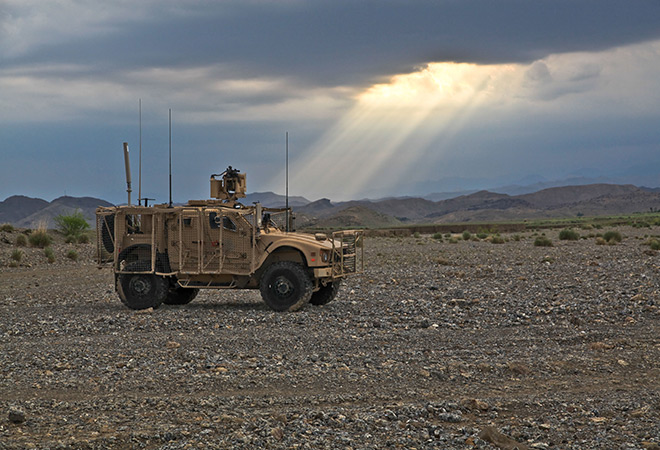
For me, a former enlisted Marine rifleman who served in Afghanistan in 2008, 2009 and 2010, watching the national-security intelligentsia reckon with their careers, and where they contributed to the quagmire in which the United States now finds itself, reminds me of a Pentagon press-conference transcript from March 2010. I don’t remember how I found it or really why I was looking for it at all. The presenter was Brig. Gen. Lawrence Nicholson, the commander of the Marine Corps’s Second Marine Expeditionary Brigade, then the highest ranking officer in charge of the operation in which I participated in the winter of 2010: the battle to retake the town of Marja in southern Helmand Province from the Taliban. In its briefings, NATO-led International Security Assistance Force said that the mission, known as Operation Moshtarak, or ‘together’ in Dari, was “Afghan-led.” This was, and remains, a lie. The military officials knew it wasn’t led by Afghans, but they still emphatically made this false assertion and expected the press to repeat the phrase.
In the briefing after first phase of combat, Nicholson himself did not use the phrase “Afghan-led,” but he opened his presentation with false notes, highlighting the initial stages of the battle before summarizing what he cast as the positive performance of the Afghan National Army, whom we were fighting alongside. It was one of the major operations of President Obama’s new strategy in Afghanistan, one that highlighted the United States’ desire to eventually hand over the war entirely to the Afghan security forces — something that to this day has yet to happen.
We have some newer Afghan units that we have to partner with very closely. Really they’re just out of recruit training. So I think there’s a wide variety of the Afghan Army experience here in Marja, but I can tell you that I am exceptionally proud of their great service. These guys run to the sound of gunfire. And when I talk to the young Marines, they tell me how very happy they are to have them there. You know, Marines don’t search any of the homes. In an area this large, when you decide you’ve got to search a home, the guys going in are going to be Afghan soldiers. And they’ve done that very well; they’ve earned the trust and confidence of the Marines. And so over all, I think we’re in good shape.
Since these statements were made a decade ago, the Afghan security forces have undoubtedly bore the brunt of the fighting, losing more than 50,000 people after the Pentagon ended “combat operations” in 2014. Different units, especially among the commando forces, are well trained, reliable and somewhat effective on the battlefield. But what Nicholson said on March 4, 2010, to the Pentagon press corps was the perfect example of how the official version of the war in Afghanistan was infected with misinformation (sometimes deliberate, sometimes not) one speech at a time. Here’s how the falsehoods, or half-truths, in Nicholson’s briefing break down line by line.
“These guys run to the sound of gunfire.”
This was an overstatement by our commanding general. On Wednesday I asked one former mortar man from my battalion if he ever saw his Afghan counterparts run toward a firefight. He told me: “Only time I saw them run was when a platoon of them disappeared the night before [the start of the operation] and no one could find them.”
A former senior noncommissioned officer who took part in the battle said that the younger Afghan soldiers were skittish when it came to the fighting unless “the [press] cameras were near them or they wanted to show off.” He added: “However, they had some older guys that were all about the fight. They were old enough to understand why the Taliban were bad and didn’t want them in their country.”
“And when I talk to the young Marines, they tell me how very happy they are to have them there.”
As a young Marine (one of roughly a thousand in my battalion), this was never a sentiment I experienced. We knew little about the Afghan troops, had barely any cultural training and mostly avoided them at all costs, especially with the growing trend of insider attacks. “I’m just glad I’m in weapons company and don’t have to deal with them,” one 19-year-old Marine from my battalion wrote in his journal in January 2010. Another young corporal said, “I always felt a little leery with them around.” Another, a former squad leader in a rifle platoon, said there was “universal distrust and skepticism.” Not exactly a statement of a young Marine happy with his allies.
“You know, Marines don’t search any of the homes. In an area this large, when you decide you’ve got to search a home, the guys going in are going to be Afghan soldiers.”
Afghan troops searched some homes, but Marines searched plenty of houses in Marja themselves. I would know because I was one of them. Searching homes was part of the American grunt routine, no matter what the brass said.On Wednesday, Nicholson, who is now retired, said: “I stand by my statement at the time. We saw some heroism from some Afghans and there were obviously some Afghans who underperformed. I think it was the right thing to do at the time, and it would be something I’d do again,” referring to integrating Afghan soldiers alongside the Marines and the broader strategy in Marja.In all, the general’s statements created a false picture, just surely as the lie about this “Afghan-led” operation was circulated by his headquarters. This glossed-over version of reality would then be repurposed in future congressional hearings and interviews, selling new variations of an already-failing military strategy to lawmakers. Now, nearly a decade later, the phrase “Afghan-led” is still plastered on Pentagon press statements as an irrevocable fact, despite that being, in many cases, the opposite of the truth.That is the number of housing units on American military bases across the country that are controlled by private corporations. The program has recently come under scrutiny after a report in September found that residents on 48 of the 49 bases inspected by the Army were dissatisfied with on-base housing, reporting problems ranging from mold and asbestos to poor water quality and exposure to sewage. The privatization initiative was at first a response to the armed services’ own inability to maintain adequate housing for service members in the 1990s, but abdicating control of these housing units to for-profit corporations has exacerbated the issue, leading to a breach of contract and negligence suit filed by 10 military families against Corvias Management, the company that has managed private housing at the military base in Fort Meade, Md., since 2002. Last week, the problem was taken up by Congress, where public hearings were held on the subject of tenant complaints and failures of military oversight. Read the full report here. — Jake Nevins, Times editorial fellow.
Erdogan says Saudi 'put pressure' on Pakistan to withdraw from Malaysia summit: Turkish media

Turkish President Recep Tayyip Erdogan has said that Pakistan decided to stay away from the recently concluded Kuala Lumpur summit because of Saudi Arabia's threats of economic sanctions, Turkish newspaper Daily Sabah reported on Friday.
The meeting was shunned by Saudi Arabia and criticised for allegedly undermining the bigger Organisation of Islamic Cooperation (OIC). Some analysts also suspected that Saudi Arabia's reluctance to attend stemmed from fear of being diplomatically isolated by regional rivals Iran, Qatar and Turkey, all of whom were attending the summit.
Saudi state news agency SPA also reported that on a call with Malaysian Prime Minister Dr Mahathir Mohammad, Saudi King Salman reaffirmed that such issues should be discussed through the OIC.According to Daily Sabah, Erdogan, while speaking to Turkish media representatives, said that it was not the first time that Saudi Arabia and the United Arab Emirates had put pressure on a country for doing or not doing certain things.
“Unfortunately, we see that Saudi Arabia pressures Pakistan. Now, there are promises that the country has given to Pakistan regarding the central bank. However, more than that, there are four million Pakistanis working in Saudi Arabia. They [threaten by saying that they] would send [Pakistanis] back and re-employ Bangladeshis instead,” Erdogan was quoted as saying. He added that the kingdom has also threatened to withdraw money it had deposited in the State Bank of Pakistan.
According to Erdogan, Pakistan had to comply with the Saudi wishes "due to its economic difficulties".
While not directly addressing the Turkish president's statement, the Foreign Office in response to questions from the media said that Pakistan did not participate in the Kuala Lumpur summit because "time and efforts were needed to address the concerns of major Muslim countries regarding possible division in the Ummah".
"Pakistan will continue to work for the unity and solidarity of the Ummah, which is indispensable for effectively addressing the challenges faced by the Muslim world," the FO spokesperson said in a brief statement.
'No representation from Pakistan at summit'
Pakistan was one of the first countries with which Malaysian Prime Minister Dr Mahathir had shared his plans for holding the summit when he met Prime Minister Imran along with Erdogan on the sidelines of the United Nations General Assembly session in New York in September.Later, Imran Khan formally conveyed his acceptance of the invitation for attending the summit when Deputy Foreign Minister of Malaysia Marzuki Bin Haji Yahya called on him in Islamabad on November 29.Last week, however, reports of Prime Minister Imran cancelling his trip to Malaysia started making rounds. After his visit to Saudi Arabia on Saturday, the premier decided to stay away from the Kuala Lumpur summit. According to reports, he withdrew due to pressure exerted by the kingdom, which had extended a helping hand to the Pakistan Tehreek-i-Insaf government during its early days to stave off an economic crisis.
Foreign Minister Shah Mehmood Qureshi had on Tuesday confirmed that there would be no representation from Pakistan at the summit of some 20 Muslim countries, which started in Kuala Lumpur on Wednesday.
Qureshi confirmed that Saudi Arabia and the UAE had concerns about the summit, saying the two countries were worried that the event could cause “division in Ummah” and lead to setting up of an organisation parallel to the existing Saudi-dominated OIC.
In view of the reservations about the summit, Qureshi said, it was decided that Pakistan would seek to bridge the gap between Riyadh and Kuala Lumpur and if that did not work there would be no participation in the summit.
Prime Minister Imran’s trip to the kingdom
was aimed at bringing Saudi Arabia and Malaysia closer and not for getting permission to attend the summit, the minister said at the time.
#Balochistan: Whereabouts of three women and three others remain unknown
According to details, Pakistani intelligence agencies, FC and local authorities have abducted 60-year-old Haji Dost Ali son of Malook Bugti, his 7 years old son, Amin Bugti, 80-year old Fareed Bugti, Izzato daughter of Malha Bugti, Murad Khatoon daughter of Nazagho Bugti and Mahnaz daughter of Fareed Bugti from the Hazar Ganji area of Quetta.
The family of the abducted persons have requested the government of Baloch and ‘nationalist political parties’ to play their role for the safe and immediate release of the Baloch women and children.
The targeting and abduction of Baloch women by Pakistani forces and military-backed criminal gangs have dramatically increased in recent months.
Earlier this month Pakistani forces abducted thirteen people including three women from Dera Bugti and four women from Awaran region of Balochistan. The women abducted from Awaran were later accused and charged with possessing weapons and facilitating Baloch pro-freedom armed groups.
The women from Dera Bugti and Awaran were released but the perpetrators who abducted them and kept them in illegal custody for several days remain at large.
The abduction of 6 persons including women children from Quetta on Thursday shows that they are want to continue to terrorise and harass Baloch women and nobody including media, judiciary and other institution raise voice against the official perpetrators.
#Pakistan - Musharraf's death sentence carries enormous symbolic power

By Rafia ZakariaThe treason case against Pakistan's former President and army Gen. Pervez Musharraf had languished for so long that it seemed that there would never be a verdict. On Tuesday, six years after the case had been filed, a Special Court in Islamabad finally delivered their verdict and sentenced Pervez Musharraf in absentia to death for high treason.
The decision threatens to throw an already restive Pakistan into political tumult as the judiciary sets up for a battle of wills against the military.
The charges of which Musharraf was convicted stem from the 1999 military coup that toppled Prime Minister Nawaz Sharif. A three-member special court found Musharraf guilty of violating Article 6 of the Constitution: "Any person who abrogates or subverts or suspends or hold in abeyance, or attempts or conspires to abrogate or subvert or suspend or hold in abeyance the Constitution by use of force or show force or by any other unconstitutional means shall be guilty of high treason" In Pakistani law, the court noted, the only punishment for high treason is death. This decision is the first time that a civilian court has sentenced a general from Pakistan's domineering military (which has undertaken three major coups in 1956 and 1977 and 1999 and ruled the country for 33 of its 72 years of existence) has been sentenced to death. Gen. Musharraf, long retired, is himself is in the United Arab Emirates seeking treatment for medical problems but the attorney general of Pakistan, called the trial "unfair" and announced that the government will be appealing the verdict in Pakistan's Supreme Court.
The death sentence against the general will almost certainly not be carried out because he is unlikely to ever return to Pakistan. The symbolic significance of the verdict, however, cannot be overstated.Given this, the Supreme Court of Pakistan is likely to be the site of yet another standoff between Pakistan's judiciary and its military. Another one of the charges on which the general was convicted was his 2007 move to impose "emergency rule" and fire Iftikhar Chaudhry, then the chief justice of Pakistan's Supreme Court, for refusing to kowtow to the General. That move sparked a lawyers' movement and such unrest in the country that the former general himself was forced to resign.
In essence then, the Supreme Court will now hear a case that considers in part whether an unelected military general has the power to depose the chief justice of the Supreme Court. If they, via some arcane loophole, say yes, they are limiting their own power as a separate branch of government; a move likely to spark further protests.If they uphold the verdict, the all-powerful military could very well take some future coercive actions against them.
It is a no-win situation.
The former President has his supporters in Pakistan but many resent what they see as the general's all too eager dalliance with the United States in the war on terror. Musharraf was in charge when then-President George W. Bush uttered his famous ultimatum, "You're either with us or against us." Gen. Musharraf told Pakistanis that he had no choice but to cooperate with the Americans, saying that then-Assistant Secretary of State Richard Armitage had told him: "Be prepared to be bombed. Be prepared to go back to the stone age."It's unclear whether these statements were ever made, but it is clear that Musharraf continued to enjoy the backing of the Bush administration even though he had long since lost support among Pakistanis. Musharraf's positioning of Pakistan as an ally in the war on terror, many Pakistanis held, made the country a target for terrorist attacks as it became yet another theater of war between insurgent Taliban, al Qaeda and a variety of other groups. More recently, according to research from New America, US drone attacks targeting the militants in Pakistan's tribal areas killed as many as 3,700 people, many of them innocent civilians.
The US is pursuing a peace deal with the Taliban and, according to recent Washington Post reporting, US officials knew that the war in Afghanistan was unwinnable.
The Post's Afghanistan papers have revealed the lies told by American officials regarding the war on terror in Afghanistan, lies which seem to have no consequences for the parties involved. In Pakistan, the judiciary has rejected this no-consequences approach and sentenced a general who was an American favorite to death for his violations of the truth and the law. With the United States withdrawing from Afghanistan, the world is realigning. Preempting the withdrawal, Pakistan has turned to China as its new best friend. Pakistan's new generals, now far more concerned with ensuring that the Chinese are happy, may not feel much allegiance to an old retired leader who has no use within this new order. If this is so, then it may well be that Pakistan's military establishment looks the other way as Gen. Pervez Musharraf's death sentence is upheld.
However, it doesn't appear that the military will be so sanguine about a death sentence for one of its own. In a statement released on Twitter, military spokesperson Major Gen. Asif Ghafoor said that the verdict had been received with a "lot of pain and anguish" within the Pakistani military accusing the courts of having "ignored due process." A man who "had served the country for over 40 years, fought wars for the country can surely never be a traitor."For the moment, former President of Pakistan Gen. Pervez Musharraf is just that. At least for now, a man who toyed with Pakistan's civilian institutions has been held to account. Whether justice ultimately prevails is unknown, but in this history-making moment for Pakistan, it surely has.
Thursday, December 19, 2019
#Pakistan - Fragile economy isolates diplomatically

Senator Rehman MalikIt is a hard fact that countries grow and emerge as economic powers only if they use their resources intelligently and draw long terms planning to increase their production& watch over their earnings and spending.
Economically developed countries formulate their foreign policies without any alien influence and the leadership strategies to create one to one bond with other interacting countries.
They help each other to develop mutual economic growth by creating a level of confidence & trust. The economic strength and strong foreign policies help countries to gain importance in the world and failure of foreign policies push the nations to isolation, and we have recently seen our own country has fallen victim of this isolation. The diplomatic association is basically anti-foreign investments.
Let us first get an overview of the present situation of our economy. Pakistan’s External Debt reached 106.9 USD bn in Sep 2019, compared with 106.3 USD bn in the previous quarter. Saudi Arabia, Japan, the UAE, and France are among other major lenders and also the UAE, Saudi Arabia USA, IMF, Japan, World Bank, China and the Eurobonds and Sukuk Bonds contribute to our debt. China is contributing to the development sectors of Pakistan through CPEC via its own Chinese companies, some Pakistan enterprises, and government sectors. It is pertinent to mention that the Chinese government has funded its own companies as part of CPEC partner.
In contrast, there are only 6.2 billion dollars as a loan. We are an unfortunate nation facing 106.9 USD bn external debt. As per the State Bank of Pakistan, the total public debt stood at PKR 31.786 trillion at the end of June 2019, and the PTI-led government has accumulated a record public debt of PKR 7,509 billion during its first year in power. I feel worried as a student of the economy as to how we will overcome it.
We have no other choice except for improving the economy as our first priority. The government should not take FATF lightly as in the given situation when the country is facing diplomatic isolation; I do not expect any favour neither from FATF nor from the USA. FATF is a big contributing factor derailing our economy, which we so far are unable to control because of our failure at the diplomatic front. The above situation has put us under substantial financial obligations by almost every country mentioned and world donors.
We are subservient to these countries, and we look like beggars before them as our national financial teams are on begging tours, further bringing our names to humiliation in front of the International community. We, as a nation, are feeling the touch of the fragile and poorly managed economy affecting our foreign policy, and it seems that it will continue to suffer and isolate us till the economy is not recovered.
A study shows that Pakistan Economy is continuously sliding down, which is making our local and foreign policies highly vulnerable. Our national delegations visit various countries not aimed to create goodwill but trying to convince for more loans to run the country day to day basis. We begged before the Middle East and many other countries because of which, today we are under the obligation of those countries. We perhaps forget this fact that those who oblige us today, they do establish some rights on us and later on, it’s the nation that has to pay a diplomatic price for it.
The government celebrated the friendship with Malaysia a few months back, and an impression of new Islamic block emerged where Pakistan, Malaysia and Turkey were the essential and prominent members.
The government tried its best to have the credit of this landmark development. The visit of Prime Minister was highlighted in and outside the country showing great achievement by the government. Pakistan must not forget that the West does not like the rise of Turkey and its fast-growing relations with Pakistan. It is understood that Saudi Arabia being financial backer in oil would not like Pakistan to go against their wish and support those whom Saudi Arabia does not like hence the Prime Minister faced embarrassment in front of the Prime Minister of Malaysia and President of Turkey and also before the world where it is believed that Pakistan Foreign Policy is dependent on donor countries. Neither the Prime Minister could go nor could he send his Foreign Minister to Malaysia to participate in Kuala Lumpur Summit. Every Pakistani is worried about national sovereignty which has been crippled as we are looked down as a poor nation.Unfortunately, we have propagated ourselves as money launderers in the world while hunting the opponents. Our sovereignty has been compromised just because our economy and our local policies and growth has been crippled by the IMF.
I wish we had a handful of billions of dollars, enabling us not to sell our pride which has created the present situation for us.
Our Ministry of Foreign Affairs did not advise the Prime Minister in time about the likelihood of this debacle which has caused heavy price in the form of embarrassment to our nation. It warrants an inquiry as to why Saudi Arabia was not taken into confidence and was not consulted before giving confirmation of attendance to such an important summit.
Prime Minister Imran Khan had earlier confirmed his participation in it and the plan for the summit had been finalised during a trilateral meeting between President of Turkey Tayyip Erdoğan, Prime Minister of Pakistan Imran Khan and Malaysian Prime Minister Mahathir Mohamad in September in New York on the sidelines of the United Nations General Assembly session.
It looks as if someone had played a very negative and adverse role while dealing with this sensitive issue. Let us hope that the real facts shall be made public, and some proper diplomatic measures shall be taken to avoid such an embarrassing situation at the diplomatic front in the future. Unfortunately, our national poverty graph and the worsening economy are badly influencing our foreign policy and making us bow before many members of the International community. In the past, the foreign policy of Pakistan was never influenced by any donor, but financial aids were always attained on mutual understandings and financial rules. The countries invest through public relations, whereas our embassies abroad feel handicapped while creating public relations for lack of sufficient funds. The foreign policy of Pakistan is not up to the required mark as our economic indicators are big handicaps hindering our international relations.
Let us look at Malaysia, and frankly one of the most prominent cases of money laundering has appeared in Malaysia & it had extended hand to Pakistan for help, and I do not know as to which level is the government helping them at, but I know for sure that a Pakistani private security company is helping quietly via a Dubai company to Mahathir government to unearth the trail of money of the former ruler and some other opponent of PM Mahathir Bin Mohamad. The said frontman is under investigation worldwide. PM Mahathir Bin Mohamad thought that Pakistan is the best investigator after reading the money laundering fictions appearing in the media and that is why he requested the support of Pakistan to investigate his opponents on the pattern of Pakistani roadmap of investigation. Let us hope that he is not disappointed with us as he has built high hopes.
I will share some details soon at this ongoing issue. It is interesting to see that no country could dare block Malaysia being a rich country to host the Kuala Lumpur Summit, but we have been prohibited very clearly not to attend? Let see how Malaysia takes it against Pakistan and how we rebuild our image at the diplomatic front which has badly deteriorated by deciding not to attend and we failed to convince other Muslim brotherly countries.
The world follows a different diplomatic policy for the rich block and different for the poor block and we, unfortunately, fall in the negative list of underdeveloped countries.
I had seen much more respect for Pakistan and its passport starting from the early 70s and onward but our respect and economy have been falling since we had decided to jump in the Afghan-Soviet War to support the USA which became our waterloo. Our priority should be how to improve the economy as a national slogan which is now of paramount importance to figure out as an economically strong country in the world & not as begging bowel holder. Our foreign policy is lack of adequate funding to put it on the right track. Our diplomatic isolation was well exposed during our failure to win the international community support to submit a draft resolution over Kashmir issue at the United Nations Human Rights Council (UNHRC) during the United National General Assembly session this September 2019. We have also miserably failed to muster world support including Muslim Ummah to force Prime Minister Narendra Modi to lift the world’s longest curfew which is imposed in Indian Held Kashmir since August 5th and to restore the special status of Kashmir. It is really tragic that only two countries namely Malaysia and Turkey supported us in UNSC and confidently both have been disappointed by us and India must be laughing at us on this debacle.
In the end, I would like to express that we are poorly managing our economy, leaving direct negative impacts on our society, including our foreign policy. No one will respect us in the world unless we look tall in the international economic index follow the basic principles of national honour and respect.
#Pakistan - Drag Musharraf’s body to Islamabad chowk & hang it for 3 days, if he is found dead: Court

By APOORVA MANDHANIA special court in Pakistan Tuesday awarded death penalty to former military ruler Pervez Musharraf, who was convicted for high treason.
The special court in Pakistan that awarded death sentence to former military ruler Gen Pervez Musharraf has directed that his corpse be dragged to Islamabad’s central square and hanged there for three days in case he dies before execution.
Finding him guilty of high treason, a three-judge bench of the court comprising Peshawar High Court Chief Justice Waqar Ahmad Seth, Justice Nazar Akbar of the Sindh High Court and Justice Shahid Karim of the Lahore High Court delivered the verdict Tuesday.
Passed with a 2:1 majority, the order asked law enforcement agencies to “strive their level best to apprehend the fugitive/convict and to ensure that the punishment is inflicted as per law and if found dead, his corpse be dragged to the D-Chowk, Islamabad, Pakistan and be hanged for 03 days”.
While Justice Seth and Justice Karim agreed with the death penalty, Justice Akbar wrote a dissenting note, opining that the prosecution had failed to prove their case.
The majority judgment convicted Musharraf citing Article 6 of the Constitution, which defines the offence of high treason.
It says: “Any person who abrogates or subverts or suspends or hold in abeyance, or attempts or conspires to abrogate or subvert or suspend or hold in abeyance the Constitution by use of force or show force or by any other unconstitutional means shall be guilty of high treason.”
According to the High Treason (Punishment) Act 1973, the punishment for high treason is death or life imprisonment.
The court also said all those who facilitated his escape “may also be brought in the net of due course of law and their criminal acts (if any) may be investigated and tried in accordance with law”.
The treason trial
In 1999, Musharraf carried out a bloodless coup to oust the then prime minister Nawaz Sharif and came to power. In early November 2007, he declared an emergency and suspended the constitution, when he was the country’s President and Chief of Army Staff.
The treason case was filed against him in November 2013 by the Nawaz Sharif government. However, with strong backing of the army, Musharraf dodged trial for years and also managed to get Supreme Court permission in March 2016 to go abroad for medical treatment, promising to come back to his “beloved homeland” in a few weeks.
He has not returned to Pakistan since, though the special court have given him an opportunity several times to make his statement. He is currently in Dubai in the United Arab Emirates on a self-imposed exile.
The maze of legal proceedings
After the special court began hearing the case on a daily basis in October 2019, the entire prosecution team was sacked. The court concluded its proceedings on 19 November, in the absence of any further inputs from the prosecution or Musharraf’s lawyers.
The lawyers only sprung to action after the court’s announcement that it would be pronouncing the judgment on 28 November. While Musharraf’s team moved the Lahore High Court challenging the announcement, the government approached Islamabad High Court demanding that the special court be restrained from giving its judgment.
The Islamabad High Court then directed the special court to listen to all parties and ordered the government to appoint a prosecutor by 5 December. The special court, however, ruled that it was not bound by the Islamabad High Court judgment.
During the hearing on 17 December, Musharraf’s lawyer demanded that he be given an opportunity to make a statement before the court, while the prosecution demanded that the scope of the trial be widened by bringing in charges against some alleged collaborators of Musharraf, including former PM Shaukat Aziz.
Constitution desecrated several times, says court
The special court, however, rejected all these requests, noting that Musharraf had been granted several opportunities to join trial, and “afforded more than his due share of fair trial”.
It went on to lament that in Pakistan, “during 72 years of its independence, to our misfortune several times, the Constitutions framed by Legislative Bodies were desecrated”.
The court also passed strictures against Musharraf, saying he was given every opportunity to defend himself but he “by his conduct in the proceedings only evinced his utter contempt for the law and legal institutions in this country”.
It then held Musharraf guilty, ruling, “The trial of high treason is the requirement of the constitution against those individuals who undermine or attempt to undermine the Constitution by any means. This court after presentation of undeniable, irrefutable and unimpeachable evidence by the prosecution against the accused reaches to the conclusion that indeed Accused is guilty and deserves exemplary punishment.”
He was handed down death penalty, directing that he be “hanged by his neck till be dies on each count as per charge”.
#Pakistan's pullout from #Malaysia summit draws criticism
Pakistan's last-minute decision to pull out of the Kuala Lumpur Summit has drawn criticism with some defending the withdrawal by the cash-strapped Islamabad that financially depends on oil-rich Gulf states.
Prime Minister Imran Khan canceled his planned visit to the Malaysian capital to attend the summit after concerns from Saudi Arabia and the United Arab Emirates, Foreign Minister Shah Mehmood Qureshi confirmed on Tuesday, according to local English daily Dawn.
Khan paid a daylong visit to Riyadh earlier this week in a vain bid to assuage the kingdom's reservations over the scheduled summit.
Leaders from Muslim countries gathered in Kuala Lumpur to discuss issues confronting the Muslims globally at the summit, which started on Wednesday and will continue till Saturday.
"It's an internal diplomatic failure," said Abdul Basit, a former Pakistani ambassador told Anadolu Agency, adding that Islamabad should have done its homework before committing to such an initiative.
He said Pakistan should not have skipped the initiative even if it meant sending a lower-level delegation.
Retired Lt. Gen. Talat Masood, an Islamabad-based security analyst, echoed the view observing that the Kuala Lumpur initiative has upset Riyadh which views its as an attempt to replace the Organization of Islamic Cooperation."It shows the lack of understanding on the part of the prime minister. He should not have committed what he could not do,” Masood told Anadolu Agency.
No effect on ties
Both analysts, Basit and Masood, said that Pakistan’s move would not affect its ties with Turkey, Malaysia and Iran, which support Pakistan’s stand on disputed Jammu and Kashmir following India’s scrapping of the region’s longstanding special rights in August.
Khan on Tuesday met Turkish President Recep Tayyip Erdogan on the sidelines of a global conference in Geneva and took him into confidence over his decision to not attend the Malaysia summit, local media reported, citing Foreign Ministry sources.
Also, Khan telephoned his Malaysian counterpart Mahathir Mahamad and expressed his regrets at not being able to attend the summit, local English daily The News reported.
Politicians and journalists took to social media sites to denounce Khan’s decision to skip the summit.
“Backing out from KL summit: when Turkey, Malaysia, Iran supported Pakistan on Kashmir like a rock," Senator Mushahid Hussain, a senior leader of main opposition party Pakistan Muslim League-Nawaz, said in a tweet.
“Terrible news Imran Khan’s Malaysia visit is canceled on the orders of Mohammad bin Salman,” senior journalist Umar Cheema tweeted, referring to the Saudi crown prince.
Khan's decision "reflects the weakness and incompetence of Pakistan's foreign policy managers, whether it's Imran Khan and his team, or Pakistan Foreign Office or the military," said Ijaz Khan, an Islamabad-based professor on international relations.
"He/they should have realized the reaction of Saudi Arabia to any such summit and not agreed to participation before it's announcement," Khan told Anadolu Agency.
"By declining to participate after it's announcement, will have a negative impact on Pakistan's relations with, not just Iran, but much more with Malaysia and Turkey.
"This is more so, after both [Malaysian Prime Minister] Mahathir [Mohamad] and [Turkish President Recep Tayyip] Erdogan so strongly supported Pakistan, after Imran Khan's speech at UNGA. The decision for this summit was taken after that UNGA meeting, where Khan met the other two," he added.
https://www.aa.com.tr/en/asia-pacific/pakistans-pullout-from-malaysia-summit-draws-criticism/1678477
Wednesday, December 18, 2019
Bilawal Bhutto takes jibe at government over Musharaf case
Chairman Pakistan Peoples Party (PPP) Bilawal Bhutto Zardari on Wednesday took a dig at sitting government by asking who was running the “save your father” campaign now, in an apparent reference to the PTI government’s reaction on a Special Court verdict awarding death sentence to former president Pervez Musharraf in high treason case.
Abu bachao muhim kon chala raha hai? @ImranKhanPTI— BilawalBhuttoZardari (@BBhuttoZardari) December 18, 2019
Notably, Prime Minister Imran Khan has summoned Pakistan Tehreek-e-Insaf (PTI) core committee meeting on Wednesday evening as per the sources.
The core committee will hold discussions over the developing situation following the special court’s verdict of sentencing former president and top military official Pervez Musharraf to death in high treason case and formulate future strategies.
It is important to note that PTI ministers had reacted to the judgment and said that it would give rise to rifts between institutions.
Death For The Dictator: Interplay Of Pakistan’s Politics, Military And Judiciary – Analysis

By Sushant Sareen
As things stand in Pakistan, the army and the government claim to be on the same page. The judiciary — for now — is standing apart.
The Special Court trying the former Pakistani military dictator Gen. Pervez Musharraf on charges of treason has pronounced the death sentence on him. Musharraf is unique in Pakistan’s history. He is not only the first usurper to be prosecuted under Article 6 (which defines high treason) of Pakistan’s much-abused constitution, but also the first dictator to have carried out not one but two coups.
Musharraf’s first coup was in 1999 when he overthrew the elected government of Nawaz Sharif. His second coup was carried out in 2007 when he declared an ‘emergency’, not as president of Pakistan but in his capacity as army chief — he was wearing both hats at the time. The first coup had been indemnified by the parliament that had been constituted after the 2002 election, but the second coup was never indemnified. It is this second coup for which he was tried and found guilty of treason, and now — sentenced to death.
The ‘selected’ government of Prime Minister Imran Khan had tried very hard to prevent the Special Court which had been constituted by Nawaz Sharif in 2013 from announcing the judgment in this case. The fact that the Imran Khan government is stacked with former associates of Musharraf — the interior minister Ejaz Shah was Intelligence Bureau chief and a crony of Musharraf, who openly opposed his sentencing; Law Minister Farogh Naseem was his defense lawyer in the trial as was the Attorney General Anwar Mansoor — meant that all sorts of obstacles were placed in the path of bringing the former president and army chief to justice.
Days before the Special Court was to give its ruling, the government started to play the fiddle with the judicial process. First, the government sacked the entire prosecution team, even though the prosecution had already rested its case. Then, the government (which was technically the complainant) filed a petition seeking a bar on the Special Court from announcing its verdict.
The Islamabad High Court restrained the Special Court from pronouncing the verdict until Musharraf (who was absconding and had never appeared before the court) was given another chance to defend himself. Meanwhile, the Lahore High Court jumped in and questioned the entire basis of the treason trial. But in the end, the Special Court decided to bite the bullet and announce the verdict.
In some ways, the death sentence for Musharraf is only symbolic. Chances are that Musharraf, who is reportedly very sick and unlikely to ever come back alive to Pakistan (he is currently living in UAE), will never be actually hanged.
Apart from all legal challenges that are likely to be mounted and the lengths to which the army will go to ensure that this ruling dies before Musharraf — the army didn’t even allow Musharraf to be present in court and had whisked him away to a hospital and then later orchestrated, rather forced the judiciary and the then government to allow him to leave the country, is certainly not going to allow him to be ‘humiliated’, much less hanged by the ‘bloody civilians.’
Nevertheless, even though dictators before Musharraf have also had their actions ruled unconstitutional by the courts — always after they were no longer in power — the fact that a former army chief has now been pronounced guilty under Article 6 could have serious repercussions on the politics of Pakistan.
Coming as it does amidst the entire controversy over the extension given to the current army chief and the Supreme Court demanding that parliament make a law on the issue of terms of service of the chiefs of the armed forces, the Musharraf ruling is not likely to be received well by the all-powerful military in Pakistan. It isn’t so much about Musharraf the person — he is irrelevant — but more about Musharraf the former chief.
In other words, the impact of the current spate of rulings against the military — the Peshawar High Court declaring the ‘internment centers’ unconstitutional, the Supreme Court ruling on the extension issue and now the Musharraf sentence — on the corporate interests of the Pakistan Army and the dent on its supremacy will almost certainly invite a big push back.
Questions will definitely be raised, and conspiracy theories conjured up, about what the judiciary is trying to do by taking on the army so directly. Are the judges trying to emerge as a power centre of their own rather than remaining ‘Lions under the Throne’? Or is it all part of a game of smoke and mirrors, the byzantine intrigues that are so Pakistan? The reason for such questions is simple.
For all its grandstanding, the judiciary in Pakistan has always known its limits and limitations, especially when it comes to the army. So what has changed that the judges are now displaying such intrepidness? What or who is behind the Pakistani judges having suddenly discovered their spine? It is after all the same judiciary that virtually summarily sacked a judge of the Islamabad High Court for accusing the ISI of trying to influence him to rule against Nawaz Sharif.
It is also the same judiciary that put in the dock a brother judge, Qazi Faez Isa, who dared to pass strictures against the ISI and state machinery for backing terrorists and extremists. It is the same judiciary that treated with kid gloves a mass murderer police officer, Rao Anwar, who has been under the protection of the military’s intelligence agencies.
Whatever the reason for the assertion of the judiciary against the military, it is now going to prompt a new interplay between the civilian government, military, opposition and the judiciary.
The civilian government is already showing signs of exasperation with the judges, not just over its rulings on matters related to the military but also the relief it has been giving to bêtes noires of the current regime, namely the Sharif family and Asif Zardari. The first salvo against the judiciary was fired when the government amended the rules of the parliamentary committee on judicial appointments in order to interview candidates for the various high courts. This is being seen as the first challenge to the judiciary which has arrogated to itself the right to appoint judges without any real oversight by parliament.
Although the opposition parties have welcomed this change, it will probably weigh its options on how far to go with the government (which has been brazenly hounding it) to rein in the judiciary.
The military will also be smarting under the rebuffs it has received at the hands of the judges. Given that the current army chief will want the opposition’s cooperation to get the law on his extension passed without much ado (otherwise it would make him even more controversial), he will also be looking to reach out to the opposition parties. The quid pro quo with the opposition could however rub the government the wrong way. Unless the entire political class closes ranks and the army backs them, it will be difficult to rein in the judges, who would also try and protect their turf by aligning and cutting deals with the other components of the power structure.
The thing is that over the last decade or so the Pakistani power structure comprises a quartet — army, civilian government, opposition and judiciary. Unless three components of this quartet get together, it is difficult to take action against the fourth. As things stand, the army and the government claim to be on the same page. The judiciary for now is standing apart. If the opposition girds itself up, closes ranks and backs the judges, then it will be difficult for the government and military to do very much without shaking up the system to its core.
If however, the opposition remains split with various members trying to cut their own deals with the government and the military, then it will be relatively easier for the military and government to clip the wings of the judges and make them compliant. There is also the possibility of the military and opposition closing ranks (because of reports of some unhappiness in the army with the sheer incompetence and ineptness of Imran Khan and his cronies) and the government and judiciary remaining at odds. In the event, it will be curtains for Imran Khan and there is a good chance of the judiciary receiving its comeuppance.
The power dynamics in Pakistan are in a state of flux. The old equilibrium has been disturbed and there is a new realignment of forces underway to reach a new equilibrium, even if an unstable one. The events flowing out of the Musharraf verdict will only add more urgency in the quest for this new symmetry.
Opinion: A clear message to the Pakistani military
A court has handed the death sentence to ex-ruler Pervez Musharraf. Although the capital punishment must be opposed, the verdict is a warning to the military that it must stay out of politics, says DW's Shamil Shams.

Let's be assured that former military dictator Pervez Musharraf will not be executed after a special court awarded him the death sentence in a highly unexpected verdict on Tuesday. Also, no matter how serious the crime, we must never endorse the capital punishment.
The Pakistani military is an immensely powerful institution, so much so that all civilian institutions, including the judiciary, have largely remained subservient to it for at least six decades. Musharraf is a former army chief, who ruled the country with an iron fist from 1999 to 2008. Although he now lives in a self-imposed exile in the UAE, he is respected by the current military commanders for his "services" during his tenure.
Also, the military will never want its ex-chief to be hanged. It would significantly dent its image and curtail its political power in the country.
The court verdict has already done a lot of damage to the army. The symbolic value of the ruling should not be underestimated. It sends out a clear message to the military generals that they are not above the law; that they could also be tried and punished for suspending and violating the constitution. It is a message that the military must abide by their constitutional role and not interfere in politics.
The powerful military would most likely ensure that Musharraf is not harmed in any way. And there are legal ways to counter the special court's verdict. Musharraf can still challenge the decision in the Supreme Court. There, the death sentence could be reversed or diluted. Pakistan's judiciary has a chequered record of endorsing military coups and has time and again provided legal cover to military dictators. So a different decision from superior courts cannot be ruled out.
Civilian assertion
But politics in Pakistan has changed a lot in the past decade. Civilian institutions are increasingly asserting themselves against the army.
During his third term as premier (2013-2017), former PM Nawaz Sharif — who was ousted in a bloodless military coup by Musharraf in 1999 — tried to rein in the military's powers. The industrialist-premier wanted to forge closer ties with India so that Pakistan could do away with the "security state" narrative. This, he believed, would bring in more foreign investment into the country and ultimately diminish the military's power.
Other institutions, too, are taking an independent line. We must not forget that Musharraf's ouster was only made possible because of a massive lawyers' movement in 2007. Recently, Asif Saeed Khosa, the Supreme Court chief justice, only conditionally approved the tenure extension for General Qamar Javed Bajwa, the country's army chief. Now Prime Minister Imran Khan must pass a law in parliament to support his government's decision to grant a second term to the army chief.
The military finds itself in a precarious situation, with an independent media and a growing civil society also raising their voice. The military's involvement in politics is being slammed more than ever in Pakistan, which must be a cause of concern for military leadership.
A new social contract
Meanwhile, international pressure on the Pakistani military has also been on the rise. In October, the Paris-based Financial Action Task Force group gave Pakistan four months to prove it was fighting terror financing. Since coming to power, US President Donald Trump has also substantially reduced American military aid for Pakistan.
But that does not mean that the military will not fight back. And a clash of institutions in a nuclear-armed country with countless Islamist groups is not a very pleasant thought. Therefore, what Pakistan needs now is a new social contract that ensures that all state institutions function within their constitutional ambit.
It is also high time that the military generals sit together, surrender some of their powers and accept the civilians' right to rule the country. A country like Pakistan, which sits on many geopolitical fault-lines, cannot afford a prolonged intra-institutional confrontation.
Saudi Arabia, Pakistan snub Malaysia's Muslim summit

Joseph Sipalan, Stephen Kalin
Leaders from many Islamic nations including Turkey and Iran gathered in Malaysia on Wednesday to tackle issues that have agitated Muslims worldwide, but the summit was snubbed by Saudi Arabia and its close ally Pakistan.At a welcome dinner, Malaysian Prime Minister Mahathir Mohamad said the Kuala Lumpur Summit would aim to “do something” to improve the lives of Muslims and overcome Islamophobia.
“We need to find a way to address our shortcomings, our dependency on non-Muslims to protect ourselves against the enemies of Islam,” said Mahathir, 94, the world’s oldest head of government and one of its most outspoken. The four-day summit could also address mounting outrage over China’s camps for Uighur Muslims in Xinjiang - a subject that will doubtless upset Beijing.
Pakistani Prime Minister Imran Khan, who along with Mahathir and Turkish President Tayyip Erdogan had been a prime mover behind the summit, made a belated decision to skip the meeting.
Some Pakistani officials, unnamed because they are not authorized to speak to the media, said Khan pulled out under pressure from Saudi Arabia, though local media reported his officials denied that was the reason for the absence of the world’s second-most populous Muslim country from the meeting. Iranian President Hassan Rouhani and Qatari Emir Sheikh Tamim bin Hamid Al-Thani, whose countries have tense relations with Saudi Arabia, were at the gathering in Kuala Lumpur.
Saudi Arabia said the summit was the wrong forum for matters of importance to the world’s 1.75 billion Muslims, though some analysts suspected the kingdom feared being diplomatically isolated by regional rivals Iran, Qatar, and Turkey.
Saudi state news agency SPA reported that on a call with Mahathir on Tuesday, Saudi King Salman reaffirmed that such issues should be discussed through the Jeddah-based Organization of Islamic Cooperation (OIC).
A Saudi source said the country declined to attend because the meeting was not being held under OIC auspices. The Saudi government’s center for international communication did not respond to a request for comment.
Subscribe to:
Posts (Atom)