Wednesday, December 18, 2019

Death For The Dictator: Interplay Of Pakistan’s Politics, Military And Judiciary – Analysis

By Sushant Sareen

As things stand in Pakistan, the army and the government claim to be on the same page. The judiciary — for now — is standing apart.
The Special Court trying the former Pakistani military dictator Gen. Pervez Musharraf on charges of treason has pronounced the death sentence on him. Musharraf is unique in Pakistan’s history. He is not only the first usurper to be prosecuted under Article 6 (which defines high treason) of Pakistan’s much-abused constitution, but also the first dictator to have carried out not one but two coups.
Musharraf’s first coup was in 1999 when he overthrew the elected government of Nawaz Sharif. His second coup was carried out in 2007 when he declared an ‘emergency’, not as president of Pakistan but in his capacity as army chief — he was wearing both hats at the time. The first coup had been indemnified by the parliament that had been constituted after the 2002 election, but the second coup was never indemnified. It is this second coup for which he was tried and found guilty of treason, and now — sentenced to death.
The ‘selected’ government of Prime Minister Imran Khan had tried very hard to prevent the Special Court which had been constituted by Nawaz Sharif in 2013 from announcing the judgment in this case. The fact that the Imran Khan government is stacked with former associates of Musharraf — the interior minister Ejaz Shah was Intelligence Bureau chief and a crony of Musharraf, who openly opposed his sentencing; Law Minister Farogh Naseem was his defense lawyer in the trial as was the Attorney General Anwar Mansoor — meant that all sorts of obstacles were placed in the path of bringing the former president and army chief to justice.
Days before the Special Court was to give its ruling, the government started to play the fiddle with the judicial process. First, the government sacked the entire prosecution team, even though the prosecution had already rested its case. Then, the government (which was technically the complainant) filed a petition seeking a bar on the Special Court from announcing its verdict.
The Islamabad High Court restrained the Special Court from pronouncing the verdict until Musharraf (who was absconding and had never appeared before the court) was given another chance to defend himself. Meanwhile, the Lahore High Court jumped in and questioned the entire basis of the treason trial. But in the end, the Special Court decided to bite the bullet and announce the verdict.
In some ways, the death sentence for Musharraf is only symbolic. Chances are that Musharraf, who is reportedly very sick and unlikely to ever come back alive to Pakistan (he is currently living in UAE), will never be actually hanged.
Apart from all legal challenges that are likely to be mounted and the lengths to which the army will go to ensure that this ruling dies before Musharraf — the army didn’t even allow Musharraf to be present in court and had whisked him away to a hospital and then later orchestrated, rather forced the judiciary and the then government to allow him to leave the country, is certainly not going to allow him to be ‘humiliated’, much less hanged by the ‘bloody civilians.’
Nevertheless, even though dictators before Musharraf have also had their actions ruled unconstitutional by the courts — always after they were no longer in power — the fact that a former army chief has now been pronounced guilty under Article 6 could have serious repercussions on the politics of Pakistan.
Coming as it does amidst the entire controversy over the extension given to the current army chief and the Supreme Court demanding that parliament make a law on the issue of terms of service of the chiefs of the armed forces, the Musharraf ruling is not likely to be received well by the all-powerful military in Pakistan. It isn’t so much about Musharraf the person — he is irrelevant — but more about Musharraf the former chief.
In other words, the impact of the current spate of rulings against the military — the Peshawar High Court declaring the ‘internment centers’ unconstitutional, the Supreme Court ruling on the extension issue and now the Musharraf sentence — on the corporate interests of the Pakistan Army and the dent on its supremacy will almost certainly invite a big push back.
Questions will definitely be raised, and conspiracy theories conjured up, about what the judiciary is trying to do by taking on the army so directly. Are the judges trying to emerge as a power centre of their own rather than remaining ‘Lions under the Throne’? Or is it all part of a game of smoke and mirrors, the byzantine intrigues that are so Pakistan? The reason for such questions is simple.
For all its grandstanding, the judiciary in Pakistan has always known its limits and limitations, especially when it comes to the army. So what has changed that the judges are now displaying such intrepidness? What or who is behind the Pakistani judges having suddenly discovered their spine? It is after all the same judiciary that virtually summarily sacked a judge of the Islamabad High Court for accusing the ISI of trying to influence him to rule against Nawaz Sharif.
It is also the same judiciary that put in the dock a brother judge, Qazi Faez Isa, who dared to pass strictures against the ISI and state machinery for backing terrorists and extremists. It is the same judiciary that treated with kid gloves a mass murderer police officer, Rao Anwar, who has been under the protection of the military’s intelligence agencies.
Whatever the reason for the assertion of the judiciary against the military, it is now going to prompt a new interplay between the civilian government, military, opposition and the judiciary.
The civilian government is already showing signs of exasperation with the judges, not just over its rulings on matters related to the military but also the relief it has been giving to bêtes noires of the current regime, namely the Sharif family and Asif Zardari. The first salvo against the judiciary was fired when the government amended the rules of the parliamentary committee on judicial appointments in order to interview candidates for the various high courts. This is being seen as the first challenge to the judiciary which has arrogated to itself the right to appoint judges without any real oversight by parliament.
Although the opposition parties have welcomed this change, it will probably weigh its options on how far to go with the government (which has been brazenly hounding it) to rein in the judiciary.
The military will also be smarting under the rebuffs it has received at the hands of the judges. Given that the current army chief will want the opposition’s cooperation to get the law on his extension passed without much ado (otherwise it would make him even more controversial), he will also be looking to reach out to the opposition parties. The quid pro quo with the opposition could however rub the government the wrong way. Unless the entire political class closes ranks and the army backs them, it will be difficult to rein in the judges, who would also try and protect their turf by aligning and cutting deals with the other components of the power structure.
The thing is that over the last decade or so the Pakistani power structure comprises a quartet — army, civilian government, opposition and judiciary. Unless three components of this quartet get together, it is difficult to take action against the fourth. As things stand, the army and the government claim to be on the same page. The judiciary for now is standing apart. If the opposition girds itself up, closes ranks and backs the judges, then it will be difficult for the government and military to do very much without shaking up the system to its core.
If however, the opposition remains split with various members trying to cut their own deals with the government and the military, then it will be relatively easier for the military and government to clip the wings of the judges and make them compliant. There is also the possibility of the military and opposition closing ranks (because of reports of some unhappiness in the army with the sheer incompetence and ineptness of Imran Khan and his cronies) and the government and judiciary remaining at odds. In the event, it will be curtains for Imran Khan and there is a good chance of the judiciary receiving its comeuppance.
The power dynamics in Pakistan are in a state of flux. The old equilibrium has been disturbed and there is a new realignment of forces underway to reach a new equilibrium, even if an unstable one. The events flowing out of the Musharraf verdict will only add more urgency in the quest for this new symmetry.

Opinion: A clear message to the Pakistani military

A court has handed the death sentence to ex-ruler Pervez Musharraf. Although the capital punishment must be opposed, the verdict is a warning to the military that it must stay out of politics, says DW's Shamil Shams.
Let's be assured that former military dictator Pervez Musharraf will not be executed after a special court awarded him the death sentence in a highly unexpected verdict on Tuesday. Also, no matter how serious the crime, we must never endorse the capital punishment.
The Pakistani military is an immensely powerful institution, so much so that all civilian institutions, including the judiciary, have largely remained subservient to it for at least six decades. Musharraf is a former army chief, who ruled the country with an iron fist from 1999 to 2008. Although he now lives in a self-imposed exile in the UAE, he is respected by the current military commanders for his "services" during his tenure.
Also, the military will never want its ex-chief to be hanged. It would significantly dent its image and curtail its political power in the country.
The court verdict has already done a lot of damage to the army. The symbolic value of the ruling should not be underestimated. It sends out a clear message to the military generals that they are not above the law; that they could also be tried and punished for suspending and violating the constitution. It is a message that the military must abide by their constitutional role and not interfere in politics.
The powerful military would most likely ensure that Musharraf is not harmed in any way. And there are legal ways to counter the special court's verdict. Musharraf can still challenge the decision in the Supreme Court. There, the death sentence could be reversed or diluted. Pakistan's judiciary has a chequered record of endorsing military coups and has time and again provided legal cover to military dictators. So a different decision from superior courts cannot be ruled out.
Civilian assertion
But politics in Pakistan has changed a lot in the past decade. Civilian institutions are increasingly asserting themselves against the army.
During his third term as premier (2013-2017), former PM Nawaz Sharif — who was ousted in a bloodless military coup by Musharraf in 1999 — tried to rein in the military's powers. The industrialist-premier wanted to forge closer ties with India so that Pakistan could do away with the "security state" narrative. This, he believed, would bring in more foreign investment into the country and ultimately diminish the military's power.
Other institutions, too, are taking an independent line. We must not forget that Musharraf's ouster was only made possible because of a massive lawyers' movement in 2007. Recently, Asif Saeed Khosa, the Supreme Court chief justice, only conditionally approved the tenure extension for General Qamar Javed Bajwa, the country's army chief. Now Prime Minister Imran Khan must pass a law in parliament to support his government's decision to grant a second term to the army chief.
The military finds itself in a precarious situation, with an independent media and a growing civil society also raising their voice. The military's involvement in politics is being slammed more than ever in Pakistan, which must be a cause of concern for military leadership.
A new social contract
Meanwhile, international pressure on the Pakistani military has also been on the rise. In October, the Paris-based Financial Action Task Force group gave Pakistan four months to prove it was fighting terror financing. Since coming to power, US President Donald Trump has also substantially reduced American military aid for Pakistan.
But that does not mean that the military will not fight back. And a clash of institutions in a nuclear-armed country with countless Islamist groups is not a very pleasant thought. Therefore, what Pakistan needs now is a new social contract that ensures that all state institutions function within their constitutional ambit.
It is also high time that the military generals sit together, surrender some of their powers and accept the civilians' right to rule the country. A country like Pakistan, which sits on many geopolitical fault-lines, cannot afford a prolonged intra-institutional confrontation.

Saudi Arabia, Pakistan snub Malaysia's Muslim summit


Joseph Sipalan, Stephen Kalin
Leaders from many Islamic nations including Turkey and Iran gathered in Malaysia on Wednesday to tackle issues that have agitated Muslims worldwide, but the summit was snubbed by Saudi Arabia and its close ally Pakistan.
At a welcome dinner, Malaysian Prime Minister Mahathir Mohamad said the Kuala Lumpur Summit would aim to “do something” to improve the lives of Muslims and overcome Islamophobia.
“We need to find a way to address our shortcomings, our dependency on non-Muslims to protect ourselves against the enemies of Islam,” said Mahathir, 94, the world’s oldest head of government and one of its most outspoken. The four-day summit could also address mounting outrage over China’s camps for Uighur Muslims in Xinjiang - a subject that will doubtless upset Beijing.
Pakistani Prime Minister Imran Khan, who along with Mahathir and Turkish President Tayyip Erdogan had been a prime mover behind the summit, made a belated decision to skip the meeting.
Some Pakistani officials, unnamed because they are not authorized to speak to the media, said Khan pulled out under pressure from Saudi Arabia, though local media reported his officials denied that was the reason for the absence of the world’s second-most populous Muslim country from the meeting. Iranian President Hassan Rouhani and Qatari Emir Sheikh Tamim bin Hamid Al-Thani, whose countries have tense relations with Saudi Arabia, were at the gathering in Kuala Lumpur.
Saudi Arabia said the summit was the wrong forum for matters of importance to the world’s 1.75 billion Muslims, though some analysts suspected the kingdom feared being diplomatically isolated by regional rivals Iran, Qatar, and Turkey.
Saudi state news agency SPA reported that on a call with Mahathir on Tuesday, Saudi King Salman reaffirmed that such issues should be discussed through the Jeddah-based Organization of Islamic Cooperation (OIC).
A Saudi source said the country declined to attend because the meeting was not being held under OIC auspices. The Saudi government’s center for international communication did not respond to a request for comment.

Tuesday, December 17, 2019

Music Video - Lil Nas X - Panini

Video Report - #Americans Plan Demonstrations In Support Of Impeaching Trump

Video Report - French Unions vs. pension reforms: Call for protests in Paris

Video Report - France's enduring pension protest: strikes, bikes and accidents

Video Report - #ImpeachingHearing - Pelosi responds to Trump's 'really sick' letter

Video - Sindhi Song - #pppsong #ppp - Bilawal Bhutto Endo wari Bilawal

Interview - Malala Yousafzai is on Teen Vogue's final cover of the decade

Malala Yousafzai is featured on the last TeenVogue cover of 2019, which highlights the “brilliant, world-changing demands of teens across the world” in a decade defined by “the rise of youth activism” and protest.
In an interview with the magazine, Malala reveals how education came to be her top priority and stressed, “Education is the best investment that you can make.”
And not just because the data says so.
“I realised that if I cannot go to school, my life could be early child marriage, becoming a mother, becoming a grandmother, and not having the opportunity to be myself, to explore the opportunities that are available out there that a boy would have access to. But I would not.”
She also opened up that she struggled with depression on her road to healing and recovery, mentally and physically — and that social media can take its toll on her too.
“What really helped me... was the support of people. Whether that was the nurses and doctors or whether those were the letters and cards and the messages that I was receiving from people all around the world.”
“We are living in an era where we have new tools, new things coming forward that we had not had before. From social media to technology, there's competition and selfies, and all these things are spreading. So it's important for us to take care of ourselves. Make sure you're healthy and fine and getting enough sleep. Yeah, I'm including myself in that.”
Malala also predicted that just as the previous 10 years saw a rise in youth activism worldwide, the next 10 are going to be about youth making tangible change. “That's what gives me hope,” she said.
“It's like we have done our activism; we have done enough to raise our voice. And I think the next step is now let's make the change, let's be the change-makers, let's get more involved in this. I'm excited for that, to be the change-maker, and do more for girls' education, to ensure that all girls can have the opportunity to go to school, to go to universities, just like I have.”
Malala, who recently collaborated with artists and social media influencers to speak up about girls' education, also discussed the prevalence of Islamophobia in the West and also pointed out that there is an "element of patriarchy and misogyny" in cases where religion has been employed as a tool to silence women.
“Religious scholars need to come forward and they need to tell people that whether it's Islam, Hinduism, Christianity, any other religion, that religion is for the equal rights of everyone,” she added

#Pakistan - Freedom of expression & press under fire


Freedom of expression and press, as enshrined in the Constitution of Pakistan, 1973 under Article 19 as a fundamental right, are essential ingredients of democracy. Unfortunately, they are under fire not only in Pakistan but also across the world. Both of these elements have become anathema to the selected few who want to hide the truth under the carpet thereby to avoid being criticised. Sadly, the state of freedom of press and safety of journalists in Pakistan is worrisome as the journalists are facing all sorts of threats and mental agony. Indeed, curb on the freedom of the press is tantamount to curbing the rights of citizens.
Undeniably, the restrictions on the freedom of expression is prevalent across the world. Beginning from Russia, the United States to the developing countries all have restricted freedom of speech under different pretexts; media persons are being pressurised to toe the line of the authorities or face the music. In the United States, President Trump’s antipathy towards those media houses who do not report what suits the president’s whims and wishes are disdained. It was quite shocking especially the way the CNN’s Jim Acosta’s microphone was cut off and his White House credentials were revoked. That phenomenon is indeed unwarranted keeping in view the global standing of America and the much sway it wields across the world.Shockingly, in our country, Steven Butler who is the Asia Programme Coordinator of the Committee to Protect Journalists (CPJ)was barred entry. After his arrival at the Lahore airport, he was deported. He was informed that his name was in the “stop list”. In the first instance, in case his name was in the stop list, then why was he issued visa as it is issued after due security clearance? Why he was not informed prior to this departure? Such a situation is really painful for the media persons, masses and the country’s overall progress at large.
Recently, Sindh Provincial Parliamentary Task Force on Sustainable Development Goals (SDGs), of which I am Convener, in coordination with the National Assembly’s Task Force on SDGs, UNESCO Pakistan, Parliamentarians Commission on Human Rights (PCHR) and Peace and Justice Network (PJN) held two days event on freedom of expression and protection of journalists at the Sindh Assembly which was attended by the MPAs, journalists, civil society activists, etc. to deliberate on the target 16.10 of the SDGs.

It was quite shocking to know that the violence against the journalists has increased tremendously. According to the Committee to Protect Journalists, 1,358 journalists have been killed across the world between 1992 and 2019.Besides,as per Freedom Network, at least 33 journalists were murdered for their journalism work in Pakistan during the past six years, including seven in the past one year (November 2018 to October 2019) alone. Depressingly, Pakistan has been ranked 142 out of 180 counties on the World Press Freedom index and is among the 13 countries where journalists are murdered and their killers go scot-free. In the last 10 years, at least 16 such cases were found in Pakistan.In this backdrop, practicing journalism professional is certainly a challenging task.
Violence in any manifestation against the press is unjustifiable and deserves across the board condemnation. We must admit that free press is vital for vibrant democracy
Ironically, Dawn newspaper whose foundation stone was laid down by the founder of the nation, Quaid-i-Azam Muhammad Ali Jinnah is under severe pressure. After the London Bridge attack, an imported mob thronged the head office of Dawn in Islamabad harassing the staff and chanting slogans calling for the shut down of the newspaper, which is certainly condemnable. As my party’s slogan “democracy is our politics” and free press is indispensable for it, Pakistan Peoples’ Party (PPP) Chairman Bilawal Bhutto Zardari visited the Dawn office and condemned the besieging of the newspaper office and expressed solidarity with the staff. Simultaneously, on the second day of the event on the SDGs 16.10, all the participants condemned the harassment of Dawn staffers in particular and the violence against the press in general.
Violence in any manifestation against the press is unjustifiable and deserves across the board condemnation. We must admit that free press is vital for vibrant democracy. For that purpose, on the second day of the event on SDG 16.10 we were joined by Sindh Information Minister Saeed Ghani and deliberated on the “Sindh Safety of Journalists Bill” which will soon be introduced in the Provincial Assembly of Sindh. Nonetheless, there was a disagreement on the definition of the “journalist” amongst the participants. Mazhar Abbas, Afzal Butt and others were of the view that the full-time journalists be included in the definition, while others recommended that the scope of definition be broadened in the light of emerging trends such as vlogging, social media, etc. Hence, it was agreed that once the bill has been introduced in the House, media persons will be consulted and their input will be incorporated in the bill at the review stage. Afterall, that legislation pertains to their safety and rights.
Thus, if we are to prosper with a vibrant democracy entailing free and responsible press, it is essential to let the culture of tolerance flourish where freedom of expression as permissible under article 19 of the Constitution of Pakistan, 1973, and the Article 19 of the Universal Declaration of Human Rights (UDHR) are valued and appreciated. Moreover, it is high time that all the legislatures of Pakistan have considered the journalists’ safety law in order to provide safety and ensure the welfare of media persons. There is a need to make all-out efforts to improve ranking on the World Press Freedom index, in addition to theprosecuting those involved in violence against journalists. At the same time, it is also necessary that media, which is considered as the fourth pillar of state, performs its duty responsibly and avoid airing unauthentic news. This measure will further add to the credibility of media.

Former Pakistan President Pervez Musharraf sentenced to death for high treason

By Helen Regan and Adeel Raja

Former Pakistan President and military ruler Pervez Musharraf has been sentenced to death in absentia for high treason following a six-year legal case.
A three-member special court in Islamabad on Tuesday convicted Musharraf of violating the constitution by unlawfully declaring emergency rule while he was in power, in a case that had been pending since 2013.
The 76-year-old former leader, who has lived in self-imposed exile in Dubai in the United Arab Emirates for more than three years, has the option to appeal the verdict.
Musharraf seized power in a military coup in 1999 and ruled Pakistan as President until 2008.
    He was indicted in 2014 on a total of five charges, including three counts of subverting, suspending and changing the country's constitution, firing Pakistan's chief justice, and imposing emergency rule.
    It's the first time in Pakistan's history that an army chief has been tried and found guilty of treason. Under Pakistan's constitution, high treason is a crime that carries the death penalty or life imprisonment.
    The special court ruled on the death sentence by a two to one majority, with one of the three judges not backing the death sentence but agreeing on a conviction.
    Musharraf has been living in Dubai since 2016 after Pakistan's Supreme Court lifted a travel ban allowing him to leave the country to seek medical treatment. From his hospital bed in Dubai earlier this month, the former leader said in a video statement that he was innocent and the treason case was "baseless."
    In a Tuesday statement, the media wing of the Pakistan Armed Forces said the special court's sentence had been received "with a lot of pain and anguish."
    Pakistan's Inter-Services Public Relations (ISPR) said that Musharraf "can surely never be a traitor" and that he had served the country for over 40 years.
    "The due legal process seems to have been ignored including (the) constitution of special court, (the) denial of fundamental right of self-defense, undertaking individual specific proceedings and concluding the case in haste," the statement said.
    It added that the Armed Forces of Pakistan "expect that justice will be dispensed in line with the Constitution of Islamic Republic."

    Web of court cases

    Musharraf earlier went into exile in 2008, returning to Pakistan in 2013 with the aim of running in the country's national elections. But his plans unraveled as he became entangled in a web of court cases relating to his time in power.
    In 2007, Musharraf declared a state of emergency, suspended Pakistan's constitution, replaced the chief judge and blacked out independent TV outlets.
    Musharraf said he did so to stabilize the country and to fight rising Islamist extremism. The action drew sharp criticism from the United States and democracy advocates. Pakistanis openly called for his removal.
      Under pressure from the West, Musharraf later lifted the state of emergency and called elections in which his party fared badly.
      Musharraf stepped down in August 2008 after the governing coalition began taking steps to impeach him. Prosecutors say Musharraf violated Pakistan's constitution by imposing a state of emergency.

      #Musharaf - 'Hopeful that courts will continue to issue democratic verdicts,' says Bilawal


      PPP Chairperson Bilawal Bhutto-Zardari on Tuesday said that the special court's decision to hand former military ruler retired Gen Pervez Musharraf a death sentence in the high treason case against him was a "historic" one.
      Earlier today, a three-member bench of a special court, in a landmark verdict, handed a death penalty to Musharraf in a long-drawn treason case. The former president has been convicted for abrogating the Constitution and imposing an emergency in the country in 2007.
      During a conversation with reporters in Ghotki today, Bilawal said: "We are hopeful that now, after this democratic verdict, our courts will continue to issue democratic rulings.
      "In the past, our institutions always stood with non-democratic forces. After this verdict, we can hope that our courts will side with justice and democracy for all days to come."When a reporter asked if the politicians, who stood by Musharraf when he imposed martial law in the country, should receive punishment as well, the PPP chief said: "There is a lot of debate as to the scope of the treason law and whether it should [have included] the 1999 incident [coup] or the 2007 incident. But we should talk about what is in front of us [...] It is a historic decision."
      The PPP chief said that the party will "read carefully" the detailed verdict, once it is issued.
      He lamented that several cases, including that of the murder of his mother, former prime minister Benazir Bhutto, were still pending in courts and demanded that they be picked up as well.
      Bilawal hailed the bails granted to PPP leadership, including Asif Ali Zardari, Faryal Talpur, Khursheed Shah and Agha Siraj Durrani.
      "All the players of PPP are out now, we will struggle together and this government will go home soon," he declared.

      Monday, December 16, 2019

      #Bangladesh Publishes List of 'Razakars' Who Sided with Pakistan Army During 1971 Liberation War


      Liberation War Affairs Minister AKM Mozammel Haque released the list at a press briefing in Dhaka and said the initiative has been taken to introduce the anti-liberation forces to the new generation.

      Bangladesh on Sunday published a list of 10,789 Razakars (volunteers) who collaborated with the Pakistani forces during the country's Liberation War in 1971.
      Liberation War Affairs Minister AKM Mozammel Haque released the list at a press briefing here and said the initiative has been taken to introduce the anti-liberation forces to the new generation, the Daily Star reported.
      According to the historic documents, the Razakar force — an auxiliary group of then Pakistan army — targeted Hindus and Bengali nationalists during the 1971 liberation war.
      AKM Yusuf, one of the top leaders of the fundamentalist Jamaat-e-Islami, was believed to be the founder of the Razakar force. He was arrested in May 2013 and charged with crimes against humanity. However, he died of cardiac arrest in 2014 while in detention.
      Haque said the number of genuine freedom fighters is not more than 2.1 lakh and their complete list will be published on the Independence Day (March 26).

      #Bangladesh - Remembering the war of 1971 in East Pakistan

      By Anam Zakaria
      Bangladesh, India, and Pakistan each have created a very distinct memory of what happened 48 years ago. Forty-eight years after the 1971 war, which led to the independence of Bangladesh, each country involved in the conflict has institutionalized a distinct memory of the events of that year. In Bangladesh, the war is remembered as the Bengali people's struggle against an oppressive Pakistan army.
      In India and Pakistan, the war is often remembered as the third Indo-Pakistan war. This representation is resented by many Bangladeshis, who feel it erases their role in what they see as a liberation war.
      However, disagreement on who played the central role in the war is not the only point of contention between the three countries. Today, Bangladesh, Pakistan and India have their own closely held war stories, with 1971 taking on unique meanings across the subcontinent.
      Bangladesh: The liberation war
      The struggle for Bengali rights started shortly after Pakistan gained independence as a country with two incontiguous territories known as West Pakistan (today's Pakistan) and East Pakistan (today's Bangladesh). The refusal to accept Bengali as a state language of Pakistan in the early years after Partition, economic disparity between the two parts, the hegemony of the West Pakistani ruling elite over Pakistan, martial laws, and a demeaning attitude towards Bengali culture and the Bengali population soured relations between the two parts.
      Tensions rose in December 1970 when the Awami League party, led by Sheikh Mujibur Rahman (also known as Mujib) and based in East Pakistan, won the national elections but West Pakistan parties, namely the Pakistan Peoples Party (PPP), refused to hand over power. Tensions between Bengalis and Biharis - the Urdu-speaking communities that had moved to East Pakistan from different parts of India after Partition and who were seen as pro-West Pakistan - rose, which led to attacks on some Bihari communities.
      In March 1971, using the violence as an excuse, the Pakistan Army intervened to stem the growth of nationalist sentiments in the east. It recruited local pro-Pakistan Bengalis and non-Bengalis, including members of the Islamic organisation Jamaat-e-Islami for its operations against Bengali factions. As the violence escalated throughout the summer, a large number of refugees streamed into Indian territory, which New Delhi used as an excuse to intervene militarily in early December 1971.
      The nine-month conflict ended with the surrender of the Pakistani army on December 16; the death toll is estimated to have been between 300,000 and 3 million people, with hundreds of thousands of women raped.
      Since the end of the war, various forces have tried to control the narrative in Bangladesh, most notably the Awami League - which came to be perceived as "pro-Indian" - and the Bangladesh military and Bangladesh National Party (BNP) - which has been deemed "pro-Pakistan" and "pro-Islamist". This has hurt the process of transitional justice and frustrated many victims and their families for decades.
      Having played an important role during the war, Mujib took power after independence. He banned Jamaat-e-Islami and introduced special laws that allowed for the arrest and prosecution of those accused of "collaborating" with the Pakistan military. After Mujib's assassination in 1975, General Ziaur Rahman seized power and started to change the public narrative on the liberation war. He made efforts to showcase the role various military actors played in the conflict and pushed to the background the role of the civilians. He also released the suspected war criminals and lifted the ban on Jamaat-e-Islami. In the following years, his party, the BNP, put some of its members accused of war crimes in influential positions, leaving victims increasingly troubled.In the early 1990s, a group of civil society actors created the Committee for Eradicating the Killers and Collaborators of 1971, which held mock trials against suspected war criminals. Even though it had no legal legitimacy, the committee put pressure on the BNP government, which filed sedition charges against the organisers.Sheikh Hasina, Mujib's daughter who took over the leadership of the Awami League in the 1980s, used the momentum the committee created in her struggle for power against the BNP. She sought to recast what happened in 1971 as a struggle led solely by the Awami League.
      During her 2008 election campaign, Sheikh Hasina also sought to appropriate the transitional justice process, promising to bring war criminals to justice by setting up a tribunal. The war crimes trials launched, however, have been marred by controversy. Some critics have alleged that Sheikh Hasina is using them to punish opponents and keep them out of power. There is concern that the politicised nature of the trials may render justice, which many survivors ache for, increasingly elusive.
      Today, Sheikh Hasina has managed to solidify her narrative of the 1971 war to such an extent that, if one criticises her party, they are seen as criticising liberation itself, and therefore perceived as anti-state.
      Meanwhile, the Bihari community who became stateless after the war until a 2008 Supreme Court judgement extended citizenship rights to them are concerned that those accused of attacking, killing and raping members of their community will never be brought to justice. This is because in official memory, as institutionalised by the Bangladeshi state, only crimes against Bengalis are remembered.
      Today, thousands of Biharis continue to reside in camps. They live in marginalised conditions, labelled as "stranded Pakistanis" and pro-Pakistan collaborators for their alleged role in the war.
      India: The finest victory
      In India and Pakistan, 1971 may not be as actively remembered but it remains central to how both nations view themselves and each other. In India, the war is fondly recalled as the nation's finest win, a testament to its military prowess and superiority, and as revenge for Pakistan having "broken" India in 1947. Having lost the Indo-Sino war in 1962 and having only achieved a ceasefire in the first two wars with Pakistan, the victory in 1971 became symbolic for India, signalling that it was on its way to becoming a regional superpower. Today, politicians, as well as the armed forces, continue to make references to the war, to indicate India's strength vis-a-vis Pakistan.
      As one Indian journalist told me during in an interview for my book, 1971: A People's History from Bangladesh, Pakistan and India, "1971 has become part of day-to-day life in India. Be it for motivating the soldiers or demeaning Pakistan. 1971 changed the way we look at ourselves as Indians. Till the war, we didn't see ourselves as being competent militarily. But post-1971, we have had quite a tough posturing in international diplomacy. 1971 has become almost folklore in India."
      The Indian narrative of the war is a story of gallantry and bravado, championing India as a saviour of the oppressed Bengalis. It is often brought up during any escalation of tensions between the two countries. In 2016, during one such escalation, an Indian soldier posted a video in which he taunted the Pakistani army, reminding it of its "defeats of 1965, 1971 and 1999". However, 1971 also holds other meanings for contemporary India. The large number of refugees which poured into Indian territories - approximately 10 million by the estimate of the Indian government - later became a major internal issue.
      Tensions between refugees and host populations ensued, with fears that the refugees from opar Bangla (the other side of Bengal) may permanently settle, putting a burden on already stretched resources and changing the demographics of the host states. This unwelcoming feeling towards the refugees did not dissipate with the war.
      In the Indian state of Assam, where many Bengalis have settled over the years, their presence has remained contentious. Recently, the final list of the National Register for Citizens was issued, with March 24, 1971, set as the cut-off date for inclusion in the register. It is the day before Pakistan launched its military operation in East Pakistan, which pushed many Bengalis across the border.
      Close to 2 million people, those who could not prove that they or family members resided in the state prior to March 1971, have been excluded from the register, which can render them stateless. Critics have argued that the register is being used to target Muslims in an increasingly Hindu majoritarian country. The war of 1971 thus remains central in India, tied both to the saviour narrative as well as the question of who truly belongs.
      Pakistan: The forgotten conflict
      In Pakistan, the state has resorted to selective forgetting of what happened in 1971. Perceived as a humiliating defeat, the war is brushed over in textbooks and there is little acknowledgement of the military oppression and the resulting atrocities in East Pakistan.
      What is hailed as liberation in Bangladesh is awkwardly recalled by Pakistanis as the Fall of Dhaka or dismemberment of Pakistan every December 16. When 1971 is addressed it is often to stress upon the killings of non-Bengalis before the war, presented as a justification for military action.
      However, just because 1971 does not factor into mainstream discourse significantly does not mean it has not left lasting imprints on Pakistan's psyche. In fact, 1971 remains one of the most defining events in the nation's history, shaping its self-identity and regional policies. The loss of East Pakistan created a "never again" mentality in the country. Resolving to never let a similar situation arise again, Pakistan increased its defence spending and launched a nuclear programme aimed at developing a nuclear weapon as early as January 1972.
      The lesson learned from 1971 was the military has to be stronger to prevent another defeat. Moreover, in the post-war years, Pakistani textbooks were revised with an overt anti-India and anti-Hindu slant. The loss was blamed on its "arch-nemesis", with little reflection on Pakistan's own policies that resulted in a mass movement for independence among Bengalis. To this day, the Pakistani narrative makes some exaggerated claims, such as Indian-influenced Hindu teachers manipulating students and breeding secessionist sentiments in East Pakistan.
      Furthermore, as new independence struggles erupted in the region, in the form of the Khalistan movement for a separate Sikh state and in the movement in Kashmir, scholars have argued that Pakistan resorted to using similar strategies to those India had in East Pakistan to support these movements.
      Local grievances were closely studied and support was offered to groups fighting against the Indian state just as India had provided support to Bengalis fighting the Pakistani state.
      Today, just as India accuses Pakistan of fuelling terrorism in Kashmir and dismisses genuine Kashmiri grievances as Pakistan-sponsored, in the Army Museum in Lahore, Pakistan has put up a plaque which labels the Bengali movement for independence as Indian-sponsored terrorism. In both cases, people's struggles are appropriated and hijacked, narratives carefully crafted to turn popular sentiment against movements for self-determination.
      Close to 50 years after the war, 1971 remains poignant both at the people's level and the state level in Bangladesh, India and Pakistan. It continues to shape the lives of those who suffered and witnessed the war while also remaining central to each state's national project. 1971 reinforces distinct narratives, emphasising liberation in Bangladesh, victory in India, and loss in Pakistan. All three countries hold on tightly to their war story and frame their images of themselves and the other through the lens of that fateful year. 1971 has left a lasting legacy across all three children of Partition.

      https://www.aljazeera.com/indepth/opinion/remembering-war-1971-east-pakistan-191216054546348.html

      #APSPeshawar #APSMartyrs #APSAttack #APSPeshawarAttack - Netizens demand whereabouts of Ehsanullah Ehsan on APS attack day

      As the country marked its remembrance of the brutal carnage claimed by the Tehreek-e-Taliban Pakistan (TTP), many took to Twitter to demand why the group's former spokesman was still at large in the country.
      Ehsanullah Ehsan was once the Taliban's chief correspondent for the Pakistani media, sending videos of himself speaking on behalf of the militant group. It was Ehsan who announced to the world that the Jamaat-ul-Ahrar, a break-away faction of the TTP, was responsible for the Easter bombing in Lahore of 2016. According to Ehsan, the group meant to deliberately target Christian families on a day they were expected to be celebrating their holiday in public, killing at least 75 people, and injuring more than 300. The majority of the victims were women and children. Ehsan is also the prime accused in one of world history's most deadly attacks on schools, the attack on the Army Public School in Peshawar in 2014.
      But Ehsan remains within Pakistan, free from any kind of confinement. In April 2017, the former ISPR in-charge, Asif Ghafoor shared that Ehsan had surrendered to the Pakistani military. In 2018, the Peshawar High Court (PHC) ordered the federal government to not give Ehsan clemency, for the court held directly responsible for many acts of terrorism, including the shooting of Malala Yousafzai in Mingora in 2012.
      However, Ehsan was ultimately released nonetheless. Since then, Ehsan has kept a low-profile in the country.
      On social media, politicians, academics, journalists, and lawyers expressed their resentment against the state for failing to take action against Ehsan.
      Aseefa Bhutto-Zardari tweeted: "Today we remember the senseless violence that led to the martyrdom of 130 children in APS Peshawar. The fact the Ehsanullah Ehsan has not been prosecuted is a stain on our national character. My thoughts and prayers with the families still searching for answers and justice."
      Dr. Nida Kirmani, a sociologist, said: "5 years since one of the most horrific days in Pakistan’s history, and we’re still asking, where is Ehsanullah Ehsan? Why have he and his enablers not been brought to justice?"
      Many sarcastically called Ehsan a "state guest". The Awami National Party leader, Asfandyar Wali, seems to have coined the phrasing in last year's remembrance of the Peshawar attack.
      ANP leader Bushra Gohar wrote: "Other than trivialising the APS massacre by releasing songs & building monuments, what has been done to ensure justice? Why is the judicial inquiry under wraps? Why is Ehsanullah Ehsan not charged & under trial?" Little official information is available to learn more of Ehsanullah Ehsan's case, but the fact remains that he is still a free man who has not been held culpable for the crimes he has confessed to.
      https://nation.com.pk/17-Dec-2019/netizens-demand-whereabouts-of-ehsanullah-ehsan-on-aps-attack-day

      #APSPeshawar #APSMartyrs #APSAttack #APSPeshawarAttack - Nation still in tears over APS tragedy


      As the nation marked the fifth anniversary of the Army Public School (APS) attack, Qaumi Watan Party (QWP) Chairman and former federal interior minister Aftab Ahmad Sherpao on Sunday paid rich tributes to the martyrs.
      In a statement issued from the party headquarters Watan Kor, he recalled that the attack had united the nation in the fight against terrorism. Remembering the martyrs of the APS attack, Sherpao said the nation will always remember the sacrifices of the innocent children and that the country still hurts from the loss.
      The QWP leader said that the attack had prompted the government to declare an all-out war against militants and to restore viable peace in the country. The nation is still in a state of shock and grief over the brazen attack in which innocent school children were targeted, he added.
      Earlier in Peshawar, members of the APS Shuhada (martyrs) Forum held a demonstration outside the Peshawar Press Club.

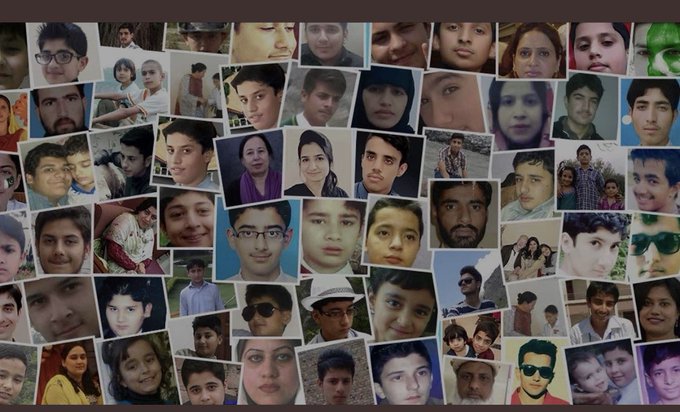
      Remembering #APS: A trauma #Remembering APS: A trauma Peshawar simply cannot move past

      Not too long ago, terrorism and violence was a common occurrence in Khyber-Pakhtunkhwa. The province became the hub of terrorist activities and then came its worst nightmare – the assault on the Army Public School (APS) on December 16, 2014. A gang of militants walked in and sprayed teachers and pupils with volley after volley of bullets, killing more than 140 that morning five years ago.

      The methodical slaughter that unfolded not only paralysed Khyber-Pakhtunkhwa (K-P) but all of Pakistan. Across Peshawar, mosques filled with mourners carrying small coffins and wailing family members became a common sight. The city was living its worst nightmare, its worst tragedy. While the city and the country won its battle against terrorism shortly after the APS attack, many are still reeling – mostly emotionally.
      The APS tragedy not only left an indelible mark on the family members but also on those who witnessed the event unfold on their television screens. And despite promises by the government to provide psychological assistance, many have been found to silently suffering from post-traumatic stress disorder, and many of them have yet to recover.
      Shortly after the attack, the government promised to build a state-of-the-art trauma centre in Peshawar. But like all other promises, this too was meant to be broken. For the people who were suffering, help arrived from unexpected quarters. An army of volunteers came together to help those who continue to reel from the APS tragedy. While the government still hasn’t been able to provide psychological assistance to those suffering from mental trauma in the wake of the APS tragedy, volunteers are providing counselling services to survivors, family members of those killed, and everyone who suffers emotionally as a result of the attack.
      “We have received people who are suffering directly and indirectly as a result of the attack,” said Dr. Khalid Mufti, a consultant psychiatrist.
      In recent times, Peshawar has struggled with violent attacks, but APS crossed every limit of human endurance, so much so that, in the wake of the attack, the military launched a full-scale offensive to eliminate terrorism that was targeting the most vulnerable across Pakistan.
      The military won, and the terrorists lost. But for the people of Peshawar, the post APS struggle has been long and unending. Dr Mufti believes, everyone who witnessed the brutal massacre requires counseling.
      Not just APS survivors or their families, but everyone who was told about the attack or watched it unfold on their screens needs help,” said Dr. Mufti. Reintegrating those who continue to suffer was not easy. Dr.Mufti is joined by an army of volunteers, including journalists, spiritual leaders, teachers, and general practitioners.
      So far, Dr. Mufti has dealt with more than 150 people. The list includes survivors, family members, and those who were indirectly influenced by the attack.“Initially, siblings and family members of those who had died were reluctant to talk,” said Dr. Mufti. “They were defensive and perhaps feared everyone who wanted to talk about the attack,” the medic added.December 16 will forever live infamously in the memory of those who survived. The day will forever remind Pakistan of death and destruction. The suffering and tragedy claimed many lives, directly and indirectly. Dr. Mufti claimed many suffered cardiac arrest because the tragedy was beyond their tolerance level.
      Five years on, Dr. Mufti and his volunteers are fighting an uphill battle. Each year on December 16, many survivors, he said, relapse.
      “We have no option but to start from where we were many years ago,” he claimed.
      The assault on the Army Public School five years ago ended in bloodshed and never-ending sorrow for the families who lost loved ones. Around this time of the year, survivors are reminded of the harrowing event that gripped the attention of the world.
      The images from the eight-hour-long rampage remain fresh even after all these years. Even as he treats patients, there are moments when Dr.Mufti feels vulnerable.

      #PPP Music Video - Bhutto Benazir

      Bilawal slams changing of CPEC route says people of Balochistan will be deprived of benefits

      “These selected puppets [incumbent government] cannot provide you with those benefits,” The Express Tribune quoted the PPP Chair as saying. Pakistan People’s Party (PPP) Chairman Bilawal Bhutto-Zardari has said that the people of Balochistan province had been deprived from reaping the benefits of the China-Pakistan Economic Corridor (CPEC) by changing the route of the project.
      “We (PPP) brought revolutionary projects like CPEC that was meant for you, the people of Balochistan, (particularly) the residents of Gwadar... It was supposed to create job opportunities for you and strengthen your economy,” Mr. Bilawal Bhutto-Zardari said on Sunday while addressing supporters in the provincial capital of Quetta.
      “Unfortunately, unlike the vision of [former] President Zardari who wanted that the project should benefit the most impoverished areas... that the route should start from FATA to Balochistan, the route has been changed. Now it’s starting from Lahore and Sindh.
      “These selected puppets [incumbent government] cannot provide you with those benefits,” The Express Tribune quoted the PPP Chair as saying.
      He added that said his party was the only one that ensured that a project benefitted the residents of the area where it was launched.
      https://www.thehindu.com/news/international/bilawal-slams-changing-of-cpec-route-says-people-of-balochistan-will-be-deprived-of-benefits/article30317277.ece

      Bilawal Bhutto Zardari thinks people are conspiring against PPP’s leadership

      PPP Chairperson Bilawal Bhutto Zardari thinks that some people are conspiring against the leadership of his party.

      He claimed that people tried to blackmail former president Asif Ali Zardari by not providing him medical facilities. “But Zardari did not compromise on his principles.”
      If they think they can silence us by threatening us, then they are wrong, he said while addressing a rally in Quetta on Sunday. “We won’t be silenced.”
      He remarked that the PPP will ensure that the rule of the people is established. “We want the rule of the people, not an umpire,” he added.
      Bilawal said that the third generation of the PPP is headed to Rawalpindi. The PPP will hold a rally at Liaquat Bagh to commemorate the death anniversary of Benazir Bhutto, who was assassinated at the site 12 years ago.

      #APSMartyrs #APSPeshawar - Bilawal pays tribute to innocent martyrs of APS

      Bilawal Zardari paid tribute to the innocent martyrs of APS, Peshawar on the 5th anniversary of this tragic attack in which around 132 students and teachers embraced martyrdom.
      Chairman Pakistan Peoples Party (PPP) Bilawal Bhutto Zardari Sunday paid tribute to the innocent martyrs of Army Public School (APS), Peshawar on the 5th anniversary of this tragic attack in which around 132 students and teachers embraced martyrdom.
      In a message here issued by the party secretariat, Bilawal Bhutto said that extremism and terrorism were the enemies of peace and human development.
      He said those who facilitated and sponsored the scourge of terrorism had committed crimes against humanity and it was the responsibility of us as a nation to say ‘Never again'.
      Bilawal Bhutto said that extremism and terrorism had been used as a tool to advance certain vested interests and impose specific agendas in an attempt to hold the nation hostage to constant fear.He said that the PPP has always maintained its stance against terrorism, besides giving bold and clear statements in favour of the people by condemning the terrorist activities.Bilawal Bhutto said that the PPP due to its loud and clear stance on had suffered greatly as its leadership and workers were martyred in fight against authoritarianism or all its forms. Bilawal Bhutto pointed out that the nation had paid heavily in this war against terrorism. Amongst the blood of the 60,000 innocent victims of terrorism was also the blood of Shaheed Mohtarma Benazir Bhutto, who was assassinated for standing up against terrorism and country's dictatorship.
      He pledged that the PPP would continue to be on the forefront in the battle against extremism and terrorism and always stand for an egalitarian, peaceful, prosperous and progressive Pakistan.
      https://www.brecorder.com/2019/12/16/553435/bilawal-pays-tribute-to-innocent-martyrs-of-aps/

      سلیکٹر قبول نہ امپائر کی انگلی، سلیکٹڈ کو بٹھاکر اٹھارہویں ترمیم پر حملے کئے جارہے ہیں، بلاول

      پاکستان پیپلز پارٹی کے چیئرمین بلاول بھٹو نے کہا ہے کہ ملک میں حکمرانی عوام نہیں سلیکٹڈ اور سلیکٹر کررہے ہیں، سلیکٹڈ کو بٹھا کر 18ویں ترمیم پرحملے کئے جا رہے ہیں، حکومت نہیں چاہتی کہ سی پیک سے بلوچستان کے عوام کو ترقی کے مواقع ملیں، ہمیں نہ تو کوئی سلیکٹر قبول ہے اور نا ہی امپائر کی انگلی، آپ کو مانا پڑیگا طاقت کا سرچشمہ عوام ہیں، عوام کے مسائل صرف عوامی حکومت ہی حل کرسکتی ہے۔
      افسوس کے ساتھ کہنا پڑ رہا ہے کہ اٹھارویں ترمیم پراسکی روح کے مطابق عمل نہیں ہوا، وفاق اپنی نااہلی اور نالائقی کا بوجھ عوام پر ڈال دیا ہے، نوکریوں کا وعدہ کرکے نوجوانوں سے روزگار چھینا جا رہا ہے، جوظلم اس ملک کے عوام کے ساتھ ہورہاہے وہ ہم برداشت نہیں کرسکتے، حکمران سمجھتے ہیں ظلم کرکے زبان بندی کی جاسکتی ہے، عوامی حکومت عوامی مسائل حل کرسکتی ہے، ہم نے عوامی راج قائم کرناہے، ہمیں کوئی سلیکٹڈ قبول نہیں۔ان خیالات کا اظہار انہوں نے اتوار کو کوئٹہ میں ورکرز کنونشن سے خطاب کرتے ہوئے کیا۔ 
      بلاول بھٹو نے کہا کہ پیپلزپارٹی نے اگر حکومت کی تووہ عوام کی مرضی سے عوام کی طاقت سے کی، محترمہ کو لیاقت باغ میں شہید کیا گیا، انہیں غیرجمہوری سوچ قبول نہیں تھی، قائد عوام اپنے اصولوں، نظریہ اورسیاسی سوچ سے پیچھے نہیں ہٹے، افسوس کے ساتھ کہنا پڑ رہا ہے کہ اٹھارویں ترمیم پر اس کی روح کے مطابق عمل نہیں ہوا۔